
You just bought a case of ELEY Match. The lot number is printed right there on the box. What do you actually do with it? And more importantly, can that number help you find your next case when this one runs out?
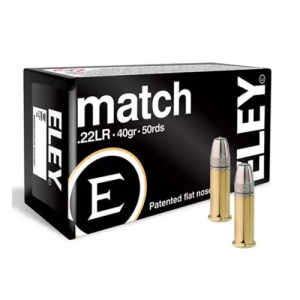

The ELEY Lot Analyzer is a free online tool that lets you look up factory test data for specific production lots of ELEY .22 LR ammunition. It was discontinued for a while because ELEY found the sheer volume of data overwhelming to maintain, but after an initial target of an October 2025 relaunch, it came back online around January 2026. No other rimfire ammunition manufacturer currently publishes this level of per-lot data. For competitive rimfire shooters, that matters. The Lot Analyzer won't tell you how a given lot performs in your barrel, but it stops you from testing blind. It narrows the field before you burn through boxes at the range or pay for professional test-range time.
This FAQ covers how the tool works, what data it actually shows, how to use it alongside physical lot testing, and where the whole process fits into the broader question of matching .22 LR ammo to your rifle. If you shoot ELEY in any competitive or precision context, the Lot Analyzer is the cheapest step in your ammunition selection process. It costs nothing and takes about a minute.
What the Lot Analyzer is and how to access it
What is the ELEY Lot Analyzer?
It's a web-based lookup tool where you enter the lot number from your box of ELEY ammunition and get back the factory test data ELEY recorded for that specific production batch. The data comes from ELEY's own proof testing in their test barrels, not from any third-party testing or field results. Think of it as a window into what ELEY measured before the ammo left the factory.
How do I access it?
Go to eleyxshot.com and create a free account. Once you're registered, navigate to the Lot Analyzer section (spelled "Analyser" in British English on the site). Enter the lot number printed on your box and the data populates. The whole process takes about a minute. There's no cost.
Which ELEY products are covered?
This is where the tool got significantly more useful with its relaunch. All lots are now published across eight products:
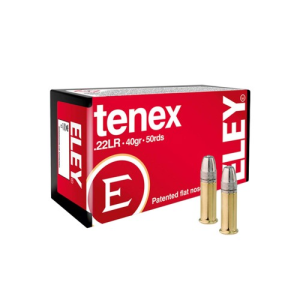
ELEY tenex .22 LR Deals
Prices may change. May contain affiliate links.

ELEY semi-auto .22LR benchrest precision Deals
Prices may change. May contain affiliate links.

ELEY tenex pistol .22 LR
May contain affiliate links.
ELEY tenex biathlon .22 LR
May contain affiliate links.
ELEY tenex rapid fire pistol .22 LR
May contain affiliate links.
ELEY ultra .22 LR
May contain affiliate links.
- ELEY tenex
- ELEY tenex pistol
- ELEY tenex biathlon
- ELEY tenex rapid fire pistol
- ELEY match
- ELEY semi-auto .22LR benchrest precision
- ELEY ultra
- ELEY club
That spans the premium rifle line, dedicated pistol rounds, the biathlon cartridge, the semi-auto benchrest round, the long-range round, and ELEY club. If you looked up a batch in the past and couldn't find it, the expanded coverage means it's worth trying again. Previously, not all products and lots were available, which limited the tool's usefulness considerably.
What happened to ELEY Team? Is it on the Lot Analyzer?
As of early 2026, ELEY Team does not appear to be available on the Lot Analyzer. One user noted that Team was not present when the tool relaunched. The eight products listed above are the ones with confirmed coverage.
What data does the Lot Analyzer actually show?
What specific information is published for each lot?
The data set is more detailed than most shooters expect from a free tool. For each lot, ELEY publishes:
A full 200-shot proof group with every shot plotted, including X (windage) and Y (elevation) coordinates. You can see the actual shot distribution, not just a summary number. Beyond the group plot, you get velocity data for the batch, overall group size from proof testing, a shot distribution analysis showing how shots are spread within the group, the date the batch was loaded, the number of rounds loaded in that production run, the ballistic coefficient, a predicted trajectory, and radial dispersion data across four different barrel types.

That last item is particularly useful. Seeing how the same lot behaved in four separate barrels gives you a sense of whether the lot is broadly consistent or whether it happened to shine in one barrel and fall apart in another.
What's the ballistic coefficient and drag model?
ELEY publishes a ballistic coefficient of 0.112 using the RA4 drag model for every .22 LR cartridge it makes. A ballistic coefficient only means something when paired with its specific drag model, because it describes how a projectile decelerates relative to that model's standard projectile. ELEY publishes both, which is the correct way to present the data. If you're plugging numbers into a ballistic solver, you need the BC and the drag model together.
What does "radial dispersion across four barrel types" mean?
ELEY tests each lot in four different barrels and records how the shots disperse in each one. This gives you a picture of lot-to-barrel interaction. A lot that groups tightly across all four barrels is more likely to perform well in a broader range of rifles. A lot that looks stellar in one barrel but mediocre in the other three might be a gamble unless your barrel happens to share characteristics with the one it liked.
Does the Lot Analyzer tell me how the ammo will perform in my rifle?
No. This is the single most important thing to understand about the tool. The data shows how the rounds performed in ELEY's test barrels. Your barrel has its own dimensions, bore condition, and harmonic characteristics. A lot that produced a tiny group in ELEY's proof testing might not be the best lot for your specific rifle. What the Lot Analyzer does is stop you from testing blind. It helps you pre-screen lots so you're not wasting range time and money on batches that showed poor consistency even under ideal factory conditions.
Understanding ELEY's grading system
How does ELEY decide what's tenex vs. match vs. team?
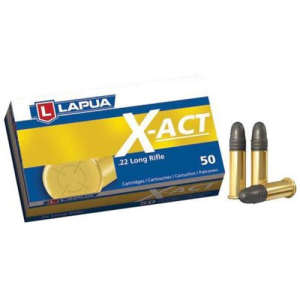
When ELEY makes a single production run of its best .22 LR rifle ammo, that run produces tenex, match, and team. The rounds coming off the line are visually identical. ELEY grades the output based on measured performance, sorting the otherwise identical cartridges into the three tiers. Lapua does something similar: a single production run gets sorted into X-Act, Midas+, and Center-X.
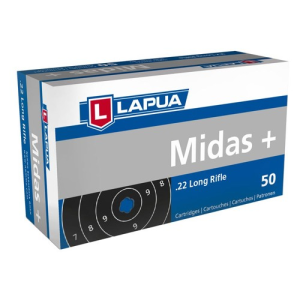
This means tenex isn't made on a separate, magical production line. It's the cream that rose to the top of the same batch that also produced match and team. The grading is based on actual measured precision, not different components or processes.
What are the accuracy standards for each grade?
ELEY publishes accuracy as Radial Standard Deviation (RSD), which measures the distance from each shot hole to the group's center point (the mean point of impact). The published standards are:

- ELEY tenex: 3.75 mm RSD
- ELEY ultra (extreme long range): 4.00 mm RSD
- ELEY match: 4.74 mm RSD
- ELEY team: 5.50 mm RSD
Those numbers define the quality gates. Rounds that measure within the tenex threshold get labeled tenex. Rounds that fall between the tenex and match thresholds become match. And so on down the line.
Does tenex always outshoot match?
Not necessarily, and this is where lot testing in your specific rifle becomes critical. Multiple competitive shooters report that ELEY Match outshoots tenex in their rifles more often than they'd expect given the price difference. One experienced competitor noted that Match outshoots tenex "most often" across the shooters they compete with. Others have fired perfect scores with both Match and tenex after selecting specific lots through testing.
The grading tells you what ELEY measured in their barrels. Your barrel is a different instrument. A lot of Match that happens to be a near-perfect dimensional match for your chamber and bore can absolutely outperform a lot of tenex that isn't. This is exactly why lot testing exists.
How to use the Lot Analyzer in your ammo selection process
Where does the Lot Analyzer fit in the overall workflow?
Think of ammunition selection for precision .22 LR as a funnel with three stages. The Lot Analyzer is the first and cheapest filter.
The Lot Analyzer itself is free, remote, and available to anyone with a batch number. It tells you what ELEY measured in ELEY's barrels. This is your screening step. Next comes batch testing, either at your own range or at a professional test facility. ELEY operates test centers in the United Kingdom, Hungary, Germany, the United States, and Canada. Lapua runs similar facilities in Mesa, Arizona; Marengo, Ohio; Schönebeck, Germany; Konnevesi, Finland; and Lapua, Finland. Third-party test ranges like Whidden Gunworks also test multiple brands. Finally, you confirm the lot in your own rifle under your own conditions, ideally tracking velocity alongside group size.

How do I use the Lot Analyzer to find my next lot when my current one runs out?
This is one of the tool's most practical applications. Record the batch code of every lot that shoots well in your rifle. Look it up on the Lot Analyzer and note the key data points: velocity, group size, shot distribution pattern, radial dispersion across the four barrels. When that lot runs out, use the published data to find the closest match among lots currently available on the shelf. Then confirm it in your own barrel.
You're essentially building a profile of what "good" looks like for your rifle in terms of ELEY's factory data, then using that profile to narrow your search.
Can I compare lots side by side on the Lot Analyzer?
The tool lets you look up individual lots and review their data. Multiple users have described pulling up data for different lots and comparing the proof group overlays, velocity figures, and dispersion patterns. Whether the interface supports a formal side-by-side comparison view or you're doing it manually by opening multiple tabs depends on the current state of the platform, but the data is there to compare.
Professional test ranges and physical lot testing
What does professional lot testing involve?
At facilities like Whidden Gunworks, your actual rifle is secured in a specially designed test fixture and fired in an indoor range on electronic targets. This removes shooter error, wind, and other variables from the equation. They test multiple lots of ammunition through your specific barrel and provide the results so you can make your selection.
SK Rifle Match .22 LR Deals
Prices may change. May contain affiliate links.
Norma .22 LR Deals
Prices may change. May contain affiliate links.

Whidden Gunworks tests ELEY, Lapua, Norma, and RWS ammunition. For ELEY tenex, the testing cost is $140. For Lapua, ELEY match, RWS, SK Rifle Match, and Norma, the cost is $240 and covers 15 lots tested at both 50 meters and 100 meters. They also now offer chronograph data alongside group testing, which is especially relevant for long-range rimfire shooting where consistent velocities matter enormously.
For ELEY tenex testing specifically, the most accurate six lots from an initial screening get an additional 30 shots fired for a total of 40 shots per lot in a second phase. You're provided the complete results to make your lot selection.
How does this compare to testing at ELEY's own facilities?
ELEY operates five test centers worldwide. Testing at ELEY's facility means your rifle is tested with ELEY ammunition in a controlled environment using ELEY's proprietary software, which provides detailed information on each test result. Many top competitive shooters test at ELEY's ranges. One competitor described shooting a 3,200 score with a lot of tenex that was purchased after testing at ELEY's facility.
Lapua runs a parallel system with rimfire performance centers. Their testing procedure typically takes two to four hours and uses digital measurement equipment with several kinds of benches. Lapua also offers a cold chamber, referred to as the Røyken cooling chamber, that goes down to minus 25 degrees Celsius for biathlon shooters who need to test ammunition performance in extreme cold.
Is professional testing worth the cost?
Run the per-round math. If you're buying a case of 5,000 rounds of ELEY Match, the ammunition cost alone is significant. A $240 testing fee to ensure you're buying the best lot for your rifle is a small percentage of the total investment. If testing saves you from buying a case that doesn't perform, it pays for itself immediately. For recreational shooters burning through a few boxes at a time, professional testing is overkill. For competitive shooters buying in volume, it's one of the highest-return investments in the sport.
Chrono notes: what velocity data tells you (and doesn't)
Why does velocity matter for lot selection?
Consistent velocity is the foundation of predictable trajectory. In long-range rimfire shooting especially, a lot with tight velocity spreads will hold its trajectory prediction better than a lot with wide spreads, even if the average velocity is identical. The standard deviation (SD) of velocity across a string of shots tells you what to expect shot after shot. Extreme spread (ES) tells you the worst-case gap between your fastest and slowest rounds.
What velocity spreads should I expect from match-grade .22 LR?
Expectations need to be realistic. Rimfire ammunition, even premium match-grade stuff, has inherently more velocity variation than quality centerfire handloads. The primer plays an outsized role in rimfire because the powder charge is so small. Primer consistency becomes a much larger factor than it would be in a large centerfire cartridge where the primer just needs to get the powder burning.
One experienced tester noted that even within a single lot of Lapua match ammo, velocity consistency from box to box within the same lot wasn't always as tight as expected. The assumption that one or two boxes would reveal the ES and SD you'd see across all boxes from the same lot didn't always hold up. This underscores why larger sample sizes matter when you're chrono-testing.
Should I chrono-test even if I've used the Lot Analyzer?
Yes. The Lot Analyzer gives you ELEY's measured velocity for the batch, but your barrel length, chamber dimensions, and bore condition will produce different absolute numbers. What you're looking for is whether the relative consistency holds up. A lot that showed tight velocity performance in ELEY's data should generally show tighter performance in your barrel than a lot that didn't, but the actual numbers will differ. Your chronograph and your target do the truing.
Environmental conditions also shift velocity meaningfully. A cartridge fired at 90°F will exit the barrel faster than the same lot fired at 30°F. Altitude reduces barometric pressure, which also affects velocity. Serious competitors build a muzzle velocity temperature curve for their specific rifle and lot, then rebuild it every time they switch lots. The lot number changes, the data must change.
Common mistakes in lot selection
There are several patterns that waste time and money in the lot-testing process. Avoiding these will get you to good ammo faster.
Testing outdoors in variable wind without accounting for conditions is probably the most common error. Wind affects .22 LR dramatically, and what looks like a bad lot might just be a bad wind call. Indoor testing or calm conditions are strongly preferred for initial lot screening. One experienced benchrest shooter described being a "big believer in indoor testing first" for exactly this reason.
Testing too few rounds per lot is another frequent problem. Shooting a five-round group and declaring a lot good or bad doesn't give you enough data. Professional test ranges fire 40 shots per lot in their final evaluation phase for a reason. At minimum, you need enough rounds to see the lot's true dispersion pattern emerge rather than getting lucky or unlucky with a small sample.

Assuming the most expensive grade is automatically the best for your rifle leads to wasted money. As discussed above, ELEY Match outshoots tenex in many rifles. Starting with Match and only moving to tenex if Match doesn't deliver acceptable results is a more cost-effective approach. The price gap between the two is real, and the performance gap in your specific barrel might not justify it.
Ignoring the date loaded is a subtle one. The Lot Analyzer shows when a batch was manufactured. Ammunition age can affect performance, and knowing the production date helps you track whether older lots in your inventory are still performing to their original standard.
Not recording lot numbers of ammo that shoots well is the simplest mistake and the easiest to fix. Write down the lot number of every batch that performs in your rifle. Look it up on the Lot Analyzer. Build a profile. When you need to buy more, you have a reference point instead of starting from scratch.
Product comparison: ELEY's match-grade lineup
The three ELEY products most commonly lot-tested by competitive shooters occupy different price tiers and accuracy standards, but they come from the same production process.
ELEY tenex sits at the top of the hierarchy. It uses the patented EPS flat nose bullet profile, which ELEY says pulls the center of pressure forward to aerodynamically stabilize the projectile. The RSD accuracy standard is 3.75 mm. Tenex has won 14 of 18 Olympic medals at the London 2012 Games and was used by every 2014 World Champion, according to ELEY's own claims. Retail pricing from one dealer shows tenex at roughly $21.20 to $21.50 per box of 50 at sale pricing, with quantity discounts dropping that to around $20.50 per box at 50+ boxes. That works out to roughly 41 to 43 cents per round.
ELEY Match is the second tier, also using the EPS flat nose profile and cut mouth case for consistent internal ballistics. The RSD standard is 4.74 mm. Match is described by ELEY as second in the world of flat-nose .22LR accuracy and performance, with ELEY tenex being the world number one. One dealer lists Match at around $17 per box of 50 at sale pricing, with quantity discounts at 100+ boxes bringing it to about $16.35 per box. That's roughly 33 to 34 cents per round. The per-round savings compared to tenex add up fast over a case of 5,000.
ELEY Team is the third tier from the same production grading, with an RSD standard of 5.50 mm. It's available through retailers like Whidden Gunworks as a test-range-select option, meaning you can buy lots that have already been pre-screened for accuracy in a test barrel. For shooters who want ELEY's production quality at a lower price point and are willing to accept the wider accuracy specification, Team is the entry into ELEY's graded competition line.
The semi-auto .22LR benchrest precision round occupies a different niche. One tester measured it with a standard deviation of 5.1 fps and extreme spread of 13.5 fps across their testing, making it notably consistent for a round designed for semi-automatic platforms. At roughly 25 to 29 cents per round depending on the source, it represents a moderately priced option for AR-platform and other semi-auto precision shooters.
Still have questions?
The Lot Analyzer is the starting point, not the finish line. Use it to screen lots before you buy, to find replacements when your current lot runs out, and to build a data profile of what works in your rifle. But the real answers come from your barrel, your chronograph, and your targets.
If you want to go deeper, ELEY's test range booking is available at eley.co.uk/vip. Whidden Gunworks offers multi-brand testing including ELEY, Lapua, RWS, and Norma at whiddengunworks.com. Lapua's rimfire performance centers in Mesa, Marengo, Schönebeck, Røyken, and Lapua offer the same service for Lapua products. For environmental factors affecting velocity, build a temperature-velocity curve for your specific lot and rifle rather than relying on generic charts.
The cost math on all of this is straightforward. The Lot Analyzer is free. A few minutes of screening before you order saves you from buying lots that tested poorly even under ideal conditions. Professional testing costs a fraction of what a case of match ammo costs. And the alternative, buying random lots and hoping for the best, is the most expensive approach of all. You just pay for it in wasted ammo and dropped points instead of a testing fee.