
Most church security teams shoot once or twice a year, run a basic qualification, and call it good. That's not training. That's checking a box. The problem isn't a lack of willingness. It's a lack of structure. Members show up to the range, burn through a couple hundred rounds at static paper, and leave without knowing whether they actually got better at anything that matters inside a sanctuary full of people.
This article lays out a four-station range day built around the specific skills church security teams need. Each station targets a distinct problem: drawing from concealment under realistic conditions, making precise hits on a tight target zone that reflects real accountability for every round, working from behind cover that mimics church architecture, and running a timed qualification course that gives you a measurable standard. Run all four stations in a single session, and every team member walks away with a clear picture of where they stand and what to work on next.
The round count is manageable. The standards are specific. And the whole thing can run in about three hours with a small team rotating through stations.
What this range day builds
This isn't a marksmanship clinic. It's a diagnostic session built around four skills that matter most inside a church environment.
Station 1 builds a reliable concealed draw. Most safety team members carry concealed during services, but many teams still train from open-carry holsters or low ready. That disconnect between training and reality is one of the biggest issues flagged by church security trainers. If you've never timed your draw from under a tucked shirt or a sport coat, you don't actually know how fast you can get a first shot on target.

Station 2 hammers precision accountability. Inside a church, there are no acceptable misses. Pews full of families sitting shoulder to shoulder mean every round that doesn't hit the intended target hits something else. Training to an 8-inch circle rather than a full silhouette forces the kind of precision that environment demands.
Station 3 introduces positional shooting from cover. Pews, doorways, pillars, hallways. Churches are full of hard and soft cover that most teams never practice using. This station gets shooters working from simulated barricades at realistic distances.
Station 4 is a timed qualification course of fire that pulls everything together and gives each member a scored result they can track over time.
Safety and equipment checklist
Range requirements
You need a range that allows drawing from a holster. Many public indoor ranges don't. If your team doesn't have access to an outdoor range or a private bay, find a facility that accommodates tactical-style shooting. Indoor ranges work in a pinch, but communication on the line gets difficult with larger groups, and the environment doesn't lend itself to the kind of movement and positional work stations 3 and 4 require.
You'll want at least two lanes or shooting positions per station if you're rotating a team of six to eight people. A shot timer is essential for stations 1, 2, and 4. If you don't own one, several free phone apps work well enough for training, though a dedicated timer is more reliable.
Gear each member needs
Every member should show up with the holster and clothing they actually wear during services. That means the concealment garment goes on before the first drill. If someone carries under a blazer on Sundays, they train under a blazer. If it's an untucked button-down, that's what they wear on the line. This is the single most important equipment decision for the day. Drawing from a Kydex range holster on your belt tells you nothing about how fast you'll clear a cover garment when it counts.

Beyond that, the standard list: eye and ear protection, a sturdy gun belt (not a dress belt), at least three magazines, a magazine pouch or pocket carry setup that mirrors their Sunday loadout, and enough ammunition for approximately 150 rounds. Bring a few extra magazines if you have them. Reloading between strings slows down rotation.
Targets
For stations 1 and 2, use targets with a clearly defined 8-inch circle in the upper chest area. You can use commercially available targets with scored zones, or simply paste an 8-inch paper plate onto a standard silhouette. The point is to shrink the acceptable hit zone. A full B-27 silhouette where hits to the lower abdomen score almost as well as hits to the chest doesn't build the precision standard a church environment demands.
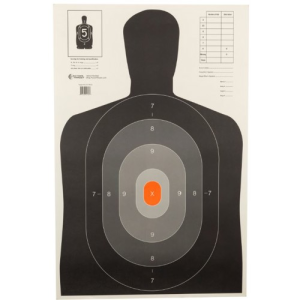
Action target B-27 silhouette target Deals
Prices may change. May contain affiliate links.
For station 3, the same 8-inch circle targets work. Station 4 uses whatever target your team's qualification course specifies.
Safety brief
Before anyone touches a gun, run a safety brief that covers the cold range rules, medical kit location, and the specific flow between stations. Designate one person as the range safety officer for the entire session. If your team has someone with instructor credentials or significant range experience, put them in that role. Everyone else rotates through stations as shooters.
One more thing: bring a basic trauma kit. Not because you expect to need it, but because a team that trains for emergencies should have medical gear staged at every training event. It's a good habit that reinforces the mindset.
Station 1: concealed draw to first shot
Course of fire
Distance: 5 yards. Target: 8-inch circle. Round count: 15 rounds total (5 strings of 3 rounds each).

Each string begins with the shooter standing, hands naturally at their sides, firearm concealed under their normal carry garment. On the buzzer, the shooter clears the garment, draws, and fires 3 rounds into the 8-inch circle.
Execution steps
The draw from concealment has more steps than an open-carry draw, and each one is a potential failure point. The sequence: clear the garment with the support hand, establish a firing grip on the holstered gun, draw straight up and out of the holster, bring the gun to a compressed ready position, then punch out to full extension while acquiring the sights and prepping the trigger.
The coaching cue that matters most here is garment clearance. Most fumbled draws from concealment fail at the very first step. The support hand has to get the cover garment out of the way decisively and hold it there long enough for the strong hand to establish a full grip. With a jacket, that means sweeping it back. With a tucked shirt, it means ripping it up. Different garments require different techniques, and that's exactly why members need to train in what they actually wear.
On each string, the shooter should focus on one thing: a smooth, consistent garment clearance that flows directly into the draw. Speed comes from eliminating hesitation between steps, not from rushing any single step.
Standards
Par time: 3.0 seconds from buzzer to last shot for each 3-round string. All 3 rounds must land inside the 8-inch circle. Any round outside the circle is a miss, regardless of where it lands on the silhouette.
That 3-second par is achievable for most shooters who've practiced the concealed draw. It's not fast. It's a baseline. If members are consistently breaking 2.5 seconds with all hits, tighten the par to 2.5.
What you'll feel when it clicks
When the garment clearance becomes automatic, the draw feels like one continuous motion instead of a series of separate steps. The hand finds the grip without fishing. The gun clears the holster without snagging. The first time a shooter runs a clean string under 2.5 seconds from concealment, they'll understand why this station exists.
Station 2: precision accountability drill
Course of fire
Distance: 7 yards. Target: 8-inch circle. Round count: 20 rounds total (4 strings of 5 rounds each).
Shooter starts from low ready (gun drawn, muzzle pointed at the ground roughly 45 degrees below the target). On the buzzer, the shooter raises the gun and fires 5 rounds into the 8-inch circle.

Execution steps
This station is about trigger control and sight alignment under a par time, not about the draw. Starting from low ready isolates the shooting fundamentals.
The coaching cue: press the trigger straight to the rear without disturbing the sights. That sounds obvious. It's the hardest thing in shooting. At 7 yards with an 8-inch circle, most shooters can make the hits if they slow down. The par time is what creates pressure, and pressure is what reveals bad habits.
Between strings, have shooters call their shots. Before they look at the target, they should be able to say where they think each round landed. If they can't call their shots, they're not seeing their sights. That's the diagnostic. A shooter who consistently calls shots low-left is almost certainly anticipating recoil and pushing the muzzle down before the round breaks.
Standards
Par time: 4.0 seconds for each 5-round string. All 5 rounds inside the 8-inch circle. Any miss is a failed string.
This is a higher precision standard than most state law enforcement qualifications require at this distance. That's intentional. As one instructor who teaches active shooter response to church teams puts it, misses are not allowed. Inside a church, every round that doesn't hit the threat hits a congregant, a child, a wall with people behind it. Training to a generous silhouette doesn't build the precision this context demands.
Common mistakes at this station
Shooters rush the first shot. The buzzer goes off and they yank the trigger before the sights are settled. The first round of each string is the one most likely to miss. Slow that first shot down by a quarter second and the group tightens dramatically.
Grip pressure changes between shots. Some shooters death-grip the gun on the first round, then relax, then re-grip. Inconsistent grip means inconsistent point of impact. Establish a firm, consistent grip before the buzzer and maintain it through the entire string.
Trigger reset gets sloppy. After the first shot, the trigger needs to travel forward only to the reset point, not all the way out. Over-traveling the trigger forward wastes time and introduces unnecessary movement that can shift the sights.
Eyes leave the sights to check the target between shots. Keep the visual focus on the front sight (or the dot, if running an optic) through the entire string. Check the target after the last round, not between shots.
Station 3: shooting from cover
Course of fire
Distance: 10 yards. Target: 8-inch circle. Round count: 24 rounds total (4 strings of 6 rounds each, alternating sides of a barricade).
Set up a barricade or use a portable barrier. A simple vertical divider works. Anything that forces the shooter to blade their body and expose only the gun and enough of their head and torso to see the sights and make the shot.

String 1: 6 rounds from the right side of the barricade. String 2: 6 rounds from the left side. String 3: 6 rounds from the right side, kneeling. String 4: 6 rounds from the left side, kneeling.
Shooter starts behind the barricade, gun holstered and concealed. On the buzzer, draw, move to the shooting side of the barricade, and engage.
Execution steps
Working from cover is where most church security teams have zero experience. Shooting flat-footed in front of a target stand doesn't prepare anyone for leaning around a pew end or a doorframe.
The key coaching cues here are about minimizing exposure. The shooter should present only what's necessary: the gun, the hands, and enough of the head to see the sights. Everything else stays behind the barricade. Most shooters instinctively step too far out, exposing their entire torso. Have someone stand behind them and coach them back.
Shooting from the left side of a barricade is awkward for right-handed shooters, and vice versa. This is normal. The point isn't to be equally fast on both sides. The point is to be functional on both sides, because you don't get to choose which side of a pew or pillar you're on when something happens.
Kneeling strings add another layer. Dropping to a knee behind a pew changes the sight picture and the body mechanics. Some shooters find kneeling more stable. Others find it slower and less comfortable. Both are fine. What matters is that they've done it before it counts.

Standards
Par time: 6.0 seconds per string (includes the draw from concealment and moving to the barricade edge). All 6 rounds inside the 8-inch circle.
This is generous. The extra time accounts for the positional work. If a shooter is consistently beating 5 seconds with all hits, they're doing well. If they're blowing past 6 seconds or missing, the issue is almost always too much exposure and not enough use of the barricade for support.
Dry fire notes
This station benefits enormously from dry practice inside the actual church building. With an unloaded, verified-clear firearm (or better yet, a blue gun or SIRT pistol), team members can practice moving to positions behind pews, doorframes, and pillars. They learn the geometry of their specific building: which positions give good angles to the main entrance, which create crossfire problems, which provide real concealment versus just visual obstruction. Tactical drills can be run in the church itself with airsoft or training guns so members know how to conduct an armed defense in that specific facility. That kind of building-specific rehearsal is something no flat range can replicate.
Station 4: timed qualification course of fire
Course of fire
This station is your team's scored standard. The specific course of fire should match or closely mirror the qualification used by your local or state law enforcement agency. There's a practical reason for this beyond just having a benchmark: if a team member ever has to explain their training in a legal proceeding, being able to say they qualified to the same marksmanship standard as law enforcement officers in their state carries real weight.
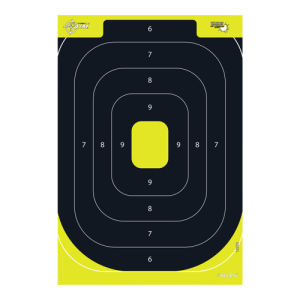

Most state law enforcement courses of fire include strings at 3, 7, 15, and 25 yards, with some requiring strong-hand-only and support-hand-only strings. The round count typically falls between 30 and 50 rounds.
For teams that are newer or whose members haven't shot a formal qualification before, start with a simplified version. Use the same distances and target, but begin all strings from low ready instead of from the holster. This removes the draw from the equation and lets shooters focus on the marksmanship standard. As the team progresses, add the draw. Then add the draw from concealment. Then tighten the par times.
Standards and scoring
Use the scoring criteria from whatever qualification course you've adopted, with one modification: tighten the acceptable hit zone to the 8-inch upper chest circle rather than the full silhouette. Hits outside the 8-inch circle but on the silhouette don't count as passing hits.
Any miss off the target entirely is an automatic failure of that string. If a malfunction occurs, the shooter clears it and continues within the time limit. If they can't clear it in time, the string is failed. Allow up to 3 attempts to pass the full qualification. After 3 failures, the member practices and schedules a separate qualification session.
This isn't punitive. It's about maintaining a standard that reflects the environment. Few members of most church security teams can pass even an off-duty law enforcement qualification under prescribed time constraints. That's not a criticism. It's a starting point. The goal is measurable improvement over time, not perfection on day one.
Scaling up and down
For newer teams or less experienced shooters
Extend all par times by 50%. A 3-second par becomes 4.5. A 4-second par becomes 6. The hit standard stays the same. Don't loosen the accuracy requirement. Loosen the time requirement. Accuracy is non-negotiable in a church setting. Speed is something you build.
At station 1, allow shooters to start with the concealment garment already cleared (hand on the grip, garment swept back) for the first two strings, then progress to a full concealed draw for the remaining strings.
At station 3, skip the kneeling strings initially. Standing barricade work on both sides is enough for the first session.

At station 4, start from low ready instead of from the holster. Use the simplified version of your state's qualification course and work toward the full version over subsequent range days.
For experienced shooters
Tighten par times by 20%. Add a 15-yard string to station 2. At station 3, add a string where the shooter starts facing away from the target (simulating a threat from behind) and must turn, move to cover, and engage. At station 4, run the full law enforcement active-duty qualification from concealment with no time extensions.
You can also add a decision-making layer by mixing in no-shoot targets at stations 3 and 4. Place a no-shoot silhouette partially overlapping the threat target. Any hit on the no-shoot is an automatic failure. This forces the kind of target discrimination that a crowded sanctuary demands.
Common mistakes across all four stations
Training from open carry when you carry concealed on Sundays. This is the most common and most consequential mistake. The draw from concealment is a fundamentally different motor skill than the draw from an exposed holster. If you train one way and carry another, you're building skills that don't transfer. Every drill, every string, every rep should start from how you actually carry.
Scoring hits on a full silhouette and calling it good. A round that grazes the arm or lands in the lower abdomen of a B-27 silhouette scores almost the same as a round to the upper chest on most standard targets. In training, that feels like a hit. In a church, that's a round that didn't stop the threat and may have continued into a pew behind it. Shrink the acceptable zone. Train to the 8-inch circle.
Skipping one-handed shooting entirely. Strong-hand-only and support-hand-only shooting is uncomfortable and humbling. Most people avoid it for exactly those reasons. But if your support hand is occupied (pushing someone behind you, holding a door, injured), you need to be able to make hits with one hand. Work strong-hand-only and support-hand-only strings into station 2 or station 4 at least once per quarter.
Never training in low light. Many church events happen in the evening. Sanctuaries dim the lights during worship. Hallways and parking lots are poorly lit. If your team has never shot with a handheld flashlight or weapon-mounted light, that's a significant gap. Low-light engagement drills should be part of your training rotation, even if they don't fit into every range day.

Running drills without a timer. Without a par time, there's no pressure. Without pressure, there's no stress inoculation. The timer is what separates practice from training. Every station in this range day uses one. If your team has been shooting without a timer, that changes today.
Tracking progress
What to log
After each range day, every team member should record their results for each station: par times, hit percentages, and pass/fail on the qualification course. A simple spreadsheet works. So does a paper log kept in a binder. The format doesn't matter. The habit does.
Track these numbers over time:
Station 1 average draw-to-first-shot time from concealment, and hit percentage on the 8-inch circle. Station 2 hit percentage at 7 yards under par time. Station 3 hit percentage from both sides of the barricade, standing and kneeling. Station 4 overall qualification score and pass/fail.
Benchmarks
A team member who can draw from concealment to a first hit on an 8-inch circle at 5 yards in under 2.5 seconds, put 90% or more of their rounds inside the 8-inch circle at 7 yards under a 4-second par, work both sides of a barricade with 80% or better hits, and pass their state's law enforcement qualification course from concealment is performing at a genuinely competent level. That's not elite. That's the floor for someone trusted to carry a firearm in a room full of families.

Snap caps Deals
Prices may change. May contain affiliate links.
Most team members won't be there on day one. That's fine. The standard exists so you know what you're building toward. Track it. Then trust the trend.

Progression
Run this four-station range day quarterly at minimum. Between range days, dry fire fixes a remarkable amount. The concealed draw at station 1 is almost entirely a dry fire skill. Garment clearance, grip acquisition, presentation to the target. All of that can be practiced at home with an unloaded, verified-clear firearm, multiple times a week, for zero cost and zero ammunition.
Between quarterly range days, schedule at least one additional session focused on a single station. If the team struggled with barricade work, run a session that's nothing but station 3 with extra reps. If qualification scores were low, dedicate a session to station 4 with coaching between strings.
Fifty rounds with a plan beats 200 without one. Every round your team fires should have a target zone, a par time, and a standard attached to it. That's what turns a range day into training. And that's what builds a team that's actually prepared, not just armed.