
The registry closed in 1986. The supply only shrinks. And yet the transferable machine gun market keeps generating eye-popping auction results that make even seasoned NFA collectors do a double-take. July 2026 was no exception, with auction houses and private sales producing data points that tell a clear story about where this market sits right now and where it's heading.
This isn't a general overview of how to buy a machine gun. This is a look at what actually sold, what it sold for, and what those numbers mean if you're trying to enter or expand in this market during the second half of 2026.
The fixed supply reality
No new transferable machine guns can enter the civilian registry. The Firearm Owners' Protection Act of 1986 banned civilian transfer or possession of any machine gun not lawfully possessed before the date of enactment, May 19, 1986. Only guns manufactured and registered before that date (or imported and registered prior to 1968) are eligible for civilian transfer. That supply is permanently capped and functionally shrinking as guns are destroyed, seized, or lost to estate complications.
Entry-level transferable machine guns typically start around $7,000. Popular models climb dramatically from there. An Uzi that could be found in the $12,000 to $16,000 range a few years ago now fetches $15,000 to $19,000. Prices rarely drop. At worst, they remain flat for short periods before resuming their climb. The math is simple: fixed supply, persistent demand, and inflation all push in one direction.

What the 2026 tax changes mean for MG buyers
One significant shift in 2026 that affects the broader NFA landscape: the "One Big Beautiful Bill" dropped the federal tax stamp to $0 for suppressors, SBRs, SBSs, and most AOWs effective January 1, 2026. Machine guns and destructive devices still carry the $200 tax per transfer. That distinction matters because a private-party interstate machine gun transfer can involve two Form 4s and therefore $400 in tax stamps, on top of the five- or six-figure purchase price.
The $200 stamp is a rounding error on a $50,000 gun, but the process it triggers is not. Form 4 wait times, fingerprints, photos, responsible person forms, and CLEO notification all still apply. The eForm system has improved timelines for suppressors and SBRs, but machine gun transfers still require patience.
Morphy Auctions: the big numbers from mid-2026
The Morphy Auctions May 13-15, 2025 Firearms & Militaria sale produced some of the most instructive data points of the year, and those results were still reverberating through the market in July. Here's what crossed the block:
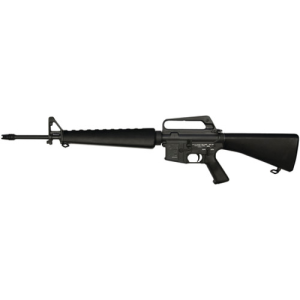
Colt M16 with heavy barrel LMG upper Deals
Prices may change. May contain affiliate links.
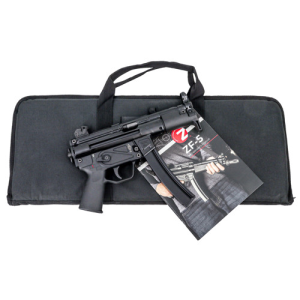
Zenith Z-5K 9mm Deals
Prices may change. May contain affiliate links.
May contain affiliate links.
May contain affiliate links.
May contain affiliate links.
Savage M1A1 Thompson
May contain affiliate links.
Fleming Firearms HK machine gun sear
May contain affiliate links.
S&H Arms HK registered trigger pack
May contain affiliate links.
Qualified Manufacturing HK auto sear
May contain affiliate links.
Fleming Firearms registered HK auto sear
May contain affiliate links.
May contain affiliate links.
A few things jump out immediately. That Colt M16 with the LMG upper drew 22 bids and hammered at $127,200. The Billistics HK 23E belt-fed conversion blew past its $30,000-$40,000 estimate to land at $120,000 with 20 bidders. Belt-fed transferables command serious premiums because they're rare and because the shooting experience is fundamentally different from a submachine gun.

The HK sear and trigger pack market is particularly interesting. Fleming Firearms sears, S&H Arms packs, and Qualified Manufacturing auto sears all traded in the $38,400 to $49,200 range, with most exceeding their high estimates. The one outlier was a Fleming HK sear that sold for just $5,520 against a $4,000-$8,000 estimate. Without more context on condition or provenance, that's a notable discount in a market where HK sears typically command $35,000+.
The MP5K-N with a registered pack at $60,000 aligns with what the broader market is showing for MP5-pattern guns. Forum discussions around transferable MP5 values show ongoing debate about whether original factory guns versus sear conversions should command different premiums. The practical reality is that sear guns and registered pack guns both trade actively, with original factory transferable MP5s (standard, SD, or K variants) generally holding a premium over conversions among collectors who value provenance.

Current market pricing by platform
Based on documented 2026 sales, auction results, and dealer valuations, here's where the major platforms sit:

M-11/9 9mm Deals
Prices may change. May contain affiliate links.
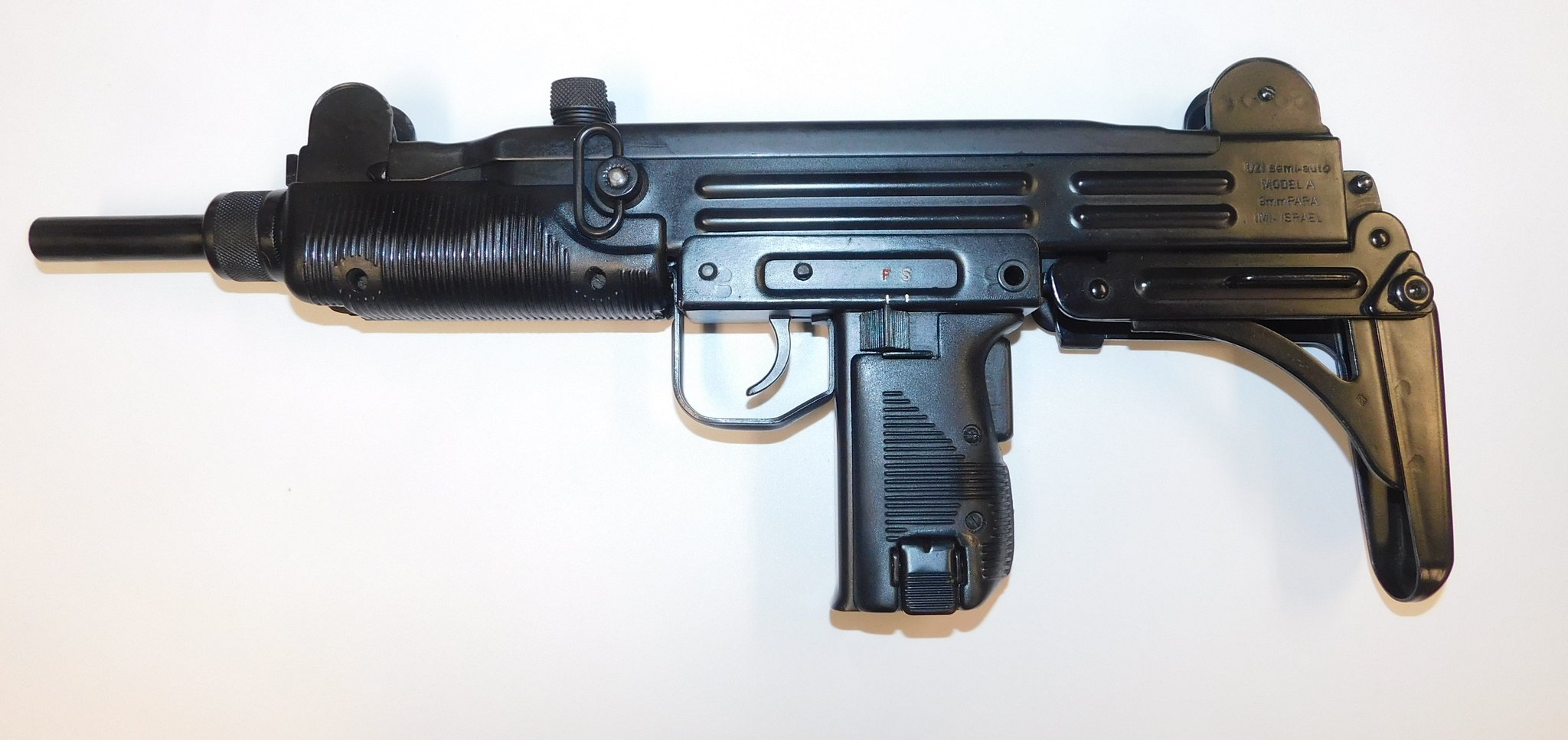
Uzi Deals
Prices may change. May contain affiliate links.

May contain affiliate links.
May contain affiliate links.
May contain affiliate links.
May contain affiliate links.
Smith & wesson S&W 76
May contain affiliate links.
May contain affiliate links.
May contain affiliate links.
May contain affiliate links.
May contain affiliate links.
May contain affiliate links.
Entry-level (sub-$20,000)
The MAC-10 and MAC-11 remain the backbone of the entry-level transferable market. These are the most consistently traded transferable machine guns, with broad buyer pools supporting steady liquidity. The MAC-10 appears most often in .45 ACP and 9mm, while the MAC-11 is primarily chambered in .380 ACP, with later variants such as the M-11/9 and Vulcan M-11-9 chambered in 9mm Parabellum. Prices start around $7,000 for rough examples and climb from there based on condition, manufacturer, and configuration.
Transferable Uzis currently start around $15,000 and can range up to $22,000 or even $28,000 depending on registration type, manufacturer, configuration, and condition. Registered receiver guns and sear conversions fall within that band, with original receivers and factory markings pushing toward the top.
Other entry-level platforms worth watching include the S&W 76, Ruger AC-556, and various early Ingram models. These trade less frequently than MACs and Uzis but often fall into approachable price tiers.
Mid-tier ($30,000 - $60,000)
HK sears and registered trigger packs dominate this space. The Morphy results confirm that $38,000-$49,000 is the current trading range for quality HK auto sears and packs from known manufacturers like Fleming, S&H Arms, and Qualified Manufacturing. The Colt SMG 9mm M16A2 variant at $44,400 also fits squarely in this tier.
Thompsons live here too, with WWII-era guns commanding strong prices driven by both NFA collector demand and military collector crossover interest.
Premium ($60,000+)
The M60 represents the belt-fed segment well. Transferable M60 values currently range from $60,000 to $120,000, with pricing driven by configuration, condition, originality, and included accessories like feed components, mounts, or spares. Early SACO and Maremont builds command the strongest interest.
The Morphy results show that M16-pattern guns with desirable uppers (like the LMG configuration at $127,200) and belt-fed conversions (the HK 23E at $120,000) are where the real money concentrates. These are guns that combine transferable status with genuine military collector appeal or unique shooting characteristics.
The sear versus registered receiver debate
This is where most first-time MG buyers get confused. A transferable machine gun can take several forms: an original factory-built gun with a registered receiver, a registered auto sear that drops into a semi-auto host, or a registered trigger pack/conversion. They're all legally equivalent as NFA items, but the market prices them differently.

HK MP5 Deals
Prices may change. May contain affiliate links.
Original factory transferable guns, particularly in the HK and Colt families, tend to hold a premium among collectors who value authenticity. A factory MP5 will generally command more than a semi-auto host with a registered sear, even though both shoot identically. The sear market has its own dynamics: sears are more portable between hosts, which adds flexibility, but they're also more comparable to devices like forced reset triggers in the eyes of some newer shooters, which may affect long-term demand patterns.
The practical advice: if you're buying to shoot and enjoy, a registered sear in a quality host delivers the same experience for less money. If you're buying as a long-term store of value with collector appeal, original factory guns have historically held stronger.
ATF regulatory changes to watch
On May 6, 2026, ATF published a Notice of Proposed Rulemaking (91 Fed. Reg. 24485) proposing to amend 27 C.F.R. § 479.105, the regulation governing machine gun transfers between qualified federal firearms licensees. Comments closed July 6, 2026.
This proposed rule affects transfers of post-86 machine guns between qualified licensees more broadly, including dealer sales samples, manufacturer stockpiling, and out-of-business transfers, not the transferable market directly. However, any tightening or loosening of the dealer sample pipeline affects the broader ecosystem. ATF has been scrutinizing the 'law letter' process since a 2023 open letter that further explained and expanded the existing law letter requirement, establishing a guide for licensees to adequately articulate the government entity's bona fide interest in purchasing machine guns.

The proposed rule aims to simplify regulatory language while incorporating fraud-prevention measures. Specifically, ATF proposes striking the requirement that dealers establish "availability to fill future orders" and the need to justify requested quantities. This is a dealer-side change, but it signals ATF's ongoing attention to the machine gun transfer space.
For transferable gun buyers, the immediate regulatory environment is stable. The $200 tax stamp remains. The Form 4 process remains. State law is still the first gate, federal the second.
Common mistakes in the transferable MG market
Forgetting the interstate transfer math. If you're buying a privately owned machine gun from someone in another state, the gun must transfer to a dealer in your state via Form 4, then transfer to you via a second Form 4. That's two $200 stamps ($400 total) and two wait periods. Buying from a dealer (Form 3 to your state, then Form 4 to you) involves only one $200 stamp.
Ignoring state law. Virginia, for example, requires all machine guns in the state to be registered with the Department of State Police within 24 hours of acquisition, and possession for an aggressive or offensive purpose is prohibited. Colorado's SB25-003 creates new restrictions on semiautomatic firearms effective August 1, 2026. State-level restrictions are a moving target and must be verified before any purchase.
Overpaying for condition issues on belt-feds. Missing or non-matching components on an M60 or similar platform can significantly change how the market prices the overall package. Feed components, mounts, and spares all factor into value. A "complete" gun with documentation commands a premium over a bare receiver.
Assuming prices only go up. The supply of transferable machine guns is fixed, but fixed supply doesn't automatically mean prices climb forever. You still need buyers willing and able to pay. With alternatives like forced reset triggers offering some of the recreational experience at a fraction of the cost, the demand side has more nuance than the simple "closed registry equals infinite appreciation" narrative suggests.
What to do next
If you're seriously considering entering the transferable market in the second half of 2026, start with your state's laws. Confirm that machine gun ownership is legal where you live and understand any registration requirements. Then decide on your budget tier: entry-level MACs and Uzis under $20,000, mid-tier HK sears and Colts in the $30,000-$50,000 range, or premium belt-feds and rare configurations above $60,000.
Work with a dealer who specializes in NFA transfers. Capitol Armory, Gun Point (avguns.com), and established auction houses like Morphy and Rock Island all handle transferable machine gun transactions regularly. The transfer process has legal nuances that benefit from experienced guidance, particularly for interstate purchases where the Form 3/Form 4 routing matters for both your timeline and your wallet.
The July 2026 data confirms what the market has been saying for years: transferable machine guns remain a serious asset class with real liquidity, strong collector demand, and a supply curve that only bends one way. The entry price keeps climbing, but the door isn't closed yet.