
The Army has spent the last decade trying to solve a problem it created: it let its small arms expertise atrophy while focused on vehicle-mounted and crew-served gunnery programs, and now it's scrambling to rebuild the bench. If you've heard the acronyms WSMTC, SMTC, or RSMTC thrown around at training meetings and weren't entirely sure what separates them, or which one your unit actually needs to send someone to, you're not alone. Most units get this wrong, and the confusion costs range days.
The master trainer ecosystem in the Army is more layered than most soldiers realize. It's not one course. It's a family of courses, each targeting a different echelon, a different weapon system density, and a different training problem. Some are brand new. Some evolved from programs that individual divisions stood up on their own because the institutional Army was too slow. And one of them just got congressional protection to make sure it doesn't disappear. Understanding how these courses relate to each other, what they actually produce, and where they fit in your unit's training plan is the difference between having a real subject matter expert and having a soldier with a certificate gathering dust in a personnel file.
The problem these courses exist to solve
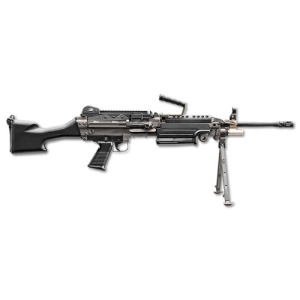
For years, the Army had master gunner courses for Bradley, Abrams, and Stryker crews, but nothing equivalent for the individual weapon systems that every soldier carries. A tank battalion had a designated expert who could plan gunnery tables, troubleshoot fire control systems, and advise the commander on training strategy. An infantry company with M4A1s, M17s, M249s, M240s, optics, lasers, and thermal devices had nobody filling that role. The closest thing was whatever NCO happened to be good at shooting and willing to stay late.
May contain affiliate links.
May contain affiliate links.
May contain affiliate links.

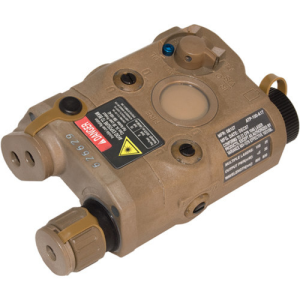
The result was predictable. Different companies within the same battalion were zeroing weapons differently. Soldiers didn't know how to properly install or employ their PEQ-15s or thermal weapon sights. Bore-lighting procedures varied from platoon to platoon. There was no consistency, no standard enforced below the battalion level, and no designated expert whose job it was to fix that. A 1st Armored Division small arms master gunner identified this exact problem and built a curriculum to put all NCOs on the same page. That effort at Fort Bliss became one of the templates for what the Army eventually institutionalized.
The Army recognized around 2019 that having a subject matter expert focused specifically on individual weapon systems was a combat multiplier. Deployed units with these experts showed measurably better marksmanship outcomes. TC 3-20.40, Training and Qualification, Individual Weapons, now formally recognizes the role that was previously known as the Small Arms Master Gunner under the title "Marksmanship Master Trainer." That doctrinal recognition is what gave birth to the current family of master trainer courses.
What a marksmanship master trainer actually does
Before getting into the specific courses, it helps to understand the job these graduates are supposed to fill. The marksmanship master trainer is the commander's principal advisor on all things related to individual weapons employment, qualification, and sustainment training. The specific duties break down along echelon lines, but the core responsibilities are consistent.

At every level, the master trainer is the SME on all weapons, optics, lasers, thermal devices, and laser range finders in the unit. They oversee qualification and sustainment training for all weapon systems. They assist the commander in building a six-month training plan covering ranges, ammunition, and certification in accordance with division gunnery SOPs. They're the SME on available training resources, from EST 2000 simulators to engagement skills trainers. And they supervise live-fire ranges to ensure SOPs are followed.
The echelon distinction matters. A battalion-level master trainer enforces battalion standards, coordinates with companies for training assets, and checks on company-level preliminary marksmanship instruction (PMI). A company-level master trainer ensures battalion standards are followed at the lowest level, teaches PMI directly, and assists in troubleshooting and maintenance of weapons. This layered approach is what gives the system its teeth. Without it, standards set at battalion evaporate by the time they reach a squad on the firing line.
The arms room reality: most units that send a soldier to a master trainer course then fail to actually empower that soldier to do the job. The graduate comes back with expertise and a training plan, and then gets tasked as the NCOIC of a detail because the unit doesn't protect their time. The course is only as good as the command climate that receives the graduate.
WSMTC: the Weapons Systems Master Trainer Course
The Weapons Systems Master Trainer Course is the foundational institutional course for producing marksmanship master trainers. This is the course that grew out of the Small Arms Master Gunner (SAMG) programs that individual installations ran independently before the Army standardized the approach.
WSMTC is designed to produce a graduate who can serve as the unit's primary advisor on individual weapons training and qualification. The curriculum covers the full spectrum of individual weapons in the Army inventory: M4A1, M17 MHS, M249 SAW, M240 series, and the associated optics, lasers, and aiming devices that go with them. Graduates come out knowing how to plan and execute ranges from the dirt up, including ammunition forecasting, range scheduling, and the administrative requirements that trip up most units before a single round gets fired.
The course doesn't just teach marksmanship. It teaches how to teach marksmanship, which is a fundamentally different skill. A soldier can be an expert shooter and a terrible instructor. WSMTC produces trainers who can diagnose why a soldier is shooting low-left at 25 meters, build a remedial training plan, run a PMI that actually sticks, and then execute a live-fire event that validates the training. The emphasis is on the training management piece as much as the technical weapons knowledge.
What most people don't know: the Fort Bliss SAMG course that served as one of the precursors to the current institutional program actually disintegrated in February 2013 when the original course creator retired and the installation's command team, focused on converting light brigades to heavy, didn't share the same enthusiasm for individual soldier lethality. The expertise literally walked out the door with one person. That's exactly the kind of single-point-of-failure the institutionalized course system is designed to prevent.
The course awards graduates a specific identifier that marks them in the personnel system as a qualified marksmanship master trainer. This matters for assignments, because it means the Army can track how many qualified trainers exist and where they're assigned, which historically it could not do when the expertise was informal and unrecognized.
SMTC: context matters on this acronym
Here's where the alphabet soup gets confusing. SMTC can refer to different things depending on which service and which context you're operating in. In the Army's master trainer ecosystem, SMTC typically refers to the Small Arms Master Trainer Course at the standard level, essentially the core course that WSMTC builds upon or parallels depending on the specific program of instruction and the installation running it.
May contain affiliate links.
May contain affiliate links.
But SMTC also has a completely separate meaning in the joint and naval context. The Coast Guard's Special Missions Training Center, also abbreviated SMTC, is located at Camp Lejeune and runs an entirely different set of courses focused on crew-served weapons, small boat operations, and expeditionary security training. That SMTC trains Coast Guard Port Security Units, Maritime Safety and Security Teams, and cutter boat counter-drug operators, along with Marine Corps small boat operators, Navy Inshore Boat Units, and Mobile Security Force personnel. The curriculum runs from entry-level field training to deep-sea small boat operations, and the weapons training covers the M240, M2HB .50 caliber, and Mk 19 in both land-based and waterborne gunnery contexts.
The Coast Guard's SMTC is worth understanding even if you're Army, because it illustrates what a mature, multi-service training center looks like when it's properly resourced. Students in the Small Boat Crew Served Weapons Operation and Maintenance Course get hands-on mechanical training with .50 caliber M2HB machine guns. The course uses real-world video of terrorist attacks by armed small boats as an eye-opener on the first day, driving home the seriousness of the protective mission. Night vision devices, specifically the AN/PVS-5 Crew Served Weapons Night Vision Sight, are integrated into training when available, and classes eventually move to designated waterway ranges for gunnery training while underway.
The Navy's Center for Security Forces (CSF), which partners with the Coast Guard SMTC, graduated more than 21,000 sailors from seventeen training sites across the continental U.S., Hawaii, and Japan in a single year. CSF runs "A School" initial MOS qualification for the Master-at-Arms rating, antiterrorism instruction for commanding officers and security force personnel, and specialized courses including Crew Served Weapons Instructor, Small Arms Marksmanship Instructor, Military Working Dog Handler, and Protective Services.
Range notes: the Coast Guard SMTC's land-based weapons proficiency training happens on Range K211, across the New River from mainside Lejeune, near the Stone Bay marksmanship complex. If you've ever trained at Stone Bay, you know the coastal Carolina weather doesn't cancel training. Rain or cold, the ranges run. That's the culture these courses build.

For Army personnel, the important distinction is this: when someone says "SMTC" in an Army training meeting, they almost certainly mean the small arms master trainer course at the institutional level. When someone says it in a joint or naval context, they're talking about the Special Missions Training Center. Don't confuse the two, because the course content, target audience, and graduating qualifications are completely different.
RSMTC: the Reserve component solution
Guard and Reserve units face the master trainer problem more acutely than active duty. Limited range days, constrained ammunition allocations, arms room access windows measured in hours rather than days, and the fundamental challenge of maintaining proficiency when you only train one weekend a month and two weeks a year. The Reserve Small Arms Master Trainer Course, or RSMTC, exists specifically to address these constraints.
The RSMTC is tailored to the reality of reserve component training. It acknowledges that a Guard or Reserve unit doesn't have the luxury of running ranges every week. The graduates need to be able to maximize the limited training time available, which means their planning and preparation skills matter even more than their active duty counterparts'. An active duty master trainer who wastes a range day can usually get another one scheduled. A Reserve master trainer who wastes a drill weekend range might not get another chance for months.
The course content covers the same weapon systems and training management fundamentals as the active component courses, but with specific emphasis on the reserve component training calendar, ammunition request timelines, and the coordination required to get soldiers qualified when you might only have two or three live-fire opportunities per year. Graduates learn how to structure PMI during drill weekends so that when the unit does get range time, every minute of live fire counts.
The National Guard Marksmanship Training Center (NGMTC) at Camp Robinson in North Little Rock, Arkansas, is a critical piece of this ecosystem. The NGMTC provides marksmanship training for National Guard members from across the country, and it recently received significant congressional protection. The FY2026 National Defense Authorization Act includes an amendment from Rep. Hill requiring the Secretary of the Army to designate the NGMTC as an institution under TRADOC, make its courses Guard-centric, award Guardsmen a Master Marksmanship Training identifier, integrate programs into the Army Program Objective Memorandum, and ensure the NGMTC remains within the Arkansas National Guard.

That last part matters more than it sounds. Congressional language ensuring the NGMTC stays at Camp Robinson and under the Arkansas Guard means the center can't be quietly defunded, relocated, or absorbed into an active component program that deprioritizes Guard needs. The provision to award a Master Marksmanship Training identifier to Guard graduates mirrors what the active component courses provide, giving Guard soldiers the same personnel system recognition for their expertise.
This is a significant development for reserve component readiness. Historically, Guard and Reserve units have been underserved by the Army's institutional training apparatus for individual weapons. The NGMTC designation and the associated NDAA protections represent a structural fix, not just a one-time funding boost. The integration into the Army Program Objective Memorandum means the funding is programmed into future budget cycles rather than depending on annual discretionary decisions.
How these courses connect to the master gunner tradition
The master trainer courses for individual weapons didn't emerge in a vacuum. They're modeled on the master gunner programs that have existed for decades in the armor and mechanized infantry communities. Understanding that lineage helps explain why the courses are structured the way they are.
May contain affiliate links.
Bradley Fighting Vehicle 25mm chain gun
May contain affiliate links.
May contain affiliate links.
A master gunner in the traditional sense is the commander's subject matter expert on a specific weapon system, usually a vehicle-mounted system like the M1 Abrams main gun or the Bradley Fighting Vehicle's 25mm chain gun. The master gunner plans gunnery tables, advises on training strategy, troubleshoots system malfunctions, and ensures the unit meets qualification standards. The role carries significant weight in those communities. A battalion without a qualified master gunner is a battalion that struggles at gunnery.

The Army recognized that the same model could work for individual weapons. If having a designated expert made armor gunnery better, why wouldn't it make rifle and pistol qualification better? The answer was obvious, but the institutional Army took years to act on it. Individual installations and divisions ran their own programs in the interim, with varying degrees of success and sustainability.
The Fort Bliss SAMG course is the most documented example. It was stood up because a senior leader noticed the inconsistency problem and appointed a qualified small arms master gunner to fix it. The curriculum put NCOs on the same page regarding zeroing, bore-lighting, laser installation, thermal device employment, and all the other tasks that vary wildly from unit to unit when there's no standard enforced. The course worked. Units that sent soldiers through it performed better. But when the institutional support evaporated with a change of command and the retirement of the course creator, the program died.
That pattern repeated at multiple installations. A good idea, championed by one leader, producing real results, and then disappearing when that leader moved on. The institutional courses, the WSMTC and its variants, are designed to break that cycle by making the training permanent, funded, and tracked in the personnel system.
Common mistakes units make with master trainer graduates
Sending a soldier to a master trainer course is step one. What happens after graduation determines whether the investment pays off. Here are the failures that show up most often:
The graduate gets no protected time. They return to the unit and immediately get consumed by the same duties they had before. The training plan they developed during the course never gets implemented because they're pulling staff duty, running details, or filling holes in the duty roster. The commander who approved the school slot doesn't create the conditions for the graduate to do the job.

The graduate gets treated as the only person who runs ranges. Instead of serving as the trainer of trainers, building capacity across the unit, the master trainer becomes the single point of failure for every live-fire event. When they PCS or ETS, the unit is right back where it started. The whole point of the master trainer model is to create a cascade of competence, not a dependency on one person.
Units don't send the right soldier. The course requires someone with enough rank and influence to actually change how the unit trains. Sending a junior E-5 who can't get a meeting with the commander defeats the purpose. The ideal candidate is an E-6 or E-7 with the credibility and position to implement changes at the company or battalion level.
The graduate's identifier doesn't get tracked. If the personnel system doesn't reflect the qualification, the Army can't manage the talent. When the soldier moves to a new unit, the gaining command may not even know they have a qualified master trainer. The NDAA provision awarding Guard soldiers a Master Marksmanship Training identifier is specifically designed to fix this problem for the reserve component.
Units confuse the master trainer with the armorer. The armorer maintains weapons. The master trainer trains soldiers to employ them. These are different jobs requiring different skill sets. A master trainer should absolutely understand weapons maintenance at a deep level, but their primary function is training management, not turning wrenches in the arms room.
The civilian-adjacent training world
The acronym WSTC also floats around the training world, and it's worth clarifying that the Weapon Systems Training Council (WSTC) is a completely separate entity from the Army's master trainer courses. WSTC is a civilian organization that runs law enforcement armorer courses, most notably a Comprehensive AR-15/M16 Armorer Course that is certified throughout the United States.

AR-15 Deals
Prices may change. May contain affiliate links.
May contain affiliate links.
The WSTC course is structured for law enforcement personnel responsible for implementation, instruction, repair, and maintenance of department AR-15/M-16 weapon systems. It's a three-day school where students must pass both written and practical portions to receive official armorer certification. WSTC furnishes all rifles, parts, professional armorer tool boxes, tools, armorer table vises, and training materials. Students receive a notebook and a 450-slide PowerPoint armorer presentation for future reference. The course is not brand-specific and covers all AR-15/M16 platforms, though WSTC is a certified course recognized by Rock River Arms, Stag Arms, and Adams Arms.
WSTC's philosophy is interesting and worth noting: they believe officers attending an armorer class should not be disassembling their issued duty rifles during the learning experience, arguing this could subject the officer and agency to liability issues. They recommend complete understanding of the weapon system prior to performing work on agency duty weapons. This is a fundamentally different approach from military armorer training, where soldiers work on their issued weapons from day one.

The WSTC instructor cadre includes former military personnel with significant credentials. One instructor served in the Army as a weapons instructor and member of the 416th Engineer Command Rifle Team before spending over six years as National Director of Law Enforcement and Government Sales and Training at Rock River Arms. Another is a retired Coast Guard CWO3 with 22 years of service in law enforcement and drug interdiction.
The point of mentioning WSTC is not to compare it to Army master trainer courses. They serve different populations and different purposes. But if you're a civilian reading this and wondering where the law enforcement armorer training world intersects with military training, WSTC is one of the more established programs. Don't confuse it with the Army's WSMTC. Different acronym, different mission, different audience.
The SUAS master trainer course: where this is all heading
The master trainer model is expanding beyond traditional small arms. The Army has developed a Small Unmanned Aircraft Systems (SUAS) Master Trainer Course that applies the same philosophy to drone operations. This is significant because it shows the institutional Army has bought into the master trainer concept as a scalable model, not just a one-off solution for marksmanship.
May contain affiliate links.
The SUAS Master Trainer Course is designed to forge expertise in ground warfare's newest domain the same way the weapons master trainer courses built expertise in the oldest one. The logic is identical: designate an expert, give them institutional training, empower them to train others, and track the qualification in the personnel system. If the model works for M4A1 qualification, it can work for RQ-11 Raven employment.

This expansion suggests the Army sees the master trainer concept as a permanent part of its training architecture, not a temporary initiative that will fade when leadership attention shifts. The NDAA protections for the NGMTC reinforce that assessment. When Congress writes training centers into law and programs their funding into the POM, the institution is signaling long-term commitment.
What your unit should do now
If your unit doesn't have a qualified marksmanship master trainer, start the process of identifying and sending one. Check with your higher headquarters for the next available course date and the prerequisites for enrollment. The right candidate is an NCO with strong technical knowledge of individual weapons, the rank to influence training plans, and the command support to actually implement what they learn.
If you already have a master trainer, make sure their identifier is correctly reflected in the personnel system. Protect their time. Give them a seat at the training meeting where range dates and ammunition allocations get decided. Let them review and standardize your unit's zeroing procedures, PMI content, and range SOPs. That's what they were trained to do.
For Guard and Reserve units specifically, track the NGMTC developments closely. The TRADOC designation and Guard-centric course mandate in the FY2026 NDAA mean new opportunities are coming for reserve component soldiers to get the same quality of master trainer education that active duty has access to, with courses designed around the reserve component training calendar. If your state hasn't started identifying candidates for NGMTC courses, raise it at your next training meeting.
The master trainer courses exist because the Army finally admitted that marksmanship expertise doesn't happen by accident. It has to be deliberately built, institutionally supported, and systematically sustained. The courses are the mechanism. The graduates are the product. But the unit that receives them determines whether any of it actually matters on qualification day.