
You're running a PRS stage, the RO buzzer fires, and you're simultaneously trying to read a bubble level, glance at a timer on the ground, and remember which DOPE card is taped to your stock. Something always gets dropped. That's the exact workflow problem the Shooters Global Pulse Pro is designed to kill.
The Pulse Pro is a compact, rail-mounted electronic device that combines an anti-cant digital level, a stage timer, a digital DOPE card system, a stability tracker, a cosine angle indicator, muzzle path tracking, and a scope leveling mode into a single unit smaller than a pack of gum. Shooters Global calls it a "7-in-1 assistant built for the future of precision shooting," and the claim isn't puffery. Each of those functions actually exists in the hardware and the companion Drills app. The question isn't whether it does all those things. The question is whether it does them well enough to replace the separate tools PRS and long-range shooters already own.

This review covers what the Pulse Pro actually is, how it differs from the original SG Pulse, what the various kit configurations include, and where the device sits after real-world use reports from multiple reviewers. If you're shooting precision rifle competition or serious long-range practice, this is the accessory category worth paying attention to right now.
What the Pulse Pro actually is
The SG Pulse Pro is a machined aluminum, water-resistant module that mounts to your rifle via Picatinny or M-LOK. Its dimensions come in at 1.48 × 1.41 × 1.09 inches, making it slightly larger than the original SG Pulse (1.4 × 1.0 × 0.7 inches) but still compact enough to sit on a scope mount or rail section without interfering with your cheek weld or sight picture. It's manufactured in Poland and connects to your phone via Bluetooth through Shooters Global's free Drills mobile app.
The interface is a combination of LED indicators and an LCD display, which is a significant step up from the original Pulse's LED-only setup. That LCD screen is what makes the stage timer and DOPE card features possible. You can read cant angle numerically, see your remaining stage time, and scroll through pre-programmed target data without ever pulling your eye off the scope. Bright LEDs beside the eyepiece still handle the quick-glance cant indication, color-coded so your peripheral vision catches level status without conscious effort.

Battery life is rated at up to 600 two-minute stages. That's a lot of match days before you need to think about a charge. The newer USB-C variant allows cable customization and modular accessory connections, which matters for the remote button and ocular LED add-ons.
Quick specs at a glance
What's actually new versus the original SG Pulse
The original SG Pulse launched at $169.99 and packed five functions into that tiny 1.4 × 1.0 × 0.7-inch body: anti-cant digital level, stability indicator, cosine indicator, scope leveling mode, and a shot transition timer. No LCD screen. No stage timer. No DOPE card. The cosine indicator and muzzle tracking data were only accessible through the Drills app, not on the device itself.
The Pulse Pro changes the game in several concrete ways. The LCD display means the stage timer, DOPE card, and cosine indicator all live on the device. You don't need your phone in your pocket to access that data mid-stage. The comparison table Shooters Global publishes makes the gaps clear: the original Pulse has no stage timer support and no DOPE card support. The Pro adds both. Muzzle tracking and rifle zeroing mode, which were app-only on the Pulse, now work directly on the Pro hardware as well.
The addition of accessory support is the other major differentiator. The Pro accepts a wired remote control button and an external ocular LED system, neither of which the original Pulse can use. The remote connects magnetically and lets you start/stop the timer or scroll through DOPE card targets without moving your support hand off the rifle. That's not a convenience feature. In a timed PRS stage, removing your hand from the grip to press a button on the device itself costs real seconds and disrupts your position. The ocular LED module clips near the scope eyepiece and projects cant indication into your peripheral vision with LEDs that are brighter than fiber optic levels and visible even in direct sunlight.

The physical size increase from Pulse to Pulse Pro is modest. You're adding about 0.08 inches in width, 0.41 inches in height, and 0.39 inches in depth. Noticeable if you're measuring, but as Lena Miculek pointed out in her review, if you tried to mount a separate level and a separate timer, there's "no comparison in overall size" to what the Pulse Pro consolidates.
Kit configurations and what you're actually buying
Shooters Global sells the Pulse Pro in four configurations, and the naming could be clearer. Here's what each one includes and who it's aimed at.
Spuhr Mount Adapter Deals
Prices may change. May contain affiliate links.
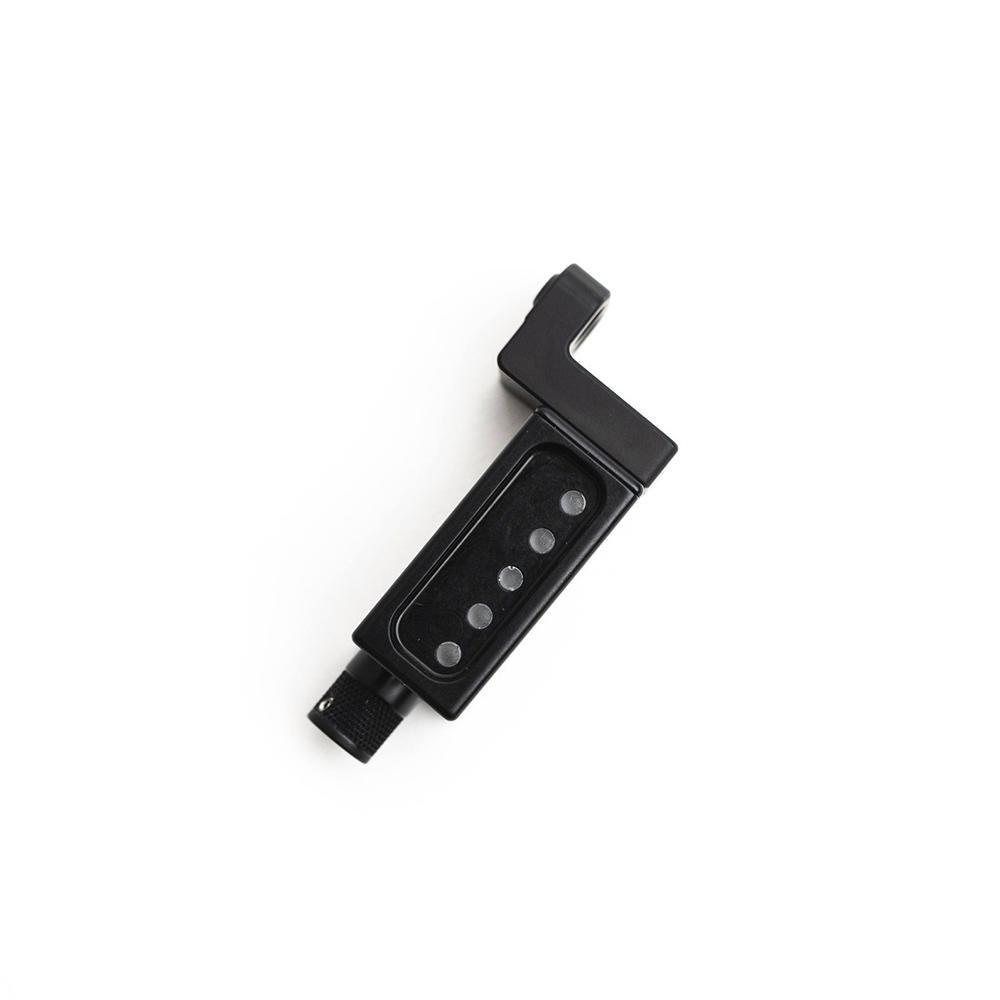
The base unit ($329.99) ships with the Pulse Pro module, Picatinny and M-LOK mount, charging cable, and a quick start guide. This gets you every electronic function: level, timer, DOPE card, stability, cosine, muzzle tracking, scope zeroing. You just won't have the remote button or the external ocular LEDs. If you primarily want the digital level and DOPE card and plan to start/stop the timer manually on the device, this is sufficient.
The Remote Control Kit adds the wired remote with its magnetic connection cable. The remote mounts anywhere on the rifle using standard pressure switch mounting, so it can sit right where your support hand naturally rests. For competition shooters running timed stages, this is the accessory that changes the workflow most. Starting and stopping the timer without breaking position is a meaningful advantage.
The Ocular Kit adds the external ocular LED system instead of the remote. This module attaches near your scope's eyepiece and projects cant indication directly into your peripheral vision with bright LEDs. If you're a shooter who finds the onboard LEDs partially obscured by your cheek weld (a real issue noted in the GunsAmerica review for right-handed shooters), the ocular LED solves that problem. It's the clearest cant feedback available on the device.

The Master Kit ($389.99) includes everything: Pulse Pro unit, remote control, ocular LED system, Picatinny mount, and MLOK mount. The $60 premium over the base unit for both accessories is reasonable math. If you're buying into this ecosystem, the Master Kit is the configuration that makes the most sense unless you're certain you'll never want one of the accessories.
Worth noting: dedicated mount adapters exist for Spuhr scope mount systems and Area 419 rings and mounts. The Spuhr adapter uses Spuhr's modular accessory rail interface, which means you get a rigid, repeatable mounting solution that maintains positioning when you remove and reinstall the Pulse Pro. The Area 419 adapter is a machined aluminum piece sold separately.
Intended role: who this is built for
Shooters Global isn't being subtle about the target market. This is a PRS and precision rifle competition tool. The stage timer, the DOPE card system, the remote button workflow, the Drills app integration with video analysis and shot data logging: every feature points at the shooter who's running multi-target stages against the clock and wants to consolidate their kit.
Ruger American Deals
Prices may change. May contain affiliate links.
The stage timer tracks remaining time via the display or custom audio alerts. You can start it on the device itself, through the remote button, or sync it with an SG Timer unit through the Drills app so it auto-starts when the RO's signal fires. The digital DOPE card lets you program elevation and wind corrections for each target on each stage, then scroll through them in sequence during the stage. That replaces the paper cards, the arm-board, the stock-mounted cheat sheets. Everything lives in one place, visible in your peripheral vision or on the LCD.

The stability tracker shows your MOA hold quality in real time. The muzzle path feature records barrel movement during and after the shot as a visual line within the Drills app, giving you data to analyze technique and consistency after the fact. The cosine indicator displays the vertical angle for up/downhill shot correction directly on the device.
The Mitchell Graf review at GunsAmerica put it plainly: "this isn't meant for the average shooter." That's accurate. If you're plinking at 100 yards with a bone-stock Ruger American, you don't need a $330 electronic level with a stage timer. But if you're running PRS matches, NRL events, or structured long-range training sessions where time management and data access directly affect your score, the Pulse Pro addresses real friction points.
There's also a use case for long-range hunters who shoot at steep angles and want reliable cosine data and cant correction without a separate inclinometer and bubble level. The water resistance rating (protected against heavy rain) and the machined aluminum construction support field use, though the competition shooter remains the primary audience.
Fit and feel notes
Mounting the Pulse Pro on a Picatinny rail or M-LOK slot is straightforward. The device can be installed vertically, horizontally, or at an angle, and the accelerometer-based interface automatically adjusts to the device orientation. That's a nice touch: you don't have to tell it which way is up.

The LCD screen and side buttons mean you can adjust timer settings, scroll DOPE cards, and change modes without opening the phone app. Lena Miculek specifically called this out: "Thanks to the screen and buttons along the side, you do not have to utilize your app to be able to adjust your timer and other settings." For match day, that matters. Fumbling with a phone between stages is the kind of distraction that compounds.
The ocular LED display sits closer to peripheral vision than the onboard LEDs, and multiple reviewers found it slightly easier to pick up at speed. If you're a right-handed shooter with a solid cheek weld, part of the Pulse Pro body can be partially obscured depending on mount position. The ocular LED bypasses that geometry entirely.
One ergonomic consideration: the device is ambidextrous in terms of mounting, but the button layout and display readability will vary depending on where you position it relative to your eye. Spending time during setup to find the optimal position for your specific scope mount and shooting style isn't optional. It's the difference between the device working seamlessly and the device being an annoying box on your rail.
Drills app integration: useful but not without friction
The Drills mobile app is free and handles the deeper data analysis that the onboard display can't. You can upload DOPE cards, review muzzle tracking data as visual plots, capture video with real-time data overlay, and log training sessions with shot times and rifle positioning data combined. When paired with an SG Timer, the app merges shot split times with Pulse Pro stability and cant data for a comprehensive picture of each stage.

The app adds genuine analytical value. Seeing your muzzle path plotted over multiple shots reveals patterns that feel invisible during live fire. The video overlay feature lets you review exactly what the rifle was doing at the moment of each shot, which is the kind of feedback that usually requires a coach standing behind you with a spotting scope.
That said, app-dependent features always come with caveats. Bluetooth connectivity needs to be reliable under match conditions, battery life on your phone becomes a factor, and the learning curve for setting up DOPE cards and configuring timer settings through the app takes some front-end time investment. The GunsAmerica review noted that Drills app integration "adds data, video, and a few quirks," which is a fair summary. The core functions work on the device itself without the app, which is the right design decision. The app extends capability rather than gating it.
Common mistakes and things to watch
The single-button interface on the device itself was flagged as a potential issue. When you're trying to scroll through modes or DOPE targets quickly, a one-button system requires deliberate presses and holds. Under match stress, that's a real consideration. The remote button helps significantly here, which is another argument for the Master Kit over the base unit.
Forgetting to charge the device is the most predictable failure mode. The 600-stage battery life is generous, but it's not infinite, and the device doesn't have a user-replaceable battery. Building a charge check into your pre-match routine is the obvious fix, but it's the kind of thing that only becomes a habit after you've been burned once.
Mount position matters more than most people think. If the Pulse Pro sits too far forward on the rail, the LCD becomes hard to read without shifting your head. Too far back and it can interfere with your grip or bolt manipulation. The sweet spot depends on your scope mount length, ring height, and stock geometry. Plan to spend a range session just dialing in placement before you rely on it in competition.
The DOPE card system is only as good as the data you load into it. If your wind calls or elevation data are stale or poorly organized, having them on a digital display doesn't make them more accurate. The convenience factor is real, but garbage in, garbage out still applies.
Finally, the onboard display can be harder to read in extremely bright direct sunlight compared to the LED indicators. The ocular LED system handles bright conditions well, but if you're running the base unit without it, be aware that LCD readability has limits in harsh light.
Availability and pricing
The SG Pulse Pro USB is currently available from multiple retailers. The base configuration (Pulse Pro unit with Picatinny and M-LOK mount, charging cable, and quick start guide) runs $329.99. The Master Kit, which adds the remote control and ocular LED system, is $389.99. The Spuhr mount adapter and Area 419 adapter are sold separately.

Shooters Global sells direct through their own store, and the Pulse Pro is stocked at retailers including Paramount Tactical. Australian pricing through Delta Tactical is $560 AUD including GST for the base unit. The original SG Pulse remains available from $169.99, including through Amazon, for shooters who want the level and stability features without the timer and DOPE card functionality.
The two-year warranty and 30-day return policy from Shooters Global's direct store are standard but worth confirming with third-party retailers, as terms may differ.
Open questions and what needs more time
The biggest unknown is long-term durability under sustained competition use. The machined aluminum housing and water resistance rating are encouraging on paper, but electronic devices mounted on rifles absorb significant vibration and recoil over hundreds of stages. How the LCD, accelerometers, and gyroscopes hold up after a full season of PRS matches is something that only time and round count will answer. The TFB review noted testing since autumn 2025, which is a reasonable window, but long-term reliability data across a large user base doesn't exist yet.
The Drills app is another area to watch. App-dependent ecosystems live and die by software updates, and a device this tightly integrated with a companion app needs consistent developer support. If Shooters Global maintains the app and keeps adding features, the Pulse Pro's value grows over time. If updates stall, you're left with a capable standalone device but a diminishing software ecosystem.
For shooters considering the Pulse Pro, the practical next step is straightforward. Mount it, run three or four practice stages with the timer and DOPE card loaded, and pay attention to whether the device actually speeds up your stage workflow or just adds another thing to manage. The transition from paper DOPE cards and a ground-based timer to a single rail-mounted unit should feel like a reduction in cognitive load. If it doesn't after a few sessions, the mount position or configuration needs adjustment before you blame the tool. The technology here is genuinely novel for the PRS space. Whether it becomes standard kit or stays a niche accessory depends entirely on whether it survives the unforgiving feedback loop of competitive shooters who notice every tenth of a second.