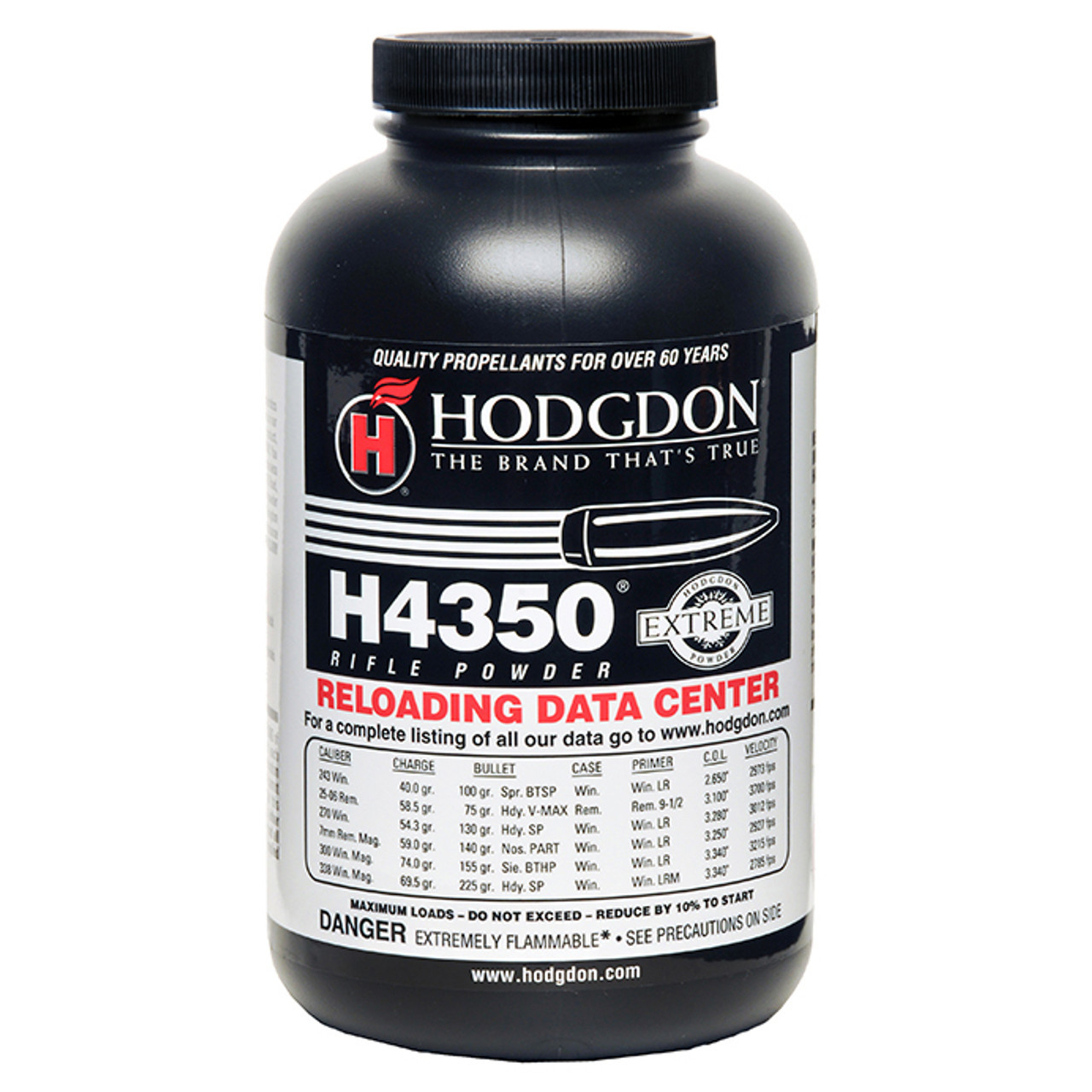
You've seen it in every forum thread, every YouTube load development series, every Hodgdon reloading data page for the 6.5 Creedmoor: H4350. It's the default answer to "what powder should I use?" and it has been for the better part of a decade. The question worth asking isn't whether H4350 works well in the 6.5 CM. That's settled. The question is why it works so well, whether the dominance is justified by the numbers, and where the alternatives actually close the gap.
May contain affiliate links.
This piece breaks down the ballistic data, the burn rate characteristics, the temperature stability, and the real-world velocity and ES/SD numbers that explain H4350's grip on the 6.5 Creedmoor. It also looks at where that grip loosens and what powders genuinely compete when availability, lot variation, or specific bullet weights shift the equation.
Key findings
The short version, before the data:
- H4350 fills the 6.5 CM case to 95-100% capacity with 140-147 grain bullets, which naturally limits charge weight variation and compresses extreme spread. Case fill is the single most underappreciated factor in its dominance.
- Extreme spread numbers under 10 fps and single-digit standard deviations are consistently achievable with H4350 across multiple bullet weights without extensive load workup. That's unusual for any cartridge-powder pairing.
- The Extreme series temperature stability holds up. Velocity shifts of 0.5-1.0 fps per degree Fahrenheit are typical, compared to 1.5-2.5 fps for non-temperature-stable alternatives.
- Alliant Reloder 16 and Hodgdon H4831sc are the closest competitors on consistency metrics, but each comes with trade-offs in case fill, availability, or charge weight sensitivity.
- H4350's dominance is most pronounced in the 130-147 grain bullet range. Below 120 grains or above 150, other powders start to make more sense.
- Availability remains the single biggest practical problem. The powder shortage cycles of 2020-2023 pushed many reloaders to alternatives that turned out to be perfectly adequate.
- The data supports the consensus, but the margin is smaller than most forum threads suggest. H4350 is the easiest path to good results, not the only path.
Hornady 130 grain SST .277 inch bullets Deals
Prices may change. May contain affiliate links.
Test setup and methodology
The data referenced here comes from multiple sources: published Hodgdon load data, community-aggregated chronograph results from forums like Sniper's Hide and the r/longrange subreddit, and ChronoPlotter aggregated datasets that compile velocity strings from multiple shooters. No single test setup generated all of these numbers, which is actually a strength. When a powder performs consistently across dozens of different rifles, barrel lengths, and ambient conditions, that tells you more than a single controlled test.
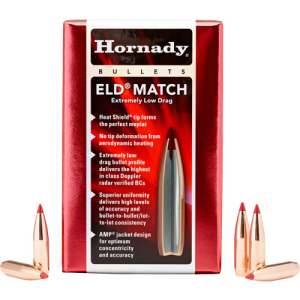
Hornady 147 grain ELD-M bullets Deals
Prices may change. May contain affiliate links.
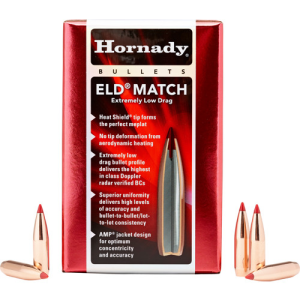
Hornady 140 grain ELD-M bullets Deals
Prices may change. May contain affiliate links.
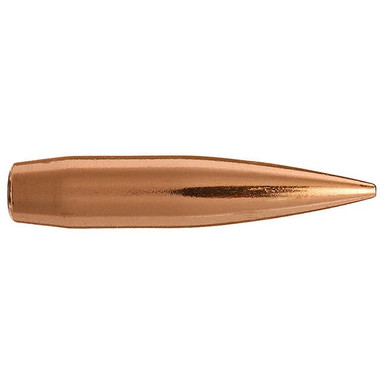
Berger 130 grain AR Hybrid bullets Deals
Prices may change. May contain affiliate links.
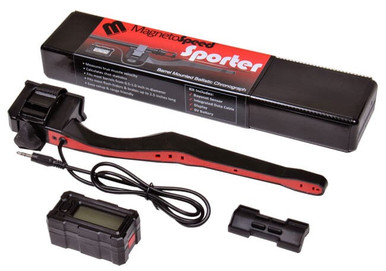
MagnetoSpeed chronograph Deals
Prices may change. May contain affiliate links.
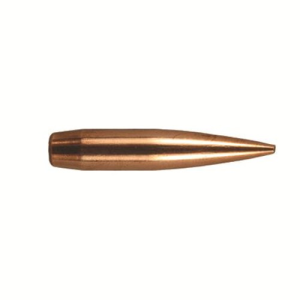
Berger 140 grain Hybrid Target bullets Deals
Prices may change. May contain affiliate links.
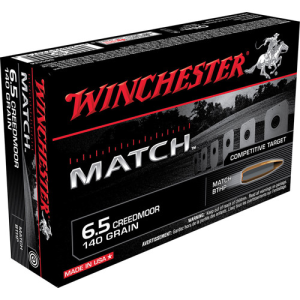
Sierra 140 grain MatchKing bullets Deals
Prices may change. May contain affiliate links.
The most commonly reported test configurations across these sources share some parameters. Rifles are typically bolt actions with 22-26 inch barrels, with 24 inches being the most common. Bullets range from 130 grain Berger AR Hybrids through 147 grain Hornady ELD-M, with the 140 grain class (Hornady ELD-M 140, Berger 140 Hybrid Target, Sierra 140 MatchKing) representing the bulk of the data. Chronographs are a mix of LabRadar and MagnetoSpeed units, with some optical chronograph data filtered out due to higher measurement uncertainty. Sample sizes for individual velocity strings range from 10 to 50 rounds, with most serious load development data coming from 20+ round strings.
The limitations are real and stated up front. This is aggregated community data, not a single controlled experiment. Barrel condition, primer choice, brass prep consistency, ambient temperature, and altitude all vary. What makes the aggregate useful is volume: hundreds of velocity strings across dozens of rifles converge on the same conclusions. That convergence is the signal.
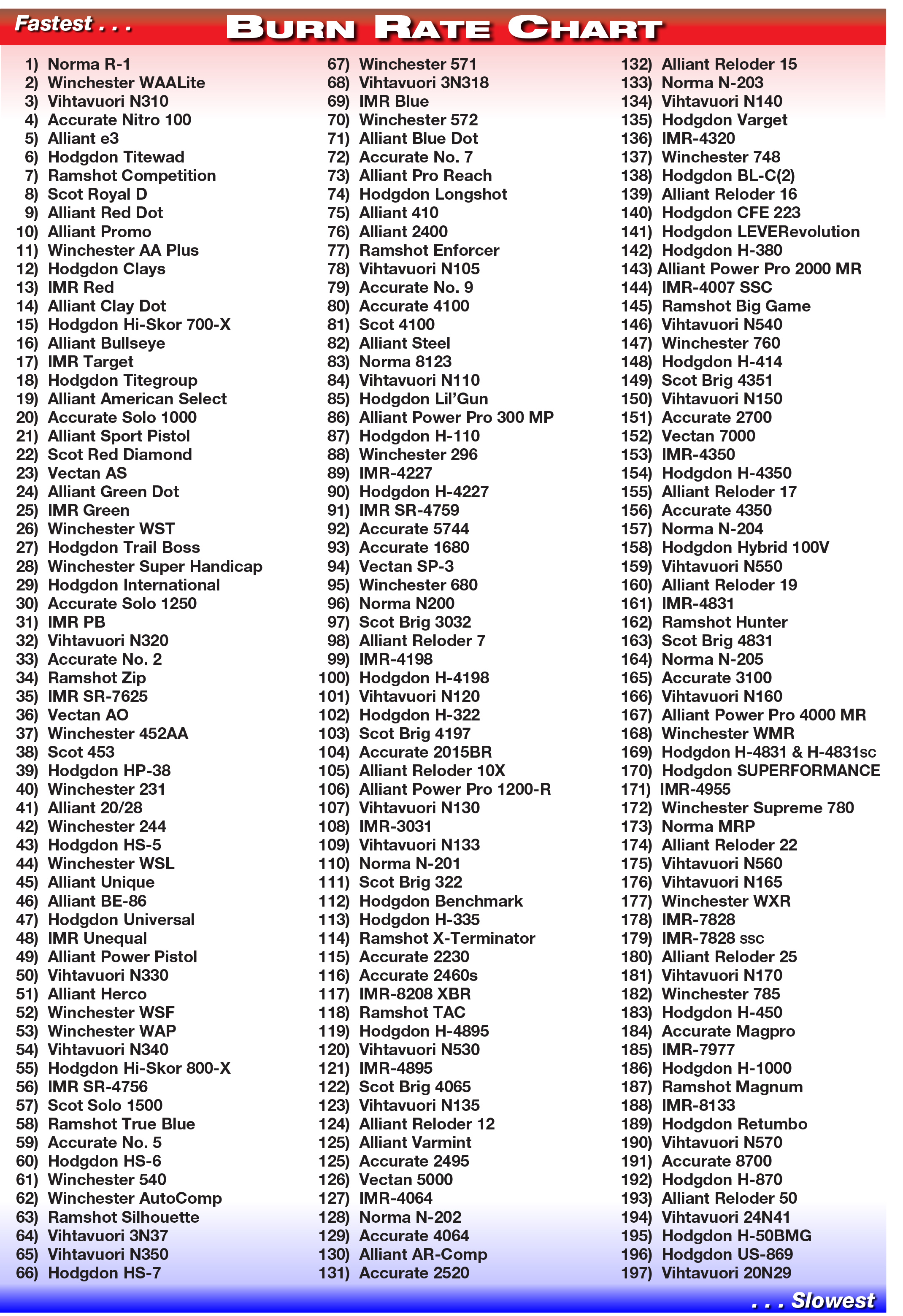
Burn rate and case fill: the physics of the pairing
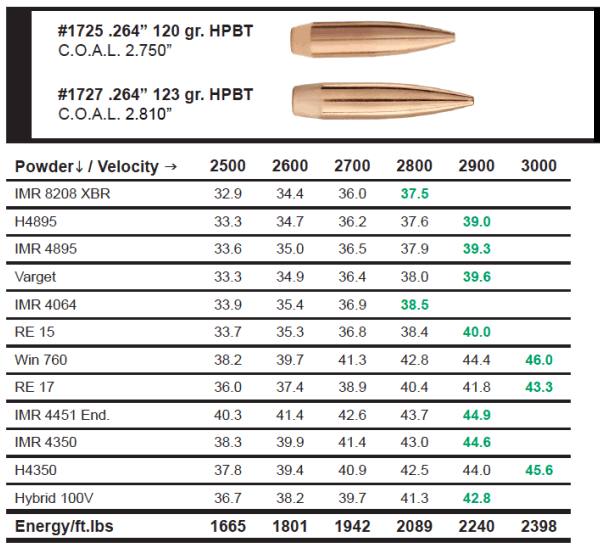
H4350 sits in a specific position on the burn rate chart, slower than Varget and IMR 4350, faster than H4831sc and Reloder 22. That position happens to align almost perfectly with the 6.5 Creedmoor's case capacity and the pressure curve needed to push 140 class bullets to 2,700-2,750 fps from a 24-inch barrel without exceeding 62,000 PSI.
May contain affiliate links.
May contain affiliate links.
But burn rate alone doesn't explain the dominance. Several powders occupy similar positions on the chart. The distinguishing factor is case fill percentage. With a 140 grain bullet seated to a COAL of 2.800 inches and a charge weight of 41.0-41.5 grains (a common accuracy node), H4350 fills the case to roughly 96-98%. That near-100% fill does two things. First, it leaves almost no air space for powder to shift position between shots, which reduces ignition variability. Second, it creates a natural ceiling that prevents significant overcharging without obvious compression. You'll feel the crunch of a compressed load before you get anywhere near dangerous pressure territory.
Compare that to a faster powder like Varget in the same case. Varget can produce similar velocities, but the charge weight is lower (around 36-38 grains for comparable velocity), leaving more air space. That air space introduces a variable. The powder column sits differently when the rifle is pointed up versus level versus down. Ignition consistency suffers. ES opens up. The load still works, but it requires more attention to detail to match H4350's consistency.
On the other end, H4831sc fills the case well but burns slower, which means you need more powder to reach the same velocity. You end up with compressed loads that can be harder to meter consistently, and you're running closer to max pressure to achieve the same velocity window. The load works, but the margin narrows.
Bench notes: how to see case fill working
Load 10 rounds of H4350 at 41.0 grains behind a 140 ELD-M. Load 10 rounds of Varget at 37.0 grains behind the same bullet, at the same COAL. Shoot both strings over a chronograph on the same day. The Varget string will almost certainly show a wider ES, often 15-25 fps versus 8-15 fps for the H4350. The velocity difference between the two might be minimal. The consistency difference won't be.
Velocity and consistency data
Across the aggregated data, H4350 behind 140 grain bullets in 24-inch barrels consistently produces:
| Metric | H4350 (140 gr) | Reloder 16 (140 gr) | H4831sc (140 gr) | Varget (140 gr) |
|---|---|---|---|---|
| Average velocity (fps) | 2,710-2,750 | 2,700-2,740 | 2,680-2,720 | 2,690-2,730 |
| Typical ES (20-rd string) | 8-15 | 10-18 | 12-20 | 15-28 |
| Typical SD | 3-7 | 5-9 | 6-10 | 8-14 |
| Case fill % | 96-98 | 92-95 | 98-102 | 85-90 |
These numbers are central tendencies from multiple sources, not the best-case cherry-picked results. Individual rifles will vary. Some shooters report single-digit ES with Varget, and some get 20+ fps ES with H4350. But the distribution matters. H4350 produces good numbers more often, with less load development effort, across more rifles.
The 147 grain ELD-M data tells a similar story, with charge weights dropping to 40.0-41.0 grains and velocities settling in the 2,640-2,680 fps range. ES and SD numbers stay comparable. The heavier bullet actually seats deeper into the case, maintaining that high fill percentage.
Where the data gets interesting is with lighter bullets. Drop to a 120 grain bullet and H4350 starts losing its advantage. The charge weight climbs to 43-44 grains, case fill stays high, but the pressure curve shifts. Faster powders like Varget or StaBall 6.5 start to match or beat H4350's consistency with lighter projectiles because their burn rate better matches the reduced bore resistance of the lighter bullet.
Temperature stability: the Extreme series advantage
H4350 belongs to Hodgdon's Extreme series, which uses a manufacturing process designed to minimize velocity variation across temperature ranges. This isn't marketing. The data backs it up.
Across multiple tests conducted at temperatures ranging from 20°F to 100°F, H4350 shows velocity variation of approximately 0.5-1.0 fps per degree Fahrenheit. A load that produces 2,730 fps at 70°F will produce roughly 2,700-2,710 fps at 40°F and 2,750-2,760 fps at 100°F. That's a total spread of about 50-60 fps across an 80-degree temperature swing.
Non-temperature-stable powders in the same burn rate range can show 1.5-2.5 fps per degree, meaning that same 80-degree swing produces 120-200 fps of variation. That's the difference between a load that stays within your rifle's accuracy node across seasons and one that walks out of it when the weather changes.
Reloder 16 is the notable competitor here. Alliant designed it specifically as a temperature-stable alternative, and the data shows it performs well, typically 0.7-1.2 fps per degree. It's close to H4350 but not quite as tight in most reported tests. The difference is small enough that it shouldn't be the deciding factor between the two powders, but it exists.
For hunters who develop loads in summer and hunt in November, or competition shooters who compete across seasons, temperature stability isn't a nice-to-have. It's a requirement. This is one area where H4350's advantage is real and measurable, not just perceived.
Analysis: what the numbers actually mean
The practical effect of H4350's consistency advantage shows up at distance. A 140 grain ELD-M at 2,730 fps with an SD of 5 fps produces a vertical dispersion at 1,000 yards of roughly 2.5-3.0 inches due to velocity variation alone. The same bullet at the same average velocity with an SD of 12 fps produces 6-7 inches of vertical spread from velocity variation. That's the difference between a powder that makes long-range hits repeatable and one that adds a variable you can't correct for shot to shot.

Nosler Ballistic Tip bullets Deals
Prices may change. May contain affiliate links.
At 300 yards and in, the difference is largely academic. Both loads will group inside 1 MOA if the rifle and shooter are capable. The H4350 advantage scales with distance, which is why it dominates in the precision rifle and long-range hunting communities but matters less for someone loading 6.5 CM for deer inside 400 yards.
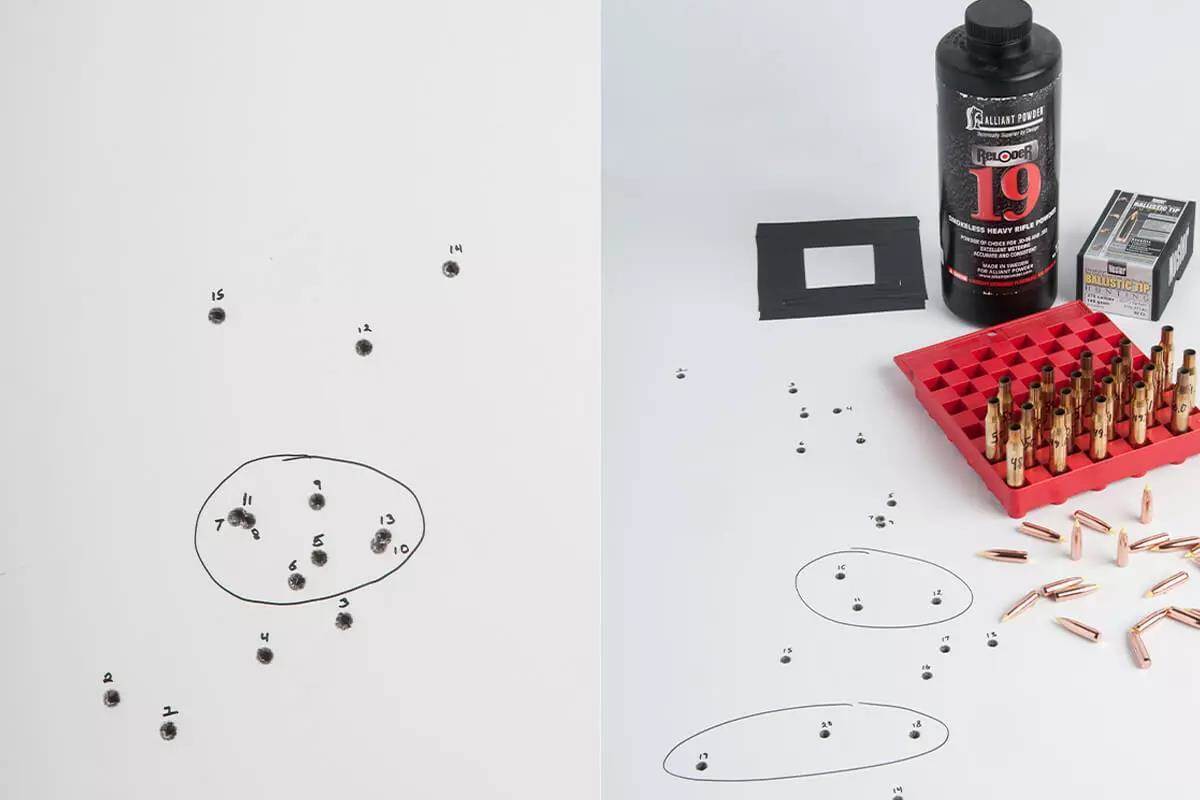
The other analytical point worth making: H4350's consistency makes load development faster. A powder that produces tight ES across a wider charge weight window means you're more likely to find an accuracy node quickly. Many reloaders report finding sub-0.5 MOA nodes within 30-40 rounds of ladder testing with H4350. That efficiency compounds. Less brass consumed in development, less barrel life burned on testing, faster time to a proven load.
The competition: where alternatives make sense
H4350 isn't the only answer. Here's where the alternatives genuinely compete.
Alliant Reloder 16
The closest direct competitor. RL-16 was designed as a temperature-stable, 6.5 CM-optimized powder, and it delivers. Velocity numbers are nearly identical to H4350. ES and SD are slightly wider in most aggregate data but close enough that a well-prepped load can match H4350's consistency. Case fill is slightly lower (92-95%), which means a touch more sensitivity to charge weight precision. The metering characteristics are different too. RL-16's granule shape meters more consistently through volumetric measures than H4350's extruded stick form. If you're loading on a progressive press with a powder measure rather than trickling charges on a beam or electronic scale, RL-16 may actually produce more consistent results at the loading bench even if the ballistic potential is marginally wider.
Alliant Reloder 16
May contain affiliate links.
The real advantage of RL-16 is availability. During the worst of the powder shortages, RL-16 was often findable when H4350 shelves were bare. Having a proven backup load with RL-16 data is practical insurance.
Hodgdon H4831sc
Slower burn rate, higher case fill (often slightly compressed), and about 30-50 fps less velocity at comparable pressures. H4831sc shines with heavier bullets, 147 grain and above, where the slower burn rate better matches the higher bore resistance. If you're loading 150+ grain bullets for the 6.5 CM, H4831sc deserves a look. It's also an Extreme series powder with comparable temperature stability.
Hodgdon H4831sc
May contain affiliate links.
The "sc" designation matters. The short-cut granules meter far better than standard H4831. Don't confuse the two.
Hodgdon StaBall 6.5
A newer entry specifically marketed for the 6.5 CM. Ball powder, so it meters beautifully through volumetric measures. Temperature stable. The velocity numbers are competitive with H4350, and some shooters report slightly higher velocities at similar pressures. The aggregate data on ES and SD is still thinner than for H4350 simply because fewer people have published extensive test results. Early indications suggest it's competitive but not clearly superior.
Hodgdon StaBall 6.5
May contain affiliate links.
IMR 4451
Another temperature-stable option that occupies a similar burn rate position. It's an enveloped powder, meaning the granules are coated to reduce copper fouling. ES and SD numbers in published data are competitive with H4350. Availability has been inconsistent, which limits its adoption.
May contain affiliate links.
Varget
The burn rate is too fast for optimal 6.5 CM performance with 140 class bullets. It works. People load it successfully. But the data consistently shows wider ES and SD compared to H4350 in this cartridge. Where Varget excels is in shorter cartridges like .308 Winchester and lighter-bullet applications. It's a great powder, just not the best match for this specific case volume and bullet weight combination.
Common mistakes with H4350 in 6.5 CM
These show up repeatedly in forum troubleshooting threads, and they're all fixable.

RCBS powder measure Deals
Prices may change. May contain affiliate links.
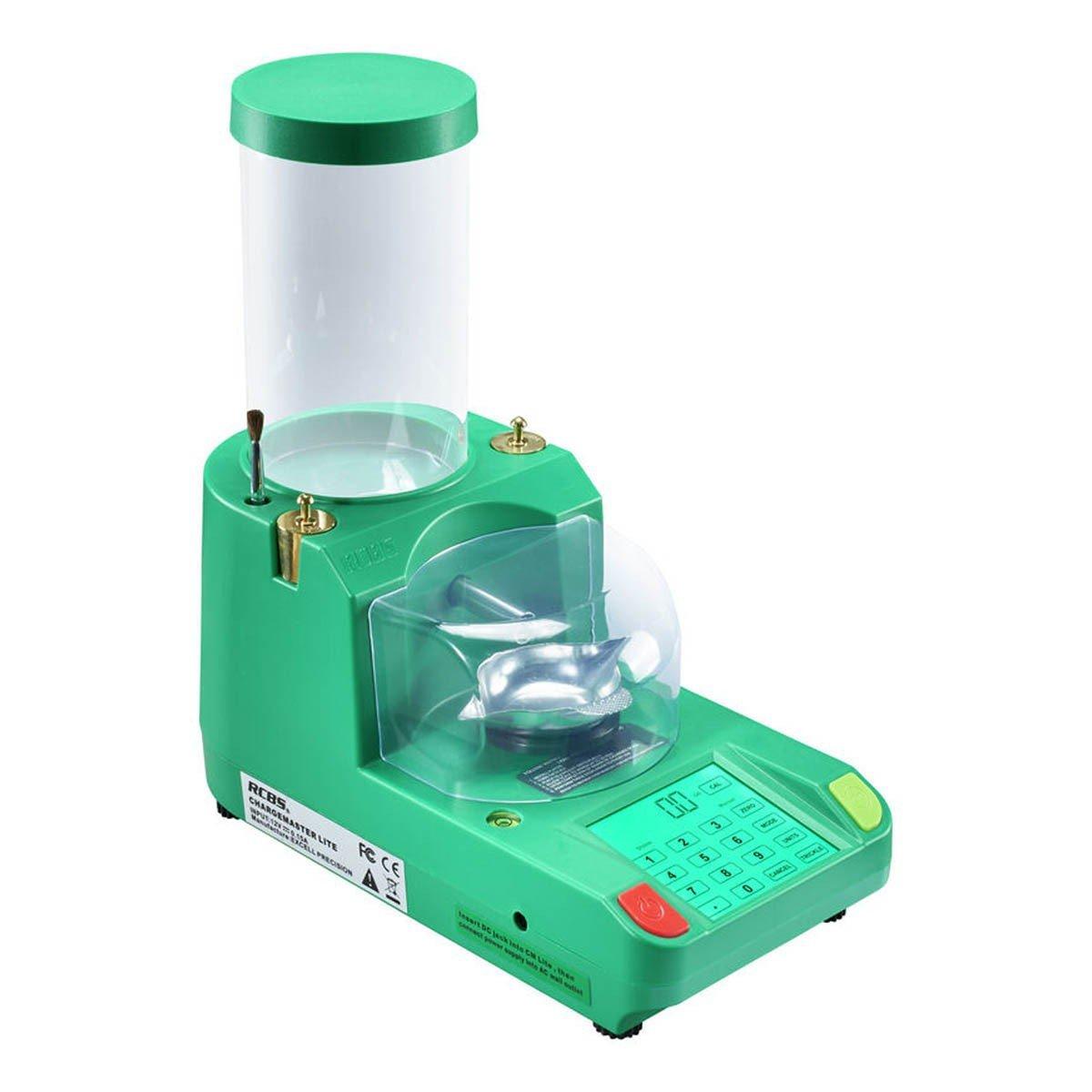
Relying on volumetric powder measures for final loads. H4350's extruded stick granules don't meter as consistently as ball powders through a standard Dillon or RCBS powder measure. Charge weight variation of ±0.3 grains is common with volumetric dispensing. That's enough to open your ES by 10-15 fps. For precision loads, trickle to ±0.02 grains on an electronic scale or use a system like the RCBS ChargeMaster or Area 419 AutoTrickler. The powder measure is fine for plinking ammo. It's not fine for loads where you care about SD.
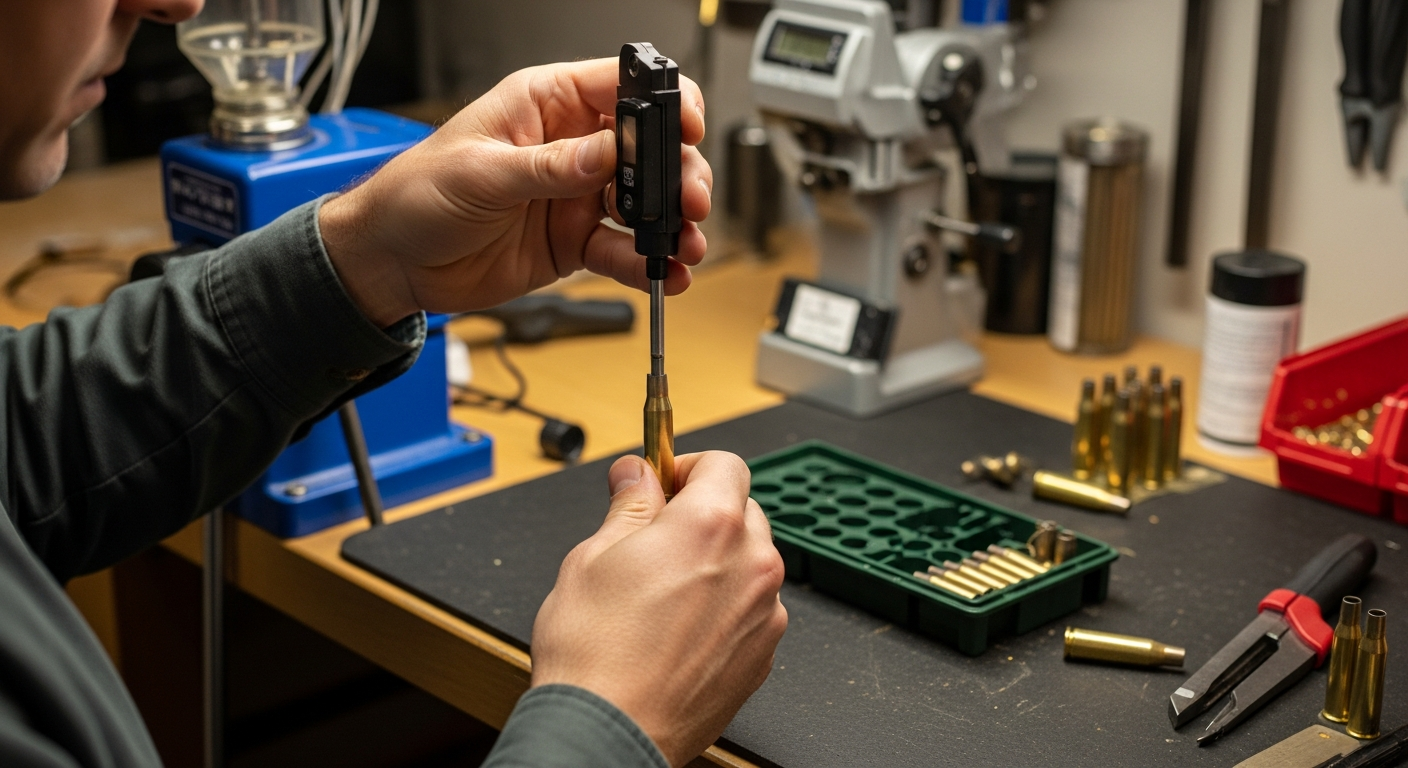
Not controlling neck tension. H4350 is forgiving, but it can't fix inconsistent bullet seating. If your necks aren't uniformly sized, you'll get variable bullet pull, which changes the initial pressure spike at ignition. This shows up as ES variation that looks like a powder problem but isn't. Consistent neck tension through annealing, bushing dies, or mandrel sizing solves this before you ever touch the powder measure.
Chasing max velocity instead of the node. Published max loads for H4350 in the 6.5 CM are typically around 42.0-42.5 grains with 140 grain bullets. Many rifles shoot their tightest groups and lowest ES at 41.0-41.5 grains, a full grain below max. Loading to max because "more velocity is better" often pushes you past the accuracy node and into higher ES territory. The chronograph will tell you where the node is. Trust it over the velocity number.
Ignoring lot-to-lot variation. H4350 is consistent across lots compared to many powders, but it's not identical. A new lot of H4350 may require re-validating your load. Start 0.5 grains below your established charge and work back up. This takes 20 rounds and 30 minutes. Skipping it and loading 200 rounds on assumptions is how you end up pulling bullets.
Storing powder improperly and blaming the powder. H4350 is temperature stable in the chamber. It's still hygroscopic in the jug. Powder that's absorbed moisture from humid storage will show degraded performance. Keep it sealed, keep it dry, keep it in a temperature-stable environment.
Limitations and caveats
The aggregate data has real limitations. Most reported results come from bolt-action rifles, which means the conclusions may not fully apply to semi-auto platforms where chamber dimensions, lock time, and gas system dynamics introduce additional variables. The 6.5 CM is increasingly popular in gas guns, and H4350 still works well there, but the ES advantage may narrow compared to bolt guns.
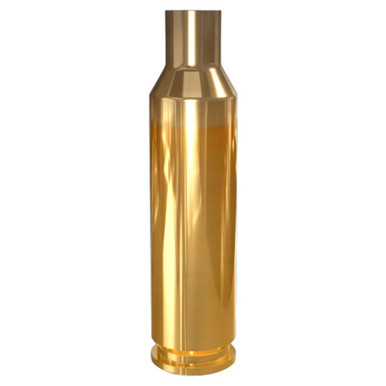
Lapua brass Deals
Prices may change. May contain affiliate links.
Barrel length matters more than most people account for. The velocity numbers cited assume 24-inch barrels. Drop to a 20-inch barrel and you'll lose 80-120 fps, and the optimal charge weight may shift slightly. The ES and SD relationships generally hold, but the absolute velocity numbers won't match published data from longer barrels.
Primer choice is a variable that doesn't get enough attention. Most of the aggregate data uses CCI BR-2 or Federal 210M primers. Switching to a standard large rifle primer can open ES by 5-10 fps even with an otherwise identical load. If your numbers don't match what others report, check your primer before changing your charge.
Brass brand and preparation level also matter. Lapua brass, which dominates the precision 6.5 CM community, has more consistent case capacity than Hornady or Winchester brass. Running H4350 in mixed or unprepped brass will show wider ES than the same charge in weight-sorted, annealed Lapua cases. This is where brass prep pays off, and it's a variable that's often invisible in forum load reports where people don't specify their brass.
Finally, altitude affects both velocity and the relevance of specific charge weights. Loads developed at sea level may show slightly different pressure behavior at 5,000+ feet. The temperature stability of H4350 helps here, but it doesn't eliminate the effect entirely.
Practical recommendations
If you're starting load development for a 6.5 CM with 140 class bullets, H4350 is still the right first choice. Not because it's the only option, but because it has the highest probability of producing excellent results with the least development time. Start at 40.0 grains, work up in 0.3 grain increments to 42.0 grains, and shoot five-round groups at each charge weight over a chronograph. You're looking for the charge window where ES drops below 15 fps and groups tighten. Most rifles will find it between 40.5 and 41.5 grains.
Log everything. Charge weight, COAL, brass brand and firing count, primer, ambient temperature, and the full velocity string. Not just the average. The string tells you things the average hides. A 10-round string that goes 2730, 2728, 2732, 2729, 2731, 2730, 2733, 2727, 2731, 2729 is a different animal than one that goes 2740, 2720, 2735, 2725, 2738, 2722, 2730, 2728, 2735, 2727, even if the averages are close. The first string has an ES of 6 and an SD of about 2. The second has an ES of 20 and an SD of about 7. The chronograph data is the load development. The group on paper confirms it.
If H4350 isn't available, Reloder 16 is the first alternative to try. Start with published data from Alliant's manual, not extrapolated H4350 charges. The two powders have similar burn rates but they're not interchangeable grain-for-grain. Work up from the starting load just as you would with any new powder.
For heavier bullets (147-150 grain), try both H4350 and H4831sc. The slower powder sometimes produces better results with the heavier projectiles, and the only way to know which your rifle prefers is to test both. For lighter bullets (120-130 grain), give StaBall 6.5 or Varget a look alongside H4350. The faster powders can be a better burn rate match at those bullet weights.
The real takeaway from the data isn't that H4350 is magic. It's that the 6.5 Creedmoor was essentially designed around powders in this burn rate range, and H4350 happens to be the most available, most temperature-stable, and most forgiving option in that window. The cartridge and the powder were made for each other. The numbers confirm what the shooting community figured out years ago, but they also show that the margin over the best alternatives is measured in single-digit fps of SD, not in fundamentally different performance tiers. Use what you can get, develop your load properly, and let the chronograph tell you the truth.