You've got a .22 LR or .17 HMR that weighs under six pounds, and you want to run it at night for pest control, predator calling, or just plinking after dark. The problem is that most night vision scopes were designed for centerfire rifles and AR platforms. They're heavy, overpowered in magnification, and balanced for guns that weigh twice what your rimfire does. Mounting a two-pound digital scope on a Ruger 10/22 or CZ 457 changes the handling entirely, and not in a good way.
May contain affiliate links.
This guide is built around that specific mismatch. The goal is to find digital night vision riflescopes that keep weight reasonable, don't require a 20 MOA rail to zero at 50 yards, and actually make sense on a rimfire platform where you're shooting inside 150 yards. We're not covering clip-on units or dedicated thermal scopes here. Those are different tools for different problems. We're talking about self-contained digital night vision scopes with built-in IR illuminators that mount directly to your rimfire and let you shoot in near-total darkness.
The budget range runs from roughly $300 to $1,200. The experience level assumed is someone who already owns a rimfire, has mounted optics before, and understands basic zeroing. If you've never used a digital night vision scope, the biggest adjustment is the screen-based sight picture rather than looking through glass. It's more like aiming through a tiny monitor than a traditional scope, and that takes some getting used to.
Quick picks
- ATN X-Sight LTV 3-9x Best overall for rimfire
- Sightmark Wraith 4K Mini 2-16x32 Best image quality under $500
- ATN X-Sight LTV 5-15x Best for longer rimfire shots
- Sightmark Wraith 4K Mini 4-32x32 Best magnification range
- ATN X-Sight 5 3-15x Best feature set
- Sightmark Wraith HD 2-16x28 Best budget entry point
At a glance
| Scope | Base magnification | Weight (oz) | Sensor resolution | Built-in IR | Video recording |
|---|---|---|---|---|---|
| ATN X-Sight LTV 3-9x | 3x | 22.2 | not published | Yes | No |
| Sightmark Wraith 4K Mini 2-16x32 | 2x | 21.8 | 3840 x 2160 | Yes | Yes |
| ATN X-Sight LTV 5-15x | 5x | 22.2 | not published | Yes | No |
| Sightmark Wraith 4K Mini 4-32x32 | 4x | 25.4 | 3840 x 2160 | Yes | Yes |
| ATN X-Sight 5 3-15x | 3x | 33.5 | not published | Yes | Yes |
| Sightmark Wraith HD 2-16x28 | 2x | 19.5 | 1920 x 1080 | Yes | Yes |
How we chose
Rimfire night vision is a specific niche, and the selection criteria reflect that. Every scope on this list had to meet a few non-negotiable standards.
May contain affiliate links.
Weight was the first filter. Rimfire rifles are light, and the balance point shifts dramatically when you hang a heavy optic up front. Anything over about two pounds (32 oz) needs a compelling reason to make the list. Most shooters running a bolt-action .22 or semi-auto .22 LR will feel the difference between 20 oz and 30 oz immediately, especially offhand or on a walking pest control circuit.
Recoil tolerance isn't a major concern on rimfire, but build quality still matters. A scope that can't survive being tossed in a truck bed or getting rained on isn't worth recommending regardless of the caliber it sits on. We looked at track records from user reports and long-term reviews rather than just manufacturer claims.
The IR illuminator situation is critical for rimfire night vision. Most of these scopes ship with a built-in IR illuminator that works fine inside 75-100 yards. Beyond that, you'll likely need an aftermarket IR illuminator regardless of which scope you choose. We factored in how well each scope performs with its stock IR and how easily it pairs with external units.
Zeroing reliability and turret function matter even on rimfire distances. A scope that won't hold zero after 500 rounds of .22 LR is useless. We prioritized models with consistent user feedback on zero retention and digital zeroing systems that actually work as advertised. The one-shot zero systems from ATN and Sightmark both function, but they work differently, and the execution quality varies between models.
Finally, we considered the display quality and refresh rate. Digital night vision means you're looking at a screen. If that screen lags, ghosts, or washes out when an IR source hits something reflective, the shooting experience suffers. Higher sensor resolution generally helps, but the image processing pipeline matters just as much as raw pixel count.
The picks
ATN X-Sight LTV 3-9x
Best for: overall rimfire use
USB-C rechargeable battery Deals
Prices may change. May contain affiliate links.
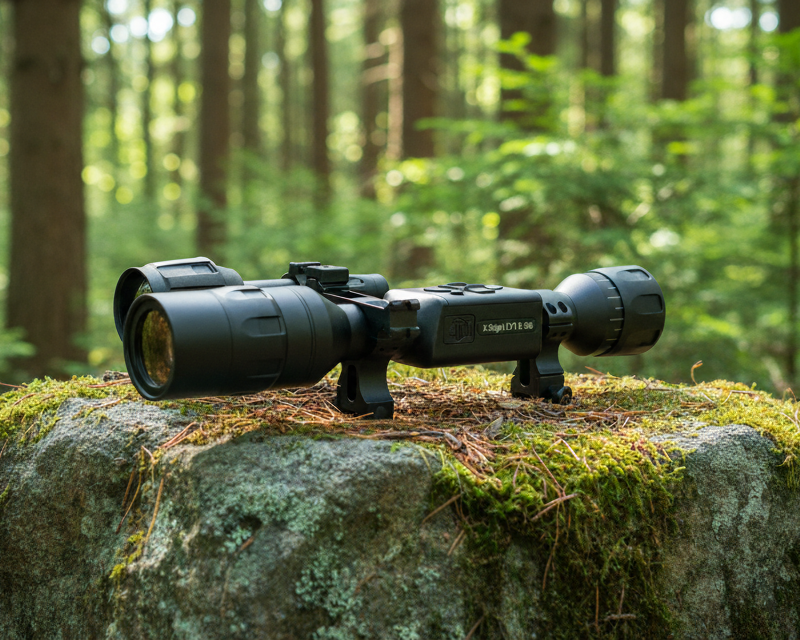
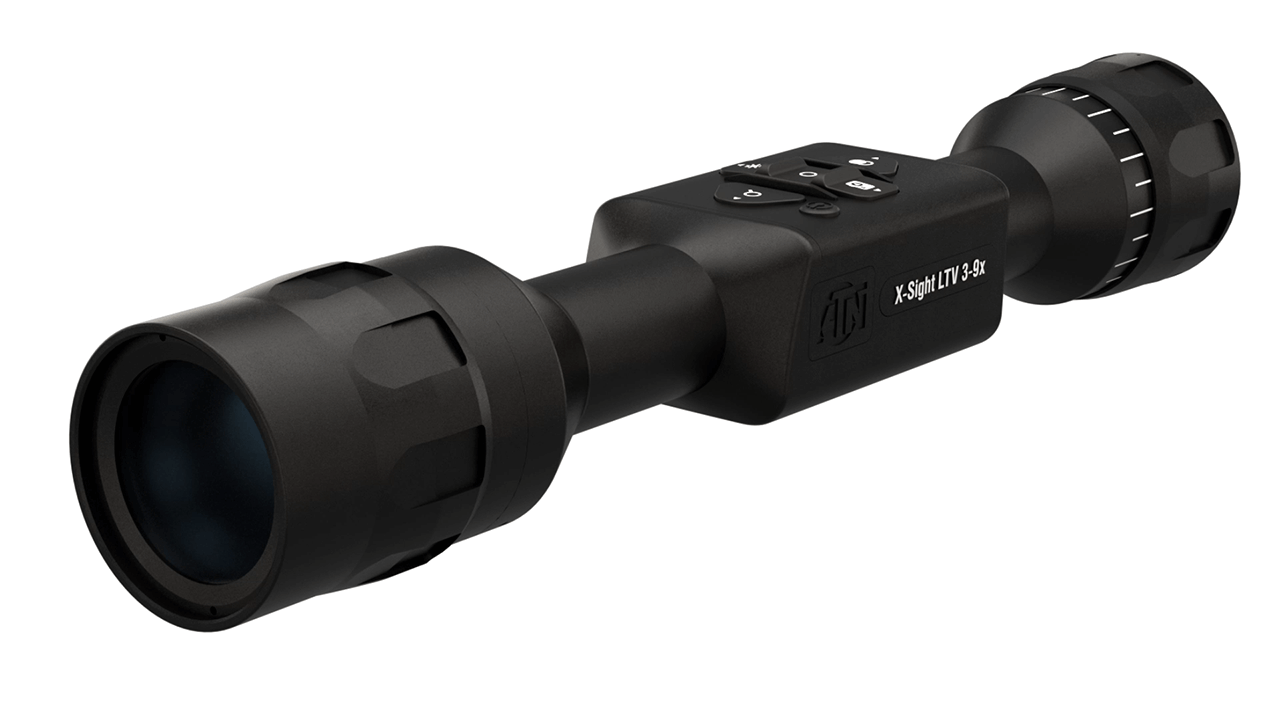
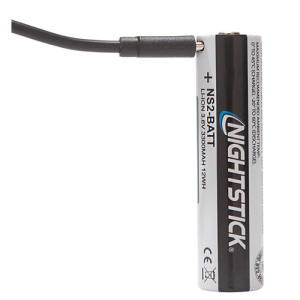
The LTV line was ATN's answer to complaints that the X-Sight 4K and X-Sight 5 were too heavy and too feature-bloated for simple nighttime shooting. The 3-9x version strips out video recording, Wi-Fi streaming, and ballistic calculators. What's left is a day/night scope that weighs 22.2 ounces and runs on internal batteries charged via USB-C.
For rimfire, the 3-9x magnification range hits the sweet spot. At 3x base, you've got enough field of view to pick up a rat at 30 yards or a coyote at 75. Bumping to 9x digital zoom gets you close enough to make confident shots on small targets at 100 yards, which is about the practical limit for most .22 LR setups anyway. The digital zoom does degrade image quality as you push past 6x, but at rimfire distances, the targets are close enough that it doesn't kill your ability to identify and shoot.
The one-shot zero system works well here. You fire a round, mark where it hit on the screen, and the reticle adjusts. On a rimfire where you're zeroing at 50 yards, this takes about three rounds to confirm. The reticle options are basic compared to the X-Sight 5, but you don't need a Christmas tree reticle for shooting squirrels at 60 yards.
Battery life is where the LTV earns its keep on rimfire. ATN rates it around 10+ hours, and real-world reports suggest 6-8 hours of continuous use with IR running, which is enough for a full night of pest control without carrying spare batteries. The internal rechargeable battery means no fumbling with AA cells in the dark.
Pros
- Light enough at 22.2 oz to not ruin rimfire balance
- 3x base magnification keeps the field of view usable at close range
- USB-C rechargeable internal battery with solid real-world life
- Simplified controls strip out features you don't need on a .22
- One-shot zero works reliably at rimfire distances
Cons
- No video recording capability
- Stock IR illuminator is adequate to about 75 yards, needs supplemental IR beyond that
- Display quality is noticeably behind the Sightmark 4K sensors
- Digital zoom past 6x gets grainy
Sightmark Wraith 4K Mini 2-16x32
Best for: image quality under $500
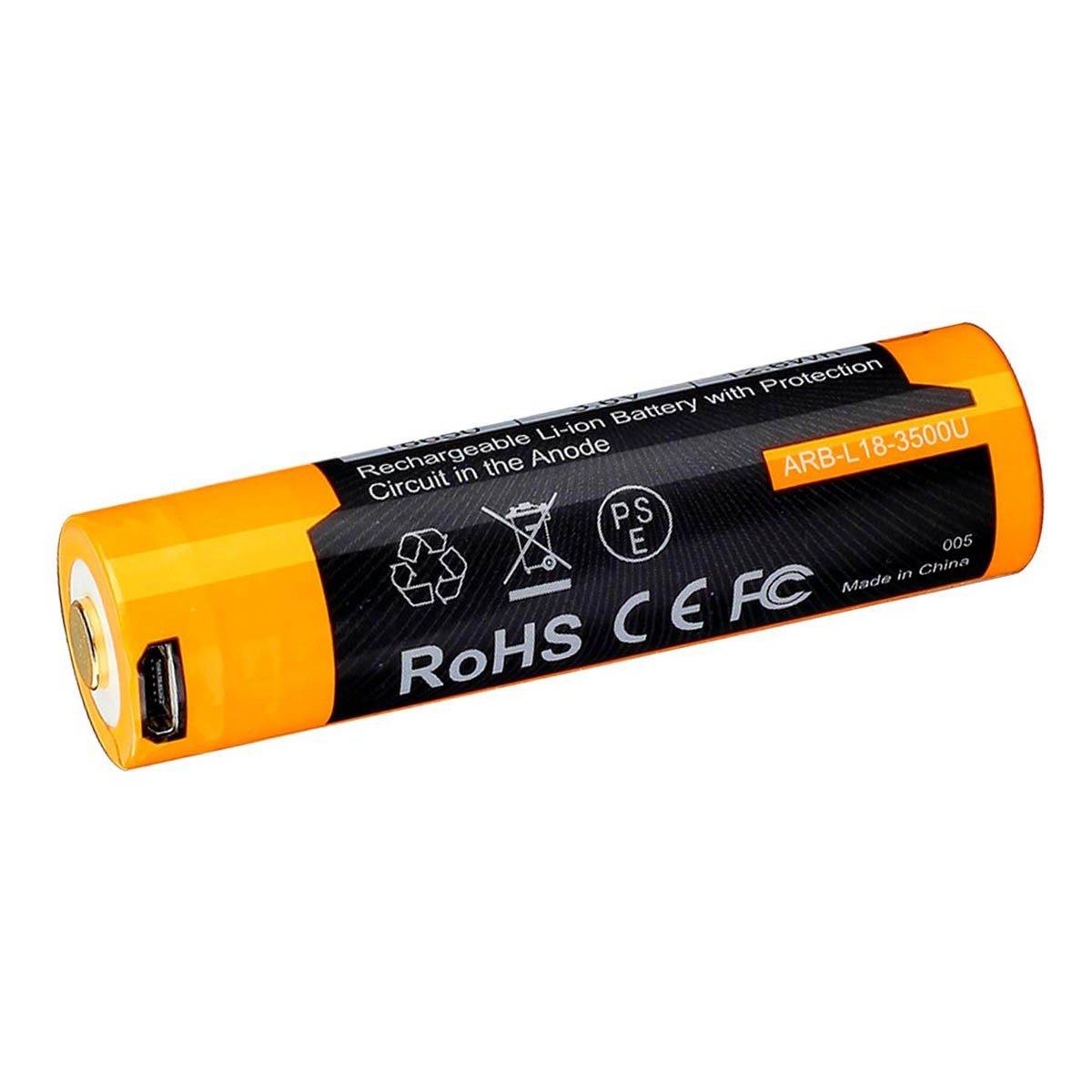
18650 battery with adapter Deals
Prices may change. May contain affiliate links.
micro SD card Deals
Prices may change. May contain affiliate links.
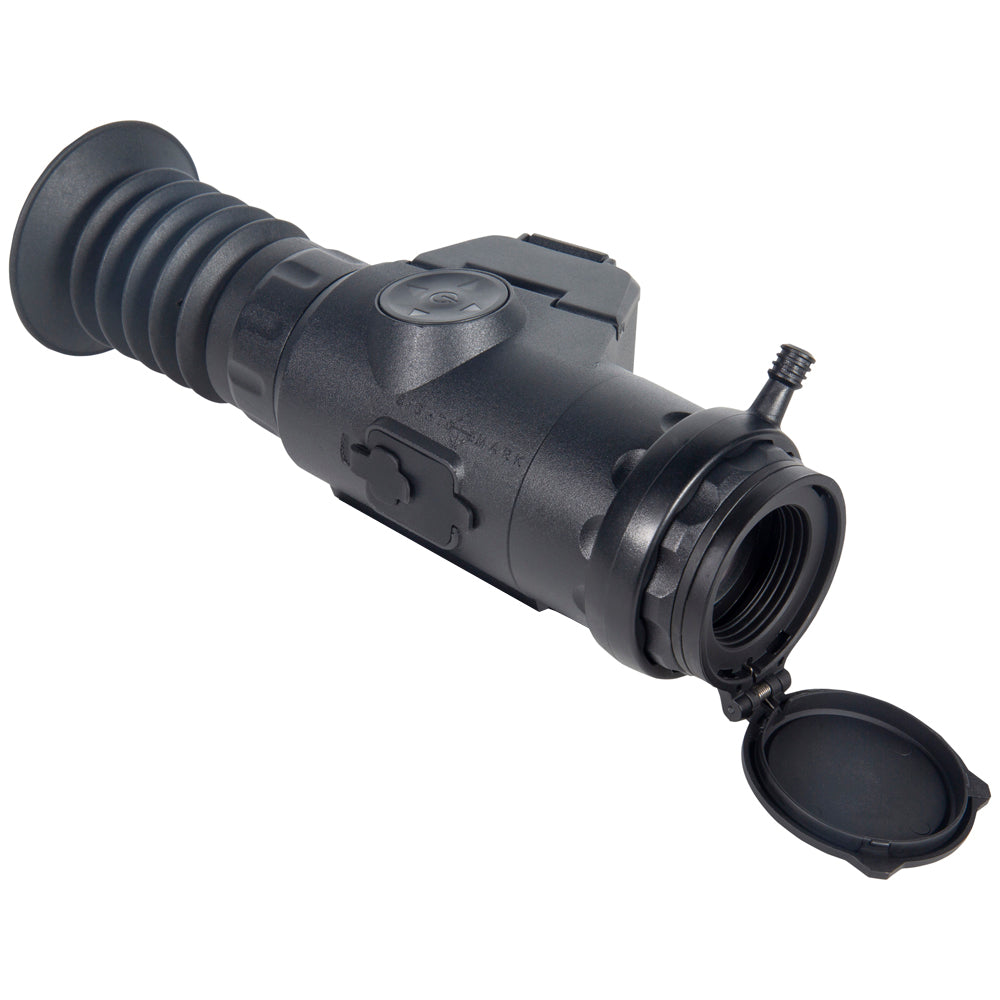
The Wraith 4K Mini in 2-16x is the scope that changed what people expect from sub-$500 digital night vision. The 4K sensor produces a noticeably sharper image than the 1080p units, and at 2x base magnification, the field of view is wide enough for close-range work that rimfire excels at.
At 21.8 ounces, it's actually slightly lighter than the ATN LTV, which surprised a lot of people when it launched. The 32mm objective keeps the overall profile compact. On a Ruger 10/22 or similar semi-auto, it balances well without making the rifle feel nose-heavy.
The image quality difference between this and the HD (1080p) version of the Wraith is visible immediately. Edges are sharper, target identification at distance is easier, and the display handles contrast better in mixed lighting conditions. If you're shooting in an area with some ambient light from a barn or distant road, the 4K sensor manages the brightness transitions without washing out the way cheaper sensors do.
Sightmark's digital zero system works, though it's a slightly different process than ATN's. You shoot, adjust on screen, confirm. The 4K Mini holds zero well on rimfire. Multiple long-term user reports confirm it survives thousands of rounds of .22 LR without shifting. The recoil from rimfire cartridges is so minimal that zero retention is rarely an issue with any decent digital scope, but it's still worth confirming.
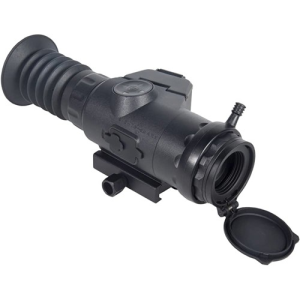
The built-in IR illuminator is powered by a single 850nm LED. It's functional to about 50-75 yards in total darkness. Beyond that, you'll want an external IR like the Sightmark IR-940 or a NightSnipe unit. The scope accepts 4 AA batteries or a single 18650 with an adapter, and battery life runs 4-5 hours with IR active. That's shorter than the ATN LTV, and it's the main trade-off for the better sensor.
Video recording is built in, saved to a micro SD card. The quality is decent for documentation or sharing, though it's not going to win any cinematography awards. For pest control records or just reviewing your shots, it works.
Pros
- 4K sensor produces the best image in this price bracket
- 2x base magnification is ideal for close-range rimfire work
- 21.8 oz keeps weight competitive
- Onboard video recording to micro SD
- Holds zero reliably on rimfire platforms
Cons
- Battery life of 4-5 hours with IR is shorter than competitors
- Uses AA batteries or 18650, not internally rechargeable
- Stock IR illuminator is weak beyond 75 yards
- Menu system takes some learning
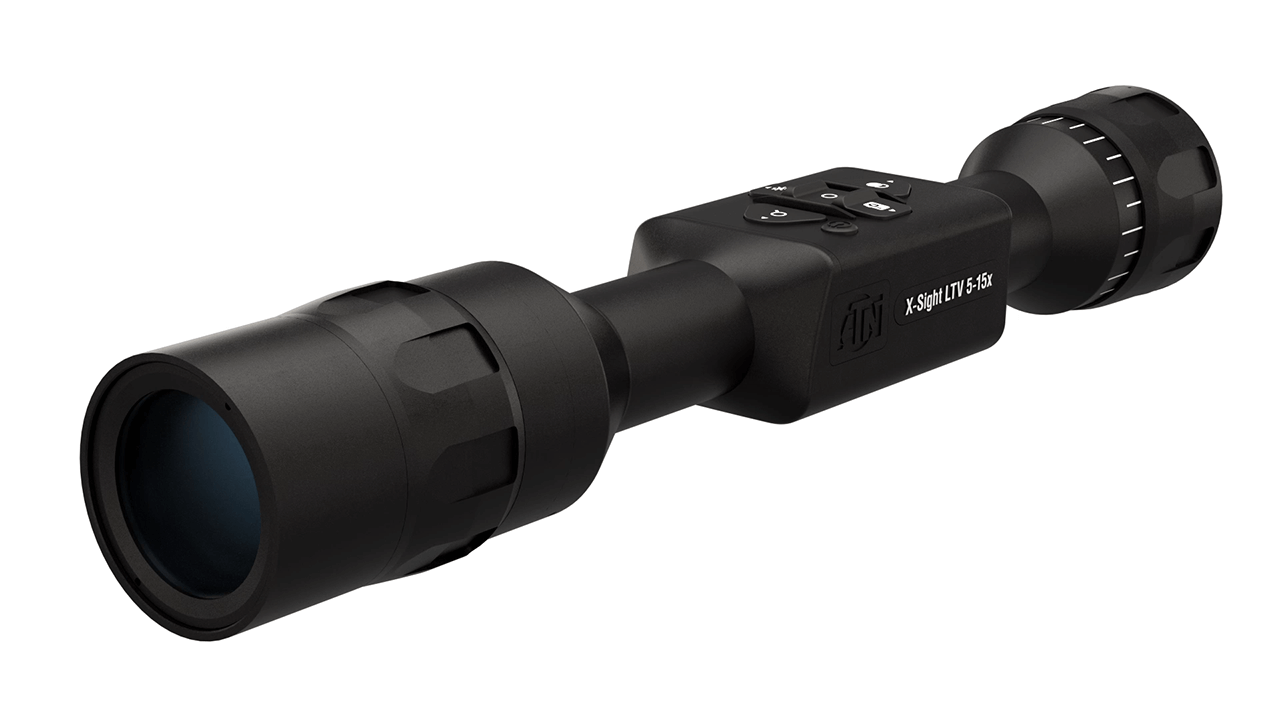
ATN X-Sight LTV 5-15x
Best for: longer rimfire shots
ATN X-Sight LTV 5-15x Deals
Prices may change. May contain affiliate links.
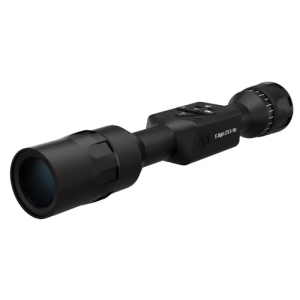
Same platform as the 3-9x LTV, but the 5-15x version makes sense if your rimfire shooting skews toward longer distances. If you're running a .17 HMR or a .22 WMR and regularly taking shots at 100-150 yards on prairie dogs or similar small targets, the higher base magnification helps.
The trade-off is field of view. At 5x base, you lose the wide view that makes the 3-9x better for close-range scanning. If a rat pops up at 20 yards, you'll be looking at a very zoomed-in rat. For shooters who set up on a known area and wait for targets at known distances, this isn't a problem. For walk-and-stalk pest control, the 3-9x is the better choice.
Weight and battery life are identical to the 3-9x at 22.2 oz and 6-8 hours real-world. The one-shot zero system works the same way. The only functional difference is the magnification range and the correspondingly narrower field of view.
The 5-15x also pairs better with the longer-range capabilities of .17 HMR. That cartridge is effective on small game to 200 yards in daylight, and at night with good IR, you can realistically stretch to 125-150 yards. The 15x digital zoom at that range gives you enough resolution to identify targets, though you'll absolutely need a supplemental IR illuminator to see anything at those distances in total darkness.
Pros
- Higher base magnification suits longer rimfire cartridges like .17 HMR
- Same lightweight 22.2 oz platform as the 3-9x
- Identical battery life and simplified controls
- One-shot zero works well at extended rimfire distances
- Good choice for stationary pest control setups
Cons
- 5x base is too tight for close-range scanning
- Not ideal for walk-and-stalk use
- Same display quality limitations as the 3-9x LTV
- No video recording
Sightmark Wraith 4K Mini 4-32x32
Best for: magnification range
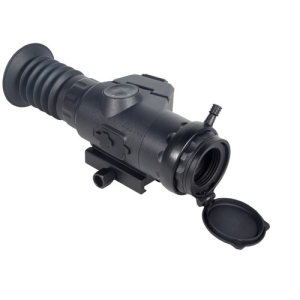
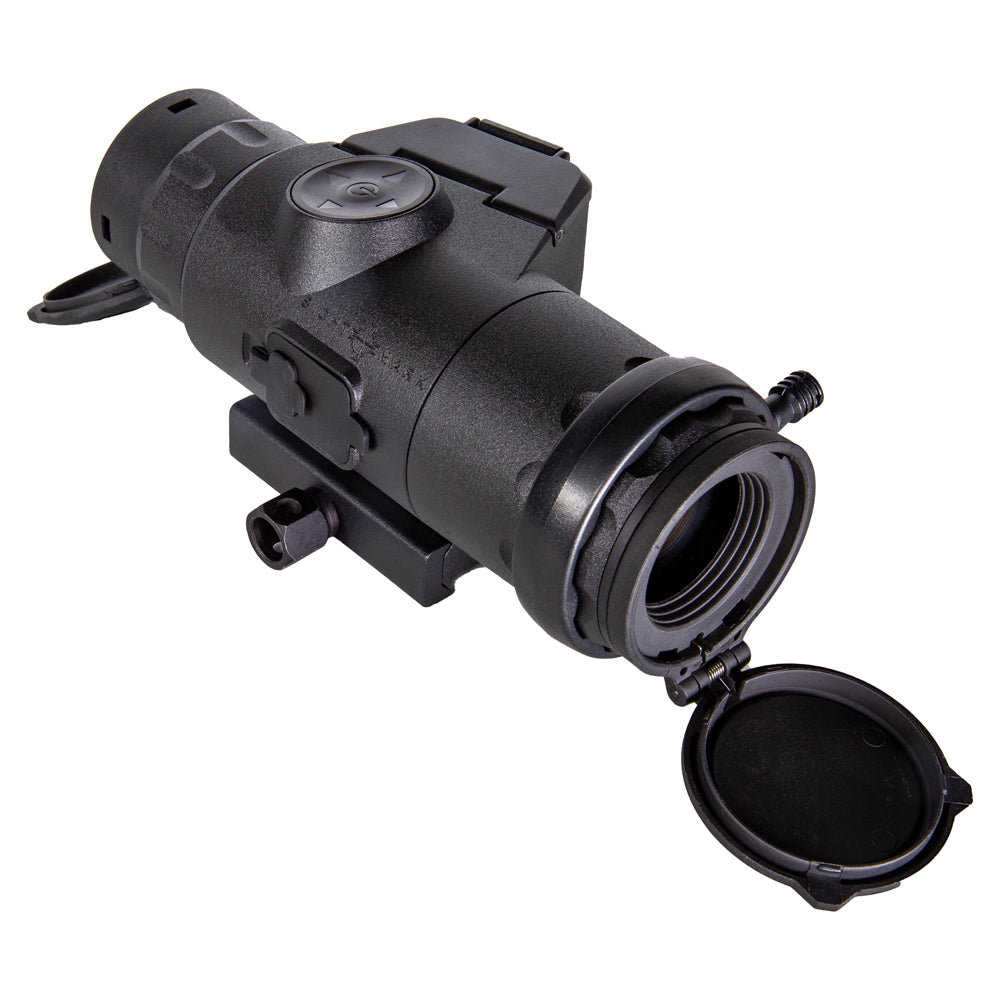
This is the higher-magnification version of the Wraith 4K Mini, and it's earned a strong following among rimfire night shooters who want the 4K sensor quality with more reach. The 4x base magnification is a reasonable middle ground, and the 32x digital zoom is frankly more than you'll ever need on a rimfire, but having it there doesn't hurt anything.
At 25.4 ounces, it's heavier than the 2-16x version by about 3.5 ounces. On a lightweight rimfire, you'll feel that difference. It's not a dealbreaker, but if weight is your primary concern, the 2-16x is the better pick. The extra weight comes from the slightly larger housing needed for the higher magnification optics.
The NRA's American Rifleman review noted the 4K Mini 4-32x produced clean, usable images across its range, and user reports from the rimfire community consistently praise the sensor quality. The 4K resolution means that even at higher digital zoom levels, the image stays usable longer before it turns into a pixelated mess. At 16x digital zoom, you can still identify small targets at 100+ yards in good IR conditions.
Where this scope really earns its spot is versatility. If you own multiple rimfires or want to occasionally swap it onto a centerfire rifle, the 4-32x range covers more scenarios than the 2-16x. It's rated for centerfire recoil, so moving it between a .22 LR and a .223 is perfectly fine.
The same battery and IR limitations from the 2-16x apply here. Plan on 4-5 hours with IR active, and budget for an external IR illuminator if you're shooting past 75 yards regularly.
Pros
- 4K sensor quality with extended magnification range
- Versatile enough to swap between rimfire and light centerfire
- Video recording built in
- 4x base magnification balances field of view and reach
- Strong user track record for zero retention
Cons
- 25.4 oz is the heaviest on this list aside from the X-Sight 5
- Battery life remains 4-5 hours with IR
- 32x digital zoom is overkill for rimfire distances
- Stock IR illuminator still limited to 75 yards
ATN X-Sight 5 3-15x
Best for: feature set
ATN X-Sight 5 3-15x Deals
Prices may change. May contain affiliate links.
May contain affiliate links.
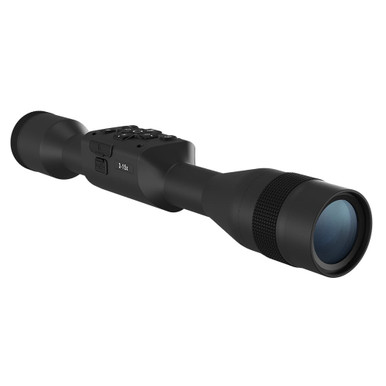
The X-Sight 5 is ATN's flagship, and it shows. You get video recording, Wi-Fi streaming to a phone, a ballistic calculator, and ATN's most refined one-shot zero system. The sensor and image processing are a step up from the LTV line, with smoother transitions between light levels and better detail in mixed conditions.
The weight penalty is real: 33.5 ounces. That's over two pounds, and on a rimfire rifle, it changes the handling significantly. A Ruger 10/22 goes from a nimble little carbine to something noticeably front-heavy. On a heavier bolt gun like a CZ 457 Varmint with a bull barrel, the extra weight is less noticeable because the rifle already has some heft up front.
The feature set is where the X-Sight 5 justifies itself. The video recording quality is better than Sightmark's implementation, and the Wi-Fi streaming lets someone else watch your screen on a phone, which is useful for teaching or just showing your buddy what you're seeing. The ballistic calculator is overkill for rimfire, but if you plan to move this scope to a centerfire rifle later, it's nice to have.
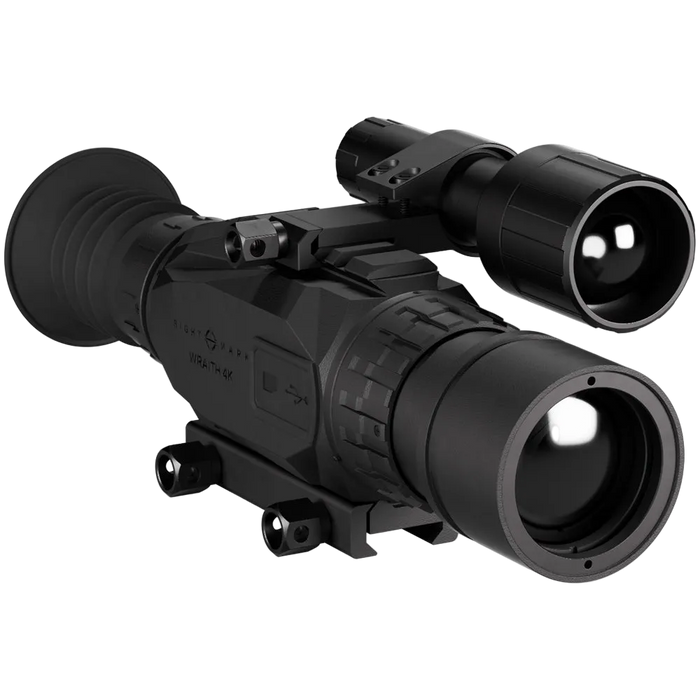
Image quality in night mode is the best of the ATN lineup. The sensor handles low-contrast scenes better, and the IR illuminator, while still limited in range, produces a cleaner image at its effective distance. The display refresh rate feels smoother, which matters when you're tracking a moving target like a running rat.
Battery life is rated around 18 hours by ATN, but with night vision mode and IR active, real-world use is closer to 8-10 hours. Still the best on this list for extended sessions.
Pros
- Best overall image processing in the ATN lineup
- Video recording and Wi-Fi streaming built in
- Longest real-world battery life on this list at 8-10 hours
- Smooth display refresh rate for tracking moving targets
- One-shot zero system is refined and reliable
Cons
- 33.5 oz is heavy for any rimfire rifle
- Feature bloat if all you need is night vision shooting
- More expensive than the LTV or Wraith options
- The ballistic calculator is irrelevant for rimfire use
- Larger physical profile changes rifle handling
Sightmark Wraith HD 2-16x28
Best for: budget entry point
If you want to try digital night vision on a rimfire without spending $400+, the Wraith HD is where most people start. The 1080p sensor is a generation behind the 4K Mini, and you'll see the difference in image sharpness, especially at higher digital zoom. But at 2x base magnification and 19.5 ounces, it's the lightest scope on this list and one of the lightest digital night vision scopes available.
The 28mm objective is small, which contributes to the low weight but also limits light gathering. In practice, since you're relying on IR illumination at night rather than ambient light, the smaller objective matters less than it would on a traditional scope. The IR illuminator is comparable to the 4K Mini's built-in unit, effective to about 50-75 yards.
For a first night vision scope on a .22 LR used for backyard pest control at 25-75 yards, the Wraith HD does the job. The image won't wow you, especially if you've looked through a 4K unit, but it's clear enough to identify and shoot rats, possums, and similar pests at typical rimfire distances. Video recording is included, and the menu system is the same as the 4K Mini, so if you upgrade later, the controls will be familiar.
Zero retention is fine on rimfire. The digital zeroing process works the same as the 4K Mini. The scope uses 4 AA batteries, and battery life runs about 4-5 hours with IR active.
Pros
- Lightest option on this list at 19.5 oz
- Lowest price entry point for digital night vision
- 2x base magnification works well for close rimfire distances
- Same menu system as the 4K Mini for easy future transition
- Video recording included
Cons
- 1080p sensor is visibly softer than 4K units
- Image degrades quickly at higher digital zoom
- 28mm objective limits performance in any ambient light conditions
- Build quality feels less robust than the 4K Mini
- Not a scope you'll want to keep long-term if you get serious about night shooting
How to choose
The first question is weight tolerance. Pick up your rimfire, hold it offhand for 30 seconds, and think about adding a pound and a half to the top of it. If that sounds miserable, stay under 22 ounces and look at the ATN LTV 3-9x or the Sightmark Wraith HD 2-16x. If your rimfire already has a heavy barrel or you shoot primarily from a rest or bipod, the weight matters less, and the X-Sight 5 or Wraith 4K Mini 4-32x become reasonable.
Second, figure out your realistic shooting distance. If 90% of your shots happen inside 75 yards, a 2x or 3x base magnification scope is all you need. The wider field of view at lower magnification makes target acquisition faster, which matters when you're scanning for pests. If you're stretching past 100 yards with a .17 HMR, the 5-15x LTV or the 4-32x Wraith gives you the reach to identify targets cleanly at distance.
Third, decide how much the stock IR illuminator matters to you. Every scope on this list ships with a built-in IR that works to about 50-75 yards. If your shooting happens in that range, you're fine with stock equipment. If you need to reach further, budget an additional $50-150 for an aftermarket IR illuminator regardless of which scope you buy. The scope choice and the IR illuminator choice are really two separate decisions.
Fourth, consider whether you want video recording. The ATN LTV line doesn't record. The Sightmark Wraith line and the ATN X-Sight 5 do. If you need to document pest control for a landowner or just want to review your shots, recording matters. If you don't care about footage, the LTV's lighter weight and simpler controls are the better trade.
Finally, think about whether this scope will live on your rimfire permanently or get swapped between guns. If it's a dedicated rimfire optic, optimize for weight and the 50-100 yard range. If you plan to move it to a centerfire rifle occasionally, the Wraith 4K Mini 4-32x or the ATN X-Sight 5 handle that transition better because they're rated for higher recoil and have magnification ranges that suit both platforms.
Common mistakes with rimfire night vision setups
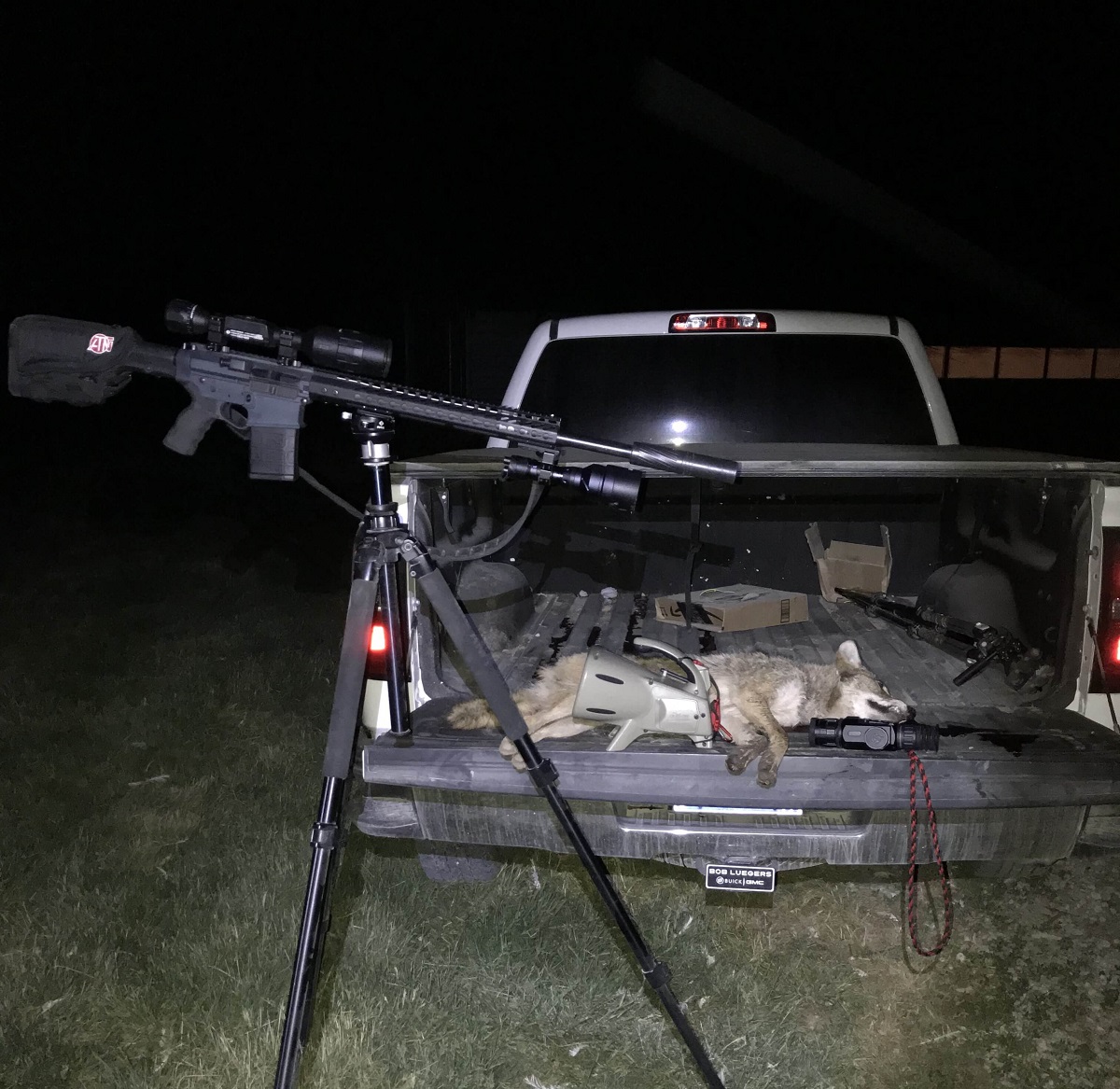
The number one mistake is skipping the IR illuminator upgrade. The built-in IR on every scope here is a compromise. It's there so the scope works out of the box, but it's not powerful enough for serious use past 75 yards. An 850nm or 940nm external IR illuminator mounted on the rifle or a separate support makes a dramatic difference in image quality and effective range. The 940nm wavelength is less visible to animals, which matters for pest control. The 850nm is slightly more effective in range but produces a faint red glow visible to the naked eye.
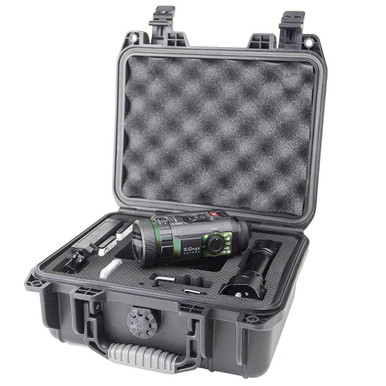
940nm IR illuminator Deals
Prices may change. May contain affiliate links.
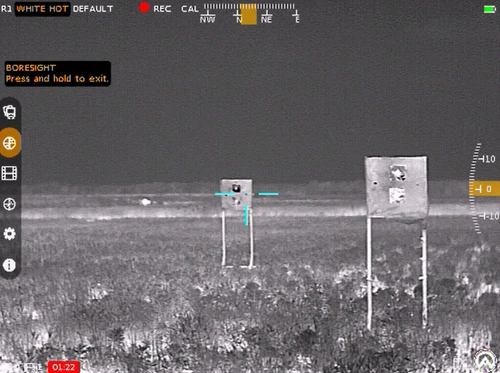
Second mistake: mounting the scope too high. Digital night vision scopes tend to have larger housings than traditional optics, and it's tempting to use tall rings to clear the objective. But excessive height over bore on a rimfire creates problems at close range. At 25 yards, if your scope is mounted 2 inches above the bore, your point of impact will be roughly 2 inches below your point of aim. On a rat-sized target, that's the difference between a hit and a miss. Use the lowest rings that provide clearance and know your offset at close range.
Third: expecting traditional scope eye relief behavior. Digital night vision scopes don't have eye relief in the traditional sense. The display is visible from various distances and angles behind the eyepiece. This is actually an advantage on rimfire since you don't get scope eye from recoil, and head position is less critical. But it also means the image can look washed out or dim if your eye isn't reasonably centered. Find the sweet spot and build your cheek weld around it.
Fourth: ignoring the refresh rate in cold weather. Digital displays slow down in cold temperatures. If you're shooting in winter, the image may lag slightly, making it harder to track moving targets. This affects all digital scopes, not just cheap ones. Running the scope for a few minutes before you start shooting lets the electronics warm up.
Range notes
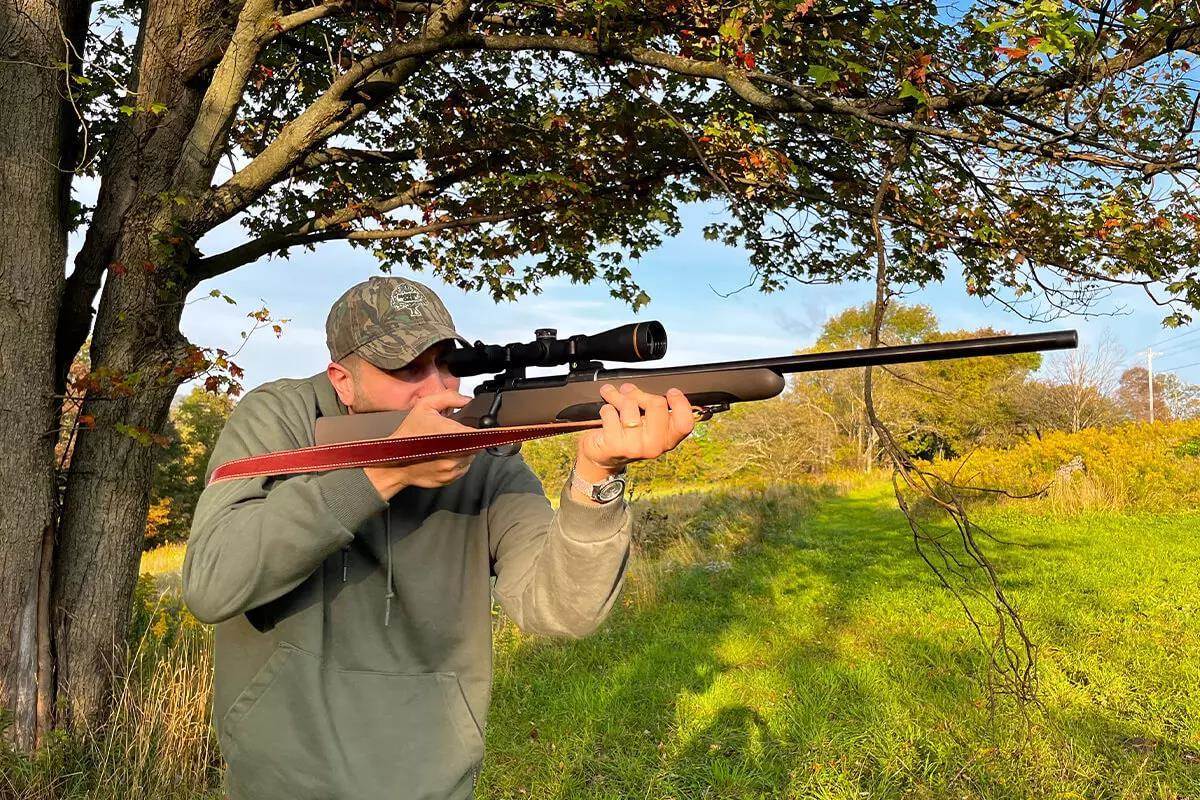
What you'll actually notice the first time you mount one of these on a rimfire: the rifle feels different. Even the lightest options here add meaningful weight compared to a traditional 2-7x rimfire scope that weighs 10-12 ounces. The balance point shifts forward, and offhand shooting requires more effort.
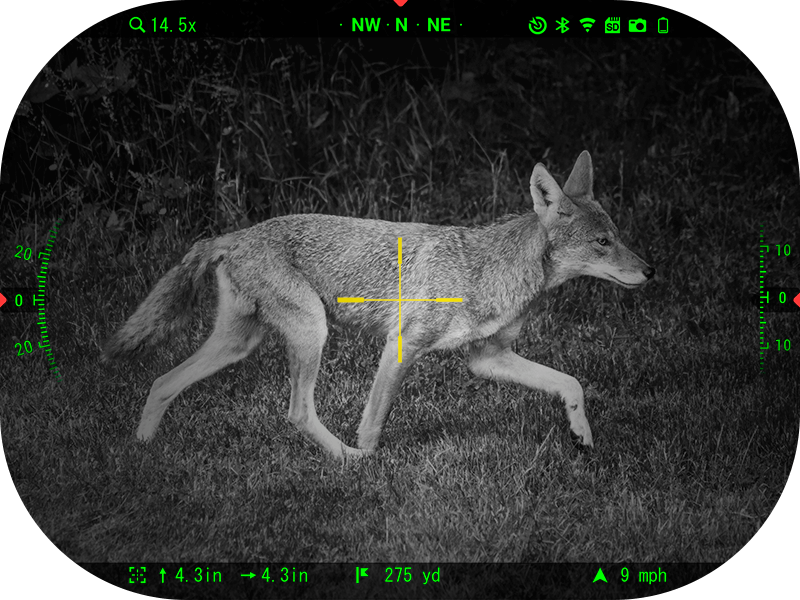
The digital image takes adjustment too. Looking through a screen rather than glass feels strange for the first session. Colors in day mode are slightly off from what your naked eye sees. At night, the green or black-and-white IR image is functional but not pretty. After a few sessions, your brain adapts and you stop noticing.
Zeroing at night is different from zeroing in daylight. The IR illumination changes how targets look, and shadows behave differently. Zero in daylight first, then confirm at night with IR active. Most shooters find their zero holds between day and night modes, but the point of aim can appear slightly different due to the IR lighting angle. A quick three-round confirmation group at night is worth the ammo.
The biggest performance variable isn't the scope. It's the IR illuminator. The same scope with a weak IR versus a strong IR looks like two completely different products. Before you decide a scope isn't good enough, try it with a quality external IR illuminator. The improvement is often dramatic enough to change your opinion entirely.
What to do before you buy
Weigh your rimfire rifle unloaded, with whatever stock and accessories you currently run. Add the scope weight from the table above and see if the total is something you're willing to carry and shoulder repeatedly. If you're over 8 pounds total with a rimfire, you've probably gone too heavy on accessories.
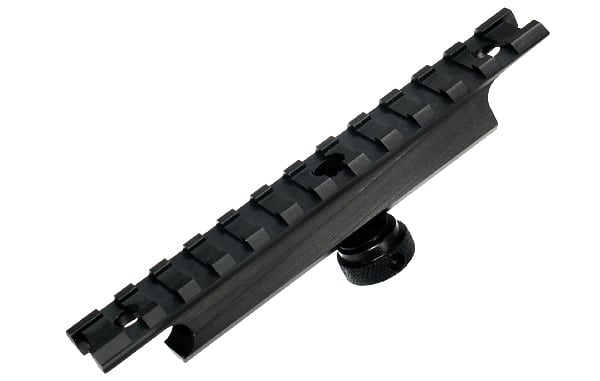
Picatinny rail mount Deals
Prices may change. May contain affiliate links.

Weaver mount Deals
Prices may change. May contain affiliate links.
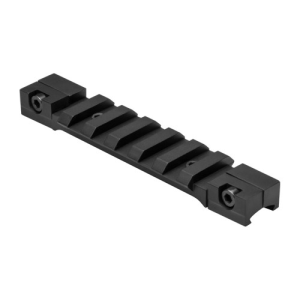
dovetail-to-Picatinny adapter Deals
Prices may change. May contain affiliate links.
Measure your rail or receiver for mounting compatibility. Most of these scopes use standard Picatinny or Weaver mounts, but some rimfire rifles have 3/8" dovetail rails. You may need a dovetail-to-Picatinny adapter, which adds height and can introduce another potential point of zero shift. If your rifle has a factory Picatinny rail, you're in better shape.
Check your ring height needs before ordering. Look at the objective bell diameter of the scope you're considering and compare it to the clearance above your barrel or handguard. Order the lowest rings that work. If you're between sizes, go with the taller option, but know that every millimeter of additional height increases your offset at close range.
Budget for an external IR illuminator from the start. Plan on spending $50-150 for a dedicated IR light, plus a mount. This isn't optional if you want to shoot past 75 yards in total darkness. Treat it as part of the scope purchase, not an afterthought.
Once everything is mounted, zero at 50 yards in daylight using the digital zeroing system. Confirm with a five-round group. Then go out at night, turn on the IR, and shoot another five-round group at the same distance. If the groups match, you're good. If they don't, check your IR illuminator angle and make sure it's lighting your target evenly. Uneven IR creates shadows that can shift your perceived point of aim. Sort that out before you start shooting pests, and you'll have a setup that actually works when it matters.