The "Any Other Weapon" is the NFA's junk drawer. It's the category the ATF uses for everything that doesn't fit neatly into the other five boxes, and it's simultaneously the cheapest NFA item to transfer and one of the most confusing to understand. If you've ever looked at a Serbu Super Shorty and wondered why it needs a tax stamp while a Mossberg Shockwave doesn't, or why a pen gun requires the same federal registration as a suppressor, you've already stumbled into AOW territory.
May contain affiliate links.
The good news: AOW transfers only carry a $5 tax stamp instead of the usual $200. The bad news: manufacturing one on a Form 1 still costs $200, the classification logic can feel arbitrary, and getting it wrong is a felony. So the AOW category rewards people who buy smart and punishes people who tinker without understanding the rules. Here's how the category actually works, what's worth buying, and where the traps are.
What the ATF actually means by "any other weapon"
The NFA defines an AOW as any weapon or device capable of being concealed on the person from which a shot can be discharged through the energy of an explosive, and which is not a pistol, revolver, rifle, shotgun, short-barreled rifle, short-barreled shotgun, destructive device, or machine gun. That's a mouthful, and it's intentionally broad. Congress wrote this as a catch-all so novel concealable weapons couldn't slip through by not matching an existing definition.

.22 LR ammunition Deals
Prices may change. May contain affiliate links.
vertical foregrip Deals
Prices may change. May contain affiliate links.
R.j. braverman corporation Stinger pen gun
May contain affiliate links.
In practice, AOWs fall into a few distinct groups. Smooth-bore pistols are the most common. These are handgun-sized firearms with smooth bores, meaning they don't have rifling. Because they lack rifling, they aren't "pistols" under federal definition (which requires a rifled bore). And because they were never designed to be fired from the shoulder, they aren't shotguns either. They exist in a definitional gap, and the ATF parks them in the AOW category.
Pen guns, cane guns, knife guns, and similar disguised firearms are the second group. Any firearm designed to look like something other than a firearm is an AOW by definition. The Stinger pen gun, made by R.J. Braverman Corporation (later produced under various names), is the classic example. It fires a single .22 LR round and looks exactly like a fat pen. The concealment-by-disguise principle is what makes it an AOW regardless of caliber or capability.
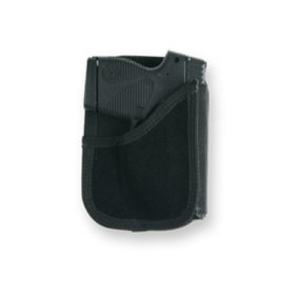
Then there are wallet holsters and similar devices that allow a conventional handgun to be fired while still enclosed in the holster. The ATF has ruled that certain wallet-style holsters, when attached to a firearm, convert the combination into an AOW because the weapon can be discharged while concealed within the wallet. The firearm alone isn't an AOW. The firearm-plus-wallet combination is. This is the kind of ruling that makes NFA law feel like a logic puzzle.
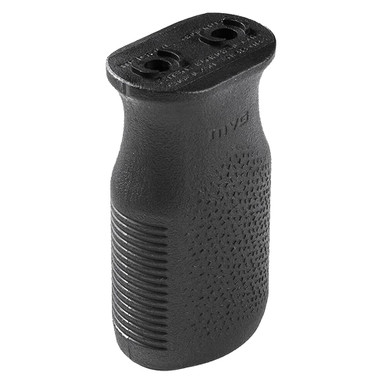
Vertical foregrips on pistols used to be a major AOW trigger as well. Adding a vertical foregrip to a handgun changed it from a "pistol" to a weapon "designed to be fired with two hands," which the ATF classified as an AOW. Recent regulatory shifts and court challenges have muddied this area, but the underlying principle hasn't been formally repealed. Tread carefully here and check current ATF guidance before adding accessories to pistol-format firearms.
The $5 transfer: why it exists and what it actually means
Here's the part that gets everyone's attention. Transferring an AOW on a Form 4 costs $5 in tax. Every other NFA item costs $200 to transfer. The reason is baked into the original 1934 statute: the NFA set the AOW transfer tax at $5 and the making tax at $200, and Congress never changed those numbers. There's no deep policy rationale beyond the fact that the law was written that way and nobody has amended it.
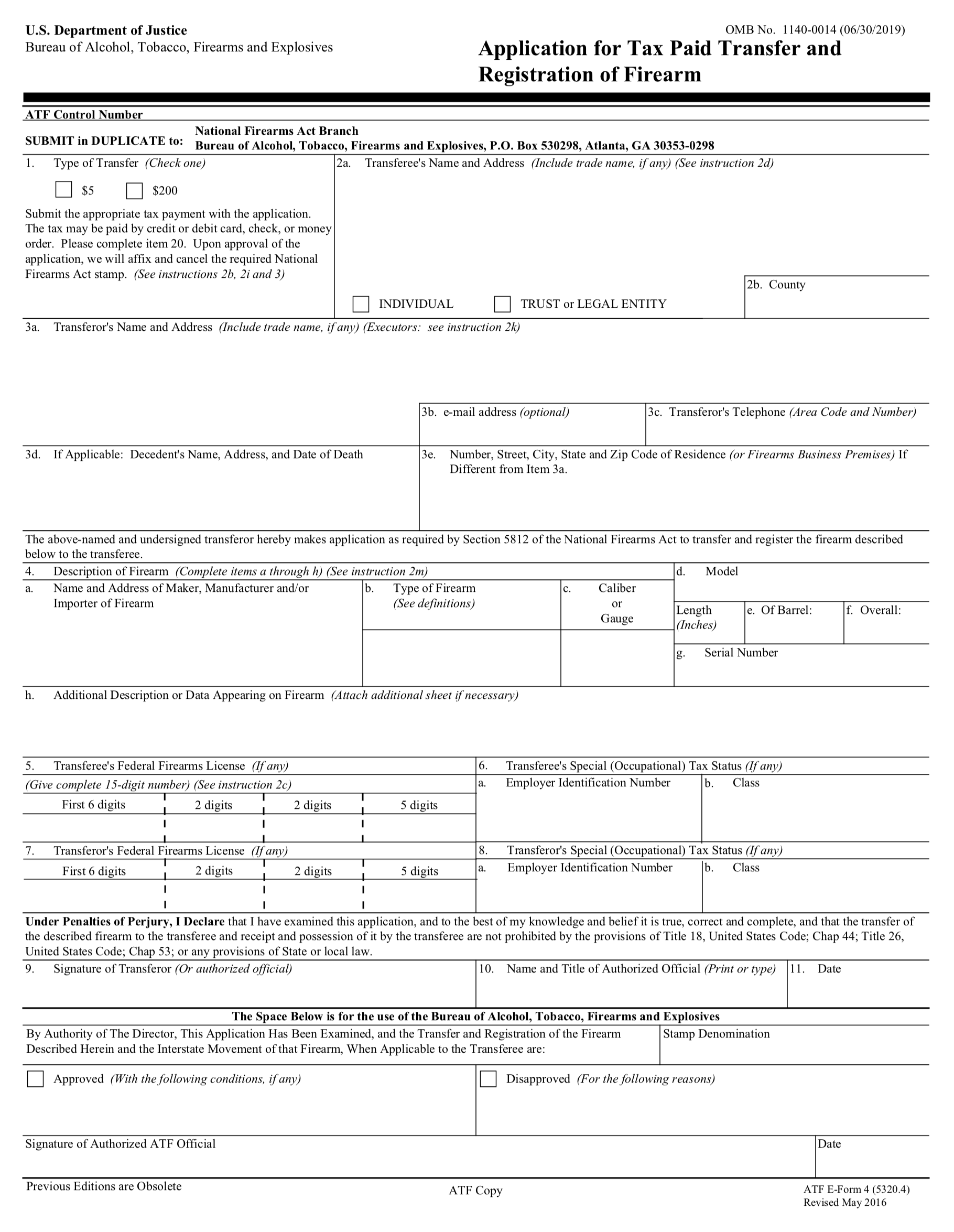
This creates an interesting economic dynamic. If a licensed manufacturer (an FFL with SOT status) makes an AOW and sells it to you, you pay the $5 transfer tax on your Form 4. But if you, as an individual, decide to manufacture your own AOW on a Form 1, you pay $200. Same item, different tax, depending on which direction the paperwork flows. The practical takeaway: buy AOWs from dealers rather than making them yourself, unless you have a specific reason to Form 1 one.
Now, a significant legislative development is working through Congress as of mid-2025. The budget reconciliation bill moving through the House includes a provision to reduce all NFA making and transfer taxes to $0. If that passes and is signed into law, the AOW's $5 advantage disappears entirely because everything becomes free to stamp. That would be a massive change for suppressors and SBRs, but it would actually eliminate the one financial edge AOWs have always had. Worth watching, but don't make purchasing decisions based on legislation that hasn't passed yet.
The Form 4 process for an AOW is identical to any other NFA transfer. You buy the item from a dealer, submit your Form 4 (preferably via eForms), include your passport photo and fingerprint cards, and wait. Current eFile Form 4 approvals are running roughly 4 to 6 months, though individual experiences vary. CLEO notification is required, same as any other NFA transfer. The only difference is that $5 check instead of $200.
Smooth-bore pistols: the practical AOW
The most "useful" AOW you can actually buy and shoot regularly is a smooth-bore pistol, typically a short-barreled shotgun-type firearm that was manufactured from the start as an AOW rather than converted from an existing shotgun. The distinction matters enormously.
Mossberg 500 Deals
Prices may change. May contain affiliate links.
12-gauge ammunition Deals
Prices may change. May contain affiliate links.

Mossberg Shockwave Deals
Prices may change. May contain affiliate links.
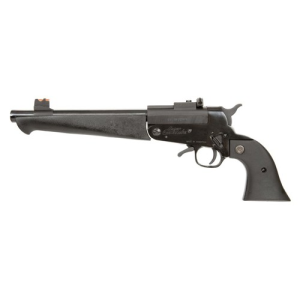
.410 bore smooth-bore pistol Deals
Prices may change. May contain affiliate links.
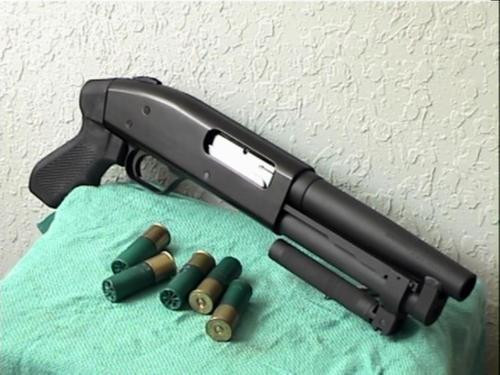
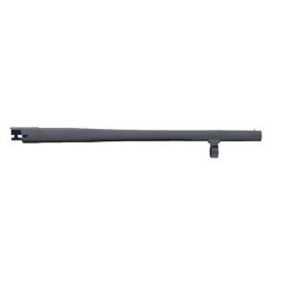
The Serbu Super Shorty is the poster child. It's built on a Mossberg 500 or Remington 870 receiver, chopped to a 6.5-inch barrel with a overall length around 16.5 inches, and fitted with a Serbu pistol grip. Because it was manufactured by Serbu as a pistol-grip-only firearm with a smooth bore and no shoulder stock, and because it's under 26 inches OAL, it's classified as an AOW. It holds 2+1 rounds of 12-gauge and is, honestly, more of a novelty than a practical defensive tool. The recoil is brutal, the capacity is minimal, and follow-up shots are slow. But it's fun, it's compact, and it's a genuine conversation piece.
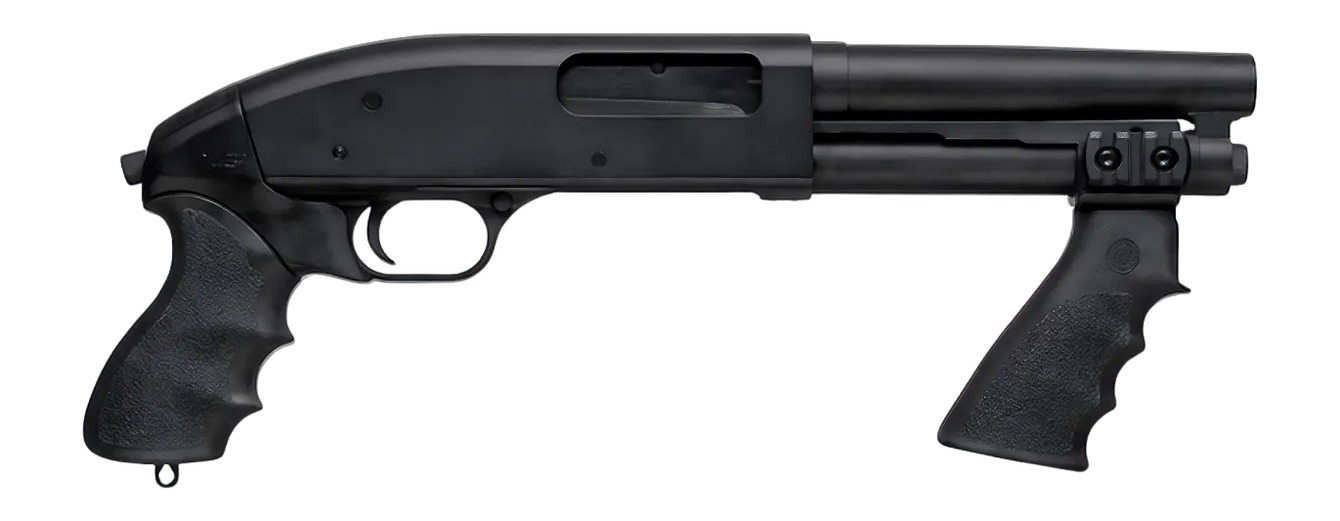
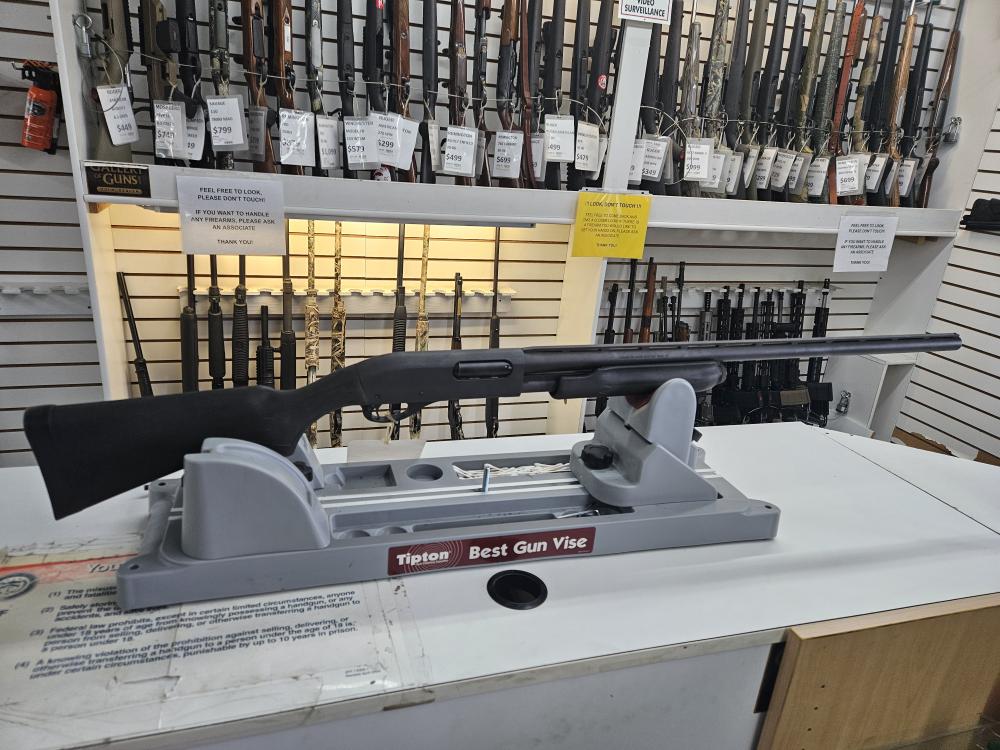
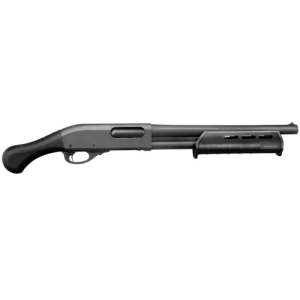
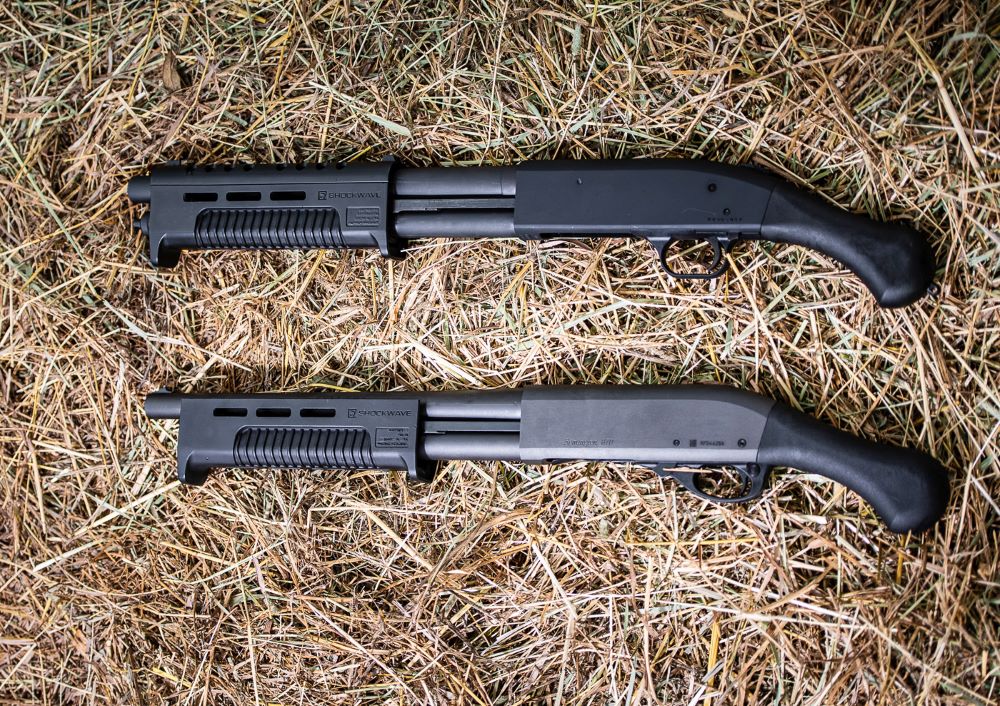
This is where the Shockwave comparison becomes important. The Mossberg 590 Shockwave has a 14-inch barrel, a bird's-head grip, and an overall length of 26.37 inches. Because it exceeds 26 inches OAL and was never manufactured with a stock (so it was never a "shotgun" under GCA definitions), it's classified as a plain "firearm" under federal law. No NFA stamp required. The half-inch of overall length between "firearm" and "AOW" is doing a lot of legal work there.
If you took that same Shockwave and cut the barrel down to, say, 10 inches, dropping the OAL below 26 inches, you'd have manufactured an AOW without a Form 1. That's a federal felony. The dimensional thresholds are rigid and unforgiving. Measure twice, file paperwork once.
Some makers produce smooth-bore pistols in smaller gauges. The .410 bore versions are gentler to shoot and still qualify as AOWs under the same logic. A few custom builders have done smooth-bore handguns in other calibers, though these are uncommon. The market is small because the practical applications are limited, but the category exists and items are transferable.
Pen guns and disguised firearms
Pen guns occupy a strange corner of the firearms market. The most famous is the Stinger, originally made by R.J. Braverman and later by other manufacturers. It's a single-shot .22 LR device that, when closed, looks like an oversized pen. You rotate the barrel assembly to firing position, pull back a striker, and fire. Reloading involves unscrewing the barrel, inserting a fresh cartridge, and reassembling.
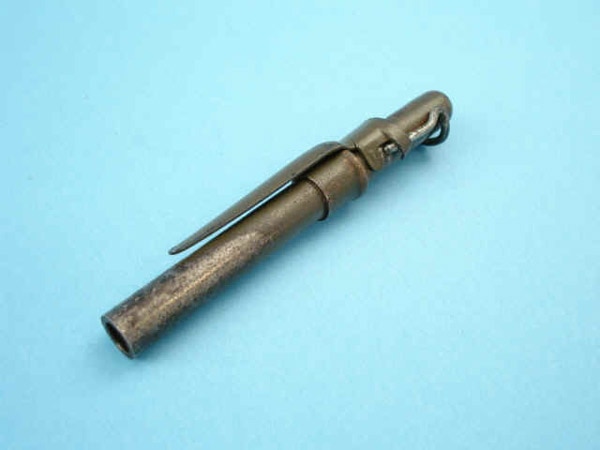
The practical utility is approximately zero. Accuracy is nonexistent beyond contact distance, the .22 LR from a 2-inch barrel is anemic, and reloading takes longer than most people's patience. These are collector's items and curiosities, not defensive tools. But they're legal NFA items with $5 transfers, and they have a certain James Bond appeal that keeps demand steady.
Cane guns, umbrella guns, and similar disguised firearms follow the same logic. If it's designed to not look like a gun, it's an AOW. Production examples are rare in the modern market, but they surface at auction occasionally. Rock Island Auction has moved historical cane guns and similar items, typically at collector premiums well above what you'd expect for their actual shooting capability.
The thing nobody tells you about pen guns: they're surprisingly hard to find in stock. Production has been sporadic over the decades, and most dealers don't keep them on the shelf. When they do appear, prices range from $200 to $500 for the firearm itself, plus your $5 stamp. The wait time for the Form 4 approval will almost certainly exceed the total time you'll ever spend actually shooting the thing.
The Form 1 trap: why making an AOW costs more than buying one
This trips up hobbyists constantly. You see the $5 transfer tax and think AOWs are the cheapest NFA entry point. They are, if you're buying from a dealer. But if you decide to build one yourself, the Form 1 making tax is $200, same as an SBR, SBS, or suppressor.

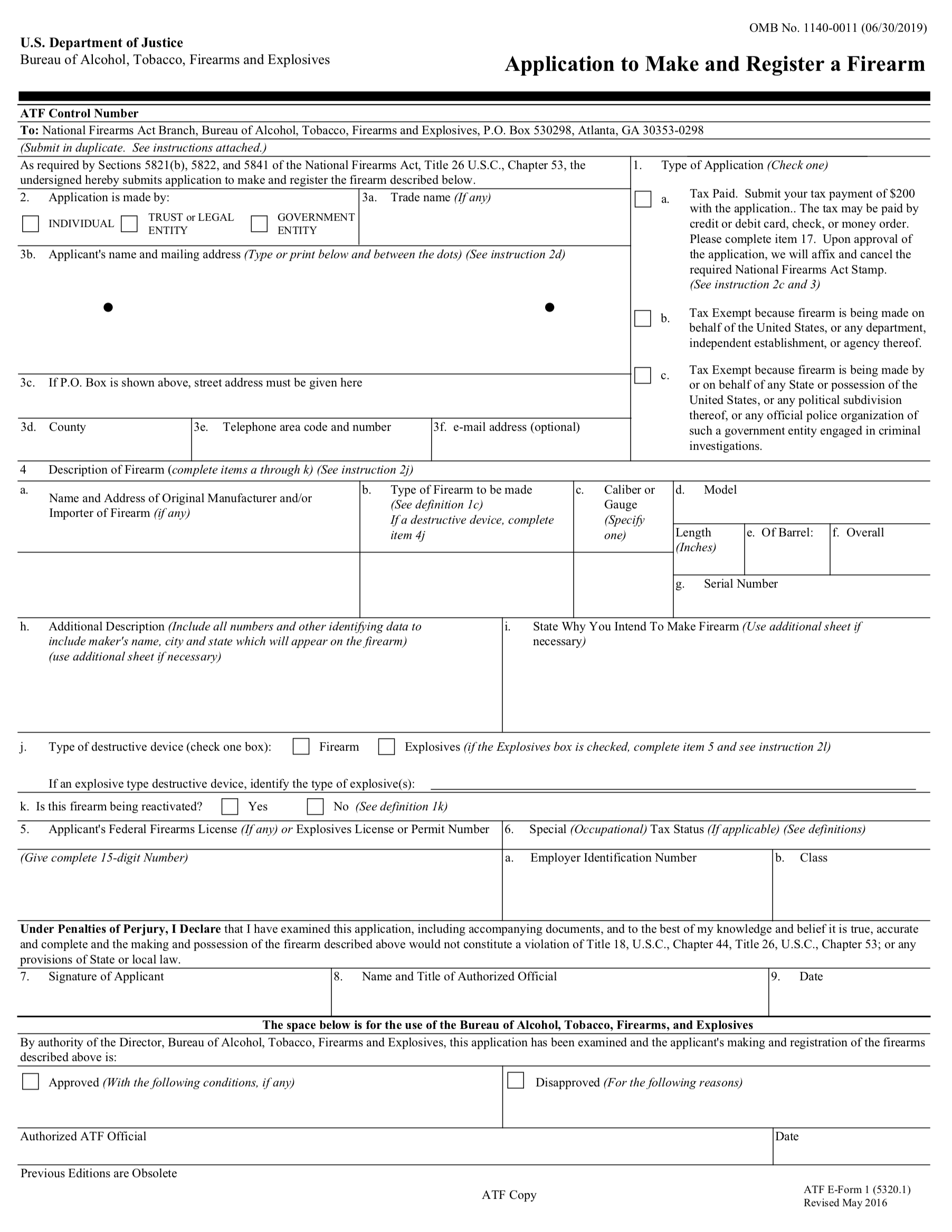
Why would anyone Form 1 an AOW? The most common scenario used to be adding a vertical foregrip to a pistol. If you had, say, a Glock and wanted a vertical grip on a rail, the ATF's position was that you'd manufactured an AOW and needed a $200 Form 1 first. This made no economic sense for most people, which is one reason the practice was rare among people who actually followed the law.
The smarter play has always been to buy factory AOWs from manufacturers who already paid the making tax and sell them with $5 transfers. Serbu, for example, manufactures the Super Shorty as an AOW and sells through dealers. Your cost is the firearm price plus $5 tax plus whatever your dealer charges for the transfer. Compared to $200 for a Form 1 SBR or suppressor stamp, that $5 feels like a rounding error.
If the $0 stamp legislation passes, this entire calculus changes. There'd be no financial distinction between Form 1 and Form 4, and no advantage to AOWs over SBRs or suppressors from a tax perspective. The AOW category would still exist legally, but its one unique selling point would evaporate.
Common mistakes and gotchas
Converting an existing shotgun into an AOW. If a firearm was ever assembled with a shoulder stock, it's a "shotgun" under the GCA. Removing the stock and cutting the barrel below 18 inches makes it a short-barreled shotgun, not an AOW. The $200 SBS tax applies. AOW classification only works for firearms that were never shotguns in the first place. This is the single most common misunderstanding in the AOW space.
Ignoring state law. Some states that allow NFA items broadly still restrict or prohibit AOWs specifically. Others have barrel length or overall length requirements that differ from federal thresholds. State law is the first gate, federal is the second. Check both before you buy or build.
Assuming the Shockwave is an AOW. It's not. The Mossberg Shockwave and similar "firearm" category weapons (Remington TAC-14, etc.) are specifically designed to fall outside NFA jurisdiction by maintaining an OAL over 26 inches and never having been manufactured with a stock. They're non-NFA firearms. Modifying one in ways that drop the OAL below 26 inches or adding a stock creates an NFA item and a legal problem if you haven't filed paperwork first.
Forgetting about interstate transport. AOWs are NFA items. If you're traveling across state lines with one, you need ATF Form 5320.20 (the interstate transport form) approved in advance. This is the same requirement that applies to SBRs and SBSs. Suppressors and regular firearms don't require this form, but AOWs do. Plan ahead if you're taking your Super Shorty to an out-of-state range day.
Wallet holsters on carry guns. This one catches people off guard. Certain wallet-style holsters that allow the firearm to be discharged while enclosed have been classified as creating an AOW when combined with the gun. Not every wallet holster triggers this, but some do. If you're considering one, research the specific product's ATF classification status before you end up carrying an unregistered NFA item in your back pocket.
What's actually worth buying in the AOW category
The honest answer: AOWs are more interesting than practical. If you want a compact shotgun-type weapon, the Shockwave does 90% of what a Super Shorty does without any NFA paperwork. If you want a short rifle, an SBR gives you a stock and real accuracy. If you want quiet, a suppressor is the best NFA dollar you'll ever spend.
But if you're already in the NFA ecosystem and want something different, the Super Shorty is the most shootable AOW on the market. It's a real 12-gauge, it functions reliably (Serbu's quality control is solid), and the $5 transfer makes it an easy impulse buy if your dealer has one in stock. Street prices run $300 to $400 for the firearm, plus the stamp and transfer fee.
Pen guns are pure collector items. Buy one if you think they're cool, not because you need one. The Stinger in .22 LR is the easiest to find and cheapest to feed. Prices fluctuate based on availability since production runs are infrequent.
For the truly adventurous, some custom builders make AOW smooth-bore pistols in interesting configurations. These are low-volume, high-wait items, but they exist if you know where to look. Talk to your local Class 3 dealer about what they can order or what's sitting in distributor inventory.
Where to go from here
If you want an AOW, start with your state laws. Confirm that AOWs are legal where you live and that there aren't additional state-level restrictions on barrel length, overall length, or smooth-bore handguns. Some states that are perfectly fine with suppressors and SBRs have quirks around AOWs.
Next, find a dealer who stocks them or can order from Serbu or other AOW manufacturers. The Form 4 eFile process is the same as any other NFA transfer. You'll need your passport photo, fingerprint cards (two sets), and the $5 payment to ATF. Your dealer will walk you through the eForms submission. Current wait times for eFile Form 4 approvals are in the 4 to 6 month range, though the ATF's processing speed fluctuates.
If the $0 stamp provision passes in the current budget bill, the financial barrier drops to nothing for all NFA items. That might make SBRs and suppressors more attractive relative to AOWs since you'd get more practical utility for the same $0 tax. But the AOW category isn't going anywhere, and there's something satisfying about owning the NFA's weirdest classification. The paperwork is simpler than it sounds. The wait is the same as everything else. And $5 is still $5, at least for now.