
Your unit just signed for sixty AN/PVS-14 monocular night vision devices. They're sitting in the arms room in their soft carry cases, and the last time anyone did a serious PMCS on them was whenever the previous armorer felt like it. Half of them probably have dead batteries still installed. A few might have lens scratches nobody documented. And at least one has a bright spot on the image intensifier tube that's been slowly getting worse for two years because nobody caught it during a before-operation check.
AN/PVS-14 Monocular Night Vision Device
May contain affiliate links.
The AN/PVS-14 is a $3,000-plus Gen III image intensifier monocular, and it's the most widely fielded individual night vision device in the U.S. military inventory. It replaced the PVS-7 binocular as the standard issue NVD for most line units, and unlike the PVS-7, it can be head-mounted, helmet-mounted, weapon-mounted, or handheld. That versatility is exactly why they get beat up. They go everywhere, get mounted on everything, and come back to the arms room with problems that a five-minute PMCS check would have caught three field problems ago.
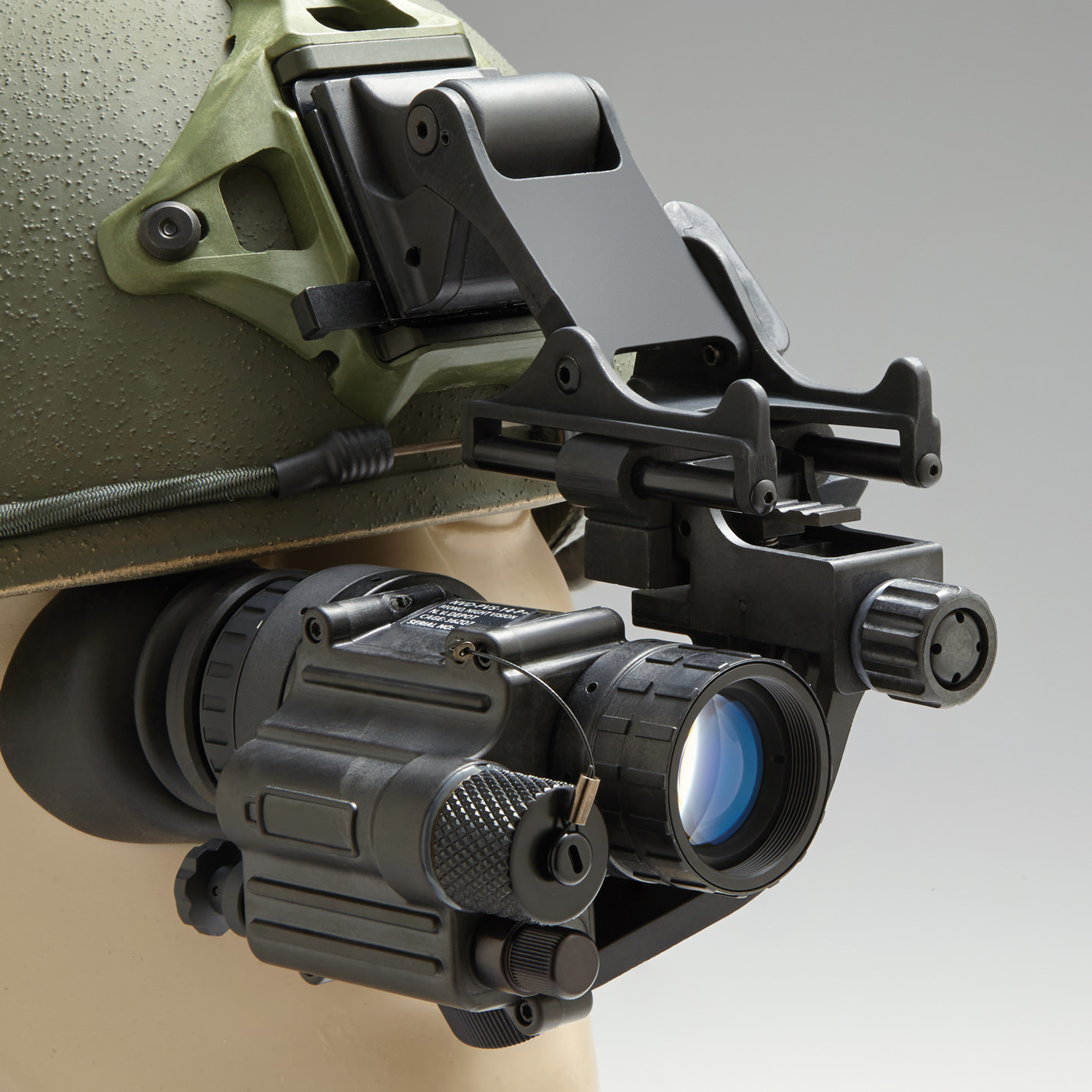
TM 11-5855-306-10 covers operator-level maintenance. TM 11-5855-306-23&P covers unit and direct support maintenance. Both documents exist. Both are technically available. And both leave gaps that matter on the arms room floor, where the reality of checking these devices doesn't look anything like a clean checklist on a page. Here's what actually needs to happen and why most units are getting it wrong.
Why PVS-14 PMCS gets skipped
The honest answer is time and priority. PMCS (Preventive Maintenance Checks and Services) on weapons gets done because qualification is on the training calendar and a dirty rifle means a no-go. PMCS on vehicles gets done because the motor pool has a system and a motor sergeant who will eat someone alive for skipping it. But PMCS on sensitive items like night vision? That lives in a gray zone.
The arms room typically stores PVS-14s in their soft cases, inside a locked cage or container, and they come out for night fire, night land navigation, or specific training events. Between those events, which might be months apart for Guard and Reserve units, the devices sit. Nobody's checking them. The armorer might do a serial number inventory for the property book, but that's accountability, not maintenance. Those are two very different things.

The TM lays out before, during, and after operation checks. The problem is that "before operation" often means five minutes before a night fire range when soldiers are drawing devices in the dark, and "after operation" means turning them back in at 0200 when everyone just wants to go to sleep. The during-operation checks happen never, because soldiers are busy doing the actual training event.
Guard and Reserve units face this more than active. A PVS-14 might sit in the arms room for six months between uses. That's six months of potential battery corrosion, six months of a desiccant pack doing nothing because nobody replaced it, six months of a tube degradation going unnoticed. By the time someone powers it up for the next night range, the damage is already done.
The before-operation checks the TM lists vs. what actually happens
TM 11-5855-306-10 lays out a before-operation PMCS sequence that covers the basics: inspect the exterior for damage, check the lens surfaces, install a fresh battery, power on the device, check for proper image, adjust the diopter and objective focus, and verify the IR illuminator functions. On paper, it takes maybe three minutes per device.
On the range, this is what happens: a soldier draws the PVS-14, puts it on their helmet mount, turns it on, sees green, and calls it good. Maybe they adjust focus. Maybe they don't, because they don't actually know what a properly focused PVS-14 image looks like versus a slightly out-of-focus one. The IR (infrared) illuminator check gets skipped because they don't know where the switch is or what it does. The lens inspection doesn't happen because it's dark and they can't see the lens surfaces anyway.
The fix here is simple but requires leadership involvement. Before-operation PMCS on PVS-14s needs to happen in white light, in the arms room, before the unit moves to the range. Not at the range. Not in the dark. In the arms room, under fluorescent lights, where you can actually see a scratch on the objective lens or corrosion on the battery cap threads.
Here's the sequence that actually works:
Battery compartment first
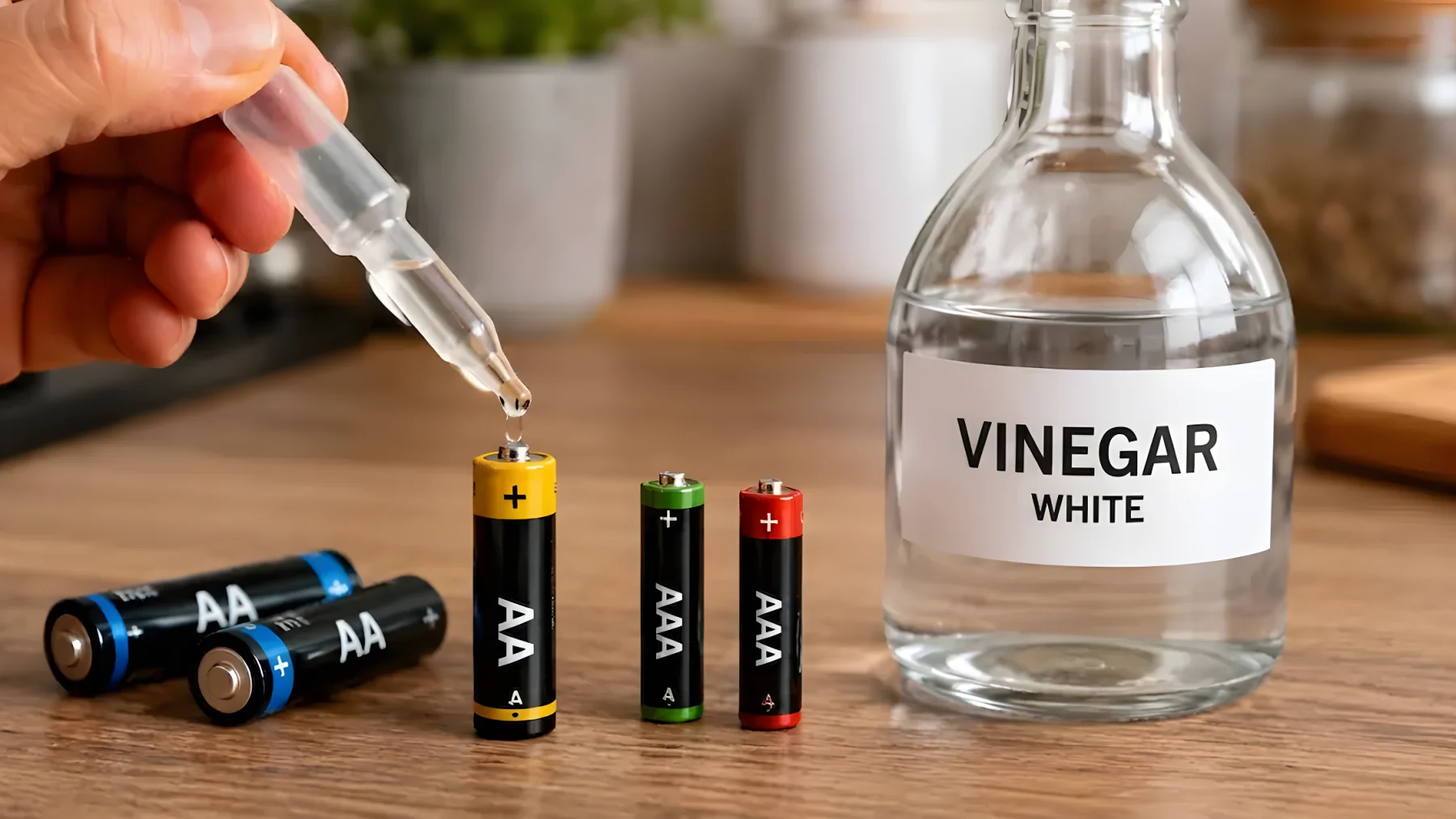
Open the battery cap and inspect the compartment. You're looking for corrosion, which shows up as white or greenish crusty deposits on the battery contacts. The PVS-14 runs on a single AA battery, and soldiers leave batteries installed after training events constantly. A leaking AA battery will corrode those contacts in weeks, and corroded contacts mean intermittent power, which means a device that works on the arms room floor but dies on the objective because the helmet mount vibration breaks the connection.
Cotton Swab Deals
Prices may change. May contain affiliate links.
If there's corrosion, clean it with a cotton swab and contact cleaner. Not CLP (cleaner, lubricant, protectant). Contact cleaner. CLP is for weapons. It leaves a film that can actually make electrical contact issues worse. The TM specifies the correct cleaning agents, but most arms rooms don't stock electronic contact cleaner because nobody thought to order it. Put it on the next supply request.
Install a fresh AA battery for every training event. Not the battery that was in it last time. A fresh one. Lithium AAs are preferred because they perform better in cold weather and have a longer shelf life, but standard alkaline AAs work. The device draws about 0.1 watts, so a single lithium AA will run it for roughly 40 hours of continuous use. That's more than enough for any training event, but there's no reason to start with a half-dead battery.
Lens inspection under white light
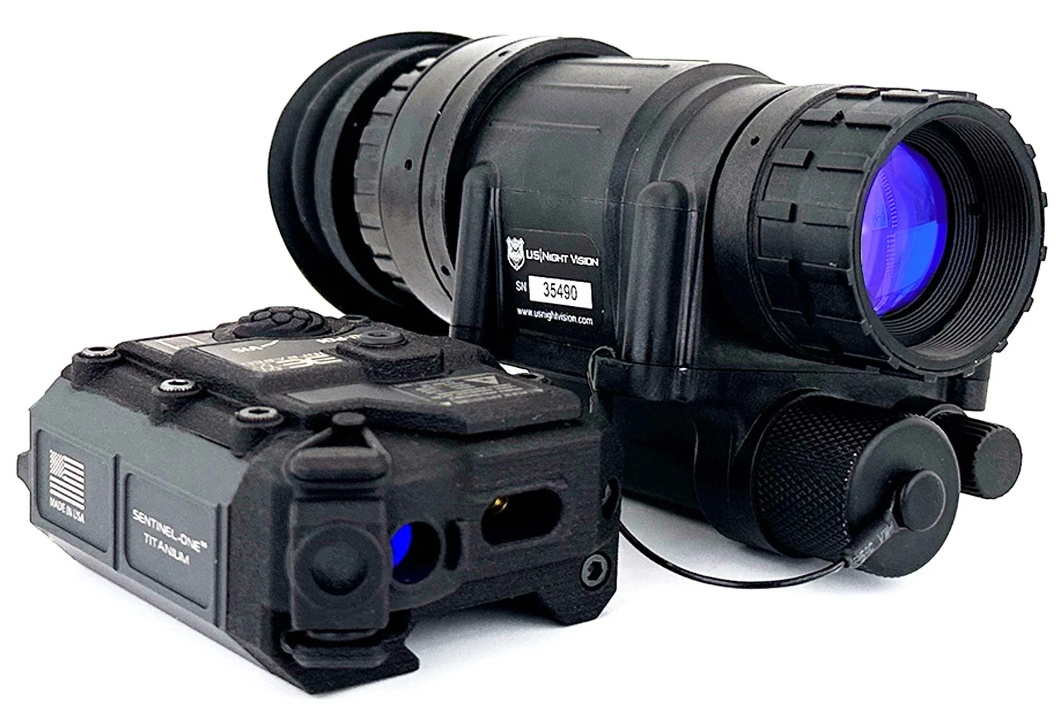
The PVS-14 has three optical surfaces that matter: the objective lens (the front one that faces downrange), the eyepiece lens (the one you look through), and the sacrificial window on the objective lens assembly. That sacrificial window is a flat piece of glass that protects the actual objective lens, and it's designed to be replaceable. Most soldiers don't know it exists. Most armorers don't either.
Under white light, hold the device at an angle and look at each lens surface. You're looking for scratches, chips, smudges, and debris. A scratch on the sacrificial window is no big deal; that's what it's there for, and it can be replaced at unit level. A scratch on the actual objective lens underneath it is a different story, because that's a component repair or replacement action.
Clean lenses with lens tissue only. Not a t-shirt. Not a rag from the arms room bench. Lens tissue. The coatings on these optics are softer than people think, and a piece of grit embedded in a cotton rag will put a scratch on a lens coating faster than you'd believe. The TM specifies lens tissue and lens cleaning solution, and a pack of lens tissue costs about two dollars. There's no excuse for not having it in the arms room.
Power-on and image check
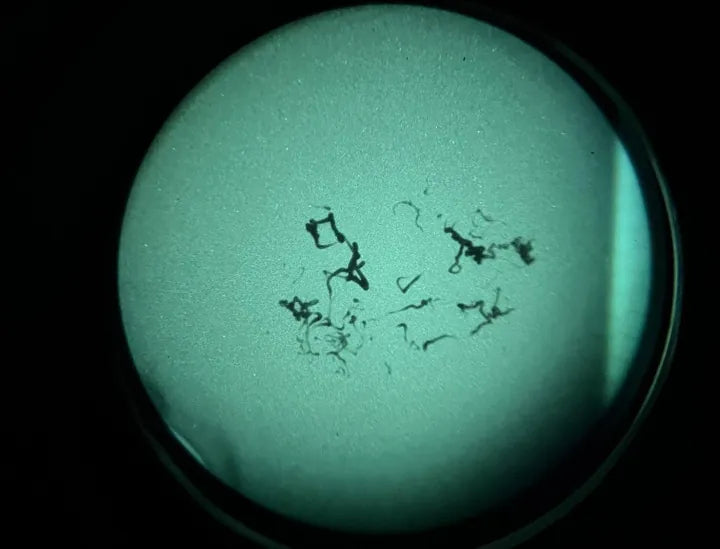
Turn the device on and look through it. In a lit room, you'll see a bright green image. What you're actually checking here is the image intensifier tube, which is the heart of the device and the most expensive component by far. A replacement tube can cost more than the rest of the device combined.
Look for spots. Every image intensifier tube has some spots; they're inherent to the manufacturing process, and a few small black spots are within spec and don't affect performance. What you're looking for are bright spots, which appear as small points of constant brightness that don't move when you move the device. You're also looking for dark spots that are larger than the cosmetic blemishes noted on the tube data sheet that came with the device.
Here's what most people don't know: every PVS-14 ships with a tube data sheet that documents the specific blemishes in that unit's image intensifier tube. It's essentially a birth certificate for the tube, listing its resolution, signal-to-noise ratio, and the location and size of any cosmetic blemishes that were present at manufacture. That data sheet should be stored with the device. In practice, those data sheets disappear within the first year of fielding because nobody told the armorer they mattered. If your unit still has them, guard them. If they're gone, document the current tube condition with a phone photo through the eyepiece as a baseline.
Bright spots that weren't there before are a sign of tube damage, often caused by exposure to bright light sources while the device was powered on. This is the single most common form of PVS-14 damage in the military inventory, and it's almost entirely preventable.
IR illuminator check
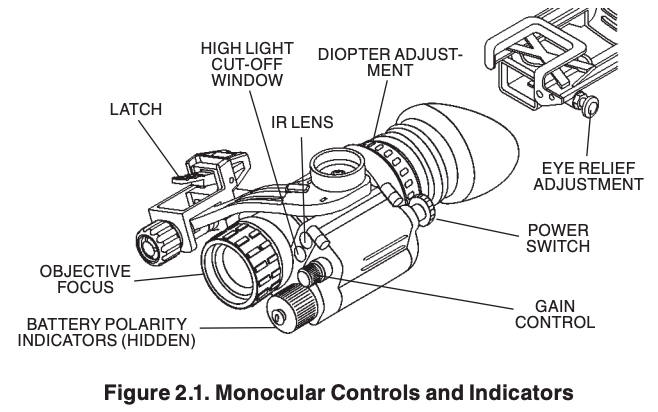
The PVS-14 has a built-in infrared illuminator that projects IR light for close-range use in very dark conditions, like reading a map or checking equipment inside a vehicle. The switch is on the body of the device, and it has three positions: off, on, and momentary.
To check it, turn on the PVS-14, activate the IR illuminator, and point it at a wall about a meter away. You should see a distinct bright spot on the wall through the device. If you don't, the IR LED may be dead. This is a unit-level repair item.
Most soldiers never use the IR illuminator in training and therefore never check it. The problem is that when they need it in a real-world scenario, it's dead, and they don't find out until they're trying to read a grid coordinate in the dark.
The after-operation checks nobody wants to do at 0200
The scenario is always the same. Night training ends. It's late. Everyone is tired. The priority is turning in equipment, getting accountability, and getting to bed. After-operation PMCS on PVS-14s gets reduced to "put it in the case and hand it to the armorer."

This is where the damage accumulates. A PVS-14 comes back from the field with moisture on the lenses from condensation, dirt on the objective from being set down in the prone, and a battery that's been running for eight hours. If it goes into the case wet, you get fungal growth on the lens coatings. If it goes in dirty, that dirt grinds into the lens the next time someone handles it. If it goes in with the battery installed, you get the corrosion problem described above.
The after-operation sequence that actually protects the equipment:
Remove the battery. Every time. No exceptions. This is the single highest-impact maintenance action for PVS-14 longevity and it takes three seconds.
Wipe down the exterior with a clean dry cloth. Remove any dirt, moisture, or debris from the body of the device. Pay attention to the battery cap threads and the mounting interface on the bottom of the device.
Clean the lenses with lens tissue. Even if they look clean, a quick wipe removes fingerprints and moisture that will cause problems in storage.
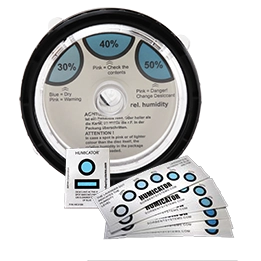
Check the desiccant indicator. The PVS-14 has a desiccant assembly that absorbs moisture inside the device to prevent internal fogging. There's an indicator that shows whether the desiccant is still effective. If it's saturated, it needs to be replaced or regenerated. The TM covers this, but most operators don't even know the desiccant exists, much less where to check it.
Place the device in its case with the lens caps installed. Both caps. The objective lens cap and the eyepiece lens cap. A PVS-14 stored without lens caps will accumulate dust on the optical surfaces, and that dust will eventually cause scratches when someone wipes it off improperly.
From the arms room: the bright spot problem
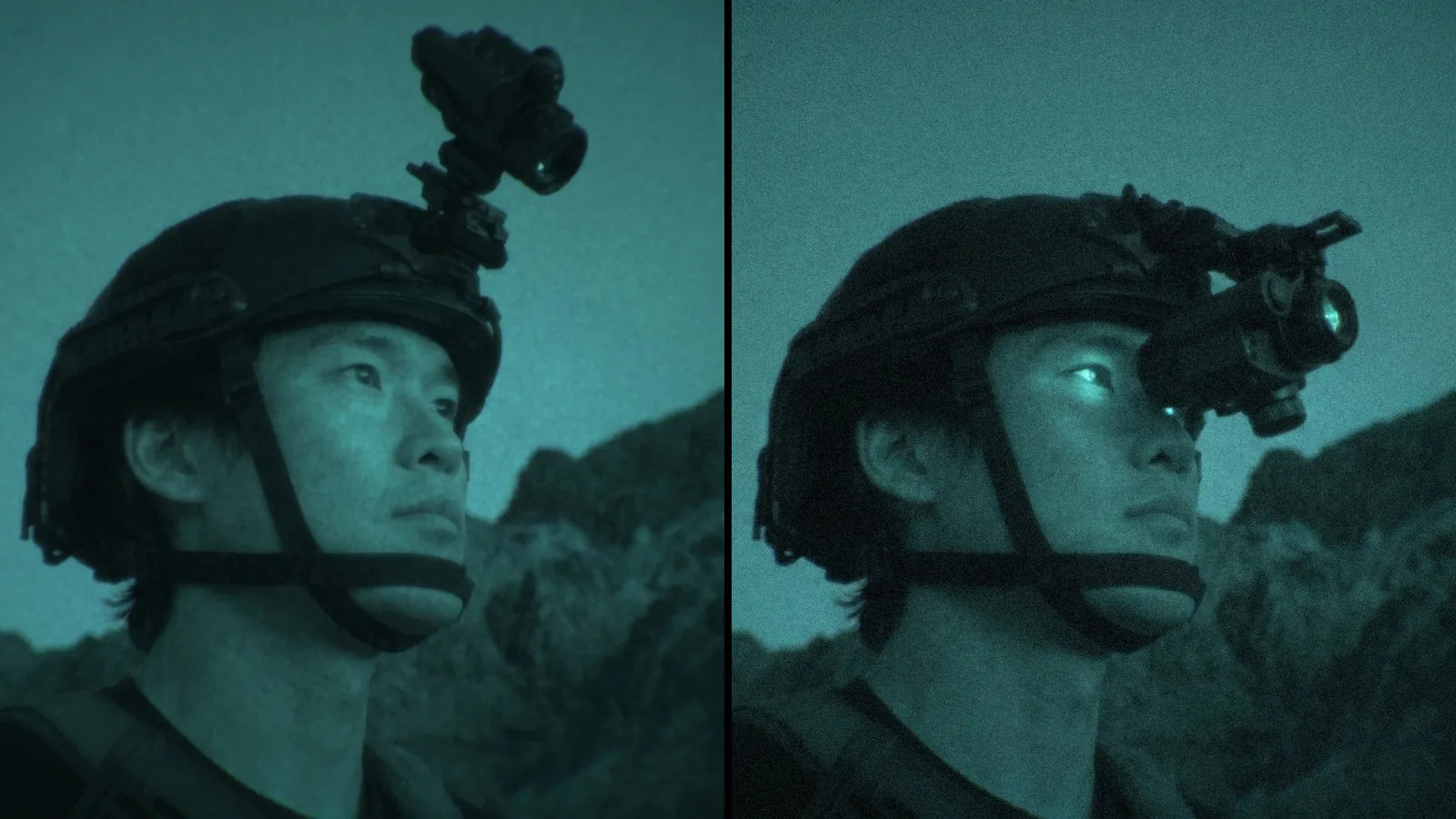
Here's an arms room reality that plays out in units across the force. A soldier is on a night fire range. Between iterations, they flip their PVS-14 up on their helmet mount and walk into the range tower, which has white light on. The PVS-14 is still powered on. The image intensifier tube is now staring directly at a fluorescent light from three feet away.
The tube's automatic brightness control (ABC) and bright source protection (BSP) circuits activate and try to protect the tube. These are electronic safeguards built into Gen III tubes that reduce gain when exposed to bright light. They work. But they have limits. Sustained exposure to a bright light source, even with BSP active, can cause permanent damage to the microchannel plate inside the tube. The result is a bright spot, a small area of the image that's permanently brighter than the surrounding area. It doesn't go away. It's permanent tube damage.
The TM warns against exposing the device to bright light while powered on. But it doesn't emphasize just how quickly damage can occur or how common this scenario is in training environments where soldiers transition between lit and unlit areas constantly.
The fix is behavioral, not mechanical. Train soldiers to turn off the PVS-14 before entering any lighted area. Not flip it up. Turn it off. The power switch is right there. A PVS-14 that's flipped up on a helmet mount with the power still on is an accident waiting to happen because all it takes is the device getting bumped back down into the viewing position while pointed at a light source.
Some units put dummy cord reminders on the device or use kill lanyards that cut power when the device is flipped up. These are field expedient solutions that work but aren't doctrinal. The doctrinal solution is training. Soldiers need to understand that the image intensifier tube is the most expensive and most fragile component in the device, and that bright light exposure while powered on is the primary threat to it.
The desiccant problem nobody talks about
Inside the PVS-14, there's a small desiccant assembly that keeps the internal atmosphere dry. Moisture inside the device causes internal fogging, which looks like a hazy image that doesn't clear up with external lens cleaning. If moisture sits on internal optical surfaces long enough, it can cause permanent damage to lens coatings and even to the tube's photocathode.
The desiccant has a limited lifespan. It absorbs moisture over time, and eventually it's saturated and can't absorb any more. The TM specifies inspection intervals and replacement criteria. In practice, desiccant replacement is one of those maintenance actions that falls through the cracks because it's not something you can see or feel during a quick operational check.
Here's the problem for Guard and Reserve units: a PVS-14 stored in a non-climate-controlled arms room in a humid environment (looking at you, every armory in the Southeast) is going to saturate its desiccant faster than one stored in a climate-controlled facility. If the desiccant saturates during storage, the device is accumulating moisture damage while it sits in the cage between drill weekends.
The solution is to check desiccant status during periodic PMCS, not just before and after operation. A quarterly check is reasonable. If the indicator shows the desiccant is saturated, replace it or regenerate it per the TM. Some desiccant types can be regenerated by heating them in an oven at a specified temperature, which resets their moisture absorption capacity. The TM covers the specifics.
If your arms room doesn't have replacement desiccant on hand, order it. It's a cheap consumable that protects a very expensive piece of equipment. The NSN (National Stock Number) is in the TM parts list. Put it on the next supply request alongside that contact cleaner.
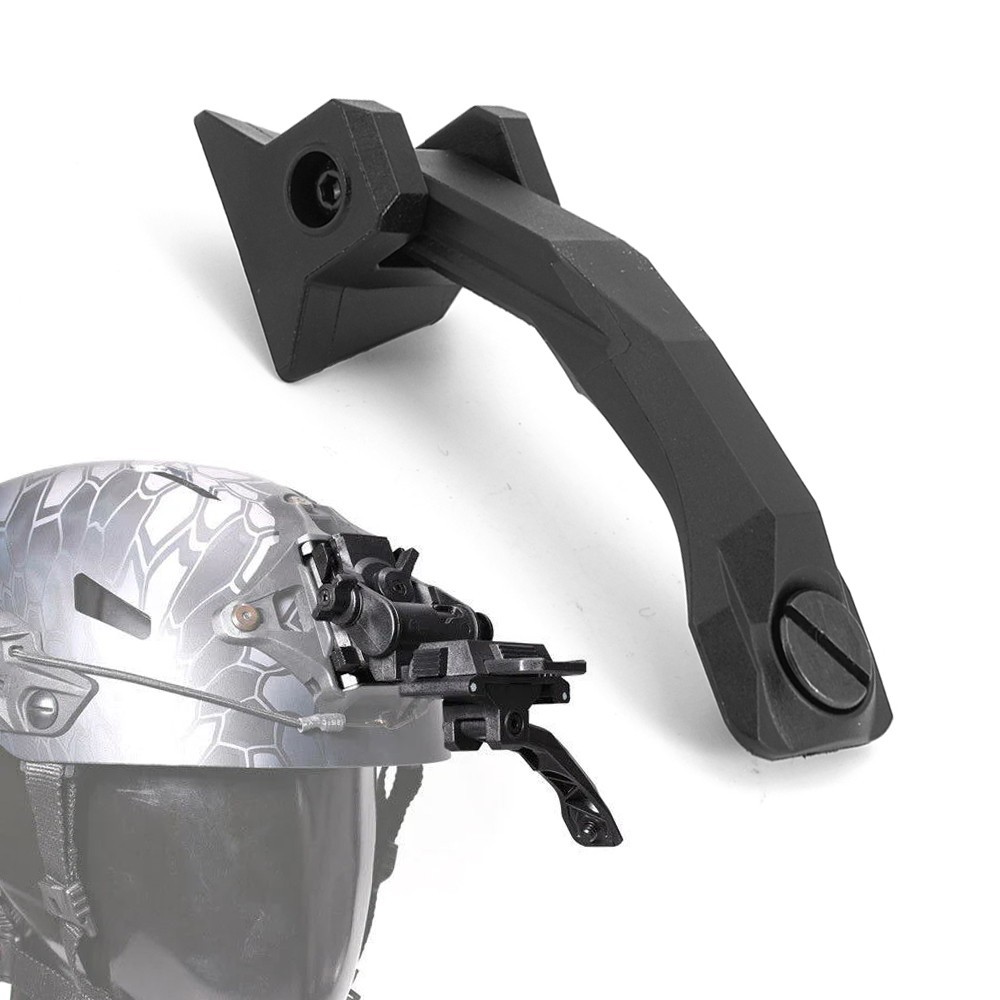
Mounting interface wear and the helmet problem
The PVS-14 mounts to the standard RHNO (Ratchet Head/Helmet Night-vision mount, Objective) mount, commonly called the J-arm or swing arm, which attaches to the bracket on the front of the ACH (Advanced Combat Helmet) or IHPS (Integrated Head Protection System). The mounting interface on the bottom of the PVS-14 is a dovetail-style rail that slides into the J-arm.
This interface wears. The dovetail surfaces get scratched and worn from repeated mounting and dismounting, and the locking mechanism in the J-arm can loosen over time. A loose mount means the device shifts during use, which means the soldier's sight picture moves, which means they're constantly readjusting instead of focusing on the task.
During PMCS, check the mounting dovetail on the PVS-14 for excessive wear, burrs, or damage. Slide it into a J-arm and check for play. A small amount of play is normal. If the device wobbles or shifts under light pressure, the mount interface needs attention. Sometimes the issue is the J-arm, not the PVS-14, so check both.
Also check the J-arm itself. The pivot and ratchet mechanism that allows the device to flip up should hold position firmly. If it droops under the weight of the PVS-14, the ratchet is worn and the J-arm needs replacement. A PVS-14 that flops down unexpectedly is more than an annoyance; it's a safety issue if the soldier is driving or moving through rough terrain.
The TM addresses the mounting interface in general terms but doesn't emphasize the wear patterns that develop over years of use. This is a check that should happen every time the device comes out of the arms room, and it takes about ten seconds.
Common mistakes and the problems they cause
There are recurring issues with PVS-14 maintenance that show up across units regardless of component or branch. They're predictable, preventable, and persistent.
The first is storing devices with batteries installed. This has been covered above, but it bears repeating because it's the most common maintenance failure for the PVS-14. A single leaking AA battery can corrode the contacts badly enough to require depot-level repair. Remove batteries after every use. Check for installed batteries during every arms room inventory. Make it a standard.
The second is using incorrect cleaning materials on lenses. Soldiers clean things with whatever's available. For weapons, that's fine; a rag and CLP will do. For optics, it's destructive. The anti-reflective coatings on PVS-14 lenses are thin and relatively soft. Cleaning with anything abrasive, including paper towels, tissue paper (not the same as lens tissue), or cotton rags, can scratch the coating. Once the coating is scratched, you get increased glare and reduced light transmission, which degrades the image. Lens tissue and lens cleaning solution are the only acceptable cleaning materials. Stock them in the arms room.
The third is failing to use lens caps during storage. Both the objective and eyepiece lens caps should be installed whenever the device is not in use. Caps prevent dust accumulation, protect against scratches from other items in the storage container, and reduce moisture exposure to the lens surfaces. The caps are attached to the device body with rubber retainers. Those retainers break. When they break, the caps get lost. When the caps get lost, nobody replaces them. Replacement caps and retainers are available through the supply system. Order them.
The fourth is adjusting the diopter ring without understanding what it does. The diopter adjustment on the eyepiece compensates for the individual user's vision. It's not a focus control for the image. The objective focus ring on the front of the device focuses the image at different distances. Soldiers frequently crank the diopter to one extreme trying to "focus" the device, then hand it to the next soldier who can't see through it at all. During PMCS, reset the diopter to zero (the marked center position) so the next user starts from a neutral setting.
The fifth is ignoring the sacrificial window. The flat glass window on the front of the objective lens assembly is designed to take damage so the actual objective lens doesn't. When it gets scratched or chipped, it should be replaced. It's a cheap, user-replaceable part. But most soldiers don't know it's a separate piece from the objective lens, so they either ignore the damage or report the entire objective assembly as broken. During PMCS, inspect the sacrificial window separately from the objective lens. If it's damaged, replace it. The TM covers the procedure, and it takes about thirty seconds.
Setting up an arms room PMCS schedule that works
The question every armorer should be asking is: how often do these devices actually get checked, and is that often enough?
The TM prescribes before, during, and after operation checks. That's the minimum. But for devices that sit in storage for extended periods, there needs to be a periodic PMCS schedule that catches problems between training events.
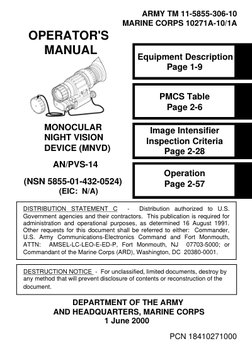
A quarterly PMCS cycle works for most units. Once every three months, pull every PVS-14 out of storage and run through a full check: battery compartment inspection, lens inspection under white light, power-on and image quality check, IR illuminator function check, desiccant status check, mounting interface inspection, and a general exterior condition check. Document everything on DA Form 2404 or the unit's equivalent maintenance reporting form.
This takes time. For a unit with sixty PVS-14s, a thorough quarterly PMCS might take a full day for two people. That's a significant time investment, especially for Guard and Reserve units where arms room time is limited. But consider the alternative: discovering that fifteen of your sixty devices have problems on the night before a night fire qualification, when there's no time to fix anything and no replacement devices available.
The quarterly check also creates a maintenance record that supports property accountability. When a device does need to go to depot for repair, having a documented history of regular PMCS shows that the unit was maintaining the equipment properly. That matters when someone's asking why a $3,000 device needs a new tube.
For units with limited time, prioritize the quarterly checks on devices that get the most use. If certain PVS-14s are assigned to specific soldiers or specific positions, those devices see more wear and should get checked more often. Devices that sit in storage as spares can go longer between checks, but they still need periodic attention, especially the battery compartment and desiccant.
Range notes: what to check during night training
During a night training event, there are checks that should happen but almost never do because everyone's focused on the training objective, not on equipment maintenance.
At the halfway point of any extended night operation or training event, leaders should do a quick check of PVS-14 function across the element. This doesn't mean pulling every device and running a full PMCS. It means asking soldiers three questions: Is your image clear? Do you see any new spots? Is your device secure on your mount?
A soldier who's been operating with a degraded image for two hours because they didn't want to say anything is a soldier who's not getting training value from the event. Soldiers often assume that a fuzzy image or a new bright spot is normal, or they don't want to be the one who broke the night vision. Create a culture where reporting an image problem is expected, not embarrassing.
After the event, before turn-in, conduct a quick white-light check of every device. This is the last chance to document any damage that occurred during training. If a PVS-14 has a new bright spot that wasn't there at issue, that needs to be documented immediately. Waiting until the next quarterly PMCS means the damage gets discovered months later with no way to determine when or how it occurred.
The TM gap: what the manual assumes vs. arms room reality
TM 11-5855-306-10 is written for the operator. It assumes the operator has been trained on the device, has access to the correct supplies, and has time to perform checks properly. TM 11-5855-306-23&P is written for the unit maintainer and assumes a higher level of technical knowledge and access to test equipment.
The gap is in the middle. The armorer who's responsible for storing, issuing, and receiving these devices often has neither the operator-level training on the specific device nor the maintainer-level technical background. They know how to do accountability. They might know how to do a basic function check. But the nuances of tube inspection, desiccant management, and lens care often aren't part of their training.
This is a leadership problem, not an armorer problem. The unit needs to ensure that whoever is responsible for PVS-14 maintenance has actually been trained on PVS-14 maintenance. That might mean sending the armorer to a formal course, or it might mean having the unit's night vision subject matter expert spend an afternoon in the arms room walking through the PMCS procedures. Either way, the training needs to happen before the problems start, not after a device comes back from depot with a repair bill that makes the commander's eyes water.
The other TM gap is in storage guidance. The TM says to store devices in a cool, dry place. That's fine advice. It doesn't address the reality that many arms rooms, especially in Guard and Reserve armories, are not climate controlled. Temperature swings and humidity are real factors that affect device longevity, particularly desiccant life and battery compartment corrosion. Units in humid environments need to check desiccant more frequently than the TM's general guidance suggests. Units in environments with extreme temperature swings need to be aware that condensation can form inside the device when it moves from a cold storage area to a warm environment, and that condensation is exactly what the desiccant is supposed to handle.
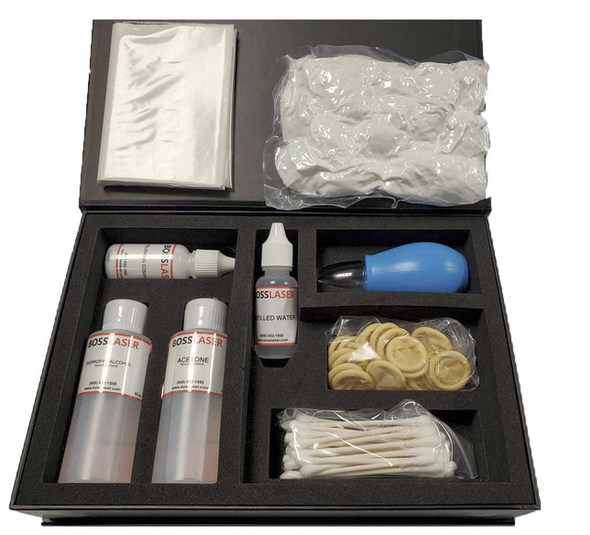
Building a PVS-14 PMCS kit for the arms room
Most arms rooms don't have a dedicated night vision maintenance kit. They should. It doesn't need to be elaborate or expensive. Here's what goes in it:
Lens tissue. Not facial tissue, not paper towels, not cotton balls. Actual lens tissue designed for coated optics. Available commercially for a few dollars per pack, or through the supply system.
Lens cleaning solution. A small bottle of optical lens cleaner. Again, commercially available and cheap. Do not substitute glass cleaner, alcohol, or any solvent not specified for coated optics.
Electronic contact cleaner. For battery compartment corrosion. Available at any electronics supply store or through the supply system.
Cotton swabs. For applying contact cleaner to battery contacts and cleaning small areas.
Replacement AA batteries. Lithium preferred. Keep a supply dedicated to PVS-14 use so you're not scrounging batteries on range day.
Replacement desiccant. Check the TM for the correct NSN and type. Keep several on hand.
Replacement lens caps and retainers. These get lost constantly. Having spares means devices actually get stored with their caps on.
Replacement sacrificial windows. These are cheap and user-replaceable. Having spares means damaged ones actually get swapped out instead of ignored.
A small flashlight or headlamp. For inspecting battery compartments and lens surfaces in detail.
DA Form 2404 or equivalent. Pre-printed or digital, ready to document findings.
The whole kit fits in a small toolbox or ammo can. Label it, put it in the arms room, and make sure the armorer knows it's there and what everything is for.
What right looks like
A unit that's doing PVS-14 PMCS correctly has a few visible indicators. The arms room has a dedicated NVD maintenance kit with the items listed above. Every PVS-14 is stored with lens caps on and batteries removed. There's a quarterly PMCS schedule on the arms room calendar, and the completed 2404s are filed. The armorer can articulate the before, during, and after operation checks without referencing the TM. Soldiers know to turn off the device before entering a lighted area, and they know to report image problems immediately.
None of this is complicated. None of it requires special tools or advanced training. It requires attention, consistency, and a command climate where equipment maintenance is taken as seriously for night vision as it is for weapons and vehicles.
The PVS-14 is one of the most capable and versatile pieces of individual equipment in the military inventory. A well-maintained PVS-14 with a good tube will give a soldier a decisive advantage in limited visibility. A poorly maintained one with a damaged tube and dirty lenses will give them a green fuzzy circle that's more hindrance than help. The difference between those two outcomes is PMCS, done right, done regularly, and done by people who understand what they're looking at.
Start with the battery compartment. Check the lenses under white light. Power it on and look at the tube. Check the desiccant. Inspect the mount. Document what you find. It takes five minutes per device and it saves a night range. That's the standard. Hold it.