The federal landscape for suppressors shifted dramatically in 2025 and 2026. Between the $0 tax stamp provision tucked into H.R. 1, a federal judge declaring NFA registration requirements unconstitutional, and ongoing legislative momentum behind the Hearing Protection Act, it's easy to assume the hard part is over. For a lot of people in a lot of states, it mostly is. But if you live in the wrong zip code, or you're not paying attention to which rules actually changed and which didn't, you can still walk into a felony.
The federal wins are real. They're also incomplete. And the gap between what Congress did, what the courts said, and what your state legislature allows is where people are getting tripped up right now. This is the current map: what changed at the federal level, which states still treat suppressors like contraband, and where the legal fights are heading next.
What actually changed at the federal level
Two things happened, and they're related but distinct.

SilencerCo Velos LBP Deals
Prices may change. May contain affiliate links.
First, the tax stamp went to zero. The Hearing Protection Act, introduced as H.R. 404 and S. 364 in the 119th Congress, was folded into the broader H.R. 1 reconciliation package. The practical effect: the $200 federal tax on suppressor transfers and manufacturing dropped to $0. You still fill out the paperwork. You still go through the background check. You still wait. But you're not writing a $200 check to the ATF for the privilege anymore. For someone buying a single can, that's a nice savings. For someone building a collection, it adds up fast.
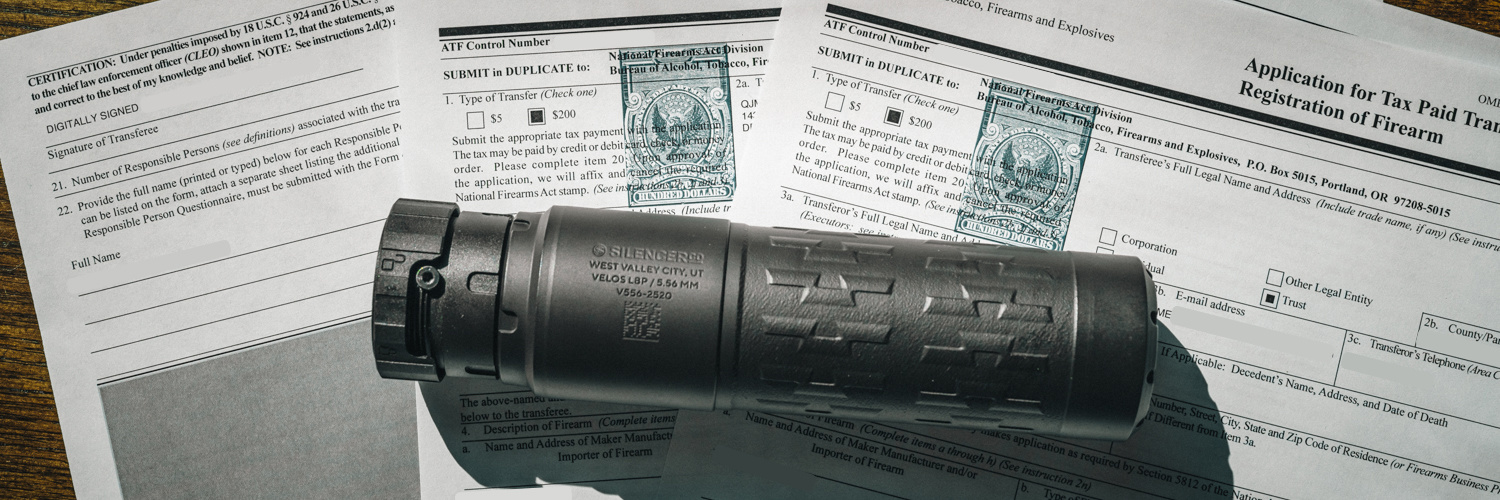
Second, and more consequential in the long run, a federal judge ruled that the NFA's registration requirements for suppressors are unconstitutional. The ruling drew on the Bruen framework, which requires gun regulations to have historical analogues from the founding era. The court found no such tradition for requiring citizens to register a hearing safety device with the federal government. This ruling is significant, but it's also not the final word. It's being appealed, enforcement guidance is in flux, and the ATF's response has been to continue processing forms while the legal dust settles.
So here's the practical reality right now: you can acquire a suppressor without paying the $200 tax, the registration requirement is under serious legal challenge, but the Form 4 process still exists and dealers are still running transfers through it. Silencer Shop's guidance to customers reflects this. The eForm 4 system is still operational, approval times are still running in the range of 4 to 6 months for eForms, and the ATF is still processing applications. The $0 stamp means the financial barrier dropped, but the bureaucratic process hasn't vanished yet.
None of this, and this is the critical point, overrides state law.
The states that still say no
Federal deregulation doesn't legalize suppressors in states that ban them independently. State law is the first gate. Federal is the second. If your state criminalizes suppressor possession, the fact that the feds dropped the tax stamp to zero and a judge questioned the NFA's constitutionality doesn't help you. You're still looking at state felony charges.
As of mid-2026, eight states plus Washington D.C. still prohibit civilian suppressor ownership outright: California, Delaware, Hawaii, Illinois, Massachusetts, New Jersey, New York, and Rhode Island. If you live in one of these states, you cannot legally possess a suppressor regardless of what's happening in Congress or federal court.
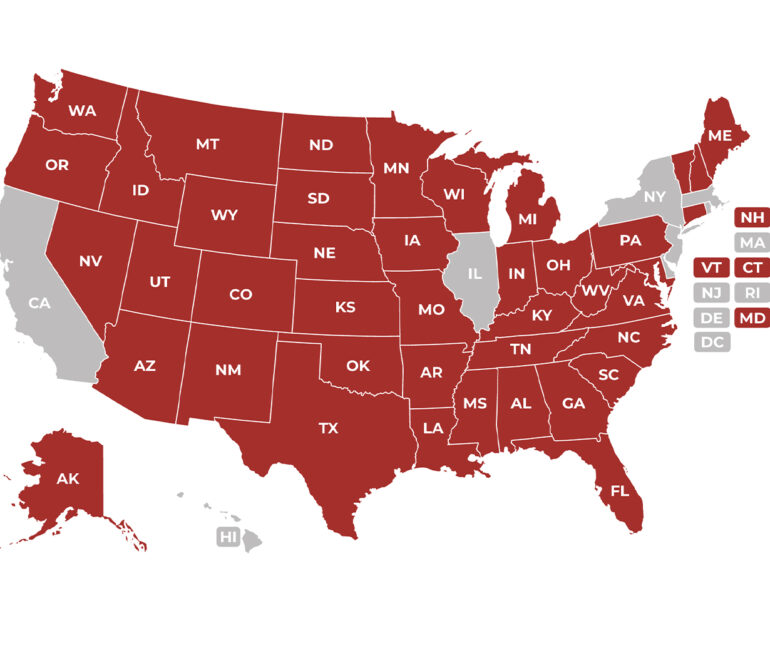
That list has been stable for years, and while there's movement on the legal challenge front in some of these jurisdictions, nobody should be making purchasing decisions based on optimism about future rulings.
The remaining 42 states allow suppressor ownership in some form, though the details vary. Some states adopted the federal framework wholesale, meaning their suppressor laws essentially mirror NFA requirements. When the federal rules change, state law follows automatically. Other states have their own independent statutory schemes that may or may not align with current federal policy.
This creates a patchwork that's genuinely confusing. A suppressor that's perfectly legal to own in Texas, where state law actively protects NFA item ownership, might land you in prison in Illinois. The distance between those two legal realities can be a single state line.
State-by-state friction points
The eight outright ban states get the most attention, but the more interesting friction is happening in states where suppressors are technically legal but state-level restrictions create practical problems.
Some states allow suppressor ownership but restrict their use. You can own one but can't hunt with it, for example. Other states have magazine capacity laws, assault weapon definitions, or other regulatory frameworks that interact with suppressor ownership in unexpected ways. A few states have enacted their own versions of "Second Amendment sanctuary" laws that purport to nullify federal firearms regulations, but these don't actually protect you from federal prosecution, and they've created confusion about what's actually legal.
Connecticut is a good example of a state that allows suppressors but makes the process harder than the federal baseline. You need a local permit in addition to the federal paperwork. Minnesota legalized suppressors relatively recently and the process is straightforward, but neighboring Illinois remains a hard no. Geographic luck matters enormously.
Then there are the states that passed laws specifically in response to federal NFA reform. Several states, particularly in the South and Mountain West, enacted legislation declaring that suppressors manufactured and kept within state borders are exempt from federal regulation. These laws are politically popular but legally questionable. Federal courts have consistently held that federal firearms law preempts these state-level nullification attempts. The Kansas case from a few years back, where residents manufactured suppressors relying on a state law that purported to exempt them from NFA requirements, ended with federal convictions. The state law didn't save anyone.
The lesson: state laws that expand your rights beyond the federal floor are great. State laws that claim to override federal restrictions are not something to bet your freedom on.
Where the legal challenges are heading
The most consequential legal action for ban-state residents is happening in the courts, not the legislatures.
In California, a case challenging the state's suppressor ban is working through the Ninth Circuit. The plaintiff is arguing, under the Bruen framework, that California's blanket prohibition on suppressors lacks the required historical analogue. There's genuine optimism in some corners that this challenge could succeed. The Bruen decision fundamentally changed how courts evaluate firearms regulations, and suppressor bans are particularly vulnerable because suppressors weren't regulated at all until the NFA in 1934, and the historical record for banning hearing protection devices before that is essentially nonexistent.
But optimism and a favorable ruling are different things. The Ninth Circuit has historically been hostile to Second Amendment claims, and even a favorable panel decision could be reheard en banc or appealed further. Anyone telling you California suppressors are "right around the corner" is speculating. It might happen. It might take years. It might not happen at all.
New Jersey's legal landscape is also shifting. A court struck down parts of New Jersey's assault weapons ban and magazine capacity restrictions in mid-2026, and the reasoning in that decision could extend to other firearms accessories, potentially including suppressors. But that's an inference, not a holding. New Jersey still bans suppressors, and that ban is still being enforced.
The federal ruling declaring NFA registration unconstitutional is the wildcard. If it survives appeal, the implications for state laws that reference or incorporate the NFA framework are significant. Some state suppressor laws are written to permit ownership "in compliance with the National Firearms Act." If the NFA registration requirement for suppressors is struck down, what does "compliance" mean? Some states might interpret this as removing their own restrictions. Others might tighten their laws in response. The legal uncertainty is real, and it'll take time to resolve.
The practical impact of the $0 tax stamp
For the 42 states where suppressors are legal, the $0 stamp is the biggest quality-of-life improvement in NFA purchasing in decades. The eForm system already cut wait times dramatically compared to the old paper Form 4 process, which routinely took 9 to 14 months. Current eForm 4 approvals are running roughly 4 to 6 months, though individual experiences vary and the ATF's published processing times should be checked before you set expectations.
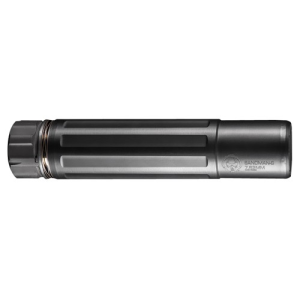
Ess Dead Air Sandman-S Deals
Prices may change. May contain affiliate links.
Removing the $200 tax doesn't change the wait, but it changes the buying calculus. A $200 stamp on a $500 YHM Turbo K was a 40% surcharge. On a $1,200 Dead Air Sandman-S, it was a meaningful chunk. At $0, the financial math shifts toward buying the can you actually want rather than agonizing over whether the stamp cost justifies a second or third suppressor. Dealers and manufacturers are reporting increased sales volume, which isn't surprising. The $200 stamp was always more of a psychological barrier than a financial one for most buyers, but psychology drives purchasing decisions.
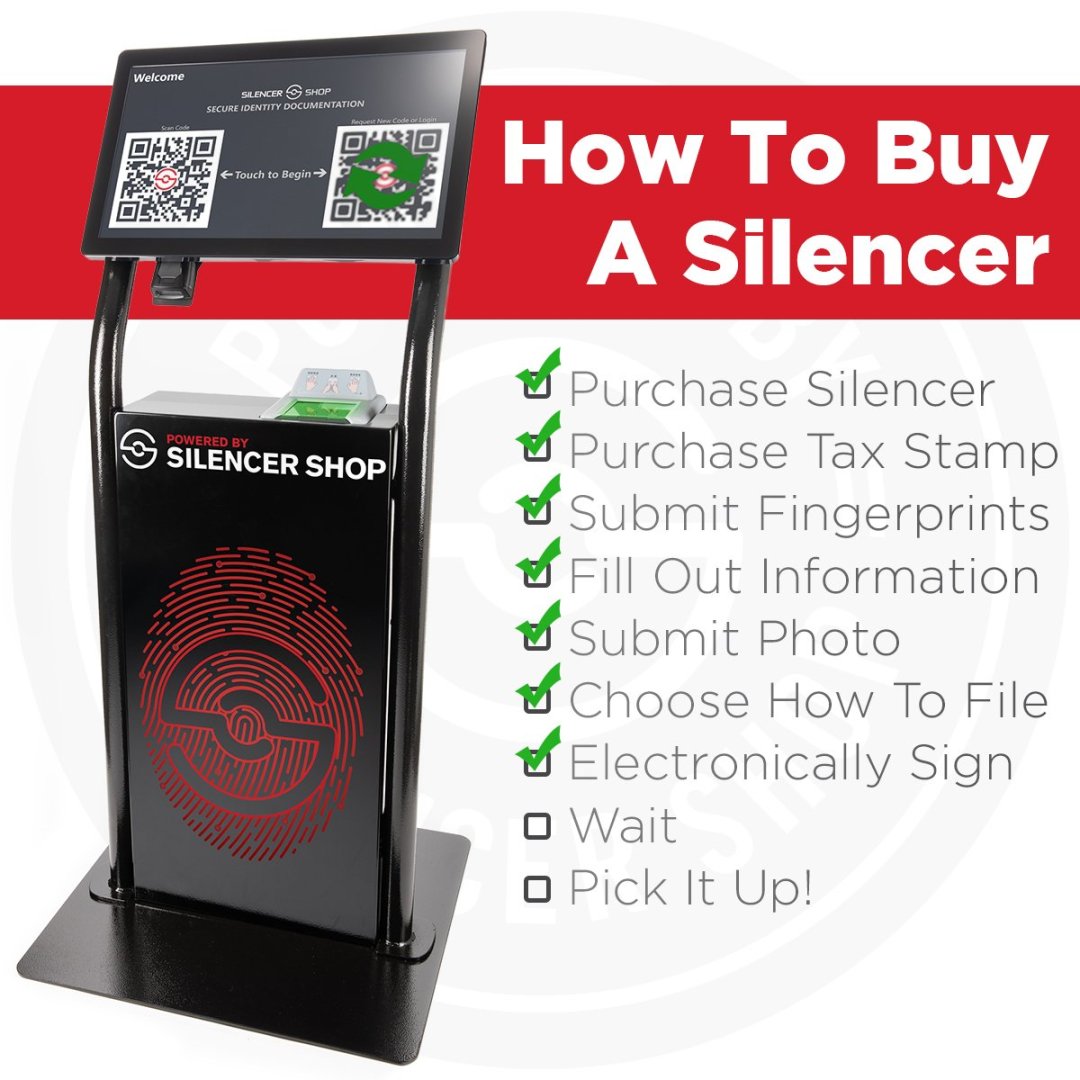
The Form 4 process itself hasn't changed mechanically. You still buy the suppressor from a dealer. The dealer still submits the eForm 4. You still get a background check. You still wait for ATF approval. You still can't take the suppressor home until that approval comes through. The only difference is you're not paying $200 for the privilege of waiting.
For Form 1 manufacturing, same deal. The tax dropped to $0, but you still submit the form, still get approval before you start building, still engrave the item with your trust or individual name and the required markings. The process is intact. The fee isn't.
Trust vs. individual in the new landscape
The trust question comes down to whether you want other people to legally possess your NFA items. That calculation hasn't changed with the $0 stamp, but it's worth revisiting because the cost dynamics shifted.
Previously, the $200 per-item stamp cost made people think carefully about every NFA acquisition. A trust added complexity but provided real benefits: multiple responsible persons could possess and use the items, estate planning was simpler, and you avoided some of the CLEO notification headaches that individual applicants faced before the 41F rule changes.
At $0 per stamp, some of the financial pressure around trusts eases. If adding items to your collection doesn't cost $200 each in tax, the marginal cost of each new suppressor drops to the price of the can itself plus dealer fees. But the trust benefits remain. If you want your spouse to have legal access to your suppressors when you're not present, you need a trust or they need to be a co-applicant. If you're thinking about inheritance, a trust simplifies the transfer process significantly. The responsible person requirements still apply: every responsible person on the trust submits photographs, fingerprints, and undergoes a background check with each new Form 4 submission.
The practical advice hasn't changed much. If you're a single person buying one suppressor, individual is simpler. If you have a spouse, shooting partners, or any estate planning considerations, a trust is worth the upfront cost of having one drafted properly.
Interstate travel and possession
This is where people still get jammed up, and the federal changes don't fix it.
Suppressors don't require a Form 5320.20 (the interstate transport form) the way SBRs and SBSs do. You can travel across state lines with a suppressor without prior ATF notification. But you absolutely cannot bring a suppressor into a state that prohibits them. Driving from Pennsylvania to New York with a suppressor in your trunk is a New York felony. The fact that you legally own it in Pennsylvania, that the federal tax is $0, that a federal judge questioned the NFA's constitutionality, none of that matters. New York law controls what's legal in New York.
This catches people on road trips, at competitions, and during moves. If your travel route passes through a ban state, you need to plan around it or rely on the Firearm Owners Protection Act's safe passage provision, which theoretically protects you during continuous travel through a state where the item would otherwise be illegal. In practice, FOPA's safe passage protections have been inconsistently enforced, particularly in New Jersey and New York. Relying on FOPA to protect you during a traffic stop in Newark with a suppressor in the car is a gamble most lawyers would advise against.
What to watch for next
The federal court ruling on NFA registration is the big domino. If it's upheld on appeal, the entire Form 4 process for suppressors could become moot at the federal level. That would leave state laws as the sole regulatory framework, which means ban states become even more important battlegrounds.
The Ninth Circuit California suppressor case is the one to watch for ban-state residents on the West Coast. A favorable ruling there would affect California, Hawaii, and potentially influence challenges in other circuits covering ban states.
Legislatively, there's been movement in some ban states toward suppressor legalization, but it's slow. Illinois and New Jersey have the most active advocacy efforts, but neither has a realistic path to legalization through the legislature in the near term. Court challenges are more likely to crack those walls open.
At the state level, some free states are moving in the other direction on related issues. States are passing laws to reinforce suppressor legality, clarify that the $0 federal stamp doesn't create state-level tax obligations, and ensure that state law aligns with the new federal framework. If you're in a free state, check whether your state updated its statutes to reflect the federal changes. Most did or didn't need to, but a few have outdated references to the $200 tax that could create technical issues.
What you should actually do right now
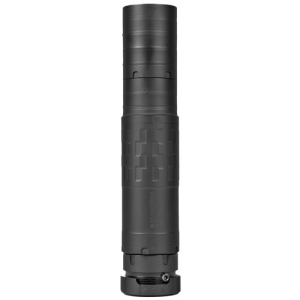
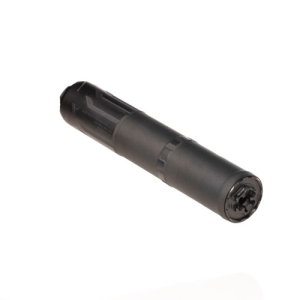
If you're in one of the 42 legal states and you've been waiting for the right time to buy your first can, the $0 stamp removed the last financial excuse. Pick a suppressor that fits your primary host gun, find a dealer with a good eForm track record, and start the process. Current wait times are manageable. The Dead Air Sandman-S remains a workhorse for 5.56 and 7.62 hosts. The YHM Turbo K is still the best value in a dedicated 5.56 can. The SilencerCo Omega 36M covers a huge range of calibers if you want one can to rule them all. CGS Group's Hyperion series is the move if sound reduction is the absolute priority and you don't mind length.
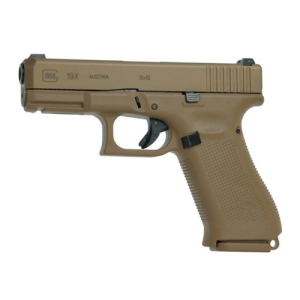
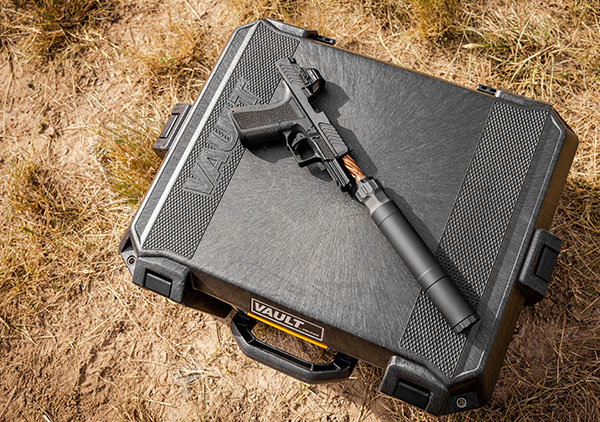
Glock 19X 9mm Deals
Prices may change. May contain affiliate links.
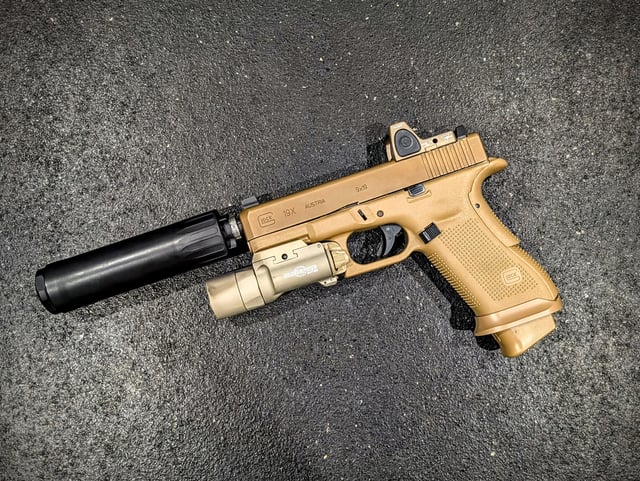
If you're in a ban state, don't buy a suppressor and hope the law catches up. Watch the court cases. Support the legal challenges through organizations actually litigating them. And understand that even if a favorable ruling comes down, there will be a gap between the ruling and practical implementation where the legal status may be genuinely unclear.
If you already own suppressors and the legal landscape in your state is stable, the main action item is making sure your trust documents are current and your responsible persons list reflects reality. The $0 stamp also makes this a good time to add items you've been putting off.
The federal trajectory is clearly toward deregulation. But the gap between federal intent and state-level reality is where people get hurt. Know your state's laws. Not what you think they should be, not what a Reddit thread told you they are, but what they actually say today. That's the only map that matters until the courts finish redrawing it.