
The Army is staring at a budget shortfall somewhere between $4 billion and $6 billion, and the first thing getting cut isn't new equipment or end strength. It's training. CTC rotations are being slashed. Flight hours are getting grounded. And down at the company level, where the math actually matters, that means fewer range days, fewer rounds per soldier, and qualification tables that look more like a formality than a readiness standard.
If you're a company commander, first sergeant, or readiness NCO reading this and thinking "we'll be fine, we always figure it out," you're right that units have always found ways to stretch. But there's a floor beneath which stretching becomes breaking. The 2026 budget crunch is pushing a lot of formations toward that floor, and Guard and Reserve units were already standing on it.
This isn't a policy piece about Capitol Hill. This is about what happens at the arms room, on the range, and in the retention office when soldiers can't get enough trigger time to feel competent with their assigned weapon. Because that's the real cost nobody's putting in a budget brief.

The numbers behind the shortfall
The Senate Armed Services Committee hearing on 12 May 2026 laid it out plainly. Senator Reed noted a $2 billion readiness shortfall and flagged reports of cancelled training rotations, grounded flight hours, and reduced Guard and Reserve resources. Multiple reporting outlets put the broader Army shortfall at $4 billion to $6 billion, driven by continuing resolution dynamics, inflation on contracts, and competing modernization priorities that keep eating into the operations and maintenance accounts.

Federal 5.56mm M855A1 Deals
Prices may change. May contain affiliate links.
Here's how that trickles down. The Army budget has three big pots that matter for this conversation: procurement (buying new stuff), operations and maintenance (O&M, which funds training), and military personnel (paying soldiers). When procurement stays protected because you can't cancel a contract for the Next Generation Squad Weapon without paying termination fees, and personnel costs are fixed because soldiers still need paychecks, the O&M account absorbs the hit. O&M is where range time lives. It pays for ammunition allocations, range facility maintenance, transportation to training areas, and the civilian contractors who increasingly support range operations.
The FY2026 President's Budget Request already proposed flat or reduced spending in several readiness accounts. Layer the continuing resolution on top of that, which freezes spending at prior-year levels and prohibits new program starts, and you get a situation where units are operating on last year's budget in this year's cost environment. Ammunition alone has seen price increases that erode buying power. The 5.56mm M855A1 round costs more per unit than it did three years ago. Same for 7.62mm linked, .50 cal, and 40mm. When your allocation stays the same but each round costs more, you get fewer rounds. Simple math, ugly outcome.
For active component brigade combat teams, this might mean one fewer battalion-level live fire exercise per training cycle. That hurts, but those units still have regular access to ranges and can supplement with simulation. For Guard and Reserve units operating on 39 training days a year with maybe four to six dedicated range weekends, losing even one of those events is catastrophic to individual readiness. And that's exactly what's happening.
What a range day actually costs
Most soldiers have no idea what it costs to put them on a firing line. That's fine; it's not their job. But leaders making training decisions need to understand the real resource picture, because "we'll just schedule another range" is not a plan when the money isn't there.

Colt M4A1 Deals
Prices may change. May contain affiliate links.
A basic M4A1 zero and qualification range for a company of 120 soldiers requires roughly 4,800 rounds just for the qualification tables under TC 3-20.40 (40 rounds per soldier for the standard table). Add in zero rounds, typically 18 to 24 per soldier, and you're looking at another 2,400 to 2,880 rounds. Alibi firers, weapon malfunctions requiring refires, and the soldiers who need a second attempt push that number higher. A realistic planning factor for a company qual range is 8,000 to 10,000 rounds of 5.56mm.
That's just ammunition. Now add range facility costs if you're using a National Guard training site that charges by the day. Add bus transportation if your armory is 90 minutes from the nearest range, which is common for Guard units in urban areas. Add meals. Add the ammunition handler and RSO (Range Safety Officer) support. Add the medic coverage requirement. A single company-level rifle qualification weekend can cost $15,000 to $25,000 when you account for everything, and that's before anyone fires a pistol, a crew-served weapon, or conducts any tactical training beyond the qual tables.
Multiply that across a battalion. Then across a brigade. Then realize the brigade S3 is being told to cut 15% from the training budget. The first thing that gets trimmed isn't the mandatory annual training event. It's the pre-qual range. The practice day. The supplemental training that actually makes soldiers competent before they stand on the line for record. Units go straight to qualification with minimal preparation, soldiers shoot poorly, the unit reports a qualification rate that looks acceptable on paper because the standard allows multiple attempts, and everyone moves on to the next task.
The arms room reality: weapons get drawn, fired for qualification, cleaned (sometimes), and returned. The next time some of those rifles come out might be six months later. That's not training. That's a checkbox.
Qualification rates look fine on paper
Here's the uncomfortable truth that budget conversations rarely address. Unit qualification rates are a lagging indicator, and they're easy to game. A soldier who barely qualifies on attempt three after being coached through every table is counted the same as the soldier who shoots expert on the first go. The DTMS (Digital Training Management System) entry looks identical. The readiness slide at the brigade commander's update brief shows green.
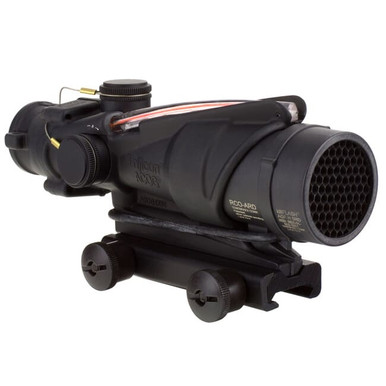
Trijicon ACOG optic Deals
Prices may change. May contain affiliate links.
Under TC 3-20.40, the current rifle and carbine qualification standard, soldiers engage 40 scaled silhouette targets at distances from 50 to 300 meters. The passing standard is 23 out of 40 for marksman. That's a 57.5% hit rate. For a trained soldier with a properly zeroed weapon, that standard is achievable with minimal practice. But "minimal practice" still means something. It means the soldier has confirmed zero within the last training cycle. It means they've had at least some trigger time to reacquaint with the fundamentals: steady position, sight picture, breathing, trigger squeeze. It means the weapon has been verified functional through PMCS (Preventive Maintenance Checks and Services) before it ever gets to the range.

When range days get cut, all of that prep work erodes. Soldiers show up to qualification having not fired their assigned weapon in months. BZOs (Battlesight Zeroes) are inherited from the last soldier who used that weapon, or they're from a previous qualification cycle and nobody's verified them. Weapons that should have been flagged during PMCS for issues like worn gas rings, damaged feed lips on magazines, or carbon-fouled bolt assemblies get carried straight to the line because there wasn't a dedicated maintenance day before the range.
The result is predictable. First-time qualification rates drop. More soldiers need alibis and retries. Ammunition consumption goes up per qualified soldier, which is exactly the opposite of what a constrained budget needs. Units burn through their allocation getting soldiers to a minimum standard instead of building actual lethality.
And the soldiers know. They can feel the difference between a unit that trains them and a unit that processes them. That feeling matters more than any retention bonus.
The retention connection nobody briefs
Retention surveys and exit interviews consistently identify training quality as a top factor in reenlistment decisions. Not pay. Not deployments. Training. Soldiers who feel competent and challenged tend to stay. Soldiers who feel like they're wasting time tend to leave.
This isn't abstract. A specialist who joined the Guard to be a soldier, who sits through another drill weekend doing online training because the range got cancelled, starts doing the math on whether the $200-something monthly drill check is worth the time. An active duty sergeant who can't get range time for their squad, who has to explain to soldiers why they're doing dry fire in the company area again instead of actually shooting, starts looking at the civilian job market. The connection between training resources and retention isn't speculative. It's structural.

The Army Retention and Transition Office tracks reenlistment rates by MOS, component, and unit. The data consistently shows that combat arms MOSs, the ones most directly affected by range time reductions, are among the most sensitive to training quality. An infantryman who doesn't shoot is an infantryman who doesn't feel like an infantryman. A cavalry scout who hasn't been behind a .50 cal in a year starts questioning the whole arrangement.
Here's something most people don't know: the Army's own readiness reporting system, which was recently modernized to give commanders a real-time picture of individual soldier readiness, can now track weapon qualification currency at the individual level. That's a powerful tool. But it also means that when budgets force units to extend the interval between qualifications, the data shows the degradation in near real-time. Commanders can see the problem. They just can't always fix it because the resources aren't there.
The irony is thick. The Army invests in a better system to track readiness, then cuts the funding that would actually maintain it. The dashboard turns yellow, then red, and the response is a waiver or an extension rather than a range day.
Guard and Reserve units feel this first and worst
Active component units have organic ranges, dedicated training areas, and a daily battle rhythm that can absorb some degree of budget compression. If a range gets cancelled this month, there's a reasonable chance of rescheduling next month. The infrastructure exists. The soldiers are present every day.
Guard and Reserve units operate under fundamentally different constraints. Range access is often dependent on agreements with active installations or National Guard training sites that have their own scheduling bottlenecks. Transportation to ranges can consume half a training day. Ammunition is allocated through a separate process that has its own bureaucratic friction. And the soldiers themselves are only available 39 days a year for most units, with Annual Training eating 15 of those.
That leaves roughly 24 drill days, organized as 12 weekends. Out of those 12 weekends, units need to cover mandatory training requirements that have nothing to do with weapons: SHARP (Sexual Harassment/Assault Response and Prevention), suicide prevention, equal opportunity, cyber awareness, OPSEC, and a dozen other annual requirements that each take hours. The realistic number of weekends available for range training in a Guard infantry company is four to six per year. Some units manage fewer.

When the budget axe falls on training accounts, Guard and Reserve units often lose one or two of those range weekends entirely. The ammunition doesn't arrive. The range reservation gets bumped by an active unit with priority. The transportation funding gets redirected. And suddenly a unit that was already operating at the minimum viable level of weapons training drops below it.
The downstream effects compound. Soldiers who don't qualify can't deploy. Units that can't demonstrate qualification rates get flagged in readiness reporting. Commanders spend their time writing justification memos instead of training soldiers. NCOs who joined to lead soldiers in the field spend their drill weekends administering online training modules.
This is where retention bleeds. Not in a dramatic exodus, but in a quiet trickle of soldiers who simply don't reenlist when their contract ends. They don't file complaints. They don't make speeches. They just leave. And when the readiness NCO pulls the report six months later, the unit is short 15% of its authorized strength and the remaining soldiers are picking up the slack, which makes their experience worse, which makes them more likely to leave. The cycle feeds itself.
What smart units are doing with less
Budget constraints aren't new. Good units have always found ways to maximize limited resources. But the current environment is pushing even well-led units to their creative limits. Here's what's actually working at the company and battalion level.
Dry fire programs that are actually structured, not just "point your weapon at the wall," are the single highest-return investment a unit can make. The EST (Engagement Skills Trainer) and its variants allow soldiers to practice marksmanship fundamentals with their actual weapon in a simulated environment. No ammunition cost. No range reservation required. A well-run EST session before a live fire range can cut the number of rounds needed for zero confirmation by 30% or more because soldiers arrive with their fundamentals already dialed in.

The problem is access. Not every armory has an EST. Guard units often have to travel to a regional training site to use one, which brings back the transportation cost problem. Some units have gotten creative by scheduling EST sessions during the drill weekend before a range weekend, essentially front-loading the training so the live fire day is pure execution.
Concurrent training on the range is another force multiplier that gets underutilized. While one order of fire is on the line, the soldiers waiting their turn should be doing something productive: PMI (Preliminary Marksmanship Instruction) refresher stations, magazine loading drills, position work, or dry fire with coach-pupil pairs. Most units just have soldiers sitting in the bleachers waiting. That's dead time in an environment where every hour of range access is expensive.
Ammunition management at the unit level matters more than most leaders realize. The difference between a well-run ammunition detail and a sloppy one can be hundreds of rounds. Proper lot management, accurate forecasting based on actual historical consumption rather than doctrinal planning factors, and aggressive alibi management all help stretch the allocation. When a soldier's weapon malfunctions, having a trained armorer on the range who can fix it in minutes rather than sending the soldier to the back of the line saves rounds and time.
Some battalions are consolidating range weekends across companies to achieve economy of scale. Instead of each company running its own range on different weekends, two or three companies share a range weekend with staggered firing orders. This reduces the per-event overhead costs for range control, medical coverage, and transportation while still getting everyone through qualification. It requires more coordination and longer days, but it works.
Range notes: the units that maintain detailed shot group data from zero ranges, tracking which weapons consistently shoot left or which serial numbers have known issues, save enormous time on qualification day. When the armorer can pull a weapon's history and tell the soldier "this rifle shoots about 1 MOA right at 25 meters, adjust accordingly," that's institutional knowledge that compensates for reduced individual practice time. Most units don't track this. The ones that do outperform consistently.

The crew-served gap nobody's talking about
Individual weapons qualification gets most of the attention because it affects the most soldiers. But the crew-served weapon training gap is arguably more dangerous and more directly tied to the budget crunch.
Browning M2 .50 caliber
May contain affiliate links.
May contain affiliate links.
Qualifying on the M240B, M2 .50 caliber, or Mk19 requires significantly more ammunition per event, and that ammunition is significantly more expensive per round. A single Mk19 qualification can consume 40 to 50 rounds of 40mm HEDP (High Explosive Dual Purpose) at current costs. The M2 qualification burns through .50 caliber linked ammunition that costs roughly ten times what 5.56mm costs per round. When budgets get cut, crew-served training is often the first to go because the per-event cost is so high.
The tactical implications are serious. A rifle squad that can't shoot well is a problem. A weapons squad that can't employ its M240s effectively is a catastrophe. A truck commander who hasn't fired the mounted M2 since last year's annual training is a liability, not an asset. These are the weapon systems that provide the base of fire for everything else the formation does. They're also the systems that require the most training to employ safely and effectively, because the consequences of a mistake are measured in hundreds of meters of beaten zone.

Most units prioritize individual weapons qualification because it's the metric that gets reported and briefed. Crew-served qualification often gets pushed to annual training, which means it competes with every other annual training requirement for time and resources. When the budget cuts hit, crew-served training gets deferred, and "deferred" in practice means "not happening this year."
The soldiers who crew these weapons know it. A 240 gunner who hasn't done a live fire in 14 months doesn't feel ready, and that lack of confidence translates directly to performance when it matters. This is another retention pressure point that doesn't show up in the standard surveys but absolutely influences reenlistment decisions.
What leaders should be doing right now
The budget situation isn't going to improve quickly. Continuing resolutions, competing priorities, and the sheer inertia of the federal budget process mean that training accounts will likely remain constrained through FY2026 and possibly into FY2027. Leaders at every level need to be making decisions now that protect their units' ability to shoot.
At the company level, the priority is ruthless efficiency with allocated resources. Every round needs to count. That means investing drill time in dry fire and EST sessions before live fire events. It means running ranges with tight timelines, minimal dead time, and concurrent training that actually develops skills. It means tracking weapon and soldier performance data so you're not starting from scratch every range day.
At the battalion level, the priority is advocacy and consolidation. S3 shops need to be fighting for every dollar of training ammunition allocation and making the case with hard data about what reduced range time does to qualification rates and readiness reporting. Consolidating range events across companies reduces overhead. Partnering with sister battalions to share range costs and ammo allocations can help both units.
At the brigade and above level, the priority is honesty. Readiness reports need to reflect reality, not aspirations. When units can't qualify because the ammunition isn't there, that needs to be reported accurately, not papered over with waivers and extensions. The only way the budget conversation changes is if senior leaders and Congress see the actual readiness impact of training cuts, not a sanitized version that makes the slides look green.
For NCOs, especially squad leaders and section sergeants, the priority is fundamentals. You can't control the budget. You can control whether your soldiers know how to assume a proper firing position, how to apply the four fundamentals of marksmanship, how to conduct PMCS on their weapon, and how to confirm zero efficiently when they do get range time. A soldier who shows up to a range with solid fundamentals from dry fire training will outperform a soldier with twice the ammunition and no preparation. That's always been true. It's just more important now.
The real cost of "good enough"
There's a temptation in constrained environments to accept "good enough." Soldiers qualified. The box is checked. Move on to the next requirement. That approach works right up until it doesn't.
The Army exists to fight and win the nation's wars. That's not a bumper sticker. It's the reason the whole enterprise exists. Soldiers who can't effectively employ their weapons aren't ready to do that job. Units that process soldiers through qualification without actually building lethality are generating a readiness illusion. The slides look fine. The reality doesn't match.
Budget shortfalls are real, and nobody at the company level caused them. But the response to those shortfalls determines whether a unit maintains genuine readiness or just the appearance of it. The units that invest their limited resources wisely, that prioritize marksmanship fundamentals, that fight for every range day and make every round count, will come through this period still capable of doing what the Army needs them to do.
The units that accept "good enough" will discover, at the worst possible time, that it wasn't. And the soldiers who leave because they never felt trained, never felt ready, never felt like the organization valued their ability to do the one thing that makes them soldiers? Those soldiers don't come back. That's the cost that never shows up in a budget brief, and it's the one that matters most.
Check your unit's qualification data. Look at the actual first-time-go rates, not the final reported numbers. Pull the weapons maintenance records and see when the last full PMCS was conducted. Find out when your next range day is, and start preparing your soldiers for it now, with whatever resources you have. Dry fire costs nothing. Fundamentals training costs nothing. Knowing your weapon inside and out costs nothing. The budget is what it is. What you do with the time between now and the next range day is what you can control.