
Fifteen thousand Glocks pulled from duty holsters overnight. Not because of a drop test controversy, not because of a political decision, but because some of those pistols were firing multiple rounds with a single trigger pull. That's the kind of malfunction that gets people killed on both sides of a use-of-force encounter, and it happened to one of the most trusted service pistol platforms on the planet.

Glock service pistol Deals
Prices may change. May contain affiliate links.

In April 2026, the Queensland Police Service in Australia recalled every Glock handgun issued to its officers after discovering a defect that could cause unintended burst fire. The fault was identified during routine maintenance, and QPS leadership made the call to pull every pistol for individual testing rather than try to isolate affected serial number ranges. That's a significant logistical disruption for a force of roughly 17,000 personnel, and it raises questions that matter well beyond Australia.
If you own a Glock, carry a Glock, or have been telling yourself for years that Glocks don't break, this story deserves more than a headline skim. Here's what actually happened, what likely caused it, and what you should be checking on your own pistol.
The timeline of the Queensland recall
The Queensland Police Service issued its official statement on April 23, 2026. The language was measured but the action was not. QPS confirmed that a fault had been identified in its Glock service pistols that could result in "more than one round being discharged with a single pull of the trigger." That phrasing is precise and alarming. This isn't a light primer strike or a failure to feed. This is a pistol firing in a manner functionally identical to burst or automatic fire without the shooter intending it.
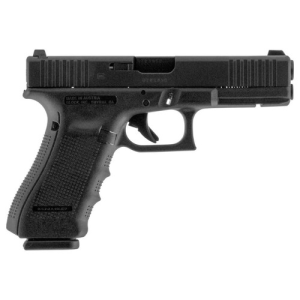
Glock Gen4 Deals
Prices may change. May contain affiliate links.

Glock Gen5 Deals
Prices may change. May contain affiliate links.
According to reporting from the Guardian, Brisbane Times, ABC News, and 7NEWS, the defect was uncovered during a routine weapons inspection, not during a live incident. That's a small mercy. QPS moved quickly once the problem surfaced, directing that all Glock pistols across the service be recalled for individual function testing. Officers who hadn't yet had their pistols cleared were reportedly issued alternative sidearms or reassigned to duties that didn't require a firearm. The scope was statewide, affecting officers from Brisbane metro through remote rural postings.
QPS didn't publicly identify the specific Glock model or generation involved. The service has historically issued Glock pistols in various configurations, and reporting didn't nail down whether this was a Gen4, Gen5, or mixed-generation fleet issue. That ambiguity matters because it changes the relevance to civilian owners. More on that below.
What QPS did confirm is that the defect was mechanical in nature and identifiable through hands-on inspection and function testing of individual pistols. They weren't recalling guns based on a batch number or production date code. Every single pistol had to be physically checked, which tells you the failure mode wasn't something traceable to a single lot of parts.
What causes unintended burst fire in a Glock
Here's where the speculation starts, because QPS and Glock haven't published a detailed root cause analysis as of this writing. But the mechanics of unintended multi-round discharge in a striker-fired pistol are well understood, and there are only a few realistic failure modes.
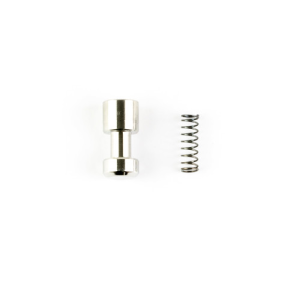

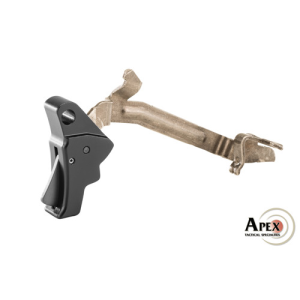

Glock connector Deals
Prices may change. May contain affiliate links.
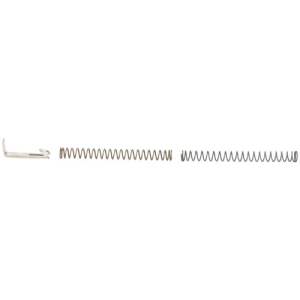
The Glock trigger mechanism relies on a sequence of safeties that work together: the trigger safety (the blade in the trigger face), the firing pin safety (a spring-loaded plunger that blocks the striker from moving forward until the trigger bar pushes it out of the way), and the drop safety (the trigger bar resting on a shelf that prevents the striker from releasing without a deliberate trigger pull). For a Glock to fire more than one round per trigger pull, something in that chain has to fail in a very specific way.

The most likely culprit is the cruciform or the trigger bar engagement with the striker lug. If the connector, trigger bar, or the surfaces where the trigger bar engages the rear of the striker become worn, damaged, or fouled, the striker can follow the slide forward instead of being caught by the sear. This is called "follow" or "hammer follow" in hammer-fired terminology, and it's the classic mechanism behind unintended automatic fire in semi-auto pistols. The striker isn't being held back after the slide cycles, so it rides forward with the slide and hits the primer again as soon as the round chambers.
Wear on the cruciform shelf, a damaged or out-of-spec connector, or a trigger spring that's lost tension could all produce this result. So could contamination. If enough carbon, dried lubricant, or debris builds up in the fire control group, the engagement surfaces can lose the friction and geometry they need to catch the striker reliably.

There's another possibility that gets discussed less often: aftermarket or replacement parts that are slightly out of spec. In a large institutional fleet, parts replacement during armorer-level maintenance is routine. If a batch of connectors, trigger bars, or striker assemblies were sourced that didn't meet Glock's tolerances, you could see this kind of failure appear across multiple pistols without a clear pattern tied to the gun's original production date.
The Reddit thread on r/Glocks that blew up after the news broke had predictable reactions ranging from "my Glock would never" to speculation about Australian-specific modifications. The reality is probably more mundane. Large fleets of any mechanical device develop wear-related failures over time, and the question is whether the maintenance program catches them before they manifest in the field.
Why this matters even if you don't live in Australia
The reflexive response from a lot of Glock owners is going to be "that's a fleet maintenance issue, not a Glock design issue." And they might be right. But that framing misses the point.

SIG P320 Deals
Prices may change. May contain affiliate links.
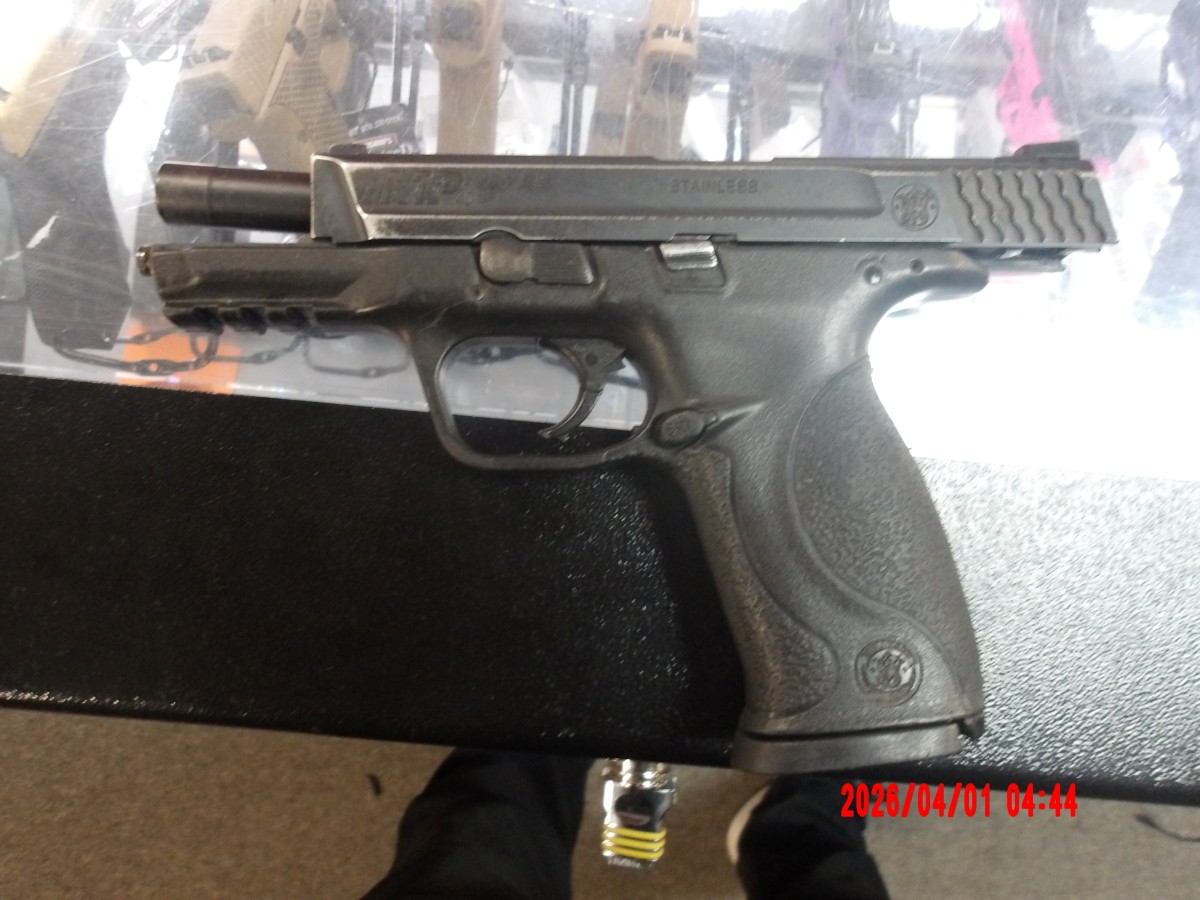
Smith & Wesson M&P Deals
Prices may change. May contain affiliate links.

Canik TP9 Deals
Prices may change. May contain affiliate links.

Springfield Hellcat Deals
Prices may change. May contain affiliate links.
Walther PDP Deals
Prices may change. May contain affiliate links.
If you carry a Glock daily, your pistol is accumulating the same kind of wear that a service pistol does. The round counts might be lower, but the carry cycles are similar. Drawing, holstering, dry fire practice, live fire sessions, cleaning (or not cleaning), and environmental exposure all take a toll on the same parts that failed in Queensland. The difference is that you probably don't have a scheduled armorer inspection every six months.
The real question is: when was the last time you actually inspected your fire control group?
Most civilian Glock owners clean the slide, barrel, and frame rails. Some remember to wipe down the striker channel. Almost nobody regularly inspects the engagement surfaces on the cruciform, the connector bend angle, or the condition of the firing pin safety plunger spring. These are the parts that prevent exactly the kind of failure Queensland discovered.

This isn't unique to Glock, either. Any striker-fired pistol with similar fire control geometry can develop these issues. The SIG P320 went through its own very public safety controversy around unintended discharges, though the failure mode there was different (alleged uncommanded discharge without trigger actuation, which SIG disputed). The M&P series, the Canik TP9 line, the Springfield Hellcat, the Walther PDP, all of them rely on engagement surfaces between a trigger bar and a striker that can wear over time. Glock gets the headline because Glock has the market share, but the lesson is universal.
What you should actually check on your Glock
You don't need to be a certified armorer to do a basic function check that would catch the most common precursors to this kind of failure. Here's what to look at.
Trigger reset and striker engagement
With the pistol confirmed empty and the slide locked back, pull the trigger and hold it to the rear. Release the slide. Now slowly release the trigger until you feel and hear the reset click. The trigger should have a distinct, tactile reset point. If the trigger feels mushy, doesn't reset cleanly, or if you can't find a clear reset point, something in the fire control group needs attention.
Next, with the pistol empty, rack the slide to cock the striker. Point in a safe direction and pull the trigger. You should feel the striker release with a clean break. Now rack the slide again, but this time, instead of pulling the trigger, push the rear of the slide forward firmly with your palm (simulating the slide going into battery with force). The striker should not release. If you hear a click without touching the trigger, you have a serious problem and that pistol should not be fired until an armorer inspects it.
Visual inspection of the connector and cruciform
Field strip the pistol and remove the slide. Look at the trigger mechanism from the rear of the frame. The connector is the angled metal piece on the right rear of the trigger housing. Check that it hasn't been bent, that the angle looks consistent (roughly 45 degrees on a standard connector, though this varies by model), and that the surface where it contacts the trigger bar isn't peened, gouged, or showing unusual wear patterns.

The cruciform is the cross-shaped piece at the rear of the trigger bar that rests on the shelf inside the frame. Look at the engagement surfaces. They should be smooth and show even, minor wear. Deep grooves, chips, or asymmetric wear patterns are red flags.
Striker channel cleanliness
Remove the back plate and pull the striker assembly out of the slide. The striker channel should be dry. Glock's design spec calls for no lubrication in the striker channel. If you see oil, grease, or accumulated crud in there, clean it out with a solvent-dampened patch and let it dry completely. Lubricant in the striker channel can slow the striker spring's return, potentially contributing to follow-type malfunctions, and it collects debris that accelerates wear on the firing pin safety plunger.
Firing pin safety plunger
While the striker is out, press the firing pin safety plunger from the bottom of the slide. It should move freely up and down with spring tension pushing it back into the blocking position. If it's sluggish, sticky, or doesn't spring back crisply, clean it and the channel it rides in. If cleaning doesn't restore full function, replace the plunger and spring.

Range notes: the function test that actually matters
Bench inspection is necessary but not sufficient. The test that matters happens at the range, and it's simple. Load a single round in the magazine. Chamber it. Fire one round at a target. The slide should lock back on the empty magazine. You should hear one bang, see one hole, and feel one recoil impulse.
Do this ten times. If the pistol ever fires and the slide doesn't lock back (suggesting a second round was somehow chambered and fired or the slide didn't cycle correctly), stop shooting and get the gun to an armorer.
Then load two rounds. Fire one deliberate shot. If two rounds leave the barrel, you've just replicated the Queensland defect. Unload, case the pistol, and take it to a qualified gunsmith or send it back to Glock.

This sounds paranoid. It's not. It takes five minutes and twenty rounds. The cost of not catching this failure mode is measured in things you can't take back.
Common mistakes and things people get wrong
There are several misconceptions floating around in the wake of this recall that need to be addressed directly.
"Glocks don't have this problem." Every mechanical device can fail. Glock's reliability reputation is well-earned across millions of pistols and billions of rounds, but it's a statistical statement, not a physical law. Individual pistols can and do develop issues, especially as round counts climb and parts wear. The Queensland recall involved approximately 15,000 guns and the failure was found in some subset of those during testing. That's consistent with a wear-related or parts-quality issue affecting a fraction of the fleet, not a fundamental design deficiency. But "rare" doesn't mean "impossible," and it definitely doesn't mean "not my gun."
"This only happens with aftermarket parts." Maybe, maybe not. QPS hasn't confirmed whether aftermarket or non-OEM parts were involved. It's true that drop-in trigger kits, aftermarket connectors, and reduced-power springs can reduce the safety margins in the fire control group. But OEM parts wear too. If your stock Glock connector has 50,000 rounds of wear on it, the engagement surface isn't the same as it was out of the box. Don't assume factory parts are immune to the laws of metallurgy.
"I'll just detail strip and replace everything." Slow down. If you're not trained in Glock armorer-level disassembly, you can create new problems by reassembling incorrectly. The trigger housing pin, the locking block pin, the connector's position relative to the trigger bar, the spring cups on the striker assembly, all of these have specific orientations and engagement requirements. A YouTube video is not armorer training. If you're going to do a full fire control group inspection and parts replacement, either get the training or take it to someone who has it.
"My carry gun only has 500 rounds through it, so I'm fine." Round count is only one factor. Carry wear is real. Drawing and reholstering thousands of times puts stress on the trigger bar and connector interface. Sweat, lint, and environmental debris work their way into the fire control group. A low-round-count carry gun that's been in a holster daily for three years may have more relevant wear than a range gun with triple the round count that lives in a safe.
"The firing pin safety makes burst fire impossible." The firing pin safety prevents the striker from moving forward unless the trigger bar depresses the plunger. But if the trigger bar isn't being caught by the connector after the shot fires and the slide cycles, the trigger bar can remain in the depressed position, holding the firing pin safety plunger out of the way as the slide goes back into battery. The safety works as designed; the problem is upstream of it in the engagement sequence. Understanding this is important because it means the firing pin safety alone doesn't protect against sear-follow malfunctions.
How this compares to other service pistol issues
The Queensland recall isn't the first time a major law enforcement agency has dealt with a service pistol defect, and it won't be the last. Context helps.
The SIG P320 situation, which generated lawsuits and intense debate, centered on allegations that the pistol could discharge without the trigger being pulled. SIG's position was that the reported incidents were caused by user error, holster interference, or other external factors. The company did implement a voluntary upgrade program that modified the trigger, disconnect, and striker components. Whether you believe the P320 had a design deficiency or not, the parallel is instructive: even well-regarded, widely adopted service pistols can develop reputations for specific failure modes, and the manufacturer's response matters as much as the defect itself.

Glock's response to the Queensland situation has been notably quiet in public. QPS took the lead on communications, and Glock hasn't issued a global recall or service bulletin that's been made public. That could mean the issue is specific to the QPS fleet's maintenance history, parts sourcing, or configuration. Or it could mean Glock is still investigating. Either way, the absence of a broader recall doesn't mean the underlying failure mode can't occur in other Glock pistols under the right conditions.
The broader lesson from both the P320 controversy and the Queensland Glock recall is that institutional trust in a platform can create complacency. When an agency or an individual shooter decides "this is the most reliable pistol ever made," they sometimes stop doing the maintenance and inspection that keeps it reliable. Reliability isn't a permanent attribute. It's the result of good design, proper manufacturing, and ongoing maintenance working together.
What Glock owners should do right now
You don't need to panic. You don't need to sell your Glock and buy a revolver. But you do need to take this as a prompt to actually inspect your pistol, not just clean it.
If you carry a Glock daily, run the function checks described above this week. Not next month. This week. Pay specific attention to trigger reset quality and striker engagement. If anything feels different from when the gun was new, get it looked at.
If you own a Glock that's past the 5,000-round mark, consider replacing the recoil spring assembly, the trigger spring, and the firing pin safety plunger spring as preventive maintenance. These are inexpensive parts and they're the most common wear items in the fire control system. Glock's own armorer guidance suggests spring replacement at regular intervals, and most civilian shooters ignore this completely.
If you've installed aftermarket trigger components, connectors, or striker assemblies, be extra vigilant. Aftermarket parts can be excellent, but they can also reduce the margin of safety in the sear engagement. Run function checks after every range session, not just after installation.
And if you're choosing a carry gun right now and this story has you second-guessing Glock, take a breath. The Glock platform remains one of the most extensively tested, widely deployed, and well-supported handgun designs in existence. This recall affects a specific fleet under specific conditions. The appropriate response isn't to abandon the platform. It's to maintain it properly and verify function regularly, which is what you should be doing with any firearm you trust your life to.
The drill to run this weekend
Here's a concrete thing you can do at your next range session. Bring your carry Glock, two magazines, and fifty rounds. Load each magazine with exactly two rounds. Fire one round, check that the gun holds on the second round without doubling, then fire the second round and confirm slide lock on empty. Do this through all fifty rounds. You're specifically testing for sear follow under live fire conditions with a round waiting in the magazine.
Glock 17 Deals
Prices may change. May contain affiliate links.

If every string goes bang-pause-bang-lock, your fire control group is engaging correctly under recoil. If any string goes bang-bang with no pause between shots, stop immediately. That pistol needs professional attention before it goes back in a holster.
Twenty-five repetitions of a two-round string also makes for surprisingly good draw-and-fire practice if you run it from the holster. You get a controlled pair's worth of recoil management practice while simultaneously verifying that your pistol functions as a semi-automatic and not something else.
The Queensland recall is a reminder that reliability is a verb, not an adjective. It's something you verify, maintain, and earn through attention to your equipment. Fifteen thousand Australian cops just learned that lesson the institutional way. You can learn it the easy way, at your bench and at the range, with a function check and fifty rounds.