You spotted a small, elegant pistol at the back of a gun show table. The seller calls it a "pre-war Walther" and wants $750. The bluing looks deep, the grips seem original, and the action is tight. But is it actually pre-war? Is it all-original? And is $750 the right number, or are you about to overpay for a post-war gun with mismatched parts?
Pre-war European pocket pistols occupy a strange and rewarding corner of the collecting market. They're small enough to overlook, historically significant enough to study for years, and still affordable enough that a careful buyer can build a serious collection without a second mortgage. The period between roughly 1900 and 1940 was the golden age of European pocket pistol design. Browning, Walther, Mauser, CZ, and a dozen smaller makers produced compact handguns in .25 ACP, .32 ACP, and .380 ACP that were carried by military officers, police, civilians, and spies across two world wars. Many of these guns survive today, and a surprising number of them can still be found under $900 if you know what to look for and what to avoid.
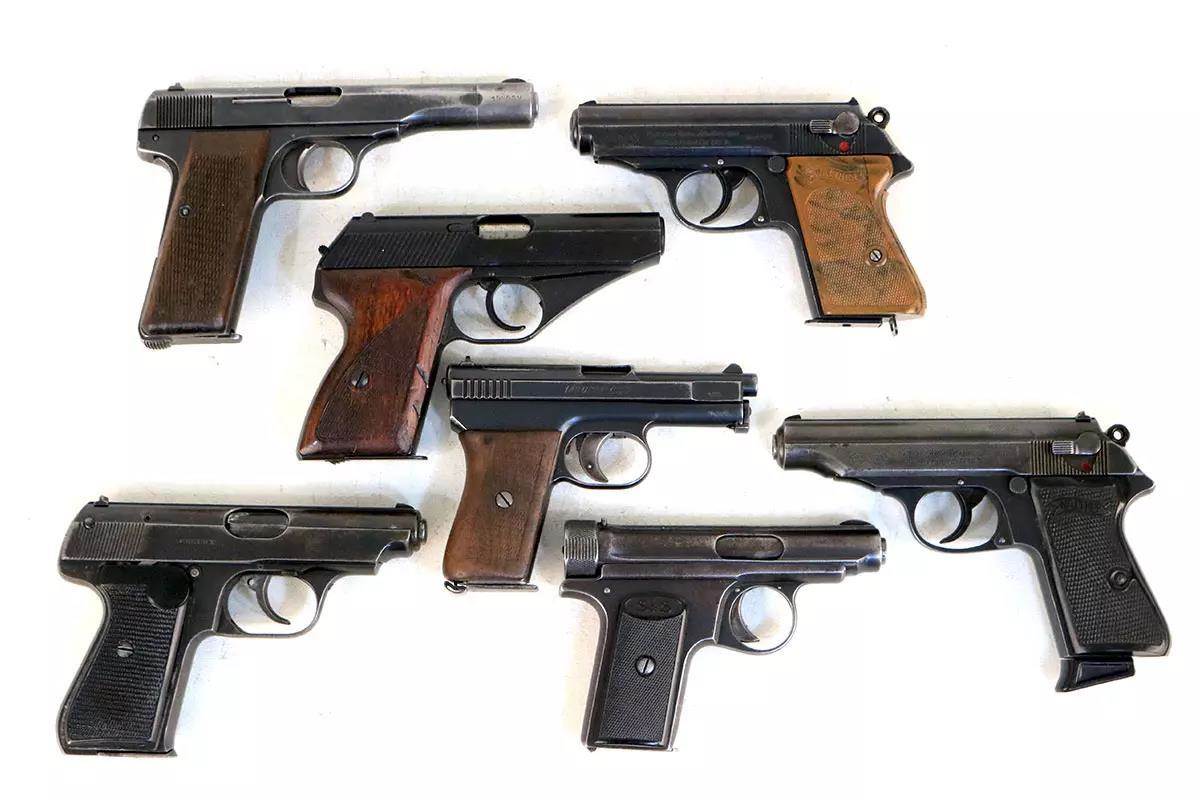
This isn't a survey of every European pocket pistol ever made. It's a focused look at the models most worth your attention at this price point, how to evaluate them, and the specific traps that catch buyers who don't do their homework.
Why pre-war European pocket pistols are worth collecting now
The market for pre-war European pocket pistols has been quietly appreciating for years, but it hasn't exploded the way Luger or P.38 collecting has. That's the opportunity. A pre-war FN Browning Model 1910 in good condition still trades for less than a common-date P.08, despite being one of the most historically significant handgun designs of the twentieth century. A Mauser Model 1914 in honest, original condition can be found for well under $700. Even the Walther PP, which has more name recognition than most guns on this list, remains accessible in pre-war configurations if you're patient and selective.

Mauser C96 Broomhandle Deals
Prices may change. May contain affiliate links.
Several factors keep prices reasonable. These are small guns, often in .32 ACP, and the tactical crowd isn't interested. They don't have the imposing visual presence of a Luger or a C96 Broomhandle. Many were commercial rather than military, which means they lack the martial provenance that drives premiums in other categories. And frankly, a lot of collectors simply walk past them at shows because they don't know what they're looking at. That's an advantage for anyone willing to learn the details.
There's also a practical consideration. Most pre-war European pocket pistols manufactured before 1945 qualify as Curios & Relics under ATF guidelines, meaning holders of a Type 03 Federal Firearms License can purchase them across state lines and have them shipped directly. That opens up the buying pool considerably and makes it easier to find specific variants without being limited to whatever shows up at your local shop or gun show.
The FN Browning Model 1910 and Model 1922
If you're going to collect one pre-war European pocket pistol, the FN Browning Model 1910 is the place most serious collectors start. Designed by John Browning and manufactured by Fabrique Nationale in Herstal, Belgium, the Model 1910 introduced the now-standard concept of a slide that fully enclosed the barrel and a recoil spring wrapped concentrically around the barrel itself. Nearly every modern semi-automatic pistol owes something to this design. It entered production in 1912 and continued through the 1930s in its original form.
Fabrique nationale FN Browning Model 1910
May contain affiliate links.
May contain affiliate links.
Fabrique nationale FN Browning Model 1910 .32 ACP
May contain affiliate links.
Fabrique nationale FN Browning Model 1910 .380 ACP
May contain affiliate links.
Fabrique nationale FN Browning Model 1922
May contain affiliate links.
Fabrique nationale FN Browning Model 1922 .32 ACP
May contain affiliate links.
Fabrique nationale FN Browning Model 1922 .380 ACP
May contain affiliate links.
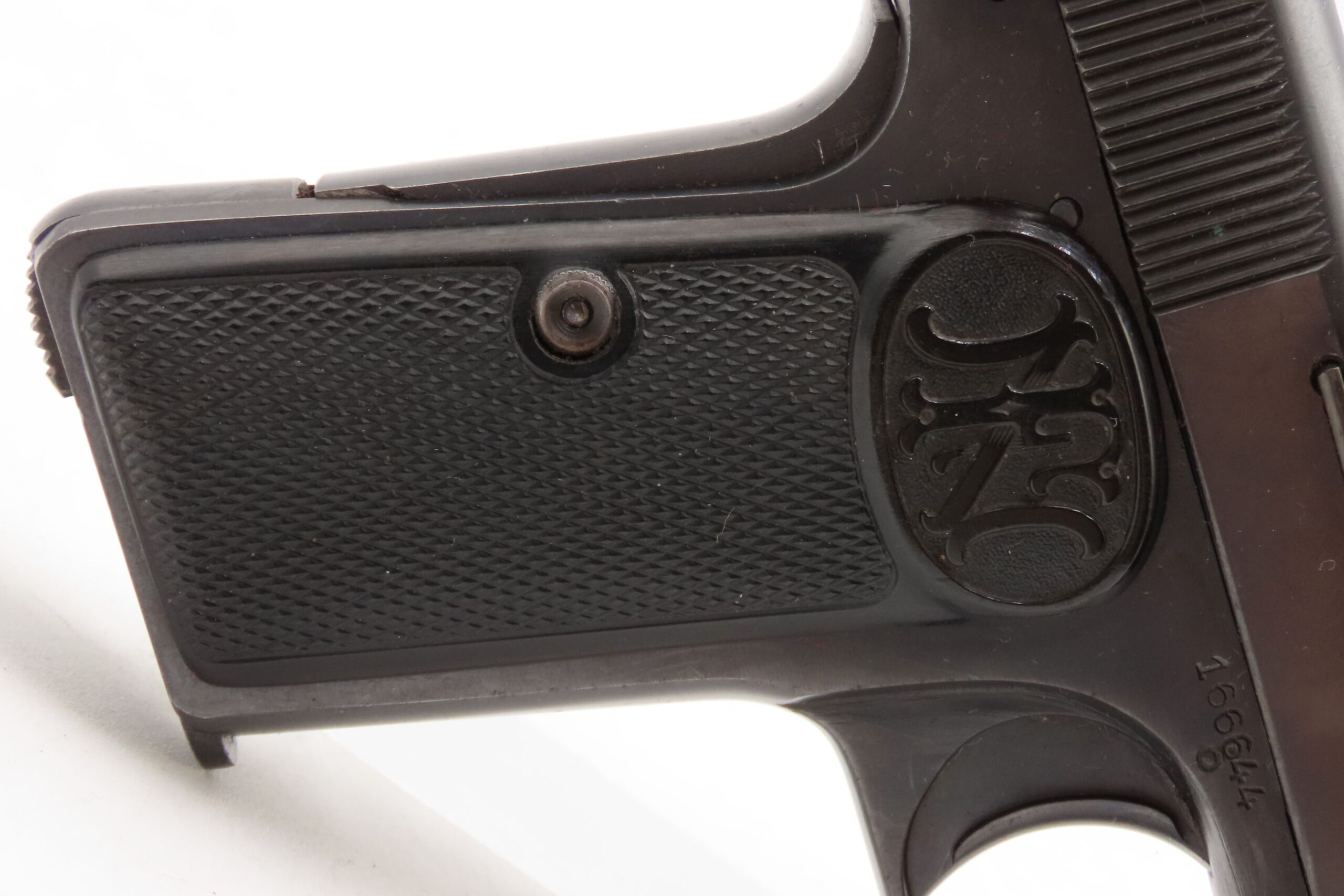
The Model 1910 was chambered in both .32 ACP (7.65mm Browning) and .380 ACP (9mm Short). The .32 ACP version is far more common and typically less expensive. Both calibers share the same basic frame, but the .380 variant uses a slightly different barrel and recoil spring setup. Grips are hard rubber with the FN monogram, and pre-war examples typically have a deep, lustrous blue finish that's distinctly different from the more matte finishes seen on wartime and post-war production.
The Model 1922 is the extended variant, developed at the request of the Yugoslav military. It uses the same basic action as the 1910 but adds a longer barrel, a barrel extension sleeve, and a longer grip frame that increases magazine capacity. Pre-war 1922s were produced for military and police contracts across Europe, and they show up with a fascinating variety of national markings. Yugoslav-contract guns carry Cyrillic markings. Dutch police models have their own proof marks. Greek, Turkish, and various other contracts exist, each with distinct features.
What to look for
The single most important thing to check on any FN 1910 or 1922 is whether it's genuinely pre-war or a wartime German-occupation gun. FN continued producing both models under German control during World War II, and these occupation-era pistols are marked differently and often have rougher finishes. Pre-war commercial 1910s carry Belgian proof marks (a crowned "ELG" inside an oval, along with other Liège proof house stamps) and FN's standard commercial markings. Wartime guns may carry Waffenamt (German military acceptance) stamps, typically an eagle over a number.
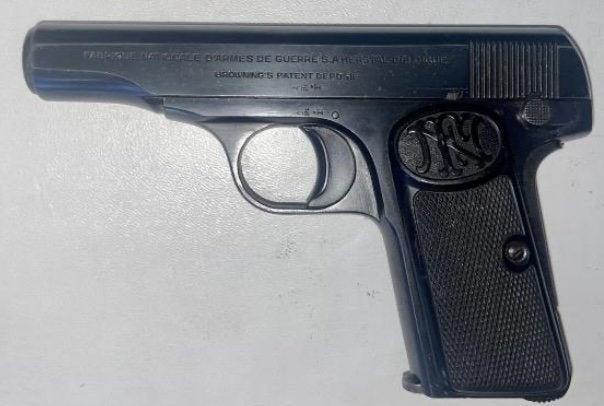
Serial numbers matter here. Pre-war 1910 production generally falls below certain serial ranges, though the exact cutoffs vary by caliber and aren't always cleanly delineated. The best reference for sorting this out is Anthony Vanderlinden's work on FN Browning pistols, which provides detailed serial number tables and production data. If you're serious about collecting these, that book is essential.
Check the bore carefully. Many of these guns were carried daily for decades by European police officers and civilians. A gun with a beautiful exterior and a dark, pitted bore was shot extensively and then cleaned up cosmetically. The grip safety on the 1910 should function crisply. Worn or non-functional grip safeties suggest heavy use or amateur gunsmithing. Original hard rubber grips in good condition add meaningfully to collector value; replacement grips, especially wooden ones, suggest the originals cracked and were swapped.
The Model 1922 is generally easier to find under $900 because more were produced and many were military surplus. The 1910 in .380 ACP is scarcer and commands a premium. A clean, all-original pre-war 1910 in .32 ACP with intact finish and correct grips is the sweet spot for this budget.
The Walther PP and PPK
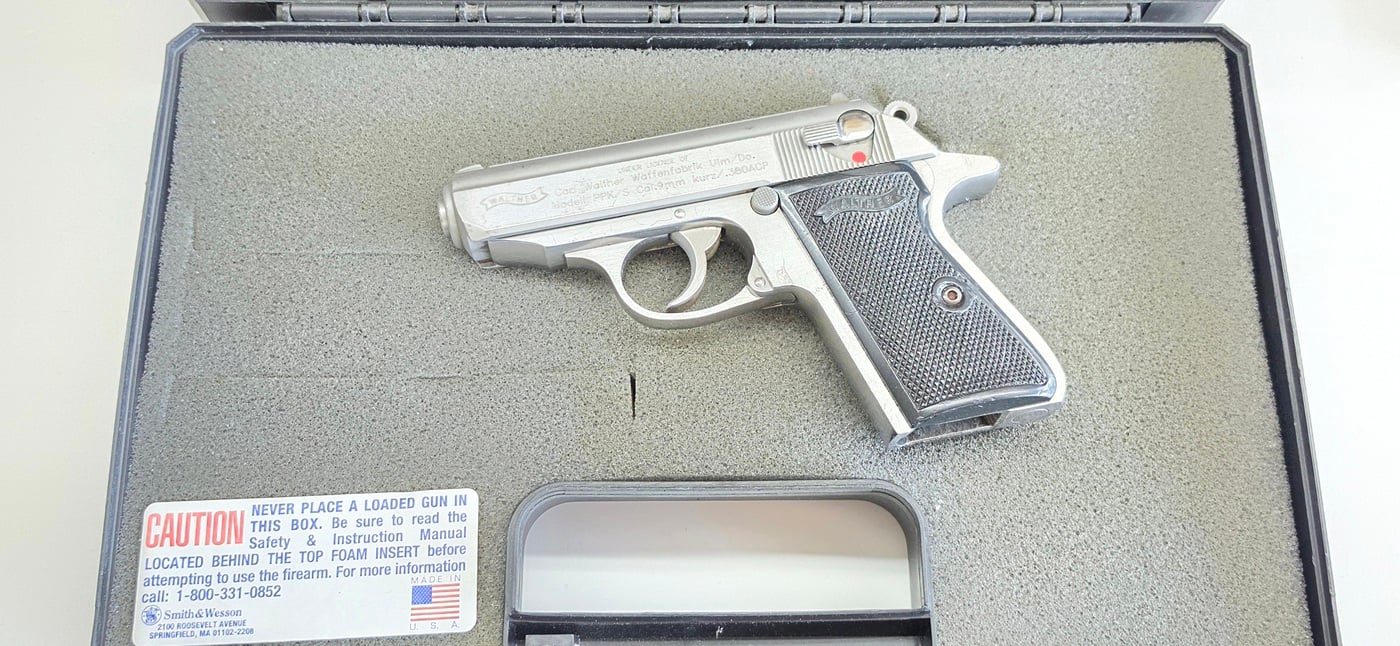
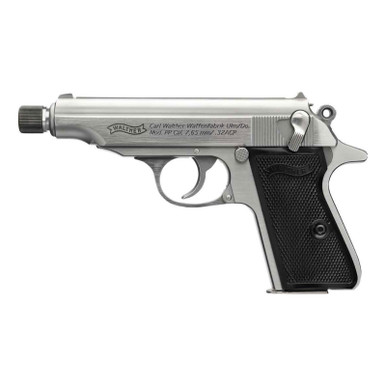
No list of pre-war European pocket pistols is complete without the Walther PP (Polizeipistole) and its shorter sibling, the PPK (Polizeipistole Kriminal). Introduced in 1929 and 1931 respectively, these were the first commercially successful double-action/single-action semi-automatic pistols. The PP was designed for uniformed police use, while the slightly smaller PPK was intended for plainclothes detectives and concealed carry. Both were chambered in .32 ACP, .380 ACP, .25 ACP, and .22 LR, with .32 ACP being by far the most common pre-war chambering.

Walther Deals
Prices may change. May contain affiliate links.

Walther PPK Deals
Prices may change. May contain affiliate links.
May contain affiliate links.
May contain affiliate links.
Walther PPK .380 ACP
May contain affiliate links.
May contain affiliate links.
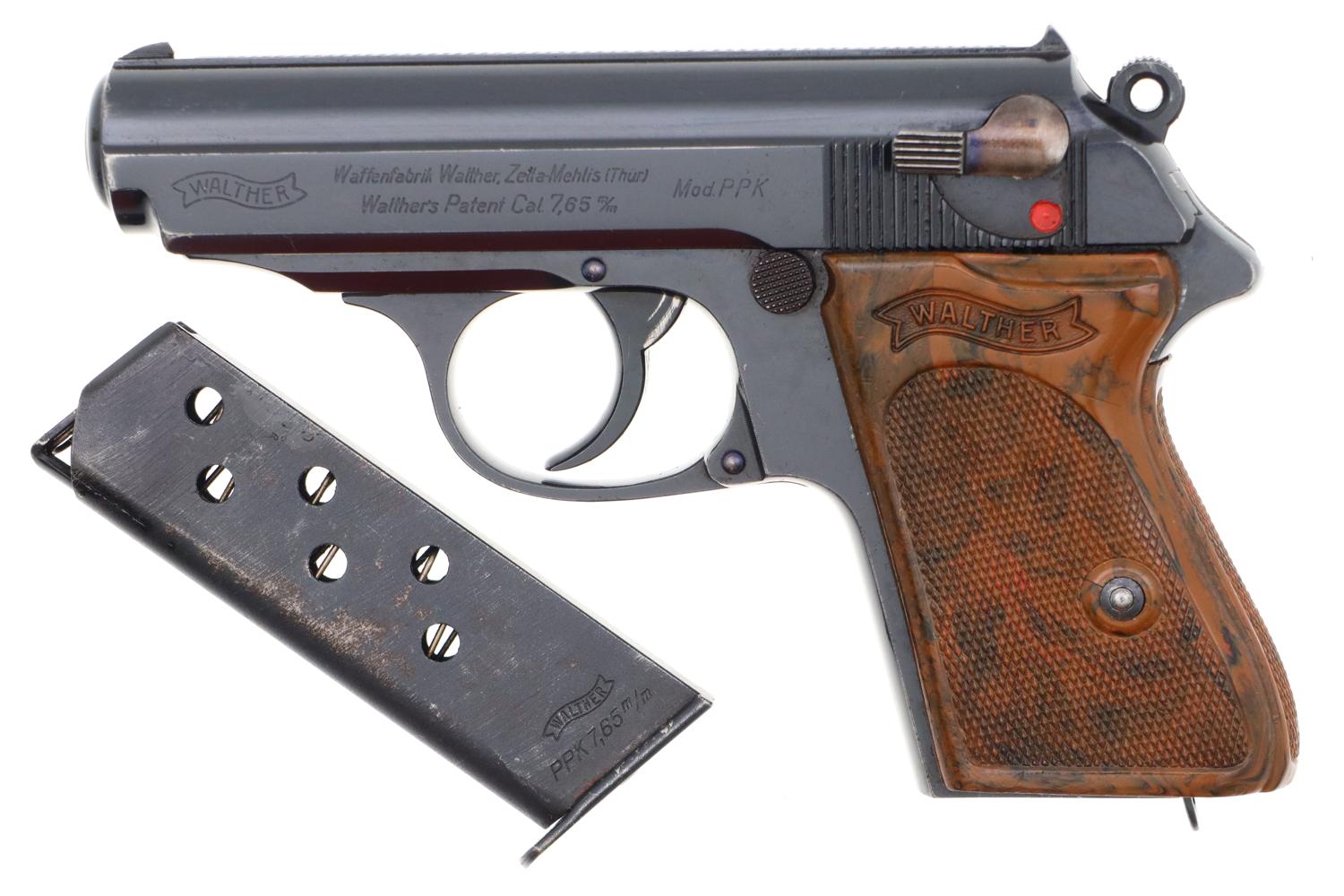
Pre-war Walther PPs and PPKs are among the most desirable pocket pistols in the collecting world, and pricing reflects that. A truly excellent pre-war commercial PP in .32 ACP can still be found under $900, but you'll need to be selective. Pre-war PPKs are generally more expensive than PPs due to their smaller size, greater rarity, and the cultural cachet that comes with a certain fictional British spy. Finding a genuine pre-war PPK under $900 in collector-grade condition is difficult but not impossible, particularly in .32 ACP.
Sorting pre-war from wartime and post-war
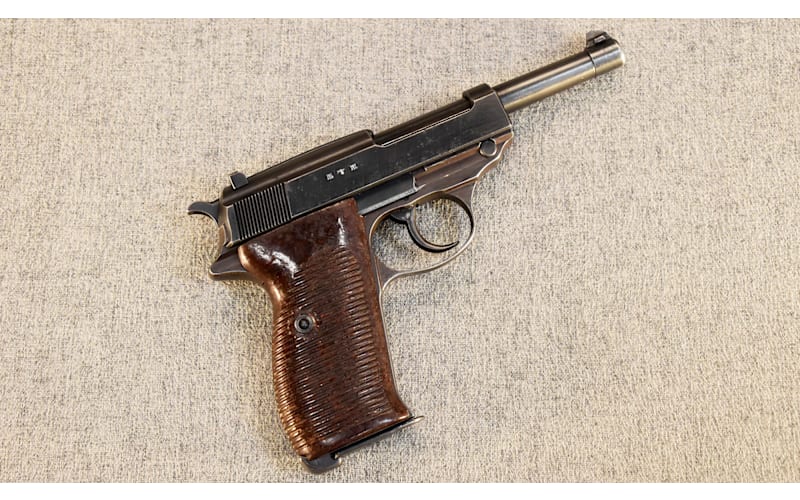
This is where Walther collecting gets tricky, and where many buyers get burned. Walther produced PPs and PPKs continuously from the early 1930s through 1945, and production resumed in various forms after the war. The differences between a 1935 commercial PP and a 1942 military-contract PP are significant in terms of collector value, even if the guns look superficially similar.
Pre-war commercial Walthers were finished to a very high standard. The bluing is deep and even, the slide markings are crisp and cleanly rolled, and the grips are typically black checkered plastic with the Walther banner logo. Pre-war guns carry commercial proof marks from the Zella-Mehlis proof house, including a crown over "N" nitro proof. The Walther banner trademark on pre-war guns is distinctive and slightly different from wartime and post-war versions.
Wartime production shows progressive simplification. Early wartime PPs and PPKs are still well-finished, but by 1944-1945, you'll see rougher machining, cruder finishes, and simplified grip designs. Military acceptance stamps (Waffenamts) appear on wartime guns. These are collectible in their own right, but they're a different collecting category from pre-war commercial guns.
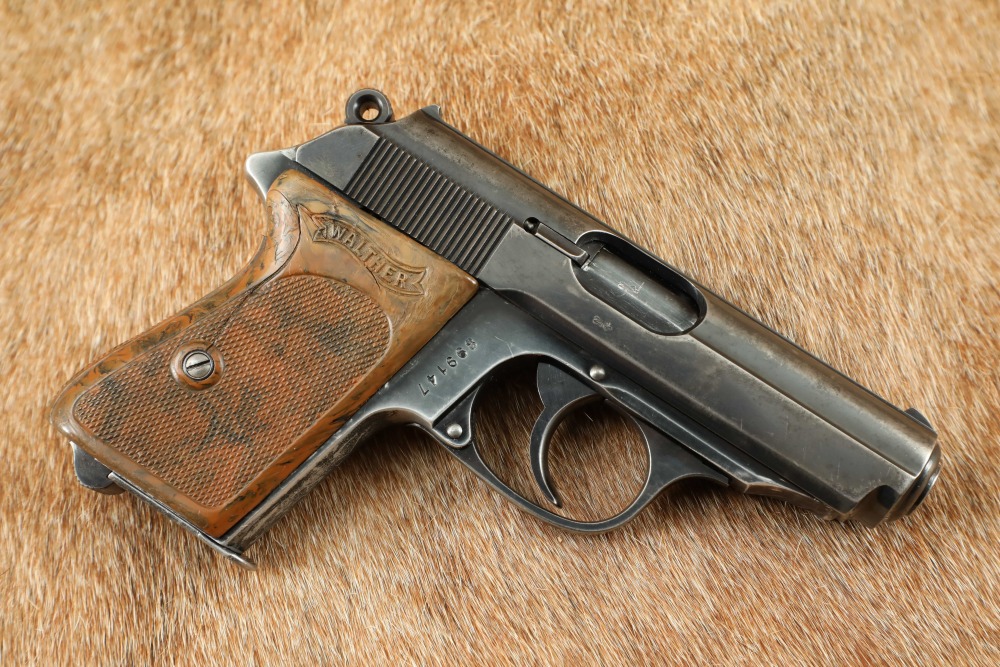
The red flag most buyers miss: post-war French-manufactured Walthers. After the war, France took over the Walther factory and produced PPs and PPKs under the Manurhin name (sometimes still marked "Walther"). These are decent guns, but they're not pre-war German Walthers, and they're worth considerably less. The markings will include "Made in France" or "Manufacture de Machines du Haut-Rhin" (Manurhin's full name). Some of these have been misrepresented as German-made guns, especially when the French markings are small or partially obscured.
Serial number research is critical. James Rankin's three-volume series on Walther pistols remains the standard reference, with detailed serial number tables that allow you to date a PP or PPK with reasonable precision. If a seller can't tell you the approximate production date based on the serial number, that's a sign they haven't done their homework, and you shouldn't trust their assessment of originality.
The Mauser Model 1910 and Model 1914
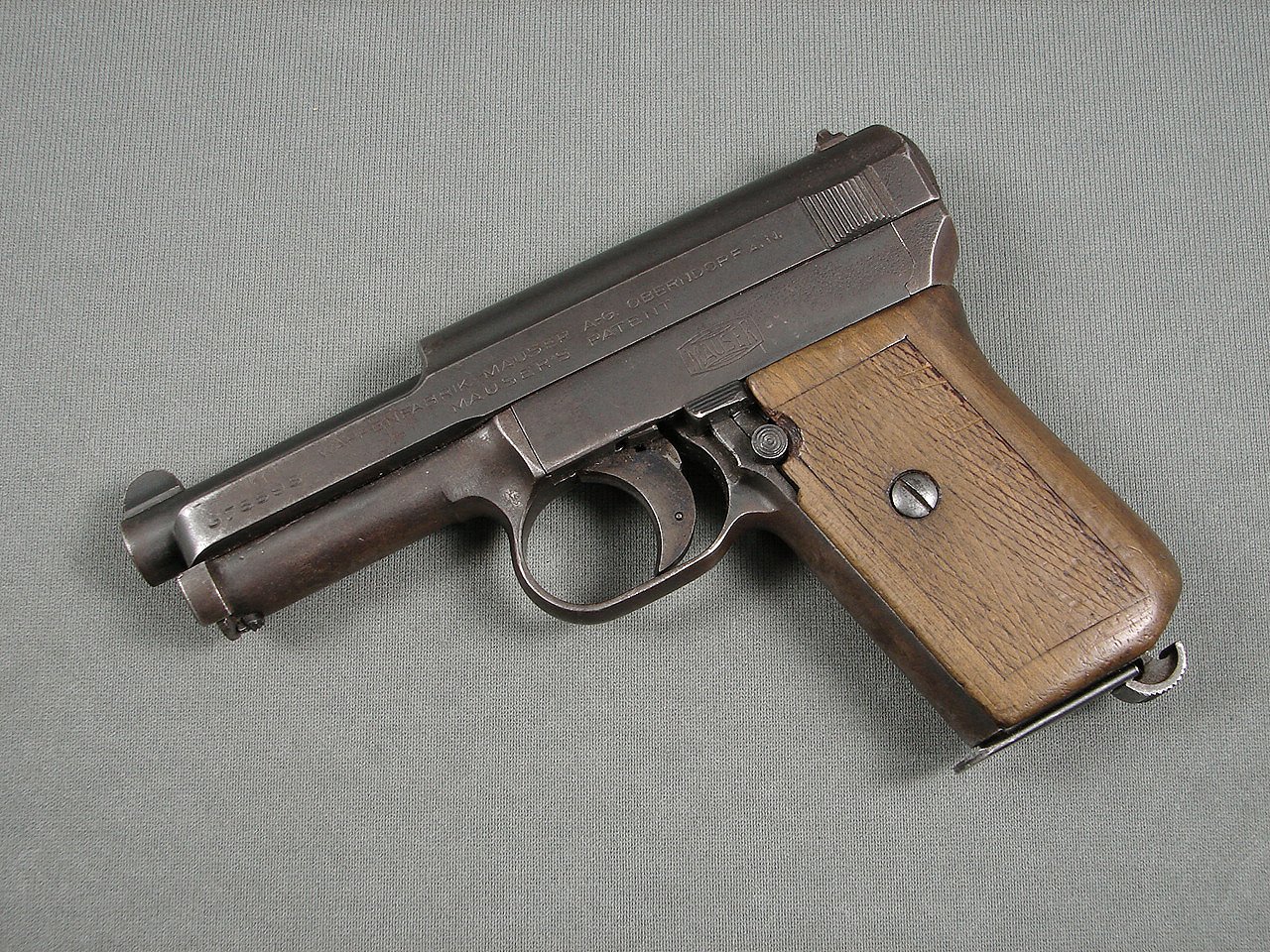
Mauser's pocket pistols don't get the attention they deserve. The Model 1910 (chambered in .25 ACP) and Model 1914 (chambered in .32 ACP) are beautifully made, mechanically interesting, and still surprisingly affordable. These are striker-fired designs with a distinctive humpback profile and excellent fit and finish. Pre-war Mauser pocket pistols were made to the same exacting standards as Mauser's rifles, and it shows.

Mauser Deals
Prices may change. May contain affiliate links.


Mauser Model 1914 .32 ACP
May contain affiliate links.
Mauser Model 1910 .25 ACP
May contain affiliate links.
The Model 1914 is the more practical collector's choice. It's large enough to hold and shoot comfortably, chambered in the more common .32 ACP cartridge, and available in enough quantity that finding good examples isn't a constant struggle. Production ran from 1914 through the 1930s, with various minor modifications along the way. The most notable variant is the Model 1934, which refined the design with a more streamlined profile and improved ergonomics. Model 1934s were widely issued to German military and police during the Nazi era, and many carry party or military markings that add historical interest.
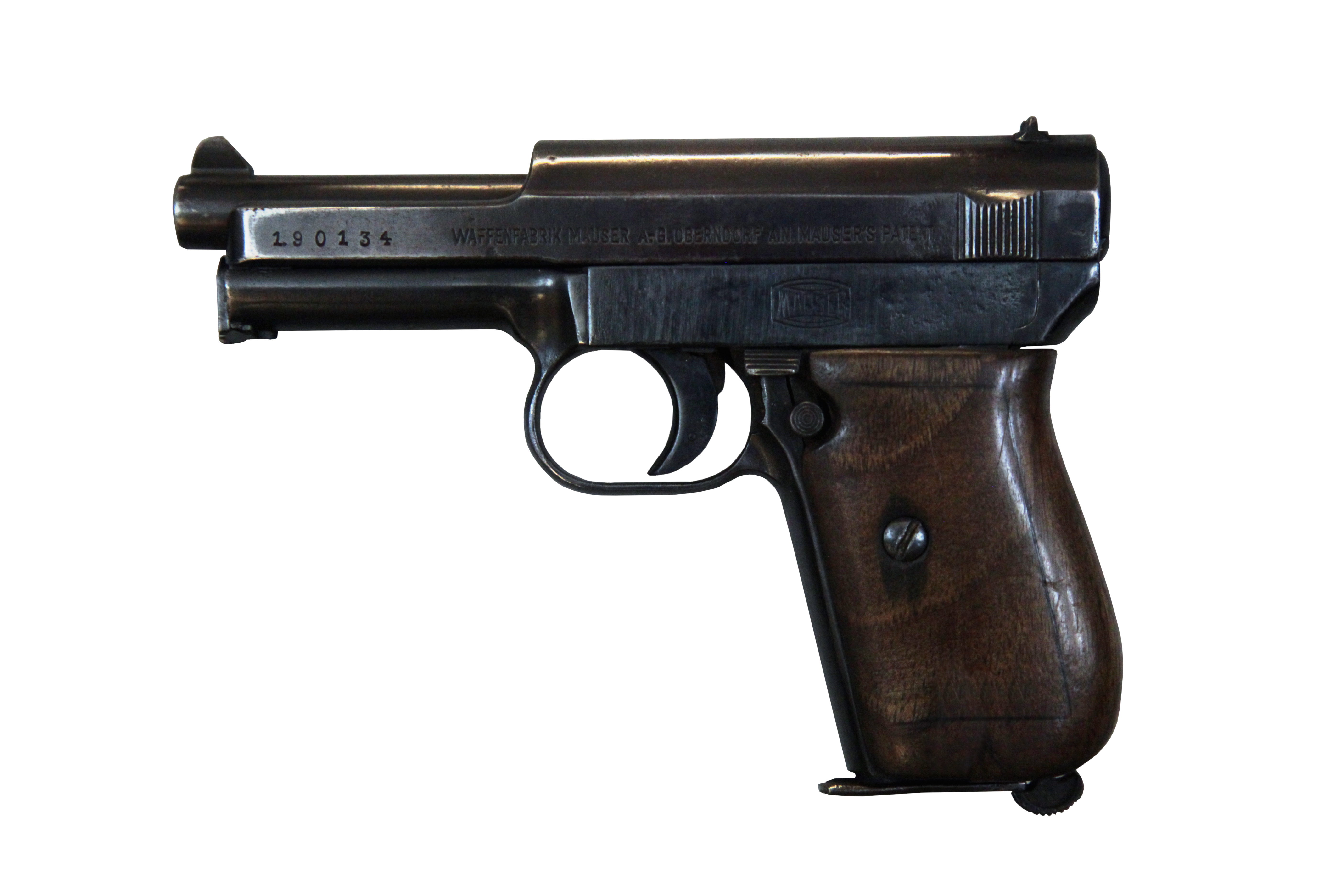
The Model 1910 in .25 ACP is a tiny, elegant gun that fits in a vest pocket. It's a true gentleman's pistol from an era when such things were common in Europe. These are less expensive than the .32 ACP models, partly because .25 ACP is less popular and partly because the guns are so small they don't appeal to shooters. But as collectibles, they're gems. The early "sidelatch" variant of the Model 1910 is mechanically different from the later production and commands a modest premium among Mauser specialists.
The detail that matters
Mauser pocket pistols are relatively straightforward to authenticate, but there are a few things to watch. The finish on pre-war commercial Mausers is a deep, polished blue that's almost black. If you see a gun with a thin, grayish-blue finish, it may have been reblued. Reblued finishes lose 40-60% of collector value on guns like these, so getting this right matters.
Check the Mauser banner trademark on the left side of the slide. On genuine pre-war guns, this marking is sharply struck and properly proportioned. Faked Mauser markings exist, though they're more common on high-value items like C96 Broomhandles than on pocket pistols. Still, verify. The grips should be checkered wood (walnut, typically) with the Mauser banner inlaid or stamped. Replacement grips are common and not a dealbreaker, but original grips in good condition are a plus.
One thing that catches new Mauser pocket pistol collectors off guard: many of these guns were sold commercially throughout Europe and South America, and they show up with retailer markings, import stamps, and other secondary markings that can be confusing. A small retailer's stamp on the frame doesn't indicate a fake; it indicates a commercial distribution chain that was common in the pre-war era. Understanding which markings are factory, which are proof house, and which are retailer or importer stamps takes some study but pays off when you're evaluating a gun at a show.
The CZ Model 27
The Česká zbrojovka (CZ) Model 27 is one of the most undervalued pocket pistols in the pre-war European category. Chambered in .32 ACP, the vz. 27 was introduced in 1927 and produced in large quantities for Czech military and police use. It's a simple, reliable blowback design with a fixed barrel and an internal hammer. The gun has a clean, utilitarian look that reflects Czech manufacturing philosophy: well-made, functional, and free of unnecessary ornamentation.
Česká zbrojovka CZ Model 27
May contain affiliate links.
Česká zbrojovka CZ Model 27 .32 ACP
May contain affiliate links.
Česká zbrojovka CZ vz. 27
May contain affiliate links.
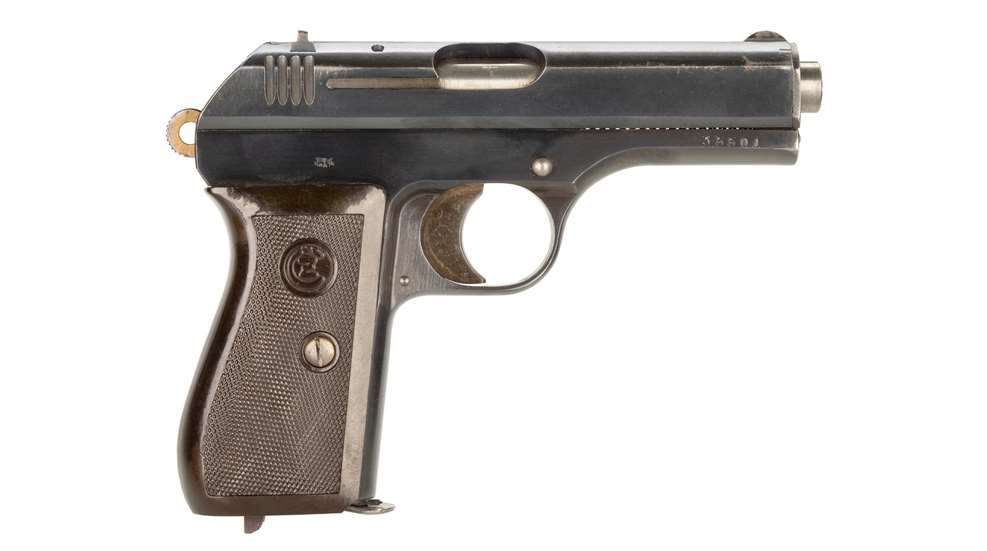
What makes the CZ 27 interesting to collectors is the layered history visible in the guns themselves. Pre-war Czech-marked examples carry the Czech lion proof mark and Czech-language slide inscriptions. After the German occupation of Czechoslovakia in 1939, production continued under German supervision, and the markings changed accordingly. German-era CZ 27s carry the Böhmische Waffenfabrik marking (the Germanized factory name) and Waffenamt acceptance stamps. Late-war examples show the same progressive simplification seen in German Walthers and Mausers: rougher finishes, simplified grips, and cruder machining.
The pre-occupation Czech-marked CZ 27s are the most desirable from a collector standpoint and the hardest to find. They were produced in smaller numbers before the German takeover, and many were confiscated or destroyed during the occupation. A genuine pre-war Czech CZ 27 in good condition is a legitimate find, and the fact that many collectors walk right past these guns means they're often mispriced at shows and in online listings.
The question to ask when looking at a CZ 27: what language is on the slide? Czech-language markings mean pre-occupation or immediate post-war production. German-language markings mean occupation-era. The difference in collector interest is significant, though even the German-occupation guns are well-made and historically interesting. Late-war phosphate-finished guns are the least desirable cosmetically but tell a compelling story about wartime manufacturing under duress.
The Sauer 38H
Here's a gun that most collectors don't know exists until they handle one, and then they want one immediately. The Sauer 38H (the "H" stands for Hahn, German for hammer) was produced by J.P. Sauer & Sohn in Suhl, Germany, beginning in 1938. It's a .32 ACP double-action pistol with a concealed hammer and one of the most innovative features of any pre-war pocket pistol: a cocking/decocking lever on the left side of the frame that allows the shooter to safely lower the hammer on a loaded chamber and then cock it again with the thumb, all without touching the trigger.

J.p. sauer & sohn Sauer 38H Deals
Prices may change. May contain affiliate links.
J.p. sauer & sohn Sauer 38H .32 ACP
May contain affiliate links.
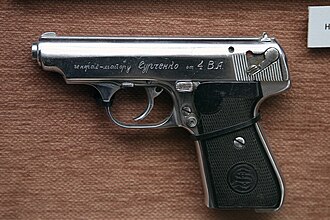
The 38H is a masterpiece of pre-war German engineering. The fit and finish on early commercial examples is extraordinary, with a deep, lustrous blue and precisely machined parts. The gun has a sleek, almost Art Deco profile that sets it apart visually from everything else in this category. It's also a genuinely pleasant gun to shoot, with a smooth double-action trigger pull and mild recoil.
Most 38H pistols you'll encounter are wartime military production, marked with Waffenamts and showing varying degrees of wartime simplification. These are common enough to find under $900 without much difficulty. True pre-war commercial 38H pistols, produced in 1938-1939 before large-scale military contracts took over, are scarcer and command a premium. They're identifiable by their commercial proof marks (Suhl proof house stamps rather than military Waffenamts), higher-quality finish, and typically lower serial numbers.
Walk away if you see a 38H with a mottled, uneven finish that doesn't match the slide and frame. These guns are sometimes found partially reblued, with the slide refinished but the frame left in its original (worn) condition, or vice versa. A mismatch like that tanks collector value and suggests someone tried to improve the gun's appearance for resale without investing in a complete refinish.
| Model | Caliber | Action Type | Key Feature | Typical Price Range | Collector Note |
|---|---|---|---|---|---|
| FN Browning Model 1910 | .32 ACP / .380 ACP | Blowback, SA | Slide fully enclosing barrel; concentric recoil spring | Under $900 (.32 ACP most affordable) | .380 variant scarcer and pricier; check for wartime occupation markings |
| FN Browning Model 1922 | .32 ACP / .380 ACP | Blowback, SA | Extended barrel and grip; military contract variants | Under $900 (large surplus quantities) | Yugoslav, Dutch, Greek contract markings add collecting depth |
| Walther PP | .32 ACP / .380 ACP / .22 LR | DA/SA | First successful DA/SA semi-auto; double-action trigger | Under $900 (.32 ACP) | Better value than PPK; watch for French Manurhin production |
| Walther PPK | .32 ACP / .380 ACP | DA/SA | Compact variant of PP for plainclothes carry | Often above $900 in collector grade | James Bond premium inflates prices; genuine pre-war examples difficult under $900 |
| Mauser Model 1914 | .32 ACP | Striker-fired, blowback | Humpback profile; Mauser rifle-grade fit and finish | Under $700 | Most undervalued relative to quality; Model 1934 variant more commonly encountered |
| Mauser Model 1910 | .25 ACP | Striker-fired, blowback | Tiny vest-pocket size; early "sidelatch" variant | Less expensive than .32 models | Acquired taste; appeals to miniature-mechanics collectors |
| CZ Model 27 (vz. 27) | .32 ACP | Blowback, internal hammer | Simple, reliable design; layered Czech/German history | Often under $500 (occupation era) | Pre-occupation Czech-marked examples scarcer and most desirable |
| Sauer 38H | .32 ACP | DA with concealed hammer | Cocking/decocking lever; Art Deco profile | Up to $900 (wartime more affordable) | Connoisseur's choice; most mechanically innovative and likely to appreciate |
Common mistakes and traps
Five things that catch buyers in this market, roughly in order of how often they happen:
Confusing wartime for pre-war
This is the single biggest mistake in European pocket pistol collecting. A Walther PP made in 1943 and a Walther PP made in 1935 may look almost identical to a casual observer, but they're different guns from a collector's perspective, and the value difference can be hundreds of dollars. Always verify the production date through serial number research before paying a pre-war premium. The same applies to FN Brownings, Mausers, CZ pistols, and Sauers. The line between "pre-war" and "wartime" is 1939 for most German manufacturers and 1940 for Belgian (FN) production, corresponding to the German occupation of Belgium.
Accepting "matching numbers" at face value
On pocket pistols, "matching numbers" typically means the slide and frame serial numbers match. On some models, the barrel, magazine, and other small parts are also numbered. But here's the thing: small parts get swapped over decades of use, and renumbering (stamping a new serial number on a replacement part) was done both at the factory and by armorers in the field. Electropenciled numbers, where someone scratched a serial number onto a part with an electric engraving tool, are a red flag. Factory-stamped serial numbers have a consistent depth and font. Electropenciled numbers look scratchy and uneven. If the magazine has a number that looks different from the frame number in character style or depth, it's probably a replacement that was renumbered after the fact.
Ignoring import marks
Many European pocket pistols entered the United States through importers who were required to stamp the gun with the importer's name and the country of origin. These import marks are typically small and located on the barrel, frame, or slide in an inconspicuous location. They don't make a gun fake, but they do affect collector value. A gun with no import marks that entered the country before the Gun Control Act of 1968 (which mandated import markings) is generally more desirable than the same gun with "MADE IN GERMANY" stamped on the side in block letters. Conversely, the absence of import marks on a gun that was clearly imported post-1968 should raise questions about how it entered the country.
Overpaying for celebrity associations
The Walther PPK has a James Bond premium. It just does. Sellers know that buyers associate the PPK with 007, and they price accordingly. The PP, which is mechanically identical but slightly larger, is often several hundred dollars cheaper for the same condition and vintage. If you're collecting for historical and mechanical interest rather than pop culture cachet, the PP is frequently the better value. Similarly, the FN Model 1910 has an association with the assassination of Archduke Franz Ferdinand in 1914, but that doesn't make every Model 1910 worth a premium. The specific gun used in Sarajevo is in a museum. Yours is a different gun.
Buying on appearance alone
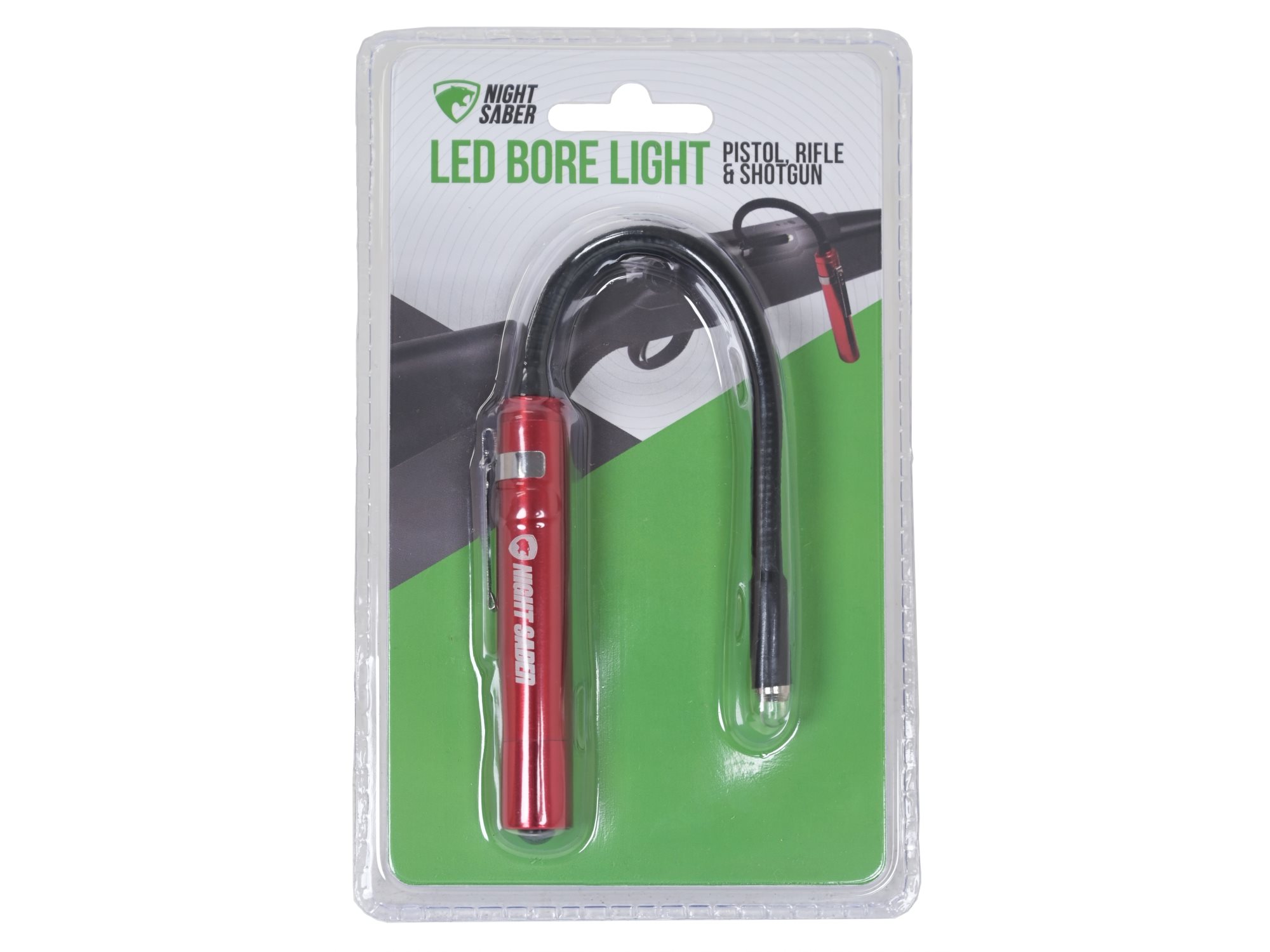
A pocket pistol that looks great in a photo or under glass at a gun show may have serious issues that only become apparent with hands-on inspection. Rack the slide. Does it move smoothly? Check the bore with a light. Is it bright, or is it dark and pitted? Pull the magazine and look at the feed lips. Are they cracked or bent? Test the safety, the magazine release, and the trigger in both single-action and double-action (on DA/SA models). A gun that looks like a safe queen but has a broken safety or a cracked magazine is not a collector's piece; it's a project.
Variant comparison: five models worth your attention
The FN Browning Model 1910 in .32 ACP is the most common and affordable entry point. Pre-war commercial examples with original finish and grips are available with patience. The .380 ACP version is scarcer and more expensive but still findable under $900 in honest condition. The Model 1922, with its extended barrel and grip, is even more available due to large military surplus quantities, and contract-marked examples (Yugoslav, Dutch, Greek) add a layer of collecting depth that the standard commercial 1910 doesn't have.
The Walther PP in .32 ACP represents the best value in the Walther pocket pistol lineup for pre-war collectors working under $900. Pre-war commercial PPs in good original condition can be found in this range, while equivalent PPKs are often above it. The PP in .380 ACP is scarcer than the .32 and commands a modest premium. The PP in .22 LR exists in pre-war form but is quite rare and typically priced above this budget.
The Mauser Model 1914 in .32 ACP is arguably the most undervalued gun on this list relative to its quality and historical interest. These are superbly made pistols that regularly sell for less than comparable Walthers or FN Brownings simply because the Mauser name is associated with rifles, not pocket pistols. The later Model 1934 refinement is more commonly encountered and often carries military or police markings that add collector interest. The tiny Model 1910 in .25 ACP is an acquired taste but an affordable one.
The CZ Model 27 in .32 ACP is the budget pick. German-occupation examples are common and affordable, often well under $500 in decent condition. Pre-occupation Czech-marked guns are harder to find and more expensive but still generally under $900. The CZ 27 doesn't have the glamour of a Walther or the pedigree of an FN Browning, but it's a well-made, historically layered pistol that rewards study.
The Sauer 38H in .32 ACP is the connoisseur's choice. It's the most mechanically innovative gun on this list, the most aesthetically distinctive, and the one most likely to appreciate in value as more collectors discover it. Early, high-polish commercial examples are the most desirable and may push the $900 ceiling. Wartime military examples are more common and more affordable. Either way, the 38H is a gun that punches well above its price class in terms of design sophistication and manufacturing quality.
The caliber question
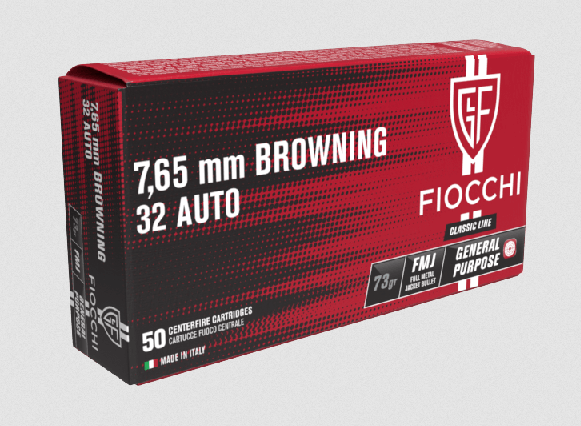
Nearly all of these guns are chambered in .32 ACP, with some available in .380 ACP and .25 ACP. This matters for two reasons. First, .32 ACP ammunition is still commercially produced and widely available, so these guns can be shot and enjoyed, not just displayed. Second, the caliber itself is part of the historical context. The .32 ACP (7.65mm Browning) was the standard European police and military sidearm cartridge for decades. It wasn't chosen because it was powerful; it was chosen because it was controllable in small, concealable handguns and adequate for the close-range encounters that police and military officers were most likely to face. Collecting these guns means understanding the world they were designed for, not judging them by modern defensive handgun standards.
The .380 ACP variants are generally scarcer and more valuable because they were produced in smaller numbers. The .25 ACP variants (primarily the Mauser Model 1910 and certain FN models like the Baby Browning) are the smallest and least expensive, appealing mainly to collectors who appreciate miniature mechanical precision.
Condition grading and what it means here
Condition means different things here than it does in, say, Colt Single Action Army collecting. These are working pistols that were carried daily, often for decades. A pre-war European pocket pistol in true "excellent" condition, meaning 90%+ original finish with sharp markings, original grips, and a bright bore, is genuinely uncommon. Most examples you'll encounter will be in "very good" to "good" condition: honest wear on the high points, some thinning of the blue on the grip straps and muzzle, perhaps some minor pitting, but with intact markings and functional mechanics.
Don't chase perfection in this category unless you have unlimited patience and a flexible budget. A gun with honest, even wear and all-original parts is a better buy than a gun with suspiciously perfect blue and grips that don't quite match the period. The market says one thing. The gun says another. Trust the gun.
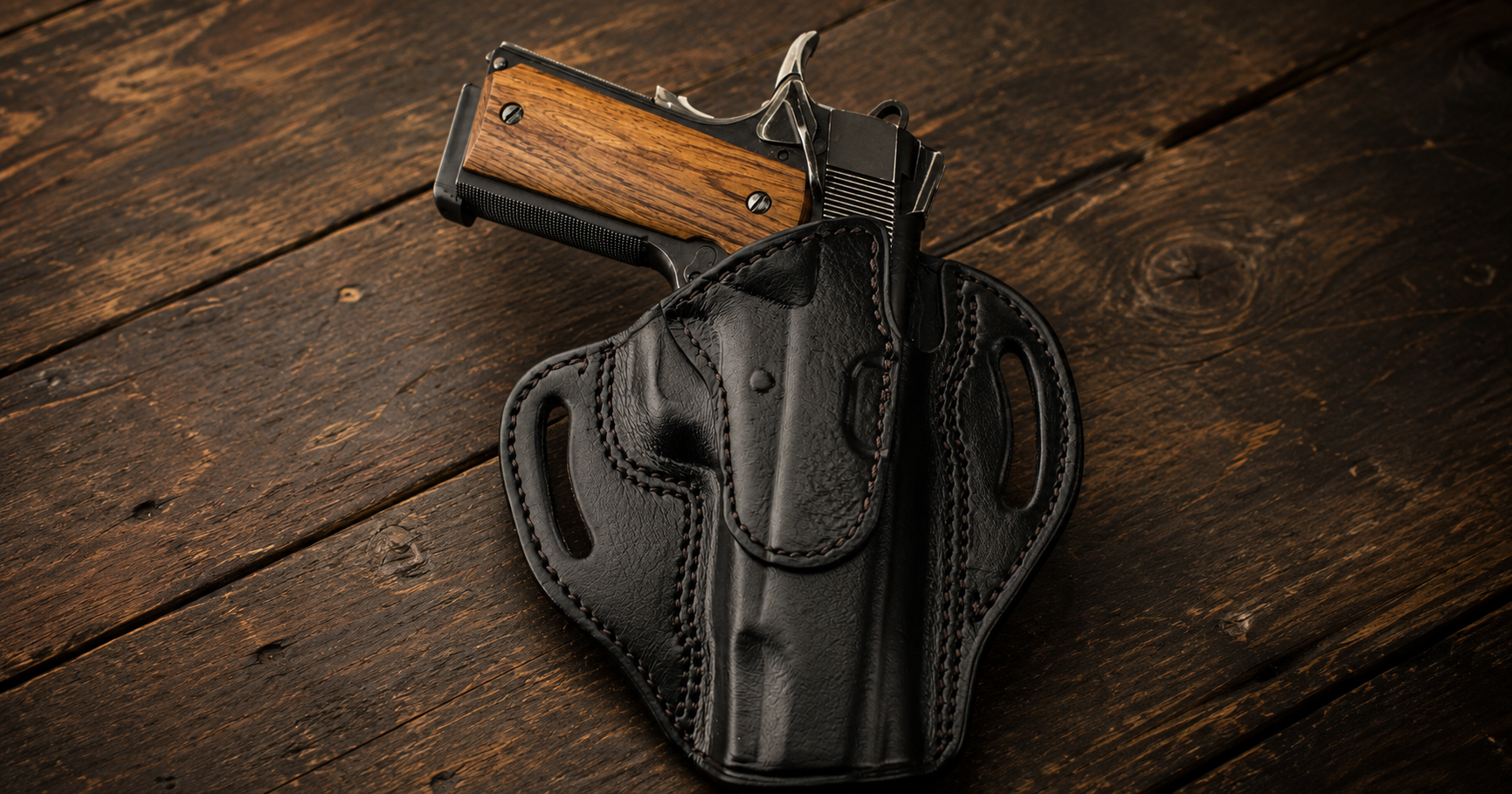
Holster wear is expected and even desirable in the right context. A pre-war European pocket pistol that shows wear patterns consistent with daily carry in a leather holster is telling you it was used for its intended purpose. That's not damage; that's provenance. Conversely, a gun with heavy wear on the grip straps but a mint bore was carried a lot and shot very little, which is the ideal combination for a collector.
Before you buy
Handle the gun. Rack the slide, check the bore, test every control. If you're buying online or at a distance, ask for detailed photos of the bore, both sides of the slide and frame, the proof marks, the serial number on both the slide and frame, and the grips. Any seller who can't or won't provide these photos is not worth your time.
Research the serial number before you commit. For Walthers, consult Rankin's books. For FN Brownings, Vanderlinden's work is the standard. For Mausers, the resources are more scattered, but Mauser collector forums and reference sites maintain serial number databases that can help you date a gun. For CZ pistols, the Czech firearms research community has done excellent work documenting production ranges and variant differences. For Sauers, the 38H has a dedicated following with active online communities that can help authenticate and date specific examples.
Ask the seller what they know about the gun's history. Where did they acquire it? Has it been refinished? Are all parts original? A knowledgeable seller who can answer these questions confidently is a better source than one who shrugs and says "it's old." And if the price seems too good for the condition and claimed vintage, it probably is. There's no secret stash of mint pre-war Walther PPs waiting to be discovered at bargain prices. The market is efficient enough that genuine deals exist but genuine steals are rare.
Build your reference library before you build your collection. Two or three good books and access to collector forums will save you more money than any buying strategy. These guns reward patience, specificity, and the willingness to walk away from a deal that doesn't add up. The right gun at the right price will come along. The wrong gun at any price is just an expensive lesson.