
You've probably noticed 5.56 creeping back up. Maybe .308 too. The per-round math that worked six months ago doesn't work now, and the explanations floating around gun forums range from "panic buying" to "the government is hoarding everything." The real answer is more complicated and, frankly, more interesting. It involves multiple simultaneous wars, a single ammunition plant in Missouri that produces a staggering percentage of America's small arms ammo, labor disputes, and a defense industrial base that was never designed to handle what's being asked of it right now.
The question most shooters actually care about: is this a temporary spike, or are we looking at a structural shift in ammo pricing? The answer depends on how much you understand about where military and civilian ammunition supply chains overlap, because they overlap a lot more than most people realize.
Here's what the data actually shows, what's driving the current squeeze, and how to think about your ammo budget for the next twelve to eighteen months.
The drawdown problem, by the numbers
The United States has been drawing down munitions stockpiles at an unsustainable rate. Ukraine aid packages since 2022 have included enormous quantities of artillery shells, Javelins, Stingers, and small arms ammunition. By some estimates, the U.S. transferred over a million rounds of 155mm artillery ammunition to Ukraine across multiple drawdown packages, plus significant quantities of 5.56 NATO and 7.62 NATO. CSIS analysis flagged as early as 2023 that certain stockpile categories were reaching levels that raised readiness concerns.
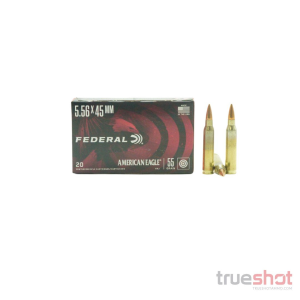
Federal American Eagle 5.56 55-grain FMJ (XM193) Deals
Prices may change. May contain affiliate links.

Then the Iran conflict escalated in early 2026, and the drain accelerated sharply. Reporting from IntelliNews and Time indicates that the Iran theater has outpaced Ukraine as the primary drain on U.S. munitions stockpiles. The demand profile is different from Ukraine, heavier on precision-guided munitions and air-delivered ordnance, but small arms ammunition consumption is significant in any sustained military operation. The combined effect of two simultaneous drawdown streams has pushed the defense industrial base into a mode it hasn't operated in since the peak years of Iraq and Afghanistan.
The American Enterprise Institute published a detailed assessment calling the situation a genuine munitions crisis, not a political talking point. Their analysis pointed to years of underinvestment in production capacity, a just-in-time procurement philosophy that assumed peacetime consumption rates, and a supplier base that consolidated dramatically over the past two decades. The Department of Defense's own Acquisition Transformation Strategy document, released in late 2025, acknowledged that production timelines for key munitions categories were measured in years, not months.
What does this have to do with the price of a box of Federal American Eagle at your local shop? Everything.
Where military and civilian supply chains collide
The Lake City Army Ammunition Plant in Independence, Missouri, is the linchpin. Winchester was awarded the contract to manage and operate Lake City, and the facility produces billions of rounds annually. Here's the part most shooters don't fully appreciate: Lake City doesn't just make military ammo. Excess capacity at Lake City has historically been sold on the civilian market, often under Winchester's white box branding or as bulk surplus. That excess capacity is what kept 5.56 and .308 affordable for decades.

When military demand spikes, that excess capacity evaporates. The production lines don't shut down for civilian ammo and restart for military ammo; it's more that the allocation shifts. Every round that goes into a military crate is a round that doesn't end up on the shelf at your local dealer. During the Obama-era ammunition concerns, Lake City civilian overflow was a major topic. The same dynamic is playing out now, but with actual wartime demand instead of speculative policy fears.
The Army broke ground on a new 6.8mm ammunition production facility to support the Next Generation Squad Weapon program. That's a significant capital investment, but it's aimed at a caliber that doesn't exist on the civilian market yet in any meaningful volume. The construction timeline stretches years out. In the meantime, 5.56 and 7.62 NATO production at Lake City is being prioritized for military contracts, and the civilian surplus pipeline has thinned considerably.
SGAmmo, one of the more transparent bulk ammo retailers, sent out a newsletter in late 2025 explicitly warning customers that certain items were at "last call" pricing and that 2026 would bring increases. They weren't being dramatic. They were reading the same supply data everyone in the industry can see.
The powder and primer bottleneck
Finished ammunition is only part of the story. The raw materials that go into cartridges, specifically smokeless powder and primers, have their own supply constraints. Safariland's industry analysis highlighted what they called the "powder keg boom," a convergence of increased military demand, limited domestic powder manufacturing capacity, and disruptions in overseas supply.
The U.S. imports a significant percentage of its smokeless powder. Suppliers in Australia, Canada, and Europe feed both the commercial reloading market and contract manufacturing. When military procurement scales up, those same suppliers get pulled toward government contracts that pay reliably and in bulk. The commercial reloading market gets what's left.
Primer production is even more concentrated. There are essentially a handful of domestic primer manufacturers, and their output has been strained since the 2020 pandemic-era shortage. Production has recovered from the worst of that period, but it never fully caught up to demand before the current military drawdowns added another layer of pressure. The AmmoSquared spring 2026 industry report noted that primer availability was improving but remained below pre-2020 norms, and that any significant new demand shock could reverse the gains.

For reloaders, this matters directly. For people buying factory ammo, it matters indirectly because every manufacturer is competing for the same primer and powder supply. When those input costs rise, shelf prices follow, usually with a lag of three to six months.
The Lake City labor dispute
As if supply chain pressure from two wars wasn't enough, a labor strike at the Lake City plant added friction at exactly the wrong time. Workers at the facility walked off the job in a dispute over wages and working conditions, and the strike extended into its third week before resolution. KCTV5 reported on the disruption, and while the exact production volume lost during the strike isn't public, any downtime at a facility that produces that volume of ammunition has ripple effects.
The timing was brutal. Military demand was already absorbing most of Lake City's output, civilian allocation was already thin, and then production stopped entirely for weeks. The rounds that weren't made during that strike don't get made up quickly. Ammunition production is a continuous process with long setup times, quality control requirements, and material flow dependencies. You can't just run the lines at 110% for a few weeks and catch up.
Range notes
If you're shooting 5.56 regularly, you've probably already felt this. Bulk pricing that was hovering around 30 to 33 cents per round in mid-2025 has pushed toward 38 to 42 cents for comparable brass-cased loads as of mid-2026. Steel-cased imports have seen less dramatic movement because they draw from different supply chains, mostly Eastern European and, to a decreasing extent, Russian-origin components rerouted through third countries. But even steel case has crept up a few cents per round as demand shifts.
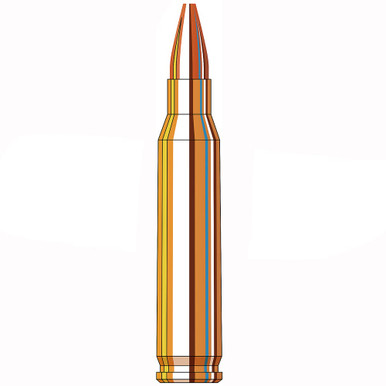
Hornady 5.56 NATO Deals
Prices may change. May contain affiliate links.
Speer Gold Dot 9mm Deals
Prices may change. May contain affiliate links.

Federal XM193 5.56 NATO Deals
Prices may change. May contain affiliate links.
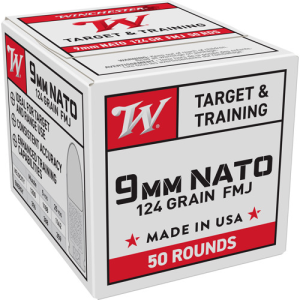
Winchester 9mm target Deals
Prices may change. May contain affiliate links.

The .308 / 7.62 NATO market shows a similar pattern. Military demand for 7.62 is lower in absolute volume than 5.56, but the production base is also smaller, so the proportional impact is comparable. Match-grade .308 from Federal, Hornady, and others has been relatively stable because those products use different components and production lines than bulk ball ammo. But the entry-level stuff, the 149-grain FMJ you'd buy by the case for range work, that's where the squeeze shows up.
Pistol calibers have been less affected so far. The military consumes 9mm, but the volume is a rounding error compared to rifle caliber consumption in an active conflict. Civilian 9mm supply has largely normalized from the 2020-2022 shortage, and prices have been relatively flat. That could change if the conflict in Iran escalates further or if a new wave of panic buying hits, but for now, 9mm is the calmest corner of the market.
What the defense buildup means long-term
The Department of Defense isn't just trying to replace what's been drawn down. The Acquisition Transformation Strategy laid out a vision for expanding the defense industrial base's capacity to produce munitions at wartime rates on a sustained basis. CSIS analysis on U.S. preparedness for a potential conflict with China has emphasized that current production rates are wholly inadequate for a peer conflict in the Pacific, where ammunition expenditure rates would dwarf anything seen in Ukraine or Iran.
What this means practically: the government is going to be buying more ammunition, more consistently, for the foreseeable future. New production facilities are being planned and funded. But those facilities take years to build and bring online. The 6.8mm plant the Army broke ground on is a perfect example: announced with fanfare, genuinely significant, and not producing a single round for years.
In the interim, existing capacity gets stretched. And because so much of that existing capacity is dual-use, serving both military contracts and civilian markets, the civilian side absorbs the impact disproportionately. Military contracts are fixed-price, high-volume, and guaranteed. Civilian retail is variable, lower-margin, and gets served last.

The FBI's recent selection of a new 5.56 duty round is a small but illustrative data point. Federal law enforcement agencies consume meaningful quantities of ammunition for training and duty use. When the FBI standardizes on a new round, that creates a procurement pipeline that competes with civilian retail for the same manufacturing capacity. Multiply that across every federal, state, and local law enforcement agency doing the same thing, and you've got another demand layer on top of the military drawdowns.
Five loads worth tracking right now
Rather than abstract price trends, here's what's happening with specific products that most shooters actually buy:
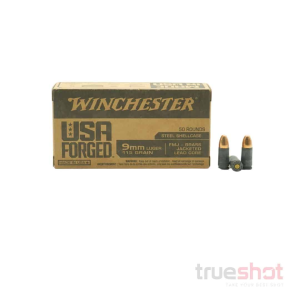
Winchester USA Forged 9mm 115-grain FMJ Deals
Prices may change. May contain affiliate links.
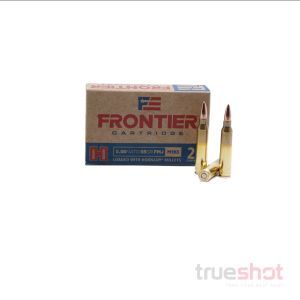
Hornady Frontier 5.56 55-grain FMJ Deals
Prices may change. May contain affiliate links.
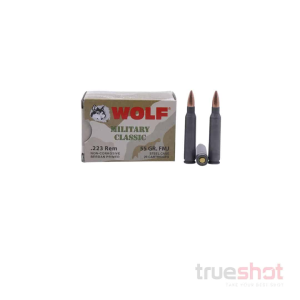
Wolf Gold .223 55-grain FMJ Deals
Prices may change. May contain affiliate links.
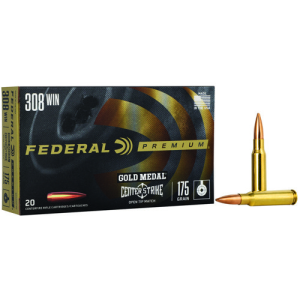
Federal Gold Medal Match .308 175-grain Sierra MatchKing Deals
Prices may change. May contain affiliate links.
Federal American Eagle 5.56 55-grain FMJ (XM193) has historically been the benchmark for affordable brass-cased 5.56. It's Lake City production sold under Federal's branding. Availability has been inconsistent through the first half of 2026, and per-round pricing has climbed noticeably. Velocity runs around 3,165 fps from a 20-inch barrel, and it's perfectly adequate for training and plinking. The issue isn't quality; it's finding it at a reasonable price.
Winchester USA Forged 9mm 115-grain FMJ is the steel-cased budget option in the pistol world. It's domestically produced, which insulates it somewhat from import disruptions. Pricing has held relatively steady compared to rifle calibers. It runs dirtier than brass-cased alternatives and some pistols don't love the steel cases, but for pure volume training on a budget, the cost math still works.
Hornady Frontier 5.56 55-grain FMJ is another Lake City-produced round sold under a commercial brand. Same supply dynamics as the Federal XM193, similar pricing pressure. Frontier had some quality control issues when it first launched a few years ago, but those appear to have been resolved. It's essentially the same product as XM193 with different headstamps and packaging.
Wolf Gold .223 55-grain FMJ is Taiwanese-produced brass-cased ammo that's been a staple of the budget rifle market. Because it's imported rather than produced at Lake City, it's somewhat insulated from the military allocation squeeze. Availability has actually been decent, and pricing has been more stable than domestic 5.56. The tradeoff is that it's .223 Remington pressure spec rather than 5.56 NATO, so velocities run slightly lower. For training purposes, that's irrelevant.

Federal Gold Medal Match .308 175-grain Sierra MatchKing remains available and relatively stable in pricing because it occupies a completely different production niche than bulk ball ammo. The components are specialized, the production runs are smaller, and the customer base is less price-sensitive. If you're shooting precision .308, you're probably not feeling much pain yet. The gap between match ammo and bulk ammo pricing has actually narrowed, which is an unusual dynamic.
Common mistakes during supply crunches
Buying at the first sign of a price increase without checking multiple retailers. Online ammo pricing varies enormously, and the spread between the cheapest and most expensive source for the same product can be 30% or more during volatile periods. Five minutes of comparison shopping saves real money over a case.
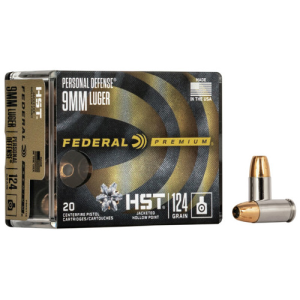
Federal HST defensive ammunition Deals
Prices may change. May contain affiliate links.
Hoarding calibers you don't shoot much. The impulse to buy everything when prices are rising is strong, but tying up cash in .40 S&W you shoot twice a year while .223 prices climb doesn't help your actual training budget. Buy deep in what you shoot most.
Ignoring steel case and imported alternatives out of habit. If your rifle runs steel-cased .223 reliably, and most modern ARs do, the per-round savings during a brass-case supply crunch can be substantial. The "steel case wears out barrels faster" argument is technically true but practically overstated for most shooters. The barrel wear difference only matters if you're shooting tens of thousands of rounds through the same barrel, and even then, the money saved on ammo more than covers a replacement barrel.

Panic-buying defensive ammo you already have enough of. If you've got 200 rounds of your carry load, you're fine. Defensive ammo uses different components and production lines than bulk training ammo, and the supply dynamics are different. The shortage is in volume ball ammo, not in 20-round boxes of HST.
Assuming prices will snap back quickly. The 2020-2022 ammo crunch took roughly three years to fully normalize in most calibers. The current situation has different drivers but similar structural constraints. Planning your ammo budget around current prices rather than hoping for a quick return to 2024 pricing is the more realistic approach.
What the chrono data tells us about substitution
When your usual training ammo gets expensive or unavailable, the temptation is to switch to whatever's cheapest. That's mostly fine, but there are a few things worth knowing.
Velocity differences between 5.56 NATO and .223 Remington loads matter for zero. If you've zeroed your AR with XM193 running around 3,150 fps and switch to Wolf Gold running around 3,020 fps, your point of impact at 100 yards shifts. It's not dramatic, maybe an inch or so, but if you're running a BDC reticle or holdover system calibrated to a specific load, the downstream effects at 300 and 400 yards are more significant. Re-confirm zero when you switch loads. This sounds obvious but people skip it constantly.
The velocity spread tells a different story with cheap ammo. Budget loads typically show wider extreme spreads on a chronograph, maybe 60 to 80 fps versus 20 to 30 fps for match ammo. For training inside 200 yards, this is noise. For precision work beyond 300, it starts to matter. Know what you're asking your ammo to do and buy accordingly.
Steel-cased ammo in gas-operated rifles sometimes shifts the cycling dynamics. Lower-powered steel-case loads can be undergassed in rifles tuned for hotter 5.56, leading to sluggish extraction or short-stroking in cold weather. If you're switching to steel case for cost reasons, run a few magazines to confirm reliability before buying a case.
How to think about your ammo budget right now
The cost math is straightforward even if the answer is uncomfortable. Military demand is elevated across two active conflicts. Domestic production capacity is constrained by facility limitations, labor issues, and input material competition. New capacity is years away from coming online. Import channels are helping but can't fully offset domestic shortfalls in rifle calibers.
None of this means ammo is going to become unavailable. The 2020 situation, where shelves were literally empty for months, was driven by a unique combination of pandemic disruption and unprecedented new gun buyer demand. The current situation is more about pricing pressure than absolute scarcity. Ammo is on the shelves. It just costs more, and the trajectory suggests continued upward pressure through at least the end of 2026.

The practical move is to set a per-round ceiling for your training ammo and buy when prices dip below it rather than waiting for a return to pre-drawdown pricing. Track what you're actually paying, not what you remember paying. Set up in-stock alerts at the retailers you trust. Consider importing ammo from non-Lake City sources like the Taiwanese, Israeli, or South Korean manufacturers whose supply chains aren't directly competing with U.S. military contracts. And run the numbers on your actual round count. If you shoot 200 rounds a month of 5.56, a 10-cent-per-round increase costs you $240 a year. That's real money, but it's not catastrophic. Knowing your actual exposure to price changes is more useful than vague anxiety about "ammo prices going up."
The situation is real, it's data-driven, and it's not going away soon. But it's manageable if you approach it like a cost problem instead of a crisis.