
You've got a crossbow and a rifle sitting in the same safe, and you're buying duplicate gear for both. Separate cases, separate optics tools, separate maintenance kits. That's a waste of money and closet space, and most of it is unnecessary. A surprising amount of crossbow gear transfers directly to firearms use, and some of it is genuinely better than the firearm-specific version you'd buy otherwise.

This piece covers three crossbow accessory families that pull double duty on guns: broadhead tools and their firearm-adjacent applications, protective cases that fit both platforms, and optics that mount on Picatinny rails regardless of what's launching the projectile. The crossover isn't theoretical. These are real products, real mounting standards, and real use cases where buying once makes more sense than buying twice.
The catch is knowing which crossover works and which one will leave you with a scope that can't handle recoil or a case with foam cutouts that fit nothing. That distinction matters more than people think.
Broadhead tools and the firearm toolkit overlap
Broadhead wrenches seem like the most niche tool imaginable. They're designed to torque fixed-blade and mechanical broadheads onto arrow shafts without slicing your fingers open. But look at what they actually are: small, multi-groove wrenches with hardened steel jaws, built to grip oddly shaped metal objects and apply controlled torque. That description covers about half the small tasks in a gun maintenance kit.
The Allen Company Universal Broadhead Wrench is a good example. It handles 3-blade, 4-blade, and 5-blade heads through a series of graduated grooves cut into the jaw. Those same grooves happen to grip AR-15 flash hider flats, A2 front sight adjustment tools, and various small hex-profile components. Nobody designed it for that purpose, but geometry doesn't care about marketing categories.

More broadly, the broadhead tool category includes sharpening systems, alignment checkers (spin testers), and small torque tools. The sharpening systems are the most directly transferable. A good broadhead sharpening kit uses fine-grit diamond or ceramic stones at controlled angles, and that's exactly what you need for touching up a knife blade, deburring a muzzle crown, or cleaning up a dinged-up firing pin channel. The stones are small enough to fit in a range bag, which is more than you can say for most bench-mounted sharpening rigs.
What actually transfers and what doesn't
The spin testers don't transfer. Those are arrow-specific tools that check concentricity, and unless you're handloading and checking bullet runout (in which case you already own a proper concentricity gauge), they stay in the archery drawer.
Broadhead cases, though, are worth a second look. These are small, rigid, foam-lined boxes designed to hold razor-sharp objects without letting them contact each other or anything else. Repurpose one for choke tubes, bore sighting tools, or small optics accessories. The foam inserts in most broadhead cases are dense closed-cell material that grips metal objects well and won't shed fibers into your gun parts. That's actually better than the cheap open-cell foam in most generic small parts boxes.
The torque wrenches sold for broadhead installation typically operate in the 75 to 125 inch-ounce range. That's low for most firearm applications, where scope ring torque specs run 15 to 25 inch-pounds (180 to 300 inch-ounces) and action screws need even more. So broadhead torque tools won't replace a proper FAT wrench or Wheeler setup. But they're useful for very light-torque tasks: tightening set screws on adjustable gas blocks, snugging small rail section screws, or anything else where you need just barely more than finger-tight.
Fit and feel
Broadhead tools are designed for cold hands and rushed conditions. Bowhunters in tree stands aren't working in climate-controlled workshops. That translates to knurled grips, positive-click mechanisms, and compact footprints that fit inside a jacket pocket. Pick up an Allen broadhead wrench and compare it to a generic gunsmithing bit driver. The broadhead tool feels like it was designed by someone who expected to drop it in the dark. Most budget gun tools feel like they were designed by someone who expected you to never actually use them.
Cases: the biggest crossover category
Here's where the real money savings live. A quality hard case costs $100 to $300, and there's no mechanical reason you need separate cases for a crossbow and a rifle. The external dimensions of a cased crossbow and a cased rifle are remarkably similar. A scoped crossbow with the stirrup removed runs about 34 to 38 inches long and 12 to 18 inches wide. A 16-inch AR with the stock collapsed fits in roughly the same footprint. A bolt-action hunting rifle at 42 to 46 inches needs a longer case, but many crossbow cases are built to that length anyway because manufacturers assume you're storing the crossbow cocked with a bolt loaded.

Flambeau crossbow cases Deals
Prices may change. May contain affiliate links.

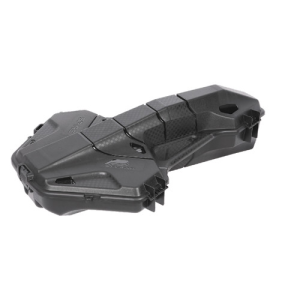
The case industry figured this out years ago. Plano makes crossbow-specific cases like the Cross Bow Max and the Spire series, but their internal dimensions and latch systems are identical to their rifle case lineup. Flambeau's crossbow cases use the same shell molds as several of their long gun cases. You're paying for different foam inserts and different packaging art, not different protection.

Foam is the real product
The case itself is just a plastic shell. What matters is the foam, and this is where crossbow shooters actually have an advantage. Crossbow cases almost universally ship with pluck-foam or pre-scored foam inserts because crossbow shapes vary wildly between manufacturers. That same pluck foam accommodates a rifle, a pistol, two pistols, or any other configuration you want. Rifle-specific cases often ship with egg-crate foam or convoluted foam that doesn't grip anything securely and lets your gun slide around during transport.
If the stock foam doesn't work for your specific layout, MyCaseBuilder and similar services will cut custom closed-cell foam inserts for Pelican, SKB, Plano, and Flambeau shells. You upload a photo or trace your gear, and they CNC-cut the insert to fit. One case, two foam sets: one configured for the crossbow, one for firearms. Swap them in sixty seconds. Total cost is still less than buying two separate quality cases.
What to look for in a dual-purpose case
Interior length is the first constraint. Measure your longest item (probably the rifle) and add two inches. Most crossbow cases in the 38 to 44 inch range cover both platforms comfortably. Depth matters more than people expect. A scoped rifle needs 5 to 6 inches of internal depth to clear the objective bell and turret caps. Crossbow cases are typically 6 to 8 inches deep because they need to clear the limb assembly, so they actually have more vertical room than many rifle cases.
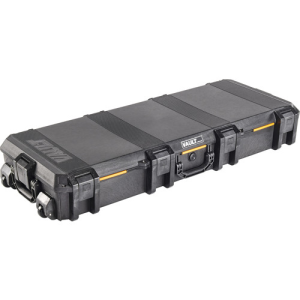
Pelican Vault V730 Deals
Prices may change. May contain affiliate links.
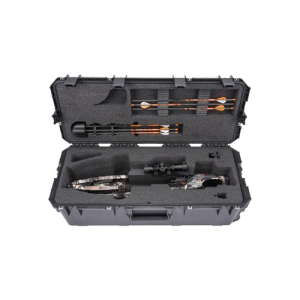
SKB iSeries crossbow cases Deals
Prices may change. May contain affiliate links.

Latch quality separates a case you'll trust from one you won't. Look for cases with dual-throw latches or over-center latches rather than simple snap closures. Pressure-equalization valves matter if you're flying. Both Pelican and SKB include them on their mid-tier and higher cases, and both companies make cases marketed to archers that are dimensionally identical to their firearm cases. The Pelican Vault V730 is sold as a tactical rifle case but accommodates most crossbows with room to spare. The SKB iSeries crossbow cases share the same waterproof, dustproof shell as the iSeries rifle cases.
Wheels are nice if you're hauling through airports but add failure points. For truck-to-stand or truck-to-range use, a case without wheels is lighter and more rigid. Your call.
The Walmart trick
There's a well-known move among crossbow shooters: buying a Flambeau pistol case from Walmart for around $25 and using it for compact crossbow storage or for a crossbow's accessory kit. The same cases work just as well for actual pistols, obviously, but the point is that crossbow forums figured out the value play on Flambeau cases before most gun forums did. A Flambeau Outdoors Safe Shot pistol case is airline-lockable, padlock-compatible, and built from the same high-density polymer as cases costing three times as much. The foam is basic but functional.
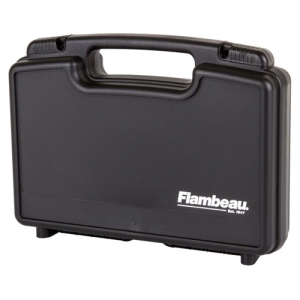
Flambeau Outdoors Safe Shot pistol case Deals
Prices may change. May contain affiliate links.
The lesson: shop the crossbow and archery case aisle, not just the firearm case aisle. Same manufacturers, same materials, sometimes lower prices because the archery market is more price-sensitive.
Optics: where the crossover gets interesting and complicated
This is the category where people get excited and then get burned. Crossbow scopes and rifle scopes look similar, mount similarly, and sometimes even share the same glass. But the internal engineering differs in ways that matter, and understanding those differences is the gap between a useful crossover optic and a $300 mistake.
The mounting standard isn't the problem
Most modern crossbow scopes use standard 1-inch or 30mm tubes and mount on Picatinny or Weaver rails. That's the same rail spec as your AR, your bolt gun, and your shotgun. Physically, a crossbow scope will mount on a rifle and a rifle scope will mount on a crossbow. Ring diameter, rail spacing, torque specs, all the same. So the mechanical crossover is real and straightforward.

The problems start inside the scope.
Reticle calibration: the actual issue
Crossbow scopes are calibrated for projectiles traveling 300 to 500 feet per second with a dramatically arcing trajectory. A bolt from a 400 fps crossbow drops roughly 50 to 60 inches at 60 yards. A .223 bullet drops about 5 inches at the same distance. That's a ten-to-one difference in drop, and the reticle subtensions are designed accordingly.
A crossbow scope with speed-calibrated reticle marks (the horizontal lines stacked below the center crosshair) will have those marks spaced for bolt drop, not bullet drop. Put that scope on a rifle and those marks are useless for holdover. The center crosshair still works fine for zeroing and shooting at one distance, but you've lost the entire BDC (bullet drop compensation) system that makes a multi-reticle scope worth buying.
Going the other direction is worse. Put a rifle BDC scope on a crossbow and the holdover marks will dramatically under-compensate for bolt drop. You'll shoot over the target at every distance beyond your zero. That's not just inaccurate, it's an ethical problem if you're hunting.

Scopes that genuinely cross over
The scopes that transfer between platforms are the ones with either a simple duplex reticle (no BDC marks) or a mil-dot / MOA hash reticle where you calculate your own holdovers. A mil-dot reticle doesn't care what it's mounted on. One mil is one mil whether you're shooting bolts or bullets. You just need a different dope card for each platform.
Variable-power scopes in the 2-7x or 3-9x range are the sweet spot for dual use. Crossbow shooting rarely needs more than 5x or 6x, and most hunting rifle shots inside 300 yards are comfortable at 9x or less. A scope in this magnification range with a standard mil or MOA reticle works on both platforms without compromise.
The parallax setting is worth checking. Many crossbow scopes are parallax-fixed at 50 yards, which is the most common crossbow engagement distance. Rifle scopes are typically fixed at 100 or 150 yards, or they have adjustable parallax. A 50-yard fixed parallax scope on a rifle will show parallax error at 100+ yards, meaning your point of impact shifts when you move your head slightly behind the scope. It's not catastrophic at moderate magnification, but it's a real accuracy penalty at 7x and above. If you're buying one scope for both platforms, get one with adjustable parallax or accept the 50-yard fixed setting and keep your rifle shots inside 150 yards where the error stays small.
The rangefinding optic question
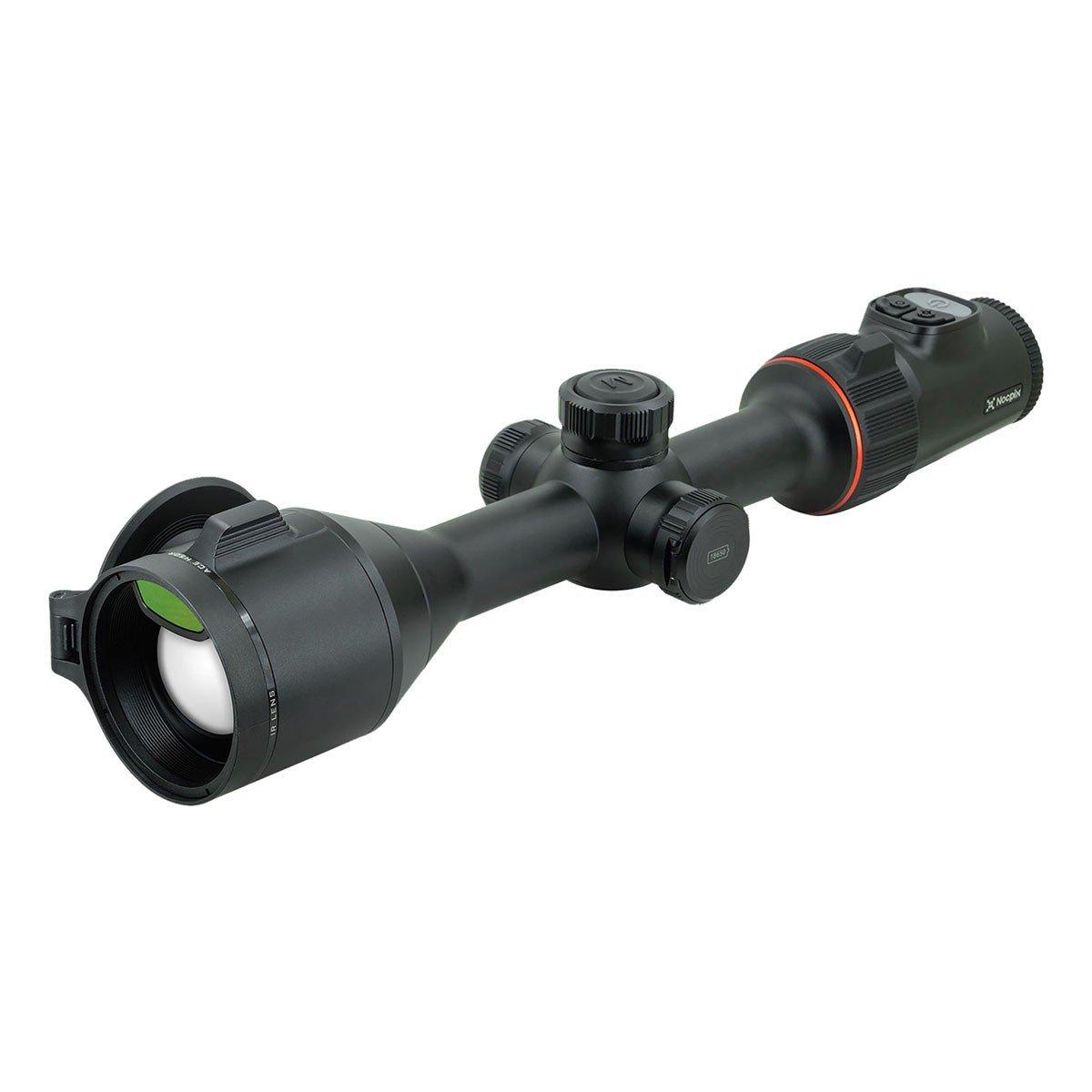
The Burris Oracle X and Garmin Xero A1i Pro represent the bleeding edge of crossbow optics: rangefinding scopes that measure distance, calculate drop, and display an illuminated aim point in real time. Crossbow hunters debate these two constantly, and the technology is genuinely impressive. But neither transfers to firearms in any practical way. The ballistic engines are programmed for arrow and bolt trajectories, the aim point calculations assume projectile speeds under 500 fps, and the ranging algorithms are optimized for the distances and target sizes common in archery.
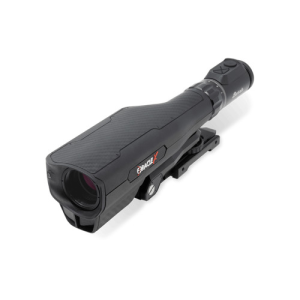
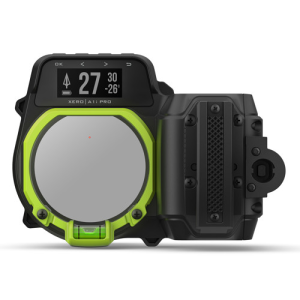
Garmin Xero A1i Pro Deals
Prices may change. May contain affiliate links.
Could someone theoretically reprogram one for a firearm? Maybe, if the manufacturer opened the firmware. In practice, these stay on the crossbow. The technology will probably migrate to rifle scopes eventually (Sig's BDX system is a rough equivalent), but the current crossbow-specific units aren't dual-purpose.

Five named optics worth considering
The Vortex Crossfire II 2-7x32 Scout Scope uses a standard duplex reticle, 1-inch tube, and has a long eye relief that works on both crossbows and scout-style rifle setups. The eye relief is the hidden advantage here: crossbow scopes tend toward longer eye relief because crossbow stocks position the shooter's eye farther from the optic. That same long eye relief makes them natural fits for forward-mounted rifle applications.
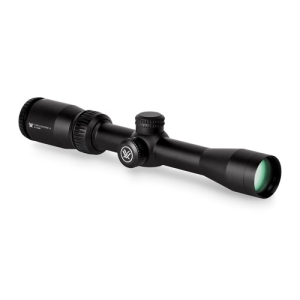
Vortex Crossfire II 2-7x32 Scout Scope Deals
Prices may change. May contain affiliate links.
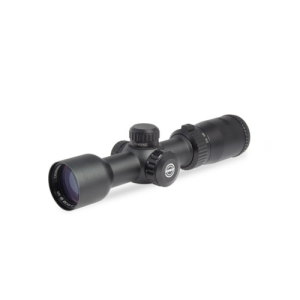
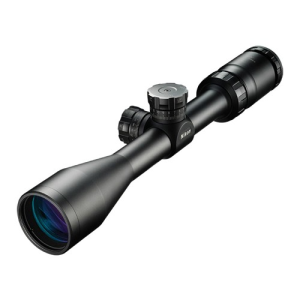
Nikon P-Tactical 3-9x40 Deals
Prices may change. May contain affiliate links.
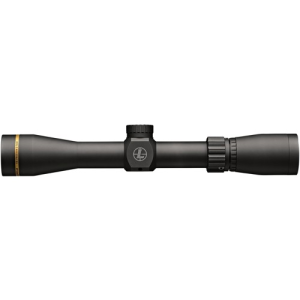
Leupold VX-Freedom 2-7x33 Deals
Prices may change. May contain affiliate links.
The Hawke XB30 Pro SR is a dedicated crossbow scope, but the SR (speed ring) reticle version lets you calibrate the holdover marks to your specific bolt speed. On a rifle, ignore the SR system and use the center crosshair with a mil-dot overlay. The glass quality is solid for the price and the turrets have positive clicks.
The Nikon P-Tactical 3-9x40 (while Nikon has exited the riflescope market, these are still widely available on the secondary market) has a Matte BDC reticle that was originally designed for .223/5.56 but works on crossbows at shorter ranges if you recalculate the subtensions. Dual use requires accepting that the BDC marks are only accurate on one platform.
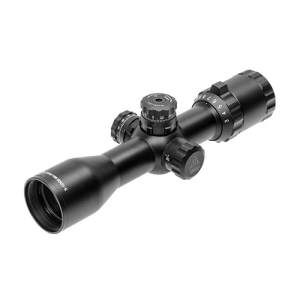
The UTG BugBuster 3-12x32 is a compact scope with a mil-dot reticle, adjustable parallax down to 3 yards, and a 1-inch tube. The adjustable parallax makes it genuinely useful on both platforms. It won't win any awards for glass clarity against scopes costing four times as much, but the feature set is built for crossover use even if UTG doesn't market it that way.
The Leupold VX-Freedom 2-7x33 with a standard duplex reticle is a simple, well-built scope that doesn't try to be clever. No BDC, no ranging system, just clean glass and reliable tracking. Mount it on a crossbow this fall, move it to a rimfire or a deer rifle next season. The Leupold warranty follows the scope, not the original owner, which matters if you're buying used.
Common mistakes when crossing over
Buying a speed-specific crossbow scope and expecting the BDC to work on a rifle. It won't. The math doesn't translate. If the reticle was designed for a 380 fps crossbow, those holdover marks are meaningless on a firearm. Stick with generic reticle patterns for dual-use optics.
Assuming all Picatinny rails are the same height. Crossbow rails are often mounted higher relative to the bore axis than rifle rails, because the crossbow's rail sits on top of a wide receiver and the bolt passes below. This means a scope zeroed on a crossbow at a specific ring height may need different rings when moved to a rifle to achieve the same cheek weld and sight picture. Bring your rings, but be prepared to swap them.

Ignoring the recoil direction difference. Crossbows produce forward recoil (the string pulls the bow forward when it releases), while firearms produce rearward recoil. Scope internals are stressed in opposite directions on each platform. Most quality scopes handle bidirectional stress fine, but cheap scopes with weak erector tube springs can lose zero when switched between platforms. If your zero shifts after swapping, the scope's internals aren't up to the task.
Using a rifle case with convoluted foam for a crossbow and wondering why the limbs get dinged. Crossbow limbs, especially on compound and reverse-draw models, have thin tips and cam systems that need positive foam contact, not egg-crate ridges. Use pluck foam or custom-cut foam, always.
Forgetting to re-torque rings after a platform swap. Every time you move a scope between guns or crossbows, the rings need to be properly torqued to spec. Not hand-tight, not gorilla-tight. Use an inch-pound torque wrench, follow the ring manufacturer's spec (usually 15 to 18 inch-pounds for most rings), and apply a thin line of rosin or a non-permanent thread locker if the rings don't have a built-in anti-slip mechanism.
Range notes: what you'll actually notice
Swapping a scope between a crossbow and a rifle takes about ten minutes if you're using a quick-detach mount. The QD lever systems from American Defense, Bobro, and LaRue return to zero reliably enough that you can swap back and forth between range sessions without burning five rounds re-zeroing every time. That's the real enabler for dual-use optics. Without a QD mount, you're looking at a full re-zero every swap, which eats ammo and patience.
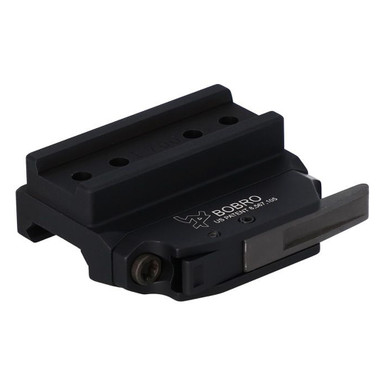
Bobro QD mount Deals
Prices may change. May contain affiliate links.
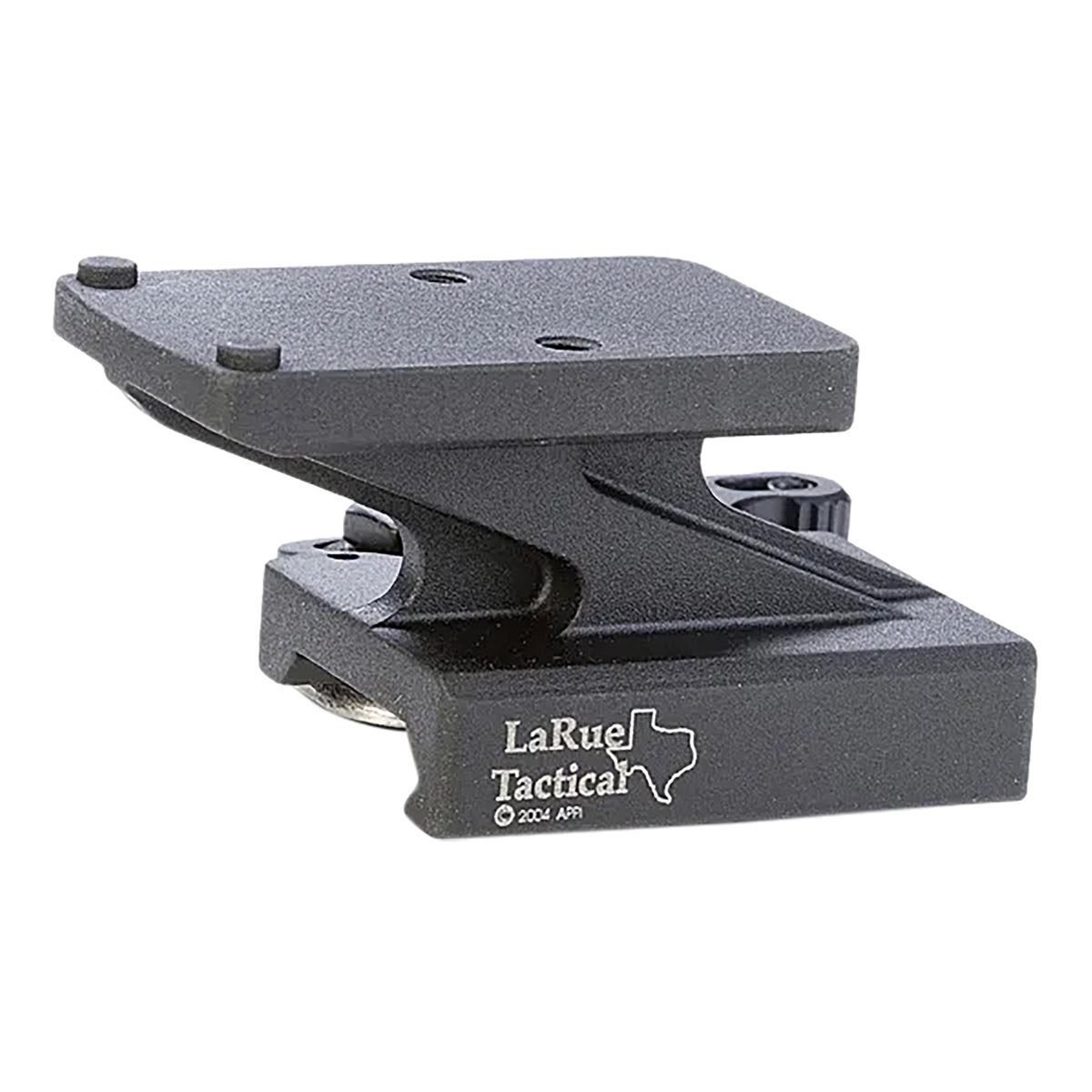
LaRue QD mount Deals
Prices may change. May contain affiliate links.
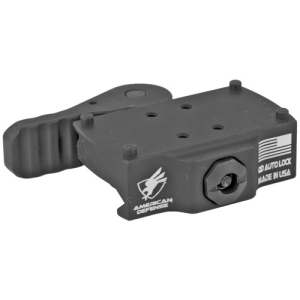
American Defense QD mount Deals
Prices may change. May contain affiliate links.
The eye box on a crossbow-optimized scope feels generous on a rifle. You'll notice more forgiveness in head position, which is actually pleasant on a hunting rifle where you're not always getting a perfect cheek weld from a bench. Going the other direction, a rifle scope on a crossbow can feel tight, especially at higher magnifications, because your eye-to-scope distance is often longer on a crossbow stock.
Weight matters more on a crossbow than on a rifle. A 20-ounce scope is unremarkable on a bolt-action rifle but noticeably front-heavy on a crossbow. If you're buying one scope for both, lean toward lighter options. Every ounce on a crossbow scope is an ounce you're holding at arm's length during a shot.

Building a shared kit
The practical move is to build one accessory kit that serves both platforms. Start with a hard case sized for your longest gun, fitted with pluck foam you can configure for either platform. Add a QD scope mount with a versatile 2-7x or 3-9x optic wearing a mil-dot or simple duplex reticle. Throw in a broadhead wrench for small-parts work, a broadhead case repurposed for choke tubes or small accessories, and a compact diamond sharpening stone from your archery kit.
That shared kit eliminates three or four redundant purchases and simplifies what you're hauling to the range or the stand. The scope alone, if you buy a good one with a QD mount, saves you $150 to $400 compared to owning separate optics for each platform.
The one thing you can't share is ammunition, obviously. But everything that holds it, protects it, or helps you aim it has more crossover potential than the industry wants you to believe. Manufacturers sell crossbow accessories to crossbow shooters and gun accessories to gun shooters because segmented marketing moves more product. The Picatinny rail doesn't know what it's bolted to, and neither does a Pelican case.
Next time you're pricing out gear for a new crossbow or a new rifle, check what you already own for the other platform. Odds are good that half your shopping list is already sitting in your gear closet, wearing the wrong label.