
Your groups at 100 yards look great. Maybe sub-MOA, maybe even half-MOA on a good day. Then you push to 800, and the horizontal isn't bad, but the vertical opens up to 2 MOA or worse. Rounds are walking up and down on the steel, and you're not sure if it's the load, your body, or something mechanical. That's a different diagnostic problem than "my rifle isn't accurate," and the fix depends entirely on correctly identifying which variable is actually moving.
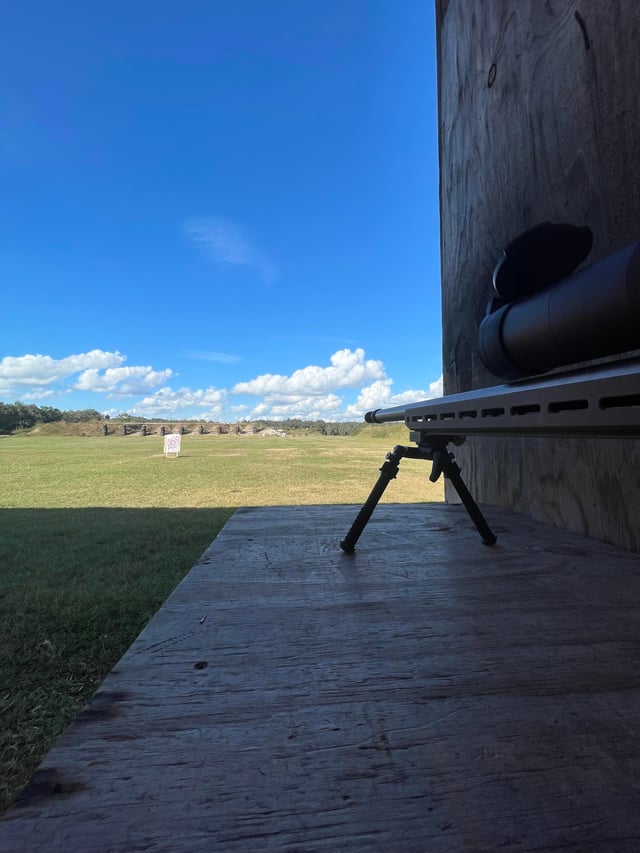
Vertical stringing beyond 800 yards is one of the most common frustrations in precision shooting, and it's also one of the most misdiagnosed. Shooters blame the barrel, buy a new stock, or start chasing powder charges when the real issue might be a 15 fps extreme spread that's invisible at 300 but opens up to 8 inches at 1,000. Or it might be inconsistent shoulder pressure behind a rear bag. Or a scope tracking issue that only shows up after 20 MOA of elevation adjustment. The point is, vertical at distance has multiple root causes, and they compound. Fixing the wrong one wastes time and money.
This piece breaks the problem into its three major categories: ammunition consistency, shooter technique, and equipment; and gives you a systematic way to figure out which one is actually hurting you. The goal is to narrow the field so you're solving the right problem.
The physics of vertical at distance
Before diagnosing anything, you need to understand why vertical dispersion grows disproportionately at longer ranges. At 100 yards, a 30 fps velocity spread might produce less than 0.1 MOA of vertical. The bullet hasn't had time to separate from its siblings ballistically. But bullets are decelerating the entire flight, and small velocity differences become large time-of-flight differences over 800, 900, 1,000 yards. Those time-of-flight differences translate directly into elevation spread on target.
Here's a concrete example. A 6.5 Creedmoor pushing a 140-grain bullet at 2,700 fps with a G7 BC of around .280 will drop roughly 12.5 MRAD at 1,000 yards. If your extreme spread (ES) is 30 fps, meaning the fastest round is 2,715 fps and the slowest is 2,685 fps, the difference in drop between those two rounds at 1,000 yards is approximately 0.3 MRAD, or about 11 inches. That's 1.1 MOA of vertical dispersion from velocity variation alone, before you've introduced any shooter error, wind-driven vertical, or mechanical inconsistency. At 800 yards, that same 30 fps ES produces roughly 7 inches of vertical. Still enough to make your groups look terrible even if your wind calls are perfect.
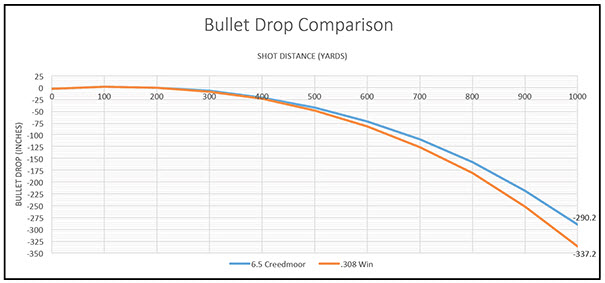
The math is unforgiving. Gravity acts on the bullet for the entire flight, and the slower bullet spends more time in the air. That extra time under gravitational acceleration stacks up fast. This is why ES and standard deviation (SD) matter so much more as distance increases, and why a load that looks fine at 300 can fall apart at 800.
Wind also contributes vertical dispersion, and most shooters underestimate this. A pure crosswind pushes the bullet laterally, but quartering winds and headwinds/tailwinds change the effective drag on the bullet, which changes the drop. A 10 mph headwind on a 6.5 Creedmoor at 1,000 yards can add roughly 0.5 MRAD of additional drop compared to a no-wind zero. If the wind shifts between shots, say from a 5 mph headwind to a 5 mph tailwind, that's a full MRAD of vertical movement that has nothing to do with your ammo or your rifle. Most shooters watch for horizontal wind and ignore the vertical component entirely.
Start with the ammo: ES and SD are the first suspects
If you're seeing vertical stringing at distance, the ammunition is the first place to look because it's the easiest variable to measure objectively. You need a chronograph. Not optional. A LabRadar, MagnetoSpeed, or similar device gives you the data you need to either confirm or eliminate ammo consistency as the problem.
MagnetoSpeed Chronograph Deals
Prices may change. May contain affiliate links.
The numbers that matter are extreme spread and standard deviation. ES is the difference between the fastest and slowest rounds in a string. SD is the statistical measure of how much each round varies from the mean velocity. For serious long-range work, you want single-digit SD, under 10 fps, and an ES under 25 fps across a 20-round string. Under 15 fps ES is where things start to get genuinely tight. If your SD is running 15-20 fps and your ES is 40+, that's your primary vertical driver at 800 yards and beyond. Fix the ammo before you chase anything else.
Factory ammo reality
Most factory match ammunition runs an SD somewhere between 12 and 20 fps, with some premium loads doing better and some doing worse. Federal Gold Medal Match in 6.5 Creedmoor typically runs in the 10-15 fps SD range, which is respectable. Hornady ELD Match tends to be similar but with more lot-to-lot variation. Standard hunting ammunition can run 25-30 fps SD or worse, which is perfectly acceptable for 300-yard hunting but will absolutely produce visible vertical at 800.
If you're shooting factory ammo and seeing vertical at distance, chrono a 20-round sample. If the SD is above 15 fps, you've likely found a significant contributor. Switching to a different lot or brand might help, but handloading is the real solution for consistent long-range performance.
Handloading for low SD
The variables that most affect velocity consistency, roughly in order of impact: charge weight uniformity, powder temperature sensitivity, primer consistency, case capacity uniformity, and seating depth consistency.
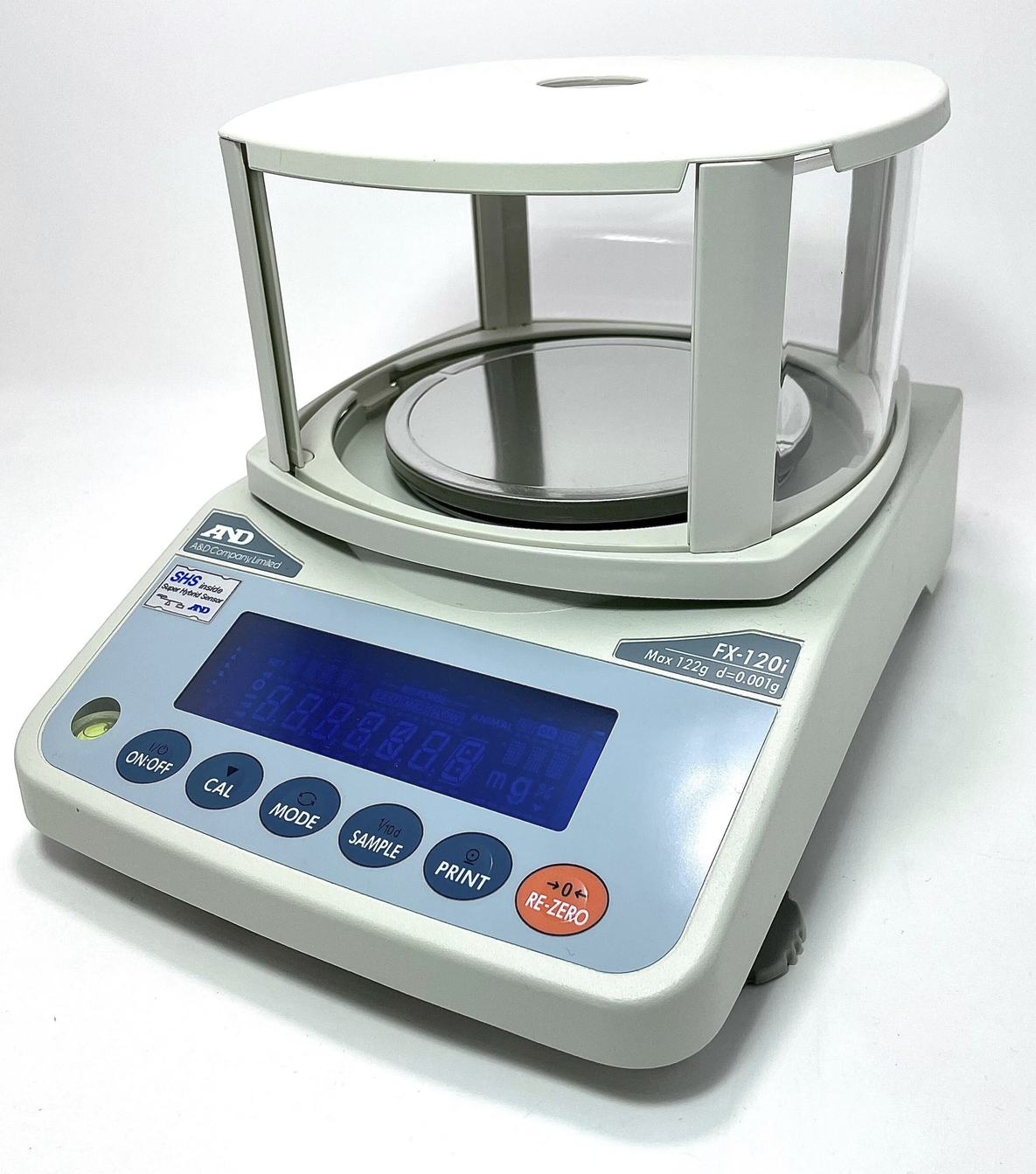
Charge weight is the biggest lever. A quality powder measure that throws to within 0.1 grain is the minimum. Weighing every charge on a quality scale, something like an A&D FX-120i or a good balance beam, gets you to 0.02-grain consistency, which is where single-digit SDs live. Temperature-stable powders like Hodgdon's Extreme series (H4350, Varget, H4831SC) or the Vihtavuori N500 line maintain velocity across a wide temperature range. A powder with high temperature sensitivity can shift your mean velocity 1-2 fps per degree Fahrenheit, meaning a 30-degree temperature swing between your load development session and your match day can shift your zero by half a MRAD at 1,000 yards, and it can increase your ES if the barrel heats up and the powder in the chamber warms between shots.
Case prep matters more than most handloaders think. Neck tension uniformity, achieved through consistent neck turning or at minimum consistent sizing, directly affects the pressure required to release the bullet, which affects initial velocity. Weight-sorting brass by case capacity (measured by water weight) eliminates another variable. A 2-grain spread in case water capacity can produce a 15 fps velocity spread all by itself.
Primers are the most overlooked component. Lot-to-lot variation in primers can shift SD by 5-8 fps. Once you find a lot that works, buy a case of them.
Range notes: the chrono session
Run 20 rounds over the chronograph in the same conditions you'd shoot a match or a long-range session. Don't cherry-pick a 5-round string. Twenty rounds gives you a statistically meaningful SD. Record ambient temperature, barrel temperature between shots (if possible), and firing cadence. If your SD is under 10 and your ES is under 20, the ammo probably isn't your primary vertical driver. Move on to technique and equipment.
One thing to watch for: if your velocity trends upward or downward across the string, that's a barrel temperature issue, not a load consistency issue. A barrel heating from 60°F to 120°F over a 20-round string can push velocity up 20-30 fps from first round to last. That's not the same as random velocity variation, and it won't show up the same way on target. It looks like a steady walk rather than random vertical scatter.
Technique: the shooter behind the rifle
Assuming your ammo checks out, SD under 10, ES under 20, and you're still seeing vertical at 800+, the next suspect is you. This isn't an insult. Technique-induced vertical is extremely common and extremely fixable, but only if you're honest about diagnosing it.
Shoulder pressure and stock contact
The single biggest technique-driven cause of vertical stringing is inconsistent pressure on the rifle. Specifically, inconsistent cheek weld, inconsistent shoulder pocket pressure, and inconsistent grip on the pistol grip. The rifle needs to recoil the same way every shot. If your body is applying different forces to the stock between shots, the barrel will be at a slightly different angle when the bullet exits, and that translates to vertical on target.
This is most obvious in positional stages at PRS matches, where you're shooting off barricades, tripods, or improvised positions. But it happens from prone too, especially if your natural point of aim (NPA) drifts between shots and you're muscling the rifle back onto target instead of adjusting your body position.
The fix is boring and effective: build your position, close your eyes, open them, and see where the reticle settles. That's your NPA. If it's not on target, move your body, not the rifle. Every shot should break with the rifle settling naturally onto the target with minimal muscular input. If you're pulling or pushing the rifle onto target, you're introducing vertical.

Rear bag technique
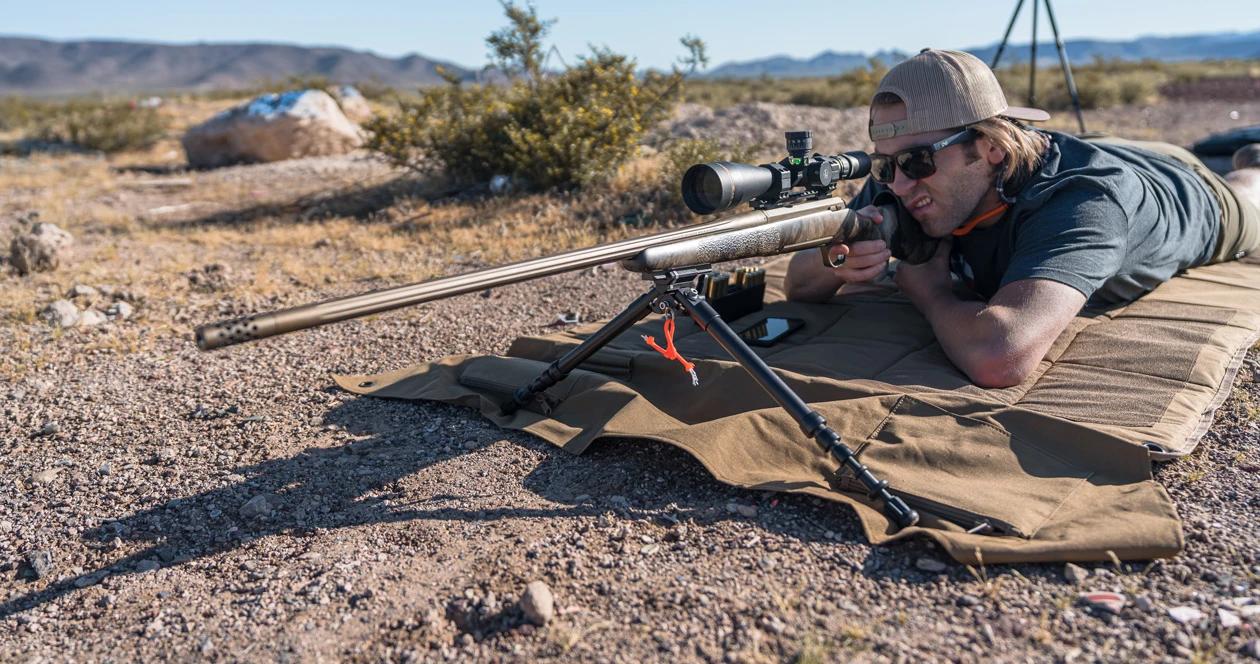
The rear bag is where most vertical lives in a prone position. Squeezing the rear bag to adjust elevation is a standard technique, but inconsistent squeeze pressure between shots shifts the point of impact vertically. If you squeeze the bag hard for one shot and let it relax slightly for the next, you might see 0.3-0.5 MOA of vertical at 100 yards. At 800 yards, that's 2.4-4 inches, enough to notice.
The solution is to set the rear bag to the correct height before you start shooting and then maintain consistent pressure. Some shooters prefer to use the rear bag only for fine adjustment and rely on bipod leg length for coarse elevation. Others use a squeeze technique but train to apply identical pressure every time. Either works, but you have to pick one and be consistent.
Trigger press
A trigger pull that disturbs the rifle will show up as vertical, horizontal, or both, depending on the direction of the disturbance. But vertical-specific trigger issues usually come from pulling the trigger with the pad of the finger at an angle that pulls the rifle slightly into the shoulder (pushing shots high) or allows it to slip slightly forward (dropping shots low). The trigger should break straight to the rear with no lateral or vertical movement of the rifle.
Dry fire at home with a level on the scope. Watch the bubble when the trigger breaks. If the bubble moves, your trigger press is disturbing the rifle. This is a free diagnostic that takes 10 minutes and tells you a lot.
Follow-through and recoil management
Flinching or anticipating recoil pushes shots low. Lifting your head off the stock to spot impacts pushes shots high. Both are vertical errors. If you can't call your shots, meaning you can't tell where the reticle was on the target at the moment the trigger broke, you're probably moving before the bullet leaves the barrel. The bullet is in the barrel for about 1-1.5 milliseconds, and the rifle starts moving during that time. Your body's input during that window matters.
Equipment: the mechanical causes
You've chronographed your ammo, and it's tight. You've filmed yourself shooting and your position is consistent. You're still seeing vertical. Now it's time to look at the hardware.
Scope tracking and mounting
A scope that doesn't track consistently will produce vertical errors, and this is more common than most shooters realize. The test is simple: start at a 100-yard zero, dial 20 MOA of elevation (or whatever gets you to your 800-yard come-up), fire a group, then dial back to zero and fire another group. If the second zero group doesn't match the first, your scope isn't returning to zero, and every time you dial for a different distance, you're introducing uncertainty.
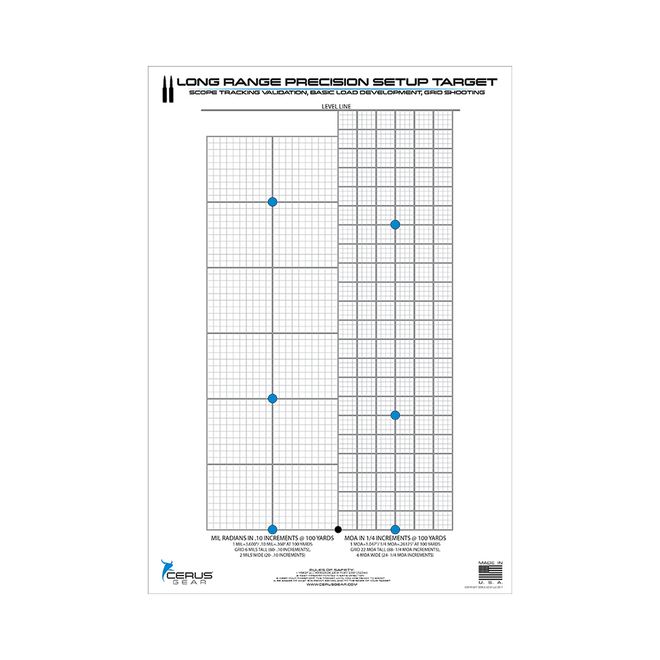
A tall-target test is even more diagnostic. Put a target at 100 yards, fire at a known aim point, then dial exactly 10 MOA up and fire again. The second group should be exactly 10.47 inches higher (10 MOA × 1.047 inches per MOA at 100 yards). If it's 9.5 inches or 11 inches, your scope is tracking inaccurately, and that error compounds at distance.
Scope mount and ring torque matters too. If the rings are too tight, they can distort the scope tube and cause erratic tracking. If they're too loose, the scope can shift under recoil. Use a torque wrench and follow the manufacturer's specs. Lapping rings is worth the effort if you're running a precision setup.
Common mistakes shooters make with vertical stringing
There are a few patterns that show up repeatedly in forum posts and match conversations. These are the errors that eat the most time because they send you chasing the wrong variable.
First, blaming the barrel before checking the ammo. A barrel that shoots 0.5 MOA at 100 yards is mechanically capable of shooting 0.5 MOA at 800 yards. If it's opening up to 2 MOA vertical at distance, the barrel almost certainly isn't the problem. Barrels don't selectively lose accuracy in the vertical plane at longer ranges. Velocity variation does.
Second, ignoring mirage. Mirage, the heat shimmer visible through the scope, bends light and shifts the apparent position of the target vertically. If you're aiming at a target through heavy mirage, the target appears to move up and down. Experienced shooters read mirage to estimate wind, but they also know to aim at the base of the target or use a consistent reference point that minimizes mirage-induced vertical aim error.
Third, not accounting for the Coriolis effect and spin drift at extreme distance. These are real ballistic phenomena, but they're predominantly horizontal corrections. If you're blaming Coriolis for vertical stringing at 800 yards, you're looking in the wrong place. The vertical component of Coriolis exists but is negligible at typical precision rifle distances.
Fourth, changing too many variables at once. You notice vertical stringing, so you switch to a new powder, change your seating depth, buy new rings, and start using a different rear bag all in the same range session. Now you have no idea what actually helped. Change one variable at a time. Log everything. The log tells the story.
Fifth, not shooting enough rounds to distinguish signal from noise. A 3-round group at 800 yards tells you almost nothing. You need 10-20 rounds to establish whether vertical dispersion is real and repeatable. Three rounds can cluster by luck. Twenty rounds reveal the truth.
Barrel harmonics and load tuning
Barrels vibrate when fired. The muzzle describes a small circular or elliptical path, and the bullet exits at whatever point in that vibration cycle it happens to leave. A well-tuned load exits the barrel when the muzzle is at or near a node, a point of minimal movement, which means small velocity variations don't change the exit angle much. A poorly tuned load exits on a steep part of the vibration curve, where small velocity differences cause the bullet to leave at noticeably different angles.
This is why OCW (Optimal Charge Weight) and ladder testing work. You're looking for a charge weight range where velocity changes don't move the point of impact much, a node. If you're handloading and your SD is good but you're still seeing vertical, you might be on a bad part of the harmonic curve. Adjusting charge weight by 0.3-0.5 grains in either direction can sometimes tighten vertical dramatically without changing SD at all.
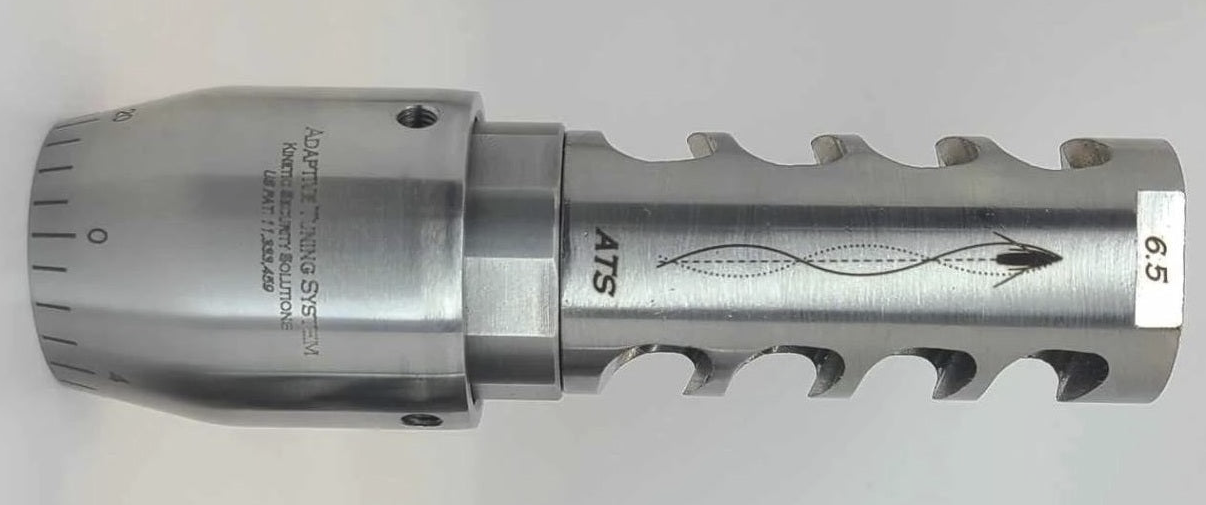
Barrel tuners, adjustable weights on the muzzle, accomplish the same thing mechanically. They're common in F-class and benchrest and are starting to appear in PRS. They let you tune the node to your load rather than tuning your load to the node.
Bedding and action screws
A stock that doesn't consistently support the action will allow the action to shift under recoil, changing the barrel's relationship to the stock and producing vertical (or horizontal) dispersion. This is more common with wood stocks and older-style bedding than with modern chassis systems, but it still happens. Check your action screw torque. If you're running a bedded stock, inspect the bedding for cracks or high spots. A chassis system with a V-block or integral bedding surface largely eliminates this variable, which is one reason they've become standard in precision shooting.
Free-float the barrel. If anything is touching the barrel, a sling stud, a pressure point in the stock, a bipod mount that contacts the barrel, it can cause vertical stringing as the barrel heats and expands. Run a dollar bill between the barrel and the stock from the action forward. If it catches anywhere, that's a contact point that needs to be relieved.
The five-way comparison: where vertical comes from
To put this in perspective, here's how the major variables rank in terms of their contribution to vertical dispersion at 800 yards, assuming a 6.5 Creedmoor with a 140-grain match bullet at 2,700 fps:
A 20 fps ES in muzzle velocity produces roughly 5 inches of vertical at 800 yards. A 10 mph headwind-to-tailwind shift produces roughly 6-8 inches of vertical. Inconsistent shoulder pressure can produce 2-4 inches of vertical (roughly 0.25-0.5 MOA at the muzzle, amplified by distance). A scope tracking error of 0.1 MRAD produces about 3 inches of vertical at 800. And barrel harmonic issues on a bad node can produce 3-6 inches of vertical even with consistent velocity.
These stack. If you have a 20 fps ES, inconsistent rear bag pressure, and a wind shift you didn't notice, you're looking at 13-17 inches of vertical, over 2 MOA, and no single fix will solve it. That's why the systematic approach matters.
Building a diagnostic session
Here's how to isolate the problem in a single range day, assuming you have access to 800+ yards and a chronograph.

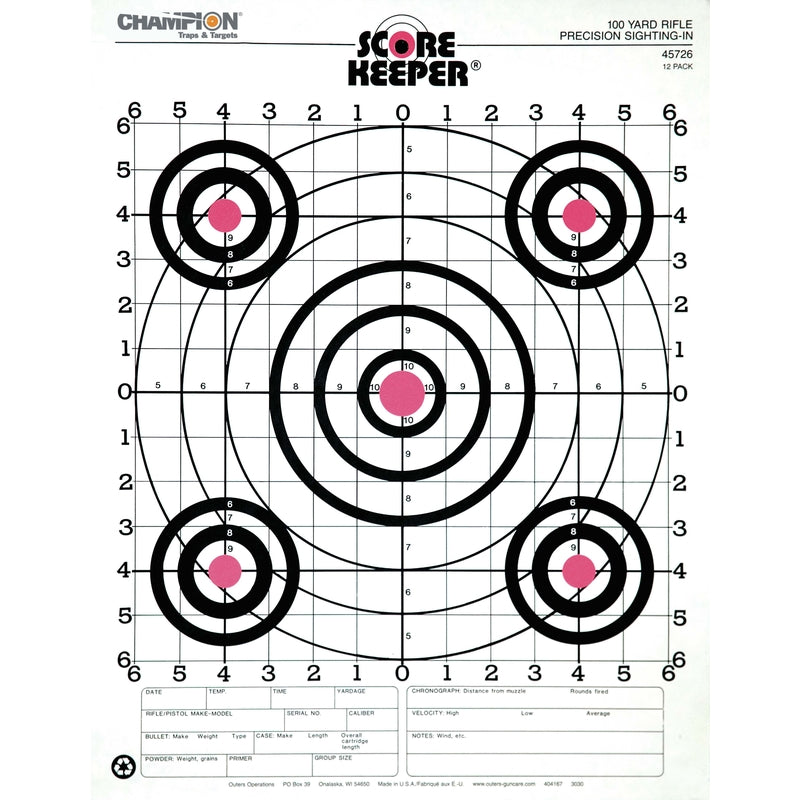
Champion Score Keeper 100-yard Rifle Precision Sighting-in Target Deals
Prices may change. May contain affiliate links.
Start at 100 yards. Shoot a 10-round group with the chronograph running. Record ES, SD, and group size. If the group is tight and the velocity numbers are good, the ammo is probably fine and the rifle is mechanically sound. If the group shows vertical at 100, you have a mechanical or technique problem that needs fixing before you move to distance.
Move to 300 yards. Shoot another 10-round group. At this distance, velocity variation starts to become visible but technique errors are still relatively small. If vertical opens up significantly between 100 and 300, and your SD is low, suspect technique, specifically NPA and rear bag consistency.
Move to 600 yards. This is where ammo consistency starts to separate from technique. A 20 fps ES produces about 3 inches of vertical here. If your vertical is worse than what the ES would predict, technique or equipment is adding to it.
Finally, shoot at 800 or beyond. Compare your actual vertical dispersion to what your ballistic solver predicts based on your chronograph data. If the solver says your ES should produce 5 inches of vertical and you're seeing 12, the extra 7 inches is coming from technique, equipment, or wind. If the solver's prediction matches your actual dispersion, the ammo is the limiting factor and you need to tighten the load.
Match notes: what this looks like in competition
PRS match stages that require multiple elevation changes between targets expose vertical problems ruthlessly. You dial from a 500-yard target to an 800-yard target, and if your scope doesn't track perfectly or your position shifts when you adjust the turret, your first round on the far target is off vertically. The shooters who clean these stages have tight ammo, verified scope tracking, and a position that doesn't shift when they reach for the turret. It's not one thing. It's all three, working together.
What to do this week
Pick one range session dedicated entirely to diagnosing vertical. Bring your chronograph, a 100-yard target with a grid, and enough ammo for 40-50 rounds. Shoot 20 rounds over the chrono at 100 and record everything, velocity, group size, conditions, barrel temperature. If your SD is above 12 fps, that's your first project. If it's below 10, move to 300 or 600 and start comparing actual dispersion to predicted dispersion.
Film yourself shooting from behind with a phone on a tripod. Watch for head movement, shoulder pressure changes, and rear bag squeeze inconsistency. You'll see things on video that you can't feel in the moment.
Run a box test or tall-target test on your scope. Verify tracking before you blame anything else. A scope that's off by 5% in tracking produces a 1 MRAD error at 20 MRAD of dial-up, that's 28 inches at 800 yards.
Log every session. Date, conditions, ammo lot, barrel round count, group measurements, and chrono data. After three or four sessions, patterns emerge. The log doesn't lie, and it doesn't forget. The data tells you where the vertical lives. Trust the data, fix the right thing, and the groups will tighten.