You're planning a DIY elk or mule deer hunt out West, and the gear list is already bleeding your bank account. Tag fees, gas, food, maybe a wall tent rental; it adds up fast. Then you look at rangefinders and see units running $300, $500, even $1,000+. Meanwhile, Amazon is full of compact laser rangefinders under $100 that claim 1,000-yard capability. The question isn't whether cheap rangefinders exist. The question is whether they'll actually give you a reliable number on a bull elk at 400 yards in low light, on a steep slope, when it matters.
The honest answer is more nuanced than most gear reviews make it. Some budget units punch above their weight. Others will leave you guessing at the worst possible moment. And the real issue usually isn't the number on the box; it's what happens to that number when conditions get hard.
What "1,000 yards" actually means on the box vs. the mountain
Every sub-$100 rangefinder advertises a maximum range. You'll see 800, 1,000, even 1,200 yards plastered on the packaging. That number is almost always the maximum distance to a large, highly reflective target, think a flat white building or a metal sign in perfect conditions. It has almost nothing to do with ranging a brown-gray animal standing in sage against a dark timber backdrop at dawn.
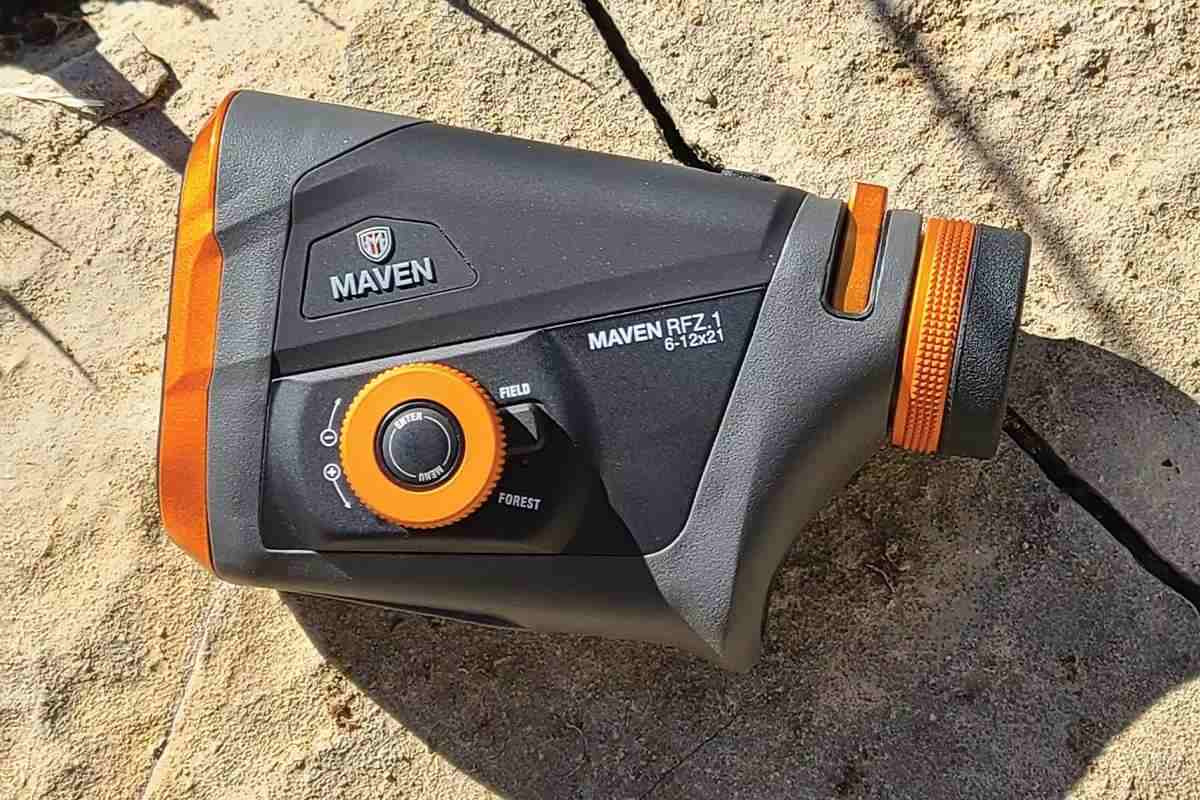
Maven RFZ.1 6-12x21
May contain affiliate links.
On a reflective target in clear air, many of these units can hit their advertised max. On an animal? Cut that number in half, sometimes more. A rangefinder that claims 1,000 yards might reliably range a mule deer at 400-500 yards on a clear day. Push it to low light, the first and last 30 minutes of legal shooting time, when most western game is on its feet, and that effective range shrinks again. You might get 300 reliable yards out of it, maybe less.
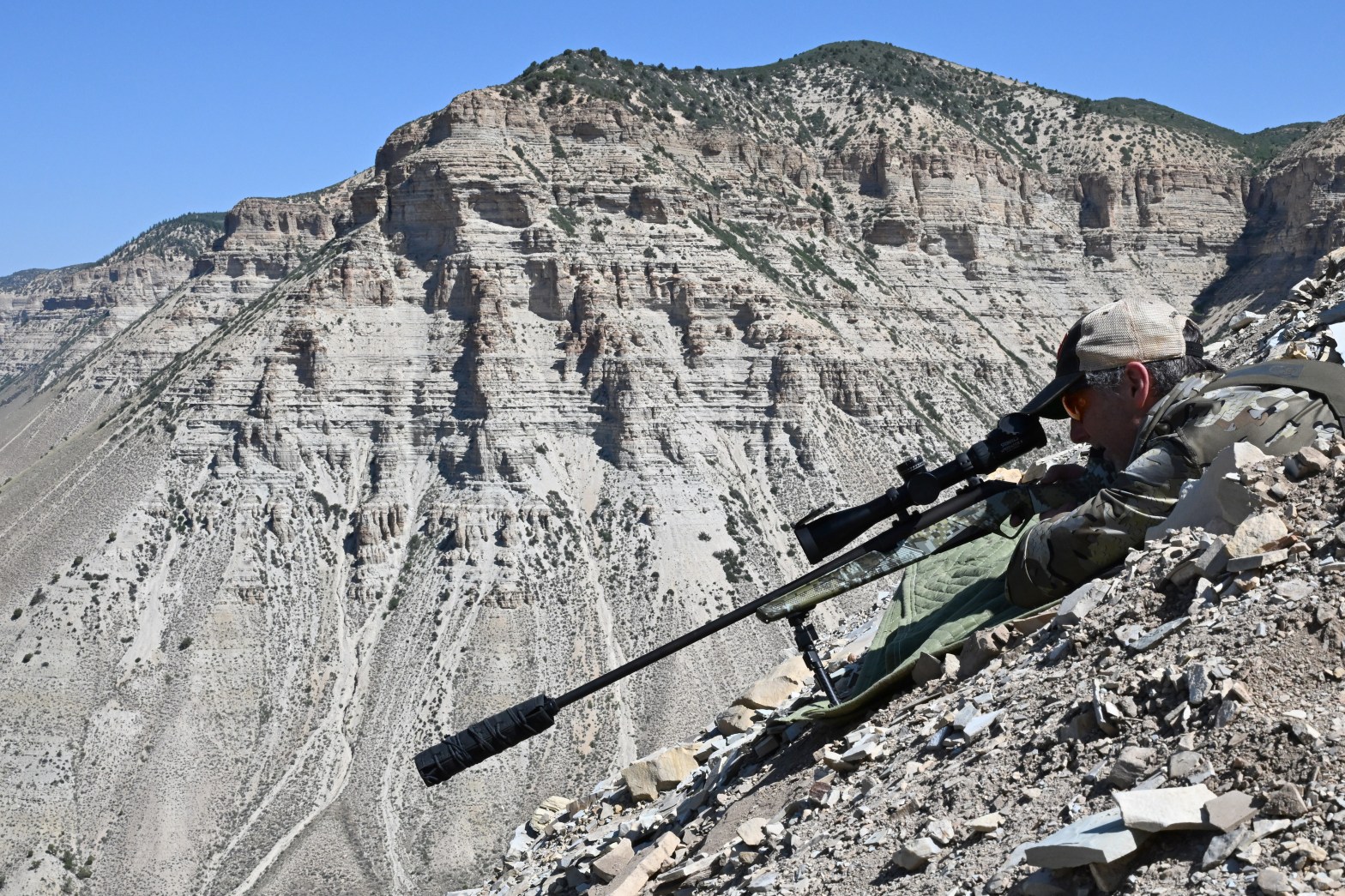
This matters because western hunting isn't eastern treestand hunting. Shots at 250-400 yards are common. Some guys stretch further, though most shouldn't. If your rangefinder can't give you a confident reading at 350 yards on an animal in marginal light, you're either guessing or passing on the shot. Both cost you.
Where budget units actually fall short
The gap between a $75 rangefinder and a $300 one isn't about the laser itself; it's about the sensor, the processor, the lens coatings, and the software that interprets the return signal. Here's where that gap shows up in the field.
Ranging speed and consistency are the first things to suffer. Premium units return a number almost instantly, and they'll give you the same number five times in a row. Budget units often take a beat longer, and you might get 387, 394, 382, and then nothing on four consecutive attempts. When you're trying to range a bull that's about to walk into timber, that inconsistency costs you time you don't have.
Target acquisition on non-reflective surfaces is the big one. Animals aren't reflective. Neither is dark timber, wet rock, or sage. Budget rangefinders struggle with these targets because their sensors have a harder time picking up the weak return signal. Premium units use better sensors and more sophisticated signal processing to pull a reading out of noise. This is the single biggest performance difference between price tiers.
Angle compensation, what Leupold calls TBR/W and others call various things, adjusts the displayed range to account for steep uphill or downhill shots. Some sub-$100 units include it, some don't. In the West, where you're regularly shooting at 20-30 degree angles, the difference between true line-of-sight distance and the horizontal equivalent can be 20-40 yards at moderate ranges. That's enough to put your bullet over a bull's back or into its guts. If the budget unit you're considering doesn't have angle compensation, cross it off the list for western hunting. Full stop.
Glass quality matters more than people think in a rangefinder. You're looking through it to identify your target before you range it. Cheap glass with poor coatings means a dim, hazy view, exactly what you don't need in low light. You won't be glassing with your rangefinder, but you need to see well enough through it to put the reticle on the right animal.
The sub-$100 options worth considering
Not all budget rangefinders are junk. A few models consistently show up in field tests and forum discussions as punching above their price point. Here's how they stack up for western big game use.
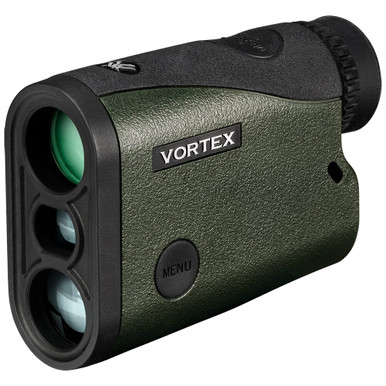
Vortex Crossfire HD 1400 Deals
Prices may change. May contain affiliate links.

Leupold RX-1400i TBR/W Gen 2 Deals
Prices may change. May contain affiliate links.
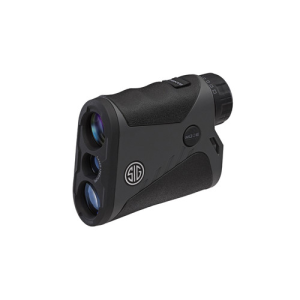
Sig Sauer Kilo 1400BDX Deals
Prices may change. May contain affiliate links.
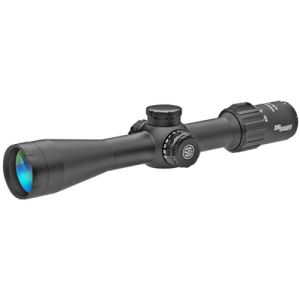
Sig BDX scope Deals
Prices may change. May contain affiliate links.
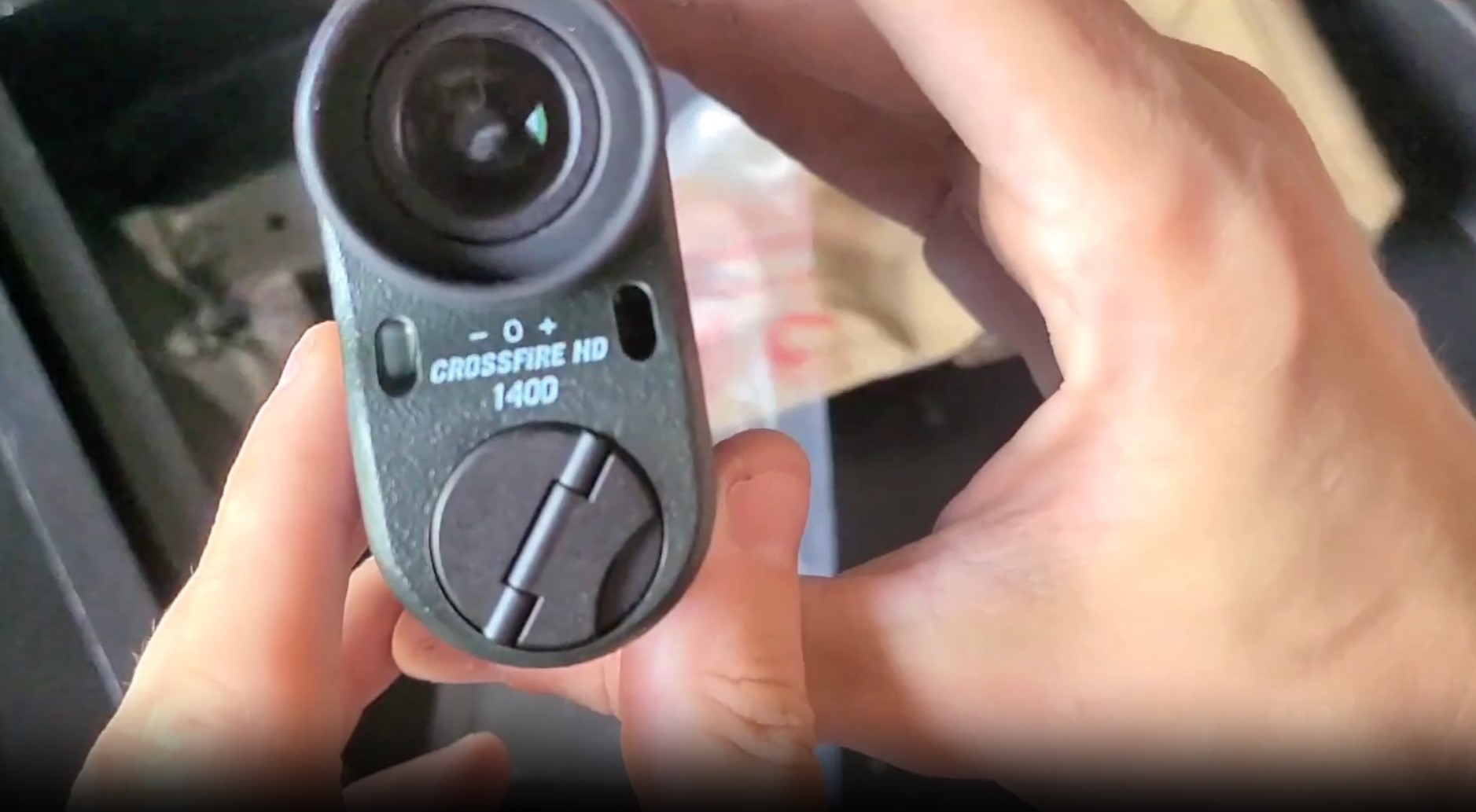
The Vortex Crossfire HD 1400 sits right at or just above the $100 mark depending on where you find it, and it's the unit most western hunters point to as the budget floor for serious use. It claims 1,400 yards max ranging, and real-world testing on deer-sized targets puts it around 600-800 yards in decent conditions. It includes an HCD (horizontal component distance) mode for angle compensation. The 5x magnification is modest but the HD glass is noticeably better than what you get from no-name brands. Vortex's unconditional lifetime warranty sweetens the deal, if it breaks on a mountain, they replace it.
The Leupold RX-1400i TBR/W Gen 2 is another option that hovers near the $100 line. Leupold's TBR/W (True Ballistic Range with Wind) gives you a holdover value based on your specific load if you program it in. Max advertised range is 1,400 yards, with realistic animal-ranging capability in the 500-700 yard window under good conditions. The 5x optic is clean, and the unit is compact enough to stuff in a chest pocket. It struggles more than the Vortex in low light based on side-by-side comparisons, but the ballistic integration is a nice touch if you actually set it up before the hunt.
Below these two, you're getting into units from brands like Halo, Simmons, and various direct-from-China offerings on Amazon. Some of these will range a deer at 200-300 yards reliably, which is fine for eastern whitetail from a treestand. For western big game, they're a gamble. The ones that claim 1,000 yards but cost $50 are almost universally disappointing past 300 yards on non-reflective targets. Most lack angle compensation entirely.
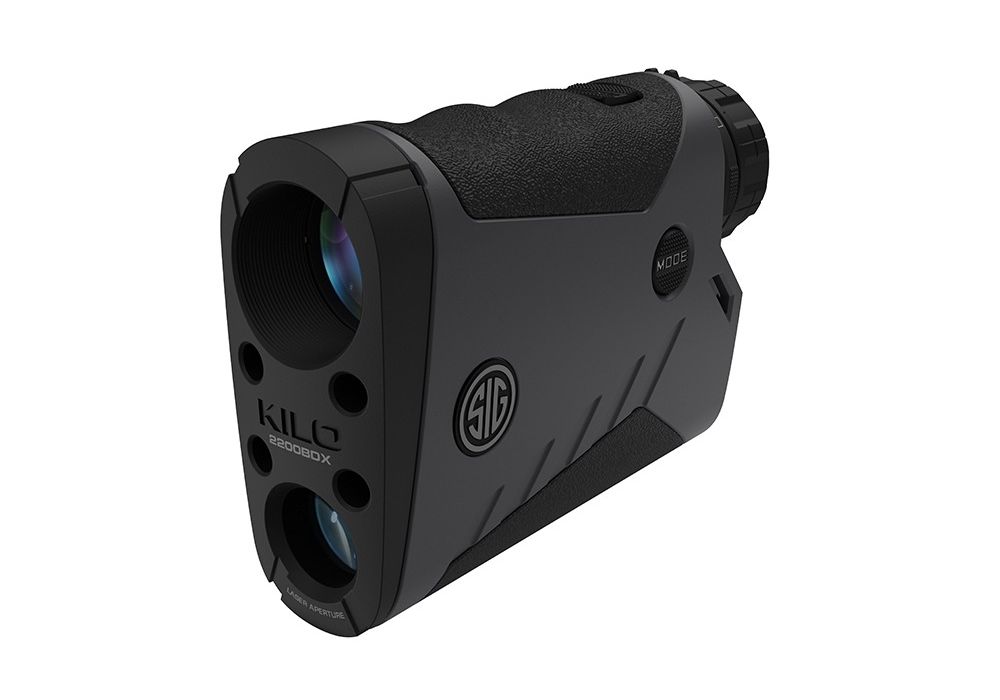
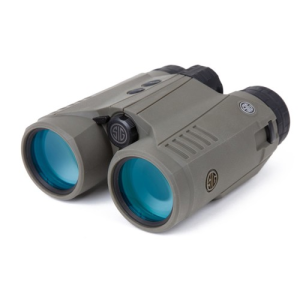
The Sig Sauer Kilo 1400BDX occasionally drops near the $100 range on sale and brings Sig's BDX ecosystem into the picture; it can talk to a compatible scope via Bluetooth and illuminate the correct holdover dot. Clever system, though the rangefinder itself performs similarly to the Vortex and Leupold at this tier. The BDX integration only matters if you're running a Sig BDX scope, which most budget-conscious hunters aren't.
Common mistakes hunters make with budget rangefinders
Buying the unit and throwing it in your pack on opening morning without ever testing it under realistic conditions. Range your neighbor's barn at 600 yards and call it good? That tells you nothing about how the unit performs on a dark target in dim light. Take it to the field during the golden hour and try to range rocks, stumps, and dark objects at hunting distances. That's your real-world performance envelope.
Trusting the first reading without confirmation. Budget units are more prone to giving you a false return; ranging a hillside behind the animal, a tree branch in front of it, or just spitting out garbage. Always range twice, minimum. If you get two readings that don't agree within 5-10 yards, something's wrong. Range a third time. Premium units have scan modes and last-target logic that help filter this out. Budget units often don't, or their filtering is less reliable.
Ignoring angle compensation on steep shots. A 400-yard line-of-sight shot at a 30-degree downhill angle has a horizontal equivalent of about 346 yards. If you dial or hold for 400, you're shooting high. Some hunters think this only matters at extreme angles, but even 15-20 degrees, common in foothill mule deer country, introduces meaningful error past 300 yards.
Not replacing the battery before the hunt. Laser rangefinders eat CR2 batteries, and cold weather accelerates the drain. A weak battery means slower ranging, shorter effective distance, and more missed reads. Throw a fresh battery in before every trip and carry a spare. They weigh nothing and cost a couple bucks.
Ranging in scan mode when you need a single precise reading. Some budget units default to scan mode, which continuously updates the distance as you sweep. That's useful for tracking a moving target across a hillside, but for a stationary animal, you want a single clean read. Know which mode you're in.
Field notes: the cold and wet factor
Western hunts mean early mornings in the 20s and 30s, fog, rain, maybe snow. Budget rangefinders are more susceptible to fogging, both internal and external, because they use cheaper seals and coatings. The Vortex Crossfire HD 1400 is nitrogen-purged and O-ring sealed, which helps. The Leupold is weatherproof as well. Below that price tier, waterproofing claims get sketchy. If your rangefinder fogs up internally on a cold morning, you're done until it warms up. That's not a minor inconvenience, that's a missed opportunity on a hunt you drove 12 hours for.

Cold also saps battery performance. A rangefinder that works fine at 70 degrees might struggle at 25 degrees because the battery voltage drops. Keep your spare battery in an inside pocket, close to your body. Some hunters keep the rangefinder itself in a chest pocket between uses for the same reason.
When to spend more
If you're hunting elk or mule deer in open country where 400+ yard shots are realistic possibilities, and you're making a multi-day trip that cost you $1,000+ in tags, travel, and time off work, a $75 rangefinder is a strange place to cut corners. The difference between a $100 unit and a $250-300 unit like the Vortex Diamondback HD 2000 or the Sig Kilo 3000 is dramatic in real-world ranging capability. You're looking at reliable animal-ranging out to 800-1,000 yards, faster target acquisition, better glass, and more consistent performance in low light.
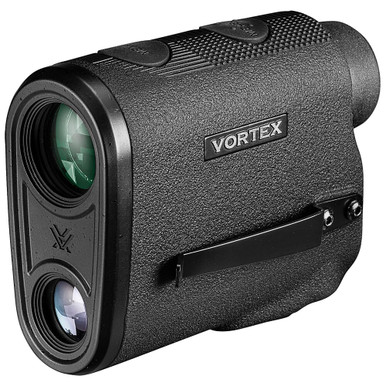
Vortex Diamondback HD 2000 Deals
Prices may change. May contain affiliate links.
The math isn't complicated. If you drew a once-in-a-decade tag, or you're spending $500+ on the hunt itself, an extra $150-200 on a rangefinder that won't leave you guessing is cheap insurance. The rangefinder is the one piece of gear that directly determines whether you know your distance or you're estimating, and distance estimation kills more wounded animals than bad cartridge choices ever will.
That said, if your realistic shot envelope is 300 yards and under, and for most hunters, being honest about skill level, it should be, a solid sub-$100 unit like the Crossfire HD 1400 or the RX-1400i will get the job done. They'll range an elk at 300 yards in reasonable light without drama. They'll give you angle compensation. They'll survive a week in a pack. You just need to understand their limits and stay inside them.
The prep that actually matters
Buy your rangefinder at least a month before the hunt. Take it to the field, not the backyard, and range real targets at real distances in real conditions. Find out where it starts struggling. Is it 400 yards on a dark rock face? 500 on a light-colored boulder? That number is your confidence limit. Don't take shots beyond it.
Practice the physical sequence: spot the animal, pull the rangefinder, acquire the target in the viewfinder, get a solid reading, confirm with a second reading, then transition to your rifle. Do it until it's automatic. In the moment, with adrenaline running and an animal that might move any second, fumbling with a rangefinder costs you the shot.
Program your ballistic data if your unit supports it. The Leupold RX-1400i lets you input your specific cartridge and load so it displays holdover instead of raw distance. That's only useful if you've actually verified those holdover values at the range. A rangefinder telling you to hold 6 inches high means nothing if you haven't confirmed that 6 inches high at that distance actually puts the bullet where it needs to go.
And zero your rifle at a known distance confirmed by the rangefinder you'll carry on the hunt. If your rangefinder reads 3% long and your scope is zeroed based on range markers that are dead-on, you've introduced an error before you even see an animal. Use the same rangefinder to set your zero that you'll use to call your distance. It's a small detail, but small details are what separate clean kills from wounded animals walking into timber.