You go to the range. You set the target at seven yards. You shoot your fifty or hundred rounds. You pack up. You do the same thing next week. And the week after that.
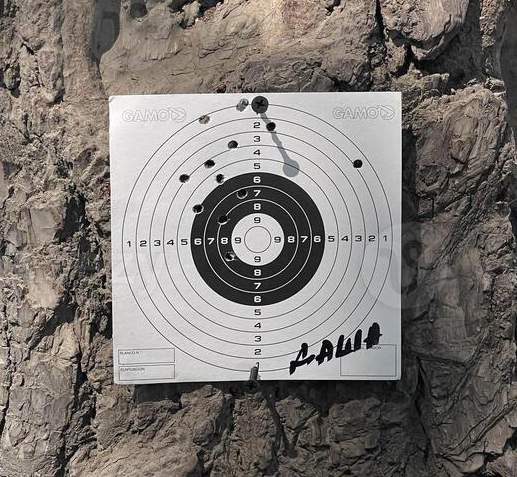
Here's the problem: you're not getting better. You're getting comfortable. There's a massive difference between those two things, and most shooters never confront it because the group at seven yards looks decent enough to feel good about. But move that target to fifteen yards and the truth comes out fast. Pull it in to three yards and run it on a timer, and a different set of problems appears. Shooting at one distance is like only practicing free throws and then wondering why you can't hit a layup under pressure.
This isn't about doing something exotic. It's about building a complete skill set that actually transfers to the situations where shooting skill matters; whether that's a defensive scenario, a match stage, or just honest self-assessment. If you've been parking your target at the same spot for months, you've been training a narrow slice of the skill and ignoring everything else.
The comfort zone trap
Seven yards is the most popular range distance in America, and it's not hard to see why. It's close enough that most handgun shooters can keep rounds on paper without much effort. It's the distance most basic courses use. It's where a lot of qualification standards are set. And it's where your ego stays intact.
None of that makes it a complete training distance. Seven yards tests a very specific combination of sight refinement and acceptable wobble zone. At that distance, you can get away with a mediocre sight picture, a trigger press that's not quite clean, and a grip that's only 80% correct. The target is forgiving enough that these errors don't show up as misses, they show up as a slightly larger group that you'll rationalize as "good enough."
The real cost of static distance practice isn't that seven yards is bad. It's that staying there prevents you from discovering what you don't know. Every distance emphasizes different fundamentals. Close range exposes your draw speed, target acquisition, and ability to shoot with a flash sight picture or even from retention. Mid-range; ten to fifteen yards; demands cleaner trigger control and more refined sight alignment. Beyond fifteen yards, you find out whether your grip is actually managing recoil or just holding the gun, and whether you can call your shots or you're just hoping.
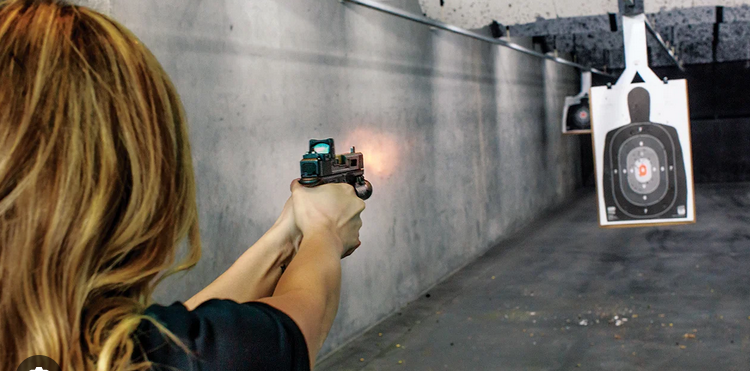
When you only train at one distance, you build confidence in a skill you've never actually pressure-tested across its full range of application. That's not confidence. That's ignorance with a good group to show for it.
What each distance actually tests
Think of distance as a diagnostic dial. Turn it and different weaknesses light up. Here's what happens when you move the target, and what each position reveals about your shooting.
Three to five yards
This is where speed lives, and it's where most shooters discover they're slower than they think. At three yards, the accuracy standard is almost trivially easy if you're taking your time. An eight-inch circle at three yards? You should be able to hit that every single time with zero conscious sight alignment.
But that's not the point of close-range work. The point is speed. Can you draw and put a round in the A-zone in under 1.5 seconds? Can you do a controlled pair in under a second split? Can you transition between two targets at three yards and keep both hits clean?
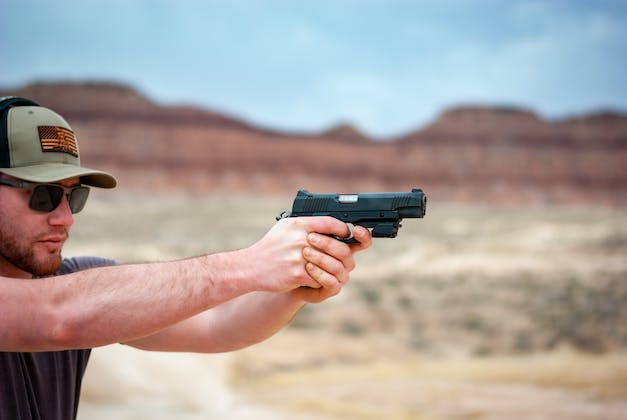
Close range strips away the crutch of careful aiming and forces you to confront your presentation. If your draw has wasted motion; fishing for the grip, bowling the gun out instead of punching straight to the target, excessive time settling the sights; three yards will show you. The accuracy standard is so easy that any miss is a glaring process failure, not a precision issue.
This is also where you find out if you can shoot from less-than-ideal positions. Retention shooting, one-handed shooting, shooting after lateral movement. These skills live at close range and they atrophy completely if you never train inside five yards.
Seven to ten yards
The workhorse distance. This is where the balance between speed and precision starts to matter, and it's a perfectly valid training distance; as long as it's not your only one.
At seven yards, you need a sight picture but it doesn't need to be perfect. You need trigger control but a minor jerk might still land inside an acceptable zone. The standard here should be an index-card-sized group (roughly 3x5 inches) shot at a pace that feels deliberate but not slow. If you can put ten rounds into a 3x5 card at seven yards in under fifteen seconds from the ready, your fundamentals are in a solid place.
The trap at this distance is that it lets you be mediocre at everything without being bad at anything. You can have a so-so grip, an okay sight picture, and a trigger press that's just clean enough, and still produce a group that looks respectable. That's why people stay here. It's the participation trophy distance.
Fifteen yards
Now we're talking. Fifteen yards is where most shooters' groups blow up, and it's the distance that tells you the most about your actual skill level.
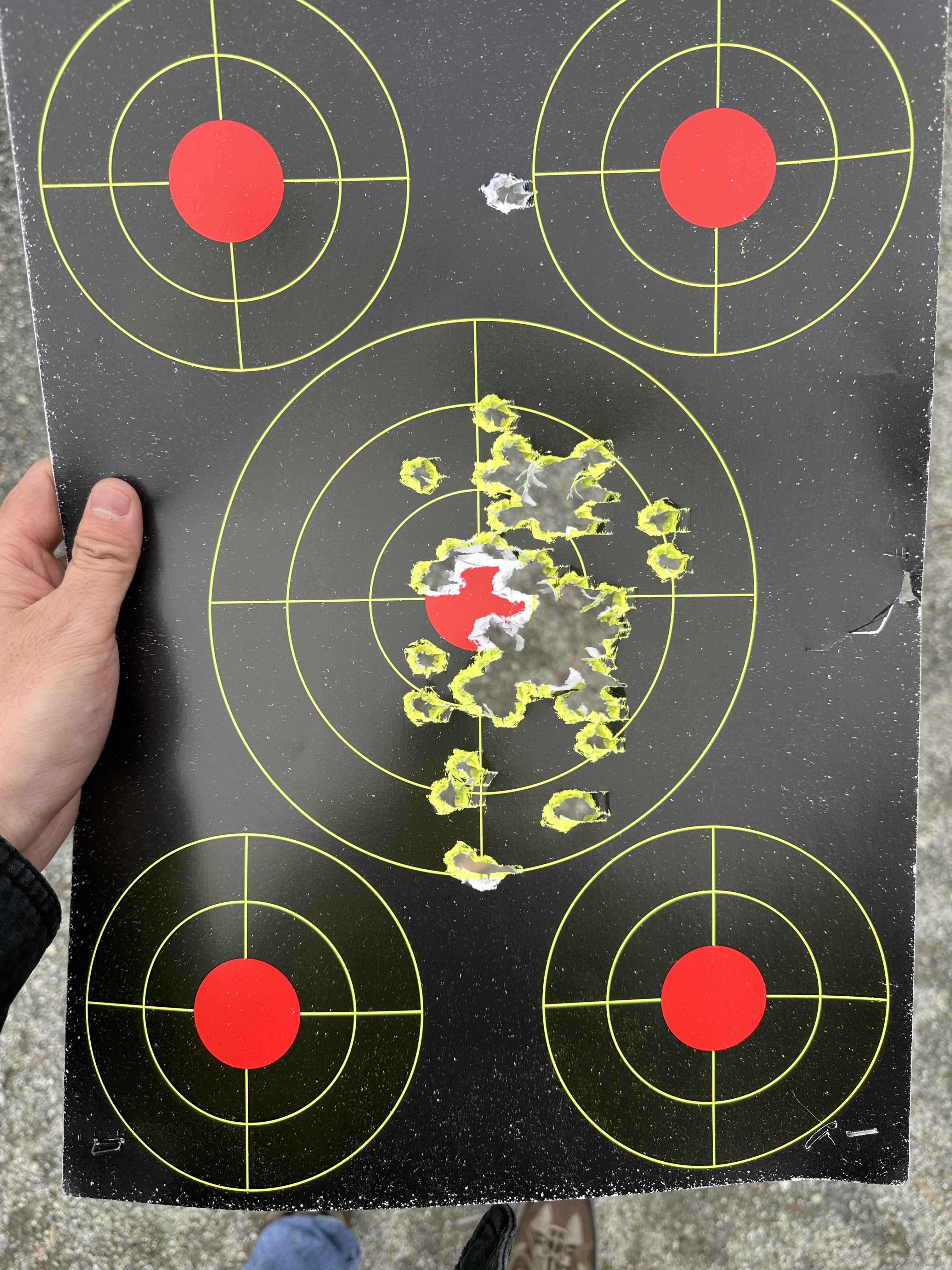
At fifteen yards, every fundamental error is amplified. A slight trigger jerk that moved your point of impact half an inch at seven yards is now moving it an inch and a half. A grip that lets the muzzle flip excessively at seven yards is now producing vertical stringing you can't ignore. A sight picture that was "close enough" at seven is now the difference between center mass and a clean miss on a reduced target.
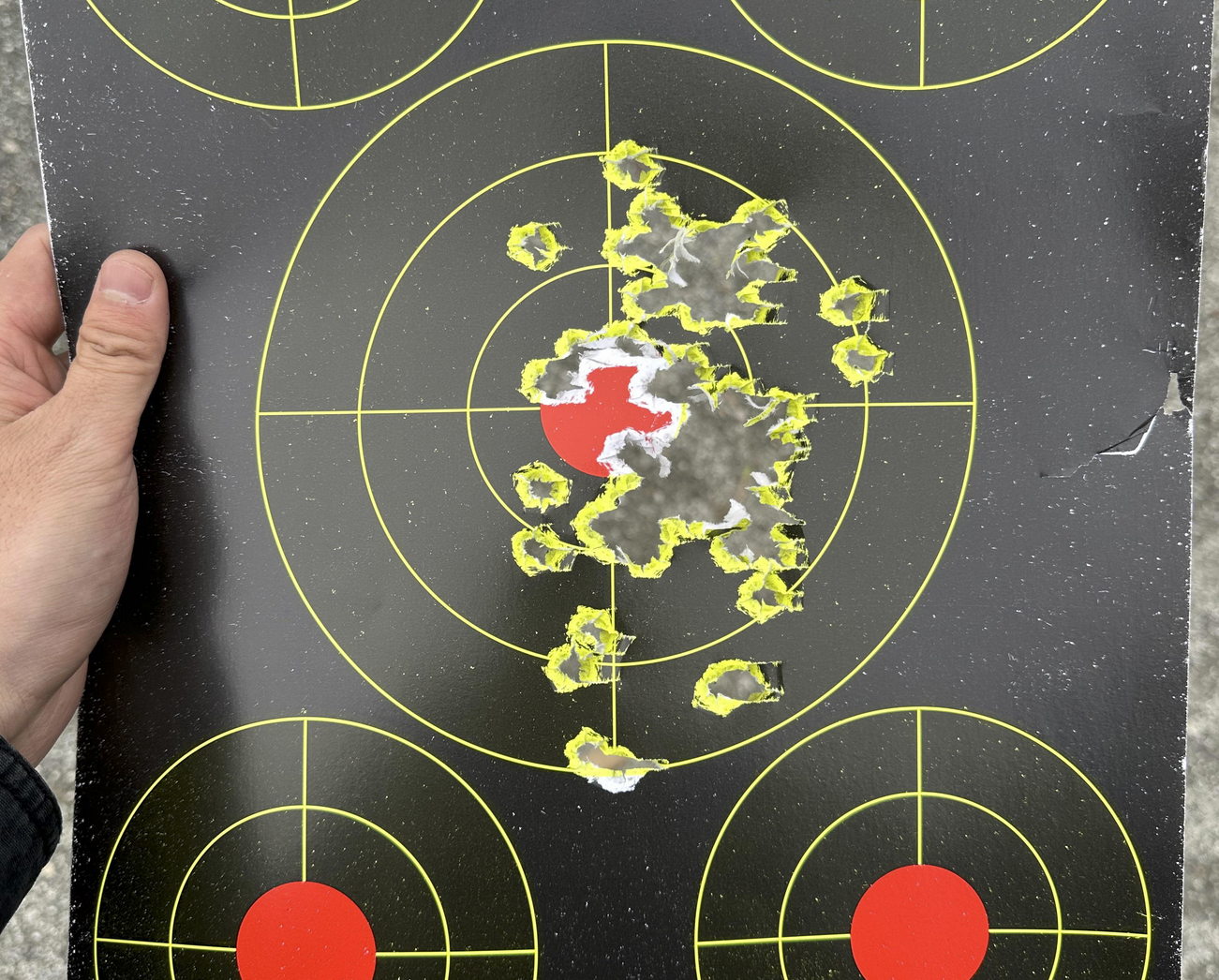
The standard at fifteen yards: can you keep ten rounds inside an eight-inch circle, shooting at a reasonable pace (not benchrest slow, not race-gun fast)? If you can, your fundamentals are genuinely solid. If you can't, you've found where the work needs to happen.
Most shooters who've never trained beyond ten yards will see their groups double or triple in size at fifteen. That's not a distance problem. That's a fundamentals problem that was always there but never got exposed.
Twenty-five yards and beyond
This is where precision lives. Twenty-five yards with a handgun is legitimately difficult, and most shooters avoid it because it's humbling. A full-size silhouette at twenty-five yards looks small. An eight-inch circle looks tiny. And your wobble zone; the natural movement of your sights across the target as you hold; feels enormous.
But training at twenty-five yards does something no other distance can: it forces you to master the compressed surprise break. You simply cannot jerk the trigger at twenty-five yards and hit anything consistently. You have to prep the trigger, accept the wobble, and let the shot break while maintaining alignment. If you can shoot a six-inch group at twenty-five yards with a duty-size handgun, you're a genuinely skilled shooter. Period.
Even if you never expect to take a twenty-five-yard shot in a real scenario, the skills you build at that distance transfer directly to everything closer. Shooters who regularly train at twenty-five yards find that seven and fifteen yards feel almost easy. The precision discipline carries over.
The drill: distance changeup
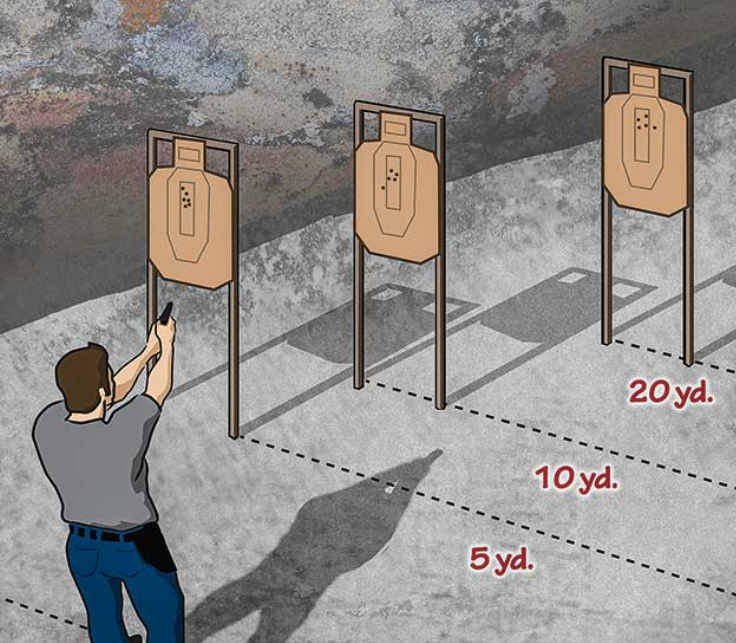
Here's a structured drill that forces you to shoot at multiple distances in a single session. It's designed for fifty rounds and takes about twenty minutes if you're working a static range where you have to walk targets. On a range with a target carrier, it's faster.
A living room wall with a chair beside it, the kind of blank interior space commonly used for dry fire practice at home.Setup
You need a standard USPSA or IDPA silhouette target, or any target with a clearly defined eight-inch center zone. You'll shoot at three distances: five yards, ten yards, and twenty yards. If your range maxes out at fifteen, use that instead of twenty.
Round count and sequence
Stage one; five yards, ten rounds: Draw and fire two rounds on a three-second par time. Repeat five times. All ten rounds should be inside the center zone. If any round is outside, your draw and initial presentation need work, not your marksmanship. At five yards, misses are process errors.
Stage two; ten yards, twenty rounds: From the ready position, fire five rounds in ten seconds. Repeat four times. Standard is eighteen of twenty rounds inside the center zone. This is your baseline accuracy-under-moderate-time-pressure test. Watch for the shots that drift. If they're going low-left (right-handed shooter), that's trigger. If they're stringing vertically, that's grip or breathing.
Stage three; twenty yards, twenty rounds: From the ready position, fire five rounds with no time limit. Repeat four times. Standard is fourteen of twenty inside the center zone. Take your time. This stage is about precision, not speed. Focus on the front sight, prep the trigger, and let the shot break.
Scoring
Track your hit percentage at each distance separately. Over multiple sessions, you'll see which distance is your weakest. That's where you spend extra time next session.
The passing standard for the whole drill is forty-two of fifty rounds inside the center zone (84%). If you're hitting that consistently, tighten the target zone to a six-inch circle or add par times to stage three.
Range notes
Run this drill cold; first thing at the range, before any warm-up. Your cold performance is your real performance. Warm-up groups tell you what you can do under ideal conditions. Cold rounds tell you what you will do when it counts. Track your cold scores separately. That's the number that matters.
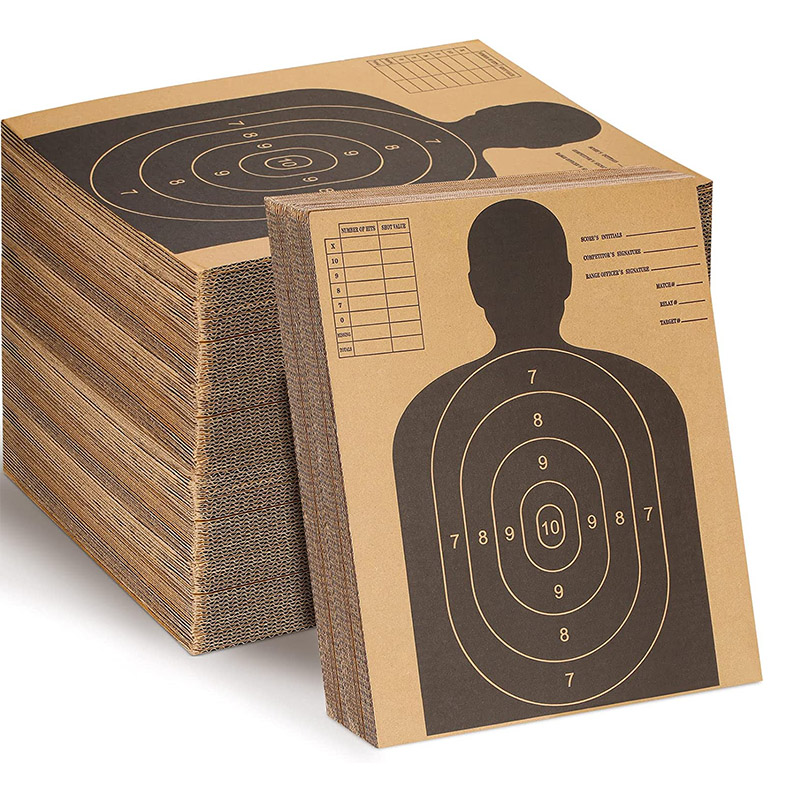
Why your brain needs distance variety
There's a neurological reason that static-distance practice stalls out, and it's worth understanding even if you're not interested in the science.
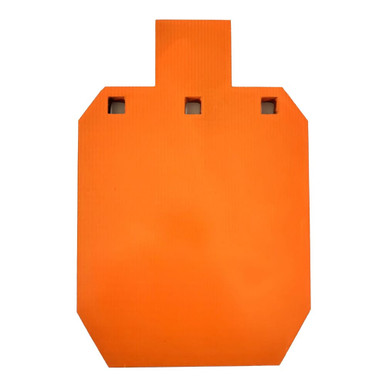
Palmetto state armory USPSA silhouette target Deals
Prices may change. May contain affiliate links.
When you perform the same task at the same distance repeatedly, your brain shifts from active problem-solving to pattern execution. You stop consciously processing your sight picture, your trigger press, your grip pressure. You're running on autopilot. And autopilot is efficient but it doesn't improve. It maintains.
Changing distance forces your brain back into active processing. At a new distance, you have to consciously evaluate how much sight refinement you need, how much time you can spend on the trigger, and how aggressively you can drive the gun. That conscious engagement is where skill development actually happens.
This is why shooters who only train at one distance often plateau hard. They hit a level of performance that their autopilot can maintain, and then they stay there for months or years, shooting the same groups, feeling like they're "practicing," but never actually improving. Varying distance is one of the simplest ways to break that plateau.
It's also why competition shooters who regularly engage targets at mixed distances tend to develop well-rounded skills faster than recreational shooters who put in the same round count at a static distance. The variety itself is a training stimulus.
Common mistakes when adding distance variety
Changing distances sounds simple, but there are specific ways people screw it up. Avoid these.
IDPA silhouette target Deals
Prices may change. May contain affiliate links.
Spending all your time at the distance you're worst at
This is counterintuitive, but hear it out. If you discover that twenty-yard shooting is your weakness, the instinct is to park at twenty yards and grind. The problem is that twenty-yard shooting is built on fundamentals that are easier to isolate and fix at closer distances. A trigger jerk that's costing you four inches at twenty yards is still happening at ten yards; which makes it easier to diagnose and correct without the frustration of constant misses. Fix the mechanic at ten, then test it at twenty.
Skipping close-range speed work
A lot of shooters who get serious about precision start ignoring close-range work because it feels "too easy." But close range isn't about precision; it's about speed, economy of motion, and target acquisition. These are separate skills that degrade without practice. You need both ends of the spectrum.
Changing distance without changing the standard
If you shoot at five yards and twenty yards with the same target and the same "keep it on paper" standard, you're not actually training differently. Each distance needs its own performance standard; a specific target size, par time, or hit percentage that's calibrated to what that distance is actually testing. Shooting an eighteen-inch silhouette at five yards tells you nothing. Shooting a 3x5 card at five yards on a 1.5-second par time tells you a lot.
Not tracking results by distance
If you just count total hits and misses across a mixed-distance session, you lose the diagnostic value. Track each distance separately. You want to see trends: "My five-yard speed is improving but my twenty-yard precision is flat." That tells you exactly where to focus next.
Going too far too fast
If you've never trained beyond ten yards, don't jump straight to twenty-five. Go to fifteen first. Get your fundamentals solid enough to hold an eight-inch group consistently, then push out. Jumping to a distance where you can't hit the target at all isn't training; it's just frustrating, and frustration doesn't build skill.
Dry fire at distance (yes, really)
Most people think of dry fire as a close-range activity. You stand in your living room, aim at a spot on the wall from five feet away, and press the trigger. That's fine for trigger press isolation, but you can get more out of dry fire by simulating distance.
The trick is target size. If you're dry firing at a two-inch dot from five feet, that's roughly equivalent to aiming at an eight-inch circle at twenty feet. Scale it down further; a one-inch dot from five feet approximates the sight picture refinement you'd need for a small target at real distance.
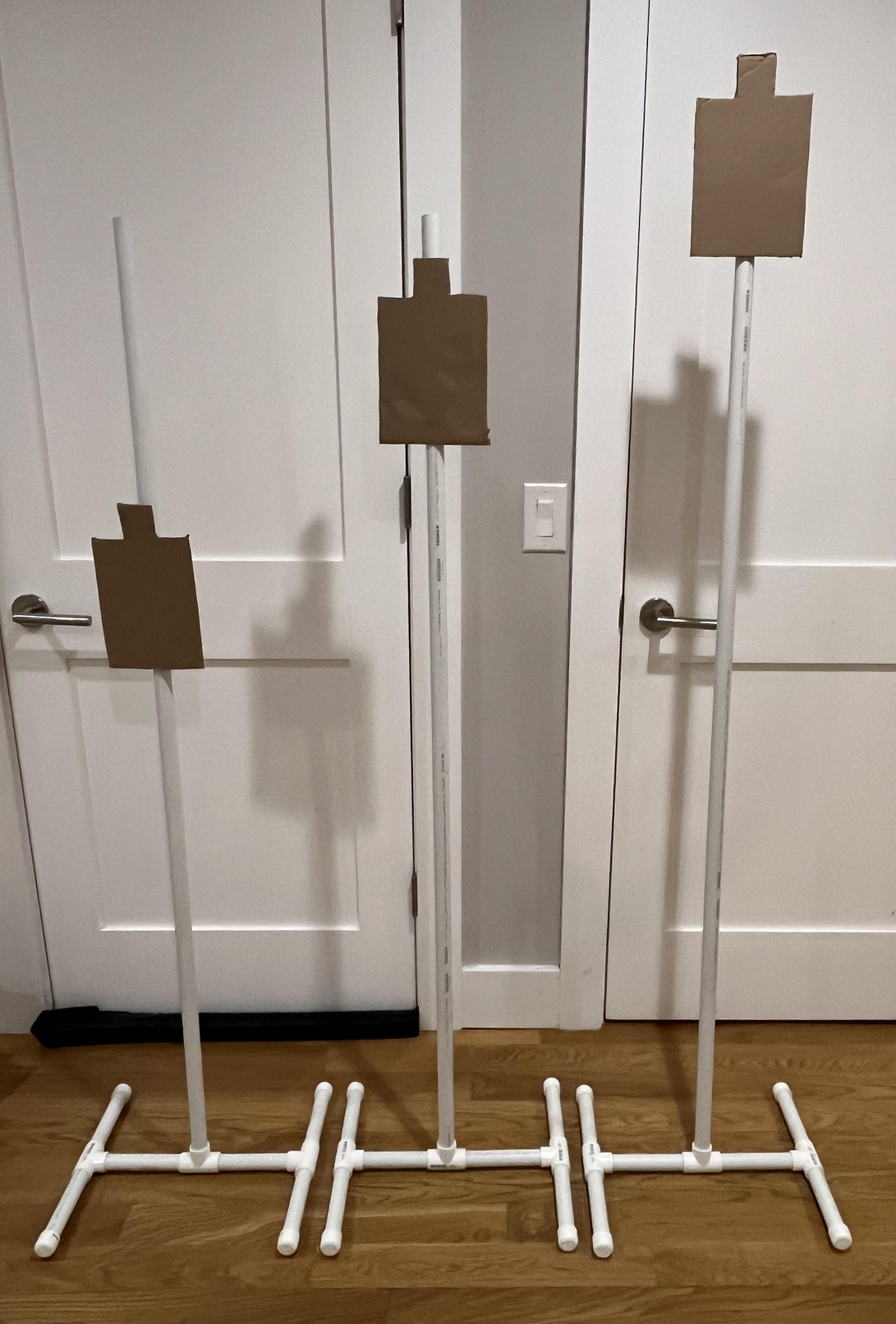
Set up three different-sized aiming points on your dry fire wall: a 3x5 card, a two-inch circle, and a one-inch circle. Practice your presentation and trigger press on each one. You'll notice that your wobble zone is acceptable on the big target but feels enormous on the small one. That's the same thing that happens when you move from seven to twenty yards on a live range.
When you dry fire on the small target, focus on accepting the wobble and pressing through it. The goal isn't to eliminate movement; it's to press the trigger without disturbing the sight alignment, even while the sights are moving slightly across the target. That's the compressed surprise break, and it's the single most important skill for distance shooting.
Dry fire notes
Spend at least a third of your dry fire time on the smallest target. It's less satisfying because you'll see the sights moving more, and you'll feel like your "shots" aren't as precise. That's the point. You're training the discipline to press through imperfection, which is exactly what real distance shooting demands. Ten minutes of this three times a week will show up on your live-fire groups within a month.
Building a variable-distance range session
If you've been shooting at one distance, here's how to restructure your range time without adding rounds or time.
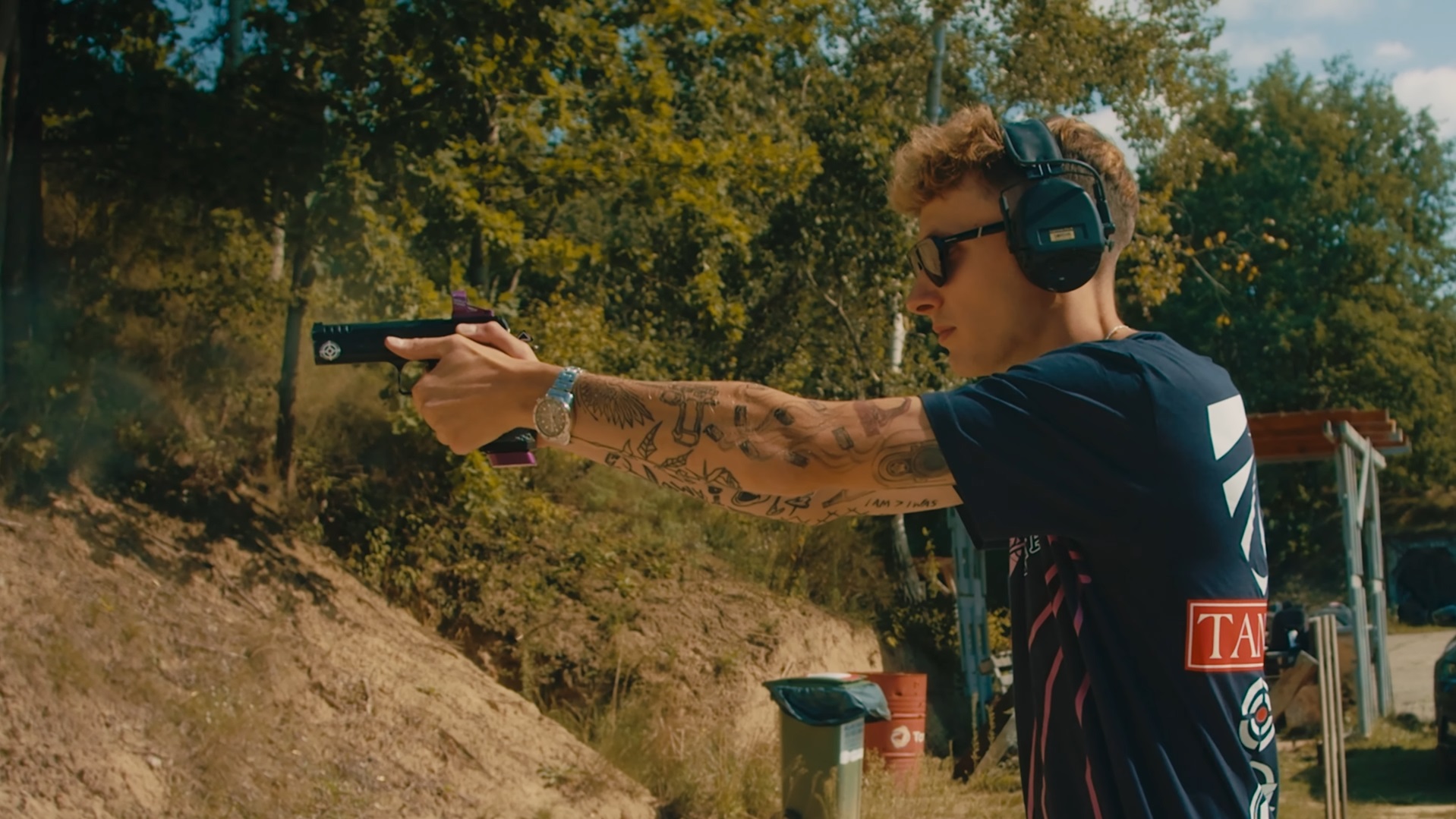
Take your normal round count; say, a hundred rounds; and divide it into thirds. The first third goes to close-range speed work (three to five yards). The second third goes to your "workhorse" distance (seven to ten yards) with a specific accuracy standard. The final third goes to precision work at fifteen yards or beyond.
Within each block, have a specific drill or standard you're chasing. Don't just "shoot at fifteen yards." Run a specific string: five rounds, eight-inch circle, from the ready, and track your hits. Give yourself a par time if you're using a shot timer (and you should be using a shot timer; they're the single most useful training tool you can buy after the gun itself).
Here's a sample session broken down:
Block one, five yards, thirty rounds: Draw to first shot, par time of 2.0 seconds, onto a 3x5 card. Ten reps. Then ten rounds of controlled pairs (two shots per draw) with a 2.5-second par time. Then ten rounds freestyle; bill drills, one-handed shooting, whatever speed-oriented work you want.
Block two, ten yards, thirty-five rounds: Five-round strings onto an eight-inch circle, fifteen-second par time. Seven strings. Track hits per string. Standard is four of five hits per string minimum. If you're cleaning it, tighten the par time to twelve seconds.
Block three, fifteen-plus yards, thirty-five rounds: Five-round strings onto an eight-inch circle, no par time. Seven strings. Focus entirely on the quality of each trigger press. Call every shot; before you look at the target, say where you think the round hit based on what you saw through the sights. If your calls match your impacts, your fundamentals are solid. If they don't, you're not watching the front sight through the break.
That's a hundred rounds with a plan. Every round has a purpose, every distance has a standard, and you walk away with data on three different aspects of your shooting. Compare that to a hundred rounds dumped at seven yards with no structure, and the training value isn't even close.
The par time problem at distance
One thing that trips people up when they start training at multiple distances is figuring out appropriate par times. At five yards, a 1.5-second draw-to-first-shot is a solid standard for a concealed carry draw. At fifteen yards, that same draw might need 2.0 to 2.5 seconds because you need more time to refine the sight picture before breaking the shot.
There's a temptation to use the same par time at every distance, but that defeats the purpose. Each distance has a different speed-accuracy tradeoff, and your par times should reflect that. Here are some rough benchmarks for a concealed carry draw to a single hit on an eight-inch circle:
Five yards: 1.5 seconds is solid. Under 1.3 is excellent. Over 2.0 needs work.
Seven yards: 1.7 seconds is solid. Under 1.5 is excellent. Over 2.2 needs work.
Ten yards: 2.0 seconds is solid. Under 1.7 is excellent. Over 2.5 needs work.
Fifteen yards: 2.3 seconds is solid. Under 2.0 is excellent. Over 3.0 needs work.
Twenty-five yards: 3.0 seconds is solid. Under 2.5 is excellent. Over 4.0 needs work.
These aren't competition standards; they're practical shooting benchmarks for someone carrying a handgun for defensive purposes. If you're shooting from an open-top duty holster or a competition rig, subtract a quarter to half a second from each.
Notice how the times scale. You're not adding a full second per distance jump; you're adding fractions. That's because most of the draw time is the same regardless of distance. The extra time at longer distances is the sight refinement window, and it should be a relatively small addition if your presentation is efficient.
What you'll feel when it clicks
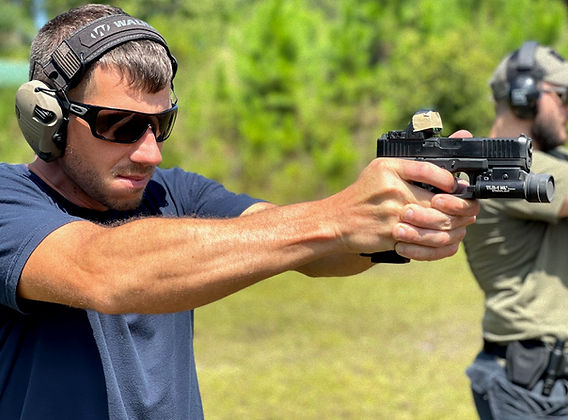
There's a specific moment in variable-distance training where the skill starts to consolidate. You'll be shooting at fifteen or twenty yards, focused on your front sight, and you'll break a shot that you know was good before you even look at the target. Not a guess; a certainty. You saw the sight lift in recoil from the exact spot you wanted, and you know the round is there.
That's a called shot, and it's the hallmark of a fundamentally sound shooter. Calling shots is nearly impossible to develop if you only train at distances where every round hits "somewhere on the target" and you can't distinguish between a good shot and a lucky one. Distance forces the distinction. At twenty yards, a called shot and a lucky shot feel completely different, and learning that difference is what separates someone who shoots from someone who trains.
The other thing you'll notice is that close-range shooting starts to feel almost automatic. After spending time grinding precision at fifteen and twenty yards, coming back to five yards feels like the target is right in your face. Your sight picture snaps on faster, your trigger press is cleaner because you've been disciplining it at distance, and your confidence is based on actual demonstrated capability instead of untested assumption.
That's the real payoff of distance variety. It doesn't just make you better at each individual distance; it makes you better at all of them simultaneously, because the skills are interconnected and training one end of the spectrum reinforces the other.
The once-a-month distance test
Here's a simple protocol to run once a month as a skills check. It takes twenty-five rounds and gives you a single score you can track over time.
Five rounds at five yards, eight-inch circle, 2.0-second par time per shot (draw to shot). Score: number of hits inside the circle within par time. Maximum five points.
Five rounds at ten yards, eight-inch circle, 2.5-second par time per shot (draw to shot). Score: same. Maximum five points.
Five rounds at fifteen yards, eight-inch circle, 3.0-second par time per shot (draw to shot). Score: same. Maximum five points.
Five rounds at twenty-five yards, eight-inch circle, no par time. Score: number of hits inside the circle. Maximum five points.
Five rounds at seven yards, 3x5 index card, 2.0-second par time per shot (draw to shot). Score: number of hits on the card within par time. Maximum five points.
Total possible score: twenty-five. Run it cold; first rounds of the session, no warm-up, no mulligans. Write down your score and the date.
A score of twenty means you're a solid, well-rounded shooter. Twenty-three or above means your fundamentals are genuinely excellent. Below fifteen means you've got specific weaknesses at specific distances, and your scores at each stage will tell you exactly which ones.
Track this monthly. The trend line is more important than any single score. A bad day happens. A bad month is a data point. Three bad months at the same stage is a diagnosis.
Stop optimizing for one distance
The range is a diagnostic tool, not a validation machine. If every session feels good and your groups look fine, you're probably not learning anything new. You're confirming what you already know, which has value for maintenance but zero value for growth.
Move the target. Change the standard. Put yourself at a distance where you have to actually think about what you're doing instead of running on autopilot. That's where the growth happens. Fifty rounds spread across three distances with clear standards will teach you more about your shooting than two hundred rounds at your comfort distance ever will.
Pick one session this week and restructure it. Run the distance changeup drill. Take the monthly test. Write down the numbers. You'll probably be surprised; and surprise is the first step toward actually getting better.