Dry-fire aiming systems compared: pick the right one and actually use it
Most shooters know dry fire works. Fewer actually do it consistently. And the ones who buy a laser training system? About half of them use it for two weeks, then it collects dust next to the foam roller they bought in January. The problem isn't motivation; it's picking the wrong system for how you actually train.
The dry-fire aiming market has exploded. You've got laser cartridges paired with phone apps, dedicated training pistols that feel nothing like your carry gun, sensor-based systems that track muzzle movement, and CO2-powered recoil simulators that cost more than some firearms. They all claim to make you better. Some of them actually will; if they match your goals, your gun, and your willingness to set them up every session.
Here's the breakdown. Every major system, what it actually does well, where it falls short, and who should buy it. Plus a comparison table so you can stop scrolling forums at midnight.
The two categories you need to understand
Before comparing individual products, get clear on the split. Dry-fire aiming systems fall into two camps: laser-based systems and motion-sensor systems. Some products bridge both, but the core technology determines what kind of feedback you get.
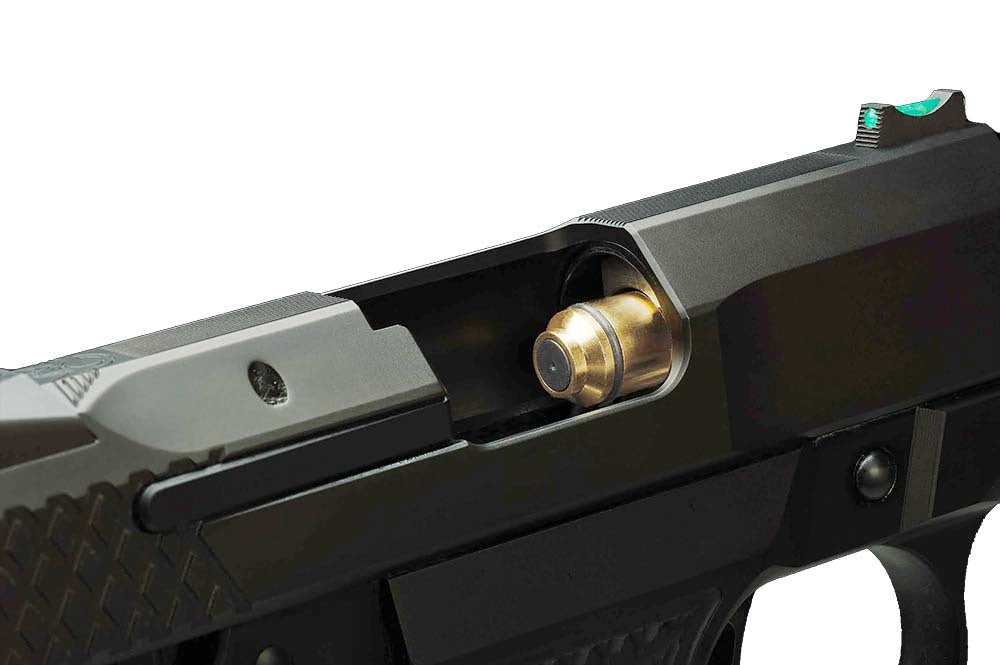
Laser-based systems use a cartridge or training barrel that emits a brief laser pulse when the firing pin strikes it (or when a trigger mechanism activates). A target, camera, or phone app registers where the laser hit. You get shot placement data; where your "round" landed relative to point of aim. This is the most common and affordable category. The limitation: they only capture the moment of the shot. They don't tell you what your muzzle was doing during the trigger press, during the draw, or between shots.
Motion-sensor systems attach to your rail or slide and use accelerometers and gyroscopes to track muzzle movement in real time. They show you the wobble pattern before, during, and after the trigger break. They don't care where a laser dot lands; they care about what your hands are doing. The best-known example is the MantisX family. The limitation: no shot placement feedback unless paired with a laser component.
Understanding this split matters because it determines what you're actually diagnosing. If your problem is trigger control at the moment of the break, a laser system shows you the symptom (shots landing low-left, for example). A motion sensor shows you the cause (muzzle dip during the press). The best training setup might combine both, but most people should start with one and use it deliberately before stacking tools.
The comparison table
Strikeman
Strikeman is the system most people encounter first because the price is right and the setup is dead simple. You get a caliber-specific laser cartridge, a target, and a phone mount. Your phone's camera watches the target, and the app registers each laser hit when you pull the trigger.
The good: it works out of the box in about two minutes. The app tracks shot groups and gives you basic accuracy data. For someone who has never done structured dry fire with feedback, this is a massive upgrade over snapping at a blank wall. The laser cartridges are reasonably durable, and the system covers most common handgun calibers.
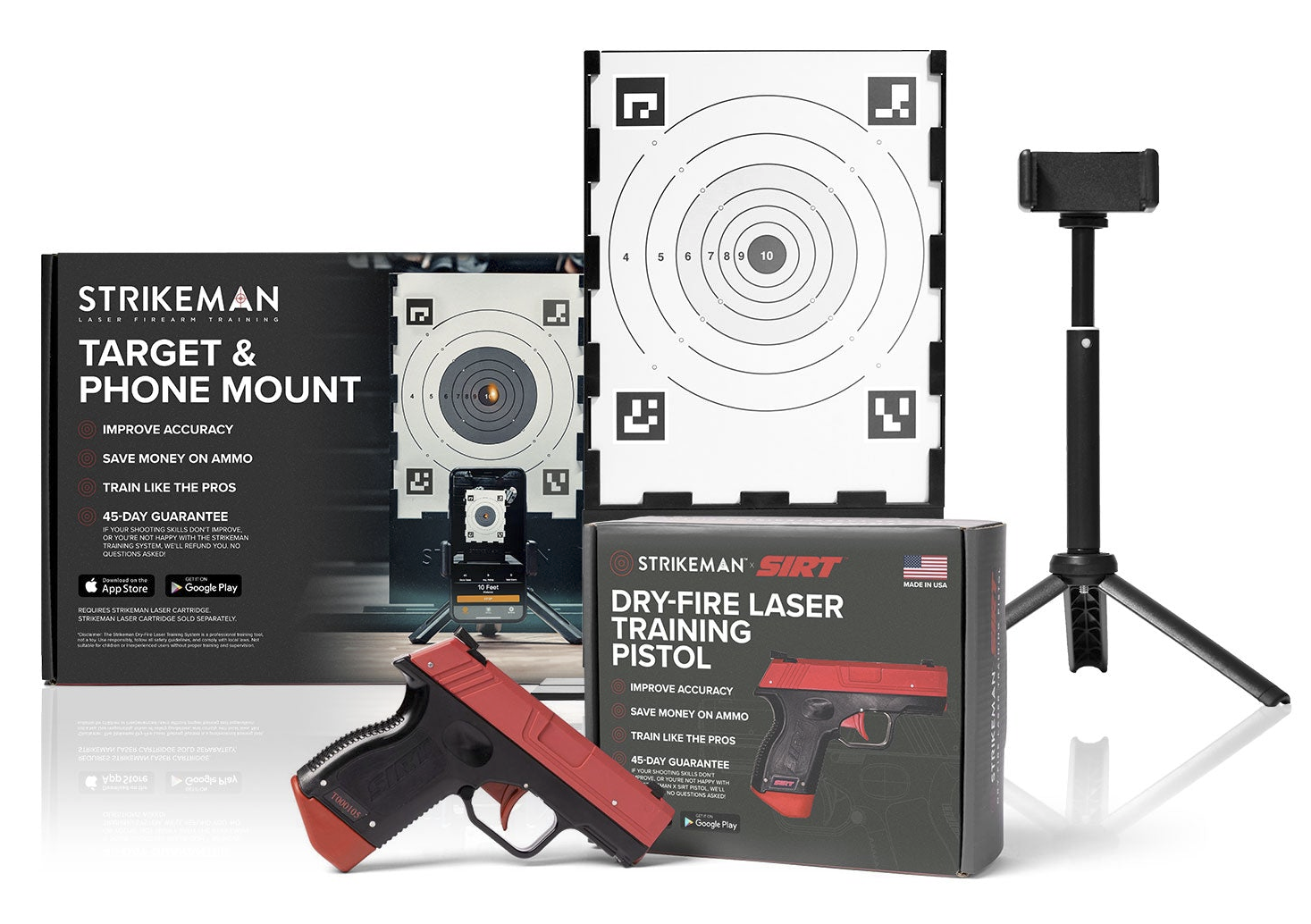
The bad: the app is basic. Drill variety is limited compared to Mantis Laser Academy. The phone-on-tripod setup can be finicky; if your phone shifts, your data is garbage. And because it's laser-only, you get no information about what your muzzle was doing before or during the shot. You see the result, not the process. For shooters who already know they jerk the trigger and want to fix it, Strikeman shows you the problem without telling you much about the solution.
The standard to chase: consistent 2-inch groups on the Strikeman target at 15 feet, cold, five shots. If you can do that, you're getting what you need from this system.
Mantis Laser Academy
Mantis Laser Academy is Strikeman's more ambitious cousin. Same basic concept; laser cartridge, phone camera, target; but the app is significantly more developed. You get structured training programs, timed drills, draw-to-first-shot tracking, and gamified challenges that actually keep people coming back. The smart targets are well-designed and the app walks you through setup cleanly.
Where Mantis Laser Academy separates itself is drill variety and progression. The app includes par-time drills, multi-target transitions, and accuracy challenges that scale in difficulty. If your problem with dry fire is that you get bored after ten minutes, this system fights that better than anything else in the laser category.
The downside is the same fundamental limitation as any laser-only system: it captures shot placement but not muzzle behavior. Mantis sells this alongside the MantisX sensor, and honestly, pairing the two gives you the most complete home training picture available. But that's also $200+ all-in. The Laser Academy app has occasional bugs reported by users, particularly with camera calibration on certain Android devices. Test it during the return window.
MantisX (X2, X3, X7, X10 Elite)
This is the diagnostic tool. The MantisX sensor mounts to your accessory rail and tracks muzzle movement through the entire trigger press cycle. The app analyzes your data and tells you, with surprising specificity, what you're doing wrong. Pushing low-left? It'll show you the muzzle dip and label it as anticipation or sympathetic squeeze. Breaking high? It'll flag an upward push during the press.
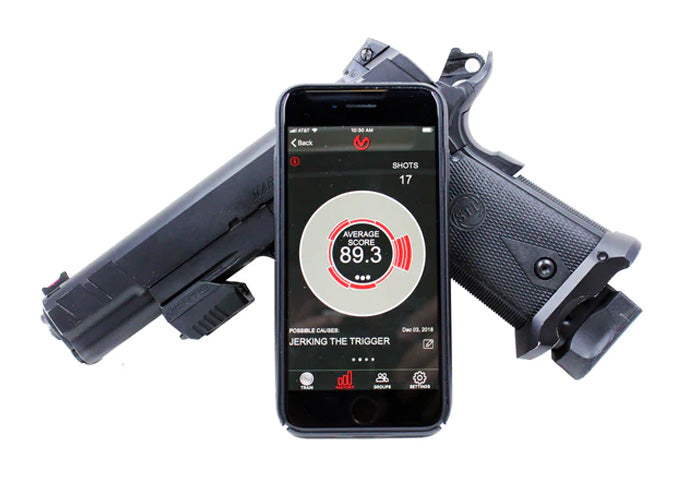
The X2 is the entry point and covers the basics well. The X10 Elite adds holster draw analysis, recoil analysis (for live fire), and more advanced drill modes. Every model works in both dry fire and live fire, which means you can validate your dry-fire improvements at the range with the same sensor.
Here's what makes MantisX different from everything else on this list: it doesn't care where a laser dot lands. It cares about the movement pattern of your muzzle. That's a fundamentally different kind of feedback, and for most intermediate shooters, it's more useful than shot placement data. You already know your shots are hitting low-left. MantisX tells you why and tracks your improvement over time with a scoring system from 0 to 100.
The diagnostic: if your MantisX score is below 80, you have trigger press issues worth fixing before you worry about speed. Get to 90+ consistently in dry fire, then start adding time pressure.
The limitation is that MantisX requires a rail. If your carry gun doesn't have one, you'll need a rail adapter or you'll be training on a different gun. The sensor also adds a small amount of weight to the muzzle, which some shooters notice. And the app, while powerful, has a learning curve; the sheer volume of data can overwhelm new users. Start with the basic trigger analysis mode and ignore the rest until you've logged fifty sessions.
CoolFire Trainer
CoolFire is the outlier on this list because it's the only system that gives you recoil. A model-specific replacement barrel uses CO2 cartridges to drive the slide back when you fire, simulating blowback. The trigger resets, the slide cycles, and you get a physical sensation closer to live fire than anything else you can do at home.
This matters most for draw-to-first-shot practice and follow-up shots. Every other system on this list requires you to rack the slide between shots (unless you add a DryFireMag). CoolFire lets you run a five-shot string from the holster with slide cycling and a resetting trigger, which is a completely different training experience.
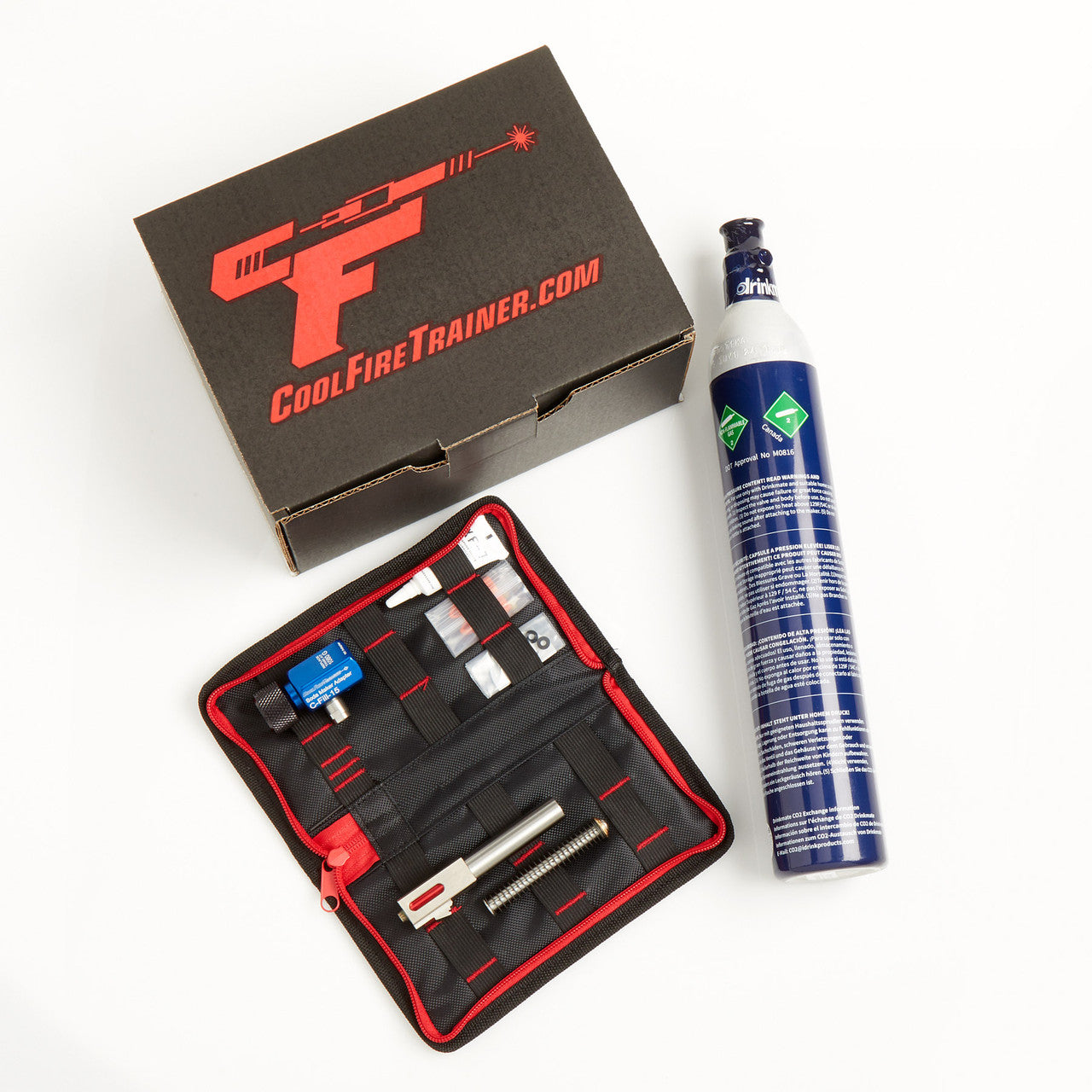
The tradeoff is cost and logistics. Barrels are model-specific and run $200–$350. CO2 cartridges are a recurring expense; roughly 80–100 shots per cartridge, and cartridges cost a few dollars each. You also can't pair it with laser shot-placement systems easily since the barrel replacement means no laser cartridge in the chamber. Some users pair it with a MantisX sensor for muzzle tracking, which is a strong combination.
CoolFire is best for shooters who already have solid fundamentals and want to train draw speed, transitions, and follow-up shots with realistic slide cycling. If you're still working on your trigger press, spend the money on a MantisX and a DryFireMag instead.
DryFireMag
Not an aiming system; but it solves the single most annoying problem in dry-fire training. With a standard semi-auto, you have to rack the slide after every trigger pull to reset the action. That interrupts your grip, breaks your sight picture, and makes high-volume trigger press reps tedious.
DryFireMag is a replacement magazine with an internal mechanism that resets the trigger after each press. You get a clicking trigger with a realistic break weight that you can press over and over without touching the slide. It's model-specific (Glock, Sig P320/P365, S&W M&P, and a few others), and it doesn't do anything else; no laser, no sensor, no app.
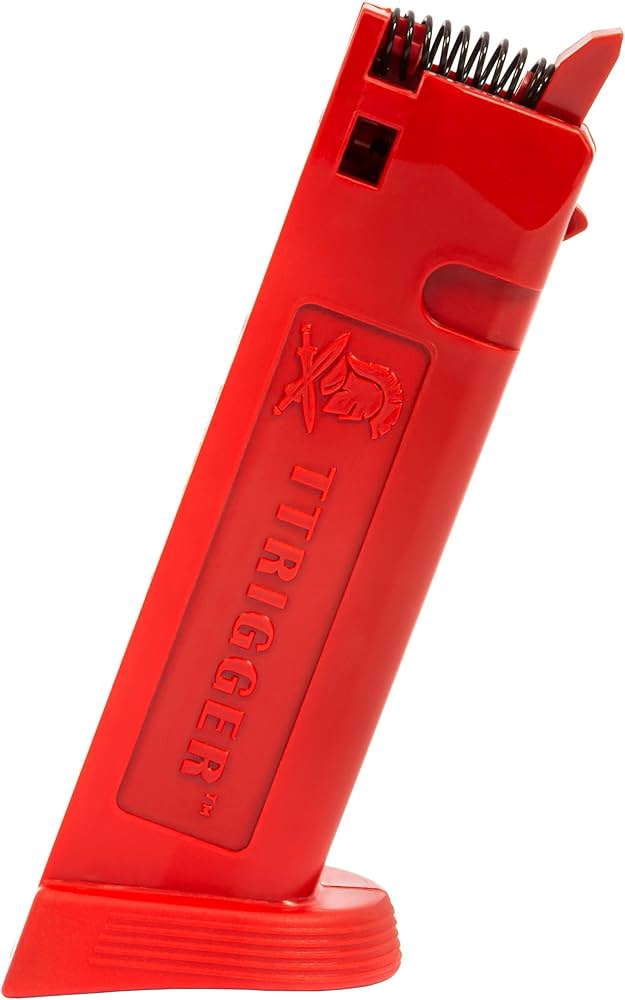
But pair it with a MantisX sensor and you've got an incredibly efficient training loop: repeated trigger presses with real-time muzzle tracking, no slide racking, no distractions. Ten minutes of focused reps with this combo is worth more than most range sessions.
The trigger feel isn't identical to live fire; users report it's slightly lighter and shorter on most models. That's a fair tradeoff for the volume of reps you can stack in a short session.
SIRT training pistol
The SIRT (Shot Indicating Resetting Trigger) is a dedicated training pistol, not an accessory for your carry gun. It's shaped and weighted like a Glock 17/22 (the SIRT 110) or a compact model, with two lasers: one that activates during trigger prep (take-up) and one that fires at the break. The trigger resets without racking, so you get unlimited reps.
The dual-laser system is genuinely useful for diagnosing trigger issues. If your prep laser is steady but your shot laser jumps, you know exactly where in the trigger press you're disturbing the sights. Instructors love these for classroom and force-on-force work.
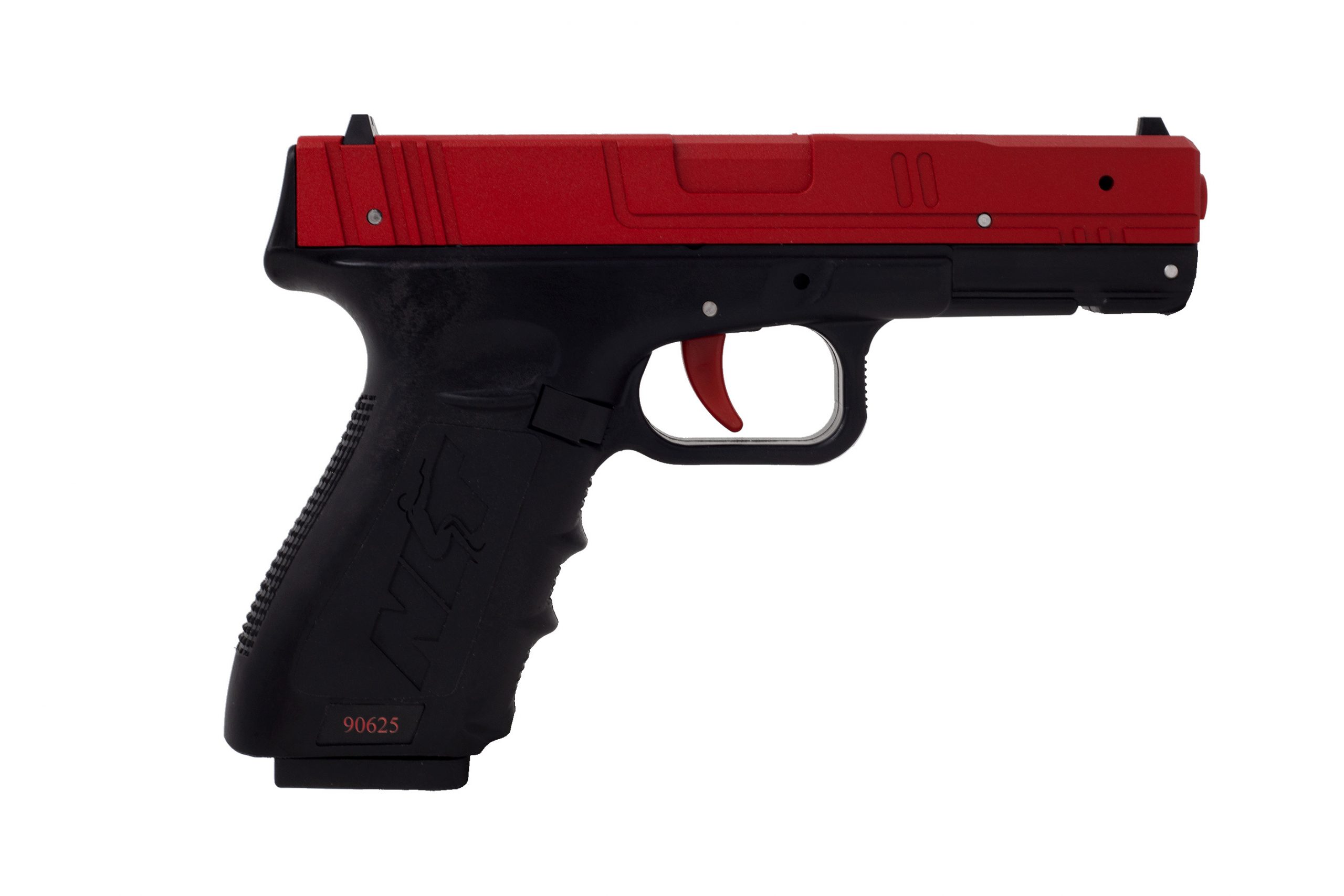
The problem: it's not your gun. The grip angle, trigger weight, and trigger feel won't match your carry pistol. You're building general skills; sight tracking, trigger prep awareness, draw mechanics; but you're not building specific familiarity with your actual weapon. For shooters who carry a Glock, the transition is close enough to be useful. For anyone on a Sig, CZ, 1911, or anything with a substantially different manual of arms, the SIRT is a supplemental tool at best.
At $240–$400+, it's also competing with systems that work with your actual firearm. Unless you're an instructor or you specifically want a force-on-force training tool, the money is usually better spent on a MantisX and a DryFireMag.
G-Sight and LaserHIT
These two occupy the budget laser tier alongside Strikeman. G-Sight is often the cheapest entry point; laser cartridges for under $30, with an optional app and target system. LaserHIT runs a similar model with slightly better app features and target options.
Both work. Both are limited in the same ways: basic shot placement data, phone-camera dependency, minimal drill structure. If you're testing whether laser dry fire is something you'll actually stick with, either one is a low-risk way to find out. If you already know you're committed, skip straight to Mantis Laser Academy or MantisX.
Common mistakes with dry-fire aiming systems
Buying the system and never setting a standard. If you don't have a par time, a group size, or a score to chase, you're just playing with a laser pointer. Set a benchmark on day one and track it.
Training only what you're good at. The drill that's fun is the drill you don't need. If your draw is clean but your first-shot accuracy is garbage, stop running draw drills and start doing slow-fire trigger press work with the MantisX.
Ignoring the fundamentals because the technology is cool. A laser cartridge doesn't fix a bad grip. A motion sensor doesn't fix a stance that shifts under recoil. Use the tech to diagnose, then fix the root cause with deliberate, focused reps.
Skipping the cold rep. Your first rep of every session should be your diagnostic. Draw, press, check. That cold rep is the most honest data point you'll get. Don't warm up first; that defeats the purpose.
Over-relying on any single system. Laser systems show you where. Motion sensors show you how. Neither replaces live fire for recoil management and noise desensitization. Dry fire builds the foundation. Live fire validates it. Run both.
Range notes
Whatever system you pick, commit to ten minutes, three times a week. That's the minimum effective dose for measurable improvement. Set a timer. Run a specific drill; not just "point at the target and pull the trigger." Log your scores. If you're using MantisX, screenshot your session score weekly and compare month over month. If you're using a laser system, photograph your shot group on the target.
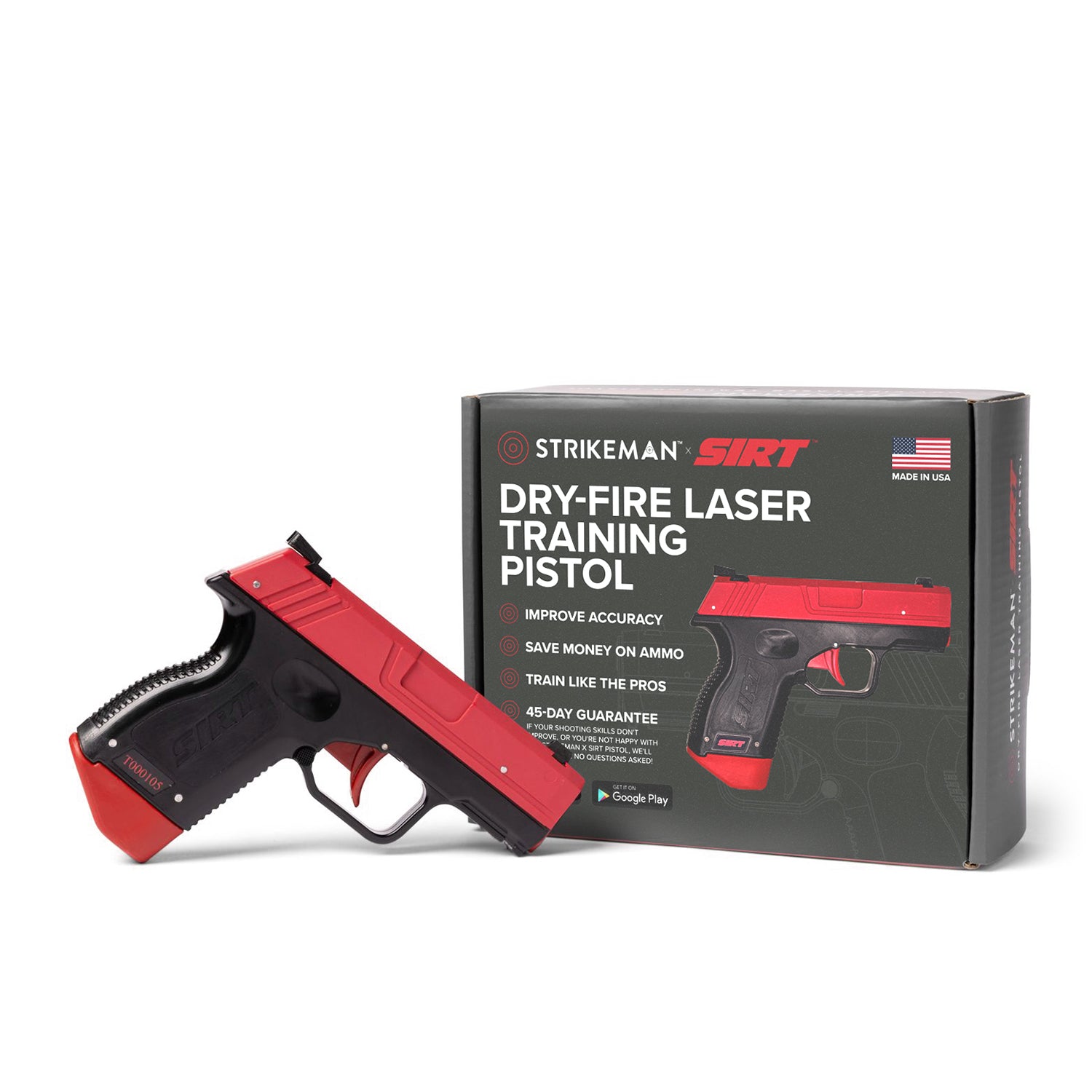

The system that makes you better is the one you actually use. A $60 Strikeman used four times a week beats a $350 CoolFire that sits in a drawer. But if you're serious about diagnosing and fixing specific shooting problems, the MantisX is the best training investment under $250 in the market right now. Pair it with a DryFireMag for your specific gun and you've got a training setup that will push your fundamentals harder than most live-fire range sessions.
Track it. Then trust the trend. Fifty dry-fire reps with a plan beats 200 rounds at the range without one.