You've settled on 77-grain .223 for your precision AR or bolt gun, and now you're staring at five or six different boxes on the shelf; all claiming match-grade accuracy, all loaded with some variation of a long, high-BC open-tip match bullet. The question isn't whether 77-grain works. It does. The question is which load runs best in your barrel, and what velocity you should actually expect from a 20-inch tube versus the numbers printed on the box.
Here's the deal: 77-grain .223 is the sweet spot where the cartridge punches above its weight class. The bullet's ballistic coefficient; typically in the .370 to .395 G1 range depending on the specific projectile; gives it legs past 600 yards that 55-grain and 62-grain loads simply can't match. But the .223 case is small, and pushing a heavy bullet means you're working near max pressure. Small differences in powder charge, bullet seating depth, and barrel dimensions translate into real velocity spreads and meaningful accuracy differences. A 20-inch barrel wrings out the most performance the cartridge can deliver without going to a bolt gun with a 24-inch or 26-inch tube, and it's the barrel length where most published load data is generated.
What follows is a detailed look at five factory 77-grain .223 loads; their velocity behavior from a 20-inch barrel, their accuracy potential, and the practical differences that matter at the range. No made-up chrono numbers. Just what the data and community testing consistently show.
Why 77-grain from a 20-inch barrel
The 20-inch barrel and 77-grain .223 pairing isn't arbitrary. It's where the cartridge reaches its practical velocity ceiling before you start chasing diminishing returns with longer barrels.
A 77-grain bullet from a 20-inch .223 Remington chamber typically lands between 2,650 and 2,800 fps depending on the load. That's roughly 50 to 80 fps more than you'd get from an 18-inch barrel, and about 100 to 150 fps more than a 16-inch. Going to 24 inches buys you maybe another 40 to 60 fps; not nothing, but not enough to justify the extra length and weight for most shooters. The 20-inch barrel captures the bulk of the powder burn. Hodgdon's barrel-length-versus-velocity data consistently shows that .223 Remington gains roughly 25 to 35 fps per inch of barrel between 16 and 20 inches, with the curve flattening noticeably past 20.
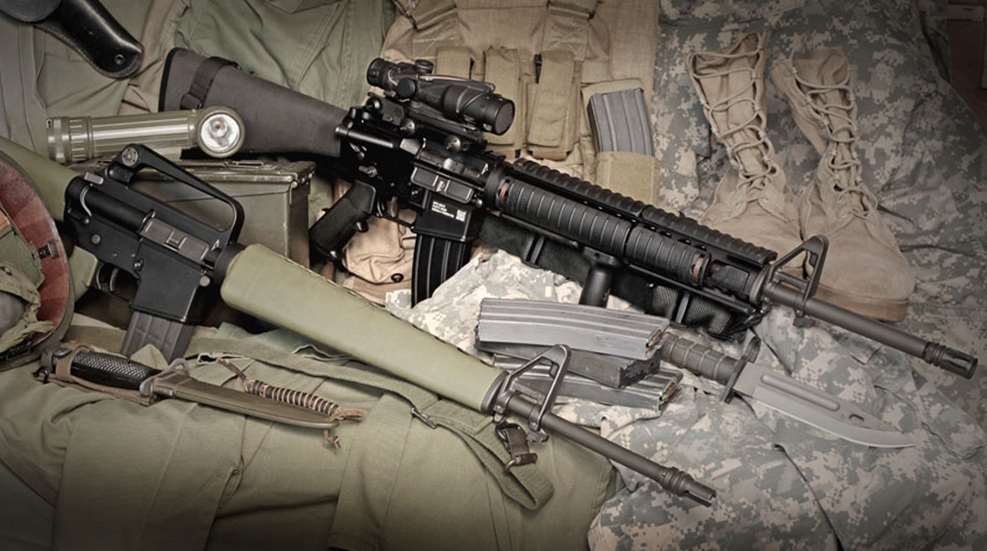
There's a chamber pressure consideration too. The .223 Remington SAAMI max average pressure is 55,000 psi. The 5.56 NATO spec runs higher; around 62,000 psi measured on a different system, which roughly translates to about 58,000 psi on the SAAMI copper crusher scale. Most factory 77-grain loads are headstamped .223 Remington and loaded to .223 pressures, though a few (like IMI's Razor Core) are loaded to 5.56 spec. That pressure difference matters: a 5.56-chambered barrel with a longer leade gives the bullet a running start before it engages the rifling, which slightly reduces peak pressure for a given charge weight. A .223 Remington match chamber with a tighter leade will see higher pressure from the same round. Know your chamber.
The 1:8 twist rate is the standard for stabilizing 77-grain bullets in .223. A 1:7 works too; it'll overstabilize slightly, which is fine for accuracy inside 600 yards and actually helps in cold, dense air. A 1:9 is marginal. Some 1:9 barrels will stabilize 77-grain Sierra MatchKings adequately, but you're rolling the dice, especially in summer heat at altitude where air density drops. Stick with 1:8 or 1:7 for a 20-inch barrel intended to run heavy .223.
The five loads
The loads compared here represent the most commonly available and discussed 77-grain .223 factory options. Each uses a slightly different bullet or loading philosophy, and those differences show up on the chrono and on paper.
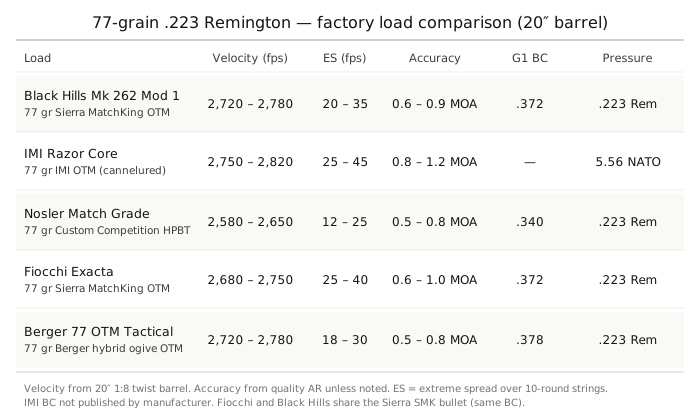
Black Hills Mk 262 Mod 1 (77-grain Sierra MatchKing)
This is the benchmark. Black Hills loads the Mk 262 under contract for the U.S. military, and their commercial version uses the same 77-grain Sierra MatchKing OTM bullet. The Sierra 77 SMK has a published G1 BC of .372, though real-world drag modeling often puts it closer to .362 to .370 depending on velocity band.
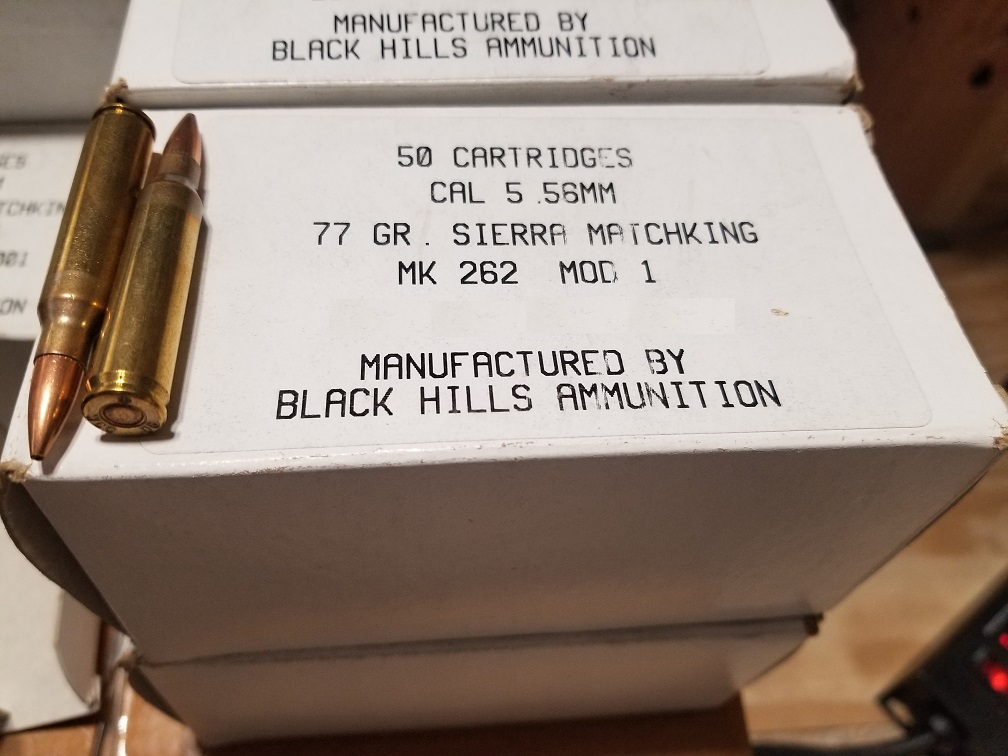
From a 20-inch barrel, Black Hills Mk 262 Mod 1 consistently chronographs in the 2,720 to 2,780 fps range. The advertised velocity is 2,750 fps from a 20-inch test barrel, and real-world data from forum testing and independent reviews clusters tightly around that number. Extreme spreads (ES); the difference between the fastest and slowest rounds in a string; tend to run 20 to 35 fps over 10-round strings. Standard deviations typically land between 10 and 18 fps. That's solid for factory ammunition.
Accuracy from a quality barrel is consistently sub-MOA. Five-shot groups at 100 yards from a good 20-inch AR with a free-floated handguard and decent trigger regularly print between 0.6 and 0.9 MOA. From a bolt gun like a Tikka T3x or Remington 700 pattern action, groups tighten further; 0.5 MOA isn't unusual with a barrel that likes the load.
The Mk 262 is the load everything else gets compared to. It's been doing this for over two decades.
IMI Razor Core 77-grain OTM
IMI's Razor Core is the Israeli answer to Mk 262, and it's loaded to 5.56 NATO pressure spec. The bullet is IMI's own 77-grain OTM design with a cannelure, seated to a length that feeds reliably from standard AR magazines including the USGI aluminum variety.
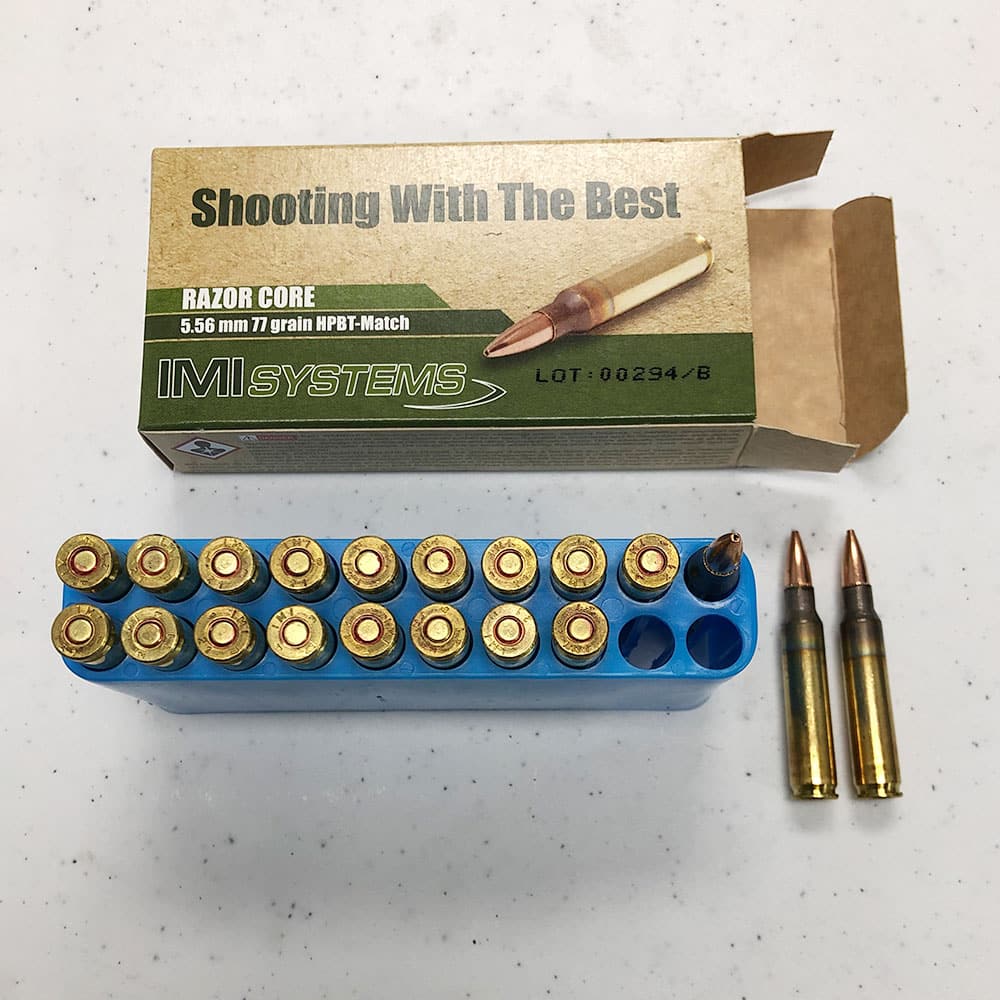
Velocity from a 20-inch barrel runs a touch hotter than Black Hills; typically 2,750 to 2,820 fps, with some barrels seeing occasional rounds crack 2,830. The higher pressure loading accounts for most of that difference. ES tends to be slightly wider than Black Hills, often 25 to 45 fps, though this varies by lot. Some shooters on AR15.com have reported tighter lots that rival Black Hills consistency; others have seen lots with 50+ fps ES.
Accuracy is genuinely good. Most reports put it at 0.8 to 1.2 MOA from a quality AR, with occasional groups tightening to 0.6 MOA. It's not quite as consistently tight as Black Hills, but the difference is small enough that barrel preference plays a bigger role than any inherent accuracy gap in the ammunition. The real advantage of IMI Razor Core is availability and price; it's typically easier to find in bulk and costs less per round than Black Hills.
One note on the 5.56 pressure loading: if you're running a .223 Remington-chambered bolt gun with a tight match chamber, check your brass after firing. Look for flattened primers or difficult extraction. Most .223 bolt guns handle it fine, but a few tight-chambered rifles will show pressure signs. A 5.56 or .223 Wylde chamber handles it without issue.
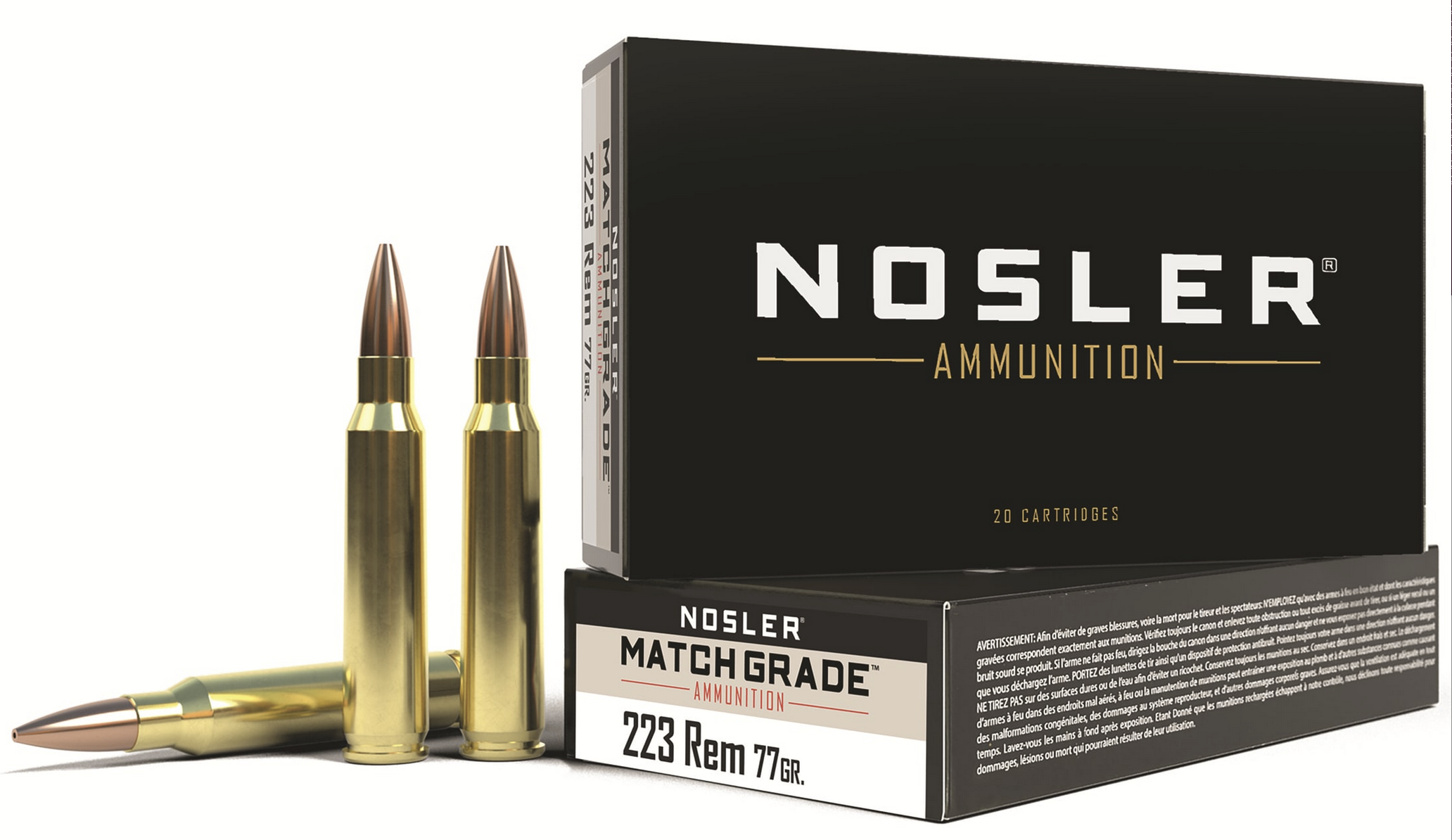
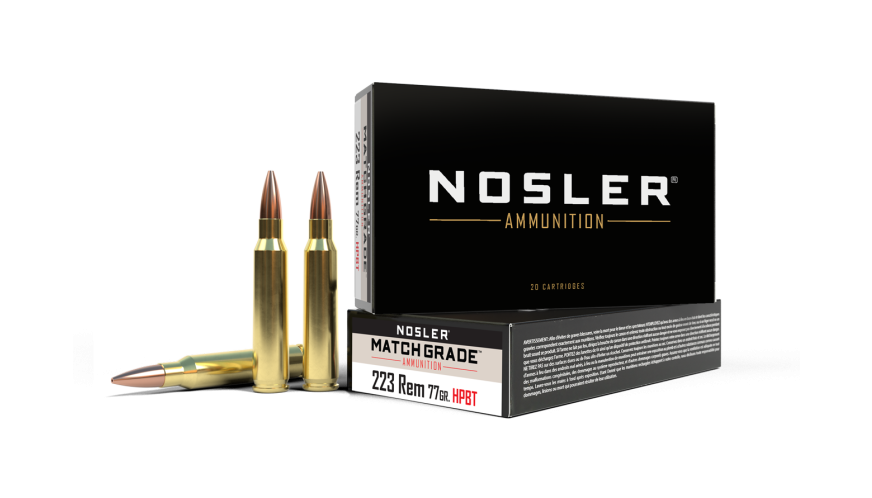
Nosler Match Grade 77-grain Custom Competition
Nosler loads their own 77-grain Custom Competition HPBT bullet, which is their answer to the Sierra MatchKing. The Nosler CC has a slightly different ogive profile and a published G1 BC of .340; noticeably lower than the Sierra's .372. That BC difference matters past 400 yards but is largely irrelevant at 100 and 200.
Advertised velocity is 2,600 fps, and that's from Nosler's test barrel. From a 20-inch AR or bolt gun, real-world chrono data clusters around 2,580 to 2,650 fps. That's 100 to 150 fps slower than Black Hills Mk 262. The lower velocity is a deliberate choice; Nosler loads conservatively, keeping pressures well below max to ensure safe function across the widest range of chambers. The tradeoff is less energy at distance and more drop past 400 yards.
Where Nosler shines is consistency. ES numbers from Nosler Match Grade are frequently the tightest of any factory 77-grain load; 12 to 25 fps over 10-round strings is common, with standard deviations often under 12 fps. That consistency translates to accuracy. Five-shot groups of 0.5 to 0.8 MOA from a bolt gun are routine, and even from an AR, sub-MOA performance is the norm rather than the exception.
The lower BC of the Custom Competition bullet does show up at distance. At 600 yards, you're looking at roughly 4 to 5 inches more drop compared to the Sierra MatchKing loaded to the same velocity, and about 1 to 1.5 MOA more wind drift in a 10 mph crosswind. Inside 400 yards, the difference is academic.
Shooters on Accurate Shooter's forum have gone back and forth on whether the Nosler CC is "as good as" the Sierra SMK. The consensus: for group size at 100 to 300 yards, it's a wash. For wind-bucking ability at 600+, the Sierra wins on BC alone.
Fiocchi Exacta 77-grain Sierra MatchKing
Fiocchi's Exacta line loads the same 77-grain Sierra MatchKing as Black Hills, but in Fiocchi brass with Fiocchi primers and powder. It's a .223 Remington pressure loading.
Velocity from a 20-inch barrel runs 2,680 to 2,750 fps; slightly below Black Hills on average. The Fiocchi loading seems a touch more conservative, or the powder charge is slightly lighter. ES has been reported in the 25 to 40 fps range, which is acceptable but not exceptional.
Accuracy is where Fiocchi Exacta gets interesting. Because it uses the same Sierra SMK bullet, the accuracy potential is inherently there. Reports from Adiga Armory's testing and various forum threads show five-shot groups between 0.6 and 1.0 MOA from quality barrels. Some barrels prefer Fiocchi over Black Hills, and vice versa; this comes down to harmonics and the specific combination of charge weight, bullet seating depth, and your barrel's node.
The brass is decent but not as consistent in weight as Lapua or even Black Hills' brass. If you're planning to reload, you'll want to weight-sort Fiocchi brass or just use it as once-fire and switch to better cases. The primer pockets tend to loosen after two or three reloads.
Fiocchi Exacta's real value proposition is that it's often available when Black Hills isn't, and it puts the same bullet downrange. Think of it as the understudy that knows all the lines.
Berger 77-grain OTM Tactical
Berger's factory .223 Remington load uses their own 77-grain OTM Tactical bullet, which has a hybrid ogive design that's less sensitive to seating depth than a pure tangent or secant ogive. The published G1 BC is .378; slightly higher than the Sierra SMK; and Berger's reputation for bullet consistency is well-earned.
Advertised velocity is 2,750 fps, and chrono data from 20-inch barrels generally confirms this: 2,720 to 2,780 fps is the typical range. ES runs 18 to 30 fps in most reports, which puts it on par with Black Hills for consistency.
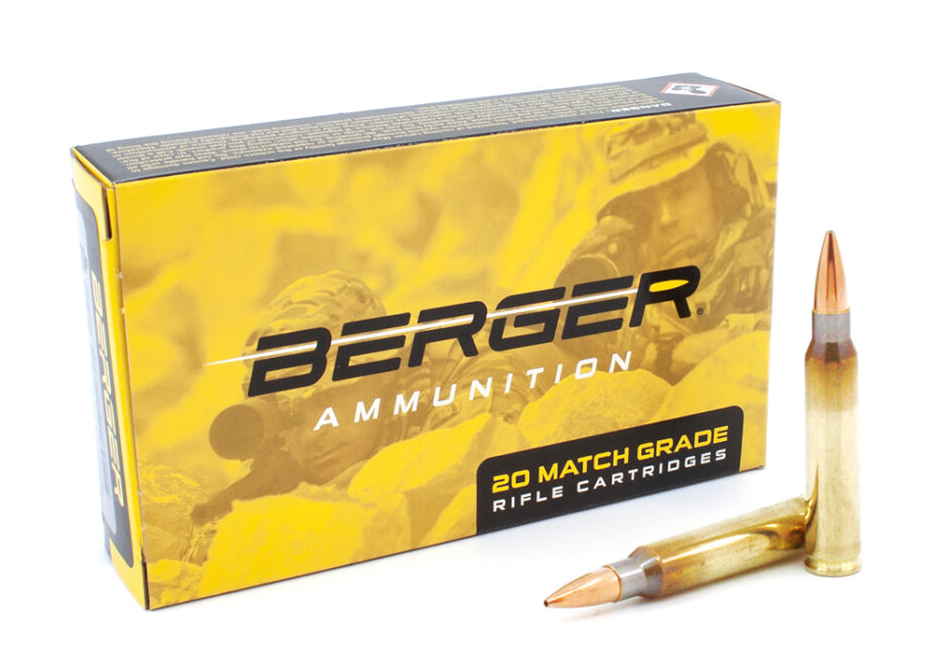
Accuracy from the Berger load is excellent. The hybrid ogive design means it tends to shoot well in a wider variety of barrels without being as sensitive to throat dimensions. Five-shot groups of 0.5 to 0.8 MOA from a bolt gun are common, and sub-MOA from a well-built AR is the expectation. Some Tikka T3x owners on Rokslide have reported this load grouping under half-MOA from factory rifles with minimal load development; just buy, chamber, and shoot.
The downside is availability. Berger factory ammunition is produced in smaller quantities than Black Hills or IMI, and it commands a premium. When you can find it, it's worth testing. The hybrid ogive bullet also tends to be slightly more forgiving of less-than-perfect handloads if you decide to buy the projectiles and roll your own.
Velocity comparison at a glance
Across these five loads from a 20-inch 1:8 twist barrel, here's what the velocity landscape looks like:
Black Hills Mk 262 Mod 1: 2,720–2,780 fps, ES 20–35 fps
IMI Razor Core: 2,750–2,820 fps, ES 25–45 fps
Nosler Match Grade: 2,580–2,650 fps, ES 12–25 fps
Fiocchi Exacta: 2,680–2,750 fps, ES 25–40 fps
Berger 77 OTM Tactical: 2,720–2,780 fps, ES 18–30 fps
Berger 77-grain OTM Tactical Deals
Prices may change. May contain affiliate links.
IMI runs the hottest. Nosler runs the coolest. The other three cluster in the middle. That 150 to 200 fps spread between the fastest IMI rounds and the slowest Nosler rounds translates to roughly 6 to 8 inches of drop difference at 500 yards and about 2 inches of wind drift difference in a 10 mph crosswind. Not trivial at distance, but manageable if you know your load and have a solid dope card.
What actually drives accuracy differences
Same bullet weight. Same caliber. Same barrel. So why does one load print 0.6 MOA and another print 1.1 MOA from the same rifle?
Three factors dominate.
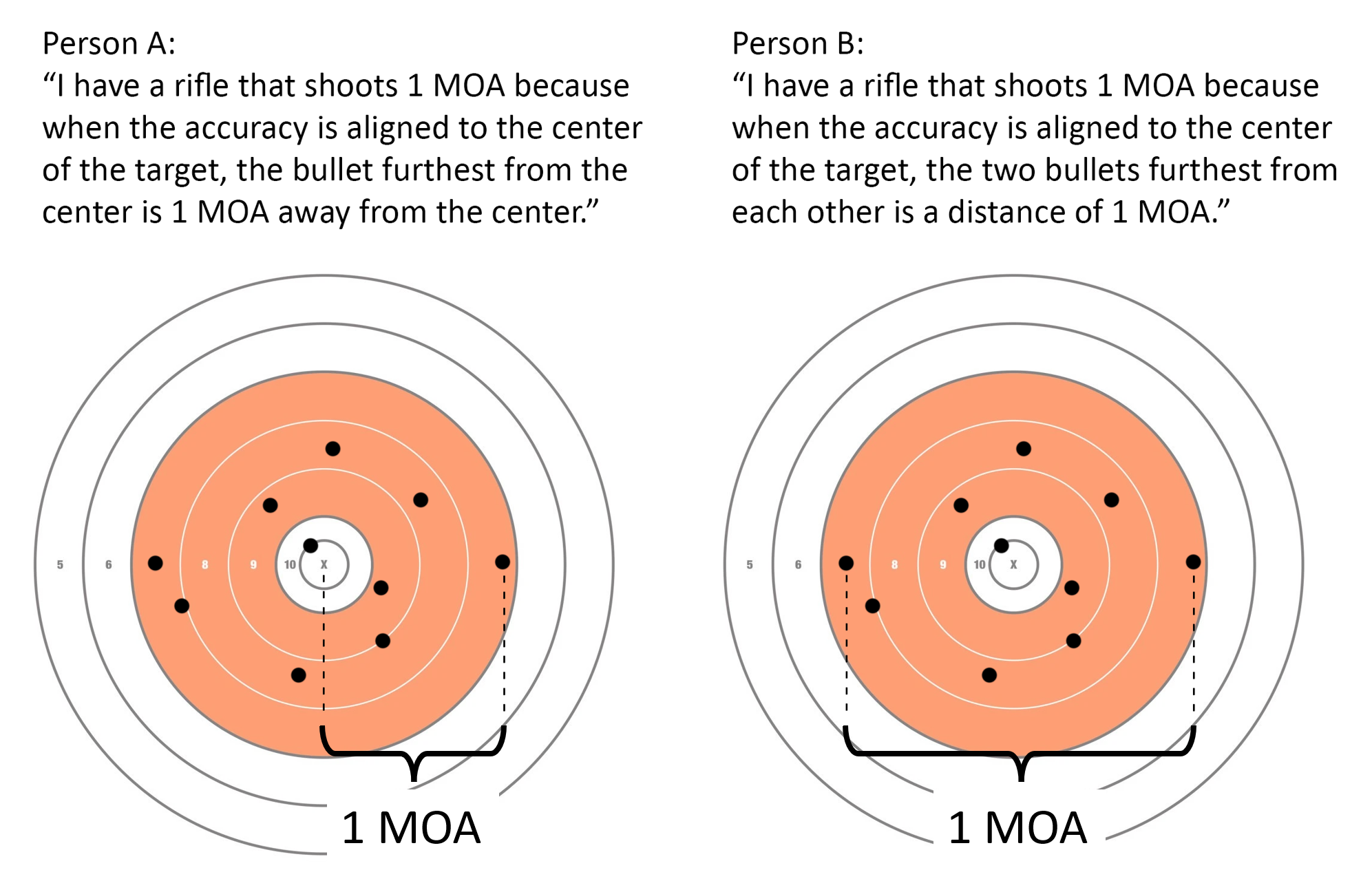
The first is velocity consistency. A load with 15 fps standard deviation will produce tighter vertical dispersion at distance than a load with 25 fps SD, all else being equal. At 100 yards, the difference is invisible; you can't see a 0.1 MOA vertical shift caused by 30 fps of velocity variation at that range. At 500 yards, that same 30 fps variation creates about 0.5 MOA of vertical spread. This is why Nosler's low ES numbers matter even though its absolute velocity is the lowest of the group. Consistency beats speed for precision.
The second factor is bullet concentricity and weight uniformity. Sierra MatchKings have been the standard for decades because their jacket thickness uniformity is excellent. Berger's J4 jackets are at least as good, arguably better. Nosler's Custom Competition bullets are well-made but have slightly more lot-to-lot variation in BC based on community testing. IMI's proprietary bullet is good but not quite at the Sierra/Berger level for jacket uniformity. These differences are small; we're talking about 0.1 to 0.3 MOA at 100 yards; but they compound at distance.
The third factor, and the one most shooters underestimate, is how the specific load interacts with your barrel's harmonic node. Every barrel vibrates when fired. The muzzle whips in a pattern that creates "nodes"; points in the vibration cycle where the muzzle position is relatively stable across a small velocity window. A load that happens to exit the muzzle at a node will group tighter than a load that exits during a transition between nodes, even if the second load has better components. This is why one barrel will love Black Hills and hate Fiocchi, while the rifle on the next bench shows the opposite preference. You can't predict it. You have to test it.
Range notes: how to actually test these loads
Buy at least 40 rounds of each load you want to evaluate. Twenty isn't enough; you need to shoot past the cold-bore flier and the fouling shots and still have enough rounds for meaningful groups.
Start with a clean, cold bore. Fire one fouling shot with whatever load you're testing first. Then shoot five-shot groups at 100 yards from a solid rest; bipod and rear bag minimum, lead sled if you have one. Shoot two five-shot groups per load before switching. Let the barrel cool between groups; a 20-inch .223 barrel heats up fast, and a hot barrel shifts point of impact and opens groups.
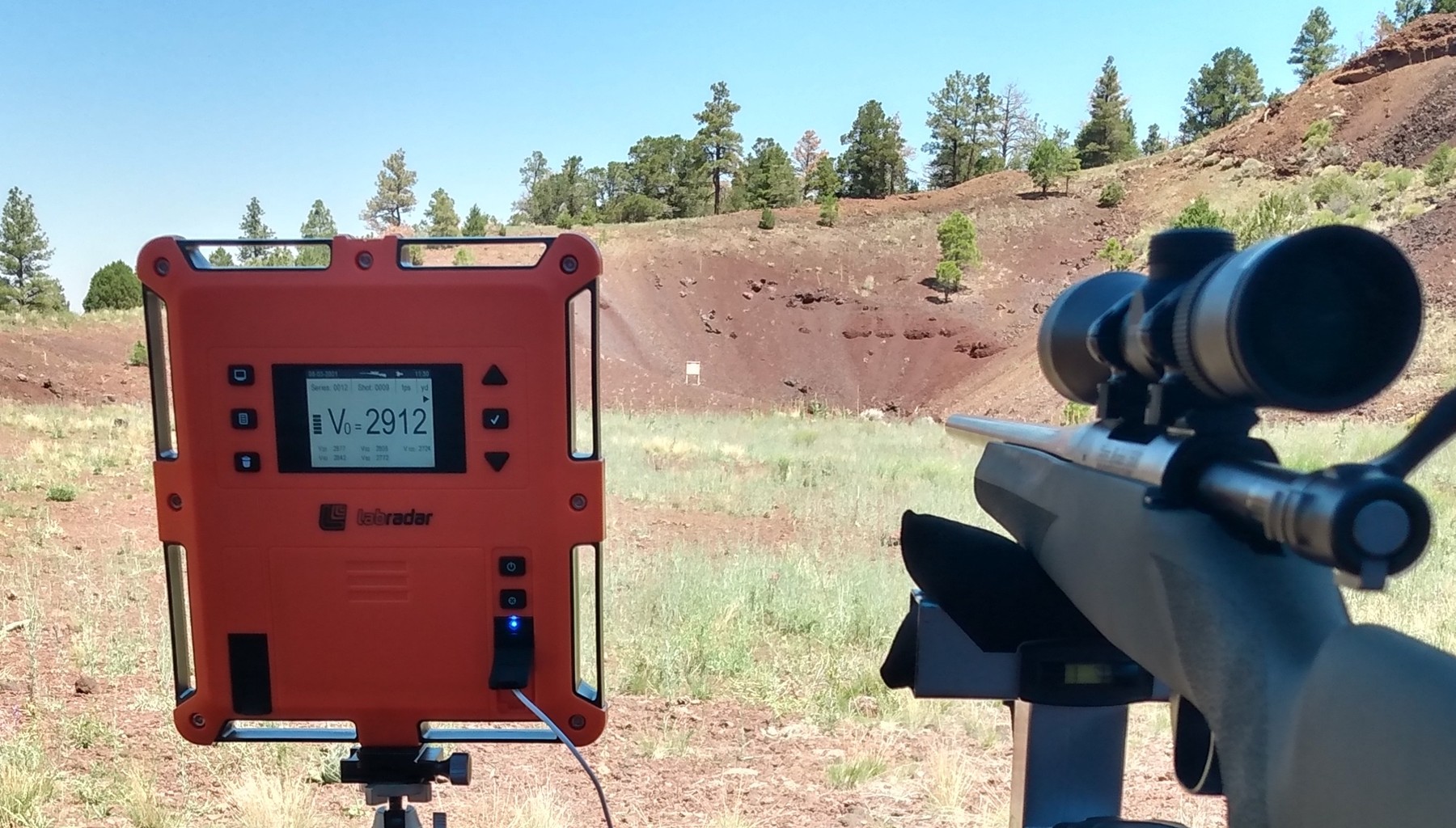
Record your chrono data for every round. If you don't own a chronograph, a Garmin Xero or LabRadar is worth the investment. Muzzle velocity data without a chrono is just guessing.
After 100-yard testing, take your two best-performing loads to 300 or 500 yards if your range allows it. The accuracy differences that were marginal at 100 will separate clearly at distance. A load with 0.8 MOA groups and 15 fps SD will outperform a load with 0.6 MOA groups and 30 fps SD once you get past 400 yards. That's the crossover point where consistency starts mattering more than raw group size.
Wind flags or a Kestrel weather meter will help you separate load performance from wind-reading errors. If you're testing at 500 yards without wind data, you're measuring your wind call, not your ammunition.
The .223 Remington vs. 5.56 NATO question with heavy bullets
This comes up every time someone discusses 77-grain loads, so let's address it directly.
A .223 Remington chamber has a shorter leade (the unrifled portion of the throat ahead of the case mouth) than a 5.56 NATO chamber. The shorter leade means the bullet engages the rifling sooner, which increases peak pressure for a given charge weight. A 5.56 NATO round fired in a .223 Remington chamber will generate higher pressure than the same round fired in a 5.56 chamber.
For most 77-grain .223 Remington-headstamped loads (Black Hills, Nosler, Fiocchi, Berger), this isn't a concern; they're loaded to .223 Remington pressure specs and are safe in either chamber. IMI Razor Core is loaded to 5.56 pressure spec. It's safe in a 5.56 or .223 Wylde chamber. In a tight .223 Remington match chamber, it'll likely function fine, but you may see pressure signs sooner; especially on a hot day at a lower-elevation range where air density is higher.
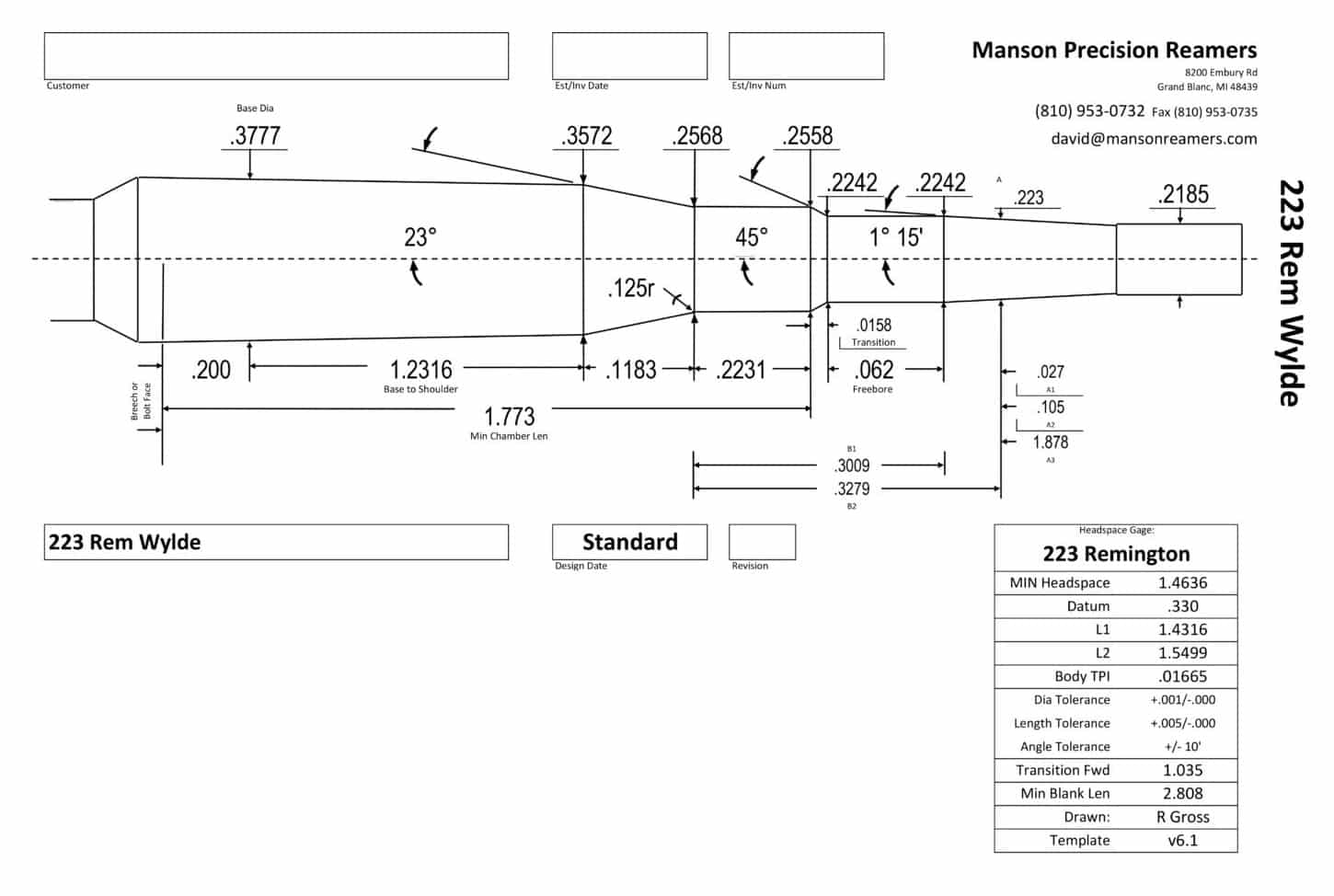
The .223 Wylde chamber splits the difference. It has a leade length between .223 Rem and 5.56 NATO, which safely handles 5.56 pressure ammo while maintaining the tighter dimensional tolerances that benefit accuracy. If you're building a 20-inch precision AR specifically for 77-grain loads, .223 Wylde is the right chamber. Full stop.
One more thing on this topic: the 77-grain OTM bullet is long. At 0.985 inches, it's near the maximum length that reliably feeds from a standard AR magazine with a 2.260-inch overall cartridge length. Some 77-grain loads are seated slightly deeper to ensure magazine-length compatibility, which means the bullet's ogive may be jammed into or jumping to the rifling depending on your specific chamber's throat. Bolt gun shooters can seat longer and tune the jump distance. AR shooters are stuck with magazine-length rounds. This is one reason bolt guns tend to outshoot ARs with the same ammunition; the seating depth can be optimized.
Common mistakes with 77-grain .223
Experienced shooters make these errors more often than you'd think.
Running a 1:9 twist and blaming the ammo for bad groups. The 1:9 twist rate is marginal for 77-grain bullets. At sea level on a cold day, the dense air may provide enough aerodynamic stability. At 5,000 feet on a 90-degree afternoon, that same bullet may not stabilize fully, and you'll see oblong holes on paper and groups that open to 2+ MOA. The fix isn't a different load; it's a different barrel. A 1:8 twist stabilizes 77-grain .223 bullets across all reasonable atmospheric conditions with margin to spare.
Comparing groups from different shooting sessions without accounting for conditions. A 0.7 MOA group shot on a calm 60-degree morning is not comparable to a 1.1 MOA group shot on a gusty 95-degree afternoon. Temperature affects velocity (hotter ambient temps increase chamber pressure and muzzle velocity by roughly 1 to 2 fps per degree Fahrenheit with most powders), and wind affects group size at every distance. If you're comparing loads, shoot them back-to-back in the same session.
Ignoring barrel break-in and fouling state. A clean barrel shoots differently than a fouled barrel. Most .223 barrels settle into their accuracy node after 5 to 15 fouling shots. If you clean between every load change during testing, you're introducing a variable. Better approach: fire 3 to 5 fouling rounds of whatever you're testing next, then shoot your groups. Or don't clean between loads at all; just accept that the first round or two of a new load may be fliers.
Chasing velocity over consistency. The temptation to pick IMI Razor Core because it's 100 fps faster than Nosler Match Grade is real. But if the Nosler shoots half-MOA with 15 fps SD in your rifle and the IMI shoots 1 MOA with 35 fps SD, the Nosler will beat it at every distance past 300 yards. Velocity is easy to compensate for with a turret click. Inconsistency is not.
Not testing at distance. A load that groups 0.6 MOA at 100 yards might open to 1.5 MOA at 500 because of poor BC or high ES. The 100-yard group tells you about the rifle's mechanical accuracy and the bullet's initial flight. The 500-yard group tells you about the load's total system performance; BC, ES, and aerodynamic stability all contribute. If you only ever shoot at 100, you'll never know which load is actually best for distance work.
Handloading: where the 77-grain .223 really opens up
Factory ammo gets you 90% of the way there. Handloading gets you the last 10%, and for competitive shooters or dedicated precision hobbyists, that last 10% is the whole point.
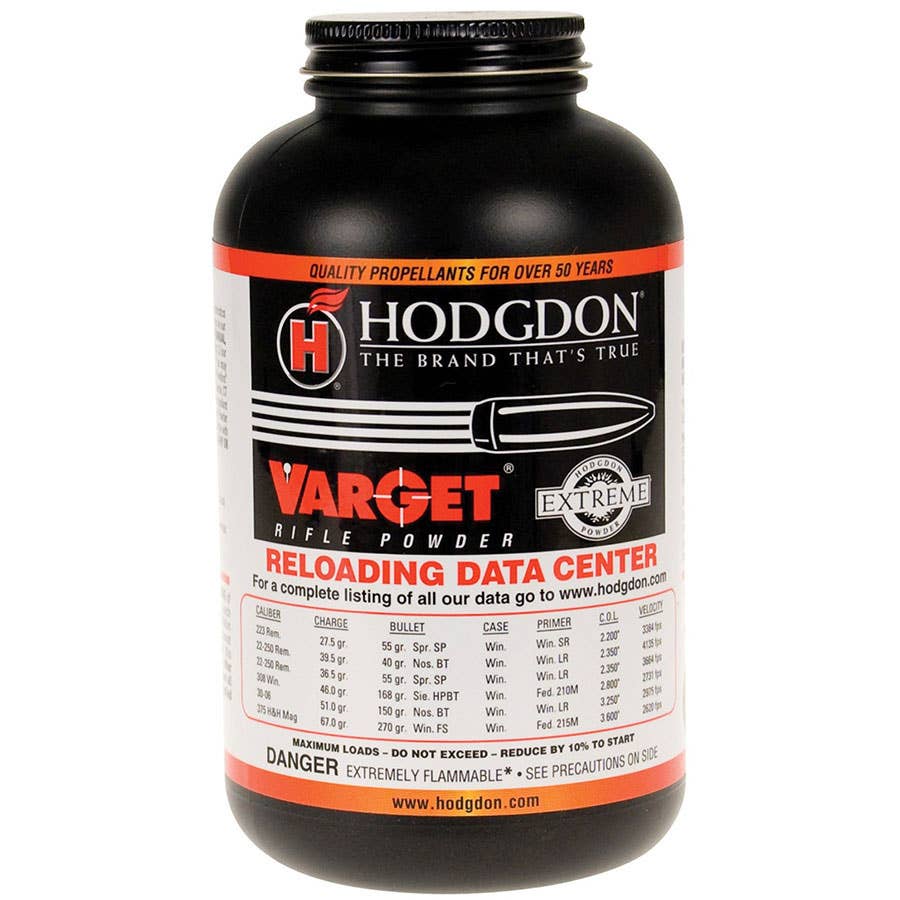
The two most popular powders for 77-grain .223 are Hodgdon Varget and Alliant Reloder 15. Both are temperature-stable extruded powders that fill the case well at near-max charges, which reduces shot-to-shot velocity variation caused by powder position. Varget is the community favorite; it's the powder that shows up in almost every "what do you load 77 SMK with" thread on Accurate Shooter and Sniper's Hide. Typical charges run 23.0 to 24.5 grains of Varget behind a 77-grain Sierra MatchKing, depending on case volume, primer, and seating depth. Always work up from published minimums in your specific rifle.
Nosler's load data shows their 77-grain Custom Competition bullet over Varget at 22.0 to 24.0 grains, with a max velocity of about 2,800 fps from a 24-inch test barrel. Scale that back for a 20-inch barrel and you're looking at 2,700 to 2,750 fps at the top end. Reloder 15 shows similar performance with slightly different pressure curves.
Case prep matters more with 77-grain .223 than with lighter bullets because you're working closer to max pressure. Trim cases to consistent length (1.750 to 1.760 inches), uniform primer pockets, and deburr flash holes. Weight-sorting brass isn't strictly necessary, but it does tighten ES. Lapua .223 brass is the gold standard for consistency. Starline is a solid budget option. Once-fired Black Hills brass is excellent if you can get it.
Seating depth is the single biggest accuracy variable in .223 handloads with 77-grain bullets. For AR shooters limited to 2.260-inch OAL, there's not much room to play; you're jumping the bullet to the rifling by whatever distance your chamber dictates. Bolt gun shooters should start at 0.020 inches off the lands and test in 0.005-inch increments. Many barrels show a clear accuracy node at 0.010 to 0.030 inches jump with the 77 SMK.
The OCW (Optimal Charge Weight) method works well for load development with 77-grain .223. Shoot three-round groups at 0.3-grain powder charge increments from your starting load to your max load. Look for the charge weight where point of impact stays stable even as velocity increases; that's your node. A shooter on The Stalking Directory documented this process with 77-grain bullets over Varget in a 20-inch heavy barrel and found a clear node at 23.8 grains, with groups tightening from 1.2 MOA to 0.4 MOA across just a 0.6-grain charge weight range. That's the kind of sensitivity that makes load development both frustrating and rewarding.
Platform considerations: bolt gun vs. AR
The rifle you're shooting these loads through changes the equation more than most people acknowledge.
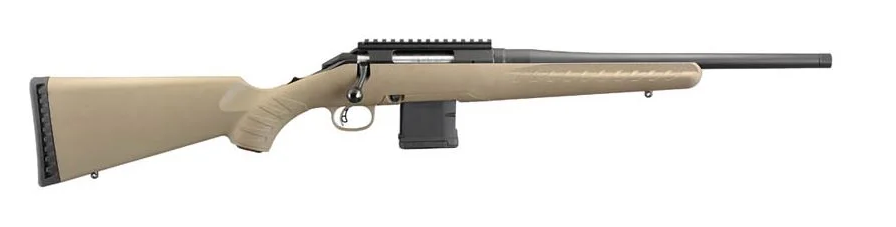
A bolt gun with a 20-inch barrel; say a Tikka T3x Varmint in .223 Remington or a Remington 700 pattern action in a quality chassis; will generally outshoot an AR by 0.2 to 0.4 MOA with the same ammunition. The bolt gun's rigid action-to-barrel lockup, lack of gas system harmonics, and ability to tune seating depth all contribute. If raw accuracy is the priority and you don't need semi-auto capability, the bolt gun is the better platform for 77-grain .223.
But the AR has its own advantages. A well-built 20-inch AR like a rifle-length gas SPR (Special Purpose Rifle) clone or something along the lines of Springfield's SAINT Edge ATC platform gives you rapid follow-up shots, which matters for practical competitions and field use. The rifle-length gas system on a 20-inch barrel runs noticeably softer than a mid-length on 16 inches; the longer dwell time and lower gas port pressure reduce bolt carrier velocity, which means less felt recoil, less bolt bounce, and longer parts life. If you're shooting 77-grain ammo in competition where you need to transition between targets quickly, the 20-inch AR with rifle-length gas is hard to beat.
The AR's accuracy ceiling with factory 77-grain ammo is roughly 0.5 to 0.7 MOA from a top-tier barrel (Criterion, Bartlein, Krieger) in a properly assembled upper with a quality trigger. That's with the right load; the one your barrel happens to prefer. With a "meh" load that doesn't hit your barrel's node, expect 0.8 to 1.2 MOA. Both are perfectly adequate for practical precision work out to 600 yards.
Barrel life is another consideration. A 20-inch .223 barrel shooting 77-grain loads at moderate velocities will last 4,000 to 6,000 rounds of accurate life in a bolt gun, and roughly 3,000 to 5,000 in an AR (the gas system erosion at the gas port accelerates throat wear slightly). Stainless steel barrels last longer than chrome-moly but are more susceptible to throat erosion at very high round counts. Chrome-lined barrels sacrifice a small amount of accuracy potential but resist erosion better. For a precision 20-inch barrel dedicated to 77-grain loads, stainless steel with no chrome lining is the standard choice.
Building your dope card
Once you've identified the load your rifle prefers, the next step is building a reliable dope card; the chart of elevation corrections at each distance that lets you make first-round hits.
Start with a 100-yard zero. Confirm it with a minimum of three separate five-shot groups on three different days. If your zero shifts by more than 0.5 MOA between sessions, you have a mounting or hardware problem; fix that before you do anything else.
Then move to distance in 50 or 100-yard increments. At each distance, fire a minimum of five rounds at center mass of the target, record your actual elevation correction, and compare it to your ballistic calculator's prediction. A good ballistic solver (Applied Ballistics, Hornady 4DOF, or even a well-configured Strelok app) will get you within 0.2 to 0.5 MOA of actual at 500 yards if you input accurate muzzle velocity, BC, and atmospheric data. The real-world dope will always differ slightly from the calculated dope because of individual barrel harmonics, actual (vs. published) BC, and local atmospheric conditions.
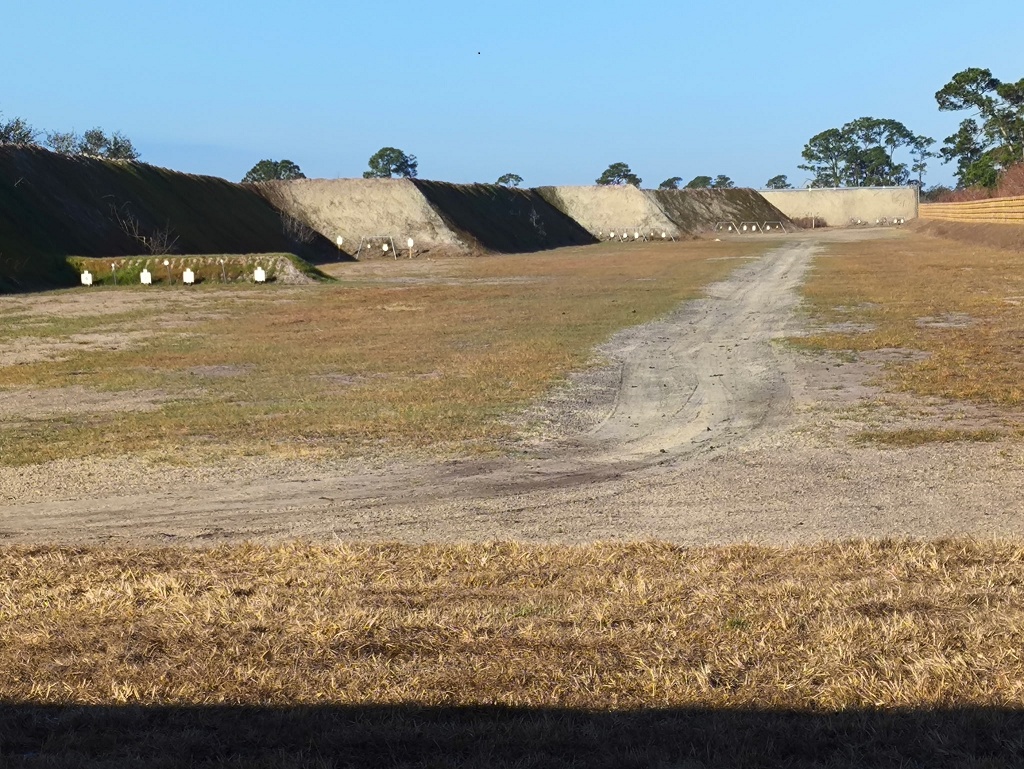
For 77-grain .223 at 2,750 fps from a 100-yard zero, expect roughly these drops: 200 yards is about 1.8 to 2.0 inches low, 300 yards is about 8 to 9 inches low, 400 yards is about 20 to 22 inches low, and 500 yards is about 39 to 43 inches low. Wind drift in a 10 mph full-value crosswind: about 3 inches at 200, 7 inches at 300, 14 inches at 400, and 23 inches at 500. These numbers shift with the specific bullet's BC and your actual muzzle velocity, which is why chrono data and confirmed dope matter more than any chart.
The 77-grain .223 runs out of reliable supersonic flight somewhere between 800 and 900 yards depending on conditions. The transonic zone; where the bullet decelerates through the speed of sound and becomes aerodynamically unstable; starts around 750 to 850 yards for most 77-grain loads at typical 20-inch barrel velocities. Past that, accuracy degrades rapidly and unpredictably. Consider 700 yards the practical maximum engagement distance for 77-grain .223 from a 20-inch barrel, and 600 yards the distance where you can still make consistent hits on a torso-sized target in moderate wind.
The verdict across all five loads
No single load is best for every rifle. That's not a cop-out; it's physics. But patterns emerge from enough testing, and here's what the data consistently shows.
Black Hills Mk 262 Mod 1 is the safest bet. It combines a proven bullet with consistent loading and works well in the widest variety of barrels. If you can only buy one load to test, buy this one.
Berger 77 OTM Tactical matches or slightly exceeds Black Hills in accuracy potential, with the hybrid ogive giving it a slight edge in barrels with longer throats. Its limited availability is the only real drawback.
IMI Razor Core is the volume shooter's choice. It's the most affordable of the five, runs reliably in 5.56 chambers, and delivers accuracy that's within spitting distance of Black Hills. The slightly wider ES means it gives up a fraction at distance, but for training, practice, and matches where you're burning 200 rounds in a day, it's hard to argue with the value.
Nosler Match Grade is the consistency king. Lowest ES, tightest SD, and excellent accuracy from most barrels. The lower velocity and lower BC of the Custom Competition bullet limit its reach past 500 yards compared to SMK-loaded options, but inside 400 yards, it's arguably the most precise factory option available.
Fiocchi Exacta is the backup plan. Same great Sierra SMK bullet, slightly less consistent loading than Black Hills, and brass that's adequate but not exceptional. Buy it when Black Hills is out of stock and you need to keep shooting.
What to do next
Pick up 40 rounds each of at least two of these loads. Take them to the range with a chronograph, a solid rest, and a notebook. Shoot them back-to-back in the same session, recording velocity and group size for every string. Identify which load your barrel prefers at 100 yards, then confirm that preference at 300 or 500.
Once you've found your load, buy a case of it. Lot-to-lot variation exists in all factory ammunition, and having a deep supply from a single lot eliminates one more variable. Build your dope card from that specific lot. Confirm your 100-yard zero every range session; two rounds into the same aim point is enough. If it's still there, you're good. If it's shifted, figure out why before you move to distance.
The 77-grain .223 from a 20-inch barrel is one of the most capable precision cartridge-and-barrel combinations available for the money. The system works. Your job is finding the specific load that makes your specific barrel sing; and then putting in the rounds at distance to trust the data. That's where the real accuracy lives. Not in the box, not in the barrel, but in the confirmed dope built from actual shooting.