Your scope reticle is only half the system; here's the other half
You've got a scope with a Christmas tree reticle, maybe an MRAD-based grid with hash marks out to kingdom come. You've zeroed it. You've confirmed it tracks. And now you're staring at a target at 847 yards wondering exactly how many tenths to hold. The reticle gave you the interface. But without the math behind it; real atmospheric data, accurate drag models, and a reliable way to verify your turret inputs; that reticle is just a bunch of lines.
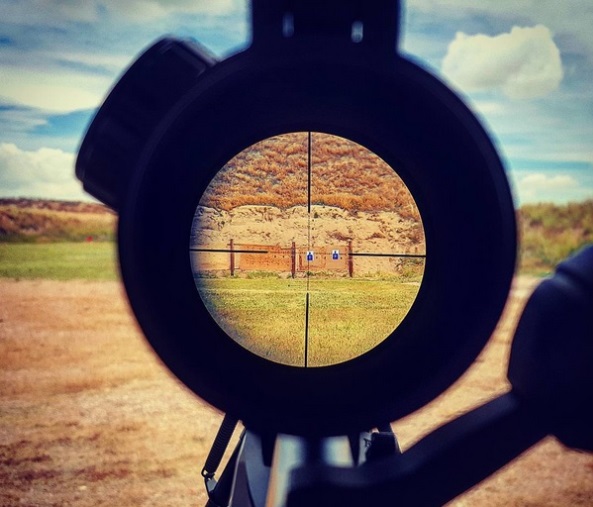
The gap between "nice scope" and "consistent hits past 600 yards" isn't glass quality or magnification. It's the ballistic calculator feeding your hold data, the reticle system you're using to apply it, and the tracking verification process that confirms everything actually works together. These three things form a closed loop. Break any one of them and you're chasing misses with no idea where the error lives.
This piece covers the ballistic calculators worth running, how reticle references actually work as aiming systems (not decoration), and the tracking tools and tests that keep the whole chain honest. If you're already shooting past 400 yards or planning to, this is the infrastructure layer that makes your scope useful.
Ballistic calculators: the engine behind your hold data
A ballistic calculator takes your cartridge data, muzzle velocity, bullet BC (ballistic coefficient), atmospheric conditions, and shooting angle, then spits out elevation and windage corrections for a given distance. Simple concept. But the difference between a mediocre calculator and a good one shows up as a miss at 1,000 yards, sometimes by several MOA.
The core variable that separates calculators is the drag model. Most budget apps use G1 or G7 drag models, which approximate how a bullet decelerates through the air based on its shape profile. G1 assumes a flat-base bullet shape. G7 assumes a boat-tail shape, which is closer to what most modern long-range projectiles actually look like. The problem is that neither G1 nor G7 perfectly describes any specific bullet, they're approximations. The better calculators use custom drag curves built from Doppler radar data on individual bullet models. That's where Applied Ballistics has carved out its niche, and it's why their solutions keep showing up at PRS matches and in military applications.
Applied Ballistics ecosystem
Bryan Litz and the Applied Ballistics team have built what amounts to the gold standard drag library. Their custom drag curves are derived from actual Doppler radar testing of specific bullets, not generic G7 approximations. The difference matters most past 800 yards, where small drag model errors compound into significant vertical dispersion.
The Applied Ballistics solver lives in several places. The standalone app, Applied Ballistics Quantum, runs on both iOS and Android. It includes the full custom drag library, supports weapon profiles, and handles Coriolis and spin drift calculations. The interface isn't pretty, it looks like it was designed by engineers for engineers, which it was, but the math is right.
The more common way shooters encounter Applied Ballistics is through the Kestrel 5700 Elite. This is a handheld weather meter with the AB solver baked in. It reads temperature, pressure, humidity, and wind speed in real time, feeds those values directly into the ballistic engine, and outputs your come-ups. No phone needed. No Bluetooth pairing headaches. No "sorry, no cell signal" moments in the field.
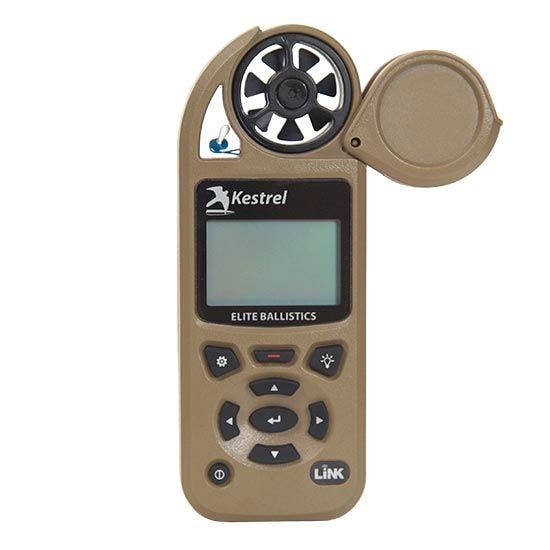
The Kestrel 5700 Elite with Applied Ballistics runs around $700-$800 depending on the variant. That's real money. But here's the thing: it's the single most reliable way to get accurate firing solutions in the field because it eliminates the step where you manually input atmospheric data. Temperature and pressure change throughout the day. A 20-degree temperature swing can shift your impact by a full MOA at 1,000 yards. The Kestrel measures those changes continuously and recalculates automatically.
The WEZ (Weapon Employment Zone) analysis feature on the Elite model goes a step further. It calculates your probability of hitting a target of a given size at a given range, accounting for your rifle's precision, wind estimation error, and velocity spread. That's not a range toy feature, it's a decision-making tool. It tells you whether a shot is ethical and likely before you take it.
Strelok Pro and Ballistics Calculator 2026
For shooters who don't want to spend Kestrel money, Strelok Pro has been the go-to phone app for years. It supports G1, G7, and custom drag functions. The bullet library is extensive. It handles multiple weapon profiles, calculates spin drift and Coriolis, and works offline once you've set it up. The interface takes some learning, there are a lot of input fields, but once configured, the solutions are solid out to moderate long range.
Ballistics Calculator 2026 (formerly Strelok+, now rebranded) runs on both Android and iOS and has been steadily updated. It uses a similar engine to Strelok Pro with some UI improvements. The app supports importing custom drag data if you have it, which bridges some of the gap between phone apps and the Applied Ballistics library. For most shooters working inside 1,200 yards with quality match ammo, the solutions from Strelok Pro or Ballistics Calculator 2026 will get you on steel. The errors start showing up at extreme range or in rapidly changing atmospheric conditions where manual weather inputs fall behind reality.
The practical difference between these apps and the Kestrel/AB combo: you're manually entering temperature, pressure, and wind. If you're at a known-distance range on a calm day, that's fine. If you're hunting in the mountains where pressure changes with every 500 feet of elevation gain and temperature swings 30 degrees between morning and afternoon, manual inputs introduce error. That error gets magnified by distance.
SIG BDX system
SIG took a different approach with their Ballistic Data Xchange system. Instead of a standalone calculator, BDX links a rangefinder (like the Kilo series) to a BDX-compatible scope (like the Sierra6 BDX) via Bluetooth. You range the target, the rangefinder calculates the ballistic solution using the SIG BDX app's weapon profile, and the scope's reticle illuminates a holdover dot at the correct position. Point. Range. Shoot.
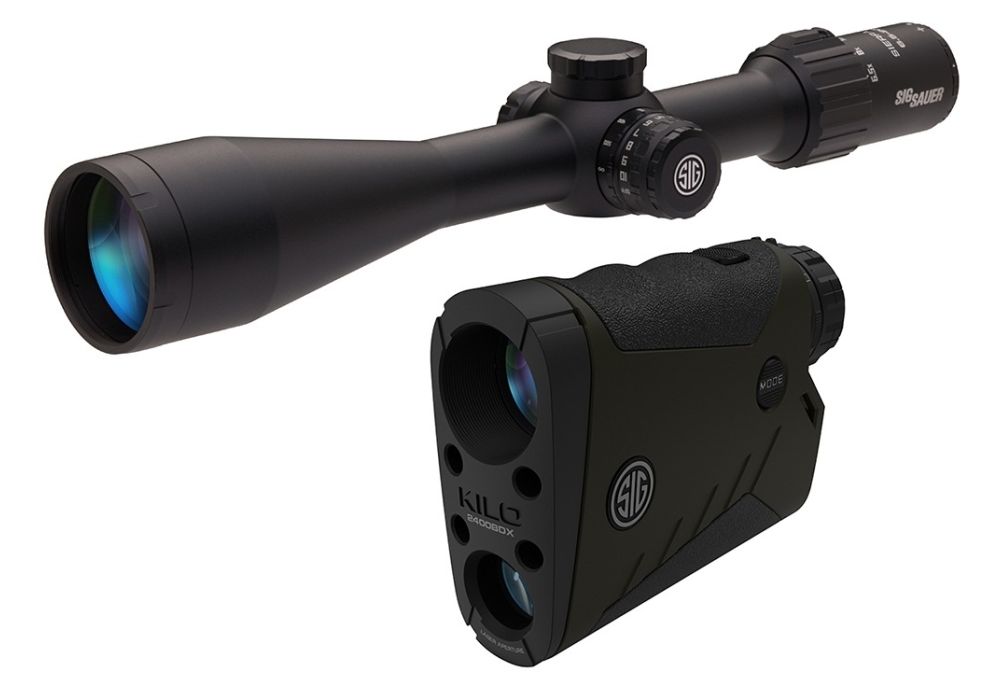
On paper, this is elegant. And for hunting inside 600 yards, it works well enough. The system reduces the cognitive load of dialing or holding, you just put the lit dot on the target. The Sierra6 BDX scopes have decent glass for the price, and the Kilo rangefinders are solid units on their own.
The limitations show up when you push the system. The BDX ballistic engine uses a simpler solver than Applied Ballistics. It doesn't account for spin drift or Coriolis. Wind input is manual through the app. And the system depends on Bluetooth connectivity between the rangefinder and scope, which means batteries in two devices and a wireless link that can hiccup. At moderate ranges on game-sized targets, these limitations don't matter much. At 800+ yards or in competition, they start to bite.
The BDX system also locks you into SIG's ecosystem. Your scope has to be BDX-compatible. Your rangefinder has to be BDX-compatible. If you want to upgrade your glass to a Vortex Razor or a Nightforce, you lose the integration. That's a real consideration for shooters who might outgrow the system.
Revic ballistic system
Revic has been doing something interesting by building the ballistic calculator directly into the scope. The Revic Radikl RS25b is a 5-25x56 smart scope with an onboard ballistic computer, environmental sensors (temperature, pressure, inclination), and a laser rangefinder built into the optic housing. Range the target through the scope, and the system calculates the solution and displays the corrected aiming point in the reticle.
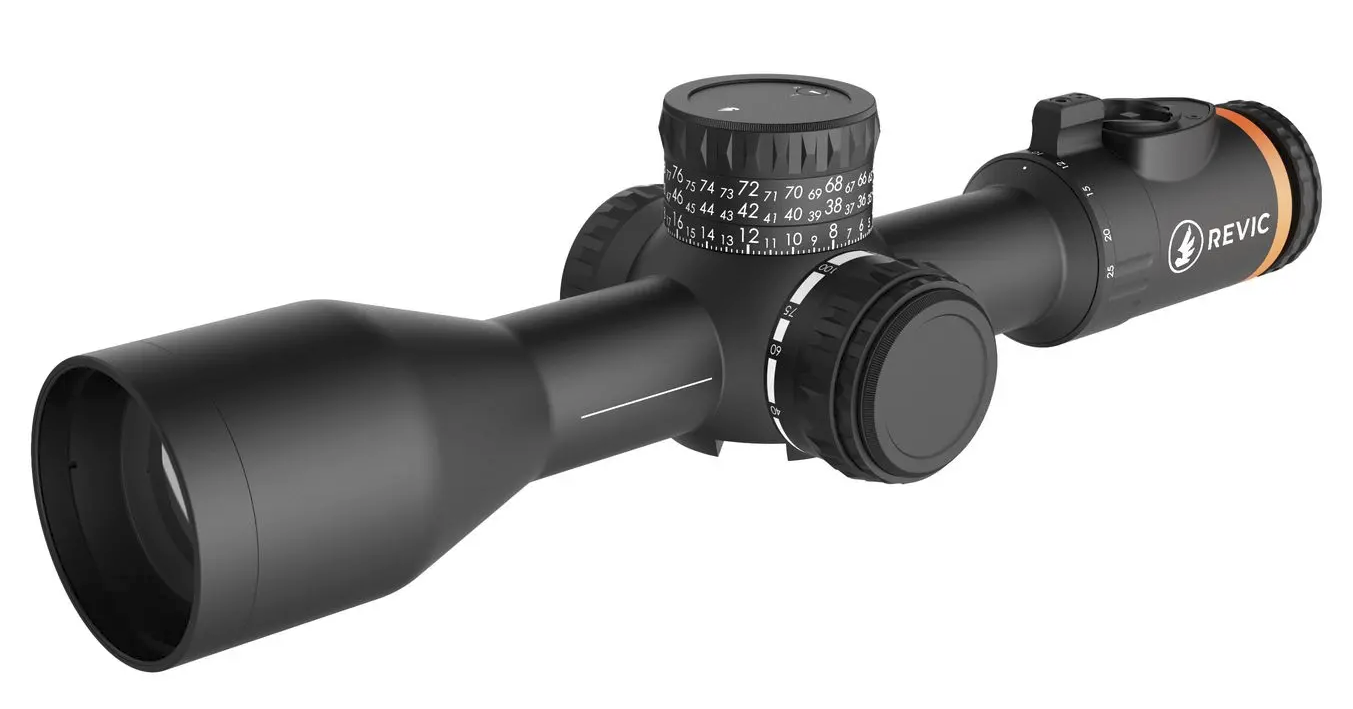
The PMR 428, Revic's earlier model, took a similar approach and earned a reputation for genuinely accurate solutions. The glass quality on Revic scopes is respectable, not Nightforce ATACR territory, but competitive with scopes in the $2,000-$3,000 range. The onboard sensors eliminate the "forgot to update my weather data" problem entirely since the scope is reading conditions in real time.
The downside is complexity and cost. You're trusting a single device to be your scope, your rangefinder, and your ballistic computer. If the electronics fail, you still have a functional scope with a usable reticle, but you've lost the integrated system you paid a premium for. And the battery dependency adds another failure point. These scopes also tend to be heavier than a comparable non-smart optic.
For a dedicated hunting rifle that lives in one configuration, the Revic approach makes a compelling case. For a competition rifle where you might swap optics between matches or want maximum flexibility, the standalone calculator approach gives you more options.
What actually matters in a calculator
Forget the app store ratings. Here's what separates useful ballistic calculators from toys:
The drag model accuracy is the single biggest factor. Custom drag curves from Doppler data (Applied Ballistics library) will outperform generic G7 at extreme range. Inside 600 yards, the difference is usually less than 0.5 MOA, not nothing, but manageable. Past 1,000 yards, you can see 1-2 MOA of divergence between a generic G7 solution and a custom drag solution. That's the difference between a hit and a miss on a 12-inch plate.
Atmospheric data integration separates field-ready tools from range-day toys. Real-time sensors (Kestrel, Revic onboard) beat manual inputs every time. If you're using a phone app, at minimum carry a small weather meter and update your inputs every 30 minutes.
Spin drift and Coriolis corrections matter past 800 yards, especially on small targets. At 1,000 yards, spin drift alone can account for 0.3-0.5 MOA of horizontal displacement depending on your cartridge and twist rate. Coriolis adds another layer that varies with your latitude and direction of fire. Budget apps that ignore these give you solutions that drift progressively off as range increases.
Muzzle velocity input accuracy is the most common user error in any calculator. A 50 fps error in your MV input translates to roughly 0.5 MOA of vertical error at 1,000 yards. If you haven't chronographed your specific lot of ammo through your specific barrel, your calculator is working with garbage data regardless of how good its drag model is.
Reticle references: the aiming system you're actually using
Your reticle isn't just crosshairs. On a modern long-range scope, the reticle is a measurement and aiming system. Understanding how to use it, really use it, is what turns holdover data from your calculator into hits.
MOA vs MRAD: pick one and commit
MOA (Minute of Angle) and MRAD (milliradian) are angular measurement systems. MOA divides a circle into 21,600 units; one MOA subtends approximately 1.047 inches at 100 yards. MRAD divides a circle into 6,283 units; one MRAD subtends 3.6 inches at 100 yards (or 10 cm at 100 meters, which is why MRAD is popular with metric-system shooters).
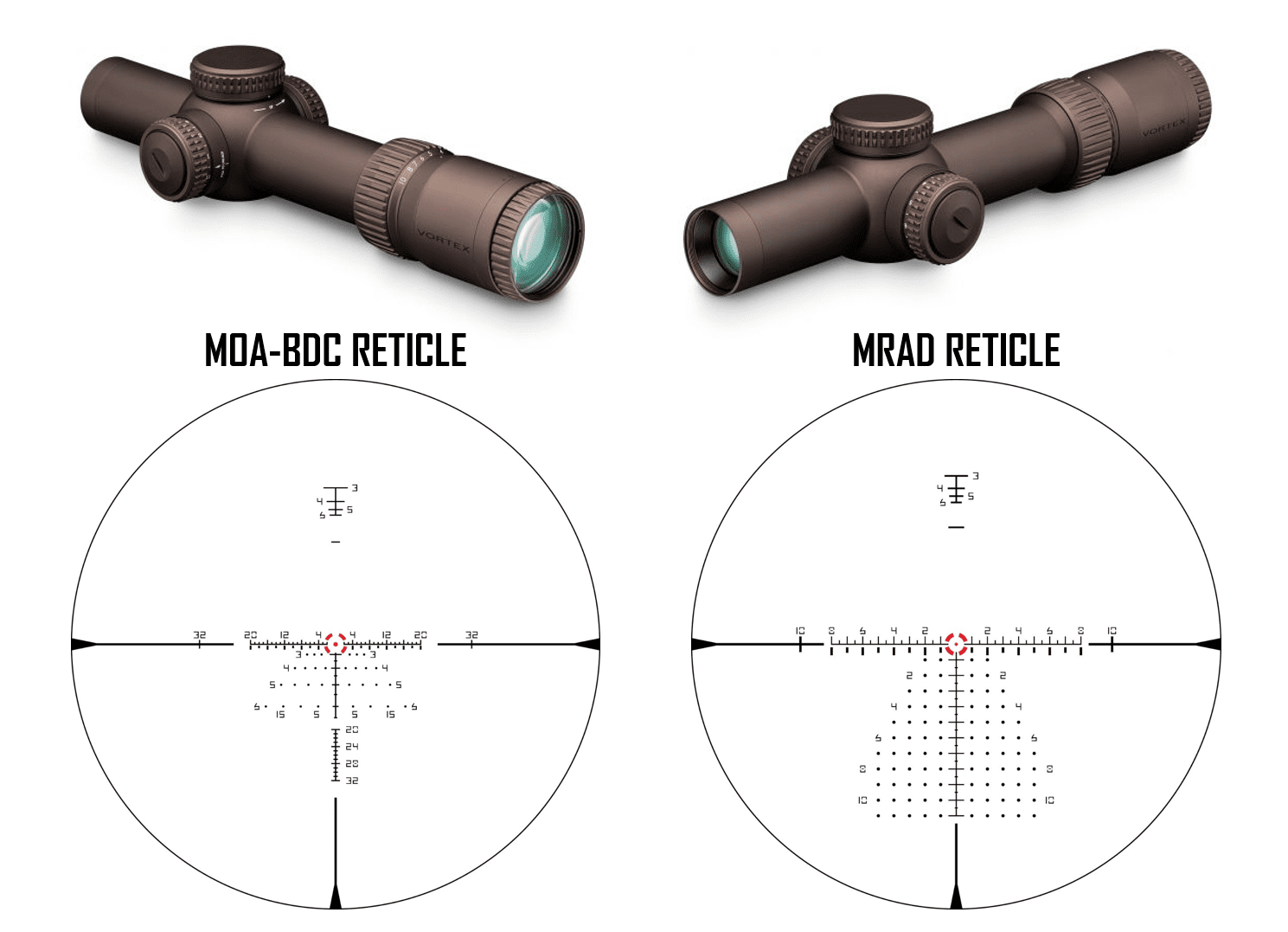
Neither is more accurate than the other. The math works out the same. The practical difference is in the adjustment granularity of your turrets and the mental math you'll do in the field.
MRAD turrets typically click in 0.1 MRAD increments (0.36 inches at 100 yards). MOA turrets typically click in 0.25 MOA increments (0.26 inches at 100 yards). So MOA gives you finer adjustment per click, which some shooters prefer for precision work. MRAD gives you rounder numbers for range estimation and holdover calculations, especially in metric units.
The spec that matters here: match your reticle to your turrets. An MRAD reticle with MOA turrets is a recipe for mental math errors under time pressure. If your reticle hash marks are in MRAD, your turrets should click in MRAD. Same for MOA. This sounds obvious, but a surprising number of mid-price scopes still ship with mismatched systems.
Christmas tree reticles and how to actually use them
The "Christmas tree" reticle, a grid of hash marks that gets wider at lower elevations to account for increased wind drift at longer ranges, has become the default for long-range shooting. Nightforce's MIL-XT, Vortex's EBR-7C MRAD, and Horus's H59 are all variations on this concept.
The idea is that you can hold over and hold off simultaneously using the reticle, without touching your turrets. Your calculator says the solution is 6.2 MRAD elevation and 1.4 MRAD left wind? Find the 6.2 line on your vertical stadia, move left to the 1.4 hash mark, and send it. No dialing. No lost-turret-count problems. Fast follow-up corrections.
This works brilliantly, if you can actually see the hash marks. And that's where reticle design separates good scopes from frustrating ones.
A first focal plane (FFP) reticle scales with magnification. At max power, the Christmas tree is bold and readable. At half power, those fine hash marks shrink to near-invisibility. If you're shooting at 12x on a 5-25x scope, your reticle subtensions are still accurate (that's the whole point of FFP), but you might not be able to distinguish the 0.2 MRAD marks from each other. This is why most long-range shooters using Christmas tree reticles keep their scopes at or near max magnification for precision shots.
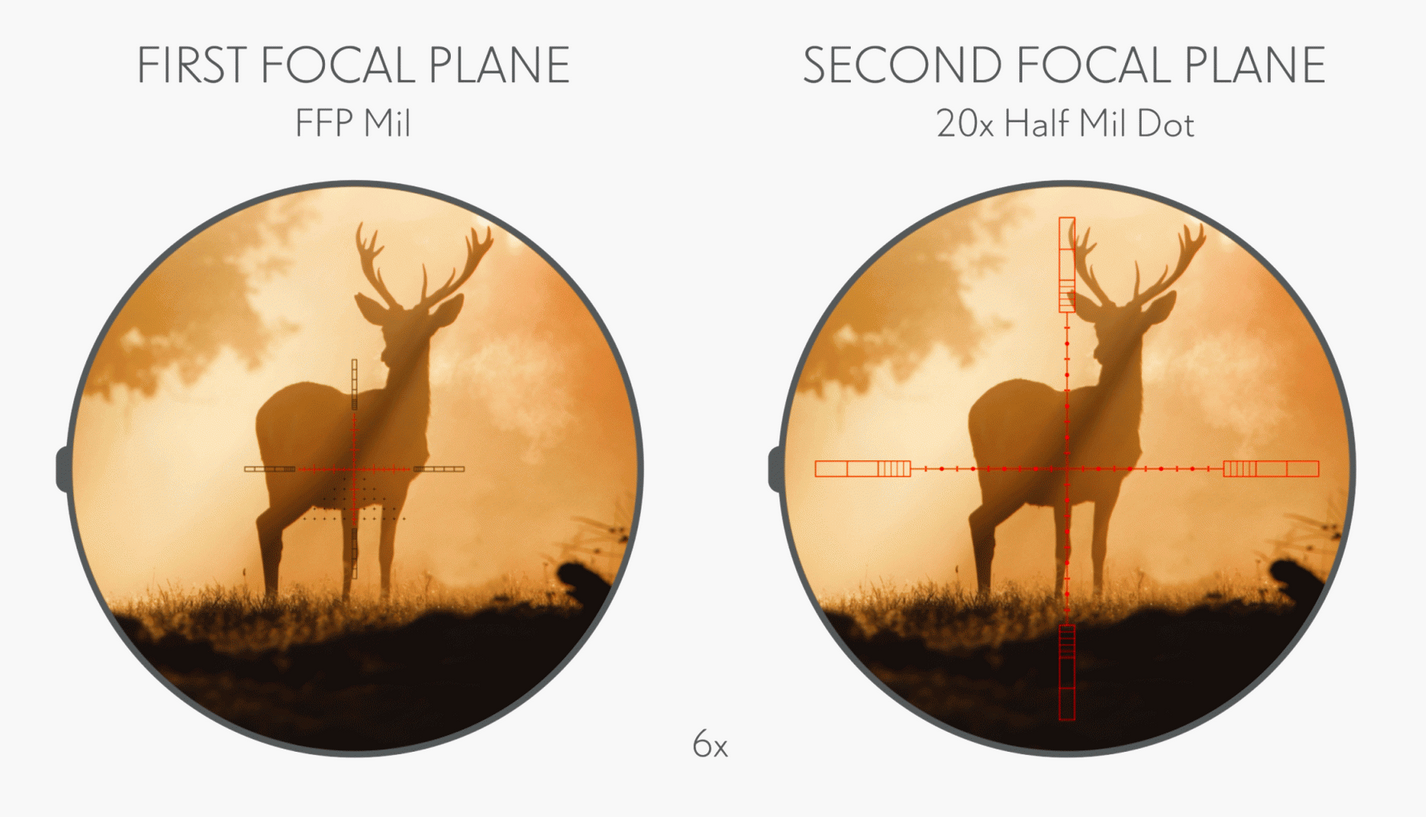
Second focal plane (SFP) reticles maintain the same apparent size regardless of magnification, but the subtensions are only accurate at one specific power setting (usually max). Hold at any other magnification and your holds are wrong unless you do the math to compensate. For holdover shooting, SFP Christmas trees are problematic. They're fine if you're dialing turrets and just using the center crosshair, but that defeats the purpose of having all those hash marks.
Range notes: reticle usability under real conditions
The reticle is the interface. Everything else is housing. And like any interface, it needs to work under stress, in bad light, and when you're breathing hard.
Thin reticle lines disappear against dark backgrounds and in low light. This is a real problem with some FFP reticles at lower magnifications. If you're hunting in timber at last light and your crosshair vanishes against a dark hillside, your fancy reticle is useless. Illumination helps, a lit center dot gives you an aiming reference when the etched lines fade, but not all illumination is created equal. Daylight-visible illumination (like Nightforce and Vortex Razor offer) is genuinely useful. Dim red glow illumination that washes out in daylight is not.
Reticle clutter is the other side of the coin. More hash marks means more holdover options, but also more visual noise. The Horus H59 is incredibly capable in trained hands, but the grid can be overwhelming if you're not practiced with it. The Nightforce MIL-XT strikes a better balance for most shooters, enough references for holdover work without turning the field of view into a spreadsheet.
The best way to evaluate a reticle: set up targets at 100-yard intervals from 300 to 800 yards. Use your calculator to generate hold data for each. Then shoot each target using only reticle holds, no dialing. Time yourself. Count your hits. The reticle that lets you find the correct hold point fastest and put rounds on target most consistently is the right reticle for you, regardless of what looks good on a spec sheet.
Reticle-based range estimation
Before laser rangefinders were ubiquitous, reticle-based range estimation was a core skill. It still has value as a backup and for fast estimation when you don't have time to range.
The formula is simple: target size (in yards or meters) divided by the apparent size in MRAD, multiplied by 1,000, equals range in yards or meters. If a target you know is 18 inches tall (0.5 yards) measures 0.7 MRAD in your reticle, it's at approximately 714 yards.
This requires knowing the size of your target, which is easy for standardized steel (IPSC targets are 18 inches wide, for example) and harder for game animals. It also requires a reticle with clear, fine subtension marks and enough magnification to measure accurately. At high magnification on a quality FFP reticle, you can estimate range within about 25 yards at moderate distances. That's not rangefinder-accurate, but it's enough to get a first-round hit on a torso-sized target if your rangefinder dies.
Matching your reticle to your shooting
Not every reticle needs to be a Christmas tree. The shooting dictates the reticle choice.
For PRS/NRL competition, a Christmas tree MRAD reticle in FFP is essentially mandatory. You're engaging targets at unknown distances, often under time pressure, and the ability to hold over and correct without dialing saves critical seconds.
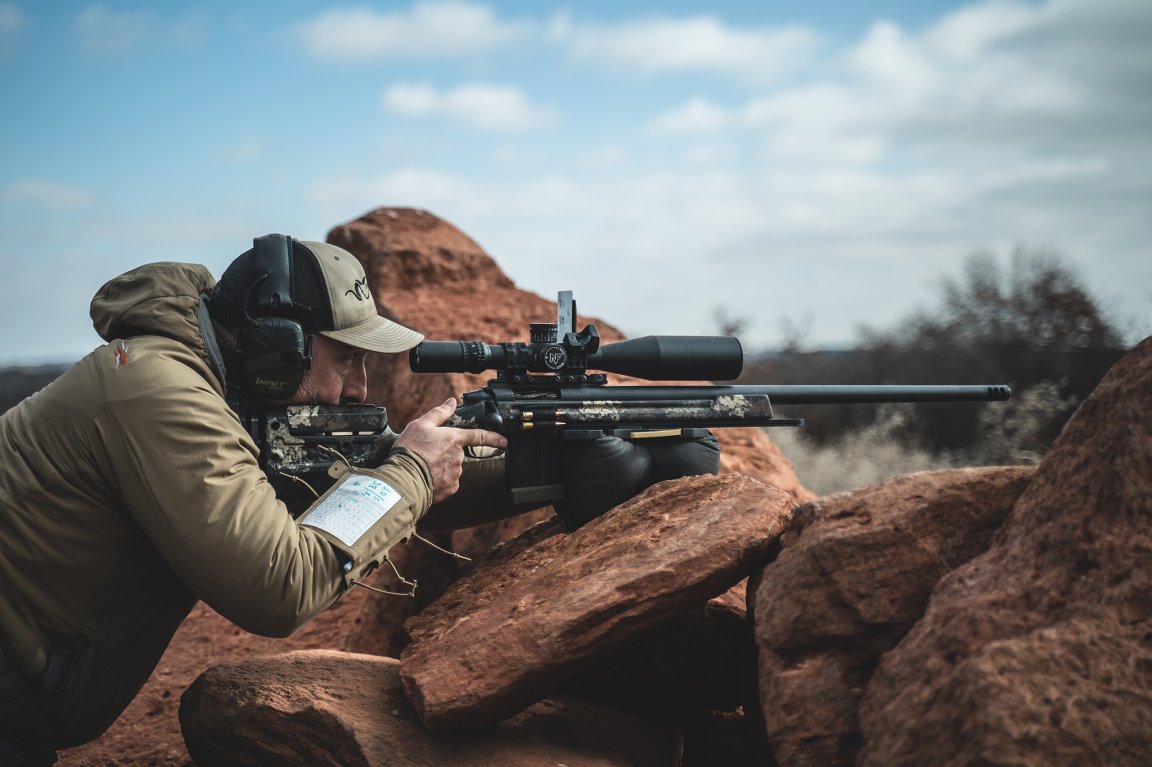
For hunting, a simpler reticle with a BDC (Bullet Drop Compensator) or a basic duplex with a few holdover marks often works better. You're typically taking one shot, maybe two, at a known range (because you've already ranged the animal). Turret dialing is fine here. A clean field of view matters more than having 47 hash marks you'll never use.
For F-class and benchrest, the reticle barely matters because you're dialing everything and using the crosshair center. A fine crosshair with minimal obstruction of the target is ideal.
For designated marksman / practical rifle use, a reticle with a bold center section for fast acquisition at close range and finer marks for precision at distance, like the Vortex EBR-7C or the Nightforce MIL-R, splits the difference well.
Tracking tools: verifying your scope actually does what it says
You've got your calculator dialed in. You understand your reticle. Now the question: does your scope actually move the point of impact the amount it claims to when you click the turret?
This is tracking, and it's the most overlooked piece of the long-range puzzle. A scope that doesn't track accurately will miss regardless of how perfect your ballistic solution is. You'll be holding or dialing the right number, and the erector tube inside the scope won't be moving to the right place.
The tall target test
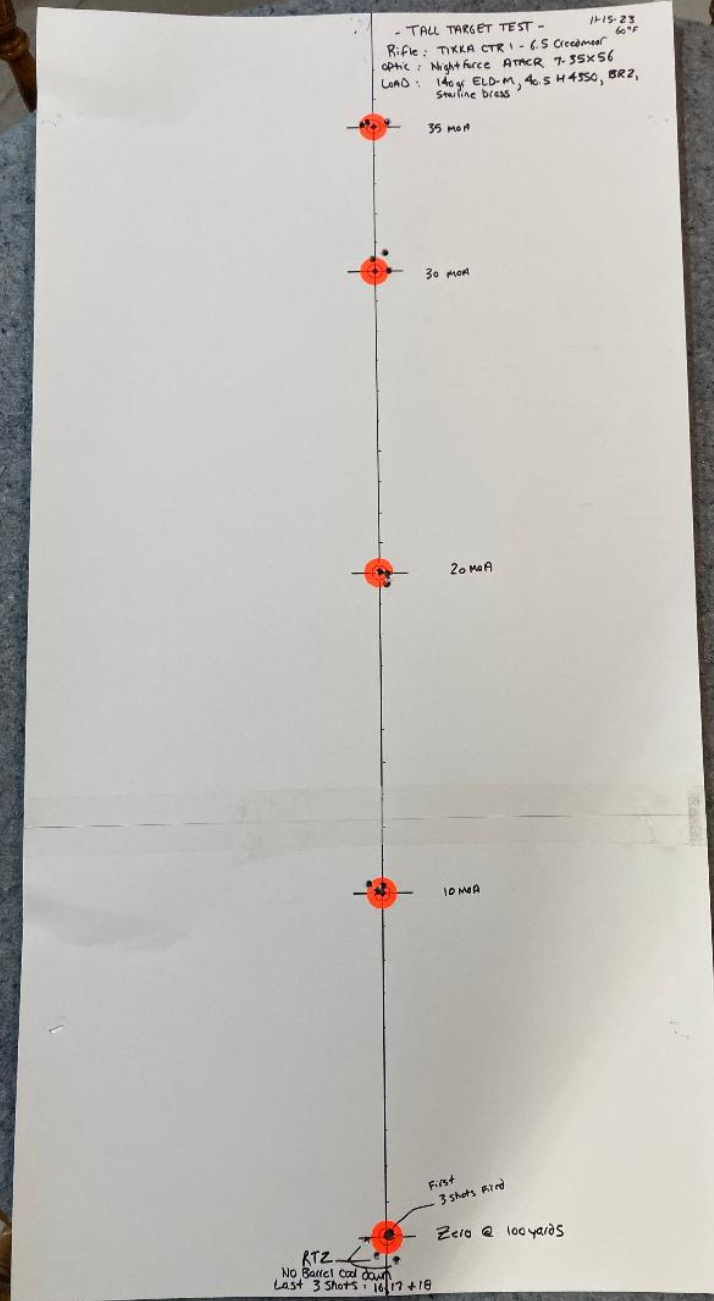
The tall target test is the standard method for verifying turret tracking. Here's the procedure:
Set up a target at 100 yards with a long vertical reference line (a strip of butcher paper works, or a tall cardboard box). Fire a group at your zero point. Then, without moving the rifle, dial 20 MOA (or 6 MRAD) of elevation up. Fire another group. Measure the distance between the two group centers. At 100 yards, 20 MOA should move the impact 20.9 inches. Six MRAD should move it 21.6 inches.
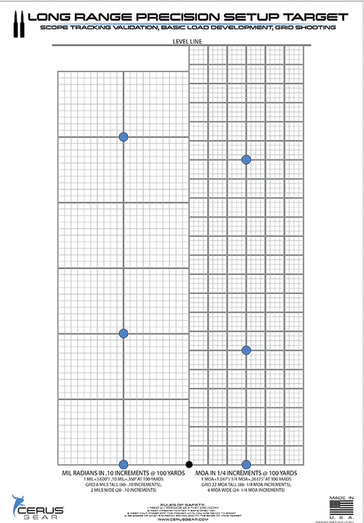
If the measured distance matches the expected distance within about 0.5 inches, your scope tracks well. If it's off by more than an inch, you've got a tracking problem.
Do the same test with windage. Dial 10 MOA (or 3 MRAD) right, fire a group, measure. Then dial back to zero and confirm you return to your original point of impact. This return-to-zero test is just as important as the tracking distance test. A scope that tracks accurately but doesn't return to zero after dialing is useless for a dial-and-shoot workflow.
The tracking test to run: do the full box test. Start at zero. Dial up 10 MOA. Shoot. Dial right 10 MOA. Shoot. Dial down 10 MOA. Shoot. Dial left 10 MOA. Shoot. You should be back at your original zero, and each group should be exactly 10 MOA apart in a perfect square. The box test reveals tracking errors in both axes and exposes any hysteresis (where the erector tube doesn't return to the same position depending on which direction it was last moved).
What tracking errors look like in practice
At 100 yards, a 0.5 MOA tracking error puts you half an inch off. Annoying but survivable on a large target. At 1,000 yards, that same 0.5 MOA tracking error puts you 5 inches off. On a 12-inch plate, that can be the difference between a hit and a miss. And tracking errors tend to compound, if your scope is 0.5 MOA off per 10 MOA of dial, you're 2.5 MOA off at 50 MOA of elevation (which is roughly what you'd dial for a .308 at 1,000 yards).
Scopes with poor tracking often show inconsistent errors. They might track perfectly through the first 15 MOA of adjustment, then start drifting. Or they track well going up but poorly coming back down. This is why the box test matters, it stresses the erector system through its range of motion in both directions.
Glass notes: which scopes actually track
Budget scopes (under $300) are a coin flip on tracking. Some individual units track fine; others from the same production run don't. Quality control at this price point isn't consistent enough to trust without verification.
Mid-range scopes ($500-$1,500) from Vortex (Viper PST Gen II, Diamondback Tactical), Primary Arms (GLx series), and Athlon (Ares ETR, Midas TAC) generally track well enough for practical long-range shooting. You'll occasionally find a unit that's off, but the consistency is much better than budget glass.

Nightforce MIL-R Deals
Prices may change. May contain affiliate links.
Premium scopes ($1,500+) from Nightforce (ATACR, NX8), Vortex (Razor HD Gen III), Kahles (K525i), and ZCO (ZC527) track with mechanical precision. These scopes are built to tolerances where tracking errors are typically under 0.1 MOA per revolution. You're paying for that consistency.
The takeaway: regardless of what you paid, run the tracking test. A $2,000 scope with a tracking problem is worse than a $500 scope that tracks true. And tracking can degrade over time, recoil, temperature cycling, and mechanical wear all affect the erector system. Re-verify annually or after any significant impact to the rifle.
Turret feel and repeatability
Tracking accuracy is objective, either the scope moves the right amount or it doesn't. Turret feel is subjective but still matters for practical shooting.
Crisp, tactile clicks with clear detents make it easy to count adjustments by feel alone, which matters when you're dialing in low light or under time pressure. Mushy clicks with indistinct detents lead to miscounts. If you've ever dialed what you thought was 4.2 MRAD and actually dialed 4.0 because two clicks blended together, you know the problem.
Zero stops are a tracking-adjacent feature that deserves mention. A zero stop is a mechanical limit set at your rifle's zero that prevents the turret from dialing below it. After dialing up for a long shot, you can spin the turret back down to the stop and know you're at zero without counting clicks. This eliminates an entire category of error, the "how many revolutions did I dial?" problem that plagues scopes with multi-revolution turrets and no stop.
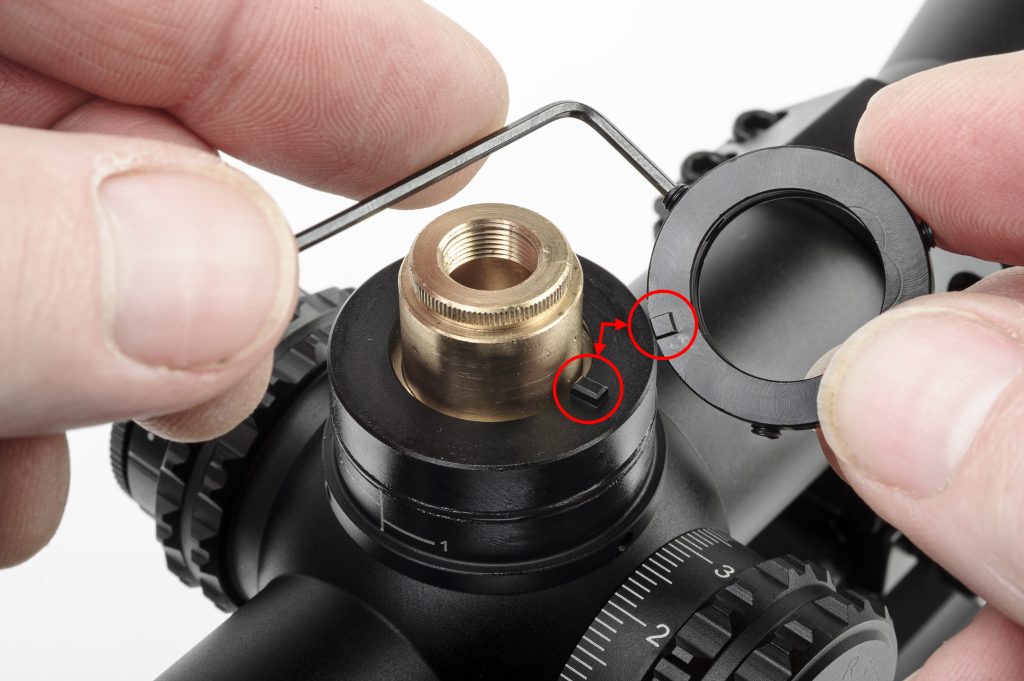
Most quality scopes above $500 now include zero stops or at least a locking turret mechanism. If you're dialing for elevation (as opposed to holding with the reticle), a zero stop is close to mandatory for field use.
Putting the system together
The calculator, the reticle, and the tracking verification aren't independent tools. They're a system, and the system is only as good as its weakest link.
The data chain
Here's how the chain works: You chronograph your ammo to get true muzzle velocity. You input that velocity, along with your bullet's BC or custom drag data, into your ballistic calculator. You feed the calculator real-time atmospheric data (either from a Kestrel, from onboard sensors like Revic's, or from manual measurement). The calculator outputs a firing solution, say, 8.4 MRAD elevation and 0.6 MRAD right wind.
You apply that solution through your scope. If you're dialing, you click the elevation turret 84 clicks (at 0.1 MRAD per click) and the windage turret 6 clicks. If you're holding, you find the 8.4 MRAD mark on your reticle's vertical stadia and offset 0.6 MRAD right.
The round goes downrange. If it hits, great. If it misses, you need to diagnose where the error entered the chain. Was the velocity input wrong? Was the atmospheric data stale? Did the calculator use an inaccurate drag model? Did you misread the reticle? Did the scope not track the dialed amount? Each link in the chain is a potential failure point.
Common mistakes that break the system
Mismatched units will ruin your day faster than anything else. Your calculator outputs MRAD. Your scope turrets are in MOA. You dial the MRAD number on MOA turrets and wonder why you're 3 feet high. It happens more often than anyone wants to admit. Set everything to the same unit system, reticle, turrets, calculator, and never mix.
Stale atmospheric data is the silent killer of long-range accuracy. You zeroed your rifle at sea level on a 70°F day. You're now hunting at 8,000 feet elevation where it's 35°F. If you didn't update your calculator, your solution is wrong by potentially several MOA at extended range. Air density decreases with altitude and temperature, which means less drag on the bullet, which means it impacts higher than your sea-level solution predicts. The Kestrel handles this automatically. Phone apps require you to remember to update.
Parallax error compounds holdover errors. If your scope's parallax adjustment isn't set for the target distance, the reticle will appear to shift against the target as your eye moves behind the scope. On a simple crosshair, this might cause a 0.5 MOA shift. On a Christmas tree reticle where you're holding 8 MRAD low and 1 MRAD into the wind, that parallax shift can put you on the wrong hash mark entirely. Always adjust parallax before taking a precision shot. The target image should remain stationary relative to the reticle when you move your head slightly behind the scope.
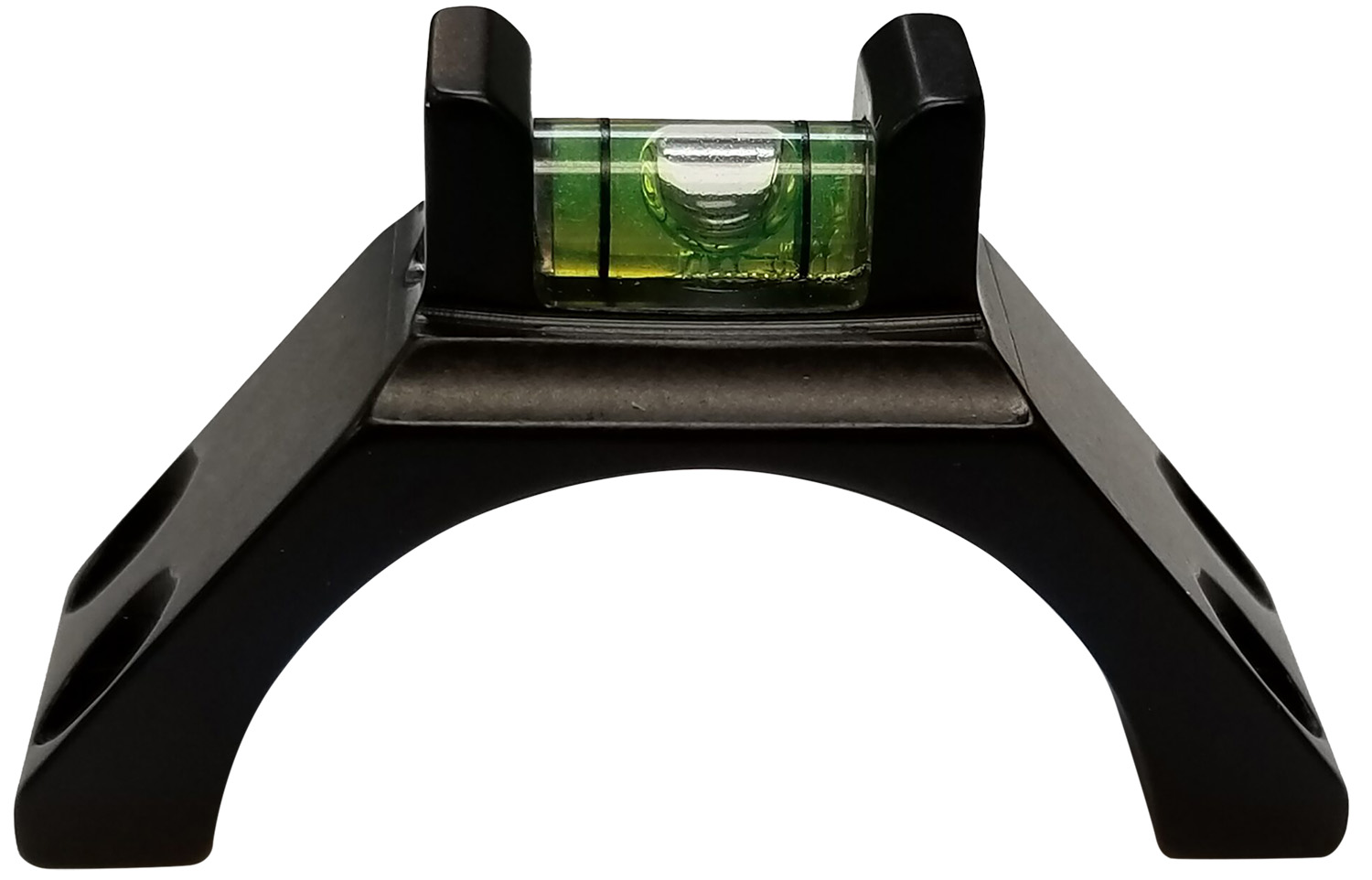
Cant, tilting the rifle left or right, creates an error that increases with holdover distance. At zero holdover, cant doesn't matter. But if you're holding 8 MRAD of elevation and the rifle is canted 5 degrees, your impact shifts laterally by about 0.7 MRAD. That's 5 inches at 700 yards. An anti-cant indicator (bubble level) on your scope or rail is cheap insurance. Some smart scopes like the Revic include an inclinometer that can detect cant, but a $30 scope-mounted bubble level works fine.
Not truing your data is the most common long-range error. Your calculator gives you a solution based on your inputs. Those inputs have tolerances, your chronograph might be 10 fps off, your BC might be slightly wrong for your specific lot of bullets, your scope might have a small tracking bias. The way to resolve all of these small errors at once is to true your system at distance. Shoot at a known range (ideally 500+ yards), compare your actual impact to your predicted impact, and adjust your calculator's muzzle velocity input until the solution matches reality. This single step corrects for the cumulative effect of all the small errors in your data chain.
Building a verification routine
Every time you change a component, new ammo lot, new scope, new mount, even a new zero, the system needs reverification. Here's a practical sequence:
Nightforce NX8 Deals
Prices may change. May contain affiliate links.
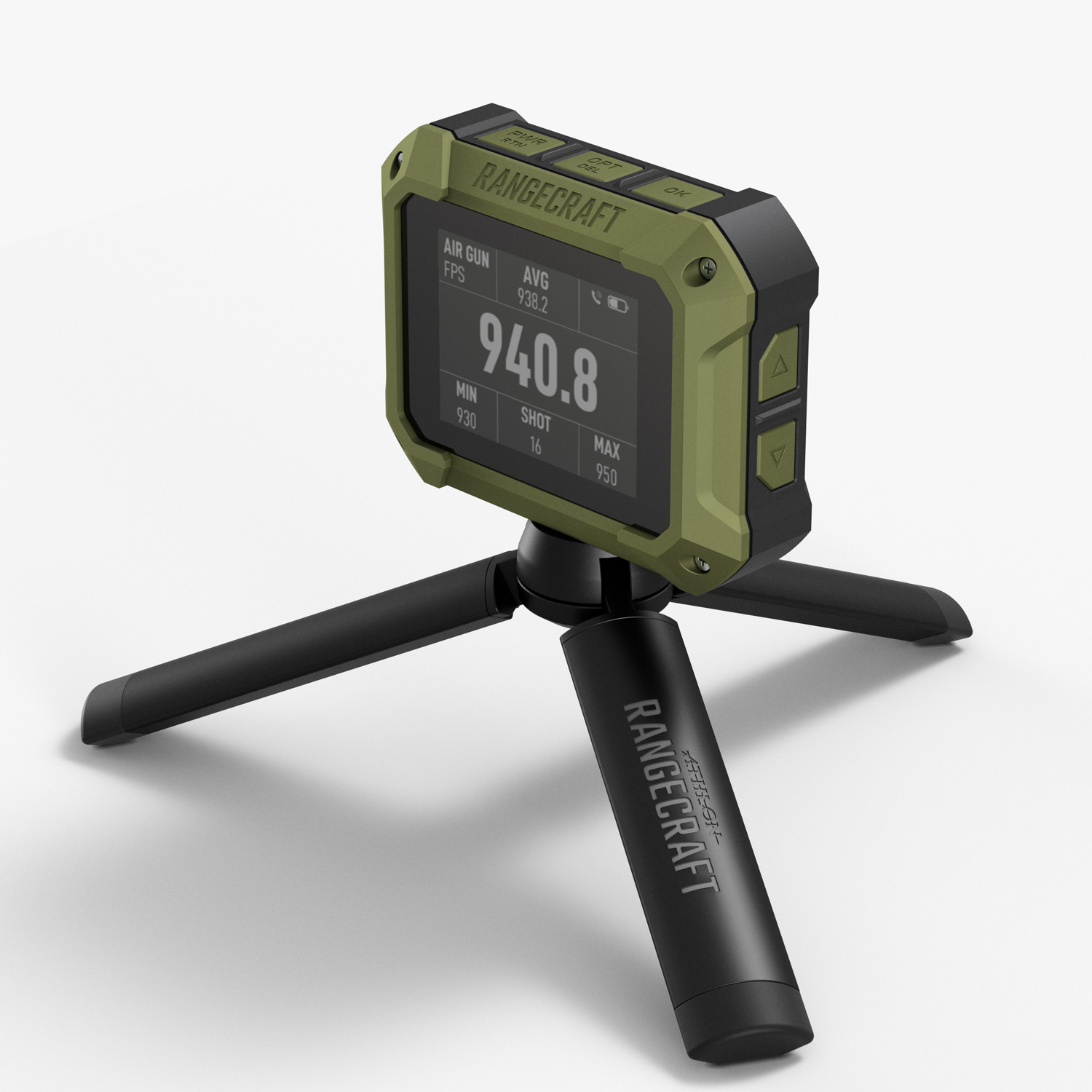
Chronograph your ammo. Shoot at least 10 rounds over a chronograph and record the average velocity and standard deviation. Input the average into your calculator. If your SD is over 15 fps, your ammo consistency is a limiting factor that no calculator can fix.
Confirm zero at 100 yards. This sounds basic, but a shifted zero propagates through every subsequent calculation. If your zero is 0.5 MOA off, every solution from your calculator will be 0.5 MOA off in the same direction.
Run the box test on your scope. Verify tracking in both elevation and windage. Confirm return to zero. If tracking is off, the scope needs to be repaired or replaced before you go further.
True at distance. Shoot at 500-700 yards (or the longest range you have access to) and compare actual impacts to predicted. Adjust your calculator's muzzle velocity until the solution matches. Some calculators have a dedicated "true" or "calibrate" function for this.
Verify wind holds. This is harder because wind is variable, but on a day with steady wind, compare your calculator's wind solution to your actual wind holds. If you're consistently off in the same direction, your wind input method needs adjustment.
Product comparison: calculators and integrated systems
Five systems worth evaluating, each with a different philosophy:
The Kestrel 5700 Elite with Applied Ballistics is the benchmark for standalone ballistic computing. The AB solver with custom drag curves is the most accurate engine available to civilian shooters. Real-time atmospheric sensing eliminates manual weather input. The device is rugged, weatherproof, and runs on a single AA battery. The limitation is that it's a separate device you have to carry, and the interface requires some learning. The LINK version adds Bluetooth connectivity to share data with a phone or compatible devices.
Applied Ballistics Quantum (mobile app) puts the same AB solver and drag library on your phone. It's the most accurate phone-based calculator available. The downside is that atmospheric data must be entered manually unless you pair it with an external sensor. The app works offline once your profiles are configured. Available on iOS and Android.
Strelok Pro remains the best value in phone-based ballistic calculators. It supports G1, G7, and custom drag functions, handles a comprehensive bullet library, and calculates spin drift and Coriolis. The interface is dense but functional. It won't match Applied Ballistics' custom drag accuracy at extreme range, but for most practical shooting scenarios, the solutions are within 0.2-0.3 MOA of the AB solver out to 1,000 yards.
The SIG BDX system (Sierra6 BDX scope + Kilo rangefinder) is the most integrated hunting solution. Range through the Kilo, see the holdover dot illuminate in the scope. The ballistic solver is simpler than AB, and the system locks you into SIG's ecosystem, but for hunters who want minimal complexity and shoot inside 600 yards, the workflow is fast and effective. The Sierra6 BDX scopes have improved glass quality over earlier BDX generations, with better edge sharpness and low-light transmission.
The Revic Radikl RS25b puts everything in the scope, ballistic computer, environmental sensors, rangefinder, and a quality 5-25x56 optic. The onboard sensors read temperature, pressure, and inclination in real time. Range a target through the scope and get an immediate firing solution displayed in the reticle. The glass is good, the system works, and the integration eliminates device-juggling. The trade-off is weight, battery dependency, and the fact that you're betting everything on one device. If the electronics fail in the field, you still have a functional scope, but you've lost your rangefinder and calculator simultaneously.
The tracking test nobody runs (but should)
Most shooters run a tracking test once, when they first mount the scope, and never again. That's a mistake.
Recoil is a repetitive mechanical shock to a precision optical instrument. Over hundreds or thousands of rounds, internal components can shift. Turret detents can wear, making clicks less precise. The erector spring can fatigue, affecting return-to-zero consistency. None of this happens overnight, but it happens.
Run an abbreviated tracking test, dial up 10 MOA, shoot, dial back to zero, confirm, every 500 rounds or at the start of every season. It takes 10 rounds and 15 minutes. If your scope has developed a tracking issue, you want to find it at the range, not at 800 yards on an animal.
Also test tracking at different points in the adjustment range. A scope might track perfectly in the middle of its elevation range but poorly near the extremes. If your typical field dope requires 30+ MOA of elevation adjustment, verify tracking at that end of the range, not just at the 10 MOA mark near your zero.
Temperature can affect tracking on some scopes. If you zero on a warm afternoon and hunt on a cold morning, thermal contraction of internal components can shift your zero or alter tracking behavior. This is more common in budget and mid-range scopes than in premium glass, but it's worth checking if you shoot across a wide temperature range.
What to do next
If you're running a scope past 400 yards and don't have a verified ballistic calculator, a clear understanding of your reticle's subtension system, and a recent tracking test on file, you've got work to do.
Start with the tracking test. It's free, it takes 20 minutes, and it either confirms your scope works or reveals a problem that would have cost you misses (or worse) in the field. Run the box test at 100 yards. Document the results. If tracking is good, move on. If it's not, deal with the scope before investing time in everything else.
Next, set up your ballistic calculator with accurate data. Chronograph your specific ammo through your specific barrel. Input the real numbers, not the box velocity. Select the correct drag model or custom drag curve for your