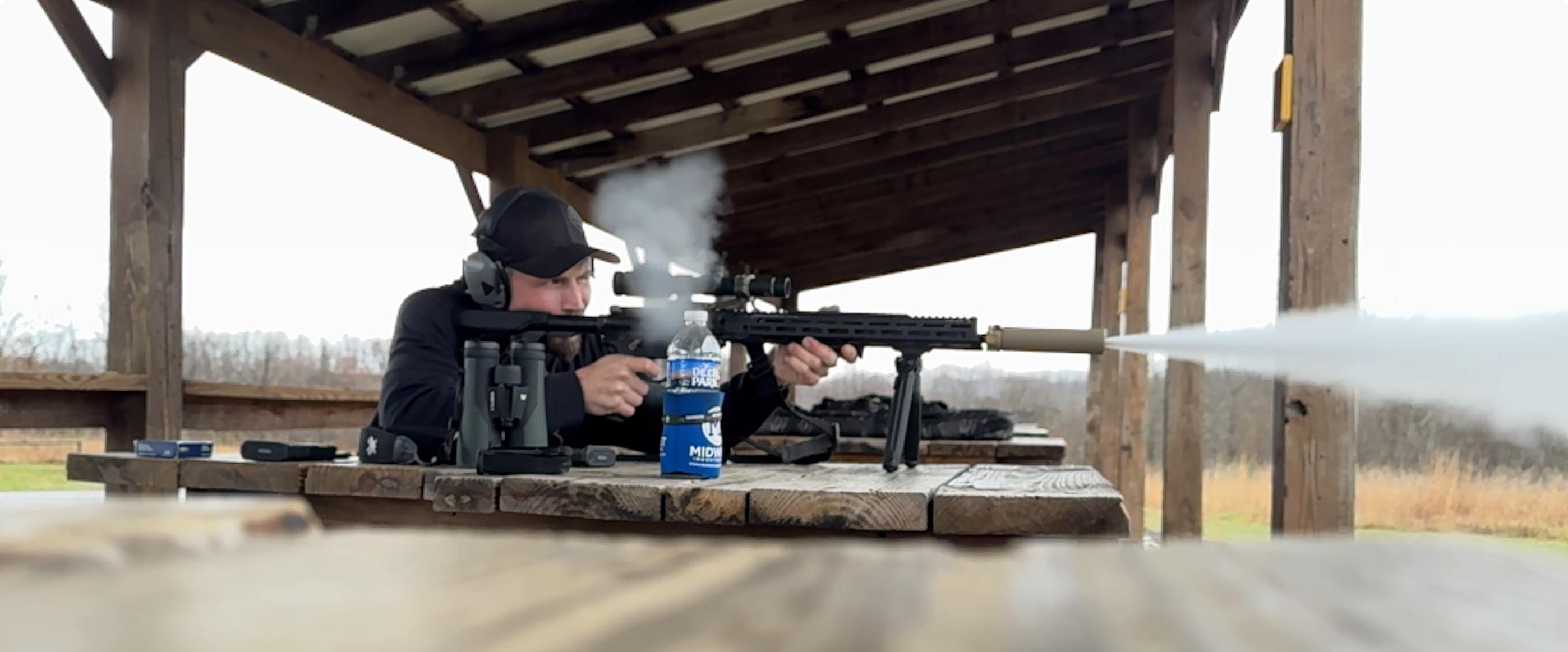
You bolted a suppressor onto your AR, ran a mag, and caught a face full of gas. Eyes watering, nose burning, that sulfur taste coating the back of your throat. The rifle runs fine; you're the one suffering. Welcome to the single biggest quality-of-life problem with suppressed ARs, and the fix is a $60–$120 part most people buy wrong.
The standard mil-spec charging handle wasn't designed with suppressors in mind. It's a stamped piece of 7075 with a roll pin, and the gap between the handle body and the upper receiver is basically an open channel for pressurized gas to blow straight back into your face. Suppressors increase back-pressure in the system; that's just physics. All that extra gas has to go somewhere. It goes through the carrier key, past the gas rings, into the upper receiver, and then out through every unsealed gap it can find. The charging handle channel is the biggest one.
A gas-busting or suppressor-optimized charging handle addresses this with internal porting, redirected gas channels, or tighter sealing surfaces that route gas away from the shooter's face. The difference between a mil-spec handle and a good suppressor handle isn't subtle. It's the difference between wanting to shoot another mag and wanting to pack up and leave. That's the one accessory family covered here; and the specific features that separate handles that actually mitigate gas from ones that just have bigger latches.
Why suppressed ARs punish the charging handle gap
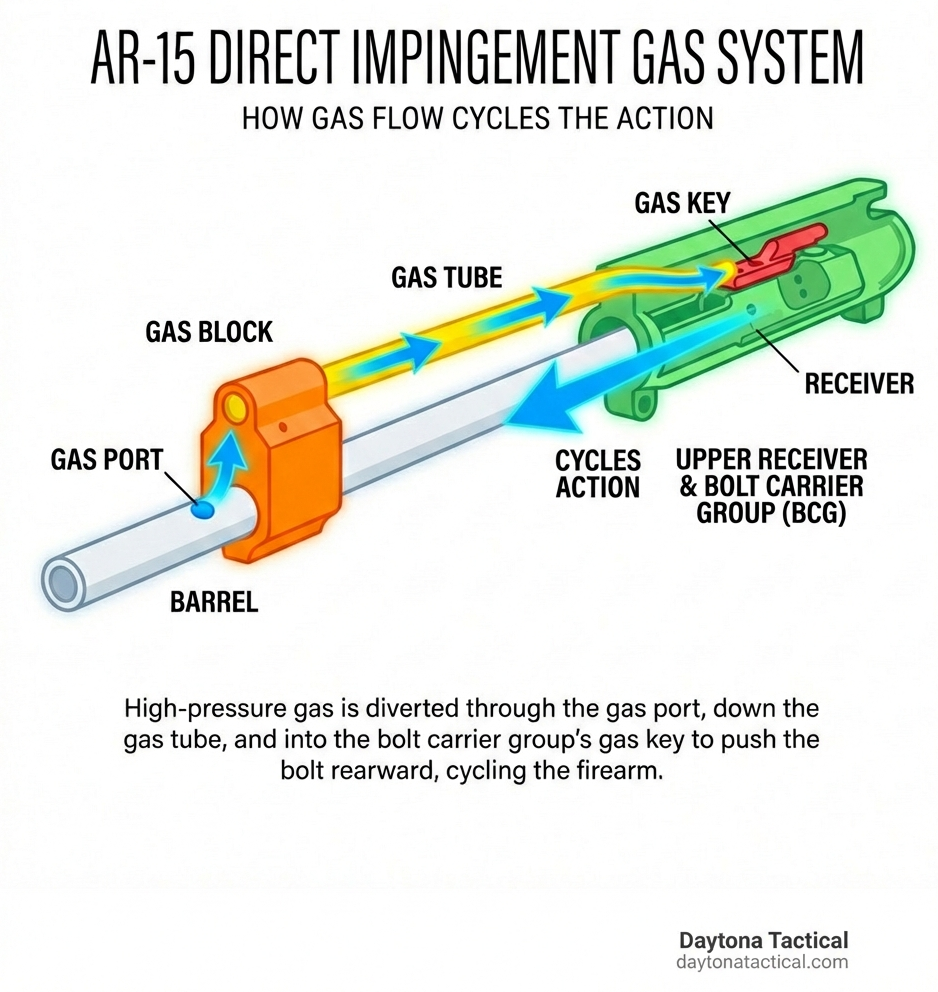
To understand what you're shopping for, you need to understand the gas path. On a standard direct-impingement AR-15, gas travels from the barrel's gas port through the gas tube, into the bolt carrier key, and expands inside the carrier to cycle the action. In an unsuppressed gun, the system is roughly balanced; enough gas to cycle, not too much excess dumping back into the receiver.
Add a suppressor and you've added a series of baffles that trap and slow escaping gas at the muzzle. That trapped gas has nowhere to go but backward, increasing the dwell pressure inside the barrel and gas system. More gas enters the carrier. More gas leaks past the gas rings. More gas pressurizes the upper receiver. And the path of least resistance out of that receiver? The charging handle channel, straight into your face.
The volume of excess gas varies with suppressor design, barrel length, gas port size, and ammunition. Short-barreled rifles with carbine-length gas systems are the worst offenders; they're already over-gassed unsuppressed, and a can makes it dramatically worse. A 16-inch mid-length gun with an adjustable gas block and a low-back-pressure suppressor might barely bother you. A 10.3-inch carbine-length gun with a high-back-pressure can will make you question your life choices if you're running a mil-spec charging handle.
The point: a suppressor-optimized charging handle is not a luxury upgrade. On most suppressed builds, it's a necessity for comfortable shooting. And on short-barreled, over-gassed setups, it's the single most impactful comfort upgrade you can make short of swapping to an adjustable gas block.
What actually makes a charging handle "suppressor-ready"
Not every ambi charging handle is a gas buster. Plenty of enlarged-latch handles are built purely for easier manipulation; faster charging, ambidextrous operation, gloved use; without any gas mitigation features at all. The two categories overlap but they're not the same thing. Here's what separates a suppressor-optimized handle from a regular aftermarket one.
Gas redirecting channels
The primary feature. Suppressor-specific handles have channels or ports machined into the body of the handle that intercept gas traveling along the charging handle channel and redirect it downward, away from the shooter's face. The Radian Raptor SD is the most well-known example; it has venting ports on the underside of the handle body that catch gas and push it down into the receiver or out through the ejection port. The gas still enters the system, but it doesn't exit through the gap between the handle and the upper receiver where your face is.
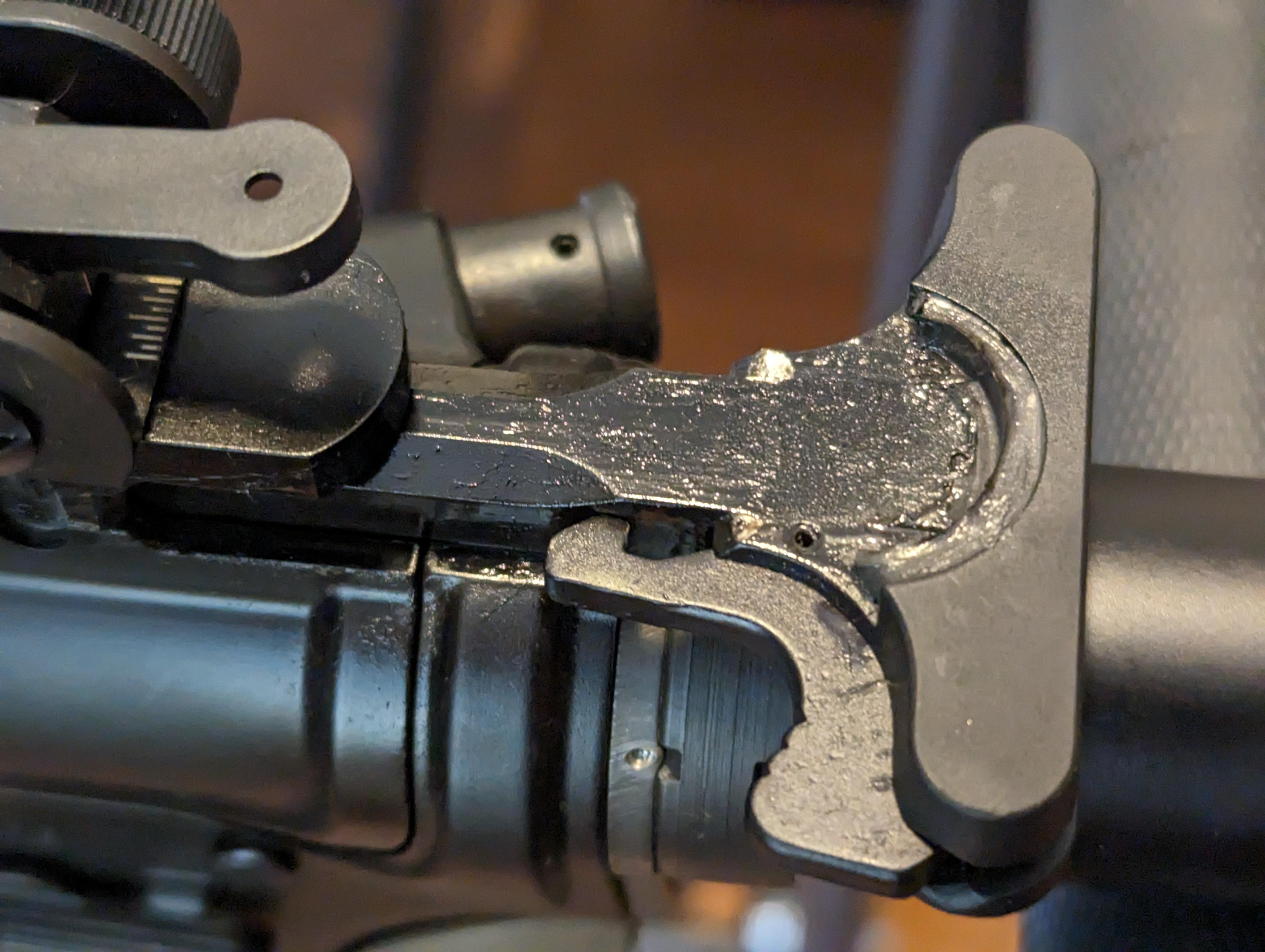
The effectiveness of these channels depends on their size, placement, and how well they match the gas flow dynamics inside a particular upper receiver. Not all implementations are equal. Some handles have shallow, narrow channels that help a little. Others have deeper, more aggressive porting that makes a meaningful difference.
Tighter seal geometry
Some handles focus less on redirecting gas and more on preventing it from reaching the shooter in the first place. Tighter tolerances between the charging handle body and the upper receiver channel reduce the gap that gas can escape through. The PRI Gas Buster, one of the oldest designs in this category, uses a rubber gasket or O-ring seal on the back of the handle that physically blocks gas from exiting rearward. It's a simple mechanical seal; crude compared to the ported designs, but effective.
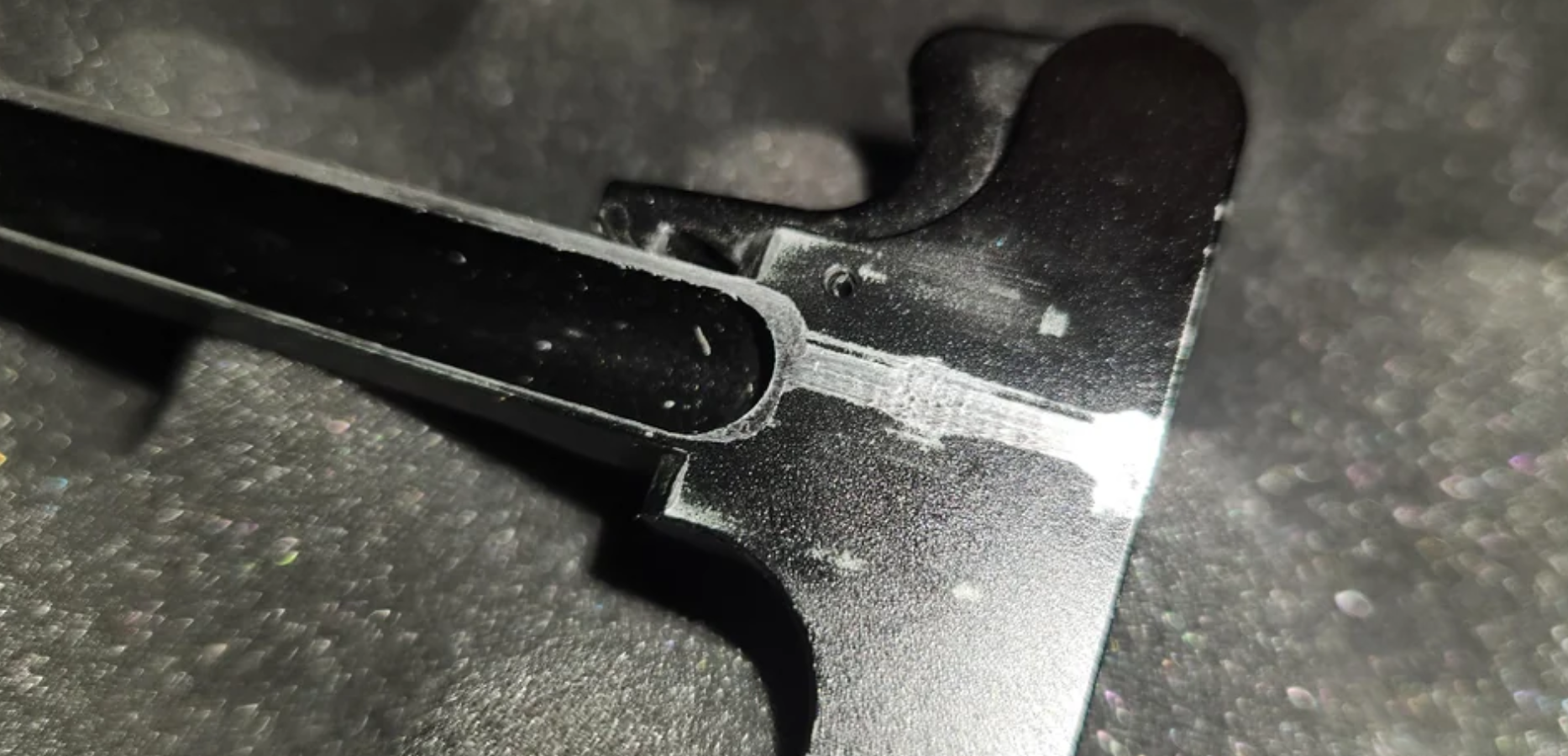
The tradeoff with tight-seal designs is that they can feel slightly stiffer to operate, and the sealing elements can wear over time. A rubber gasket that's been cooked by hot gas for a few thousand rounds isn't the same gasket it was on day one. Replacement gaskets are cheap, but it's a maintenance item most people forget about.
Latch size and ambidextrous operation
This isn't a gas mitigation feature, but it matters for suppressed shooting. Suppressors add weight, length, and sometimes shift the balance of the rifle. Manipulating the charging handle quickly and reliably matters more on a heavier, longer gun. Most suppressor-optimized handles are also ambidextrous with enlarged latches; not because ambi operation reduces gas, but because the market for suppressor handles and the market for premium ambi handles is largely the same group of shooters.
You'll see latch sizes described as small, medium, and large. Small latches are close to mil-spec width. Medium latches extend maybe a quarter inch past the receiver on each side. Large latches stick out noticeably and give you a big grab surface. For suppressed use, medium is the sweet spot for most people. Large latches can snag on slings and gear, and the extra leverage isn't usually necessary; you're not running a forward assist, you're pulling a charging handle.
Material and finish
Almost every handle worth considering is machined from 7075-T6 aluminum, same as the upper receiver. Some budget options use 6061, which is softer and more prone to wear at the latch pivot. At the price range discussed here; under $120; you're almost exclusively looking at 7075.
Finish matters more than people think, but not for the reason they assume. Anodizing and coatings don't affect gas mitigation. They affect how the handle feels during manipulation and how it wears over time. A handle with a good hard-coat anodize or Radian's proprietary finish will stay slick inside the receiver channel for tens of thousands of rounds. A cheap finish will gall, especially if your upper receiver has a slightly different hardness. When a charging handle starts to feel gritty or sticky, it's almost always a finish/tolerance issue, not a design flaw.
The handles worth buying under $120
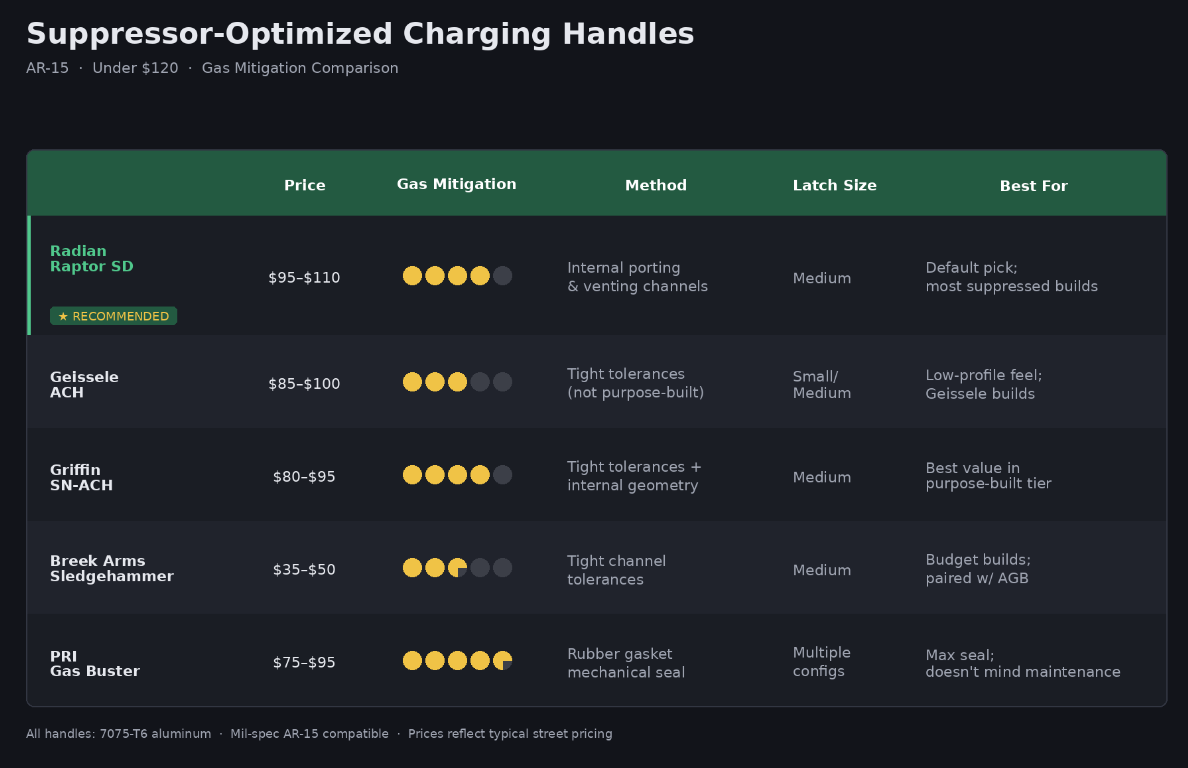
Five handles dominate the suppressor-optimized market in this price range. Each takes a slightly different approach to gas mitigation, and the right one depends on your specific setup and priorities.
Radian Raptor SD
The default recommendation, and for good reason. The Raptor SD is the suppressor-specific version of Radian's standard Raptor, with gas-redirecting channels machined into the handle body. These channels intercept gas traveling along the charging handle channel and vent it downward through ports in the bottom of the handle. The effect is noticeable; not a complete elimination of blowback, but a significant reduction that makes sustained suppressed shooting much more comfortable.
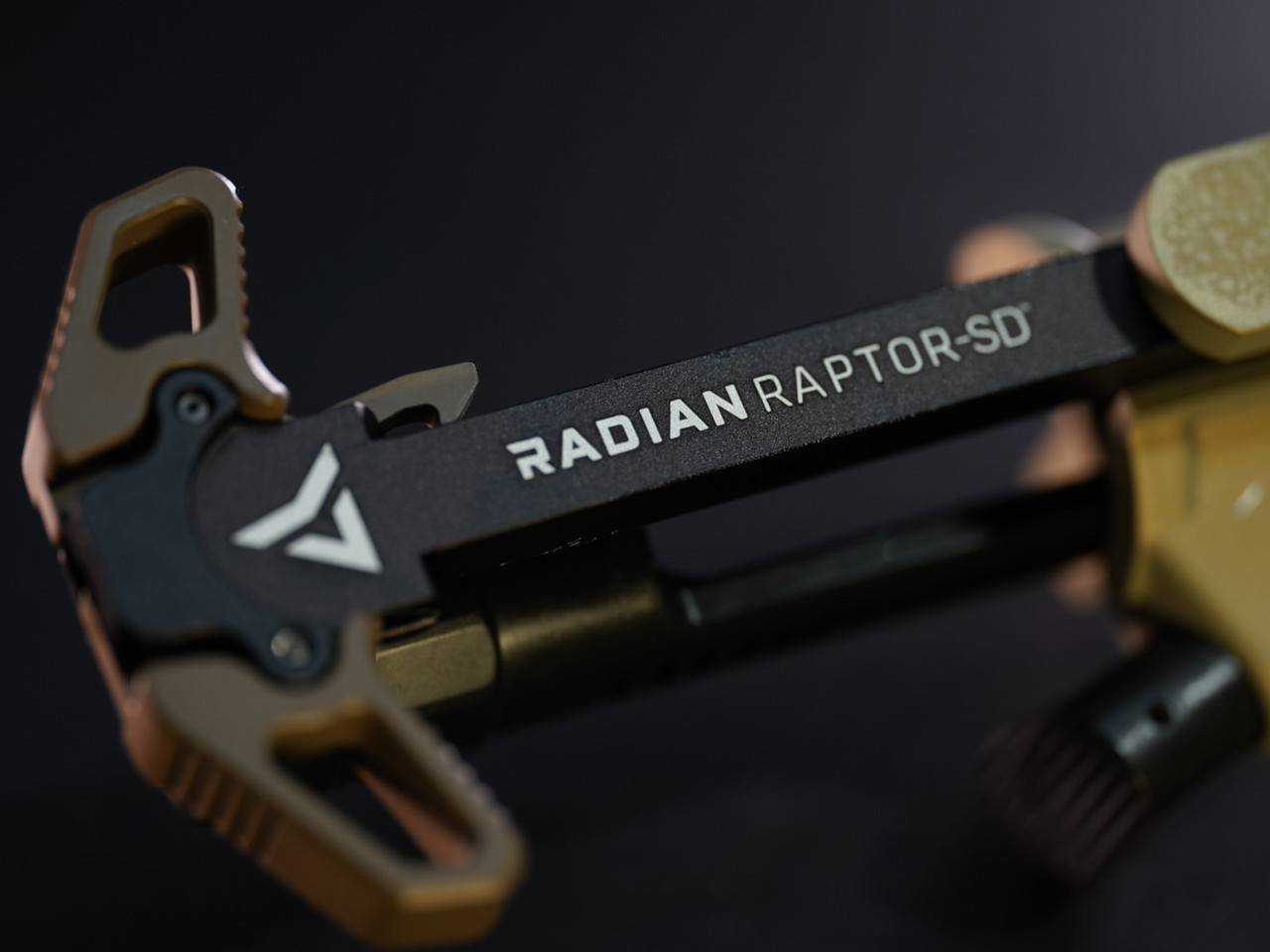
The latches are medium-sized, textured aggressively enough to grip with gloves but not so oversized that they snag on things. The action is smooth; Radian's tolerances and finish quality are consistently good, and the handle glides in the receiver channel without sticking or grinding. It's ambidextrous with a symmetrical latch design, so it works identically from either side.
Street price hovers around $95–$110 depending on finish. The standard version comes in black, but FDE, tungsten, and other Cerakote options are available, sometimes at a slight premium. At this price, the Raptor SD is the benchmark that every other suppressor handle gets compared to. It doesn't eliminate gas completely; nothing does at the charging handle alone; but it reduces it enough that most shooters find suppressed shooting comfortable without additional mitigation like an adjustable gas block.
Geissele Airborne Charging Handle (ACH)
Geissele's ACH isn't marketed specifically as a suppressor handle, but its tight tolerances and the way it fits inside the receiver channel give it better-than-average gas sealing compared to most standard ambi handles. The latch design is smaller and sleeker than the Raptor; closer to a mil-spec profile with just enough extra width for positive engagement. If you prefer a low-profile handle that doesn't stick out much, the ACH is appealing.
The gas mitigation isn't as aggressive as the Raptor SD's dedicated porting system. On a moderately gassed 14.5 or 16-inch gun with a well-designed suppressor, the ACH does a reasonable job. On a short-barreled, over-gassed setup, you'll notice the difference between it and a purpose-built gas buster. The ACH is more of a "good at everything, specialized at nothing" handle; excellent build quality, smooth operation, good but not great gas performance.
Price sits around $85–$100. The 7075 construction and Geissele's hard-coat anodize are top-tier. If you're running a Geissele upper or rail and want matching aesthetics and finish quality, the ACH fits that build. Just know that it's not purpose-built for gas mitigation the way the Raptor SD is.
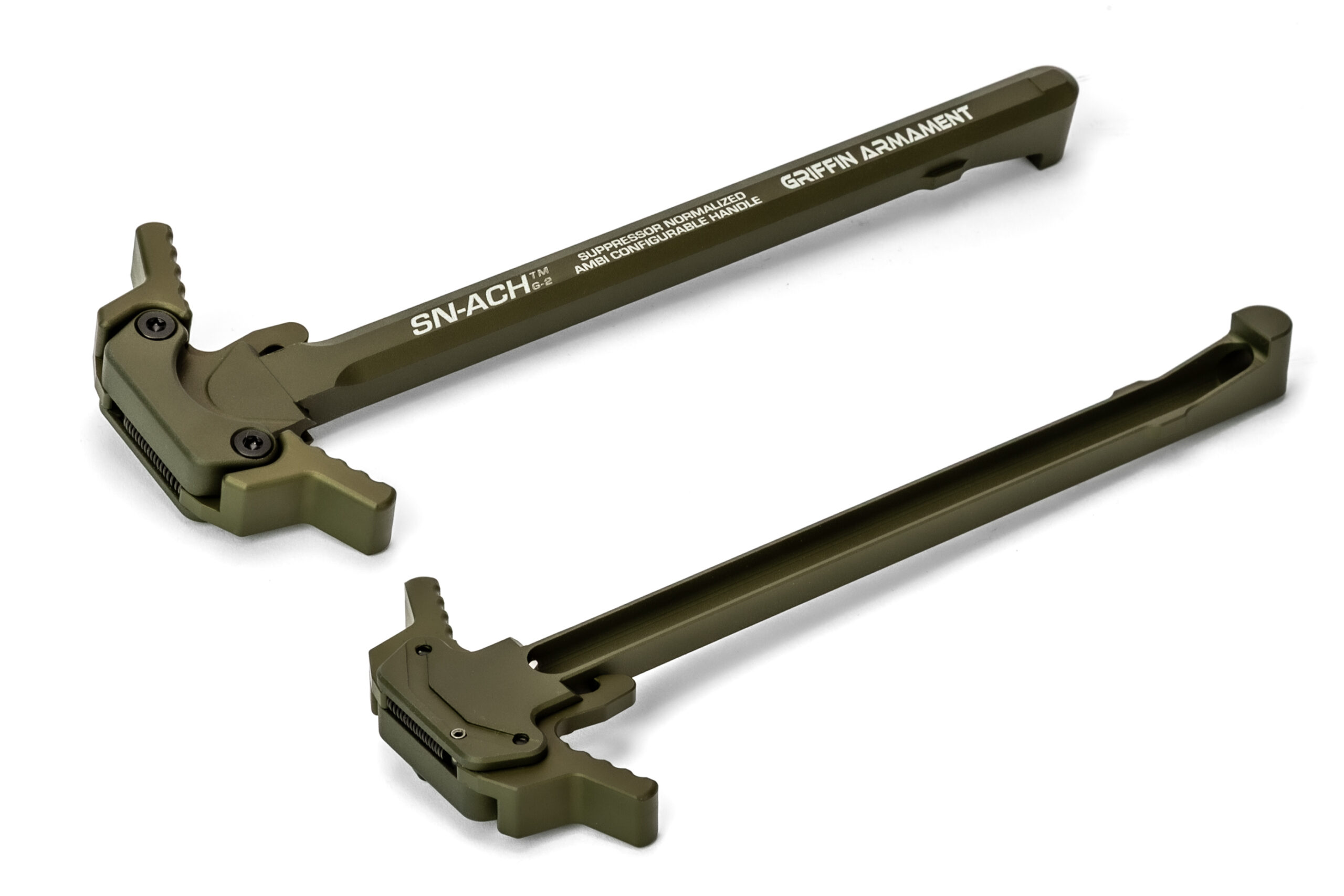
Griffin Armament SN-ACH
Griffin's Suppressor Normalized Ambidextrous Charging Handle is designed from the ground up for suppressed shooting. The gas mitigation approach uses a combination of tighter channel tolerances and internal geometry changes that reduce the volume of gas exiting rearward. Griffin makes suppressors; they understand the back-pressure problem from the source side, and the SN-ACH reflects that.
The latches are medium-profile and the overall feel is solid, though the finish isn't quite as refined as Radian's. Some users report the latch action feeling slightly stiffer out of the box compared to the Raptor, but it breaks in after a few hundred manipulations. Gas performance is competitive with the Raptor SD; some testing suggests it's slightly better in certain configurations, though results vary with upper receiver, gas system, and suppressor combination.
Typically priced around $80–$95, the SN-ACH is arguably the best value in the suppressor-specific category. Griffin doesn't have the brand cachet of Radian or Geissele, but the engineering is sound and the gas mitigation is purpose-built rather than incidental.
Breek Arms Warhammer/Sledgehammer
Breek Arms makes surprisingly good charging handles at prices that undercut the big names significantly. The Warhammer (large latch) and Sledgehammer (medium latch) are ambidextrous handles machined from 7075-T6 with a focus on smooth operation and aggressive latch texturing. They're not specifically marketed as suppressor handles, but the channel tolerances are tight enough that they provide noticeable gas reduction compared to mil-spec.
The Sledgehammer Mod2, in particular, has earned a following on forums and Reddit for being the best bang-for-buck ambi handle available. At roughly $35–$50, it costs a third of a Raptor SD and delivers maybe 60–70% of the gas mitigation. If you're on a budget and running a moderately gassed setup, a Breek handle plus an adjustable gas block might give you better overall results than a Raptor SD alone on an un-tuned gas system.
Build quality is good but not flawless. The anodize isn't as deep or as consistent as Radian's, and occasional cosmetic blemishes show up. Functionally, they work well. The latch engagement is positive and the handle runs smoothly in most upper receivers. For the price, it's hard to argue against having one as a backup or on a budget build.
PRI Gas Buster
The original. PRI (Precision Reflex Inc.) has been making the Gas Buster charging handle since before suppressed AR shooting was mainstream. The design uses a rubber gasket on the rear of the handle that physically seals the gap between the handle and the upper receiver, blocking gas from exiting rearward. It's a mechanical seal rather than a porting/redirecting approach, and it works.
The Gas Buster comes in several latch configurations; military, combat, and big latch; so you can match the profile to your preference. The gasket does wear over time and needs periodic replacement, which is the main maintenance consideration. Replacements are inexpensive and easy to install, but it's an extra step that ported designs don't require.
Gas mitigation with a fresh gasket is excellent; arguably the most complete seal of any handle in this price range. The downside is that the handle can feel slightly draggy compared to the ultra-smooth Raptor or ACH, because the gasket creates friction. Some shooters don't notice it. Others find it annoying. Price is typically $75–$95, and availability can be inconsistent; PRI is a smaller operation and stock fluctuates.
Fit and feel: what changes at the range
The first time you swap from a mil-spec handle to a suppressor-optimized one and run a mag through a canned gun, the difference registers immediately. It's not that gas disappears entirely; some blowback is inherent to the DI system and no charging handle alone eliminates it completely. But the volume of gas hitting your face drops dramatically. On a Raptor SD or Griffin SN-ACH, it's the difference between "actively unpleasant" and "barely noticeable."
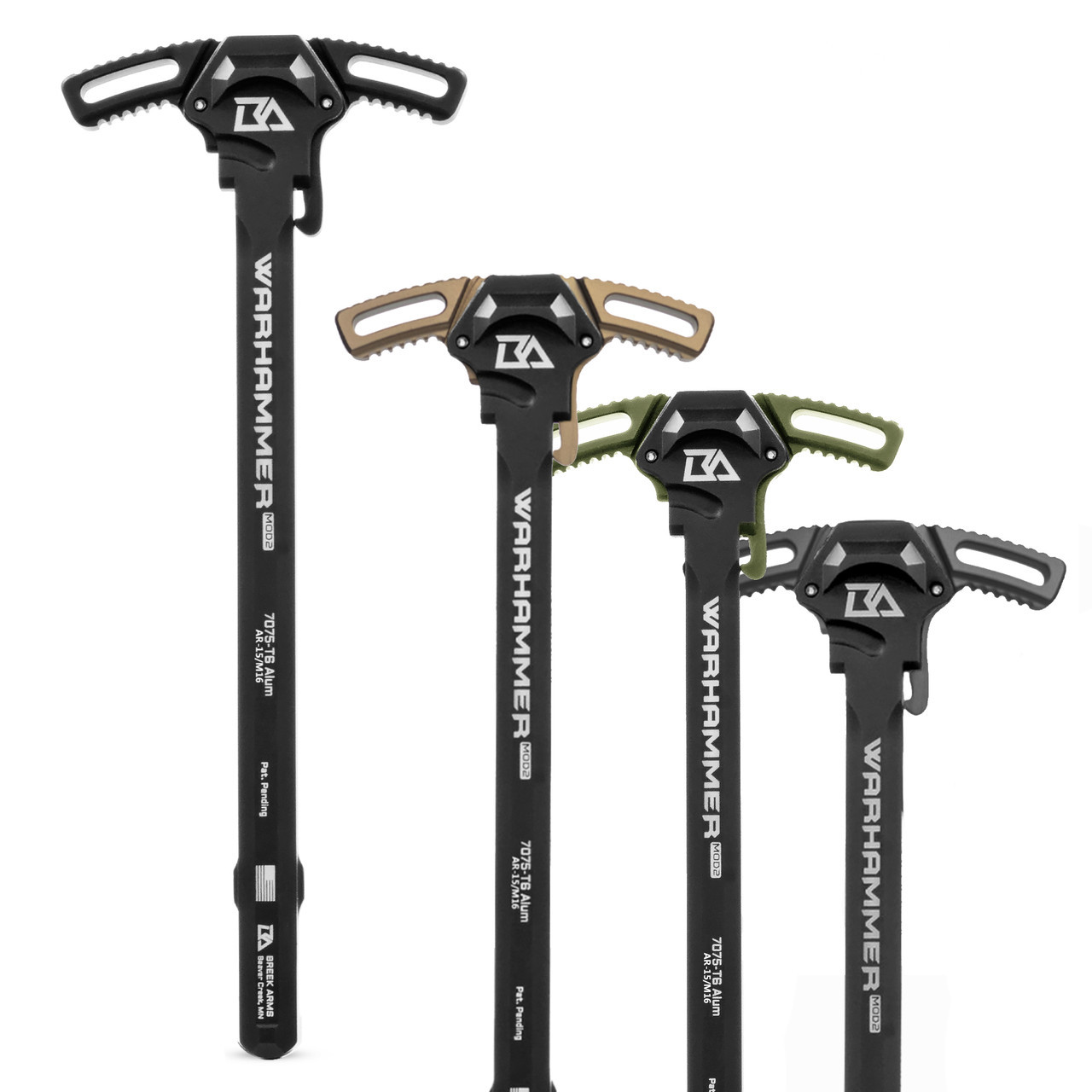
The tactile difference matters too. A well-made aftermarket handle feels like it belongs in the gun. The latches engage and release crisply. The handle slides in the channel without wobble or grit. Mil-spec handles often have noticeable play in the channel and the latch engagement feels mushy by comparison. This isn't about luxury; it's about consistent, reliable manipulation under stress. When you need to clear a malfunction or do a press check, a handle that operates smoothly and predictably is faster to use.
Weight difference is negligible. Most aftermarket handles weigh within a few grams of mil-spec; the extra material in the latches is offset by material removed for porting channels. You won't feel it on the rifle.
One thing that surprises people: the sound changes. With a mil-spec handle on a suppressed gun, you can actually hear gas hissing out of the charging handle channel during and after firing. With a gas-busting handle, that hiss is significantly reduced or redirected. It's a small thing, but it confirms that the gas is actually being managed, not just relocated to a spot you can't feel.
Common mistakes and how to avoid them
Buying ambi but not suppressor-specific
The most frequent error. A shooter buys a Radian Raptor (standard, not SD) or a BCM Gunfighter Ambi because they want a better charging handle, then wonders why they're still eating gas when they add a suppressor. Standard ambi handles improve manipulation but do nothing meaningful for gas mitigation. The Raptor and the Raptor SD look similar from the outside, but the SD has internal porting that the standard version lacks. Check the specific model designation before buying. The letters "SD," "SN," or "Gas Buster" in the name exist for a reason.
Expecting the charging handle to solve an over-gassed system
A suppressor-optimized charging handle reduces the gas that reaches your face through the handle channel. It doesn't reduce the total amount of excess gas in the system. If your gun is violently over-gassed; brass flying 30 feet, bolt carrier slamming the buffer tube, primers flattening; a charging handle swap treats one symptom while the underlying problem remains. The correct approach for a seriously over-gassed suppressed gun is an adjustable gas block first, then a gas-busting charging handle as a secondary measure. Together, they make suppressed shooting genuinely comfortable. The charging handle alone gets you halfway there.
EOTech holographic sight Deals
Prices may change. May contain affiliate links.
Ignoring upper receiver fit
Charging handles are not perfectly universal. While they all follow the AR-15 spec, tolerances vary between manufacturers. A handle that fits perfectly in an Aero upper might feel slightly loose in a BCM upper or slightly tight in a KAC upper. Loose fit means more gas leakage around the handle. Tight fit means more friction during manipulation. Neither is dangerous, but both affect performance. If your new handle feels noticeably loose in the channel, it won't seal as well as it could. If it feels gritty or sticky, a light coat of lubricant on the contact surfaces usually resolves it; but persistent binding might indicate a tolerance mismatch that won't improve with break-in.
Forgetting the ejection port
The charging handle channel isn't the only place gas exits the receiver. The ejection port is a much larger opening, and gas escaping there can still reach your face depending on shooting position and wind. A charging handle upgrade helps a lot, but if you're still getting gas after installing one, the ejection port is likely the culprit. A brass deflector helps redirect some of that gas, but there's no aftermarket fix for the ejection port itself; it's an inherent feature of the AR platform. Managing expectations matters. A gas-busting handle makes things significantly better, not perfect.
Over-torquing the latch
This one's mechanical. Some aftermarket handles use a set screw or tensioning mechanism on the latch. Cranking it down too tight makes the latch stiff and hard to engage. Too loose and it can rattle or disengage unintentionally. Follow the manufacturer's spec if one exists. If not, set it so the latch engages with a positive click and releases with deliberate thumb pressure; not so tight that you're fighting it, not so loose that it moves on its own.
How to actually test gas mitigation
Most people install a new charging handle, shoot a few rounds, and declare it "better." That's fine for a gut check, but if you want to actually compare handles or verify that your setup is optimized, a more structured approach helps.
The white-shirt test
Wear a white or light-colored shirt. Shoot 20 rounds suppressed with your old handle. Check the shirt around your collar and chest for carbon residue. Swap to the new handle. Shoot another 20 rounds with the same ammo and suppressor. Compare the carbon deposits. It's crude but surprisingly revealing; the amount of carbon on your shirt correlates directly with how much gas is reaching your face and upper body.
The buddy test
Have someone stand behind you and slightly to the side (safely) while you fire suppressed. They can see the gas plume exiting the receiver much better than you can feel it while focused on shooting. A visible cloud of gas puffing out of the charging handle area on every shot means your handle isn't doing much. A barely visible wisp means it's working.
The extended session test
The real test is shooting volume. Anyone can tolerate a little gas for five rounds. Shoot 100 rounds suppressed in a single session and evaluate how your eyes, nose, and throat feel afterward. A good suppressor handle should let you run through a full range session without the burning-eyes-and-scratchy-throat feeling that mil-spec handles produce. If you're still uncomfortable after 100 rounds with a gas-busting handle, the issue is probably systemic over-gassing that needs to be addressed at the gas block.
Ammo matters
Different ammunition produces different volumes and compositions of gas. Cheap steel-cased ammo with dirtier powders produces more gas and more unpleasant gas than quality brass-cased ammo with cleaner-burning powders. If you're testing gas mitigation, use the ammo you actually plan to shoot. Testing with match-grade ammo and then running Wolf steel-case will give you a misleadingly optimistic impression of your handle's performance.
The adjustable gas block question
This comes up constantly: should you buy an adjustable gas block or a gas-busting charging handle first? The answer depends on how over-gassed your system is.
If your gun cycles fine unsuppressed and is only mildly over-gassed with a can; brass ejecting at 2–3 o'clock, no unusual wear, bolt speed feels reasonable; a charging handle swap alone might be sufficient. The excess gas in the system is manageable, and redirecting what leaks through the handle channel is enough to make shooting comfortable.
If your gun is noticeably over-gassed even without a suppressor, or becomes violently over-gassed with a can; brass at 1 o'clock or forward, bolt bounce, excessive carrier speed; an adjustable gas block should be the priority. Reducing gas at the source solves multiple problems simultaneously: less carrier speed, less bolt wear, less felt recoil, less gas in the receiver, and less gas reaching your face. A charging handle swap on top of a properly tuned adjustable gas block is the ideal setup, but the gas block does the heavy lifting.
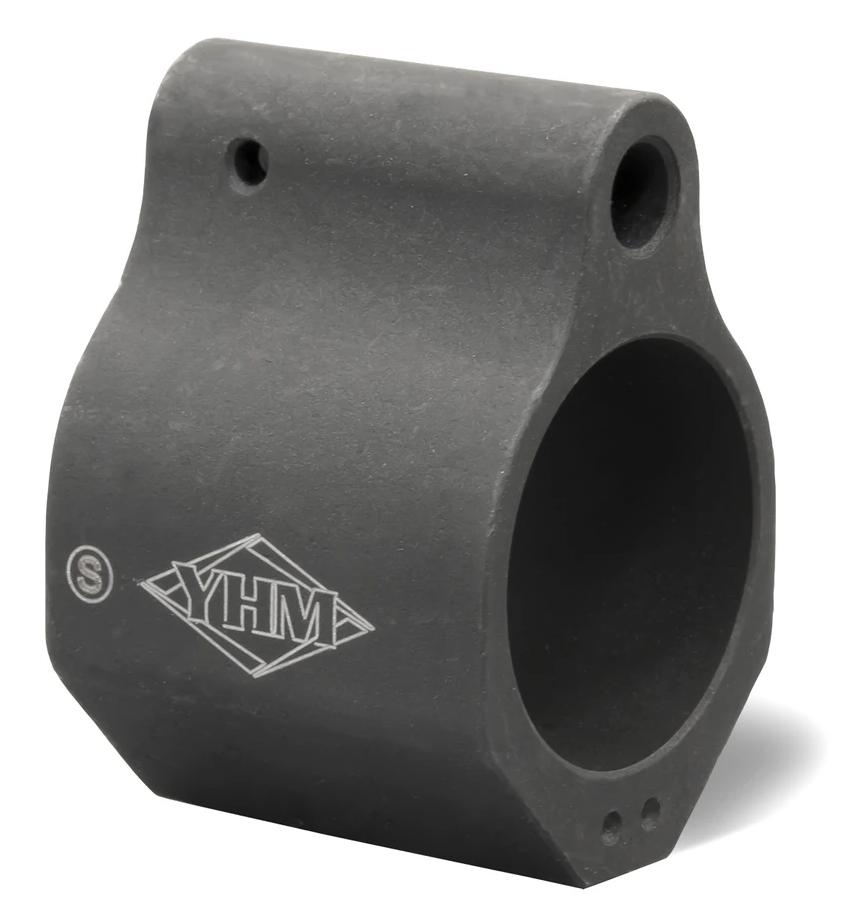
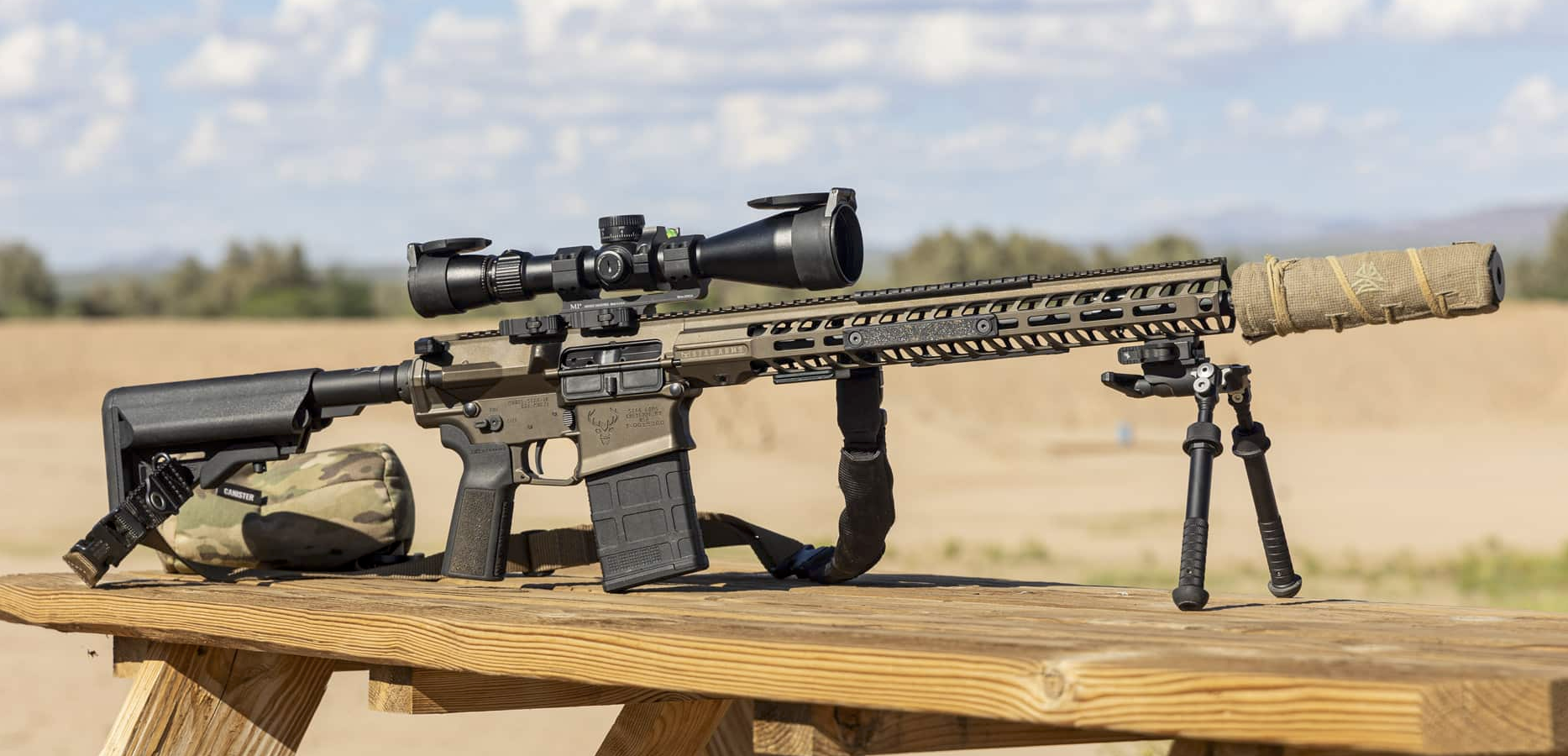
The combined approach; adjustable gas block tuned to minimum reliable cycling with your suppressor, plus a gas-busting charging handle; is as close to gas-free suppressed shooting as the DI AR-15 platform can achieve. It won't be zero gas. But it'll be close enough that you forget about it during shooting.
Some shooters skip both and go straight to a suppressor with low back-pressure design, like the OSS/HUXWRX flow-through cans. These suppressors reduce the gas problem at the source by allowing gas to flow through the suppressor rather than trapping it and sending it backward. A flow-through suppressor with a standard charging handle might produce less blowback than a high-back-pressure suppressor with a Raptor SD. The suppressor choice matters more than the charging handle choice, but most people already own their suppressor before they start addressing blowback.
Piston guns: a different conversation
If you're running a piston-driven AR-15; an HK MR556, a PWS, an Adams Arms conversion; the gas-to-face problem is dramatically reduced or eliminated regardless of charging handle. Piston systems vent gas at the gas block rather than sending it into the receiver, so the upper receiver stays much cleaner and the charging handle channel isn't a significant gas pathway. A suppressor-optimized charging handle on a piston gun is unnecessary for gas mitigation, though you might still want an ambi handle for ergonomic reasons.
This only applies to true piston systems. Short-stroke, long-stroke, doesn't matter; if the gas doesn't enter the receiver through a carrier key, you don't have the blowback problem. DI guns with "enhanced" bolt carriers or vented carrier keys are still DI guns and still benefit from gas-busting handles.
Maintenance and longevity
Aftermarket charging handles are low-maintenance items, but they're not zero-maintenance. The contact surfaces between the handle and the upper receiver channel accumulate carbon and wear over time. A quick wipe with a rag and a light coat of oil during regular cleaning keeps things running smoothly. Pay attention to the latch pivot area; carbon buildup there can make the latch feel sluggish.
For handles with gasket seals like the PRI Gas Buster, inspect the gasket every 1,000–2,000 rounds. A compressed, hardened, or cracked gasket isn't sealing properly. Replacement takes about 30 seconds and costs a few dollars. Ignoring it means your gas-busting handle gradually becomes a regular handle.
The ported designs like the Raptor SD don't have wear items, but the ports themselves can accumulate carbon over time. A pipe cleaner or small brush through the gas channels during cleaning prevents buildup from reducing their effectiveness. Most people never do this and the handles still work fine for thousands of rounds, but if you're meticulous about your gear, it's a five-second addition to your cleaning routine.
Latch springs can weaken over very high round counts; tens of thousands of manipulations. If your latch starts feeling mushy or doesn't snap back positively, a spring replacement usually restores it. Most manufacturers sell replacement springs, and some include a spare in the box.
Where the money actually goes
At $90–$110 for a Raptor SD versus $15–$20 for a mil-spec handle, the price difference raises a fair question: what are you paying for?
Machining complexity accounts for a lot of it. A mil-spec handle is a simple extrusion with a roll pin. A Raptor SD is a multi-axis CNC-machined part with internal gas channels, textured latch surfaces, and tight tolerances. The setup time, machine time, and quality control involved are genuinely more expensive. You're also paying for 7075 billet versus 7075 forging in many cases; billet allows more complex geometry but costs more in raw material and machining.
Brand premium exists too, no question. Radian and Geissele charge more because they can, and because their quality control and finish consistency justify it to most buyers. The Breek Arms handles prove that you can get 80% of the performance for 40% of the price, which suggests that some portion of the premium pricing is brand tax. Whether that bothers you depends on your budget and how much you value the last 20% of refinement.
The honest assessment: a $35 Breek handle on a properly tuned gas system will give you a better shooting experience than a $110 Raptor SD on an un-tuned, over-gassed system. Spend your money where it has the most impact. If your gas system is already dialed, the Raptor SD or Griffin SN-ACH is the finishing touch that makes suppressed shooting genuinely pleasant. If your gas system is a mess, fix that first and put a budget handle on while you save for the premium one.
What to do next
Mount your current charging handle and run 20 rounds suppressed. Pay attention to where you feel gas; eyes, nose, cheek, or just a general awareness of fumes. That's your baseline. If you're already running an aftermarket handle, try the white-shirt test to see how much carbon is actually reaching you.
If you decide to upgrade, match the handle to your system. Over-gassed short barrel with a high-back-pressure can? Raptor SD or Griffin SN-ACH; you need the dedicated gas mitigation. Moderately gassed mid-length with a reasonable suppressor? A Breek Sledgehammer or Geissele ACH might be plenty, especially if you're also running an adjustable gas block. PRI Gas Buster if you want the most complete seal and don't mind the gasket maintenance.
After installation, run the same 20-round test and compare. The difference should be obvious. If it's not, your problem is upstream; too much gas entering the system in the first place, and no charging handle is going to fix that. Tune the gas block, swap to a lower-back-pressure suppressor, or accept that your particular combination is always going to be gassy and mitigate with eye protection and ventilation. The charging handle is one piece of the puzzle. On most builds, it's the piece that makes the biggest comfort difference for the least effort. But it's not magic, and knowing its limits matters as much as knowing its benefits.