You've got a bucket of mixed brass; some stamped LC, some stamped R-P .223 REM; and you're about to throw charges. Stop. The cartridge dimensions are nearly identical, but the chambers these rounds were designed for are not. And if you're loading to the same recipe without accounting for the differences, your pressure signs might be telling you something you're ignoring.
This isn't a safety lecture. You already know to start low and work up. The real issue is more subtle: the same powder charge, behind the same bullet, in the same brass, can produce meaningfully different pressures depending on the chamber it's fired in. The throat geometry, the case capacity after firing, and the pressure measurement standards themselves all diverge between .223 Remington and 5.56 NATO. Understanding where those divergences live; and which ones actually affect your load development; is the difference between chasing phantom pressure signs and building loads that repeat.
By the end of this, you'll know exactly which variables change between these two cartridges at the bench, how to sort and prep brass accordingly, and where the .223 Wylde chamber fits into your load development process.
The chamber difference that drives everything
The cartridge dimensions are functionally the same. Case length, shoulder angle, body taper; you can overlay a .223 Remington case drawing on a 5.56 NATO case drawing and they're within a thousandth or two everywhere that matters. The divergence is in the chamber, specifically the leade (also called the throat or freebore).
A SAAMI-spec .223 Remington chamber has a leade of approximately 0.025 inches. A NATO-spec 5.56 chamber has a leade closer to 0.162 inches; roughly six times longer. That's not a typo. The 5.56 NATO chamber gives the bullet significantly more room to travel before it engages the rifling.
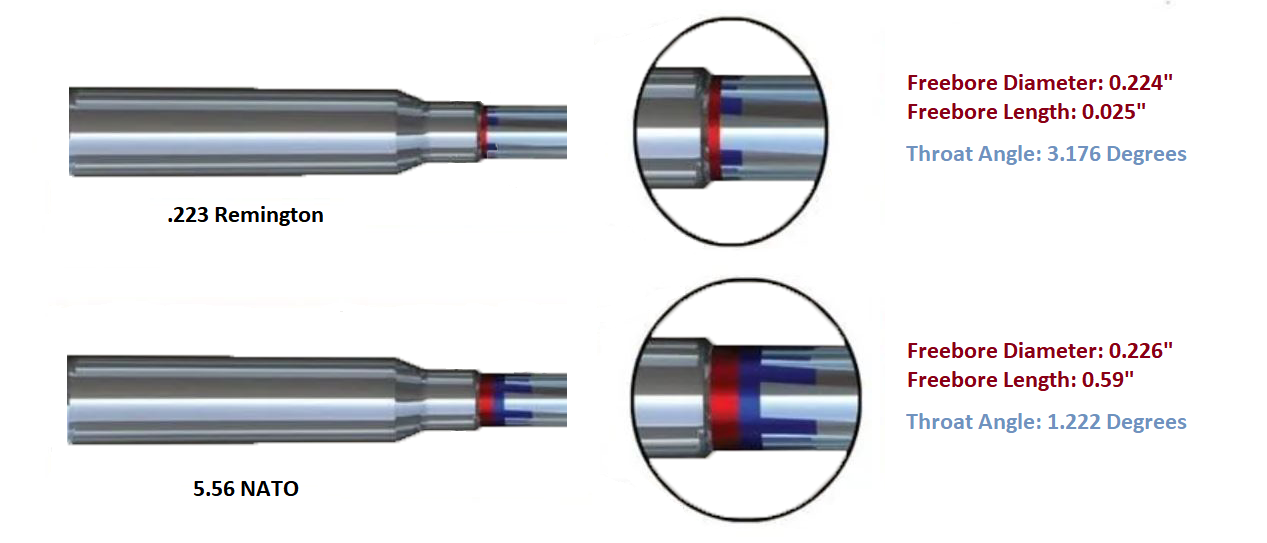
Why does this matter for pressure? When a bullet has a shorter jump to the lands, it encounters resistance sooner. The powder gas has less volume to expand into before the bullet seals against the bore. The result is a faster pressure spike; higher peak pressure for the same charge weight. In a tight .223 Remington chamber, a load that's perfectly safe in a 5.56 NATO chamber can run 5,000 to 10,000 PSI hotter. That's not theoretical. It's measurable and repeatable.
The SAAMI maximum average pressure for .223 Remington is 55,000 PSI. NATO specs rate 5.56 at 62,366 PSI; but here's the catch that confuses people: those numbers aren't measured the same way. SAAMI uses a transducer at the case mouth. NATO uses a conformal transducer (copper crusher or piezoelectric) at a different location on the case. The measurement methodologies produce different numbers for the same actual pressure event. When you correct for the measurement differences, the real-world operating pressures are closer than the raw numbers suggest, but the .223 Remington chamber still produces higher peak pressure with the same ammunition because of the throat geometry.
This is the variable most people gloss over. They see "55,000 PSI vs 62,000 PSI" and think 5.56 ammo runs hotter. It does, in absolute terms; military ammo is typically loaded to higher velocity specs. But the chamber itself is what amplifies or moderates that pressure, and the .223 Remington chamber is the tighter one.
What this means for your brass
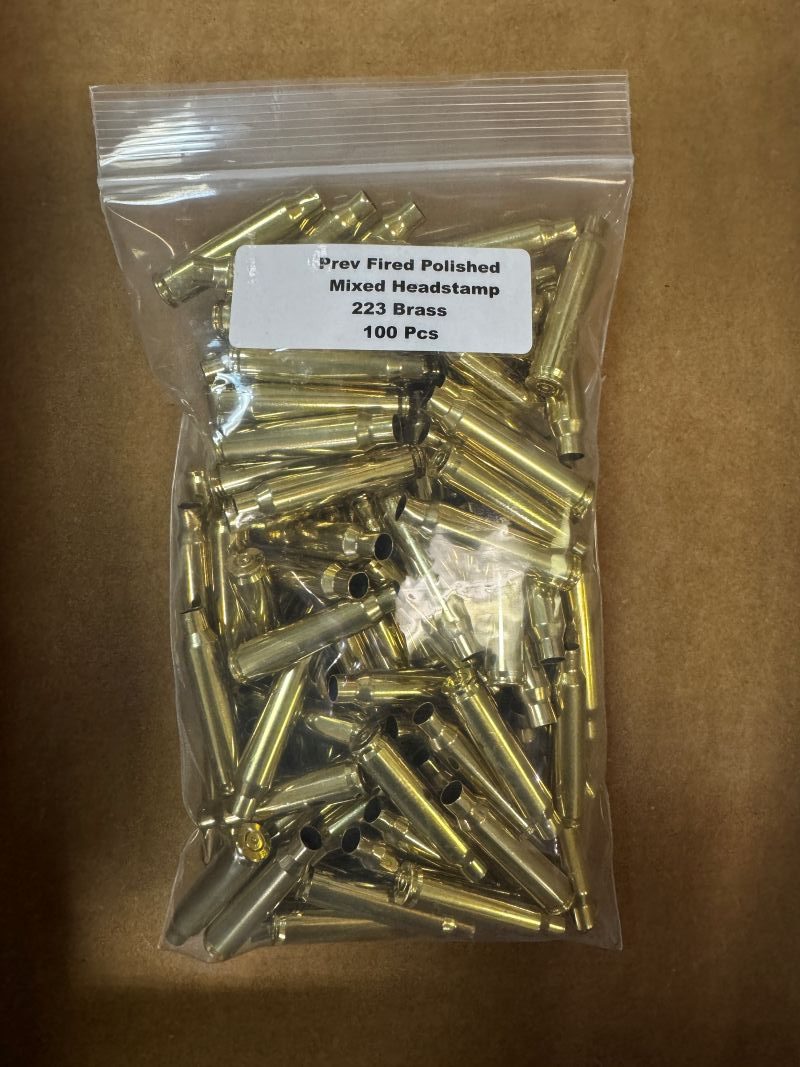
Mixed headstamp brass is the norm for anyone loading .223/5.56. Range pickups, bulk purchases, military surplus; it all ends up in the same tumbler. But military 5.56 brass (LC, WCC, TZZ, and similar headstamps) differs from commercial .223 brass in ways that directly affect your load data.
Case wall thickness and capacity
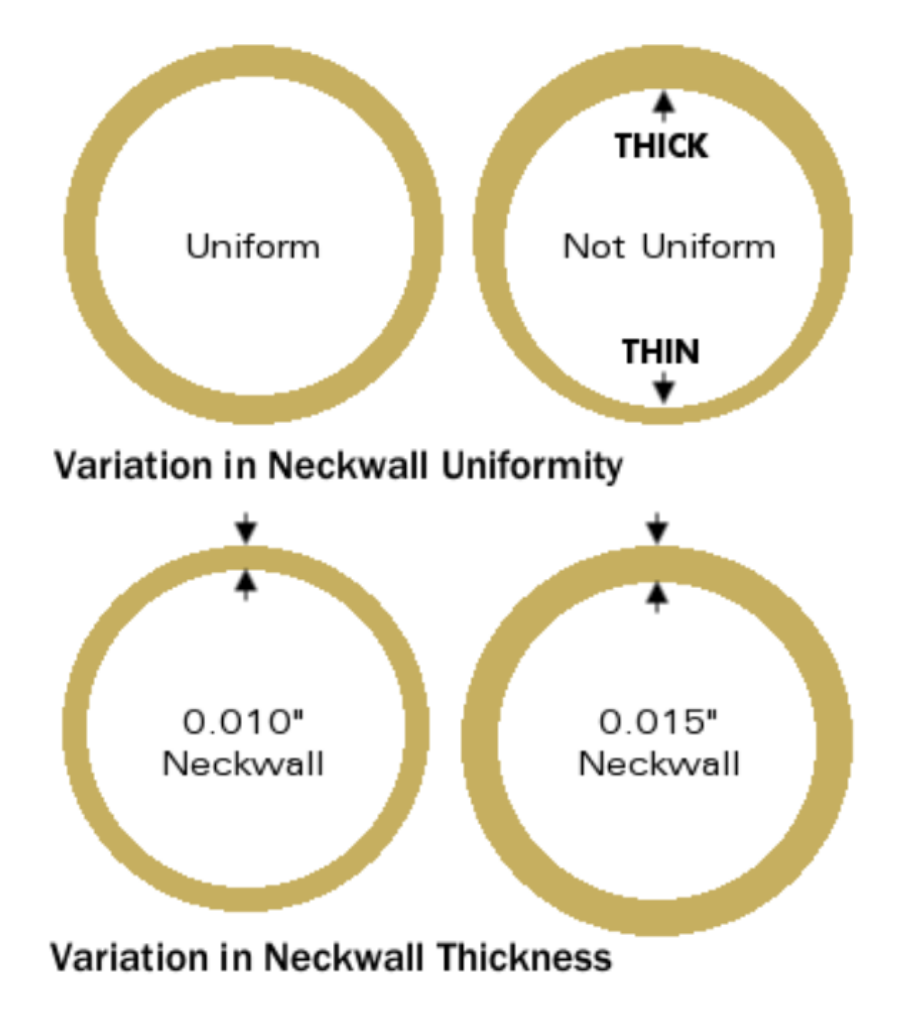
Military brass typically has thicker case walls and a thicker web near the case head. This is by design; it needs to handle the higher operating pressures of NATO-spec ammo reliably, across a wider range of temperatures and conditions. The trade-off is reduced internal case capacity. A Lake City case might hold 1.0 to 1.5 grains less water than a Remington or Hornady .223 commercial case.
Less internal volume means higher pressure for the same charge weight. If you develop a load using Starline .223 brass at 24.5 grains of Varget and then load that same charge into LC brass, you've effectively increased the pressure. The charge-to-volume ratio went up. The ES/SD tells you everything; you'll see velocity go up, and if you're near the top of the pressure curve, you'll see signs on the primer or the case head.
Primer pockets
Military brass almost always has crimped primer pockets. You already know this if you've tried to seat a primer into unprepped LC brass and felt it bottom out against the crimp ring. The crimp needs to be swaged or reamed before you can seat a new primer. RCBS and Dillon both make bench-mounted swaging tools; the Dillon Super Swage 600 handles this quickly in volume. Reaming works too, but swaging preserves more of the pocket geometry.
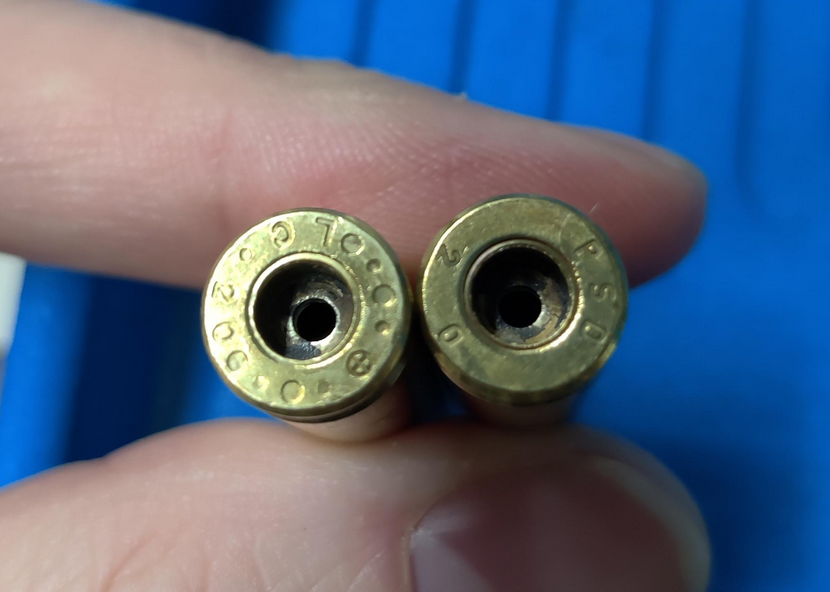
Here's the part that matters for pressure: if the crimp isn't fully removed and the primer doesn't seat to the correct depth, you get inconsistent ignition. Inconsistent ignition means inconsistent pressure curves, which means your ES opens up and your load development data becomes unreliable. A primer that's sitting 0.003" high because it hung up on a partial crimp isn't the same ignition event as one seated flush to 0.002" below the case head.
Check the primer pockets. Every time, on military brass.
Sorting protocol
The minimum sorting discipline for mixed .223/5.56 brass:
Separate military from commercial by headstamp. Within military brass, sort by headstamp and year if you're chasing precision; LC 18 and LC 22 may have slight capacity differences due to manufacturing lot variation. Weigh a sample of 20 from each group, filled with water to the case mouth, to establish actual capacity. If the spread within a group exceeds 1.0 grain of water, sort further or accept wider ES.
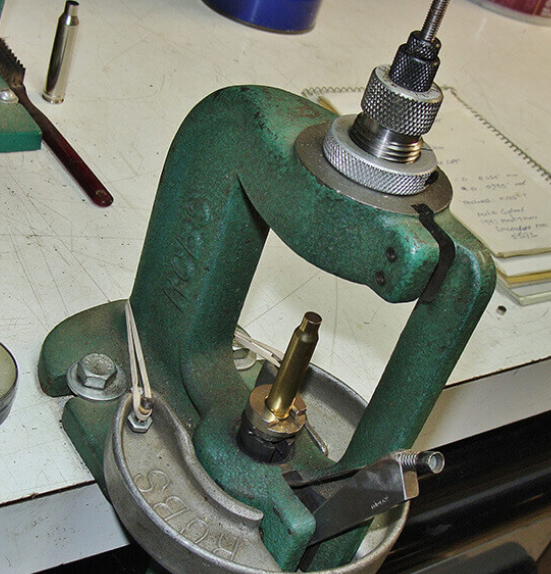
For load development, pick one brass type and stick with it. Develop your load in that brass. If you switch brass, you're starting the workup over; or at minimum, dropping back 1.0 to 1.5 grains and working up again. This isn't overcaution. It's the process.
Pressure measurement: why the numbers don't compare cleanly
One of the most persistent sources of confusion is the pressure rating discrepancy. You'll see .223 Remington listed at 55,000 PSI (SAAMI) and 5.56 NATO listed at 62,366 PSI (NATO EPVAT/SCATP). People read that and conclude that 5.56 ammo is loaded to significantly higher pressure. The reality is more nuanced.
SAAMI measures chamber pressure using a conformal piezoelectric transducer at a specific location on the case. NATO historically used copper crusher methods (measuring the deformation of a copper slug under pressure) and has transitioned to piezoelectric transducers, but the measurement location, methodology, and statistical treatment differ. A NATO pressure reading and a SAAMI pressure reading of the same cartridge fired in the same chamber will produce different numbers.
The CIP (Commission Internationale Permanente), which is the European equivalent of SAAMI, rates .223 Remington at 62,366 PSI; the same number as NATO. CZ and several other European manufacturers have pointed this out when explaining why their CIP-proofed .223 chambers are rated for 5.56 ammunition. The CIP measurement methodology aligns more closely with NATO standards than SAAMI does.
What does this mean at the bench? Published SAAMI load data for .223 Remington is developed and pressure-tested to SAAMI standards in SAAMI-spec chambers. If you're loading for a .223 Remington chamber, that data is your starting point and your ceiling. If you're loading for a 5.56 NATO chamber, the same charge will produce lower peak pressure because of the longer throat; but published .223 data is still your reference, because the manuals don't publish separate 5.56 NATO load tables (with very few exceptions). You don't get to add powder because your chamber is "rated higher." The data is the data. Start low. Work up. Log everything.
The .223 Wylde chamber: where it fits
The .223 Wylde is a hybrid chamber designed by Bill Wylde specifically to split the difference. It uses the leade angle of the .223 Remington (which helps with accuracy by controlling bullet-to-rifling engagement) but extends the throat length closer to; though not all the way to; 5.56 NATO specs. The result is a chamber that safely handles 5.56 NATO pressure levels while maintaining the accuracy potential of a tighter .223 throat.
Most modern AR-15 barrels marketed for precision or match use are chambered in .223 Wylde. If you're loading for one of these, your load development sits between the two extremes. You get more throat than a pure .223 Remington chamber (slightly lower peak pressure for the same charge) but less freebore than a full 5.56 NATO chamber (better bullet alignment into the rifling).
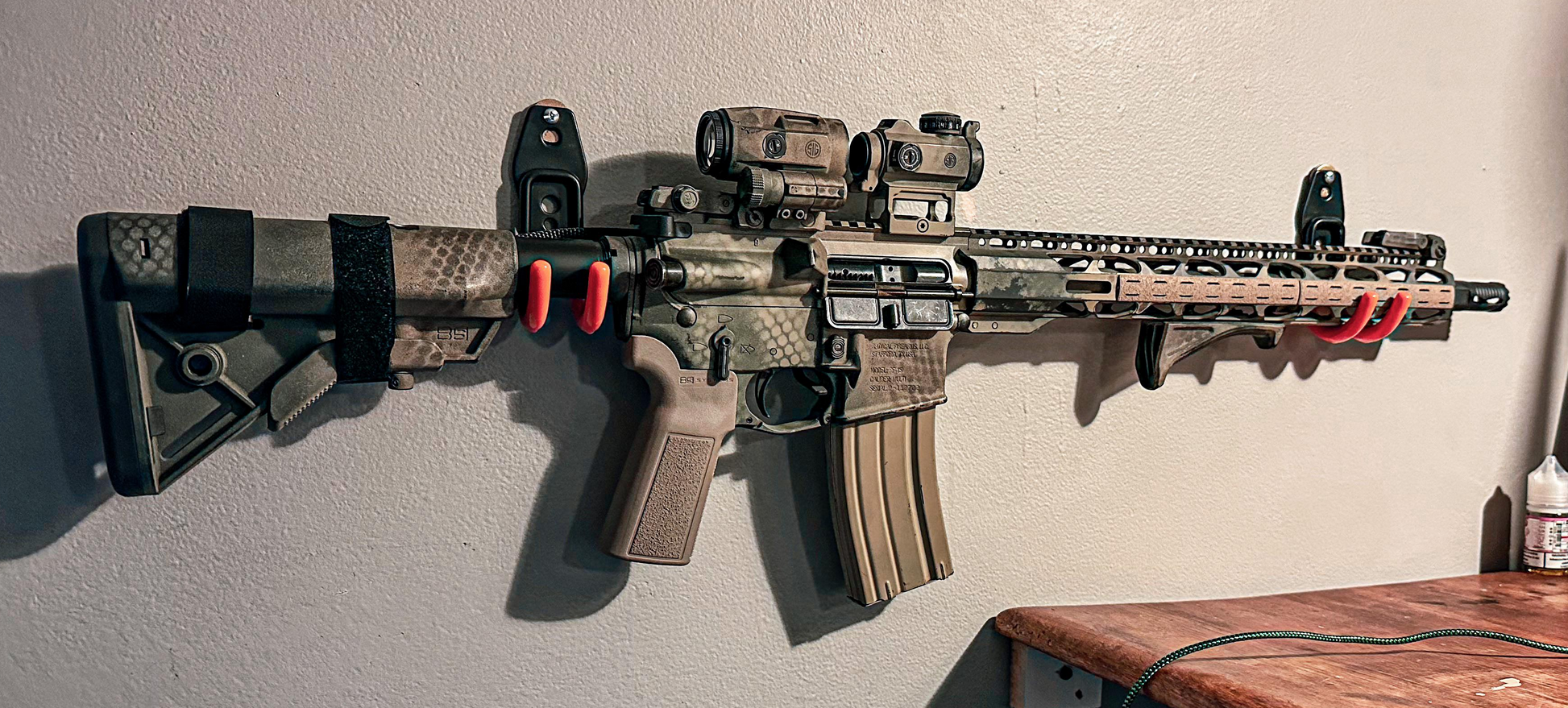
For practical purposes at the bench, treat a .223 Wylde like a .223 Remington for load development. Use .223 Remington published data as your reference. The extra throat length gives you a small safety margin, but it's not an invitation to exceed published maximums. Where the Wylde chamber really pays off is in accuracy; you'll typically see tighter groups and lower ES/SD compared to the same load in a full 5.56 NATO chamber, because the bullet engages the rifling more consistently.
Bench notes: how to tell which chamber you have
If you bought a factory rifle, the chamber should be stamped on the barrel. Look for ".223 REM," "5.56 NATO," "5.56x45," or ".223 WYLDE" near the chamber end. On AR-15 uppers, check the manufacturer's specs; barrel markings aren't always present or legible.
If you're working with an unmarked barrel or a milsurp rifle, a Forster or Clymer go/no-go headspace gauge set for both .223 and 5.56 will tell you what you have. The chambers headspace identically (the cartridge dimensions are the same), but a .223 Remington chamber will show tighter measurements on a chamber cast at the throat. A cerrosafe chamber cast is the definitive answer; pour it, pull it, measure the throat with calipers. If the leade is short (under 0.050"), you're looking at a .223 Remington chamber. If it's long (0.100"+), it's 5.56 NATO.
Knowing your chamber isn't optional. It's the first variable you need to lock down before any load development begins.
Load development: where the pressure differences show up
Here's where the rubber meets the road. Same components, same process, different chambers; and the results diverge.
Charge weight sensitivity
In a .223 Remington chamber, the pressure curve is steeper. A half-grain increase in charge weight produces a larger pressure jump than the same half-grain increase in a 5.56 NATO chamber. This means your workup ladder needs finer increments in a .223 chamber; 0.3-grain steps instead of 0.5-grain steps as you approach published maximums. The window between "accurate node" and "pressure signs" is narrower.
In a 5.56 NATO chamber, the longer throat gives you more room on the pressure curve. You'll typically be able to push closer to published max charges before seeing primer flattening, ejector marks, or sticky bolt lift. But "more room" doesn't mean "more powder." It means the same charge weight runs at lower pressure, and you may need slightly more powder to reach the same velocity as a .223 Remington chamber. The node might be at a different charge weight.
Seating depth and pressure
Seating depth affects the bullet jump to the lands, which directly affects the initial pressure spike. In a .223 Remington chamber with its short throat, a bullet seated long (closer to the lands) will spike pressure harder than the same bullet seated to the same COAL in a 5.56 NATO chamber where the lands are much farther away.
For AR-platform rifles, you're typically constrained by magazine length anyway; COAL around 2.260" is the practical max for most magazines. But if you're loading for a bolt gun in .223 Remington, seating depth becomes a critical pressure variable. Moving the bullet 0.010" closer to the lands in a tight .223 chamber can add measurable pressure. In a 5.56 chamber, that same 0.010" change barely registers because the bullet is still nowhere near the lands.
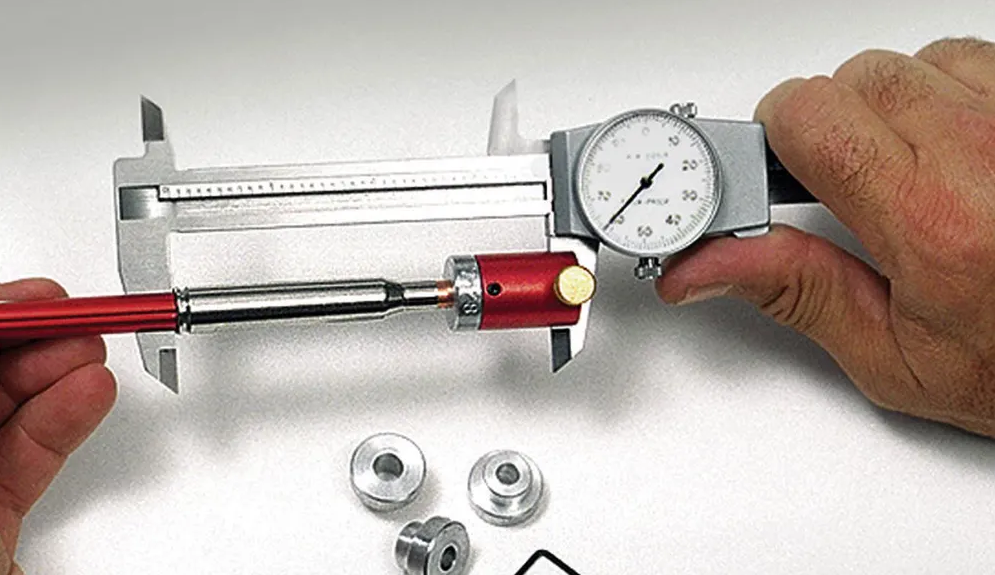
Measure your chamber's distance to the lands using a Hornady OAL gauge or a modified case with a split neck. Know where the lands are. Then seat your bullets with that number in mind, not just the manual's listed COAL.
Powder selection
Some powders are more sensitive to the pressure differences between these chambers than others. Ball powders like H335 and CFE 223 tend to be more temperature-sensitive and can produce sharper pressure spikes in tight chambers. Extruded (stick) powders like Varget, IMR 8208 XBR, and IMR 4895 generally give more linear pressure curves and are less affected by the chamber geometry differences.
This doesn't mean ball powders are wrong for .223 Remington; H335 is one of the most popular .223 powders ever made, and it works well. But if you're seeing pressure signs at charges that should be safe according to published data, and you're shooting a tight .223 chamber, switching to an extruded powder might give you more usable range on the pressure curve.
Here's a practical comparison of commonly used .223/5.56 powders and how they behave relative to these chamber differences:
Powder comparison
H335 is a spherical powder that meters beautifully through volumetric measures; consistent charge weights with minimal effort. It's the classic .223 powder for 55-grain bullets and works well with military brass. The downside is higher temperature sensitivity. Loads developed at 70°F can run noticeably hotter at 95°F, and in a tight .223 Remington chamber, that temperature-driven pressure increase stacks on top of the already-higher baseline. Good powder, just watch your conditions.
Varget is the benchrest standard for a reason. It's an extruded powder with excellent temperature stability across a wide range. It doesn't meter as cleanly as ball powders; you'll want to trickle charges if you're chasing single-digit SD; but the pressure curve is predictable and forgiving. Works well with 69 to 77 grain bullets. If you're loading the same recipe for both a .223 Remington bolt gun and a 5.56 NATO AR, Varget minimizes the pressure differential between the two chambers.
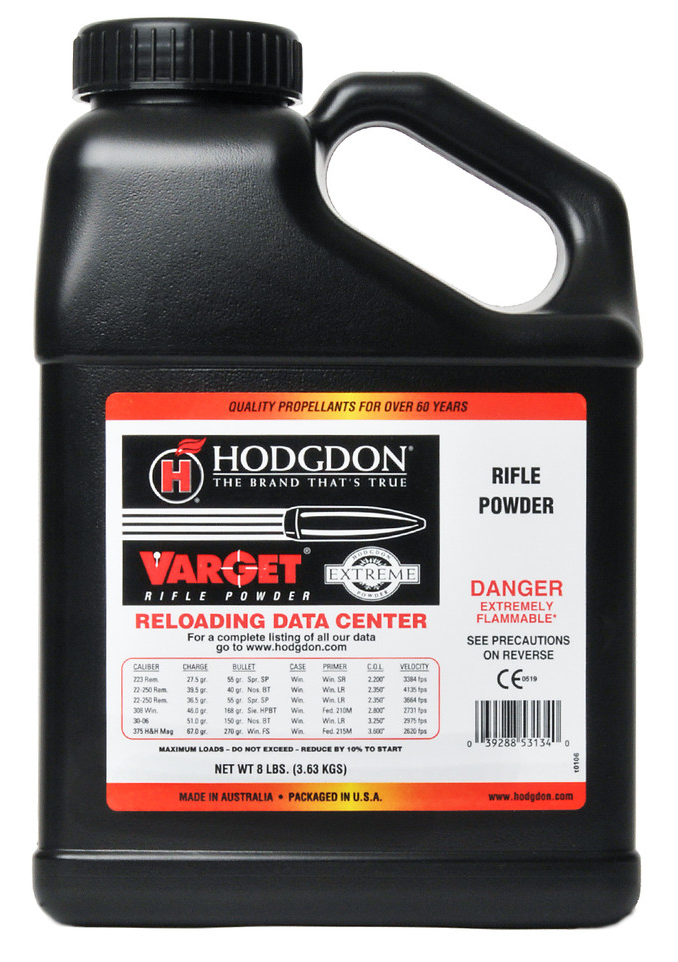
IMR 8208 XBR is similar to Varget in burn rate but meters better because the granules are shorter. Temperature stability is very good. It's become a favorite for 77-grain loads (Sierra MatchKing, Nosler Custom Competition) in .223 Wylde chambers. The charge window is slightly narrower than Varget; you'll find the node faster but have less room to overshoot before pressure signs appear.
CFE 223 is Hodgdon's copper-fouling-eraser powder. Spherical, meters perfectly, and the copper-reducing additive genuinely works; you'll see less fouling in the bore over long strings. Burn rate is close to H335. The same temperature sensitivity caveats apply, but CFE 223 tends to produce slightly lower ES/SD than H335 in side-by-side testing with the same components. Good choice for volume loading of 55 to 62 grain bullets.
IMR 4895 is the old military standard; it's what a lot of original 5.56 NATO loads were built around. Extruded, moderate burn rate, works across a wide bullet weight range (50 to 69 grains). Not as temperature-stable as Varget or 8208 XBR, but it's predictable and well-documented. If you're loading milsurp-style ammo in LC brass for blasting, IMR 4895 is a natural fit.
Common mistakes loading .223/5.56
Treating all brass as identical
This is the most common and most consequential mistake. A load developed in Lapua .223 brass (thin walls, large capacity) and then loaded into LC 5.56 brass (thick walls, less capacity) can jump 3,000+ PSI. That's enough to go from safe to pressure signs in one step. Sort your brass. Develop in one type. Don't mix during load development.
Ignoring the chamber spec
Loading "5.56 NATO" ammo without knowing your chamber is backwards. The cartridge doesn't determine the pressure; the chamber does. If your rifle is chambered in .223 Remington, every round you fire in it is subject to .223 Remington chamber pressure dynamics, regardless of what's stamped on the case. Load to your chamber, not your brass headstamp.
Using military crimp as a seating depth reference
Some reloaders seat bullets until they feel the same resistance they felt with factory ammo, not realizing that the crimp on military ammo creates a false reference point. Your seating die should be set to a measured COAL/CBTO, verified with calipers, not by feel. The crimp on the case mouth (if you're applying one) is a separate operation from seating depth.
Exceeding published data because "my chamber can handle it"
The logic goes: "I have a 5.56 NATO chamber rated to 62,000 PSI, so I can load past the .223 Remington max of 55,000 PSI." No. Published load data accounts for the chamber it was tested in. If the manual says max is 24.8 grains of Varget behind a 77-grain bullet, that's the max; regardless of your chamber. The 5.56 chamber gives you a safety margin below that max, not permission to exceed it. If you want to push past published data, you're into experimental territory, and that requires proper pressure testing equipment, not just reading primers.
Not accounting for temperature
Ball powders in particular can swing 1,000+ PSI between a 40°F winter morning and a 95°F summer afternoon. If you developed your load in January and you're shooting it in July, you may be over pressure without changing a single component. This effect is amplified in a .223 Remington chamber. Log your ambient temperature with every load development session. It's a variable, and ignoring it corrupts your data.
Equipment that matters for this specific problem
You don't need a $3,000 setup to load good .223/5.56 ammo. But some tools earn their cost specifically because of the pressure sensitivity between these two chamberings.
Chronograph (or better, a magnetospeed or LabRadar)
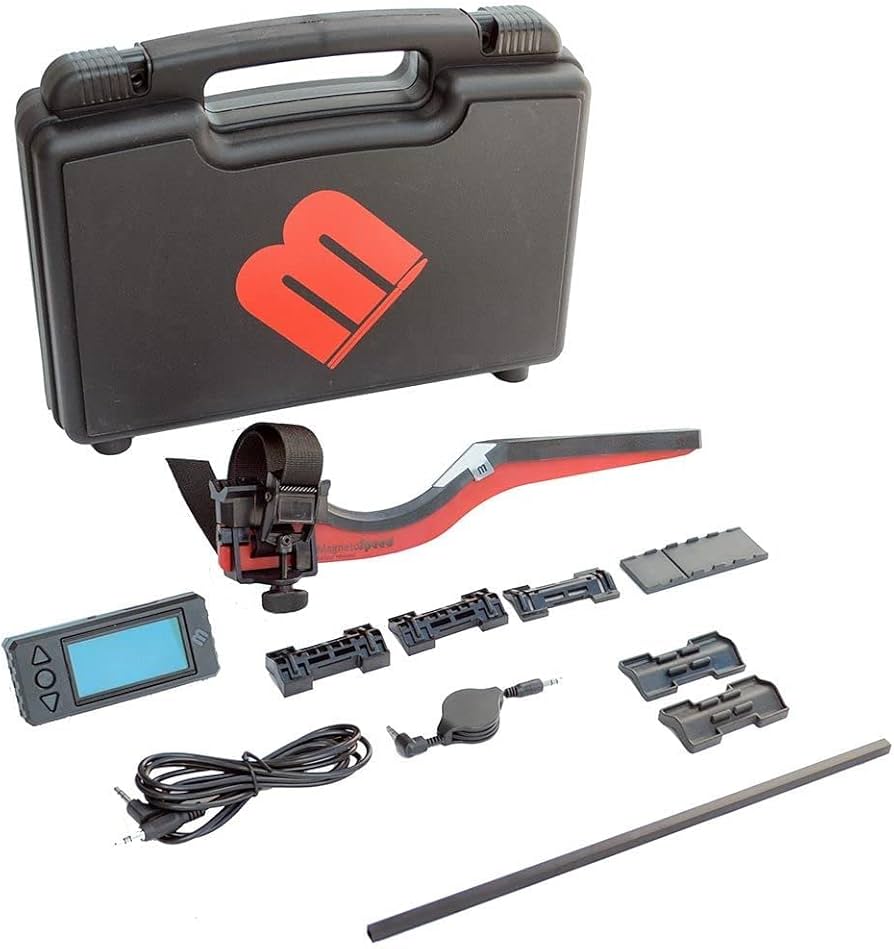
Velocity is your proxy for pressure when you don't have a pressure barrel. A chronograph is mandatory for load development in .223/5.56 because the pressure differences between chambers, brass types, and seating depths all show up as velocity changes. A Magnetospeed V3 mounts to the barrel and eliminates the "shooting through screens" problem. A LabRadar uses Doppler radar and gives you downrange velocity data too. Either one is a significant upgrade over optical chronographs for consistency and reliability. The ES and SD numbers from these units are how you evaluate your loads. Without velocity data, you're guessing.
Concentricity gauge
A Hornady or RCBS concentricity gauge lets you check bullet runout; how well the bullet is aligned with the case axis. In a tight .223 Remington chamber, a bullet with 0.003" of runout enters the throat at a slight angle, which creates uneven pressure on one side of the bore. The result is wider ES and larger groups. In a 5.56 NATO chamber with its long throat, the bullet has more room to self-align before hitting the lands, so runout is slightly less critical (though still not ideal). If your ES is stubbornly high and your charges are consistent, check runout before changing powders.
Primer pocket uniformer
After swaging military primer pockets, a primer pocket uniformer (like the RCBS or Lyman hand tool) cuts the pocket to a consistent depth. This ensures consistent primer seating depth across all your brass, which means consistent ignition, which means consistent pressure. On commercial brass that hasn't been crimped, uniforming still helps; factory pocket depths vary by a few thousandths, and that variation shows up in your SD.
Small base sizing die
If you're loading for a semi-auto with a 5.56 NATO or .223 Wylde chamber, a small base sizing die (Redding, RCBS, and Lee all make them) sizes the case body slightly smaller than a standard full-length die. This ensures reliable feeding and chambering in the tighter tolerances of semi-auto actions. It also means more consistent headspace on your loaded rounds, which contributes to more consistent pressure. For bolt guns, a standard full-length or neck-sizing die is fine.
Ladder test protocol for .223/5.56
Here's a concrete process for developing a load that accounts for the chamber pressure differences.
Pick your brass. One headstamp, one lot if possible. Prep it all identically; size, trim to 1.750" (or 1.760" if your chamber allows; measure first), deburr, uniform primer pockets, clean primer pockets. If it's military brass, swage the crimps before uniforming.
Pick your bullet and powder. Reference at least two published manuals for your bullet weight and powder combination. Note the starting charge and the maximum charge. Your ladder will span this range.
Load five rounds at the starting charge. Then load five rounds at each 0.3-grain increment up to the published maximum. Label everything. If your starting charge is 23.0 grains and your max is 25.4 grains, you're loading nine groups of five; 45 rounds.
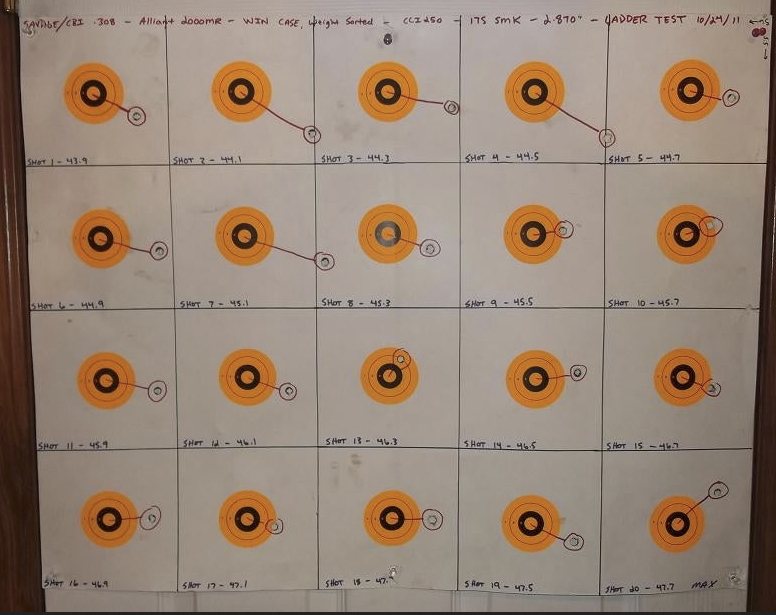
Shoot the ladder over a chronograph at a consistent distance (100 yards is standard). Log the velocity of every round, the ambient temperature, and any visual pressure signs on the brass (primer condition, case head expansion, ejector marks). Don't shoot for groups yet; you're looking for velocity data, not accuracy.
Plot the velocities. You're looking for a node; a charge weight range where velocity increases flatten out and ES tightens. The node is real. It's the charge weight range where the powder burn is most consistent and the pressure curve is most predictable. Once you find it, load 20 rounds at that charge weight and shoot them for groups.
If you're developing for two different rifles; say a .223 Remington bolt gun and a 5.56 NATO AR; run the ladder separately in each rifle with the same brass and components. The nodes will likely be at different charge weights. That's the chamber pressure difference showing up in your data. Don't assume a load that's optimal in one chamber is optimal (or even safe) in the other.
The headspace question
Headspace is the distance from the bolt face to the datum line on the case shoulder. Both .223 Remington and 5.56 NATO use the same headspace specifications; 1.4636" minimum (go gauge) to 1.4736" maximum (no-go gauge). The chambers are identical in this dimension.
Where people get confused is conflating headspace with throat length. A rifle can have perfect headspace and still produce wildly different pressures depending on the throat. Headspace affects case stretch, case life, and extraction reliability. Throat length affects pressure. They're independent variables.
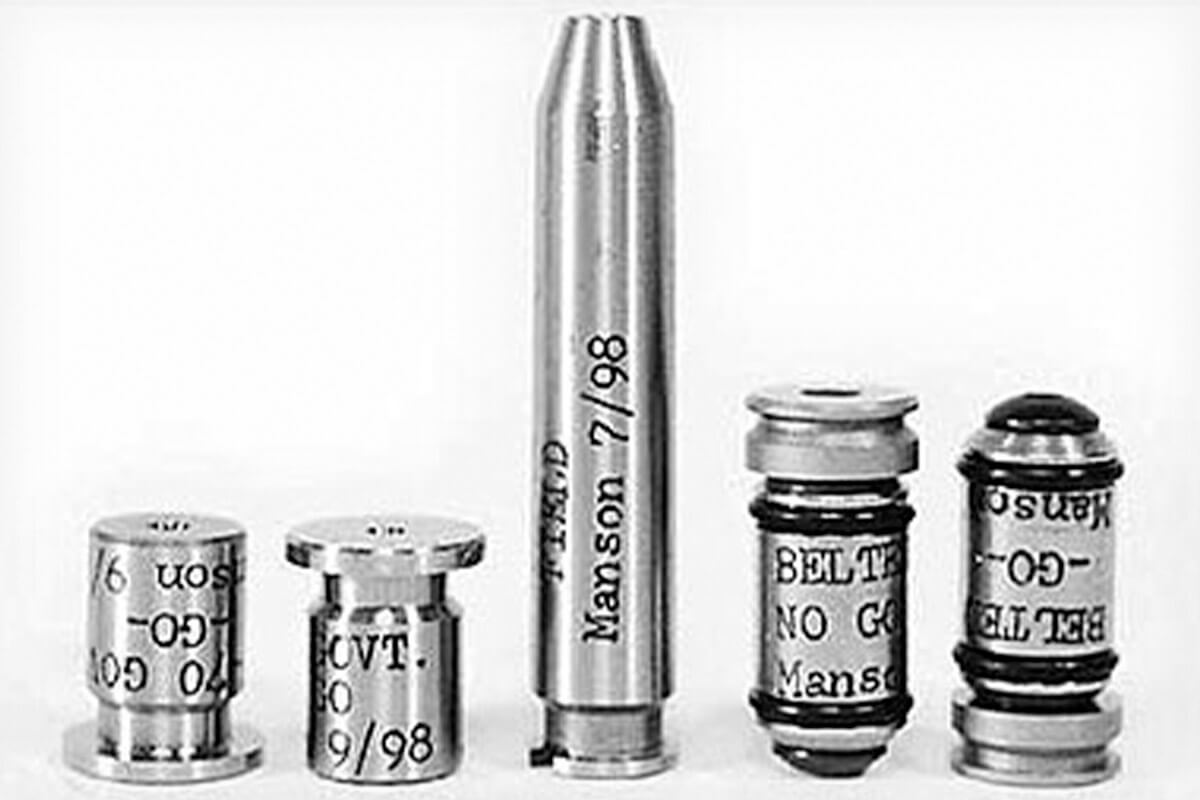
If you're buying a used rifle and you're not sure about the headspace, check it with gauges before loading for it. Excessive headspace (bolt closes on a no-go gauge) means the case has to stretch further to seal the chamber, which accelerates case head separation and creates an unsafe condition regardless of which chamber spec you're dealing with. That's a gunsmith problem, not a reloading problem.
Brass life differences
Military brass fired in a 5.56 NATO chamber will generally last more reloading cycles than the same brass fired in a .223 Remington chamber, all else being equal. The lower peak pressure in the 5.56 chamber means less case expansion per firing, less work-hardening per cycle, and slower primer pocket loosening.
Conversely, commercial .223 brass fired in a tight .223 Remington chamber at near-max loads will show primer pocket loosening faster; sometimes by the fourth or fifth firing. If your primers are starting to seat with noticeably less resistance, that pocket has expanded. Retire the brass. A loose primer pocket means inconsistent primer seating depth, which means inconsistent ignition, which means your ES opens up and your pressure data becomes unreliable. The cascade is predictable: loose pockets lead to bad data lead to bad loads.
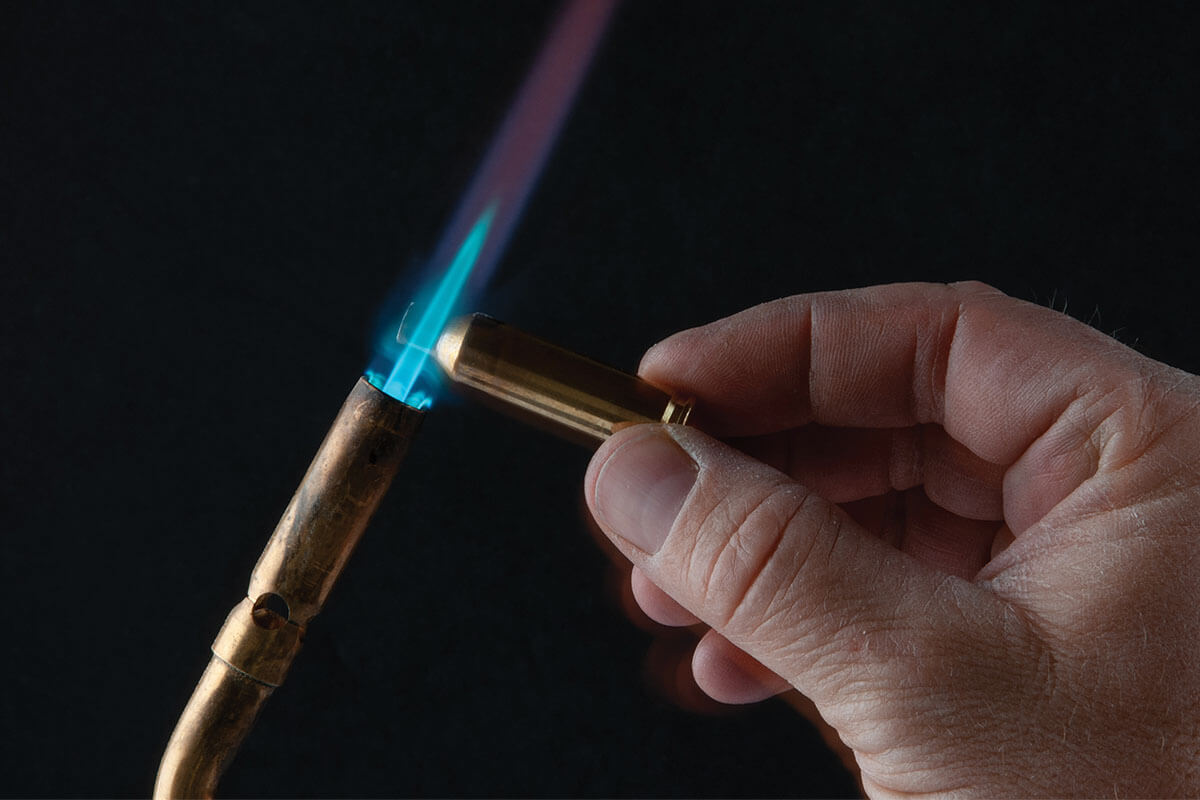
Annealing extends brass life by relieving the work-hardening in the neck and shoulder. It doesn't fix a loose primer pocket; that's a permanent expansion of the case head, and no amount of annealing reverses it. But regular annealing (every 2-3 firings) keeps neck tension consistent, which is one of the biggest contributors to low ES/SD. Neck tension inconsistency causes ES problems before powder charge does.
What about factory ammo labeled 5.56 NATO?
If you're pulling down factory 5.56 NATO ammo to reuse the components, the bullets and primers are standard; nothing special about them for reloading purposes. The powder charge and type may differ from published handloading data, so don't try to replicate a factory load by weighing the pulled charge and using that as your recipe. Factory loads are developed with specific lot-tested powders in pressure barrels. Your components, your chamber, your conditions are different. Use published manual data as your starting point, always.
The brass from factory 5.56 is worth keeping; it's typically good quality, especially Lake City. Just process it like any other military brass: decap, swage, size, trim, uniform, and treat it as its own lot for load development.
Putting it together
The .223 Remington and 5.56 NATO are the same cartridge loaded into different chambers. The throat length difference is the primary driver of the pressure differential. Military brass compounds the effect with thicker walls and less internal capacity. The pressure measurement standards between SAAMI and NATO add a layer of confusion that doesn't change the physics but does muddy the published numbers.
Your job at the bench is to control the variables you can measure: brass type, case capacity, charge weight, seating depth, primer seating depth, and neck tension. Develop loads in your specific chamber with your specific brass. Don't interpolate between chambers or brass types. The data from your chronograph and your target is the only data that matters for your rifle.
Next session, pick one brass type from your bucket. Prep 50 cases identically. Run a ladder from starting charge to max in 0.3-grain increments over a chronograph. Log everything; charge weight, velocity, temperature, primer condition. Find the node. Load to the node. Then shoot groups. That's the process. Consistency beats velocity, every time.