A hunter in Hokkaido got called by his city to deal with a bear that was threatening residents. He did the job. Then the government revoked his rifle license for doing it. That's not a hypothetical scenario cooked up by a gun rights advocacy group; it actually happened, and it took years and a Supreme Court ruling to set it right.
If you think firearm confiscation disputes only matter in the context of American Second Amendment arguments, this case should recalibrate your thinking. What happened to this Japanese hunter touches on something every hunter with a licensed firearm should understand: the gap between what the government asks you to do and what the government will protect you for doing. The procedural machinery that can strip your ability to hunt doesn't always care about the context of your actions. And getting your rights back, even when you're clearly in the right, can take years.
This is a story about one hunter, one bear, and a legal system that punished compliance. But the lessons cut across borders. Whether you hunt whitetail in the Midwest, elk in the Rockies, or are just paying attention to how governments treat licensed firearm owners, there's something here worth understanding.
What actually happened in Hokkaido
The facts of the case are straightforward, which is part of what makes the outcome so frustrating.
In 2018, a licensed hunter in Sunagawa, Hokkaido; a man named Ikeda; was contacted by city officials to help deal with a brown bear that had been spotted in a residential area. Hokkaido has a well-documented bear problem. Brown bears on the island can weigh over 400 kilograms, and human-bear encounters have been increasing as bear populations push into suburban areas. Local governments routinely call on licensed hunters to handle these situations because, frankly, nobody else is equipped to do it.
Ikeda responded. He located the bear and shot it. The bear was killed. No residents were harmed. By any reasonable measure, the outcome was exactly what the city wanted when they made the call.
Then the Hokkaido Prefectural Public Safety Commission revoked his hunting rifle license. Their reasoning: the shot was fired in a manner that could have endangered nearby buildings or people, violating provisions of Japan's Firearm and Sword Possession Control Law. Specifically, the commission argued that firing toward an area where there were structures constituted a safety violation serious enough to warrant permanent revocation; not a suspension, not a warning, but a full revocation of his license and confiscation of his rifle.
Ikeda challenged the revocation. A lower court sided with him, finding the revocation was excessive. Then a high court reversed that decision and sided with the government. The case went all the way to Japan's Supreme Court, which in March 2026 ruled in Ikeda's favor, finding that the revocation was an abuse of discretion by the prefectural commission. By April 2026, Hokkaido returned his rifle.
Eight years. That's how long it took a hunter who did what his government asked him to do to get his firearm back.
Japan's firearm laws and why they matter to this story
To understand why this case played out the way it did, you need to understand how Japan regulates firearms. It's one of the most restrictive systems in the world, and the structure creates a dynamic where licensed hunters are uniquely vulnerable to administrative action.
Japan's Firearm and Sword Possession Control Law, originally enacted in 1958, starts from a default position that civilian firearm ownership is prohibited. There's no constitutional right to bear arms. No equivalent of the Second Amendment. Ownership is a privilege granted through an extensive licensing process, and that privilege can be revoked through administrative action; not criminal conviction.
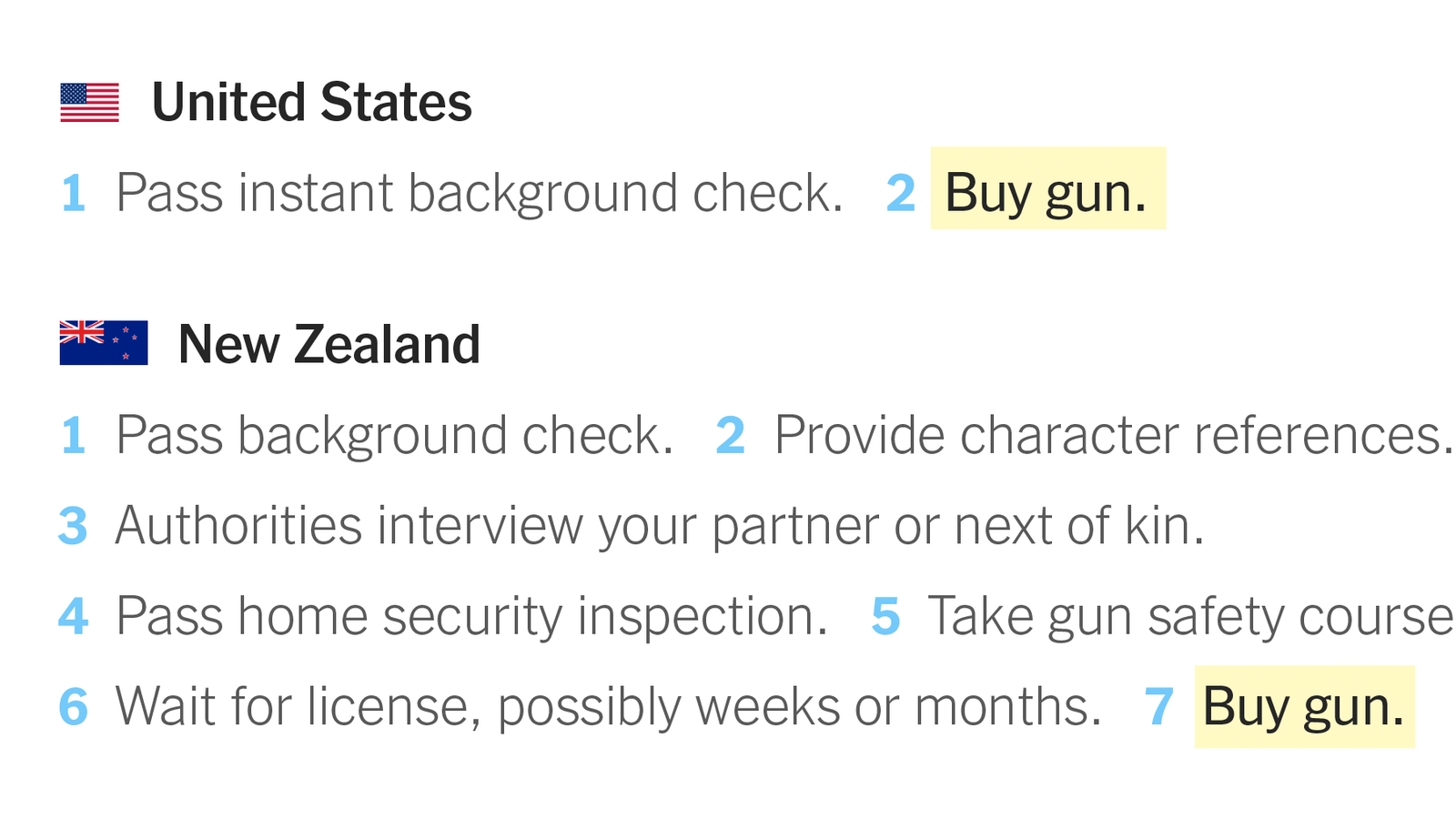
Getting a gun license in Japan involves a written exam, a shooting test at an approved range, a mental health evaluation, a drug test, a background check that extends to your relatives and associates, and a home inspection to verify your gun storage setup. Shotguns are the entry point; rifle licenses require an additional ten years of shotgun ownership first. The police inspect your storage annually. You can't store ammunition and firearms in the same lockbox. The entire system is designed to make ownership difficult, rare, and tightly monitored.
Japan has roughly 150,000 licensed gun owners in a country of 125 million people. The vast majority are hunters or competitive shooters. Annual gun deaths typically number in the single digits; though it's worth noting that Japan's low gun violence rate predates modern gun control and reflects cultural factors that go well beyond regulation.
Here's the part that matters for Ikeda's case: because ownership is a privilege rather than a right, the administrative threshold for revocation is low. The prefectural public safety commission doesn't need a criminal conviction to pull your license. They can revoke based on their own assessment of whether you've violated the law's safety provisions. The burden then falls on the gun owner to challenge that decision in court; a process that, as Ikeda's case demonstrates, can take the better part of a decade.
This is the structural vulnerability. When the government both asks you to use your firearm and retains unilateral authority to punish you for how you used it, you're operating in a space where compliance and violation can look identical depending on who's reviewing the paperwork afterward.
The Supreme Court's reasoning
Japan's Supreme Court doesn't take many cases. When it does, the rulings tend to be narrow and procedurally focused. The Ikeda decision followed that pattern, but the core finding has broader implications.
The court ruled that the prefectural commission's revocation was an abuse of discretionary authority. The key factors in the ruling centered on context: Ikeda was acting at the city's request, the bear posed a genuine threat to public safety, and the shot was taken under circumstances where the hunter had to make a real-time judgment call about the safest way to neutralize that threat. The court found that the commission had failed to adequately weigh these contextual factors when deciding to revoke his license.
This wasn't a ruling that hunters can fire wherever they want. The court didn't overturn the safety provisions of the Firearm and Sword Possession Control Law or narrow the commission's authority to revoke licenses. What it said, essentially, was that context matters; that a bureaucratic body can't ignore the circumstances under which a shot was fired and apply the law as if the hunter was shooting recreationally in a residential neighborhood.
The distinction is important. The ruling doesn't create a broad precedent that protects hunters from all administrative action. Japan's legal system doesn't work on binding precedent the way American common law does. But it does establish that the Supreme Court views the commission's authority as bounded by reasonableness, and that stripping a hunter's license for following government instructions to deal with a dangerous animal crosses that boundary.
After the ruling, Hokkaido returned Ikeda's rifle in April 2026. He'd been without it for roughly eight years.
What this looks like on the ground in Hokkaido
Hokkaido's bear situation adds a layer of urgency to this story that's easy to miss if you're reading it from the lower 48.
Hokkaido is home to Japan's population of Ussuri brown bears; the same species as the grizzlies in Alaska and western Canada, though the Hokkaido population is a distinct subspecies. These aren't black bears raiding bird feeders. Adult males can exceed 400 kilograms. They're apex predators, and when they move into populated areas, the risk to human life is real.
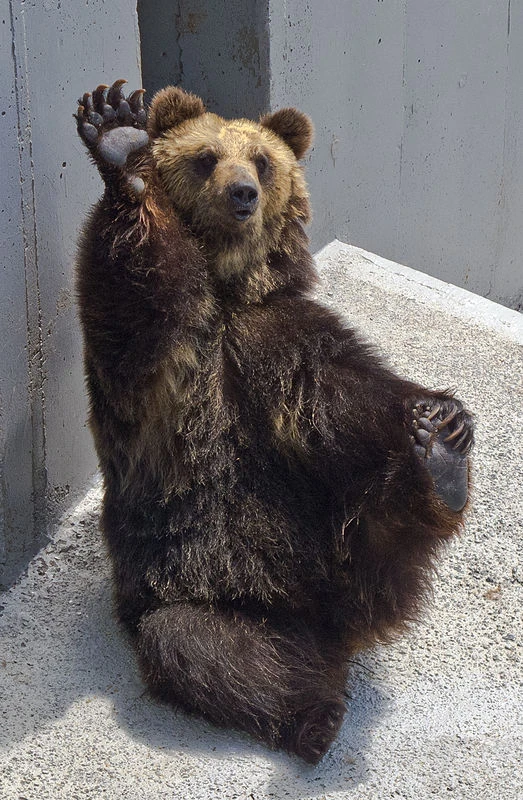
In recent years, bear encounters in Hokkaido have been increasing. Factors include expanding bear populations, aging rural communities with fewer hunters, and changes in land use that bring bear habitat closer to residential areas. In 2023, Hokkaido recorded its highest number of bear-related injuries in decades. Local governments depend on licensed hunters to respond to these encounters because there's no other practical option; Japan doesn't have the equivalent of a state wildlife agency with armed officers deployed across rural areas the way Alaska or Montana does.
This creates a situation where hunters are performing a de facto public safety function. They're not out pursuing a hobby when they respond to a municipal call about a bear in someone's backyard. They're doing dangerous work that the government can't or won't do with its own personnel.
And yet, as Ikeda's case shows, the legal framework treats them as private citizens exercising a privilege; not as agents acting on government authority. That gap between the functional role and the legal status is where the trouble lives. The city calls you, you respond, you do the job, and then a different branch of government reviews your actions through a lens that doesn't account for the fact that you were there because the government put you there.
Hokkaido's hunter population is also aging and shrinking. The number of licensed hunters in Japan has been declining for decades; from over 500,000 in the 1970s to roughly 200,000 today, with the average age climbing past 60. Cases like Ikeda's accelerate that decline. When word gets around that a hunter lost his license for eight years because he shot a bear the city asked him to shoot, the incentive to answer the next call drops to zero.
Some municipalities have started offering liability protections or formal agreements for hunters responding to wildlife emergencies, but the legal framework at the national level hasn't caught up. The Supreme Court ruling helps, but it's a patch on a structural problem.
What American hunters should take from this
You might be reading this thinking: that's Japan, we have the Second Amendment, can't happen here. That's partially true and mostly naive.
The Second Amendment, as interpreted by the Supreme Court in District of Columbia v. Heller (2008) and McDonald v. City of Chicago (2010), does establish an individual right to firearm ownership. That's a fundamentally different legal starting point than Japan's privilege-based system. But the practical mechanisms of hunting regulation in the United States still involve licensing, permits, and administrative bodies that can restrict your ability to hunt; and the procedural protections aren't always as robust as you'd assume.
State fish and game agencies can revoke hunting licenses for violations. In many states, a game violation can result in license suspension across multiple states through the Interstate Wildlife Violator Compact. Federal migratory bird regulations add another layer of rules that can result in license action. And while criminal due process protections apply to criminal charges, administrative license actions often operate under a lower standard; closer to the Japanese model than most American hunters realize.
Consider a few scenarios that aren't hypothetical:
A rancher in Montana shoots a grizzly bear that's killing livestock. Grizzlies are federally protected under the Endangered Species Act. Even if the shoot is justified under the self-defense or property-defense provisions, the rancher faces a federal investigation and potentially years of legal proceedings. The legal right to defend property doesn't eliminate the bureaucratic and legal costs of exercising that right.
A hunter in Colorado takes a shot at an elk that's standing near a county road. The shot is clean, the elk drops, no vehicles or people were anywhere near the line of fire. But a game warden cites the hunter for shooting from or across a road; a violation in most states; based on the proximity, not the actual risk. The citation can result in points against the hunting license, fines, and in repeat-offense scenarios, revocation.
A waterfowl hunter in Texas is found to have one shell too many in his shotgun while hunting migratory birds. Federal regulations under the Migratory Bird Treaty Act limit magazine capacity to three shells. The violation is strict liability; intent doesn't matter, context doesn't matter. The penalty can include fines, equipment seizure, and license suspension.
None of these scenarios involve a hunter acting in bad faith. All of them involve regulatory frameworks where the administrative consequences can outstrip the actual conduct. The gap between what happened and what the paperwork says happened is where hunters lose licenses, gear, and years of their lives.
Common mistakes hunters make with legal exposure
Most hunters think about ballistics, gear, and woodcraft. Almost nobody thinks seriously about their legal exposure until they're already in trouble. Here are the mistakes that create the most risk.
Not knowing the exact boundaries of where you can and can't shoot. This isn't just about property lines. It includes setback distances from roads, structures, and designated safety zones. These vary by state, by county, and sometimes by specific wildlife management area. "I thought I was far enough away" is not a defense that holds up in an administrative hearing. Know the distances. Measure them if you have to.
Assuming that a government request equals government protection. Ikeda's case is the clearest example, but it applies in the U.S. too. If a county sheriff asks you to help dispatch a wounded deer on a highway, and you fire a shot that technically violates a discharge ordinance, the sheriff's verbal request may not protect you from a citation by a different agency. Get it in writing if you can. If you can't, understand that you're accepting risk.
Not documenting the circumstances of a defensive shoot against wildlife. If you shoot a bear, a mountain lion, or any protected species in self-defense, the burden of proof is effectively on you to demonstrate the threat was real and imminent. Take photos immediately. Document the scene. Note the time, the distance, the animal's behavior before the shot. Call the game warden yourself before someone else does. The hunter who reports the incident controls the narrative; the hunter who gets reported doesn't.
Treating license applications and renewals as formalities. In states with detailed application processes, the information you provide becomes part of your regulatory record. Inconsistencies; even innocent ones; can trigger reviews. If you've had a license revoked in another state, moved and changed addresses, or had any legal issues that touch on firearm possession, disclose them accurately. The violation they catch you on is often not the one you were worried about.
Ignoring the Interstate Wildlife Violator Compact. If you hunt in multiple states, a violation in one can follow you to all of them. A suspension in Wyoming can mean you can't buy a tag in Colorado, Montana, Idaho, or any other member state. The compact now includes nearly all 50 states. One bad decision in one state can end your hunting across the country.
A comparison: how different systems handle hunter-government conflicts
Looking at how different legal systems treat the intersection of hunter licensing and government authority helps clarify what's at stake. Here are five frameworks worth understanding, each with different implications for hunters.
Japan operates under the Firearm and Sword Possession Control Law, which treats all civilian gun ownership as a revocable privilege. Administrative bodies can revoke licenses without criminal proceedings. The Ikeda ruling established that this discretion has limits, but the structural vulnerability remains; hunters are one bureaucratic decision away from losing everything, and the appeals process takes years. The system prioritizes state control over individual rights, and hunters exist in a narrow, heavily regulated space.
The United States has a constitutional framework that recognizes individual firearm rights, but hunting regulation operates through state licensing systems that retain significant administrative authority. The key protection is procedural due process under the Fourteenth Amendment; the government can't take your license without notice and an opportunity to be heard. But "opportunity to be heard" in an administrative context is a far cry from a criminal trial. Administrative law judges, not juries, typically decide these cases. The standard of evidence is lower. And the practical cost of fighting an administrative action; lawyers, time, lost hunting seasons; means many hunters accept penalties they could contest.
Alaska represents an interesting case within the U.S. system because of the state's unique relationship with wildlife management and subsistence hunting. Alaska's constitution includes provisions for subsistence use of wildlife resources, and the state's hunting regulations reflect the reality that for many Alaskans, hunting isn't recreation; it's food security. Defense-of-life-and-property shootings of bears and other dangerous wildlife are handled through a reporting system that's more streamlined than most states, though federal land management adds complexity. The state's regulatory approach generally gives hunters more operational latitude than you'd find in the lower 48, but federal regulations on federal lands can override state provisions.
The United Kingdom took a different path after the Dunblane massacre in 1996, effectively banning private handgun ownership and severely restricting other firearms. Shotgun and rifle certificates are available for sporting purposes, but the licensing system is administered by local police forces with broad discretionary authority. Recent expansions of weapons prohibitions; including a 2024 ban on certain types of large knives; suggest a regulatory trajectory that continues to narrow the space for legal weapon ownership. British hunters and sport shooters operate in a system where the cultural and political environment is actively hostile to their activity, and licensing decisions are made by the same police forces that are under pressure to reduce weapons in circulation.
Australia implemented sweeping gun control after the Port Arthur massacre in 1996, including a mandatory buyback program and a licensing system that requires demonstrated need for each category of firearm. Hunting is a recognized legitimate reason for ownership, but the licensing process is rigorous and varies by state. The Australian system is often cited as a model for gun control advocates, but from a hunter's perspective, the key feature is that legitimate sporting use has been preserved within a highly regulated framework; though the administrative burden is substantial and the political environment periodically threatens further restrictions.
The common thread across all these systems is that hunters occupy a space where their activity is legally permitted but culturally contested, and the administrative machinery that governs their access to firearms is designed primarily for control rather than facilitation. The degree of protection varies enormously; from the constitutional framework in the U.S. to the purely administrative privilege in Japan; but the vulnerability to bureaucratic overreach exists everywhere.
The deeper problem: when compliance becomes a trap
Ikeda's case illustrates something that goes beyond any single legal system. It's the problem of what happens when the government creates a situation where a citizen can't comply with all applicable rules simultaneously.
The city asked Ikeda to shoot a bear. The bear was in a residential area. Shooting in a residential area potentially violates safety provisions of the firearms law. There was no way to comply with the city's request without creating potential exposure under the firearms law. Ikeda was placed in a position where doing what the government asked him to do was, by one reading of the regulations, illegal.
This isn't unique to Japan. American hunters face versions of this constantly.
You're hunting on public land near the boundary of a residential zone. A wounded deer crosses into the setback area. Do you follow it and take the finishing shot; which is the ethical obligation to the animal; or do you let it suffer because taking the shot in that location would be a technical violation? The law says one thing. The ethics of clean kills say another. The regulations weren't written for this specific situation, and the people who enforce them may not care about the distinction.
Or you're called to help with a nuisance animal on agricultural land. The animal is near a structure. The farmer wants it gone. The game warden would agree it needs to go. But the discharge ordinance says you can't fire within 500 feet of an occupied building. The farmer's house is 400 feet away. Everyone involved knows the shot is safe. The regulation doesn't care.
These situations expose the fundamental tension between regulatory systems designed for general application and the specific, context-dependent reality of hunting. Regulations are written to prevent the worst-case scenario. But they're enforced against people operating in the real world, where the worst-case scenario isn't happening and the right thing to do doesn't always line up with the letter of the law.
The Ikeda ruling is significant because Japan's Supreme Court acknowledged this tension. The court essentially said: you can't ignore context. You can't strip a man's license because the paperwork says he violated a provision when the full picture shows he was doing exactly what the government asked him to do under circumstances where strict compliance was impossible.
That's a principle that should resonate with every hunter in every jurisdiction.
What the hunting community should be doing
This isn't just a legal curiosity from another country. It's a signal about how regulatory systems treat hunters, and it should prompt some practical responses.
At the organizational level, hunting advocacy groups should be paying attention to administrative law; not just legislation. The fights that matter for most hunters aren't happening in Congress or state legislatures. They're happening in administrative hearings, licensing offices, and regulatory agencies where decisions are made with minimal public visibility and limited procedural protections. Organizations that focus exclusively on legislative battles are missing the arena where hunters are most vulnerable.
Hunters responding to government requests for wildlife management assistance need formal, written agreements that specify the scope of their authority, the legal protections in place, and the chain of responsibility. A phone call from a city official is not a legal shield. A signed memorandum of understanding that specifies you're acting as an agent of the municipality, with the municipality assuming liability for actions taken within the scope of the agreement, is a different story. If the municipality won't put it in writing, that tells you something about how much protection you'll actually have.
Individual hunters should carry liability insurance. Several organizations offer hunter liability policies that cover legal defense costs for hunting-related incidents. The cost is minimal; often under $200 a year; and the coverage can mean the difference between fighting an unjust administrative action and accepting it because you can't afford a lawyer.

And every hunter should know the specific administrative procedures for license revocation in their state. Not the general concept; the specific process. Who makes the decision? What's the standard of evidence? What's the appeals process? How long does it take? What are your rights during the proceedings? This information is available from your state fish and game agency, and knowing it before you need it is the only way to respond effectively if you ever do.
The shot placement analogy
There's a parallel between this legal reality and something every hunter already understands about fieldwork.
Shot placement beats cartridge selection. You can have the most powerful rifle on the market, and if you put the bullet in the wrong spot, the animal suffers and you go home empty-handed. The fundamentals matter more than the hardware.
The same logic applies to your legal standing as a hunter. Your constitutional rights, your hunting license, your membership in advocacy organizations; those are the hardware. The fundamentals are knowing the specific rules that govern where and how you can hunt, documenting your actions, understanding the administrative processes that can affect your license, and making decisions in the field that account for legal exposure as well as ballistic trajectory.
Ikeda had every reason to believe he was doing the right thing. He was. But the administrative system didn't care about his reasons until a court forced it to. Eight years and a Supreme Court case later, he got his rifle back. Most hunters don't have the resources or the persistence to fight that fight.
Before next season
Read your state's administrative code sections on hunting license revocation; not the summary on the website, the actual regulatory language. Know what triggers a review, what the process looks like, and what your rights are at each stage.
If you participate in any government-requested wildlife management activities, get the terms in writing before you chamber a round. A verbal request from a game warden or municipal official is worth exactly nothing if a different official decides to review your actions later.
Carry a way to document field conditions. A phone with a camera and GPS is fine. If you take any shot that could be questioned; near a road, near structures, at a protected species in self-defense; document everything immediately. Time, location, distances, the animal's behavior, the direction of fire, what was behind the target. Do it before you do anything else.
And think about what Ikeda's case means for the broader relationship between hunters and the governments that regulate them. The system worked eventually; the Supreme Court got it right. But "eventually" was eight years, and the system only worked because one hunter refused to accept an unjust outcome and had the means to fight it to the highest court in the country. The rest of us need to build the knowledge and the protections that keep us from needing to make that fight in the first place.