You've got $1,200 and a weakness for lever actions. Good. That's enough money to buy something genuinely collectible; or enough to buy an overpriced refinished gun that'll never appreciate. The difference comes down to knowing what you're looking at.
The lever-action market sits in a strange place right now. Common post-64 Winchesters and late JM-stamped Marlins are still affordable, but the window is closing. Pre-64 Model 94s in honest condition have been climbing steadily. Certain Marlin variants that nobody cared about ten years ago are suddenly getting attention. And the new Ruger-produced Marlins have reminded a whole generation of shooters that these guns exist, which pushes demand for the originals.
This isn't a survey of every lever gun ever made. It's a focused look at the Winchester and Marlin models that still fall within a realistic $1,200 budget, what separates the collectible examples from the shooters, and where the traps are. If you can identify the right variant in the right condition, there's real value to be found. If you can't, you'll overpay for a gun that's worth half what the seller's asking.
The pre-64 Winchester Model 94: still the benchmark
Every conversation about collectible lever actions starts here. John Browning's design, introduced in 1894, became the best-selling centerfire sporting rifle in American history; over seven million produced. That volume means they're common, but "common" and "collectible" aren't mutually exclusive. The question is always which Model 94 and in what condition.
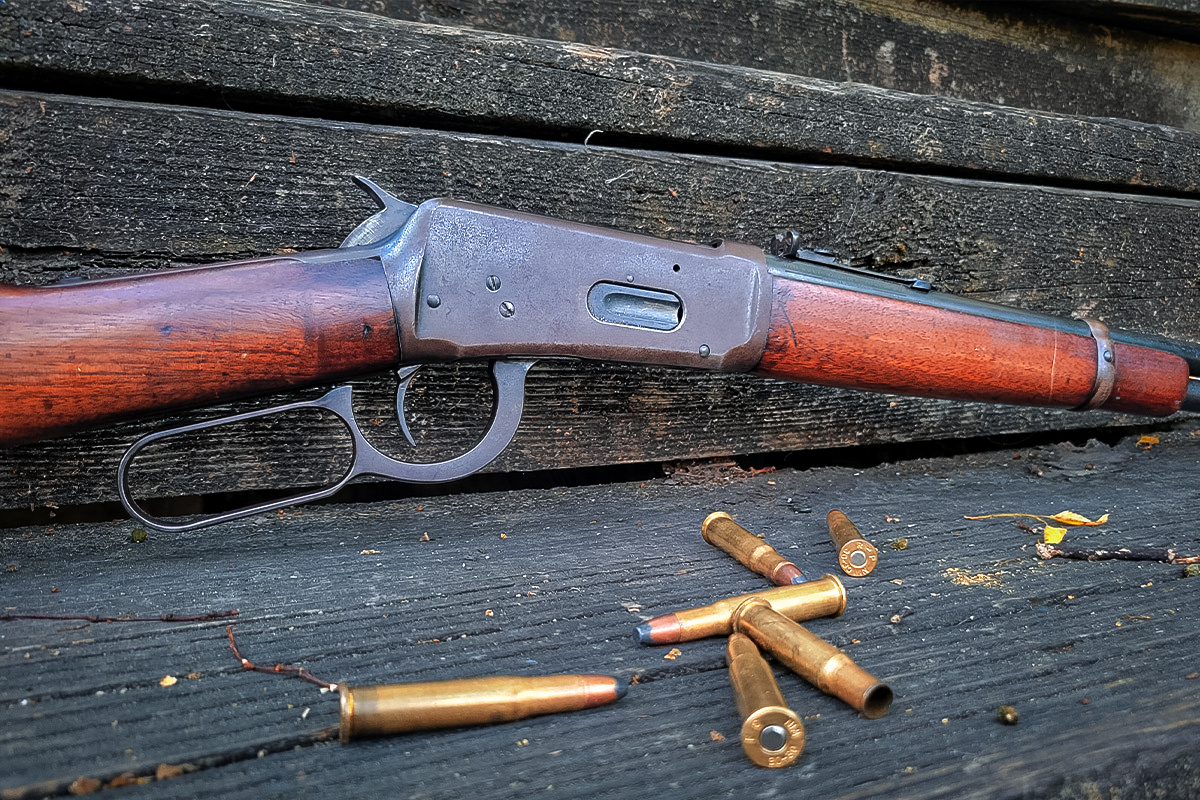

The critical dividing line is 1964. That's the year Winchester redesigned the Model 94 to reduce manufacturing costs. The post-64 guns used stamped and sintered metal parts where the earlier rifles had forged and machined components. The fit and finish dropped noticeably. Collectors noticed, and the market has maintained that distinction ever since.
A pre-64 Model 94 in .30-30 with an honest 60-70% original finish, no cracks in the wood, and a decent bore can still be found under $1,200; but you'll need to be patient and selective. The serial number tells you the production year. Winchester serial number records are accessible through the Cody Firearms Records Office at the Buffalo Bill Center of the West, and they'll provide a factory letter for a fee that confirms the original configuration. That letter matters if you're paying collector prices.
What makes a pre-64 Model 94 worth the money
The most common configuration is a 20-inch round barrel carbine in .30-30 Winchester. Millions were made. These are the bread-and-butter guns of the Model 94 world, and they're the ones most likely to fall under $1,200 in typical used condition. But within that broad category, details create value separation.
Guns made before roughly 1930; the first million or so serial numbers; tend to command more interest. The earliest production guns from the 1890s through the early 1900s featured a distinctive first-model profile with a shorter forearm, no saddle ring stud (or with one, depending on the year), and case-colored receivers. These are generally above the $1,200 ceiling unless they're well-worn, but it's worth knowing what you're looking at if one shows up at a price that seems too good.
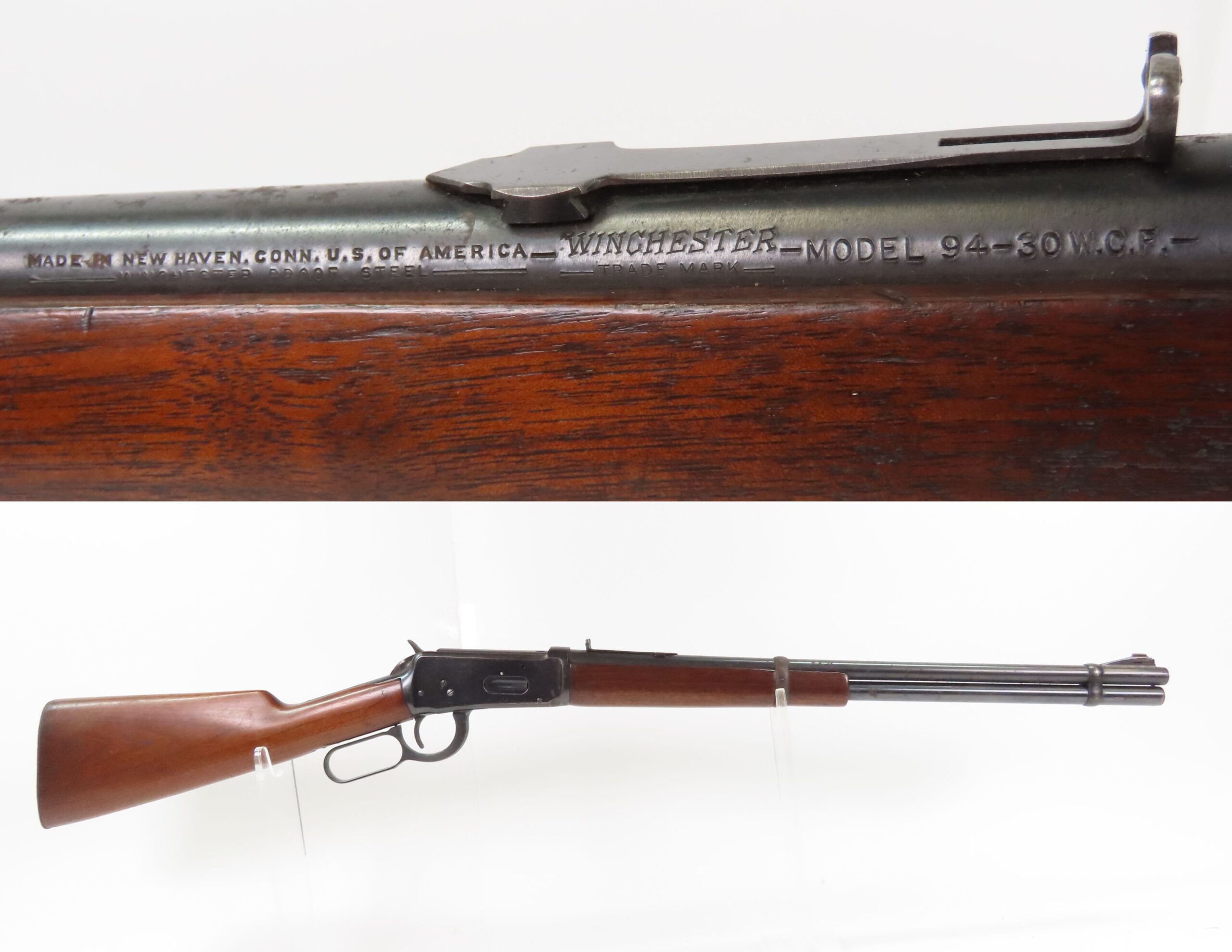
The sweet spot for the budget-conscious collector is the 1940s through early 1960s production. These guns are plentiful, they're mechanically identical to the earlier examples in most respects, and they represent the final evolution of the pre-64 design. Look for guns with the original bluing intact; not reblued, not cold-blued, not "touched up." Original finish on a pre-64 94 has a depth and warmth that's hard to fake, and the wear patterns should make sense for the gun's age. High spots on the receiver, the barrel where it meets the magazine tube, the lever; these are where honest wear shows up first.
The bore matters more than most sellers want to admit. A lot of these guns were shot extensively with corrosive-primed ammunition through the 1950s, and not all of them were cleaned properly. A dark bore with visible pitting in the first few inches will shoot adequately for deer hunting but represents a condition issue that should be reflected in the price. Bright, sharp rifling is what you want.
The post-64 question
Here's where opinions get strong. The post-64 Model 94 has been maligned since the day it appeared, and some of that criticism is deserved. The early post-64 guns; roughly 1964 through the early 1970s; are the worst offenders. The fit between wood and metal is often poor, the metal finish can look thin, and the overall feel is noticeably cheaper than what came before.
But Winchester made improvements over the decades. By the 1980s and into the 1990s, the post-64 Model 94 had settled into a reasonably well-made gun. The angle-eject modification, introduced in 1982, replaced the top-eject design to allow scope mounting. Collectors tend to dislike angle-eject guns; they look different, with a visible ejection port on the right side of the receiver, and they break from the classic profile. But they're functional, they're affordable, and for a shooter who wants a usable lever gun with some age, they're worth considering.
The real collector interest in post-64 guns centers on limited editions, commemoratives, and special-order configurations. Winchester produced an enormous number of commemorative Model 94s; Centennials, state commemoratives, NRA editions, you name it. The conventional wisdom is that most commemoratives aren't worth much more than a standard gun unless they're unfired and in the original box with all papers. That conventional wisdom is largely correct. A commemorative that's been fired and handled is just a post-64 94 with fancy rollmarks.
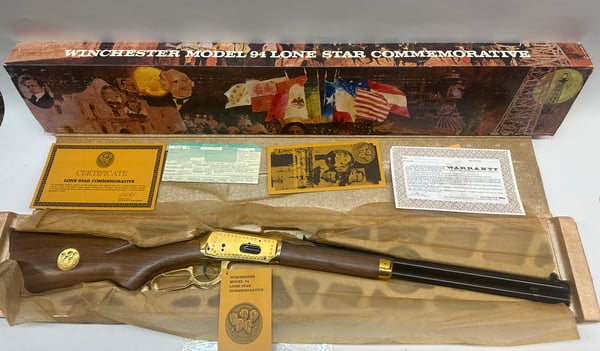
The exceptions are the genuinely low-production runs. Some commemoratives were made in quantities under 5,000, and a few under 1,000. Those can carry real premiums if the condition is right. But you need to verify the actual production numbers; sellers routinely overstate the rarity of commemoratives.
Pre-64 Model 94 inspection checklist
Before you hand over cash for any pre-64 Model 94:
Check the serial number and verify the production year. Cross-reference it against known serial number ranges. If the seller claims a specific year, confirm it.
Look at the tang; the flat metal piece on top of the stock wrist. Cracks at the tang are one of the most common condition issues on Model 94s, and they're sometimes hidden with wood filler or a careful refinish. Run your fingernail along both sides of the tang where it meets the wood. You should feel a clean, tight joint.
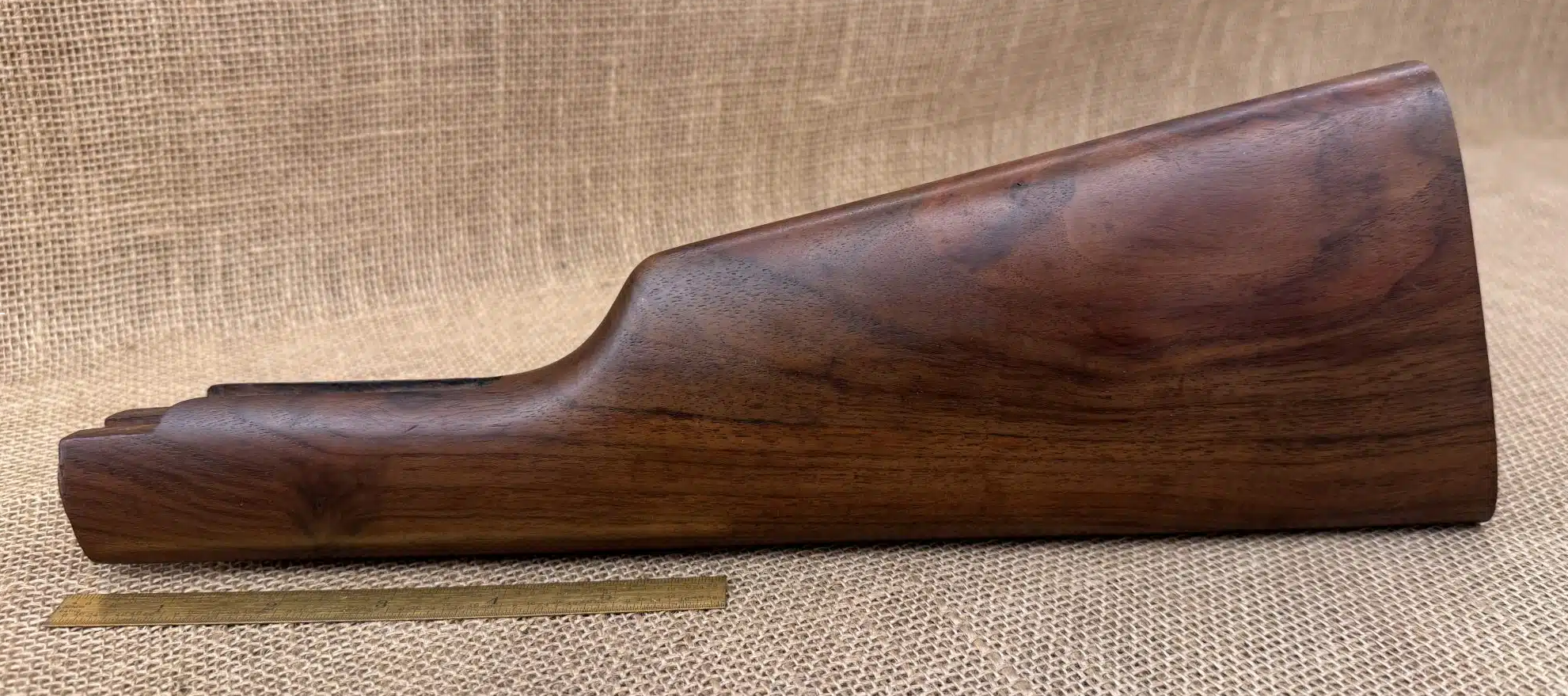
Examine the buttplate. Original buttplates on pre-64 guns are steel (early) or hard plastic (later). Replacement buttplates are common and not a disaster, but they should be noted and reflected in the price.
Open the action and look at the internal parts. Forged parts have a different surface texture than the stamped parts used after 1964. If someone's telling you a gun is pre-64, the internals should confirm it.
Check for import marks. A pre-64 Model 94 with an import stamp was brought in from overseas, which means it left the country at some point and came back. Import-marked guns are worth less to collectors; sometimes significantly less.
Marlin 336: the other great .30-30
The Marlin 336 has lived in the Winchester 94's shadow since its introduction in 1948, but it's a different gun with its own collector following and, in some ways, a more practical design. The solid-top receiver and side ejection meant Marlins were easier to scope decades before Winchester got around to angle eject. The round bolt and Micro-Groove rifling (introduced in the mid-1950s) gave them a reputation for accuracy that the 94 sometimes struggled to match.
For collectors, the key distinction in the Marlin world is the "JM" stamp. Marlin rifles made at the original North Haven, Connecticut factory carry a "JM" proof mark on the barrel; the initials of company founder John Mahlon Marlin. When Remington acquired Marlin in 2007 and moved production to its Ilion, New York facility, the resulting rifles were plagued with quality control problems. Rough actions, poorly fitted stocks, and inconsistent finishes became common complaints. The JM-stamped guns, by contrast, represent the era of consistent quality from the original factory.
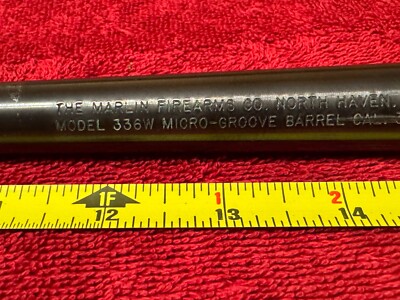
A JM-stamped Marlin 336 in .30-30 with good wood and honest finish is one of the best values in lever-action collecting right now. These guns are well under the $1,200 ceiling in most configurations, which means you can be selective about condition. Don't settle for a beater when clean examples are still out there.
Marlin 336 variants worth knowing
The 336 family tree has more branches than most buyers realize. The standard 336C (carbine) with a 20-inch barrel is the most common, but the variants are where things get interesting.
The 336A was the rifle-length version with a 24-inch barrel and full-length magazine tube. Production numbers were lower than the carbine, and they're less commonly encountered. A clean 336A with JM markings gets attention from collectors who know what they're looking at.
The 336T (Texan) featured a straight-grip stock instead of the pistol grip, giving it a slimmer, more traditional profile. Made from the late 1950s through the 1980s in various iterations, the Texan is a favorite among collectors who prefer the straight-grip aesthetic. Early examples with the original leather sling and saddle ring are particularly sought after.
The 336 Marauder was a short-barreled variant (16.25 inches) produced briefly in the 1960s. These are genuinely scarce and often exceed the $1,200 budget, but they occasionally surface at prices that make them worth pursuing. The short barrel gives them a distinctive, compact profile that stands out from the standard carbines.
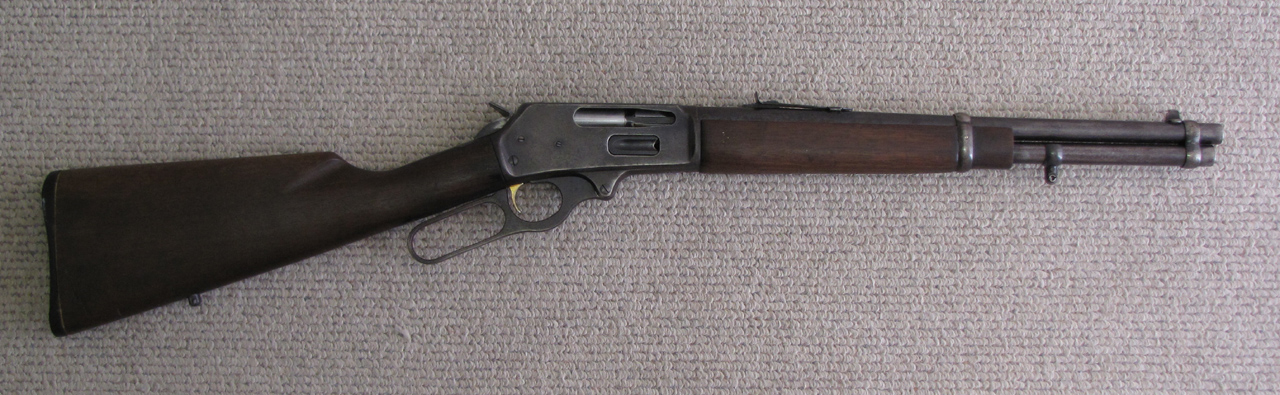
Then there's the Marlin 1895, which shares the 336 action but is chambered in .45-70 Government. The JM-stamped 1895 has developed a cult following, partly because of its big-bore appeal and partly because the Ruger-produced Marlin 1895 (reintroduced in 2022) reminded everyone how good the original was. A JM-stamped 1895 in clean condition is pushing the top of the $1,200 range and sometimes exceeding it, but they're still findable.
The Remington-era Marlin trap
The red flag most buyers miss: not all Marlins without a JM stamp are Remington-era guns, and not all JM-stamped guns are necessarily better than what came later. The transition period; roughly 2008 through 2010; produced guns with JM stamps that were assembled with varying degrees of care as production wound down in North Haven. And the very latest Remington-era Marlins (2018-2020) showed some improvement over the earlier Ilion production.
Still, the general rule holds. JM-stamped guns from the 1970s through the early 2000s represent the sweet spot of quality and affordability. Look for the JM on the barrel, just ahead of the receiver. If it's not there, you're looking at a Remington-era gun, and you should price accordingly.
The question to ask any seller of a Marlin 336: "Is this JM-stamped?" If they don't know what that means, they probably haven't evaluated the gun carefully. If they say yes, verify it yourself. The stamp is small but clearly visible on the left side of the barrel near the receiver.
Winchester Model 1892: Browning's other masterpiece
The Model 1892 doesn't get the same attention as the 94, but it's arguably a more refined design. Browning created it as a replacement for the Model 1873, chambered in pistol-caliber cartridges like .44-40, .38-40, .32-20, and .25-20. The action is smaller, lighter, and smoother than the 94, and the guns have an elegance that's hard to describe until you handle one.
Original Winchester 1892s are mostly above the $1,200 line in collectible condition, but there are exceptions. Late-production examples (the 1892 was made until 1941, with over one million produced) in worn but honest condition can fall within budget. Guns in .32-20 and .25-20 are generally less expensive than those in .44-40, partly because the larger caliber has more cowboy-action and Old West appeal.
The bore is critical on any 1892. Many of these guns were shot with black powder or semi-smokeless ammunition, and the bores can be rough. A gun with a bright bore in an 1892 is worth a significant premium over one with a dark, pitted tube; even if the exterior condition is similar.
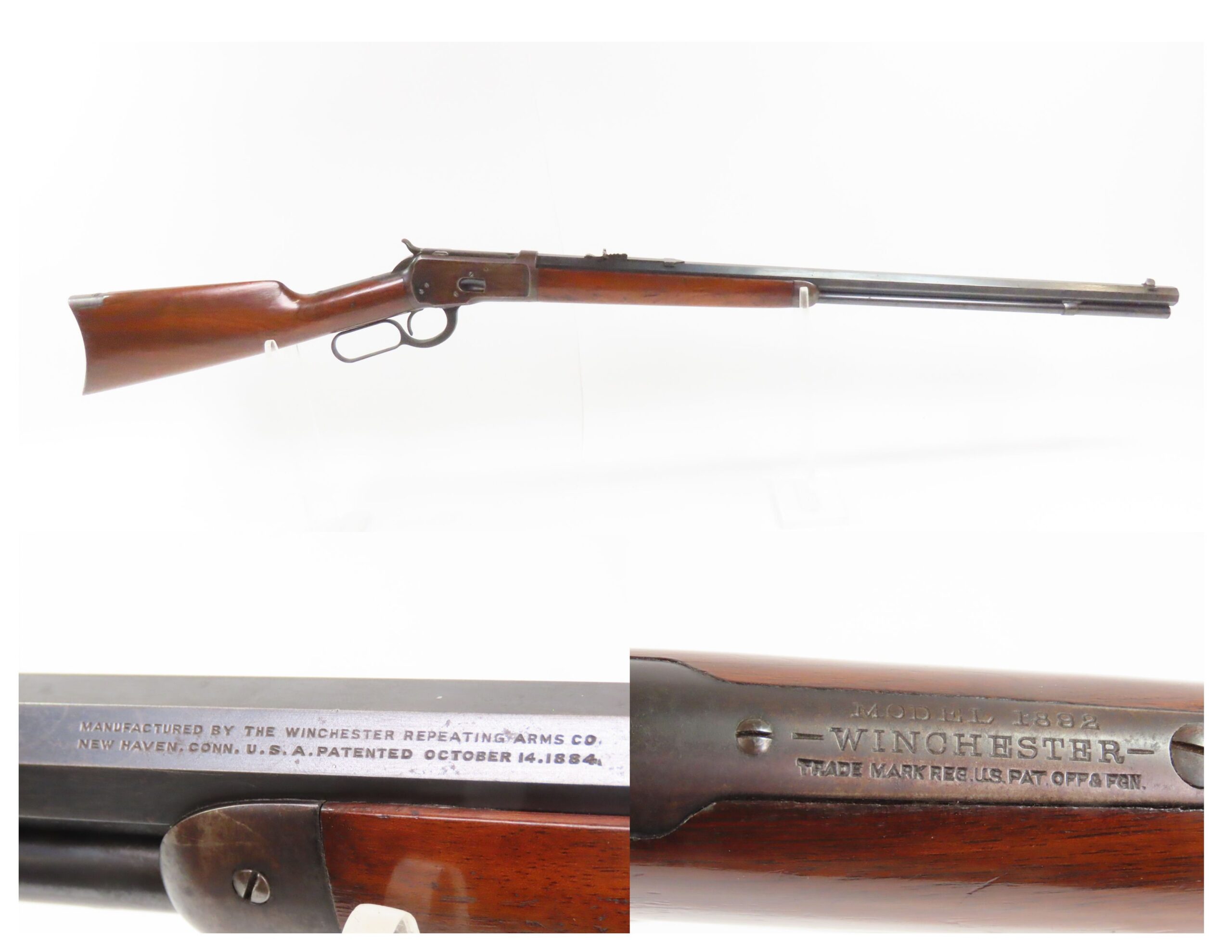
Watch for replacement parts. The 1892 has been reproduced by several manufacturers (Rossi, Chiappa, Winchester/Miroku), and parts from these reproductions sometimes find their way onto original guns. The lever, the loading gate, and the buttplate are the most commonly replaced components. Original parts have a fit and finish that's distinguishable from reproductions, but you need to know what the originals look like. Study reference photos before you buy.
Winchester Model 1890 and 1906: the .22 lever guns
If you want a Winchester lever action that's genuinely affordable and historically interesting, look at the .22-caliber pump and lever guns. The Model 1890 is technically a slide action, not a lever action, so it falls outside this discussion; but the collecting community often groups these guns together, and the principles of evaluation overlap.
The actual lever-action .22 from Winchester is the Model 9422, produced from 1972 through 2004. This is a post-64 design, but it was built to pre-64 standards; forged steel, walnut stocks, and excellent fit and finish. Winchester positioned it as a premium rimfire, and it delivered. The 9422 has become increasingly collectible since production ended, and clean examples are still available under $1,200, though the best ones are pushing that ceiling.
The 9422 came in two primary variants: the standard model with a hooded front sight and the 9422M chambered in .22 WMR (Winchester Magnum Rimfire). The magnum version was produced in smaller numbers and commands a slight premium. There were also XTR versions with higher-grade wood, and various limited editions.

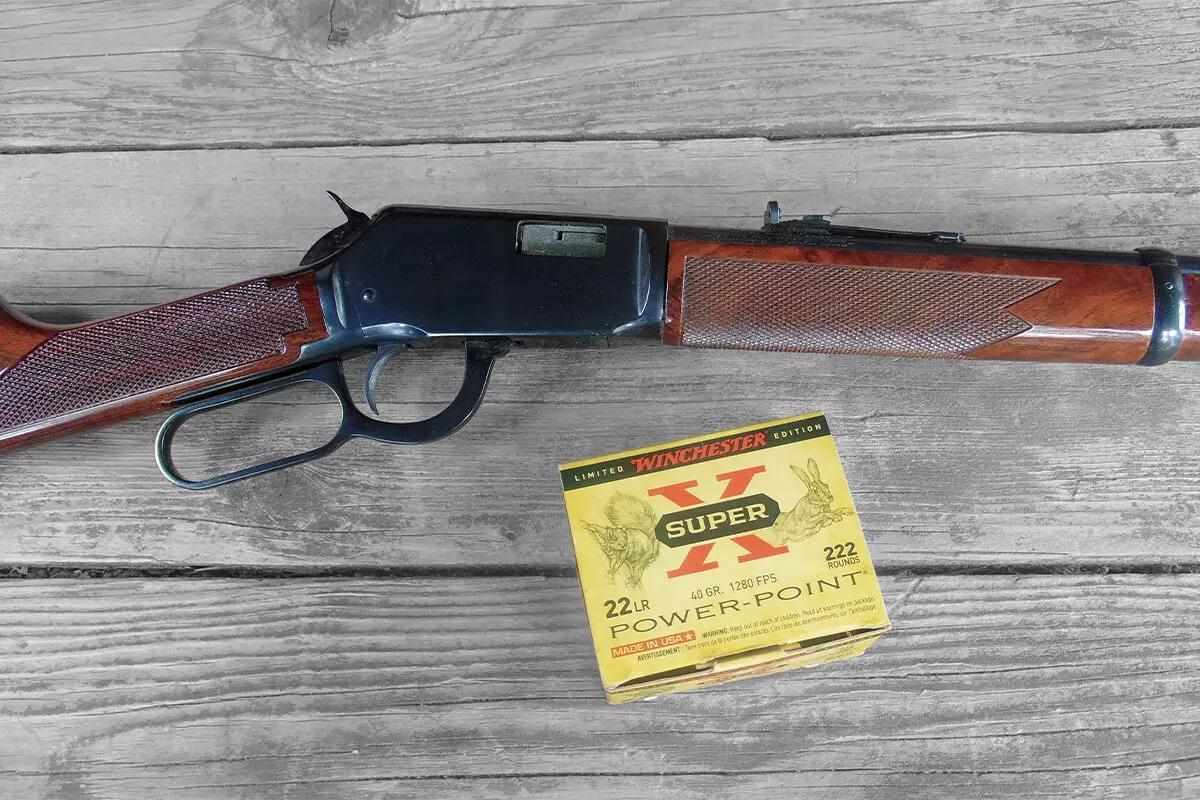
The detail that matters on a 9422 is the stock wood. Winchester used American walnut, and the grain quality varied. High-figure stocks with good color stand out from the plainer examples, and they're worth seeking out even if the premium is modest. Check the forearm for cracks near the barrel band; this is a stress point that can develop hairline fractures with use.
The guns that look collectible but aren't
Every gun show has them. Every online listing has them. Guns that are presented as collectible but fail the test under informed scrutiny. Here are the most common traps in the lever-action market.
Reblued pre-64 Winchesters
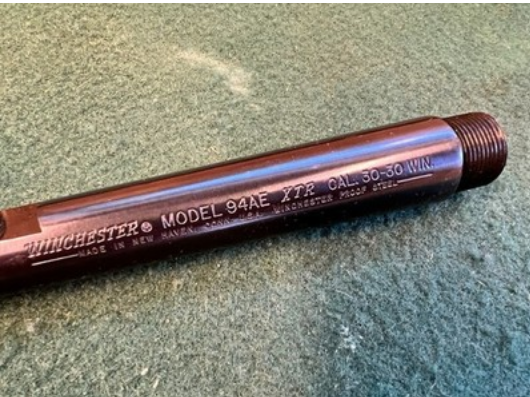
A reblued gun is a refinished gun, and a refinished gun has lost 40-60% of its collector value compared to an equivalent example with original finish; even if that original finish is worn. The problem is that a good reblue job can look convincing to a casual buyer. Here's how to tell: look at the markings. Original factory bluing was applied before the roll marks were stamped, so the lettering on a factory-original gun sits in the blue, with sharp edges. A reblued gun has had the blue applied over the existing markings, which softens the edges of the letters and fills in the fine details. Look at the "WINCHESTER" rollmark on the barrel with a magnifier. If the letters look slightly rounded or fuzzy at the edges, the gun has been reblued.

Also check the screw heads. Rebluing requires disassembly, and the screws often show tool marks from removal and reinstallation. Buggered screw slots are a red flag for any kind of refinishing work.
"Unfired" commemoratives in opened boxes
Winchester commemoratives were sold as collectibles from the factory, and the conventional wisdom was "never fire them, never open the box." The reality is that most of them were opened, handled, and sometimes fired. A commemorative that's been out of its box, handled at gun shows, and put back isn't "unfired in original box"; it's a handled gun in a box. True unfired commemoratives have a specific look: the bore is factory-bright with no fouling, the action shows no wear marks from cycling, and the original grease or oil is still present in the mechanical joints. If someone's cleaned the gun and re-oiled it, it's been handled, period.
Marlin 336 rifles with replaced stocks
Marlin stocks crack. It happens. And replacement stocks; both factory and aftermarket; are widely available. A Marlin 336 with a replacement stock is a shooter, not a collector piece, and it should be priced as such. The original JM-era stocks have a specific profile, finish, and checkering pattern (on models that were checkered) that differs from aftermarket replacements. The Marlin bullseye inlay in the buttstock; a small brass or white disc; should be present on original stocks. Its absence suggests a replacement.
Late Remington-era Marlins sold as "JM quality"
Some sellers describe their non-JM Marlins as "just as good as the old ones" or claim that a particular serial number range represents "improved Remington production." While it's true that quality varied during the Remington years, the burden of proof is on the seller. If the gun doesn't have the JM stamp and doesn't have the fit and finish to back up the claim, the price should reflect that reality.
Winchester 94s with drilled and tapped receivers
Scope mounting on a pre-64 Model 94 required drilling and tapping the receiver; and plenty of owners did exactly that. A pre-64 94 with scope holes in the receiver has been permanently modified. Those holes can be plugged, but they can't be un-drilled. This is a significant deduction from collector value. Check the top and left side of the receiver carefully. Plugged holes sometimes hide under a coat of cold blue or touch-up paint.
Comparing the main contenders
If you're standing at a gun show with $1,200 in your pocket and three lever guns in front of you, here's how to think about the decision.
Pre-64 Winchester 94 vs. JM Marlin 336
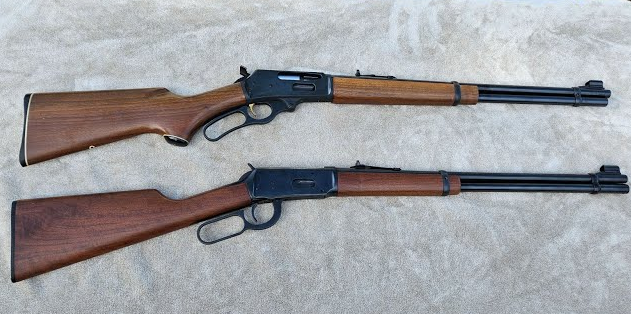
The Winchester has more name recognition and a longer collector tradition. The Marlin is arguably a better-designed rifle for practical use; easier to scope, smoother action out of the box, and the Micro-Groove rifling typically delivers tighter groups. In terms of collectibility, the pre-64 94 has a higher ceiling but also more fakes and refinished guns to navigate. The JM Marlin 336 has a lower ceiling but also fewer traps; what you see is generally what you get.
For the same money, you'll typically get a cleaner Marlin than you will a Winchester. A $900 JM-stamped 336 in 80% condition is a better buy, in most cases, than a $900 pre-64 94 in 60% condition. The Winchester name carries a premium that sometimes exceeds what the gun's actual condition justifies.
Standard carbine vs. scarce variant
This is the fundamental collecting question. Do you buy the best example of a common gun, or a rougher example of a scarce variant? There's no universal answer, but the general principle is that condition matters more in the long run than rarity alone. A mint-condition standard 336C will almost always be easier to sell than a rough 336 Marauder, even though the Marauder is objectively scarcer. Rarity without condition is a hard sell.
The exception is when the scarce variant is genuinely rare; production under a few thousand; and the condition is still respectable. A 336 Marauder in 75% condition is worth pursuing. A 336 Marauder that's been reblued, restocked, and had the barrel cut isn't.
Shooter-grade vs. collector-grade
Some of the best lever-action values are guns that fall between categories. A pre-64 94 with 50% original finish, a solid bore, and tight mechanics is a fantastic shooting rifle that also happens to be a genuine pre-64 Winchester. It won't win any collector awards, but it'll hold its value, it's pleasant to shoot, and it carries legitimate history. These guns are often priced well under $1,000, and they're the ones that experienced buyers quietly snap up while everyone else argues about whether a particular gun is "mint" or "near mint."
Where to look and what to check
The best lever-action deals don't come from online auctions with fifty bidders. They come from estate sales, local gun shops that don't specialize in collectibles, and person-to-person transactions where the seller inherited a gun and doesn't know exactly what they have. That's not about taking advantage of anyone; it's about being the informed buyer in a transaction where both parties benefit from accurate information.
Online auction sites are useful for establishing market values, but the buyer's premium (typically 15-20%) plus shipping and FFL transfer fees can add $150-$250 to the final price. Factor that into your budget before you bid.
Gun shows remain the best place to handle guns before buying, but they're also where the most overpriced lever actions live. Sellers at gun shows have overhead; table fees, travel, time; and they price accordingly. The sticker price is the starting point, not the final number. If a seller won't negotiate on a gun that's been sitting on his table all weekend, walk away. It'll be there next month, or something better will.
The inspection routine
Every lever action you're considering should get the same basic evaluation, in this order:
Open the action and verify that it's unloaded. Then close it and check the overall feel. The lever should move smoothly through its arc without grinding, catching, or excessive play. A lever action with a sloppy lever; side-to-side wobble when closed; has wear in the action that may or may not be worth addressing.
Look at the muzzle. The crown (the very end of the barrel where the rifling meets the outside world) should be sharp and symmetrical. A damaged or worn crown affects accuracy. If the crown looks like it's been dinged, dropped, or poorly recrowned, that's a negotiating point at minimum.
Check the bore with a light. You want to see bright lands and grooves with sharp edges. Dark spots indicate corrosion. Pitting; small craters in the metal surface; means the bore has been damaged by corrosive ammunition or neglect. A few dark spots in an otherwise bright bore are acceptable in a shooter. Extensive pitting throughout the bore means the gun has been neglected, and the accuracy will reflect it.
Examine the wood-to-metal fit. On a gun that hasn't been refinished, the wood should meet the metal cleanly but not necessarily perfectly; hand-fitted stocks from the pre-CNC era have minor variations that are normal. What you don't want to see is gaps filled with epoxy, stocks that have been sanded down (look for rounded edges where they should be crisp), or mismatched finish between the buttstock and forearm.
Look at the buttstock behind the tang and behind the receiver. Flex the stock gently; don't gorilla it; and look for any movement or hairline cracks. This is the highest-stress area on a lever-action stock, and cracks here are common, expensive to repair properly, and frequently hidden by sellers.
Finally, check the serial number against known databases to confirm the production year and original configuration. If the seller claims the gun is a specific variant or year, the serial number should confirm it. If it doesn't, ask questions.
The factory letter question
For Winchester rifles, a factory letter from the Cody Firearms Records Office can confirm the original caliber, barrel length, stock type, and shipping date. The cost is modest; typically under $100; and the information is invaluable for establishing provenance. A pre-64 Model 94 with a factory letter confirming its original configuration is worth more than an identical gun without one, because the letter eliminates uncertainty about whether parts have been changed.
Not every Winchester has surviving records. The Cody records are extensive but not complete, and some serial number ranges have gaps. If a letter isn't available, you're relying on physical inspection and your own knowledge to evaluate originality. That's fine, but it means you need to be more careful.
Marlin doesn't have an equivalent factory letter service, which means evaluating a Marlin relies more heavily on physical inspection and knowledge of production details. The Marlin Firearms Collectors Association maintains resources that can help with identification and dating, and their online forums are worth consulting before making a significant purchase.
What the market is doing
Lever-action collecting is in a growth phase. The combination of nostalgia, the cowboy-action shooting community, the resurgence of lever guns in tactical and hunting contexts, and the general trend of firearms appreciation has pushed prices upward across the board. Pre-64 Model 94s that sold for $600 five years ago are now $800-$1,000 guns. JM-stamped Marlins that were $400 guns are now $500-$700.
This trend isn't guaranteed to continue, but the fundamentals are sound. No one is making more pre-64 Winchesters. The JM-stamped Marlin supply is fixed and shrinking as guns move into collections and stay there. And lever actions have a cultural appeal that transcends the pure collecting market; they're the guns people actually want to take out of the safe and shoot, which creates demand from both collectors and users.
The $1,200 ceiling is realistic today. In five years, it might not be. If you're going to buy, buy smart and buy soon. Look for honest condition over pretty refinishes. Verify what you're told against what you can see. Get the factory letter when it's available. And don't let anyone rush you into a purchase because "this one won't last."
Good lever actions have been around for 130 years. There's always another one. The trick is recognizing the right one when it's in front of you.