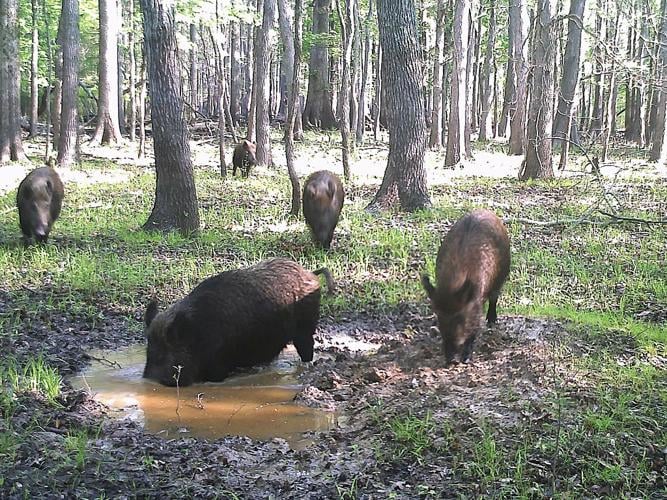
You've got pigs tearing up your property at 2 AM, running in groups of eight to fifteen, and your bolt gun gives you exactly one clean shot before the whole sounder scatters into the brush. That's the fundamental problem with hog control; it's volume work, not precision work. A semi-auto .308 changes the math. You get a fast follow-up on the second and third pig while the group is still figuring out what happened, and .308 Winchester hits hard enough that a 150-grain soft point through the shoulder puts them down without a tracking job.
The trick is finding a rifle that runs reliably in the dark, from a truck bed or a tripod, often dirty, often fed whatever ammo was cheapest at the time, and doing it for under $1,500. That budget actually gets you into serious territory right now. The AR-10 platform has matured enough that sub-$1,000 options run well, and there are a few non-AR designs worth considering too. But the spread between "runs great" and "short-strokes on steel case at round 200" is real, and it comes down to gas system design, bolt carrier weight, and how much the manufacturer actually tested with cheap ammo.
Here's the plan: I'll break down what actually matters in a hog rifle versus a general-purpose .308, compare five specific rifles that fit the budget, and cover the setup details, optics mounting, suppressor considerations, ammo selection, that make the difference between a tool that works and a range toy you brought to the wrong job.
Why .308 for hogs (and why semi-auto)
The caliber debate for hogs is shorter than people make it. 5.56 works on smaller pigs inside 100 yards with good shot placement, but a 200-pound boar with a shield plate of cartilage over its shoulder is a different animal, literally. The .308 pushes a 150-grain bullet at roughly 2,800 fps from a 16-inch barrel, delivering around 2,400 ft-lbs at the muzzle. That's enough to break the shoulder structure and reach vitals even on a quartering-to shot. At 200 yards, you're still carrying over 1,600 ft-lbs. 6.5 Creedmoor gets brought up constantly, but for hog work inside 300 yards, .308 has two advantages: ammo is cheaper (important when you're burning 40-60 rounds on a good night) and bullet selection in heavy, rapid-expanding hunting loads is deeper.
The semi-auto requirement isn't about spray-and-pray. It's about the second shot arriving in under two seconds instead of four. Hogs don't stand still after the first crack. They bolt, but there's usually a one-to-three-second window where the group mills before committing to a direction. A practiced shooter can put two or three rounds into separate animals in that window with a semi-auto. With a bolt gun, you're cycling the action, reacquiring, and the opportunity is gone. On a single trophy boar, a bolt gun is fine. For population control where the goal is removing as many animals as possible per encounter, the semi-auto is the right tool.
What matters in a hog-specific .308
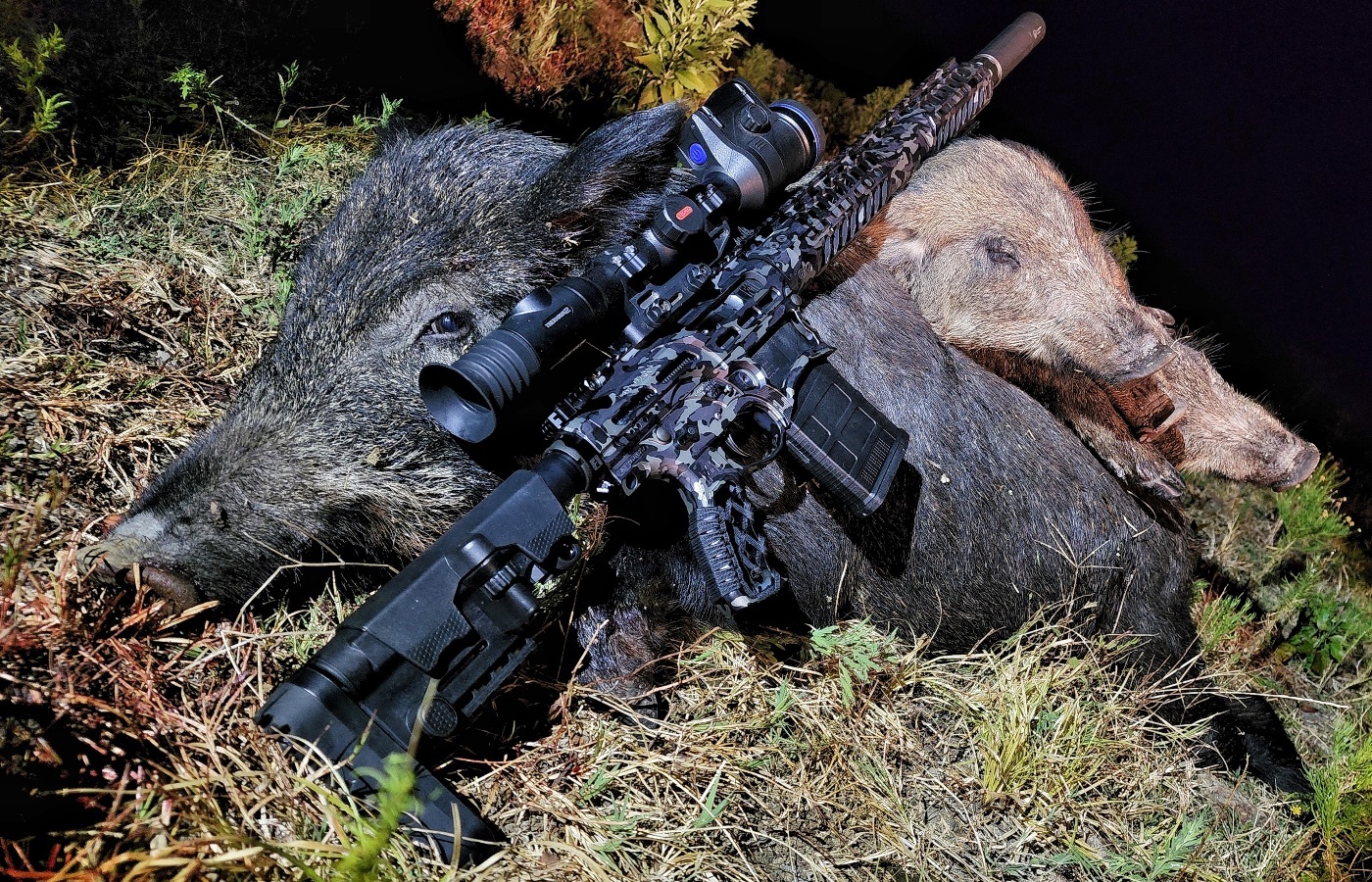
Not every .308 semi-auto is equally suited to this work. A 24-inch heavy-barrel precision AR-10 built for PRS-style competition is technically a .308 semi-auto, but it's the wrong rifle. Here's what actually moves the needle for hog control.
Weight and handling
You're carrying this rifle from a truck to a blind, or walking fence lines, or sitting on a tripod for hours in the dark. Every ounce matters more than it does at a bench. A bare rifle over 9 pounds starts to feel like a chore once you add an optic, light, and suppressor. The total system weight, rifle, loaded magazine, optic, and any accessories, should ideally stay under 11 pounds. That means the bare rifle needs to come in around 7.5 to 8.5 pounds. This rules out most heavy-profile barrel setups, and it's one reason the Ruger SFAR got so much attention, it brought the weight down to AR-15 territory.
Barrel length plays into this too. A 16-inch barrel is the sweet spot for hog work. You lose roughly 25-50 fps per inch compared to a 20-inch barrel, so figure about 100-200 fps total. On a .308 at hog distances (inside 250 yards for most real-world scenarios), that velocity loss is irrelevant to terminal performance. What you gain is a shorter, handier rifle that's easier to maneuver in a blind or swing from a vehicle-mounted rest.
Gas system reliability
This is where cheap AR-10s either prove themselves or fall apart. The gas system has to cycle reliably with a range of ammo, from 147-grain steel-case practice loads to 168-grain match to 150-grain hunting soft points. The port pressure varies significantly across these loads, and an undergassed rifle will short-stroke on the lighter stuff while an overgassed rifle will beat itself to death and throw brass into the next county.
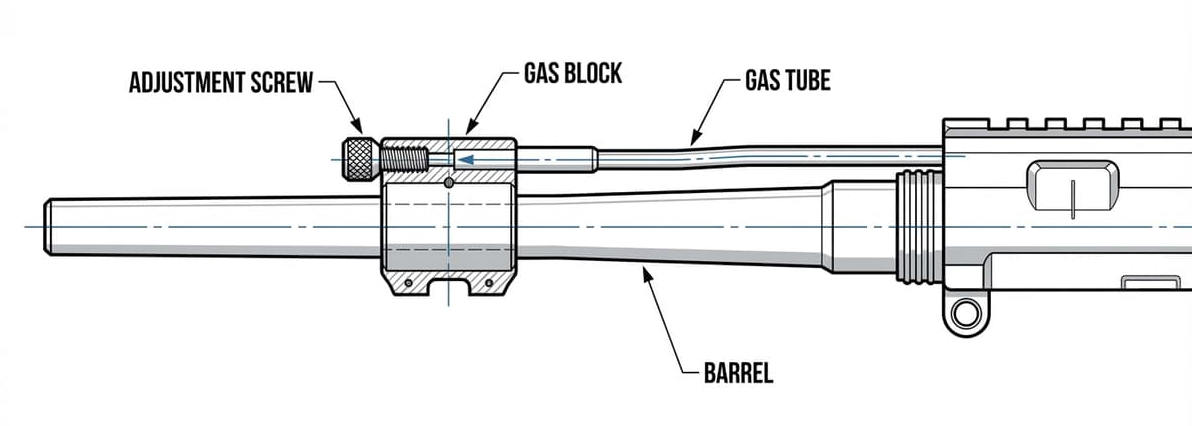
Mid-length gas on a 16-inch .308 barrel gives you about 7.5 inches of dwell time (the distance from the gas port to the muzzle). That's generally enough to run reliably without being brutally overgassed. Rifle-length gas on an 18-inch or 20-inch barrel is even smoother, less port pressure, softer recoil impulse, less carrier velocity. If you're running a suppressor (and you should be for hog work, more on that later), the added backpressure means an already-overgassed rifle gets worse. An adjustable gas block is the real solution here, and it's worth $40-60 as an upgrade even if the factory rifle doesn't come with one.
Trigger
Hog shooting is fast but not sloppy. You're placing shots on moving animals in low light, often at moderate distances. A heavy, gritty mil-spec trigger with a 7-8 pound pull makes that harder than it needs to be. You want something in the 3.5 to 4.5 pound range, with a clean break and a short reset. Several of the rifles in this price range now ship with upgraded triggers, either a two-stage military-style pull or a single-stage with a crisp wall. If the rifle you pick has a standard mil-spec trigger, budget $100-150 for a drop-in replacement. It's the single biggest accuracy improvement per dollar on any AR platform.
Magazine compatibility and capacity
For hog control on private land (check your state laws, some states restrict magazine capacity for hunting), 20-round magazines are standard for AR-10 pattern rifles. You want a rifle that takes widely available magazines, DPMS/SR-25 pattern or AICS pattern, depending on the platform. Proprietary magazine designs are a headache. You'll want at least three magazines for a night of hog work, and if you can't buy replacements at any decent gun shop, that's a problem.
Five rifles worth the money
Here's the comparison. Every rifle listed has a street price under $1,500 at the time of writing, and all are commonly available through major retailers. I'm focusing on factory-complete rifles, not stripped receivers that need a build, if you're building from scratch, that's a different article.
Palmetto State Armory PA-10 Gen3
The PA-10 Gen3 is the budget benchmark. PSA has been iterating on this platform for years, and the Gen3 addressed most of the earlier reliability complaints. The 18-inch mid-length gas stainless barrel in 1:10 twist handles 147 to 175-grain bullets well. It ships with a 15-inch M-Lok handguard, an adjustable stock, and a two-stage trigger that's genuinely decent for a factory AR-10 trigger, somewhere around 4.5 pounds with a noticeable wall.
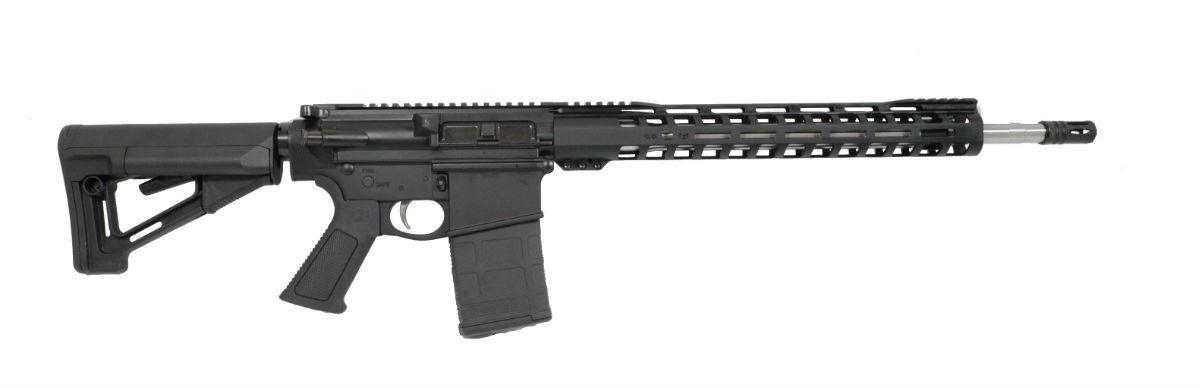
The real story with the PA-10 is value. At its typical price point (well under $1,000), you're getting an AR-10 that reliably cycles brass-cased ammo and most steel-case loads after a 100-round break-in. The fit and finish won't match an Aero or a LaRue, and the handguard can feel a little flimsy compared to more expensive options, but functionally it works. The rifle follows DPMS-pattern specs, so aftermarket compatibility is broad, any DPMS-pattern lower, upper, handguard, or barrel will swap in. Weight runs around 8.5 pounds bare, which is typical for the platform.
Where it falls short: the factory gas block isn't adjustable, and the rifle can be overgassed with hotter loads, you'll notice aggressive ejection patterns (brass at 1-2 o'clock) and more felt recoil than necessary. Swapping to an adjustable gas block like a Superlative Arms or Wojtek is a $50-70 fix and makes a noticeable difference, especially suppressed. Some users on forums have reported inconsistent headspacing on earlier production runs, so running a go/no-go gauge on a new rifle isn't paranoia, it's due diligence.
Accuracy expectations: 1.5 to 2 MOA with match ammo, 2 to 2.5 MOA with bulk 150-grain FMJ. That's more than adequate for hog-sized targets at any realistic engagement distance.
Aero Precision M5E1
Aero sits one tier above PSA in fit, finish, and consistency. The M5E1 complete rifle uses their enhanced upper and handguard system, which eliminates the barrel nut timing issue that plagues standard AR-10 builds, the handguard indexes directly off the upper receiver, giving you a more rigid, more consistent platform. The 16-inch or 18-inch CMV (chrome moly vanadium) barrel with a mid-length gas system is the standard configuration, and it runs well.
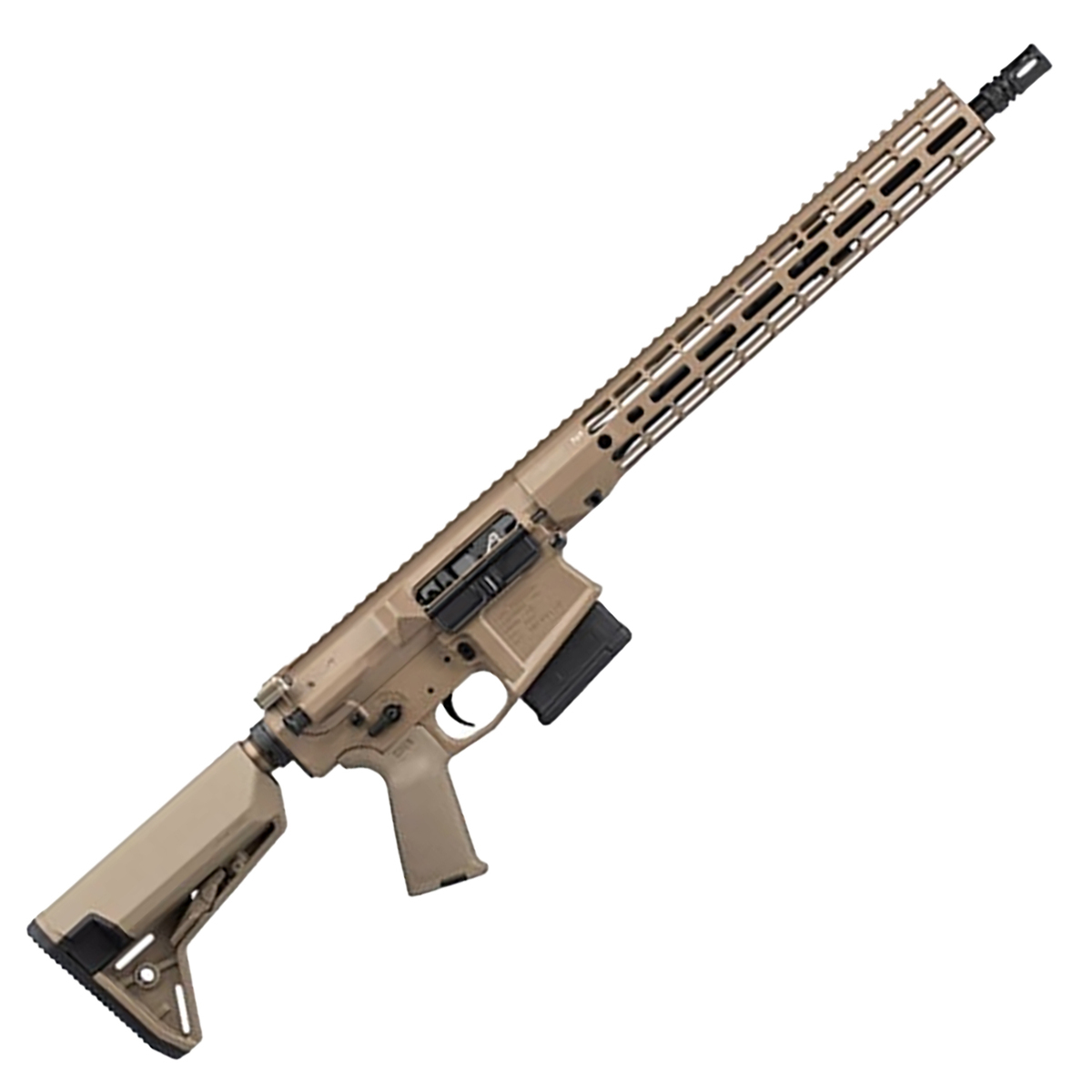
The M5E1 typically comes with a standard mil-spec trigger, which is the one weak point at its price. Plan on swapping that immediately, a LaRue MBT-2S or an ALG ACT will transform the rifle. The lower receiver has a flared magwell and a threaded bolt catch pin, small details that matter when you're loading magazines in the dark with gloves on. Weight is around 8.8 pounds bare with the 18-inch barrel.
Build quality is where Aero earns its reputation. Receiver fit is tight, anodizing is consistent, and the enhanced handguard system is genuinely rigid, you can mount a bipod or light at the end of the rail without worrying about flex. The gas system is tuned conservatively from the factory, meaning it runs a little overgassed to ensure reliability across ammo types. Again, an adjustable gas block is the smart upgrade.
Accuracy expectations: 1 to 1.5 MOA with match ammo is realistic, and sub-2 MOA with good hunting loads (Federal Fusion 150-grain, Hornady American Whitetail 150-grain) is common. That's getting into genuine precision territory for a factory rifle at this price.
Ruger SFAR
The SFAR (Small Frame Autoloading Rifle) is the most interesting design in this category, and it's worth understanding why. Ruger built this rifle on an AR-15-sized receiver set, not an AR-10. The bolt, carrier, and buffer system are all proprietary, designed specifically to handle .308 pressures in a smaller, lighter package. The result is a rifle that weighs about 7 pounds bare with a 16.1-inch barrel. That's a full 1.5 to 2 pounds lighter than a standard AR-10, and you feel every ounce of that savings when you're carrying it for hours.
The barrel is a medium-contour cold hammer-forged unit with a 1:10 twist, and the gas system runs off a proprietary short-stroke piston, wait, no. The SFAR is actually direct impingement, but with a tuned gas port and a carrier that's lighter than a standard AR-10 BCG. The reduced reciprocating mass means less felt recoil, and the rifle is genuinely pleasant to shoot for a .308. It ships with a decent trigger in the 4-pound range and Ruger's own flip-up sights, though you'll remove those immediately for an optic.
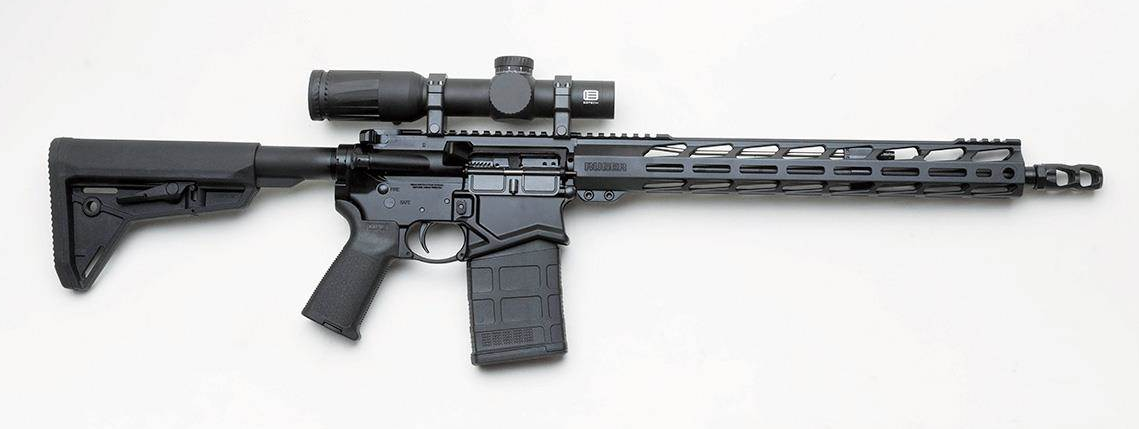
Here's the catch: proprietary means proprietary. The handguard, barrel nut, bolt carrier group, and magazines are all Ruger-specific. You can't swap in a standard AR-10 BCG or barrel. If something breaks, you're going to Ruger for parts. The magazine situation is particularly notable, the SFAR uses its own magazine design, not SR-25/DPMS pattern. Ruger sells them, and aftermarket options exist from Magpul now, but availability has been inconsistent.
There's been some chatter about Ruger potentially discontinuing or revising the SFAR line, the rifle was pulled from their website briefly, then returned. Production seems to be continuing, but it's worth noting that buying into a proprietary platform carries some long-term parts availability risk. That said, Ruger's customer service has historically been excellent about supporting discontinued products.
Accuracy expectations: 1.5 to 2 MOA with factory hunting ammo, with some loads (Federal Gold Medal 168-grain) tightening to around 1.25 MOA. Not a tack driver, but absolutely sufficient for hog work, and the weight savings and handling are the real selling points.
Savage MSR 10 Hunter
Savage brought their AccuTrigger to the AR-10 platform with the MSR 10 Hunter, and that's the headline feature. The trigger is adjustable from roughly 3.5 to 4.5 pounds from the factory, with the kind of clean, crisp break that Savage is known for in their bolt guns. On a hog rifle where you're taking fast shots in low light, that trigger quality translates directly to better hits.
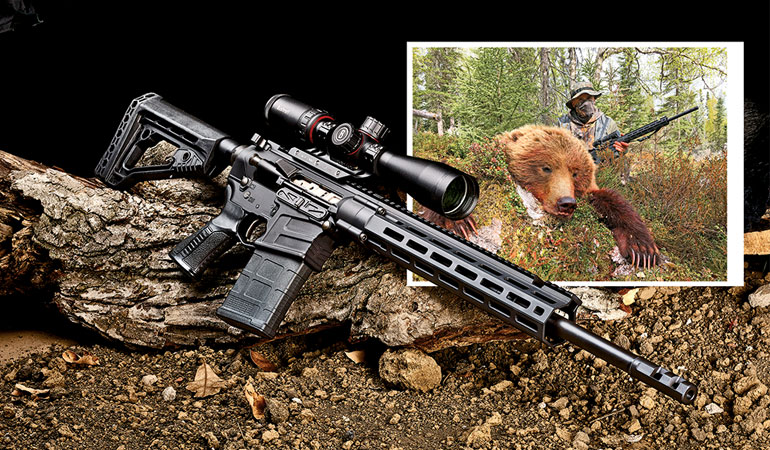
The MSR 10 Hunter runs an 18-inch 5R-rifled barrel (the lands are slightly angled to reduce bullet deformation and copper fouling) with a 1:10 twist. The gas system is mid-length with a non-adjustable gas block. The rifle ships with a free-floated M-Lok handguard and a Blackhawk stock. Weight is around 8.3 pounds bare, lighter than most AR-10s at this spec level, though not in SFAR territory.
The 5R rifling is a genuine accuracy advantage. Reduced fouling means more consistent velocities over longer strings of fire, and the barrel tends to shoot well with a wider variety of bullet weights than conventional rifling. Savage has a strong reputation for barrel quality from their bolt gun line, and that carries over here.
Downsides: the Blackhawk furniture feels cheap relative to the rest of the rifle. The stock has noticeable wobble on some examples, and the pistol grip is just adequate. Budget $50-80 for a Magpul PRS Lite or STR stock and a better grip. The gas system is tuned for reliability, which means overgassed, brass flies aggressively, and suppressed shooting without an adjustable gas block is unpleasant. Savage's customer service, while functional, isn't as responsive as Ruger's.
Accuracy expectations: this is the accuracy leader in the group. 1 to 1.25 MOA with match ammo is common, and sub-1.5 MOA with hunting loads is realistic. The 5R barrel and AccuTrigger combination punches above the rifle's price point.
PSA Sabre AR-10
PSA's Sabre line represents their step up from the budget PA-10. The Sabre AR-10 uses a monolithic-style upper receiver with an integrated handguard rail, which gives it better rigidity and a cleaner look than the two-piece PA-10 setup. The barrel options include 16-inch and 18-inch configurations in both .308 and 6.5 Creedmoor, with the .308 models using a 1:10 twist mid-length gas system.
The Sabre comes with a noticeably better trigger than the standard PA-10, a flat-faced single-stage around 4 pounds. The lower receiver has an ambi bolt release and a flared magwell, and the overall fit and finish is closer to Aero territory than budget PSA. It takes standard DPMS-pattern magazines, which is a significant advantage over the Ruger SFAR.
Weight is around 8.2 pounds bare with the 16-inch barrel, and the balance is good, the monolithic upper keeps weight centered rather than hanging off the front. The gas block is still non-adjustable from the factory, which is the one consistent complaint across almost every AR-10 in this price range. PSA clearly tunes for "runs everything" rather than "runs optimally," and the result is the same overgassing story.
What makes the Sabre interesting for hog work specifically is the combination of reasonable weight, good trigger, and full DPMS parts compatibility. If something breaks at 1 AM on a ranch in Texas, you can swap parts from any DPMS-pattern AR-10. That logistical advantage matters for a working gun.
Accuracy expectations: 1.25 to 1.75 MOA with match ammo, 1.75 to 2.25 MOA with hunting loads. Slightly better than the standard PA-10, reflecting the tighter receiver fit and better barrel.
Build notes: setting up the rifle for night work
Buying the rifle is half the job. Setting it up correctly for hog control, which usually means night shooting from a blind or vehicle, often suppressed, at ranges from 50 to 250 yards, requires some specific choices.
Optic selection
You need a low-power variable optic (LPVO) in the 1-6x or 1-8x range, or a red dot with a magnifier. For night shooting with thermal or night vision, the equation changes completely, but assuming you're using a feeder light or moonlight, a 1-6x with an illuminated reticle is the most versatile choice. The Vortex Strike Eagle 1-6x, Primary Arms SLx 1-6x with ACSS reticle, and Burris RT-6 are all proven options that won't blow your remaining budget after the rifle purchase.
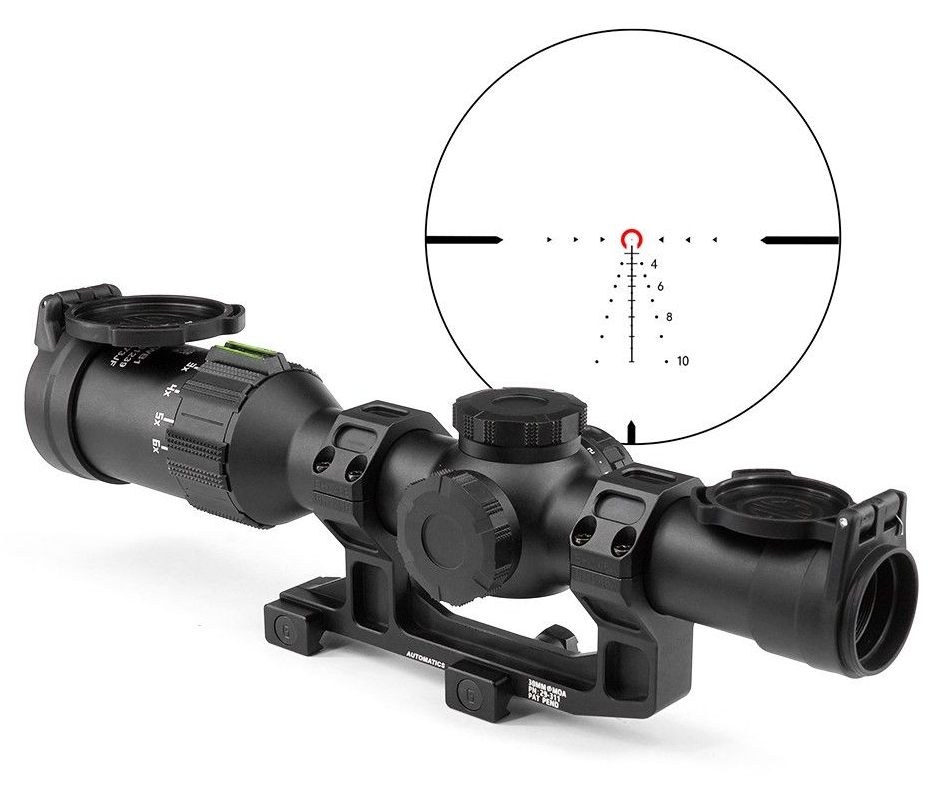
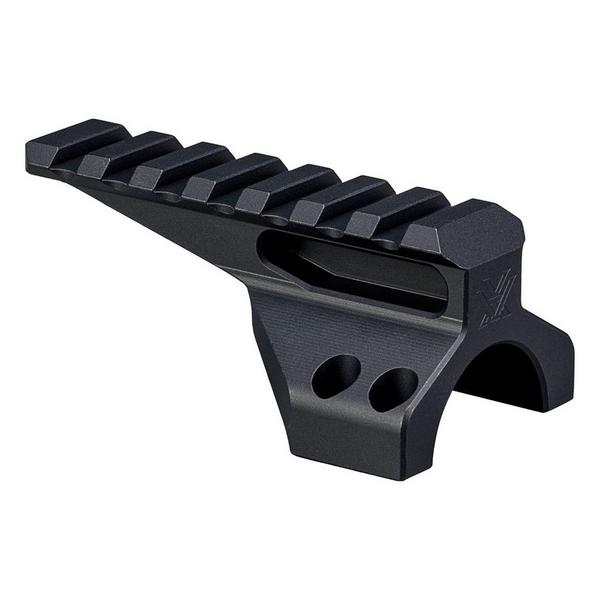
Mount the optic correctly. That means a quality one-piece cantilever mount (Aero Precision Ultralight, Vortex Cantilever, or the Midwest Industries QD mount), torqued to spec with a fat wrench or torque wrench, not "hand tight plus a quarter turn." The number one reason AR-10s lose zero is the optic mount, not the rifle. A .308's recoil impulse is substantially harder on mounts than 5.56, and a cheap ring set that holds fine on an AR-15 will walk itself loose on an AR-10 within 200 rounds.
Suppressor considerations
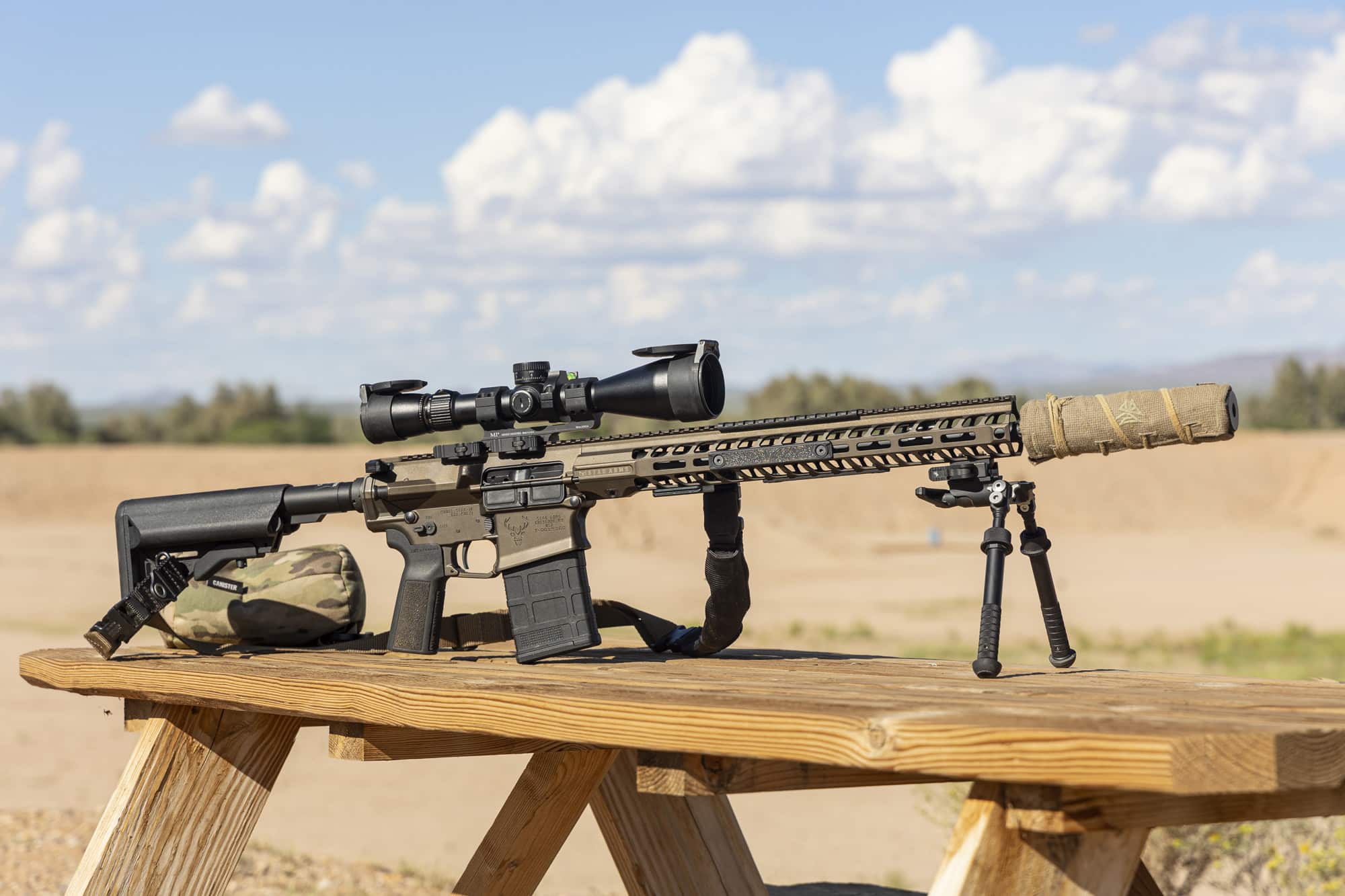
Running a suppressor for hog control is almost mandatory if you're doing volume work. The sound reduction keeps the sounder from scattering as quickly, and it reduces your hearing damage risk when shooting without doubling up on ear protection (which you won't do at 2 AM in a blind, you need to hear). A .30 caliber suppressor rated for .308 semi-auto use is the move. The SilencerCo Omega 36M, Dead Air Sandman-S, and YHM Resonator R2 are all proven on AR-10 platforms.
Here's the critical part: when you add a suppressor to an AR-10, you're adding backpressure to the gas system. An already-overgassed rifle becomes violently overgassed. The bolt carrier slams back harder, extraction becomes more aggressive (you'll see primer cratering and case head swipes), and the rifle beats itself up faster. This is where the adjustable gas block stops being optional and becomes essential. With an adjustable gas block, you can tune down the gas to run perfectly suppressed, then open it back up for unsuppressed shooting. The Superlative Arms adjustable gas block with a bleed-off setting is particularly good for this, it vents excess gas forward rather than just restricting it, which keeps the action cleaner.
Magazine and ammo setup
For a night of hog control, bring more ammo than you think you need. Five loaded 20-round magazines is a good starting point. Use quality magazines, Magpul PMAG LR/SR Gen M3 for DPMS-pattern rifles, or the appropriate OEM magazine for the SFAR. Cheap steel magazines exist for the AR-10 platform, and they're fine for range use, but a feed malfunction at the wrong moment during a hog encounter is not something you want to troubleshoot in the dark.
Ammo selection for hogs should prioritize rapid expansion and weight retention over match accuracy. You're not shooting tiny groups on paper, you're putting 150-grain soft points through rib cages at 150 yards. Federal Fusion 150-grain, Hornady American Whitetail 150-grain InterLock, and Winchester Deer Season XP 150-grain are all excellent choices that run reliably in semi-autos and expand aggressively on hog-sized game. Avoid the temptation to run cheap FMJ for hog control, the wound channel is significantly smaller, and you'll wound more animals than you kill cleanly.
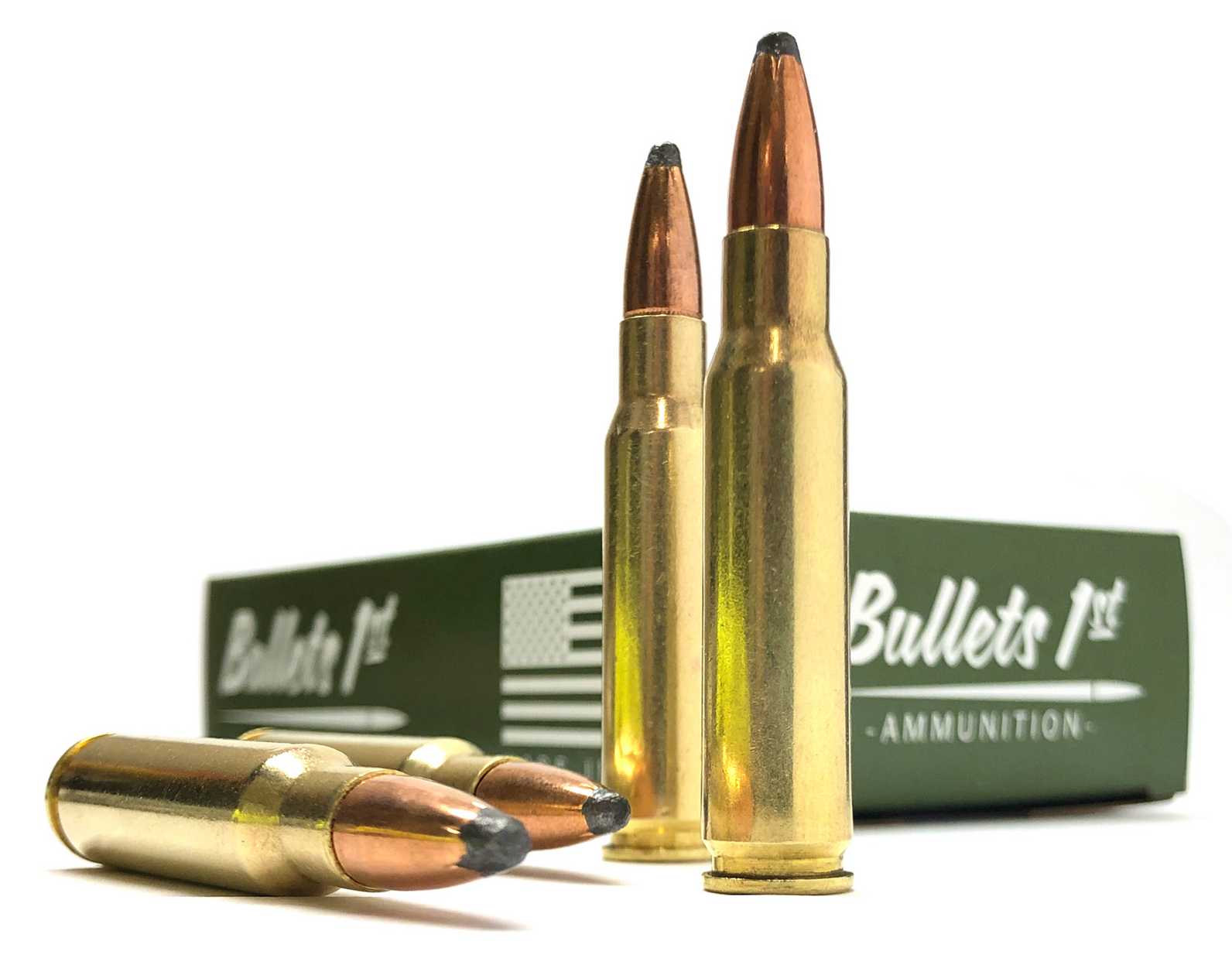
If you're also using the rifle for practice (and you should be, proficiency matters), keep a separate supply of cheap brass-case FMJ for training. Federal American Eagle 150-grain and PMC Bronze 147-grain both run well in AR-10 platforms and cost substantially less than hunting ammo.
Common mistakes with .308 semi-auto hog rifles
Running the factory muzzle brake for night shooting
Most AR-10s ship with an A2 flash hider or a muzzle brake. If you're not running a suppressor, the muzzle brake is actively working against you at night, the concussive blast and flash destroy your night vision adaptation and announce your position to every hog within half a mile. Switch to a quality flash hider (the SureFire SOCOM or Dead Air flash hider mount if you plan to add a suppressor later) or go directly to a suppressor. The A2 flash hider is adequate but not great; a three-prong design like the SureFire 3P eliminates more flash.
Ignoring the buffer system
The buffer weight and spring in an AR-10 are tuned from the factory for a specific range of ammo pressures. If you swap to an adjustable gas block and tune the gas down, you may also need to reduce buffer weight to maintain reliable cycling. Conversely, if you're running hot loads or shooting suppressed without gas adjustment, a heavier buffer (H2 or H3 equivalent in the AR-10 world) can slow the carrier down and reduce bolt bounce. The buffer system and gas system work together, adjusting one without considering the other is a common mistake that leads to intermittent malfunctions.
Mounting a bipod and calling it a rest
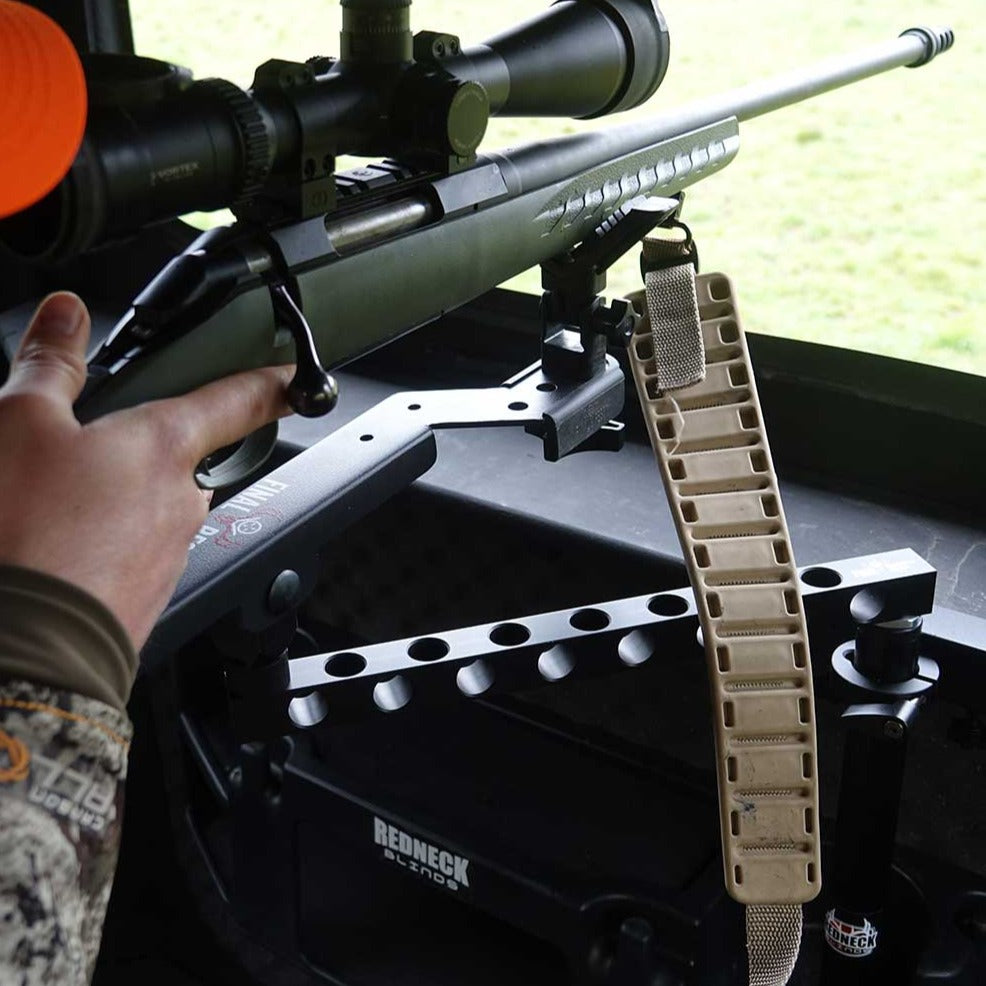
A bipod on a hog rifle is useful for prone shooting in open fields, but most hog encounters from blinds or elevated positions don't involve prone shooting. A quality tripod with a rifle clamp (the Bog DeathGrip or a similar shooting tripod) is more versatile for blind shooting. If you do run a bipod, mount it to the M-Lok rail as far forward as practical, it improves stability and keeps the bipod legs out of your support hand's way. An Atlas BT47 or a Harris SBRM are both solid choices that won't break the bank.
Skipping the zero confirmation at distance
Zeroing at 100 yards on a bench is step one, not the final step. Your hog rifle needs to be confirmed at the distances you'll actually shoot. If your typical engagement is 100-200 yards from an elevated blind, zero at 100 and then confirm your holds at 150 and 200. Shoot from the actual position you'll use, seated in a blind chair, off a tripod or rail rest, not prone on a bench. The point of impact shift between bench prone and seated off a tripod can be a full MOA or more due to changes in how you load the bipod or rest.
Forgetting to clean the gas system
AR-10s running direct impingement get dirty fast, especially with cheap ammo. Carbon buildup in the bolt carrier group, gas key, and gas tube will eventually cause short-stroking. For a working hog rifle that might see 200-300 rounds in a weekend, clean the BCG after every outing. Pay specific attention to the gas rings on the bolt, they wear faster on .308 platforms due to higher pressures. A simple test: stand the bolt carrier on the bolt face with the carrier extended. If it collapses under its own weight, the gas rings need replacement. They're a $5 part and a 2-minute swap.
The comparison at a glance
Laying these five rifles side by side, the decision comes down to what you prioritize.
The PA-10 Gen3 is the entry point. It gets you into a functional .308 semi-auto for the least money, leaving the most budget for optics, suppressor, and accessories. The trade-off is fit, finish, and the need for a few upgrades (gas block, possibly trigger) to make it a truly reliable working gun.
The Aero M5E1 is the builder's choice. Better receiver quality, the enhanced handguard system, and broad aftermarket support make it the rifle you can upgrade piece by piece over time. It's the platform that grows with you.
The Ruger SFAR wins on weight and handling, and it's not close. If you're covering ground on foot or need a rifle that carries like an AR-15 but hits like a .308, nothing else here competes. The proprietary parts are the gamble you're taking.
The Savage MSR 10 Hunter is the accuracy pick. That AccuTrigger and 5R barrel combination delivers precision that the other rifles need aftermarket parts to match. If your hog shooting involves longer shots across open fields, this is the one.
The PSA Sabre splits the difference between the budget PA-10 and the Aero M5E1. Better fit than the PA-10, full DPMS compatibility, a good factory trigger, and a monolithic upper that adds rigidity. It's the "do everything adequately" choice, which is honestly what most working guns need to be.
Range notes: what you'll notice on the first outing
The first 100 rounds through any new AR-10 are a break-in period, whether manufacturers admit it or not. Expect the action to feel gritty and the bolt to be stiff on the first few magazines. Run it wet, more lubricant than you think is necessary on the bolt carrier, cam pin, and charging handle track. After 100-150 rounds, the action smooths out noticeably as the bearing surfaces mate.
Pay attention to your ejection pattern. Brass landing at 3 o'clock to 4 o'clock is ideal, it means the gas system is tuned correctly for that ammo. Brass at 1 o'clock to 2 o'clock means overgassed, the carrier is moving too fast and ripping the case out early. Brass at 5 o'clock or dribbling out the ejection port means undergassed, the carrier isn't moving fast enough to cycle reliably. If you're seeing inconsistent ejection patterns with the same ammo, check that the gas key screws are staked and tight. A loose gas key is one of the most common AR-10 reliability issues and it's invisible unless you specifically check for it.
Shoot at least three different ammo types during your initial range session: your intended hunting load, a cheap practice load, and if possible, a steel-case load. This tells you the rifle's reliability window. If it runs all three without a malfunction, you've got a solid platform. If it chokes on steel case but runs brass fine, that's normal for many AR-10s and not necessarily a problem, just know the limitation and don't bring steel case to the field.
After the buy: your first 48 hours with the rifle
Strip the rifle completely before the first range trip. Inspect the bolt for machining marks or burrs, check that the gas key is properly staked (the staking should visibly deform the metal around both screws), and verify the barrel nut is torqued by trying to rotate the handguard. Apply a thin coat of quality lubricant, Slip 2000 EWL, Radco FireClean, or plain old CLP, to the bolt carrier, cam pin, firing pin, and charging handle. Wipe excess off the exterior.
Mount your optic using a torque wrench set to the manufacturer's spec (typically 15-18 inch-pounds for ring screws, 55-65 inch-pounds for mount base screws, but check the specific mount's documentation). Use a proper lapping bar or at minimum check ring alignment before final torque, misaligned rings will crush your scope tube and kill the erector mechanism over time.
Zero at 100 yards with your hunting ammo, not your practice ammo. Different loads impact at different points, and you want the zero set for the bullet you'll actually send at a hog. Confirm with a three-round group, adjust, shoot another three-round group to verify. Then move to your tripod or blind rest setup and shoot a five-round group at 100 and 200 yards from that position. Record the holds. Write them on a piece of tape on the stock if you need to, there's no shame in a cheat sheet when you're making ethical shots on game.
Take the rifle out for at least one night session before your first real hog hunt. Shoot under the lighting conditions you'll actually encounter. Verify that your illuminated reticle is visible but not blown out, that your light or feeder light setup doesn't create glare on the optic, and that you can manipulate the safety, magazine release, and charging handle with whatever gloves you'll wear. The small stuff, a safety that's hard to find in the dark, a charging handle that's too small to grab with gloves, becomes a real problem when pigs are at the feeder and you've got five seconds to get the rifle up.
The rifle is the foundation. The setup, the practice, and the ammo selection are what turn it into a hog-killing system. Get the fundamentals right, confirm your zero from field positions, and put in the reps. The pigs will cooperate eventually.