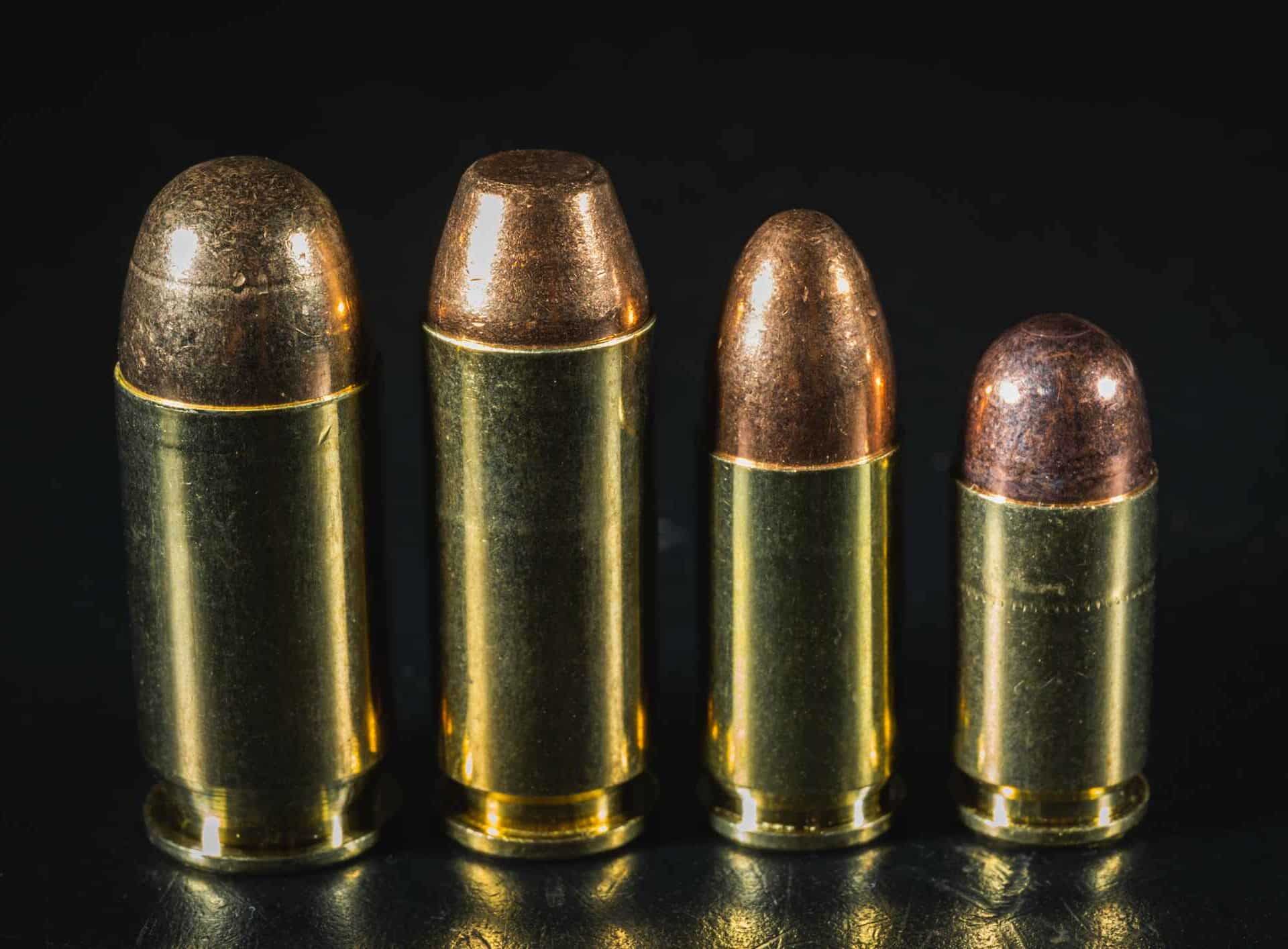
The 10mm Auto sits in a strange place. Factory ammo is either downloaded to .40 S&W territory or priced like a niche wildcat. That gap between what the cartridge can do and what most factory loads actually do is exactly why reloaders get into 10mm; and exactly where the trouble starts if you don't understand the brass, the pressures, and where to find trustworthy data.
This is a cartridge that operates at 37,500 PSI SAAMI max, drives .400-caliber bullets from 135 to 220 grains, and runs in platforms ranging from fully supported EAA Witness barrels to the notoriously generous Glock 20 chamber. The margin between a solid full-power load and a case-head failure isn't as thin as some internet forums suggest, but it's not as wide as .45 ACP either. The variables that matter most; brass quality, chamber support, and data source reliability; are the ones most often glossed over.
What follows is a detailed FAQ covering the three areas where 10mm reloaders run into the most questions: choosing and managing brass, understanding pressure limits in context, and finding load data you can actually trust. If you're already set up to reload pistol cartridges and you're adding 10mm to the rotation, this is the ground-level information that keeps your loads consistent and your gun intact.
The brass question matters more here than most pistol cartridges
Brass selection for straight-wall pistol cartridges usually gets about thirty seconds of thought. Buy whatever's cheap, load it, shoot it, repeat. The 10mm changes that calculus because of the pressure ceiling, the variety of chamber dimensions across platforms, and the fact that you're often pushing brass harder than typical auto-pistol cartridges demand.
The 10mm Auto headspaces on the case mouth, same as .40 S&W and .45 ACP. That means consistent case length matters for reliable headspacing and consistent crimps. But the real brass concern with 10mm is case-head thickness and web strength, because that's the part of the case that takes the most abuse; especially in chambers with less support around the feed ramp.
Starline is the default for a reason
Starline brass has become the go-to for serious 10mm reloaders, and the reputation is earned. The case heads are consistently thick, the weight variation from piece to piece is low (typically under 1.5 grains across a lot of 100), and the brass is soft enough to size easily without being so soft that primer pockets loosen prematurely.
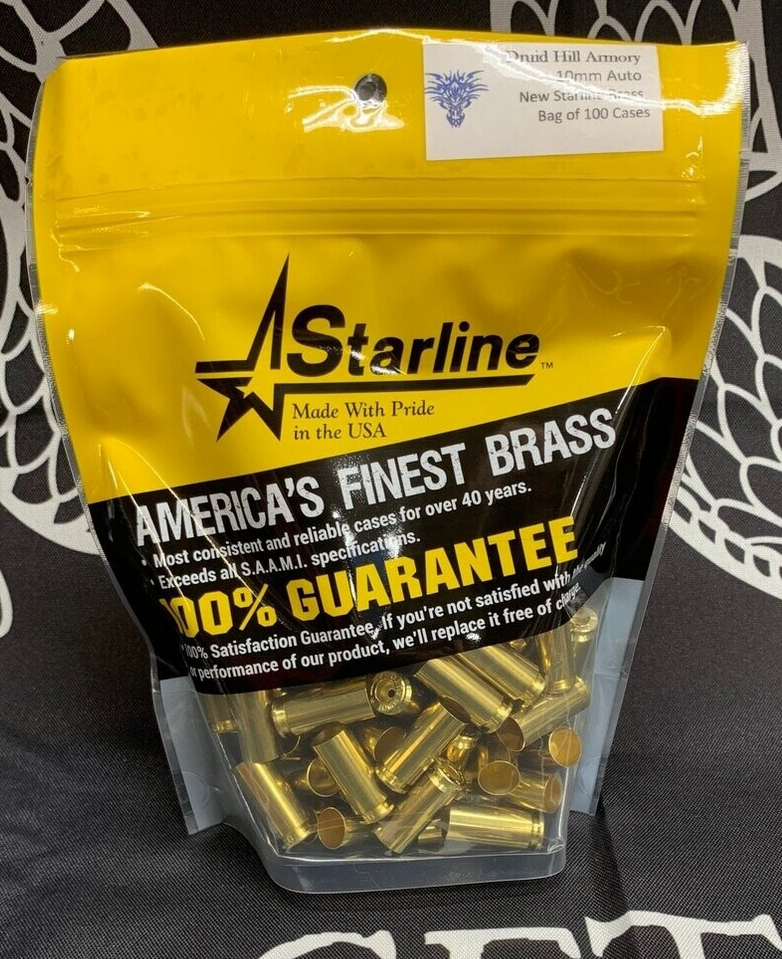
Starline 10mm brass typically runs 8-10 loadings before primer pockets open up at moderate pressures. Push it to full-power territory; 1,200+ fps with 180-grain bullets; and you'll see that number drop to 5-7 loadings depending on your specific chamber. That's still excellent for auto-pistol brass.
The weight consistency matters more than people think. In a cartridge where you're working with case capacities around 24-25 grains of water, a 3-grain variation in brass weight between cases means a meaningful difference in internal volume. That shows up in your extreme spread (ES); the difference between your fastest and slowest rounds in a string. If you're chasing single-digit ES, sort your brass by weight. If you're loading hunting or range ammo, Starline's lot-to-lot consistency is good enough to skip that step.
Once-fired brass: what to watch for
Once-fired 10mm brass from factory ammo is fine to reload, but you need to know what you're getting. Brass from full-power loads (Federal, Underwood, Buffalo Bore) will have more case-head expansion than brass from downloaded loads (most Remington, some Winchester). That's not damage; it's just work-hardening that's already started.
The real issue with once-fired factory brass is mixed headstamps. Federal, Winchester, Remington, and Hornady all use slightly different case-head thicknesses and internal volumes. Load development done on sorted Starline brass won't translate perfectly to a mixed bag of range pickups. If you're working up a load, use one brand. Period.
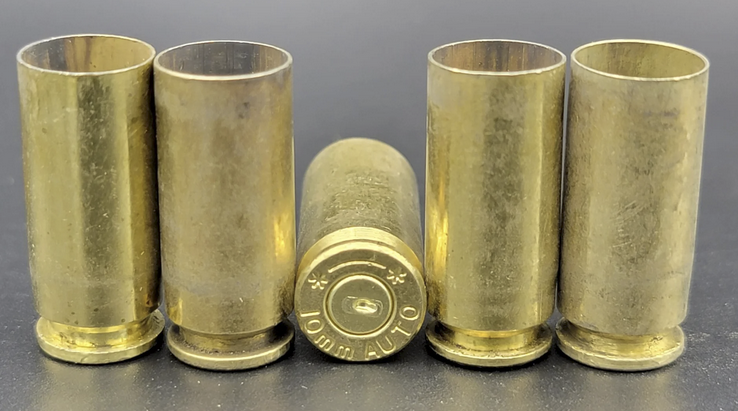
Here's the specific thing to check on any once-fired 10mm brass: the area just above the extractor groove. In guns with less chamber support; the Glock 20 is the classic example; you'll sometimes see a slight bulge or "smile" on the case. A light bulge that sizes out completely is fine. A visible crease or crack means that case goes in the scrap bucket. No exceptions. This isn't cosmetic; it's a structural failure in the brass at the thinnest point of the case.
Other brass options worth considering
Beyond Starline, there are several viable options. Peterson brass has entered the pistol market with tight tolerances and consistent weight, though it costs more per piece. Nosler brass is well-regarded but harder to find specifically in 10mm. Hornady brass, typically harvested from factory ammo, runs a bit thinner in the case head than Starline; not a problem at moderate pressures, but something to be aware of if you're loading near max.
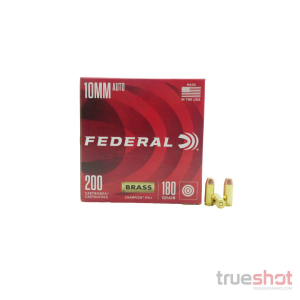
Federal brass from their factory 10mm loads tends to be on the softer side. You'll get fewer reloads before primer pockets open up compared to Starline, sometimes as few as 3-4 at full-power levels. It sizes easily and feeds well, but plan on a shorter service life.
Winchester brass has been inconsistent in recent years. Some lots are excellent, some have visible flash hole burrs and weight variations that would be unacceptable in rifle brass. For 10mm specifically, the case-head thickness has been thinner than Starline in most lots tested.
Bench notes: brass prep for 10mm
The prep work for 10mm brass is straightforward but not optional if you want consistent results.
Size all brass in a carbide sizing die; you don't need lube with carbide, and the full-length resize brings everything back to spec. Check case length after sizing. SAAMI trim-to length is 0.992 inches, with a max of 0.992. Most 10mm brass won't stretch significantly since it's a straight-wall case operating at relatively short overall lengths, but occasional checks catch the outlier.
Deburr and chamfer case mouths after trimming. Uniform primer pockets if you're loading for accuracy; a Lyman or RCBS pocket uniformer removes the small variations in pocket depth that affect how consistently primers seat. This matters more at 10mm pressures than it does in .45 ACP because the higher pressure amplifies any inconsistency in the ignition event.
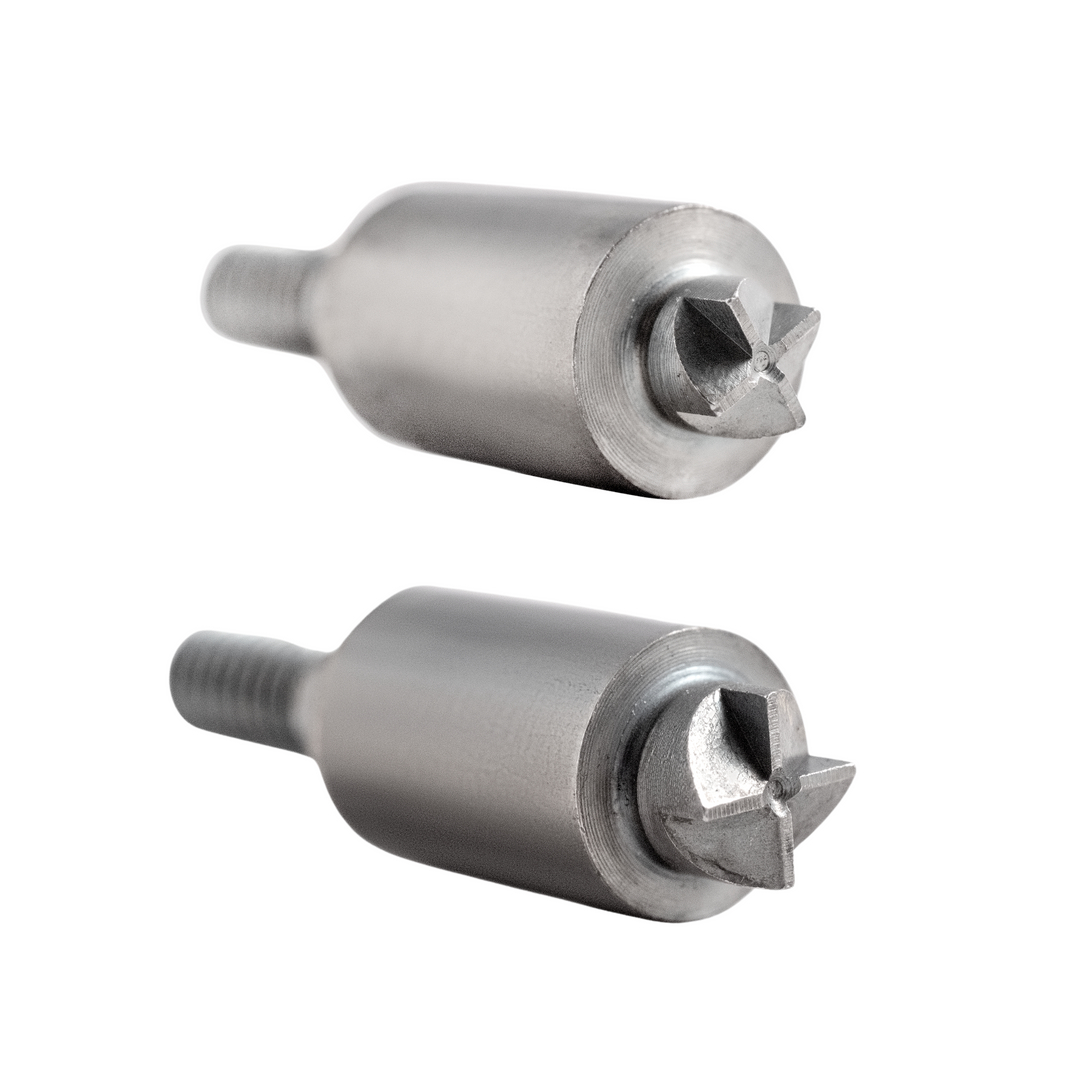
Inspect primer pockets every loading cycle. The single best indicator that you've reached the end of a case's useful life is a primer that seats with noticeably less resistance than it did on the first loading. If you can push a primer in with your thumb, that case is done.
Pressure limits: what SAAMI says and what your gun actually handles
The 10mm Auto has a SAAMI maximum average pressure (MAP) of 37,500 PSI. That number is the ceiling for ammunition manufacturers and the baseline for published load data. Understanding what it means; and what it doesn't; is critical for safe 10mm reloading.
SAAMI pressure in context
37,500 PSI puts the 10mm solidly above .45 ACP (21,000 PSI) and above .40 S&W (35,000 PSI), but well below cartridges like 9mm +P (38,500 PSI) or .357 SIG (40,000 PSI). The 10mm's reputation as a high-pressure round comes more from its case capacity and the velocities it achieves than from the actual pressure number.
For comparison, the original Norma loading that launched the cartridge in 1983 pushed a 200-grain bullet to around 1,200 fps. That load was at or near SAAMI max. The "FBI load" that followed; a 180-grain bullet at roughly 950 fps; was a substantial step down, and that reduced-power profile eventually became the .40 S&W in a shorter case. Most factory 10mm ammo today falls somewhere between those two extremes. The full-power loads from companies like Underwood and Buffalo Bore are at or near SAAMI max. The loads from major manufacturers like Remington often aren't.
What "+P" means in 10mm (and why you should be cautious)
There is no SAAMI +P specification for 10mm Auto. When you see "+P 10mm" discussed on forums, you're looking at handloads that exceed 37,500 PSI. Some of these loads are well-documented and carefully developed. Many are not.
Running above SAAMI max in the 10mm is not the same as running 9mm +P in a gun rated for it. There's no industry standard for what "+P 10mm" means, no pressure specification, and no guarantee that your gun, your brass, or your components can handle whatever number the person posting the load decided was acceptable.
That doesn't mean every load at 38,000 or 39,000 PSI is going to blow up your gun. It means you're past the point where published data has your back, and you're relying entirely on your own pressure-reading skills. Unless you have a strain gauge or pressure barrel, those skills are limited to reading brass signs; which is an imprecise science at best.
The practical advice: stay at or below published max charges from reputable manuals. The 10mm has enough case capacity that you can reach genuinely impressive velocities without exceeding SAAMI limits. A 180-grain XTP at 1,250 fps or a 200-grain hard-cast at 1,150 fps are both achievable within published data. Those are serious loads by any measure.
Chamber support and why it changes the equation
The same load at the same pressure behaves differently in different guns because of chamber support. This is the single most important platform-specific variable in 10mm reloading.
A fully supported chamber; like you'll find in a Dan Wesson Razorback, an EAA Witness, or most 1911-pattern 10mm pistols; wraps brass completely around the case head. The barrel's feed ramp is cut to expose minimal brass. In these guns, the case head is supported by steel on all sides, and the brass doesn't have to do as much structural work.
The Glock 20, by contrast, has a generous feed ramp cut that leaves a section of the case head unsupported. This is partly why Glocks are so reliable; the generous geometry feeds everything; but it means the brass is the only thing containing pressure in that unsupported area. At moderate pressures, this is fine. The brass is strong enough. At max pressures with thin brass, you're closer to the edge.
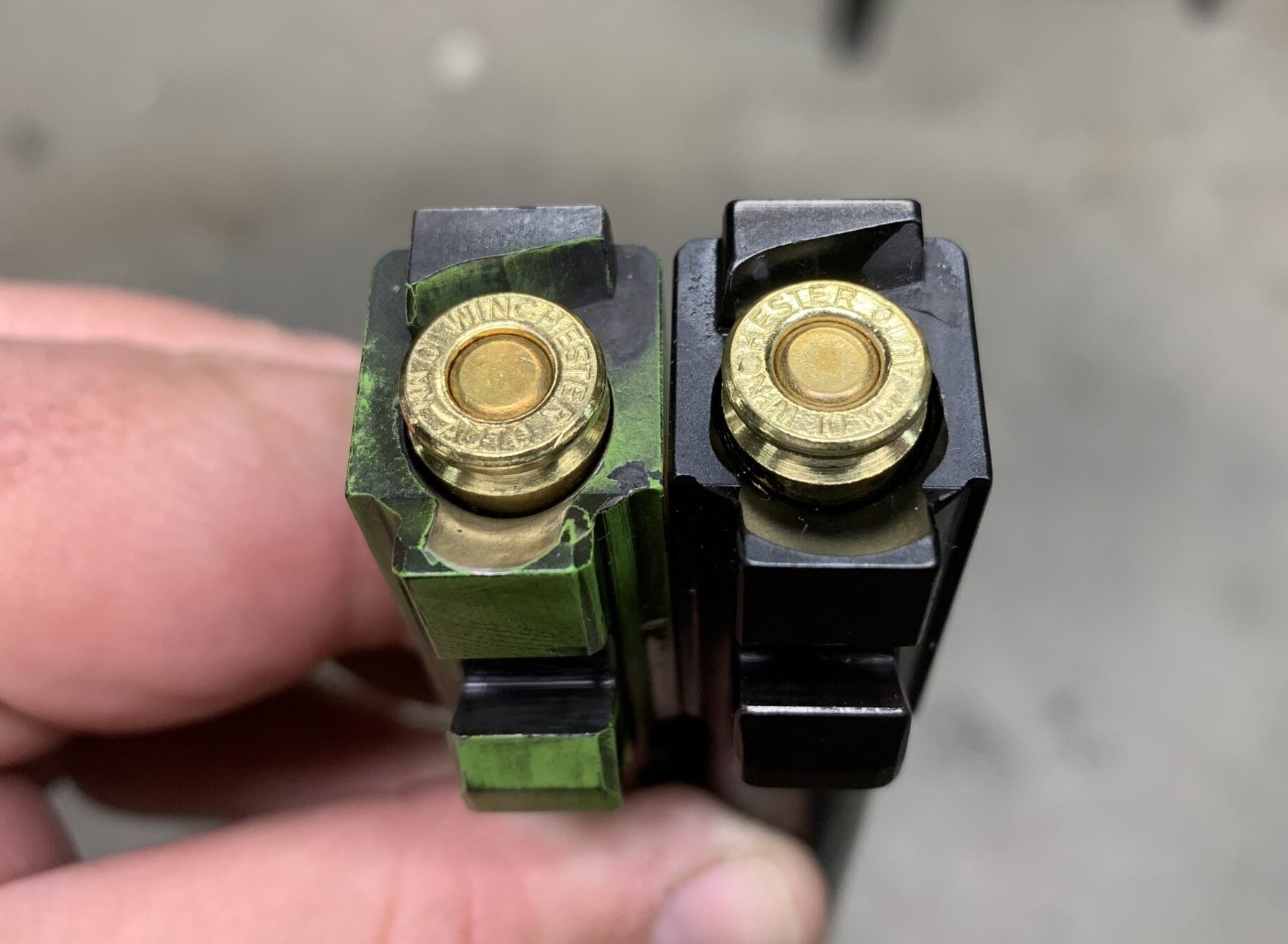
Aftermarket barrels from companies like KKM, Lone Wolf, and Bar-Sto address this with tighter chambers and more case-head support. If you're running a Glock 20 and loading to full-power levels, an aftermarket barrel with better chamber support is a worthwhile investment. It's not strictly necessary for loads within published data, but it adds margin.
The Colt Delta Elite; the original 10mm 1911; has had its own chamber support issues over the years. Early models had feed ramp cuts that left more brass exposed than typical 1911 barrels. Later production tightened this up. If you're loading for a Delta Elite, know which generation you have.
Reading pressure signs in 10mm brass
Pressure signs in pistol brass are harder to read than in rifle brass because the cases are shorter, the pressures are lower relative to case capacity, and the brass is thicker relative to bore diameter. But there are still reliable indicators.
Flattened primers are the first sign most people notice, but they're also the least reliable. Primer appearance varies with primer brand, seating depth, and firing pin geometry. A CCI 300 large pistol primer will look different at the same pressure than a Federal 150. Flat primers without other signs don't necessarily mean you're over pressure.
The more reliable signs, roughly in order of severity: case-head expansion beyond what's normal for your brass (measure a sample of new brass and compare), ejector marks on the case head (visible imprint of the ejector in the brass), sticky extraction (the slide hesitates or you have to manually pull the slide back), and the previously mentioned case-head bulge or smile near the extractor groove.
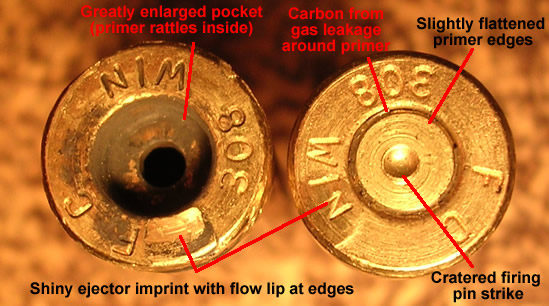
If you see sticky extraction, you're over pressure. Stop. Pull the remaining rounds. Work back down. This isn't a gray area.
How to tell it's right
A properly loaded 10mm round at full-power levels will show slight primer flattening, no case-head expansion beyond 0.0005 inches from the pre-firing measurement, clean ejection with consistent brass landing patterns, and no visible marks from the ejector on the case head. The brass should chamber freely, extract without hesitation, and look essentially the same after firing as it did before; just with a spent primer and some carbon.
Load data sources: where to look and what to trust
Finding reliable 10mm load data is simultaneously easier and harder than it was ten years ago. There are more published sources than ever, but there's also more unvetted forum data floating around, and the 10mm community has a subset of reloaders who treat SAAMI max like a suggestion rather than a limit.
Published manuals are the starting point. Always.
The major reloading manuals all cover 10mm Auto. Here's what each one brings to the table and where they differ.
The Hornady manual covers their own bullets extensively, with data for the XTP line (155, 180, and 200 grain) that's particularly well-tested. Hornady's data tends to be conservative; their listed max charges often produce velocities slightly below what other manuals show for the same bullet weight and powder. That's not a criticism. Conservative data that's been pressure-tested is worth more than aggressive data that hasn't.
The Hodgdon Annual Manual (and their online data at Hodgdon's reloading data center) covers a wide range of powders since Hodgdon owns the Hodgdon, IMR, and Winchester powder lines. Their online data is free, updated regularly, and pressure-tested in SAAMI-spec barrels. For 10mm, their data for powders like Longshot, HS-6, and Accurate #9 is particularly useful because those are among the most popular 10mm powders.
The Lyman manual is the most brand-agnostic of the major manuals. They test multiple bullet manufacturers at each weight and cover a broader range of powders than most. For 10mm, the Lyman 51st Edition has solid data across the common bullet weights.
Sierra's manual covers their own bullets, and their 180-grain JHP data is well-regarded. Nosler's manual is excellent but covers a narrower bullet selection.
Speer's manual has historically included good 10mm data, and their 200-grain Gold Dot load data is one of the few published sources for heavy-bullet 10mm loads with a proven defensive bullet.
Powder manufacturer data
Beyond the manuals, powder manufacturers publish load data for their products. This is an underutilized resource.
Shooters World publishes a manual covering their powder line, which includes several powders well-suited to 10mm. Their data for Match Rifle (despite the name, it works in pistol cartridges) and Ultimate Pistol has been tested and published with pressure data. The manual is available as a PDF on their website.
Alliant publishes data for Power Pistol, Blue Dot, and other powders popular in 10mm. Their data sheets are available online and are pressure-tested.
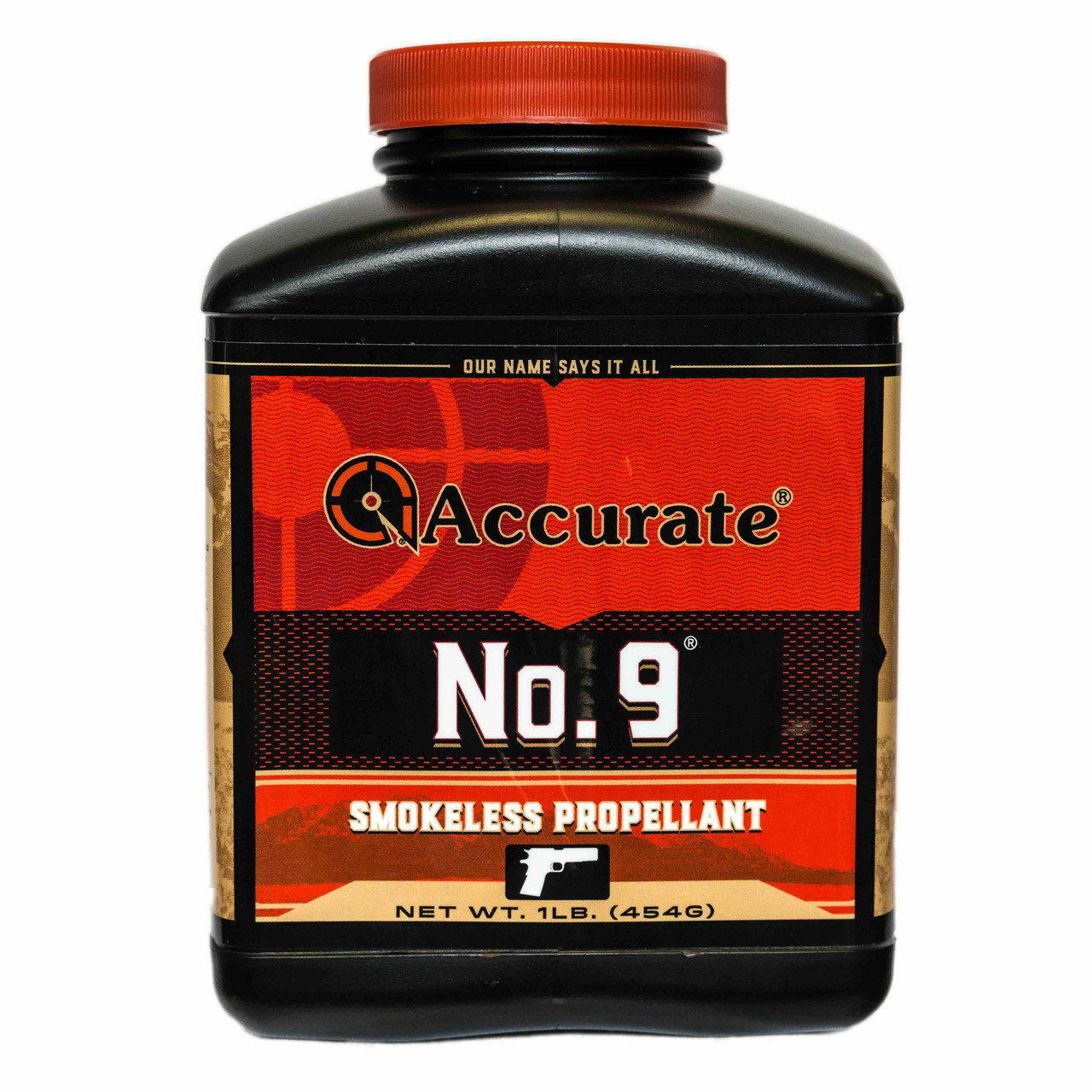
Accurate (now under the Hodgdon umbrella) publishes data for Accurate #9, which is arguably the single most popular powder for full-power 10mm loads. The published data for #9 with 180-grain bullets typically shows max charges producing 1,250+ fps from a 5-inch test barrel. That's genuine full-power territory within SAAMI limits.
Online data: separating signal from noise
The internet is full of 10mm load data. Most of it is someone's pet load posted without pressure testing, chronograph data, or any indication of what gun it was fired in. Some of it is excellent. The challenge is telling the difference.
Reliable online sources share several characteristics: they reference a published starting point, they include chronograph data (velocity, ES, SD), they specify the exact gun and barrel length used, and they describe the brass and primer. A post that says "I load 10.5 grains of Blue Dot behind a 180 XTP and it runs great in my Glock" tells you almost nothing useful. A post that says "Starting from Hodgdon's published data for Blue Dot with 180-grain bullets, I worked up to 10.2 grains, OAL 1.260, CCI 300 primers, Starline brass, Glock 20 with KKM barrel, average velocity 1,198 fps, ES 22, SD 9 over 10 shots"; that's data you can actually use as a reference point.
Forums like the Long Range Hunting Forum and Brian Enos's forum have threads with well-documented 10mm load development. The Facebook groups dedicated to 10mm reloading (there are several with active communities) vary widely in quality; some have experienced reloaders posting detailed data, others are echo chambers for reckless loads.
The Hodgdon online reloading data center is the single most useful free resource for 10mm load data. It's searchable by cartridge, bullet weight, and powder, and every listing includes the test barrel length, max pressure, and velocity at both starting and max charges.
What you'll see: common 10mm powder choices and what they do
The 10mm's case capacity is large enough for slower-burning pistol powders that wouldn't work well in 9mm or .40 S&W. This is actually one of the cartridge's advantages; slower powders generally produce lower peak pressures for a given velocity, flatter pressure curves, and more consistent velocities.
Accurate #9 is the benchmark powder for full-power 10mm. It's a slow-burning ball powder that meters beautifully through progressive press powder measures, fills the case well enough to reduce the risk of double charges, and produces excellent velocities with manageable pressure. With 180-grain bullets, published max charges typically run in the 11.5-12.5 grain range depending on the manual and bullet, producing velocities of 1,200-1,300 fps from 5-inch barrels. ES and SD numbers with #9 are typically good; single-digit SD is achievable with sorted brass and consistent charges.
Hodgdon Longshot is another excellent 10mm powder, particularly with lighter bullets in the 135-165 grain range. It's a flake powder, so it doesn't meter quite as smoothly as #9 through a progressive press, but it's not bad. Longshot produces high velocities for the charge weight and has a reputation for good accuracy in 10mm. Published data shows 155-grain bullets reaching 1,350+ fps within SAAMI limits.
Blue Dot (Alliant) is a classic 10mm powder that's been used since the cartridge's early days. It's a flake powder with a relatively slow burn rate for pistol use. Blue Dot can produce impressive velocities but tends to have higher ES/SD numbers than #9 or Longshot. It's also position-sensitive in the 10mm case; meaning the orientation of the powder charge when the primer fires can affect velocity. This is more of an issue in guns fired at steep angles (hunting situations) than at the range.
Power Pistol (Alliant) works well at moderate 10mm velocities but reaches pressure limits before it reaches the velocities that #9 or Longshot can achieve. It's a good choice for mid-range loads; 180-grain bullets at 1,050-1,150 fps; where you want a powder that fills the case better than fast-burning options.
HS-6 (Hodgdon) and Silhouette (Hodgdon/Accurate) are mid-burn-rate powders that work well for moderate 10mm loads. Neither one is the best choice for max-velocity loads, but both produce consistent results in the 1,000-1,150 fps range with 180-grain bullets.
Shooters World Ultimate Pistol has gained a following in the 10mm community. It's a double-base powder that meters well and has published data showing competitive velocities with good pressure margins. The Shooters World manual includes specific 10mm data worth consulting.
The variable most people ignore: overall length and seating depth
More 10mm pressure problems come from incorrect overall length (OAL) than from excessive powder charges. Here's why.
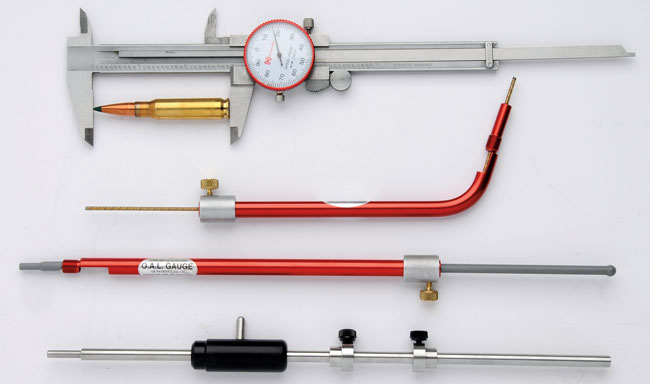
The 10mm Auto has a SAAMI max OAL of 1.260 inches. But that's a max, not a target. Different bullets have different ogive profiles, which means the same OAL can produce very different amounts of bullet jump (the distance the bullet travels before engaging the rifling). A 180-grain Hornady XTP seated to 1.260 will have a different relationship to the rifling than a 180-grain Speer Gold Dot at the same OAL because the ogive shapes are different.
Seating a bullet too deep reduces case volume and increases pressure. In the 10mm, where you're already working with a relatively small case for the velocities you're chasing, even 0.020 inches of additional seating depth can raise pressure meaningfully. This is why published load data always specifies the OAL used during testing, and why you should match that OAL when working up a load.
The other OAL issue is magazine fit. Some bullets, particularly long-ogive designs and heavy (200+ grain) projectiles, won't fit in all 10mm magazines at the OAL that gives optimal accuracy. You may need to seat deeper to feed reliably, which means you need to reduce your charge to compensate for the reduced case volume. Start low and work up any time you change seating depth by more than 0.010 inches.
Measure OAL with calipers on every round during load development. Once you've established a load, spot-check every 20th round or so during production runs. Seating die adjustments can drift, especially on progressive presses under vibration.
Common mistakes with 10mm reloading
These come up repeatedly, and every one of them is fixable.
Mixed brass in load development is the first one. You can shoot mixed brass all day for range ammo, but developing a load on mixed headstamps and then wondering why your ES is 40+ fps is backwards. Sort your brass for development, then verify the load works across your brass inventory.
Using .40 S&W data as a starting point for 10mm is the second. The two cartridges use the same diameter bullet, but the 10mm case is longer (0.992 vs. 0.850 inches) with significantly more powder capacity. .40 S&W max charges are not 10mm starting charges; the pressure dynamics are different. Use 10mm-specific data.
Crimping too aggressively is the third. The 10mm headspaces on the case mouth. An excessive taper crimp can push the case mouth below the minimum dimension needed for reliable headspacing. You want just enough crimp to remove the belling from the expanding step; the bullet should not move when you push it firmly against a hard surface, but the case mouth should still have a slight positive dimension (not rolled inward). A Lee Factory Crimp Die is popular for 10mm because it crimps consistently without over-doing it, but any quality taper crimp die works if adjusted properly.
Ignoring the barrel's chamber is the fourth. If you're loading for a Glock 20 with the factory barrel, your loads need to account for the generous chamber. Cases will expand more, brass life will be shorter, and you have less margin for error on pressure than someone loading for a tight-chambered 1911. This doesn't mean you can't load full-power ammo for a Glock 20; millions of rounds prove otherwise; but it means you should start lower and work up more carefully, and you should inspect brass more frequently.
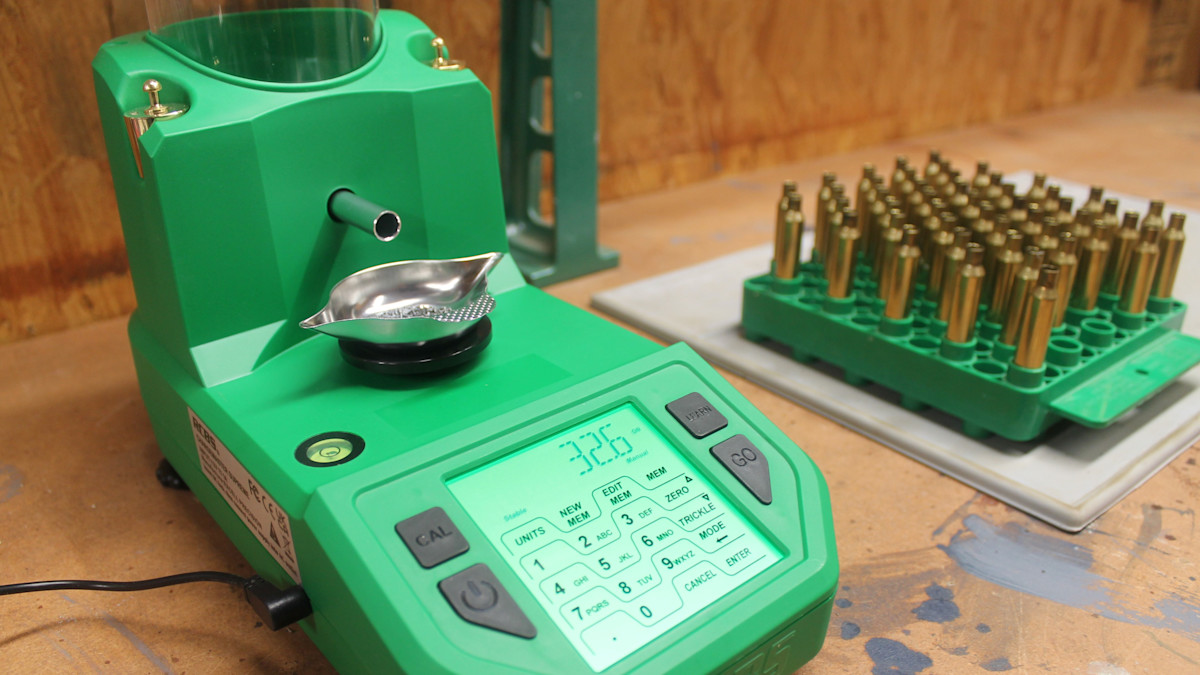
Not using a chronograph is the fifth, and it might be the most consequential. Without velocity data, you're guessing. You don't know if your "full-power" load is actually making 1,200 fps or 1,050 fps. You don't know your ES or SD. You don't know if that half-grain increase in charge weight gained you 30 fps or 80 fps. A basic chronograph; even a budget unit like the Caldwell Ballistic Precision; transforms your load development from guesswork to data. A LabRadar or MagnetoSpeed gives you even better data without the hassle of downrange setup.
Equipment considerations specific to 10mm
Dies
Any standard 10mm/.40 S&W die set works for 10mm reloading. Lee, RCBS, Hornady, and Dillon all make them. The sizing die is the same for both cartridges (same case diameter), and the seating die accommodates the longer 10mm case.
A few specifics worth noting: carbide sizing dies are strongly recommended; the carbide ring eliminates the need for case lube and speeds up the process considerably. Redding Competition seating dies give the best concentricity and most consistent seating depth if you're loading for accuracy, but they cost three to four times what a standard seating die costs. For most 10mm applications, a standard seating die produces perfectly adequate results.
If you're loading on a progressive press, the Dillon 550 and 750 both handle 10mm well with the appropriate caliber conversion kit. The Hornady Lock-N-Load AP and the RCBS Pro Chucker work fine too. The 10mm's longer OAL compared to .40 S&W means you need to verify that your powder-through expanding die and bullet feeder (if equipped) are set up for the longer case.
Bullets
The 10mm uses .400-diameter bullets, same as .40 S&W. The bullet selection is extensive.
For defensive and hunting use, the Hornady XTP in 155, 180, and 200 grain is the most widely used and most extensively tested 10mm bullet. Published load data for the XTP is available in virtually every manual. The 180-grain XTP at 1,200+ fps is arguably the standard full-power 10mm defensive load.
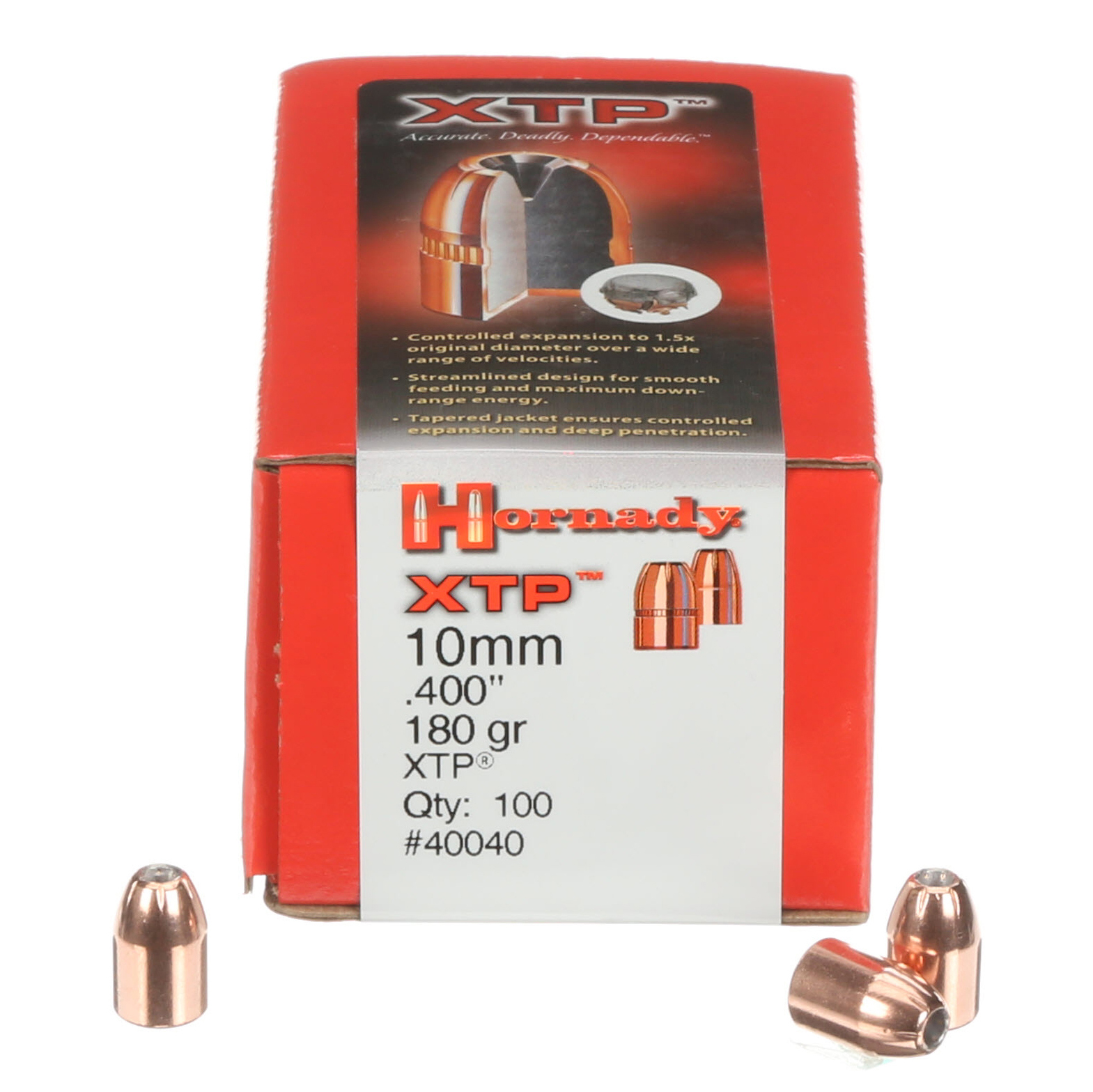
Sierra's 180-grain JHP and Speer's 200-grain Gold Dot are other proven options with published data. For hunting applications where deeper penetration is needed, hard-cast lead bullets from companies like Missouri Bullet Company and Beartooth Bullets in the 200-220 grain range are popular. Monolithic copper bullets from Lehigh Defense and Hammer Bullets have gained traction for hunting; the Hammer Jack Hammer line in particular has shown excellent terminal performance in testing, though published load data for these bullets is more limited than for conventional jacketed options.
For range and practice ammo, plated bullets from Berry's and X-Treme in 155 and 180 grain work well at moderate velocities (under 1,200 fps). Don't push plated bullets to full-power velocities; the plating can separate from the core at high velocity, and the bullets aren't designed for the pressure curves involved.
Primers
The 10mm uses large pistol primers. CCI 300, Federal 150, and Winchester WLP are the three most commonly used. Magnum primers (CCI 350, Federal 155) are sometimes recommended for slow-burning powders like Blue Dot and #9 in cold weather, but most published data is developed with standard primers. Switching from standard to magnum primers with the same charge can raise pressure; treat a primer change like a component change and work up again.
Federal 150 primers are the softest and most sensitive, which makes them a good choice for guns with lighter striker springs. CCI 300 primers are harder and more resistant to slam-fires in guns with free-floating firing pins. For Glock 20 owners, CCI 300 primers are the most commonly recommended for this reason.
Building your 10mm load development protocol
Here's a practical framework for developing a 10mm load from scratch.
Pick one bullet, one powder, one primer, and one lot of brass. The Hornady 180-grain XTP with Accurate #9 and CCI 300 primers in Starline brass is a proven combination with extensive published data; it's a good place to start if you don't have a specific preference.
Find the published data for your exact combination. Note the starting charge, max charge, OAL, and test barrel length. If the manual used a 5-inch barrel and your gun has a 4.6-inch barrel (Glock 20), expect your velocities to run 25-50 fps lower at the same charge weight.
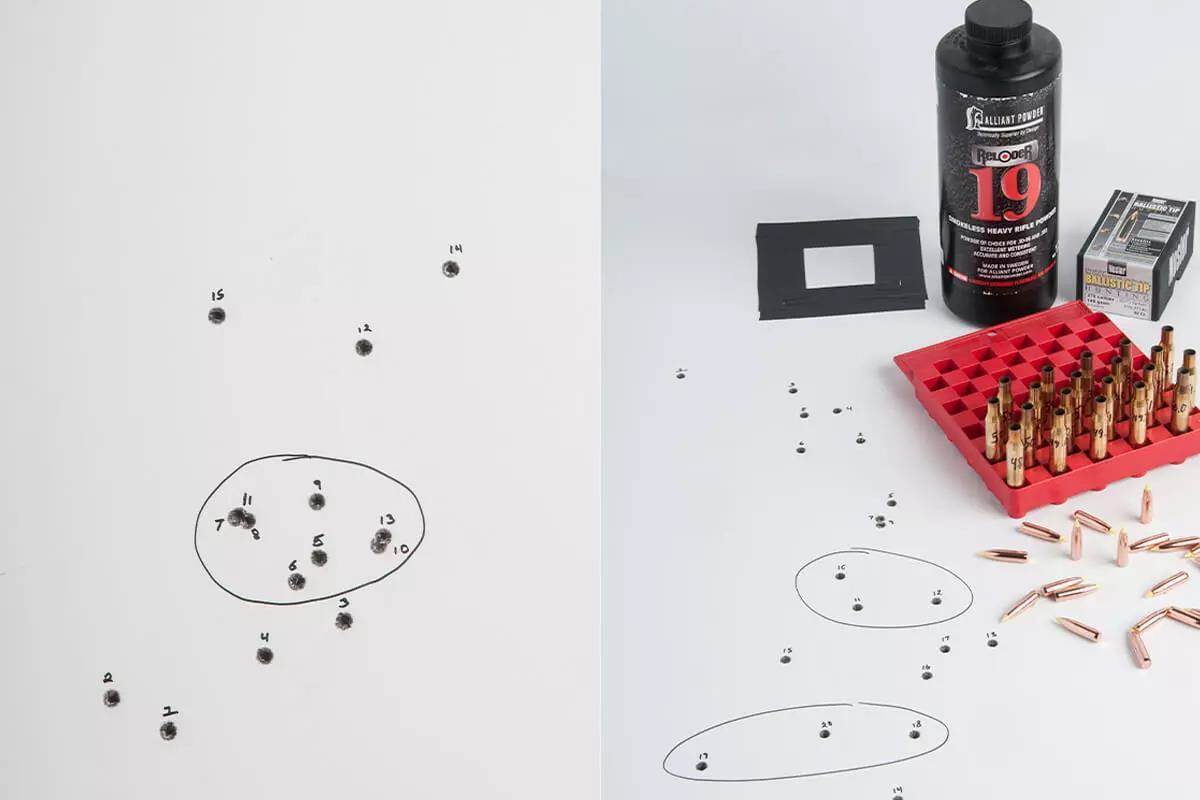
Load five rounds each at the starting charge, then at 0.3-grain increments up to two grains below max. That's typically 7-8 charge weights, 35-40 rounds total. Use the published OAL.
Shoot each group over a chronograph. Record velocity for every round. Calculate average, ES, and SD for each charge weight. Inspect every piece of fired brass.
Look for the velocity node; a charge weight range where velocity increases slow down and ES/SD tighten up. This is where the powder burn is most consistent, and it's usually where accuracy is best too. The node is real. Chasing it past this point isn't.
If the node falls within published data and brass shows no pressure signs, load 50 rounds at that charge weight and shoot them for group size and velocity verification. If the numbers hold, that's your load.
Log everything: date, components with lot numbers, charge weight, OAL, velocity data, brass condition, group size, temperature. The logbook is what lets you reproduce results six months from now when you sit down at the bench again.
Where to go from here
The 10mm rewards careful reloading more than almost any other auto-pistol cartridge. The gap between a mediocre factory load and a well-developed handload is wider here than in 9mm or .45 ACP, both in velocity and in consistency. That gap is also where the satisfaction lives; building a load that runs 1,200 fps with an ES under 15 and groups into two inches at 25 yards from a service pistol.
Start with good brass, stay within published data, and let the chronograph tell you what's working. The 10mm has enough capacity and enough bullet selection to keep you busy at the bench for years without ever needing to push past SAAMI limits. The loads that win; the ones that are accurate, consistent, and hit hard enough for whatever you're asking the cartridge to do; are almost always inside the published envelope.
Your next step is to pick a combination, load a ladder, and shoot it. The data will tell you everything.