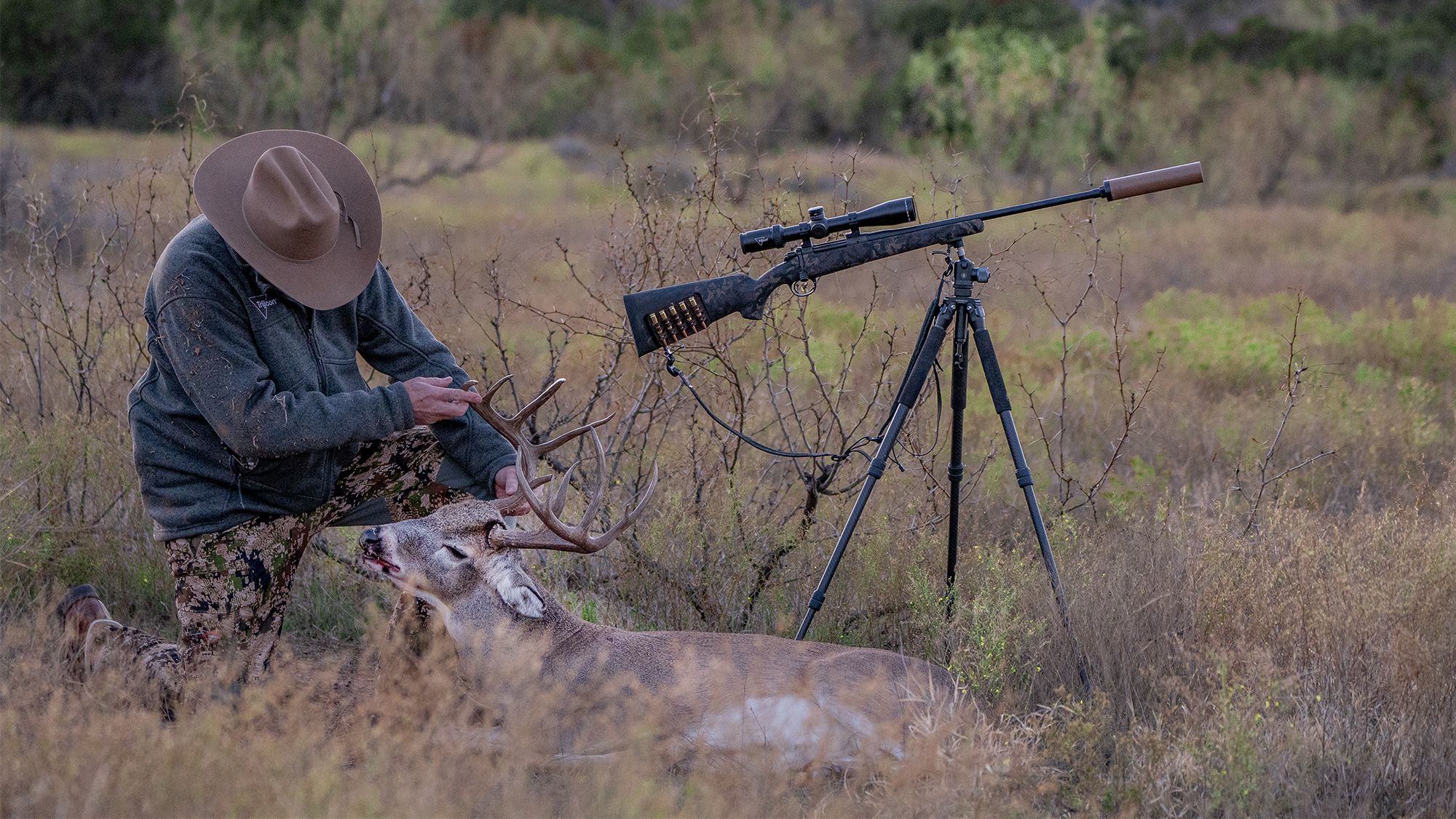
You're sitting in a treestand on opening morning, and the guy 200 yards down the ridge touches off a .300 Win Mag without a can. Every deer within a half mile locks up, flags, and bolts. Your morning just got a lot harder. That scenario; and the growing awareness that hearing damage is cumulative and permanent; is why more hunters are threading suppressors onto their hunting rifles every season.
But the process of actually buying one, navigating the NFA paperwork, figuring out which states let you hunt with one, and picking the right can for your rifle? That's where things get murky fast. There's a lot of bad information floating around gun shop counters and internet forums. Some of it's outdated, some of it's just wrong, and some of it confuses federal law with state regulations in ways that could actually get you in trouble.
This is the straight answer to the questions hunters actually ask about suppressors, the legal stuff, the practical stuff, and the gear decisions that matter once you've decided to go suppressed.
Are suppressors legal to own in the US?
Yes, in most states. Suppressors are regulated under the National Firearms Act of 1934, which means they're legal to own at the federal level but require registration through the ATF and payment of a $200 tax stamp. They're not banned outright, they're just treated like other NFA items (short-barreled rifles, machine guns, etc.) with extra paperwork and wait times.
As of 2025, suppressors are legal to own in 42 states. The eight states where you cannot legally possess a suppressor are California, Delaware, Hawaii, Illinois, Massachusetts, New Jersey, New York, and Rhode Island. Washington, D.C. also prohibits them. If you live in one of those states, this article is mostly academic for you, at least until the laws change.
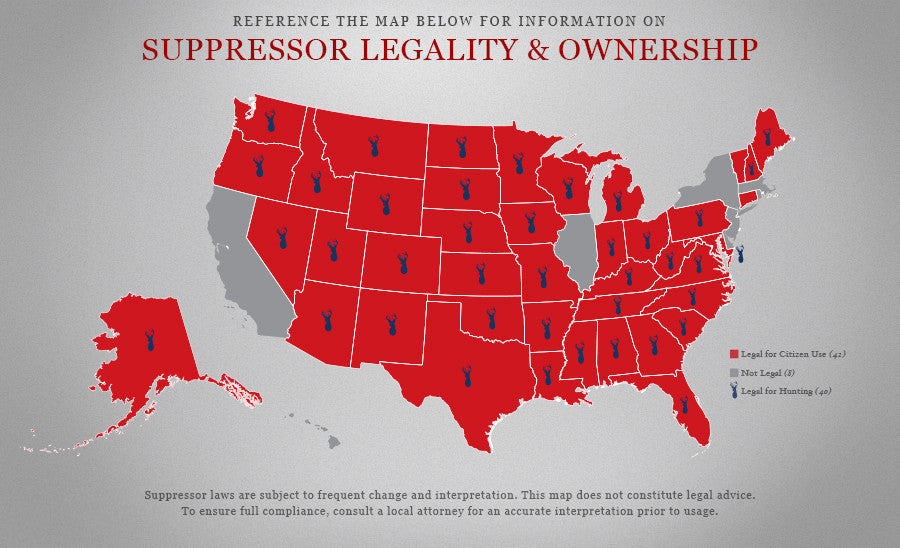
The remaining 42 states allow civilian ownership, though some have additional restrictions layered on top of federal requirements. A few states require the suppressor to be manufactured within the state, others have specific storage or transport rules, and some treat suppressors differently depending on whether you're using them for hunting versus target shooting. Always check your specific state's current statutes, not just the federal baseline.
Can you hunt with a suppressor?
Owning one and hunting with one aren't always the same thing. This trips people up.
Of the 42 states where suppressor ownership is legal, 40 currently allow hunting with a suppressor. The two holdouts that allow ownership but prohibit hunting use are Connecticut and Vermont. In those states, you can own a suppressor and shoot it at the range, but you can't take it into the field during a legal hunt.
The other 40 states are green-lit for suppressed hunting. That includes big whitetail states like Texas, Ohio, Oklahoma, Louisiana, Georgia, Wisconsin, and Pennsylvania. Some of these states were late to the party, several only legalized suppressed hunting within the last decade, but the trend has been overwhelmingly toward allowing it.
One thing to watch: some states have specific game regulations that mention suppressors or don't mention them at all, which can create confusion. Oklahoma's general hunting regulations, for example, don't specifically restrict suppressor use, which means they're legal by default. Louisiana's 2025-2026 hunting regulations similarly don't prohibit them. But other states may have WMA-specific rules or season-specific restrictions. The smart move is to check your state's current hunting regulations, not just the suppressor ownership laws, before you head out.
Field notes: the states that matter most to hunters
Texas was one of the first states to explicitly legalize suppressed hunting, and it's been a non-issue there for years. Ohio legalized suppressed hunting more recently and has seen steady adoption, particularly among deer hunters on smaller properties where noise complaints from neighbors were a real concern. States like Montana, Colorado, and Idaho, where you're hunting big country for elk and mule deer, have also seen a surge in suppressor use, partly because the sound reduction is genuinely helpful when you're hunting public land with other people around.
If you're planning an out-of-state hunt, verify the destination state's laws before you travel. Transporting an NFA item across state lines requires ATF notification (Form 5320.20), and showing up in a state that doesn't allow suppressed hunting, or doesn't allow suppressor possession at all, is a federal and state legal problem you don't want.
How do you buy a suppressor?
This is where most people's eyes glaze over, and it's also where the most misinformation lives. The process isn't complicated, but it is slow.
There are two main paths: buying through a dealer (Form 4) or manufacturing your own (Form 1). For the vast majority of hunters, you're buying through a dealer, so that's what we'll focus on.
The Form 4 process, step by step
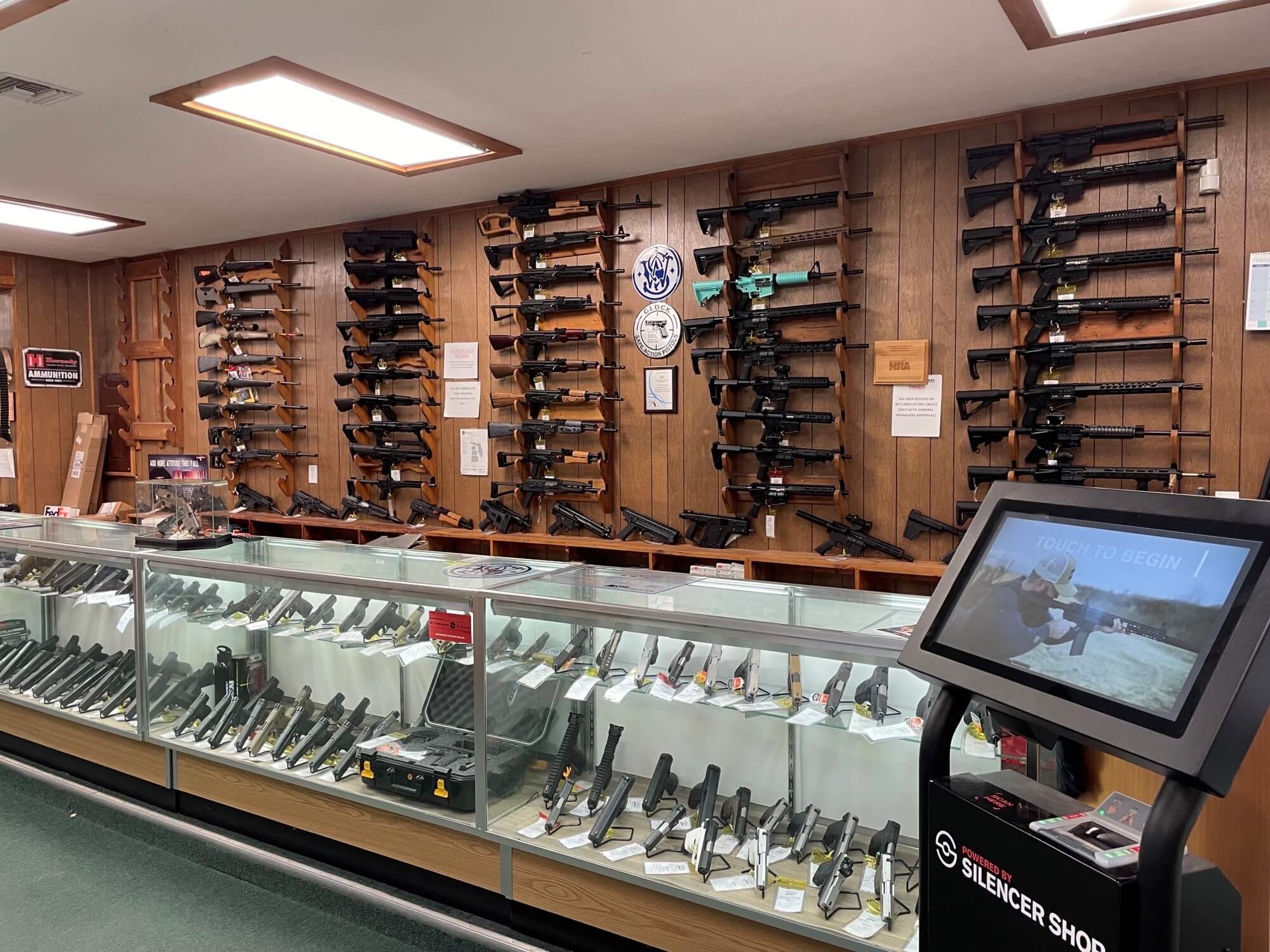
You walk into a dealer, either a local shop with an SOT (Special Occupational Taxpayer) license or an online retailer like Silencer Shop or Silencer Central, and pick out a suppressor. You pay for the suppressor and the $200 tax stamp. Then the paperwork starts.
The dealer submits a Form 4 (Application for Tax Paid Transfer and Registration of Firearm) to the ATF on your behalf. This form includes your personal information, a passport-style photo, fingerprints, and the details of the suppressor being transferred. If you're buying through a trust, more on that in a minute, the process includes documentation for the trust and responsible persons listed on it.
Since 2021, the ATF has offered electronic filing (eForms), which has dramatically shortened wait times compared to the old paper process. Once the form is submitted, you wait. When the ATF approves the form, you get notified and can pick up the suppressor from the dealer.
That's it. There's no special license you need to own a suppressor, just the approved Form 4 and the tax stamp.
Individual vs. trust purchases
You can buy a suppressor as an individual or through an NFA trust. The trust route used to be more popular because it allowed you to skip the CLEO (Chief Law Enforcement Officer) notification requirement, but that loophole was closed in 2016 with ATF Rule 41F. Now both individuals and trusts require CLEO notification.
The main advantage of a trust today is shared access. If you buy as an individual, only you can legally possess that suppressor. Your buddy can't borrow it, your son can't use it without you physically present. A trust allows multiple "responsible persons" to be listed, and any of them can legally possess and use the suppressor. For a family that hunts together, a trust makes a lot of sense.
The downside is that every responsible person on the trust has to submit fingerprints and photos with each Form 4, which adds some administrative hassle. If it's just you, buying as an individual is simpler.
How long does the wait actually take?
This is the question everyone asks first, and the answer changes constantly. ATF processing times fluctuate based on submission volume, staffing, and whether you filed electronically or on paper.
As of early-to-mid 2025, eForm 4 submissions are averaging roughly 4 to 6 months for approval. That's a significant improvement over the 9-to-12-month waits that were common in 2022 and 2023 when the eForms system was still ramping up and dealing with a massive backlog. Paper Form 4 submissions, which some dealers still use, are running considerably longer, often 8 to 12 months or more.
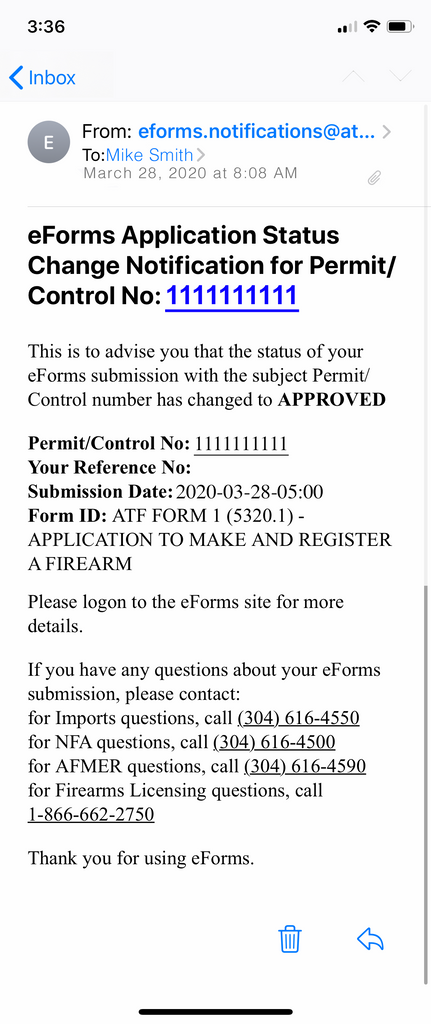
The ATF publishes current processing times on their website, and sites like Silencer Shop track community-reported wait times that give you a more granular picture. Reddit threads on r/SilencerShop and r/NFA are full of people posting their approval timelines, and while individual experiences vary, the trend line has been moving in the right direction.
A few things that can affect your specific wait time: errors on the form (the ATF will kick it back and the clock restarts), pending background check issues, and whether your submission hit during a high-volume period. The single best thing you can do to speed the process is file electronically and make sure every field on the form is correct the first time.
What about the $200 tax stamp, is that going away?
There's been legislative talk about removing the $200 NFA tax stamp for suppressors for years. The Hearing Protection Act has been introduced in various forms in Congress multiple times. As of mid-2025, it hasn't passed. Some recent legislative proposals have included provisions to reclassify suppressors or reduce the tax, but nothing has been signed into law.
Plan on paying the $200. If the law changes, great, but don't delay a purchase based on speculation about future legislation. Hunters who waited for the Hearing Protection Act to pass in 2017 are still waiting.
Does a suppressor make a rifle silent?
No. And this misconception, fueled by movies and the word "silencer", causes real problems in public perception and policy debates.
A suppressor reduces the report of a gunshot by trapping and cooling expanding gases as they exit the muzzle. Depending on the caliber, the suppressor design, and the ammunition used, you'll see a reduction of roughly 20 to 35 decibels. That's significant. An unsuppressed .308 Win generates around 165-170 dB at the muzzle. A good suppressor brings that down to roughly 130-140 dB. For reference, 140 dB is the threshold where a single exposure can cause permanent hearing damage.
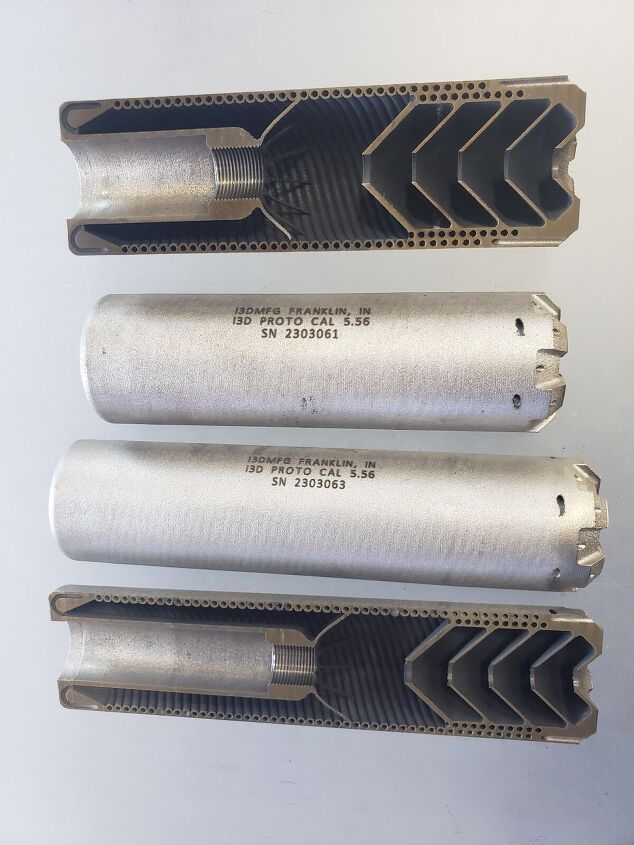
So a suppressed .308 is still about as loud as a jackhammer at close range. It's not quiet. It's just not damaging-your-hearing-with-every-shot loud. You can still hear it from hundreds of yards away. The deer in the next county aren't going to be fooled into thinking nothing happened.
What suppression does accomplish in the field is meaningful, though. It reduces the felt concussion at the shooter's ear enough that you can hunt without doubling up on ear protection, or in many cases, without ear protection at all for a single shot (though audiologists would still recommend it). It reduces the disturbance to neighboring properties and other hunters. And it makes the sound less directional, so game at a distance may have a harder time pinpointing where the shot came from.
Subsonic ammunition does get quieter, substantially so. A .300 Blackout with subsonic loads through a good suppressor gets down into the 125-130 dB range, which genuinely sounds like a heavy door slamming. But subsonic rifle loads have serious terminal performance limitations at hunting distances, and most hunters are using supersonic ammunition where the bullet itself creates a sonic crack that the suppressor can't eliminate.
Does a suppressor affect accuracy?
Generally, yes, and usually for the better, or at worst, neutrally.
A quality suppressor acts as a barrel extension and harmonic dampener. Most shooters see either no change in point of impact or a slight shift (usually less than 1 MOA) when adding a suppressor. The key word is "shift", the groups don't open up, they just move. That's why you zero with the suppressor on if you plan to hunt with it on. Removing the suppressor and shooting without it will likely shift your point of impact, sometimes by 1-2 MOA or more depending on the rifle and suppressor combination.
Some rifles actually shoot tighter groups suppressed. The added weight at the muzzle dampens barrel harmonics, and the reduction in felt recoil helps the shooter maintain better form through the shot. It's not magic, but it's a consistent enough phenomenon that competitive shooters have noticed it for decades.
The practical takeaway: zero your rifle with the suppressor mounted. If you ever need to hunt without it (forgot it, thread got damaged, whatever), know that your point of impact will shift and plan accordingly. Don't assume you can swap back and forth without re-confirming zero.
What about the added weight and length?
This is where the catalog lies to you. A suppressor that looks great on a spec sheet can be genuinely annoying in the field.
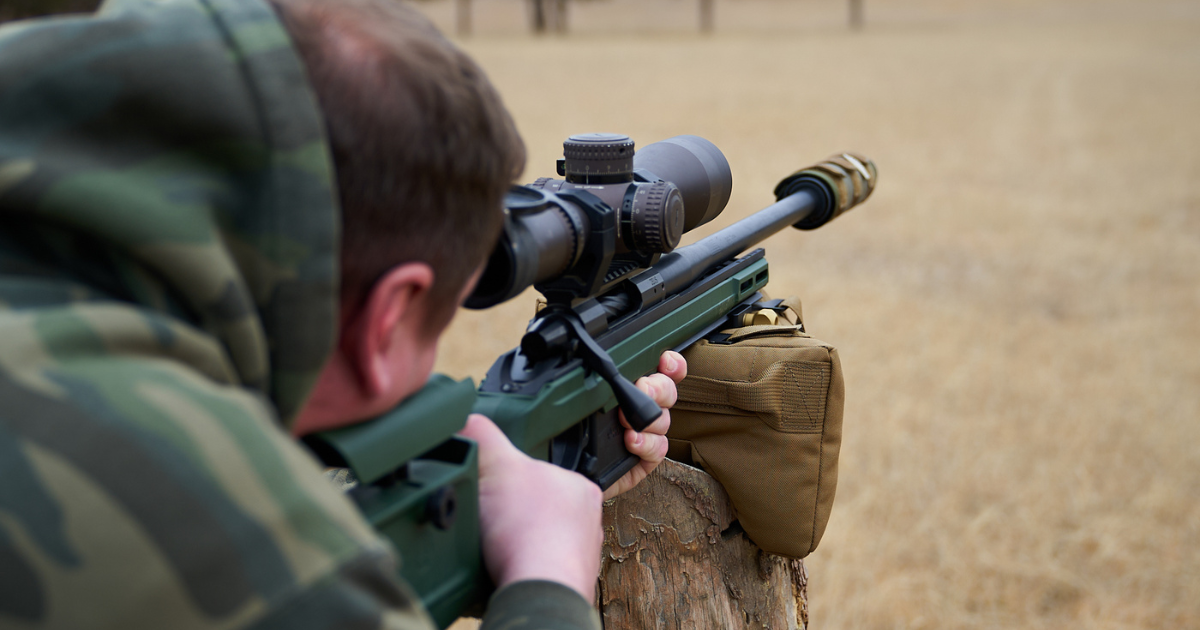
Most rifle suppressors add 6 to 10 inches of length and 10 to 22 ounces of weight to the muzzle end of your rifle. That doesn't sound like much until you're threading through thick timber with a rifle that's now 50+ inches overall, or trying to maneuver in a ground blind, or carrying it on a sling for six miles in the mountains.
The weight is all at the muzzle, which changes the balance of the rifle dramatically. A well-balanced 7-pound hunting rifle becomes a nose-heavy 8.5-pound rifle that swings differently, shoulders differently, and fatigues you differently over a long day. Some hunters adapt quickly. Others find it genuinely affects their shooting in field positions.
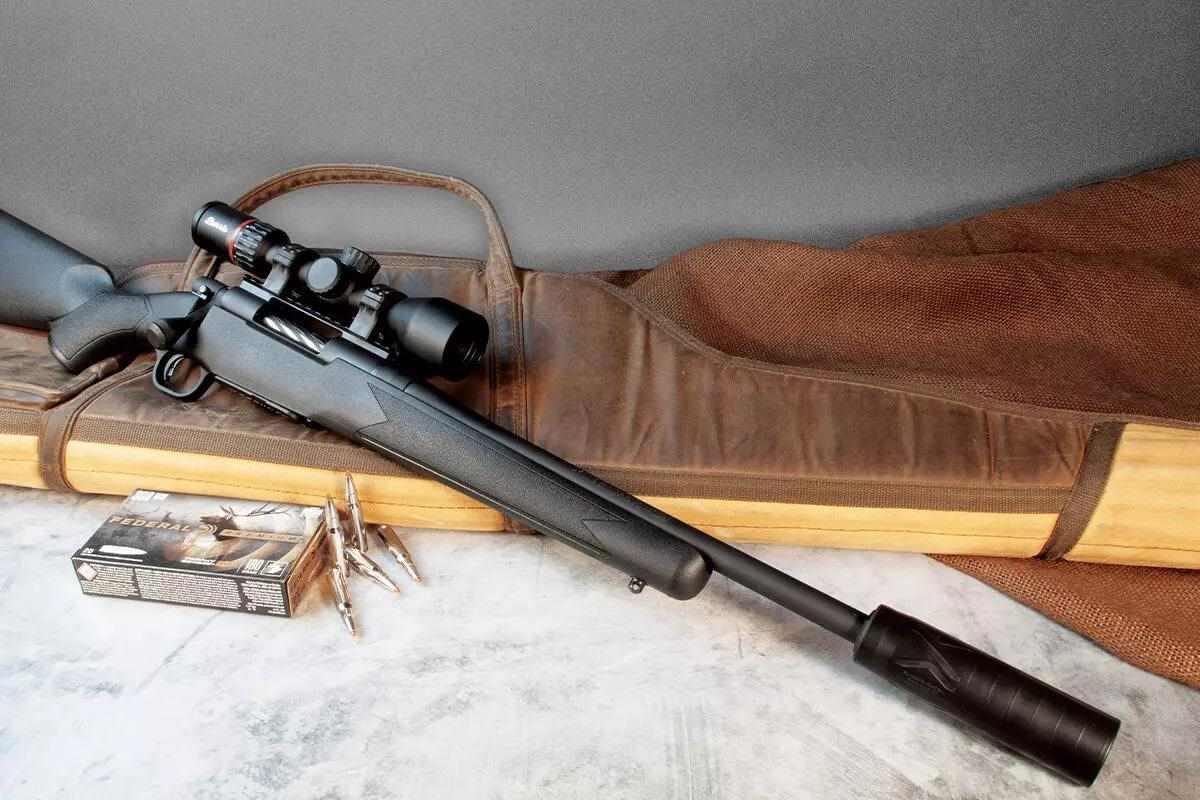
Shorter, lighter suppressors exist, but they generally sacrifice sound reduction. This is the fundamental tradeoff in suppressor design: length and volume equal more sound reduction, but also more weight and more unwieldy handling. The "best" suppressor for hunting is usually a compromise between sound performance and field practicality, not the quietest can on the market.
Common mistakes hunters make with suppressors
Buying the quietest suppressor instead of the most practical one
That 10-inch, 20-ounce full-size suppressor might knock off 35 dB on a test stand, but if it makes your rifle so front-heavy and long that you dread carrying it, you'll leave it in the safe. A 6-inch, 12-ounce can that reduces 25-28 dB and actually comes with you every hunt is doing more for your hearing than the quiet one gathering dust.
Not re-zeroing after mounting
Threading on a suppressor and heading to the stand without confirming zero is gambling with shot placement. Even high-end direct-thread and QD (quick-detach) mounts can shift point of impact. It takes five rounds at the range. Do it every time you remove and remount.
Forgetting about first-round pop
The first shot through a cold, clean suppressor is noticeably louder than subsequent shots. This is called first-round pop, and it happens because there's oxygen in the suppressor baffles that ignites with the first round. It's not a huge difference, maybe 3-5 dB, but it's real, and it's the one shot that matters most in hunting. Some shooters run a strip of electrical tape over the muzzle to displace oxygen, others just accept it. Know it exists.
Ignoring thread compatibility and concentricity
Cross-threading a suppressor onto your barrel or mounting one on a barrel with threads that aren't concentric to the bore is a recipe for a baffle strike, where the bullet contacts the internal baffles of the suppressor. At best, this destroys the suppressor. At worst, it's a catastrophic failure. If you're having threads cut on a barrel, use a reputable gunsmith and have concentricity checked. If you're buying a factory-threaded barrel, you're almost certainly fine, but a quick check with a rod and alignment tool takes 30 seconds.
Assuming one suppressor fits all your rifles
A .30-caliber suppressor will work on a .308, a 6.5 Creedmoor, a .243, and anything else with a bore diameter smaller than .30 cal, as long as the thread pitch matches or you have the right adapter. But "works" and "optimal" aren't the same thing. Running a .30-cal can on a 6.5 Creedmoor means the bullet is passing through baffles with more clearance than a dedicated 6.5 suppressor would have, which reduces sound suppression somewhat. For most hunters, a .30-cal suppressor used across multiple rifles is the practical move. Just know you're giving up a few dB of suppression compared to a caliber-specific can.
Suppressors worth looking at for hunting rifles
The hunting suppressor market has matured a lot in the last five years. Here are five that get talked about consistently in hunting circles, with the field-relevant differences that actually matter.
Dead Air Nomad LT
This is the suppressor that shows up in more hunting forums than probably any other right now. It's a .30-caliber can that weighs about 11.5 ounces in its titanium configuration and measures around 7 inches long. The modular mounting system (KeyMo, direct thread, or various adapters) means you can run it across multiple rifles without buying a new suppressor for each one. Sound suppression is in the high-20s to low-30s dB range depending on caliber and barrel length. The weight and length hit that sweet spot where you're getting meaningful suppression without turning your rifle into a canoe paddle.
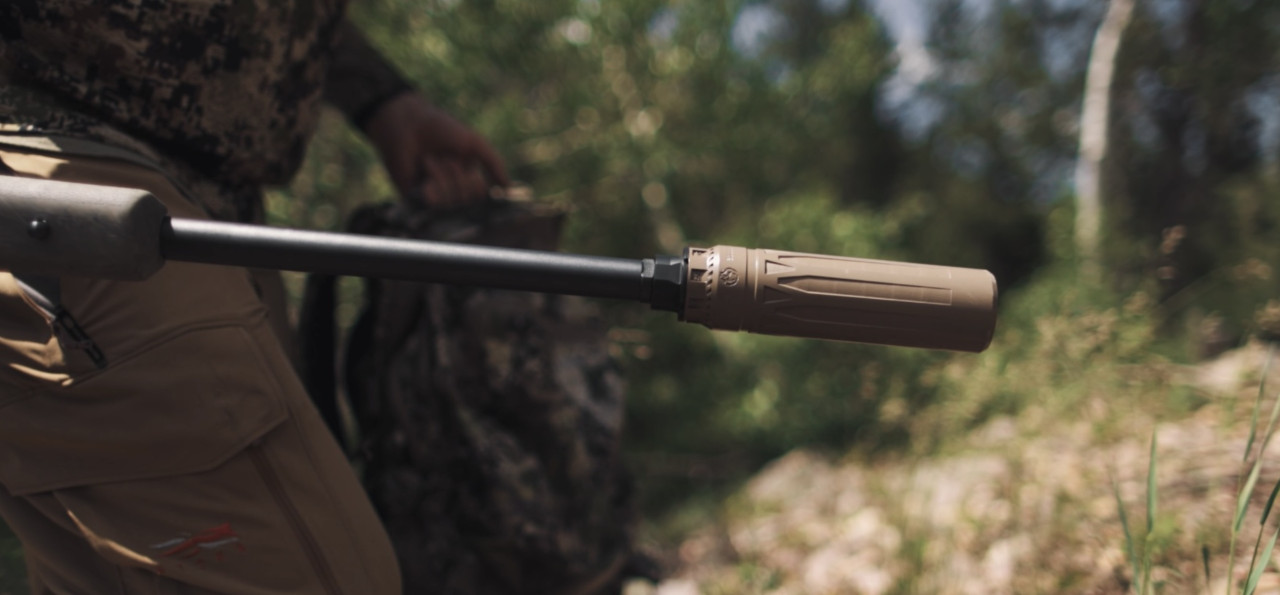
SilencerCo Harvester EVO
SilencerCo has been in the suppressor game a long time, and the Harvester EVO is their dedicated hunting can. It's a .30-cal suppressor that's about 7.4 inches long and around 11 ounces. The fully welded construction means fewer potential failure points but also means you can't disassemble it for cleaning, which is fine for centerfire rifles that don't foul suppressors the way rimfires do. It's a no-frills, proven design that does what it's supposed to.
Thunder Beast Arms (TBAC) Ultra 7
If precision is your thing, say you're shooting a 6.5 Creedmoor or a .308 at longer distances and you care about maintaining sub-MOA accuracy, TBAC has a reputation that's hard to argue with. The Ultra 7 is about 7 inches, 9.6 ounces, and was designed from the ground up for precision rifle use. It's not the lightest or the quietest, but it's known for minimal point-of-impact shift and consistent accuracy. Competitive shooters have been running TBAC cans for years, and that precision translates directly to hunting applications where shot placement is everything.
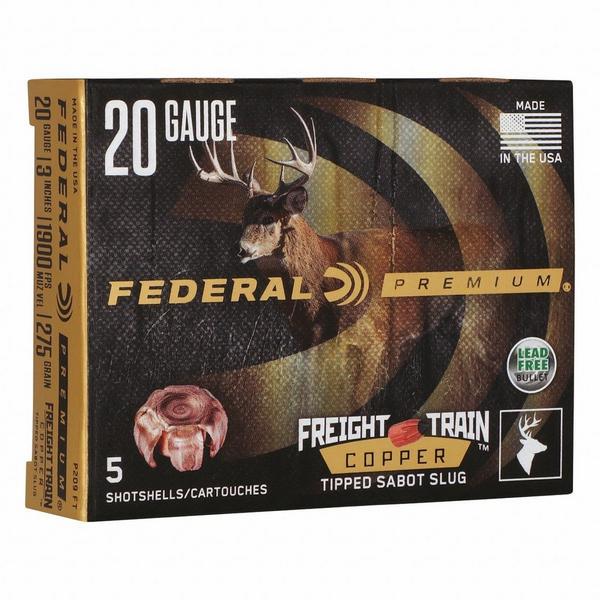
Federal ammunition Deals
Prices may change. May contain affiliate links.
Banish 30 Gold
Silencer Central's Banish line has gotten a lot of attention partly because of marketing (the MeatEater partnership) and partly because the buying process is genuinely convenient, they ship directly to your door in states where that's legal, handling the Form 4 process for you. The Banish 30 Gold is a titanium .30-cal suppressor that's modular in length (you can run it in a shorter or longer configuration), weighs around 9.6 ounces in the short setup, and gets solid suppression numbers. Forum opinions are mixed on whether it performs at the same level as Dead Air or TBAC, but the convenience factor and the lighter weight make it a legitimate contender for hunters who prioritize field practicality.
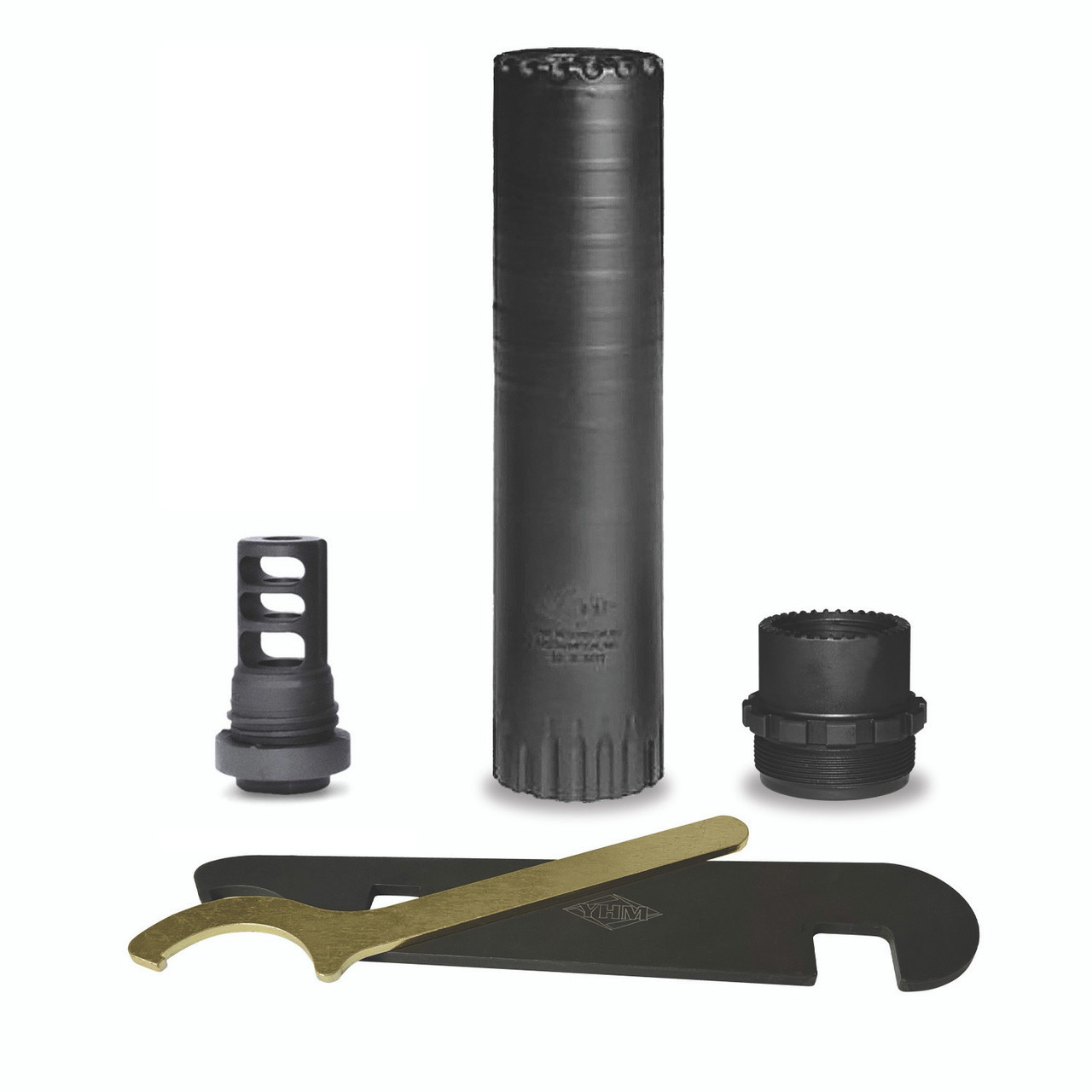
YHM Resonator R2
If budget matters, and it should, because the $200 tax stamp already stings, the Yankee Hill Machine Resonator R2 is hard to beat on value. It's a .30-cal suppressor that runs around half the price of the premium options listed above. It's heavier (about 15 ounces) and a bit longer, but the sound suppression is competitive with cans costing twice as much. The build quality is stainless steel rather than titanium, which accounts for both the weight and the price. For a hunter who wants to get into suppressed hunting without spending $1,000+ on the can alone, the R2 is the honest answer.
Choosing the right suppressor for your hunting setup
The decision matrix for a hunting suppressor is different from a range toy or a tactical application. Here's what actually matters, ranked roughly by importance for field use.
Weight comes first. You're carrying this thing, often for miles, often uphill. Every ounce at the muzzle end of the rifle is felt more than an ounce in the stock or in your pack. Titanium cans cost more but save meaningful weight. If you're hunting from a fixed stand and never walking more than 200 yards, weight matters less. If you're spot-and-stalk hunting elk in the mountains, it matters a lot.
Length comes second. A shorter suppressor is easier to maneuver in blinds, in timber, and getting in and out of vehicles. It's also less likely to snag on brush or bang into things. Most hunters find that 6 to 8 inches is the practical range, short enough to live with, long enough to actually suppress meaningfully.
Sound suppression comes third, which surprises people. Yes, you want hearing protection, that's the whole point. But the difference between a suppressor that reduces 26 dB and one that reduces 32 dB is less noticeable in the field than you'd think, and that extra 6 dB usually costs you inches and ounces. Get enough suppression to take the edge off, and prioritize the factors that determine whether the suppressor actually comes with you on every hunt.
Mounting system matters more than people realize. Direct-thread mounts are the lightest and simplest, you just screw the suppressor onto the barrel threads. But they can loosen with repeated shots and require hand-tightening in the field. QD (quick-detach) mounts add a muzzle device to each rifle and let you swap the suppressor between guns in seconds with a positive lock. If you're running one suppressor across a .308 deer rifle and a 6.5 Creedmoor for antelope, QD is worth the small weight penalty. If the suppressor lives on one rifle, direct thread is fine.
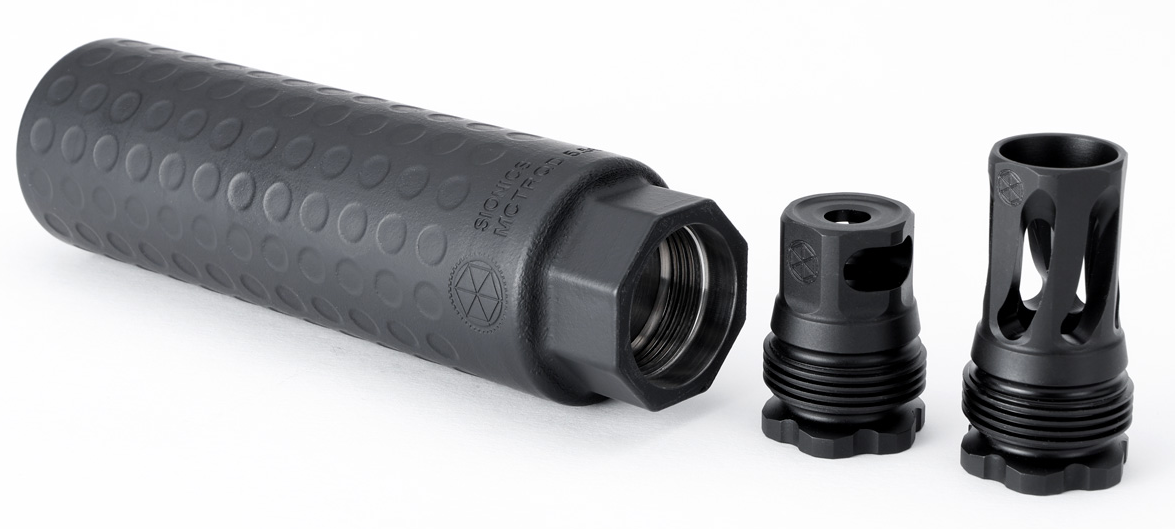
Durability and barrel-length restrictions round it out. Some suppressors have minimum barrel-length ratings, run them on a barrel that's too short and the increased gas pressure and heat can damage the baffles or void the warranty. Check the manufacturer's specs against your barrel length, especially if you're running a short-barreled rifle.
The legal stuff you need to keep straight
Transporting across state lines
If you're traveling to hunt in another state with your suppressor, you need to file ATF Form 5320.20 (Application to Transport Interstate or to Temporarily Export Certain National Firearms Act Firearms) before you go. This is a free form, and approval is typically quick, but you need to plan ahead. Showing up at a checkpoint or getting pulled over in a state where you haven't filed the proper paperwork is a federal issue.
You do not need to file this form for travel within your home state. It's only for interstate transport.
What happens if you get stopped by a game warden?
Carry a copy of your approved Form 4 (or the approval letter/email from the ATF) with you when hunting with a suppressor. You're not legally required to carry it in most states, but producing it on request makes any interaction with law enforcement dramatically simpler. Some hunters keep a laminated copy in their rifle case and a digital copy on their phone.
Game wardens in states where suppressed hunting is legal are generally familiar with suppressors and the NFA process. But a warden who asks to see your paperwork and gets a shrug instead of a document is going to have follow-up questions you'd rather not deal with during hunting season.
Can you let someone else use your suppressor?
If you purchased as an individual, the suppressor can only be in your possession. Someone else can shoot it while you're physically present, you're maintaining constructive possession, but you can't hand it to a buddy and say "use it this weekend." That's a felony transfer of an NFA item.
If you purchased through a trust, any responsible person listed on the trust can independently possess and use the suppressor. This is the biggest practical advantage of the trust structure for hunting families.
What if the suppressor breaks?
Suppressor manufacturers generally have strong warranty programs because the product is registered to you through the NFA and can't easily be replaced. If a suppressor fails, you work with the manufacturer for repair or replacement. The replacement unit gets the same serial number (if repaired) or you go through a new Form 4 for a replacement (if it's a new unit). Some manufacturers, like Dead Air, have reputations for excellent warranty service. Factor this into your purchase decision, a company that stands behind the product matters when you're dealing with NFA items that take months to acquire.
The hearing argument is the real argument
Hunters tend to frame the suppressor conversation around tactical advantages, less recoil, less noise disturbance, better shot calling. And those are real benefits. But the honest reason to hunt with a suppressor is hearing preservation.
A single unsuppressed rifle shot above 140 dB can cause permanent hearing damage. Most centerfire hunting cartridges exceed 160 dB. Hunters routinely shoot without hearing protection because they need to hear the woods, approaching game, other hunters, verbal communication. Doubling up on ear pro at the range is easy. Wearing foam plugs in a treestand at dawn when you're listening for footsteps in the leaves? Nobody does it.
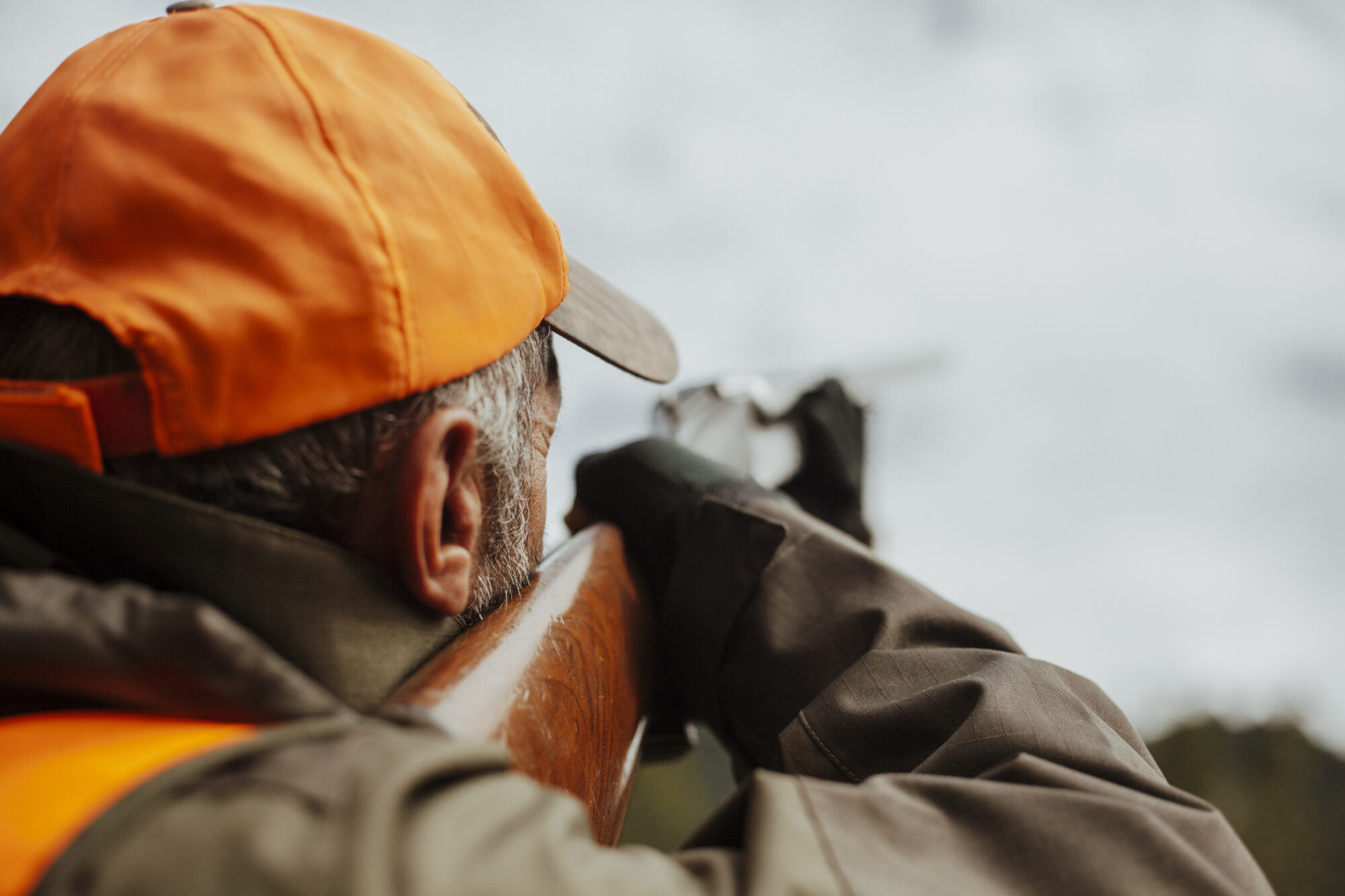
Electronic hearing protection has gotten better, but it's another piece of gear to manage, it can fail, and it changes your auditory perception of the environment. A suppressor is always on, doesn't need batteries, and reduces the report to a level where a single shot is unlikely to cause permanent damage (though repeated exposure still adds up).
The hunters who've been doing this for 30 years and now can't hear their grandkids talk, that's the real cost of unsuppressed shooting. A suppressor doesn't eliminate the risk, but it meaningfully reduces it.
What to do before next season
If you're seriously considering hunting suppressed, the timeline matters because of NFA wait times. Don't start this process in August expecting to have an approved stamp by November. Start now, whatever month you're reading this.
Go to a dealer, local or online, and handle a few suppressors in the weight and length range you think you can live with. Mount one on a rifle similar to yours if the dealer allows it. Feel the balance change. That's the reality check that spec sheets can't give you.
Pick a suppressor, buy it, and file your Form 4 electronically. Then wait. Use the wait time productively: get your rifle threaded if it isn't already (most modern hunting rifles come threaded from the factory, but older rifles may need a gunsmith), and start thinking about which mounting system you want.
Once you have the suppressor in hand, spend a range session zeroing your rifle with the can mounted. Shoot at least a 3-round group at 100 yards to confirm point of impact, then shoot a group without the suppressor to know your offset. Write both zeros down and tape it to the inside of your rifle case.
Run a few drills from field positions, sitting, kneeling, off shooting sticks, with the suppressor mounted. Get used to the extra length and the different balance point. The first time you try to thread your suppressed rifle through the shooting window of a ground blind, you'll understand why this matters.
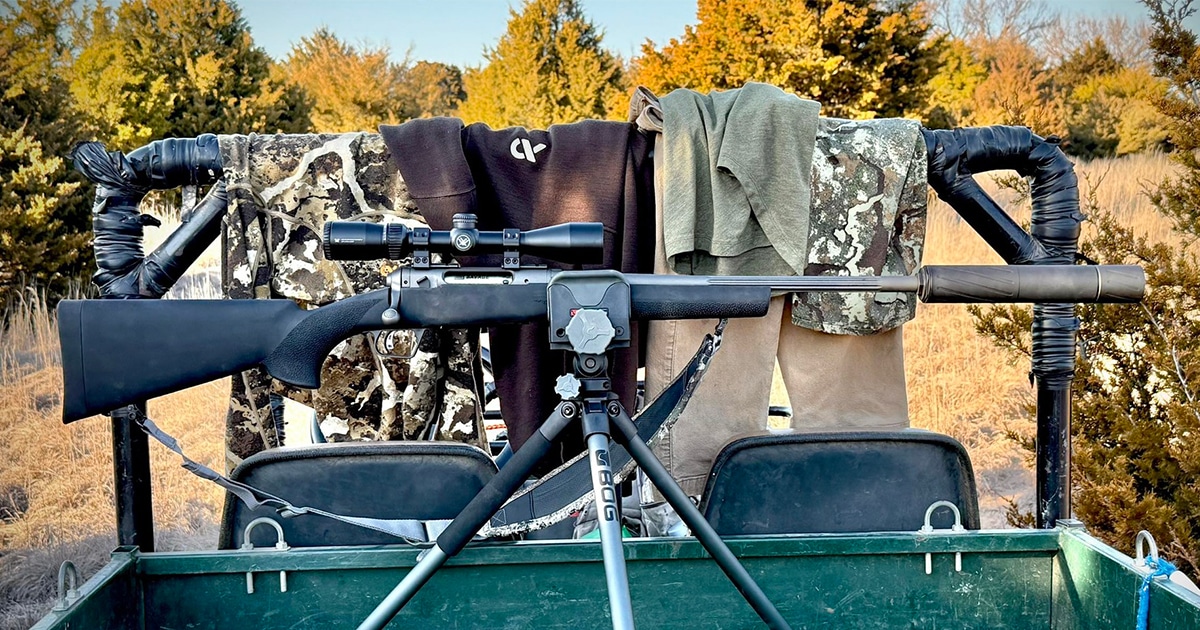
Then go hunt. Take the shot you've practiced. Hear the hit instead of just the blast. And notice that your ears aren't ringing on the walk back to the truck.