Your bolt closes on a round, and you assume everything's fine. But headspace; the distance between the bolt face and the datum line on the chamber; is one of those things that's perfectly safe until it isn't. Excessive headspace can cause case head separations, sticky extraction, or worse. Insufficient headspace means the bolt won't close on factory ammo. Either way, you need to know the number, not guess at it.
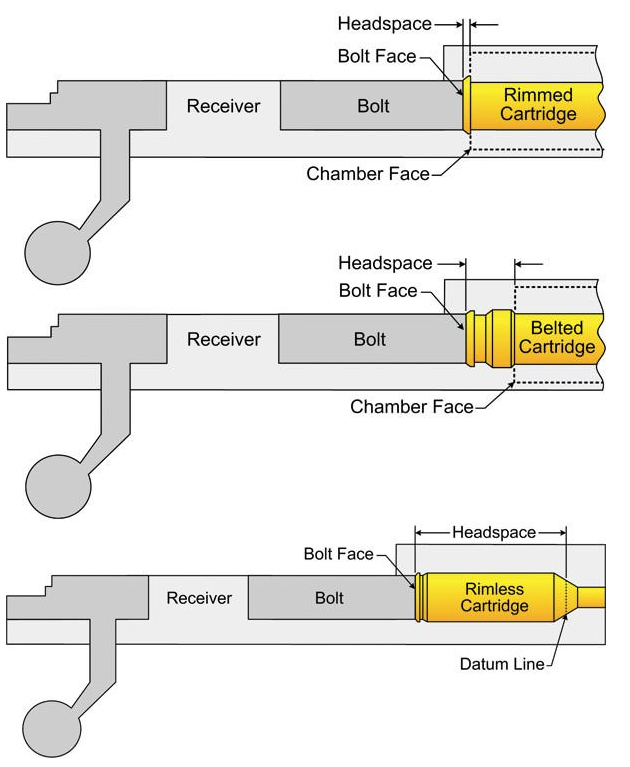
The good news: checking headspace doesn't require a $400 tool kit or a trip to a gunsmith. A go gauge and a no-go gauge for most common rifle calibers will run you under $75 for the pair, sometimes well under. The bad news: there are enough brands, spec standards, and caliber-specific quirks to make the buying decision more confusing than it needs to be. So let's sort it out; which gauges are worth the money, which calibers have gotchas, and how to actually use these things once they show up.
This isn't a general headspace tutorial. The assumption here is you know what headspace is and why it matters. The goal is to help you pick the right gauges for your rifle, avoid the cheap junk, and understand the differences between manufacturers before you drop money.
What you're actually buying
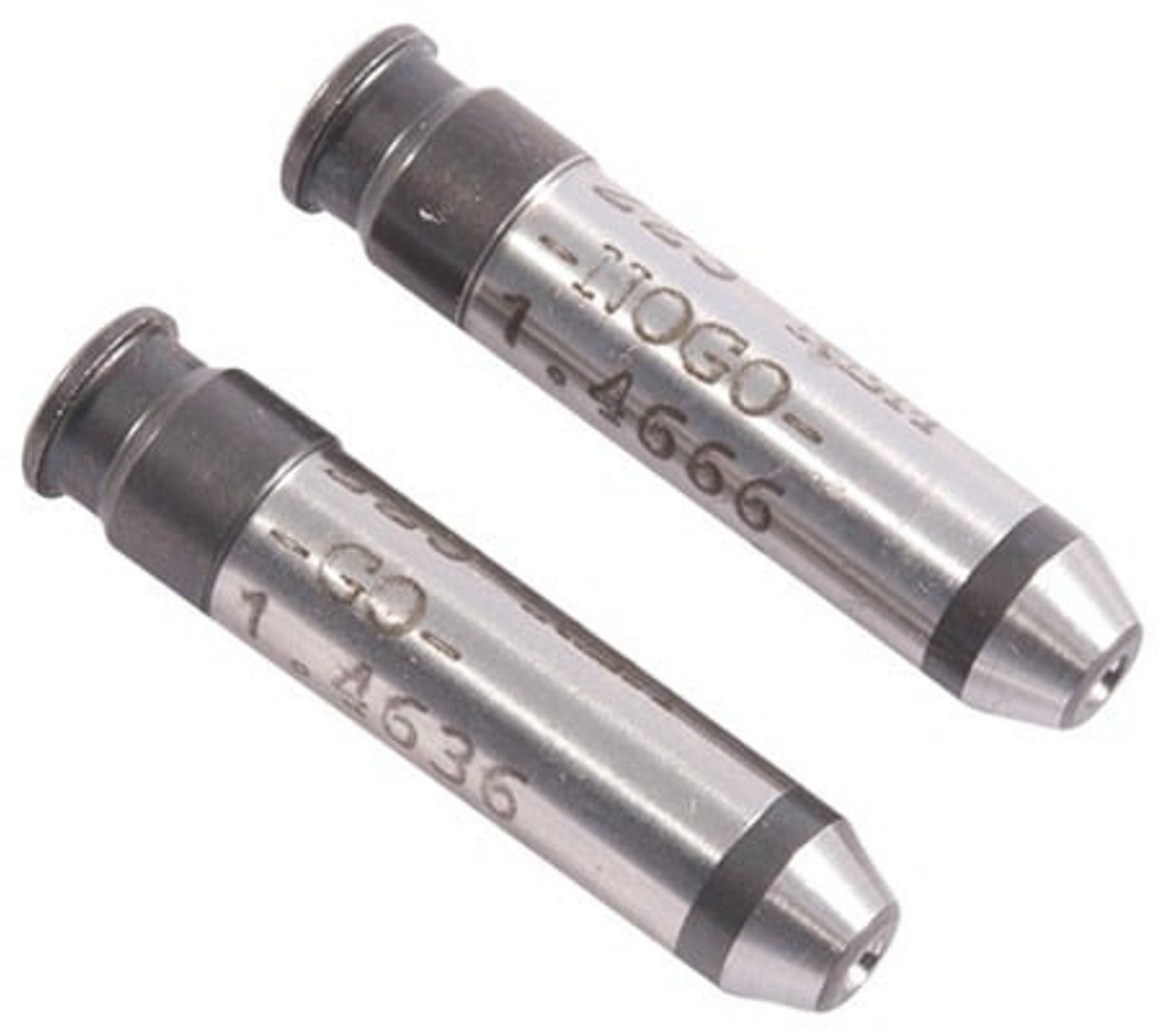
A headspace gauge is a hardened steel dummy cartridge machined to a precise dimension. The go gauge represents the minimum safe chamber dimension, if a bolt closes on a go gauge, the chamber is at least large enough for factory ammo. The no-go gauge represents the maximum acceptable dimension for a new or recently re-barreled rifle. A field gauge sits beyond the no-go and represents the absolute maximum before the chamber is genuinely dangerous.
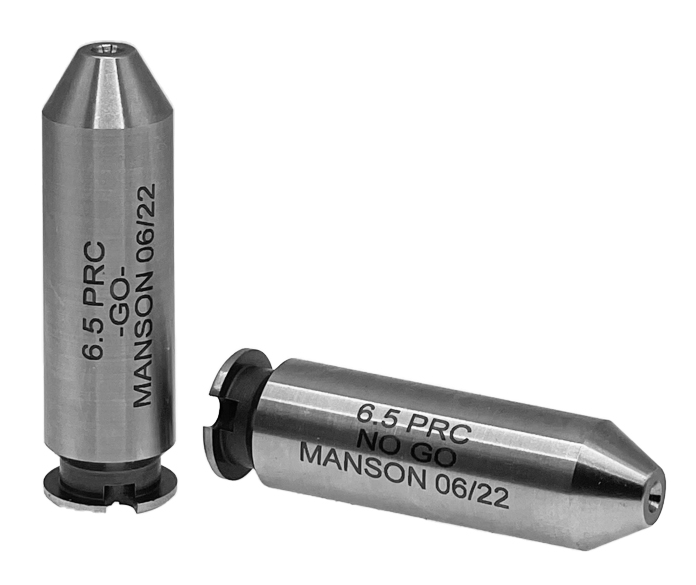
For most people checking a new barrel, a build, or a used rifle purchase, the go/no-go pair is the right buy. The bolt should close on the go gauge and should not close on the no-go gauge. If it closes on the no-go, that doesn't necessarily mean the rifle is unsafe, it means it's beyond new-rifle spec and warrants closer attention, possibly with a field gauge or a trip to someone with more tools.
The price difference between brands mostly comes down to tolerance, finish quality, and whether the gauges are ground to SAAMI spec, CIP spec, or something the manufacturer cooked up in-house. For common American rifle calibers, you want SAAMI spec unless you're specifically working with a European-proofed barrel. CIP dimensions differ slightly, usually a touch tighter on headspace, and mixing specs will give you misleading results.
The brands that matter under $75
There are really four names worth discussing at this price point: Forster, Clymer, Pacific Tool & Gauge (PTG), and Manson. A few budget options from less-known manufacturers show up on Amazon and eBay, and we'll address those too, but these four are the ones gunsmiths actually use.
Forster
Forster is the default recommendation for a reason. Their gauges are hardened tool steel, ground to SAAMI spec, and available in just about every common caliber you'd need. A single Forster go gauge for .308 Winchester or .223 Remington typically runs between $28 and $35. A no-go runs the same. So a go/no-go set for one caliber lands right around $55 to $70 depending on where you buy.
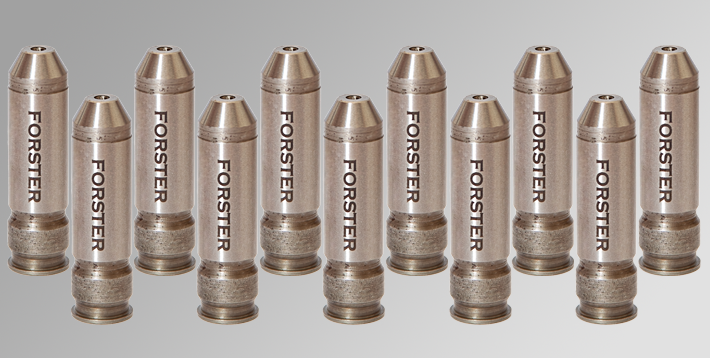
The finish on Forster gauges is clean, the tolerances are tight, and they're the most widely stocked option at retailers like Brownells and MidwayUSA. If you're checking one rifle in one caliber and you want to buy once, Forster is the safe pick. They also mark their gauges clearly, caliber, gauge type, and dimension are engraved on the body, which matters more than you'd think when you've got a drawer full of similar-looking steel cylinders.
One thing to know: Forster doesn't sell bundled go/no-go sets at a discount for most calibers. You're buying two individual gauges. Some retailers package them together, but you're generally paying full price for each. For popular calibers like .308 Win, 6.5 Creedmoor, and .223 Rem, you'll find them in stock almost everywhere. For newer or less common chamberings, 6mm ARC, .22 Creedmoor, 7mm PRC, availability gets spottier and lead times can stretch.
Clymer
Clymer has been making reamers and gauges for decades, and their headspace gauges are essentially interchangeable with Forster in terms of quality and spec compliance. Pricing is similar, sometimes a dollar or two less. The practical difference between a Clymer and a Forster gauge for .308 Win is effectively zero for a headspace check.
Where Clymer sometimes has an edge is caliber availability. Because they're primarily a reamer manufacturer, they tend to offer gauges for wildcat and semi-wildcat chamberings that Forster doesn't catalog. If you're working with something like .22 Creedmoor or a less mainstream cartridge, check Clymer's catalog before assuming you'll need a custom gauge.
Pacific Tool & Gauge (PTG)
PTG, based out of White City, Oregon, is another reamer-first company that also produces headspace gauges. Their gauges are well-regarded among custom rifle builders, and pricing tends to be competitive, often a few dollars under Forster for common calibers. A PTG go gauge for 6.5 Creedmoor or .223 Rem usually runs in the $25 to $32 range.
The trade-off with PTG is sometimes availability and lead time. They're a smaller operation than Forster, and popular calibers can go out of stock. When they're in stock, though, the quality is there. PTG also tends to be quicker to market with gauges for newer cartridges, they had 7mm PRC gauges available relatively early after that cartridge's introduction.
Manson Precision
Dave Manson's reamers are legendary in the precision rifle world, and his headspace gauges carry the same reputation. Pricing is comparable to Forster and Clymer. Manson gauges are sometimes slightly harder to find at major retailers, but ordering direct is straightforward.
For the average person checking headspace on a .308 or .223, there's no functional reason to choose Manson over Forster. But if you're having a barrel chambered with a Manson reamer, buying the matching Manson gauges ensures the tightest possible spec consistency between the reamer and the gauge. That's a detail that matters more for precision rifle builds than for checking a factory Ruger American.
Caliber-by-caliber breakdown
Not all calibers are created equal when it comes to gauge availability and pricing. Here's what to expect for the most common rifle chamberings.
.223 Remington / 5.56 NATO
This is where the SAAMI vs. military spec question comes up. The .223 Remington chamber and the 5.56 NATO chamber are not identical, the 5.56 has a longer leade (the throat area ahead of the case mouth). Headspace dimensions at the datum line are the same between the two, so a .223 Rem headspace gauge works for checking 5.56 NATO headspace. You don't need separate gauges.
However, if you're building an AR-15 with a 5.56 chamber, you should be aware that some gauges are marked ".223 Rem" and some are marked "5.56 NATO." For headspace purposes, they're measuring the same thing. The distinction matters for reamer selection, not gauge selection.
A Forster go/no-go set for .223 Rem runs around $55 to $65. Clymer and PTG are in the same ballpark. This is one of the most commonly stocked calibers, so you'll rarely have trouble finding them.
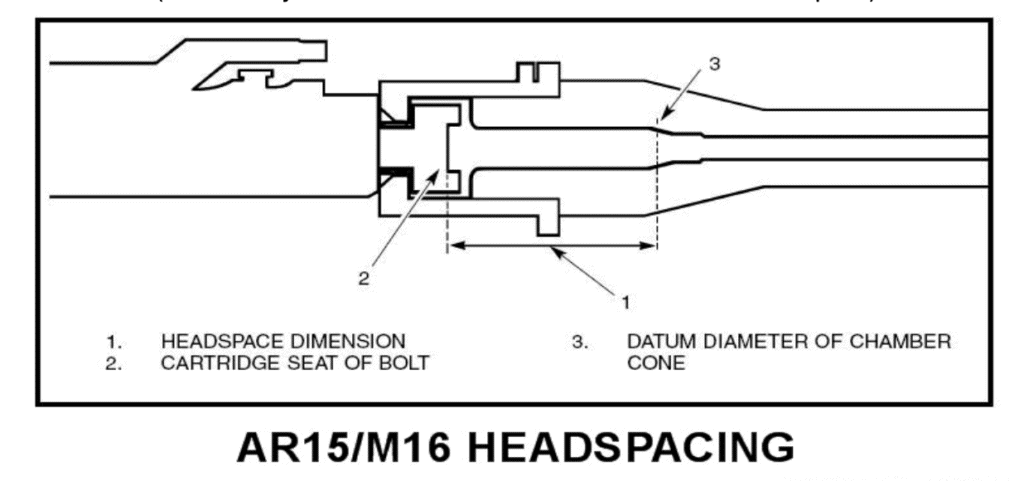
For AR-15 builders specifically: checking headspace on a new barrel with a new bolt is standard practice. The bolt should close on the go gauge with normal finger pressure on the charging handle, no forcing. If it closes on the no-go, the barrel extension wasn't cut right or the bolt is out of spec. On an AR, headspace is set by the barrel extension and the bolt, not by how far the barrel is threaded into the receiver. So if you get a no-go failure, the fix is usually a new bolt or a new barrel, not adjusting anything.

.308 Winchester / 7.62 NATO
Same story as .223, the headspace dimensions are identical between .308 Win and 7.62 NATO at the datum line. One set of gauges covers both.
Forster's .308 Win go gauge measures 1.6300 inches (SAAMI go dimension), and the no-go measures 1.6340 inches. These are the most commonly purchased headspace gauges in the country, and every major manufacturer has them in stock almost all the time. Expect $55 to $65 for a go/no-go pair from any of the big four brands.
If you're building an AR-10 / LR-308 pattern rifle, headspace checking is even more important than on an AR-15 because there's less standardization between manufacturers. A bolt from one company mated to a barrel from another can produce out-of-spec headspace. Check it every time. Forum threads are full of AR-10 builders who skipped this step and ended up with case head separations or bolts that wouldn't close on factory ammo.
6.5 Creedmoor
The 6.5 Creedmoor has become common enough that gauge availability is no longer an issue. Forster, Clymer, PTG, and Manson all stock go and no-go gauges. Pricing is the same as .308, roughly $28 to $35 per gauge, so $55 to $70 for the pair.
One thing specific to 6.5 Creedmoor: if you're a handloader checking brass for shoulder bump, you might be tempted to use your headspace gauges as a comparator reference. They're not designed for that. A headspace gauge checks the chamber. A comparator (like the Hornady or RCBS lock-n-load tools) checks the brass. Different tools, different jobs. The Area 419 ZERO gauge kit does bridge both worlds to some extent, but it's well above the $75 threshold and is really a reloading tool, not a headspace safety check.
6.5 PRC and 7mm PRC
These newer PRC cartridges are where gauge shopping gets slightly more annoying. Forster has 6.5 PRC gauges readily available. For 7mm PRC, availability has improved significantly since the cartridge's introduction, but you may still find occasional stock gaps at some retailers.
PTG and Clymer both had 7mm PRC gauges available relatively early. Pricing for PRC calibers tends to run $30 to $38 per gauge, a small premium over .308 or .223, but still well within the under-$75-for-a-pair range.
If you're having a custom barrel chambered in 7mm PRC, buying gauges from the same manufacturer as your reamer is worth the minor hassle of ordering direct. The spec consistency matters more on a precision build than on a factory rifle check.
6mm ARC
Here's a caliber where gauge availability has been genuinely frustrating. When 6mm ARC first hit the market, go/no-go gauge sets were backordered for months. The situation has improved, but 6mm ARC gauges are still less commonly stocked than mainstream calibers. Forster and Clymer both make them now, and PTG has them in their catalog.
If you can't find 6mm ARC gauges in stock from the big four, resist the temptation to buy an unknown-brand gauge from Amazon or eBay just because it's available. A gauge that's off by even a thousandth of an inch defeats the entire purpose. Wait for the real thing or order direct from the manufacturer.
.30-06 Springfield
Old reliable. Every manufacturer makes .30-06 gauges, they're always in stock, and pricing is standard, $55 to $65 for a go/no-go pair. If you're checking a surplus rifle like a Garand or a 1903 Springfield, a field gauge is worth adding to the order. Surplus rifles have seen hard use, and a chamber that passes no-go but fails field is common. A .30-06 field gauge from Forster runs another $28 to $35, which pushes the total above $75 for all three, but the go/no-go pair alone stays under budget.
For M1 Garand owners specifically: headspace on a Garand is checked with the bolt stripped, no extractor, no ejector. The bolt should close on the go gauge under the weight of the operating rod alone (or close to it). If you're checking headspace with the extractor installed, you can get misleading results because the extractor spring tension can prevent the bolt from fully closing.
.22 LR
You might not think of .22 LR as a headspace-critical caliber, but rimfire headspace is actually important, it's just measured differently. Rimfire cartridges headspace on the rim, and the critical dimension is the gap between the bolt face and the breech face of the barrel. Too much gap and you get misfires or case ruptures. Too little and the bolt won't close.
Whidden Gunworks makes a .22 LR headspace gauge set that's well-regarded. It's a go/no-go pair that checks the rim recess depth. Pricing is around $40 to $50 for the set, well under the $75 mark. This is a niche purchase, most people will never need to check .22 LR headspace, but if you're building a custom rimfire or troubleshooting ignition issues on a bolt-action .22, it's the right tool.
The budget gauge question
Search Amazon or eBay for "headspace gauge" and you'll find options from brands you've never heard of, often priced at $15 to $25 for a go/no-go set. That's tempting when the name-brand option is $60.
Here's the problem: a headspace gauge is only useful if it's accurate. The tolerances involved are measured in thousandths of an inch. A gauge that's 0.002 inches long will tell you a safe chamber is out of spec. A gauge that's 0.002 inches short will tell you a dangerous chamber is fine. You have no way to verify the accuracy of a budget gauge without a micrometer and the SAAMI spec sheet, and if you had those tools and that knowledge, you probably wouldn't be buying the cheapest gauge you could find.
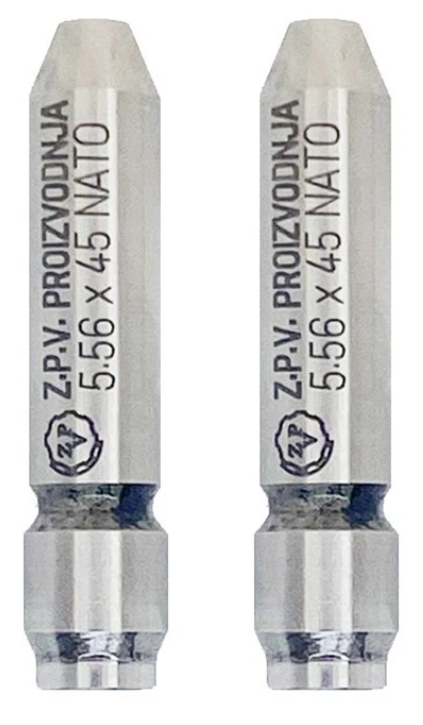
Some of the budget gauges on Amazon are actually fine. Some are not. The problem is you can't tell which is which from the listing. Reviews help, but a five-star review from someone who says "the bolt closed on the go gauge, so my rifle is good!" doesn't actually tell you whether the gauge itself was accurate.
The recommendation is straightforward: buy Forster, Clymer, PTG, or Manson. The price difference between a name-brand gauge and a mystery gauge is $20 to $30. That's cheap insurance for a safety check you're relying on to tell you whether a rifle is safe to fire.
Tools you'll need besides the gauges
The gauges themselves are only part of the equation. Depending on what platform you're checking, you'll need a few other things.
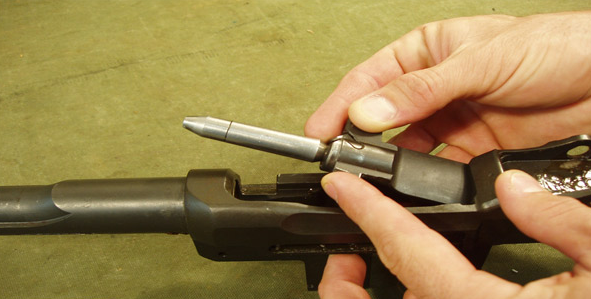
For bolt-action rifles, the process is simple. Strip the bolt, remove the extractor and ejector if possible (some designs make this easier than others). Drop the go gauge into the chamber, close the bolt, and check for resistance. You don't need any special tools beyond the gauges and whatever's required to strip your specific bolt. A Remington 700 bolt strips easily with a punch. A Savage bolt requires the bolt head to be swapped, which is tool-free. A Tikka or Howa bolt may require more disassembly.
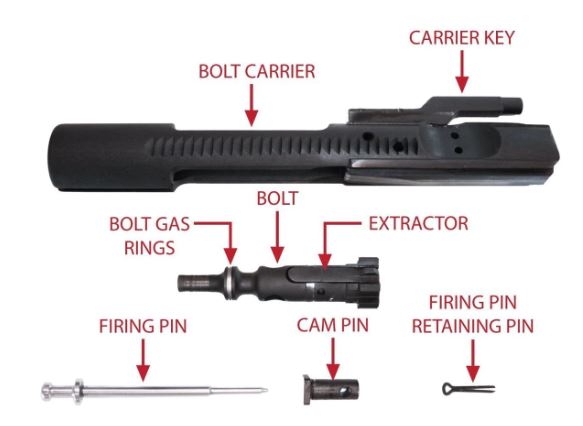
For AR-15 and AR-10 pattern rifles, you need to remove the firing pin and the firing pin retaining pin from the bolt carrier group. Leave the extractor installed, on an AR, the extractor snaps over the gauge rim just like it would on a cartridge, and that's part of the normal operating condition. Drop the gauge into the chamber, let the bolt carrier group go forward, and try to close the bolt with the charging handle using normal pressure. No hammering, no forcing.

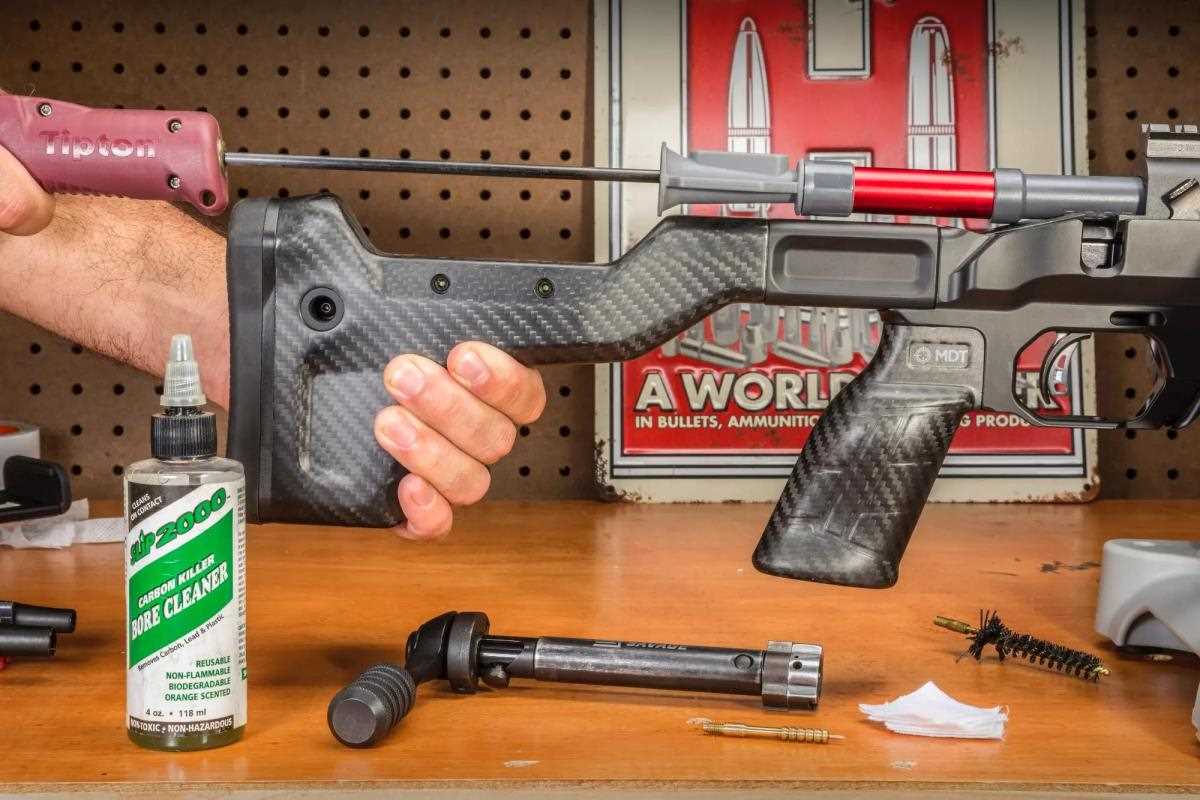
You'll also want a way to extract the gauge from the chamber after the check. On a bolt action, opening the bolt usually pops it out. On an AR, the extractor should pull it free. But gauges can occasionally stick in a tight chamber, especially a brand-new one. A cleaning rod pushed gently from the muzzle end will knock it loose. Don't use a steel rod against a hardened gauge in a match chamber if you care about the throat, a brass or plastic rod is better.
Bench notes: what the bolt feel tells you
This is where experience helps, but here's what to pay attention to. When you close the bolt on a go gauge, it should feel like closing the bolt on a loaded round, smooth, with the bolt handle dropping into the locked position without extra effort. If you have to push hard, the chamber may be too tight (uncommon on factory barrels, more common on tight custom chambers).
When you try the no-go gauge, the bolt handle should not drop into the locked position. You'll feel resistance, and the handle will stay slightly elevated. On some actions, the difference is subtle, maybe a millimeter of handle lift. On others, it's obvious. If you're not sure whether the bolt is fully closed on the no-go, you need better lighting and a closer look. The difference between "almost closed" and "closed" is the difference between pass and fail.
If the bolt closes freely on both go and no-go, you have excessive headspace. Stop. Don't fire the rifle. On a bolt action, this usually means the barrel needs to be set back and re-chambered, a gunsmith job. On an AR, it might mean a new bolt, a new barrel, or both.
Common mistakes when checking headspace
Not stripping the bolt properly
On a bolt-action rifle, the extractor and ejector springs can apply enough force to prevent the bolt from fully closing on a gauge, or to push it closed when it shouldn't. Strip the bolt. On an AR, leave the extractor in but remove the firing pin and retaining pin. The ejector stays in too. If you remove the ejector on an AR bolt, you'll lose the spring and plunger, and reassembly is annoying.
Confusing no-go with field
A bolt that closes on a no-go gauge doesn't automatically mean the rifle is unsafe. It means the chamber exceeds new-rifle spec. A field gauge is the "this is actually dangerous" threshold. Many surplus rifles and well-used hunting guns will close on a no-go but not on a field gauge, and they've been fired safely for decades. The no-go is a warning. The field gauge is the red line.
That said, if you're checking a new barrel or a new build and it fails no-go, something is wrong. New rifles should pass no-go cleanly.
Buying gauges for the wrong spec
If your barrel was chambered with a CIP reamer (common on European-made rifles like Tikka, Sako, or Blaser), SAAMI gauges may give you slightly different results than expected. CIP and SAAMI headspace dimensions are close but not identical for some cartridges. For most common calibers like .308 Win and .223 Rem, the difference is negligible. For some European cartridges or metric designations, it can matter. If you're checking a European rifle and getting borderline results with SAAMI gauges, that's worth investigating before you panic.
Forcing the bolt
If the bolt doesn't want to close on a go gauge, don't muscle it. Either the chamber is genuinely too tight (rare on factory barrels), the gauge is dirty, the chamber is dirty, or you haven't stripped the bolt correctly. Clean everything, check your bolt disassembly, and try again. Forcing the bolt can damage the gauge, the locking lugs, or both.
Checking headspace on a dirty chamber
Oil, carbon, or copper fouling in the chamber will affect gauge seating. A gauge that won't seat in a dirty chamber might seat perfectly in a clean one. Always check headspace with a clean, dry chamber. No oil on the gauge either, you want steel-on-steel contact.
SAAMI vs. CIP: when it actually matters
For the vast majority of American shooters checking American-made rifles in common calibers, SAAMI spec gauges are correct. Forster, Clymer, PTG, and Manson all manufacture to SAAMI dimensions unless specifically noted otherwise.
CIP (Commission Internationale Permanente pour l'Epreuve des Armes à Feu Portatives) is the European equivalent of SAAMI. CIP headspace dimensions are defined slightly differently for some cartridges, the datum diameter on the shoulder can be measured at a different point, or the maximum/minimum dimensions can be offset by a small amount.

Savage Bolt Action Rifle Deals
Prices may change. May contain affiliate links.
For cartridges like .308 Win (7.62x51mm NATO) and .223 Rem (5.56x45mm NATO), the practical difference between SAAMI and CIP headspace specs is small enough that a SAAMI gauge will give you a reliable reading on a CIP-chambered rifle. For some European cartridges, 6.5x55 Swedish, 7x57 Mauser, 9.3x62, the differences can be more significant.
If you specifically need CIP-spec gauges, they're harder to find in the US. Some European toolmakers produce them, and PTG can sometimes accommodate special orders. But for the calibers covered in this article, SAAMI gauges are the right call.
What about the Area 419 ZERO gauge?
The Area 419 ZERO Headspace and Ogive Measurement Gauge Kit shows up in a lot of headspace discussions, so it's worth addressing. This is a precision reloading tool that measures headspace on fired and sized brass, it tells you how much your sizing die is bumping the shoulder, and it measures bullet ogive for seating consistency.
It does not replace a go/no-go gauge set for checking chamber headspace. The ZERO gauge measures brass. Go/no-go gauges measure the chamber. Different questions, different tools. The ZERO kit also runs well above $75, so it's outside the scope of this article anyway. But if you're a precision handloader, it's a useful complement to proper headspace gauges, not a substitute for them.
Where to buy and what to expect on pricing
For Forster gauges, the widest selection is at Brownells and MidwayUSA. Both stock the full Forster line and ship quickly for common calibers. Pricing is typically $28 to $35 per gauge, so a go/no-go pair for one caliber runs $55 to $70. Some smaller retailers like E. Arthur Brown Company also carry the full Forster line and occasionally have better availability on less common calibers.

Tikka Bolt Action Rifle Deals
Prices may change. May contain affiliate links.
Clymer gauges are available through many of the same retailers, plus direct from Clymer. PTG sells direct from their website and through select dealers. Manson is primarily direct-order.
If you need gauges for multiple calibers, the math gets less favorable, two pairs of gauges will run $110 to $140 from name brands. There's no real volume discount. Some people buy a go gauge for each caliber and share a no-go gauge among similar cartridges, but this only works for cartridges that share the same parent case and headspace dimensions. A .308 Win no-go gauge doesn't work for 6.5 Creedmoor, even though both are based on the .308 family. The shoulder angles and datum dimensions are different.
For the budget-conscious shooter who only needs to check one rifle, here's the play: buy a Forster or Clymer go/no-go set for your specific caliber. It'll run $55 to $65 for common chamberings. Use it, store it, and you've got it for life, these gauges don't wear out under normal use. If you're checking a used rifle purchase and want the field gauge too, that's another $28 to $35, pushing you to $85 to $100 total. Still reasonable for a tool that tells you whether a rifle is safe to shoot.
The function check that matters
Once you've confirmed headspace is within spec, there's one more thing to verify before you call the job done. Reassemble the bolt completely, extractor, ejector, firing pin, everything. Chamber a factory round (or a dummy round / snap cap if you prefer). The bolt should close smoothly and lock without resistance. Extract the round. Check the case for any marks that shouldn't be there, unusual scratches on the case body, marks on the primer, deformation of the case head.
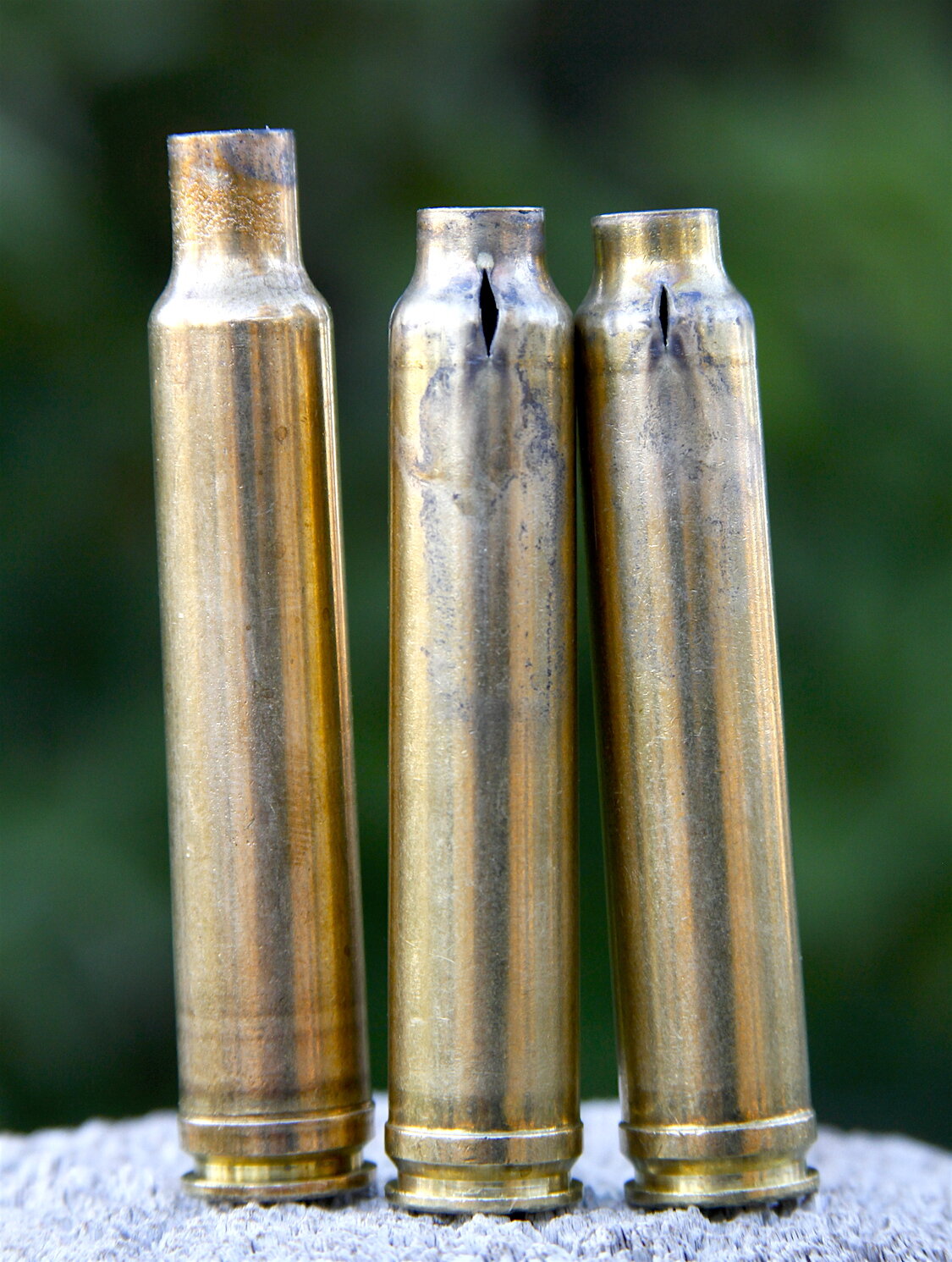
On the first range trip with a new barrel or build, inspect your brass after firing. Look at the primer pockets, if primers are falling out or the pockets are visibly expanded, that's a sign of excessive headspace even if the gauge check passed. Look at the case heads for any signs of incipient separation, a bright ring around the case just above the web. If you see that, stop shooting and re-check headspace. Something has changed.
For AR-platform rifles, run a few magazines of factory ammo and check for consistent ejection pattern and reliable feeding. Headspace issues on ARs sometimes manifest as intermittent failures to go into battery rather than dramatic failures. If the bolt occasionally doesn't lock fully forward, that's worth investigating even if the gauge check was clean, it could be a bolt lug issue rather than headspace, but the symptoms overlap.
When to stop and find a professional
If your headspace check reveals a problem, bolt closes on no-go for a new rifle, or closes on field for any rifle, the fix is almost never something you can do at home without specialized tools. Setting back a barrel requires a barrel vise, an action wrench, a lathe for re-cutting the chamber, and the knowledge to do it correctly. Installing a new bolt on a controlled-feed action like a Mauser 98 or Winchester Model 70 may require lapping the locking lugs. These are gunsmith-level tasks.
What you can do at home is identify the problem, which is the whole point of owning headspace gauges. Knowing that your rifle has excessive headspace before you fire it is the value proposition here. The gauges don't fix anything, they tell you whether something needs fixing. And that information, confirmed with a $60 pair of hardened steel cylinders, is worth every penny compared to the alternative of finding out the hard way at the range.
Buy the good gauges. Check your rifles. Store the gauges somewhere dry. They'll last longer than any rifle you own.