Best collectible Cold War surplus pistols under $800
You've been buying surplus rifles for a while. Maybe a Mosin-Nagant, maybe a Yugo SKS. Now you're looking at the pistol side of the case, and the Cold War era keeps catching your eye. Good instinct. But the pistol market is trickier than the rifle market; smaller production details, more fakes and parts guns floating around, and a tighter window between "good deal" and "overpaid for a common variant."
This isn't a list of the five cheapest guns on the surplus rack. It's a breakdown of Cold War-era military pistols that are genuinely collectible, still findable under $800 in correct condition, and worth understanding before you spend money. Some of these are climbing in value. Some are holding steady. All of them reward the buyer who knows what to look for; and punish the one who doesn't.
The focus here is on pistols issued by military or police forces during the Cold War period, roughly 1947 to 1991. NATO and Warsaw Pact both get a seat at the table. What they share is this: they were made in serious quantities, they were built to government specifications, and the details of those specifications are what separate a collectible example from a shooter-grade parts bin special.
The Makarov PM: still the entry point, but the window is closing
The Makarov PM is the AK-47 of Cold War pistols, produced across multiple countries, issued to seemingly everyone east of the Elbe, and widely available on the surplus market for years. That availability is what made it the default starter pistol for Cold War collectors. But "widely available" isn't what it used to be. Russian-made examples have dried up significantly due to import restrictions, and the ones that do surface command more attention than they did five years ago.
The pistol itself is a straight blowback design chambered in 9x18mm Makarov, a cartridge that splits the difference between .380 ACP and 9mm Luger. It's a fixed-barrel gun, which means it's inherently accurate for its size, and the simplicity of the design means there's very little to go wrong mechanically. The double-action trigger pull is heavy, deliberately so, since this was a holster pistol carried by officers and security forces, and the Soviets wanted a long, deliberate first pull.
What to look for
The detail that matters on a Makarov is country of origin, and the differences aren't subtle once you know them. Russian-made examples from the Izhevsk Mechanical Plant carry a triangle-with-arrow arsenal mark and are the most sought after. East German Makarovs, produced at the Ernst Thälmann factory, are marked with a "1001" code and are considered the best-finished examples, tighter tolerances, better bluing, crisper machining. Bulgarian Makarovs (Arsenal, marked with a circle-10 stamp) are the most common on the current market and the most affordable. Chinese copies, the Type 59, show up occasionally and are a different collecting lane entirely.
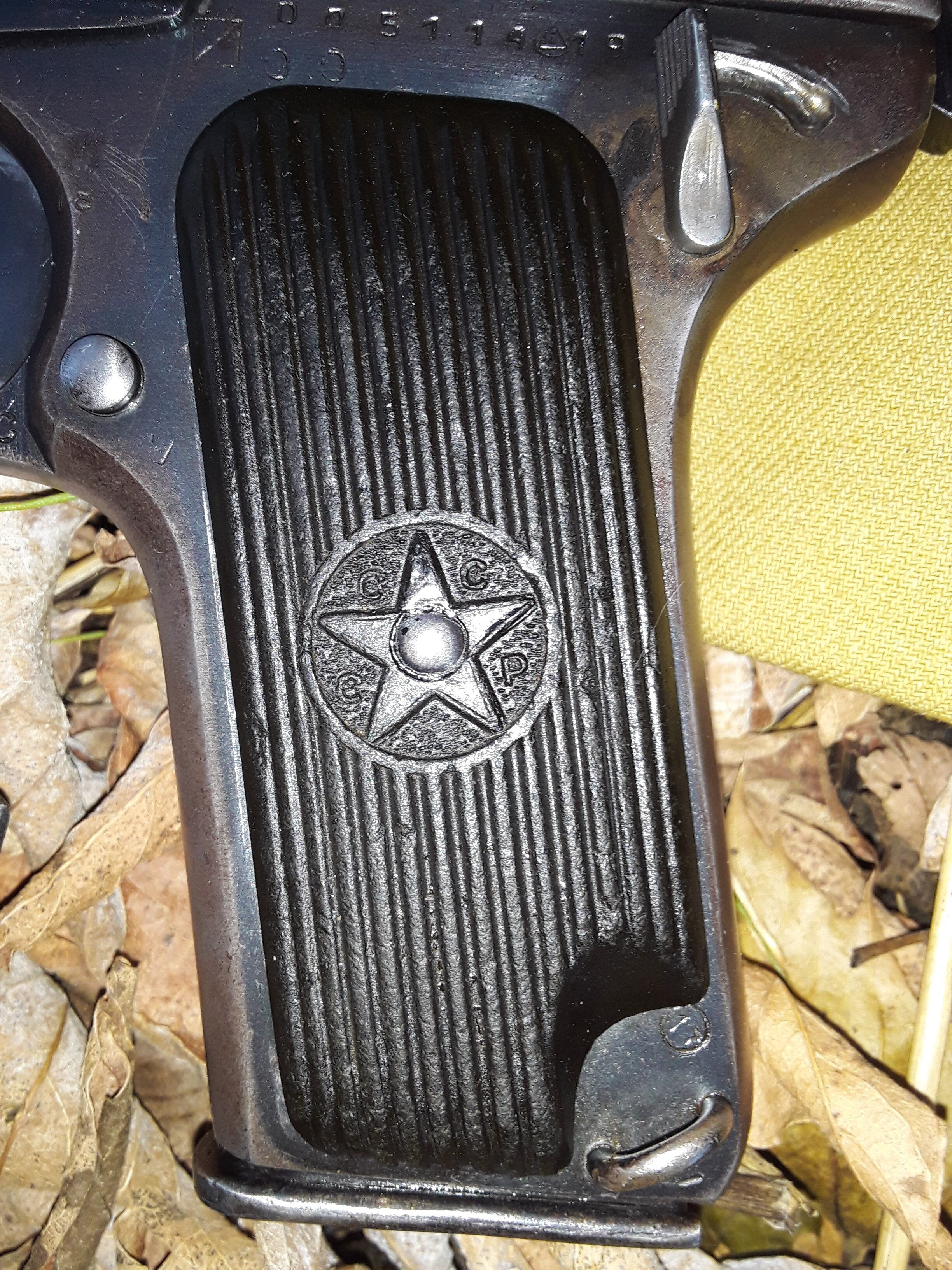
Look at the grip panels. Russian military-issue Makarovs came with brown or black Bakelite grips with a star-in-circle motif. East German examples had a distinctive checkered plastic grip. If someone's put aftermarket rubber grips on a pistol and is calling it "all original," that's not necessarily a lie about the gun itself, but it means the original grips are gone, and replacement Bakelite grips in correct condition aren't cheap or easy to find.
Check the bore. Surplus Makarovs were frequently carried more than they were shot, so you'll find examples with holster wear on the exterior but surprisingly clean bores. That's actually a good sign. A heavily worn bore on a Makarov suggests either extensive range use or corrosive ammunition without proper cleaning, neither is great for collector value.
Import marks are present on virtually every Makarov legally in the US. They'll be roll-stamped or electropenciled on the frame, usually on the dust cover or the right side. A Makarov without import marks is either a pre-ban import, a bring-back with paperwork, or something you should ask hard questions about. The import mark itself doesn't kill value, but its placement and depth matter, a deeply stamped mark across the slide is more visually intrusive than a small electropencil mark on the frame.
Common traps
The biggest mistake intermediate collectors make with Makarovs is overpaying for a Bulgarian example because it's been described as "Russian." The guns are mechanically similar, but the collector market treats them very differently. Bulgarian Makarovs are good pistols, they're just not scarce. A Russian Izhevsk military Makarov in correct condition with matching magazine and original grips is a meaningfully different purchase than a Bulgarian commercial import with aftermarket grips and a mismatched magazine.
The second trap is condition grading. "Excellent" on a surplus Makarov means the original finish is largely intact, with minor holster wear and no pitting. It does not mean "someone reblued this and now it's shiny." A reblued Makarov has an unnaturally even, dark finish that lacks the slight variations you see in original factory bluing. The edges of the slide serrations will look soft or rounded if the gun was polished before rebluing. Original finish with honest wear is always worth more than a refinished gun pretending to be mint.
Third: magazines. Original Soviet military Makarov magazines have a distinctive heel release at the base. Commercial magazines and aftermarket replacements are common. A correct original magazine with the matching-era floorplate adds to the package. It doesn't make or break a deal, but if someone's selling a "complete military Makarov" with an obvious aftermarket magazine, they either don't know what they have or they're hoping you don't.
The CZ 82: Czechoslovakia's overlooked answer
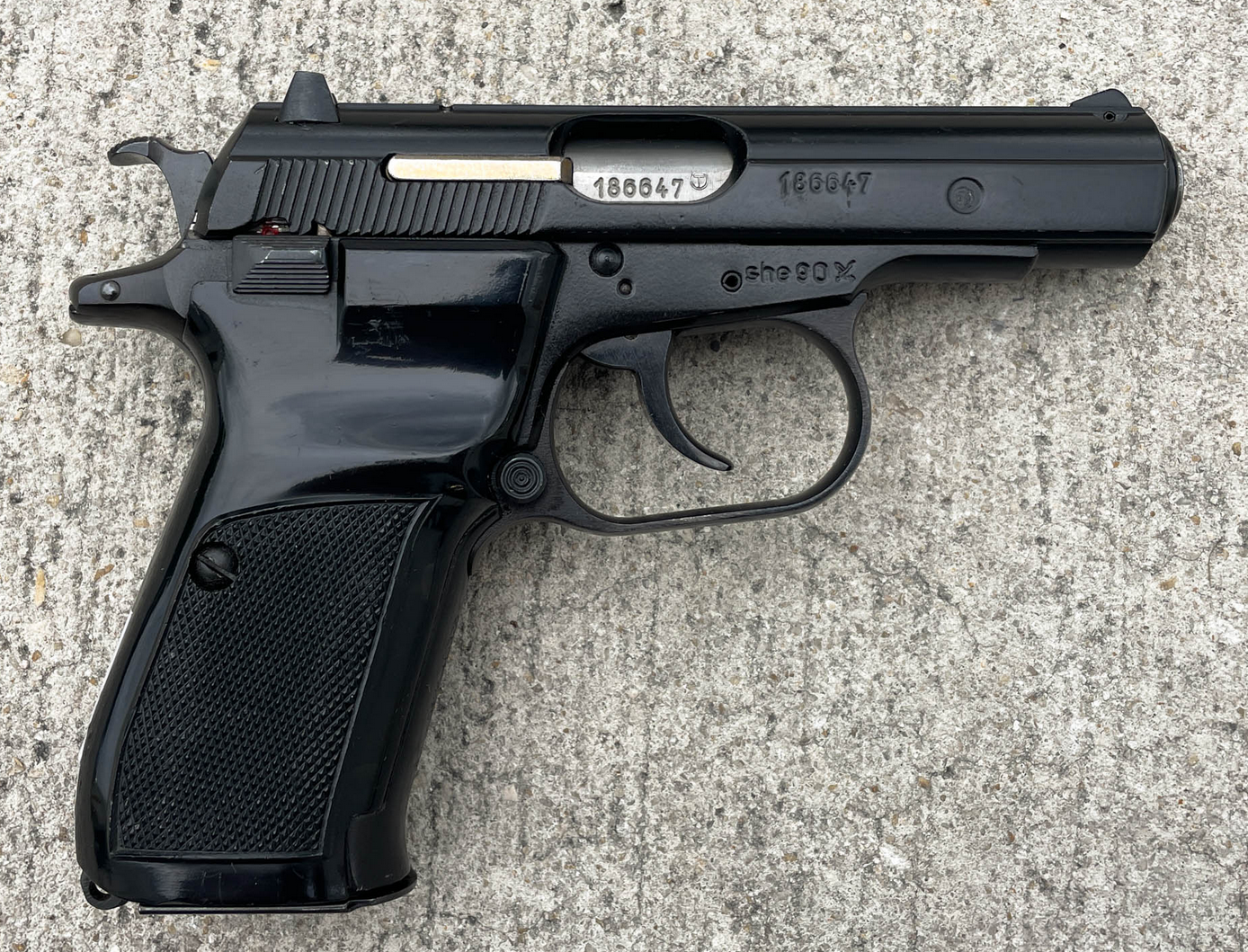
The CZ 82 is the gun that collectors who actually shoot their surplus pistols tend to love. It was the standard Czechoslovak military sidearm from 1983 onward, chambered in the same 9x18mm Makarov cartridge but built on a fundamentally different and more modern design. Where the Makarov is a single-stack, single-action/double-action blowback, the CZ 82 is a double-stack gun holding 12 rounds with an ambidextrous magazine release and a polygonal barrel, features that wouldn't become standard on Western service pistols for another decade.
These came into the US surplus market in waves, mostly through importers dealing in Czech military and police trade-ins. The condition of surplus CZ 82s varies enormously. Some were barely issued. Others were clearly carried daily for years by Czech police officers and show it. The finish on the CZ 82 is a black enamel paint over the steel, not traditional bluing, and it wears differently, you'll see silver showing through at contact points rather than the gradual lightening you see on a blued gun.

Birchwood Casey Perma Blue Liquid Gun Blue 3oz Deals
Prices may change. May contain affiliate links.
Variants worth knowing
The CZ 82 is the military model. The CZ 83 is the commercial export version, and the differences matter. The CZ 83 was produced in multiple calibers, .380 ACP, .32 ACP, and 9x18mm, while the CZ 82 was exclusively 9x18mm Makarov. The CZ 82 has the polygonal rifling; the CZ 83 has conventional rifling. The CZ 82 carries Czech military proof marks and acceptance stamps. If you want the military collectible, you want the 82, not the 83.
Within the CZ 82 production, earlier examples tend to have a nicer fit and finish than later ones, which is typical of any military contract production, early guns get more hand-fitting, later guns get more streamlined assembly. Serial numbers on surplus imports are all over the place, and there's no widely published serial number range guide for the CZ 82 the way there is for, say, the 1911. What you can look at is the proof marks and date codes stamped into the frame, which will tell you the year of manufacture and whether the gun passed Czech military inspection.
The other variant to know about is the CZ vz. 50 and its successor the vz. 70, earlier Czech military pistols chambered in .32 ACP. These are smaller, lighter, and were issued to officers and security services before the CZ 82 replaced them. They're interesting guns in their own right, and some collectors build a Czech military pistol progression. The vz. 50 in particular has some oddball sub-variants that get attention from specialists. But the CZ 82 is the one with the broadest collector interest right now.
Inspection notes
Strip the gun if the seller will let you. The CZ 82's takedown is straightforward, lock the slide back, rotate the takedown lever, and the slide comes forward off the frame. What you're looking at inside: the barrel's polygonal rifling should show clean, defined lands without pitting or erosion at the muzzle end. The feed ramp should be smooth. Check the frame rails for excessive wear, some play between slide and frame is normal on a surplus gun, but if the slide wobbles visibly, that gun saw hard use.
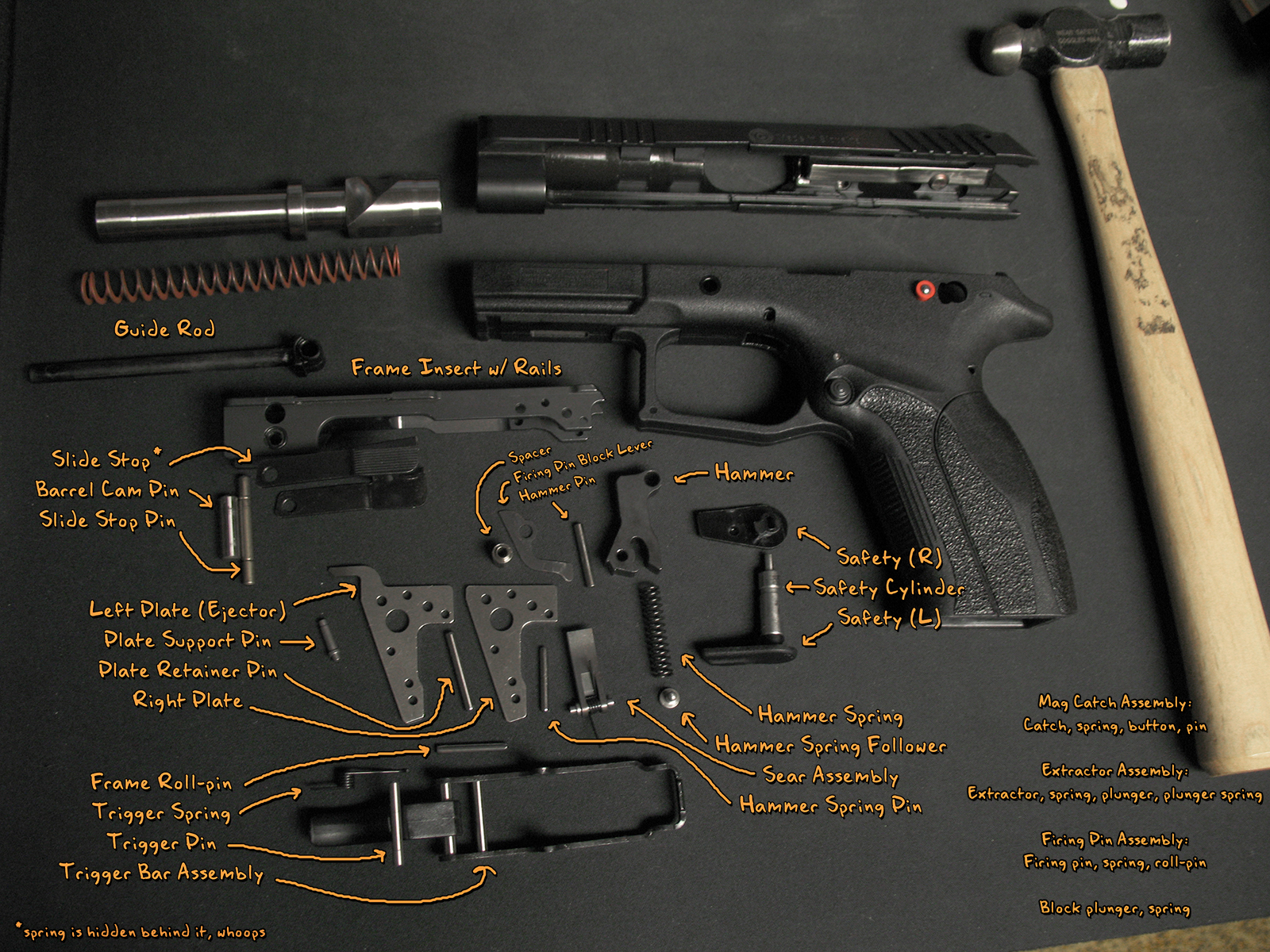
The magazines are the weak point on surplus CZ 82s. Original Czech military magazines are steel-bodied with a capacity of 12 rounds. They're not always in great shape after decades of service. Check the feed lips for spreading or cracks, and test the magazine spring tension by loading a few rounds and seeing if they feed smoothly. Replacement magazines exist but vary in quality. An otherwise excellent CZ 82 with two correct, functional military magazines is a better buy than a nicer-looking gun with no magazines at all, because sourcing correct mags after the fact is increasingly annoying.

One more thing: the grips. Original CZ 82 grips are a textured black plastic with a distinctive pattern. They crack. Especially at the screw holes. Cracked grips are cosmetic, not functional, but they affect the overall presentation. Check both sides, and check whether the grip screws are original or replacements. It's a small thing, but small things add up when you're evaluating a complete, correct military pistol versus a parts-swapped shooter.
The P-64: Poland's pocket Makarov
The Polish P-64 occupies a strange niche. It's chambered in 9x18mm Makarov, it's a Cold War military pistol, and it was available on the surplus market for years at genuinely low prices. That low price created a reputation as a "cheap beater gun," which isn't entirely fair. The P-64 is a well-made pistol with tight tolerances and good materials. It's just small, snappy to shoot, and has a double-action trigger pull that feels like it was designed to prevent accidental discharge by making the first shot nearly impossible on purpose.
The P-64 was manufactured at the Łucznik Arms Factory in Radom, Poland, the same facility that produced the famous Vis wz. 35 before the war. Production ran from 1964 into the 1980s. These were issued to Polish military officers, police, and intelligence services. The guns are compact, roughly comparable in size to a Walther PPK, and were clearly intended as a concealment or backup weapon rather than a primary service arm.
Why collectors are paying attention now
The P-64 was one of those guns that got passed over because it was so affordable. Surplus examples were selling well under $300 for years, and nobody treats a $250 pistol as a serious collectible. But supply has thinned. Polish military surplus imports have slowed considerably, and the P-64 is starting to get the same treatment the Makarov got a decade ago, collectors are realizing there's a finite supply, and the best examples are already in someone's safe.
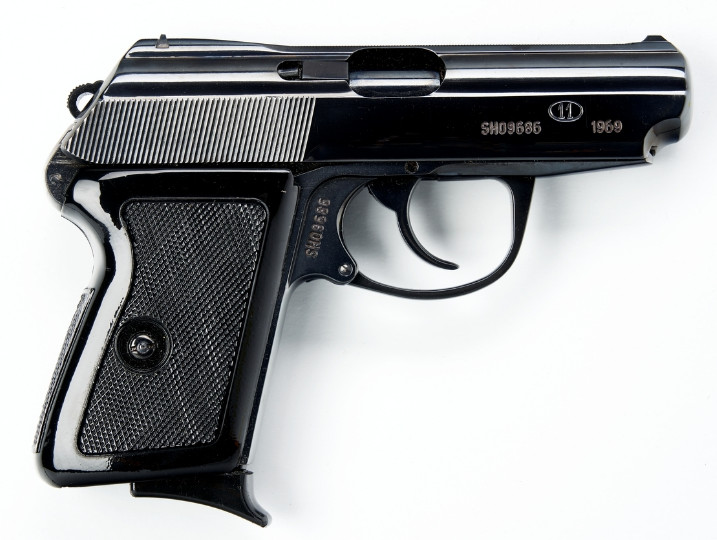
The red flag most buyers miss on a P-64 is the firing pin. These guns have a known issue with firing pin retaining pins walking out over time, which can cause the firing pin to protrude slightly. It's a safety concern and a mechanical issue. Check it. With the gun unloaded and the slide locked back, look at the breech face. The firing pin should be flush or slightly recessed. If it's protruding, the retaining pin needs replacement. It's a cheap fix, but it tells you something about how the gun was maintained.
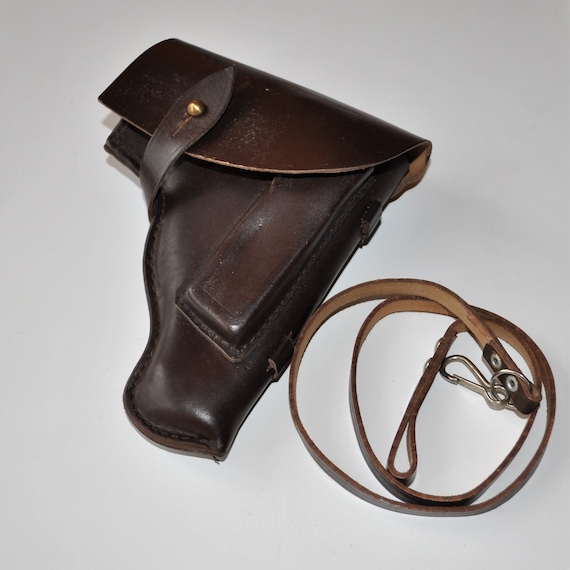
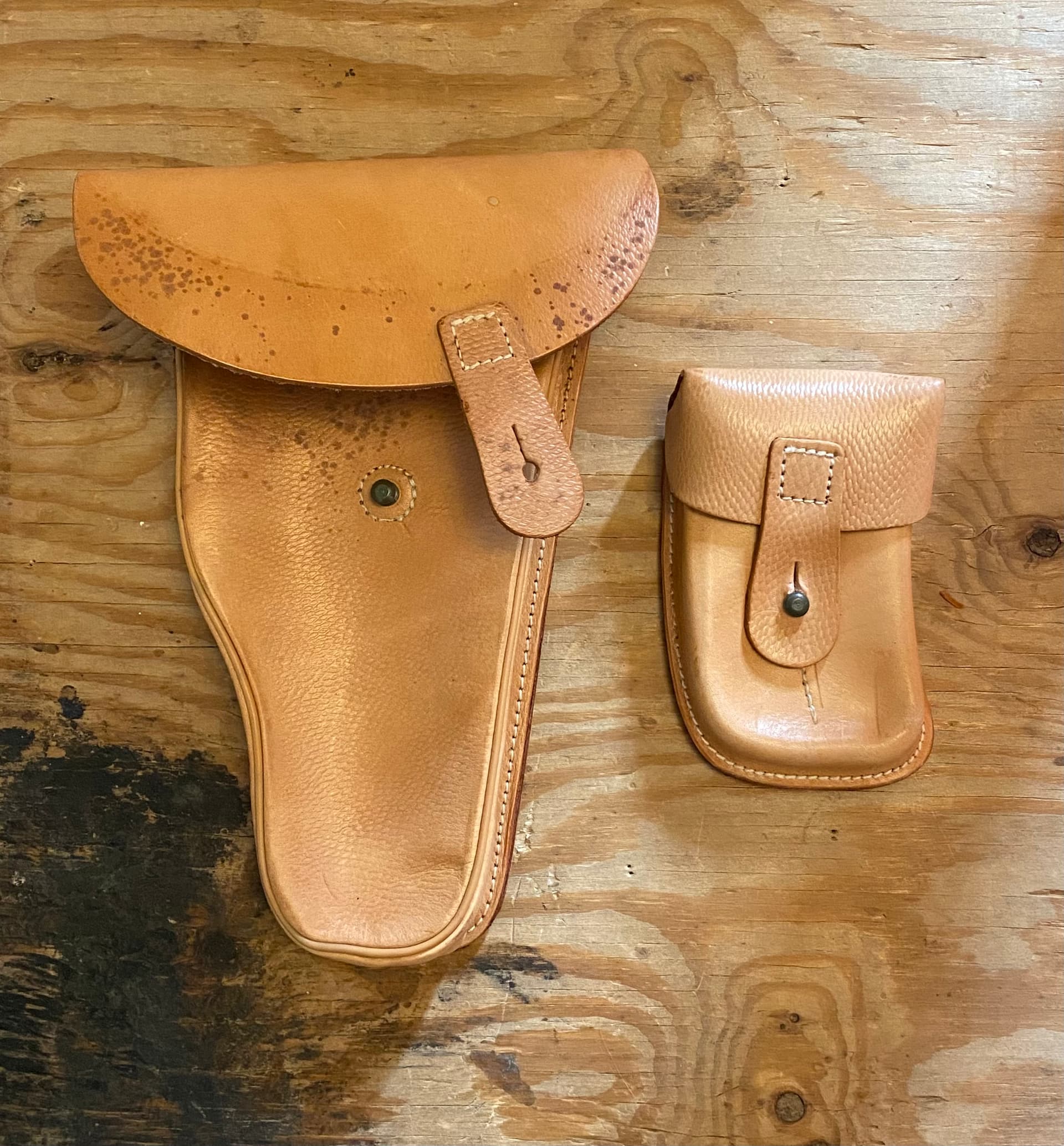
Finish on the P-64 is a military-grade bluing that holds up well. Honest wear shows at the muzzle, on the backstrap, and at the safety lever, all contact points from holster carry. The grips are a brown textured plastic, and like the CZ 82, they can crack. Original P-64 holsters are brown leather with a cleaning rod pocket, and a complete holster-and-pistol set in matching condition is worth more than the gun alone. The holsters themselves are becoming collectible.
The Walther P1: West Germany's Cold War service pistol
Now we cross the Iron Curtain. The Walther P1 is the post-war aluminum-framed version of the legendary P38, adopted by the Bundeswehr (West German military) in 1957. If you want a NATO-side Cold War service pistol with genuine military provenance and a direct lineage to one of the most important handgun designs of the 20th century, the P1 is where you look.
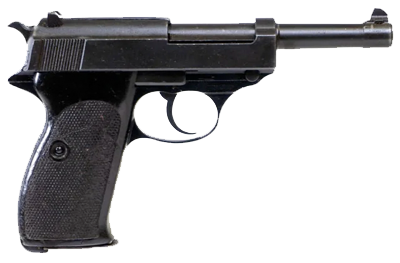
The P1 and the P38 share the same locking-block short-recoil action, the same double-action/single-action trigger, and the same general profile. The critical difference is the frame: the wartime P38 used a steel frame, while the P1 uses an aluminum alloy frame to save weight. This makes the P1 lighter and arguably better suited to daily carry, but it also introduced a durability concern, early P1 frames were prone to cracking at the locking block area after sustained use with hot ammunition. Walther addressed this with a reinforcing hex pin added to the frame starting in the late 1960s. If you're buying a P1, check for that hex pin on the right side of the frame above the trigger guard. Its presence means the gun has the reinforced frame. Its absence means you have an early production gun that may or may not have a frame life issue, depending on how much it was shot.
Variant comparison
There are several related pistols in this family, and the distinctions matter for both collector value and practical use.

Walther PPK Deals
Prices may change. May contain affiliate links.
The wartime Walther P38 is the original, steel frame, produced from 1938 to 1945 by Walther (marked "ac"), Mauser (marked "byf" or "svw"), and Spreewerk (marked "cyq"). These are WWII collectibles and command significantly higher prices than the Cold War P1. A correct wartime P38 with matching numbers is well above the $800 ceiling for most variants.
The Walther P1 is the Cold War military production, manufactured from the late 1950s through the 1990s. These carry Bundeswehr property marks and acceptance stamps. The most commonly encountered examples are from the 1970s and 1980s, when large quantities were produced. These are the guns that fall squarely in the sub-$800 range in surplus condition.
The P4 is a compact variant produced in smaller numbers for German police, featuring a shorter barrel and a different safety mechanism. These are less common and tend to attract more collector interest per unit, but they're a specialized pursuit.
The P38 "postwar commercial" models were produced by Walther from the 1950s onward for commercial sale, with polished bluing and commercial proof marks rather than military acceptance stamps. These are nice guns, but they're not military surplus in the same sense and occupy a different collecting lane.
What the seller won't tell you
Walther P1 magazines are a headache. The original military magazines are aluminum-bodied with a distinctive ribbed pattern. They're not the same as P38 magazines, though they're often sold interchangeably. A P1 will usually function with a P38 magazine and vice versa, but for collector correctness, you want the right magazine for the right gun. Surplus P1s frequently come with mismatched or aftermarket magazines. It's not a dealbreaker, but it's a negotiating point.
The other thing to watch for is frame condition. Because the P1 frame is aluminum, it doesn't rust, but it does corrode differently than steel, showing a white oxidation rather than red rust. Check the frame carefully in the locking block area, around the slide rails, and inside the trigger guard. Any cracking in the frame is a walk-away. Aluminum frames don't get repaired; they get replaced. And a replacement frame means you no longer have a matching gun.
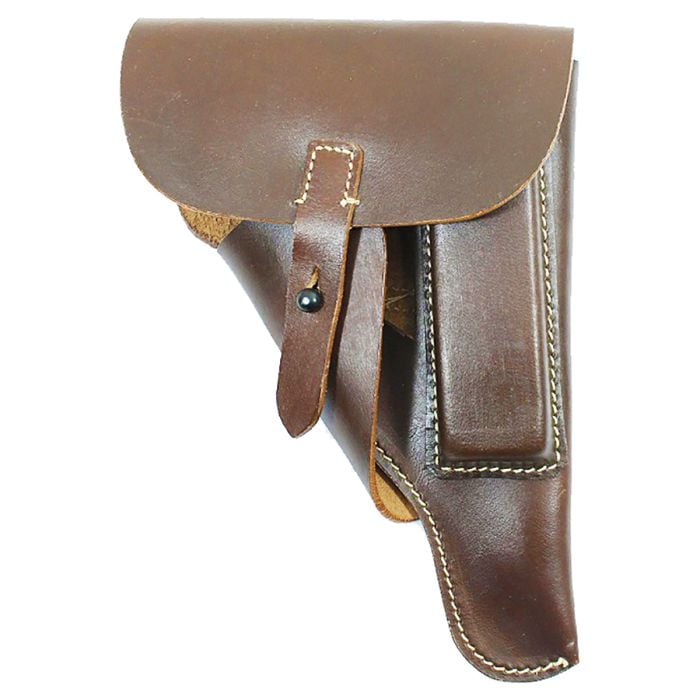
Holster wear on P1s is common and expected. The Bundeswehr used a hard-shell flap holster that protected the gun well but created wear patterns at specific contact points, the muzzle end, the rear of the slide, and the safety lever. A P1 with this kind of wear but an otherwise intact finish is a correctly used military pistol. That's what you want.
The FEG PA-63: Hungary's aluminum Makarov
The Hungarian PA-63 gets lumped in with the Makarov family, and while it fires the same 9x18mm cartridge, it's actually a different design, closer in concept to the Walther PP than to the Soviet Makarov. It uses an aluminum alloy frame (like the P1) with a steel slide, and it has a more refined appearance than most Eastern Bloc service pistols. The FEG factory in Budapest produced these for the Hungarian military and police from 1963 into the 1990s.
The PA-63 had a reputation as a budget surplus gun for years, and honestly, it earned that reputation because the trigger pull in double-action mode is genuinely terrible out of the box, long, heavy, and gritty. Many owners replace the hammer spring to lighten it, which is a functional improvement but a collector modification. If you're buying one as a collectible, you want the original spring intact, even if it makes range sessions less pleasant.
The two-tone look of the PA-63, silver aluminum frame, blued steel slide, is distinctive and either appeals to you or doesn't. Some later examples were produced with a painted or anodized frame that darkens the aluminum to more closely match the slide. These are less common and get some collector attention for that reason.
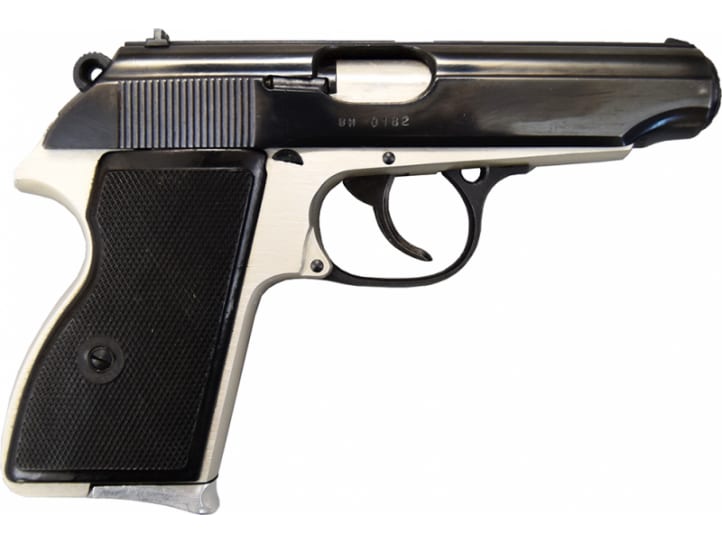
What makes the PA-63 interesting right now is the same dynamic affecting all these guns: supply is drying up. Hungarian military surplus imports have slowed, and the guns that are already in the US represent most of what's going to be available. A correct military PA-63 with original holster, cleaning rod, and spare magazine is a complete Cold War Hungarian military sidearm package, and that package is harder to assemble every year.
The Beretta 81 series: NATO's other Cold War compact
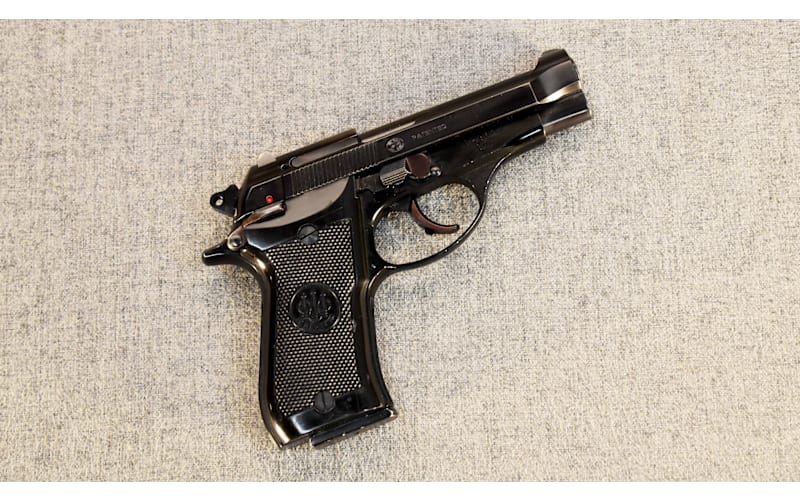
The Beretta 81 Cheetah series isn't always thought of as a "surplus" gun, but large quantities of Italian military and police trade-in Beretta 81s and 84s have entered the US market through surplus importers, and they fit the Cold War collecting window perfectly. Produced from 1976 onward, the Model 81 is chambered in .32 ACP (7.65mm Browning) and the Model 84 in .380 ACP. The Model 81 holds 12 rounds of .32 ACP in a double-stack magazine, a remarkable capacity for the era and caliber.
These are beautifully made guns. Beretta's fit and finish during this period was excellent, and even surplus examples tend to show quality that exceeds their Eastern Bloc contemporaries. The bluing is deep, the controls are crisp, and the overall feel is that of a premium product. Italian police and military forces issued these widely, and the trade-in examples that reach the US market are generally in good to very good condition, carried regularly but not abused.
The detail that matters
On surplus Beretta 81s, check the barrel for pitting near the chamber. Italian military and police ammunition from this era was sometimes corrosive or semi-corrosive, and guns that weren't cleaned promptly after range sessions can show chamber erosion even when the rest of the bore looks fine. Pull the slide back, lock it open, and look at the chamber with a light. Pitting there means the gun was neglected at some point, and while it may still function perfectly, it affects both collector value and long-term reliability.
The grips on the Beretta 81 series are a glossy black plastic with the Beretta logo, and they hold up well. Aftermarket wood grips are popular for aesthetic reasons, but original grips should be present if you're buying for collecting purposes. The magazines are also distinctive, double-stack steel with a finger-rest floorplate on some variants. Correct magazines are still available but getting pricier as the surplus supply gets absorbed.
Import marks on surplus Beretta 81s are typically on the frame, and they're usually relatively discreet compared to the sometimes-aggressive import stamps on Eastern Bloc guns. This is partly because the importers handling Italian surplus tend to be more careful about mark placement, and partly because the Beretta frame has more real estate to work with.
Common mistakes across all Cold War surplus pistols
Regardless of which specific pistol you're chasing, certain errors repeat themselves at gun shows, online auctions, and shop counters.
Buying on cosmetics alone is the most expensive mistake. A surplus pistol that looks great in a photo may have a reblued finish, replacement grips, and a mismatched magazine. It'll photograph better than a gun with honest holster wear, original grips, and a correct magazine, but the second gun is the better collectible. Learn to see past the shine.
Ignoring import marks is another common error, but in the opposite direction from what you'd expect. Some buyers refuse to consider any gun with an import mark, which eliminates 90% of the available market. Import marks are a reality of legal surplus importation. They don't make a gun less authentic, they make it legally present in the United States. What matters is the mark's intrusiveness. A small electropencil mark on the frame is very different from a deep roll stamp across the slide. Factor it in, but don't use it as a blanket disqualifier.
Assuming "numbers matching" means what you think it means is dangerous with surplus pistols. On a Makarov, "matching" typically refers to the serial number on the frame and slide. But the magazine, grips, and other small parts may or may not carry serial numbers depending on the country and era of manufacture. A seller describing a gun as "all matching" should be able to tell you specifically which parts carry numbers and which match. If they can't, they're using the phrase as marketing rather than as a factual description.
Overlooking the magazine is surprisingly common. Collectors will spend twenty minutes examining the finish on a pistol and never look at the magazine. Original military magazines are part of the collectible package. They're marked, they're dated, and they're increasingly hard to find. A surplus pistol with its correct original magazine is more complete than one without, full stop.
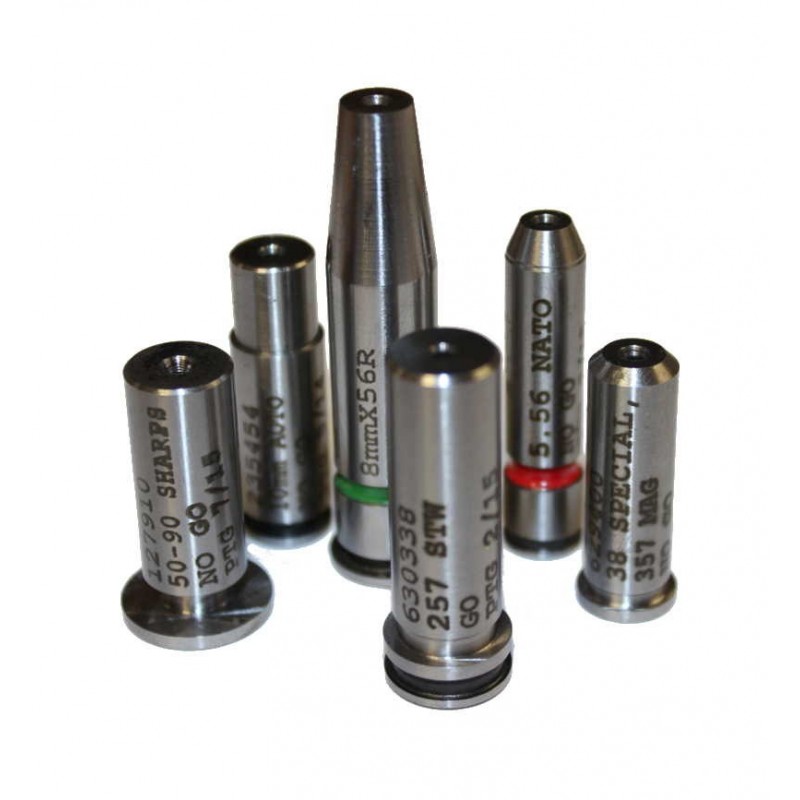
Finally, not checking headspace on older surplus pistols is a mechanical oversight that can have safety implications. This is particularly relevant for the Walther P1 and other locked-breech designs where frame or locking block wear can affect headspace over time. A set of go/no-go gauges for the relevant caliber is a small investment that can prevent a large problem.
Where the market is heading
Cold War surplus pistols are in a transition period. The era of $200 Makarovs and $150 PA-63s is over. Import restrictions, dwindling overseas stockpiles, and growing collector interest have all pushed prices upward. The guns discussed here are still findable under $800 in correct, collectible condition, but that window is narrower than it was three years ago, and it'll be narrower still three years from now.
The smart move for an intermediate collector is to focus on completeness and correctness rather than chasing the absolute cheapest price. A surplus CZ 82 with original grips, two correct magazines, and a military holster is a more satisfying and more valuable acquisition than a slightly cheaper example that's been stripped of its accessories. The accessories are what disappear first, and they're what cost the most to replace later.
Before you buy any Cold War surplus pistol, do three things. First, identify exactly which variant you're looking at, country of manufacture, military versus commercial, and approximate date of production. Second, inspect the gun for correct parts, original finish, and mechanical function. Third, compare what you're being asked to pay against what the same variant in similar condition has actually sold for recently, not what's listed, but what's sold. Asking prices and selling prices are different numbers, and the gap between them is where bad deals live.
The resources for this kind of research are better than they've ever been. Online forums dedicated to specific firearms, auction archives showing completed sales, and collector reference books all exist. Use them. The thirty minutes you spend researching before a purchase will save you from the sinking feeling of realizing, three days later, that you paid collector prices for a shooter-grade gun. That feeling doesn't go away. The research habit does prevent it.