
You just spent forty hours developing a load, and now you're staring at a string of velocities that don't make sense. The extreme spread says 47 fps, but half those shots felt identical. Before you start questioning your powder measure, question your chronograph.
Velocity data is the backbone of precision reloading and long-range shooting. Bad data doesn't just waste time; it sends you chasing problems that don't exist. A chronograph that reads 15 fps high on every shot is annoying but livable. One that adds random noise to your strings is actively destructive to load development. And the difference between those two failure modes depends entirely on which technology is sitting next to your barrel.
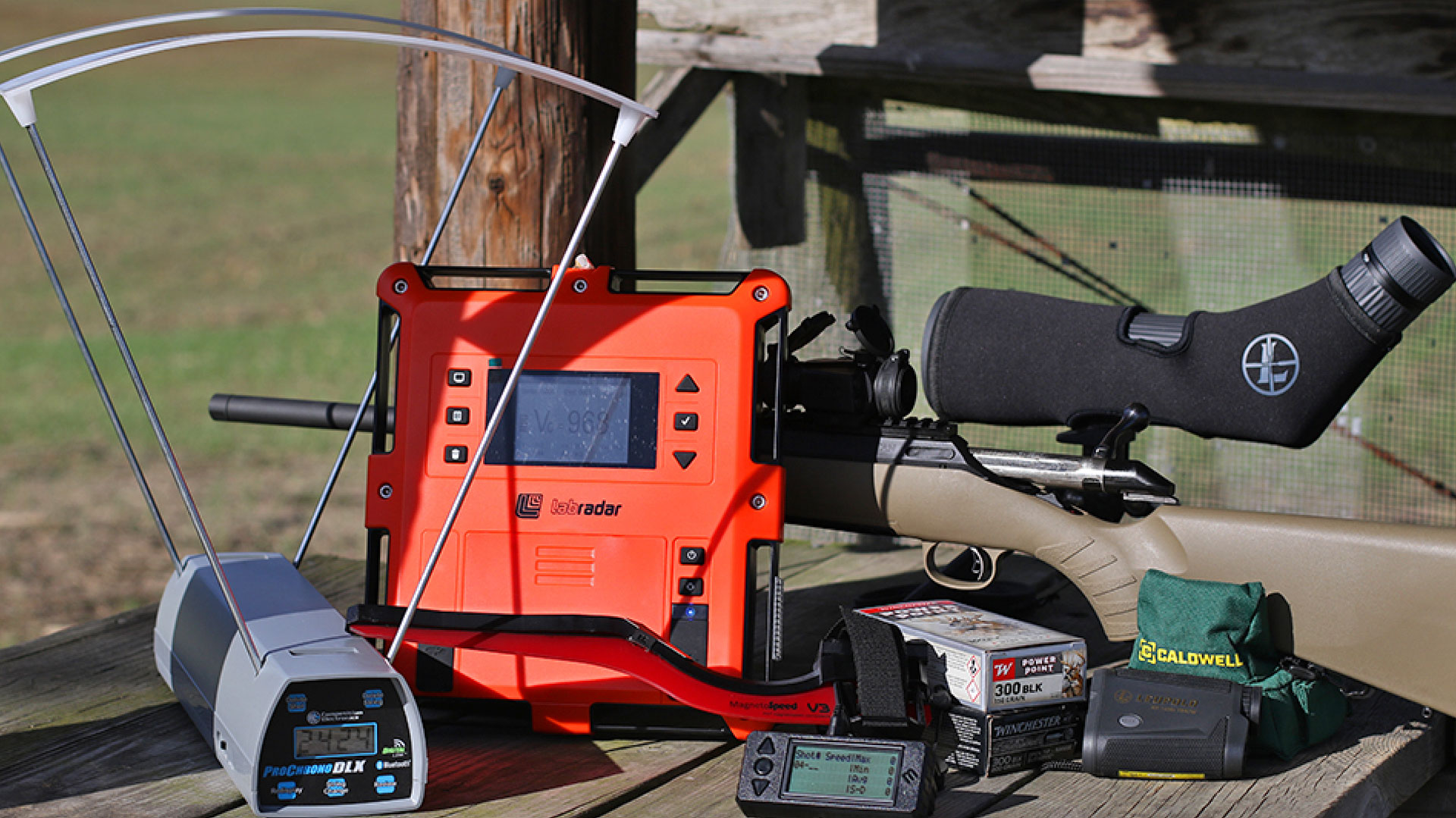
This is a deep dive into chronographs, specifically the three technologies competing for your bench right now: Doppler radar units (LabRadar, Garmin Xero, Athlon Rangecraft), barrel-mounted electromagnetic sensors (MagnetoSpeed), and traditional optical chronographs. The gap between these categories is wider than most people assume, and the gap within the radar category is worth understanding before you drop $500 or more.

Garmin Xero C1 Pro Deals
Prices may change. May contain affiliate links.
How each technology actually measures velocity
The differences here aren't cosmetic. Each approach has physics-level strengths and weaknesses that show up as real measurement artifacts.
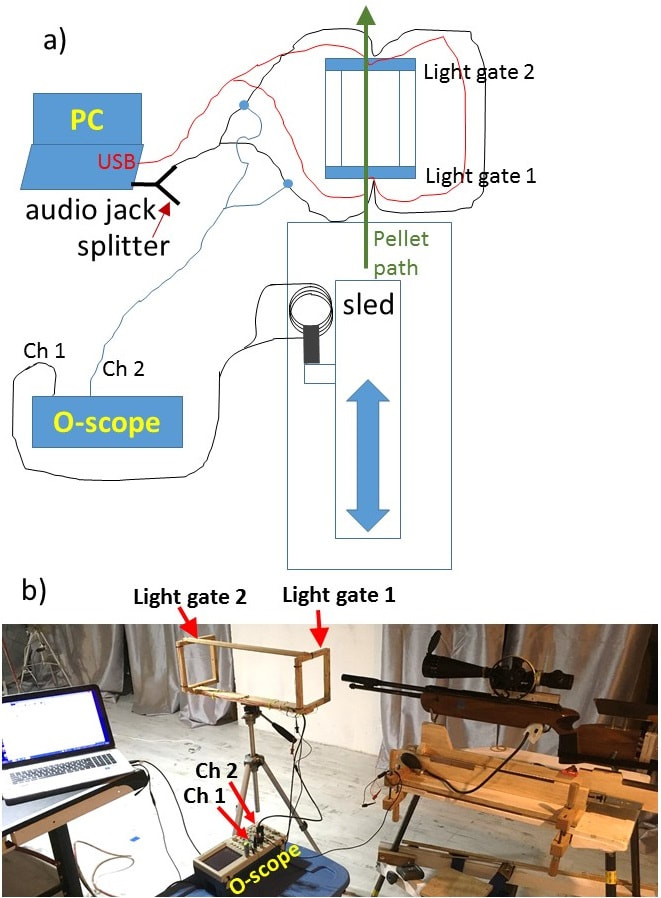
Optical chronographs, the old-school skyscreens, work by detecting a bullet's shadow as it passes over two sensors spaced a known distance apart. Time between interruptions, divided into distance, gives velocity. Simple. The problem is that anything affecting light affects accuracy: clouds, muzzle flash, the angle of the sun, even the shadow from a nearby shooter's brass arcing through the air. Diffuser kits help, but they don't eliminate the fundamental vulnerability. Optical units also require the bullet to pass directly over the sensors, which means they sit downrange in front of the muzzle. Shoot low or let your muzzle dip, and you're buying a new chronograph. Everyone who's used skyscreens long enough has either shot one or knows someone who has.
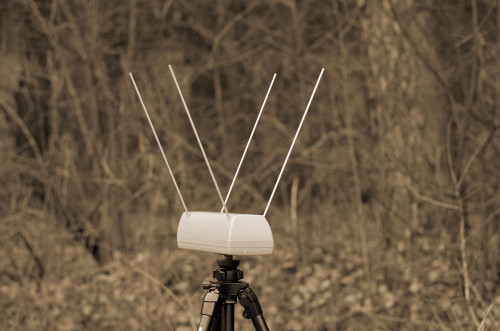
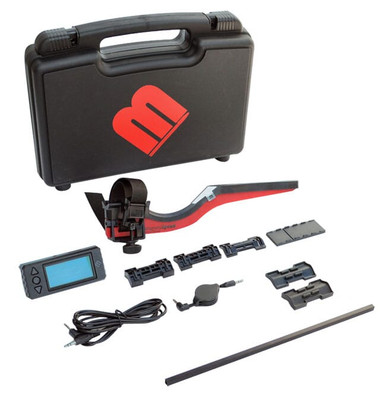
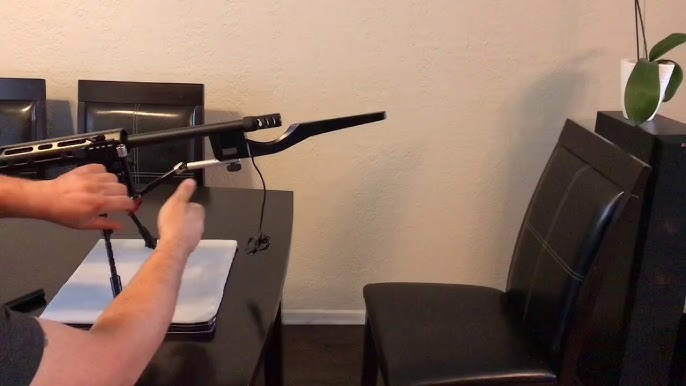
MagnetoSpeed takes a completely different approach. A sensor bayonet straps to the barrel or muzzle device and detects the electromagnetic signature of the bullet as it passes through a sensing field. No light dependency, no downrange equipment to destroy. The unit doesn't care about weather, lighting, or adjacent shooters. It's measuring at the muzzle, period. The tradeoff, and it's a real one, is that the bayonet physically attaches to the barrel. That changes harmonics. POI shifts are common, sometimes dramatically. The V3 manual essentially acknowledges this: use it for load development data, not for zero confirmation.
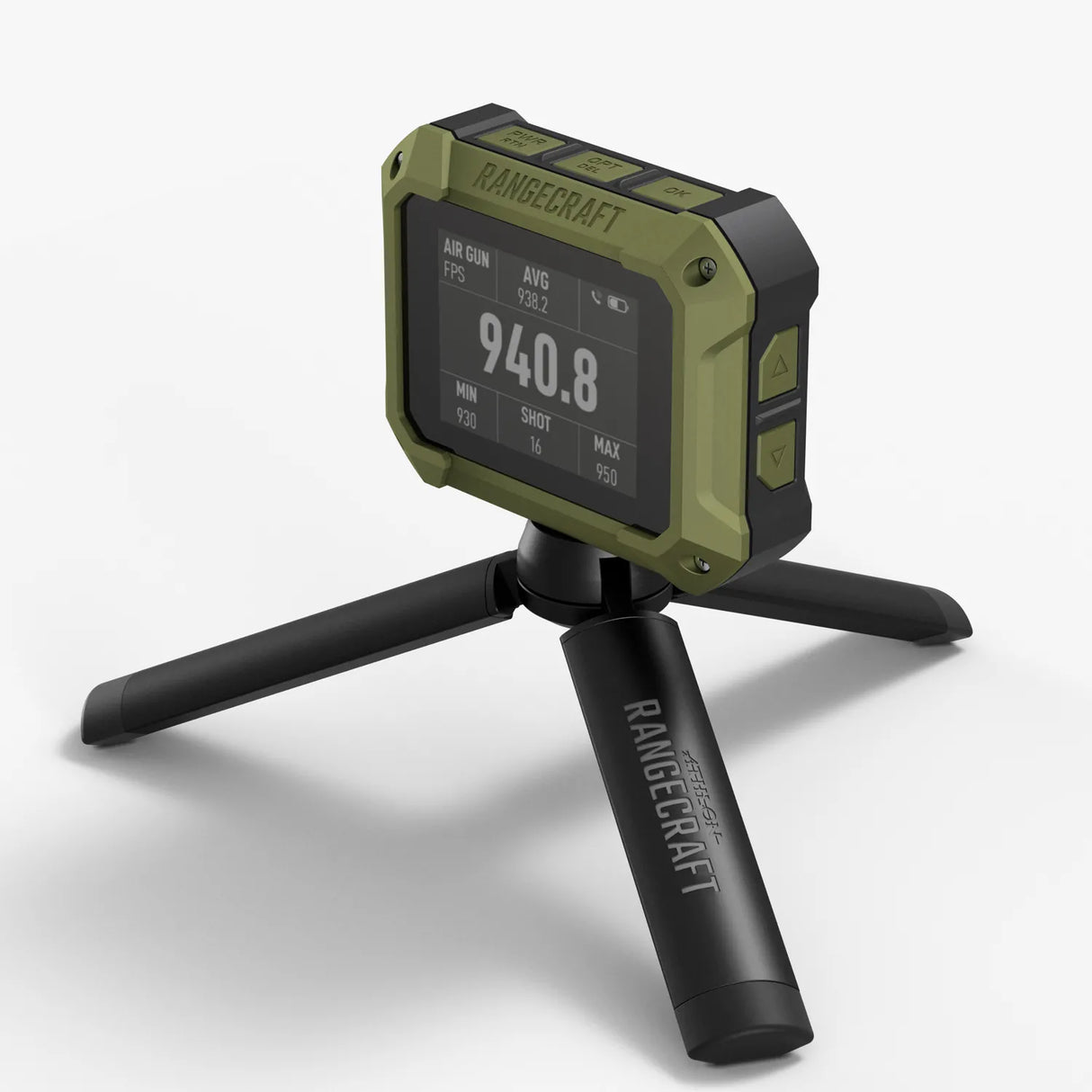
Doppler radar units track the bullet in flight using microwave radar, similar in principle to a police speed gun but tuned for small, fast projectiles. The LabRadar (original and LX), Garmin Xero C1 Pro, and Athlon Rangecraft Velocity PRO all fall into this category. They sit beside the shooter, don't touch the barrel, don't care about lighting, and can record velocity at multiple distances downrange, not just at the muzzle. That last point matters more than people think, because it gives you actual ballistic coefficient data derived from observed deceleration rather than manufacturer claims.
Athlon Rangecraft Velocity PRO Deals
Prices may change. May contain affiliate links.
The radar units: not all created equal
Lumping all radar chronographs together is a mistake. The technology is similar, but the implementation, triggering, and user experience vary significantly across the three main players.
LabRadar LX
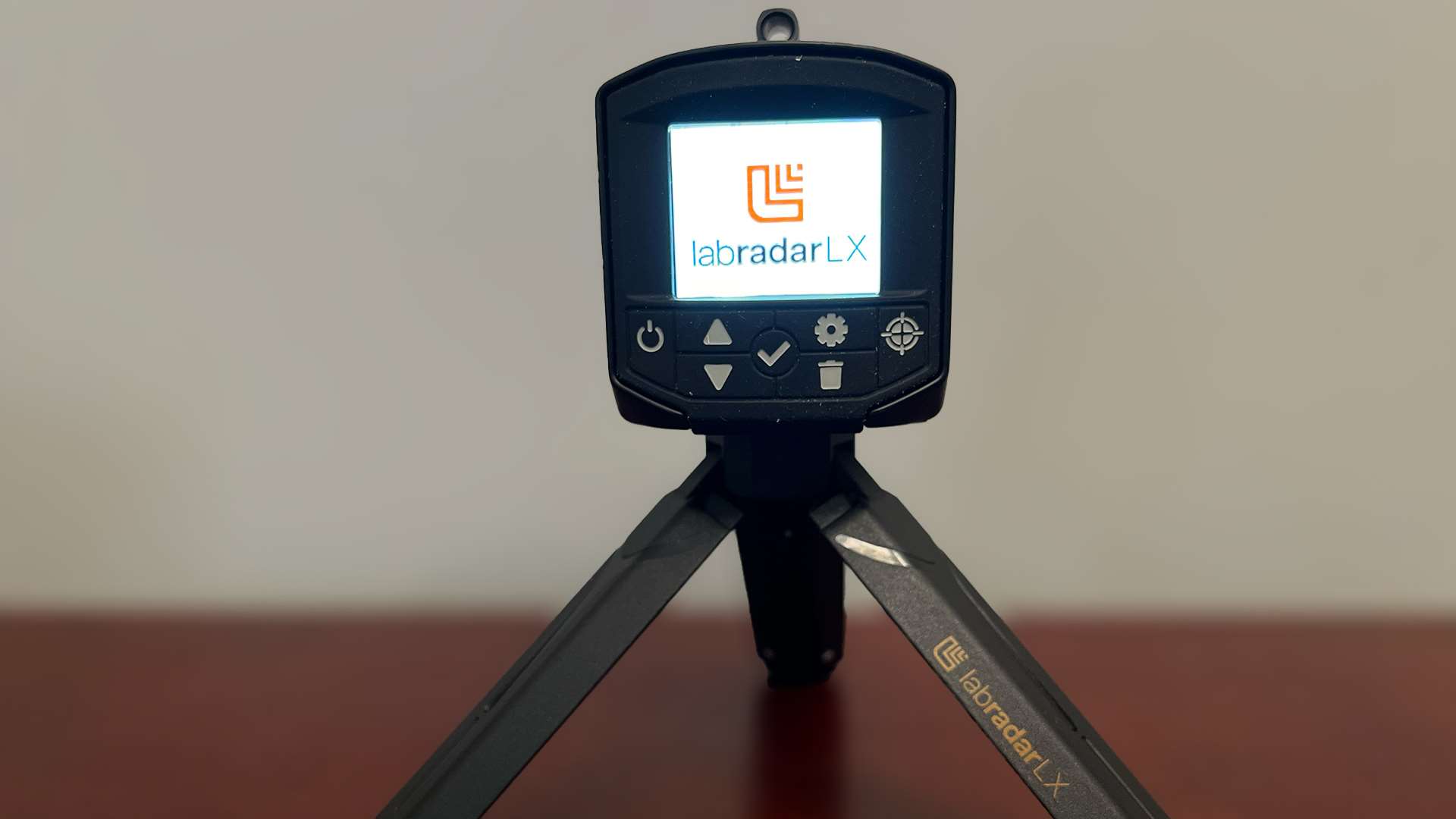
The LabRadar LX is the second generation of the unit that essentially created the consumer radar chronograph market. It uses Doppler radar combined with an acoustic trigger, it listens for the sound of the shot to know when to start tracking. The LX improved on the original LabRadar's biggest complaints: the interface is better, Bluetooth connectivity works with a dedicated app, and the unit is somewhat more compact. It records velocity at user-selectable distances out to about 100 yards, which means you can pull muzzle velocity and downrange velocities from a single shot.
Where the LX still frustrates people is setup sensitivity. The unit needs to be positioned correctly relative to the muzzle, roughly beside the shooter, aligned with the bore axis, within a specific distance window. Get the alignment wrong by a few degrees and it won't pick up shots. Acoustic triggering can also be problematic on busy ranges. If the guy two benches over fires a .300 Win Mag while you're shooting a .223, the LX might trigger on his shot instead of yours. The air-screen accessory helps by creating a more localized trigger zone, but it's an additional purchase and another thing to set up.
The app and data export are genuinely useful. Strings are logged automatically, you can tag loads, and exporting to a spreadsheet for analysis is straightforward. The LX also handles pistol velocities and even archery, the radar doesn't care about projectile type as long as it's big enough to reflect signal.
Garmin Xero C1 Pro
Garmin entered this space and immediately made things interesting. The Xero C1 Pro is smaller than the LabRadar, runs on a rechargeable internal battery, and uses Garmin's ecosystem for data management. The form factor alone is a selling point, it's genuinely compact enough to toss in a range bag without planning around it.
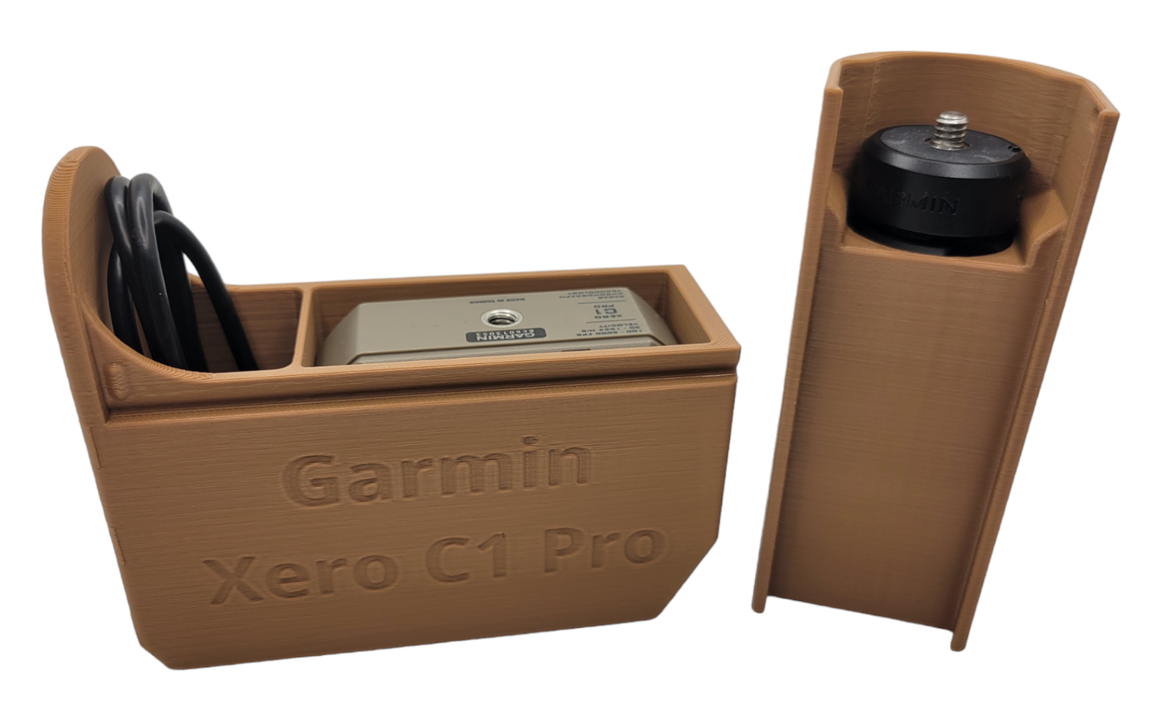
The Xero uses radar with what Garmin describes as automatic shot detection, which in practice means it's using a combination of radar return and internal algorithms to identify shots rather than relying purely on an acoustic trigger. This makes it less susceptible to adjacent shooter interference on busy ranges, a meaningful advantage if you don't have a private range.
The tradeoff shows up in edge cases. Some users report the Xero occasionally missing shots, particularly with subsonic loads or suppressed firearms where the radar signature and acoustic profile are both reduced. There are also scattered reports of velocity readings that diverge slightly from LabRadar readings on the same string, usually within 10-15 fps, which is within the realm of normal measurement variation, but enough to spark endless forum arguments. The Garmin Connect app integration is polished but locks you into Garmin's ecosystem for data sync.
One thing the Xero does well: it records downrange velocity data automatically without requiring you to pre-select distances. The unit figures out the trajectory and reports velocities at standard intervals. That's a nice quality-of-life improvement over the LabRadar's approach of needing distance gates configured before you shoot.
Athlon Rangecraft Velocity PRO
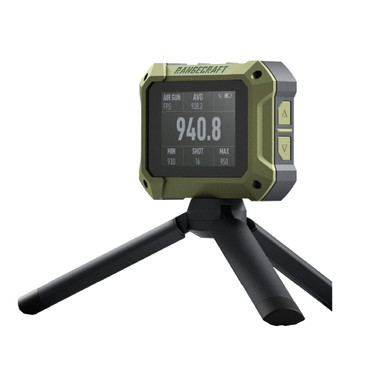
The newest entrant. Athlon's Rangecraft uses radar technology and has been generating buzz partly because of its price point relative to the competition and partly because of its feature set. It records velocity at multiple downrange distances, connects via Bluetooth to a phone app, and has a form factor that splits the difference between the LabRadar's bulk and the Garmin's compactness.
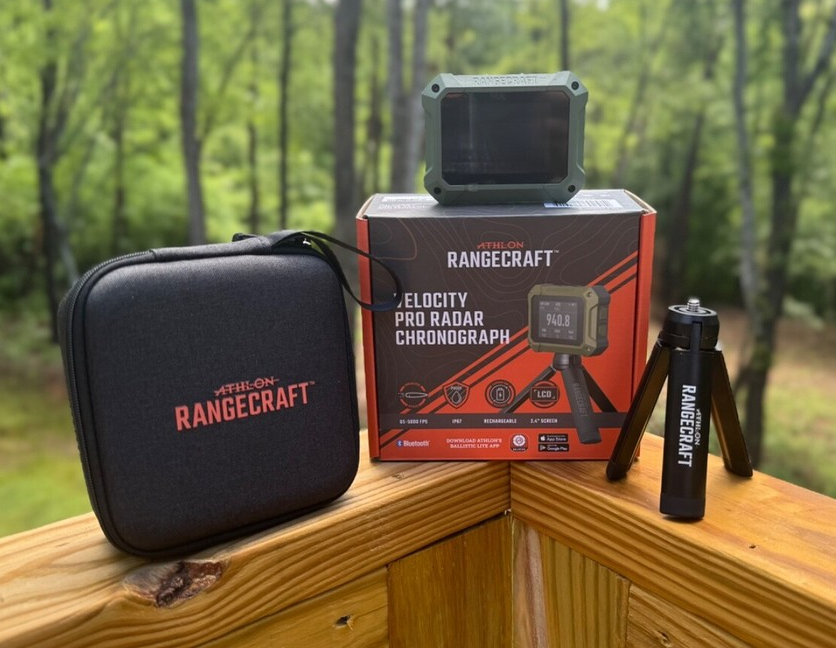
Early testing from multiple sources suggests the Rangecraft tracks well with the LabRadar LX on velocity readings, usually within single-digit fps differences on the same string, which is about as close as you can expect from two independent measurement devices. The app is functional if not as polished as Garmin's, and the unit handles both rifle and pistol cartridges.
Where the Rangecraft is still proving itself is long-term reliability and edge-case performance. It's newer to market, which means the firmware is still maturing and the user community is smaller. Some users have noted occasional shot detection issues in specific conditions, though Athlon has been pushing firmware updates to address these. The triggering mechanism and sensitivity settings are still being dialed in through real-world feedback.
How the radar units compare head to head
The honest answer is that all three radar chronographs produce accurate velocity data under normal conditions. The differences that actually matter day to day are:
Setup speed and hassle factor, the Garmin wins here. Power on, set it next to you, shoot. The LabRadar LX requires more deliberate positioning and alignment. The Rangecraft falls in between.
Busy range performance, the Garmin's shot detection algorithm handles multi-shooter environments better than pure acoustic triggering. The LabRadar's air screen accessory closes this gap but adds complexity.
Data and ecosystem, Garmin's app is the most polished. LabRadar's app is functional and allows good data export. Athlon's app is improving but the youngest of the three.
Downrange velocity capture, all three do this, but the LabRadar LX gives you the most granular control over distance gates. The Garmin automates it. The Rangecraft handles it but with less configurability than the LX.
Suppressor and subsonic performance, this is where all radar units can struggle. Low-velocity, low-signature projectiles are harder for radar to track. The LabRadar generally handles this best due to its sensitivity tuning options, but none of them are bulletproof with very quiet, very slow loads.
MagnetoSpeed: the barrel-mounted alternative
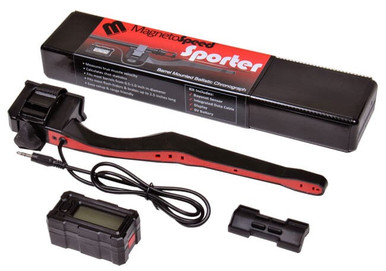
The MagnetoSpeed V3 and its less expensive sibling, the Sporter, take a fundamentally different approach that has real advantages, and one significant limitation that you need to understand before buying.
What it does well
Accuracy and consistency are the MagnetoSpeed's strongest selling points. Because the sensor is physically at the muzzle, measuring the bullet's electromagnetic field as it passes through a known sensing zone, there's almost no environmental variable that affects the reading. Wind, rain, sun angle, adjacent shooters, muzzle blast from nearby rifles, none of it matters. The V3 consistently produces the tightest standard deviations when measuring the same ammo across multiple chronograph types, which suggests it's introducing the least measurement noise.
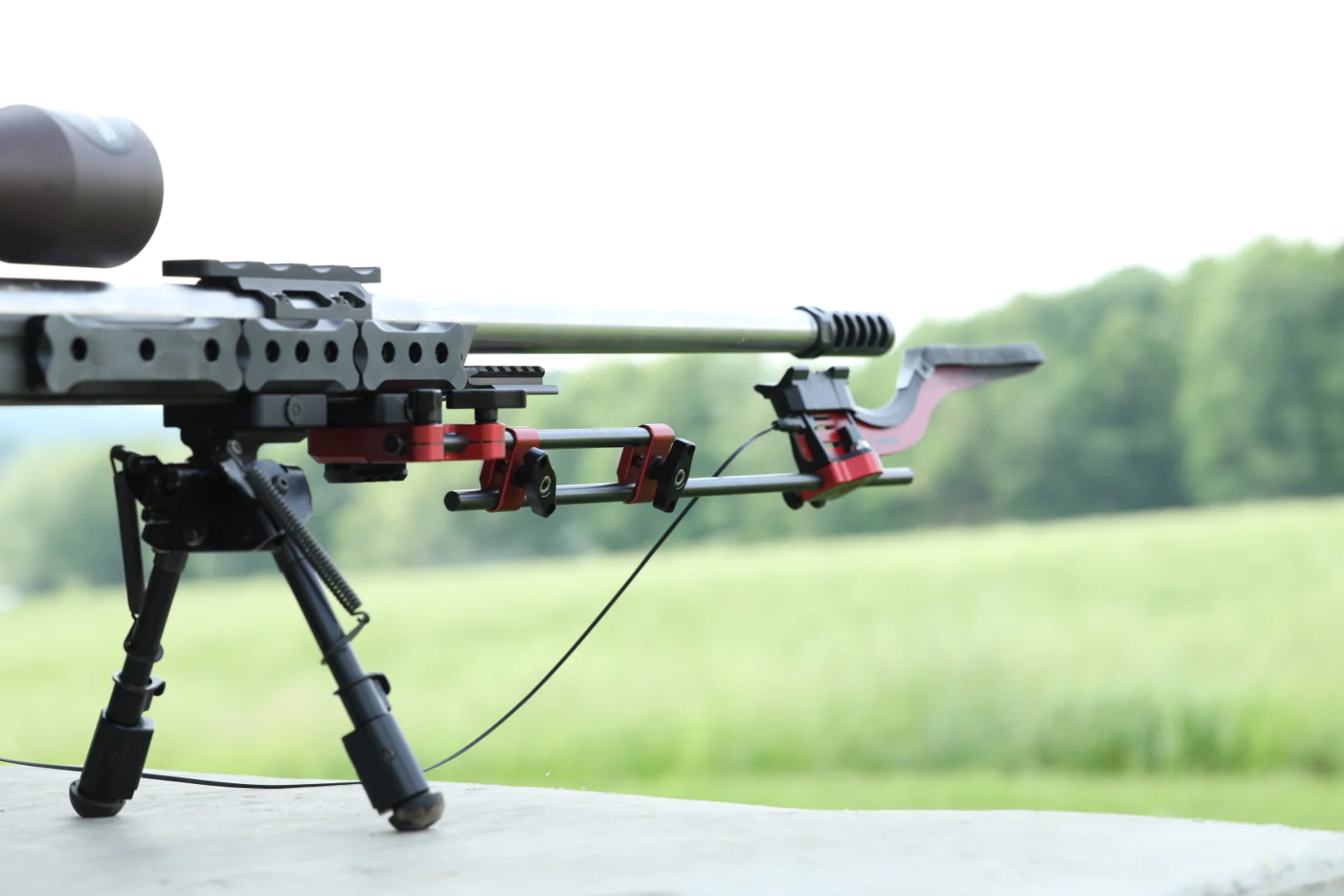
Setup on a bolt rifle is quick. Strap the bayonet to the barrel, plug in the display unit, shoot. There's no alignment to fuss with, no distance to measure from the muzzle, no worry about triggering on someone else's shot. For a reloader working alone at a quiet range, this simplicity is hard to beat.
The V3 versus Sporter decision is straightforward. The V3 comes with a more robust mounting system (including a universal adapter for different barrel profiles), a harder case, and a few more data features. The Sporter uses a simpler strap mount, comes in lighter packaging, and costs less. The actual measurement hardware is essentially the same. If you're only using it on one or two rifles with standard barrel profiles, the Sporter does the job. If you're switching between bull barrels, pencil barrels, and barrels with muzzle devices, the V3's mounting flexibility matters.
The POI shift problem
Here's the thing nobody should gloss over: strapping a bayonet sensor to your barrel changes how the barrel vibrates. This shifts point of impact. Sometimes a little, sometimes a lot, it depends on barrel profile, contour, and how the mount interfaces with the barrel. On a heavy varmint-contour barrel, the shift might be minimal. On a lightweight sporter barrel, it can move POI several inches at 100 yards.
This means you cannot use a MagnetoSpeed to simultaneously verify velocity and confirm zero. You're doing one or the other. For pure load development where you're measuring velocity and extreme spread but not worried about group size, this is fine. For confirming that your load shoots to the same POI at the velocity you developed it at, you need to remove the MagnetoSpeed and verify separately.
Some shooters also report that the MagnetoSpeed changes the harmonic node enough to affect group size, meaning the "best" load with the bayonet on might not be the best load with it off. This is a legitimate concern for serious precision reloaders. The workaround is to use the MagnetoSpeed for initial velocity screening and then do final group testing without it, but that adds steps to the process.
There's also the practical issue of barrel devices. If you're running a muzzle brake or suppressor, mounting the bayonet requires either removing the device or using an adapter that positions the sensor ahead of it. MK Machining and others make adapter setups, but it's another piece of hardware to buy and configure. With a radar chronograph, you just shoot through whatever's on the muzzle.
Where MagnetoSpeed still makes sense
Despite the limitations, the MagnetoSpeed occupies a real niche. Competitive shooters who want dead-reliable velocity data at matches where radar setup might be impractical. Reloaders who work at busy public ranges where radar triggering is unreliable. Anyone who needs a chronograph that works in any lighting condition, any weather, with zero setup alignment. And budget-conscious shooters, the Sporter is meaningfully less expensive than any of the radar options.
Optical chronographs: are they still relevant?
Short version: barely, and only for specific use cases.
The Caldwell Ballistic Precision, Competition Electronics ProChrono, and similar skyscreen-based units still work. They measure velocity. On a clear day with good lighting and proper diffuser setup, they can produce readings within 10-20 fps of a radar unit. The problem is that "clear day with good lighting and proper diffuser setup" describes maybe 40% of actual range sessions.
Optical chronographs fail in low light, fail in direct overhead sun without diffusers, give erratic readings when clouds pass over during a string, and sit directly in the bullet's path where one bad shot or one gust of wind pushing your muzzle offline destroys them. They also can't measure downrange velocity, you get a single data point at whatever distance the skyscreens are positioned.
The one remaining argument for optical units is price. A basic optical chronograph costs $80-150, which is a fraction of any radar unit or MagnetoSpeed. If you're a casual shooter who wants a rough velocity check once or twice a year and you shoot at an outdoor range with decent lighting, an optical unit does that job. But if you're developing loads, tracking lot-to-lot variation in factory ammo, or generating data for a ballistic solver, the investment in better technology pays for itself quickly in time saved and data you can actually trust.
The newer optical units with built-in LED lighting (like the Caldwell with integrated light gates) partially address the ambient light problem, but they still sit downrange and still produce noisier data than radar or electromagnetic alternatives.
What you'll notice at the range
The first time you switch from an optical chronograph to any radar unit or MagnetoSpeed, the difference is immediate and a little unsettling. Your extreme spreads will probably look different, sometimes better, sometimes worse. That's not because your ammo changed. It's because you removed a layer of measurement noise.
With a LabRadar or Garmin sitting beside you, the shooting experience doesn't change at all. No equipment downrange, no bayonet on the barrel, nothing between you and the target. You shoot normally, and data appears on the screen or in the app. The psychological benefit of this is underrated, you're testing ammo under the exact conditions you'll shoot it, with the exact barrel harmonics you'll have in the field.
With a MagnetoSpeed, you'll feel the bayonet's weight. It's not heavy, but on a lightweight rifle it's noticeable. The display unit straps to the stock or sits nearby. The tactile feedback of the setup is different, you're aware the chronograph is there. Some shooters find this distracting during load development because they're trying to shoot groups simultaneously and the POI shift makes group analysis unreliable.
Radar units on a busy range can be genuinely frustrating if you haven't dialed in the triggering. You'll fire a shot, look at the screen, and see either no reading or a reading that's clearly from the .338 Lapua two benches over. The LabRadar's air screen or the Garmin's algorithm-based detection help, but neither is perfect. The MagnetoSpeed never has this problem, it only reads what passes through its sensor.
Common mistakes and how to avoid them
Misaligning a radar chronograph and then blaming the unit for missed shots. The LabRadar LX needs to be within about 18-24 inches of the muzzle, roughly perpendicular to the bore line, with the radar aperture facing downrange. The Garmin is more forgiving but still needs to be in the right general zone. Read the manual positioning diagram, it takes two minutes and saves an hour of frustration.
Using a MagnetoSpeed for group testing. Already covered this, but it's worth repeating because it's the single most common MagnetoSpeed mistake. The bayonet shifts POI. Don't draw conclusions about accuracy with it mounted. Use it for velocity data, remove it, then shoot groups.
Comparing velocity readings between different chronograph types and panicking about the discrepancy. A LabRadar and a MagnetoSpeed measuring the same string will often show readings that differ by 5-15 fps. This doesn't mean one is "wrong." They're measuring at slightly different points (the MagnetoSpeed at the muzzle, the radar calculating muzzle velocity from a tracked trajectory), and each has its own measurement uncertainty. What matters is consistency, does the same unit give you the same reading for the same load, string after string? Both radar and MagnetoSpeed excel at this. Optical units don't.
Not accounting for temperature when comparing data across sessions. Velocity changes with ambient temperature because propellant burn rate is temperature-sensitive. If you chronographed a load in July at 95°F and you're checking it again in November at 40°F, a 30-50 fps difference is the ammo, not the chronograph. Log temperature with every string. Every ballistic app has a field for it. Use it.
Forgetting to charge or bring batteries. The Garmin Xero runs on an internal rechargeable battery. The LabRadar LX uses rechargeable batteries. The MagnetoSpeed V3 uses a USB-rechargeable internal battery. Optical units typically use 9V or AA batteries. Whatever you're running, check it the night before range day. A dead chronograph is the most expensive paperweight you'll carry to the range.
Choosing based on how you actually shoot
The "best" chronograph depends entirely on your shooting pattern, not on which one wins a spec-sheet comparison.
If you reload and shoot primarily at a private or low-traffic range, the LabRadar LX is hard to beat. The downrange velocity data is excellent for BC verification, the data logging is thorough, and the setup quirks matter less when you're not competing for acoustic space with other shooters. The learning curve is real but short, two or three sessions and you'll have your positioning dialed.
If you want minimum hassle and you're willing to trade some configurability for convenience, the Garmin Xero C1 Pro is the move. It's the chronograph you'll actually bring to the range because it's small enough and simple enough that there's no friction. The shot detection works well in mixed environments, and the Garmin app is clean. You give up some of the LabRadar's granular distance-gate control, but most shooters don't use that granularity anyway.
If you're price-sensitive but still want radar performance, the Athlon Rangecraft Velocity PRO is worth serious consideration. It's newer, which means the firmware and app are still catching up, but the core measurement capability is competitive with the established players. Early adopter risk is real, but Athlon has been responsive to feedback and pushing updates.
If you need absolute reliability in any condition and don't care about POI shift during testing, the MagnetoSpeed V3 (or Sporter for budget) is still the most foolproof velocity measurement device you can buy. It works. Every time. In any weather, any lighting, any range environment. The POI limitation is real but manageable if you structure your load development process around it.
If you chronograph twice a year and just want a sanity check on factory ammo velocity, an optical unit with a diffuser kit does the job for a quarter of the price. No shame in that. Just understand the data will be noisier.
Getting the most from your data
Owning a chronograph is step one. Using the data well is where the actual value lives.
Record every string. Not just the ones from load development, record your carry ammo, your match ammo, your hunting loads. Velocity data over time tells you about lot-to-lot consistency, temperature sensitivity, and whether your barrel is speeding up (throat erosion) or slowing down.
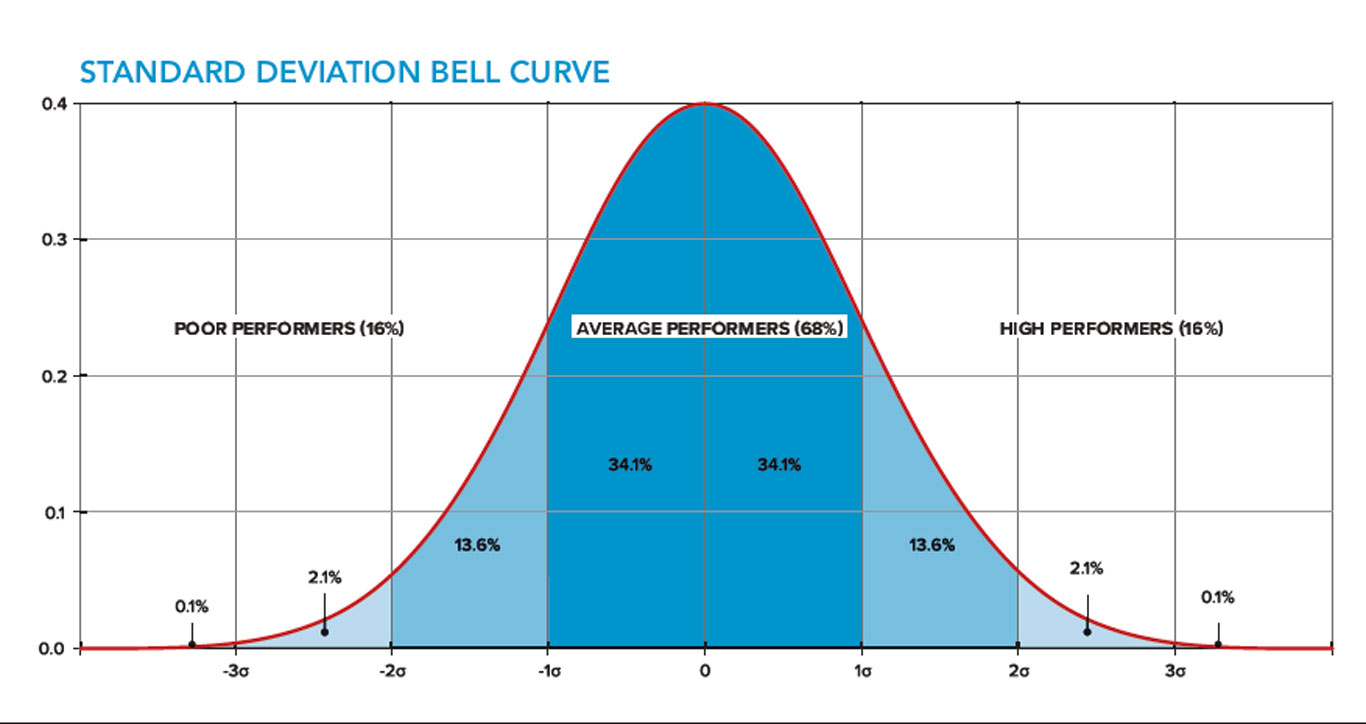
Calculate standard deviation, not just extreme spread. ES is useful but heavily influenced by outliers, one flyer in a ten-shot string can make a good load look bad. SD gives you a better picture of overall consistency. Most radar chronographs and the MagnetoSpeed calculate this automatically. If yours doesn't, a spreadsheet formula takes thirty seconds.
Use downrange velocity data to verify your ballistic solver inputs. If your solver says a bullet should be traveling 2,450 fps at 100 yards and your LabRadar says it's actually at 2,410 fps, your BC input is off. Adjust it. This matters far more at long range than a 10 fps muzzle velocity discrepancy.
Run a minimum of ten shots per string for meaningful statistics. Five-shot strings are common but the sample size is too small to draw confident conclusions about SD. Twenty shots is better if you can afford the barrel life and ammo. This is especially true when you're comparing two loads that look similar, a five-shot string can't reliably distinguish between a 12 fps SD load and a 18 fps SD load, but a twenty-shot string can.
The upgrade path that makes sense
Most shooters follow a predictable trajectory. Start with an optical chronograph because it's cheap. Get frustrated with inconsistent readings and lighting dependency. Move to a MagnetoSpeed because it's reliable and mid-priced. Get frustrated with POI shift and the inability to shoot groups while chronographing. Move to a radar unit.
If you know you're going to end up at radar anyway, skip the intermediate steps. The money you spend on an optical unit and then a MagnetoSpeed is money that could've gone straight to a LabRadar LX or Garmin Xero. That said, if budget is genuinely tight right now, the MagnetoSpeed Sporter is a legitimate tool that produces excellent data, just understand what it can and can't do.
For the shooter who already owns a MagnetoSpeed and is considering a radar unit: keep the MagnetoSpeed. Having both is actually useful. Use the MagnetoSpeed as a check against your radar unit, or use it at matches and events where setting up a radar unit isn't practical. Redundancy in measurement equipment isn't waste, it's verification.
What to do next
Take whatever chronograph you currently own to the range and shoot a twenty-round string of your primary load. Log the temperature, the SD, the ES, and the individual shot velocities. Then do it again next month. And the month after that. You're building a baseline, and that baseline is worth more than any single piece of hardware.
If you're shopping for your first chronograph or replacing a unit that's not cutting it, handle the decision the same way you'd handle an optic purchase: figure out what you actually need it to do, not what would be cool to have. A Garmin Xero that you bring to every range session beats a LabRadar LX that stays home because setup is annoying. A MagnetoSpeed Sporter that gives you clean data on every load beats a radar unit you can't get to trigger reliably at your local public range.
The chronograph that produces the best data is the one that's actually on the firing line when you pull the trigger. Everything else is just specs on a product page.