Most shooters who dry fire don't log it. And most shooters who log it stop after a week. That's not a discipline problem; it's a structure problem. If your log doesn't tell you anything useful when you look back at it, you won't look back at it. And if you never look back, you're just going through motions.
A dry fire practice log isn't a diary. It's a diagnostic tool. Done right, it shows you exactly where you're improving, where you're stalling, and what to prioritize next time you pick up the gun. Done wrong, it's a checkbox you fill out to feel productive. The difference between the two comes down to what you track, how you structure sessions, and whether you actually use the data.
Here are the questions that come up most often when people try to build a dry fire log that actually works, and the answers that'll save you from building one that doesn't.
"What should I actually write down?"
This is where most logs fail before they start. People either track too little ("did dry fire, 15 min") or too much (every single rep with a paragraph of self-analysis). Neither is sustainable, and neither gives you what you need.
Track these five things for every session:
The date and duration. Obvious, but you need both. Duration matters because a focused 10-minute session is worth more than a distracted 30-minute one, and tracking time lets you see whether you're actually putting in the volume you think you are. Most people overestimate their weekly dry fire time by about 40% until they start logging it honestly.
The drill or drills you ran. Be specific. "Draw practice" tells you nothing in three weeks. "Draw to first shot, concealment holster, 3x5 card at 7 yards scaled target" tells you everything. Name the drill if it has one. If it doesn't, describe the setup in enough detail that you could replicate it exactly.
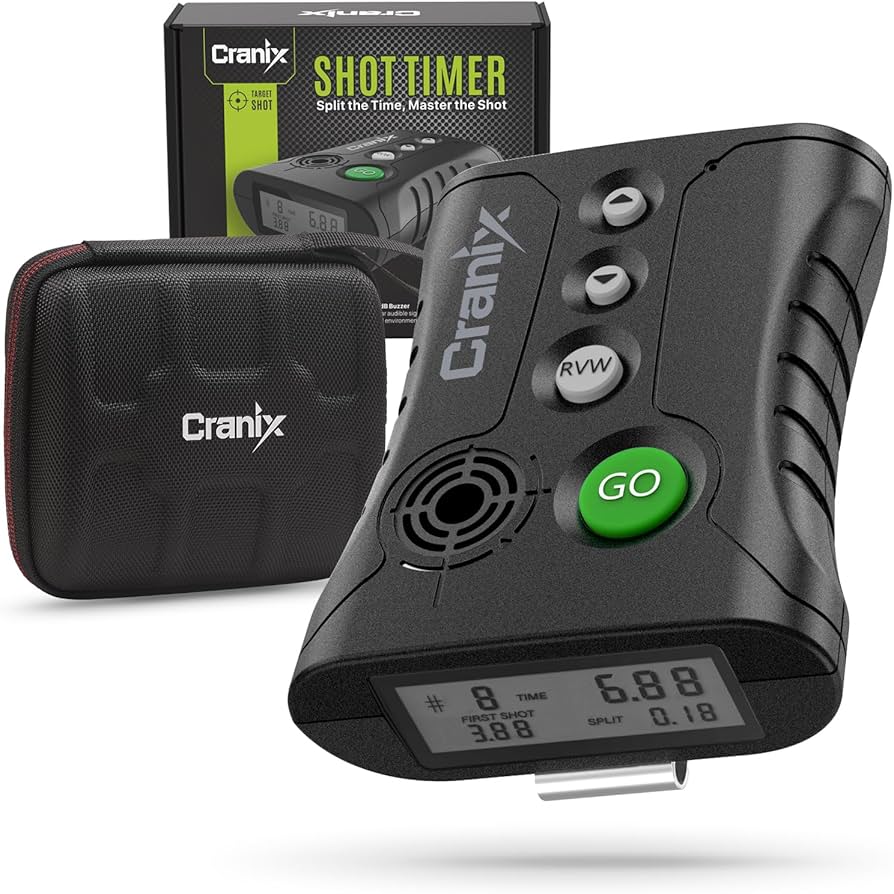
The par time you were working against. Dry fire without a timer is just fidgeting. Write down the par time you set and whether you were consistently beating it, right at the edge, or blowing past it. This is the core data point that shows progression over time.
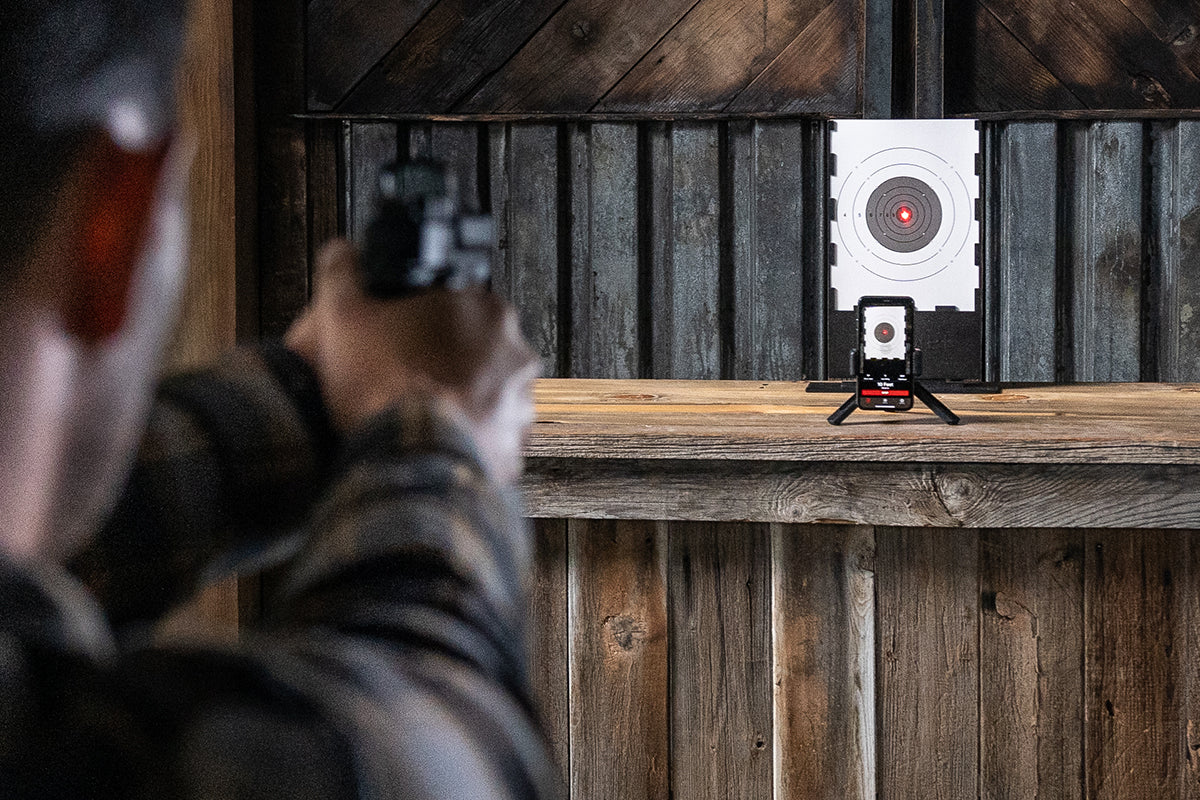
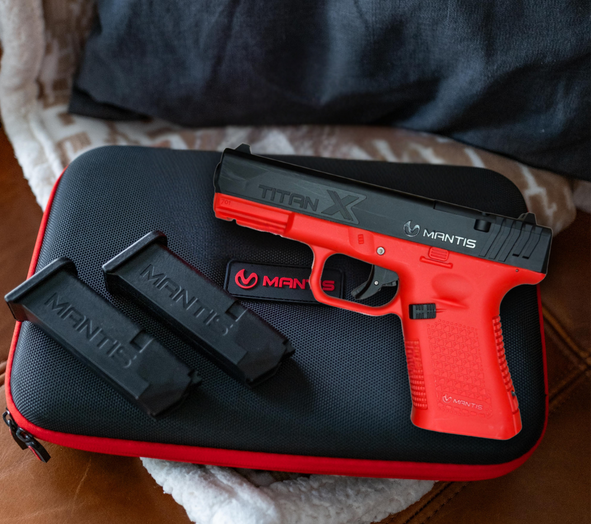
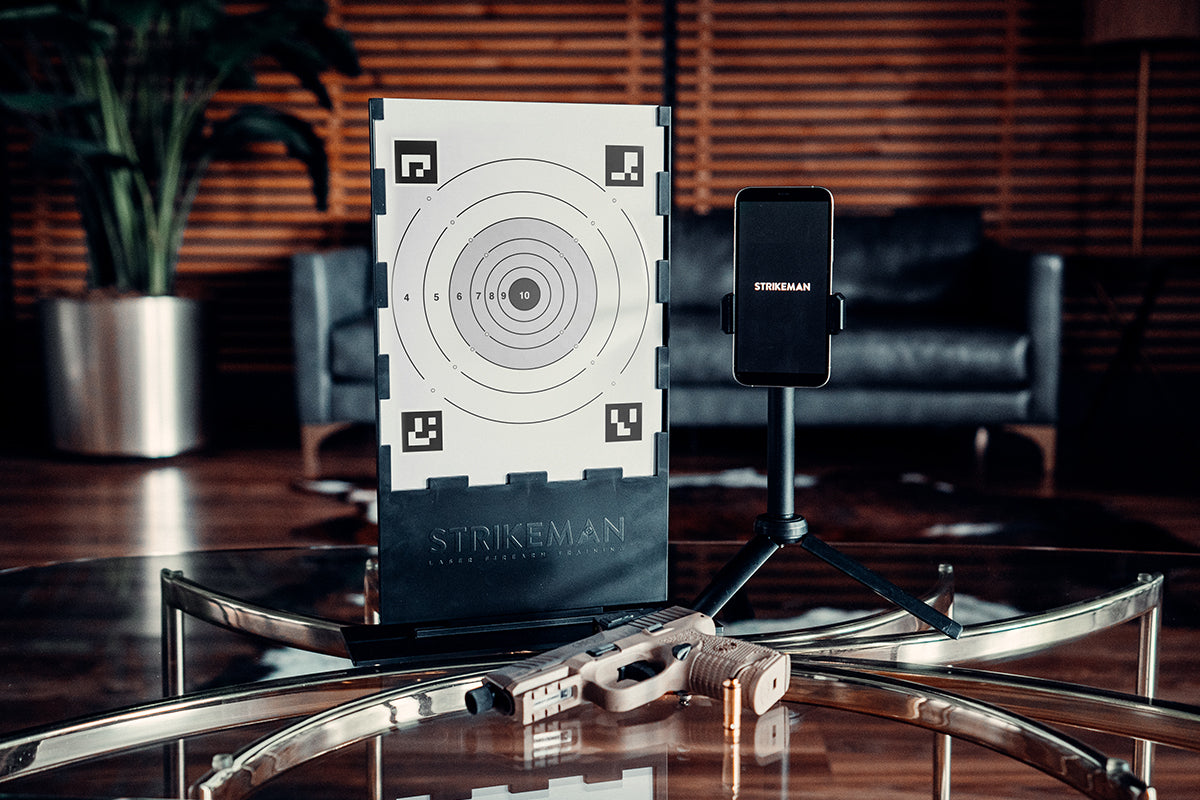
Your hit rate or quality assessment. With a laser training device like a MantisX or a LaserLyte cartridge, you can get actual hit/miss data on scaled targets. Without one, you're assessing based on sight picture at the break, did the sights stay aligned through the press, or did they dip? Be honest. A simple fraction works: "14/20 clean presses" or "drew to acceptable sight picture 8/10 reps."
One observation or focus point. Just one line. What felt off, what clicked, what you want to focus on next session. "Grip pressure inconsistent on support hand" or "trigger prep is smooth when I slow down 0.2 sec" or "transitions left-to-right faster than right-to-left." This is the qualitative piece that makes the quantitative data useful.
That's it. Five data points. Takes about 90 seconds to write down after a session. If your log takes longer to fill out than that, you've over-engineered it.
"Do I need a physical notebook or is an app better?"
Use whatever you'll actually use. That's the honest answer, and it's the only one that matters.
Physical notebooks have some advantages. They're fast, they don't need charging, and the act of writing by hand tends to force slightly more reflection than tapping a screen. A simple composition notebook with the date at the top of each entry works fine. Some shooters use a spreadsheet-style layout with columns for each data point, date, drill, par time, hit rate, notes, which makes it easier to scan back through weeks of data.
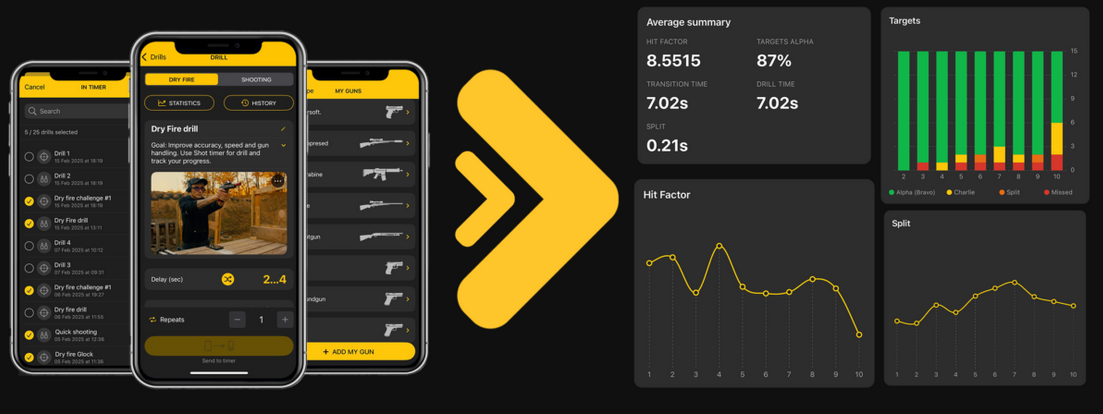
Apps have different advantages. The Drills app (available on both iOS and Android) lets you build custom drill libraries, set par times, and track performance over time with graphs. PlinkPal is another option that combines a shot timer with logging features. If you're already using a MantisX sensor, that ecosystem tracks your sessions automatically with detailed analytics on trigger control, draw consistency, and other metrics. The downside of apps is that they can become a distraction, fiddling with settings instead of doing reps.
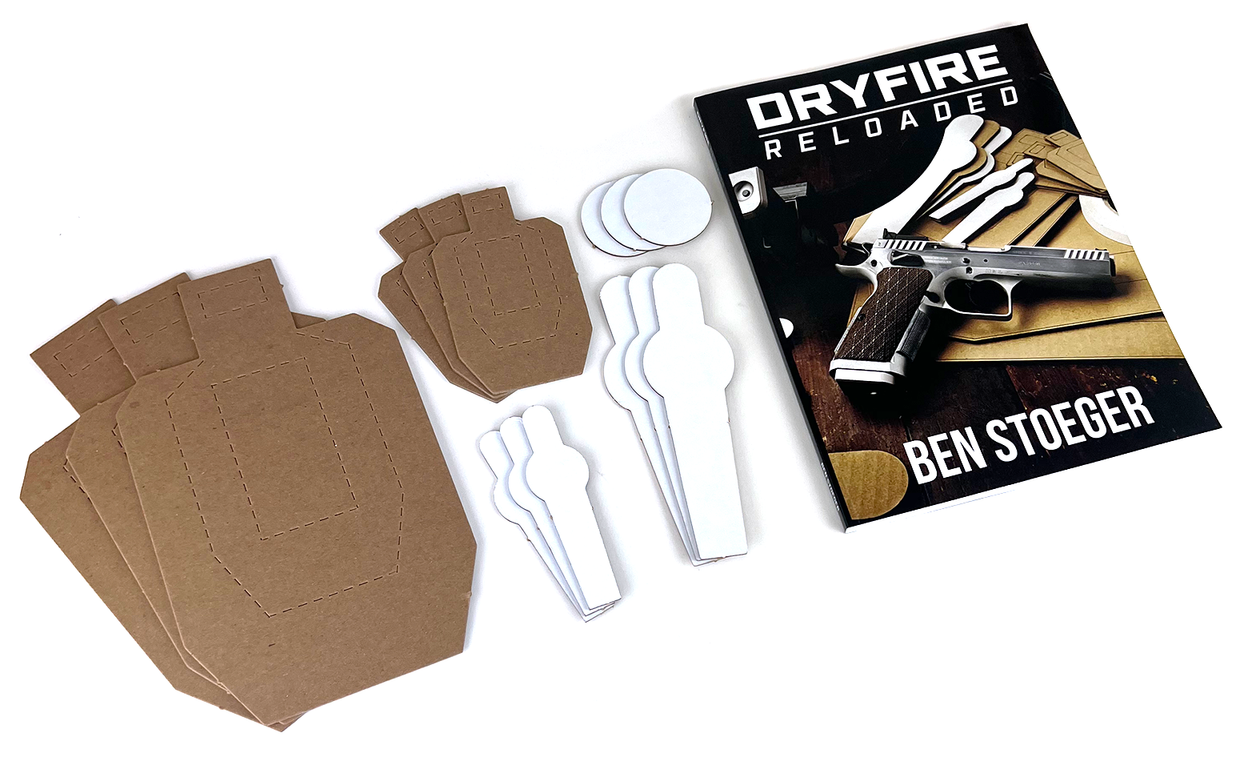
Ben Stoeger's "Dryfire Reloaded" includes log sheets in the back of the book that are purpose-built for tracking the drills in his program. If you're running his curriculum, those sheets are hard to beat because they're already matched to specific drills with specific standards. His newer book, "Dryfire," co-authored with Andreas Yankopolus, follows a similar approach with structured logging built into the program.
The format doesn't matter nearly as much as the habit. Pick one, commit to it for 30 days, and don't switch mid-stream.
"How long should a dry fire session be?"
Shorter than you think. Most effective dry fire sessions run 10 to 20 minutes. That's not a compromise, that's the target.
Here's why. Dry fire is mentally taxing in a way that live fire isn't. There's no recoil to reset your attention, no bang to punctuate each rep. You have to generate all of your own focus. After about 15 minutes of genuinely focused dry fire, most people start degrading. The reps get sloppy. The trigger press shortcuts. The draw cuts corners. And sloppy reps aren't neutral; they're actively harmful. You're encoding bad movement patterns.
If you find yourself going through the motions, stop. A 10-minute session where every rep was deliberate beats a 45-minute session where the last 30 minutes were autopilot. Your log should reflect this. If you notice that your quality assessments drop off consistently after the 12-minute mark, that's your signal. Cap your sessions there and build duration gradually as your focus improves.
The other side of this: frequency beats duration. Five 10-minute sessions across a week will produce more improvement than one 50-minute marathon. Your log will make this obvious if you're tracking consistently. You'll see that the Tuesday-after-a-weekend-session entries are sharper than the entries from day five of a break.
"Should I plan my session before I start or just work on whatever feels weak?"
Plan it. Every time.
"Whatever feels weak" sounds intuitive, but it leads to two problems. First, you'll gravitate toward what you enjoy, not what you need. If your draw is strong but your reloads are ugly, you'll still end up drawing because it feels good. Second, unplanned sessions are harder to log because they lack structure, which means your log entries become vague, which means you stop using the log.
Before you pick up the gun, decide three things: what drill you're running, what par time you're chasing, and how many reps you're doing. Write it down at the top of your log entry before you start. This takes 30 seconds and transforms the session from "I'll do some dry fire" to "I'm running 20 reps of draw-to-first-shot on a 3x5 card at a 1.5-second par time."
A weekly plan is even better. Dedicate different days to different skills. Monday is draw and first shot. Wednesday is transitions. Friday is reloads. This prevents the "I haven't worked on reloads in three weeks" problem that plagues unstructured practice. Your log becomes a record of balanced skill development instead of a highlight reel of your favorite drill.
If you're following a published program like Stoeger's books or the Anderson Shooting "Refinement and Repetition" curriculum, the planning is done for you. Your job is just to execute and log. That's one of the biggest advantages of a structured program, it removes the decision fatigue that kills consistency.
"What par times should I use for dry fire?"
This is one of the most common questions on shooting forums, and the answer is more nuanced than most people expect.
The starting point: your dry fire par times should be slightly faster than your live fire par times for the same drill. The reason is simple, there's no recoil to manage, no noise, no blast. You can move faster in dry fire because the physical demands are lower. If your live fire draw to first shot on a 3x5 card at 7 yards is 1.8 seconds, your dry fire par time for the same drill on a scaled target at room distance should be somewhere around 1.4 to 1.5 seconds.
But here's the critical piece that most people miss: the par time should be just barely achievable with a perfect rep. If you're beating it easily on 9 out of 10 reps, it's too slow. If you're missing it on 8 out of 10, it's too fast and you're training yourself to rush and accept garbage. The sweet spot is around 70 to 80 percent success rate. That's where you're being pushed but not broken.
Adjust the par time based on what your log tells you. When you're consistently hitting 80% or better across three consecutive sessions at a given par time, drop it by a tenth of a second. Log the new par time and reset your success tracking. This is where the log becomes genuinely powerful, it gives you objective criteria for when to push harder instead of relying on feel.
A thread on Brian Enos's forums about setting dry fire par times captures the consensus well: the par time is a tool for maintaining intensity, not a score to chase at the expense of quality. If you're beating the timer but your sight picture is garbage at the break, the par time is lying to you. Slow down, get the quality back, then push again.
Range notes
Bring your dry fire log to the range. Run the same drills live that you've been running dry and compare the times. Your live fire par times should be trending downward if your dry fire is working. If they're not, something in your dry fire practice isn't transferring, usually because you're accepting lower standards in dry fire than you would on paper.
"How do I track progression without live fire confirmation?"
This is the trust problem with dry fire. You can feel like you're getting faster and smoother, but without holes in paper, how do you know?
Three ways.
First, par time progression. If you started at a 2.0-second draw par time and you're now consistently clean at 1.5, that's real, measurable improvement. Your log shows this as a trend line, the par times you're working at should be decreasing over weeks and months while your success rate stays in that 70 to 80 percent window.
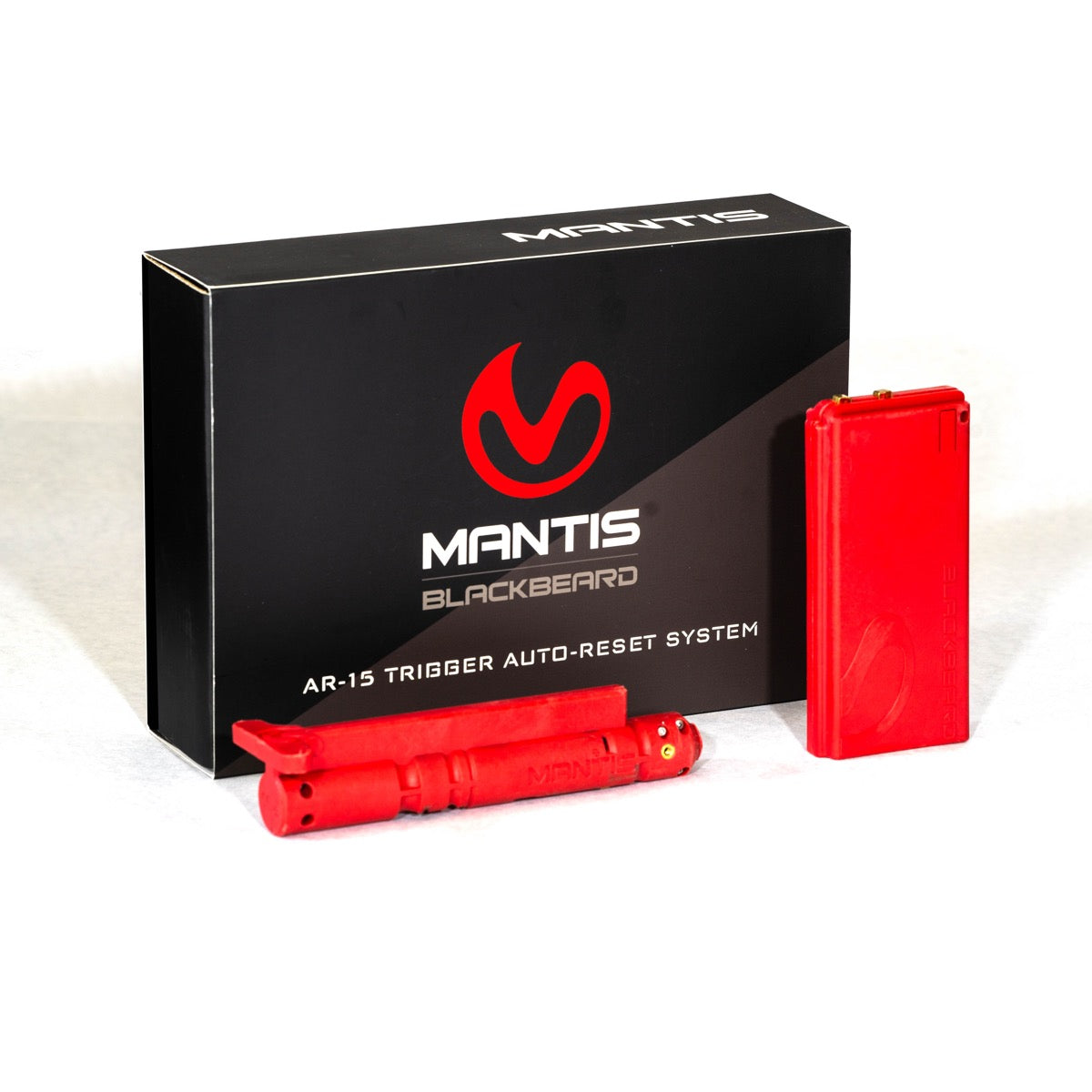
Second, technology. A MantisX sensor gives you objective data on trigger control, consistency, and draw efficiency. The Mantis BlackbeardX system for AR-platform rifles goes further, it resets the trigger automatically and tracks shot placement with a laser. These tools turn dry fire into something closer to live fire in terms of feedback quality. Your log should include the scores or metrics these tools generate so you can track them over time.
Third, periodic live fire validation. This is non-negotiable. Every two to four weeks, take your dry fire log to the range and run your benchmark drills live. Compare the results to your previous live fire baselines. This is where you find out if your dry fire is actually working or if you've been fooling yourself. Log the live fire results in the same notebook or app, clearly marked as live fire, so you can see both tracks side by side.
The shooters who get the most out of dry fire are the ones who treat live fire sessions as tests, not practice. They do the practice at home. They do the testing at the range. The log ties both together.
"What does a common mistakes section look like for dry fire logging?"
Here are the five most common ways people sabotage their dry fire logs, and by extension, their dry fire practice.
Logging the session but not the standard
Writing "worked on draws for 15 minutes" is like writing "went to the gym." It tells you nothing about what you did, how well you did it, or whether you're improving. Every entry needs a specific drill, a specific par time, and a specific quality metric. If your log entry couldn't be used by someone else to replicate your exact session, it's not detailed enough.
Not using a timer
This is the single biggest mistake in dry fire, period. Without a par time, you have no external standard. You'll unconsciously slow down to the speed where everything feels smooth, and you'll stay there forever. A shot timer app on your phone works fine. PlinkPal, the Drills app, or even a simple interval timer will do the job. Set a par time. Beat it or don't. Log which one happened.
Changing too many variables at once
Monday you work draws from concealment at a 1.5-second par time. Tuesday you switch to draws from an open holster at a 1.3-second par time with a different target. Now your log has two data points that can't be compared to each other. Pick a drill, standardize the setup, and run it consistently for at least two weeks before changing variables. Your log should show a clear progression on a single drill, not a scattered collection of one-off experiments.
Skipping the qualitative note
The numbers alone don't tell the full story. "18/20 clean reps at 1.4 seconds" is good data, but "18/20 clean reps at 1.4 seconds, support hand grip is finally locking in without conscious thought" is better. That qualitative note is what you'll reference when you're trying to figure out what changed during a breakthrough or a plateau. It takes five seconds to write. Don't skip it.
Never reviewing the log
A log you never read is just a journal. Set a weekly review, Sunday night, five minutes. Flip back through the week's entries. Look for trends. Are your par times dropping? Is your hit rate improving? Are the same qualitative issues showing up entry after entry? This review is where the log earns its value. Without it, you're collecting data for no one.
"Should I log dry fire and live fire in the same place?"
Yes. Absolutely yes.
Keeping them separate creates two disconnected records that are hard to cross-reference. The whole point of logging dry fire is to see how it connects to live fire performance. When your dry fire draw par time drops from 1.6 to 1.3 over six weeks, you want to flip forward to your next range session and see whether your live fire draw time dropped too. That connection is the feedback loop that makes the entire system work.
Mark each entry clearly, "DF" for dry fire, "LF" for live fire, so you can scan quickly. Some people use different colored pens. In an app, tag or categorize each session. However you do it, keep them in the same chronological stream.
"How often should I change drills?"
Less often than you want to.
The temptation is to rotate through a bunch of drills to "stay well-rounded." The reality is that rotating too frequently prevents you from seeing meaningful progression on any single skill. You need enough repetitions of the same drill at the same standard to establish a baseline, identify a trend, and confirm improvement. That takes a minimum of two weeks of consistent practice, more like four to six weeks for complex skills like reloads or transitions.
A good structure: pick two or three drills and run them as your core curriculum for a month. Log every session. At the end of the month, review your data, assess where you've improved, and decide whether to continue pushing those drills or rotate in new ones. Keep at least one drill as a constant benchmark that you never rotate out, something like a standard draw to first shot. That drill becomes your long-term trendline, the one data set you can look at over six months or a year and see the arc of your development.
Stoeger's dry fire books are structured this way. They give you a set of drills to run for a defined period before progressing. The structure prevents drill-hopping and gives the log coherent data to work with.
"What about logging mental focus and session quality?"
This is optional but genuinely useful. A simple 1-to-5 scale for focus quality, where 1 is "distracted, going through motions" and 5 is "locked in, every rep intentional", adds a dimension to your log that pure performance data misses.
Here's why it matters: when you review your log and see that your par times stalled for a week, the focus scores might explain it. If you were scoring 2s and 3s on focus during that same period, the plateau isn't a skill problem, it's an attention problem. Maybe you were dry firing after a long day at work, or with the TV on in the background, or when you were mentally checked out. The fix isn't a different drill. The fix is better session conditions.
Track it with a single number next to the date. Don't overthink it. The pattern over time is what matters, not any individual score.
"Do I need to log every single rep?"
No. And trying to will kill your practice.
Log the session, not the rep. Your entry should capture the aggregate, total reps, success rate, par time, one qualitative note. If you're stopping after every rep to write something down, you're breaking the flow of practice and turning a 10-minute session into a 30-minute logging exercise. That's a fast track to quitting both the logging and the dry fire.
The exception: if you're using a tech tool like MantisX that automatically logs every rep, let the tool do its thing. Review the per-rep data after the session, not during it. Pull out the relevant summary stats for your log entry.
"What's a good starter log template?"
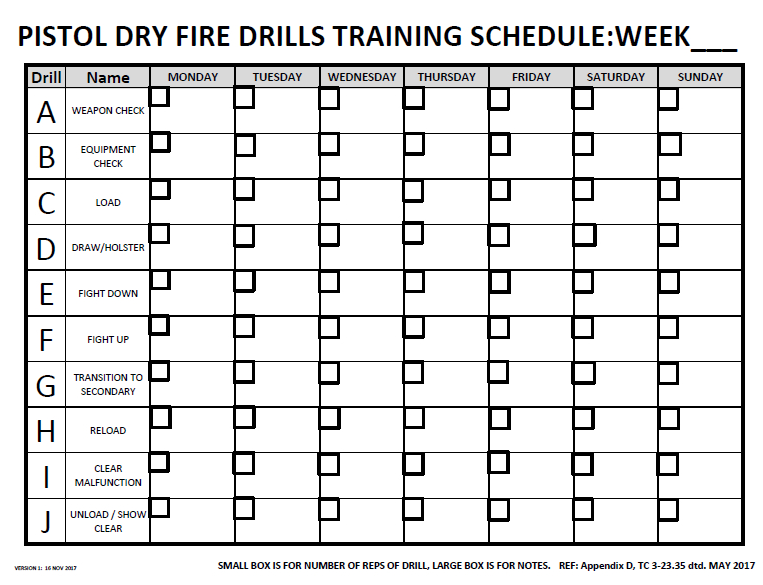
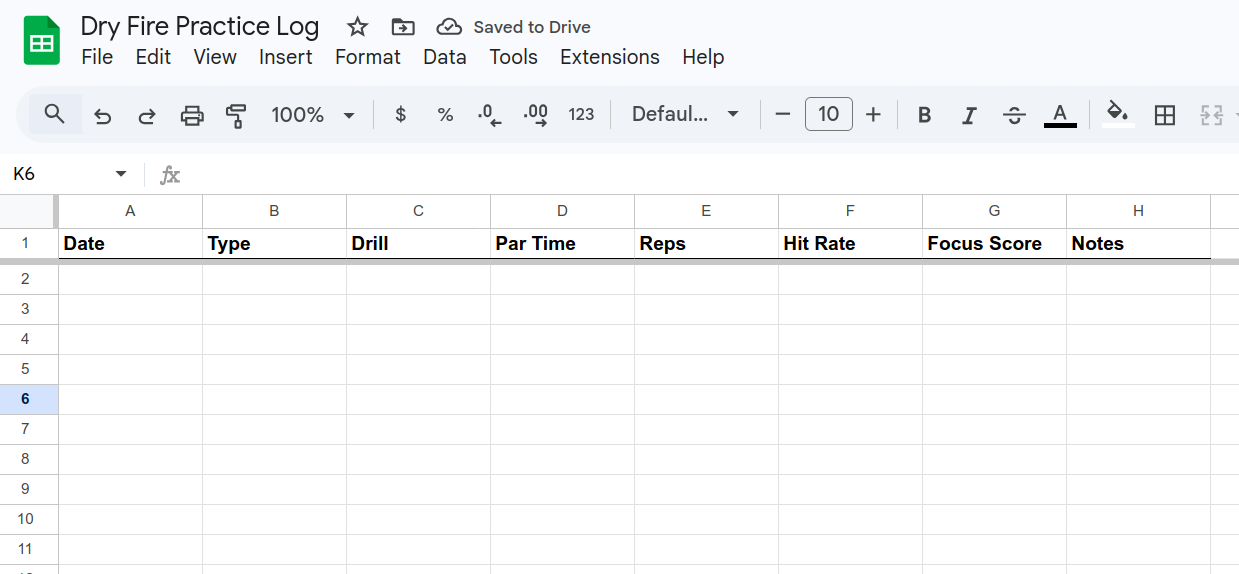
Here's a simple one that works on paper or in a spreadsheet:
That's it. Four columns of objective data, one subjective score, one line of notes. You could fill this out in under two minutes after any session. And when you look back at a month of entries, you can see exactly what happened, where you pushed the par time, where your hit rate responded, where you stalled and why.
Dry fire notes
Start your log today, not tomorrow. Run one drill, just one. Draw to first shot on a 3x5 index card taped to the wall, par time of 2.0 seconds, 20 reps. Log it using the template above. Do it again in two days. After a week, you'll have three or four entries. After a month, you'll have a dataset that actually tells you something. That's the whole point.
"When do I know the log is working?"
You'll know because you'll start making decisions based on data instead of feelings.
Instead of "I feel like my draw is getting better," you'll say "my draw par time has dropped 0.3 seconds over six weeks with an 80% clean rate." Instead of "I should probably work on reloads," you'll say "my reload par time hasn't moved in three weeks and my focus scores are high, so I need to change my approach to this drill." Instead of "I had a bad range day," you'll say "my live fire times are 0.4 seconds slower than my dry fire times on the same drill, which means my recoil management is the gap."
The log converts vague feelings into specific, actionable information. That's when dry fire stops being a habit you maintain and starts being a system that produces results.
The other signal: you'll start looking forward to reviewing the log. When you can see the trendline moving in the right direction, par times dropping, hit rates climbing, live fire confirming the gains, the log becomes motivating instead of tedious. The data is evidence that the work is paying off.
Building the habit that sticks
The biggest threat to your dry fire log isn't the format or the template. It's the gap between sessions. Miss three days and the log feels stale. Miss a week and it feels like starting over. The fix is to make the barrier to entry as low as possible.
Keep your log next to your dry fire setup. If you practice in the garage, the notebook lives on the shelf by your holster. If you use an app, put it on your home screen. Pair the logging with the practice so they're one action, not two. Pick up the gun, run the drill, put down the gun, write the entry. Total time added: 90 seconds.
Set a minimum viable session. On days when you don't feel like training, commit to five reps of one drill. That's two minutes of dry fire and 30 seconds of logging. You'll almost always do more once you start, but even if you don't, you've maintained the chain. Your log shows an entry for that day. The habit survives.
Track it. Then trust the trend. Fifty reps with a plan beats 200 without one, and a simple log with consistent entries beats a sophisticated system you abandoned in week two. Start small, stay consistent, and let the data do what data does, show you exactly where you are and where you're going.