
You've got a press bolted to the bench, a manual open, and a forum thread pulled up on your phone; and half the words on screen might as well be a foreign language. COAL, CBTO, ES, SD, headspace, annealing, neck tension. Experienced reloaders throw these around like everyone was born knowing them, and most glossaries either oversimplify or bury you in engineering-textbook definitions that don't connect to what's actually happening on your bench.
This is the reference you keep open while you're reading load data, watching reloading videos, or trying to make sense of forum advice. Every term here is defined in the context of what it means for your brass, your press, and your finished rounds; not in the abstract. Where a term connects to another, that connection is spelled out. Where a term matters more than people think, that's noted too.
The terms are grouped by category rather than alphabetical order, because that's how they actually come up during the reloading process. Brass terms cluster together. Measurement terms cluster together. You'll find what you need faster this way.
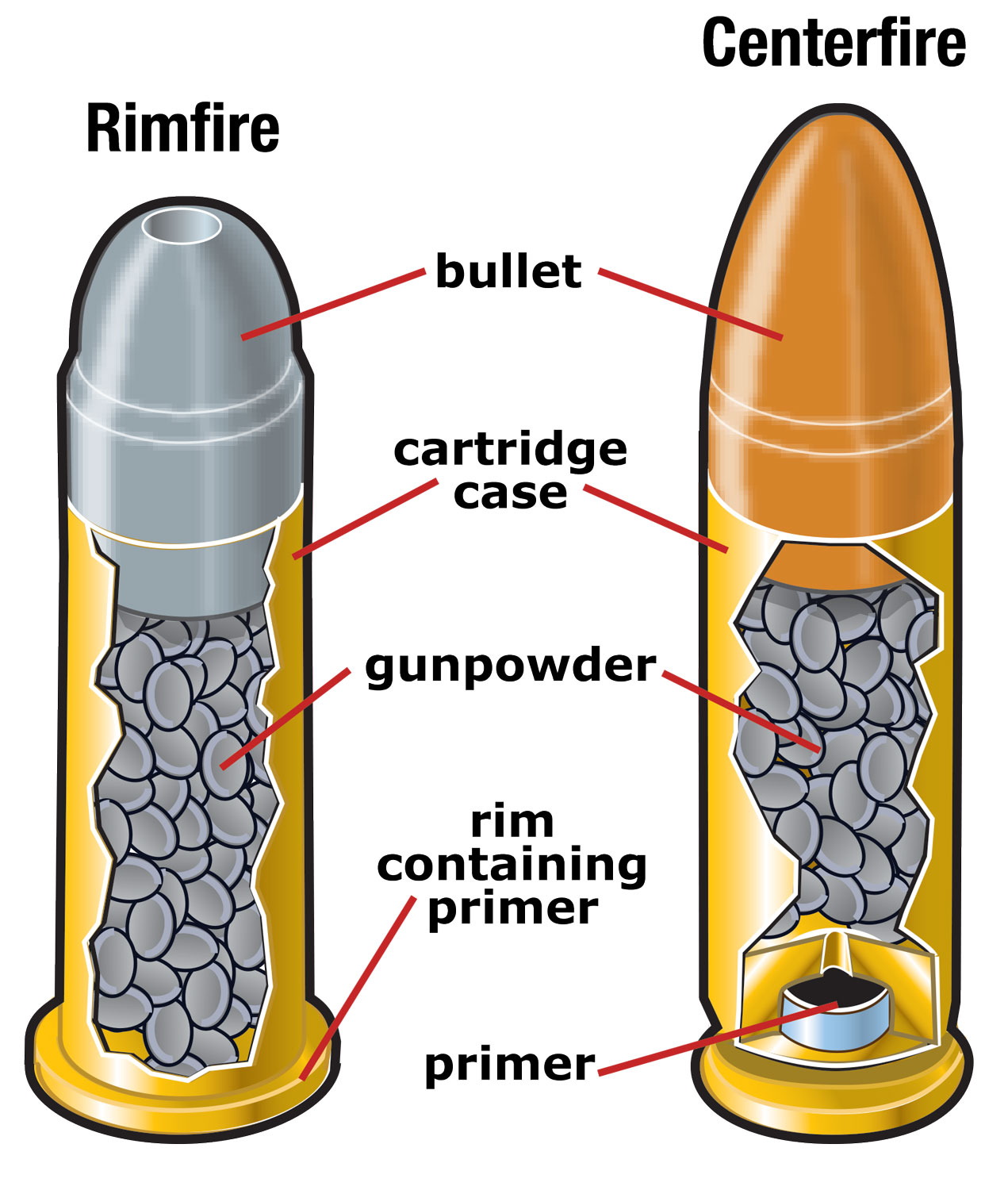
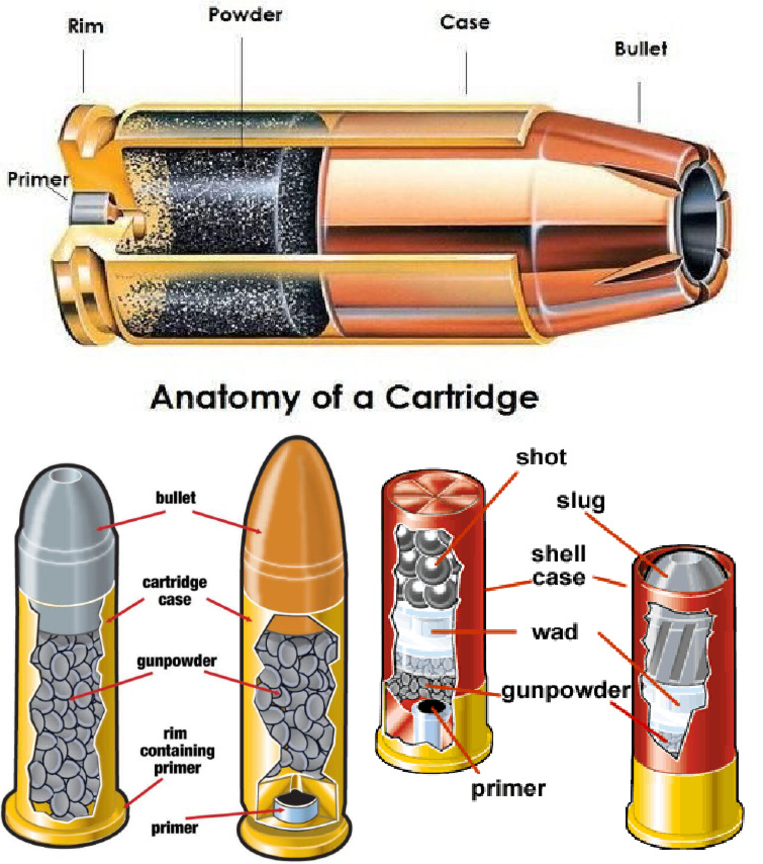
Cartridge anatomy
1. Cartridge
The complete, assembled unit: brass case, primer, powder charge, and bullet. Not a "bullet", that's just the projectile. A cartridge is the whole thing. The term "round" is interchangeable in casual use.
2. Case (brass)
The brass (or sometimes steel or nickel-plated) container that holds everything together. The case is what you reload; it gets resized, reprimed, charged with powder, and seated with a new bullet. Brass is the most common material because it's malleable enough to expand and seal the chamber on firing (this is called obturation), then spring back enough to extract.
3. Case head
The flat bottom of the case where the headstamp is stamped and the primer pocket is machined. The case head absorbs the highest pressures during firing. When someone talks about "case head separation," they mean the case literally tearing apart at the web just above the head; a serious failure that usually indicates excessive headspace or brass that's been resized too many times.
4. Case mouth
The open end of the case where the bullet is seated. On straight-wall pistol cases, the case mouth often gets a slight crimp applied to hold the bullet in place. On bottleneck rifle cases, neck tension usually does this job instead.
5. Shoulder
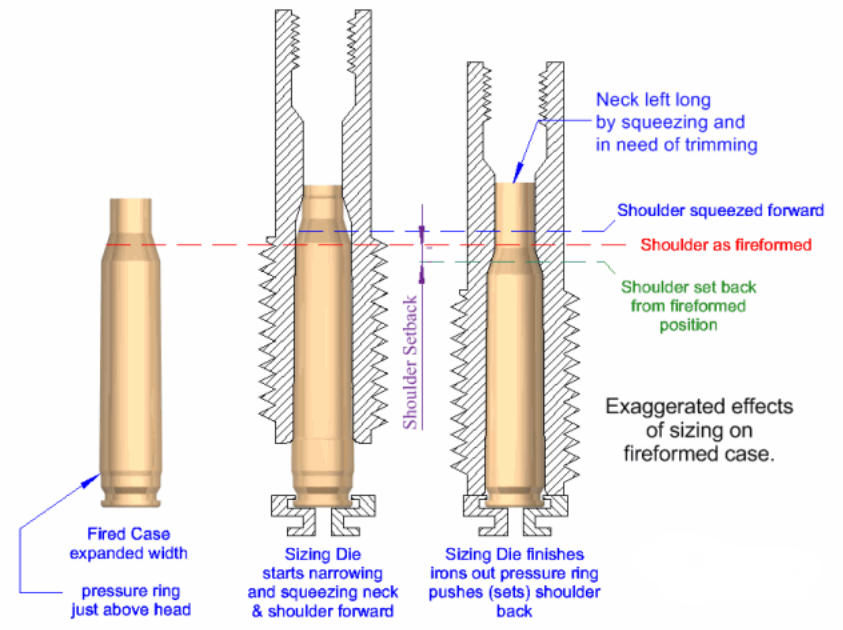
The angled section of a bottleneck case where the body transitions to the neck. Shoulder position is a critical measurement for rifle reloading; it determines headspace, and bumping the shoulder back during resizing is one of the most discussed (and most misunderstood) operations in the whole process.
6. Neck
The straight section at the top of a bottleneck case that grips the bullet. Neck thickness, uniformity, and tension all directly affect how consistently the bullet releases during firing. Inconsistent necks cause velocity spread problems before powder charge variation does.
7. Web
The thick section of brass just above the case head, inside the case. You can't see it without sectioning the brass. The web doesn't stretch much, but the area just above it; the pressure ring zone; thins with repeated firings. Shining a light inside the case and looking for a bright ring is one way to check for incipient case head separation.
8. Primer pocket
The small cylindrical recess machined into the center of the case head (on centerfire cases) that holds the primer. Primer pockets come in two sizes; small and large; and they loosen over multiple firings. When a primer drops in without resistance, the brass is done. Uniforming the primer pocket depth is a common accuracy-enhancing step.
9. Flash hole
The small hole (or holes) connecting the primer pocket to the inside of the case. When the primer detonates, the flame passes through the flash hole to ignite the powder. Boxer-primed cases have a single centered flash hole. Berdan-primed cases have two offset flash holes; and that's the main reason Berdan brass is difficult to reload. More on that distinction below.
10. Rim
The base of the cartridge that the extractor grabs. Rimmed cartridges (like .357 Magnum or .30-30) have a rim that's wider than the case body. Rimless cartridges (like .308 Win or 9mm) have a rim that's the same diameter as the case body, with an extractor groove cut into it. "Rimless" is a bit of a misnomer; there's still a rim, it's just not protruding.
11. Extractor groove
The recessed channel cut around the base of rimless and semi-rimmed cartridges. The extractor claw on the bolt snaps into this groove to pull the case out of the chamber after firing.
Primers
12. Primer
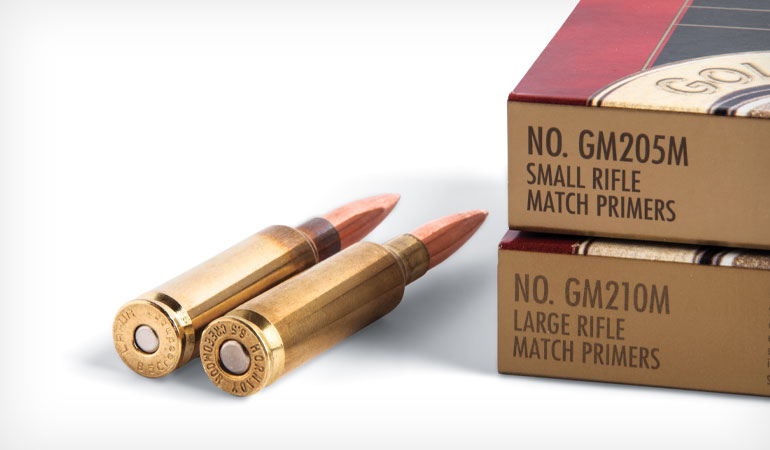
The small, impact-sensitive component seated in the primer pocket. When the firing pin strikes it, the primer compound detonates and sends a jet of flame through the flash hole to ignite the powder charge. Primers come in four standard sizes for metallic cartridges: small pistol, large pistol, small rifle, and large rifle. Each also has a "magnum" variant with a hotter, longer-duration flame; typically used with slower-burning powders or large case capacities.
13. Boxer primer
The primer type used in virtually all domestically manufactured centerfire ammunition. A Boxer primer has its own self-contained anvil inside the primer cup, and the case has a single centered flash hole. This design makes depriming simple; you push the spent primer out from inside the case with a decapping pin. Nearly all reloadable brass you'll encounter uses Boxer primers.
14. Berdan primer
The older European-origin design where the anvil is built into the case itself (it's a raised nub in the primer pocket), and there are two flash holes offset to either side. Depriming Berdan brass requires either hydraulic methods or specialized tools. Reloading Berdan-primed cases is possible but rarely worth the effort for most handloaders. If you pick up military surplus brass with two flash holes, that's your sign to toss it in the scrap bucket.
15. Primer sensitivity / primer seating depth
Not a single term but a connected concept. Primers need to be seated firmly against the bottom of the primer pocket; the anvil legs must be compressed slightly to make the primer sensitive to the firing pin strike. A high primer (one that isn't fully seated) is both a reliability problem and a safety hazard. The primer should sit a few thousandths below flush with the case head. You can feel this with your thumbnail across the base of the case.
Bullet terms
16. Bullet
The projectile only. Not the cartridge, not the round, not the shell. The thing that goes down the barrel. Bullets are categorized by construction (FMJ, JHP, bonded, monolithic, etc.), weight (measured in grains), and profile/shape.
17. FMJ (full metal jacket)
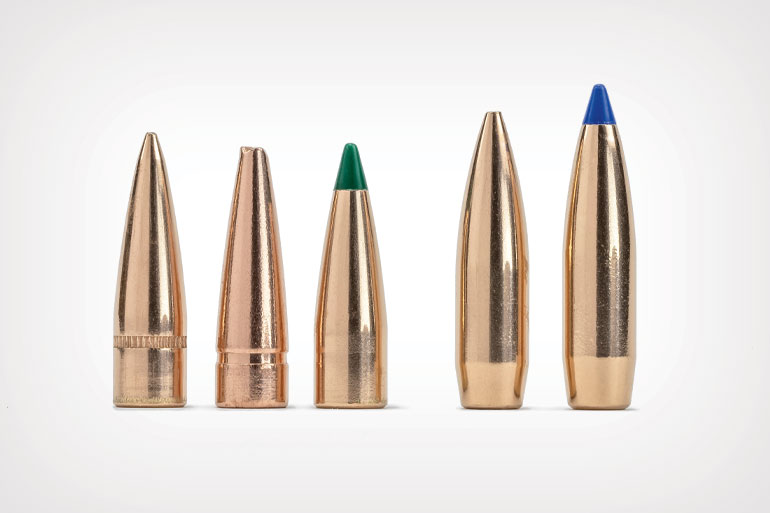
A bullet with a lead core enclosed in a harder metal shell (usually copper or gilding metal), with the base typically left exposed. FMJ bullets don't expand on impact, which is why they're used for target shooting and military applications (per the Hague Convention). Most bulk practice ammo is FMJ.
18. JHP (jacketed hollow point)
A jacketed bullet with a cavity in the nose designed to initiate expansion on impact. The hollow point causes the bullet to mushroom, increasing diameter and transferring energy more effectively. This is the standard for defensive handgun ammunition and much hunting ammunition.
19. Boat tail (BT)
A bullet base that tapers inward rather than being flat. The taper reduces aerodynamic drag at the base, improving ballistic coefficient and retaining velocity better at distance. Most match and long-range bullets are boat tail designs. BTHP (boat tail hollow point) is one of the most common match bullet configurations.
20. Ballistic coefficient (BC)
A numerical value describing how well a bullet resists air drag in flight. Higher BC means the bullet retains velocity better, drops less, and drifts less in wind. BC values are published by bullet manufacturers and referenced to either the G1 or G7 drag model. G1 is the traditional standard and works reasonably well for flat-base and traditional spitzer bullets. G7 is more accurate for long, secant-ogive boat tail bullets. Comparing a G1 BC to a G7 BC without converting is an apples-to-oranges mistake.
21. Ogive
Pronounced "oh-jive." The curved section of the bullet between the bearing surface (the full-diameter cylindrical part) and the tip. Ogive shape affects both aerodynamics and how the bullet engages the rifling. The ogive is where you measure bullet-to-lands distance, and it's why CBTO matters more than COAL for accuracy work. Secant ogive bullets have a sharper, more pointed curve. Tangent ogive bullets have a gentler, more rounded curve that's generally more forgiving of seating depth variation.
22. Bearing surface
The full-diameter cylindrical portion of the bullet that contacts the barrel's rifling. Longer bearing surfaces create more friction and tend to produce higher pressures at the same charge weight compared to shorter bearing surfaces. When you switch bullet brands or designs within the same weight, bearing surface differences can change pressure behavior; always re-verify load data.
23. Cannelure
The crimped groove rolled into the bullet's jacket, usually visible as a knurled ring around the shank. A cannelure gives the case mouth something to grip during crimping, which is especially relevant for revolver cartridges and lever-action tube-magazine rounds where bullets can be pushed deeper into the case by recoil or spring pressure. Not all bullets have one, and you shouldn't crimp into a bullet that doesn't.
Measurements and data
24. COAL (cartridge overall length)
The total length of the assembled cartridge measured from the base of the case to the tip of the bullet. COAL is what you'll find in every reloading manual's load data tables, and it's what determines whether your cartridge fits the magazine. But here's the thing most new reloaders don't immediately grasp: COAL is a rough measurement. Bullet tips vary in shape and even in length from lot to lot, especially with polymer-tipped bullets. Two cartridges with identical COAL can have different bullet-to-lands distances. That's why CBTO exists.
25. CBTO (cartridge base to ogive)
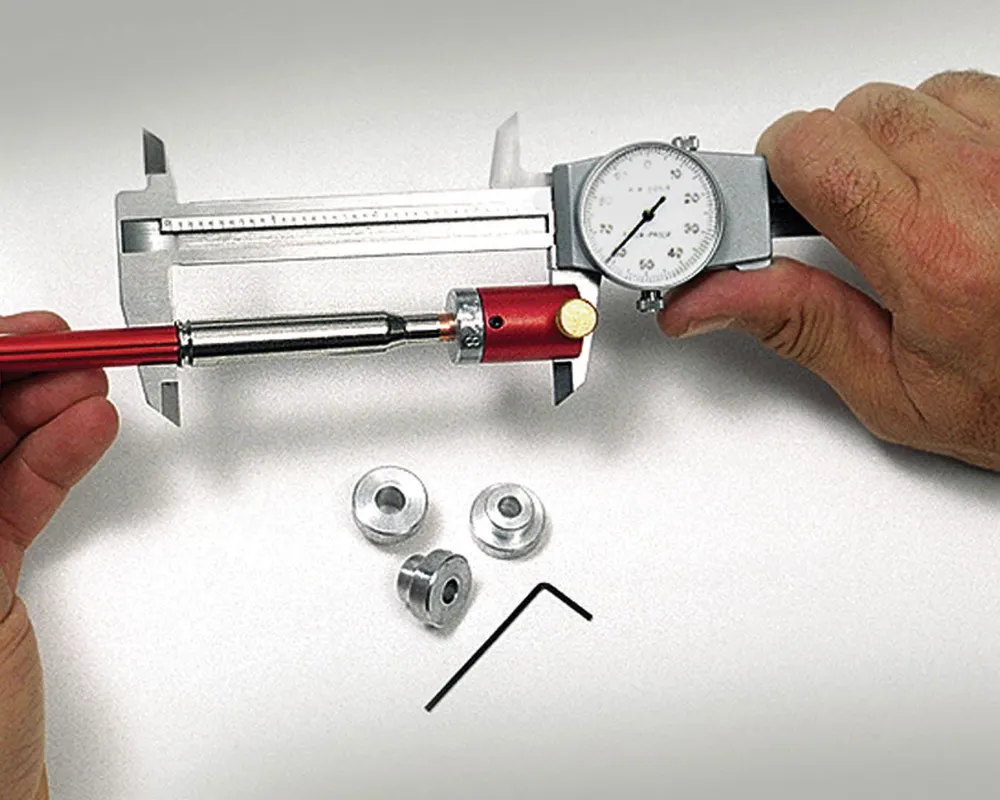
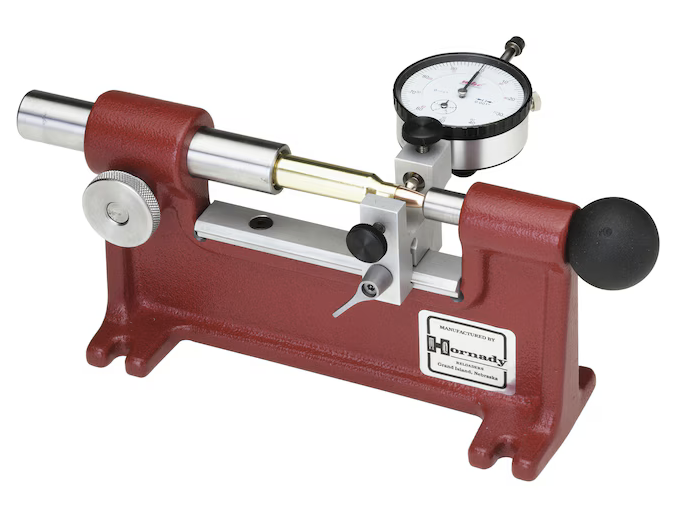
The distance from the base of the case to a specific datum point on the bullet's ogive, measured with a comparator tool (like the Hornady or Sinclair comparators that use caliber-specific inserts). CBTO removes tip variation from the equation and gives you a repeatable measurement of where the bullet's ogive actually sits relative to the case. This is the measurement that matters for accuracy tuning and for determining your jump-to-lands distance.
26. Freebore / jump
The distance the bullet travels from the case mouth to where it first contacts the rifling lands. More jump means the bullet is "jumping" farther before engaging the rifling. Less jump (closer to the lands) generally increases pressure slightly and can improve accuracy; but the relationship isn't perfectly linear. Some bullets shoot best with 0.020" of jump. Some shoot best with 0.050" or more. The only way to know is to test. Measuring your chamber's actual leade (the throat) with a modified case and a comparator gives you a starting point.
27. Headspace
The distance from the bolt face to the datum point on the cartridge that stops its forward motion in the chamber. For rimless bottleneck cartridges, this datum point is on the shoulder. For rimmed cartridges, it's the rim. For belted magnums, it's the belt (though savvy reloaders size belted magnums off the shoulder anyway after the first firing).
Headspace is one of the most consequential measurements in reloading. Excessive headspace means the case stretches too much on firing, accelerating case head separation. Insufficient headspace means the bolt won't close. When reloaders talk about "bumping the shoulder back" during resizing, they're managing headspace; typically setting the shoulder 0.001" to 0.002" back from the fired dimension.
28. ES (extreme spread)
The difference between the highest and lowest velocity readings in a string of shots, measured with a chronograph. If your fastest round goes 2,810 fps and your slowest goes 2,770 fps, your ES is 40 fps. Lower is better. Single-digit ES is excellent. ES under 20 fps is very good for most applications. ES is a useful but volatile metric; a single flier can inflate it dramatically.
29. SD (standard deviation)
A statistical measure of how much your velocity readings vary from the average. SD is more stable than ES because it accounts for the entire data set rather than just the two extremes. An SD under 10 fps is good. Under 5 fps is outstanding. SD is the better metric for evaluating load consistency, especially with larger sample sizes (20+ rounds).
30. MOA (minute of angle)
An angular measurement equal to approximately 1.047 inches at 100 yards (often rounded to 1 inch at 100 yards). A rifle that shoots 1 MOA groups puts its shots within roughly a 1-inch circle at 100 yards, 2 inches at 200, and so on. MOA is the standard unit for discussing group size and scope adjustments. One MOA click on most scopes equals 1/4 MOA (about 0.25" at 100 yards).
31. Grains (gr)
The unit of measurement for both bullet weight and powder charge weight. There are 7,000 grains in a pound. A typical .308 Win bullet weighs 150-175 grains. A typical .308 Win powder charge is 40-46 grains, depending on the powder and bullet. These are very different masses measured in the same unit; context tells you which is which. Your powder scale measures in grains, and tenths of a grain matter.
Brass prep and case work
32. Resizing (full-length vs. neck-only)
After firing, the brass case has expanded to fit the chamber. Resizing squeezes it back down so it'll chamber again. Full-length (FL) sizing pushes the entire case; body, shoulder, and neck; back toward SAAMI spec dimensions. Neck-only sizing touches just the neck, leaving the body and shoulder at their fire-formed dimensions.
Neck sizing works only in the rifle that fired the brass (since the body is still shaped to that specific chamber). It's gentler on brass and can improve accuracy by maintaining a better fit. Full-length sizing is necessary for semi-autos, any ammo that needs to work in multiple rifles, and any situation where reliable chambering matters more than squeezing out the last bit of precision. There's also a middle ground; bushing dies and partial FL sizing; that gives you control over exactly how much the neck and shoulder get worked.
33. Neck tension
The amount of grip the case neck exerts on the bullet. Neck tension is a function of how much the loaded neck diameter exceeds the resized neck diameter; typically 0.001" to 0.003" of interference. Consistent neck tension is one of the biggest contributors to low ES/SD. If your neck tension varies because your brass has inconsistent neck wall thickness or because your expander ball is pulling necks unevenly, your velocity will scatter regardless of how precisely you threw the charge.
34. Annealing
The process of heat-treating the case neck and shoulder to restore malleability after repeated firing and resizing cycles. Brass work-hardens every time it's sized, and hardened necks grip bullets inconsistently and eventually crack. Annealing (using a torch, induction annealer like the AMP, or a flame-and-rotate setup) softens the brass back to a consistent state. The body and head of the case should never be annealed; you want those to stay hard.
35. Trimming
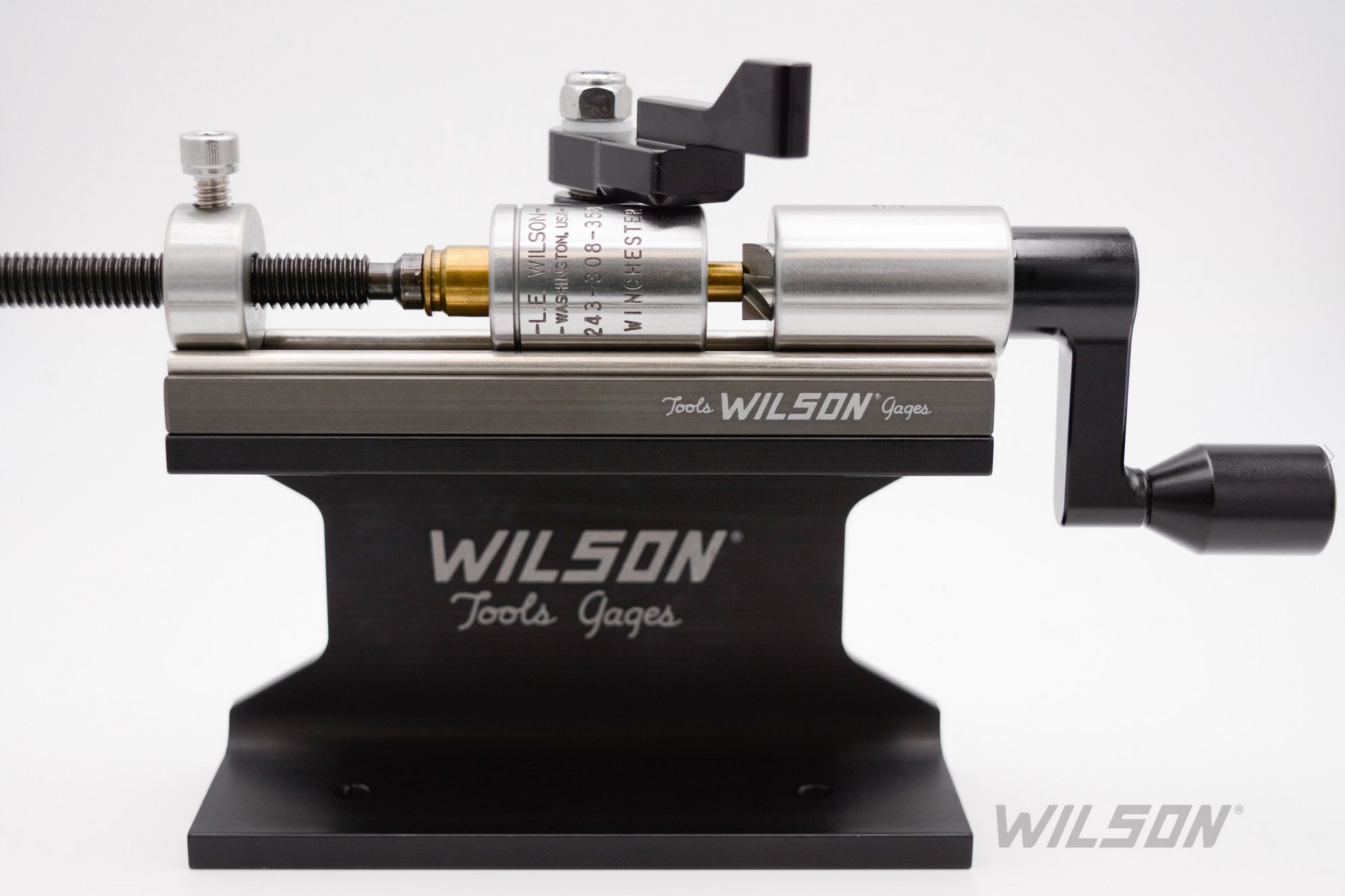
Brass cases stretch in length with each firing. If the case gets too long, the mouth can jam into the throat of the chamber, potentially preventing the bullet from releasing cleanly or causing dangerous pressure spikes. Every cartridge has a maximum case length (published in your manual) and a trim-to length (usually 0.010" shorter than max). Measure after every firing cycle and trim when needed. A Lyman or Wilson case trimmer handles this. Power trimmers like the Giraud or Gracey speed up the process significantly for volume work.
36. Chamfering and deburring
After trimming, the case mouth has a sharp outer edge and sometimes an inner burr. Chamfering puts a slight bevel on the inside of the mouth so bullets start into the neck smoothly during seating. Deburring removes the outer burr. Skip this and you'll shave jacket material during seating or get inconsistent neck tension. Takes about two seconds per case with a hand tool.
37. Primer pocket uniforming
Using a small cutting tool to make the bottom of the primer pocket perfectly flat and at a consistent depth across all your cases. Factory primer pocket depths vary. Uniforming them means every primer seats to the same depth with the same amount of anvil compression, which improves ignition consistency. This is a "nice to have" for plinking ammo and a "should do" for precision loads.
38. Flash hole deburring
Punching the flash hole during manufacturing can leave a small burr of brass protruding into the case interior. That burr can deflect the primer flame inconsistently. A flash hole deburring tool (like the Sinclair) cleans this up. One-time operation per case. Diminishing returns start here for most shooters, but competitive benchrest reloaders consider it mandatory.
39. Fire-forming
The process of firing factory or resized ammunition in a specific chamber so the brass expands to match that chamber's exact dimensions. Fire-formed brass fits the chamber more precisely, which reduces the amount of resizing needed and can improve accuracy. The term comes up most often with wildcat cartridges and Ackley Improved chambers, where the fire-forming process actually reshapes the case into a different geometry; blowing the shoulder forward and steepening the angle to increase case capacity.
Powder and charging
40. Burn rate
How quickly a powder converts from solid to gas. Powders are ranked on a relative burn rate chart from fastest to slowest. Fast-burning powders (like Hodgdon Titegroup or Alliant Bullseye) are used in small-capacity pistol cartridges. Slow-burning powders (like Hodgdon Retumbo or Alliant Reloder 26) are used in large-capacity magnum rifle cartridges. Using a powder that's too fast for the case capacity and bullet weight is a recipe for pressure spikes. Using one that's too slow gives you unburned powder, inconsistent ignition, and low velocity. The manual matches powders to cartridges for this reason.
41. Charge weight
The amount of powder, in grains, loaded into the case. Charge weight is the variable most new reloaders fixate on, and for good reason; it directly controls velocity and pressure. But it's one variable among many. A charge weight that's safe in one rifle with one primer and one bullet can be over-pressure in a different combination. Always start at the published starting load and work up. Log everything.
42. Compressed load
A charge that takes up more volume than the case has available below the seated bullet, so the powder is physically compressed when the bullet is seated. Some cartridge-and-powder combinations are designed to run compressed; it's listed in the manual and it's not inherently dangerous. You'll feel resistance during seating. What you should not do is compress a charge that isn't supposed to be compressed, because that usually means you've double-charged the case or you're using the wrong powder.
43. Double charge
Accidentally putting two powder charges into the same case. With fast-burning pistol powders in large-capacity cases (like Bullseye in a .45 ACP case), a double charge may not be visually obvious because the case is still less than full. This is one of the most dangerous mistakes in reloading. Visual inspection of every charged case before seating bullets; looking down the row under good lighting; is a non-negotiable step. Progressive presses with powder check dies (like the Dillon powder check system) add a mechanical safeguard.
44. Ladder test
A load development method where you load single rounds at incrementally increasing charge weights (often in 0.3-grain steps for rifle) and fire them over a chronograph, typically at 100 or 200 yards. You're looking for a charge weight window where velocity increases flatten out and groups tighten; this is the "node." The Satterlee method is a variation that focuses on velocity plateaus using single shots rather than groups. Either way, the goal is finding where the load is least sensitive to small charge weight variations.
45. Node
The charge weight range where a load is harmonically stable; where small variations in charge weight produce minimal changes in point of impact and velocity. Barrel vibration harmonics are the underlying mechanism. At a node, the muzzle is at a relatively stationary point in its vibration cycle when the bullet exits. Shooting at a node means your load is forgiving. Shooting between nodes means every tenth of a grain shows up on target.
The node is real. Chasing it past a reasonable point isn't. Find a node, verify it with a group, confirm the ES/SD, and move on.
Press operations and dies
46. Sizing die
The first die in the reloading sequence for bottleneck rifle cartridges (and often for pistol as well). The case is pushed into the die and squeezed back to specified dimensions. Full-length sizing dies resize the entire case. Neck sizing dies resize only the neck. Bushing dies let you select a specific bushing to control exactly how much the neck is sized, giving you direct control over neck tension without an expander ball pulling the neck back open on the upstroke.
Redding Type S bushing dies and Forster Benchrest dies are common choices for precision rifle work. For volume pistol reloading, a standard carbide sizing die from Lee, RCBS, or Dillon works fine; carbide doesn't require case lube for straight-wall cases.
47. Seating die
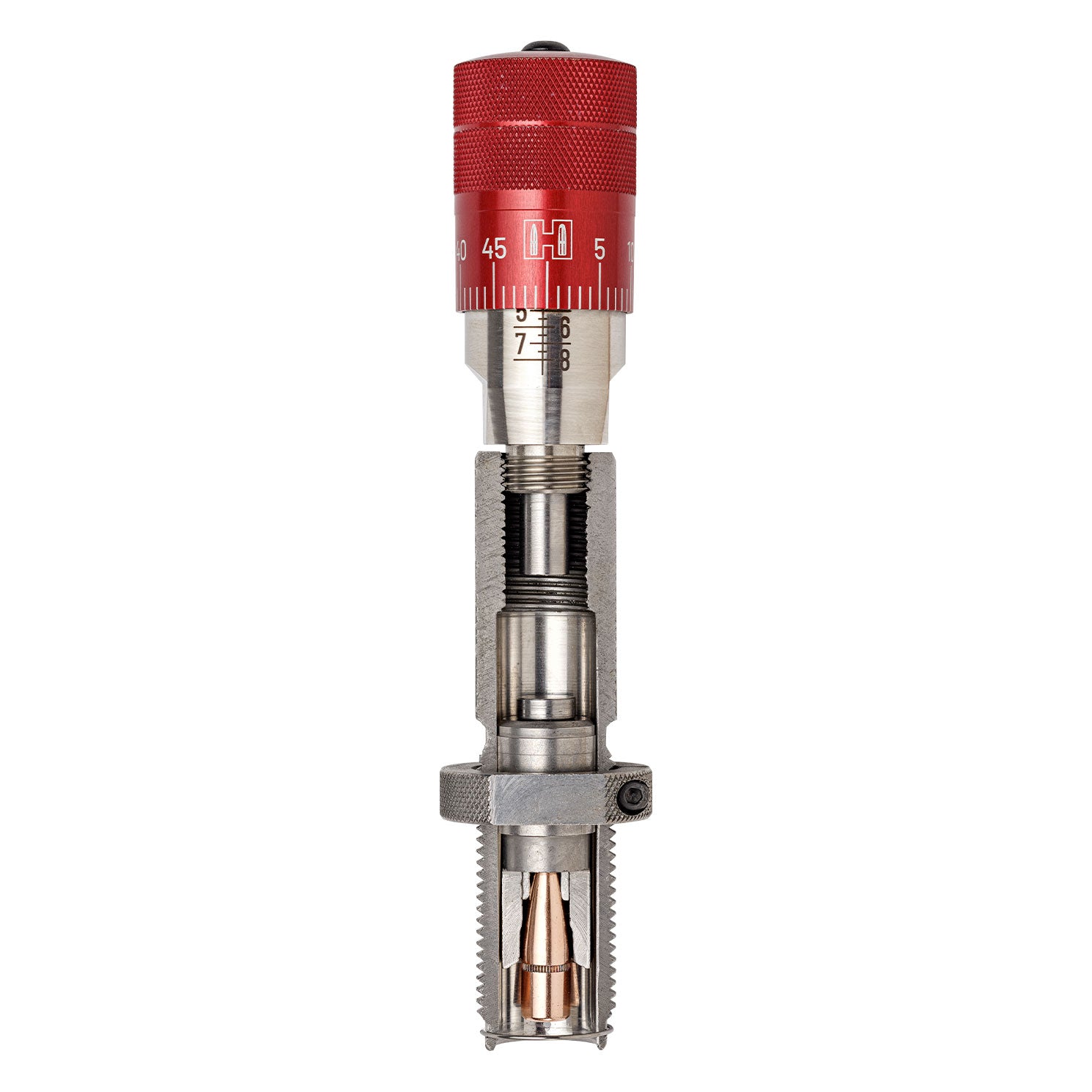
The die that pushes the bullet into the case neck to the desired depth. A standard seating die has a stem that contacts the bullet tip and pushes it down. A micrometer-adjustable seating die (like the Redding Competition or Forster Ultra Micrometer) lets you dial in seating depth in precise increments; usually 0.001" per graduation. If you're doing any accuracy work, a micrometer seating die is one of the first upgrades that actually pays off.
Seating depth directly affects pressure and accuracy. Deeper seating increases pressure (less case volume for the powder). Shallower seating decreases pressure but moves the bullet closer to the lands. The manual's listed COAL is your safe starting point. Adjust from there based on your chamber measurements and testing.
48. Crimp
Applying inward pressure to the case mouth to grip the bullet. There are two types. Roll crimp turns the case mouth inward into the bullet's cannelure; standard for revolver cartridges and lever-action rifle rounds. Taper crimp simply squeezes the case mouth slightly tighter against the bullet without rolling it; standard for semi-auto pistol cartridges that headspace on the case mouth.
Over-crimping causes problems: buckled cases, bullet damage, inconsistent release. Under-crimping in applications that need it (revolvers, tube magazines) lets bullets migrate under recoil, changing COAL and potentially creating dangerous conditions. Match the crimp type to the application.
49. Decapping / depriming
Pushing the spent primer out of the primer pocket. Most sizing dies have a decapping pin built in that does this during the resizing stroke. Some reloaders prefer to decap as a separate first step using a universal decapping die (Lee makes a popular one) so they can wet-tumble dirty brass without leaving spent primers in the pockets. Either approach works. The decapping pin is a consumable; they bend or break occasionally, especially if you hit a Berdan-primed case you didn't catch.
50. Progressive vs. single-stage vs. turret press
Three press designs that represent different points on the speed-versus-control spectrum.
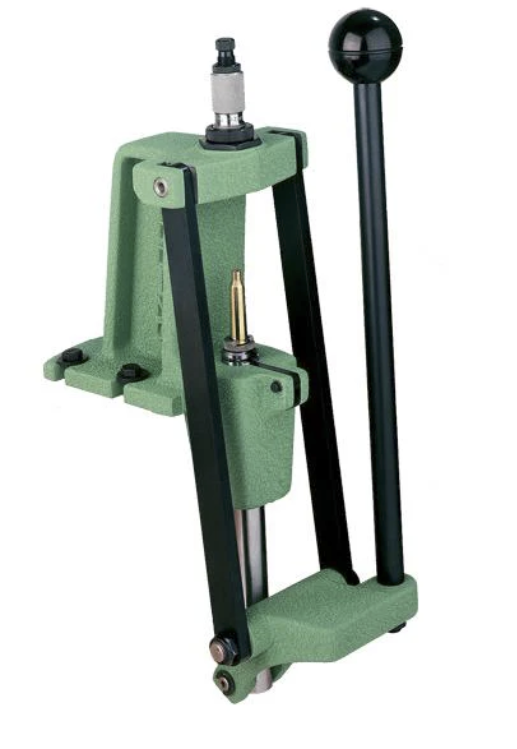
A single-stage press (like the RCBS Rock Chucker or Forster Co-Ax) holds one die at a time. You run all your cases through one operation, swap the die, and run them all through the next. It's slow but gives you maximum control and feel for each step. This is where most reloaders start, and many precision rifle reloaders never leave.
A turret press (like the Redding T-7 or the Lee Classic Turret) holds multiple dies in a rotating turret head. You can complete all operations on a single case by rotating to the next die without swapping anything. Faster than a single-stage, still one round at a time, good middle ground. The Redding T-7 is a favorite among precision handloaders who want efficiency without going progressive. The Lee Classic Turret auto-indexes if you want it to, or you can pull the auto-index rod and rotate manually.
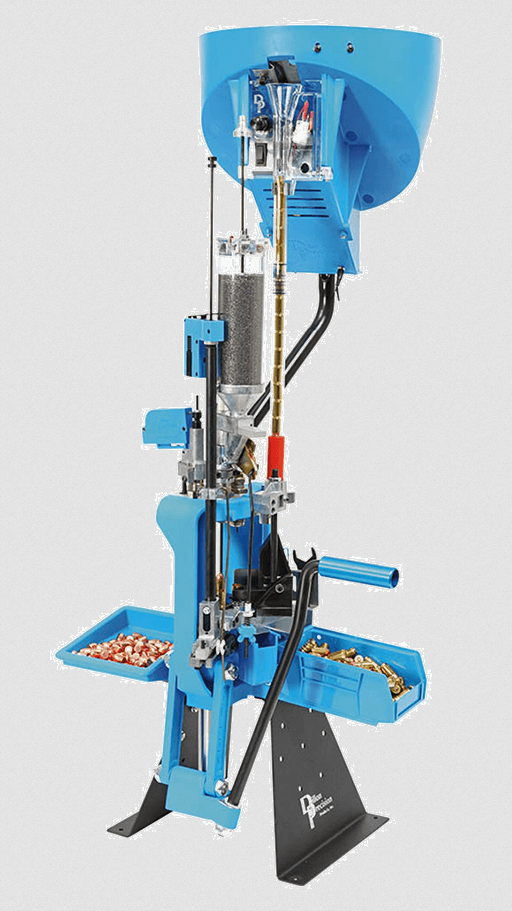
A progressive press (like the Dillon 750 or Hornady Lock-N-Load AP) performs multiple operations simultaneously; one case is being sized while another is being primed, another charged, and another seated. You produce a finished round with every pull of the handle after the first few strokes fill the shellplate. Progressives are built for volume: 400-600+ rounds per hour for pistol ammunition. They require more setup, more attention to consistent operation, and more trust in the mechanical systems (powder measure, primer feed, case feed). They're not inherently less accurate, but they demand that you understand every station and verify frequently.
Bench notes: terms that trip people up
A few terms that generate confusion disproportionate to their complexity:
Headstamp versus headspace. The headstamp is just the text stamped on the case head; manufacturer, caliber, sometimes year. Headspace is a critical chamber dimension. They sound similar and mean completely different things.
SAAMI versus CIP. These are the two major standards organizations for ammunition and chamber specifications. SAAMI (Sporting Arms and Ammunition Manufacturers' Institute) sets the standards used in the United States. CIP (Commission Internationale Permanente) does the same for Europe. Their pressure testing methods differ; SAAMI uses piezoelectric transducers, CIP uses crusher methods and conformal transducers; so maximum pressure figures for the same cartridge can look different between the two systems even though the actual pressure limits are similar. When someone quotes a max pressure figure, knowing which standard they're referencing matters.
Brass versus nickel. Nickel-plated cases are still brass underneath. The nickel plating reduces friction (easier chambering and extraction), resists tarnish, and is easier to see in low light. But nickel cases tend to crack sooner than plain brass because the plating work-hardens differently. Most reloaders get fewer loadings from nickel brass. Sort them separately.
Common mistakes with terminology (and why they matter)
Getting the language wrong isn't just a forum faux pas; it can lead to real errors on the bench.
Confusing COAL with CBTO and then adjusting seating depth based on overall length alone. If you're chasing accuracy and measuring only to the bullet tip, you're introducing variation from tip-to-ogive length differences. Get a comparator set and measure CBTO.
Using "bullet" when you mean "cartridge" seems harmless, but it creates ambiguity. When someone on a forum says "my bullets are too long for the magazine," do they mean the assembled cartridge doesn't fit, or the bullet profile is physically too long? Precision in language matches precision on the bench.
Treating "max load" as a target rather than a ceiling. The max load in a manual is the highest charge the test lab found safe in their test barrel with their components. Your rifle, your brass, your primer, your ambient temperature; all different. Start low. Work up. Log everything. Max load is where you stop, not where you start.
Assuming "magnum primer" means "more power, better ignition, always use it." Magnum primers produce a hotter, longer flame. That's useful for slow powders in large cases and for cold-weather reliability. In a small case with a fast powder, a magnum primer can spike pressure dangerously. Use the primer type specified in the load data.
Thinking "compressed load" means something went wrong. Some of the most accurate rifle loads run compressed charges. If the manual lists it as compressed, that's by design. The powder column being fully packed can actually improve consistency. The problem is unintentional compression from the wrong powder or a double charge.
Equipment terms worth knowing early
Beyond the press and dies, a few pieces of equipment come with their own vocabulary:
A powder measure (or powder throw) is the mechanical device that dispenses volumetric charges of powder. You set the cavity size with a micrometer drum, and it throws a charge each time you cycle the handle. Volumetric measures are fast but not perfectly precise; they work best with spherical (ball) powders and short-cut extruded powders. Long-stick powders like Hodgdon H4831 can bridge in the metering cavity and give inconsistent throws. For precision rifle loads, many reloaders use the measure to throw slightly under the target weight, then trickle up to exact weight on a scale.
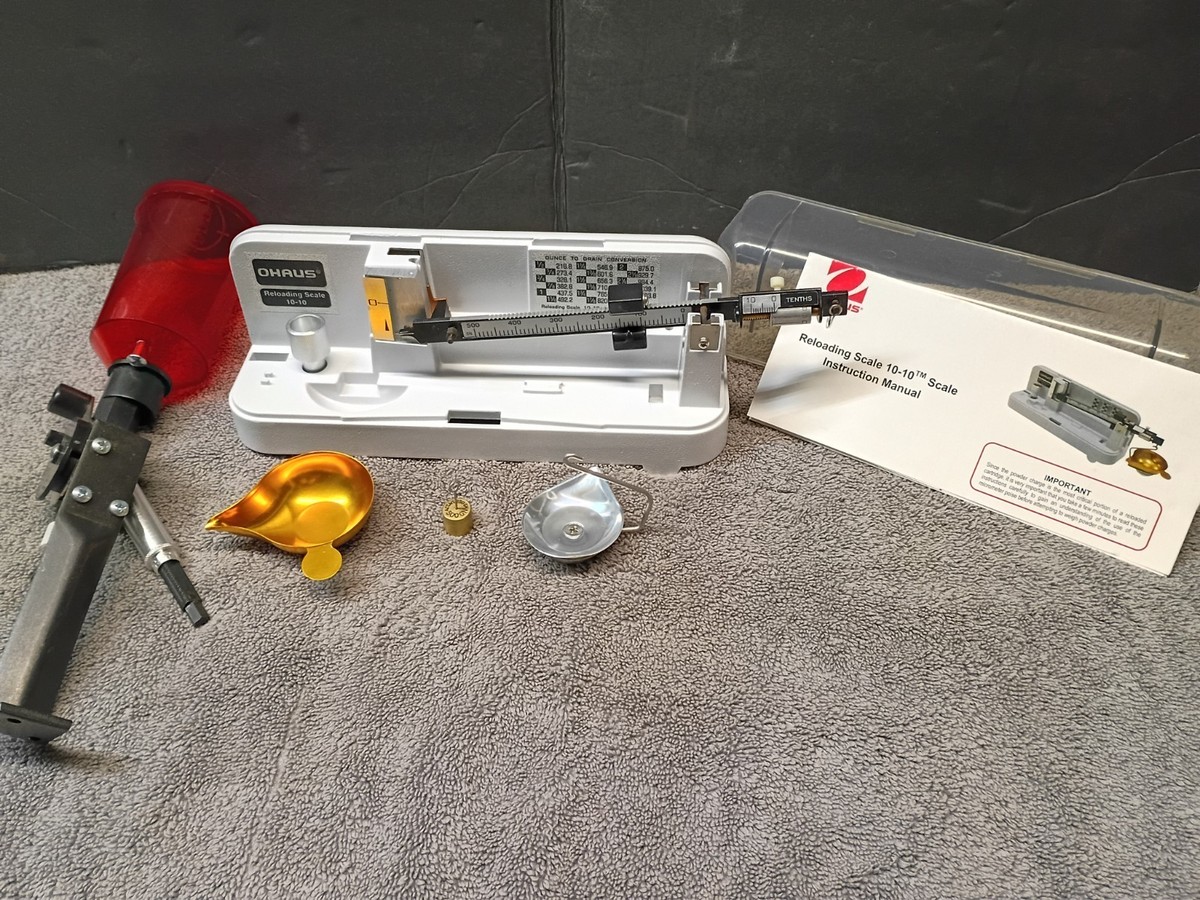
A beam scale (like the RCBS 5-0-5) uses counterweights on a balance beam to measure charge weight. It's slow, mechanical, and extremely reliable; no batteries, no drift. An electronic scale (like the RCBS ChargeMaster or A&D FX-120i) weighs digitally and is faster, but can be affected by air currents, static, and electromagnetic interference. Many reloaders keep a beam scale as a check standard even if they primarily use an electronic dispenser.
A case gauge (like the Wilson or L.E. Wilson stainless gauges) is a hardened steel block machined to minimum chamber dimensions. Drop a sized and loaded round in: if it falls in flush and drops free, it'll chamber. If it hangs up, something is out of spec; case length, shoulder position, or overall length. This is the fastest pass/fail check for finished ammunition.
A concentricity gauge measures bullet runout; how much the bullet's axis deviates from the case's axis. High runout means the bullet enters the rifling at a slight angle, which degrades accuracy. Runout under 0.002" is good. Under 0.001" is excellent. If your runout is consistently high, the problem is usually in your sizing die alignment or seating die, not in the brass or bullets.
Putting the vocabulary to work
Knowing these terms isn't about passing a quiz. It's about being able to read load data critically, diagnose problems on the bench, and communicate clearly when you're asking for help.
Here's a practical sequence that uses most of these terms in context: You full-length resize your once-fired brass, bumping the shoulder back 0.002" to manage headspace. You trim to length, chamfer and deburr the case mouths, and uniform the primer pockets. You seat new Boxer primers to 0.003" below flush. You throw powder charges on a measure and trickle up to exact weight on a beam scale. You seat bullets to a CBTO that puts the ogive 0.020" off the lands, verify COAL fits the magazine, and check concentricity. You shoot a ladder test over a chronograph, log velocity at each charge weight, identify the node where ES drops and groups tighten, and confirm the load with a 20-round string to get a meaningful SD.
Every term in that paragraph connects to a physical step on the bench. That's where the vocabulary lives; not in a glossary, but in the process.
The next step: pick up your manual, open to a cartridge you load, and read the load data notes with fresh eyes. The abbreviations and terminology should click differently now. When they do, you'll start noticing details in the data; pressure signs, powder characteristics, bullet-specific notes; that were invisible before. That's when the real work begins.