Your ES is 18 fps and you've already sorted brass, turned necks, and tried two different seating depths. The load should be shooting better. Before you switch powders or start chasing a new node, weigh ten charges on a check scale. If those throws are varying by 0.3 grains or more, you've found the bottleneck; and it's sitting on your bench, not in your barrel.
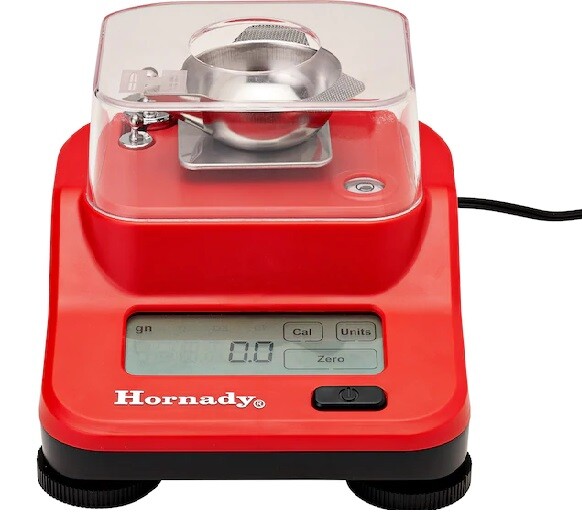
Getting consistent charge weights is the single highest-leverage improvement most reloaders can make after basic brass prep. The difference between a dispenser that holds 0.1 grains and one that wanders by 0.3 or 0.5 grains shows up directly in velocity spread, and velocity spread shows up on target. The good news: you don't need a $1,500 A&D FX-120i setup with an Autotrickler to get there. Several combo units under $500 will dispense to 0.1-grain accuracy or better, and a few manual setups will beat them if you're willing to trade speed for precision.
This piece breaks down the electronic combo dispensers, standalone scales, and manual trickler setups that actually deliver sub-0.1-grain consistency without crossing the $500 line. You'll know which ones work, which ones lie about their specs, and what bench protocol keeps any of them honest.
What sub-0.1-grain consistency actually means
The spec sheet on every electronic dispenser says "0.1-grain accuracy." That number means almost nothing without context. A scale with 0.1-grain resolution can read in 0.1-grain increments, that's the smallest change it can display. Accuracy is whether the displayed number matches reality. Repeatability is whether it gives you the same number twice for the same charge. These are three different things, and most manufacturers blur the lines between them.
A unit with 0.1-grain resolution might actually repeat to ±0.15 grains under real bench conditions. Vibration from an HVAC system, a draft from a ceiling fan, or even the static charge on extruded powder granules can push readings around. True sub-0.1-grain consistency means that when you throw ten charges, weigh each one on a verified check scale, and compare them, the spread from lightest to heaviest is 0.1 grains or less. That's the standard worth chasing.
For context, 0.1 grains of a medium-burn-rate powder like Varget represents roughly a 2–4 fps velocity change in most .308 loads. At 0.3 grains of variation, you're looking at 8–12 fps of ES just from charge weight alone, before brass volume differences, primer variation, and seating depth inconsistency pile on. Tightening charge weight to true 0.1-grain consistency won't eliminate ES entirely, but it removes one of the largest variables from the equation.
The electronic combo dispensers
These are the workhorses: a scale and a powder dispenser built into one unit. You punch in a target weight, the machine dispenses powder into a pan, and you dump it into the case. The appeal is speed and consistency without manually trickling every charge. The reality is more nuanced.
RCBS ChargeMaster Supreme
The ChargeMaster Supreme is the current top-end offering from RCBS in their combo dispenser line, and it's the unit most precision reloaders in the under-$500 bracket end up with. It uses a dispensing tube with a variable-speed motor, fast pour to get close, then a slow trickle to finish. The touchscreen interface is a significant upgrade over the older ChargeMaster 1500, which had a membrane keypad that wore out and a tendency to overthrow.
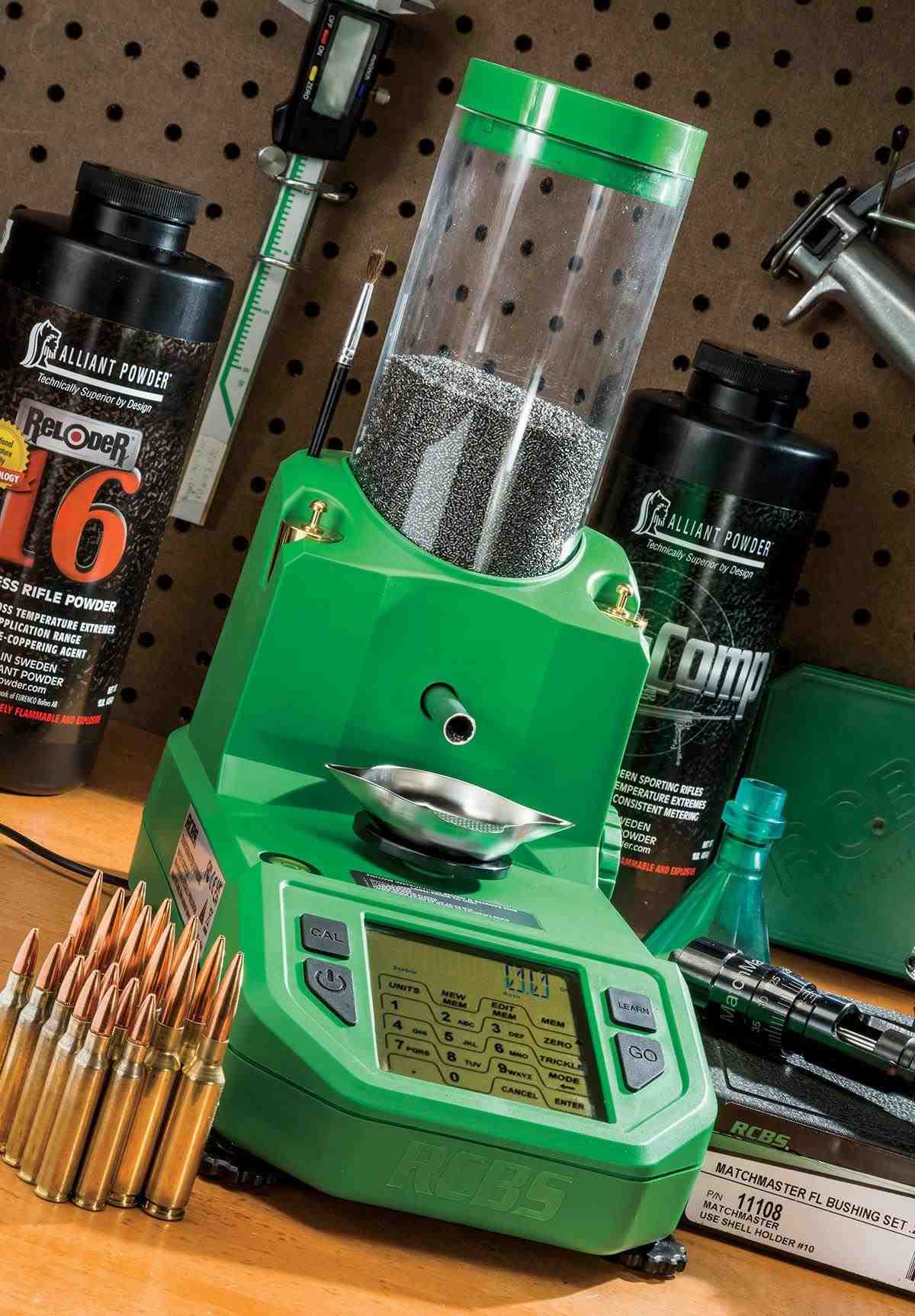
The Supreme's claimed accuracy is ±0.1 grain. In practice, forum reports and independent testing consistently show it landing within that spec on most powder types, with ball powders behaving the best and long extruded stick powders (Retumbo, H1000, RL-26) being the most challenging. Stick powders are the nemesis of every electronic dispenser because a single kernel of H1000 can weigh 0.04 grains or more. The machine can't dispense half a kernel, so it either lands right on target or overshoots by one kernel's weight.
The Supreme has a "learn" function that adapts its dispensing speed to the powder you're using. After a few charges, it figures out the flow characteristics and adjusts. This genuinely helps. First-charge accuracy on a fresh powder is often worse than the tenth charge.
Speed is reasonable, about 25 to 35 seconds per charge depending on the target weight and powder type. That's not fast enough for high-volume loading, but for precision rifle work where you're loading 50 to 100 rounds at a sitting, it's fine.
The main complaints from the community center on two things: occasional overthrows with stick powders (usually 0.1 to 0.2 grains over, requiring you to trickle back down or dump and re-throw), and sensitivity to being perfectly level. The built-in bubble level is small and not particularly precise. An aftermarket torpedo level on the pan platform helps.
Street price typically runs $350 to $400.
RCBS ChargeMaster Link
The Link is RCBS's mid-tier electronic dispenser, positioned below the Supreme. It shares the same basic dispensing mechanism but adds Bluetooth connectivity for use with the RCBS app. The app feature is a mixed bag, some users find it useful for storing load recipes, others find it a gimmick that occasionally causes connectivity headaches.
Accuracy spec is the same ±0.1 grain, and real-world performance is close to the Supreme's. The main differences are in the interface (slightly less refined) and the dispensing speed (marginally slower on some powder types). The Link has been reported to struggle a bit more with very fine ball powders like H335, occasionally trickling too aggressively at the end of the cycle.
At roughly $300 to $330, the Link is the budget-conscious choice in the RCBS lineup. If you don't care about Bluetooth and want to save $50–70 over the Supreme, it's a legitimate option. The dispensing accuracy difference between the two is minimal, the Supreme's advantage is mostly in speed and interface polish.
Hornady Auto Charge Pro
The Auto Charge Pro is Hornady's answer to the ChargeMaster line, and it's generated strong opinions in both directions. The unit uses a different dispensing approach, a rotating drum mechanism rather than a tube-and-motor system. This gives it some advantages with certain powder types and some disadvantages with others.
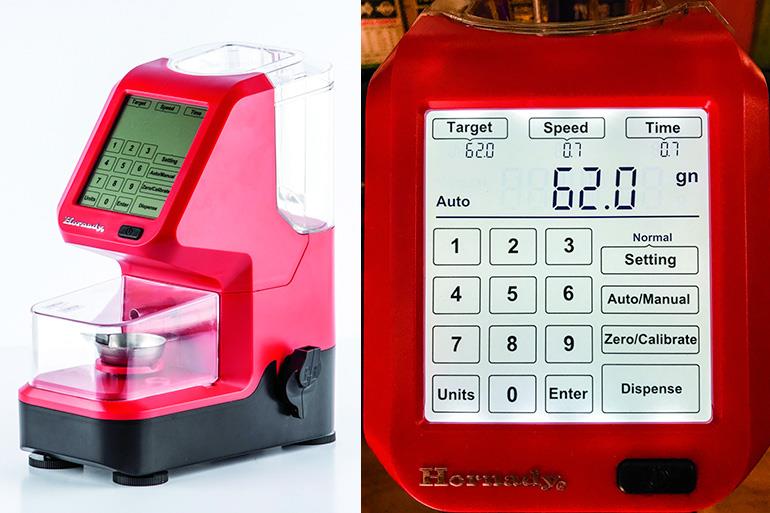
Hornady specs it at ±0.1 grain accuracy. Real-world testing shows it generally hits that mark with ball and short-cut extruded powders. With long stick powders, it has the same fundamental problem every dispenser does, kernel weight exceeds the precision target. Some users on reloading forums have reported the Auto Charge Pro being slightly more prone to overthrows than the ChargeMaster Supreme, particularly with powders like RL-26 and H1000. Others report the opposite. Powder lot variation and ambient conditions play a bigger role than most people acknowledge.
The interface is a simple LCD with physical buttons, no touchscreen. Some prefer this; buttons don't fail in the same ways touchscreens do. The pan is smaller than the RCBS units, which can be annoying if you're throwing large magnum charges (70+ grains).
Speed is competitive with the RCBS units at around 25 to 40 seconds per charge. The drum mechanism can be louder than the RCBS tube system, which matters if you're loading late at night with family sleeping nearby.
Street price runs $280 to $330, making it the most affordable name-brand electronic combo dispenser that reliably hits sub-0.1-grain territory.
One legitimate concern that surfaces in user reports: the Auto Charge Pro can be sensitive to powder buildup in the dispensing drum. Regular cleaning, every 200 to 300 charges, keeps it consistent. Skip the cleaning and you'll see accuracy degrade, particularly with powders that leave residue (Hodgdon Superformance is a common offender).
Lyman Gen 6
The Gen 6 is Lyman's touchscreen combo dispenser, and it occupies an interesting niche. It's generally the cheapest of the four major combo units, often found for $250 to $280. The touchscreen is responsive enough, and the dispensing mechanism works on the same general principle as the RCBS units.
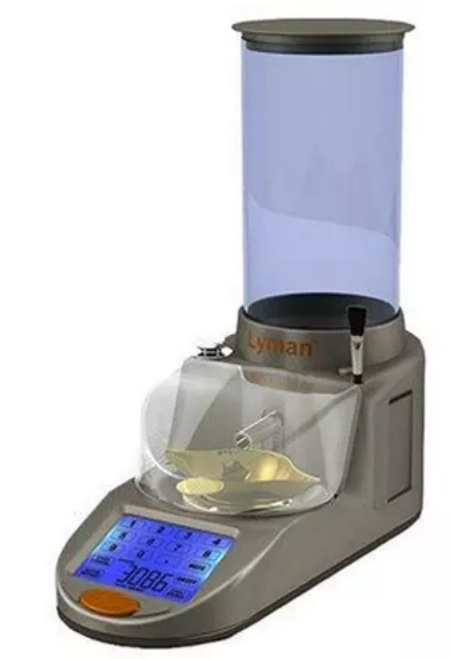
Accuracy is where the Gen 6 gets more contentious. Lyman claims ±0.1 grain. Some users report hitting that spec consistently; others report more like ±0.2 grains, particularly with stick powders. The unit seems more sensitive to environmental conditions than the RCBS or Hornady alternatives, temperature swings, drafts, and vibration affect it more noticeably.
The Gen 6 also has a reputation for slower dispensing speeds, particularly on the trickle phase. It's cautious, which should theoretically mean fewer overthrows, but the trade-off is a 35 to 50 second cycle time that can feel glacial when you're loading a batch.
Build quality is a step below the RCBS units. The plastic feels thinner, the pan is lighter, and the overall fit and finish reflects the lower price point. That said, plenty of reloaders have used Gen 5 and Gen 6 units for years without mechanical failures.
The Gen 6 is a reasonable choice if your budget is tight and you're primarily loading with ball or short-cut powders. For long stick powders in precision rifle applications, the RCBS ChargeMaster Supreme is worth the price difference.
Frankford Arsenal Intellidropper
The Intellidropper sits at the bottom of the electronic combo dispenser market, typically around $160 to $200. At that price, it's tempting. The reality is less encouraging for precision work.
Frankford Arsenal claims ±0.1 grain accuracy. Independent testing and widespread user reports suggest ±0.2 to ±0.3 grains is more realistic, particularly with stick powders. The dispensing mechanism is less refined, the trickle function is less precise, and the scale itself has lower resolution in practice than the spec sheet implies.
For plinking ammo, bulk .223 loads, or pistol cartridges where ±0.3 grains represents a negligible velocity difference, the Intellidropper works. For precision rifle loading where you're chasing single-digit ES, it's not the right tool. You'll spend more time verifying and correcting charges than you would with a better unit, and the time cost erases the price savings.
The manual alternative: scale plus trickler
Here's the thing about electronic dispensers, even the best ones are a compromise between speed and precision. If you want true sub-0.05-grain consistency and you're willing to work for it, a quality scale paired with a manual trickler will beat any combo dispenser under $500.
The A&D FX-120i (just barely under $500)
The FX-120i is the scale that dominates precision reloading at the competitive level. It reads to 0.001 grams (approximately 0.02 grains) and repeats within that spec. It's a laboratory balance repurposed for the reloading bench, and it's the standard that Precision Rifle Blog's survey of top competitive shooters consistently identifies as the most-used scale.
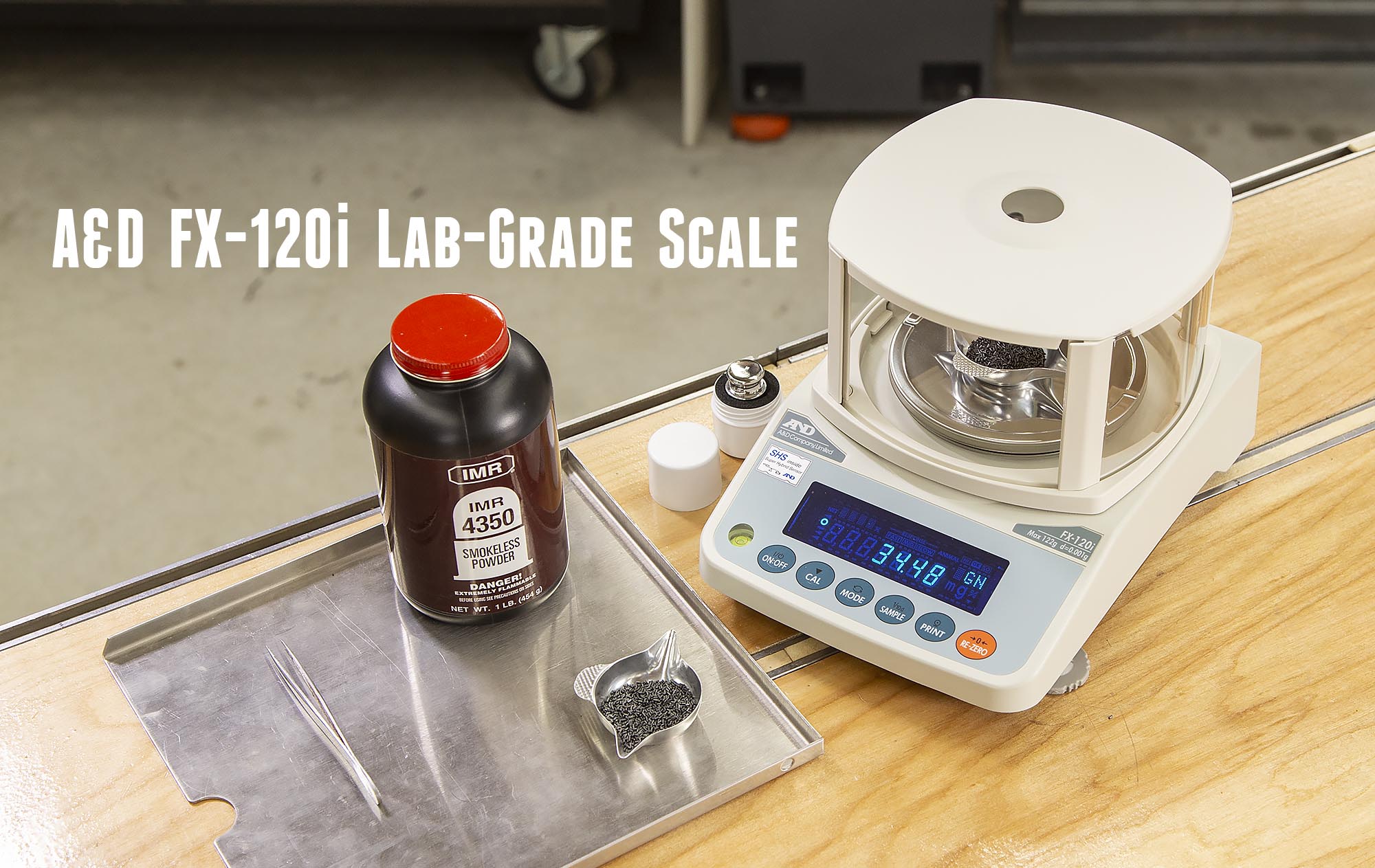
The FX-120i itself runs $400 to $480 depending on the source, which technically keeps it under $500 but leaves nothing in the budget for a dispenser. Most precision reloaders pair it with an Autotrickler or V3 setup that pushes the total well over $500, often over $1,000. But the scale alone, paired with a $20 RCBS manual powder trickler, gives you the most accurate charge weights possible on any budget. You just have to manually scoop close with a dipper or volumetric measure, then trickle up kernel by kernel.
This is slow. Painfully slow for large batches. But for 20-round strings of precision competition ammo, the accuracy is unmatched at this price point. If you're loading for F-Class, PRS, or ELR and you're buying one piece of equipment to build around, the FX-120i is the foundation.
Beam scales as a check weight standard
A quality beam scale, the RCBS 10-10, Redding No. 2, or Lyman Pro 500, reads to 0.1 grain and isn't subject to electronic drift, EMI interference, or calibration loss from temperature changes. Beam scales don't replace electronic dispensers for production speed, but they're essential as a check standard.
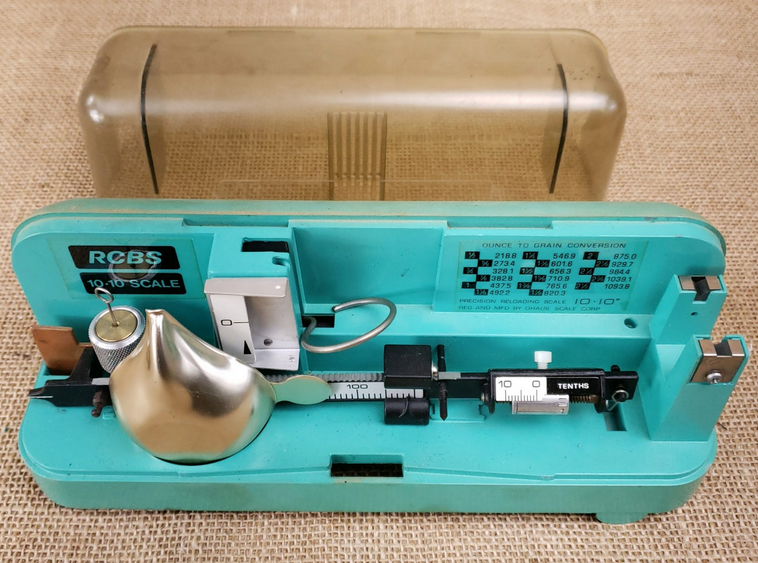
The protocol is simple: every loading session, throw five charges on your electronic dispenser and verify each one on the beam scale. If they agree within 0.1 grain, proceed. If they don't, recalibrate the electronic unit and recheck. Beam scales are also immune to the static electricity issues that plague electronic scales when measuring extruded powders in low-humidity environments.
A good beam scale runs $60 to $100 and will last decades with zero maintenance beyond keeping it clean. Every reloading bench should have one, regardless of what electronic equipment sits next to it.
What you'll see on the bench
Setting up any electronic dispenser for best accuracy follows the same basic protocol, and skipping steps here is where most consistency problems originate.
Let the unit warm up for 20 to 30 minutes before loading. Every electronic scale uses a strain gauge or electromagnetic force restoration sensor that drifts during thermal stabilization. The ChargeMaster Supreme manual recommends 15 minutes; real-world testing suggests 20 to 30 is better, especially in a garage or shop where temperatures swing.
Calibrate with the included check weights at the start of every session. Not every other session. Every session. Place the check weight, verify the reading, remove it, verify zero, repeat. If zero drifts by more than 0.1 grain during the session, recalibrate.
Keep the unit away from drafts, vents, and vibration sources. A bench that shakes when you walk past it will introduce errors. A rubber mat under the dispenser helps dampen vibration, and a three-sided wind screen (cardboard works fine) blocks air currents.
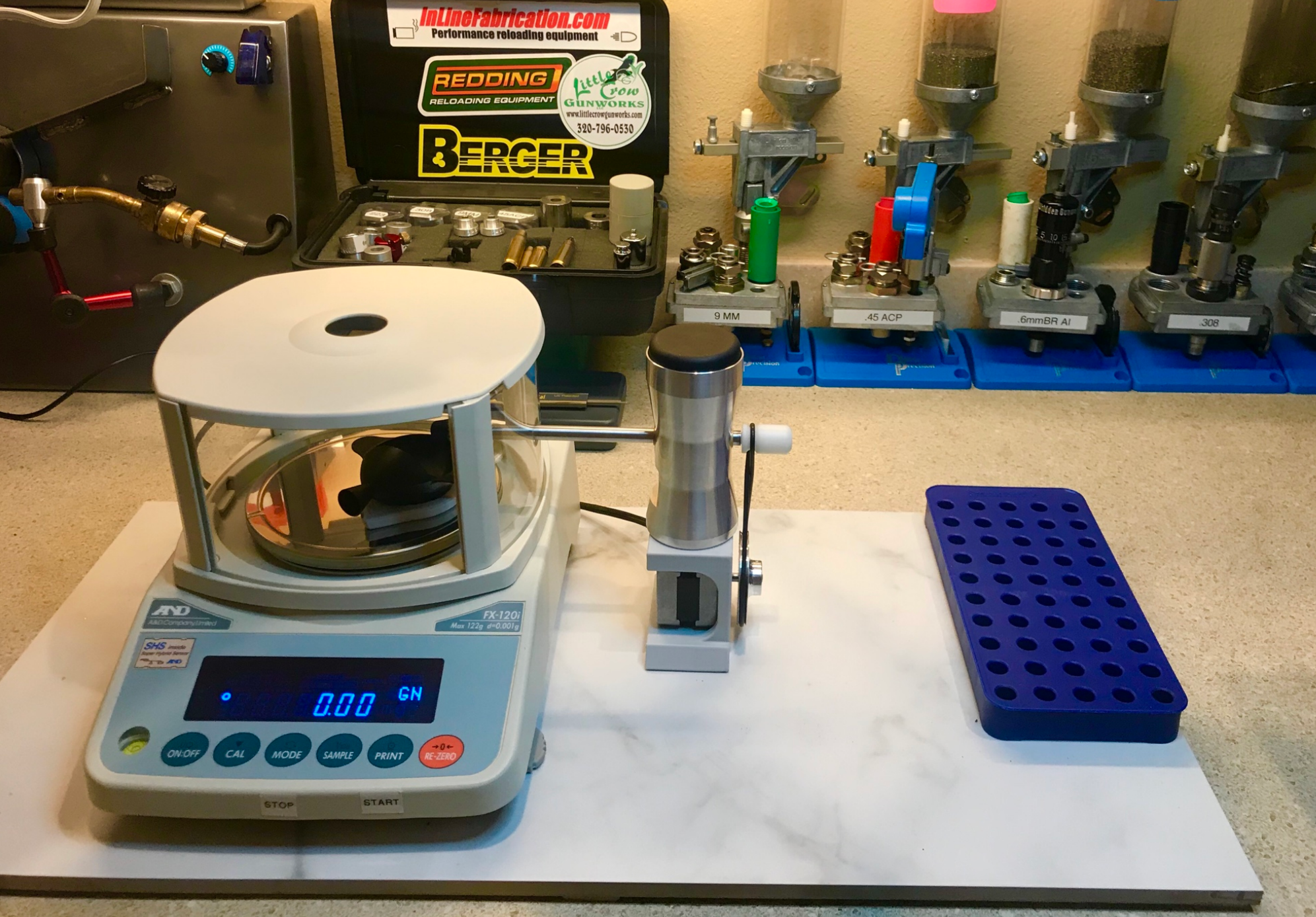
Use the same pan orientation every time. The pan on most combo dispensers has a pour spout. If you rotate the pan between charges, the weight distribution changes slightly on the scale platform. Pick an orientation and stick with it.
For stick powders, learn to read the overthrow pattern. Most dispensers will overthrow by one kernel roughly one in every five to ten charges. Decide in advance how you'll handle it, dump and re-throw, or accept 0.1 over. Consistency in your decision matters more than which option you choose.
Common mistakes that kill charge weight consistency
Not accounting for scale drift during long sessions
Electronic scales drift. Period. Over a two-hour loading session, a 0.2-grain drift is common on consumer-grade units. The fix is checking zero every 15 to 20 charges. Place the empty pan on the scale, verify zero, and recalibrate if needed. This takes ten seconds and prevents cumulative error from creeping into your ammo.
Loading in a garage with temperature swings
A 15°F temperature change during a loading session can shift an electronic scale's reading by 0.1 to 0.2 grains. If you're loading in an unheated garage and the sun comes through a window mid-session, your first charges and your last charges may not match even though the dispenser displayed the same number for all of them. Climate-controlled spaces are ideal. If that's not an option, recalibrate more frequently and verify with a beam scale.
Ignoring static electricity with extruded powders
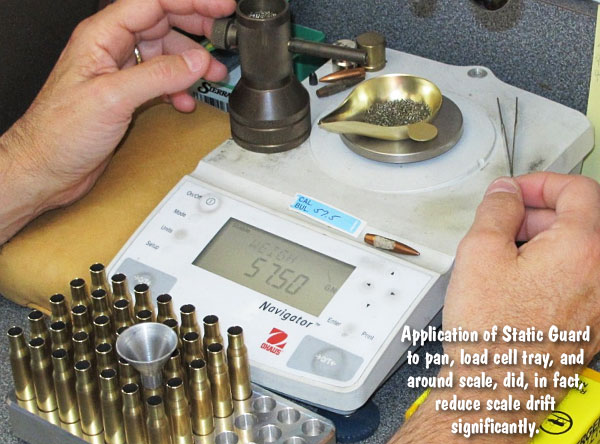
Stick powder kernels build static charge as they tumble through a dispenser tube. That charge can cause kernels to cling to the pan, the funnel, or each other, affecting the scale reading. In dry winter conditions, this effect can introduce 0.1 to 0.2 grains of phantom weight. Anti-static dryer sheets rubbed on the pan and funnel help. Some reloaders ground their dispensers with a wire to the bench leg. The simplest fix is a small humidifier near the bench, keeping ambient humidity above 40% eliminates most static issues.
Trusting the display without verification
The number on the screen is only as good as the last calibration. Every electronic dispenser will occasionally display a target weight while the actual charge is 0.2 grains off. This isn't a defect, it's the reality of consumer-grade load cells. A beam scale or a second electronic scale as a check standard catches these errors. The competitive shooters profiled in Precision Rifle Blog's surveys overwhelmingly use a check scale alongside their primary dispenser. If the pros verify, so should you.
Rushing the trickle phase
On units that allow you to manually trickle the last few tenths of a grain, impatience causes more overthrows than any mechanical limitation. Add one kernel, wait for the scale to settle (two to three seconds on most units), then add another. The scale's response time is not instantaneous, dumping three kernels at once and watching the display jump past your target is the most common source of overthrows.
Equipment comparison: the realistic options under $500
Here's how the main contenders stack up across the metrics that actually matter for precision loading.
RCBS ChargeMaster Supreme
Typical accuracy with ball powders lands within ±0.1 grain consistently. With long stick powders, expect occasional overthrows of one kernel (0.03 to 0.05 grains over). Dispensing speed runs 25 to 35 seconds per charge. The touchscreen interface is intuitive after a short learning curve, and the powder-learning algorithm genuinely improves accuracy over a session. The unit is well-built with a solid pan and stable platform. At $350 to $400, it's the benchmark in this price range.
Hornady Auto Charge Pro
Accuracy is competitive with the RCBS Supreme, ±0.1 grain with ball and short-cut powders, occasional overthrows with stick powders. The drum dispensing mechanism handles fine ball powders like H335 and Win 748 well. Physical buttons instead of a touchscreen. Smaller pan size is the main ergonomic drawback. Requires more frequent cleaning of the dispensing drum than the RCBS units need for their tubes. At $280 to $330, it's the value pick if you're primarily loading with ball or short-cut extruded powders.
RCBS ChargeMaster Link
Very similar dispensing performance to the Supreme with a less polished interface and Bluetooth connectivity that some find useful and others find unnecessary. Slightly slower on the trickle phase with some powders. At $300 to $330, it splits the difference between the Supreme and the Auto Charge Pro. The Bluetooth app integration is the differentiator, if you want digital load logging tied to your dispenser, the Link is the only option in this bracket.
Lyman Gen 6
Adequate accuracy with ball powders (±0.1 to ±0.15 grains), less consistent with stick powders (±0.2 grains is common). Slower dispensing speed. More sensitive to environmental conditions. Build quality is a step below RCBS and Hornady. At $250 to $280, it's the budget option that works for non-precision applications or as a starting point you'll eventually upgrade from.
A&D FX-120i (scale only, paired with manual trickler)
The highest accuracy option in this price range by a wide margin, 0.02-grain resolution and repeatability. Requires a separate powder measure or dipper to get close, then manual trickling to target weight. Extremely slow for batch loading but unmatched for precision. At $400 to $480 for the scale alone, it's the choice for competitive shooters who prioritize accuracy over speed and plan to eventually add an automated trickler system.
The speed versus precision trade-off
Every dispenser purchase is a decision about where you sit on the speed-versus-precision spectrum. Here's the honest breakdown.
If you're loading 200 rounds of .223 for a prairie dog trip, the ChargeMaster Supreme or Auto Charge Pro at 30 seconds per charge gets you done in under two hours with ±0.1-grain consistency. That's the sweet spot for most reloaders.
If you're loading 20 rounds of 6.5 Creedmoor for a PRS match and every tenth of a grain matters, the FX-120i with a manual trickler at three to four minutes per charge gets you sub-0.05-grain consistency. The time investment is justified by the application.
If you're loading 500 rounds of 9mm for USPSA practice, an electronic combo dispenser is overkill. A quality volumetric measure like the RCBS Uniflow or Redding BR-30 will throw pistol charges to ±0.1 grain with ball powders all day long, at five seconds per charge.
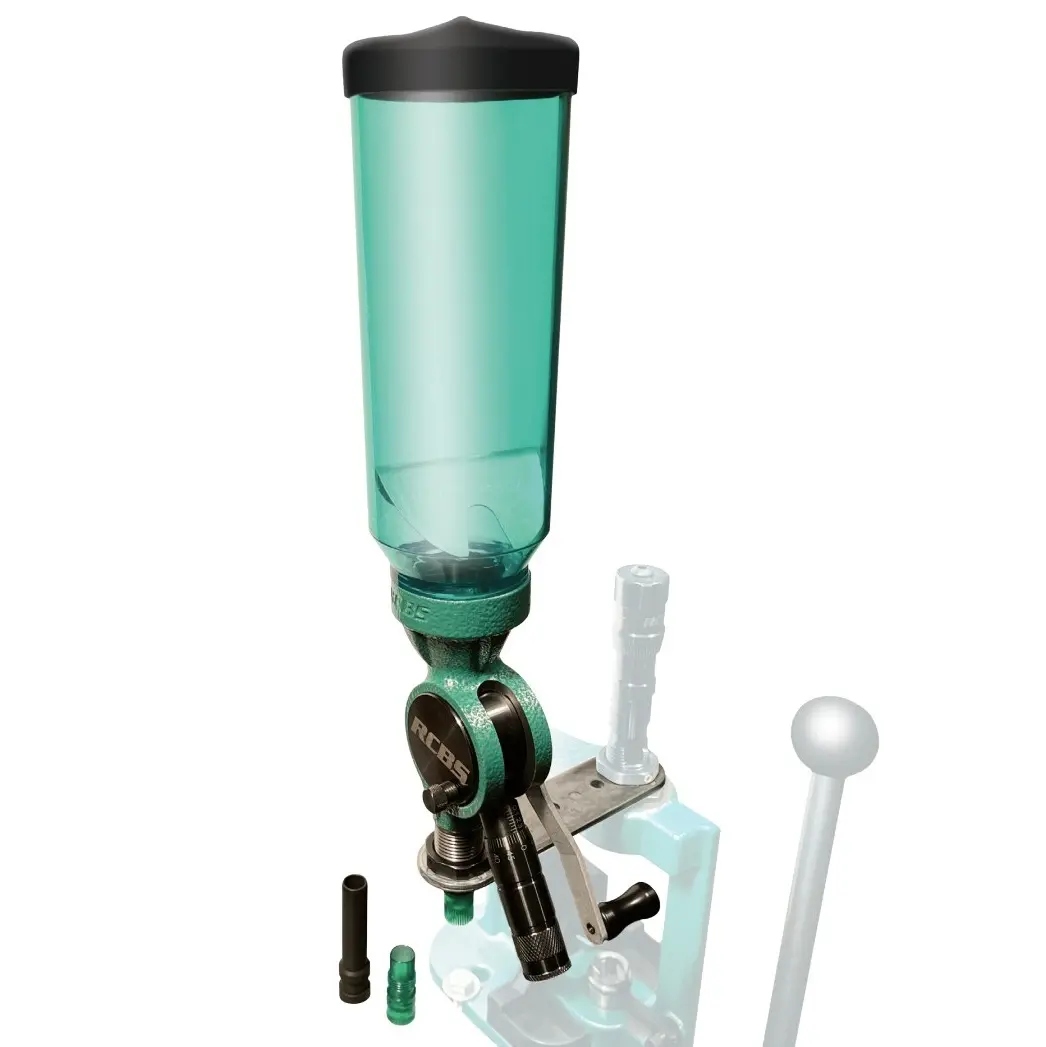
Match the tool to the task. The reloader who hand-trickles every charge of bulk .223 is wasting time. The reloader who dumps volumetric charges for 1,000-yard F-Class ammo is leaving accuracy on the table.
Powder type matters more than most people think
The variable most people ignore when evaluating dispensers is the powder itself. The same machine that holds ±0.05 grains with Hodgdon H335 (a spherical ball powder with uniform kernel size) might wander to ±0.2 grains with Hodgdon H1000 (a long extruded stick powder with large, irregular kernels).
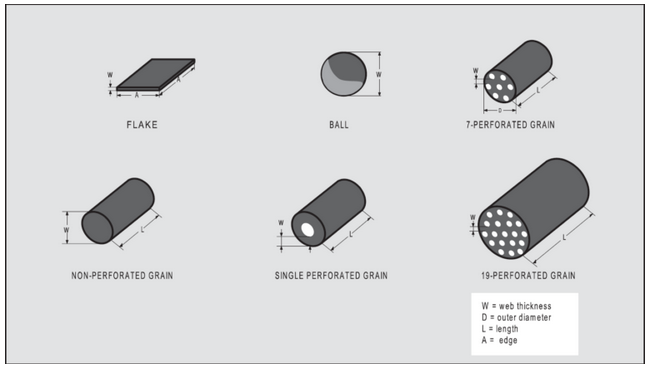
Ball powders flow like water through dispensing mechanisms. Kernels are small, uniform, and round. Electronic dispensers can meter them precisely because each kernel added to the pan represents a tiny, predictable weight increment. Short-cut extruded powders (Varget, IMR 4064) fall in the middle, kernel size is moderate, and dispensers handle them reasonably well. Long stick powders (H1000, Retumbo, RL-26) are the worst case. A single kernel can weigh 0.03 to 0.05 grains, which means the dispenser's minimum increment is a significant fraction of the 0.1-grain accuracy target.
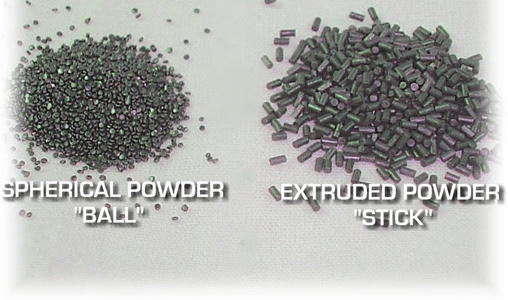
If you're loading a cartridge that runs on long stick powders and you need true sub-0.1-grain consistency, plan on one of two approaches: accept that your electronic dispenser will occasionally overthrow by one kernel and verify with a check scale, or switch to manual trickling for the final approach to target weight. Some reloaders use their electronic dispenser to throw charges 0.3 to 0.5 grains under target, then hand-trickle the rest on a separate scale. This hybrid approach combines reasonable speed with excellent precision.
Maintaining accuracy over time
Electronic dispensers aren't set-and-forget equipment. Accuracy degrades without maintenance, and the degradation is gradual enough that you won't notice it without periodic verification.
Clean the dispensing mechanism every 200 to 300 charges. Powder residue, graphite coating from kernels, and static buildup all affect flow rates and metering precision. For the RCBS units, this means removing the dispensing tube and wiping it down. For the Hornady Auto Charge Pro, the drum needs to be cleaned and any powder buildup in the drum housing removed.
Replace check weights if they get dinged, corroded, or contaminated with oil from your hands. A check weight that's off by 0.1 grain makes your calibration worthless. Handle check weights with tweezers or clean cotton gloves.
Recalibrate after moving the unit, even if you're just sliding it six inches across the bench. The internal sensor can shift during movement, and a fresh calibration takes 30 seconds.
Store the unit covered when not in use. Dust on the scale platform affects zero, and powder dust in the dispensing mechanism affects flow rates. A simple cloth cover or the original box is sufficient.
Building the right setup for your budget
Here's how to allocate a $500 budget across three different reloading profiles.
For the precision rifle shooter who loads 50 to 200 rounds per month: RCBS ChargeMaster Supreme ($375) plus an RCBS 10-10 beam scale ($75) as a check standard. Total around $450. This setup delivers ±0.1-grain consistency at reasonable speed, with the beam scale catching the occasional overthrow or calibration drift.
For the competitive shooter building toward an Autotrickler system: A&D FX-120i ($450) plus a manual RCBS powder trickler ($25). Total around $475. This gives you the best scale in the price range now, with a clear upgrade path to add an automated trickler later. You'll be slow initially, but the scale is the foundation of the system and it's the component you won't need to replace.
For the high-volume loader who also does some precision work: Hornady Auto Charge Pro ($300) plus a Lyman Pro 500 beam scale ($65) plus an RCBS Uniflow volumetric measure ($90) for bulk pistol and rifle loads. Total around $455. The Auto Charge Pro handles precision rifle charges, the Uniflow handles volume, and the beam scale keeps everything honest.
The next step
Pick up whatever dispenser or scale you're considering and run this test before you load a single round of "real" ammo. Throw ten charges of your primary powder at your most common charge weight. Weigh each one on a second scale, beam or electronic, doesn't matter as long as it's calibrated. Record all ten weights. Calculate the spread (highest minus lowest) and the standard deviation.
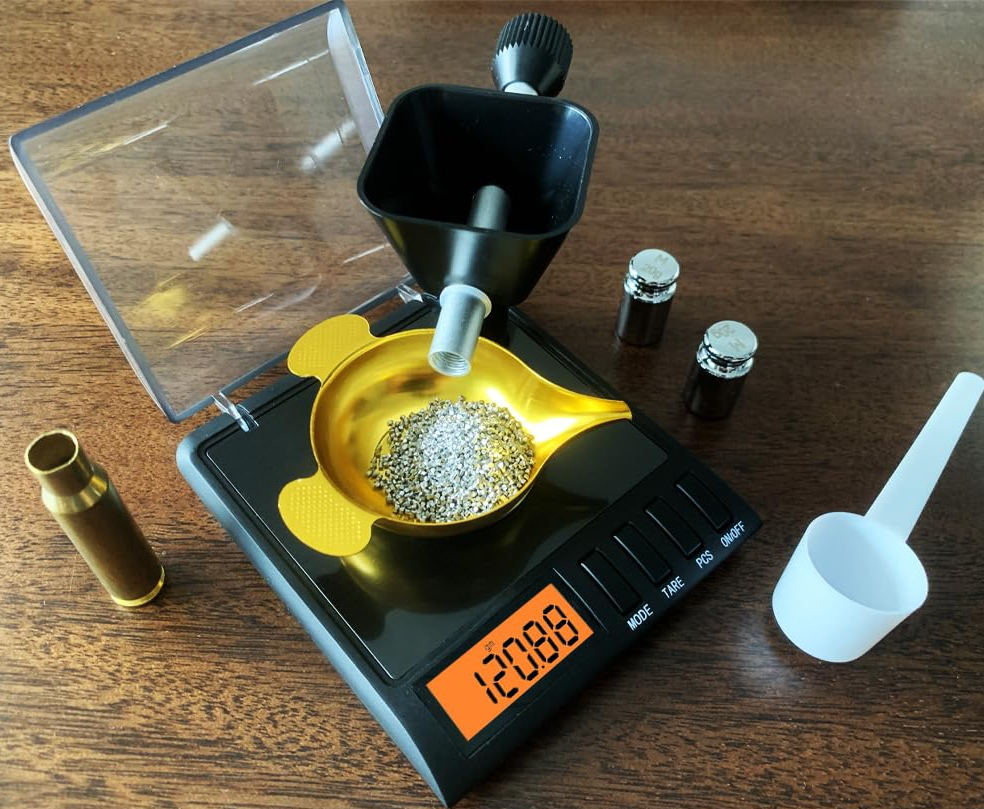
If the spread is 0.1 grains or less and the SD is under 0.04 grains, your setup is performing at the precision level. If the spread is 0.2 to 0.3 grains, you've got work to do, check your environment, clean the dispenser, recalibrate, and retest. If the spread is over 0.3 grains, the equipment isn't capable of what you need, and no amount of bench protocol will fix a hardware limitation.
Log that data. Run the same test every few months with the same powder. When accuracy degrades, you'll see it in the numbers before you see it on target. The ES/SD tells you everything, on the chronograph and on the scale.