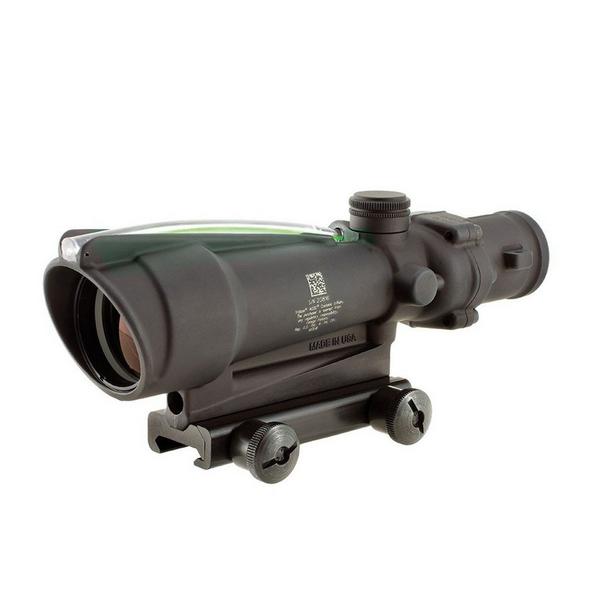
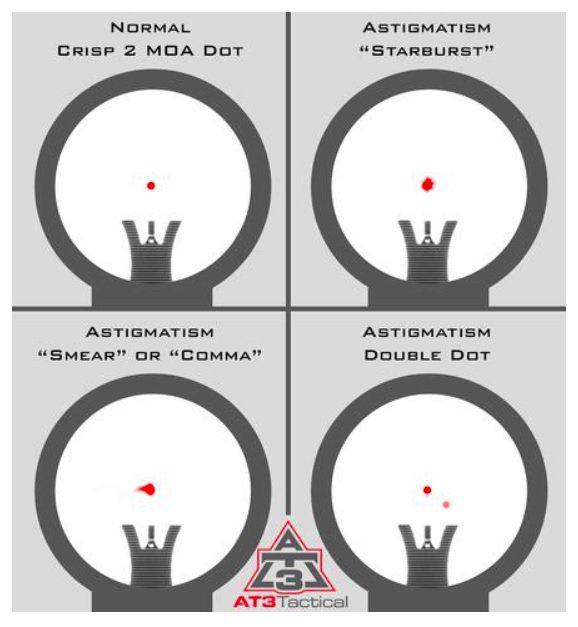
You've tried a red dot. The dot wasn't a dot; it was a starburst, a comma, or some vague smear that shifted shape depending on how tired your eyes were. You're not crazy, and the optic probably isn't broken. You've got astigmatism, and emitter-based reticles don't play well with your corneas. Prism sights fix this, and you don't need to spend Trijicon ACOG money to get a sharp reticle.
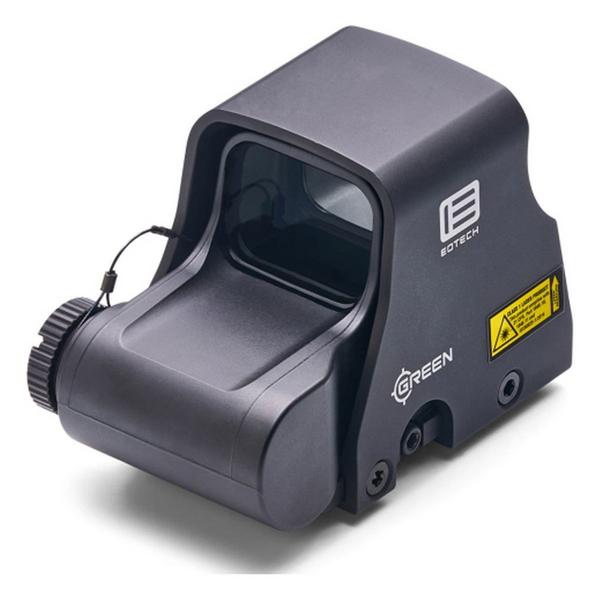
The reason is straightforward. Red dots and holographic sights project a reticle using an LED or laser onto a lens, and your eye is the final focusing element. If your eye distorts light, which is literally what astigmatism does, the reticle distorts. Prism sights use an etched reticle on glass, like a traditional scope. Your eye still has astigmatism, but the reticle is a physical object in the focal plane, so it stays crisp. It's the same reason you can read text on paper without your glasses but can't resolve a projected image clearly.
The trick is finding a prism sight that doesn't compromise too much on eye box, weight, or usability to solve the reticle problem. Under $400, there are legitimately good options, and a few that look good on paper but fall apart at the range. Here's how to sort them out.
Why prism sights work for astigmatism (and where they don't)
The etched reticle is the whole story. Because the reticle is physically inscribed on glass inside the optic, it behaves like any other object at a fixed focal distance. Your corrective lenses (or lack thereof) affect it the same way they'd affect iron sights or text on a page. For most people with mild to moderate astigmatism, this means a clean, sharp reticle without needing to wear contacts or glasses while shooting.
There's a catch, though. Prism sights have a fixed eye relief, typically somewhere between 2.5 and 4 inches depending on magnification. That means your head position matters more than it does with a red dot, where you can be off-center and still see the dot (even if it's smeared). With a prism, you get a sharp reticle but a less forgiving eye box. At 1x, this is manageable. At 3x or 5x, it becomes a real factor in how fast you can get on target.
The illumination on a prism sight is supplemental, not primary. With the battery dead, you still have a black etched reticle that's perfectly usable in daylight. This is a genuine advantage over red dots, where a dead battery means no reticle at all (unless you're running an Aimpoint with a 50,000-hour battery life, and even then, batteries die). The illumination just adds contrast in low light or against dark backgrounds.
One thing that trips people up: not all astigmatism responds the same way to emitter-based optics. Some shooters find holographic sights (like EOTechs) slightly better than red dots for their particular eye. Others find prisms solve it completely while holos don't. The only reliable test is looking through the optic yourself. But if red dots are consistently a problem for you, prism sights are the most reliable fix short of corrective surgery.
What to evaluate in a prism sight
Magnification is the first fork in the road. At 1x, you're looking for a red-dot replacement, fast target acquisition, both-eyes-open shooting, and usability inside 200 yards. At 3x, you're splitting the difference between speed and precision, useful from 50 to maybe 400 yards with good fundamentals. At 5x, you're committing to a precision-oriented optic that's slower up close but extends your effective range.
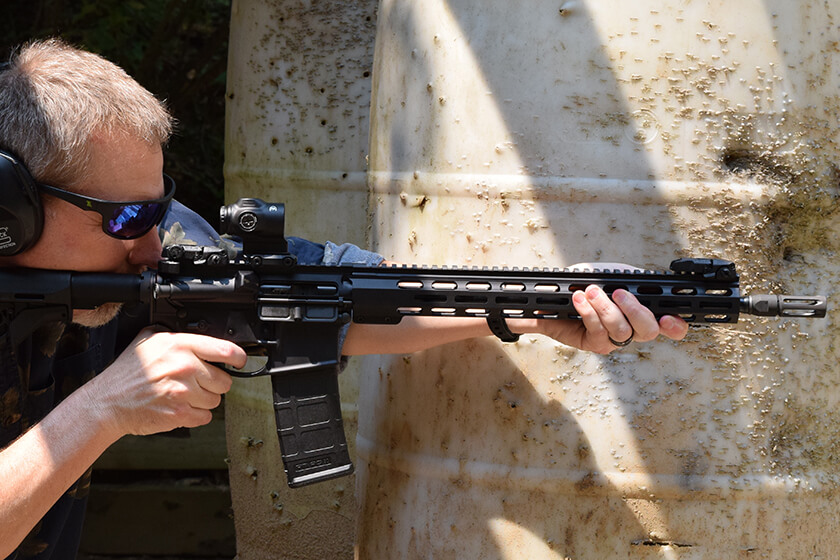
The eye box tells the real story. A 1x prism with a tight eye box defeats the purpose of running 1x. You want to be able to mount the rifle, find the reticle quickly, and not have to hunt for the sweet spot. The Primary Arms SLx 1x MicroPrism is the benchmark here, its eye box is remarkably forgiving for a prism optic, close enough to a red dot that most shooters adapt within a range session. Other 1x prisms aren't always this good.
Reticle design matters more than people think. An etched reticle can carry a lot of information, bullet drop compensation (BDC) marks, windage holds, ranging features. This is useful if you learn the system, and completely irrelevant clutter if you don't. A simple crosshair or chevron gets you on target fast. A full BDC tree like the Primary Arms ACSS system gives you holdovers calibrated to specific cartridges. Neither is wrong, but know which one you actually need.
Glass quality at this price point varies more than you'd expect. You're not getting Razor HD-level glass in a $250 prism sight, but you should expect minimal chromatic aberration (color fringing at the edges) and enough clarity that the reticle and target are both sharp at the same time. Cheap prism sights sometimes have noticeable edge distortion or a blue/purple fringe around high-contrast objects. This isn't a dealbreaker for combat-distance shooting, but it's annoying and it degrades the experience at longer ranges.
Weight and footprint are the hidden cost of prism sights. A Trijicon MRO weighs about 4.1 ounces. The Primary Arms SLx 1x MicroPrism weighs about 7.3 ounces with its mount. A 3x prism like the SIG Bravo3 hits around 14.4 ounces. That weight adds up, especially on a 16-inch AR where you're already managing a loaded magazine, light, and sling. It's not a reason to avoid prisms, but it's a real trade-off to acknowledge.
The 1x prism category: red dot replacement territory
Primary Arms SLx 1x MicroPrism Gen II
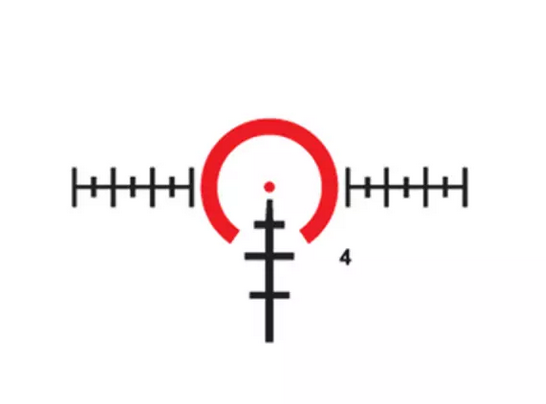
This is the optic that reshaped the 1x prism market. The Gen II version of the SLx MicroPrism runs the ACSS Cyclops Gen 2 reticle, which combines a center chevron with a 65 MOA horseshoe ring and BDC holdovers calibrated for 5.56 NATO out to 600 yards. It's available in red or green illumination, green tends to be more visible in daylight for most people, red is easier on dark-adapted eyes.
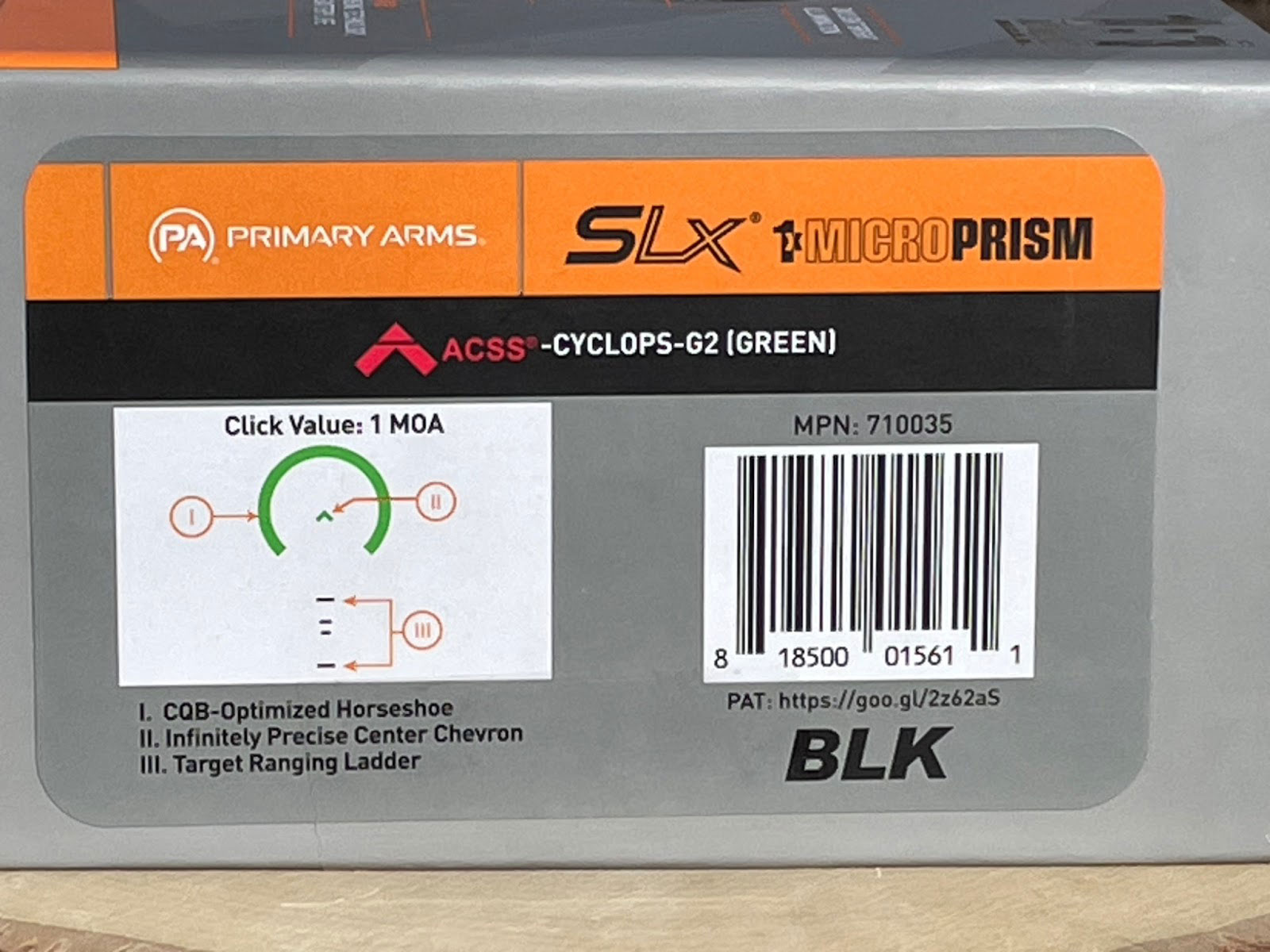
The footprint is compact. It mounts on a standard Picatinny rail with an included mount that puts it at absolute co-witness height on a flat-top AR, and Primary Arms sells spacers to bring it up to lower-third co-witness. The whole package weighs around 7.3 ounces, which is heavier than most micro red dots but lighter than any 3x prism.
What you'll actually notice: the eye box is the star. For a prism optic at 1x, it's forgiving enough that both-eyes-open shooting works. It's not as infinite as an Aimpoint T2, you'll notice some vignetting if your head position is significantly off, but it's close enough that the transition from a red dot doesn't feel punishing. The ACSS reticle is busy if you're used to a simple dot, but the center chevron works fine as a fast-aiming reference and you can ignore the BDC marks until you need them.
The etched reticle is usable without illumination in good light. In low light, the illumination has 12 brightness settings, including off positions between each level so you can cycle quickly. Battery life on moderate settings runs around 1,500 hours on a single CR2032, not Aimpoint territory, but reasonable.
The glass has mild chromatic aberration at the edges, typical for this price range. Center clarity is good. The slight fisheye effect at 1x takes some getting used to if you've only shot red dots, but most shooters stop noticing it after a few magazines.
Street price runs in the $200–$250 range, which makes it the value king in this category. For astigmatism specifically, this is the optic that gets recommended most often in online communities, and that reputation is earned.
Swampfox Blade 1x25
The Blade has been around for a while and occupies a slightly different niche. It's a 1x25mm prism with a green or red illuminated reticle that uses a circle-dot pattern with BDC hashmarks. The housing is larger than the Primary Arms MicroPrism, closer in size to a short red dot like the Bushnell TRS-26 than a micro dot.
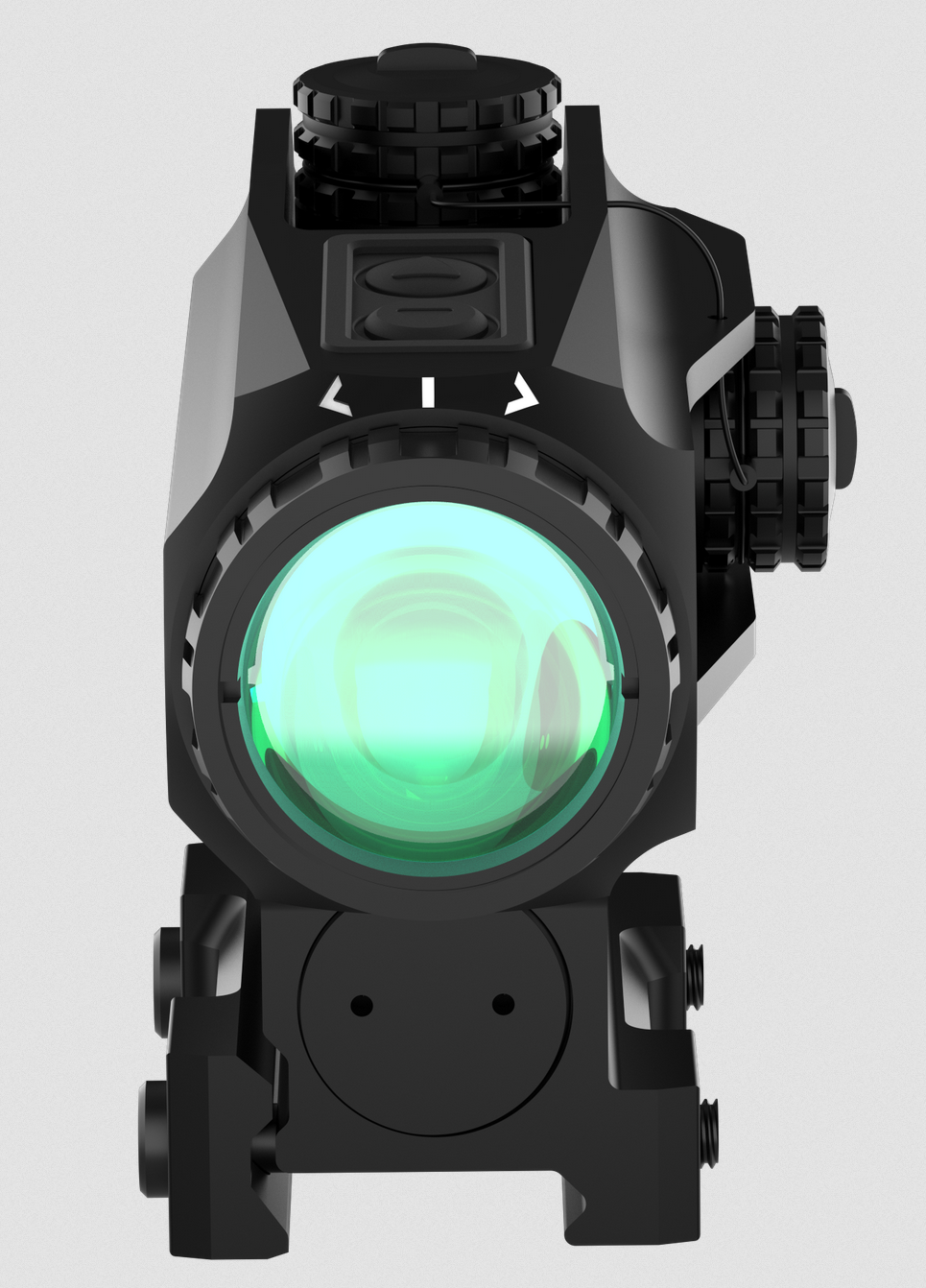
Eye relief sits around 3.5 inches, which is adequate but noticeably tighter than the SLx MicroPrism. The eye box is where the Blade shows its age compared to newer designs. Head position needs to be more precise, and shooting both-eyes-open at speed requires more practice to maintain a consistent cheek weld.
The glass is decent for the price, usually found around $150–$180, and the reticle is crisp enough to solve the astigmatism problem. Build quality is solid with an aluminum housing and capped turrets. Swampfox has improved their quality control over the years, and the Blade benefits from that.
Where it falls short is the overall shooting experience compared to the SLx MicroPrism. The eye box is less forgiving, the reticle design is less refined, and the form factor is bulkier. But if you're on a tight budget and need an astigmatism-friendly optic that holds zero on an AR, the Blade does the job.
Monstrum S330P 3x prism (honorable mention at 1x-adjacent)
Monstrum makes aggressively priced prism sights, and the S330P is a 3x prism that occasionally gets lumped into the "budget prism" conversation. At well under $100, it's tempting. The reticle is etched and illuminated, and it does solve the astigmatism smearing problem.
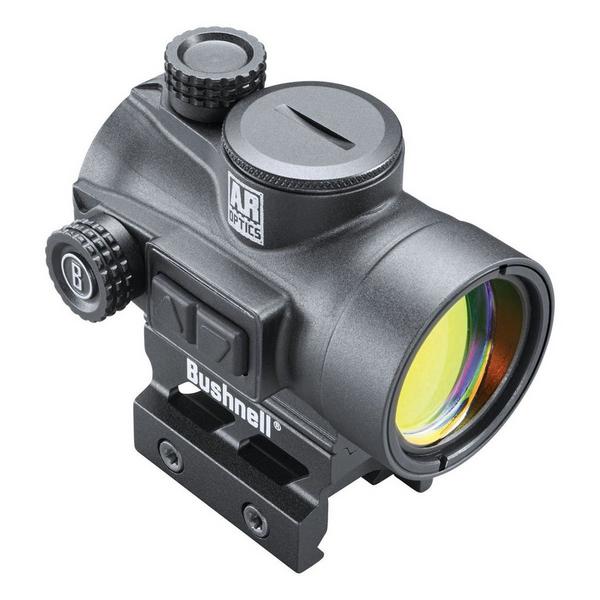
But the glass quality, eye box, and build consistency aren't in the same league as Primary Arms or Swampfox. Turret adjustments can feel mushy, and the eye relief at 3x is tight enough that fast target transitions are genuinely difficult. If you're testing whether a prism sight works for your eyes before committing to a better optic, a Monstrum can serve that purpose. As a long-term optic on a rifle you depend on, it's a gamble.
The 3x prism category: the versatility sweet spot
Three-power prisms occupy interesting territory. They give you enough magnification to make hits at 300+ yards on steel while still being usable inside 100 yards with practice. The trade-off is always the eye box, at 3x, head position becomes more critical, and transitions between close and far targets are slower than with a 1x optic.
Primary Arms SLx 3x MicroPrism
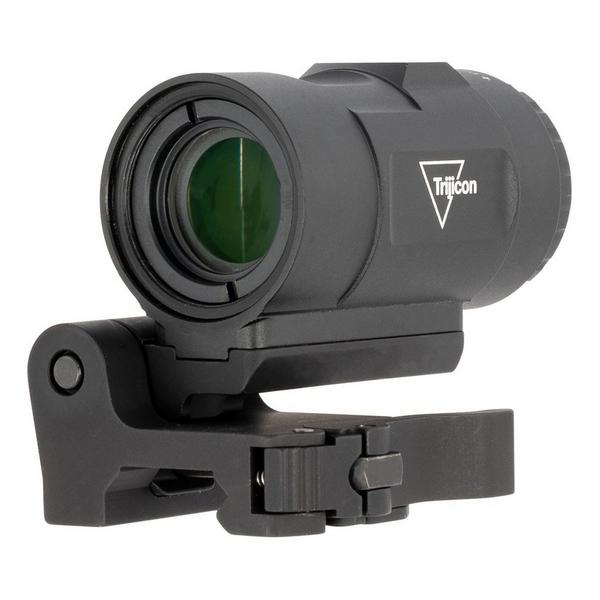
Primary Arms extended the MicroPrism concept to 3x, and the result is impressively compact for a magnified prism. It runs the ACSS Raptor reticle, which is calibrated for 5.56 NATO or 7.62x39 (depending on which version you buy, and yes, the reticle BDC changes between them, so get the right one for your cartridge).
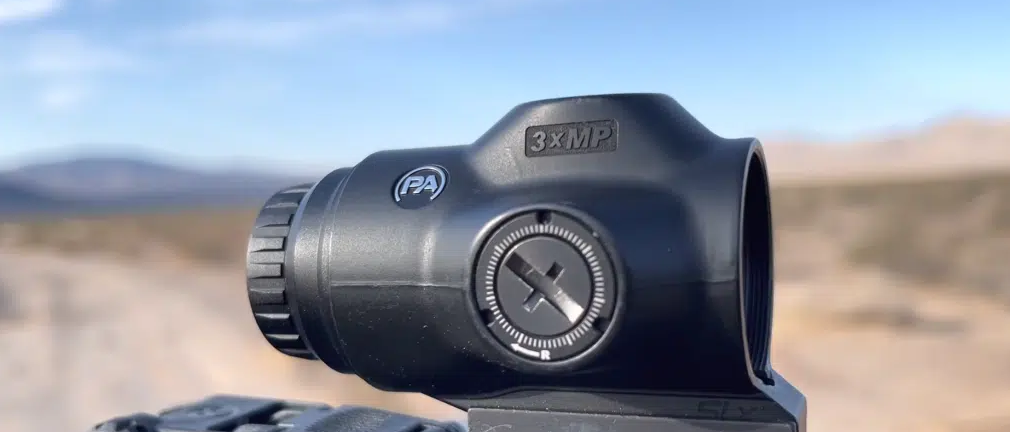
The ACSS Raptor reticle at 3x is where the system starts to shine. The horseshoe and chevron give you a fast aiming point for close work, while the BDC and wind holds below the center point let you make precise holdovers at distance. If you take the time to verify the BDC against your specific load and barrel length, you'll find the holdovers are remarkably close to the marked values out to 400–500 yards with standard-velocity 5.56.
Eye relief runs about 2.8 inches, and the eye box is tighter than the 1x version, expected at this magnification. It's not punishing, but you need a consistent cheek weld. Shooters who switch between this and a red dot will notice the difference immediately when trying to get on target quickly from a low ready.
Weight is around 9 ounces with mount, which is competitive with other 3x prisms and significantly lighter than most 3x prism sights from a few years ago. The included mount puts it at a height that works for most AR-platform rifles without additional spacers.
Glass clarity is good for the price (typically $300–$350). There's some chromatic aberration at the edges, consistent with other prisms in this range, but center sharpness is excellent. The illumination is bright enough for daylight use on the higher settings.
SIG Sauer Bravo3
The Bravo3 is SIG's entry in the 3x prism space, and it's a different animal than the Primary Arms. It uses a horseshoe-dot reticle (the 5.56/7.62 versions have different BDC calibrations) with red or blue illumination options depending on the model. The housing is larger and heavier than the SLx 3x MicroPrism, around 14.4 ounces, and it has a distinctly different aesthetic that some shooters love and others find blocky.
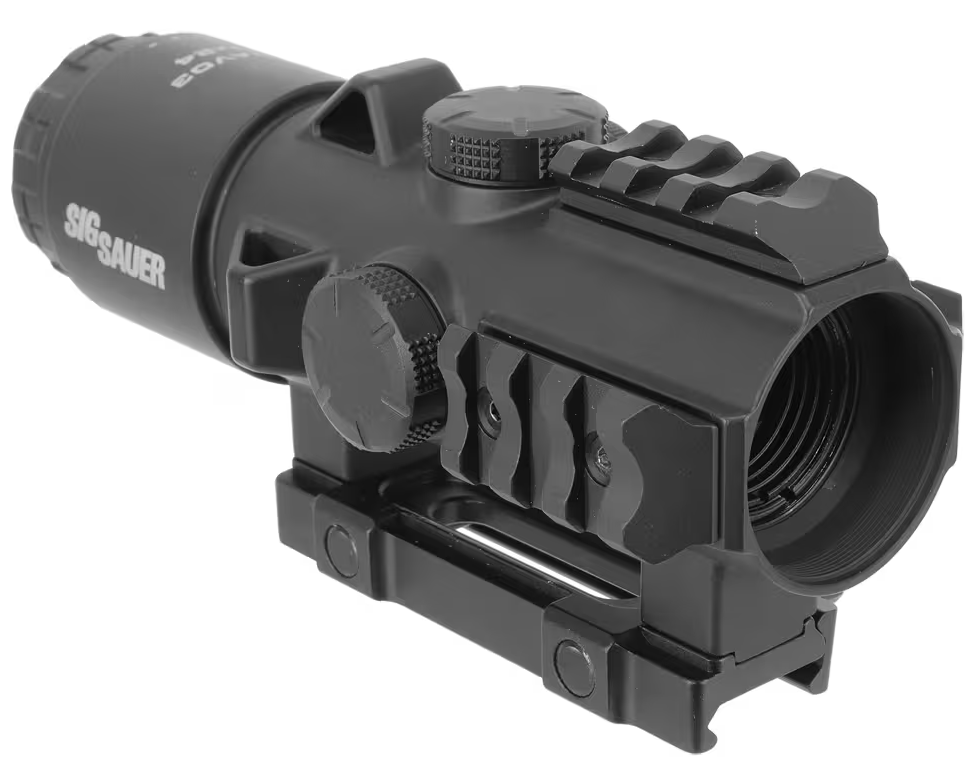
The glass quality is where the Bravo3 earns its keep. SIG put good glass in this optic, and the clarity is a step above most competitors at similar prices. Edge-to-edge sharpness is better than the Primary Arms 3x, and chromatic aberration is well-controlled. If you're planning to actually use the magnification at 300+ yards regularly, the glass advantage matters.
Eye relief is about 2.75 inches, and the eye box is comparable to the Primary Arms, tight enough that you need to be deliberate about head position, but manageable with practice. The eyepiece has a diopter adjustment ring that lets you focus the reticle to your eye, which is particularly useful for shooters with astigmatism who may also have some near or farsightedness.
SIG backs the Bravo3 with their Infinite Guarantee, which is a transferable, no-questions-asked warranty. That's a meaningful differentiator if you buy optics with the intention of keeping them for a decade.
Street price typically sits in the $300–$380 range, which puts it at the top of the under-$400 budget. The extra cost over the Primary Arms 3x buys you better glass and a more robust housing. Whether that's worth the weight penalty and price premium depends on how you're using the optic.
Vortex Spitfire HD Gen II 3x
Vortex's Spitfire line has been through several iterations, and the HD Gen II 3x is the current version. It runs a BDC reticle with an AR-BDC4 pattern that includes holdovers and wind dots. The reticle is etched and illuminated in red, with multiple brightness settings.
The "HD" in the name refers to the glass, which uses extra-low dispersion elements to reduce chromatic aberration. In practice, the Spitfire HD Gen II 3x has noticeably cleaner edges than the non-HD versions and competes well with the SIG Bravo3 on glass quality. Center clarity is very good, and the color fringing that plagues cheaper prisms is minimal.
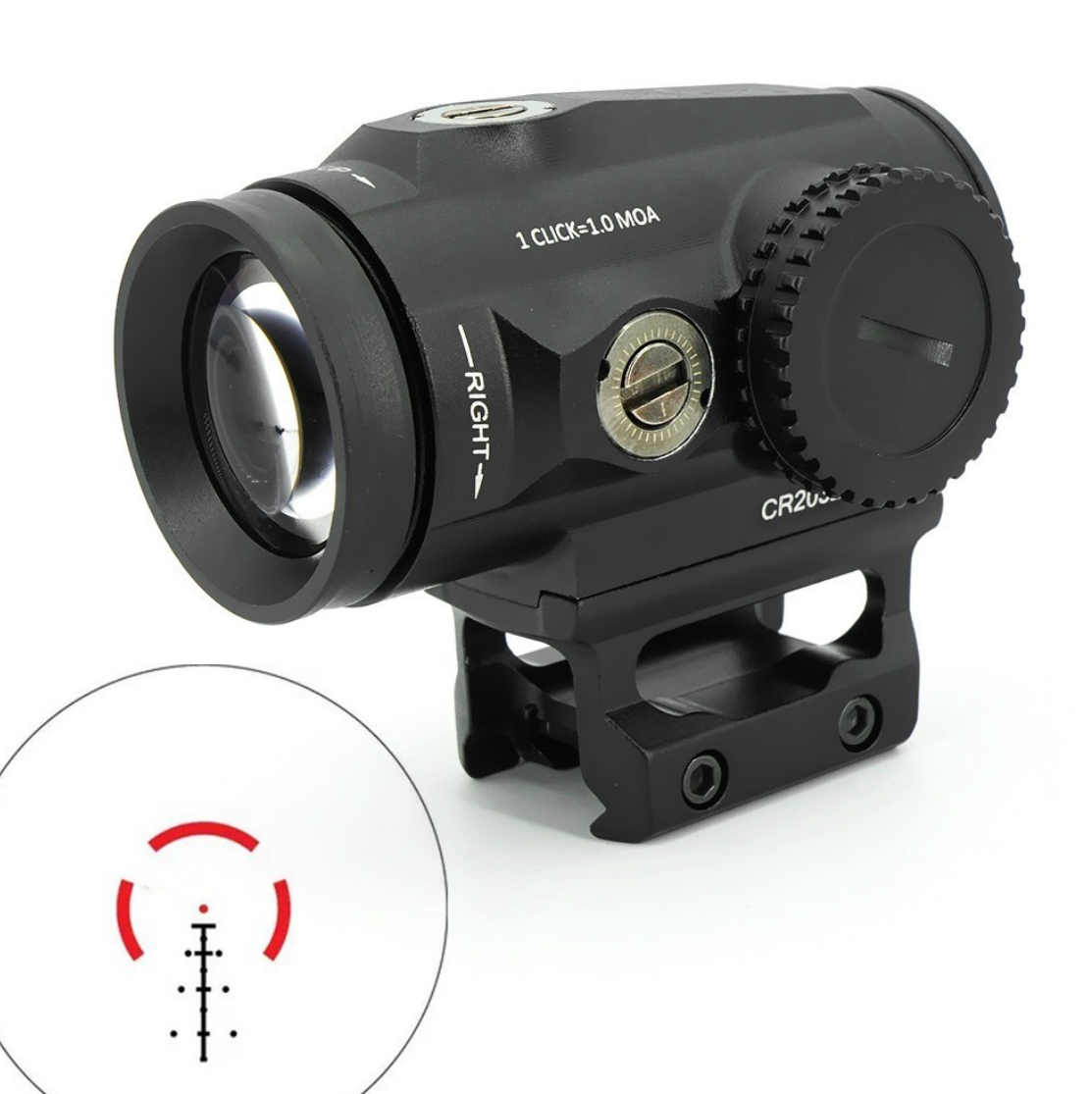
Eye relief is around 2.7 inches. The eye box is on par with the Bravo3 and Primary Arms 3x, this is just the reality of 3x prism optics. Weight is about 12.2 ounces, splitting the difference between the ultralight Primary Arms and the heavier SIG.
Vortex's VIP warranty is unconditional and lifetime, which is hard to beat. If you break it, they fix or replace it. No receipt needed. That warranty has real value for a working optic that's going to get banged around.
The Spitfire HD Gen II 3x usually runs $350–$400, making it the most expensive 3x option in this roundup. The glass quality justifies the price if you're shooting at distance regularly. For a carbine that mostly sees 100-yard range sessions, the Primary Arms 3x gives you 80% of the performance for less money.
The 5x prism category: commitment to distance
At 5x, you're giving up close-range speed entirely in exchange for the ability to identify and engage targets at 400–500 yards with holdovers. This is a specific tool for a specific job. If your rifle's primary role is home defense or CQB-distance training, skip 5x prisms entirely.
Vortex Spitfire HD Gen II 5x
This is the magnified sibling of the 3x, and it shares the HD glass pedigree. The 5x version runs a BDC reticle calibrated for 5.56 NATO with holdovers extending to 700+ yards (though making consistent hits at that distance with a 5x optic and 5.56 requires ideal conditions and excellent fundamentals).
Glass quality at 5x is where the HD elements really earn their keep. Chromatic aberration is well-controlled, and the image is sharp enough to spot hits on steel at 400 yards. The etched reticle remains crisp and usable for astigmatism sufferers, and the illumination, while not necessary in good light, adds useful contrast against dark backgrounds or in shadows.
Eye relief drops to about 2.6 inches at 5x, and the eye box is predictably tighter than the 3x. This is the main practical limitation. Getting behind the optic quickly from a ready position takes practice, and shooting from awkward positions (barricade, weak side) requires deliberate head placement. Under stress or at speed, this matters.
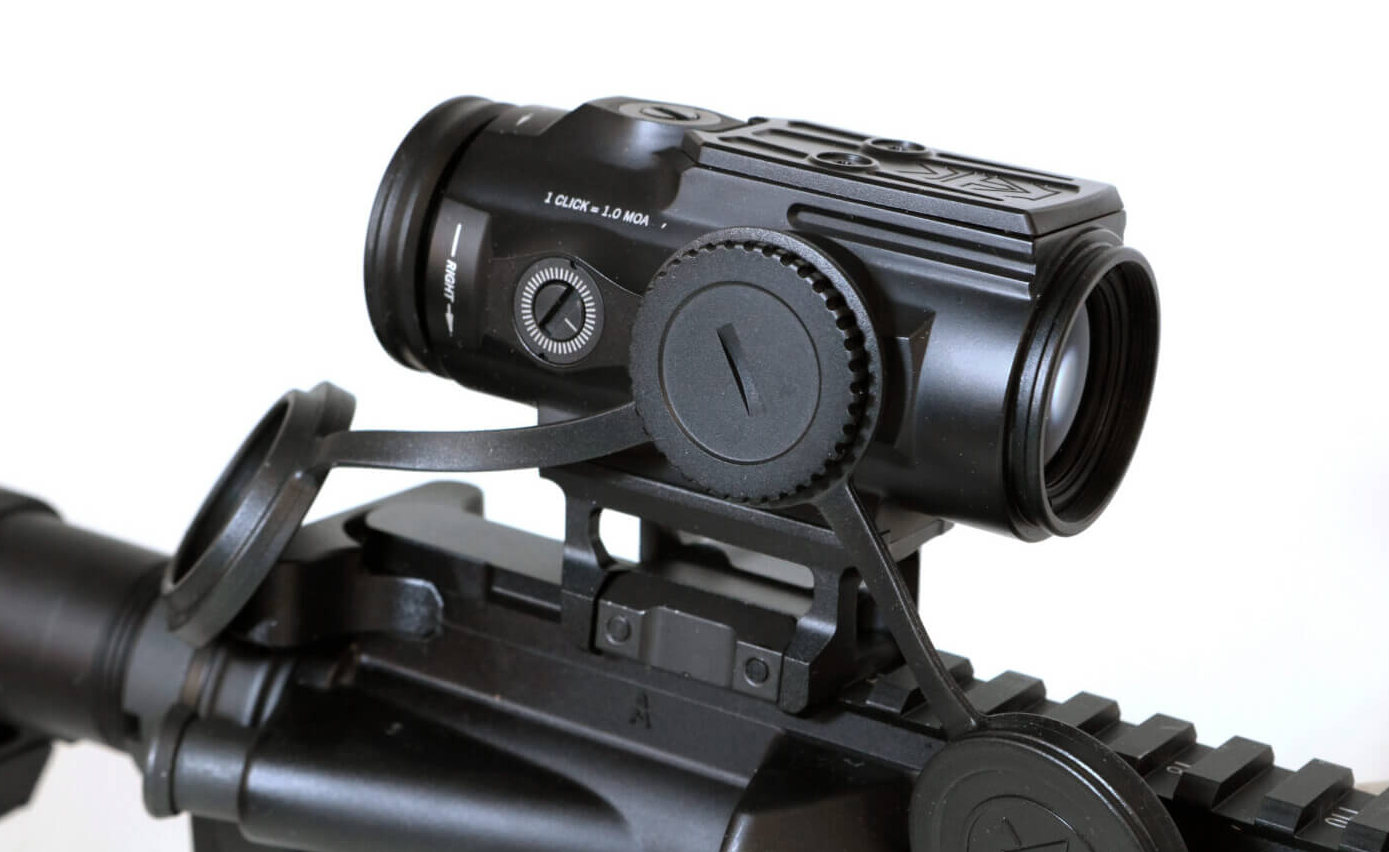
Weight hits around 13 ounces, which is manageable on a full-size rifle but starts to feel front-heavy on a lightweight build. The included mount is solid and puts the optic at a good height for standard AR cheek weld.
At $350–$400, the Spitfire HD Gen II 5x is the best dedicated 5x prism under $400. The competition at this magnification is mostly ACOGs (which start around $900) and cheaper imports that can't match the glass quality. For a DMR-style build or a ranch rifle that needs to reach out, it's a strong choice.
Glass notes: what you'll actually see
Across all of these optics, there are some common optical characteristics worth understanding.
Chromatic aberration shows up as color fringing, usually purple or blue, around high-contrast edges like a black target against a bright sky. Every prism sight under $400 has some degree of this. The HD-designated glass in the Vortex Spitfire line and the better SIG glass minimize it, but they don't eliminate it. The Primary Arms optics have slightly more CA at the edges but keep the center clean. In practical shooting, center-of-the-image clarity matters far more than edge performance, because that's where your reticle and target are.
The fisheye effect at 1x is real. Prism sights at 1x don't produce a truly flat image the way a red dot does. There's a slight barrel distortion that makes the edges of the field of view look curved. With both eyes open, your brain blends the prism image with your non-dominant eye's natural view and the effect mostly disappears. But if you close one eye and look through a 1x prism, you'll see it. This isn't a defect, it's a characteristic of the optical design.
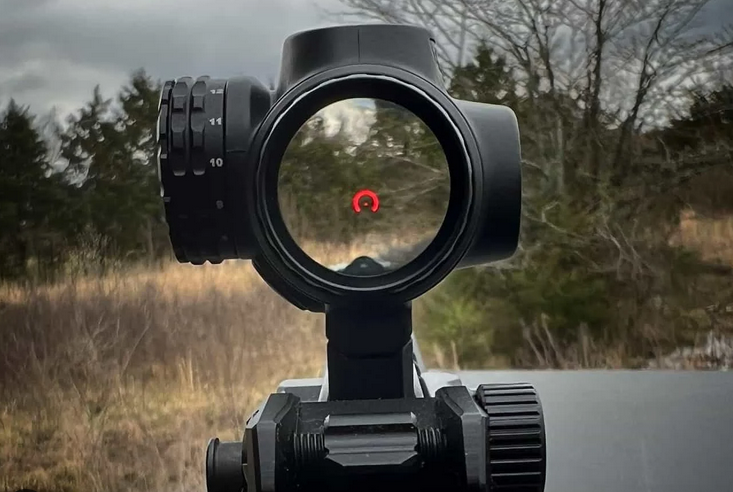
Low-light performance varies. The illumination systems on these prisms are adequate for dusk and dawn shooting, but none of them are night-vision compatible without specific NV settings (the Primary Arms Gen II MicroPrisms do have NV-compatible settings on the lower end of the brightness range). In true low light, the etched reticle without illumination can be hard to see against a dark background. This is where having a bright illumination setting matters, it makes the reticle visible when the target is barely visible.
Parallax is mostly a non-issue at these magnifications. Most 1x and 3x prisms are parallax-set at 100 yards, and the parallax shift at closer distances is small enough that it doesn't matter for practical accuracy. At 5x, you might notice slight parallax shift at 25 yards, but if you're using a 5x prism at 25 yards, parallax is the least of your problems.
Common mistakes and how to avoid them
Mounting too far forward or back
Prism sights have a fixed eye relief, and mounting position directly affects whether you can find the full field of view quickly. Too far forward and you'll see a black ring around the image. Too far back and you'll be crowding the eyepiece. Start with the optic mounted so the eyepiece sits about 3 inches from your eye when you have a natural cheek weld, then adjust forward or back in small increments until the full image appears without hunting for it.
Ignoring the diopter adjustment
Most prism sights have a diopter ring on the eyepiece that focuses the reticle to your eye. If you skip this step, the reticle may look slightly fuzzy even though it's etched, and you'll blame the optic when the problem is your setup. To set the diopter correctly: look at a blank, bright surface (like a white wall), turn the diopter ring until the reticle lines are at their absolute sharpest, then stop. Don't adjust while looking at a target, because your eye will try to accommodate and give you a false focus.
Buying 3x or 5x when you need 1x
Magnification is not a free upgrade. Every step up in power costs you eye box, field of view, and speed. If your rifle's job is home defense, competition at close range, or general range use inside 200 yards, a 1x prism does everything you need and does it faster than a 3x. The temptation to get "more magnification just in case" leads to an optic that's slower than necessary for 90% of your shooting.
Expecting red-dot speed from a prism
Even the best 1x prism, and the Primary Arms SLx MicroPrism is genuinely excellent, isn't quite as fast as an Aimpoint or Holosun red dot for pure target acquisition speed. The eye box is tighter, the sight picture requires slightly more precise head position, and the reticle is more complex. The trade-off is a sharp reticle that your astigmatism can't smear. That's worth it. But don't expect to match your buddy's split times with his T2 on your first range session. Give yourself a few hundred rounds to build the muscle memory for consistent head position.
Not verifying BDC holdovers with your specific load
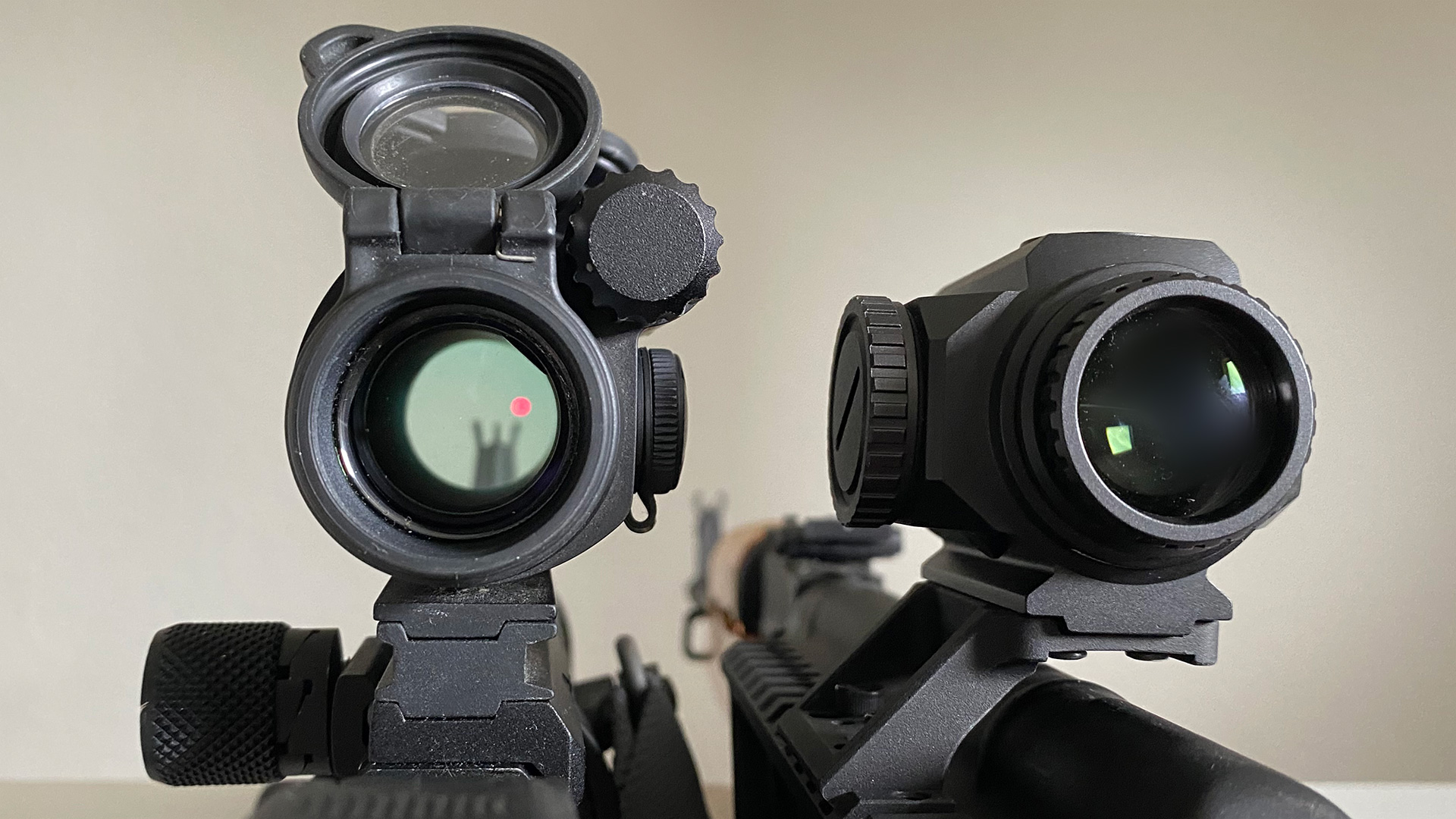
The ACSS and BDC reticles in these optics are calibrated for specific cartridge and velocity combinations. Primary Arms publishes the exact velocity assumptions for each reticle, typically something like 2,900 fps for 62-grain 5.56 out of a 16-inch barrel. If your barrel is 10.5 inches, or you're shooting 55-grain at 3,100 fps, the holdovers will be off. Not dramatically at 200 yards, but enough to matter at 400+. Print out the holdover chart, take it to the range, and verify at multiple distances with your actual ammunition. Adjust your holds accordingly.
Head-to-head: which optic for which job
The comparison isn't just about specs, it's about what you're actually doing with the rifle.
For a home defense or general-purpose AR inside 200 yards, the Primary Arms SLx 1x MicroPrism Gen II is the answer. It's the closest thing to a red-dot experience with an etched reticle. The ACSS Cyclops reticle gives you more capability than you'll probably use at close range, but the center chevron works as a fast reference point. The weight penalty over a micro red dot is real but manageable. The price, usually around $220–$250, is hard to argue with.
For a do-everything carbine that needs to reach 300–400 yards, the 3x prisms are the sweet spot. The Primary Arms SLx 3x MicroPrism gives you the best weight-to-performance ratio and a reticle system that's genuinely useful at distance. The SIG Bravo3 gives you better glass and a more robust build at more weight and cost. The Vortex Spitfire HD Gen II 3x splits the difference with excellent glass and the best warranty in the business. If glass quality is your priority, the Vortex or SIG edge ahead. If weight and compactness matter more, the Primary Arms wins.
For a DMR or precision-oriented build, the Vortex Spitfire HD Gen II 5x is the only serious option under $400 at this magnification. It's not trying to be fast. It's trying to give you a clear image and precise holdovers at distance, and it does that well. The eye box demands discipline, and the weight demands a rifle that can handle it. But if your shooting starts at 200 yards and extends to 500, the 5x magnification and HD glass make a meaningful difference in target identification and shot placement.
Range notes: what the specs don't tell you
On paper vs under recoil, the biggest difference between these optics shows up during rapid strings of fire. The 1x Primary Arms MicroPrism lets you track the reticle through recoil almost like a red dot, the eye box is forgiving enough that you don't lose the sight picture completely between shots. The 3x optics are a different story. At 3x, even a mild 5.56 recoil impulse can bounce you out of the eye box momentarily, and reacquiring the full image takes a fraction of a second longer than it would with a 1x optic. This isn't a flaw, it's physics. More magnification means tighter tolerances on eye position.
The illumination brightness matters more than you think for speed. With the illumination off, the black etched reticle blends into dark targets or shadowed areas, and your eye has to search for it. With illumination set correctly, bright enough to stand out against the target but not so bright it blooms, the reticle jumps out immediately. Spend time finding your preferred brightness setting in different lighting conditions and memorize where it falls on the dial.
The ACSS reticle system has a learning curve. The first time you look through a Primary Arms ACSS reticle, it looks cluttered compared to a simple dot or crosshair. The horseshoe, chevron, BDC marks, and wind holds create a dense image. But after a few range sessions, you start to see the logic, the horseshoe gives you a fast reference for close-range, the chevron is your precision aiming point, and the marks below give you holdovers without touching turrets. It's a system designed to keep you shooting instead of dialing. Give it time before you decide it's too busy.
Zeroing and testing your prism sight
Zero at 50 yards first. For a 5.56 rifle with a 50-yard zero, you'll be roughly 1.5 to 2 inches high at 100 yards and back to zero around 200 yards (the exact trajectory depends on your load and barrel length, but this is a reliable starting point). A 50-yard zero also means you're never more than about 2 inches off point of aim from the muzzle to 200 yards, which simplifies close-range shooting.
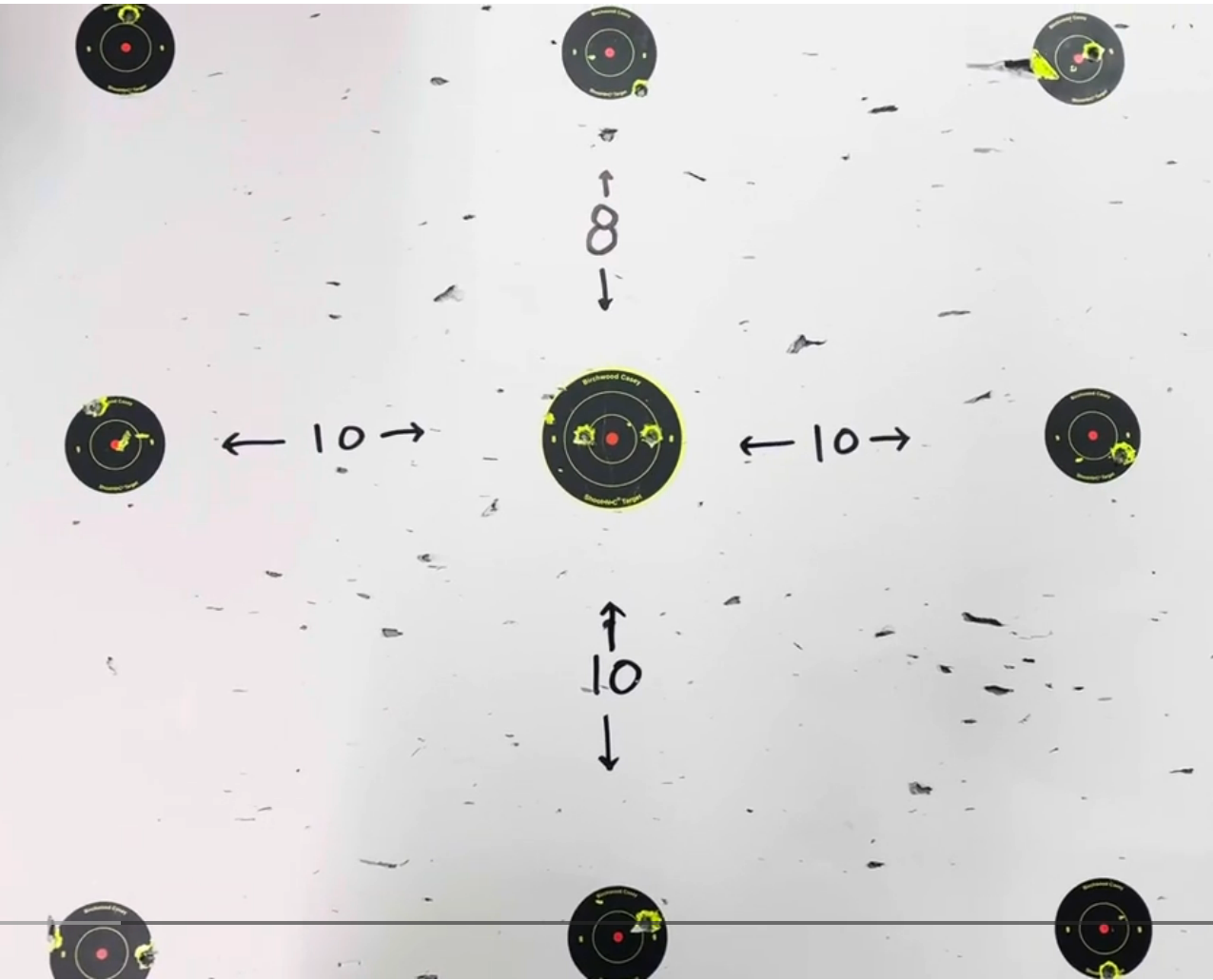
The tracking test to run: after zeroing, dial 10 MOA up, shoot a group, dial 10 MOA right, shoot a group, dial 10 MOA down, shoot a group, dial 10 MOA left, shoot a group. You should be back at your original zero. If the groups don't form a square, or if your final group doesn't land on your original point of aim, the turrets aren't tracking accurately. At this price point, most of these optics track well enough for their intended use, but it's worth verifying.
Check your zero at different distances. A prism sight that's zeroed perfectly at 50 yards should print predictably at 100, 200, and 300 based on your cartridge's ballistic curve. If it doesn't, you may have a canted mount, a barrel that's not concentric with the receiver, or an optic with an internal alignment issue. Diagnosing this early saves frustration later.
Test the illumination at dusk. Take the rifle out when the light is fading and see if the reticle remains visible and usable. This is where you'll find out if the illumination is bright enough and if the etched reticle alone works for your eyes in marginal light. Most shooters find that the illuminated etched reticle is perfectly adequate for dusk shooting, but it's better to know your optic's limits before you need it.
The bottom line on prism sights and astigmatism
If red dots look like smeared garbage through your eyes, a prism sight is the fix. The etched reticle doesn't care about your corneal shape. The trade-offs, slightly more weight, tighter eye box, fixed magnification, are real but manageable, especially with the current generation of compact prism optics.
The Primary Arms SLx 1x MicroPrism Gen II is the default recommendation for a reason. It's compact, the eye box is the best in class, the ACSS reticle is genuinely useful, and the price leaves room in your budget for ammunition and training. If you need magnification, the 3x prism category has three strong options that trade off weight, glass quality, and price in different ways. And if you're building a precision-oriented rifle, the Vortex Spitfire HD Gen II 5x is the only serious contender under $400.
Mount it. Zero it. Set the diopter. Then put rounds through it at multiple distances before you form an opinion. The spec sheet tells you what the optic is. The range tells you what it does for your eyes, your rifle, and your shooting.