The shift from open-emitter to closed-emitter pistol red dots isn't a trend. It's a correction. Open emitters work fine on range guns and competition setups where you control the environment. Duty use is a different animal; rain, snow, lint from a holster, blood, debris. An exposed emitter window is a liability when your optic needs to function without question during the worst moment of your career. The closed-emitter design seals the LED housing from the elements, and the technology has finally matured enough that you don't have to spend Aimpoint money to get a reliable one.
You're probably looking at three to five optics right now and trying to figure out which one actually earns a spot on a duty gun. The Aimpoint Acro P-2 is the gold standard but blows past the $500 mark. So what's left underneath that line that's genuinely duty-grade? More than you'd think; but not everything marketed as "enclosed emitter" belongs on a gun you might stake your life on. Here's how to sort through the noise and land on the right optic for your slide, your holster, and your actual shooting conditions.
Why closed emitter matters for duty; and where open emitter falls short
Open-emitter red dots like the Trijicon RMR and Holosun 507C have proven themselves on thousands of duty guns. They work. But they have a fundamental design vulnerability: the emitter window sits exposed on top of the optic. Anything that gets between that emitter and the lens kills your dot. Holster lint is the most common offender. Pull from concealment or a duty holster after eight hours on shift and there's a real chance a fiber or piece of debris is sitting right on the emitter. You might not notice it until you press the gun out and see a smeared or absent dot.
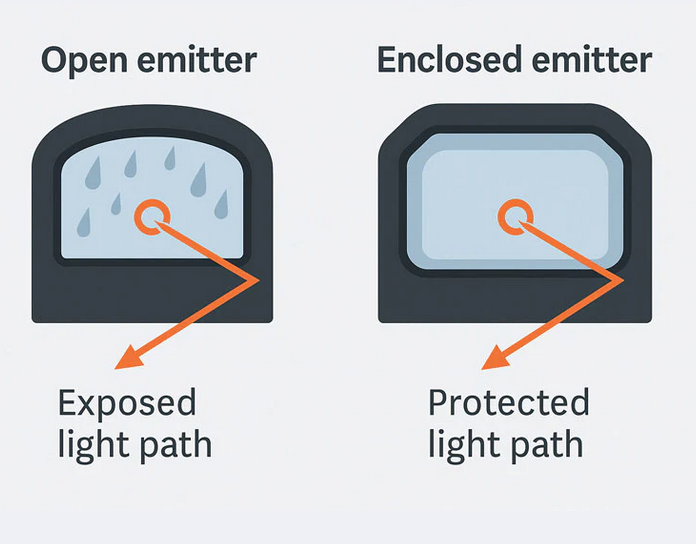
Rain is the other big one. Water droplets on the rear lens of an open emitter scatter light and can wash out the dot entirely. A closed emitter routes the LED through an internal path, so the only surface that matters is the front objective lens, same as any rifle optic. Water on the front lens still degrades the image, but it doesn't eliminate the dot the way a blocked emitter does.
There's a weight and size tradeoff. Closed-emitter optics are generally taller and heavier than their open-emitter counterparts because they need a sealed housing around the LED path. That means a slightly higher bore-over-sight offset and potentially more holster fitment issues. For duty use, this is a manageable tradeoff. For deep concealment on a micro gun, it gets more complicated. Know what you're optimizing for.
The spec that actually matters: duty-grade durability
A red dot going on a duty pistol needs to survive things a range optic never will. Repeated draw cycles against Kydex. Being dropped on concrete. Sustained vibration from vehicle mounting. Temperature swings from a hot patrol car dash to subzero exterior temps. The optic also needs to run continuously, nobody on duty should be relying on a shake-awake feature to bring their dot online during a critical incident.
Battery life on constant-on settings is the number that matters, not the maximum battery life at the lowest brightness setting that manufacturers love to advertise. That "50,000 hour battery life" claim? That's usually at setting 1 or 2 out of 10, a brightness level you'd never actually use outdoors. Ask what the battery life is at a mid-range daylight setting. If the manufacturer doesn't publish that number, be skeptical.
The other durability metric worth tracking is the lens material. Glass lenses transmit light better and resist scratching more effectively than polycarbonate, but some budget closed emitters cut costs with polymer lenses. On a duty gun, glass is the right call. You're looking through this optic in low light, in rain, under stress. Every percentage point of light transmission counts.
Housing material matters too. Most serious duty optics use 7075 aluminum or hardened aluminum alloy. A few use polymer housings to save weight. Polymer can work for a carry gun that lives in a holster and rarely gets abused, but for duty, where the optic might contact pavement, a vehicle frame, or a suspect during a struggle, metal housing is non-negotiable.
The contenders under $500
Five closed-emitter optics sit in this price range and deserve serious evaluation for duty use. Not all of them are equal, and the differences show up in specific areas that matter more than the spec sheet suggests.
Holosun EPS and EPS Carry
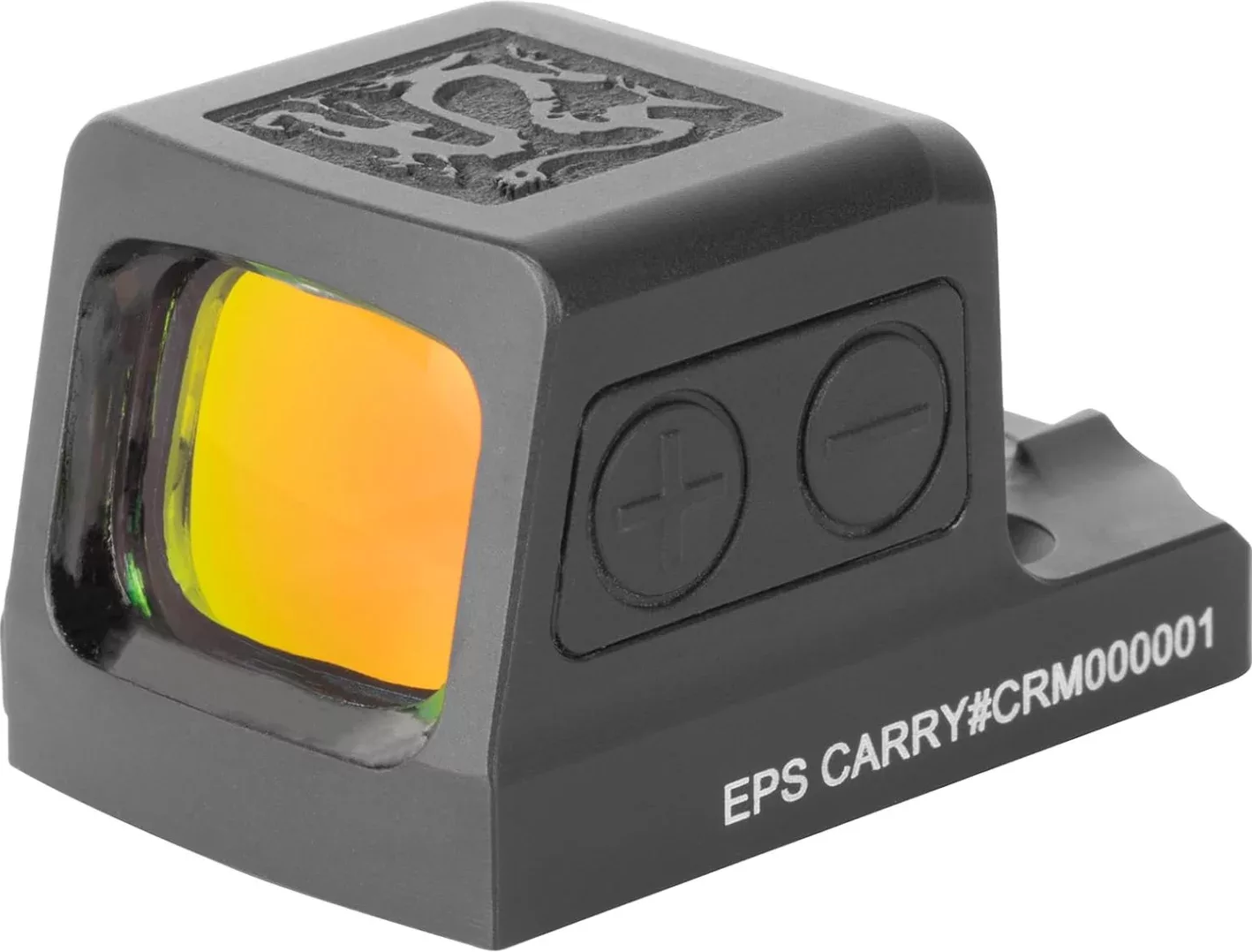
Holosun's EPS line is the most popular closed-emitter option under $500 right now, and there's a reason. The full-size EPS fits standard RMR-footprint slides (with an adapter plate in some cases) and the EPS Carry shrinks the package for compact and subcompact guns. Both use Holosun's Multi-Reticle System, giving you the option of a 2 MOA dot, a 32 MOA ring, or both simultaneously.
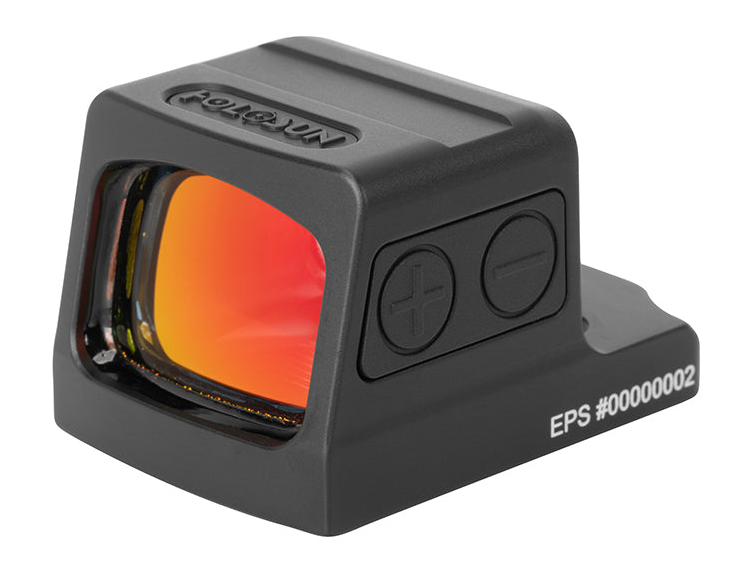
The full-size EPS runs on a CR1620 battery loaded from the side, no removing the optic to change batteries. That's a critical design choice for duty. Any optic that requires removal from the slide for a battery swap means re-zeroing, or at minimum re-confirming zero, every time the battery dies. Side-loading batteries eliminate that problem entirely.
The EPS housing is aluminum with a glass lens. The window is noticeably smaller than the Acro P-2, this is where you feel the price difference. A smaller window means less forgiveness in your presentation. If your draw stroke isn't consistent, you'll notice the dot takes a fraction longer to find. For shooters with a solid, repeatable press-out, the window size is adequate. For someone still developing their draw, it can be frustrating.
Solar backup is present on some EPS models, which adds a layer of redundancy. The shake-awake function works as expected, but again, for duty, constant-on is the standard. Holosun rates battery life on the EPS at up to 50,000 hours, though real-world runtime will vary depending on brightness setting and reticle configuration, expect less at mid-brightness and above. Still, even at reduced figures, that's a solid showing for a micro-optic running on a CR1620.
Holosun EPS MRS (green dot variant)
Same platform as the EPS, but with a green LED. Green dots are gaining traction in duty applications because the human eye picks up green wavelengths more efficiently than red, particularly in daylight conditions. The tradeoff is battery life, green LEDs consume more power than red, so expect roughly 30% less runtime at equivalent brightness settings.
Whether green is "better" depends partly on your eyes. Shooters with astigmatism often report that green dots appear crisper with less starburst distortion than red dots at the same MOA size. That's not universal, but it's common enough to be worth testing before you commit. If your department or agency allows green, and your eyes respond well to it, the green EPS is worth the slight battery life penalty.
Steiner MPS (Micro Pistol Sight)
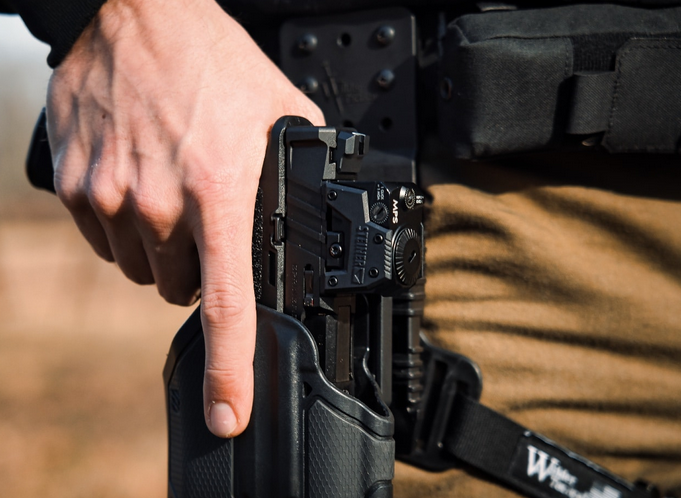
The Steiner MPS occupies an interesting space. It's been approved for duty use by multiple Texas law enforcement departments, which puts it through a vetting process that most consumer optics never face. The MPS uses the Aimpoint ACRO footprint, which is larger than the RMR cut, so slide milling or an adapter plate is required for most pistols. That's an added cost and complexity that you need to factor in.
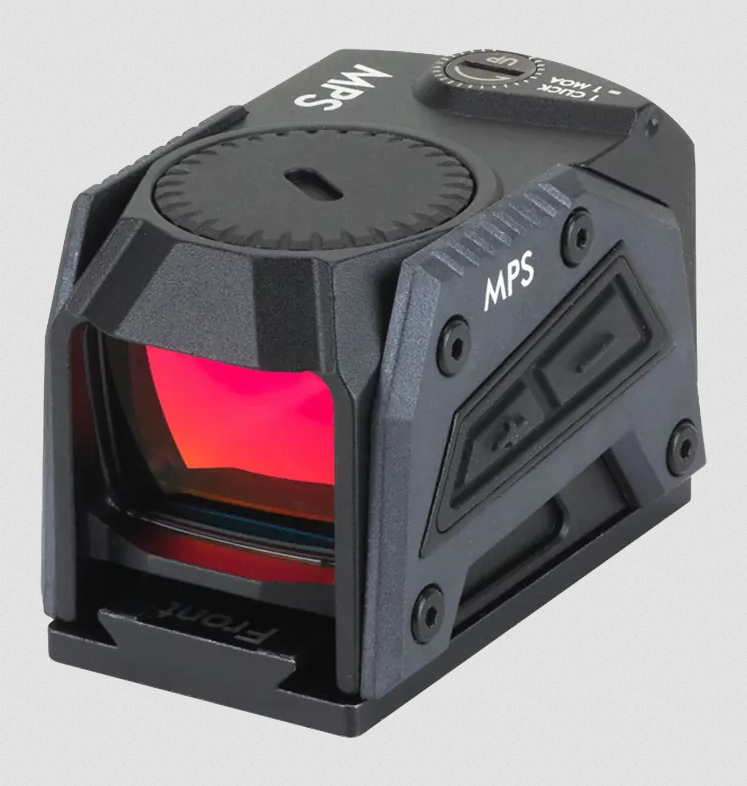
The window on the MPS is generous, larger than the EPS and closer to the Acro P-2 in usable viewing area. This translates directly to faster dot acquisition, especially under stress or from unconventional positions. The housing is robust aluminum, and the overall build quality feels like a $600 optic that happens to sell for less.
Battery is a common CR1632, top-loaded with a tethered cap. Not a side-loading design, which means you technically need to remove or at least loosen the optic for battery changes on some mounting configurations. Some MPS mounts allow top access without removal, check your specific setup before assuming.
The dot is a 3.3 MOA red dot. No circle-dot option, no multi-reticle system. Just a dot. For duty use, that simplicity is actually a feature. One reticle, one brightness mode to manage, fewer things to accidentally toggle during a high-stress event. The dot itself is clean and round with minimal bloom at higher brightness settings.
Steiner rates battery life at around 13,000 hours on a mid setting. That's lower than the Holosun EPS but still over a year of constant-on use. Acceptable for duty with a disciplined battery change schedule.
Trijicon RCR (Ruggedized Closed Reflex)
Trijicon entered the closed-emitter pistol space with the RCR, and it carries the brand's reputation for bombproof durability. The RCR uses the standard RMR footprint, which is a significant advantage, if your slide is already milled for an RMR, the RCR drops right in. No adapter plates, no re-milling.
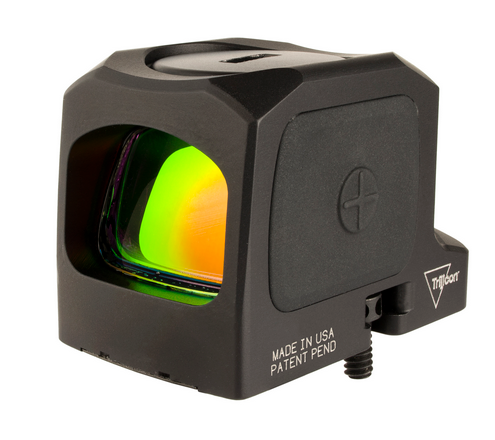
The housing is forged aluminum, and the overall construction feels like Trijicon. It's overbuilt in the way that inspires confidence when you're hard on gear. The lens clarity is good, with a slight amber tint that some shooters notice and others don't. In low light, the difference shows, the tint can slightly reduce light transmission compared to the clearest glass in this category, but it also enhances contrast of the red dot against certain backgrounds.
The RCR runs on a CR2032 with a top-loading battery tray. Trijicon claims up to 25,000 hours of battery life, though real-world duty use at practical brightness settings will be lower. The dot is available in 1 MOA and 3.25 MOA options. For duty, the 3.25 MOA is the right call, a 1 MOA dot is too small to acquire quickly under stress and can wash out in bright daylight conditions.
One concern that's surfaced in long-term reviews: some early RCR units showed inconsistent dot clarity, with reports of slight distortion or flicker. Trijicon has addressed this in newer production runs, but if you're buying used or from old stock, inspect carefully. The current production RCR is solid.
The window is smaller than the Steiner MPS but comparable to the Holosun EPS. Trijicon's glass quality gives it a slight edge in light transmission over the Holosun at a similar window size, but you're splitting hairs at this level.
Swampfox Kraken
The Swampfox Kraken comes in at the lowest price point in this group and punches above its weight in several areas. It uses a closed-emitter design with a proprietary footprint featuring side-mounted torque screws, and it ships with both RMR and MOS base plates for broad slide compatibility. The housing is aluminum, and the build quality has improved significantly from Swampfox's earlier optics.
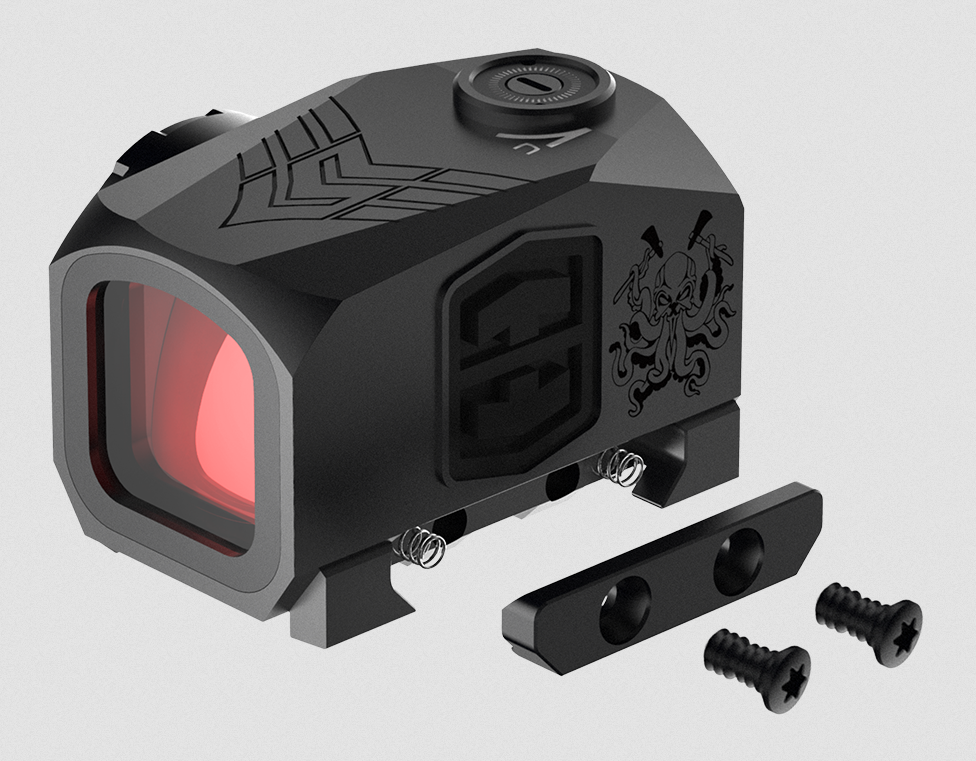
The Kraken runs a 3 MOA green or red dot with shake-awake and a side-loading CR1632 battery. The window is on the smaller side, comparable to the EPS Carry rather than the full-size EPS. Glass clarity is acceptable but noticeably a step behind the Holosun and Trijicon options, you'll see slightly more tint and marginally less light transmission in low-light shooting.
For a patrol officer or someone on a tight department budget, the Kraken is a legitimate option. It holds zero, the emitter is properly sealed, and the battery design is duty-friendly. But if you can stretch the budget to an EPS or RCR, the glass quality and dot clarity improvements are worth the extra money. The Kraken is the "it works and it's reliable" pick, not the "this glass is impressive" pick.
Glass notes: what you'll actually notice shooting these
Spec sheets can't tell you what the sight picture looks like at 7 yards under an overcast sky, or how the dot behaves when you're transitioning between targets in a qualification course. Here's what separates these optics in actual use.
The Steiner MPS has the most forgiving window of the group. Shooters who struggle with dot acquisition, especially those transitioning from irons to a red dot, will find the dot faster and more consistently with the MPS than with the EPS or RCR. The larger window also means more peripheral awareness around the dot, which matters in a duty context where you need to see what's happening around your target.
The Holosun EPS multi-reticle system is polarizing. The 32 MOA ring is genuinely useful for fast acquisition at close range, your eye finds the ring before it finds the dot, and the ring frames the target in a way that speeds up your first shot. But some shooters find the ring distracting during precise shooting at 15-25 yards. The good news is you can toggle to dot-only with a button press. The bad news is that's one more thing to manage on your optic.
The Trijicon RCR dot quality is the cleanest in the group. If you have astigmatism, this is worth noting, the RCR's dot tends to present with less starburst effect than the Holosun at equivalent brightness levels. The dot is simply crisp. That matters less at 5 yards and more at 15-25 yards when you're trying to make a precise shot on a partially obscured target.
Low-light performance is where glass quality earns its money. Shooting at dusk or in a dimly lit parking structure, the Steiner MPS and Trijicon RCR both outperform the Holosun EPS in light transmission. The difference isn't dramatic, maybe 5-8%, but it's perceptible. You'll see slightly more detail through the MPS and RCR windows in marginal light conditions.
Common mistakes with closed-emitter duty optics
These come up repeatedly, and most of them are avoidable with some forethought.
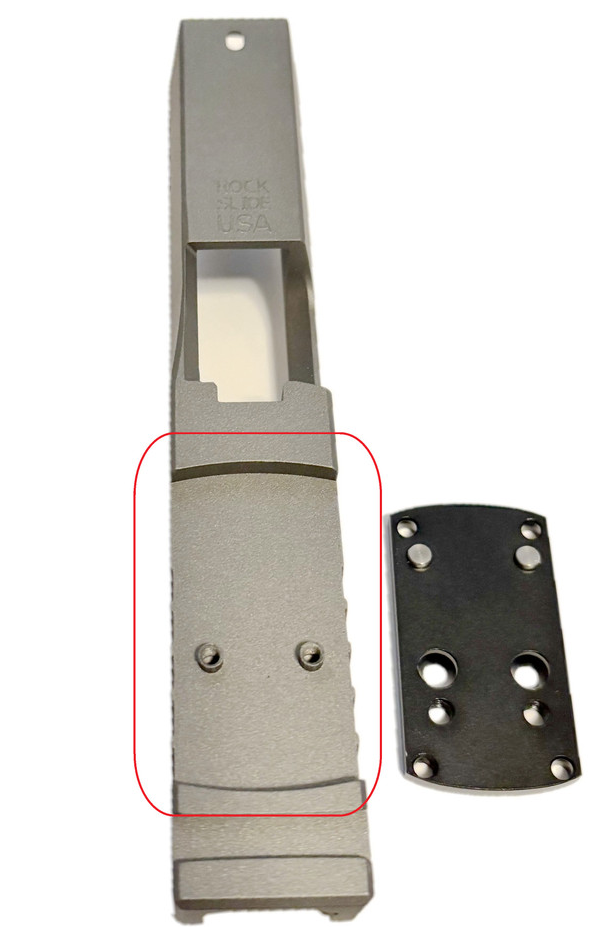
Buying the optic before confirming your slide cut is a common and expensive mistake. The Steiner MPS uses a proprietary footprint. The Holosun EPS uses the Holosun K footprint. The Trijicon RCR uses the RMR footprint. The Swampfox Kraken uses the Shield RMSc footprint. These are not interchangeable. If your duty gun has a factory optic cut, verify which footprint it accepts before ordering. If you need custom milling, factor in $75-150 and two to four weeks of turnaround time. Our Pistol Sight Builder app on the MyGunDeal site can help you match your specific pistol model to compatible optics and footprints before you spend a dollar, use it.
Running shake-awake instead of constant-on for duty is a reliability compromise. Shake-awake saves battery life, and for a concealed carry gun that sits in a holster for months between range trips, it's fine. For a duty gun that needs to be ready the instant it clears the holster, constant-on is the standard. The half-second delay while shake-awake activates the emitter is a half-second you don't have. Set it to constant-on, mark your battery change date on a calendar, and replace the battery before it dies.
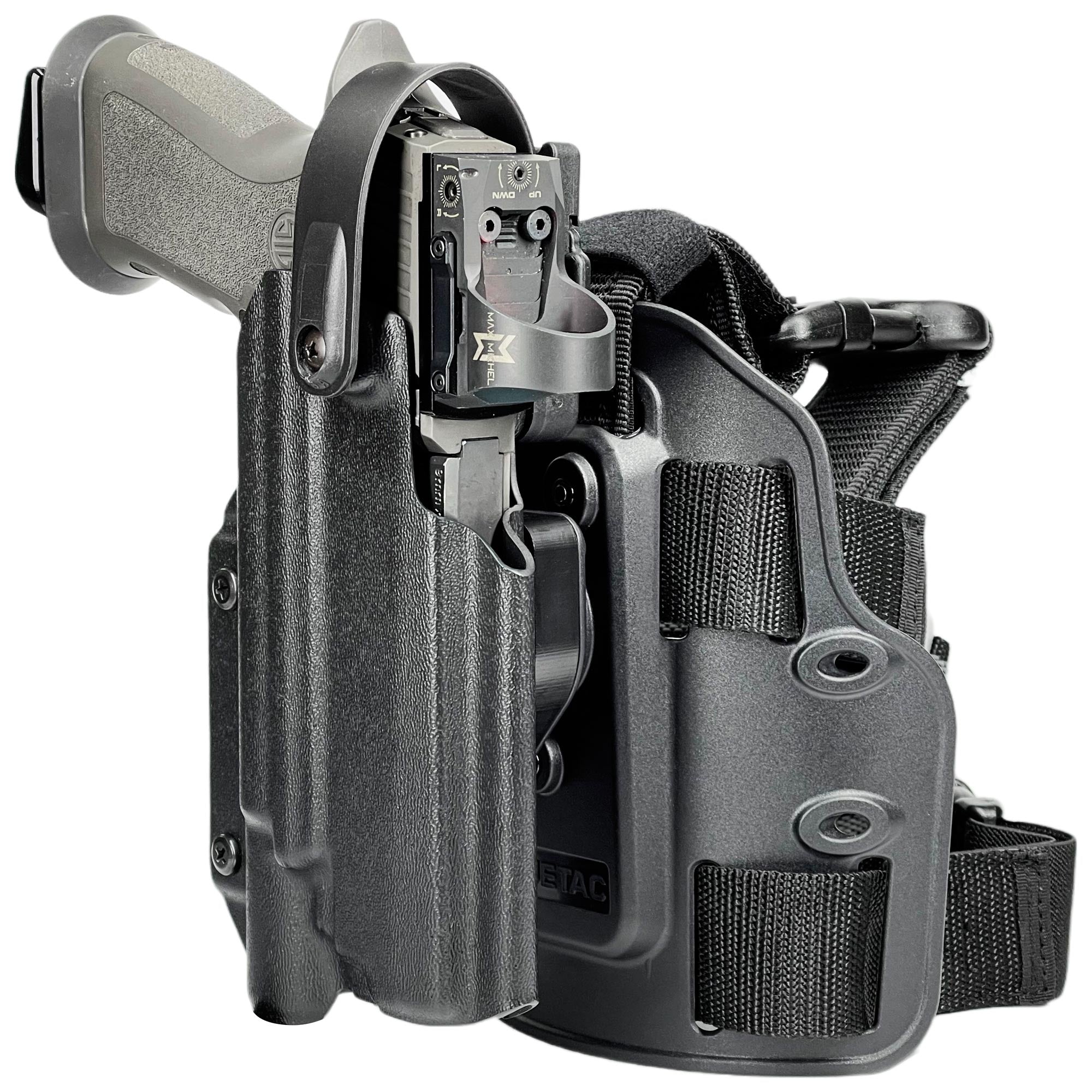
Ignoring holster fitment until after you've mounted the optic leads to frustration and wasted money. Closed-emitter optics sit taller than open-emitter models. Your existing duty holster may not accommodate the additional height, or it may press against the optic housing in a way that causes wear or interferes with retention mechanisms. Before you mount anything, check with your holster manufacturer about compatibility with the specific optic you're considering. Safariland, for example, publishes compatibility charts for their duty holsters with various optic configurations.
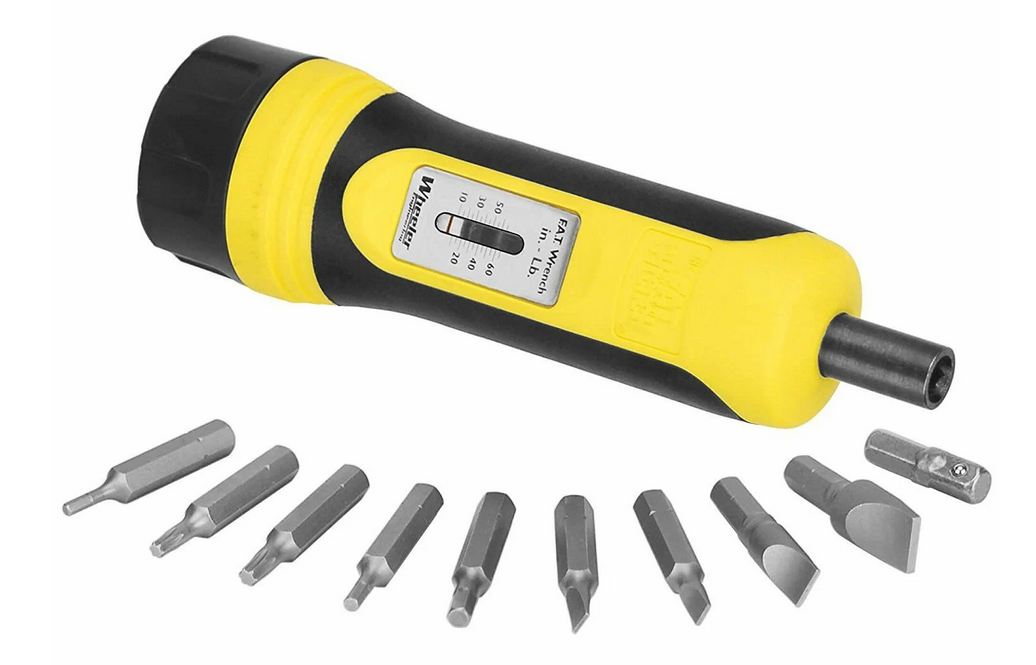
Over-torquing mounting screws is a problem that seems obvious but keeps happening. Most pistol red dot mounting screws require 10-15 inch-pounds of torque, far less than a rifle optic mount. Use a torque wrench rated for inch-pounds, not foot-pounds. Use the thread locker specified by the optic manufacturer (usually blue Loctite, sometimes purple). Over-torquing can strip the screw holes in your slide or crack the optic's mounting lug. Either outcome is catastrophic for a duty gun.
Not confirming zero after every battery change or remount is negligence on a duty gun. Even side-loading battery designs can shift zero slightly when the battery tray is opened and closed. It probably won't, but "probably" isn't good enough for a gun you carry professionally. Every battery change should be followed by a zero confirmation at the range. Every single time.
Mounting and zeroing for duty: the procedure that matters
Zero distance for a duty pistol red dot is a decision point that doesn't get enough attention. The two common options are 10 yards and 25 yards. A 10-yard zero keeps the point of impact very close to point of aim inside typical engagement distances (3-15 yards) but starts to show meaningful deviation at 25 yards and beyond. A 25-yard zero puts you slightly low at very close range (inside 5 yards) but gives you better precision at extended pistol distances.
For most duty applications, a 15-yard zero is actually the best compromise, though it's less commonly discussed. At 15 yards, you're splitting the difference, close enough to be functionally point-of-aim at 7 yards, and close enough to hold on target at 25 yards with minimal compensation. Run the math for your specific load and barrel length, but 15 yards is a strong starting point.
The zeroing process itself should be methodical. Use a stable rest, a sandbag on a bench, not your hands on a barricade. Fire a five-round group at your chosen zero distance. Adjust the dot to the center of the group, not to any single shot. Fire another five-round group to confirm. If the second group is centered, you're zeroed. If it's off, adjust again and fire a third group.
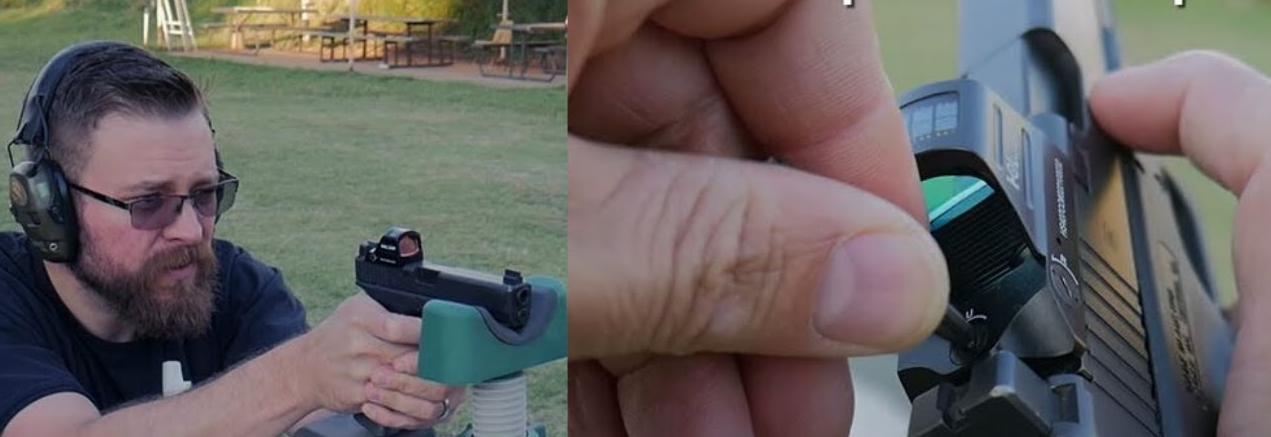
After zeroing, run a tracking test. Dial 10 clicks right, fire a group, confirm the group moved the expected amount. Dial 10 clicks back left, fire another group, confirm you're back at zero. This verifies that the turret adjustments are consistent and that the optic is mechanically sound. An optic that won't return to zero after a turret adjustment has no place on a duty gun.
Then do the hard part: confirm zero from the holster, standing, at speed. Your zero from a bench rest means nothing if the dot shifts under recoil during realistic draw-and-fire drills. Run 20-30 draws from your duty holster, firing one to two rounds per draw at a 3x5 index card at 7 yards. If your hits are consistently centered, your zero is confirmed for real-world use. If they're consistently off in one direction, you may have a presentation issue rather than a zero issue, but that's diagnostic information you need.
Head-to-head: how these five stack up by use case
Rather than ranking these optics on a single scale, here's how they sort by the specific demands of different duty contexts.
Patrol officer, full-size duty gun
The Steiner MPS is the strongest pick here. The larger window makes dot acquisition faster during high-stress draws, the build quality handles the abuse of daily patrol, and the optic has already been vetted through formal law enforcement approval processes. The proprietary footprint is a hassle, but most full-size duty guns (Glock 17, SIG P320, S&W M&P) have MPS-compatible slide cuts available from aftermarket milling services or factory optics-ready models.
The Trijicon RCR is the runner-up, especially if your duty gun already has an RMR cut. The drop-in compatibility saves time and money, and the Trijicon name carries weight with departments that have brand-specific approval lists.
Plainclothes / detective, compact gun
The Holosun EPS is the best balance of size, features, and reliability for a compact gun like a Glock 19 or SIG P320 Compact. The multi-reticle system is genuinely useful for shooters who switch between close-range reactive shooting and more deliberate marksmanship. The side-loading battery is a major advantage for a gun that might live in a holster for extended periods.
Budget-constrained department issue
The Swampfox Kraken gets the nod when the budget is tight and the alternative is no optic at all. A reliable closed-emitter red dot at the Kraken's price point is better than an open-emitter optic that fails in rain, and it's dramatically better than iron sights alone for most shooters. The data on red dot equipped duty pistols improving hit rates in officer-involved shootings is compelling, a five-year review by the NLEFIA found meaningful improvements in accuracy and reduced rounds fired per incident when officers used red dot sights. Getting a closed-emitter optic on every duty gun in a department, even if it's a budget model, is a net positive.
Backup gun / off-duty carry
The Holosun EPS Carry is purpose-built for this role. The smaller footprint fits subcompact and micro-compact slides, the K-series mounting footprint is increasingly common on factory slides, and the sealed emitter handles pocket lint and jacket debris. The multi-reticle system with the 32 MOA ring is particularly useful on a small gun where dot acquisition is harder due to the shorter sight radius and less consistent draw stroke from concealment.
The Aimpoint Acro P-2 question
You can't discuss closed-emitter duty optics without addressing the elephant in the room. The Aimpoint Acro P-2 is the benchmark, it's what every optic in this category is measured against. It's also $599 or more at typical retail, which puts it outside the scope of this article. But here's why it matters as context.
The Acro P-2 has the best glass in the category. Period. The light transmission, dot clarity, and color neutrality of the lens are measurably superior to everything under $500. The housing is virtually indestructible. The battery life at duty-relevant brightness settings is excellent. And it has the longest track record of any closed-emitter pistol optic in actual law enforcement duty use.
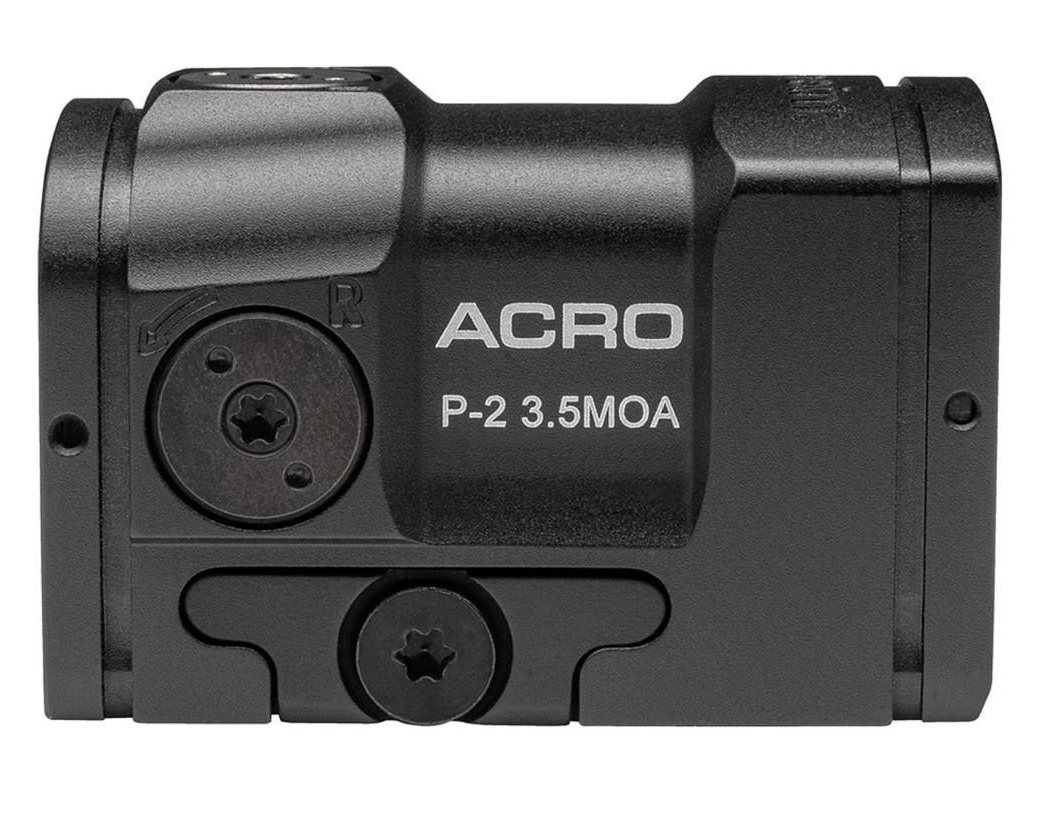
If your department will fund it, or if you can stretch your personal budget, the Acro P-2 is the safest choice. But "safest" doesn't mean the options below $500 are unsafe. It means you're paying a premium for incrementally better glass, a longer durability track record, and the Aimpoint name on your armorer's approval list. The Steiner MPS and Trijicon RCR are genuinely close in overall performance. The Holosun EPS is close enough that the price difference funds a lot of ammunition for training, and training matters more than the last 5% of glass quality.
Brightness management and battery discipline
Every optic in this group has auto-brightness or multiple manual brightness settings. For duty use, manual brightness control is preferable to auto-brightness. Auto-brightness sensors can be fooled by transitional lighting, walking from a bright parking lot into a dark building, for example, can cause the dot to dim before your eyes have adjusted, making it temporarily invisible. Manual brightness set to a level that's visible in your most common operating environment, with the discipline to bump it up or down as conditions change, gives you more predictable performance.
Battery life claims vs real-world use: there's always a gap. Manufacturer claims assume constant temperature, consistent brightness setting, and a fresh battery. Real-world duty use involves temperature extremes (hot car, cold exterior), brightness adjustments, and batteries that may have been sitting on a shelf for months before installation. Use name-brand batteries (Energizer, Duracell, Panasonic), mark the installation date on the battery or the optic, and replace on a fixed schedule, every 6 months for maximum reliability, every 12 months as a minimum. Don't wait for the low-battery indicator. On some optics, the low-battery indicator activates only a few hours before the dot dies entirely. That's not enough warning for a duty gun.
What to do next
If you haven't already, run the Pistol Sight Builder on the MyGunDeal site to confirm which closed-emitter optics are compatible with your specific duty gun. It'll save you the headache of ordering an optic that doesn't fit your slide cut or requires an adapter plate you didn't budget for.
Once you've narrowed your choice, get the optic mounted with proper torque specs and thread locker, zero it at 15 yards from a stable rest, and run the tracking test described above. Then put 500 rounds through the gun with the optic mounted before you carry it on duty. You're looking for three things during that 500-round evaluation: consistent zero (check it at rounds 100, 250, and 500), reliable dot activation (does it come on every single time you draw?), and comfortable dot acquisition from your duty holster at realistic speed. If all three check out, you've got a duty-ready setup.
The closed-emitter pistol red dot market under $500 has matured to the point where there are genuinely good options, not just "good for the price" options. The Steiner MPS, Holosun EPS, and Trijicon RCR can all do the job. Pick the one that fits your slide, fits your holster, and fits your eyes. Then train with it until finding the dot is as automatic as finding your front sight used to be.