You can legally own a 40mm grenade launcher in most of the United States. An actual M203, M320, or standalone M79; the same hardware the military uses. That statement surprises a lot of people, even experienced shooters who've navigated the NFA process for suppressors and SBRs. The 40mm launcher world sits in a strange corner of firearms law where the launcher itself is one type of NFA item and most of the ammunition is another type of NFA item, each requiring its own paperwork and tax stamp. It's confusing by design, but it's not impossible.
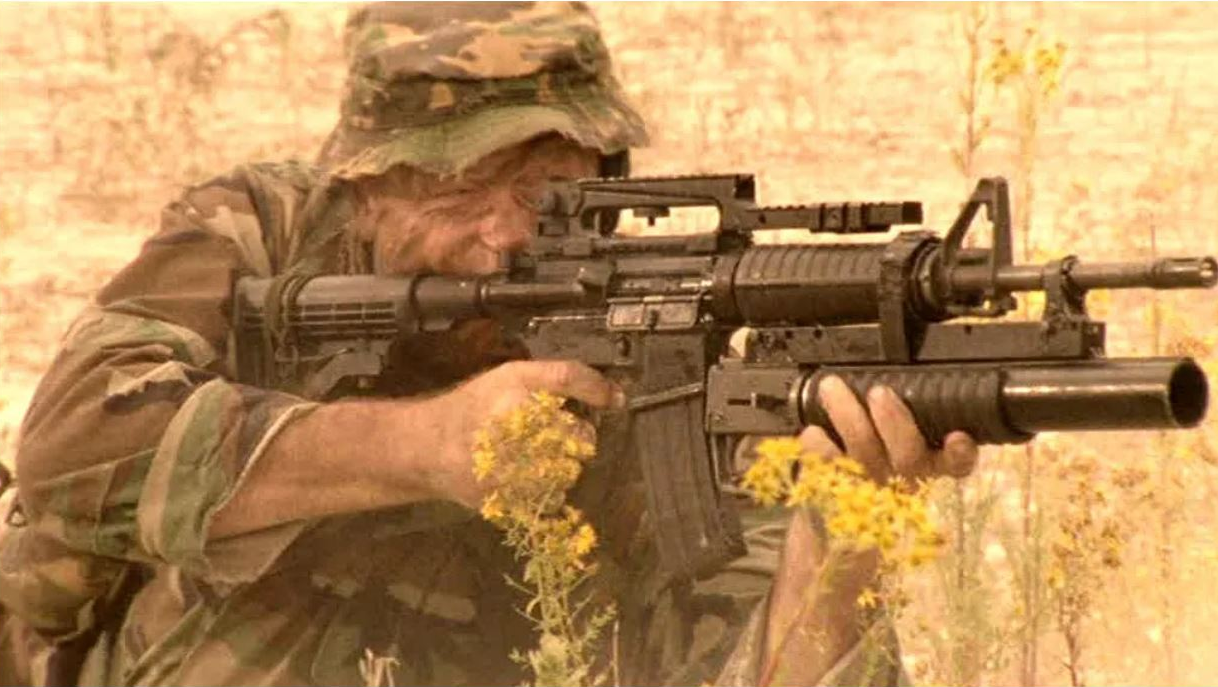
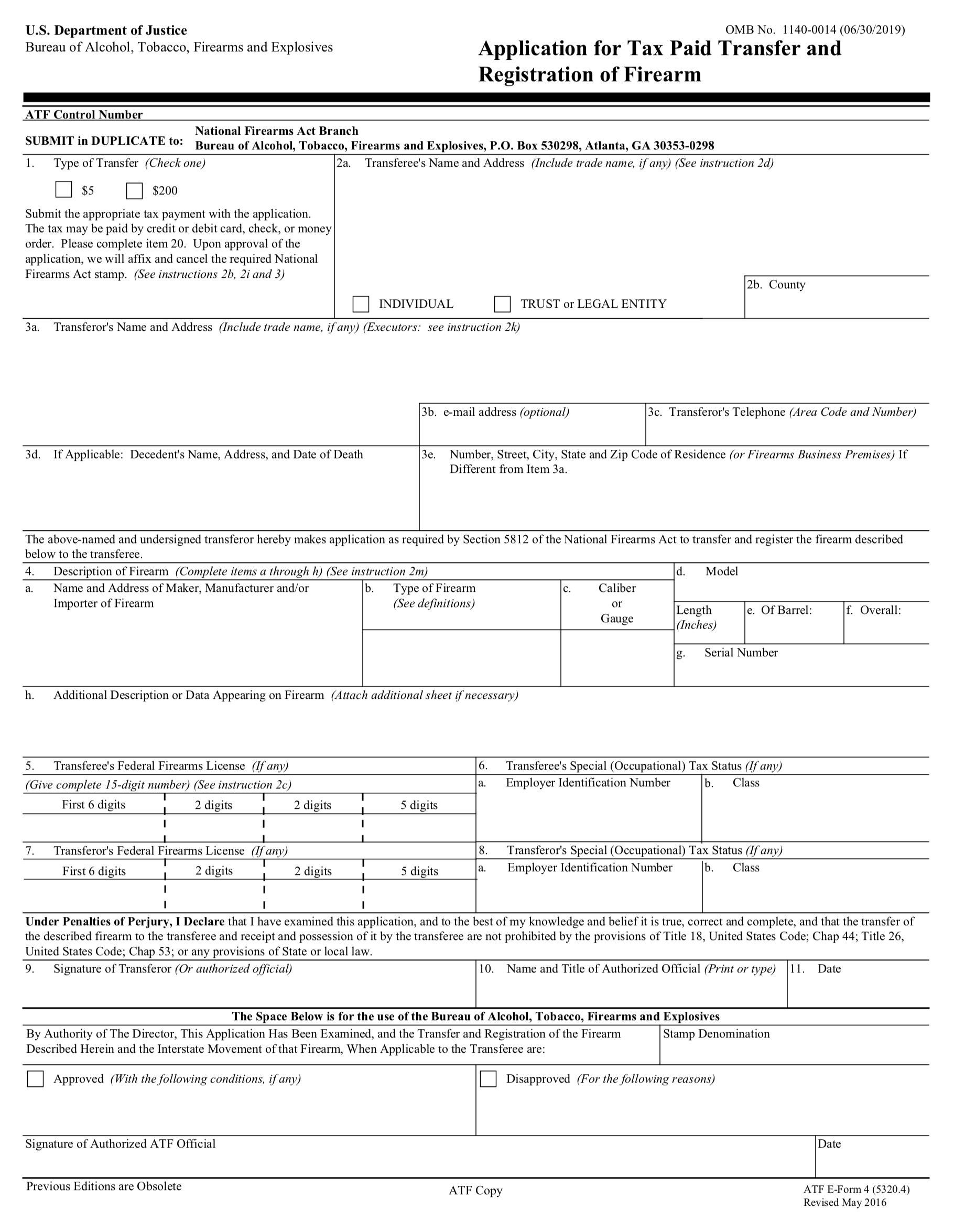
The practical reality is that 40mm launchers are destructive devices under federal law, regulated under the National Firearms Act just like suppressors and machine guns. The transfer process is the same Form 4, the same $200 tax stamp, the same background check and wait. The difference is that far fewer dealers stock them, far fewer buyers pursue them, and the ammunition situation adds a layer of complexity that doesn't exist with any other NFA category. But if you're in a state that allows destructive device ownership and you've got somewhere between $2,000 and $15,000 to spend depending on the launcher, you can absolutely do this.
Here's the full breakdown; what's legal, what it costs, how the ammo works, and what nobody tells you about the process.
What makes a 40mm launcher a destructive device
The ATF classifies destructive devices under 26 U.S.C. § 5845(f), and the definition has two prongs. The first covers any projectile with more than a quarter ounce of explosive or incendiary material. The second covers any weapon with a bore diameter greater than one-half inch (0.50 caliber) that hasn't been given a "sporting purpose" exemption. A 40mm launcher has a bore of approximately 1.57 inches. That's well over the half-inch threshold, so the launcher tube itself is classified as a destructive device regardless of what you load into it.
This is the critical distinction from, say, a 12-gauge shotgun. A 12-gauge has a bore over half an inch too, but shotguns have a sporting purpose exemption written into the statute. No such exemption exists for 40mm launchers. The ATF has never granted one and almost certainly never will.
So the launcher is a DD. That puts it in the same NFA category as things like 20mm anti-tank rifles and certain large-bore firearms. The registration and transfer process is identical to any other NFA item: Form 4 for transfers, Form 1 if you're somehow manufacturing one, $200 tax per item, CLEO notification, background check, the works.
Here's where it gets interesting; and where most people's understanding falls apart. The ammunition is often a separate destructive device. A 40mm high-explosive round is a DD on its own under the first prong of the definition (explosive projectile). So is a 40mm HEDP round, a frag round, or anything else with an explosive, incendiary, or chemical payload exceeding that quarter-ounce threshold. Each individual round that qualifies is its own destructive device requiring its own $200 tax stamp to transfer. Shoot a $200-stamped HE round and you've just destroyed a registered destructive device; which is legal, but expensive in a way that makes match-grade rifle ammo look like a bargain.
Not all 40mm ammunition is a DD, though, and that's where the fun starts.
The 37mm question: why it matters and where it diverges
Before going deeper on 40mm, the 37mm launcher deserves a mention because it's the fork in the road where a lot of people start their research and sometimes end it.
A 37mm launcher is not a destructive device under federal law. The bore is over half an inch, yes, but the ATF has classified 37mm launchers as signaling devices rather than firearms, provided they're used with signaling, smoke, or flare ammunition. You can buy a 37mm launcher; something like the offerings from companies like Exotic Ammo or various AR-15 undermount tubes; without any NFA paperwork at all. No Form 4, no tax stamp, no wait. It ships to your door in most states like any non-firearm accessory.
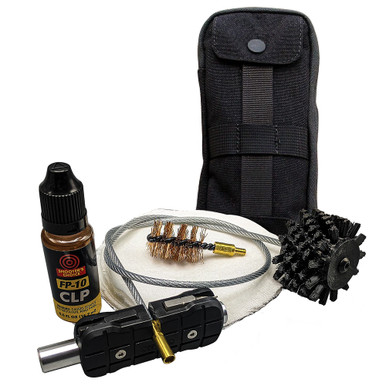
Exotic ammo 37mm Launcher Deals
Prices may change. May contain affiliate links.
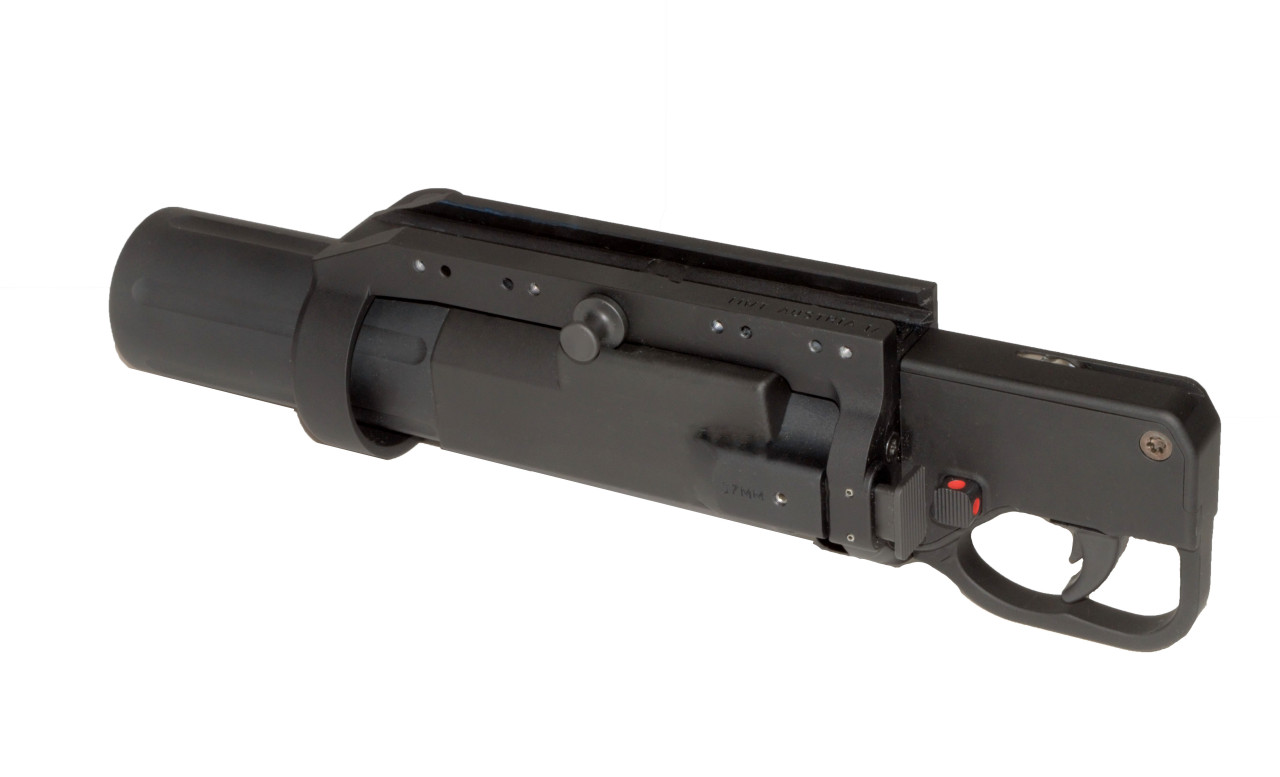
The catch: if you load anti-personnel ammunition into a 37mm launcher, the ATF considers it "redesigned" as a weapon, and it becomes a destructive device at that point. Possession of anti-personnel 37mm rounds alongside a 37mm launcher is enough for the ATF to make that argument. This is the gray area that has gotten people into serious legal trouble, including a well-documented case involving a former Navy sailor who faced federal charges over inert 40mm rounds; a case that highlighted how aggressively the ATF can interpret DD possession.
So 37mm is the legal, accessible, no-paperwork option for launching smoke, flares, and chalk rounds. It scratches the itch for some people. But it's not a grenade launcher. If you want the real thing; an actual 40mm system that can fire the full spectrum of military-pattern ammunition; you need to go through the NFA process.
Which 40mm launchers are available to civilians
The civilian 40mm market is small but it exists, and the options break down into a few categories.
The M203 and its variants
The M203 is the iconic underbarrel grenade launcher that served the U.S. military from 1969 until its recent replacement by the M320. It's a single-shot, break-action 40mm launcher that mounts under the barrel of an M16/M4-pattern rifle using a specific barrel-mounted attachment system.
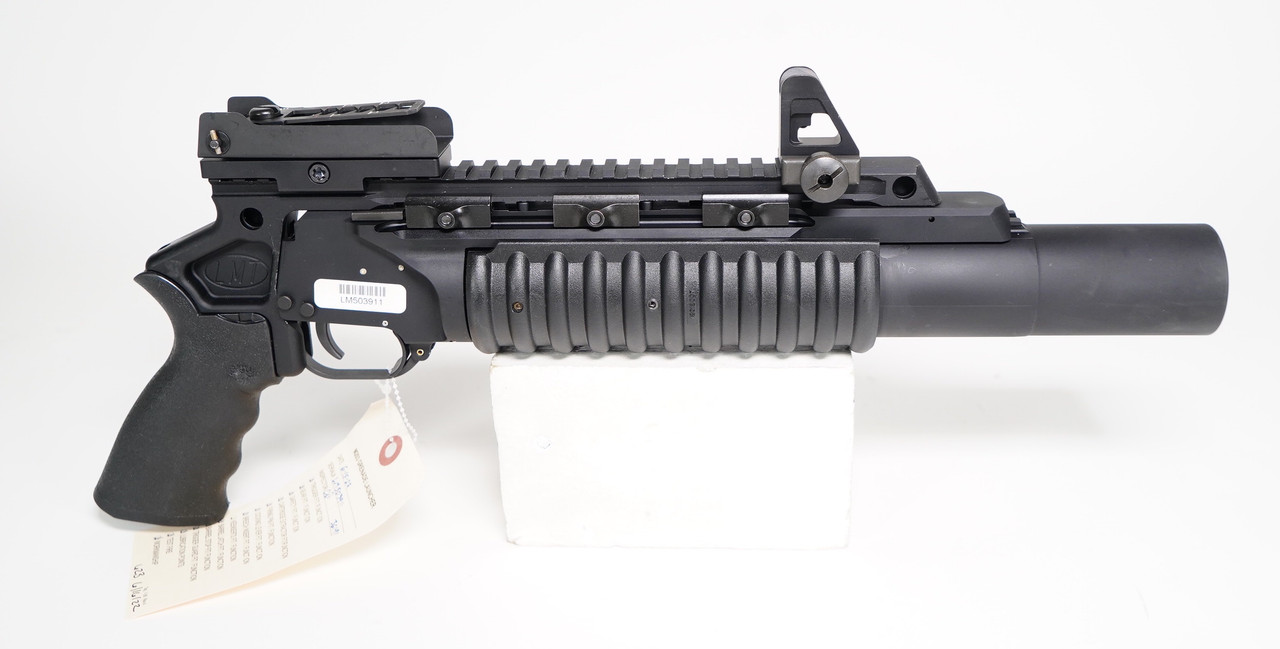
For civilian sales, the primary manufacturer is LMT Defense (Lewis Machine & Tool). LMT held the military contract for M203 production for years and continues to produce them for law enforcement, military, and civilian NFA sales. Their current catalog includes several variants:
The standard M203 with a 12-inch barrel, the M203 with a 9-inch barrel (the "shorty" version adopted later in the M203's military service life), and various rail-mounted configurations that work with modern free-float handguard systems rather than the old barrel-clamp mount. LMT's launchers run roughly $2,000 to $3,500 depending on configuration, before the $200 tax stamp and any dealer transfer fees.
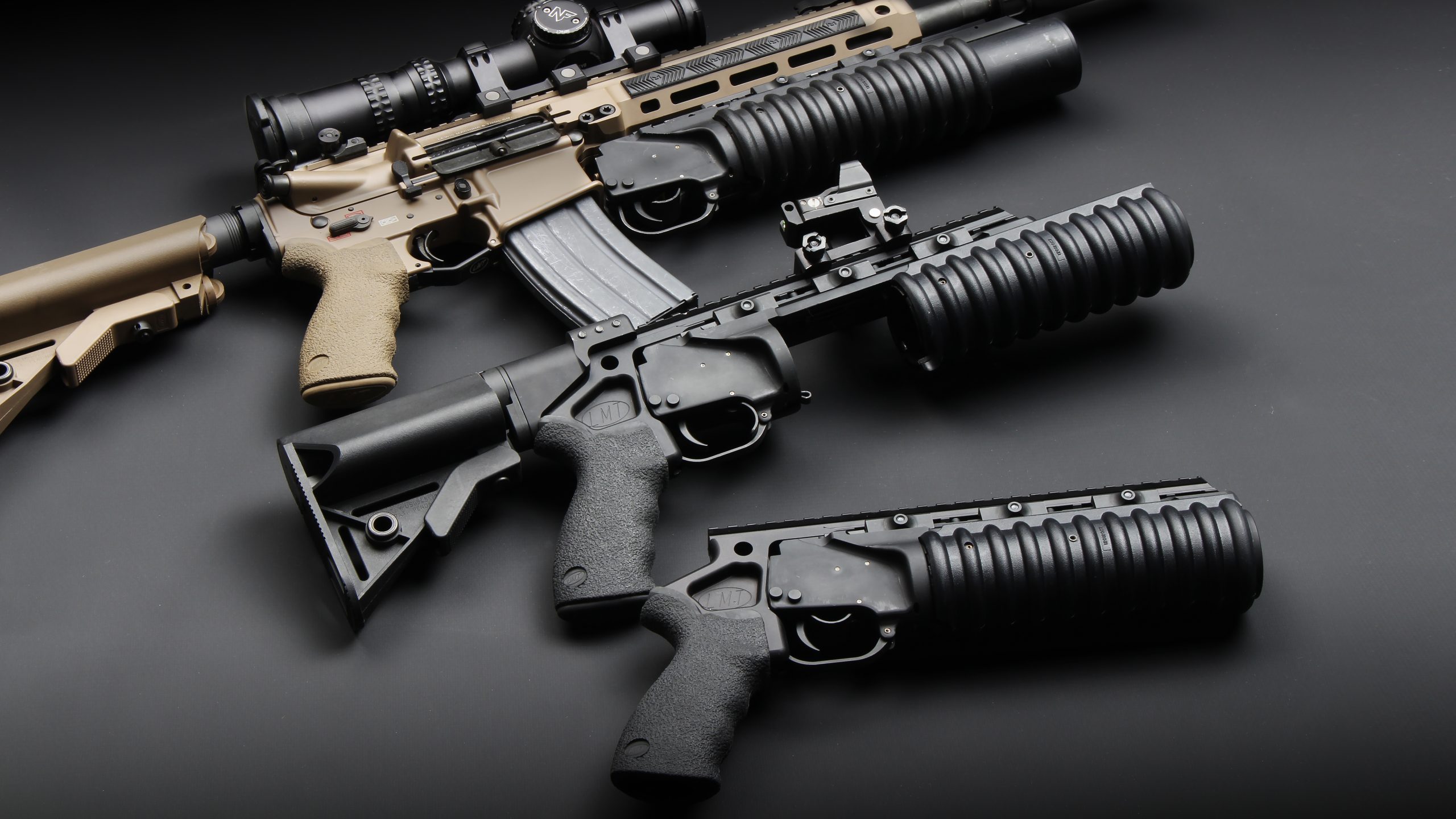
Colt also did a limited civilian run of M203 launchers several years back; a small batch that got significant attention in the firearms press. Those have largely been absorbed into the collector market and command a premium over the LMT production models.

The M203 is a proven, simple system. It's a single-shot launcher with an aluminum receiver, a sliding barrel that opens forward for loading, and a simple trigger mechanism. There's not much to go wrong. The downside of the underbarrel configuration is that it adds weight and length to your host rifle, and the mounting system limits your handguard options somewhat, particularly with the older barrel-clamp style.
The M320
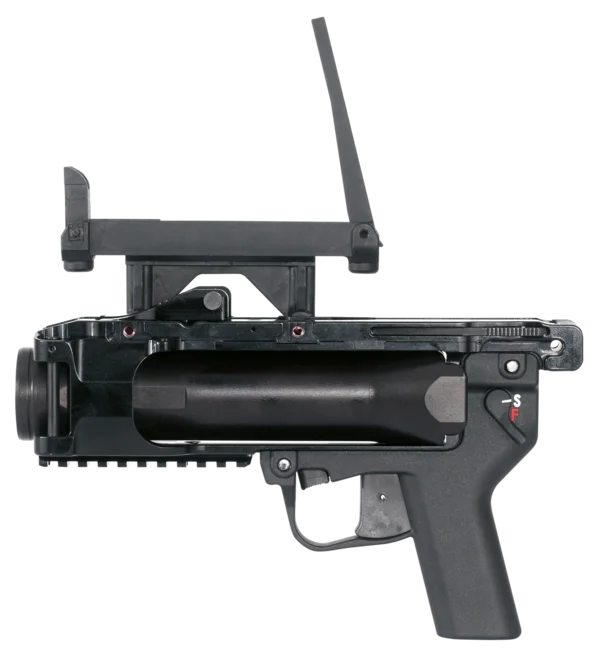
The M320 (and its predecessor the AG36, both from Heckler & Koch) is the M203's replacement in U.S. military service. It's a more modern design with a side-opening breech rather than the M203's sliding barrel, which allows it to chamber longer 40mm rounds that won't fit in the M203. It can be configured as an underbarrel launcher or as a standalone weapon with a pistol grip and stock.
Civilian M320s are rare and expensive. H&K doesn't have a robust civilian sales channel for these, and the ones that do appear on the market; typically through specialty NFA dealers; command significantly higher prices than M203s. Expect $8,000 to $15,000 or more for a genuine M320, and availability is sporadic at best. If you see one, it'll be through a dealer who specializes in destructive devices and high-end NFA transfers.
The M79
The M79 is the Vietnam-era standalone grenade launcher; the "Thumper" or "Blooper." It's a single-shot, break-action design with a wooden stock that looks like a sawed-off single-barrel shotgun on steroids. Aesthetically, it's the most iconic grenade launcher ever made, and the collector appeal is enormous.
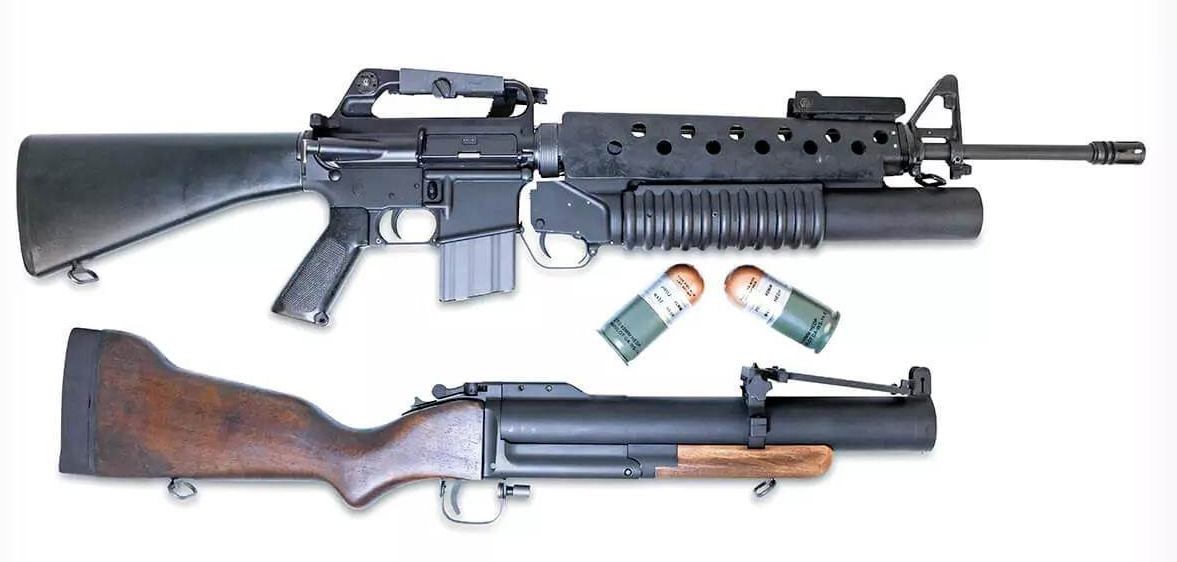
Original military M79s do appear on the civilian market as registered destructive devices. Prices vary wildly based on condition and provenance, but $5,000 to $10,000+ is typical for a transferable example. They're not being manufactured new for civilian sale in any meaningful quantity, so the supply is fixed and prices trend upward.
The HK69A1
This is a standalone 40mm launcher made by Heckler & Koch, essentially a pistol-grip break-action design. They appear on the market occasionally; one recent listing from a Pennsylvania dealer had a factory HK69A1 priced in the neighborhood of $10,000 as a transferable DD. These are uncommon and desirable among collectors.
Other options
Various smaller manufacturers and custom builders produce 40mm launchers, and you'll occasionally see military surplus from other countries that's been imported and registered. The key requirement is that any 40mm launcher on the civilian market must be registered in the National Firearms Registration and Transfer Record (NFRTR) as a destructive device. If it's not in the registry, it can't be legally transferred to you.
The transfer process step by step
Buying a 40mm launcher follows the exact same NFA transfer process as buying a suppressor. If you've done a Form 4 before, you already know the drill. If you haven't, here's the sequence:
First, find a dealer who has the launcher in stock or can order one. This is the hardest part, honestly. Your local gun shop that does silencer transfers probably doesn't stock M203s. You're looking at specialty NFA dealers, often ones that focus on destructive devices and Class III items. Some of the bigger online NFA dealers carry LMT launchers. Others specialize in military surplus and transferable DDs.
Second, the dealer initiates the Form 4 transfer. If you're buying from an out-of-state dealer, the launcher transfers to your local FFL/SOT first (a standard two-stamp dance that NFA buyers are familiar with, though in practice many dealers handle the Form 3 dealer-to-dealer transfer seamlessly). The Form 4 goes to you as the end buyer.
You'll fill out the Form 4 via the ATF's eForms system; same as a suppressor transfer. You submit your photo, fingerprints, and the $200 tax payment. CLEO notification goes to your local chief law enforcement officer. This is a notification, not a request for permission. They don't have to approve anything.
Then you wait. Current eForm 4 approval times for individuals and trusts are running in the 4-to-8-month range, though destructive devices sometimes seem to take slightly longer anecdotally. There's no official "DD queue" at the ATF, but some dealers report that DD forms get additional scrutiny. Plan for 6 months and be pleasantly surprised if it's faster.
Once approved, you pick up your launcher from the dealer, same as any other NFA item. You'll get your approved Form 4 with the tax stamp, and the launcher is registered to you (or your trust) in the NFRTR.
Individual vs. trust
The trust question for destructive devices is the same as for any NFA item. A gun trust lets multiple responsible persons possess and use the item. If you want your spouse or a shooting buddy to be able to handle the launcher without you present, a trust is the way to go. Every responsible person on the trust needs to submit photos and fingerprints with each Form 4, same as with suppressors.
For a single-owner situation, individual registration is simpler. One set of prints, one photo, done.
The one thing nobody tells you about DD ownership on a trust: make sure your trust language doesn't exclude destructive devices. Some boilerplate NFA trust templates were written with suppressors and SBRs in mind, and while most are broad enough to cover all NFA items, it's worth a read-through or a quick conversation with the attorney who drafted it.
The ammunition situation: this is where it gets complicated
This is the section that matters most, because the launcher itself is only half the equation. What you feed it determines both the legal complexity and the ongoing cost of ownership.
Ammunition that is NOT a destructive device
Certain 40mm rounds are not classified as destructive devices because they don't contain explosive, incendiary, or chemical payloads exceeding the statutory threshold. These include:
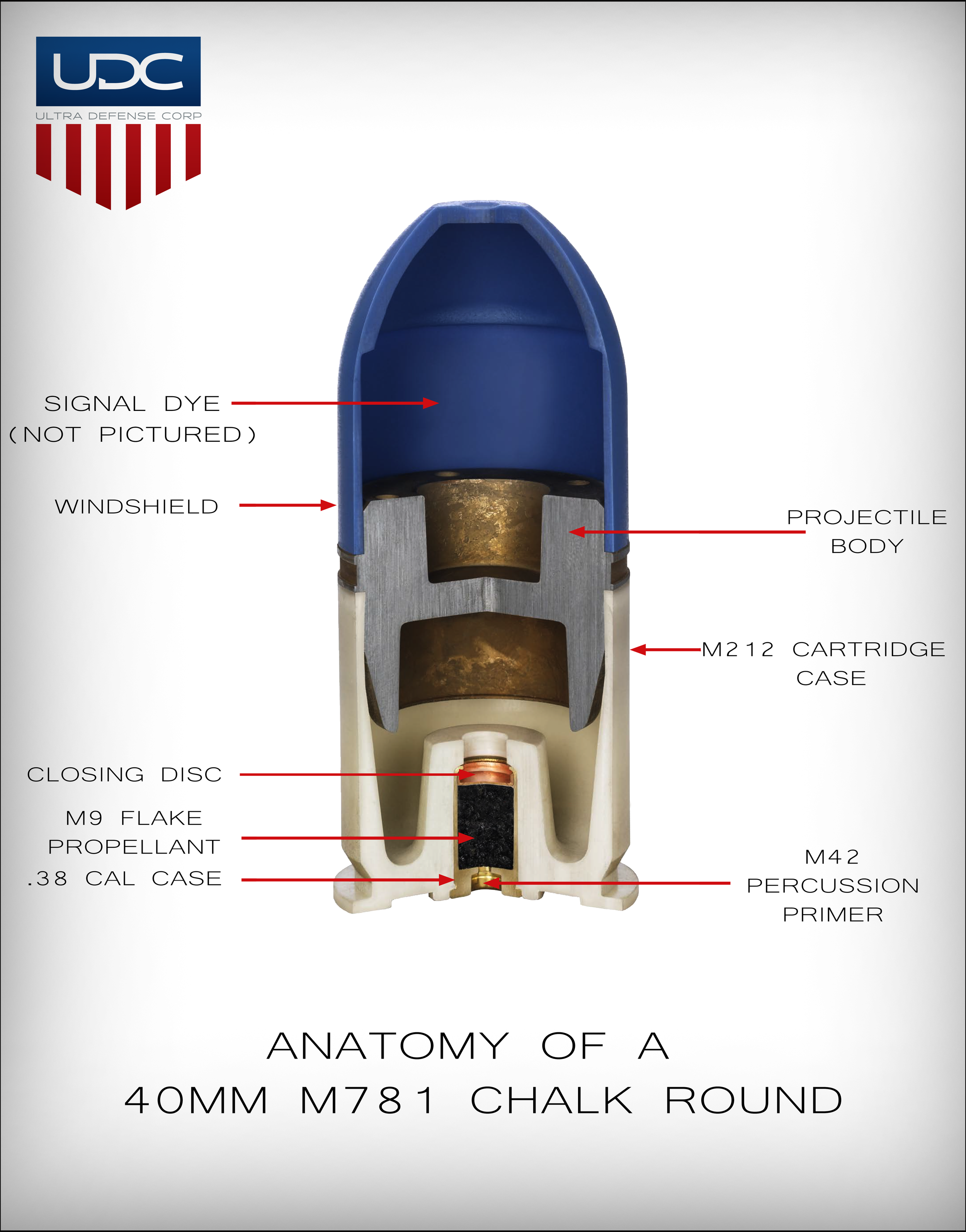
Practice rounds, often called "chalk" rounds or training rounds (like the M781 practice round), which contain an inert spotting charge; a small puff of colored powder to mark the point of impact. The ATF has specifically addressed the importation of certain marking and training rounds, determining that they don't meet the DD definition because the marking compound doesn't qualify as explosive or incendiary material under the statute.
Smoke rounds that use a payload below the threshold. Some 40mm smoke rounds contain enough chemical payload to cross the line; others don't. This is an area where specific round-by-round analysis matters.
Flare and signaling rounds. A 40mm flare round is a signaling device, not a destructive device, under most interpretations.
Inert/dummy rounds. Completely inert training rounds with no payload at all are not destructive devices. They're just hunks of metal and plastic.
These non-DD rounds are what most civilian 40mm owners actually shoot. A chalk round downrange makes a satisfying thoomp from the launcher, arcs out to the target area, and pops with a little cloud of colored dust. It's not a fragmentation grenade, but the experience of firing a 40mm launcher is genuinely unique and entertaining. The recoil impulse is a heavy push rather than a sharp snap, and the slow arc of the projectile is visible in flight. There's a reason people spend thousands to own these things.
The practical cost of non-DD 40mm ammunition varies. Practice and chalk rounds run roughly $15 to $50 per round depending on source and type. That's not cheap range ammo by any standard, but it's manageable for occasional use. Some reloading setups exist for 40mm casings, which can bring the per-round cost down significantly for people willing to invest in the tooling.
Ammunition that IS a destructive device
High-explosive (HE), high-explosive dual-purpose (HEDP), fragmentation, incendiary, and CS/tear gas rounds are all destructive devices individually. Each one. Every single round.
The legal process to own one: Form 4 transfer, $200 tax stamp, background check, wait. Per round.
Let that sink in. If you want to own ten HE rounds for your M203, that's ten Form 4s and $2,000 in tax stamps alone, before the cost of the ammunition itself; which, assuming you can even find transferable explosive 40mm rounds on the civilian market (you mostly can't), would be substantial.
And when you fire one, the destructive device is destroyed. The tax stamp and registration go with it. You've just sent $200+ in government fees downrange along with whatever the round cost.
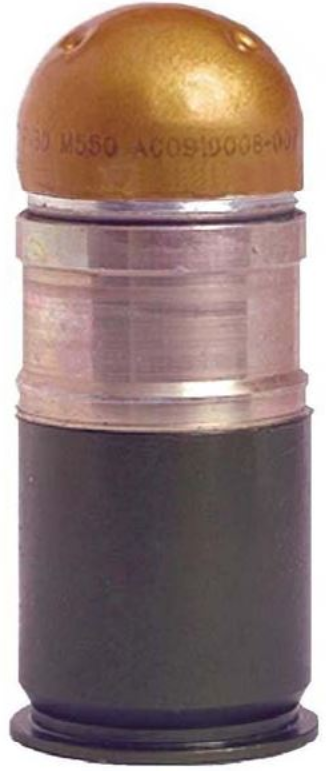
This is why virtually no civilian 40mm owners shoot explosive ammunition. The math doesn't work for recreational use. The people who own registered explosive rounds tend to be collectors who have no intention of firing them, or FFL/SOT holders who have access through different channels.
For the vast majority of civilian 40mm owners, the ammunition diet is chalk rounds, practice rounds, flares, and smoke. And honestly? That's plenty of fun.
The 40mm vs. 37mm ammo overlap (there isn't one)
40mm and 37mm are not interchangeable. Different diameter, different chamber dimensions, different ammunition. You cannot fire 37mm rounds from a 40mm launcher or vice versa. The systems are completely separate. This seems obvious, but the question comes up constantly in forum threads, usually from people who are hoping to use the wider (and cheaper, and non-NFA) selection of 37mm signaling rounds in their 40mm launcher. It doesn't work that way.
State law: the first gate
Federal law allows destructive device ownership through the NFA process. State law is a different question entirely, and it's the first thing you need to check.
A significant number of states prohibit or heavily restrict destructive device ownership. California, Illinois, New York, New Jersey, Massachusetts, Connecticut, Hawaii, and several others either ban DD possession outright or impose restrictions that make civilian ownership effectively impossible. Some states allow the launcher but prohibit certain ammunition types. Others require state-level permits in addition to federal NFA registration.
The specifics change, and a full state-by-state breakdown is beyond the scope of any single article (and would be outdated within a year as legislatures tinker). The process is: check your state's statutes on destructive devices, consult with a local firearms attorney if there's any ambiguity, and confirm with your dealer before initiating a transfer.
If you're in a free state; Texas, Arizona, Florida, most of the Mountain West, much of the Southeast; you're likely fine. But "likely fine" isn't the same as "definitely legal," and a $3,000 launcher plus a $200 tax stamp is enough money to justify a $200 legal consultation before you commit.
Practical ownership: what it's actually like
Owning a 40mm launcher as a civilian is, day to day, not that different from owning a suppressor or SBR. It's a registered NFA item. It lives in your safe. You take it to the range when you want to shoot it. You keep your approved Form 4 (or a copy) accessible.
Range considerations
Not every range will let you fire a 40mm launcher. Indoor ranges are obviously out. Many outdoor ranges have rules against explosive or incendiary ammunition (which you're not shooting anyway, but the range officer may not know the difference between your chalk round and an HE round). Some ranges have specific policies about destructive devices.
The best bet is private land or a range with a dedicated area for this kind of thing. If you're a member of a club with a long-range bay and permissive rules, you're probably fine. Call ahead and ask. Bring your paperwork. Be prepared to explain what a chalk round is.
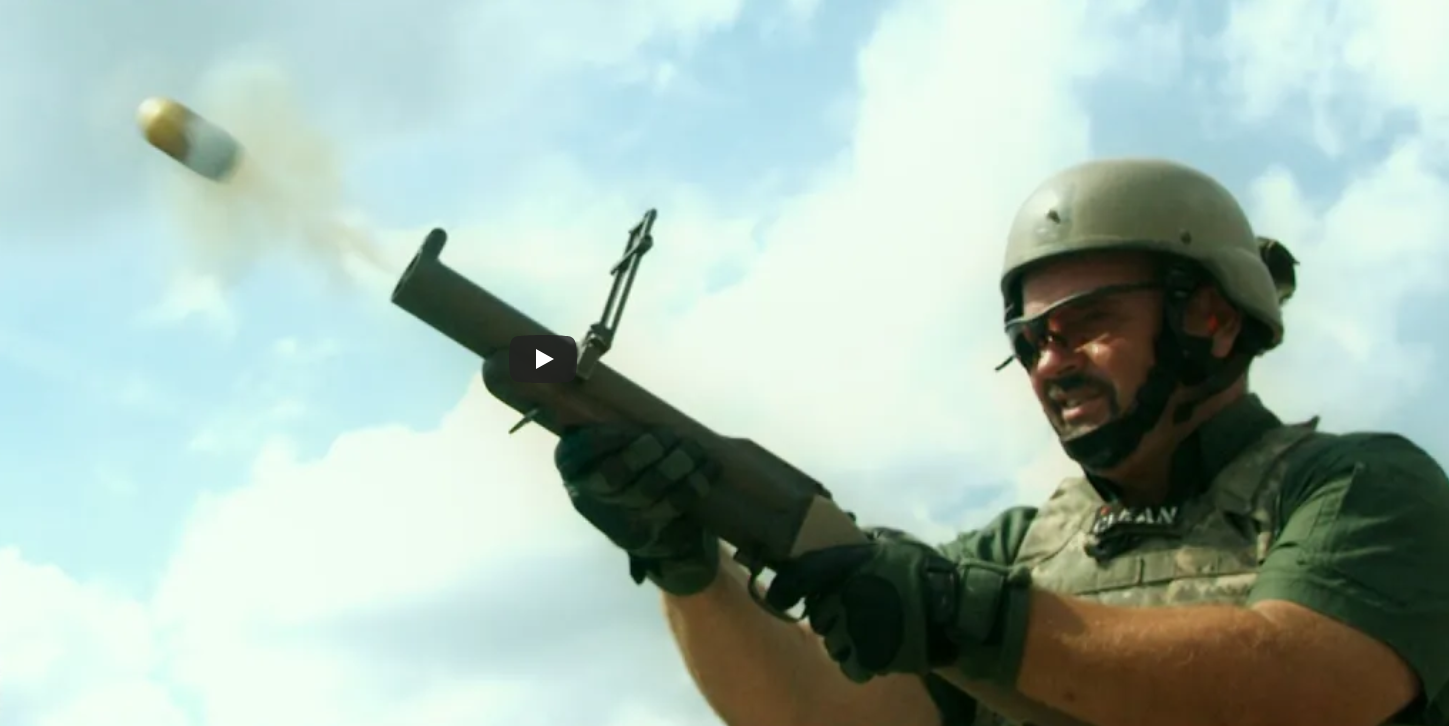
The actual shooting experience is worth the hassle. Loading the M203; sliding the barrel forward, dropping in the fat 40mm round, snapping it closed; has a tactile satisfaction that's hard to describe. The trigger pull is long and heavy by rifle standards, which makes sense for a weapon designed to lob explosives. The report is a deep, hollow thump rather than a sharp crack. And watching the round arc out to 200 or 300 meters and pop on impact is genuinely one of the more entertaining things you can do at a range.
Traveling with a 40mm launcher
Here's a pain point that suppressor owners already know about but that hits differently with a DD. Interstate transport of any NFA firearm requires ATF approval via Form 5320.20 (Application to Transport Interstate or to Temporarily Export Certain National Firearms Act Firearms). You file this form before you travel, specifying the dates and locations, and the ATF approves it.
Suppressors and SBRs require this form. Machine guns require this form. Destructive devices require this form. The one exception is AOWs (any other weapons), which are exempt from the interstate transport notification requirement.
So if you want to take your M203 to a match or a range day in another state, you need to plan ahead and get your 5320.20 approved. The ATF has been reasonably quick about these in recent years; a few weeks in many cases; but it's not instantaneous. Plan your travel accordingly.
Storage
A 40mm launcher is an NFA item. Secure storage is both a legal best practice and common sense. It goes in your safe with your other NFA items. If you have DD ammunition that's also registered (explosive rounds, etc.), those are NFA items too and should be stored accordingly.
For non-DD ammunition; chalk rounds, practice rounds, flares; there's no NFA storage requirement. They're ammunition, not registered items. Store them like you'd store any other ammo: cool, dry, and away from unauthorized access.
Lending and possession
Same rules as any NFA item. If the launcher is registered to you individually, only you can possess it. Your buddy can't borrow it for the weekend. If it's on a trust, any responsible person named on the trust can possess it.
This is one of the stronger arguments for using a trust for DD ownership. Range days are more fun when your friends can actually handle the launcher, and a trust makes that legal.
Cost breakdown: what you're actually spending
Let's put real numbers on this so you can decide if it fits your budget.
A new LMT M203 runs approximately $2,000 to $3,500 depending on barrel length and mount configuration. The 9-inch barrel models tend to be at the lower end; rail-mounted configurations and complete standalone setups (with stock and pistol grip for use without a host rifle) cost more.
The $200 NFA tax stamp is non-negotiable.
Dealer transfer fees vary. Some NFA dealers charge $50 to $100 for the transfer; others build it into the purchase price. If the launcher is coming from an out-of-state dealer, there may be a Form 3 transfer to your local SOT first.
Ammunition costs for non-DD rounds: $15 to $50 per round for factory chalk and practice rounds. Reloading can bring this down substantially; some 40mm reloaders report per-round costs in the $3 to $8 range for basic chalk loads, though the initial investment in reloading equipment and 40mm casings isn't trivial.
A host rifle, if you're going the underbarrel route. You probably already have an AR-15, but the M203 mount may require specific barrel profiles or handguard configurations. Budget for potential modifications or a dedicated host upper.
All in, a realistic entry cost for an M203 setup with a modest supply of practice ammunition:
Launcher: $2,500 (mid-range LMT)
Tax stamp: $200
Dealer fees: $75
Initial ammo (20 chalk rounds): $400-600
Host rifle modifications (if needed): $0-300
Total: roughly $3,200 to $3,700 to get started. That's less than many suppressor-and-host-rifle combinations, and significantly less than a transferable machine gun.
For an M79 or M320, the launcher cost jumps substantially; $5,000 to $15,000 for the launcher alone; but the rest of the process and costs remain the same.
Common mistakes and gotchas
Confusing 37mm with 40mm
Already covered above, but it bears repeating because the consequences of getting this wrong are severe. A 37mm launcher bought without NFA paperwork is legal. A 40mm launcher without NFA paperwork is a federal felony; possession of an unregistered destructive device. These are different items with different legal classifications. The fact that they look similar and mount in similar ways does not make them interchangeable in any legal sense.
Assuming all 40mm ammo is the same legally
A chalk round and an HE round are in completely different legal categories. One is ammunition. The other is a registered destructive device. Mixing these up; or possessing unregistered DD ammunition; is a serious federal offense. Know exactly what you're buying and what its legal classification is before you take possession.
Not checking state law first
Federal NFA approval doesn't override a state ban on destructive devices. If your state prohibits DD ownership, your approved Form 4 doesn't help you. The ATF will process the form regardless of state law; they've said as much; but possessing the item in a prohibiting state is a state crime. Check state law first. Always.
Buying from an unlicensed seller
All NFA transfers must go through a licensed dealer (FFL with SOT). There is no private party transfer of NFA items that bypasses the dealer and Form 4 process. If someone offers to sell you a 40mm launcher person-to-person without paperwork, walk away. That's either an unregistered item (felony to possess) or a scam.
Forgetting about the Form 5320.20 for travel
If you take your registered DD across state lines without an approved transport form, you're in violation of federal law. This catches people who buy a launcher in one state and assume they can just drive it home to another state. The dealer should handle the initial transfer to your state, but subsequent travel is on you to plan and file for.
The Form 1 option: building your own
Technically, you can manufacture your own destructive device by filing a Form 1 (Application to Make and Register a Firearm) with the ATF. This is the same form used to build an SBR from a pistol or rifle, or to manufacture a suppressor.
The practical reality of Form 1 DD manufacturing for a 40mm launcher is that very few people do it. You'd need to actually manufacture a functional 40mm launcher, which requires machining capabilities beyond what most home builders possess. It's not like slapping a short barrel on an AR-15 lower. The engineering tolerances for a safe, functional grenade launcher are significant, and the liability implications of a home-built launcher that fails are... unpleasant to contemplate.
Some people do file Form 1s for destructive devices in other contexts; large-bore firearms, certain specialty items; but for 40mm launchers, the Form 4 transfer of a factory-built launcher from LMT or another manufacturer is the standard path. The $200 tax is the same either way, and the factory launcher comes with the confidence that it was built by people who do this for a living.
One area where Form 1 DD manufacturing does come up: ammunition. If you want to manufacture your own DD-classified 40mm rounds (explosive, incendiary, etc.), each round requires a Form 1 and $200 tax before you manufacture it. Plus you'd need the appropriate federal explosives license (FEL) from the ATF for the explosive components. This is deep-end stuff that goes well beyond casual NFA ownership and into the realm of licensed manufacturing.
Post-sample and SOT considerations
If you hold a Federal Firearms License with a Special Occupational Tax (FFL/SOT); specifically a Type 07 FFL with a Class 02 SOT (manufacturer) or a Type 01 FFL with a Class 03 SOT (dealer); the destructive device landscape looks different.
SOT holders can acquire "post-sample" destructive devices for dealer samples, law enforcement demonstration, or manufacturing purposes. The rules are similar to post-sample machine guns: a Type 07/Class 02 SOT can manufacture new DDs, and a Type 01/Class 03 SOT can acquire them with a law enforcement demonstration letter.
This means SOT holders have access to DD ammunition; including explosive rounds; that would be prohibitively expensive for individual civilians to acquire through the per-round Form 4 process. A manufacturer with the appropriate licenses can produce and test explosive 40mm rounds as part of their business operations.
For most readers, this is academic. But if you're an FFL holder or considering getting your SOT, the DD world opens up considerably. Some SOT holders maintain 40mm launchers and a supply of various ammunition types specifically for law enforcement demonstrations and sales.
What about the M320 specifically
The M320 deserves a bit more attention because it represents the current state of the art in military 40mm launchers and it's the one people ask about most often after seeing it in service photos or video games.
The M320 (technically the M320A1 in its current U.S. military configuration) was adopted to replace the M203 starting around 2009. The key improvements over the M203 are the side-opening breech (which accommodates longer medium-velocity 40mm rounds that won't fit in the M203's sliding barrel), a double-action trigger, an integrated day/night sight, and the ability to quickly convert between underbarrel and standalone configurations.
For civilian ownership, the M320's advantages over the M203 are mostly theoretical. The longer rounds it can chamber are largely military-specific ammunition that civilians can't easily obtain anyway (and the DD-classified rounds among them carry the per-round tax stamp issue). The improved sights are nice but not critical for lobbing chalk rounds at a berm. The standalone conversion is genuinely useful if you want to shoot the launcher without mounting it on a rifle.
The real barrier is availability and price. Genuine H&K M320s on the civilian market are scarce. When they appear, they're priced as collector items. If your goal is to actually shoot 40mm on a regular basis and you're price-conscious, an LMT M203 is the practical choice. If you want the latest military hardware and money isn't the primary concern, hunt for an M320 and be prepared to wait and pay.
Reloading 40mm: the cost-reduction play
A small but dedicated community of 40mm owners reload their own practice ammunition. The 40mm casing is reusable; it's a large aluminum or steel case with a low-pressure primer system. Reloaders replace the primer, add a propellant charge, and seat a new projectile (typically a chalk or inert practice round).
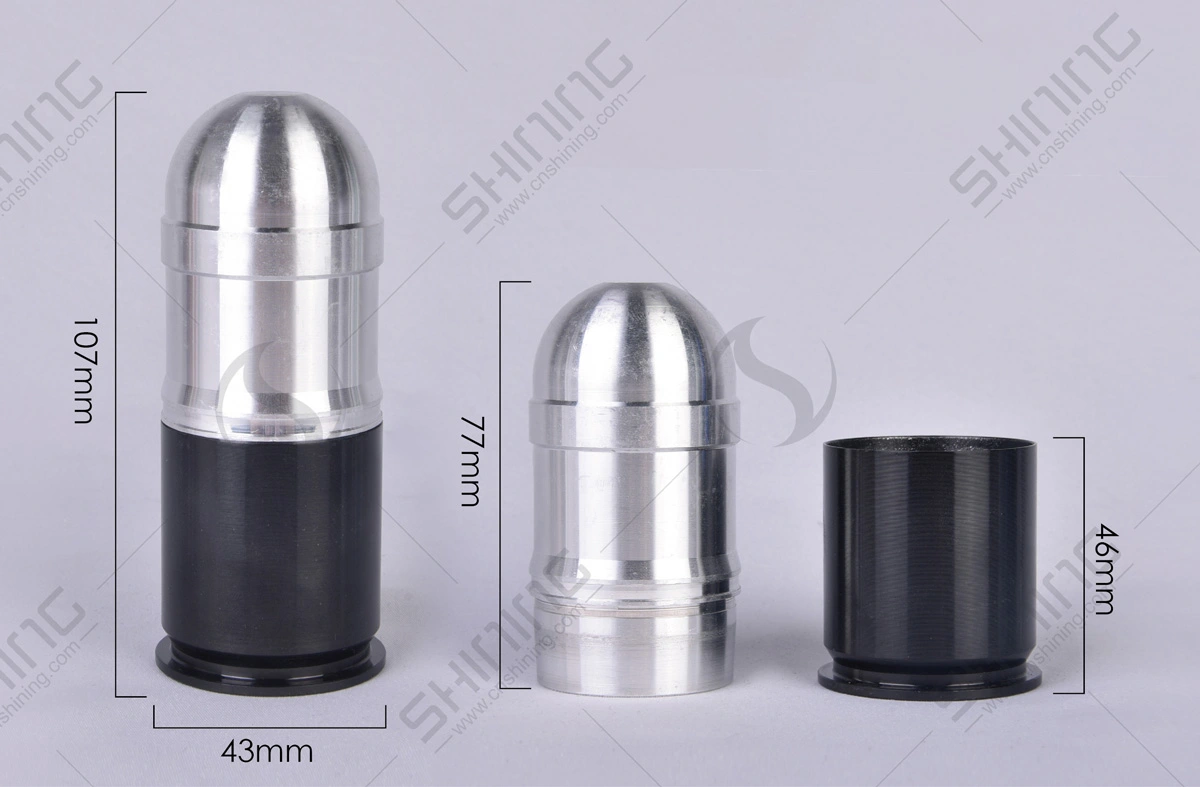
The tooling for 40mm reloading is specialized and not available from your standard reloading equipment suppliers. Some of it is custom-made or adapted from other purposes. The reloading community for 40mm is small enough that much of the knowledge lives in forum threads and word-of-mouth rather than in published manuals.
Per-round costs for reloaded chalk/practice ammunition can drop to the $3 to $8 range, which makes regular shooting much more affordable than buying factory practice rounds at $25 to $50 each. Over the course of a few hundred rounds, the reloading setup pays for itself.
The critical safety note: reloading 40mm ammunition with explosive or incendiary payloads is manufacturing a destructive device. Each round requires a Form 1, $200 tax, and (for explosive components) a federal explosives license. Reloading practice and chalk rounds with inert payloads does not create a destructive device and requires no additional NFA paperwork beyond the registration of the launcher itself.
The investment angle
Destructive devices, like transferable machine guns, exist in a market with constrained supply. While the DD registry isn't closed the way the machine gun registry is (new DDs can still be manufactured and registered, unlike post-1986 machine guns), the practical supply of specific items; original M79s, HK69A1s, military surplus launchers; is finite and shrinking.
LMT M203s are still in production, so those aren't appreciating the way a transferable M16 does. But original military-issue launchers, particularly Vietnam-era M79s and uncommon foreign models, have shown steady price appreciation over the past decade. A clean M79 that sold for $3,000 ten years ago might fetch $7,000 to $9,000 today.
This isn't investment advice. NFA items are illiquid; selling one requires finding a buyer willing to go through the Form 4 process and wait months for approval. But if you're buying a 40mm launcher anyway and you're choosing between a new-production LMT and an original military M79, the M79 is likely to hold or increase its value better over time. The LMT is the better choice for someone who wants to shoot regularly without worrying about collector value.
Frequently asked questions, rapid-fire
Can I mount an M203 on any AR-15? Depends on the mount type. The original M203 uses a barrel-clamp mount that requires a specific barrel profile (standard government-profile or similar). LMT's newer versions include rail-mount options that work with free-float handguards, but you need sufficient rail space and the handguard needs to be robust enough to handle the weight and recoil impulse. Check LMT's specifications for compatibility with your specific upper.
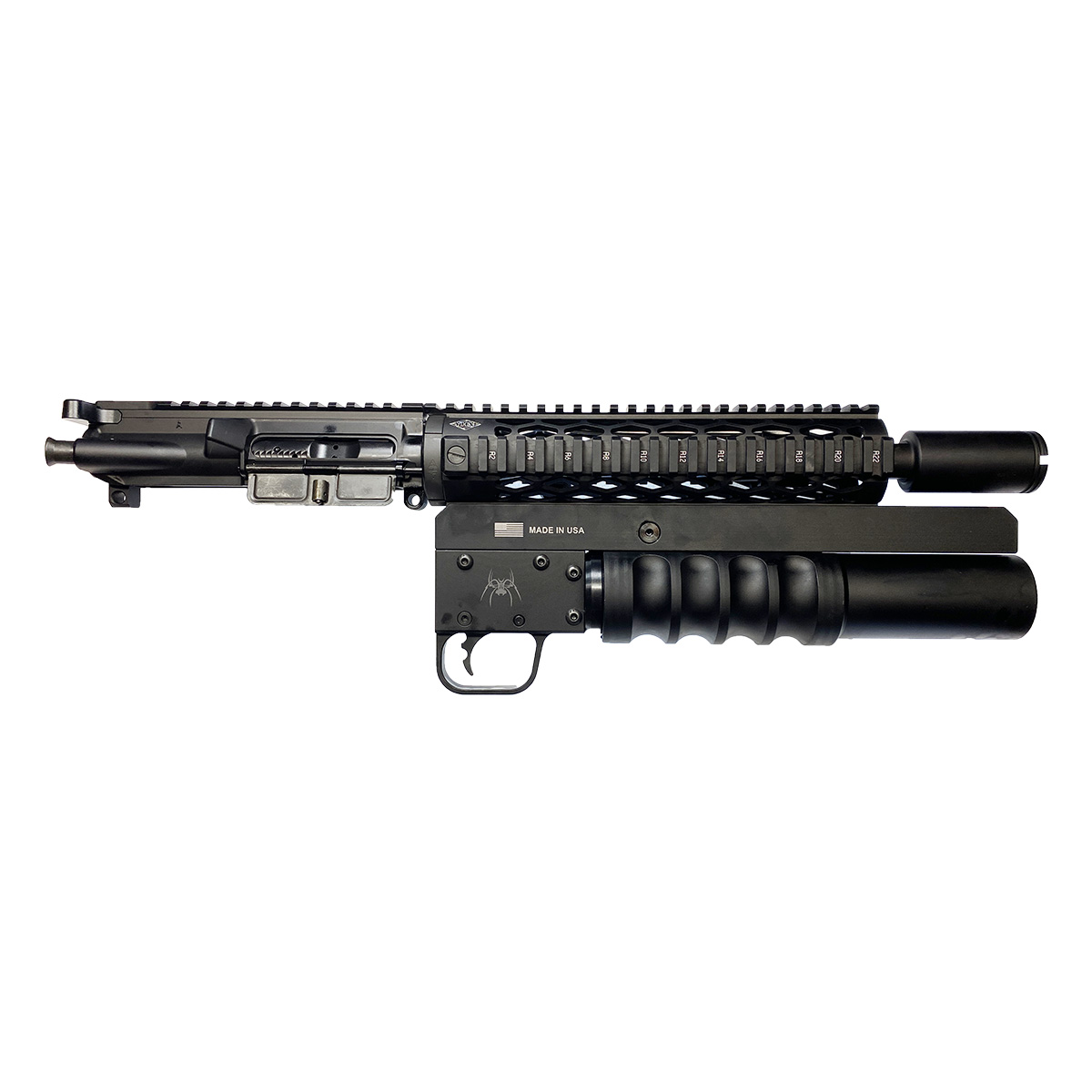
Is the launcher serialized? Yes. The receiver of the launcher is the serialized, registered component; just like the receiver of a rifle. That serial number is what's recorded in the NFRTR and on your Form 4.
Can I buy 40mm ammo online? Non-DD 40mm ammunition (chalk, practice, flare) can be purchased without NFA paperwork in most states. Some vendors ship it like standard ammunition. DD-classified ammunition requires NFA transfer paperwork per round. In practice, most civilian 40mm shooters buy their practice ammo from specialty vendors or reload their own.
What about 40mm less-lethal rounds? Rubber baton rounds, bean bag rounds, and similar less-lethal 40mm ammunition exist and are used by law enforcement. Their legal classification varies; some may be classified as DD ammunition depending on their specific construction and payload. Check the specific round's classification before assuming it's non-DD.
How loud is a 40mm launcher? Surprisingly moderate compared to a rifle. The 40mm uses a low-pressure propellant system (the "high-low" pressure system, where the propellant burns in a small high-pressure chamber and then vents into the larger low-pressure barrel). The report is a deep thump rather than a sharp crack. It's not quiet; you should still wear hearing protection; but it's not the concussive blast you might expect from something that looks like it should level a building.
Can I suppress a 40mm launcher? Theoretically, someone could build a suppressor for a 40mm launcher, but it would itself be an NFA item (suppressor) and the practical utility is minimal given the already-moderate report. Nobody does this in the real world.
What's the effective range with practice ammo? The M203 has a maximum range of about 400 meters with standard ammunition and an area-target effective range of roughly 350 meters. With practice/chalk rounds, practical accuracy for hitting a man-sized target is maybe 150 to 200 meters for a competent shooter using the leaf sight. The quadrant sight extends this for area targets but requires training to use effectively.
Where to start
If you've read this far and you're seriously considering a 40mm launcher, here's the sequence:
Check your state law on destructive devices. Not "I think my state allows it"