The M2 .50 caliber machine gun has been in continuous service since 1933. Read that again. A weapon designed between two world wars is still mounted on every HMMWV gun truck, every Stryker with a CROWS turret, and every Navy vessel with a weather deck. The Army and Marine Corps are still buying new ones; not pulling them from museum storage, but placing fresh production contracts with General Dynamics and U.S. Ordnance. The M2A1 variant that started fielding in 2011 is functionally the same gun John Moses Browning designed, with a few ergonomic and safety upgrades bolted on. The operating principle hasn't changed. The cartridge hasn't changed. The gun still works.
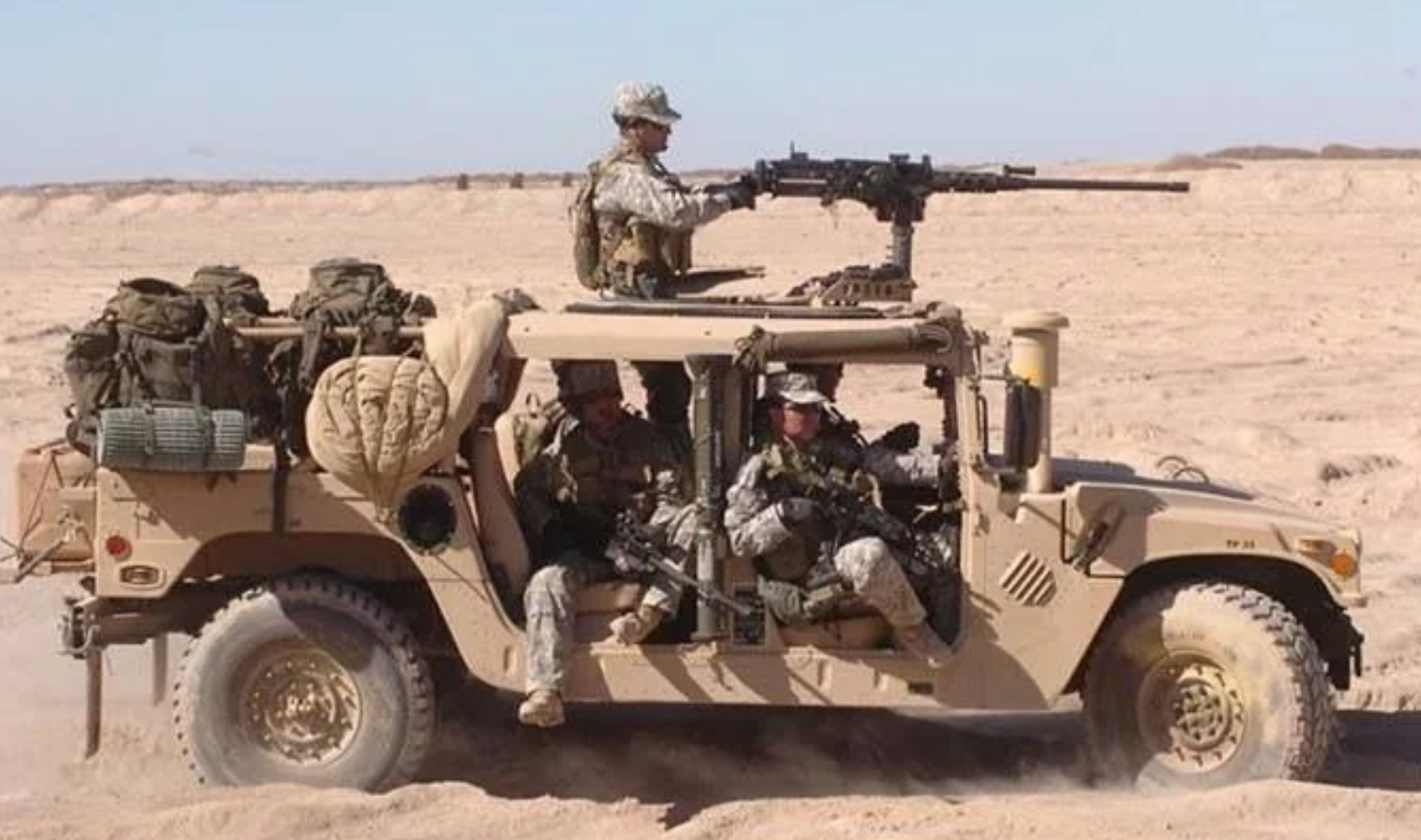
That's not nostalgia. That's engineering. The .50 BMG round and the recoil-operated action that fires it have outlasted every challenger, every proposed replacement, and every Pentagon procurement cycle that tried to field something "better." The M2 has survived because it fills a niche that no other system fills as cheaply, as reliably, or as violently. It bridges the gap between small arms and autocannons, and it does it with a parts count that a trained crew can manage in a fighting position with hand tools.
This is the story of how that happened, what the gun actually does on a modern battlefield, and why it'll probably still be in the arms room when your grandkids are drawing weapons for range day.
Browning's original problem
The M2 didn't start as the M2. It started as a request from General John J. Pershing during World War I. The American Expeditionary Forces needed something that could defeat the armored observation balloons and early aircraft the Germans were flying over the Western Front. The .30-06 round fired by the M1917 and M1919 machine guns could damage fabric-covered aircraft, but it lacked the range, the energy, and the incendiary potential to reliably bring down anything with even rudimentary armor plating. Pershing wanted a heavy machine gun; something with reach and punch.
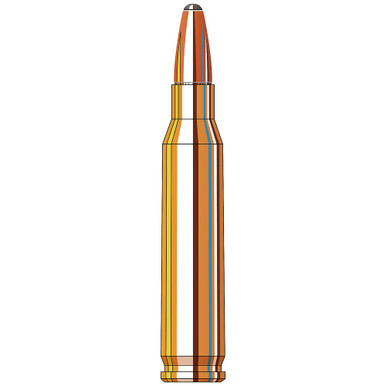
John Browning, who was already the most prolific firearms designer in American history, took the project. He scaled up his proven recoil-operated design from the M1917 .30 caliber machine gun. The initial chambering was based on a scaled-up .30-06 case necked up to accept a .50 caliber (12.7mm) projectile. The cartridge went through several iterations. The version that stuck; the .50 BMG (Browning Machine Gun); launches a 660-grain ball projectile at roughly 2,910 feet per second from the M2's 45-inch barrel. That translates to approximately 12,400 foot-pounds of muzzle energy. For context, a 5.56 NATO round from an M4A1 generates around 1,300 foot-pounds. The .50 BMG delivers nearly ten times the energy at the muzzle and maintains lethal effectiveness past 2,000 meters.
Colt M4A1 5.56 NATO rifle Deals
Prices may change. May contain affiliate links.
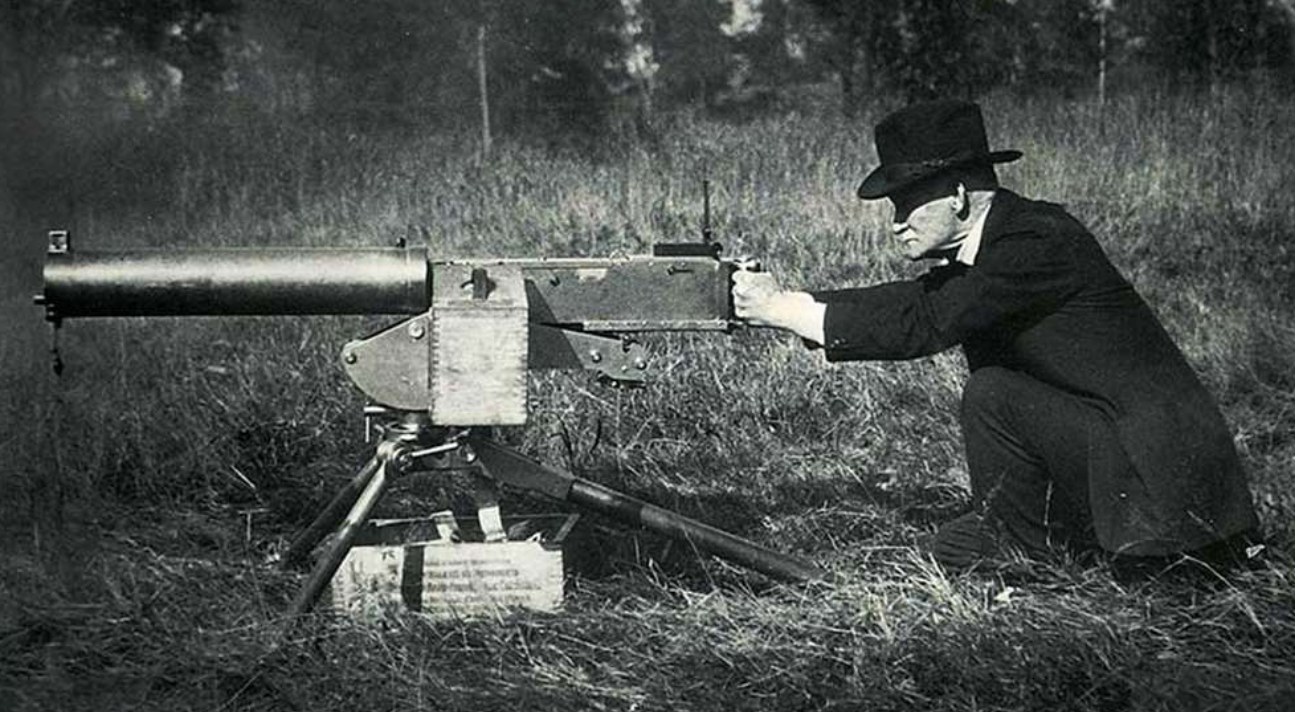
The water-cooled version of the gun, designated the M2, entered service first. It was enormous; the water jacket alone added significant weight and bulk. But for fixed anti-aircraft positions and static defensive emplacements, it worked. The gun that most people picture when they hear "Ma Deuce" is actually the M2HB, the heavy barrel variant that eliminated the water jacket in favor of a thicker, air-cooled barrel. That version was standardized in 1933 and has been the backbone of American heavy machine gun capability ever since.
Here's a factoid that catches most people off guard: the M2HB that a crew mounts on a vehicle turret today is mechanically compatible with receivers manufactured during World War II. The technical data package has been refined, tolerances have been tightened, and the M2A1 brought some meaningful updates, but the fundamental design; short recoil operation, a rotating accelerator that drives the bolt assembly rearward, a T-slot barrel extension; hasn't been redesigned. It was right the first time.
What the .50 BMG actually does
The cartridge is the real story. The M2 is a superb machine gun, but it's the .50 BMG round that makes the system irreplaceable. Understanding what this cartridge does at range explains why nobody has successfully replaced it.
The standard M33 ball round is a 660-grain full metal jacket projectile. At 500 meters, it's still carrying roughly 6,000 foot-pounds of energy; more than a .300 Win Mag has at the muzzle. At 1,200 meters, it retains enough energy to penetrate light armor, engine blocks, and concrete masonry. The maximum effective range of the M2 against area targets is 1,830 meters. Against point targets, the Army lists it at 1,500 meters. The maximum range of the cartridge; the distance the bullet will travel if fired at optimal elevation; exceeds 7,400 meters, which is why range fans for .50 cal live-fire exercises require enormous surface danger zones.
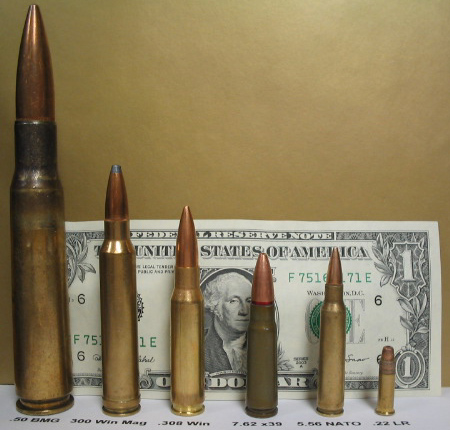
But the ball round is just the beginning. The M2 feeds from a disintegrating metallic link belt, and that belt can be loaded with a mix of ammunition types. The most common combat load is a four-to-one mix of M33 ball and M17 tracer, but the ammunition family includes the M8 armor-piercing incendiary (API), the M20 API-tracer, and the Mk 211 Mod 0 Raufoss multipurpose round. The Raufoss is the one that makes ordnance officers smile. It combines a tungsten carbide penetrator, a zirconium incendiary compound, and a small explosive charge in a single projectile. It can defeat light armored vehicles, ignite fuel, and fragment behind the initial penetration point. It's essentially three types of bad day packed into one cartridge.
The ammunition variety is a huge part of why the M2 endures. An autocannon like the Mk 19 or the M242 Bushmaster chain gun fires specialized ammunition at higher cost per round, with more complex feed systems, and often with less flexibility in loading configurations. The .50 BMG is manufactured by multiple producers worldwide, stockpiled in enormous quantities, and costs a fraction of what a 25mm or 40mm round costs. When the Pentagon looks at total lifecycle cost; not just the unit price of the gun but the ammunition, training, maintenance, and logistics tail; the M2 wins every time against anything in its engagement envelope.
From the M2HB to the M2A1: what actually changed
The M2A1 designation started fielding to Army units around 2011, and Marines began receiving them a few years later. The upgrade addressed three specific problems that had plagued the M2HB for decades, and every one of them was a training and safety issue rather than a lethality issue. The gun didn't need to kill better. It needed to be easier to maintain and harder to destroy through operator error.
The biggest change was the quick-change barrel (QCB) system. On the legacy M2HB, changing a hot barrel required the crew to manually set headspace and timing using a headspace and timing gauge. This is the single most infamous maintenance procedure in the conventional Army inventory. Headspace is the distance between the face of the bolt and the base of a chambered cartridge. Timing is the relationship between the bolt's forward movement and the firing pin's release. If headspace is too loose, the cartridge case can rupture on firing, venting high-pressure gas into the receiver and potentially into the crew. If timing is off, the gun can fire before the bolt is fully locked; a catastrophic malfunction that can destroy the receiver and injure or kill the gunner.
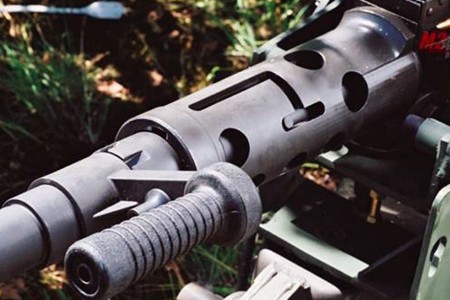
The TM procedure for setting headspace and timing on the M2HB is straightforward on paper. Screw the barrel in until it stops, back it off two clicks, close the bolt, check with the gauge, adjust. In practice, on a range with a hot barrel, wearing gloves, under time pressure, soldiers get it wrong. They get it wrong often enough that the Army decided to engineer the problem out of existence. The M2A1's QCB system uses a fixed headspace configuration. The barrel locks into position with a lever, headspace is set by the barrel's manufactured dimensions, and the crew doesn't touch a gauge. Barrel changes that used to take minutes and carried real risk now take seconds and are essentially foolproof.
The second change was a flash hider. The legacy M2HB has a bare muzzle. The M2A1 added a flash suppressor that reduces the visible signature of the muzzle blast, particularly at night. This matters more than it sounds like it should. A .50 cal firing in darkness produces a muzzle flash visible for thousands of meters. On a modern battlefield saturated with thermal and night vision optics, that flash is a targeting beacon. The suppressor doesn't eliminate the signature, but it reduces it meaningfully.
The third change was a modified bolt assembly and a new safety. The M2A1 uses a manual trigger block safety that's more positive and intuitive than the legacy setup. It's a small thing, but small things matter when the gun is mounted in a turret and the gunner is wearing gloves and body armor and trying to manipulate controls by feel.
What didn't change: the receiver, the recoil system, the feed mechanism, the T&E (traversing and elevating) mechanism compatibility, the tripod interface, and the ammunition. An M2A1 fires the same belted .50 BMG from the same M9 links. It mounts on the same M3 tripod or the same vehicle pintle. The logistics tail barely changed. That was the point.
The arms room reality: most units that received M2A1s also retained some legacy M2HBs in their inventory for years. Soldiers still need to know the headspace and timing procedure because those older guns are still out there, still functional, and still getting drawn for training. The M2A1 didn't make the old knowledge obsolete overnight. It just made the new guns safer.
The M2 on a modern vehicle: CROWS and remote weapons stations
Here's where the century-old design meets the 21st century, and where the M2's dominance gets genuinely interesting.
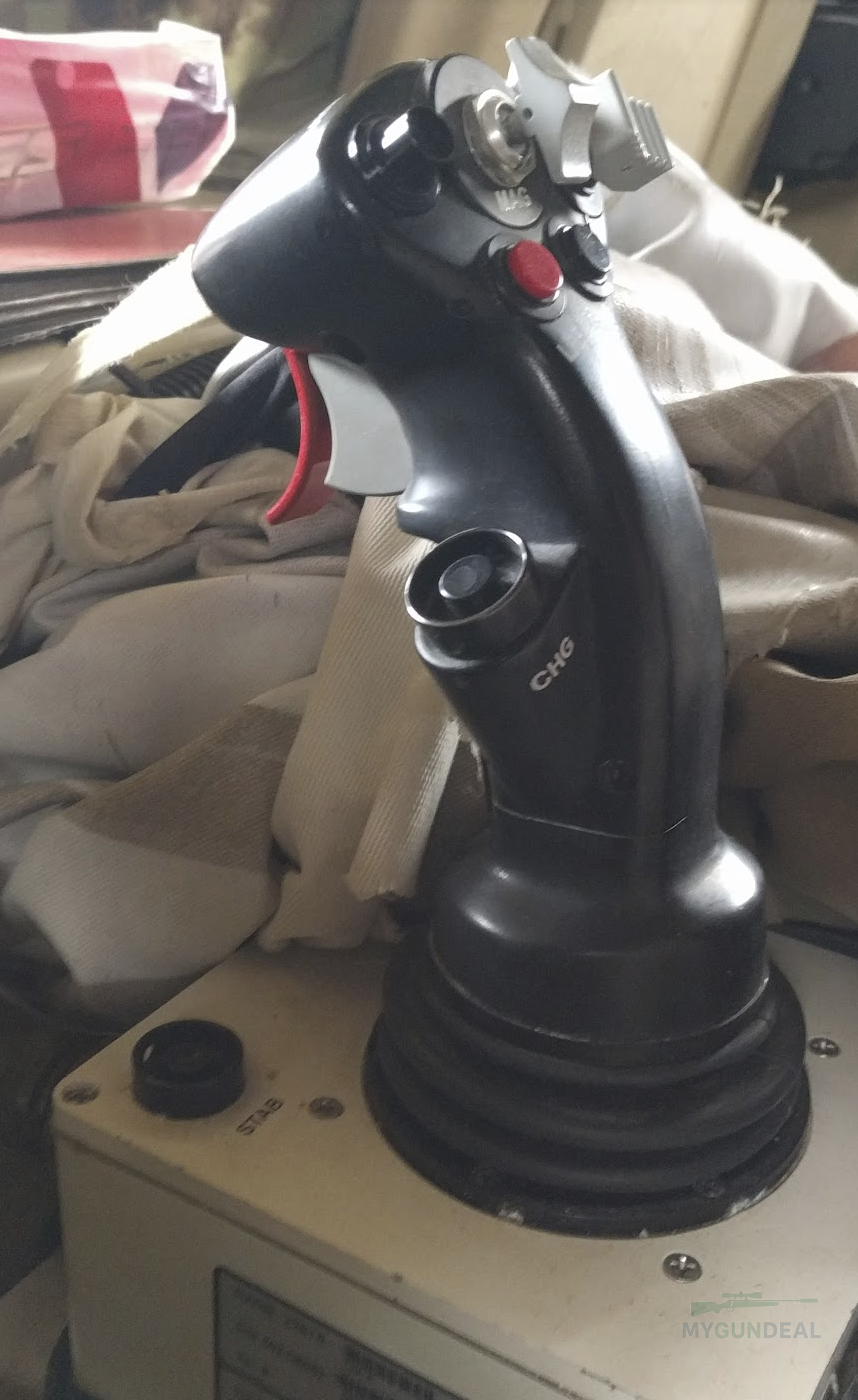
The Common Remotely Operated Weapon Station; CROWS, technically designated the M153; is manufactured by Kongsberg Defence & Aerospace and has been fielded on HMMWVs, MRAPs, Strykers, and a growing list of other platforms. The CROWS system allows a gunner to operate the mounted weapon from inside the vehicle, using a joystick, a display screen, and a suite of sensors that includes a daylight camera, a thermal imager, and a laser rangefinder. The gunner never exposes themselves above the vehicle's armor.
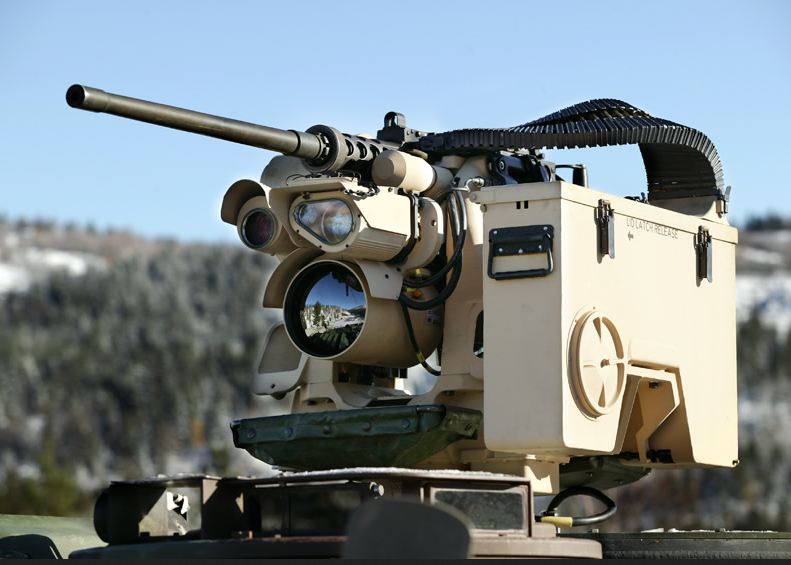
The M2 is one of the primary weapons integrated into CROWS. The system also supports the M240B 7.62mm machine gun and the Mk 19 40mm grenade launcher, but the M2 is the most common configuration for a simple reason: it gives the mounted platform the longest effective range and the most versatile engagement capability of the three options. A CROWS-mounted M2 can engage personnel, light vehicles, and structures at ranges exceeding a kilometer, with the thermal imager providing positive identification and the laser rangefinder feeding precise distance data.
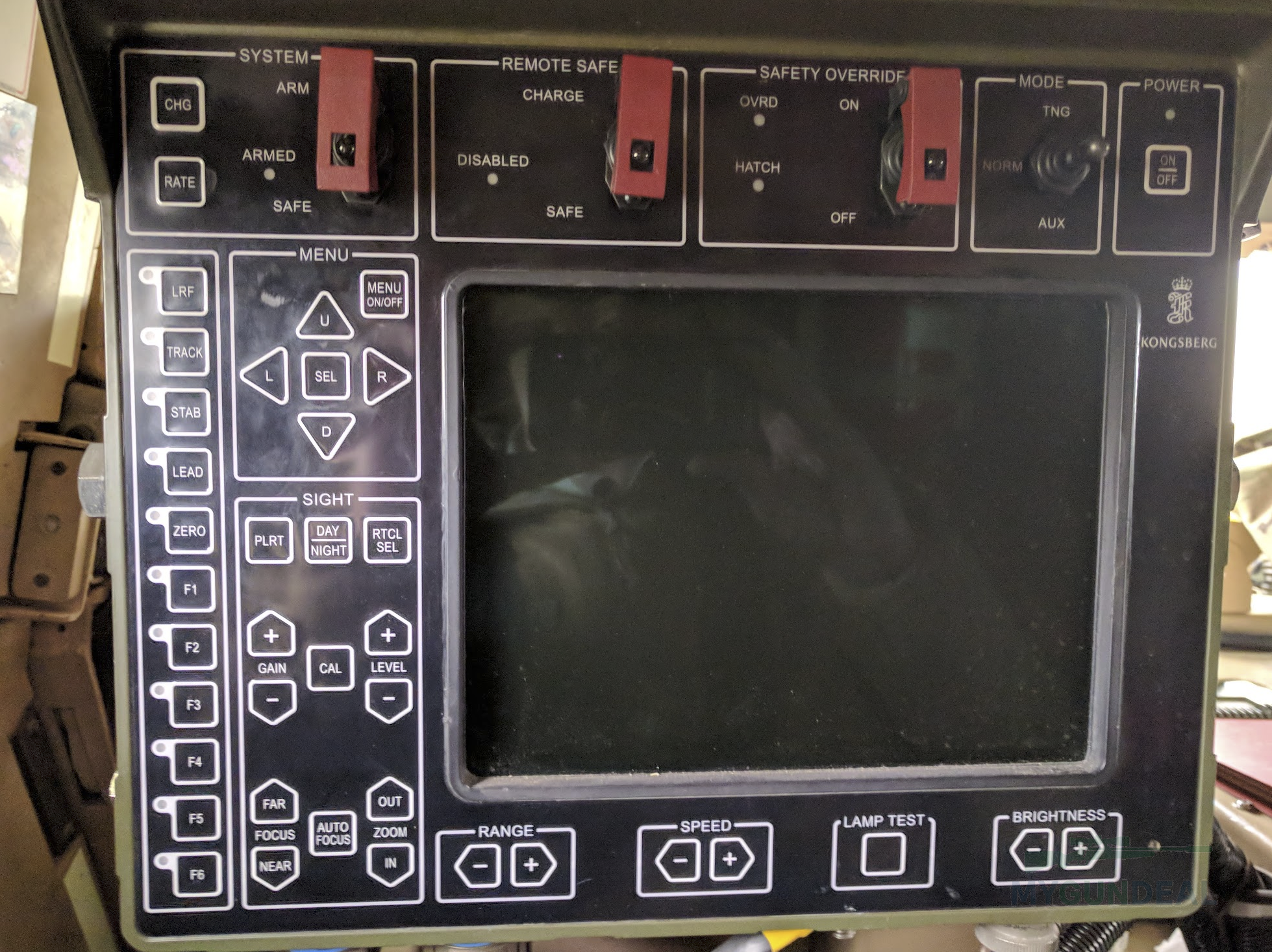
The integration is more sophisticated than just bolting the gun to a motorized cradle. The CROWS system manages the ammunition feed, provides stabilization so the gun can fire accurately while the vehicle is moving, and includes a lead-angle calculator for engaging moving targets. The fire control system does math that a manually aimed M2 on a pintle mount simply can't replicate at speed. The result is a dramatic increase in first-round hit probability, especially at range and especially from a moving platform.
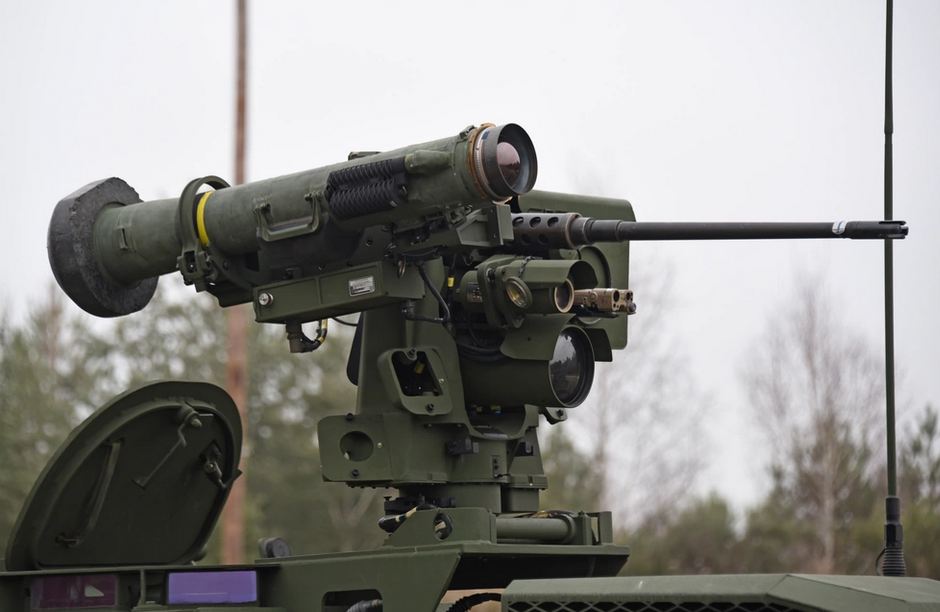
Kongsberg has continued developing the CROWS platform. The CROWS-J (Javelin) variant integrates a Javelin anti-tank missile launcher alongside the machine gun, giving a single remote weapons station both direct-fire machine gun capability and a top-attack anti-armor missile. Demonstrations have shown Javelin shots from CROWS-J configurations mounted on the Army's Robotic Combat Vehicle-Light (RCV-L), which means the M2 is now part of a weapons station that can be mounted on an unmanned ground vehicle. A gun designed before radar existed is now being fired by robots.
Fn M240B 7.62mm machine gun Deals
Prices may change. May contain affiliate links.
The CROWS program also highlights something about the M2 that doesn't get enough attention: its mechanical simplicity makes it ideal for remote operation. The gun's recoil impulse is predictable and consistent, which matters enormously for a stabilized mount. Its feed system is reliable enough that jams are rare when ammunition is properly prepared and the gun is maintained. A complex, temperamental weapon would be a nightmare on a remote station where the gunner can't physically reach the gun to clear a malfunction without dismounting and exposing themselves. The M2's reliability isn't just a convenience; it's a tactical requirement for remote weapons integration.
Range day with the M2: what qualification actually looks like
The M2 qualification standard varies by service, but the Army's approach is representative. Crews qualify on the M2 as a crew-served weapon, meaning the standard evaluates the gunner, the assistant gunner, and the ammunition bearer working together. Individual marksmanship matters, but crew coordination is what the qualification tables actually test.
The standard qualification course includes engagements at multiple ranges, typically from 500 to 1,800 meters, against vehicle silhouettes and troop targets. The scoring is based on target effects; did the burst hit the target area; rather than individual round placement. This is a machine gun, not a sniper rifle. The technique is controlled bursts of six to nine rounds, walking fire onto the target using tracer observation. The T&E mechanism on the M3 tripod allows precise adjustments in both azimuth and elevation, and trained crews use the T&E dials to make corrections between bursts rather than trying to muscle the gun onto target.
Range notes: the most common failure point during M2 qualification isn't marksmanship. It's ammunition preparation. The M2 feeds from a belt, and that belt has to be loaded correctly, with links properly seated and rounds oriented the right direction. Sounds basic. It is basic. And yet, bent links, corroded rounds, and improperly assembled belts cause more M2 stoppages on qualification ranges than any mechanical issue with the gun itself. The ammunition comes from the ASP (ammunition supply point) in sealed cans, and those cans may have been packed years or decades ago. Opening the can and inspecting the belted ammunition before loading it into the gun is a step that gets rushed, especially when the range is running behind schedule and the OIC is pushing to get all crews through the tables before sunset.
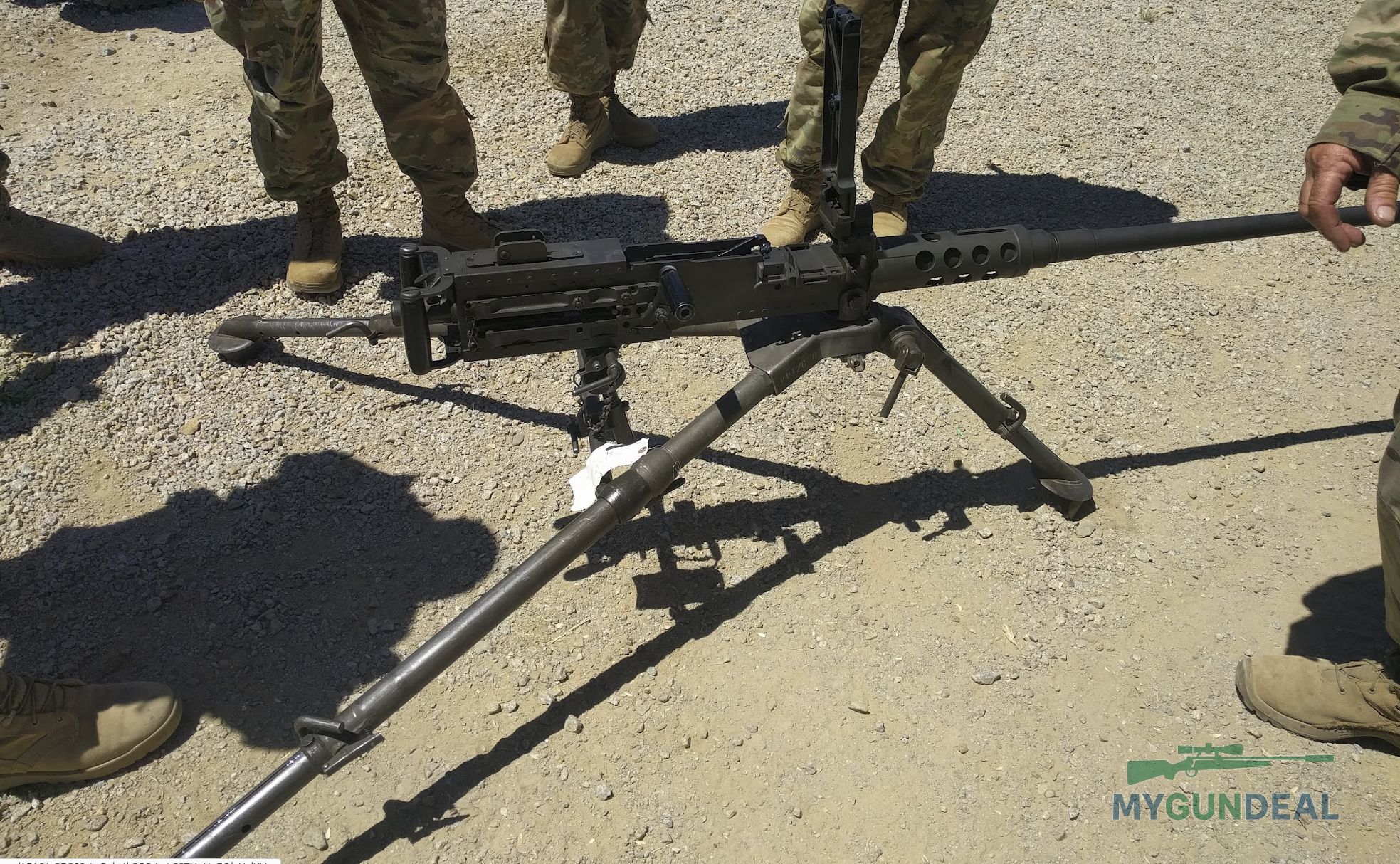
The other common training failure is with the tripod. The M3 tripod weighs 44 pounds. The M2HB receiver alone weighs about 60 pounds, and the complete gun with barrel is approximately 84 pounds. The total system weight on the tripod exceeds 125 pounds. Emplacing this weapon correctly; legs spread to the proper width, pintle locked, T&E mechanism attached and indexed; takes practice. Crews that don't rehearse emplacement drills end up fumbling on the range, wasting time that should be spent on the firing tables. Guard and Reserve units face this more than active, because the M2 may only come out of the arms room two or three times a year, and muscle memory fades fast.
The ammunition expenditure for a full M2 qualification is significant. Each crew fires hundreds of rounds across the tables. At current .50 BMG costs; which run roughly $3 to $5 per round for standard M33 ball depending on the contract; a single crew's qualification burns through over a thousand dollars in ammunition. Multiply that across every crew in a battalion, and the cost of a single range day is substantial. This is why units often combine M2 qualification with other training events, and why crews sometimes only get one shot at the tables per training cycle.
Common mistakes and stoppages
Five things that cost crews on the M2, in order of how often they happen:
The first is short-stroking caused by undergassing. The M2 is a recoil-operated gun, and its buffer assembly controls the cyclic rate and the bolt's travel distance. If the buffer is worn or improperly assembled, the bolt doesn't travel far enough rearward to pick up the next round from the belt. The symptom is a single shot followed by silence. The fix is checking the buffer assembly during PMCS (preventive maintenance checks and services) and replacing worn components before range day, not during it.
The second is a runaway gun. This is the one that gets everyone's attention. A runaway gun continues to fire after the gunner releases the trigger, and it won't stop until the belt runs out or someone breaks the belt. On the M2HB, this is almost always a timing issue; the sear is releasing the firing pin before the bolt is fully in battery, and the gun cycles into a self-sustaining firing loop. On the M2A1 with properly set headspace, runaways are extremely rare, but they're still covered in every crew drill because the response has to be immediate and instinctive. The drill is simple: keep the gun pointed downrange, twist and break the belt, clear the weapon. Hesitation is what turns a runaway into a safety incident.
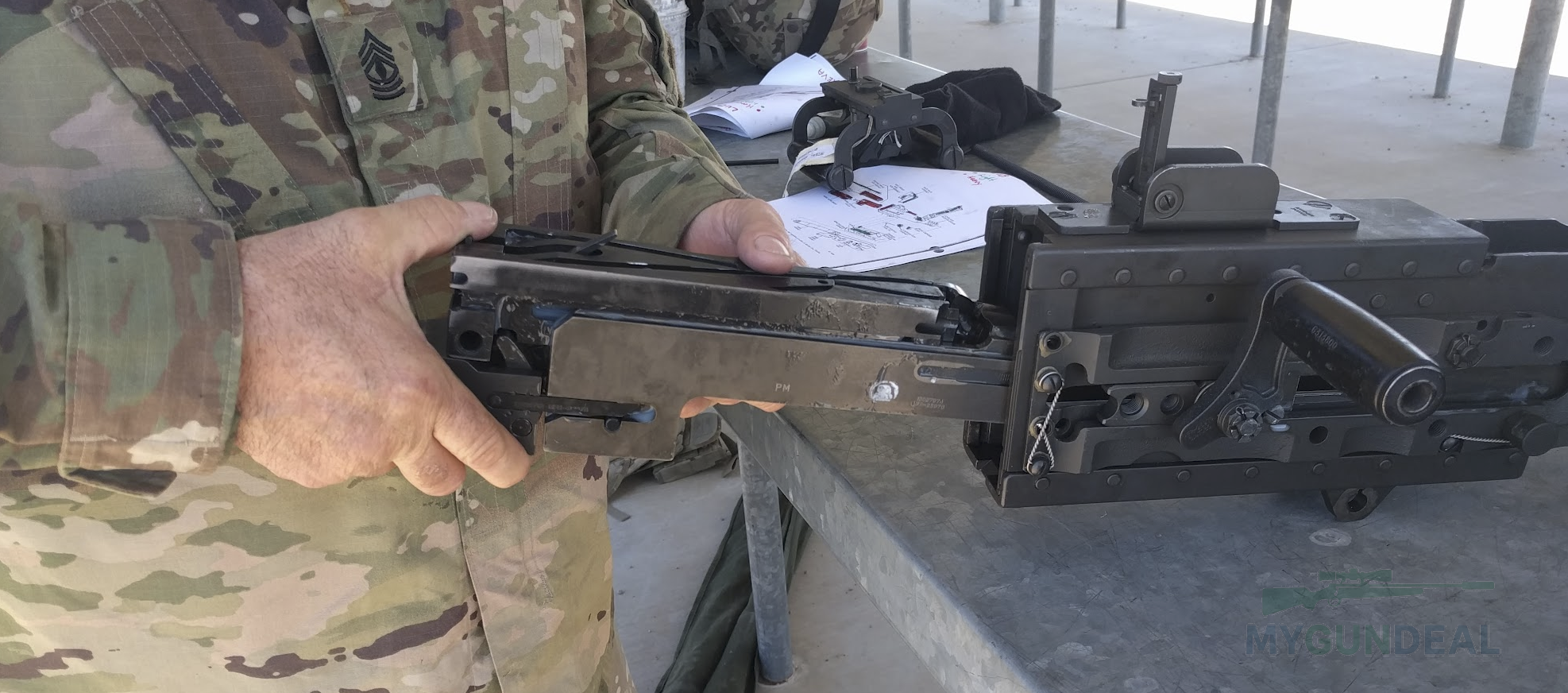
Third is a sluggish gun; one that fires but at a noticeably reduced cyclic rate, with inconsistent ejection patterns. This usually points to a dirty or corroded receiver, insufficient lubrication, or a weak recoil spring. The M2 is not a gun that runs well dry. LSA (lubricant, semi-fluid, automatic weapons) on the bolt, the barrel extension, and the accelerator is mandatory, and the gun needs more lubricant than most soldiers expect. The TM specifies lubrication points, and skipping them because the gun "looks clean" is how sluggish guns happen.
Fourth is a failure to feed caused by belt problems. Already covered above, but worth emphasizing: the ammunition belt is part of the weapon system. Treating it as an afterthought is the fastest way to turn a functional M2 into a very expensive paperweight.
Fifth is headspace-related failures on legacy M2HBs. A round that fires with excessive headspace may show a case head separation; the base of the cartridge case tears away from the body, leaving brass stuck in the chamber. This requires a broken shell extractor to clear and takes the gun out of action for minutes. On a range, it's an annoyance. In a fight, it's a potential catastrophe. This is the exact failure mode the M2A1's quick-change barrel was designed to prevent.
Why nobody has replaced it
This is the question that defense analysts, procurement officers, and armchair generals have been asking for decades. The M2 is old. It's heavy. Its cyclic rate of 450 to 600 rounds per minute is modest compared to modern designs. So why hasn't something better come along?
The short answer is that several things have tried, and none of them solved enough problems to justify the cost of replacing the M2 across the entire inventory.
The most serious contender in recent memory was the XM312, a lightweight .50 caliber machine gun developed by General Dynamics. The XM312 weighed roughly 42 pounds; half the weight of the M2HB; and was designed to be carried by a two-man crew rather than requiring a vehicle mount. It used a dual-recoil operating system to reduce felt recoil and was intended to give infantry squads organic .50 cal capability at the dismounted level. The program was eventually shelved. The XM312's cyclic rate was too low; around 260 rounds per minute; and the dual-recoil system, while effective at reducing recoil, introduced complexity that raised reliability concerns. The gun worked. It just didn't work well enough to justify replacing a proven system that already existed in hundreds of thousands of units.
The broader replacement challenge is logistical, not technical. The U.S. military has an estimated inventory of over 200,000 M2-series machine guns across all services. Every vehicle mount, every naval weapon station, every helicopter door gun mount, every CROWS system, every tripod, every ammunition storage facility, and every training program is built around the M2 and the .50 BMG cartridge. Replacing the gun means replacing all of that; or building adapters and transitional logistics that cost nearly as much as a clean replacement. The M16 to M4 transition took decades, and that was a weapon that individual soldiers carry. The M2 is embedded in platforms, vehicles, ships, and aircraft. The replacement cost isn't millions. It's billions.
There's also the ammunition question. The .50 BMG is manufactured on every continent, stockpiled by every NATO nation and most of their allies, and available in quantities that dwarf any alternative caliber. Switching to a new cartridge; even a superior one; means building new production lines, new stockpiles, new supply chains, and new interoperability agreements with allied nations. The 6.8x51mm cartridge that the Army adopted for the XM7 rifle and XM250 automatic rifle is going through exactly this process right now at the individual weapon level, and it's expensive, slow, and politically complicated. Doing the same thing for a heavy machine gun cartridge that's already globally standardized is a non-starter unless the replacement offers a transformational capability improvement. Nothing currently on the table does.
The M2 also benefits from what engineers call "design maturity." A century of production has wrung out every manufacturing defect, every material weakness, and every dimensional tolerance issue. The gun's failure modes are completely understood. Every armorer in every service knows how to fix it. The TMs are comprehensive. The training infrastructure exists. Replacing the M2 means starting that institutional knowledge accumulation process from zero with a new system, and the learning curve has real costs measured in broken guns, failed qualifications, and degraded readiness.
The counter-UAS question
One emerging mission area where the M2 is getting a second look is counter-unmanned aerial systems, or C-UAS. Small drones; the type being used extensively in the Ukraine conflict; present a target set that the M2 was never designed for but may be uniquely suited to engage.
The challenge with small UAS targets is that they're slow (relative to manned aircraft), small, and often flying at low altitudes where radar-guided air defense systems have difficulty tracking them against ground clutter. Missiles are effective but wildly expensive per engagement; a Stinger costs roughly $120,000, and firing one at a $500 commercial drone is an economic win for the adversary. Directed energy systems are in development but not yet widely fielded. That leaves kinetic solutions in the small-caliber and medium-caliber range.
The M2's .50 BMG round, particularly in API or Raufoss configurations, has enough energy and fragmentation effect to destroy a small drone with a single hit or a near-miss. The challenge is getting that hit. A manually aimed M2 on a tripod is not an effective C-UAS weapon; the target is too small and too fast for a human gunner to track reliably with iron sights. But an M2 integrated into a CROWS-type system with a thermal imager, an auto-tracker, and a fire control computer that can calculate lead angles? That's a different conversation entirely. Several nations are actively exploring remote weapon stations with enhanced fire control as a low-cost C-UAS layer, and the M2 is a natural fit because the gun and the ammunition already exist in massive quantities.
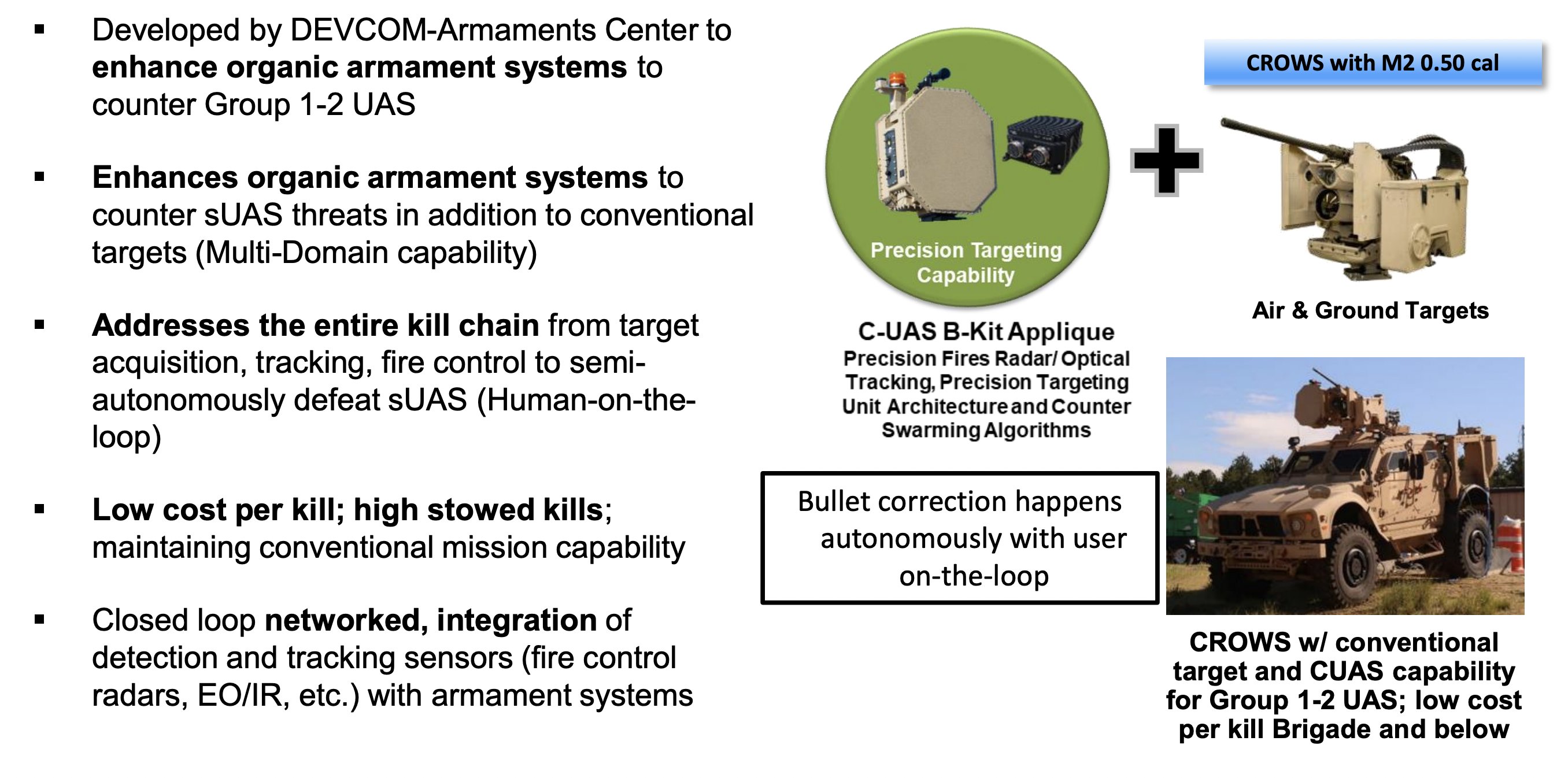
The .50 BMG's maximum effective ceiling against aerial targets is listed at 1,500 meters in the slant range, which covers the altitude band where most tactical UAS operate. The cyclic rate of 450-600 rounds per minute isn't ideal for air defense; higher rates would increase hit probability; but the destructive effect of each individual round compensates somewhat. A burst of .50 BMG API into a composite-frame drone doesn't need to be surgically precise. It needs to be close.
This is speculative capability, not doctrine. No service has formally adopted the M2 as a primary C-UAS weapon. But the fact that it's being discussed tells you something about the platform's adaptability. A gun designed to shoot down observation balloons in 1918 might end up shooting down quadcopters in 2028.
The M2 on ships and aircraft
The ground combat role gets most of the attention, but the M2 is equally embedded in naval and aviation applications, and those roles deserve mention because they illustrate just how versatile the platform is.
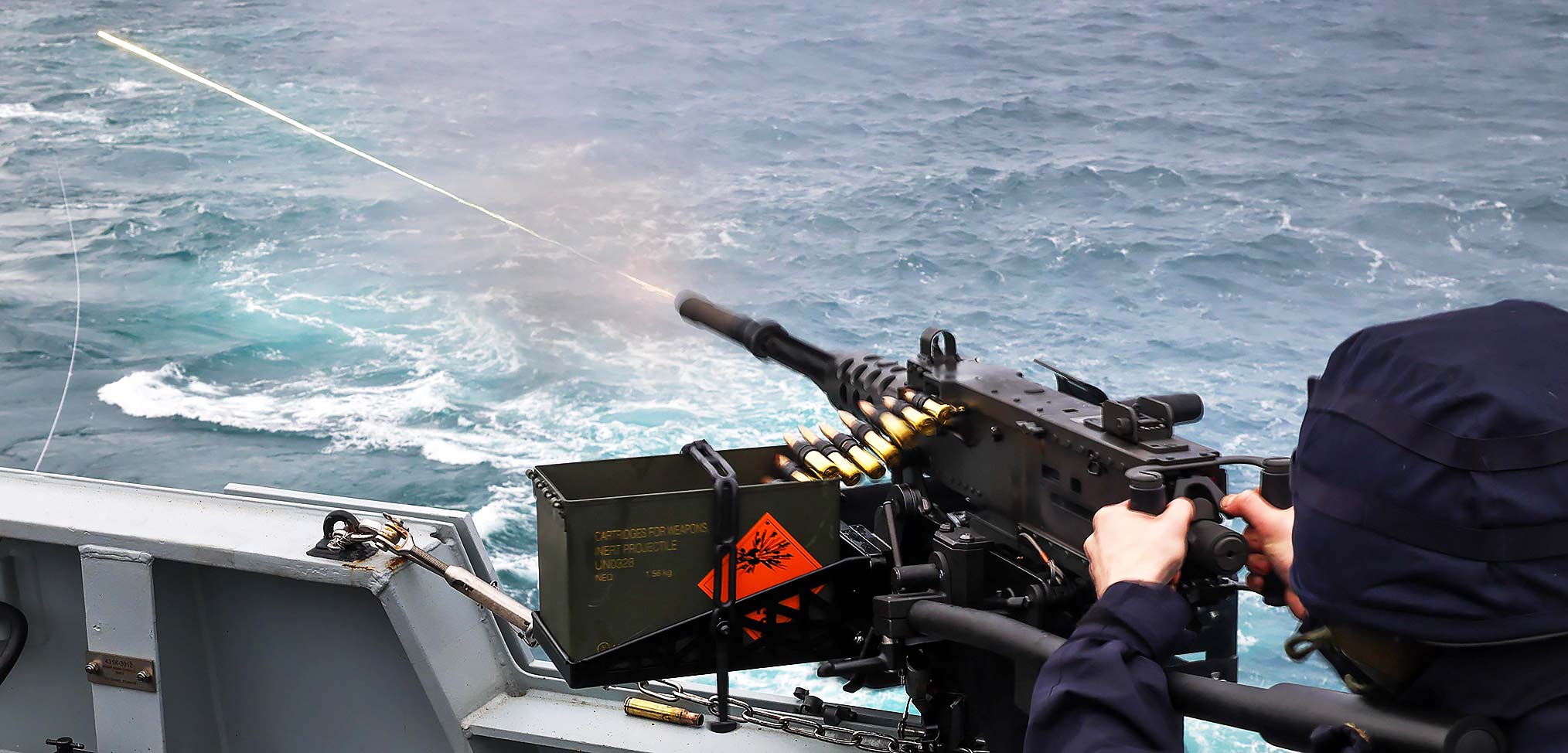
The Navy mounts M2s on virtually every surface combatant as a close-in defense weapon. These are typically pedestal-mounted guns positioned around the weather deck, manned by sailors during sea-and-anchor details, strait transits, and force protection conditions. They're not the ship's primary armament; that's the 5-inch gun, the CIWS, or the missiles. They're the last line of defense against small boat threats, floating mines, and anything else that gets close enough to see with the naked eye. The Navy's qualification standards for the M2 emphasize engagement of fast-moving surface targets at close range, which is a different skill set than the Army's long-range area fire tables but uses the exact same gun.
On aircraft, the M2 has served as a door gun on helicopters, a fixed forward-firing weapon on attack aircraft (historically), and a component of the GAU-18/A system used on special operations helicopters. The GAU-18/A is essentially an M2 with a modified feed system and spade grips optimized for aerial gunnery. It fires the same .50 BMG ammunition from the same basic action. When special operations aviation units need a door gun with more reach than the M240 but less weight and complexity than a minigun, the .50 cal is the answer.
The commonality across services is the M2's hidden superpower. A soldier who qualifies on the M2 in an Army cavalry squadron can be cross-trained on the Navy's shipboard M2 with minimal transition training, because it's the same gun. The ammunition is the same. The maintenance procedures are the same. The stoppages and immediate action drills are the same. In a joint operating environment, that commonality has real tactical value.
What the arms room sees
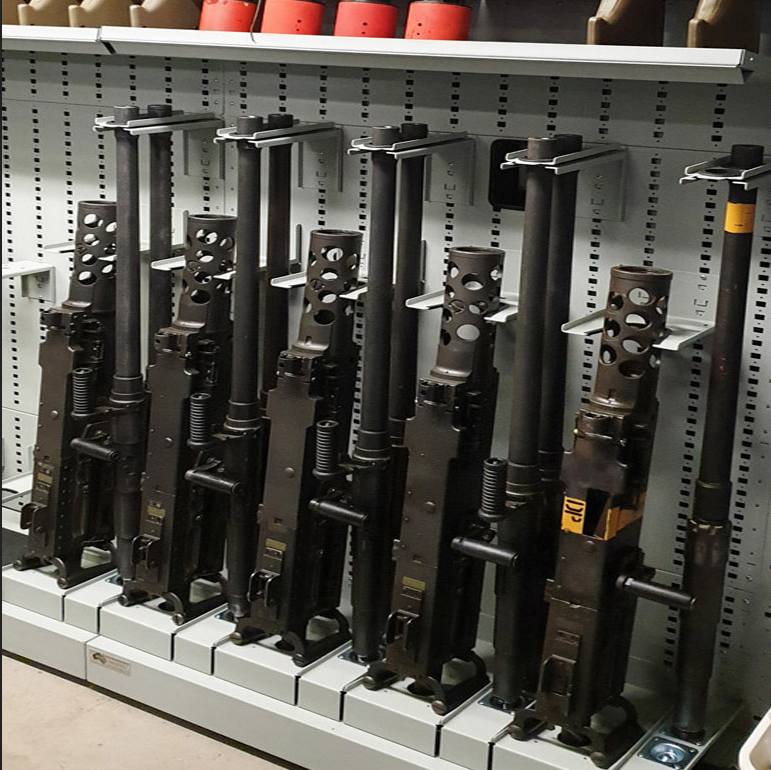
The M2's longevity creates a unique maintenance picture. Arms rooms across the force hold M2 receivers with serial numbers spanning decades of production. Some of these guns have been rebuilt multiple times, with new barrels, new bolt assemblies, new buffer bodies, and new backplates installed over their service lives. The receiver itself; the serialized component that constitutes the "gun" for property accountability purposes; can last essentially forever if it's not cracked or warped, because the forces acting on it during firing are managed by the barrel extension and the bolt, not the receiver walls.
PMCS on the M2 is straightforward but unforgiving. The TM-level checks include inspecting the barrel for erosion (using a barrel erosion gauge), checking the bolt for cracks (particularly around the firing pin hole), verifying the accelerator tips aren't worn or chipped, and confirming that the backplate is tight and the buffer assembly is serviceable. These checks take fifteen to twenty minutes per gun when done properly. They take three minutes when done by a crew that's trying to get out of the arms room and doesn't think the checks matter. The difference between those two approaches shows up on the range as the difference between a gun that runs and a gun that goes down on the third burst.
The arms room reality: M2s that sit in the rack for months between uses develop problems that M2s in regular rotation don't. Corrosion is the primary culprit, especially in humid environments or units that store weapons in connexes rather than climate-controlled arms rooms. Modern methods have shifted toward cleaner solutions, primarily using VpCI (Vapor Corrosion Inhibitor) plastic bags and papers, combined with CLP (Cleaner, Lubricant, and Preservative) for shorter, long-term storage, but this step may get skpped. The next crew that draws the weapon finds a gun with surface rust on the receiver rails, a stiff bolt, and corroded ammunition links in the spare barrel bag. Now they're spending the first hour of range day cleaning a gun that should have been ready to fire.
Barrel life on the M2 is approximately 10,000 rounds for the standard stellite-lined barrel, though this varies with firing schedule. A barrel fired in long, sustained bursts at high cyclic rates will erode faster than one fired in controlled bursts with cooling periods. Units that track barrel round counts; and not all of them do, despite the TM requirement; can predict barrel replacement needs and order spares before range day. Units that don't track round counts find out they need a new barrel when rounds start keyholing on the target at 500 meters.
A hundred years and counting
The M2 .50 caliber machine gun will celebrate its centennial of continuous service in 2033. No other weapon system in the American inventory comes close to that record. The 1911 pistol served for 75 years before being replaced by the M9. The M16 family has been in service since the mid-1960s. The M2 shows no signs of retirement.
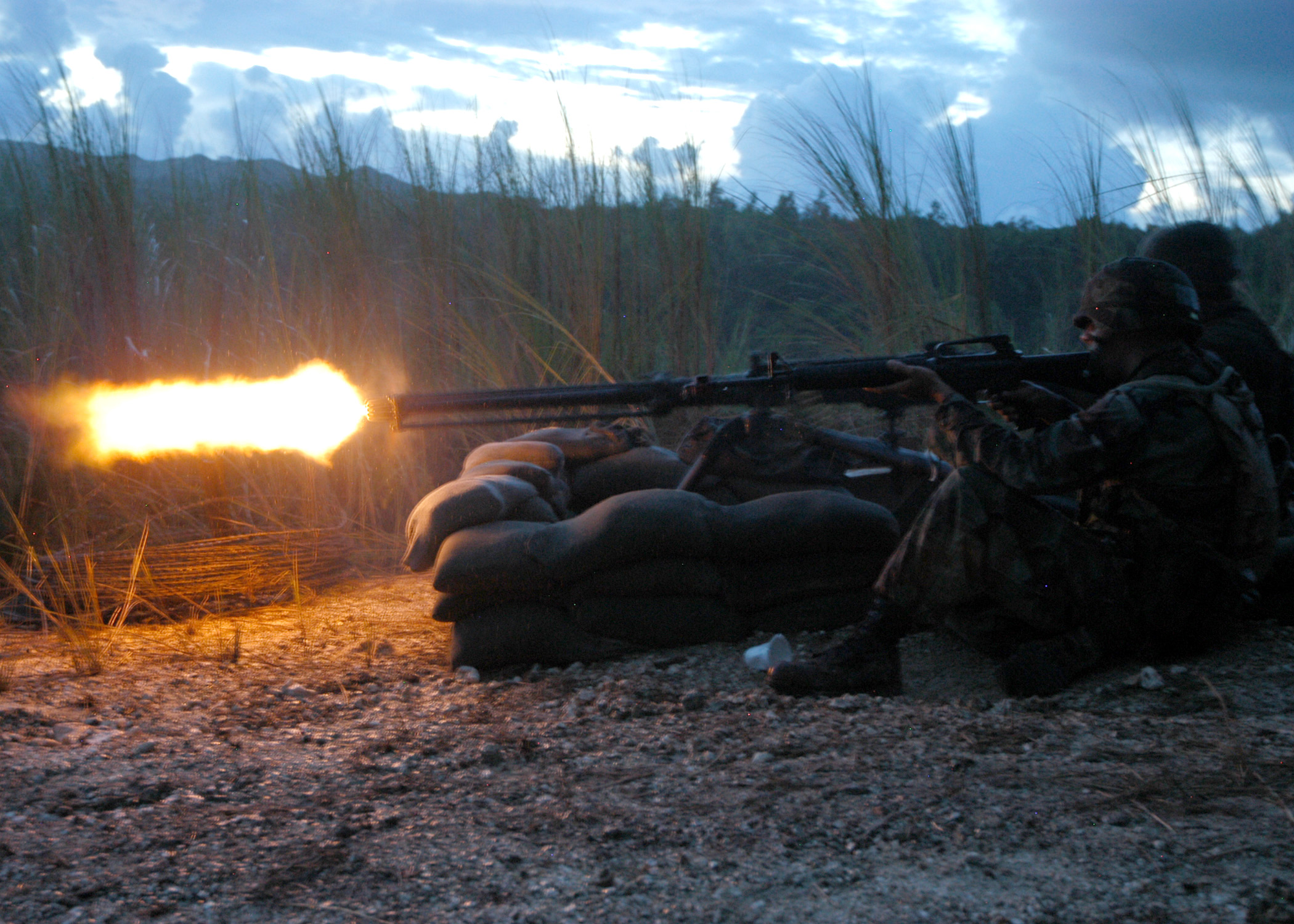
General Dynamics, U.S. Ordnance and FN USA continue to produce new M2A1s under active contracts. The most recent solicitations, including multi-year procurement deals for M2, M48 (the aircraft variant), and M2A1 receivers with spares and training packages, confirm that the Department of Defense is investing in production, not planning obsolescence. The M2A1 is being manufactured with modern CNC machining and metallurgy, which means the new guns coming off the line today are likely more dimensionally consistent and metallurgically sound than anything Browning's original shop produced; but they work the same way, fire the same round, and fill the same role.
If your unit has M2s in the arms room; and most combat arms, combat support, and many combat service support units do; the next step is boring but essential. Check the barrel round count logs. Inspect the buffer assemblies. Verify that your M2A1 crews know the quick-change barrel procedure cold and that your legacy M2HB crews can still set headspace and timing without fumbling. Run a crew drill before you go to the range, not at the range. Inspect your ammunition before you load it. And take the PMCS seriously, because a gun that's been winning wars for a century still needs someone to put LSA on it and check it for cracks.
John Browning got this one right. The least we can do is maintain it.