
You're glassing a basin in western Colorado, and there's a heavy-racked four-point feeding across a draw at 400 yards. The wind's pushing maybe 8 mph from the left. You've got a solid rest on your pack. The question isn't whether you can make that shot; it's whether the cartridge in your chamber is the right tool for the job, and whether you've put in the work to know where that bullet lands in that wind.

That's the real debate between the 6.5 PRC and the .300 Win Mag for open-country mule deer. Not which one looks better on paper or which one your favorite YouTube hunter shoots. The question is which cartridge, in a real rifle you can actually shoot well, puts a mule deer down cleanly at the distances western terrain demands. Both will kill a mule deer stone dead. The differences are in how they get there, what they cost you in recoil and weight, and what happens when conditions aren't perfect; which, in mule deer country, they rarely are.
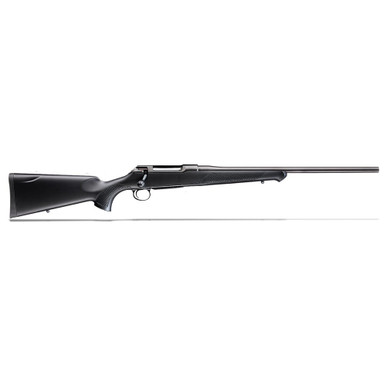
Winchester .300 Winchester Magnum Deals
Prices may change. May contain affiliate links.
This isn't a ballistics textbook. It's a practical breakdown of two legitimate open-country cartridges, what each one does well, where each one falls short, and how to decide which one belongs in your rifle case this fall.
What open country actually asks of a cartridge
Mule deer hunting in the West is a different game than sitting in a treestand over a food plot. You're hunting big country; sage flats, alpine basins, broken rimrock, timbered ridges that open up into draws where a buck might be bedded 350 yards away with no way to close the distance. Most western mule deer are killed between 200 and 400 yards. Some shots stretch beyond that. Some are inside 150. The terrain dictates the shot, not the other way around.
What that means for cartridge selection is straightforward. You need enough velocity and BC to manage wind drift at 300 to 500 yards, because wind is the variable that wrecks more shots than distance ever will. You need enough terminal energy to break shoulders and reach vitals on a 250-pound animal at those distances. And you need a rifle-cartridge combination that's light enough to pack up a mountain and mild enough in recoil that you can shoot it accurately from field positions; not off a bench with a lead sled.
A mule deer isn't an elk. They're tough animals, bigger-bodied than whitetail, but they don't require the deep penetration and massive energy transfer that a bull elk does. A well-constructed 140-grain 6.5mm bullet through the ribs kills a mule deer just as dead as a 180-grain .30-caliber pill. The question is whether you can put that bullet where it needs to go, and whether it'll perform correctly when it arrives.
The 6.5 PRC: what it actually is
The 6.5 PRC (Precision Rifle Cartridge) came out of Hornady in 2018, designed by George Gardner of GA Precision. The concept was simple: take the high-BC, low-drag 6.5mm bullets that were dominating long-range competition and give them a proper magnum-length case that could push them fast enough to matter at distance. The parent case is based on the .375 Ruger, necked down to .264 caliber.
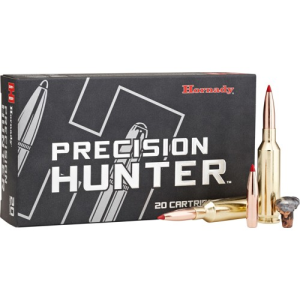
Hornady 6.5 PRC Deals
Prices may change. May contain affiliate links.
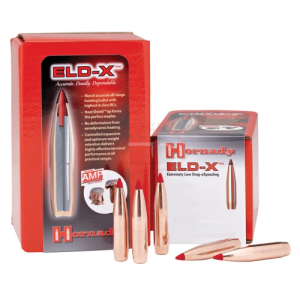

In practical terms, the 6.5 PRC pushes a 143-grain ELD-X at around 2,960 fps from a 24-inch barrel. That's roughly 200 fps faster than the 6.5 Creedmoor with the same bullet. It fits in a standard long action, which means you get magnum-class ballistics in a rifle that weighs and handles like a standard bolt gun.
The real advantage isn't raw speed; it's what that speed does when combined with the exceptionally high ballistic coefficients of modern 6.5mm bullets. A 143-grain ELD-X has a G1 BC around .625. That's absurdly high for a hunting bullet. It means the 6.5 PRC retains velocity better at distance, drifts less in wind, and drops less than cartridges pushing heavier, lower-BC bullets at similar or even higher muzzle velocities.
At 400 yards, a 6.5 PRC zeroed at 200 yards drops about 18 inches. In a 10 mph crosswind, it drifts roughly 10 to 11 inches. Those are manageable numbers. More importantly, they're predictable numbers, which means your DOPE (data on previous engagements; your drop and wind chart) actually works in the field because the bullet's flight path is consistent and forgiving of small errors in range estimation.
The 6.5 PRC generates around 2,700 to 2,800 foot-pounds of energy at the muzzle with a 143-grain bullet. At 400 yards, you're still carrying around 1,800 foot-pounds. That's more than enough for mule deer. At 500 yards, you're north of 1,500 foot-pounds. A mule deer hit through the lungs with a properly expanding 143-grain bullet at those energy levels is not going far.
Where the 6.5 PRC really shines is recoil. In a 7.5-pound rifle, you're looking at roughly 17 to 18 foot-pounds of free recoil energy. That's stout enough to know you're shooting a real rifle, but mild enough that most shooters can spot their own impacts through the scope. That matters enormously in the field. If you can watch your bullet hit; or miss; you can make a follow-up shot or correction without losing the animal in your scope. With a .300 Win Mag, most shooters lose the picture entirely at the shot.
The .300 Win Mag: six decades of dead animals
The .300 Winchester Magnum has been killing big game since 1963. There's a reason it's still one of the most popular cartridges in the West. It works. It's been used to cleanly take everything from pronghorn to moose, and it's probably accounted for more mule deer in open country than any other magnum cartridge.
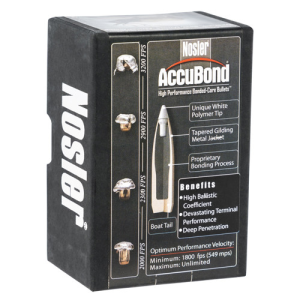
Nosler 180-grain AccuBond Deals
Prices may change. May contain affiliate links.
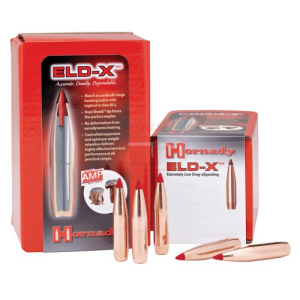

The standard hunting load is a 180-grain bullet at around 2,960 fps, though 200-grain loads are common for elk-sized game and 150-grain loads exist for lighter applications. The .300 Win Mag is a belted magnum based on the .375 H&H case, and it runs at chamber pressures around 64,000 psi. It fits in a standard long action, same as the 6.5 PRC, though .300 Win Mag rifles tend to come with heavier barrels and slightly more weight overall.
Terminal performance is where the .300 Win Mag makes its case. A 180-grain Nosler AccuBond at 2,960 fps generates about 3,500 foot-pounds of muzzle energy. At 400 yards, you're still carrying around 2,200 foot-pounds. That's significantly more energy than the 6.5 PRC at every distance. If you're worried about punching through a heavy shoulder on a quartering-to shot, or if you want the option to use the same rifle for elk, the .300 Win Mag gives you a meaningful energy and penetration advantage.
But here's where the story gets more complicated. A 180-grain .30-caliber AccuBond has a G1 BC of about .507. That's respectable, but it's meaningfully lower than the 6.5mm bullets the PRC is built around. The result: despite leaving the muzzle at essentially the same velocity, the .300 Win Mag with a 180-grain bullet drifts more in wind and drops more at distance than the 6.5 PRC with a 143-grain bullet.
At 400 yards in a 10 mph crosswind, the .300 Win Mag with a 180-grain bullet drifts about 13 to 14 inches. The 6.5 PRC drifts 10 to 11. That's a 3-inch difference, which doesn't sound like much on paper but can be the difference between a double-lung hit and a gut shot on a mule deer whose vitals are roughly 14 inches across. At 500 yards, the gap widens further; the .300 Win Mag drifts roughly 22 inches versus about 17 for the 6.5 PRC.

Now, the .300 Win Mag can close some of that gap with higher-BC bullets. Load a 200-grain ELD-X (BC around .597) or a 212-grain ELD-X (BC around .673), and the wind drift numbers tighten up considerably. But those heavier bullets come with tradeoffs: more recoil, slower muzzle velocity (around 2,800 to 2,850 fps for the 200-grain, 2,750 or so for the 212), and in some rifles, accuracy can be finicky with the longest, heaviest projectiles if the twist rate isn't optimized.
The recoil difference is the elephant in the room. A .300 Win Mag in a 7.5-pound rifle generates around 26 to 28 foot-pounds of free recoil. That's 50 to 60 percent more than the 6.5 PRC. Most shooters; including experienced ones; shoot a .300 Win Mag less accurately than a 6.5 PRC from field positions. Not because they can't handle it, but because recoil anticipation is a real physiological response that gets worse when you're cold, tired, breathing hard from a climb, and shooting off a pack at an awkward angle. The bench doesn't lie, but it doesn't tell the whole truth either.
Wind drift: the number that actually matters
Most hunters obsess over drop charts. Drop is the easy variable; it's consistent, predictable, and your rangefinder solves it. Wind is the hard variable. Wind changes direction and speed across the flight path. Wind in the basin might be different from wind on the ridge. And most hunters are mediocre at reading wind, which means the cartridge that's more forgiving of a wind call error is the cartridge that puts more bullets through vitals.
Here's a practical comparison at the distances that matter for open-country mule deer, assuming a 10 mph full-value crosswind:

At 300 yards, the 6.5 PRC (143 ELD-X at 2,960 fps) drifts about 5.5 inches. The .300 Win Mag (180 AccuBond at 2,960 fps) drifts about 7 inches. Difference: about 1.5 inches. Negligible in the field; both are inside the vitals on a broadside mule deer even with a mediocre wind call.
At 400 yards, the 6.5 PRC drifts around 10.5 inches. The .300 Win Mag drifts around 13.5 inches. Difference: 3 inches. Now it starts to matter. If you misjudge the wind by 50 percent; say it's actually 15 mph instead of 10; the 6.5 PRC is 5 inches further off than you expected. The .300 Win Mag is 6.75 inches further off. Those extra inches push you toward the edge of the vitals or off the animal entirely.
At 500 yards, the 6.5 PRC drifts about 17 inches. The .300 Win Mag drifts about 22 inches. Difference: 5 inches. A 50 percent wind call error puts the .300 Win Mag bullet 11 inches off your aim point from wind alone. Add a slight range estimation error and you're looking at a wounded animal or a clean miss.
The takeaway isn't that the .300 Win Mag can't work at 500 yards. It absolutely can, in the hands of a shooter who reads wind well and practices at distance. The takeaway is that the 6.5 PRC gives you more margin for error on wind calls, and in the field, margin for error is what separates a clean kill from a sick feeling in your stomach.
If you run the .300 Win Mag with a 212-grain ELD-X, the wind drift gap narrows significantly; you're looking at maybe 18 to 19 inches at 500 yards versus the 6.5 PRC's 17. But you're also dealing with more recoil, more muzzle blast, and a bullet that's moving slower, which means you need to be more precise with your range estimation to compensate for the steeper trajectory.
Terminal performance on mule deer
A mule deer buck in good condition weighs 200 to 300 pounds on the hoof, depending on region and subspecies. The vitals; heart and lungs; present a target roughly 14 inches in diameter on a broadside shot. The rib cage isn't particularly heavy. The shoulder bones are stout but not elk-heavy. This is not a hard animal to kill with a well-placed shot from either cartridge.
Nosler 140-grain AccuBond Deals
Prices may change. May contain affiliate links.
Hornady 147-grain ELD-M Deals
Prices may change. May contain affiliate links.
Barnes TTSX Deals
Prices may change. May contain affiliate links.
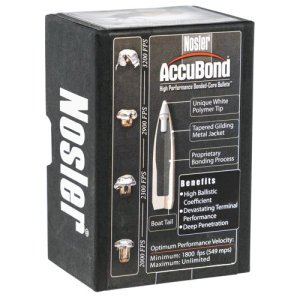
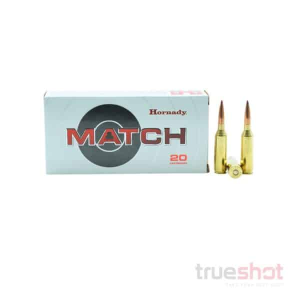
The 6.5 PRC with a 143-grain ELD-X, 147-grain ELD-M (some hunters use the match bullet for its consistency, though it's not designed for terminal expansion), or a 140-grain Nosler AccuBond will kill a mule deer cleanly at any distance you have the skill to shoot. The ELD-X is designed to expand reliably down to about 1,600 fps impact velocity, which the 6.5 PRC maintains out to roughly 700 to 800 yards. At 400 yards, impact velocity is still around 2,400 fps, and the bullet expands aggressively, creating a large wound channel through the lungs.

Some hunters have reported issues with the Hornady ELD-X coming apart on close-range, high-velocity impacts; particularly inside 200 yards where impact velocity is still above 2,700 fps. The tip can initiate expansion too early, and the bullet fragments rather than retaining weight and penetrating deeply. This is more of a concern on quartering-to shots where you need the bullet to punch through the near shoulder and reach the off-side vitals. On a broadside double-lung shot, even a fragmenting bullet is lethal. But it's worth knowing that the ELD-X is a relatively soft bullet compared to something like an AccuBond or a Barnes TTSX.
The .300 Win Mag has the advantage of heavier bullets with more sectional density and more raw energy. A 180-grain AccuBond (.264 sectional density) will hold together through a shoulder and still expand on the far side. A 180-grain Barnes TTSX will punch through anything a mule deer has and exit, leaving two blood trails. If your shot angles aren't always perfect; and in the field, they rarely are; the .300 Win Mag gives you more margin for error on terminal performance.
That said, most mule deer are killed with broadside or slightly quartering-away shots. If you're disciplined about shot selection, the 6.5 PRC's terminal performance is more than adequate. Where the .300 Win Mag pulls ahead is on those less-than-ideal angles, or if you want one rifle that handles mule deer and elk without changing a thing.
Field notes: bullet selection matters more than cartridge selection
The difference between a 6.5 PRC with a premium bonded bullet and a .300 Win Mag with a cheap cup-and-core bullet is enormous; and it favors the 6.5 PRC. A 140-grain AccuBond from a 6.5 PRC will out-penetrate a 180-grain Remington Core-Lokt from a .300 Win Mag on a quartering shot, because the AccuBond holds 65 to 70 percent of its weight while the Core-Lokt might shed half its mass on impact. Spend the money on good bullets. A box of premium ammunition costs $40 to $60. That's not the place to save money on a hunt you spent $3,000 and a week of vacation on.
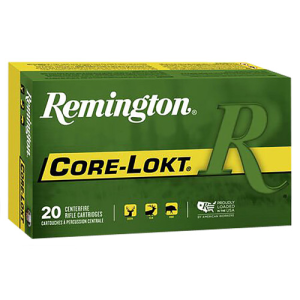
Remington Core-Lokt Deals
Prices may change. May contain affiliate links.
Rifle weight and the mountain equation
Mule deer hunting in open country usually means hiking. Sometimes it's a mile from the truck on relatively flat sage. Sometimes it's a 3,000-foot climb into a high basin above timberline. Either way, rifle weight matters; not because you can't carry a heavy rifle, but because a lighter rifle is a rifle you carry more comfortably, set up faster, and shoot with less fatigue-induced wobble at the end of a long day.
The 6.5 PRC has a meaningful advantage here. It runs at lower chamber pressures than the .300 Win Mag (around 65,000 psi versus 64,000 psi; similar, actually), but it achieves its performance from a shorter, lighter barrel. Most 6.5 PRC hunting rifles come with 24-inch barrels, and some run 22-inch barrels with minimal velocity loss (maybe 40 to 50 fps per inch). A complete 6.5 PRC hunting rifle with a quality scope and rings can come in at 7.5 to 8 pounds without a suppressor.
The .300 Win Mag typically wants a 24- to 26-inch barrel to achieve full velocity, and the heavier contour needed to manage the larger cartridge's heat and recoil adds weight. A typical .300 Win Mag hunting rig with scope comes in around 8.5 to 9.5 pounds. That extra pound or pound and a half doesn't sound like much until you're four miles into a pack-out with a boned-out buck on your frame.

There's a counterargument: a heavier rifle absorbs recoil better. That's true. A 9-pound .300 Win Mag is more pleasant to shoot than a 7-pound .300 Win Mag. But a 7.5-pound 6.5 PRC is more pleasant to shoot than either, because the recoil impulse is fundamentally lower regardless of rifle weight.
Suppressors change this equation. A suppressor adds 12 to 20 ounces to the muzzle, which shifts the balance point forward and adds weight you feel on every step. But it also reduces felt recoil by 30 to 40 percent and eliminates the need for hearing protection in the field. A suppressed 6.5 PRC is genuinely pleasant to shoot; recoil feels like a .243. A suppressed .300 Win Mag feels like an unsuppressed .308. Both are significant improvements, but the 6.5 PRC still comes out ahead on the recoil-and-weight equation.
Barrel life: the unsexy reality
Nobody wants to talk about barrel life, but if you're going to practice enough to be competent at 400-plus-yard shots on game; and you should; barrel life matters.
The 6.5 PRC burns through barrels faster than the .300 Win Mag. That sounds counterintuitive, but it's a function of bore diameter relative to case capacity. The 6.5 PRC is pushing a large volume of hot gas through a relatively small bore (.264 inches), which erodes the throat faster. Realistic barrel life for a 6.5 PRC is around 1,500 to 2,000 rounds before accuracy degrades noticeably. Some shooters report accuracy falling off as early as 1,200 rounds; others get 2,500 with careful load development and not cooking the barrel.
The .300 Win Mag has a larger bore (.308 inches) to vent that gas through, so throat erosion is slower despite the larger case capacity. Expect 2,000 to 3,000 rounds of accurate barrel life, depending on how hot you run it and how much you let it cool between strings.
For a dedicated hunting rifle that sees 40 to 60 rounds of practice a year and 1 to 3 rounds on game, neither cartridge's barrel life is a practical concern. You'd be shooting the rifle for 25 to 40 years before accuracy degraded. But if you're also shooting long-range steel in the summer, running PRS-style practice sessions, or just enjoy burning ammo at the range, the 6.5 PRC's barrel life is something to factor in. Rebarreling a quality hunting rifle costs $400 to $800 depending on the gunsmith and barrel.
Ammo availability and cost
The .300 Win Mag wins on availability, no contest. It's been around for 60 years. Every sporting goods store, every Walmart with an ammo shelf, every gas station in a western hunting town stocks .300 Win Mag. If you forget your ammo, lose it in a river crossing, or need more, you can find .300 Win Mag almost anywhere.

The 6.5 PRC has improved dramatically since its introduction, and most well-stocked gun stores carry it now. But in small-town Wyoming or a rural Montana gas station? Not guaranteed. Bring enough ammo and then bring more. Two boxes minimum for a hunt; one to confirm zero and one to hunt with, plus margin.
Factory ammo options for the 6.5 PRC have expanded significantly. Hornady loads the 143 ELD-X and 147 ELD-M. Federal offers a 140-grain Terminal Ascent. Nosler loads a 140-grain AccuBond. These are all excellent hunting bullets. The .300 Win Mag has dozens of factory loads from every major manufacturer, with bullets ranging from 150 to 220 grains. More choices, more availability, more price competition.
If you handload, both cartridges are straightforward. Brass availability is good for both, though .300 Win Mag brass is cheaper and more abundant. The 6.5 PRC uses less powder per round; roughly 52 to 56 grains of a slow-burning powder versus 70 to 76 grains for the .300 Win Mag. Over a few hundred rounds of practice, that adds up.
Common mistakes hunters make with these cartridges
Choosing the .300 Win Mag "just in case" and then not practicing with it
This is the most common mistake. A hunter buys a .300 Win Mag because they might hunt elk someday, or because they want the "extra insurance" on a long shot. Then they shoot it 10 rounds a year because it beats them up, develop a flinch they don't admit to, and miss a 300-yard chip shot on a buck because they're yanking the trigger. The best cartridge is the one you shoot well. If you flinch with a .300 Win Mag, it doesn't matter that it carries 2,200 foot-pounds at 400 yards; you're not hitting the vitals anyway.
Overestimating the 6.5 PRC's terminal performance on bad angles
The 6.5 PRC kills mule deer. It kills them very well with good shot placement. But a 143-grain bullet at 2,400 fps (400-yard impact velocity) does not have the same authority on a quartering-to shot through the shoulder as a 180-grain .30-caliber bullet at 2,500 fps. If you shoot a 6.5 PRC, be more disciplined about shot angles. Wait for the broadside or quartering-away presentation. Don't try to shoot through the front shoulder of a buck that's facing you at 40 degrees. The bullet might get there. It might not.
Ignoring wind practice because you have a "flat-shooting" cartridge
Neither of these cartridges is immune to wind. At 400 yards in a 10 mph crosswind, even the 6.5 PRC drifts 10-plus inches. That's almost a full body width on a mule deer. If you can't read wind; and most hunters can't, at least not consistently; you need to practice. Shoot at 300 and 400 yards on a windy day. Watch your impacts move. Learn what 5 mph feels like on your face versus 10 mph. This skill matters more than any cartridge advantage.
Trusting the rangefinder and ignoring the angle
Open country means uphill and downhill shots. A buck standing 400 yards away on a slope that's 30 degrees above or below you has a true ballistic distance of about 346 yards. If you dial for 400, you're shooting over him. Use a rangefinder with angle compensation, and verify that you understand what the compensated number means. This applies to both cartridges equally.

Sighting in at 100 yards and calling it good
A 100-yard zero tells you the rifle is roughly on. It doesn't tell you where the bullet hits at 300 or 400 yards, because small errors in zero; a half-inch at 100; become 2- to 3-inch errors at 400. Confirm your zero at 100, then shoot groups at 200 and 300 minimum. Verify your drop chart matches reality. If your turret says 7.2 MOA at 400 yards but your actual drop is 8.0 MOA, you need to know that before you're looking at a buck through the scope.
Five loads worth considering
Here are specific loads that work well for open-country mule deer in each cartridge. No invented numbers; these are based on published manufacturer data and widely reported field performance.
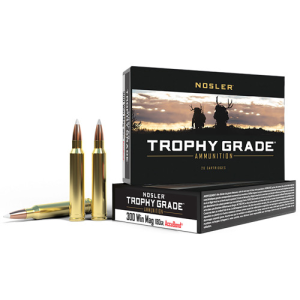
Nosler 180-grain AccuBond Trophy Grade .300 Win Mag Deals
Prices may change. May contain affiliate links.
The Hornady 143-grain ELD-X Precision Hunter in 6.5 PRC is the default load, and for good reason. It's accurate in almost every factory rifle chambered for the cartridge, runs about 2,960 fps from a 24-inch barrel, and the ELD-X expands reliably at distance. The caveat about close-range fragmentation applies, but for shots beyond 200 yards; which is most of your mule deer shooting; it's excellent.
The Federal 140-grain Terminal Ascent in 6.5 PRC is the load to run if you want more bullet integrity on close shots or quartering angles. The Terminal Ascent is a bonded bullet with a sliver of lead exposed at the tip, designed to expand at low velocities but hold together at high velocities. BC is slightly lower than the ELD-X (around .560 G1), so you give up a little wind performance, but you gain a bullet that won't come apart on a 150-yard broadside shot.
The Hornady 200-grain ELD-X Precision Hunter in .300 Win Mag is the long-range option for the .300 Win Mag. The 200-grain ELD-X has a G1 BC of about .597, which narrows the wind-drift gap with the 6.5 PRC significantly. Muzzle velocity is around 2,850 fps. It's a lot of bullet for a mule deer, but it bucks wind better than the 180-grain options and still expands reliably at distance.
The Nosler 180-grain AccuBond Trophy Grade in .300 Win Mag is the workhorse. The AccuBond is a bonded bullet that expands reliably and retains 60 to 70 percent of its weight. It won't give you the BC of the 200-grain ELD-X, but it's a tougher bullet that handles close shots and bad angles better. If you want one .300 Win Mag load for mule deer and elk, this is a strong choice.

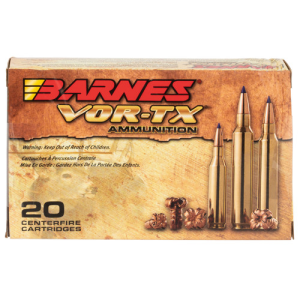
The Barnes 180-grain TTSX VOR-TX in .300 Win Mag is the penetration option. The TTSX is an all-copper bullet that expands into four petals and retains nearly 100 percent of its weight. BC is lower (around .484 G1), so wind drift is the worst of any load on this list. But if your shot goes through a shoulder, this bullet is coming out the other side. It's the "I don't care about wind drift, I want that buck down right now" choice.
The versatility question
A lot of hunters want one rifle that does everything. Mule deer this fall, elk next year, maybe a pronghorn hunt, maybe a whitetail trip back East. The .300 Win Mag has been the default "do everything" western cartridge for decades, and it still makes a strong case. It's genuinely versatile; adequate for pronghorn with light bullets, excellent for mule deer with 165- to 180-grain bullets, and fully capable on elk with 180- to 200-grain bullets. You can hunt anything in North America short of big bears with a .300 Win Mag and appropriate bullet selection.
The 6.5 PRC is more specialized. It's outstanding for mule deer, pronghorn, and whitetail. It's adequate for elk with premium bullets and good shot placement; plenty of elk have been killed with 6.5mm cartridges, and the PRC has enough energy to do the job inside 400 yards. But "adequate" and "ideal" aren't the same thing. If you're planning a serious elk hunt in dark timber where a bull might appear at 30 yards quartering to you through the trees, the 6.5 PRC is not the cartridge most experienced elk hunters would choose. The .300 Win Mag is.
If mule deer is your primary game and elk is a someday-maybe, the 6.5 PRC is the better tool. If elk is on the calendar and mule deer is the bonus tag, the .300 Win Mag makes more sense. If you can only own one western rifle; and plenty of hunters are in that position; the .300 Win Mag is the more versatile choice, even though the 6.5 PRC is the better mule deer cartridge.
The rifle matters as much as the cartridge
A great cartridge in a rifle you can't shoot is worthless. A few rifles worth looking at in each chambering:
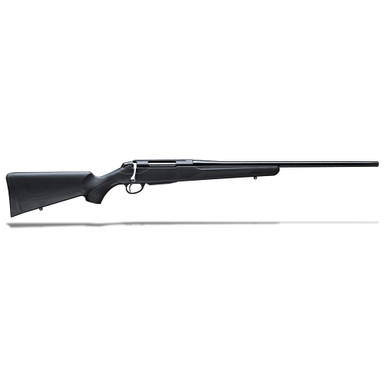
Tikka T3x Lite 6.5 PRC Deals
Prices may change. May contain affiliate links.
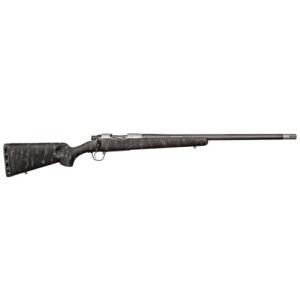
Christensen Arms Ridgeline 6.5 PRC Deals
Prices may change. May contain affiliate links.
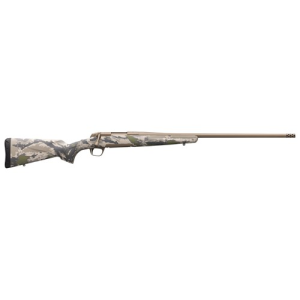
Browning X-Bolt Speed 6.5 PRC Deals
Prices may change. May contain affiliate links.

Tikka T3x Superlite .300 Win Mag Deals
Prices may change. May contain affiliate links.
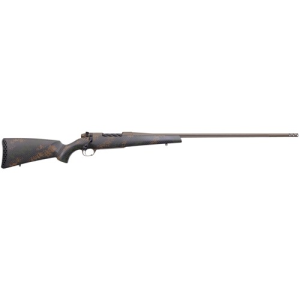
Weatherby Mark V Backcountry 2.0 .300 Win Mag Deals
Prices may change. May contain affiliate links.
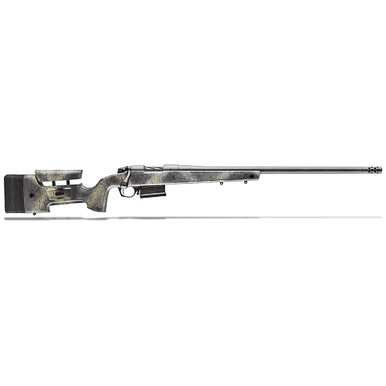
Bergara B-14 HMR Wilderness .300 Win Mag Deals
Prices may change. May contain affiliate links.
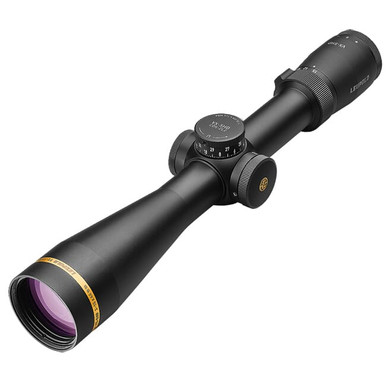
Leupold VX-5HD 3-15x44 Deals
Prices may change. May contain affiliate links.
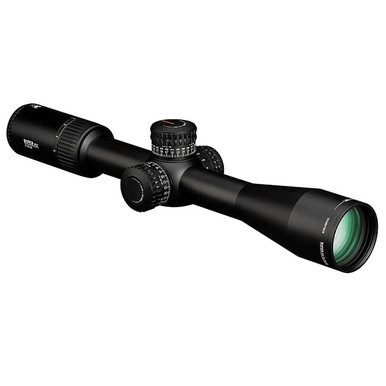
Vortex Viper PST Gen II 3-15x44 Deals
Prices may change. May contain affiliate links.
The Browning X-Bolt Speed in 6.5 PRC runs about 6.5 pounds bare, which makes it a genuine mountain rifle. It's accurate enough for any mule deer shot you should be taking. The Tikka T3x Lite is another strong option; Tikka's reputation for out-of-the-box accuracy is well-earned, and the T3x action is smooth enough that you won't fumble a follow-up shot with cold hands. For a step up, the Christensen Arms Ridgeline in 6.5 PRC is a sub-7-pound carbon-fiber-stocked rifle that regularly shoots sub-MOA with factory ammo.

In .300 Win Mag, the Tikka T3x Superlite is about as light as you can go without a custom build; around 6.5 pounds bare, which means recoil is stiff but the rifle carries like a dream. The Weatherby Mark V Backcountry 2.0 is a premium option with a carbon-fiber stock and a sub-MOA guarantee. The Bergara B-14 HMR Wilderness is heavier (around 9 pounds) but extremely accurate, and the weight helps tame the .300 Win Mag's recoil for a shooter who's willing to carry the extra weight.
Whatever you choose, get a quality scope. A Leupold VX-5HD 3-15x44 or a Vortex Viper PST Gen II 3-15x44 with an exposed elevation turret will handle anything you need in mule deer country. The scope and the shooter matter more than the cartridge. That's not a cliché; it's field reality.
So which one?
If you shoot both cartridges equally well; and be honest with yourself about this; the decision comes down to what else you hunt and how far you're willing to push shots.
The 6.5 PRC is the better pure mule deer cartridge. Less recoil means better shooting from field positions. Less wind drift means more margin for error at 300 to 500 yards. Lighter rifles mean less fatigue on mountain hunts. The terminal performance is fully adequate for mule deer with premium bullets and disciplined shot selection.
The .300 Win Mag is the better all-around western cartridge. More energy, more penetration, more versatility across species. It handles bad shot angles better and gives you genuine elk capability without changing rifles. Ammo is available everywhere. The tradeoffs are more recoil, more wind drift with standard loads, and heavier rifles.
Most hunters who switch from .300 Win Mag to 6.5 PRC for mule deer report that they shoot better in the field. Not because the cartridge is more accurate; both are capable of sub-MOA accuracy in quality rifles; but because they're not fighting recoil. They call their shots. They spot their impacts. They don't develop a flinch over a week of practice before the season.
Shot placement beats cartridge selection. Every time. The cartridge that helps you place your shot better is the cartridge that kills more cleanly.
Before the season
Here's what to do with whichever cartridge you choose, starting at least six weeks before your hunt.
Zero at 200 yards. This gives you a point-blank range (the distance within which you can hold center and hit vitals without dialing) of roughly 0 to 250 yards for either cartridge. Beyond that, you're dialing or holding over.
Build a drop chart for your specific load and verify it at the range. Shoot at 300 and 400 yards. Compare your actual impacts to your ballistic calculator's predictions. If they don't match, adjust your data; the field doesn't care what the app says.
Practice wind. Shoot on windy days. Set up targets at 300 yards and shoot 5-round groups without adjusting for wind, then measure the drift. Learn what 5 mph, 10 mph, and 15 mph feel like on your face and what they do to your bullet. This is the single most valuable practice you can do for open-country hunting.
Shoot from field positions. Off a pack. Off shooting sticks. Sitting with your elbows on your knees. Prone with a bipod on uneven ground. The bench tells you what the rifle can do. Field positions tell you what you can do.
