Your Glock 43X MOS questions answered
You bought a 43X MOS, or you're about to, and now you're staring at a pile of questions that Glock's marketing materials don't bother answering. Which optic actually fits the slide without an adapter plate? Do Shield Arms S15 mags really work, or are they a reliability gamble? Why does every holster listing say "43X MOS compatible" when half of them won't clear a mounted red dot?
The 43X MOS is one of the best concealed carry platforms going right now, but Glock made some choices with this gun that create genuine confusion. The MOS cut on the slimline models is different from the full-size MOS system. The magazine situation has an entire ecosystem of aftermarket drama. And the holster market is a mess of vague compatibility claims.

Here's every question worth answering, handled one at a time.
What the MOS actually changes (and what it doesn't)
The standard 43X and the 43X MOS share the same frame, the same barrel length (3.41 inches), the same trigger, and the same overall dimensions. You're looking at 6.5 inches overall length, about 1.1 inches wide, and roughly 21 ounces unloaded. From the grip down, they're identical guns.
The difference is entirely on the slide. The MOS version has a milled pocket on top of the slide with a specific bolt pattern designed for micro red dot sights. Glock also swaps the front sight; the MOS version uses a taller front sight to co-witness with a mounted optic, while the standard 43X has a shorter front sight. The rear sight on the MOS sits on a plate that covers the optic mounting area when no dot is installed.
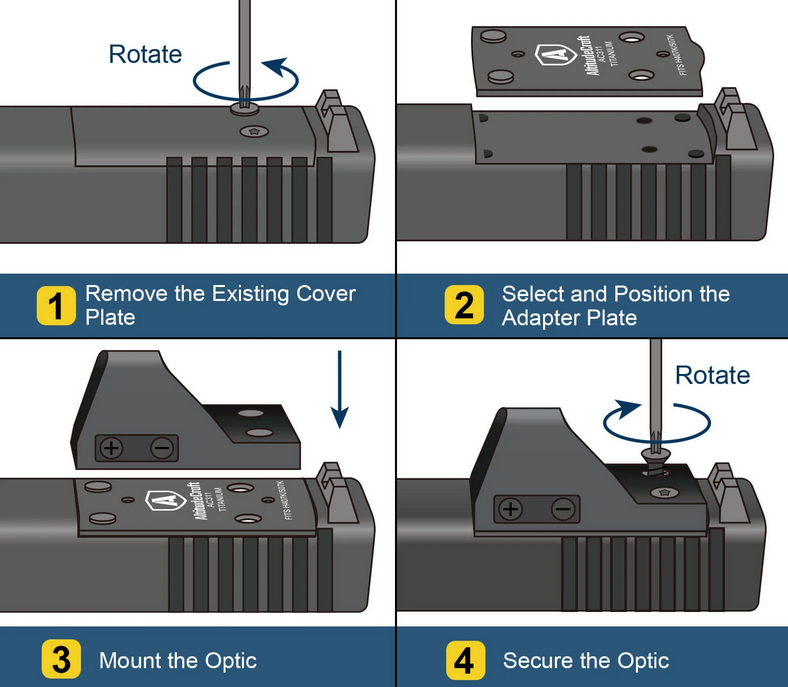
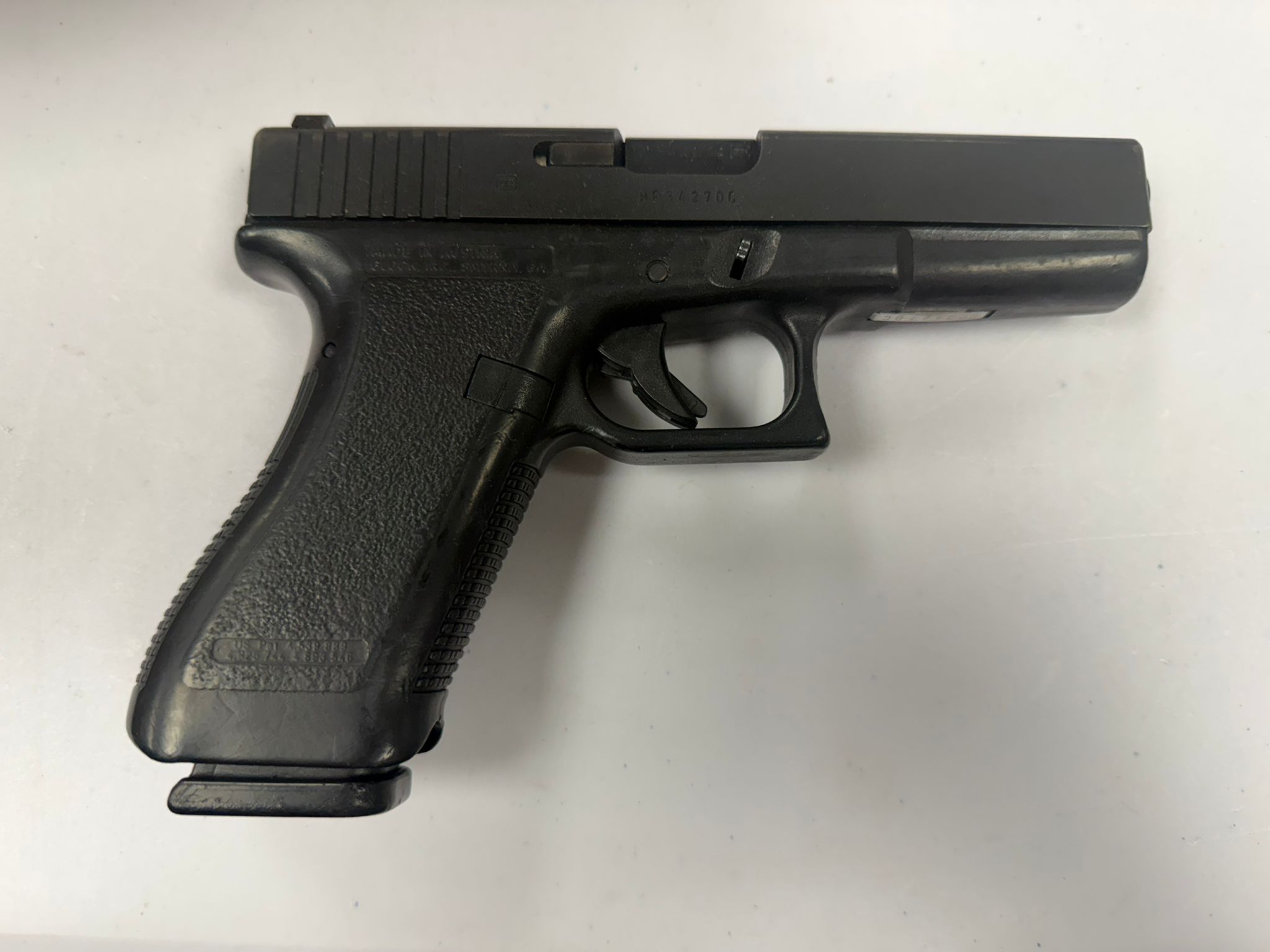
Here's what nobody mentions: the MOS cut on the 43X/48 slimline models uses a different footprint than the MOS cut on the Glock 19 MOS or Glock 17 MOS. Full-size Glock MOS pistols use interchangeable adapter plates that accept a wide range of optics. The slimline MOS uses a narrower cut specific to the Shield RMSc footprint. This matters enormously when you're shopping for optics, because you can't just grab any micro dot and bolt it on.
The slide on the MOS version is also slightly heavier due to the additional material needed to create the optic mounting surface while maintaining structural integrity. In practice, you won't feel the weight difference. What you might notice is that the MOS slide sits a tiny bit taller, which can affect holster fit; more on that later.
One more thing. The MOS doesn't change the trigger. You're still getting the same Glock slimline trigger with its characteristic mushiness and longer-than-you'd-like reset. If you were hoping the MOS designation came with trigger improvements, it doesn't. That's a separate upgrade path.
The optics situation: what fits, what doesn't, and what needs a plate
This is where most of the confusion lives, so let's be precise.
The Glock 43X MOS slide is cut for the Shield RMSc footprint. That means optics designed to the RMSc bolt pattern will mount directly to the slide using the screws Glock includes in the box. No adapter plate needed.
Optics that direct-mount (RMSc footprint)
The Shield RMSc itself was the original optic designed for this footprint, and it still works. But it's not what most people are buying anymore. The Holosun 407K and 507K are the most popular direct-mount options. Both use the RMSc footprint and bolt right onto the 43X MOS slide. The 507K gives you the circle-dot reticle option that a lot of shooters prefer for fast acquisition. The 407K is the simpler, single-dot version at a lower price point.

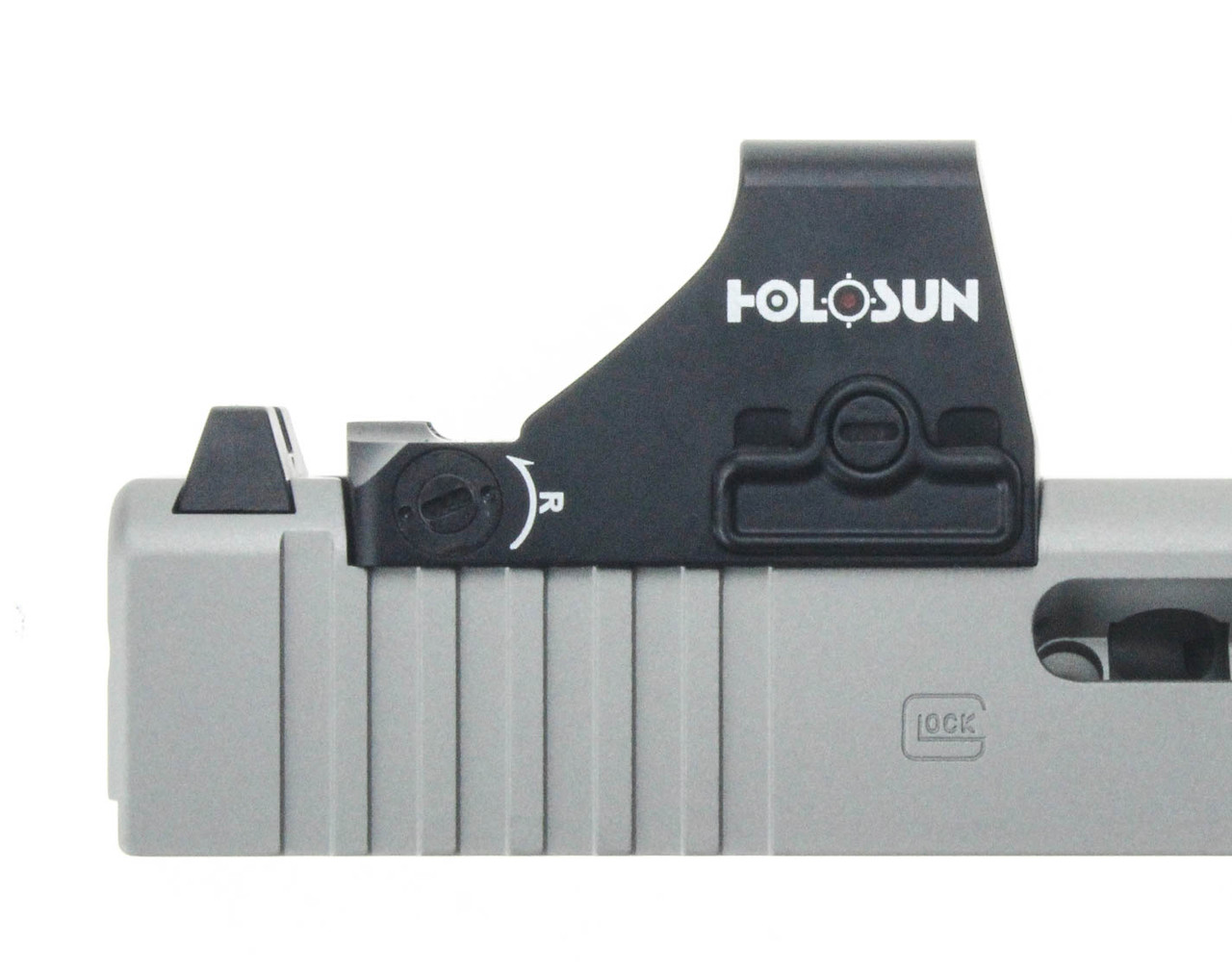
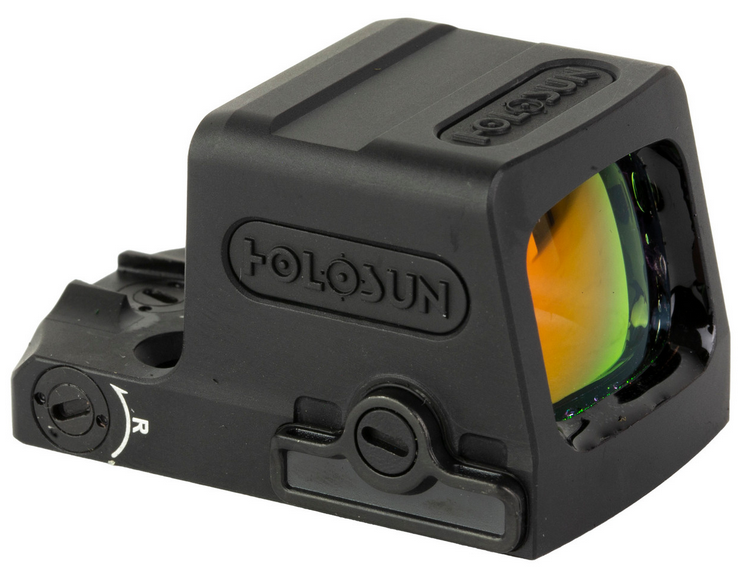
The Holosun EPS Carry also uses the RMSc footprint and adds a fully enclosed emitter; meaning no more lint, rain, or debris blocking your dot. The enclosed emitter design is a genuine upgrade for a carry gun. Dust and pocket lint getting into an open-emitter optic is a real problem, not a theoretical one.
Other direct-mount options include the Swampfox Sentinel and the Riton 3 Tactix MPRD2. The JP Enterprises JPoint and some older Shield models also fit, though availability on some of these has gotten spotty.
Optics that need an adapter plate
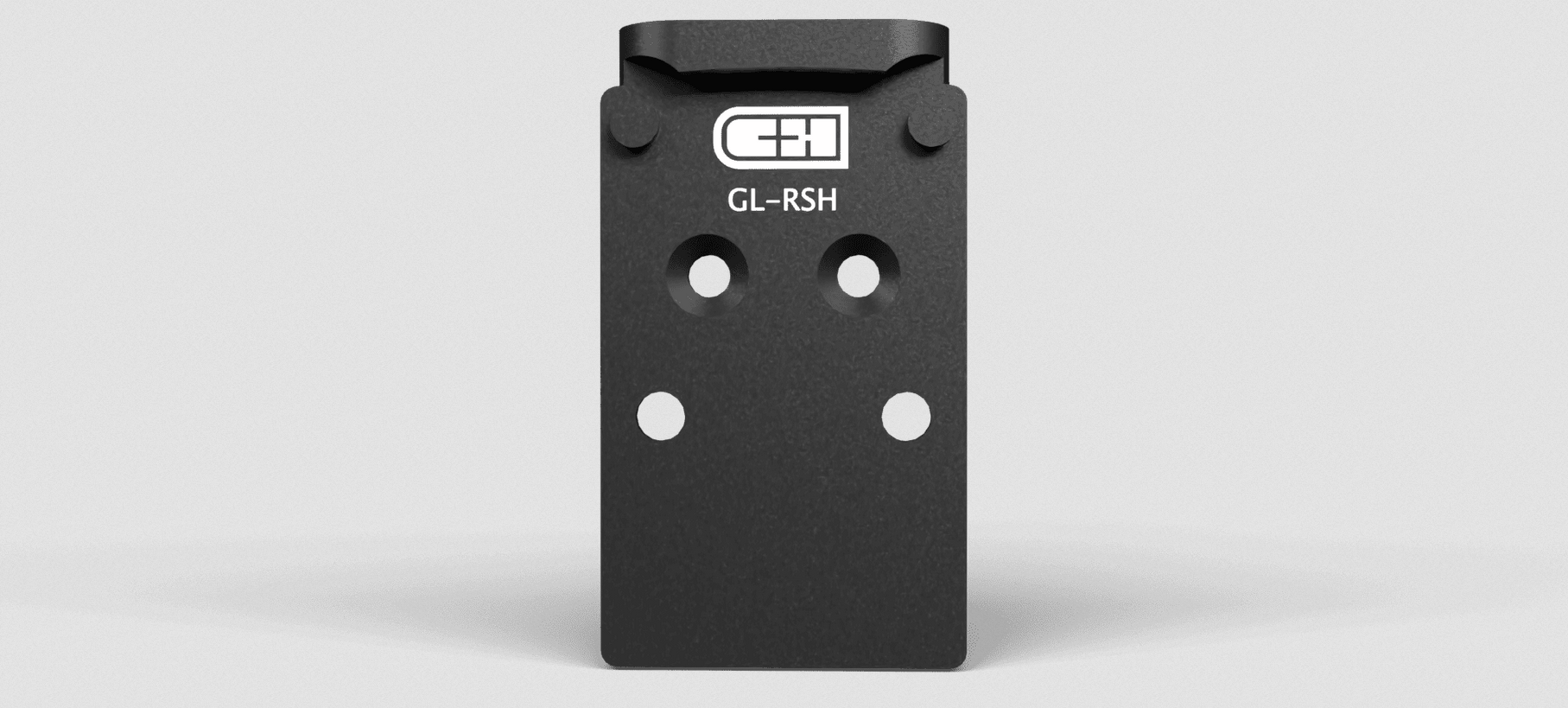
Here's where it gets tricky. The Trijicon RMRcc does not use the RMSc footprint. It's close in size, but the bolt pattern is different. You'll need an adapter plate from a company like C&H Precision Weapons (CHPWS) or Forward Controls Design to mount an RMRcc on the 43X MOS.
The Holosun EPS (full size, not the EPS Carry) also won't direct-mount. Different footprint. Same deal; you need a plate.
If you want to run a Leupold DeltaPoint Micro, that's yet another footprint situation. Adapter plates exist, but you're adding height, complexity, and potential points of failure every time you introduce a plate between the optic and the slide.
The adapter plate question
Should you use an adapter plate? It depends on how much the specific optic matters to you.
Plates from CHPWS are well-regarded and machined to tight tolerances. Their V4 series plates for the 43X/48 MOS are specifically designed for various Holosun and Trijicon models. They work. But every plate adds height to the optic, which changes your co-witness relationship with the iron sights and can affect holster compatibility. A plate also introduces another potential failure point; more screws, more interfaces, more things that could theoretically loosen under recoil.
The pragmatic move: pick an optic that direct-mounts unless you have a compelling reason to go with something that needs a plate. The Holosun 507K or EPS Carry will handle anything a carry gun needs to do.
Range notes: optic selection
A 3.25 MOA dot is the sweet spot for most shooters on a carry-size gun. The 507K's 32 MOA circle with 2 MOA dot gives you a fast pickup option; the circle grabs your eye, and you can refine to the dot for precise shots. At 7 yards, the speed advantage of the circle-dot is real. Past 15 yards, you'll want to settle on the dot itself.
Shake-awake battery life on the Holosun models runs around 50,000 hours. That's years of always-on carry. The EPS Carry uses a side-loading battery tray, so you don't have to remove the optic to change the battery. On the 507K, the battery sits under the optic; you're pulling it off the slide, changing the battery, remounting, and re-zeroing. For a carry gun, the side-loading tray is a meaningful quality-of-life upgrade.
Whatever you mount, use blue Loctite on the screws and torque them to spec. Glock's included screws are adequate, but a lot of experienced shooters swap to slightly longer aftermarket screws from Calculated Kinetics or CHPWS for better thread engagement. The stock screws are short enough that some people report them loosening after several hundred rounds if not properly treated with threadlocker.
The dot size debate: 3 MOA, 6 MOA, or circle-dot
This comes up constantly in forum threads, and the answer depends on what you're actually doing with the gun.
A 6 MOA dot is faster to find. Period. If your primary concern is defensive shooting at 3 to 10 yards, a 6 MOA dot will get you on target quicker, especially under stress when your presentation isn't textbook perfect. The dot is bigger in the window, your eye grabs it sooner, and you press the shot faster.
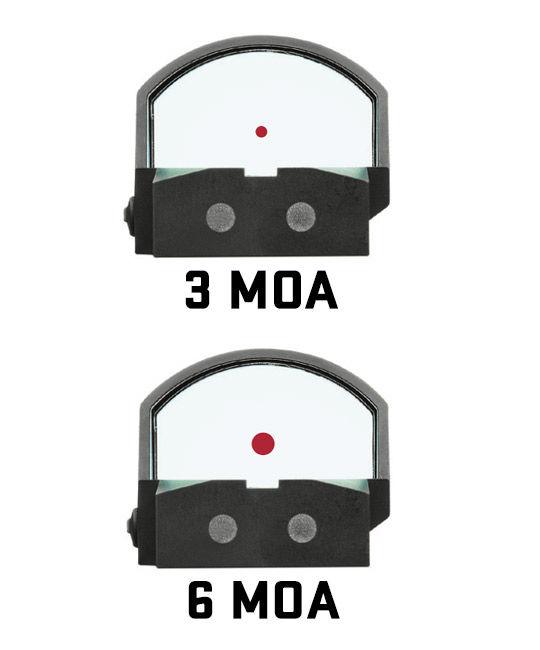
A 3 MOA dot (or the 2 MOA center dot in the 507K's circle-dot reticle) is more precise at distance. If you're trying to make headbox hits at 25 yards or you shoot any kind of competition with your carry gun, the smaller dot covers less of the target and lets you be more precise.
The real question is how much precision you actually need from a 3.41-inch barrel at typical defensive distances. Most defensive shootings happen inside 7 yards. At that distance, a 6 MOA dot covers about half an inch of the target. That's more than precise enough.
The circle-dot reticle splits the difference. The 32 MOA ring is enormous in the window; almost impossible to miss during a fast draw. You put the ring roughly on the chest and press. For more precise work, you ignore the ring and use the center dot. It's the most versatile option, and it's why the 507K remains the default recommendation for this gun.
One caveat: some shooters find the circle-dot busy or distracting, especially in low light when the ring can bloom. If you've never used a circle-dot, try one on a rental before committing. The 407K with a straight 6 MOA dot is a perfectly good alternative that some people actually prefer.
Shield Arms S15 magazines: the capacity upgrade and its trade-offs
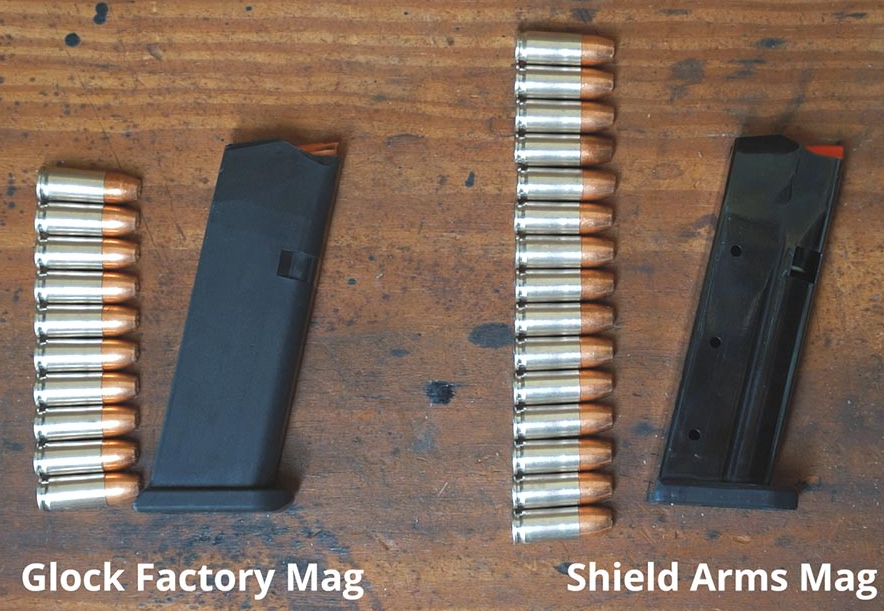
The 43X ships with 10-round flush-fit magazines. For a lot of people, 10+1 in a slim single-stack-width grip is plenty. But Shield Arms changed the conversation with the S15; a flush-fit magazine that holds 15 rounds in the same external dimensions as the factory 10-rounder.
That's a 50% capacity increase with zero change to the grip size. On paper, it's the best upgrade you can make to the 43X platform. In practice, it's more complicated than the marketing suggests.
How the S15 works
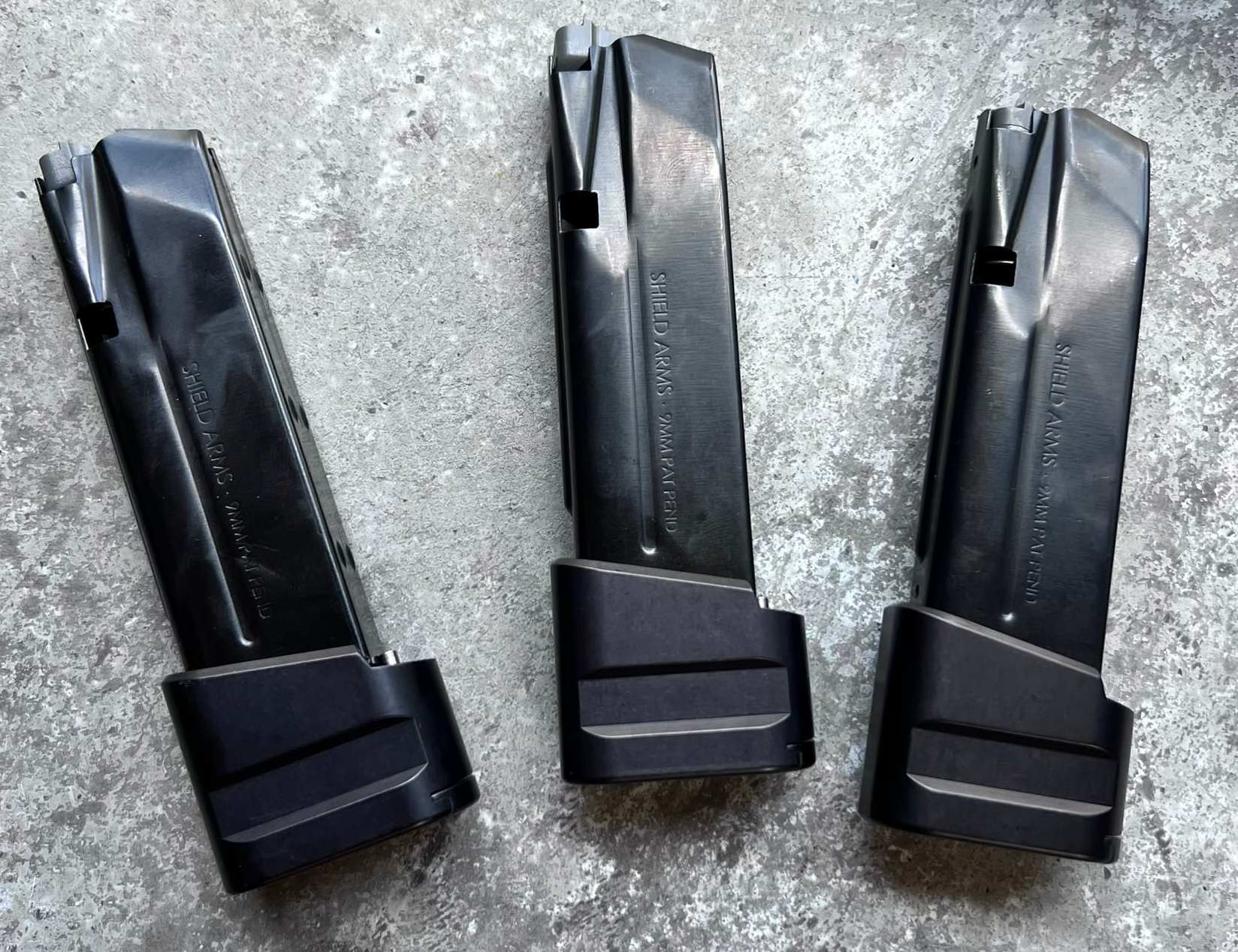
The S15 uses a steel body instead of Glock's polymer. The internal geometry is redesigned to stack rounds more efficiently, squeezing 15 rounds of 9mm into the same external envelope. The Gen 3 version (current production) addressed several reliability issues from earlier generations, including feed lip geometry and follower design changes.
The metal mag catch requirement
Here's the critical detail: Shield Arms strongly recommends replacing the factory polymer magazine catch with their steel magazine catch when running S15 magazines. The steel magazine body wears against the polymer catch differently than factory Glock mags do. Over time, the polymer catch can wear down, leading to magazines dropping free during shooting.
This creates a compatibility problem. Once you install the steel mag catch, your factory Glock magazines may not lock in as reliably. The steel-on-polymer interface of the factory setup becomes steel-on-steel with the S15 and steel catch, which changes the engagement geometry slightly. Some people report factory mags still work fine with the steel catch. Others report inconsistent lockup.
The practical result: you're kind of committing to one magazine ecosystem or the other. Running a mix of factory and S15 mags with the steel catch can work, but it's not guaranteed to be seamless.
Reliability, the honest assessment
The Gen 3 S15s are significantly better than the Gen 1 and Gen 2 versions. Earlier generations had documented issues with failure to feed, failure to lock the slide back on empty, and premature wear on the feed lips. Forum threads on GlockTalk and Reddit are full of reports from both camps; people who've run thousands of rounds without a hiccup and people who had failures within the first few hundred.
The Gen 3 addressed most of these problems. But "most" isn't "all," and the reality is that you're introducing an aftermarket component into the feeding cycle of a defensive firearm. The factory Glock magazines have decades of proven reliability across millions of guns. The S15 Gen 3 has a couple of years of track record and a much smaller sample size.
If you carry the 43X for self-defense, here's the test that matters: buy two S15 Gen 3 magazines, install the steel mag catch, and run at least 500 rounds through each magazine using your carry ammo (not just range ball). Include some one-handed shooting, some rapid fire, and some shooting from retention. If both mags run clean through that test, you've got reasonable confidence. If either one hiccups, you have your answer.
Some people run factory Glock mags in the gun and carry a spare S15 as a reload. That way the gun starts with proven reliability, and the capacity upgrade is there if you need it. Clever compromise, though it requires keeping the polymer mag catch (which means the S15 reload might not lock in as crisply).
What you'll feel
The S15 is noticeably stiffer to load than factory Glock mags, especially rounds 13 through 15. A Maglula UpLULA or similar speed loader isn't a luxury; it's close to a necessity if you're loading these at the range repeatedly. The extra spring tension is what makes 15 rounds work in a 10-round space, so this isn't a defect. Just be aware that your thumbs will know the difference.
The weight difference with a full S15 versus a full factory mag is noticeable too. Five extra rounds of 9mm adds roughly 2 ounces. Not a big deal in absolute terms, but you'll feel it in the balance of the gun, especially during recoil. The gun feels slightly more bottom-heavy, which some shooters actually prefer; it can help with muzzle flip.
Holsters: what actually fits the 43X MOS with a dot
The holster situation for the 43X MOS is better than it was two years ago, but it's still not as simple as buying any "43X compatible" holster and calling it done.
The problem with most generic 43X holsters is that they don't account for the optic. A mounted red dot adds height to the top of the slide, and many holsters designed for the standard 43X will physically interfere with the optic. The dot either won't fit into the holster, or the holster presses against the optic and creates a retention point in the wrong place.
What to look for
You need a holster specifically cut for the 43X MOS with an optic. The listing should explicitly say "optic cut" or "red dot compatible"; not just "MOS compatible," which sometimes just means it fits the MOS slide profile without an optic mounted.
The good holster makers are specific about which optics they've tested. A holster cut for the Holosun 507K might not perfectly clear a Holosun EPS Carry, because the EPS Carry has a different housing shape (fully enclosed emitter means more material around the lens). Always check compatibility with your specific optic, not just "red dots" generically.
Appendix carry options
The 43X MOS is an outstanding appendix carry gun. The slim profile (1.1 inches wide) disappears in the waistband better than double-stack alternatives, and the 4.25-inch height is manageable for most body types without digging into the thigh when seated.
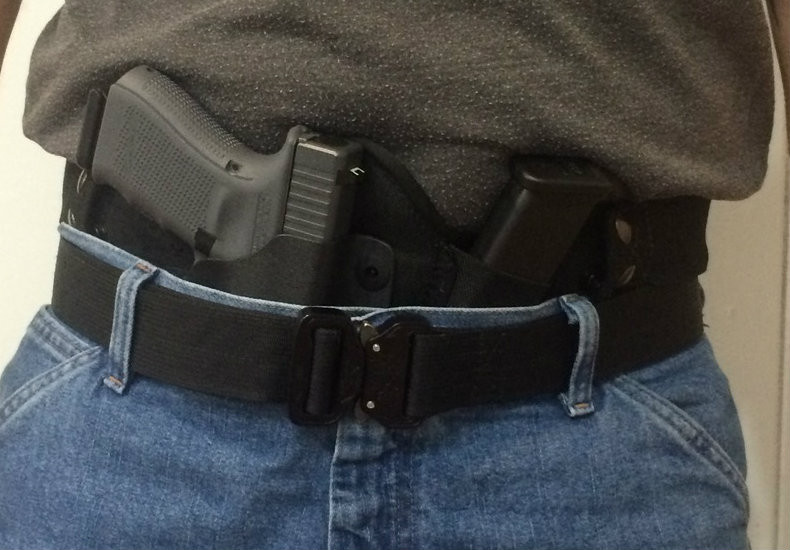
For appendix (AIWB) carry with an optic, look at holsters from Tier 1 Concealed, T.Rex Arms, Henry Holsters, JM Custom Kydex, and TactiPac. All of these makers produce 43X MOS-specific models with proper optic channels. The Tier 1 Axis series and the T.Rex Sidecar both add a mag carrier alongside the holster, giving you a spare magazine in a single package.
If you're running a weapon-mounted light; the Streamlight TLR-7 Sub or the SureFire XSC are the two main options for the 43X; make sure the holster is molded for that specific light. A light changes the retention profile significantly. A holster built for a naked 43X MOS won't properly retain a 43X MOS with a TLR-7 Sub attached.
Carry notes
The 43X MOS with a 507K and no light carries almost identically to a standard 43X. The optic adds negligible weight and sits low enough that it doesn't create a noticeable bulge under a t-shirt. Where you'll notice the optic is during the draw; the rear of the optic housing can snag on cover garments if your draw stroke isn't clean. Practice your draw with the actual shirt or jacket you carry under. A slightly exaggerated upward clear of the garment solves most snag issues.
With a light attached, the gun gets a bit longer at the muzzle end. This matters more for comfort when seated than for concealment. The extra half-inch or so of muzzle length can press into the thigh or groin area depending on your body type and holster ride height. Adjustable ride height and cant on your holster are worth paying for.
The 43X MOS versus the competition
The 43X MOS doesn't exist in a vacuum. There are several direct competitors worth considering, and being honest about where the Glock wins and loses is more useful than brand loyalty.
Sig Sauer P365 XL
The P365 XL is the most direct competitor. It's slightly smaller overall (6.6 inches long versus the 43X's 6.5, but with a shorter grip height), and it ships with a 12-round flush-fit magazine. With extended mags, you're at 15 rounds. The P365 XL's optic mounting uses the proprietary Sig footprint on some versions, though newer models accept the RMSc footprint directly.
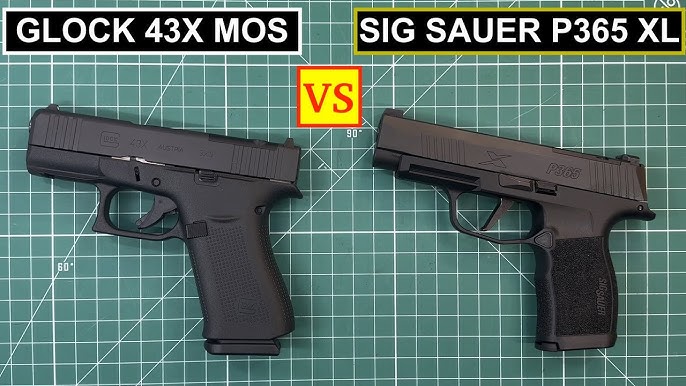
The P365 XL has a noticeably better trigger out of the box; shorter take-up, cleaner break, shorter reset. Under recoil, the difference shows. The Glock's trigger is adequate but uninspiring. The P365 XL also has a slightly higher bore axis, which theoretically means more muzzle flip, but in practice the difference is marginal between these two guns.
Where the 43X wins: the grip. The 43X has a longer grip that fills the hand better for shooters with medium to large hands. The P365 XL's grip, even with the 12-round mag, is shorter and can leave the pinky hanging for bigger hands. Grip fit is the single most important factor in shooting a small gun well, and this is entirely personal. You need to hold both.
Springfield Hellcat Pro
The Hellcat Pro splits the difference between subcompact and compact. It holds 15 rounds flush, has a 3.7-inch barrel (slightly longer than the 43X), and comes optics-ready with a Shield RMSc-pattern cut. The Hellcat Pro's grip texture is more aggressive than the Glock's, which is better for retention but can be abrasive against skin during all-day carry.
The Hellcat Pro's trigger is decent; better than the Glock, not quite as good as the Sig. The sights are good. The overall package is competitive. Where it falls short for some people is the grip width; it's slightly wider than the 43X, which matters for concealment in slimmer body types.
Canik METE MC9
The Canik METE MC9 has been getting a lot of attention, and for good reason. The trigger is the best in this size class; flat-faced, short take-up, clean break, and a short, tactile reset that makes follow-up shots noticeably easier. The MC9 comes optic-ready and ships with multiple adapter plates.
The trade-off is brand maturity and aftermarket support. Glock's aftermarket ecosystem is enormous; holsters, sights, mag extensions, trigger upgrades, you name it. Canik's aftermarket is growing but still much smaller. Finding a quality AIWB holster for a Canik MC9 with a specific optic and light combo is harder than finding one for a 43X MOS. If aftermarket support and holster availability matter to you (and they should for a carry gun), the Glock has a significant advantage.
Where the 43X MOS actually wins
The Glock 43X MOS wins on three things: aftermarket ecosystem, simplicity of the manual of arms, and the grip-to-concealability ratio. The slim frame hides well. The Glock operating system is dead simple; no external safety, no decocker, no magazine disconnect. And if you want a specific holster, light, sight, or trigger upgrade, someone makes it for the 43X.
Where it loses: the trigger is the worst in this comparison group, the factory capacity (10 rounds) is the lowest, and the stock sights are mediocre plastic units that most people replace immediately.
Common mistakes and how to avoid them
Overtightening optic screws
The screws that hold a micro red dot to the 43X MOS slide are small. The threads in the slide are shallow. Overtightening strips those threads, and then you're looking at a slide replacement or a trip to a gunsmith for helicoil inserts. Use a torque wrench or torque driver set to the optic manufacturer's spec; usually 15 to 18 inch-pounds for most micro dots. Blue Loctite, not red. Red Loctite is permanent and requires heat to remove.
Not re-zeroing after battery changes (507K)
If your optic requires removal for battery replacement (the 507K does), you must re-zero after reinstalling it. Even with the same torque on the same screws, the optic may shift slightly. This isn't a knock on the 507K; it's physics. Any optic that comes off and goes back on needs a zero check. The EPS Carry avoids this issue entirely with its side-loading battery tray.
Assuming all "43X holsters" fit the MOS
Already covered this above, but it's worth repeating because it's the most common purchasing mistake. A holster made for the standard 43X may not clear a mounted optic. A holster made for the 43X MOS without a light won't properly retain the gun with a TLR-7 Sub attached. Be specific when ordering. Contact the holster maker if the listing is ambiguous.
Mixing S15 and factory mags without testing
Don't install the Shield Arms steel mag catch and assume everything works with both magazine types. Test each combination; S15 with steel catch, factory Glock mag with steel catch; at the range before carrying. Verify that magazines seat, lock, drop free on the mag release, and that the slide locks back on empty with each combination.
Neglecting the iron sights
Mounting a red dot doesn't make iron sights irrelevant. Electronics fail. Batteries die. The 43X MOS comes with taller sights designed to co-witness through the optic window, but the factory sights are basic. Upgrading to suppressor-height night sights from Ameriglo, Trijicon, or XS Sights gives you a backup aiming system that works in the dark. The lower-third co-witness you'll get with most aftermarket night sights and a mounted 507K is the setup you want; the irons are visible in the lower portion of the optic window without cluttering the dot.
Breaking in the dot: how to actually learn to shoot with a red dot on a carry gun
If you've never shot a pistol with a red dot, mounting one on your 43X MOS and heading to the range will probably be frustrating. The dot will seem to disappear. You'll hunt for it in the window. Your groups will be worse than with irons for the first few sessions.
This is normal. The problem isn't the dot; it's your presentation. With iron sights, you can get away with a slightly inconsistent grip and head position because the sight picture is forgiving. A red dot demands a consistent draw and presentation. If the gun doesn't arrive in the same place relative to your eye every time, the dot won't be in the window.
The dry fire fix
Spend two weeks doing 10 minutes of daily dry fire before you even go to the range. Here's the drill:

Start from a low ready position. Bring the gun up to your eye line with both eyes open. Focus on the target (a spot on the wall), not the optic window. The dot should appear in the window as the gun arrives at full extension. If it doesn't, your grip or wrist angle is off. Adjust and repeat.
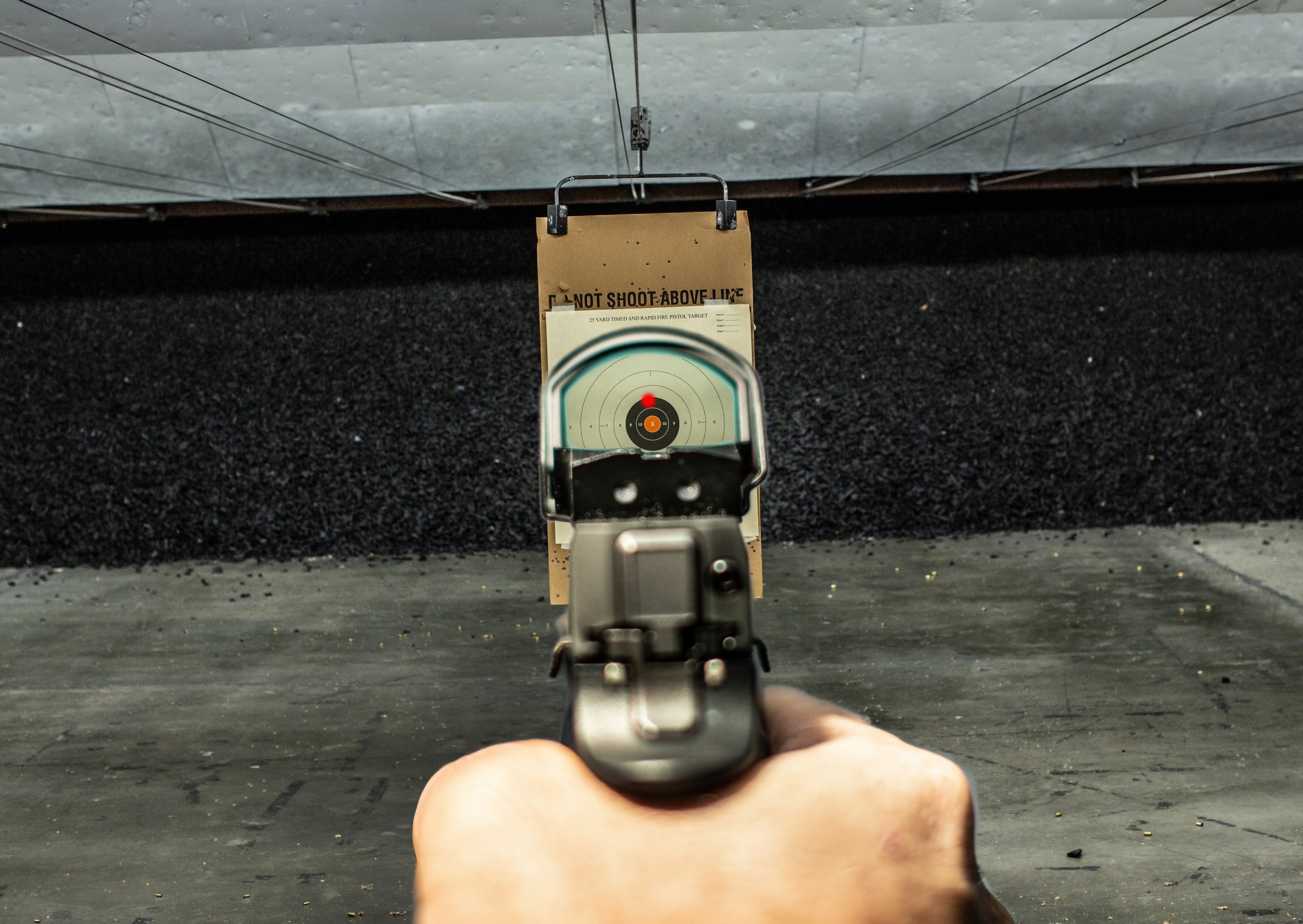
Do this 50 times per session. By the end of two weeks, the dot should be in the window on at least 90% of your presentations. Then take it to the range.
Once you're at the range, start at 5 yards. Draw from concealment (if the range allows) and fire one round at a 3x5 index card. The goal is to put every round on the card within 2 seconds from the holster. This builds the neural pathway of draw-present-find dot-press. Don't start at 15 yards trying to shoot tiny groups. Build the presentation first, then push distance.
What you'll feel
The first time the dot tracks during recoil and you call your shots in real time, you'll understand why people put dots on carry guns. With irons, the front sight blurs during recoil and you lose the sight picture momentarily. With a dot, you can literally watch the dot lift and return. You see where the dot was when the gun fired, and you know where the shot went before looking at the target. That's the real advantage of a pistol red dot; not precision, but the ability to call shots and confirm hits at speed.
Trigger upgrades worth considering
The 43X trigger is the gun's weakest point. It's not bad enough to make the gun unusable; millions of rounds have been fired through stock Glock triggers just fine. But it's mushy, the wall is vague, and the reset is long enough that it slows down split times for experienced shooters.
The Overwatch Precision TAC trigger is a popular drop-in replacement that cleans up the take-up and gives a more defined wall. It's a flat-faced trigger, which changes the leverage angle and can make the pull feel lighter without actually changing the pull weight. The Apex Tactical trigger bar and connector combination is another well-regarded option that improves both the break and the reset.
A word of caution: if you carry this gun for self-defense, don't go below a 4.5-pound trigger pull. Lighter triggers are great on range toys. On a gun you might use under extreme stress with fine motor skills degraded, a trigger that's too light is a liability. The goal is a cleaner, more predictable pull; not a hair trigger.
The cheapest meaningful trigger improvement is simply replacing the factory connector with a Glock minus (-) connector or a Ghost Edge connector. Either one smooths out the trigger pull and reduces the perceived pull weight by a small amount. It's a $15 to $30 part and a 10-minute install.
Lights on the 43X MOS
The 43X rail is Glock's proprietary slimline rail, which is shorter and narrower than a standard Picatinny rail. Not every compact weapon light fits.
The Streamlight TLR-7 Sub is the default choice. It's specifically made for subcompact pistols with proprietary rails, and Streamlight includes the correct key for the Glock 43X/48 in the box. Output is 500 lumens, which is more than adequate for room-distance identification. The TLR-7 Sub sits nearly flush with the muzzle and doesn't add significant width.
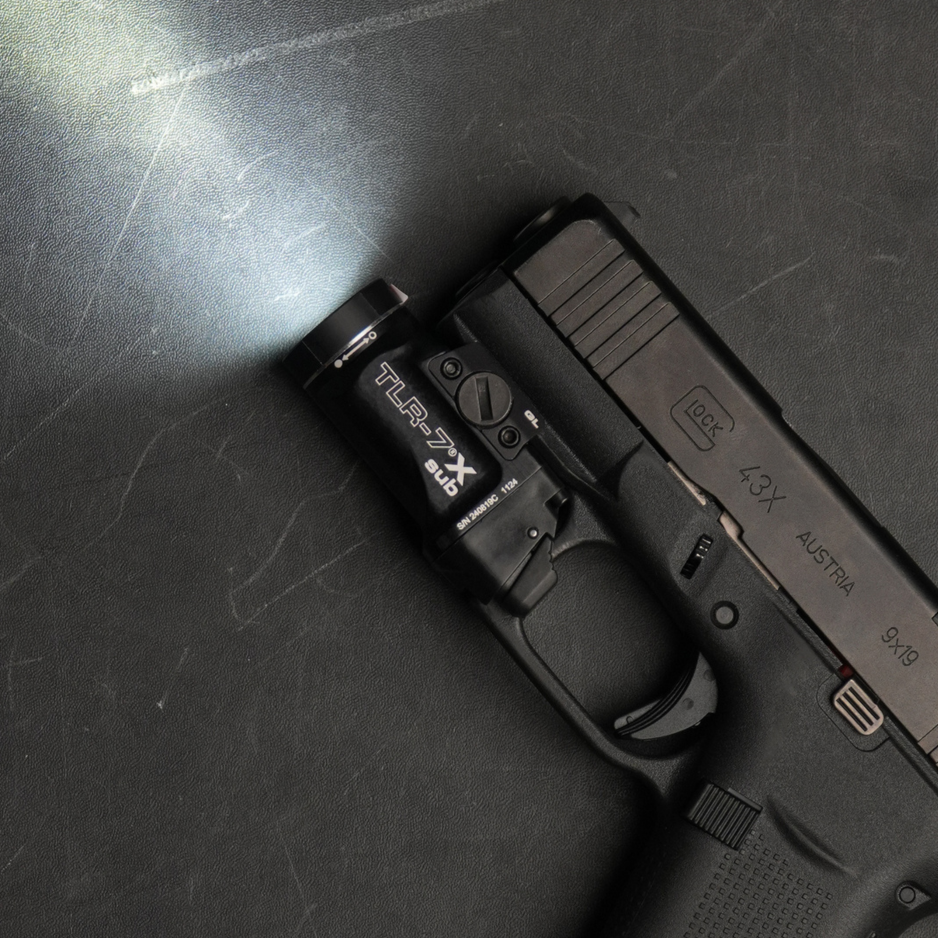
The SureFire XSC is the other main option. It's smaller and lower-profile than the TLR-7 Sub, with a rechargeable battery. Output is lower (350 lumens), and the rechargeable battery means you need to remember to charge it periodically; a consideration for a dedicated carry gun that sits in a holster most of the time.
Between the two, the TLR-7 Sub gets the nod for most people. It's brighter, uses a common CR123A battery, and has better holster support across manufacturers.
The "should I just get a Glock 19 instead" question
This comes up a lot, especially on forums like Sniper's Hide and GlockTalk. The Glock 19 holds 15 rounds stock, has a longer sight radius, is easier to shoot well due to its larger size, and has the most holster and accessory support of any pistol on the planet.
So why the 43X MOS instead?
Concealability. That's it. That's the entire answer.
The 43X is meaningfully slimmer than the G19. The width difference (1.1 inches vs 1.26 inches) doesn't sound like much on paper, but against the body in an AIWB holster, it's the difference between printing and not printing under a fitted t-shirt. The grip width is where concealment happens or doesn't, and the 43X's slimline grip vanishes against the torso in a way the G19's double-stack grip simply can't match.
If you can conceal a G19 comfortably in your daily wardrobe and lifestyle, the G19 is the better gun. More capacity, easier to shoot, longer sight radius. But if you wear fitted clothes, have a smaller frame, or live somewhere hot where heavy cover garments aren't an option, the 43X MOS gives you an optics-ready platform that actually hides.
With S15 magazines (assuming they pass your reliability testing), the 43X matches the G19's capacity in a slimmer package. That's the pitch. Whether it delivers depends on those magazines running clean in your specific gun.
Putting it all together: the 43X MOS carry build
If you're starting from a stock 43X MOS and want to build it into a complete carry setup, here's the priority order:
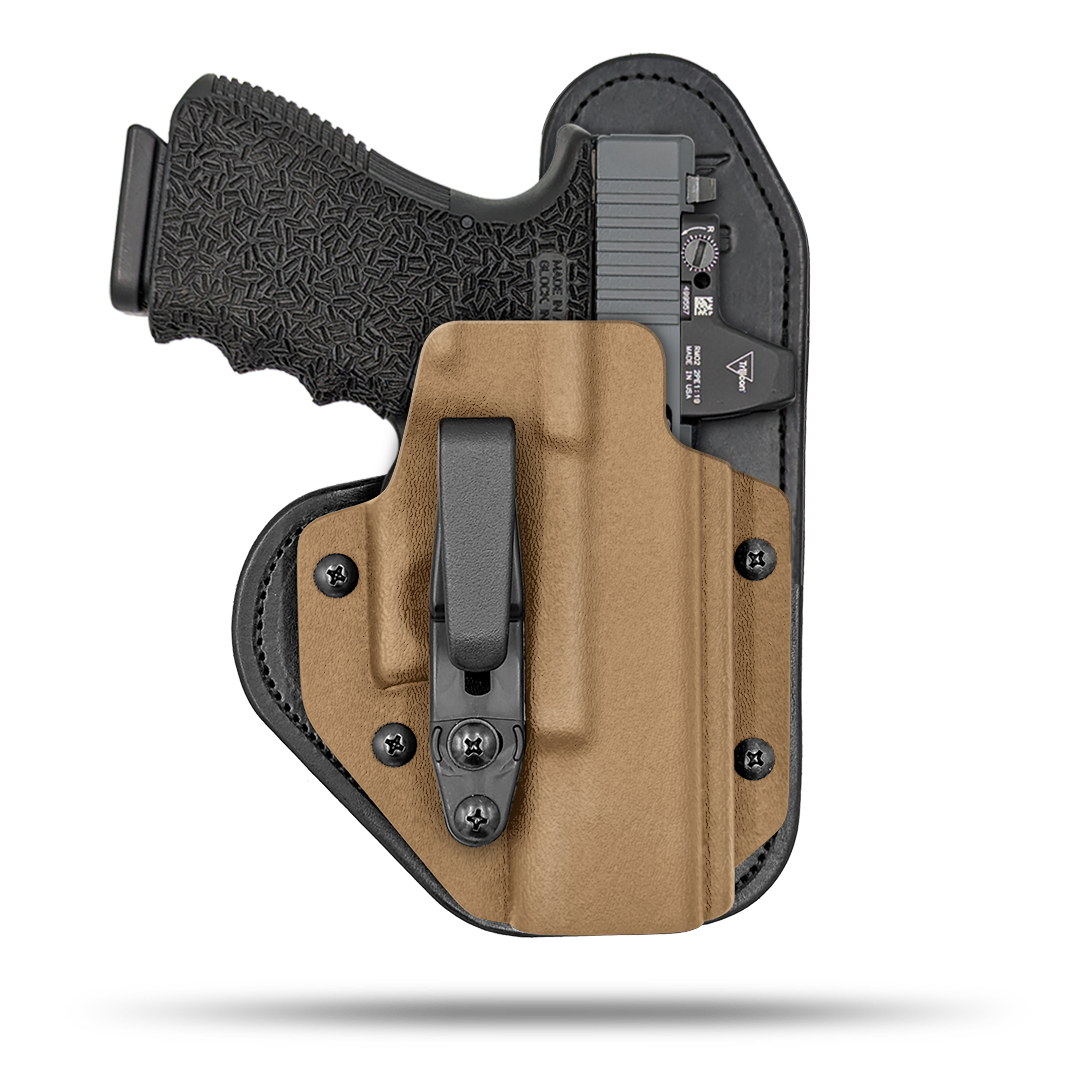
Start with the optic. A Holosun 507K or EPS Carry, direct-mounted with blue Loctite and proper torque. Spend two weeks on dry fire before live fire. Zero at 15 yards.
Next, get a holster that's specifically molded for the 43X MOS with your chosen optic. If you're adding a light, get the light first and order the holster for the gun-plus-light combination. Don't buy a holster for the naked gun and then add a light later; you'll end up buying two holsters.
Third, upgrade the iron sights to suppressor-height night sights for co-witness. Ameriglo GL-329 or Trijicon HD XR in the appropriate height are solid choices.
Fourth, if you want the capacity upgrade, buy two S15 Gen 3 magazines and the steel mag catch. Run the reliability test described above. Don't carry them until they've proven themselves.
Fifth; and only fifth; consider a trigger upgrade. The stock trigger is the last thing to address because it's the least impactful change relative to the others. An optic improves your shooting more than a trigger upgrade. A good holster improves your carry experience more than a trigger upgrade. Better sights give you a backup aiming system. More capacity gives you more rounds. The trigger is a refinement, not a transformation.
Take the built-up gun to the range and run a cold start drill: from concealment, draw and put two rounds into an 8-inch circle at 7 yards. Your goal is under 2 seconds. Then push it to 15 yards and try to keep all rounds inside a 6-inch circle at a pace of one round per second. That tells you whether the gun, the optic, and your skills are working together.
The 43X MOS isn't the best at any single thing. It's not the highest capacity, doesn't have the best trigger, and isn't the most fun to shoot at the range. What it does better than almost anything else is balance shootability, capacity (with S15s), optic capability, and concealability in a single package that you'll actually carry every day. That's the gun that matters; the one that's on you when you need it.