You've seen them in the surplus bins at gun shows, usually sandwiched between a rack of Zastava Tokarevs and some beat-to-hell CZ 82s. The slide says STAR, the profile screams 1911, but the magazine holds 9mm Parabellum and there's no grip safety. The price tag says cheap. The question is whether it should.
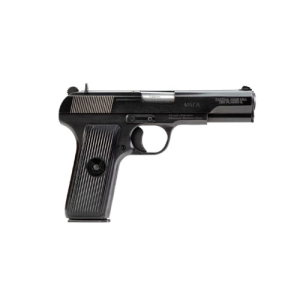
Zastava Tokarev Deals
Prices may change. May contain affiliate links.
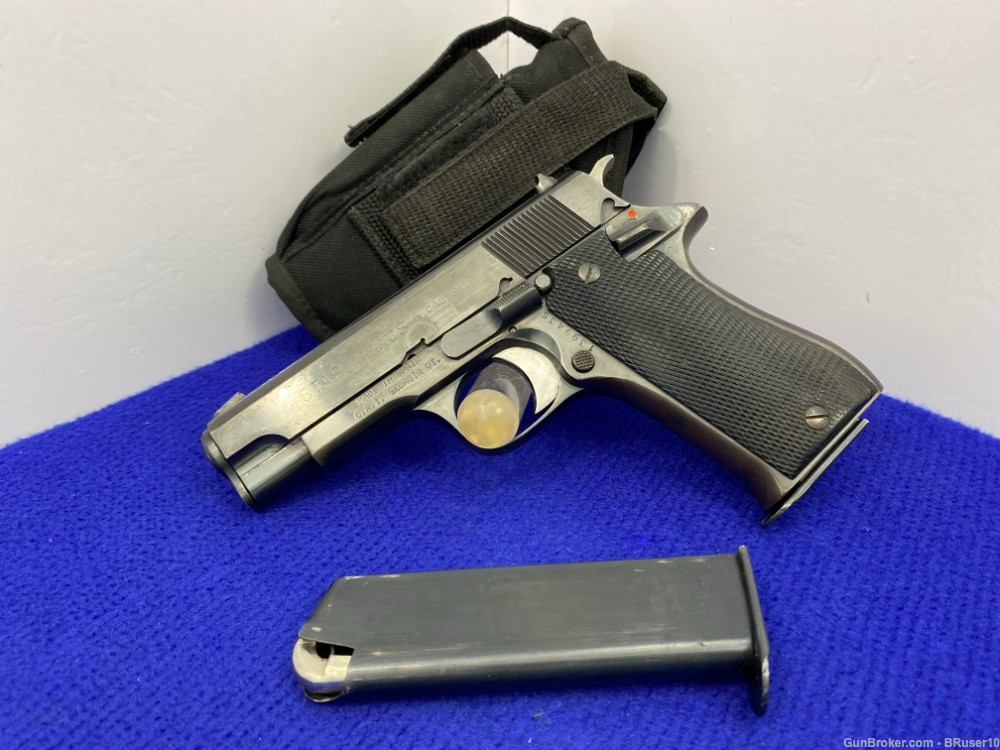
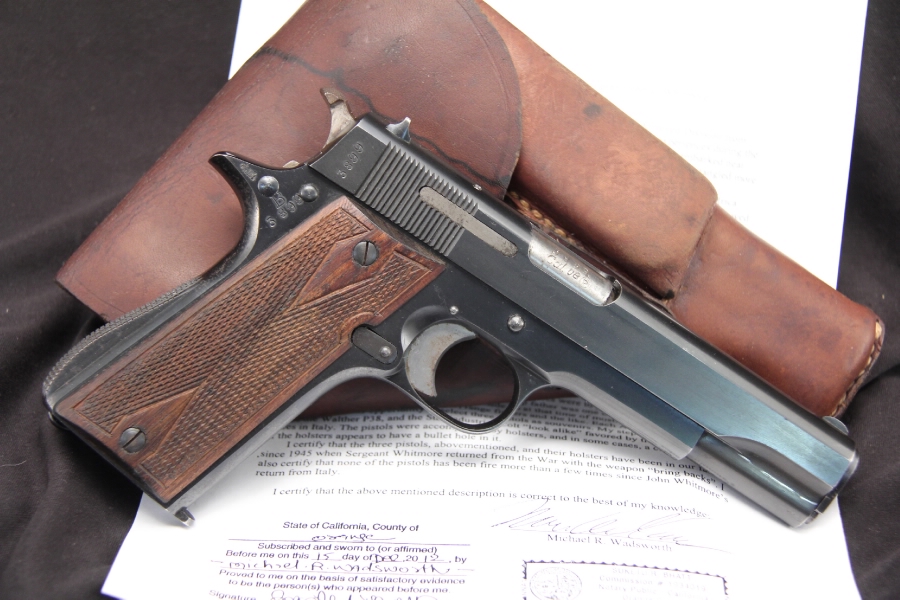
The Star Model B is one of those guns that gets dismissed as a "Spanish 1911 copy" by people who haven't looked closely enough. That's a mistake. Bonifacio Echeverria S.A., the company behind the Star brand, was one of the most prolific handgun manufacturers in the Basque region of Spain, and the Model B was their flagship service pistol for decades. It armed the Spanish military, showed up in the hands of both Axis and Allied forces during World War II, and served police departments across multiple continents well into the 1980s. None of that makes it a Colt, and none of it makes it a Browning Hi-Power. It's its own thing, and understanding what that thing actually is; mechanically, historically, and in terms of collector value; is the point here.
If you're considering picking one up, or you already own one and want to know what you've got, this is where to start. We'll cover the mechanical differences that matter, the variants you'll actually encounter, the markings that tell you where and when your gun served, and the condition and provenance factors that separate a $200 parts gun from something worth considerably more.
Not a 1911 copy, not exactly
The most common thing you'll hear about the Star Model B is that it's a 1911 clone chambered in 9mm. That's close enough to be useful at a cocktail party and wrong enough to cause problems if you're buying, selling, or trying to find parts.
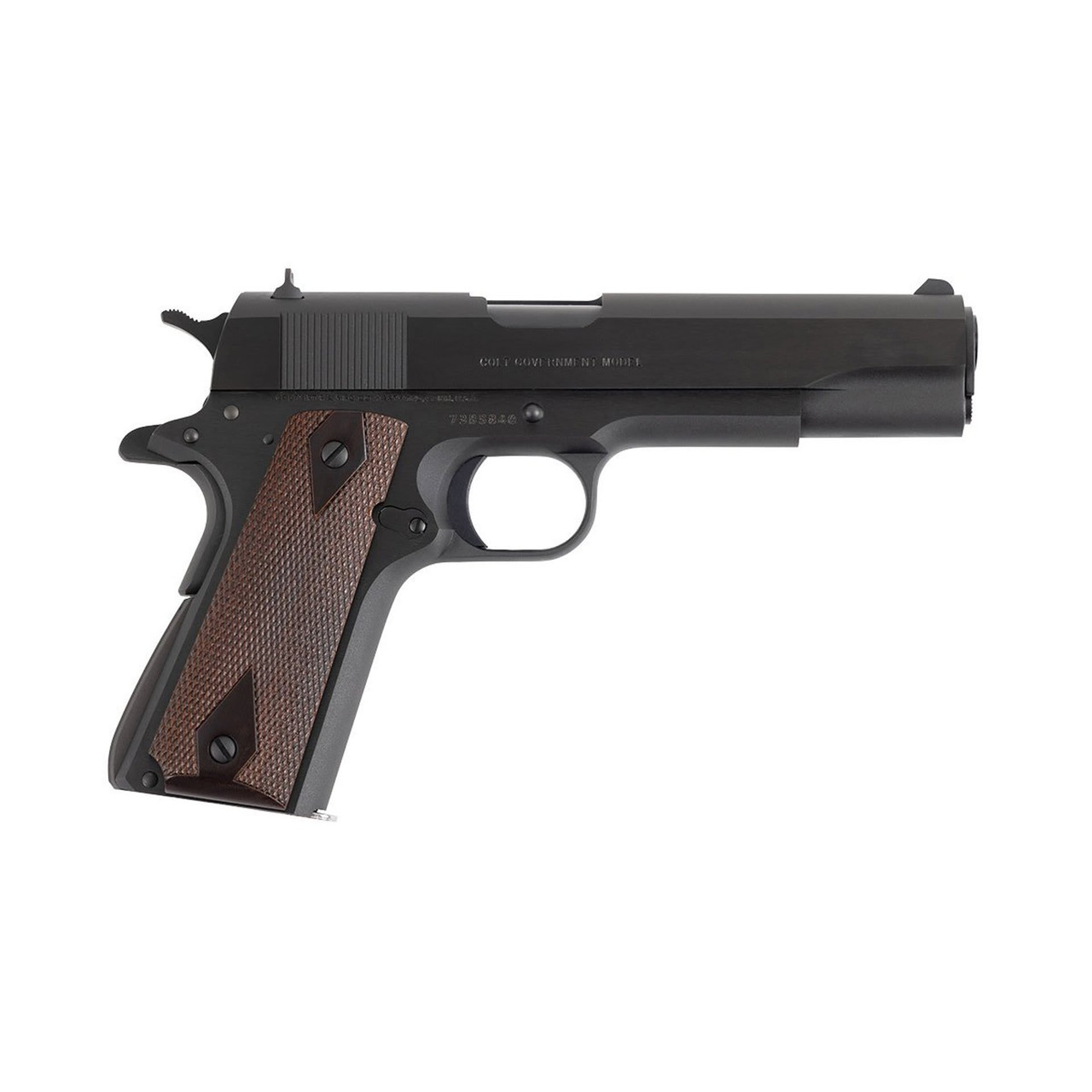
Colt 1911 Government Model .45 ACP Deals
Prices may change. May contain affiliate links.
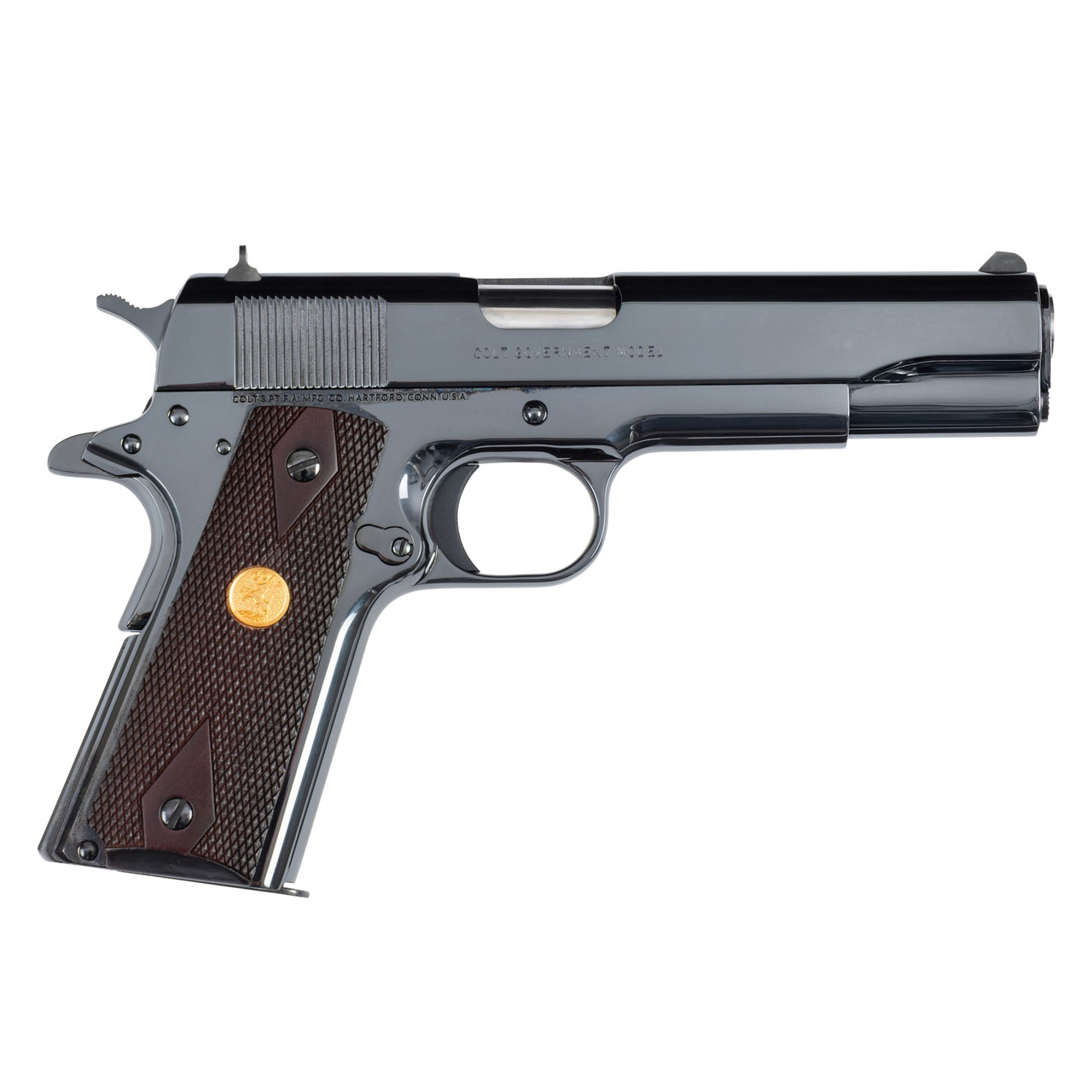
The Model B uses a Browning short-recoil, tilting-barrel lockup, same basic operating principle as the 1911. The external profile is similar: single-action trigger, frame-mounted thumb safety, slide stop, and a grip angle that'll feel familiar to anyone who's shot a Government Model. The disassembly process is recognizably 1911-derived, with a barrel bushing and recoil spring plug at the muzzle end.
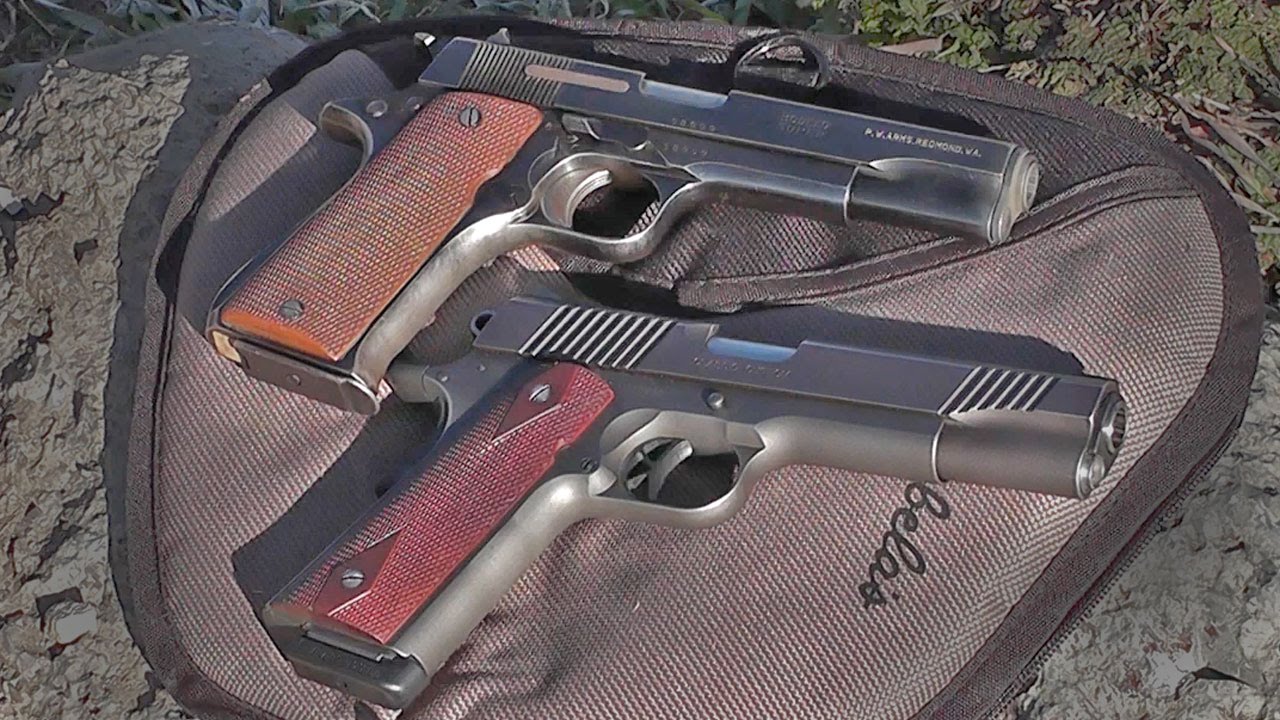
Here's where it diverges. The Model B has no grip safety. The trigger mechanism is different, it uses a pivoting trigger rather than the 1911's sliding trigger bow, and the sear and disconnector geometry are Star's own design. The magazine is a single-stack 8-round box (some later variants hold 9), and it feeds 9x19mm Parabellum rather than .45 ACP, so the frame dimensions are noticeably slimmer. The barrel locking system uses a separate locking block pinned to the barrel rather than the 1911's integral locking lugs machined into the barrel hood. This is actually closer to the system Beretta later used in the 92 series, though Star got there first.
The practical consequence: 1911 parts don't interchange with Model B parts. Not the magazines, not the grips (close, but no), not the firing pin, not the extractor. Some aftermarket grip panels marketed as "1911/Star" fit both, but that's the exception. If someone tells you it takes standard 1911 magazines, walk away from the conversation. They don't know what they're talking about, and if they're selling the gun, that's a problem.
A short production history
Star introduced the Model B in 1928, building on their earlier Model A (chambered in 9mm Largo, Spain's standard military cartridge at the time). The switch to 9mm Parabellum was commercially motivated, it opened up export markets across Europe and South America where 9mm was the dominant military and police round.
Star Model A 9mm Largo
May contain affiliate links.
Production ramped up significantly during the Spanish Civil War (1936–1939), when both Republican and Nationalist forces used Star pistols. Quality varied during this period. Wartime production guns, particularly those made under Republican contract, sometimes show rougher machining and simplified finish work compared to pre-war commercial examples. This matters for collectors: a pre-Civil War Model B in good condition is a genuinely scarce gun, while a wartime example with mismatched finishes and crude markings is common and valued accordingly.
The German contract guns
The most historically significant Model B variants are the ones purchased by Nazi Germany during World War II. Starting in 1941, Germany contracted with Bonifacio Echeverria for large quantities of Model B pistols to supplement their standard-issue P.08 Lugers and P.38 Walthers. These guns were shipped to German forces and typically bear Waffenamt-style acceptance stamps, though the specific proof marks differ from standard Wehrmacht proofing, and this is a critical identification point we'll come back to.

Walther P.38 9mm Deals
Prices may change. May contain affiliate links.
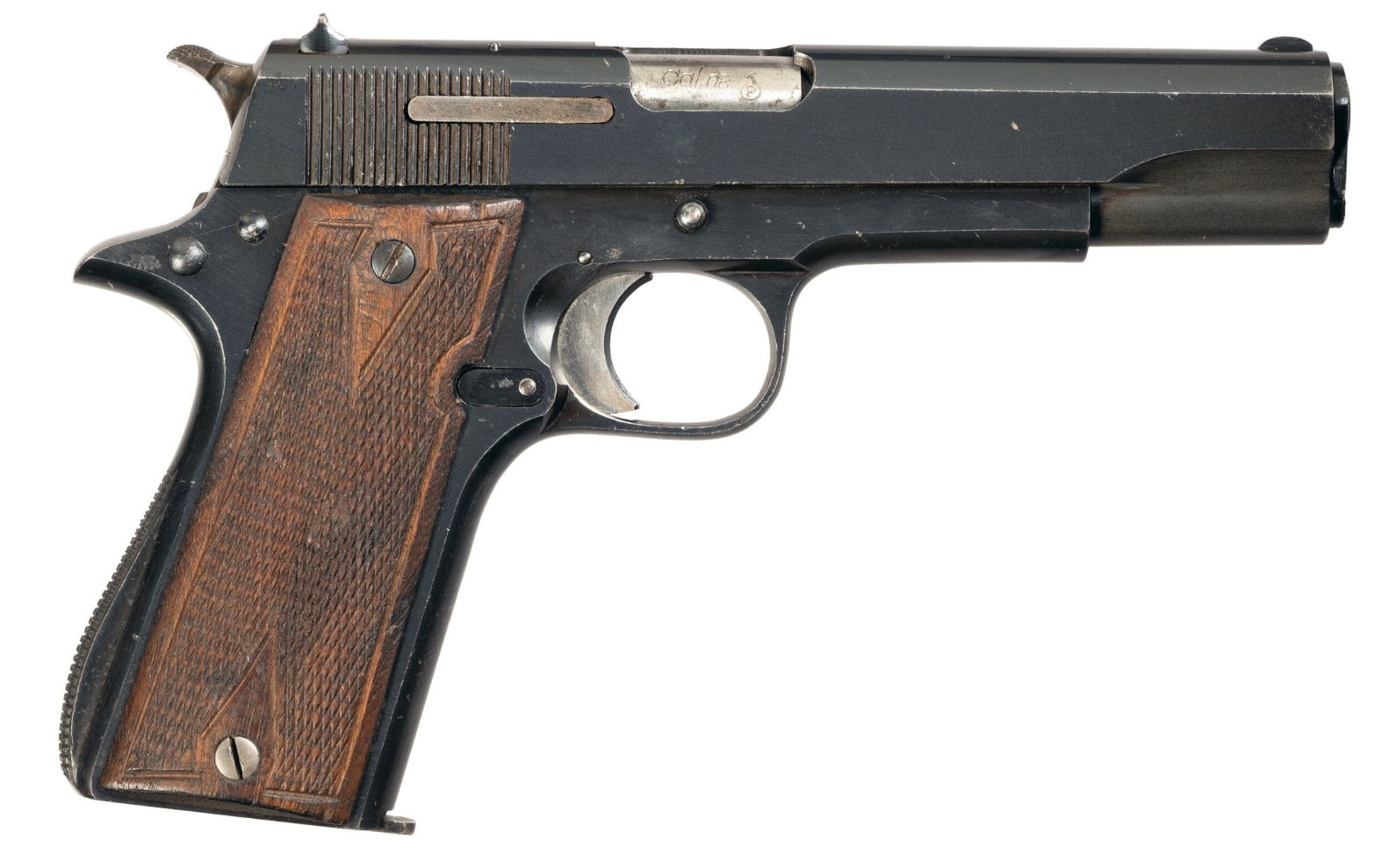
German contract Model Bs were produced from roughly 1941 to 1944. Serial number ranges for these guns generally fall between the low 20,000s and the high 250,000s, though not every gun in that range went to Germany. The key identifier is the presence of German acceptance marks, typically found on the right side of the frame and slide. These are small eagle-over-number stamps, and they're what separates a $300 surplus pistol from a $600+ WWII provenance gun.
The red flag most buyers miss: fake German acceptance stamps are out there. They've been applied to otherwise-unremarkable commercial or postwar Model Bs to inflate value. The stamps on genuine German contract guns are small, consistent in depth, and positioned in specific locations. Stamps that look too deep, too large, or placed in unusual spots should raise suspicion. Compare against known examples in reference photos before paying a premium for "Nazi-marked" anything.
Postwar production and the export boom
After 1945, Star resumed commercial production and aggressively pursued export contracts. Model Bs went to police forces in South Africa, various South American countries, and parts of Southeast Asia. Many of these guns eventually hit the U.S. surplus market in the 1980s and 1990s, imported by companies like Century Arms International and Interarms. Import-marked guns, you'll see the importer's name, city, and caliber designation electropenciled or roll-stamped on the barrel or frame, are the most common Model Bs you'll encounter today.
May contain affiliate links.
Production of the original Model B continued until the early 1980s, overlapping with its successors. Total production numbers are difficult to pin down precisely because Star's factory records aren't fully public, but estimates run into the hundreds of thousands across all variants.
The variants you'll actually find
Not every gun marked "Star" with a 1911-ish profile is a Model B. The Star lineup included numerous models across different calibers and configurations, and the differences matter for both function and collectibility.
Model B (standard)
The original. Single-action, 9mm Parabellum, 8-round magazine, roughly 5-inch barrel. Fixed sights, a simple blade front and notch rear. Blued finish on commercial guns, with some wartime examples showing a cruder phosphate or matte finish. Grips are typically checkered walnut or black plastic with the Star logo.
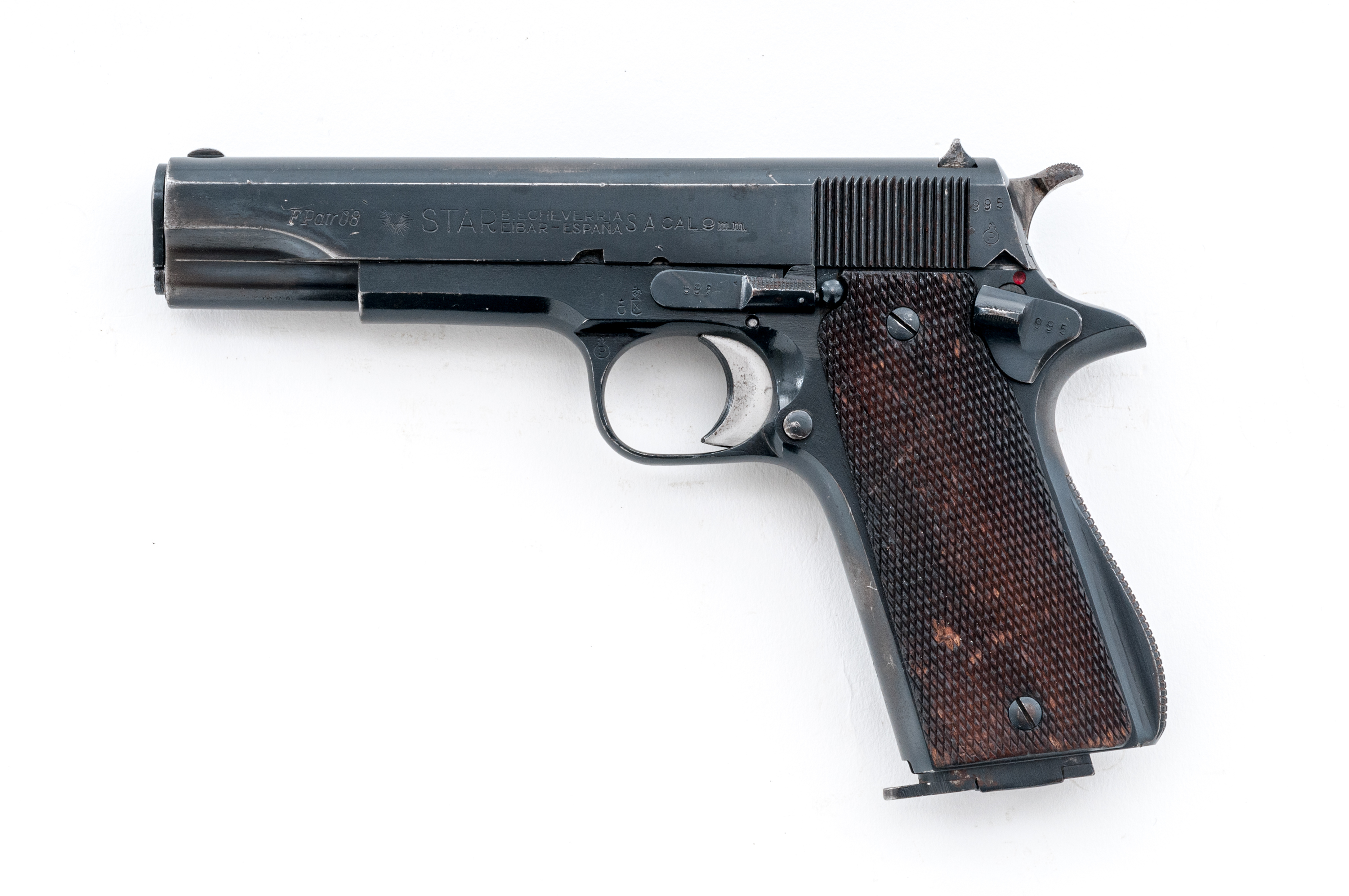
The standard Model B is the most common variant on the surplus market and the one most people picture when the name comes up. Condition ranges wildly. Police trade-in guns from South America often show heavy holster wear on the high points but acceptable bores. German contract guns in good shape command a premium. Pre-Civil War commercial examples with high-polish blue are genuinely rare.
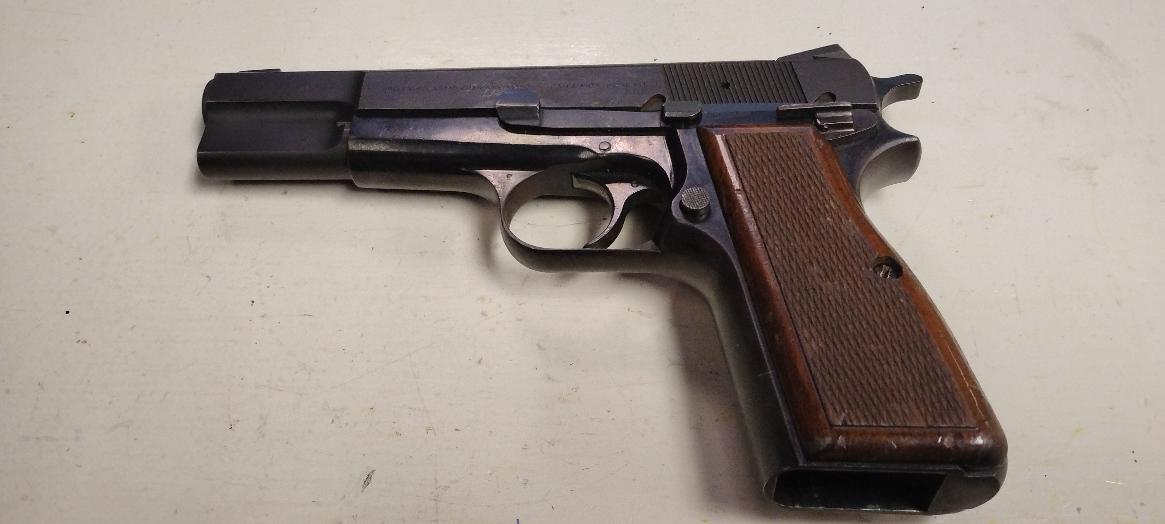
Model B Super (Super B)
Introduced in the 1970s, the Super B added a few modernizations. The most significant is the loaded chamber indicator, a small pin at the top of the slide that protrudes when a round is chambered. The Super B also incorporated an improved magazine safety (the gun won't fire with the magazine removed) and a slightly redesigned frame. The trigger pull on Super Bs tends to be somewhat less crisp than the original Model B, largely because of the magazine safety mechanism, same complaint Hi-Power shooters have about their magazine disconnectors.
Star Model B Super (Super B) 9mm
May contain affiliate links.
Super Bs are common on the surplus market, often in better average condition than the original Model Bs because they're newer production. They're perfectly serviceable shooters. Collector interest is moderate, they lack the WWII provenance of the earlier guns and don't have the compact appeal of the BM.
Model BM
This is the one that gets the most attention from practical shooters. The BM is a compact version, shorter barrel (around 4 inches), shorter slide, and a more angular, less graceful profile than the original. It was designed for police and military use where a smaller sidearm was preferred. The BM uses a different locking system, a Colt Commander-style barrel bushing arrangement, and has a steel frame that makes it heavier than you'd expect for its size.
May contain affiliate links.
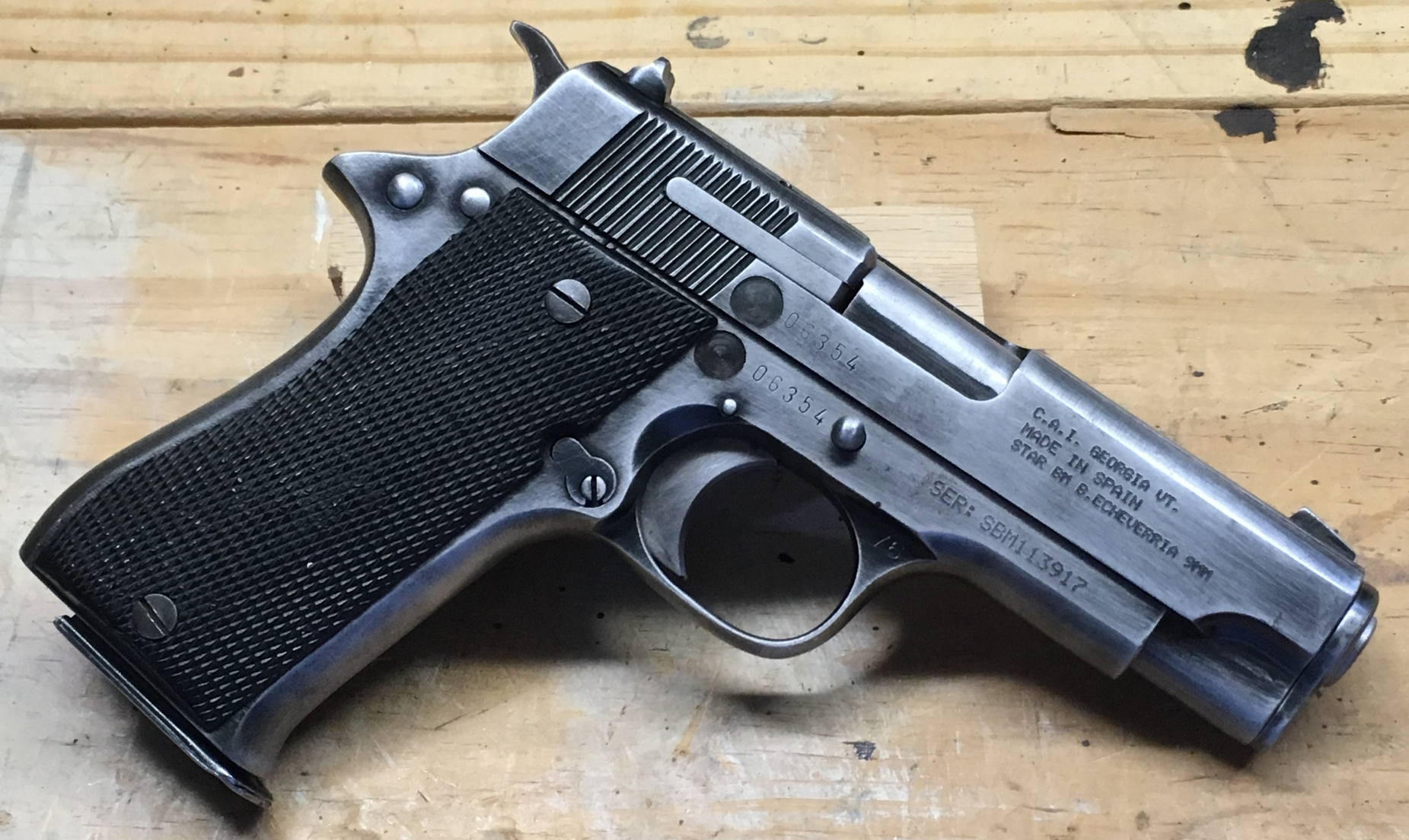
BMs flooded the U.S. surplus market in the 1990s and 2000s, often priced under $200. Those days are over. Clean BMs have climbed in value as shooters have discovered they're reliable, accurate, and genuinely pleasant to carry. The BM is arguably the best shooting value in the Star lineup right now, though "value" is a moving target.
Model BKM
Same as the BM but with an alloy frame instead of steel. Lighter, but the alloy frames are more prone to cracking under sustained use, particularly around the slide rails. If you're buying a BKM, inspect the frame rails carefully, hairline cracks at the rear of the dust cover or around the pin holes are the death sentence for these guns. A cracked alloy frame isn't worth fixing; the economics don't work.
May contain affiliate links.
Model 30M and 30PK
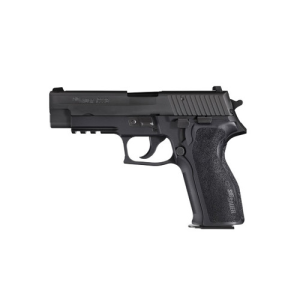
Star's later-generation service pistols, produced from the 1980s onward. The Model 30M is a steel-framed, double-action/single-action 9mm with a 15-round magazine, a clear response to the market shift toward high-capacity DA/SA pistols like the Beretta 92 and SIG P226. The 30PK is the alloy-framed variant. These are modern enough to function as practical carry or home defense guns, and they occasionally show up in good condition with original boxes and accessories. They're not really "collecting" guns yet, they're in the no-man's land between surplus bargain and established collectible.

Beretta 92 9mm Deals
Prices may change. May contain affiliate links.
May contain affiliate links.
Star Model 30PK 9mm
May contain affiliate links.
Markings, proofs, and how to date your gun
Star's marking system is more straightforward than some European manufacturers, but there are still details that trip people up.
Slide markings
The left side of the slide on most Model Bs reads "STAR, BONIFACIO ECHEVERRIA S.A., EIBAR (ESPAÑA)" along with the model designation and caliber. On commercial guns, the caliber will typically read "9m/m (9x19)." Wartime guns may have abbreviated markings or different font styles depending on the production period and contract.
German contract guns sometimes have the caliber marked as "08" (referencing the 9mm Parabellum's German designation as the Patrone 08). This is a legitimate marking on genuine WWII contract pistols, but again, verify it against the serial number range and acceptance stamps before assuming provenance.
Proof marks
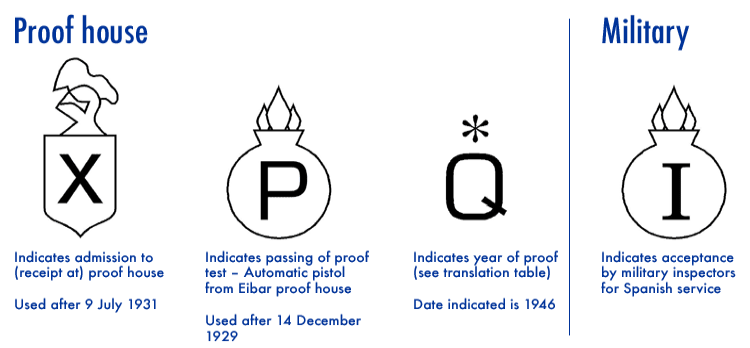
Spanish proof marks are found on the barrel, frame, and sometimes the slide. The primary proof is a stylized crown over letters, applied at the Eibar proof house. Pre-1931 guns carry different proof marks than post-1931 guns due to changes in Spanish proofing law. The star-in-circle mark (not to be confused with the Star brand logo) is a Spanish commercial proof. Military acceptance marks are separate from commercial proofs and vary by contract.
Serial numbers and dating
Star serial numbers are sequential within model lines, but they don't follow a single continuous sequence across all models. The most reliable dating method combines the serial number with the style of proof marks and slide legend. Star-Firearms.com (an independent reference site, not affiliated with the original manufacturer) has compiled serial number tables that correlate approximate production dates with number ranges. These aren't factory-confirmed but are generally accepted by the collecting community as the best available resource.
What to look for: the serial number should appear on the frame, slide, and barrel. On a correct, unaltered gun, all three numbers match. Mismatched numbers aren't uncommon on surplus guns, parts got swapped during military or police service, but they reduce collector value. A matching-numbers German contract gun is worth meaningfully more than one with a replacement slide or barrel.
Import marks
Most Model Bs in the U.S. carry import marks, the importer's name, city, state, and caliber, typically applied by electropencil (a vibrating stylus that leaves a stippled engraving) on the barrel, frame flat, or dust cover. Century Arms International (St. Albans, VT or Georgia, VT) is the most common importer you'll see. Interarms (Alexandria, VA) imported some as well.
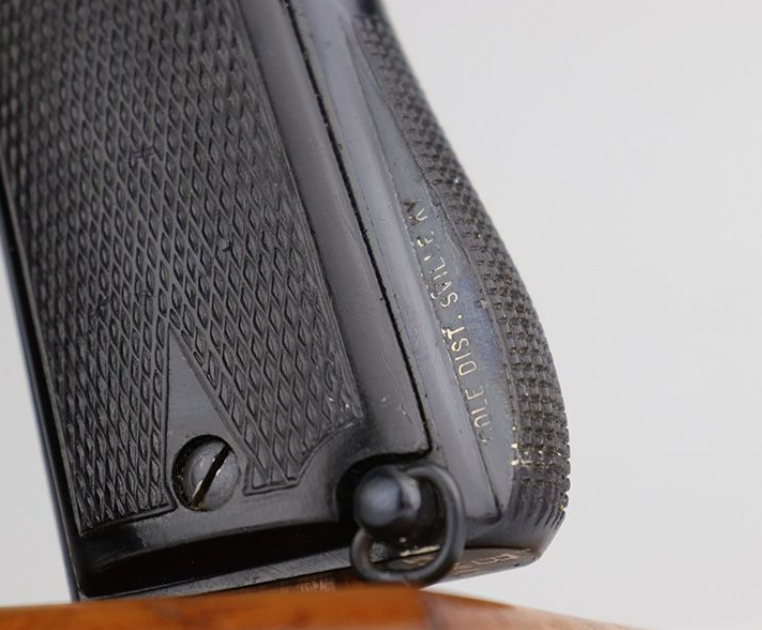
Import marks don't kill collector value, but they do affect it. A German contract Model B with no import marks, meaning it came into the country before the Gun Control Act of 1968 mandated import marking, or entered through a different channel, is worth more to collectors who care about original appearance. On a standard postwar surplus gun, import marks are expected and nobody penalizes you for them.
Hands-on inspection: what to check before buying
You're at a gun show, or you're looking at photos in an online listing. Here's what matters.
Bore condition
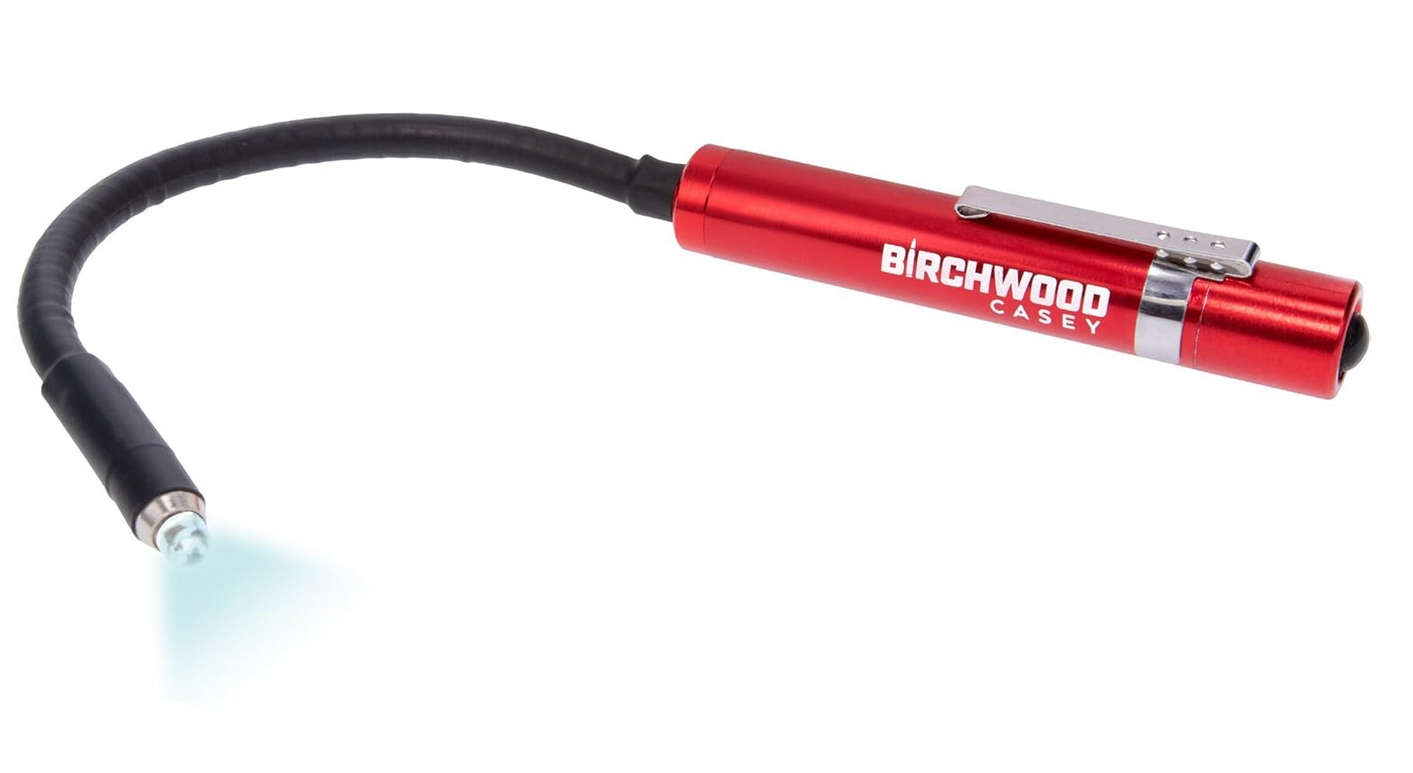
Run a light down the bore. The Model B's chrome-lined barrel (on later production; earlier guns are bare steel) should show sharp, well-defined rifling with no significant pitting. Surplus guns that spent decades in humid police holsters in tropical climates often have rough bores. A dark but smooth bore will still shoot fine. A bore with deep pitting, especially in the first two inches ahead of the chamber, will affect accuracy and isn't worth the trouble unless the gun is otherwise exceptional.
Slide-to-frame fit
Rack the slide. On a well-preserved Model B, the fit should be snug with minimal side-to-side play. These guns were machined to reasonable tolerances, and excessive looseness usually indicates heavy use. Some play is normal on a 50-year-old service pistol. Enough play that you can visibly wiggle the slide laterally on the frame means the gun has been shot a lot, and you should price accordingly.
Finish assessment
Original bluing on a Star Model B has a deep, slightly warm tone, not the cold, almost purple-black of a modern hot blue. Look at the flats of the slide and the frame under good light. Original blue wears at the high points first: the muzzle end of the slide, the edges of the safety lever, the backstrap. This wear pattern is normal and expected.
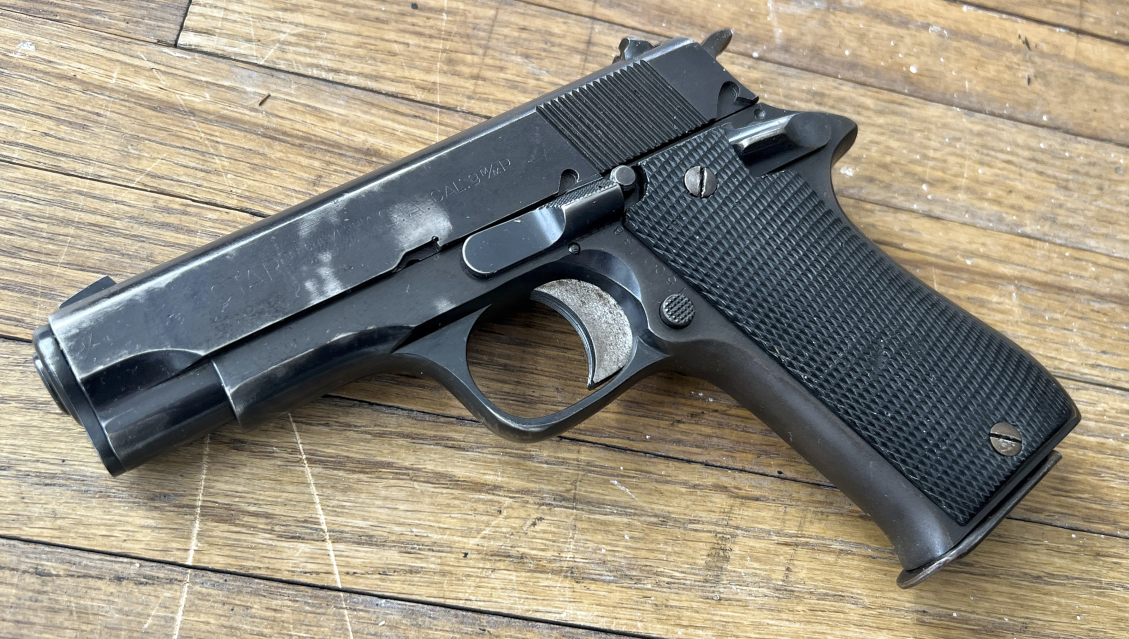
What's not normal: a gun that's uniformly dark with no wear at the high points but has a slightly different texture in the recesses. That's a reblue. Reblued guns have a flatter, more uniform color that doesn't match the original factory finish. The telltale is often the roll marks, on a reblued gun, the slide legend and proof marks will look slightly soft or filled in, because the hot bluing process deposits material that partially obscures fine engraving. A gun with crisp, sharp roll marks and even wear is almost certainly original finish. A gun with mushy roll marks and perfect-looking blue has been refinished.
Reblued finishes reduce collector value by 40–60% on guns where originality matters (German contract guns, pre-war examples). On a common postwar surplus gun that you're buying to shoot, a reblue isn't a dealbreaker, but you shouldn't pay original-finish prices for it.
Thumb safety function
Engage and disengage the thumb safety. It should click positively into both positions without being so stiff you need two hands or so loose it could disengage in a holster. On guns with heavy use, the safety detent can wear, resulting in a mushy, indistinct click. This is fixable but worth noting during negotiation.
Magazine condition
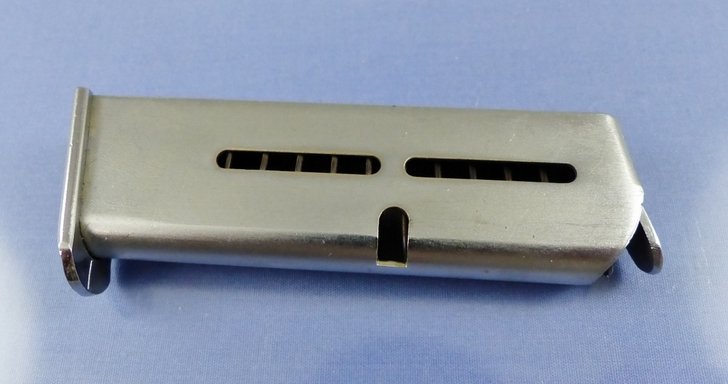
Star Model B magazines are proprietary. They don't interchange with 1911 magazines, Hi-Power magazines, or magazines from other Star models (with limited exceptions between the B and Super B). Original Star magazines have a distinctive follower and floorplate design. If the gun comes without a magazine, factor in the cost of finding one, original Star B magazines aren't always easy to source, and aftermarket options are limited. Triple-K and a few other aftermarket makers have produced magazines, but reliability varies. An original magazine in good condition is worth more than you'd think for a "cheap surplus gun."
Common mistakes and traps
Paying WWII premium for a postwar gun
The single most expensive mistake in Model B collecting. A postwar commercial or police surplus gun in the same serial number neighborhood as the German contract range but without acceptance stamps is not a WWII gun. Serial numbers alone don't prove German military use. You need the acceptance marks, and you need them to be genuine. Sellers, sometimes honestly, sometimes not, describe any Model B from the 1940s as a "WWII gun." The serial number puts it in the right era. The stamps tell you if it actually served.
Assuming all 9mm Stars are Model Bs
Star made the Model A in 9mm Largo (also called 9x23mm), which looks nearly identical to the Model B externally. A Model A will chamber 9mm Parabellum, the round will physically fit, but the case dimensions are different and firing Parabellum in a Largo chamber is not recommended. Check the caliber marking on the slide. If it says "9mm/38" or "9mm Largo," it's a Model A, not a Model B, and you need 9mm Largo ammunition (which is still produced in small quantities but is neither cheap nor common).
Ignoring the magazine safety on Super Bs
The Super B's magazine safety means the gun won't fire with the magazine removed. This is a deliberate design feature, not a malfunction. But it also means the trigger pull is affected by the magazine safety spring, and dry-firing practice without a magazine inserted won't give you a trigger click. Some owners remove the magazine safety to improve the trigger, this is a simple modification but it does alter the gun from factory configuration, which matters if you care about originality.
Buying a BKM without checking for frame cracks
Already mentioned, but worth repeating because it's the single most common catastrophic failure point in the Star compact lineup. The alloy frame BKM is lighter and more pleasant to carry, but it doesn't have the service life of the steel-frame BM. Inspect the frame with a magnifying glass or jeweler's loupe, focusing on the area around the slide stop pin hole, the rear of the dust cover, and the frame rails. Cracks in an alloy frame are terminal.
Overpaying for "unfired" surplus
A surplus gun described as "unfired" almost certainly has been fired. Military and police pistols are test-fired at the factory and typically fired during qualification and training. What the seller probably means is "minimal wear" or "appears to have been issued but not heavily used." That's fine, it's a reasonable condition description. But truly unfired, in-the-wrap surplus Star pistols are essentially nonexistent at this point. If someone's charging a premium for "unfired," ask what evidence supports the claim beyond cosmetic condition.
The Star B versus the Browning Hi-Power
This comparison comes up constantly, and it's worth addressing directly. Both are single-action 9mm pistols with Browning-derived lockups and single-stack magazines. Both were produced over long periods and saw extensive military and police use. Both are available on the surplus market.
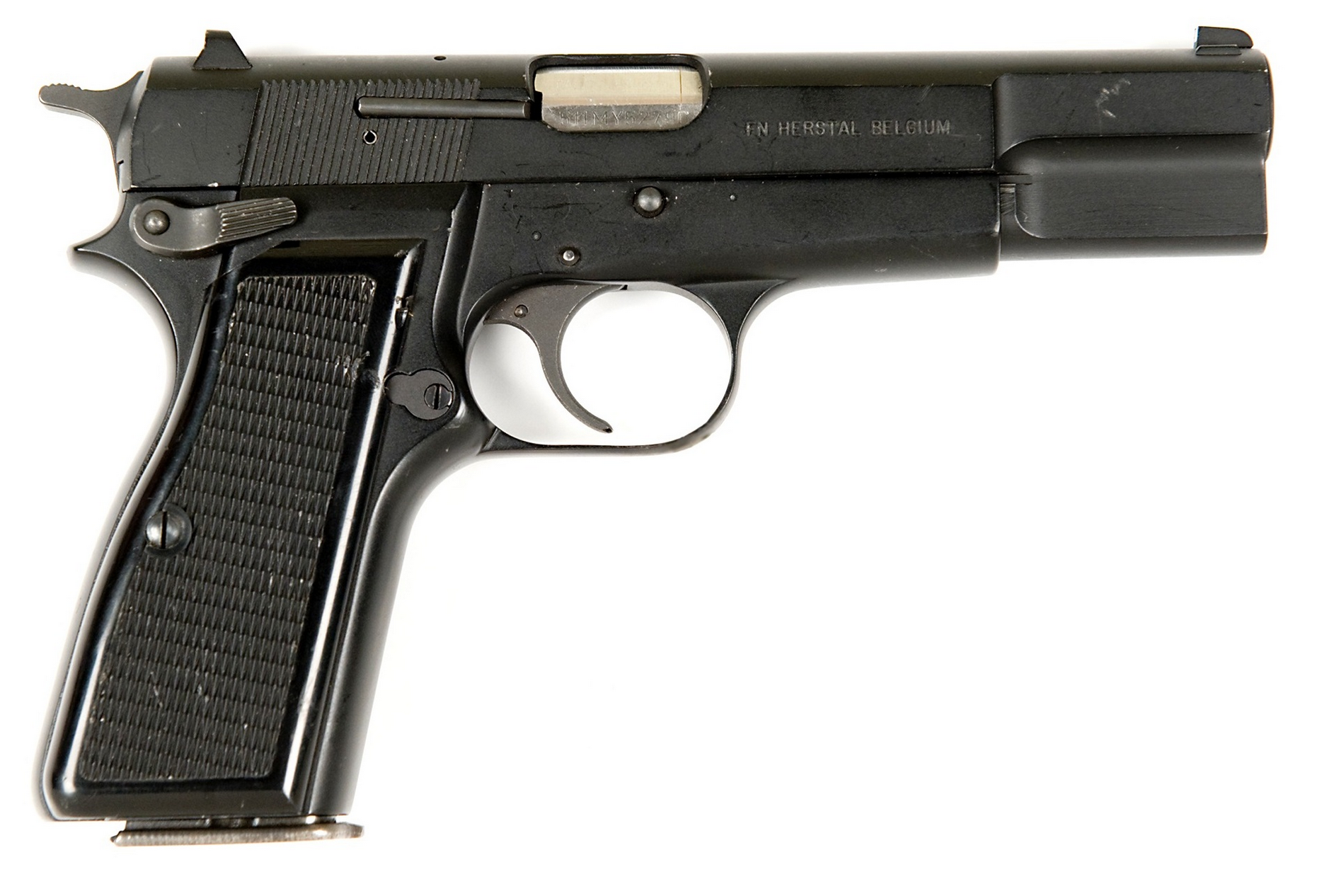
The Hi-Power is the more refined design. Its trigger linkage is different (the Hi-Power uses a cam system rather than a swinging link), its magazine capacity is higher (13 rounds standard versus 8), and its fit and finish, particularly on Belgian-made FN examples, is generally superior to the Star. The Hi-Power also has a much larger aftermarket for parts, holsters, grips, and gunsmithing services.
The Star is cheaper. Substantially cheaper. A surplus Star Model B in shootable condition runs a fraction of what a comparable Hi-Power costs, and that gap has widened as Hi-Power values have climbed sharply in recent years. The Star is also arguably a simpler gun to detail-strip and maintain, with fewer small parts to lose during disassembly.
For collectors, the Hi-Power wins on prestige, historical significance (it served on literally every side of WWII and remained in NATO service for decades), and long-term value appreciation. For shooters who want a classic single-action 9mm to actually take to the range without worrying about dings and holster wear, the Star is the smarter buy. They're not the same gun, and treating the Star as a budget Hi-Power undersells what it actually is, a well-made service pistol from a serious manufacturer that happened to lose the marketing war.
What the market looks like right now
Without quoting specific dollar figures that'll be outdated by the time you read this, here's the general landscape.
Standard postwar surplus Model Bs in average condition, holster wear, honest bore, functional mechanics, import marked, are at the low end of the market. They're still among the cheapest ways to get a steel-framed, single-action 9mm with real history behind it. These are shooters, not safe queens, and they're priced accordingly.
German contract Model Bs with verified acceptance marks and matching numbers occupy a higher tier. Condition matters enormously here, a German contract gun with 80% original finish and a clean bore is worth multiples of the same gun with a reblue and a sewer-pipe barrel. Provenance documentation (capture papers, veteran bring-back letters) adds further premium, though such documentation is scarce and should be authenticated carefully.
Super Bs sit in roughly the same range as standard Model Bs, sometimes slightly higher due to generally better condition (newer production). The BM has seen the most price appreciation in percentage terms over the past decade, driven by the practical shooting community's discovery that it's a genuinely good compact 9mm. Clean BMs with original magazines are no longer the sub-$200 impulse buys they were in 2010.
The Model 30M and 30PK remain relatively affordable and underappreciated. They're modern enough to be practical and old enough to qualify as Curio & Relic eligible (manufactured more than 50 years ago isn't the threshold here, C&R status requires being listed or being 50+ years old, and the 30M series is approaching that line). These may be the sleeper picks in the Star lineup for buyers who want both a shooter and a future collectible.
Pre-Civil War Model Bs in original condition are the unicorns. They rarely appear on the market, and when they do, they're priced as the genuine antiques they are. If you find one, get it authenticated by someone who knows Spanish proofs from the 1920s and 1930s.
Before you hand over cash
Here's the short version of everything above, compressed into a buying checklist.
Verify the model. Check the slide markings for model designation and caliber. A Model A in 9mm Largo looks like a Model B but isn't. Confirm you're getting what you think you're getting.
Check serial number matching. Frame, slide, barrel, all three should agree. Mismatched numbers aren't fatal on a shooter, but they should be reflected in the price, and they significantly reduce collector value.
Inspect the bore. A light and a bore snake are the most important tools you can bring to a gun show. Pitting in the first few inches ahead of the chamber is the most common issue on surplus Stars.
Evaluate the finish honestly. Know the difference between honest wear (high-point thinning, holster rub) and a reblue (uniform color, soft roll marks). Don't pay original-finish money for a refinished gun.
If it's claimed as a German contract gun, verify the acceptance stamps. Compare them to reference photos from reputable sources. The stamps should be small, consistent, and in the correct locations. Oversized, overly deep, or oddly placed stamps are the red flag.
Ask about the magazine. No magazine means you're adding cost and hassle. Original Star magazines are the right choice; aftermarket magazines may or may not run reliably.
On BMs and BKMs, inspect the frame for cracks. Alloy-frame BKMs are especially vulnerable. A cracked frame is a parts gun, period.
The Star Model B doesn't get the respect it deserves in most collecting circles. It's overshadowed by the Hi-Power, undercut by its own low surplus prices, and dismissed by people who see "Spanish" and assume inferior quality. That's a market inefficiency, and market inefficiencies are where smart buyers find good guns. Look closer.