You're building a 16-inch 5.56 upper and you've hit the first real decision: carbine-length or mid-length gas system. Everyone on the forums says mid-length is "better," but nobody explains what's actually happening inside the system when you move that gas port two inches forward. The answer isn't just "softer recoil"; it's about dwell time, bolt velocity, extraction timing, and how all of that changes your parts life and reliability envelope.
Here's the deal: on a 16-inch barrel, mid-length gas is almost always the right call. But "almost always" isn't "always," and understanding why mid-length works better means understanding what carbine gas was designed for, where it still makes sense, and what you need to change in the rest of your system when you pick one over the other. This is a systems discussion, not a parts discussion.
The difference between these two setups is about seven inches of barrel sitting past the gas port versus nine inches. That doesn't sound like much. It changes everything about how the rifle cycles.
What the gas system actually does
The AR-15 direct impingement system taps gas from a port in the barrel, routes it through a gas tube into the bolt carrier key, and pushes the carrier rearward to unlock the bolt, extract the spent case, and cycle the action. The timing of when that gas hits the carrier, relative to where the bullet is in the barrel and what pressure exists at the gas port, determines how hard the system cycles.
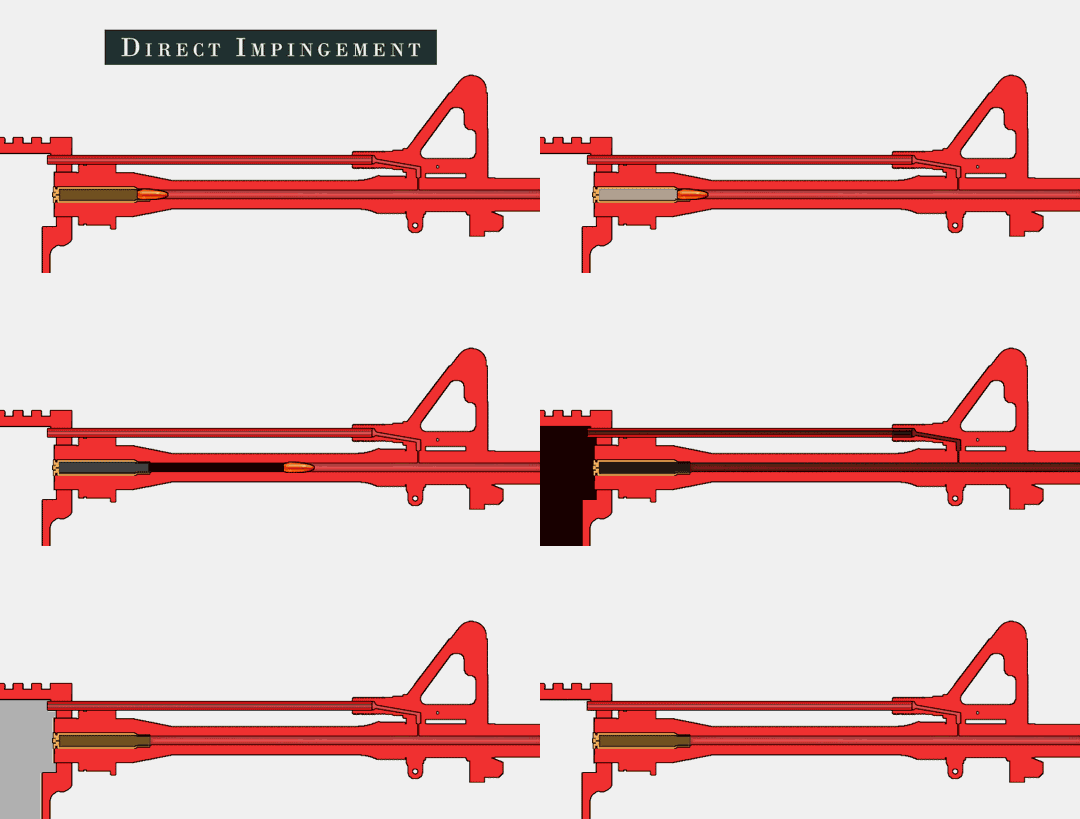
Gas system length is the distance from the barrel's index point (where it meets the upper receiver) to the center of the gas port. A carbine-length gas system puts that port about 7 inches from the receiver. Mid-length moves it to about 9 inches. Rifle-length sits at roughly 12 inches. Each step forward means gas reaches the carrier later in the bullet's travel down the bore, and at a lower pressure.
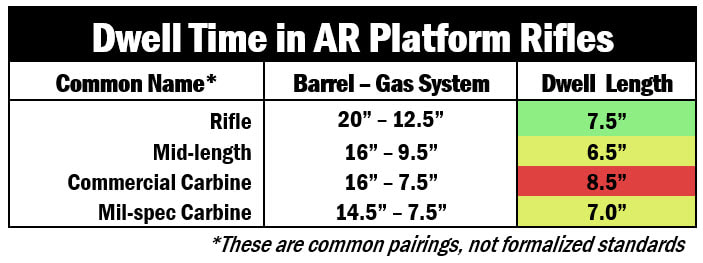
The critical concept here is dwell time, the distance the bullet still has to travel past the gas port before it exits the muzzle. On a 16-inch barrel with carbine gas, you've got roughly 9 inches of dwell. With mid-length, you've got about 7 inches. More dwell time means more gas gets pushed into the system before the bullet leaves and pressure drops. Carbine gas on a 16-inch barrel creates a lot of dwell time, which means a lot of gas volume entering the system, which means the bolt carrier gets hit hard and fast.
That's the root of every difference between these two setups. Everything else, recoil feel, extraction reliability, parts wear, suppressor behavior, flows from that pressure-and-timing relationship.
The carbine gas origin story (and why it's still everywhere)
Carbine-length gas exists because of the M4. The military needed a 14.5-inch barrel on the M16 platform, and carbine gas was the right length for that barrel. At 14.5 inches with a carbine gas port, you get about 7.5 inches of dwell time. That's a well-tuned system, enough gas to run reliably with military ball ammo in harsh conditions, not so much that it beats itself apart.
The problem started when the commercial market took that same gas system length and stuck it on 16-inch barrels. A 16-inch barrel was the shortest legal length without an NFA stamp, so manufacturers built millions of them with carbine gas because that's what the tooling was set up for and that's what the M4 profile called for. Nobody was optimizing. They were manufacturing.

The result is an overgassed system. Those extra 1.5 inches of barrel past the gas port (compared to the M4's 14.5) mean significantly more gas volume entering the action. The bolt carrier accelerates harder, the bolt unlocks earlier relative to chamber pressure, and the whole system runs rougher than it needs to.
Does it work? Absolutely. Millions of 16-inch carbine-gas ARs run fine every day. The AR-15 platform is overbuilt enough to tolerate being overgassed. But "it works" isn't the same as "it works optimally." Carbine gas on a 16-inch barrel is a compromise that made sense for manufacturing logistics, not for the rifle as a system.
Where carbine gas still makes sense on a 16-inch barrel: if you're running an extremely wide range of ammunition, from underpowered steel-case to standard brass, and you need the system to cycle everything without an adjustable gas block. The extra gas volume gives you a bigger reliability margin with weak ammo. That's a real consideration for duty guns that might eat whatever's available. It's less of a consideration for someone who buys consistent ammo and can tune their system.
Why mid-length works better on 16 inches
Move the gas port forward two inches and the physics change meaningfully. With mid-length gas on a 16-inch barrel, you get about 7 inches of dwell time, close to what the M4 has with carbine gas on 14.5 inches. That's not a coincidence. That dwell time range is roughly where the AR-15 system was designed to operate.
The lower gas port pressure at mid-length means the bolt carrier starts moving rearward later and with less initial force. The bolt stays locked longer, which means the case has more time to release from the chamber walls as pressure drops. This matters because brass is elastic, it expands to seal the chamber under pressure, and it needs to contract before extraction. If you yank the bolt open while there's still significant pressure in the chamber, you're ripping a still-expanded case out of the chamber. That works, but it's hard on extractors, hard on cases (if you reload), and occasionally causes failures.
The recoil difference is real
People argue about this online. Some say they can't feel the difference. Others say it's night and day. The truth is somewhere in between, and it depends on what you're comparing.
If you take two otherwise identical rifles, same barrel profile, same buffer weight, same stock, same ammo, and swap only the gas system length, the mid-length will have noticeably less felt recoil impulse. Not less total energy (the cartridge determines that), but a different recoil curve. Carbine gas hits you with a sharper, snappier pulse. Mid-length spreads that impulse over a slightly longer time, which feels smoother.
The difference is most obvious during rapid fire. Shooting a carbine-gas 16-inch at speed, the dot bounces more aggressively between shots. A mid-length system lets the dot settle faster. On a single slow-fire shot from a bench, you might not care. Running a drill at 2-3 rounds per second, you'll feel it.
Extraction and parts life
This is the difference that matters over thousands of rounds. Carbine gas on a 16-inch barrel beats up extractors, gas rings, and bolt lugs faster than mid-length does. The bolt carrier velocity is higher, which means the carrier slams into the buffer harder, which means the buffer retainer takes more abuse, the receiver extension (buffer tube) sees more impact, and the whole reciprocating mass is working harder than necessary.
Extractor springs and O-rings are consumable parts on any AR. But on an overgassed carbine system, you'll replace them more often. Bolt life, measured by lug cracking and eventual failure, is generally longer on a properly gassed mid-length system because the bolt isn't unlocking against as much residual chamber pressure.
How much longer? Hard to put exact numbers on it because barrel quality, ammo, maintenance, and bolt metallurgy all vary. But the directional answer is clear: less violence in the action means longer parts life. If you're building a rifle to last 20,000+ rounds, the gas system length is part of that equation.
Range notes
Set up two 16-inch uppers side by side, one carbine gas, one mid-length, on the same lower with the same H buffer and standard carbine spring. Run 30 rounds of M193 through each. Watch the ejection pattern. The carbine-gas upper will typically throw brass at the 1-2 o'clock position, hard. The mid-length will eject at 3-4 o'clock, with less velocity on the spent case. That ejection pattern tells you everything about how hard the system is cycling. Brass at 1 o'clock means the system is running fast and hot. Brass at 3-4 o'clock means it's running closer to optimal.
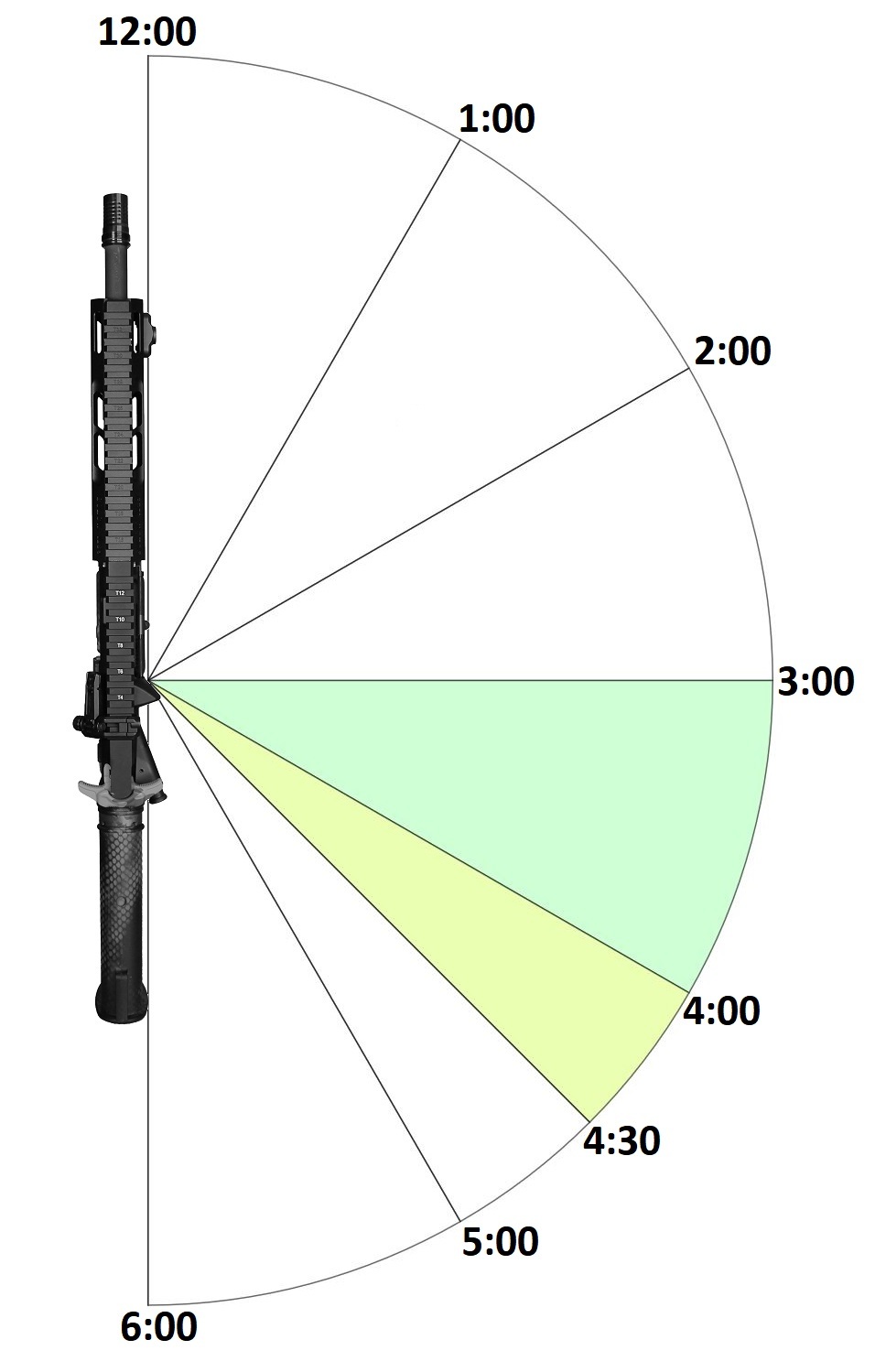
If your carbine-gas upper is throwing brass at 1 o'clock and denting case mouths on the deflector, it's overgassed. It'll still run, but you're leaving reliability margin and parts life on the table.
Buffer and spring tuning for each system
The gas system length is only half the equation. The buffer weight and spring rate on the other end of the carrier determine how the system actually behaves. This is where a lot of people get the setup wrong.
Carbine gas on 16 inches
Because carbine gas on a 16-inch barrel is overgassed, most people end up compensating with a heavier buffer. An H2 buffer (roughly 4.6-4.7 ounces) is a common recommendation for this setup, and it works, the extra mass slows the carrier down and absorbs some of the excess energy. Some people run H3 buffers (5.4-5.6 ounces) with carbine gas on 16-inch barrels, though that can start to cause issues with weaker ammo.
The problem with this approach is that you're using buffer weight to fix a gas system that's delivering too much energy in the first place. It works, but it's a band-aid. You've got excess gas beating on the bolt, and you're adding mass to slow things down after the damage is already being done to the extractor and bolt lugs during the initial unlocking event.
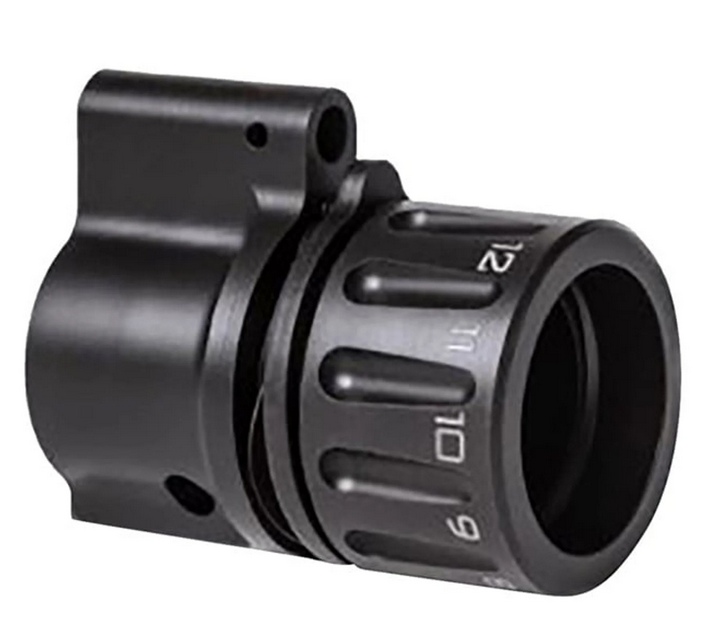
An adjustable gas block on a carbine-gas 16-inch barrel is another common fix, and honestly, it's a good one. Turn down the gas until you get 3-4 o'clock ejection with your primary ammo, run an H or H2 buffer, and you've essentially created a well-tuned system. The downside is added complexity and a potential failure point, some adjustable gas blocks lose their setting under heat or vibration, and if yours closes down, you've got a single-shot rifle.
Mid-length gas on 16 inches
A standard carbine buffer (3 ounces) or an H buffer (3.8 ounces) typically works well with mid-length gas on a 16-inch barrel. The system isn't overgassed to begin with, so you don't need heavy buffers to compensate. Most factory mid-length 16-inch rifles ship with an H buffer, and that's a solid starting point.
The JP Silent Captured Spring is worth mentioning here because it replaces both the buffer and spring with a self-contained unit that eliminates the "sproing" sound and lets you tune the spring weight. On a mid-length system that's already running close to optimal, a captured spring with the right weight can make the rifle feel remarkably smooth. It's not a necessary upgrade, but it's one that makes a noticeable difference in the shooting experience.
For mid-length on 16 inches, start with an H buffer and a standard carbine spring. Shoot 100 rounds of your primary ammo and check ejection pattern. If brass is landing at 3-4 o'clock, you're golden. If it's still hitting 2 o'clock, step up to an H2. If it's at 4-5 o'clock or you're getting inconsistent ejection, drop back to a standard carbine buffer.
The suppressor variable
Suppressors change everything about gas system tuning, and this is where the carbine-vs-mid-length decision gets more consequential.
A suppressor traps gas behind the bullet as it exits, which increases backpressure in the barrel. That backpressure means more gas gets pushed through the gas port and into the action. A system that's properly gassed unsuppressed becomes overgassed suppressed. A system that's already overgassed unsuppressed (carbine gas on 16 inches) becomes violently overgassed suppressed.
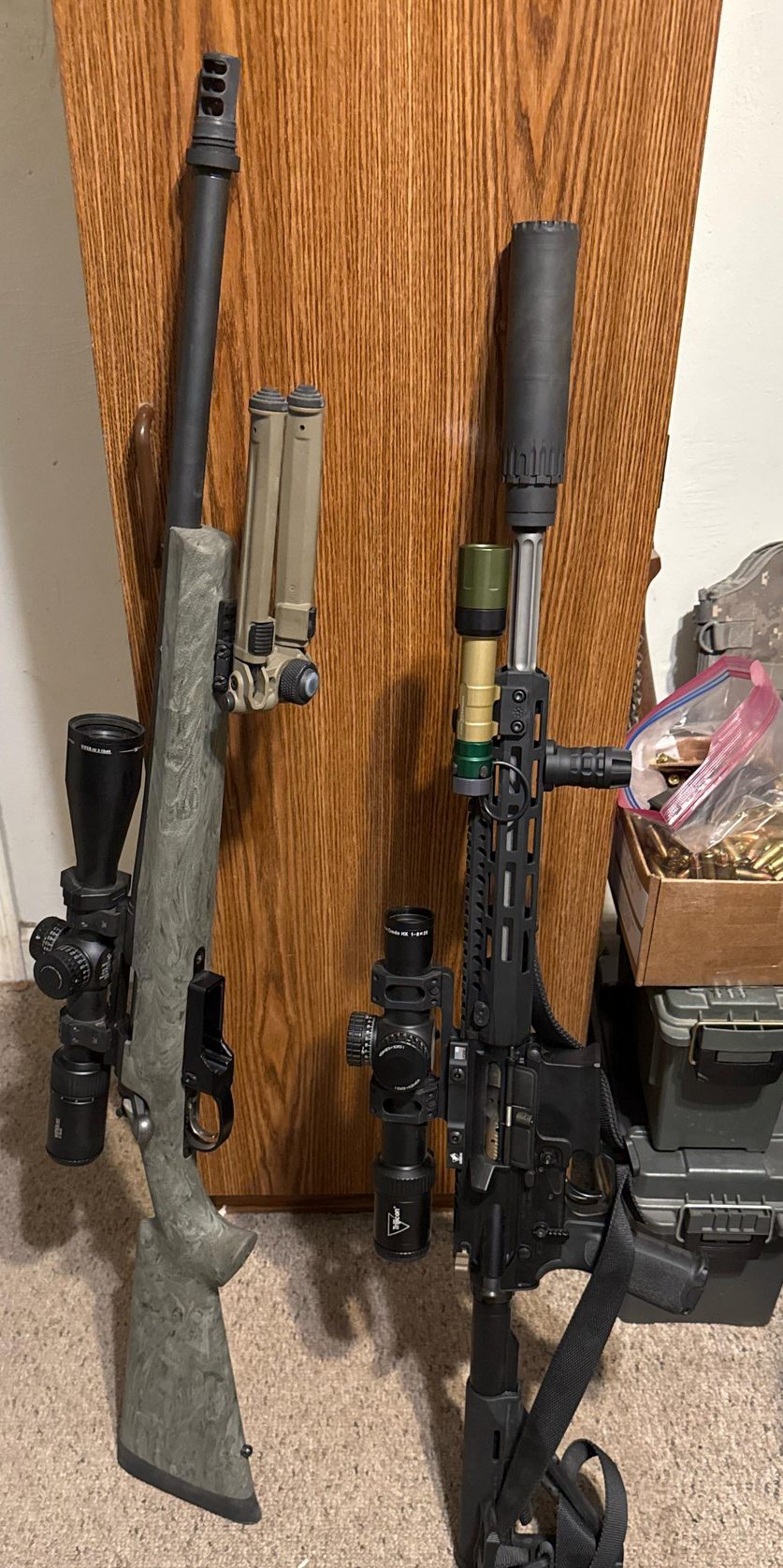
Running a suppressor on a carbine-gas 16-inch barrel without an adjustable gas block is rough. You'll get significantly more blowback gas in your face, the bolt carrier will slam rearward hard enough to accelerate wear on everything, and the rifle will feel noticeably harsher. An adjustable gas block becomes almost mandatory for this combination.
Mid-length gas on a 16-inch barrel handles suppressor backpressure much better because the baseline gas volume is lower. You'll still see increased cycling speed and some additional blowback, but the delta is smaller. Many mid-length 16-inch setups can run suppressed with just a buffer weight change (H to H2, or H2 to H3) and no gas block adjustment. That's a meaningful advantage if you want to swap between suppressed and unsuppressed without touching your gas block.
If you're building specifically for suppressed use, mid-length gas on 16 inches with an adjustable gas block is the cleanest setup. Tune the gas for suppressed shooting, and the rifle will still likely cycle unsuppressed if you open the gas block up. Or run two settings, one for cans, one for naked muzzle. Some newer adjustable blocks have detented positions that make this easy.
The handguard and rail length factor
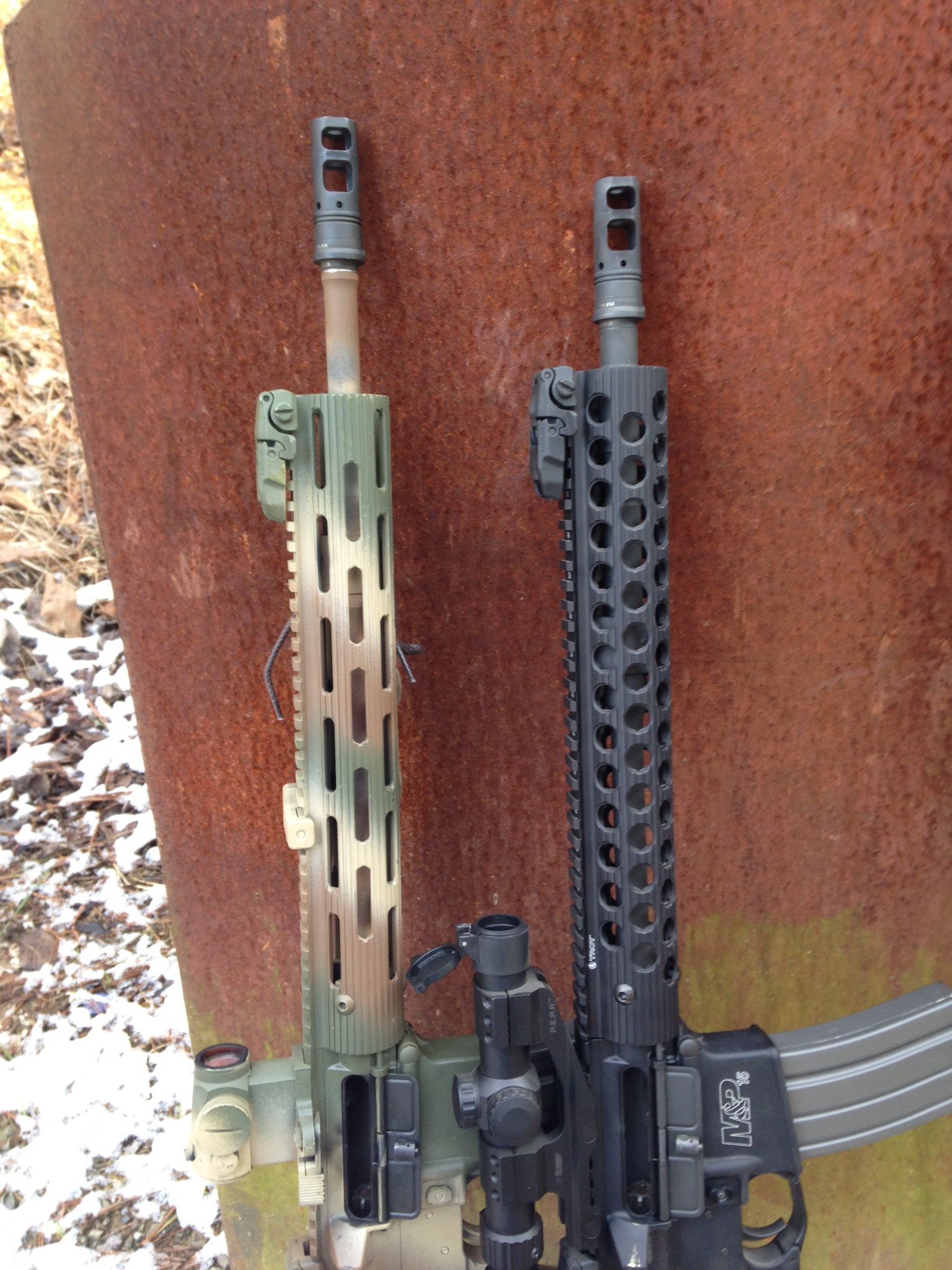
Here's something people overlook: mid-length gas gives you a longer gas tube, which means you need a longer handguard to cover it. A carbine-length handguard is about 7 inches. A mid-length handguard is about 9 inches. If you're running a free-float rail (and you should be on any build where accuracy matters), the mid-length setup naturally gives you more rail space for accessories, a longer grip surface, and a more balanced feel.
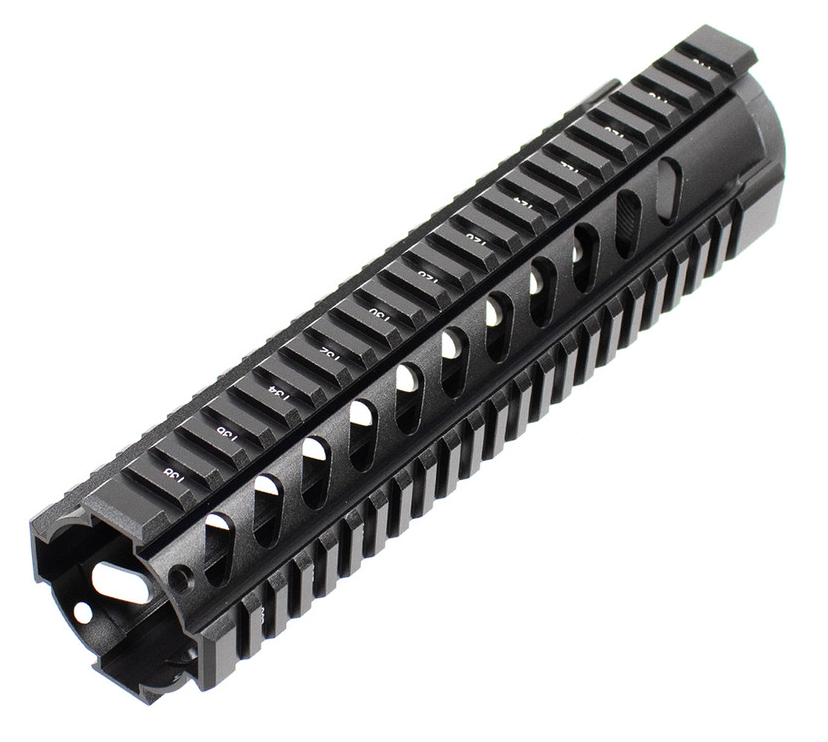
Most modern free-float rails are 13-15 inches on a 16-inch barrel regardless of gas system length, so this is less of an issue than it used to be with drop-in handguards. But if you're running a shorter rail for weight savings, the mid-length gas system means your gas block sits further under the rail, which is cleaner and protects the gas block from impacts.
With carbine gas and a short rail, the gas block might sit right at the end of the handguard or even slightly exposed, depending on rail length. Not a functional problem, but it affects the overall setup.
Accuracy differences (or lack thereof)
People ask whether gas system length affects accuracy. The honest answer: barely, and not in a way you'll measure at typical AR-15 distances.
The theoretical argument goes like this: the gas port is a hole in the barrel, and gas escaping through that hole as the bullet passes over it could theoretically disturb the bullet. A smaller gas port (which mid-length systems can use because they don't need as much gas volume) means less disturbance. Additionally, the barrel harmonics are slightly different with the gas port in a different location.
In practice, the accuracy difference between carbine and mid-length gas on the same quality barrel is negligible. Both will shoot to the mechanical accuracy of the barrel, bolt, and ammo combination. If your barrel is a 1.5 MOA barrel, it'll be a 1.5 MOA barrel with either gas system. The things that actually drive AR-15 accuracy, barrel quality, ammo consistency, trigger, and the shooter, dwarf any gas-system-length effect.
Where you might see a small accuracy advantage with mid-length is in rapid fire, and that's not about the barrel, it's about the shooter. Less recoil impulse means faster sight recovery, which means tighter groups when you're pushing speed. That's a human performance difference, not a mechanical accuracy difference.
Common mistakes and troubleshooting
Running too heavy a buffer on mid-length
This is the most common mid-length tuning error. Someone reads that H2 buffers are "the best" and drops one into a mid-length 16-inch build. With some ammo, especially lighter loads or steel case, the system doesn't have enough gas energy to fully cycle the heavier buffer. The result is short-stroking: the bolt doesn't travel far enough rearward to pick up the next round, and you get failures to feed. Start with an H buffer on mid-length. Only go heavier if your ejection pattern tells you the system is running fast.
Ignoring the gas port size
Not all barrels with the same gas system label have the same gas port diameter. A barrel maker might drill a 0.078-inch gas port on one mid-length barrel and a 0.070-inch port on another. That difference changes how much gas enters the system and can make a mid-length barrel feel overgassed or undergassed. If you're building from parts and something doesn't cycle right, the gas port size is worth checking before you start swapping buffers. You can measure it with pin gauges, or just call the barrel manufacturer and ask.
Expecting carbine gas to run like mid-length with just a buffer swap
An H2 or H3 buffer on a carbine-gas 16-inch barrel will slow the carrier down, but it doesn't change the initial unlocking event. The bolt still gets hit with the same gas pressure at the same time, the heavier buffer just absorbs more energy on the rearward stroke. Extraction violence and bolt-face stress remain higher than mid-length regardless of buffer weight. If you want mid-length behavior, you need mid-length gas. A heavier buffer is a mitigation, not a solution.
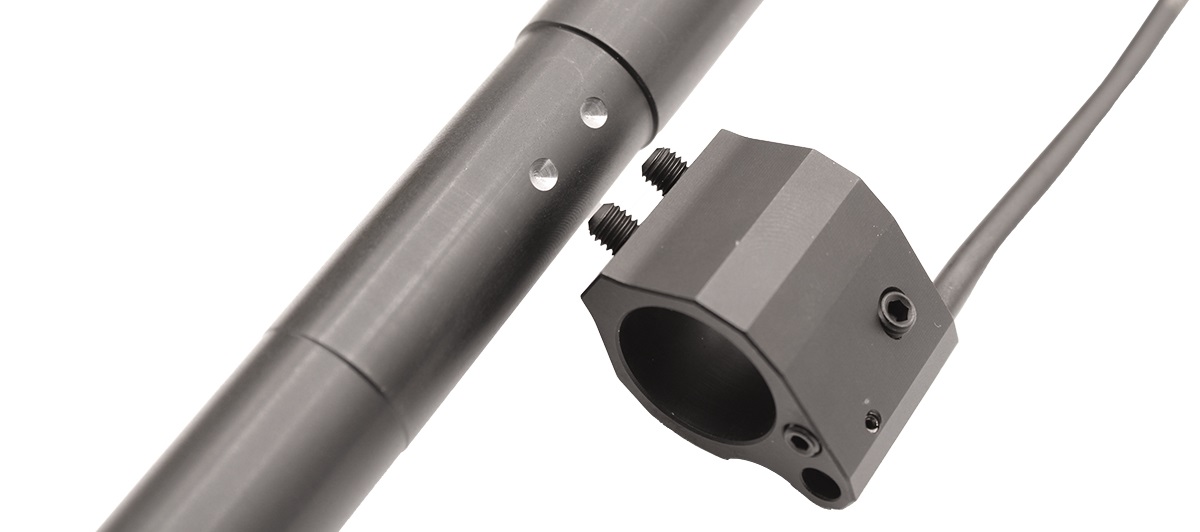
Not checking gas block alignment
This applies to both systems but matters more on mid-length because the gas port is further from the receiver and alignment issues compound over distance. If your gas block isn't perfectly centered over the gas port, you'll get inconsistent gas flow. Dimpled barrels or set-screw gas blocks that index off the barrel's gas port dimple help here. If you're pinning the gas block (which is the most secure method), make sure the pin hole is properly located relative to the port.
Forgetting about the gas tube length
If you're swapping from carbine to mid-length on an existing upper, you need a mid-length gas tube, not just a new barrel. Gas tubes are specific to gas system length. A carbine gas tube is about 9.75 inches; a mid-length tube is about 11.75 inches. Using the wrong tube length means the tube won't reach the carrier key or will be under stress, and the system won't function. This sounds obvious, but it comes up in forum posts more often than you'd think.
Five uppers worth looking at
Here's a comparison of five complete or near-complete uppers that represent different approaches to the 16-inch gas system question. No prices, those change weekly. Focus on the specs and what they tell you about how each one will run.
BCM MK2 BFH 16-inch mid-length (ELW) with MCMR-15
BCM's MK2 upper uses their enhanced receiver design with a modified feed ramp geometry and a slightly different carrier path. The barrel is button-broached, hammer-forged, chrome-lined, with an enhanced lightweight profile. Mid-length gas, 15-inch MCMR M-LOK rail. This is a duty-grade upper that runs a properly gassed mid-length system with an emphasis on reliability. The ELW profile keeps weight reasonable without going pencil-thin. Expect roughly 1.5-2 MOA with quality brass ammo, better with match loads. This is the "buy once, don't think about it" option for a mid-length 16-inch build.
Daniel Defense DDM4 V7
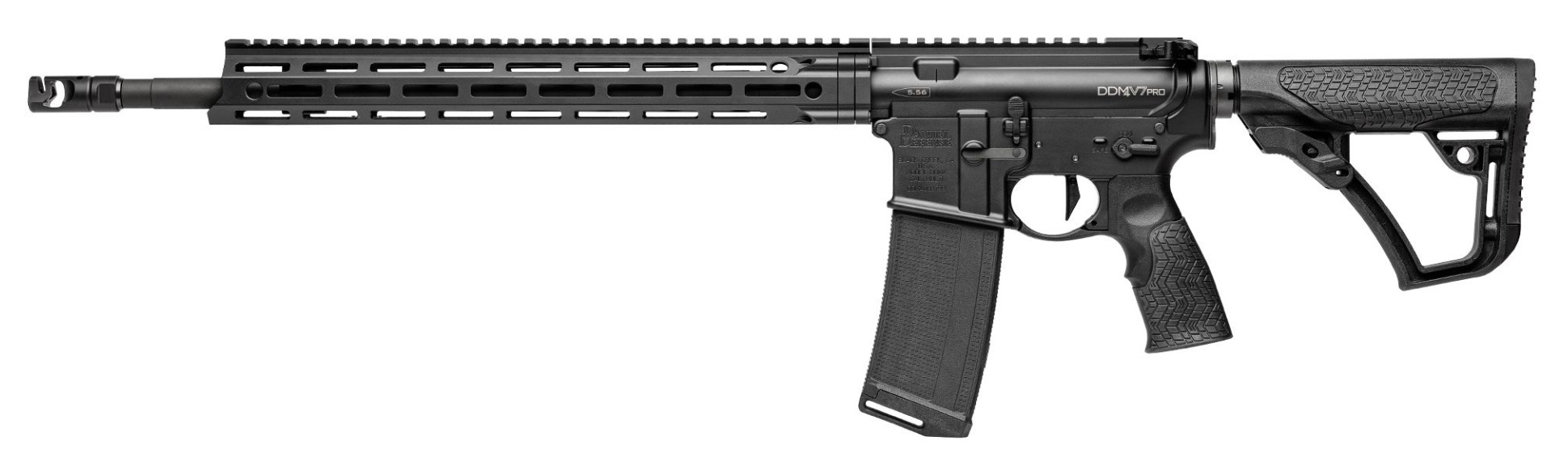
Daniel Defense's V7 runs a 16-inch cold hammer-forged barrel with mid-length gas and their own free-float M-LOK rail. Chrome-lined, government-ish profile (DD calls it their own profile designation). The gas system is well-tuned from the factory, these rifles tend to eject at 3-4 o'clock with standard brass ammo and an H buffer. DD's barrels are consistently accurate for chrome-lined tubes, typically shooting 1.5 MOA or better with match ammo. The V7 has been a benchmark mid-length 16-inch rifle for years, and it earns that status.
Springfield Armory SAINT Victor
The SAINT Victor runs a 16-inch CMV barrel with mid-length gas and a Bravo Company trigger guard and end plate. It ships with a nickel boron-coated trigger and a mid-length gas system that's well-tuned out of the box. The barrel is Melonite-treated rather than chrome-lined, which typically gives slightly better accuracy potential but less long-term bore life than chrome. This is a solid mid-tier option that demonstrates how mid-length gas has become the standard for 16-inch factory rifles. Accuracy runs in the 1.5-2 MOA range with good ammo.
PSA 16-inch carbine-length freedom upper
Palmetto State Armory still sells plenty of 16-inch uppers with carbine-length gas, and they're worth mentioning because they represent the budget end of the market and the "carbine gas on 16 inches because that's what the tooling makes" philosophy. Nitride-treated 4150 CMV barrel, carbine gas, standard F-marked front sight base. These run. They're overgassed, they throw brass hard, and they'll eat anything you feed them. If your priority is absolute reliability with garbage ammo and you don't care about recoil impulse or parts longevity, a carbine-gas budget upper does the job. But PSA also makes mid-length 16-inch uppers now, and for the same money, those are the better choice.
BCM 14.5-inch mid-length with MCMR-13
This isn't a 16-inch barrel, but it's relevant to the discussion because BCM runs mid-length gas on a 14.5-inch barrel, which gives about 5.5 inches of dwell time. That's shorter dwell than a 16-inch mid-length (about 7 inches) and shorter than the M4's carbine-gas dwell (about 7.5 inches). BCM makes it work with their gas port sizing and recommends an H buffer. It's a good example of how gas system length isn't just about the label, it's about the relationship between port location, barrel length, port diameter, and buffer system. A 14.5-inch mid-length is a tighter tuning window than a 16-inch mid-length, and it shows that the "mid-length is always better" mantra needs context.
The Recce rifle connection
The mid-length 16-inch setup has a lineage worth knowing about. The Navy SEAL Recce rifle concept from the late 1990s and early 2000s was essentially a precision-oriented AR built around a 16-inch barrel (sometimes 18-inch) with a mid-length or rifle-length gas system, a free-float handguard, and a magnified optic. The idea was a carbine that could reach out to 500-600 yards accurately while still being handy enough for close work.
That concept is basically what every well-built 16-inch mid-length AR is today. A 16-inch mid-length barrel with a 1:7 twist, a quality free-float rail, a low-power variable optic in the 1-6x or 1-8x range, and a properly tuned buffer system. The Recce rifle wasn't a specific model, it was a philosophy: build the most capable general-purpose rifle on the AR platform. Mid-length gas on 16 inches was central to that philosophy because it balanced reliability, shootability, and accuracy.
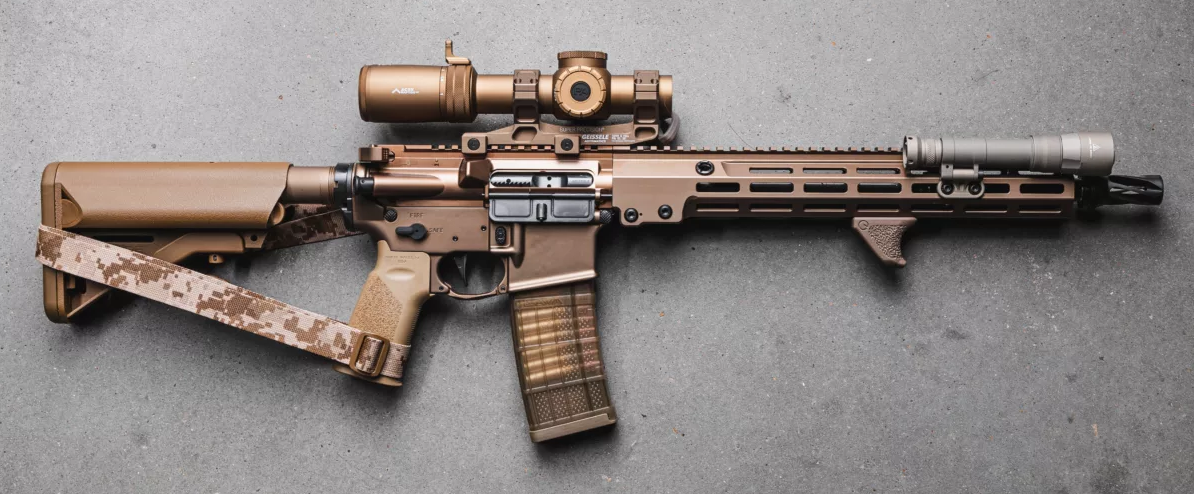
If you're building a "do everything" AR, you're building a Recce variant whether you call it that or not. And mid-length gas is the foundation.
What about adjustable gas blocks as a universal fix?
Adjustable gas blocks let you tune gas volume regardless of gas system length. So why not just run carbine gas with an adjustable block and tune it down?
You can. It works. But there are trade-offs.
An adjustable gas block adds a failure point. If the adjustment screw backs out or carbon buildup changes the restriction, your gas flow changes. Some blocks are better about this than others, the Superlative Arms bleed-off design, for example, vents excess gas rather than restricting it, which is a different approach with its own advantages. But any adjustable block is more complex than a fixed, pinned low-profile block.
The deeper issue is that even with a tuned-down gas block, a carbine-length gas tube delivers gas to the carrier at a different point in the pressure curve than a mid-length tube. The port pressure at 7 inches from the receiver is higher than at 9 inches, period. You can restrict the volume of gas that enters, but you can't change when in the pressure curve it arrives. A mid-length system with a fixed gas block and properly sized port is, from a pure engineering standpoint, a cleaner solution than a carbine system with an adjustable block tuned to mimic mid-length behavior.
That said, if you already own a carbine-gas 16-inch upper and don't want to buy a new barrel, an adjustable gas block with an H2 buffer is a legitimate upgrade path. It won't be identical to mid-length, but it'll be meaningfully better than a wide-open carbine gas port with a standard buffer.
Build notes: putting together a 16-inch mid-length upper
If you're assembling from parts rather than buying a complete upper, here's the sequence and what to watch for.
Start with the barrel. A 16-inch mid-length barrel in 5.56 NATO with a 1:7 twist handles everything from 55-grain M193 to 77-grain OTM. Chrome-lined barrels last longer (15,000-20,000+ rounds of bore life) but may give up a small amount of accuracy compared to nitride-treated or unlined barrels. For a general-purpose rifle, chrome lining is worth it. For a precision build, nitride or stainless might be the call.
The gas block should be a low-profile steel block, either pinned or clamped with set screws on a dimpled barrel journal. Pinned is more secure. If you go adjustable, the Superlative Arms or SLR Rifleworks blocks have good reputations for holding their settings. Make sure the block's inside diameter matches your barrel's gas block journal diameter, most are 0.750 inches, but some lightweight or pencil profiles use 0.625 inches.
The gas tube needs to be mid-length (about 11.75 inches) and made from stainless steel. Roll pin it into the gas block with the tube's alignment tab oriented correctly. The tube should slide freely into the carrier key when the upper is assembled, if you have to force it, something is misaligned.
Torque the barrel nut to the manufacturer's spec for your specific handguard system. This varies, some use a standard AR barrel nut at 30-80 ft-lbs (tighten until the gas tube hole aligns), while proprietary systems have their own specs. Use aeroshell grease or anti-seize on the barrel nut threads. Torque specs exist for a reason, and under-torqued barrel nuts are a common source of accuracy problems and even dangerous failures.

Bravo company manufacturing BCM MK2 BFH 16-inch mid-length Deals
Prices may change. May contain affiliate links.
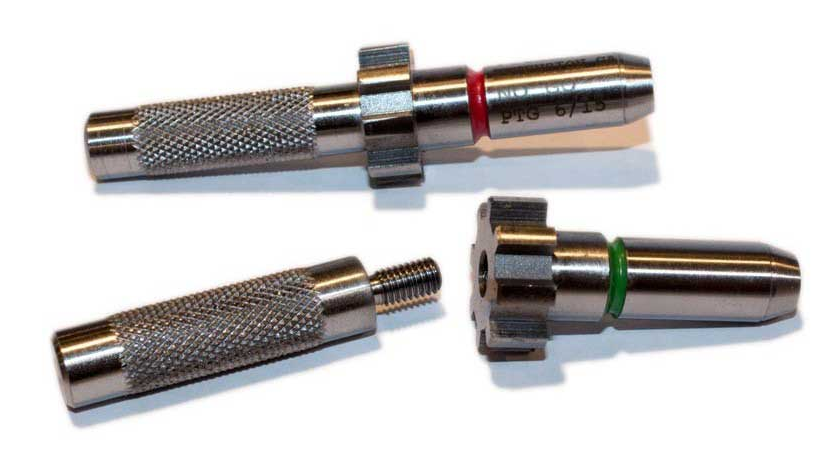
Check headspace with go and no-go gauges before firing. The bolt should close on a go gauge and not close on a no-go gauge. This takes 30 seconds and costs $30-40 for the gauges. Skipping it is gambling with your face.
The verdict, with nuance
Mid-length gas on a 16-inch barrel is the better system for the vast majority of builds and shooters. It runs softer, it's easier on parts, it handles suppressors better, and it doesn't sacrifice reliability with decent ammo. The AR-15 industry has largely figured this out, most quality 16-inch rifles now ship with mid-length gas, and the ones that still use carbine gas are either budget builds using legacy tooling or purpose-built for maximum reliability with the widest possible ammo range.
Carbine gas on 16 inches isn't wrong. It's just more than you need, and that excess comes with costs you'll pay in recoil, parts wear, and tuning complexity. If you're buying a factory rifle, pick the one with mid-length gas. If you're building, buy a mid-length barrel. The decision really is that straightforward for most people.
The one exception: if you're building a 16-inch rifle specifically for duty use where you might run any ammo from any source, including underpowered foreign military surplus, and you can't have an adjustable gas block because of department policy or reliability concerns, carbine gas with an H2 buffer gives you the widest reliability window. That's a specific use case, and it's valid. For everyone else, mid-length.
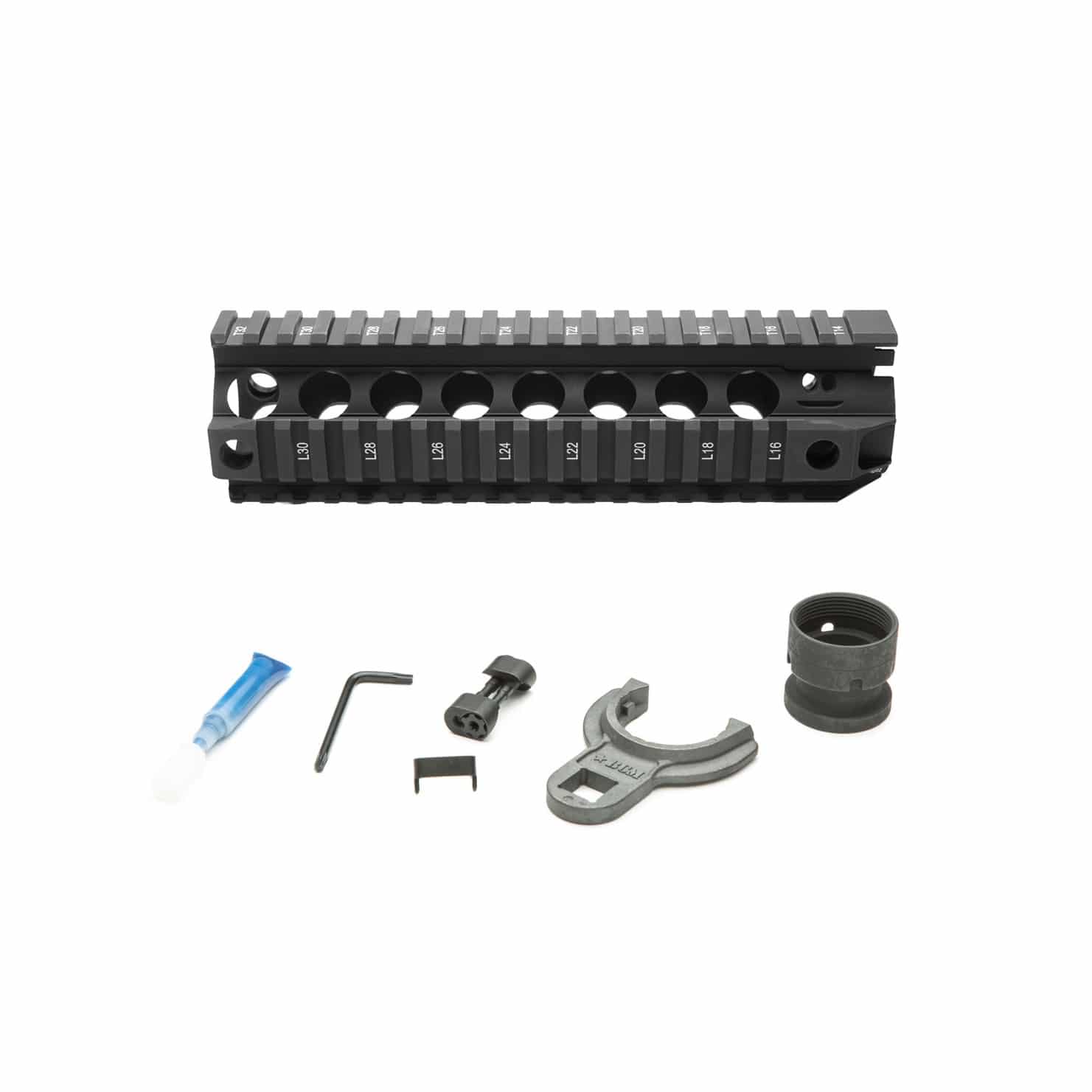
Bravo company manufacturing BCM MCMR-15 Deals
Prices may change. May contain affiliate links.
Your next step
Once you've got your 16-inch mid-length upper assembled or mounted, run this function check before you take it to the range. With the rifle unloaded and visually confirmed clear: charge the action and confirm the bolt locks forward. Put the selector on safe and pull the trigger, the hammer should not fall. Move to fire and pull the trigger, the hammer should fall. Hold the trigger rearward, charge the action, and slowly release the trigger, you should feel and hear the disconnector release the hammer to the trigger's sear. That click is the disconnector doing its job.
At the range, load two rounds only for your first magazine. Fire one round and confirm the rifle cycles and chambers the second round. Check your ejection pattern, you're looking for brass at 3-4 o'clock with an H buffer. If you're at 2 o'clock or earlier, consider stepping up to an H2 buffer. If you're at 5 o'clock or getting erratic ejection, drop down to a standard carbine buffer. Once the ejection pattern is consistent, load full magazines and run the rifle. Put 200 rounds through it before you start chasing accuracy at the bench. The system needs to break in, and you need to confirm reliability before you worry about group size.
That ejection clock position is your diagnostic tool for the life of the rifle. Check it periodically, especially if you change ammo brands or add a suppressor. The system tells you how it's running, you just have to watch where the brass goes.