
You're trimming 500 pieces of .308 brass on a Lee hand trimmer and your wrist is telling you there has to be a better way. There is. But the jump from a $30 manual trimmer to a powered or semi-powered system under $300 involves real trade-offs; speed versus precision, chamfer integration versus modularity, and whether you're trimming one caliber or twelve.
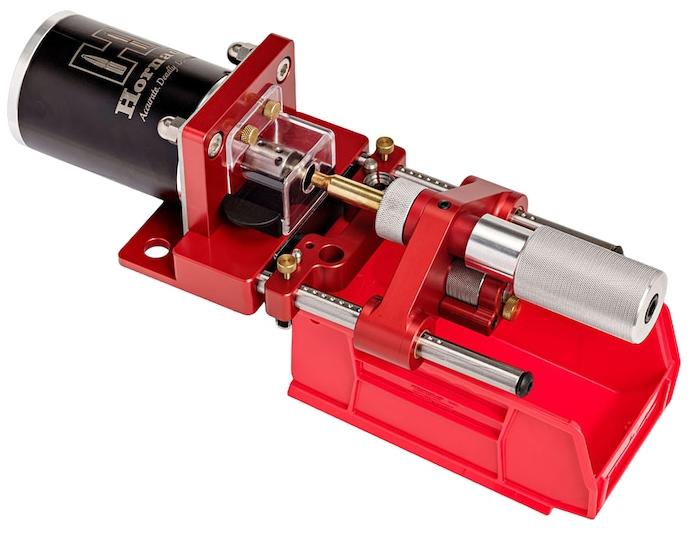
This breakdown covers the trimmers that actually get used on high-volume benches, what separates them mechanically, and where each one fits in a workflow. The goal isn't to rank them on a spec sheet. It's to help you figure out which one matches your batch size, your caliber mix, and how much case prep you're willing to do as a separate step.
Trim length matters. Not because a few thousandths will change your group size at 100 yards, it usually won't, but because inconsistent trim length means inconsistent neck tension, and inconsistent neck tension means ES problems that show up at 600 yards and beyond. If you're loading precision rifle, trimming is non-negotiable. If you're loading bulk .223 for matches or practice, speed without sacrificing uniformity is the real target.
Why trimming volume changes the calculus
A manual trimmer like the RCBS Trim Pro 2 or the Lyman Universal works fine for 50 rounds. The micrometer adjustment on the Trim Pro 2 gives you .001" resolution, the spring-loaded shell holder keeps things consistent, and the process is meditative in small batches. But run 300 cases through one and you'll understand why powered trimmers exist.
The math is simple. A good manual trimmer takes roughly 15–20 seconds per case once you're in rhythm, that includes chucking the case, trimming, and removing it. A powered trimmer with an integrated chamfer/deburr step drops that to 5–8 seconds. Over 500 cases, you're looking at the difference between two and a half hours and about an hour. Over a season of loading for multiple rifles, that gap compounds fast.
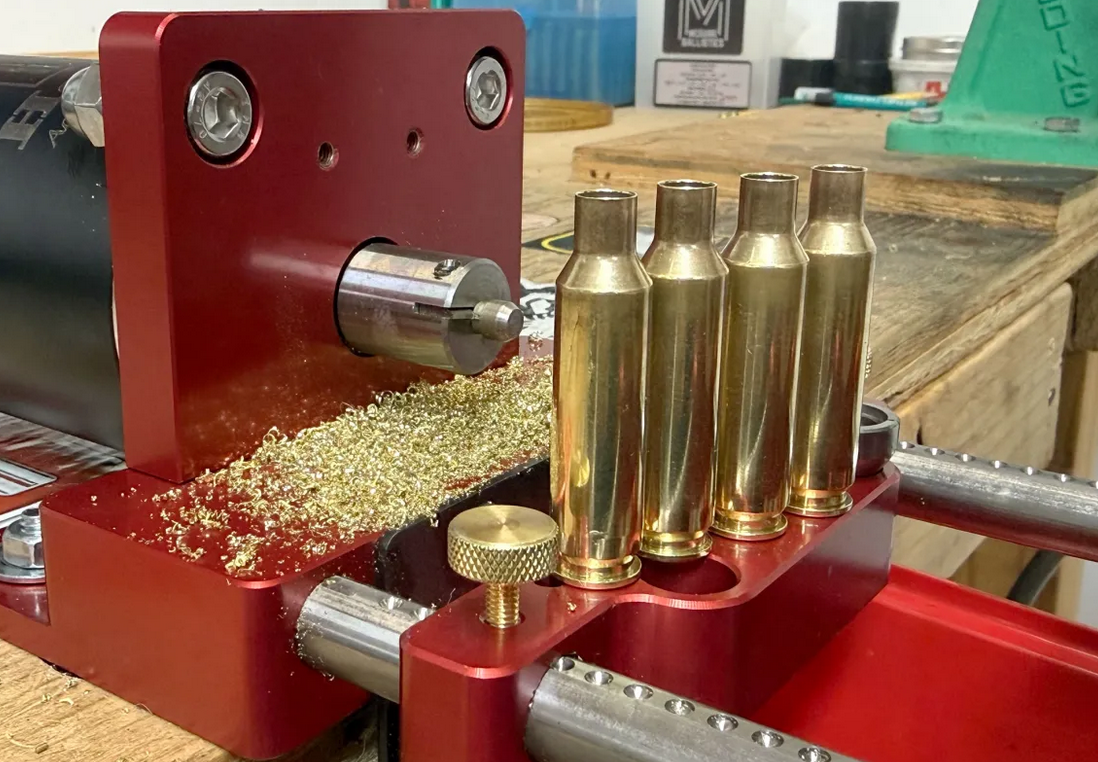
But speed isn't free. Powered trimmers generate heat, which can affect brass if you're not paying attention. They also tend to be caliber-specific in their setup, collets, pilots, or shell holders that need swapping. The ones that trim and chamfer in a single operation save an entire step, but they lock you into that trimmer's chamfer angle. If you have specific preferences about inside/outside chamfer geometry, that matters.
The under-$300 price point is where things get interesting because it captures several genuinely different approaches: motor-driven bench units, drill-powered attachments, hand-crank trimmers with precision adjustments, and case prep centers that bundle trimming with other operations. Each has a legitimate place depending on your setup.
The trimmers worth evaluating
WFT (World's Finest Trimmer)
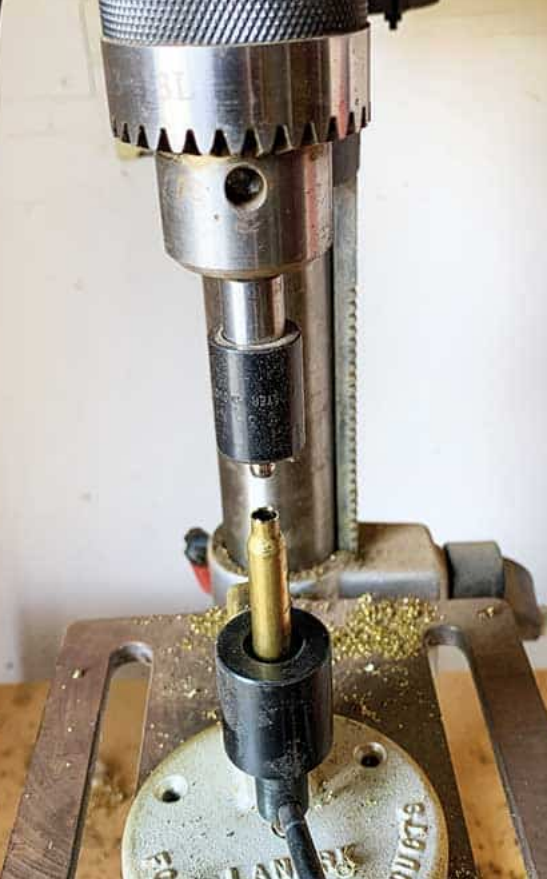
The name is obnoxious. The trimmer is genuinely good for what it does. The WFT is a drill-powered, caliber-specific trimmer that uses a hardened steel cutter head. You chuck the case into the cutter (not the other way around, the case goes over the cutter, and the drill spins the cutting head), and the shell holder on the case body acts as the stop. Trim length is set by the shell holder contacting the cutter housing.
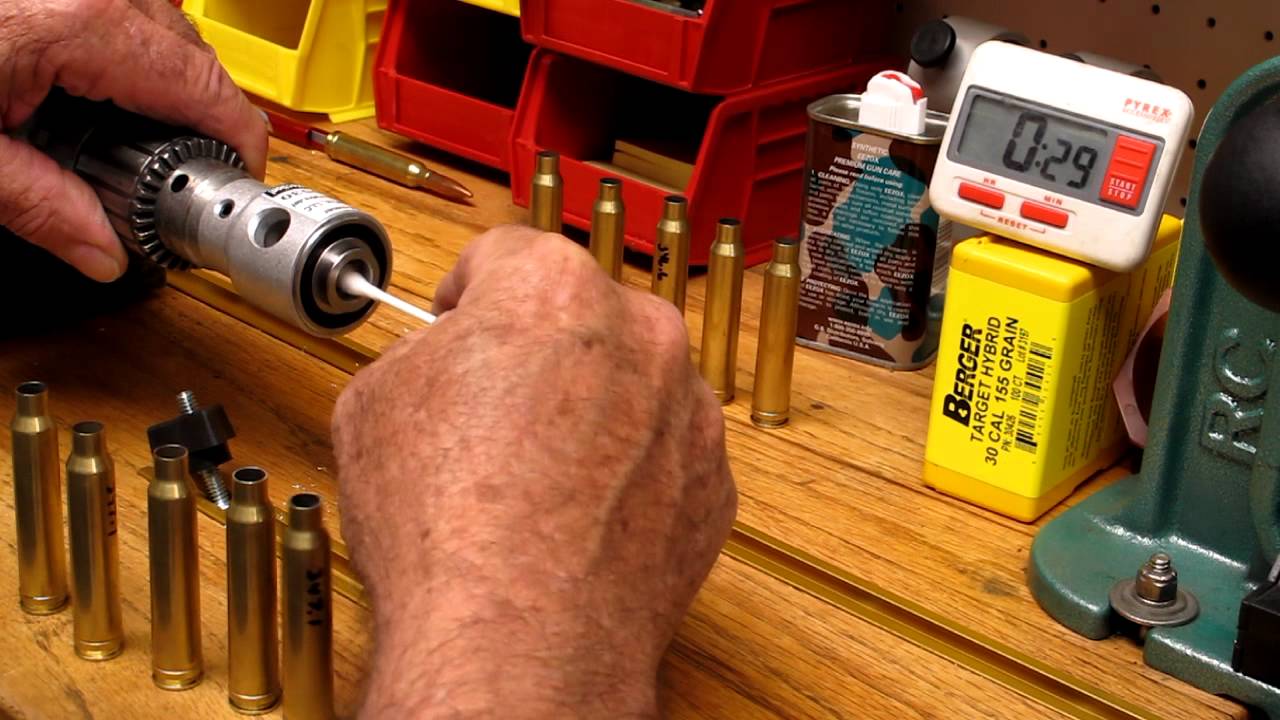
What makes the WFT popular in high-volume setups is the integrated chamfer and deburr. One pass trims the case to length, puts an inside chamfer on the neck, and deburrs the outside. Three operations, one step. For someone loading 500 rounds of 6.5 Creedmoor for a season of PRS matches, that's a significant time saver.
The catch: each caliber requires its own cutter head, and they're not cheap. If you load four or five calibers, the total investment climbs well past the base price. The trim length is also essentially fixed, it's set by the relationship between the shell holder and the cutter geometry. You can adjust it slightly with shims, but you're not dialing in .002" changes on a micrometer. For most people trimming to SAAMI spec, that's fine. For someone who wants to experiment with trim length as a variable, it's limiting.
Consistency is where the WFT earns its reputation. Because the shell holder references the case head and the cutter geometry is fixed, you get very repeatable trim lengths with minimal operator variability. Reviews from precision rifle forums consistently report trim length variation under .001" across large batches. That's as good as it gets for a tool in this price range.
One thing to note: the WFT requires a drill or drill press. A cordless drill works, but a drill press gives you more consistent results and frees up a hand. If you already have a drill press on your bench, the WFT is essentially a trimmer attachment, which keeps the initial cost low but means you need that infrastructure.
Giraud Tri-Way trimmer
The Giraud power trimmers are legendary in precision rifle circles, but the full-power Giraud typically runs north of $400. The Tri-Way sits under $300 and uses a different approach, it's a hand-powered unit with three cutting positions. You trim, chamfer inside, and chamfer outside in three rotations of the case against different cutters mounted on the same unit.
The Tri-Way doesn't have the speed of the powered Giraud or the WFT-on-a-drill-press setup. It's a manual trimmer at heart, just one that integrates the chamfer steps into the same fixture. Where it shines is in the quality of the cut. Giraud's cutters are well-regarded, and the Tri-Way produces clean, consistent trims without the chatter marks that cheaper cutters sometimes leave.
For someone doing 100–200 cases at a time rather than 500+, the Tri-Way hits a sweet spot. It's faster than a standard manual trimmer because you're not switching tools for chamfering, but it doesn't require power or generate heat. The caliber changeover is straightforward, swap the collet and pilot.
The Giraud Tri-Way gets compared to the powered Giraud constantly on forums, and the consensus is clear: if you're doing serious volume (500+ cases regularly), the powered unit pays for itself in time savings. If your batches are smaller or you value the tactile feedback of hand trimming, the Tri-Way is the better value under $300.
RCBS Trim Pro 2
This is the benchmark manual trimmer that most experienced reloaders have either used or compared against. The current version features a micrometer adjustment head with .001" graduations and a spring-loaded shell holder that improves consistency over the original Trim Pro.
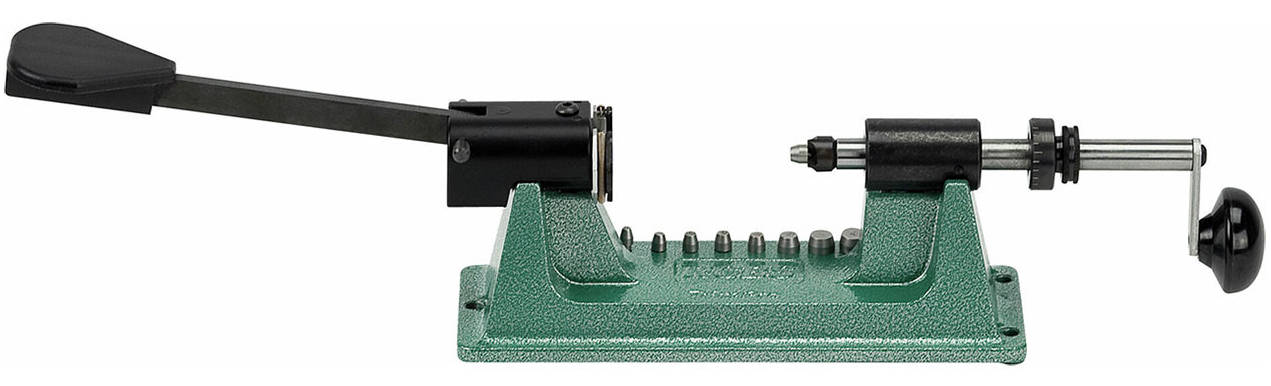
The Trim Pro 2 is not a speed demon. It's a precision instrument. The micrometer head lets you dial in exact trim lengths and return to them reliably, which matters if you're experimenting with trim length across different loads or if you load multiple calibers and want to set each one precisely. Shell holder changes are quick, and the pilots cover most common calibers.
Where the Trim Pro 2 fits in a high-volume workflow is as a setup/verification tool rather than a primary production trimmer. Trim 10 cases on the Trim Pro 2 to establish your baseline measurement, then run the batch through a faster powered trimmer, spot-checking against the Trim Pro 2's standard. Some reloaders keep a manual precision trimmer on the bench even after buying a powered unit for exactly this purpose.
If your volume is genuinely under 200 cases per session and you're not in a rush, the Trim Pro 2 does the job well. The cutter quality is decent, though not at the Giraud level, and the overall build is solid enough to last years. It's also the least expensive option here, which leaves budget for a good chamfer/deburr tool set.
Frankford Arsenal Platinum Series case prep center
This is a different animal entirely. The Platinum Series is a motorized case prep station with multiple powered spindles, typically one for trimming and several for chamfering, deburring, primer pocket cleaning, and primer pocket uniforming. Everything runs off a single motor with a foot pedal for hands-free operation.
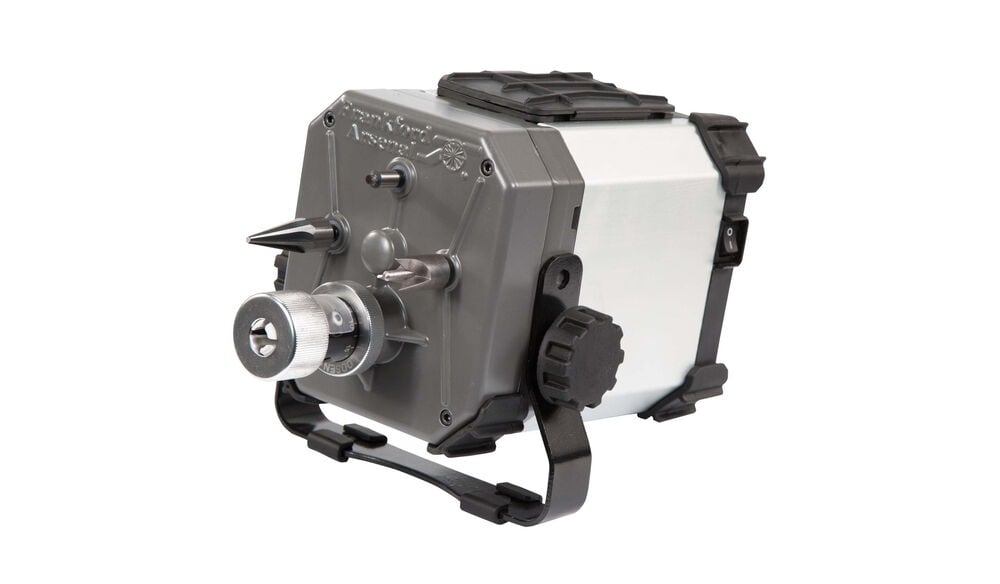
The appeal is obvious: one station handles almost every case prep operation. You move the case from spindle to spindle, and each step takes a few seconds. For someone who wants a complete case prep workflow in one footprint, it's hard to beat the convenience.
The trimming function specifically uses a collet-style case holder and an adjustable cutter. Trim length adjustment is there, but it's not micrometer-grade, expect to do some test-and-adjust dialing to get your length set. Once it's set, consistency is reasonable. Not WFT-level, but within .002" across a batch, which is adequate for most applications.
The Frankford Arsenal unit's real strength is the accessory spindles. Having powered chamfer and deburr tools, plus primer pocket stations, running off a foot pedal dramatically speeds up the full case prep cycle. If you're currently doing all of that by hand, the time savings are substantial.
The weakness is that it's a jack-of-all-trades. The trimming isn't as precise as a dedicated trimmer, the chamfering isn't as clean as a dedicated chamfer tool, and the motor can bog down on harder brass if you push it. For precision rifle loading where you're chasing single-digit ES, most experienced reloaders still prefer a dedicated trimmer. For high-volume practice ammo or hunting loads where "good enough" consistency is genuinely good enough, the Frankford Arsenal unit is efficient.
Lyman Case Trim Xpress
Lyman's powered trimmer is a bench-mounted unit with its own motor, a collet-style case holder, and a spring-return cutter head. It's designed as a dedicated trimmer, no integrated chamfer or accessory spindles. You set the trim length, lock it in, and feed cases.
The Lyman Xpress is faster than a manual trimmer and simpler than a multi-station prep center. It does one thing. The motor has enough torque for most rifle brass without bogging, and the collet holds cases squarely. Trim length consistency is good, typically within .001–.002", and the adjustment mechanism, while not micrometer-grade, is fine enough for practical work.
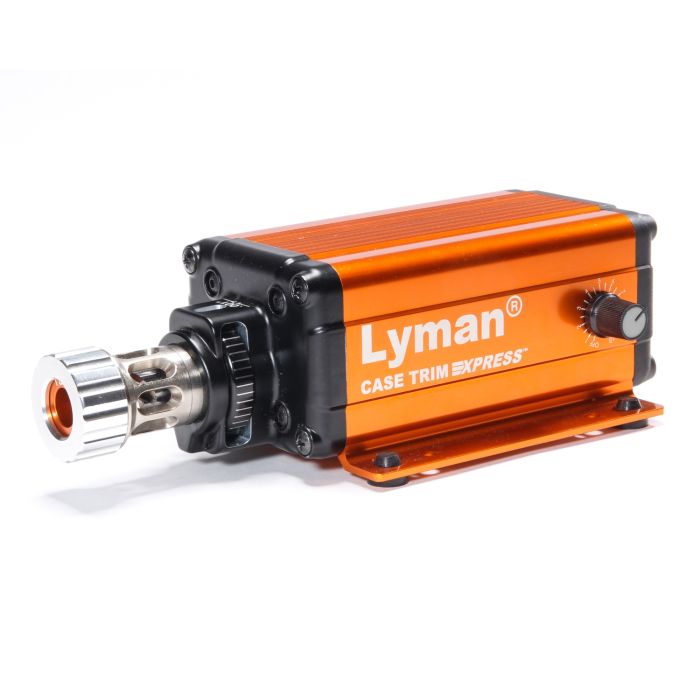
Where the Lyman fits is in the workflow of someone who already has good hand chamfer/deburr tools (or a separate powered chamfer setup) and just wants to speed up the trimming step. It doesn't try to replace your entire case prep bench, which is either a limitation or a virtue depending on your perspective.
Caliber changeover requires swapping the collet and pilot, which takes a minute or two. Not instant, but not painful. If you're batch-processing one caliber at a time (which you should be), it's a non-issue.
The drill-powered alternatives: Little Crow Gunworks and similar
The WFT isn't the only drill-powered option. Little Crow Gunworks' Worlds Cheapest Trimmer (WCT) and similar designs from other makers follow the same basic principle, a caliber-specific cutter head that chucks into a drill, with the case acting as its own stop. These tend to run well under $100 per caliber, making them the budget entry into powered trimming.
The WCT doesn't integrate chamfer and deburr the way the WFT does, so you're adding those steps back into your workflow. But the trimming itself is fast and reasonably consistent. For someone who loads primarily one or two calibers and doesn't mind doing chamfer work separately, a drill-powered trimmer plus a good set of VLD chamfer tools can be a very cost-effective setup.
The consistency of drill-powered trimmers depends heavily on the drill. A drill press gives you perpendicular, consistent cuts. A handheld cordless drill introduces operator variability, how hard you push, the angle of approach, whether the battery is fully charged. If you go this route, a drill press is strongly recommended.
How to think about the chamfer question
This is the variable most people underweight when choosing a trimmer. Trimming and chamfering are separate operations that happen to occur in sequence, and how your trimmer handles (or doesn't handle) chamfering affects your total case prep time more than the trimming speed itself.
The WFT integrates both chamfers into the trim cut. One pass, done. The Giraud Tri-Way does it in three positions on the same fixture. The Frankford Arsenal prep center has separate powered spindles for chamfering. The RCBS Trim Pro 2 and Lyman Xpress require separate chamfer/deburr tools entirely.
If you're loading with boat-tail bullets (and most precision rifle bullets are boat-tails), inside chamfer matters for consistent seating. A clean, uniform chamfer means the bullet starts straight into the neck every time. A rough or inconsistent chamfer can cant the bullet slightly during seating, which shows up as runout. Outside deburr is less critical for function but prevents brass shavings from getting into places you don't want them.
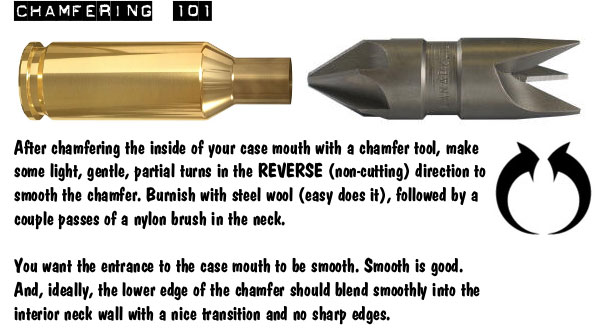
For high-volume work, integrated chamfering is a major time saver. For precision work where you want to control chamfer angle and depth independently, separate tools give you more control. Neither approach is wrong, it depends on whether you prioritize speed or granular control.
Common mistakes with case trimming
Not checking trim length after the trimmer is "set"
Every trimmer drifts. Cutters wear, collets loosen slightly, and thermal expansion during long sessions can shift dimensions. Check trim length every 20–30 cases with a caliper, not just at the beginning of a batch. This applies to powered trimmers especially, the consistency they promise is real, but it's not infinite.
Trimming before sizing
Trim after sizing, not before. The sizing die changes case length, that's why you're trimming in the first place. Trimming before sizing means you're cutting brass to a length that will change as soon as you run it through the die. This sounds obvious, but it comes up in forum threads constantly, usually from reloaders who set up their bench workflow in the wrong order and can't figure out why their trim lengths are inconsistent.
Ignoring case length variation in new brass
New brass isn't uniform. Even premium brass from Lapua or Peterson will have case length variation across a lot, usually within .002–.003", but sometimes more. Trimming new brass to a uniform length before first firing establishes your baseline. Some reloaders skip this step because the brass is "new" and assume it's ready to load. It's not, at least not if you care about consistency.
Over-trimming
Trimming too short is worse than trimming slightly long. A case that's .005" under max trim length has reduced neck tension at the mouth, which affects bullet grip and can increase ES. Most published trim-to lengths are set conservatively below max case length, and you should be trimming to that published length, not trying to take off as little brass as possible. Set your trimmer to the correct trim-to length and leave it there.
Neglecting the primer pocket while you're at the bench
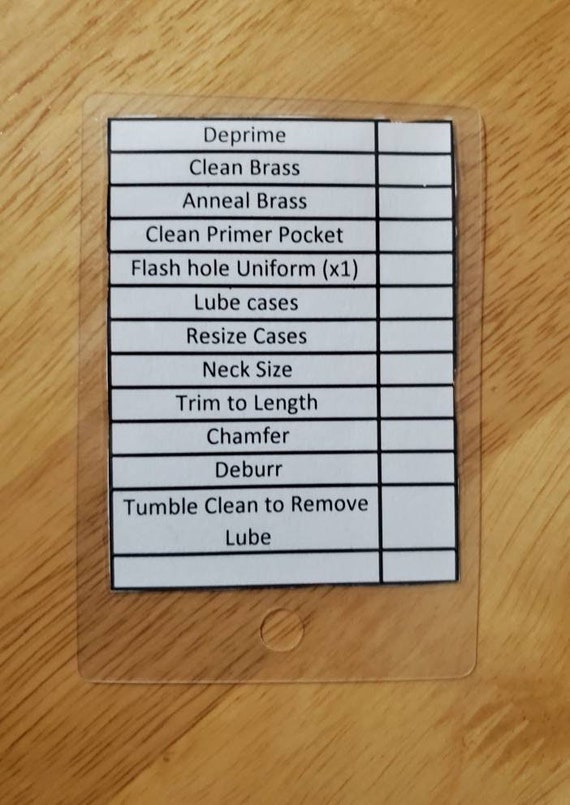
This isn't a trimming mistake per se, but it's a workflow mistake. If you're already handling every case for trimming, that's the time to uniform primer pockets, clean flash holes, and do any other case prep that requires individual handling. Batch your operations. Running through 500 cases for trimming and then running through them again for primer pocket work is doubling your handling time. The Frankford Arsenal prep center's multi-spindle design exists specifically to address this, but even with a dedicated trimmer, you can set up your bench to do chamfer, deburr, and primer pocket work in sequence as each case comes off the trimmer.
Equipment comparison: the practical differences
Here's where these five trimmers actually diverge in ways that matter on the bench.
Speed per case (trim only, not including chamfer)
The WFT on a drill press runs about 3–5 seconds per case including the integrated chamfer. The Giraud Tri-Way takes about 10–15 seconds for all three positions. The Frankford Arsenal prep center runs 5–8 seconds for trimming alone, plus additional time at each accessory spindle. The RCBS Trim Pro 2 is 15–20 seconds per case for trimming only. The Lyman Xpress falls around 5–7 seconds per case.
These numbers assume you're in rhythm with a batch of same-caliber brass already sized and ready to go. Setup time (adjusting trim length, swapping caliber-specific parts) adds 5–15 minutes per caliber depending on the trimmer.
Trim length consistency
The WFT and Giraud products consistently get the best marks here, with users reporting sub-.001" variation across batches. The RCBS Trim Pro 2 achieves similar precision but depends more on operator consistency since it's hand-cranked. The Lyman Xpress and Frankford Arsenal unit are typically in the .001–.002" range, which is perfectly adequate for most applications but not quite at the level the dedicated precision tools achieve.
Caliber versatility
The RCBS Trim Pro 2 wins this category easily. Swap a shell holder and pilot, and you're trimming a different caliber in under a minute. The Lyman Xpress is similar. The Frankford Arsenal prep center requires collet changes but covers most common calibers. The WFT requires a completely different cutter head for each caliber, convenient if you load one or two calibers, expensive if you load six. The Giraud Tri-Way needs collet and pilot changes, which is straightforward but not instant.
Durability and maintenance
All of these trimmers are reasonably durable if maintained. Cutters are the wear item. The WFT's carbide cutters last a very long time, thousands of cases before they need replacement. The RCBS and Lyman cutters are tool steel and will need replacing or resharpening sooner, though "sooner" still means hundreds of cases. The Frankford Arsenal's motor is the weak point in that system, it's adequate but not industrial, and heavy use over years can wear it out. The Giraud products are built like tanks. There are Giraud trimmers on benches that have processed tens of thousands of cases without issue.
Footprint and bench requirements
The WFT requires a drill press or drill, it has almost no footprint of its own but needs that infrastructure. The RCBS Trim Pro 2 clamps to a bench or mounts on a board and takes up minimal space. The Lyman Xpress needs a permanent bench spot since it's motor-driven. The Frankford Arsenal prep center is the largest of the group and wants its own dedicated bench space. The Giraud Tri-Way is compact and portable.
Bench notes: setting up for a trimming session
The workflow that minimizes wasted time looks like this:
Size your entire batch first. All of it. Don't alternate between sizing and trimming, you'll lose time on die changes and mental context-switching. Once everything is sized, set up your trimmer for that caliber and run the whole batch through.
Lapua Brass Deals
Prices may change. May contain affiliate links.
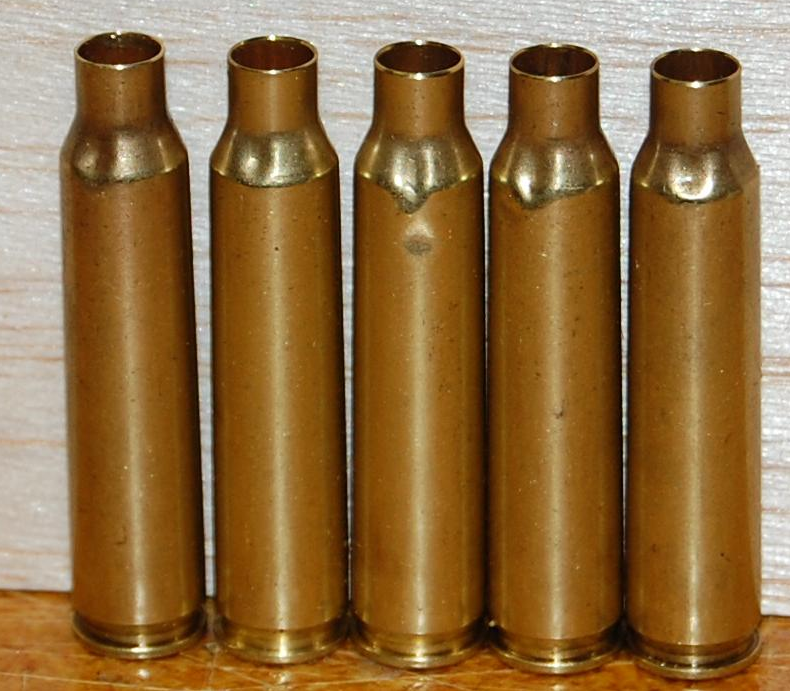
Before trimming the batch, run three to five cases through and measure with a caliper. Adjust if needed. Then run another three to five and verify. Once you're hitting your target trim length consistently, start the batch. Check every 20–30 cases.
Keep a notebook or spreadsheet with your trim-to length for each caliber, the trimmer settings that achieved it, and the date. Cutters wear, and you'll need to adjust over time. Having a record of what worked last time saves setup time on the next session.
If your trimmer doesn't integrate chamfering, set up your chamfer and deburr tools in sequence right next to the trimmer. Pick up a trimmed case, inside chamfer, outside deburr, into the "done" bin. This assembly-line approach is faster than doing all trimming, then all chamfering, then all deburring, because you're handling each case once instead of three times.
Clean your trimmer after every session. Brass shavings accumulate in collets, around cutters, and inside housings. A quick brush-out and a drop of oil on moving parts keeps everything running true. Neglecting this is how trim length starts drifting between sessions, a tiny brass shaving under a collet jaw changes your case positioning just enough to matter.
What about the powered Giraud and Henderson?
Both the Giraud Power Trimmer and the Henderson Precision Powered Trimmer come up in every trimmer discussion, and both typically exceed the $300 ceiling. They're worth mentioning because they represent the next tier, and understanding what they add helps calibrate expectations for the sub-$300 options.
The powered Giraud is essentially the gold standard for combined trim-chamfer-deburr in a single powered operation. Insert the case, it trims and chamfers both inside and outside, remove the case. The whole cycle takes about 3 seconds. Forums are full of reloaders who bought one and describe it as the single best upgrade they've made to their case prep workflow. The Henderson competes directly with a similar feature set and gets comparable reviews.
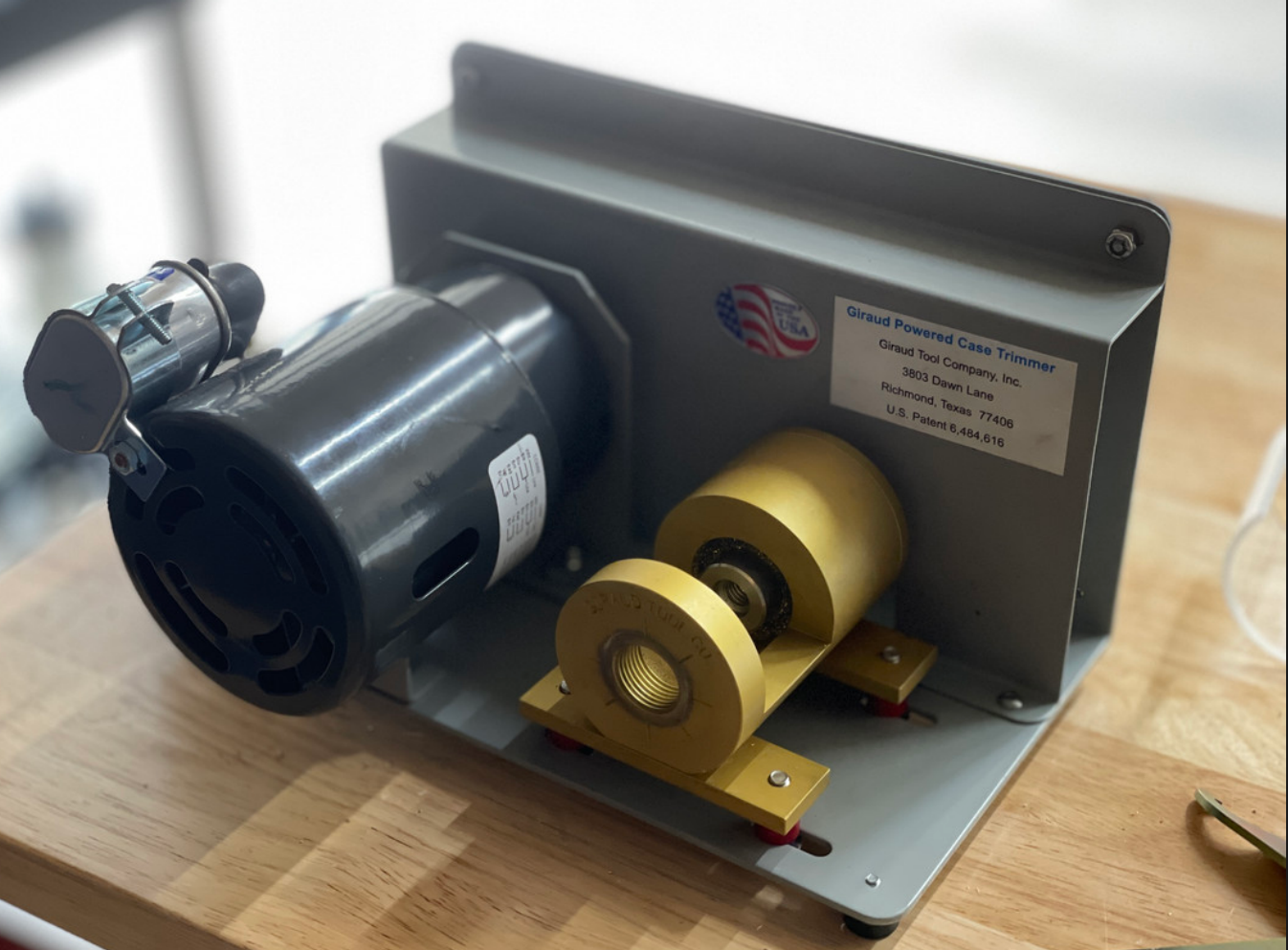
What you give up by staying under $300 is primarily that integration of power, speed, and three-in-one operation. The WFT gets close with a drill press, but it's not quite as refined. The Giraud Tri-Way has the cutter quality but not the speed. The Frankford Arsenal has the power but not the precision. Understanding that trade-off helps you decide whether to save up or buy now.
If you're loading 1,000+ cases per year of a single caliber, the powered Giraud or Henderson will pay for itself in time savings within a year or two. If your volume is lower or spread across many calibers, the sub-$300 options covered here are the smarter buy.
Matching the trimmer to your actual workflow
The right trimmer depends on three questions, and being honest about the answers matters more than reading one more review.
How many cases per session? If the answer is under 100, a manual trimmer with good adjustability (RCBS Trim Pro 2, Giraud Tri-Way) will serve you well, and the money saved can go toward better brass or components. If the answer is 200–500, a powered option (WFT, Lyman Xpress, Frankford Arsenal) starts paying dividends in time. Above 500 per session regularly, you're approaching the threshold where saving up for a Giraud Power Trimmer or Henderson makes economic sense.
How many calibers? If you load one or two rifle calibers, the WFT's caliber-specific cutter heads are a minor expense and the integrated chamfer is a major benefit. If you load five or more calibers, a universal trimmer with interchangeable pilots (RCBS, Lyman) keeps your per-caliber cost down. The Frankford Arsenal prep center splits the difference with its multi-function design.
How much do you care about chamfer control? If you seat VLD bullets and chase runout numbers, you might want to control your chamfer angle and depth independently. That means a trimmer that doesn't integrate chamfering, paired with a dedicated inside chamfer tool like the Lyman VLD chamfer. If you're loading hunting ammo or practice rounds where .001" of runout isn't going to matter at your engagement distances, integrated chamfering saves time without meaningful compromise.
The test protocol that works
Once you've picked a trimmer and set it up, here's how to verify it's doing what you need.
Take 20 sized cases from the same lot of brass. Trim all 20 without adjusting anything between cases. Measure each one with a digital caliper to .001". Calculate the spread (longest minus shortest) and the average.
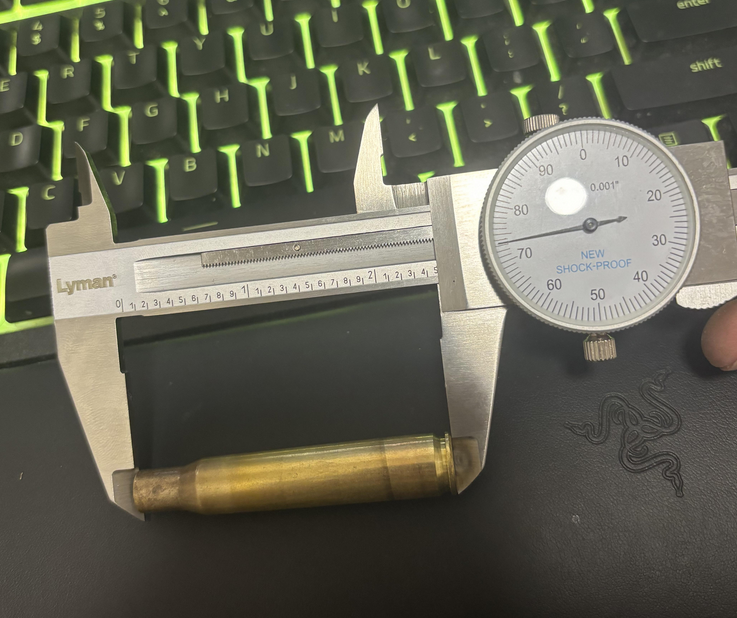
If your spread is .001" or less, the trimmer is performing at a precision level suitable for any application. If it's .002", that's fine for hunting and general use. If it's .003" or more, something needs attention, a worn cutter, loose collet, inconsistent case head dimensions, or operator technique on a manual trimmer.
Run this test again after 100 cases to check for drift. And again after 200. You're looking for the trimmer to hold its setting across a full batch without gradual creep. If trim length is trending longer or shorter as you go, the cutter is wearing or the adjustment mechanism is slipping.
Log the results. Not because you'll look at them every day, but because six months from now when your ES starts climbing, you'll want to check whether your trim lengths have drifted before you start blaming your powder measure.
Where to go from here
Pick the trimmer that matches your honest volume and caliber count, not the one that matches your aspirational loading schedule. Set it up, run the 20-case verification test, and log your baseline numbers. Then load a batch and shoot it over a chronograph. Your ES and SD will tell you whether your case prep, trimming included, is tight enough for your accuracy goals.
If the numbers are good, you've found your trimmer. If they're not, the trim length data you logged will help you rule trimming in or out as the variable. That's the whole point of the bench notebook, not to be obsessive, but to know where to look when something changes. Consistency beats velocity, and consistent trim length is one of the easier variables to control once you have the right tool for your workflow.