
You've loaded 200 rounds of 9mm, everything looks perfect, but half won't chamber in your pistol. The case gauge says they're good. Your buddy's gun eats them fine. But your carry gun treats them like they're the wrong caliber entirely.
Here's the thing: 9mm sizing isn't just about getting the case through a die. Chamber dimensions vary more than most reloaders realize, and what works in one gun can bind up completely in another. The problem is usually your sizing die setup, not your brass or technique.
The chamber reality nobody talks about
SAAMI specs for 9mm chambers allow for significant variation. A minimum spec chamber measures 0.391" at the case mouth, while maximum spec runs 0.393". That's only two thousandths difference, but it's enough to turn reliable feeding into a jam-fest.
Most factory dies size cases to around 0.377-0.378" at the mouth. That works fine for loose chambers, but tight chambers need cases sized smaller. I've measured chambers that barely accept 0.376" cases, and others that'll swallow 0.380" without complaint.
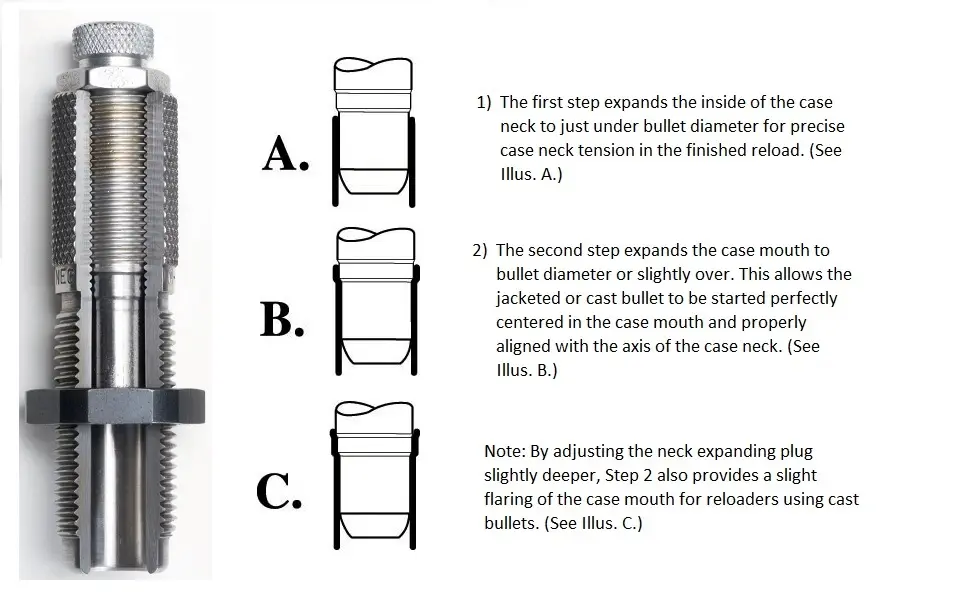
Your brass complicates this further. Range pickup brass has been fired in dozens of different chambers, each one expanding the case slightly differently. Some cases spring back more than others after firing. Mixed headstamps mean different brass alloys with different elastic properties.
Look, if you're loading mixed range brass for multiple guns, you need to size for the tightest chamber in your collection. Otherwise you'll spend more time clearing malfunctions than shooting.
Why your sizing die isn't doing its job
Most reloaders set up their sizing die by screwing it down until it contacts the shellholder, then backing off a quarter turn. That's fine for rifle cartridges, but 9mm needs different treatment.
The problem is case support. When you ram a 9mm case into the sizing die, the case mouth enters first. If the die isn't perfectly aligned or if there's any play in your press, the case can cock slightly. This leaves part of the case body undersized while other areas barely get touched.
Progressive presses make this worse. The case gets sized while other operations happen simultaneously. Any flex in the press frame translates to inconsistent sizing. I've seen cases from the same loading session vary by 0.002" in diameter just from press flex.
Here's what actually happens: the case enters the die straight, but as the ram rises, side forces from other stations can push the case slightly off-center. The die sizes whatever part of the case it contacts fully, but leaves high spots elsewhere.
Bench notes: measuring what matters
Get a good micrometer and start measuring your sized cases. Check diameter at three points: just above the extractor groove, at the case mouth, and halfway between. Rotate the case 90 degrees and measure again.
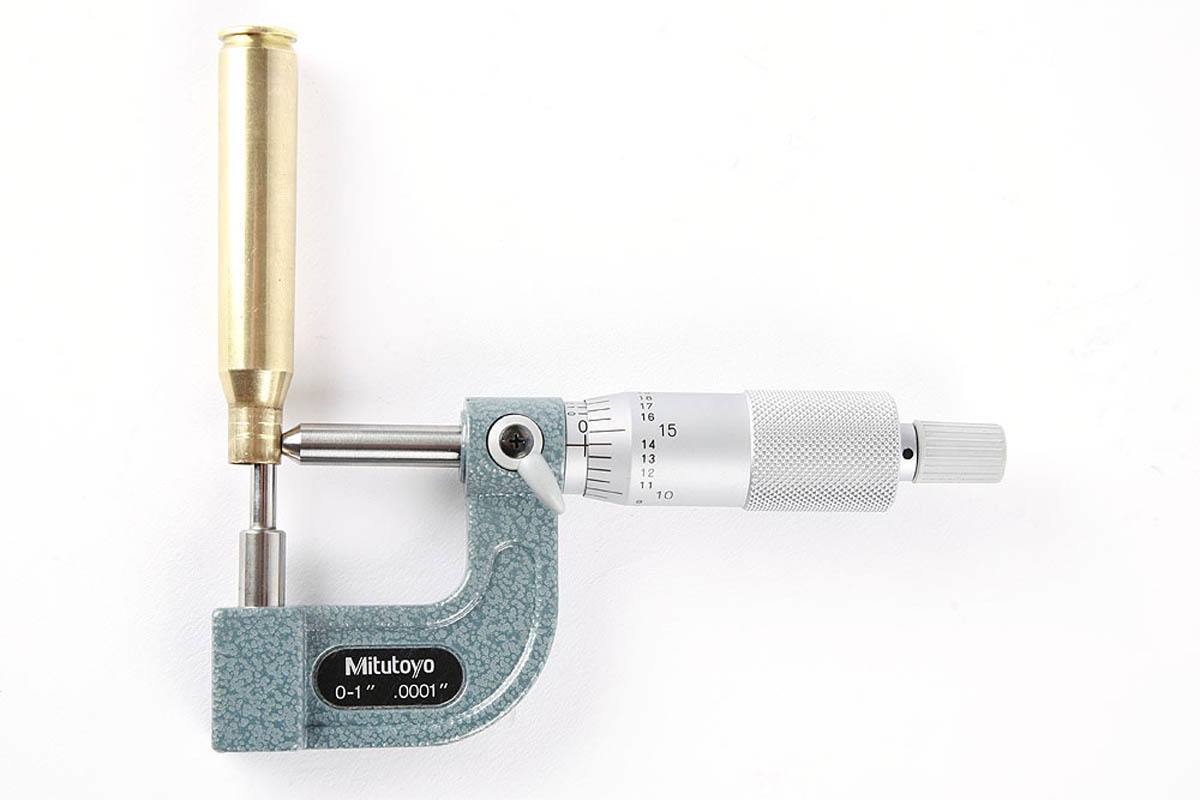
Consistent cases will measure within 0.0005" at all points. If you're seeing 0.001" or more variation, your sizing setup needs work. Cases that measure 0.378" on one side and 0.380" on the other won't chamber reliably in tight guns.
I measure every tenth case during a loading session. Takes thirty seconds and catches problems before they become jammed guns. When measurements start wandering, I stop and check the die setup.
The case gauge lies sometimes. It only checks one dimension - whether the case will drop into a standardized hole. A case can pass the gauge but still have high spots that bind in actual chambers.
Mixed brass headaches
Different manufacturers use different brass alloys. Winchester cases are softer and size easier than Federal. Starline sizes differently than range pickup. When you mix headstamps, you're mixing sizing characteristics.
Federal cases consistently size 0.0005" larger than Winchester cases using identical die settings. That doesn't sound like much, but it's the difference between smooth feeding and occasional hangups. Remington cases fall somewhere in the middle.
Range pickup adds another variable: firing history. A case fired ten times in a loose Glock chamber won't size the same as once-fired brass from a tight 1911. The Glock brass has been work-hardened differently and springs back less predictably.
Honestly, if you want consistent results, stick to one headstamp. I know it's tempting to use all that free range brass, but sorting by manufacturer and limiting how many times you reload each case eliminates a lot of variables.
Die setup that actually works
Screw your sizing die down until it contacts the shellholder firmly. Don't back it off. 9mm cases need full-length sizing to chamber reliably across different guns. The "back off a quarter turn" rule applies to bottleneck rifle cases, not straight-wall pistol brass.
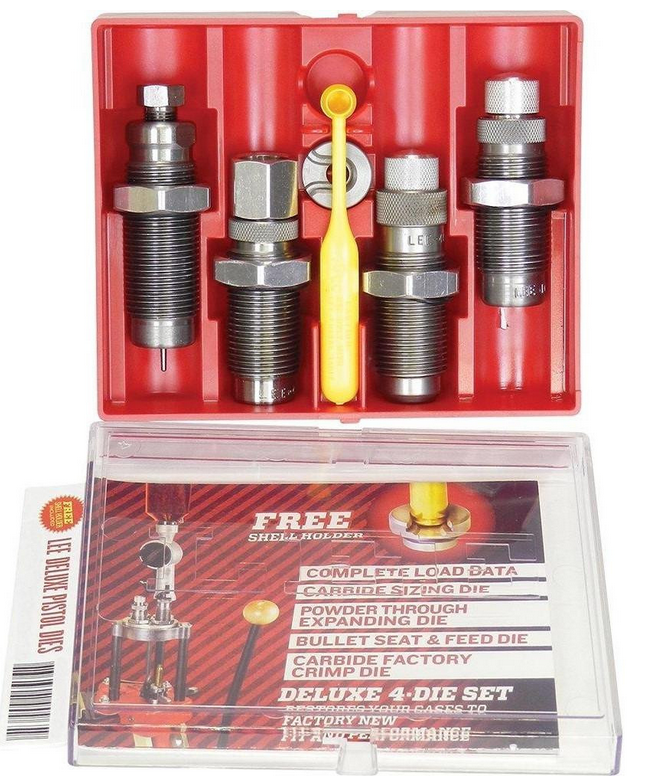
Run a case through and measure it. If it's still too big for your tightest chamber, you need more sizing. Some dies can be screwed down past shellholder contact by using shims or grinding the bottom of the die slightly.
Check your shellholder for wear. Worn shellholders allow cases to sit deeper, which changes how much the die sizes them. I've seen shellholders wear 0.002" deep after heavy use, which translates to cases that won't chamber.
Press alignment matters more than most people realize. A press that's not perfectly square will cock cases in the die. Check this by sizing a case, then rotating it 180 degrees and sizing again. If the second sizing changes the measurements, your press has alignment issues.
The carbide die advantage
Carbide sizing dies cost more but solve several problems. They don't require case lube, which eliminates one variable. More importantly, they maintain consistent dimensions longer than steel dies.
Steel dies wear gradually. After sizing 10,000 cases, a steel die might size cases 0.001" larger than when new. You won't notice this gradual change until cases start binding in tight chambers.
Carbide dies also run cooler. Heat from friction can cause steel dies to expand slightly during long loading sessions. This thermal expansion changes the sizing diameter by small but measurable amounts.
I've loaded 50,000+ cases through my Redding carbide 9mm die with no measurable change in sizing diameter. The same volume would have worn a steel die noticeably.
Common mistakes that cause chambering problems
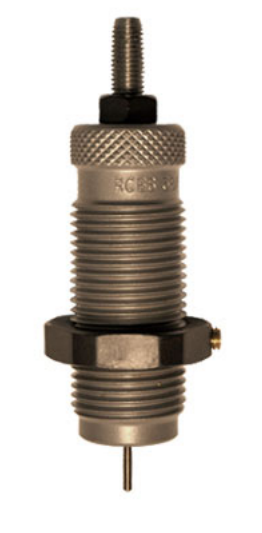
Insufficient case mouth expansion. If your expander die doesn't open the case mouth enough, the sizing die has to work harder to close it back down. This can leave the mouth slightly out of round or inconsistently sized.
Wrong expander ball size. Some dies come with multiple expander balls. Using one that's too small creates excessive neck tension. Too large, and the sizing die can't close the mouth properly.
Dirty dies. Brass shavings and powder residue build up in sizing dies over time. This debris prevents cases from entering the die fully or causes them to stick and pull out of round.
Inconsistent ram stroke. Not running the press handle to full extension means some cases get sized more than others. This is especially common on progressive presses where you develop a rhythm and start short-stroking.
Mixing case lengths. 9mm cases stretch with repeated loading. Long cases hit the end of the chamber before the rim seats properly. This creates feeding issues that look like sizing problems but aren't.
Equipment comparison: sizing dies that work
Redding Competition dies size consistently and include both standard and undersized sizing rings. The undersized ring takes cases down to 0.376", which chambers in even the tightest guns. Build quality is excellent, but they're pricey.
Lee Carbide dies offer good value and consistent sizing. The factory setup works for most applications. They include a powder-through expander that speeds up progressive loading. Not as precise as competition dies but adequate for most uses.
Dillon sizing dies are built for high volume. They maintain dimensions well over tens of thousands of cycles. The carbide is harder than most competitors, which means longer life but potentially more aggressive sizing.
RCBS dies split the difference between economy and precision. Their carbide dies size consistently and last well. The expander design works better than Lee's for maintaining neck tension.
Hornady Custom dies include multiple expander balls and detailed instructions for different applications. Good choice if you're loading for multiple guns with different chamber dimensions.
When undersized dies make sense
Some manufacturers offer undersized 9mm dies that size cases smaller than SAAMI minimum. These dies take cases down to 0.375-0.376" instead of the standard 0.377-0.378".
Undersized dies solve problems with tight chambers, but they create others. Cases sized this small can have excessive neck tension, which affects powder burn and velocity consistency. They also work brass harder, reducing case life.
I use an undersized die for my competition 1911, which has a minimum-spec chamber. The same loads won't chamber in my Glock without the smaller sizing. It's a trade-off between universal compatibility and optimal performance.
The key is knowing your chambers. If all your guns have standard or loose chambers, undersized dies just create problems. But if you have one tight gun in the mix, they might be necessary.
Case length and headspace issues
9mm cases stretch with repeated firing and resizing. Maximum case length is 0.754", but cases can grow to 0.760" or longer with heavy use. Long cases can cause chambering problems that look like sizing issues.
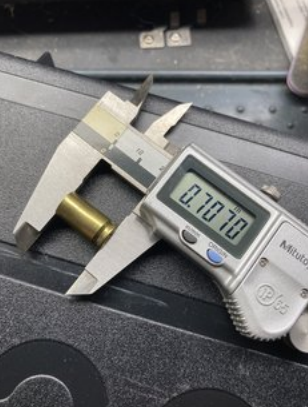
Measure your cases periodically with calipers. When they reach 0.756", trim them back to 0.750". This is especially important with range pickup brass, which might have unknown firing history.
Case length affects headspace in 9mm pistols. The cartridge headspaces on the case mouth, not the rim. Long cases push the bullet deeper into the chamber, which can affect timing and extraction.
I trim 9mm cases after every fifth loading. Takes about ten minutes per hundred cases with a simple hand trimmer. Consistent case length eliminates one variable in the chambering equation.
Testing your loads for chambering
The case gauge is a starting point, not the final answer. Your actual guns are the real test. Load a few test rounds and try them in every gun you plan to shoot them in.
Start with your tightest chamber. If rounds chamber smoothly there, they'll work in everything else. Pay attention to how the rounds feel going in - they should drop freely without resistance.
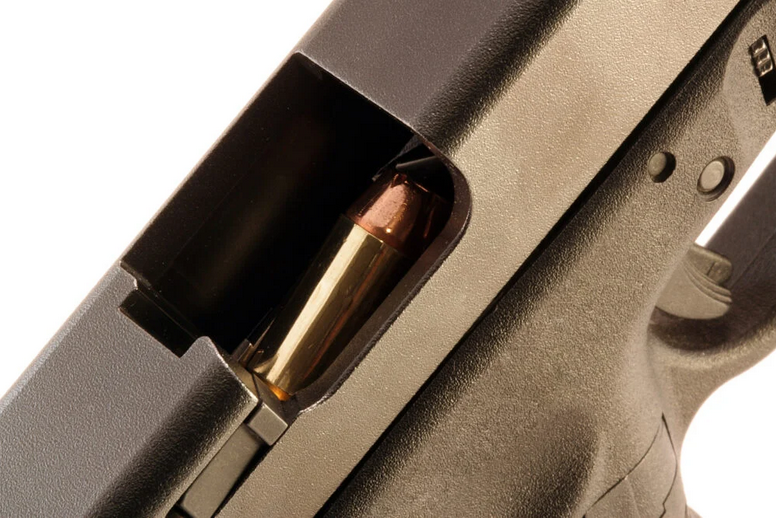
Function test by cycling rounds through the action manually. A round that chambers fine when inserted directly might bind when fed from the magazine. The feeding angle changes the dynamics completely.
Keep notes on which loads work in which guns. Chamber dimensions don't change, so a load that works today will work next month. This saves time and prevents frustration at the range.
What to do when nothing works
If properly sized cases still won't chamber, the problem might not be sizing. Check your overall length - bullets seated too long can bind in the throat. Measure COAL on several rounds and compare to published specs.
Bullet profile matters too. Round nose bullets chamber easier than flat points or wadcutters. If you're having problems with one bullet style, try a different profile before changing your sizing setup.
Case mouth flare affects chambering. Too much flare leaves a sharp edge that can catch on the chamber mouth. Too little flare can cause the case to collapse when the bullet seats, creating a bulge that won't chamber.
Sometimes the problem is the gun, not the ammo. Chambers can collect lead buildup or have rough spots that bind on sized cases. A good chamber cleaning often solves mysterious feeding problems.
Your next step is measuring everything. Get good tools and start documenting what works. Chamber dimensions, case measurements, and bullet seating depths all affect reliability. The data will tell you what's actually happening instead of guessing.