You're shopping for a thermal scope and every manufacturer promises their ballistic drop compensator will make long-range shots simple. Here's the problem: thermal imaging fundamentally changes how you see targets, and traditional BDC reticles that work perfectly on daylight scopes become nearly useless when you're looking at heat signatures.
I've mounted thermal scopes from Pulsar, ATN, and Armasight over the past few years. The marketing materials all show clean BDC dots lined up for precise holdovers at 200, 300, and 400 yards. Reality hits different when you're trying to use those dots on a coyote that's just a white blob against a gray background.

ATN ThOR 6 Deals
Prices may change. May contain affiliate links.
The core issue isn't the ballistics math; that stays the same whether you're using thermal or traditional glass. The problem is target definition and contrast in thermal imaging. Your brain processes heat signatures completely differently than it processes visible light images, and that changes everything about how reticles work.
Heat signatures mess with target edges
Look, thermal imaging shows you temperature differences, not actual object edges. A deer's body might be one temperature, but its legs blend into cooler ground. The antlers disappear entirely if they're the same temperature as the background trees. Your target isn't a crisp silhouette; it's a fuzzy heat blob with undefined edges.
Traditional BDC dots rely on your ability to place them precisely on specific target zones. You hold the 300-yard dot on the shoulder, or just behind it, or at the bottom of the chest cavity. That precision requires seeing actual anatomical landmarks. Thermal imaging rarely gives you those landmarks clearly.
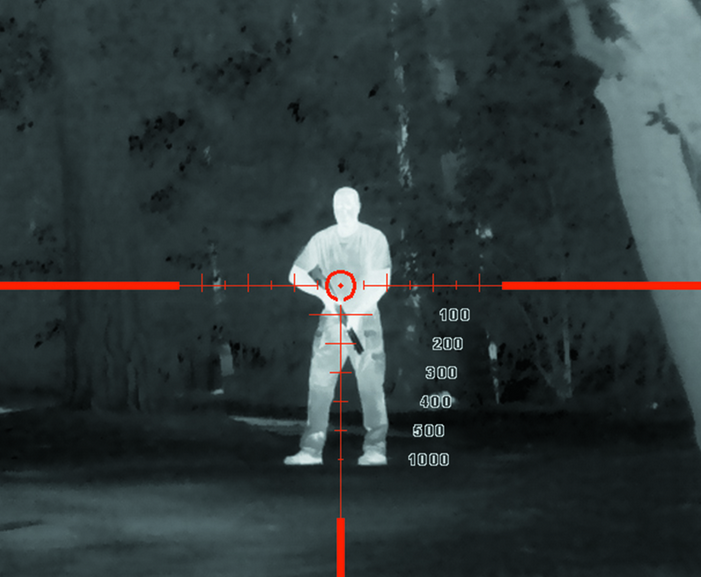
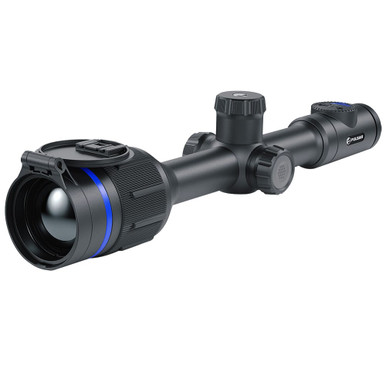
I tested this extensively with a Pulsar Thermion on prairie dogs. In daylight through a traditional scope, I could easily see head, body, and the exact point where I wanted bullet impact. Through thermal, prairie dogs looked like white dots with no internal definition. The BDC dots were still mathematically correct for bullet drop, but I couldn't determine where on the "dot" to aim.
The situation gets worse at longer ranges. Heat signatures lose definition as distance increases, just like visible targets do. But thermal targets lose definition faster because you're working with temperature gradients instead of hard visual edges. A 400-yard coyote through thermal might be a vague white smear. Good luck placing your BDC dot on its shoulder.
Range estimation becomes guesswork
BDC reticles assume you know the exact distance to your target. Most hunters estimate range using visual cues; the apparent size of the animal, terrain features, or reference objects. Thermal imaging eliminates most of these cues.
You can't judge an animal's size accurately when you're only seeing its heat signature. A close small animal and a distant large animal can look identical through thermal. Background objects that help with range estimation in daylight; trees, rocks, fence posts; often don't show up in thermal at all if they're ambient temperature.
Here's what actually matters: thermal scopes work best with laser rangefinders. Every serious thermal setup I've used includes an integrated rangefinder or a separate handheld unit. The Armasight Contractor Pro 640 I tested had built-in ranging, and it transformed the shooting experience. Without ranging, the BDC dots were decoration. With accurate range data, they became useful.
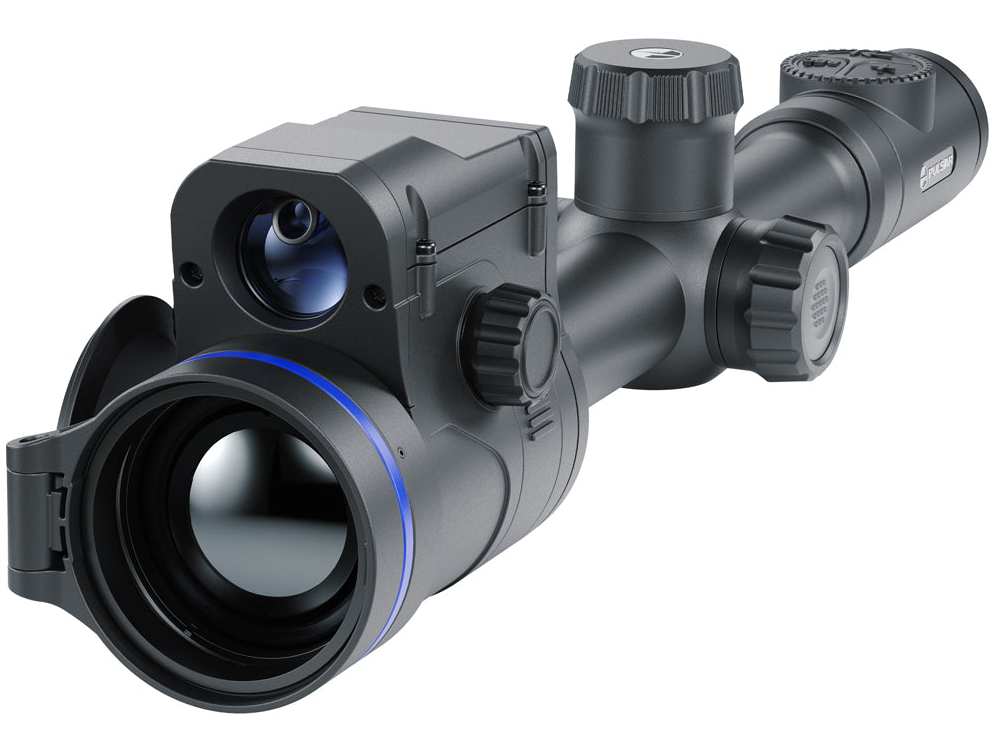
But this creates a workflow problem. You spot the target through thermal, range it, then use the appropriate BDC dot. That's a multi-step process that takes time. For stationary targets like hogs feeding in a field, it works. For moving targets or quick shots, you're better off zeroing at a practical distance and using holdover instincts.
Magnification changes everything
Most thermal scopes offer variable magnification, and BDC dots are only accurate at one specific magnification level. This is true for traditional scopes too, but thermal magnification has different practical constraints.
Low magnification in thermal gives you better situational awareness and target detection. You can scan larger areas and spot heat signatures more easily. But low magnification makes precise BDC dot placement nearly impossible because your target lacks definition.
High magnification gives you better target definition and more precise aiming. But thermal image quality degrades as you zoom in. Digital zoom on thermal sensors creates pixelation and noise. Your BDC dots might be positioned correctly, but your target image is too degraded to aim precisely.
I found the sweet spot with most thermal scopes around 6-8x magnification for shots inside 300 yards. Lower than that, and BDC dots were too small relative to the fuzzy target. Higher than that, and image quality suffered too much for precision work.
The ATN ThOR 6 I tested had 6-48x magnification range. The BDC reticle looked impressive at maximum zoom, but the thermal image was so pixelated that aiming became guesswork. The reticle was mathematically correct, but practically useless.
Temperature affects everything
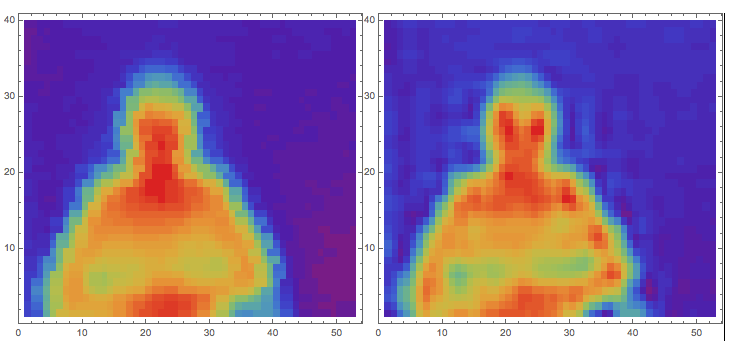
Thermal imaging performance changes dramatically with ambient temperature, and this affects how well BDC reticles work. Cold nights provide excellent thermal contrast; warm animals stand out clearly against cool backgrounds. Hot summer days reduce contrast significantly; everything is closer to the same temperature.
BDC dots work best when you can see your target clearly and define precise aiming points. Temperature conditions that reduce thermal contrast make BDC dots less effective, regardless of their ballistic accuracy.
I've used thermal scopes in 20-degree winter nights and 90-degree summer evenings. The difference in target clarity is dramatic. Winter thermal imaging gives you almost daylight-like definition on warm targets. Summer thermal imaging often shows targets as vague shapes with minimal contrast.
Your BDC reticle doesn't change, but your ability to use it precisely changes with every temperature shift. This variability makes BDC dots less reliable for thermal applications than for traditional daylight shooting.
Glass notes
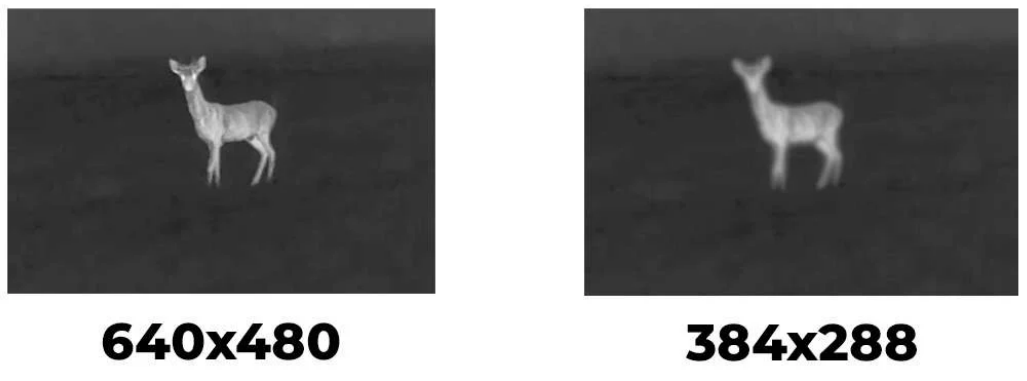
The thermal sensor resolution affects how well BDC reticles work. Higher resolution sensors (640x512 vs 384x288) provide better target definition and make precise BDC dot placement more feasible. But even high-resolution thermal imaging doesn't match the target definition you get with quality daylight glass.
I've compared 640-resolution thermal scopes to budget daylight scopes in the $300 range. The daylight scopes provided better target definition for precision aiming, even though the thermal scopes cost five times more. Thermal imaging is about detection and identification, not precision marksmanship.
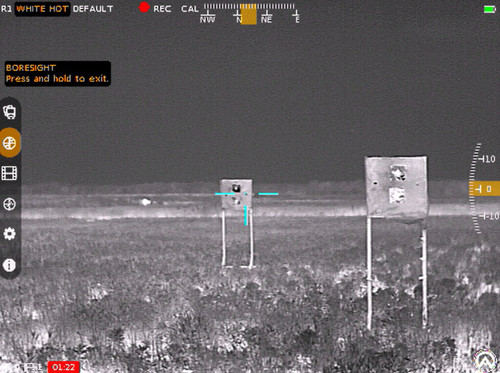
The refresh rate also matters. Slower refresh rates (30Hz vs 60Hz) make tracking moving targets more difficult, which affects your ability to use BDC dots on anything that's not stationary.
What works better than BDC dots
Simple crosshairs or dot reticles work more effectively for thermal applications. Instead of trying to place specific BDC dots on undefined target zones, you zero your thermal scope at a practical distance and use holdover estimation.
Most of my thermal shooting happens inside 200 yards. I zero at 100 yards and hold slightly high for 150-200 yard shots. This eliminates the precision requirements that make BDC dots problematic with thermal imaging.
For longer shots, I use the rangefinder to get exact distance, then dial elevation turrets instead of using BDC holdovers. Turret adjustments are more precise than trying to place BDC dots on fuzzy thermal targets.
The Pulsar Thermion I tested had both BDC reticles and simple crosshair options. After extensive field use, I switched to the crosshair and never went back to BDC. The crosshair was faster to use and more practical for thermal target engagement.
Range limitations matter more
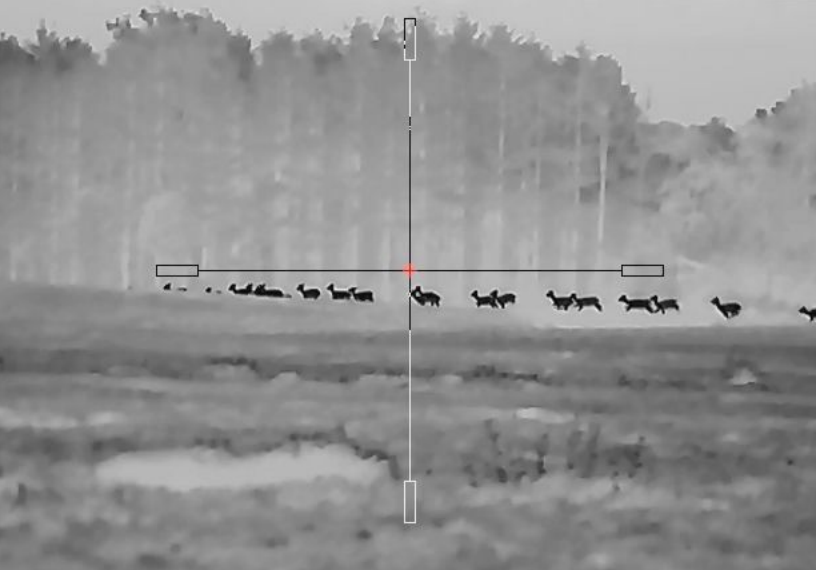
Thermal scopes have practical range limitations that make long-range BDC dots less relevant. Most thermal sensors lose target definition beyond 400-500 yards, depending on target size and temperature conditions.
BDC reticles often include dots for 600, 700, even 800-yard shots. These dots are ballistically correct, but thermal imaging rarely provides enough target definition to use them effectively at those ranges. You're better off focusing on shorter-range performance where thermal actually works well.
I tested the maximum effective range of several thermal scopes on coyote-sized targets. Even high-end units with 640 sensors struggled to provide aimable target definition beyond 400 yards in typical temperature conditions. The BDC dots for longer ranges were mathematically correct but practically useless.
This range limitation makes thermal scopes fundamentally different from daylight scopes. A quality daylight scope can provide precise aiming capability to 800+ yards with appropriate magnification. Thermal scopes are detection tools first, precision instruments second.
Common mistakes with thermal BDC reticles
Trusting BDC dots without confirming zero at multiple distances. Thermal scopes can shift zero more easily than traditional scopes due to their electronic components and battery-dependent operation. Verify your BDC dots actually correspond to bullet impact at marked distances.
Using BDC dots in temperature conditions that reduce thermal contrast. When ambient temperature approaches target temperature, thermal imaging provides poor target definition. Switch to simple reticles and shorter engagement distances instead of trying to force BDC precision.
Attempting long-range shots with BDC dots when thermal image quality is insufficient. Just because the scope has an 800-yard BDC dot doesn't mean the thermal sensor can provide aimable target definition at 800 yards.
Mixing magnification levels with BDC dots. Most BDC reticles are calibrated for one specific magnification. Using them at different zoom levels throws off the ballistic calculations, even though the dots appear to line up correctly.
Forgetting that thermal targets move differently than daylight targets. Heat signatures can shift as animals change position relative to background temperatures. A target that looks centered in your BDC dot might actually be positioned differently than you think.
Product comparison
The Pulsar Thermion Duo DXP50 offers both thermal and daylight channels with multiple reticle options. The BDC reticles work well in daylight mode but become less precise in thermal mode due to target definition issues. The simple crosshair reticle proves more practical for thermal use.
ATN ThOR 6 LRF 384 includes laser ranging and ballistic calculator features. The integrated ballistic computer can adjust for range automatically, which partially solves the BDC dot placement problem. However, target definition at longer ranges still limits practical precision.
Armasight Contractor Pro 640 provides excellent thermal image quality with 640x512 resolution. The higher resolution makes BDC dots more usable than lower-resolution units, but simple reticles still prove more practical for most thermal shooting scenarios.
Fusion Thermal Boarmaster 40 PRO focuses on shorter-range applications where thermal imaging works best. The BDC reticle covers reasonable distances for thermal use, but the simple duplex option handles most practical shooting situations more effectively.
Trijicon IR-Hunter MK3 combines thermal imaging with traditional scope durability. The BDC reticle options are well-designed, but the scope's strength lies in its robust construction rather than long-range precision capabilities.
Troubleshooting thermal BDC problems
If your BDC dots aren't hitting where expected, first verify zero at your primary distance. Thermal scopes can lose zero more easily than traditional scopes due to electronic components and temperature sensitivity.
Check your magnification setting. BDC dots are calibrated for specific magnification levels, usually marked in the manual. Using BDC dots at the wrong magnification throws off all your holdover calculations.
Confirm your ammunition matches the ballistic data used for BDC calibration. Different bullet weights and velocities change drop characteristics. Most BDC reticles assume specific ammunition specifications.
Evaluate thermal image quality at your shooting distance. If target definition is poor, switch to a simple reticle and shorter engagement distances instead of trying to force BDC precision on unclear targets.
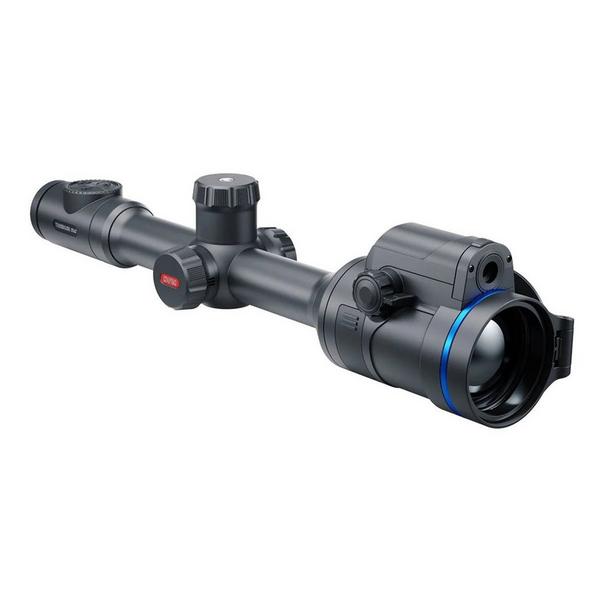
Pulsar Thermion Duo DXP50 Deals
Prices may change. May contain affiliate links.
Consider environmental factors affecting thermal contrast. Temperature, humidity, and atmospheric conditions all impact thermal imaging performance and your ability to use BDC dots precisely.
The practical solution
Zero your thermal scope at 100 yards with a simple crosshair or dot reticle. This gives you a solid foundation for most thermal shooting scenarios without the complications of BDC holdovers on undefined targets.
Use laser ranging for any shot beyond 150 yards, then dial elevation adjustments instead of relying on BDC dots. Turret adjustments are more precise than trying to place BDC dots on fuzzy thermal signatures.
Practice holdover estimation at common distances. Most thermal shooting happens inside 200 yards where simple holdover works better than trying to use specific BDC dots on unclear targets.
Focus on target identification and shot placement rather than long-range precision. Thermal scopes excel at detection and moderate-range engagement, not precision marksmanship at extended distances.
The bottom line: BDC dots are designed for precision shooting with clearly defined targets. Thermal imaging provides detection capability with less-defined targets. These two capabilities don't match well together. Simple reticles, practical zero distances, and appropriate range limitations will serve you better than trying to force BDC precision on thermal targets that don't provide the visual definition those reticles require.