You dial 20 MOA up on your turret and expect your point of impact to move exactly 20 MOA. Your scope clicks 15 times at 1/4 MOA per click, and you assume that's 3.75 MOA of adjustment. Here's the thing: your turrets might be lying to you, and you won't know until you're missing steel at 800 yards wondering what went wrong.
I've tested dozens of scopes over the years, from budget glass to top-tier tactical optics. The dirty secret is that even expensive scopes can have tracking errors that'll cost you hits when it matters. A scope that tracks 18 MOA when you dial 20 MOA doesn't sound like much; until you're holding for a 12 MPH wind and your actual come-up is off by 10%.
The only way to know if your scope tracks true is to test it systematically. Not with a box test at 25 yards, not by "feeling" if the clicks are consistent, but with real measurements that tell you exactly how much your reticle actually moves when you turn those turrets.
Why scope tracking matters more than you think
Most shooters obsess over group size and glass clarity but ignore tracking accuracy. That's backwards. A scope that shoots 1.2 MOA groups but tracks perfectly will outperform a scope that shoots 0.8 MOA groups but has 5% tracking error once you start dialing for distance.
At 600 yards, a 5% tracking error means your 15 MOA come-up is actually 14.25 MOA; you're hitting 4.5 inches low. At 1000 yards with a 25 MOA come-up, that same error puts you 9 inches low. The farther you shoot, the more these errors compound.
The problem gets worse when you factor in wind holds. If your windage turret under-tracks by 3%, your 8 MOA wind hold becomes 7.76 MOA. That's a 7-inch miss on a 10-inch plate at 800 yards. You'll blame the wind call, adjust your hold, and miss again because the real problem is mechanical.
Tracking errors aren't always consistent either. Some scopes track accurately in the middle of their adjustment range but fall off at the extremes. Others have backlash; play in the turret mechanism that creates different tracking depending on which direction you're turning. A few have systematic errors where every click is slightly off by the same percentage.
The tall target test: your tracking baseline
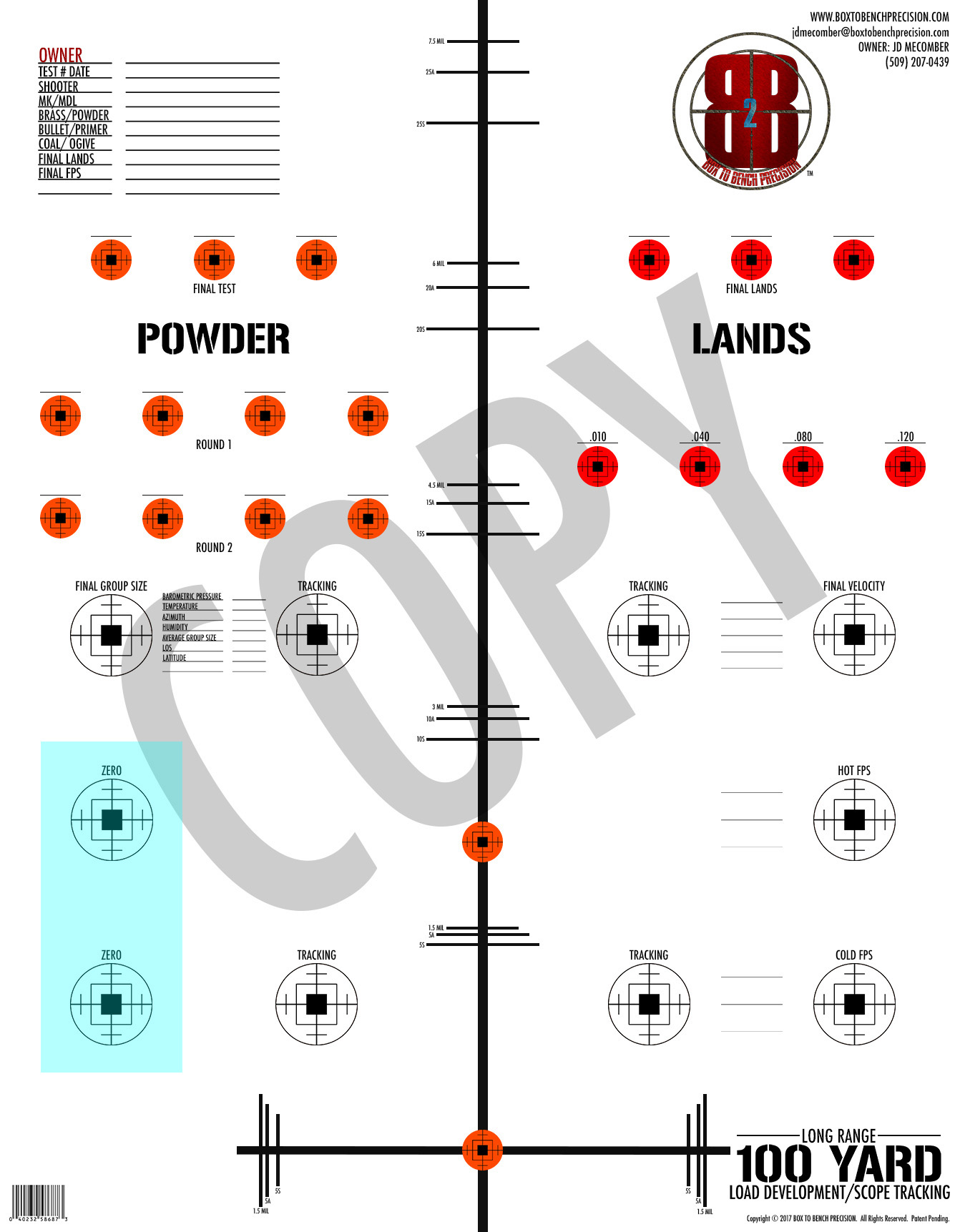
The tall target test is the gold standard for checking scope tracking. You'll need a target with precise vertical measurements, a stable shooting position, and enough distance to make small tracking errors visible.
Set up at 100 yards minimum. I prefer 200 yards because it doubles the angular measurement and makes small errors easier to spot. Mount a large piece of paper or cardboard with a clear aiming point at the bottom and measurement marks every inch going up. A yardstick taped to the target works perfectly.
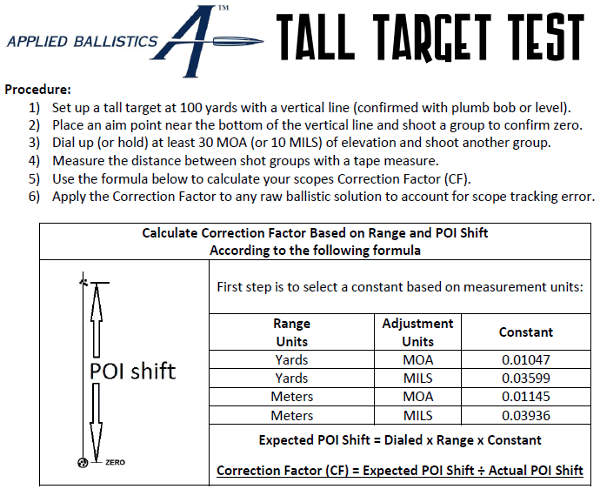
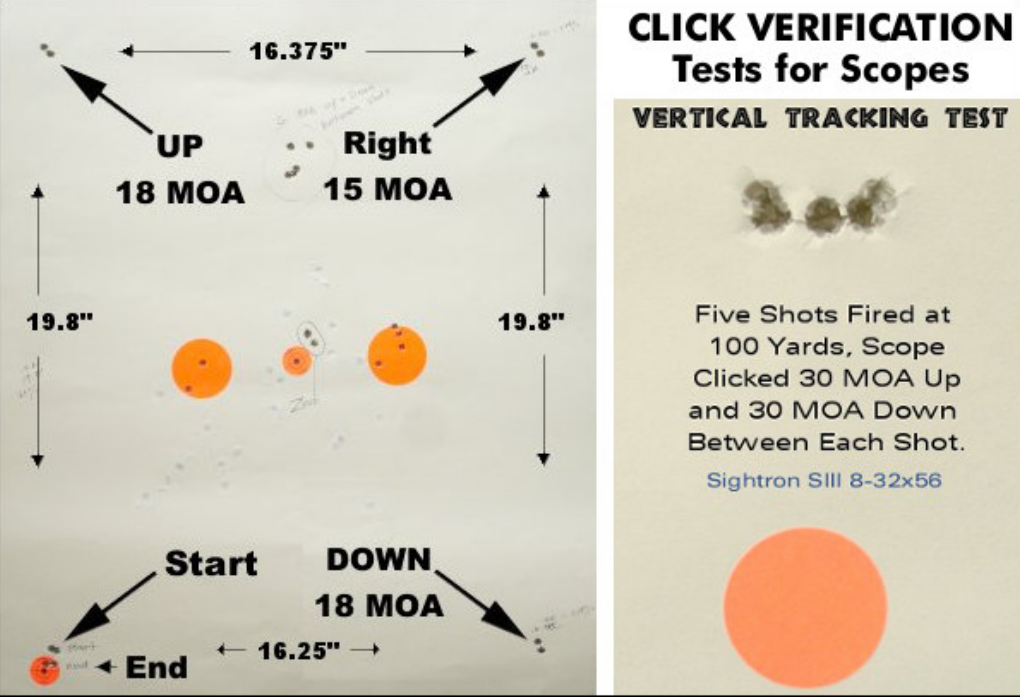
Zero your rifle normally, then fire a three-shot group at your aiming point. Mark this as your baseline. Now dial up exactly 20 MOA; that's 80 clicks on a 1/4 MOA scope; and fire another three-shot group without changing your point of aim.
Measure the vertical distance between your group centers. At 100 yards, 20 MOA should move your impact exactly 20.94 inches. At 200 yards, it should be 41.89 inches. If your measurement is off by more than 2%, you've got a tracking problem.
Here's what perfect tracking looks like: 20 MOA dialed, 20.94 inches of movement at 100 yards. Acceptable tracking is within 2%; between 20.5 and 21.4 inches. Anything outside that range needs attention.
Range notes: I've found that shooting this test in calm conditions makes a huge difference. Even a slight breeze can push your groups horizontally and make it harder to measure pure vertical tracking. Early morning or late evening usually gives you the best conditions. Also, use the same ammunition for both groups; different lots can have enough velocity variation to affect your vertical measurement.
The box test: checking both axes
The tall target test only checks elevation tracking. The box test verifies both elevation and windage, plus it reveals if your adjustments are square to each other. A scope with canted internals will track diagonally instead of straight up and down.
Start with a zeroed rifle at 100 yards. Fire a group at your aiming point, then follow this sequence: 10 MOA up, fire a group. 10 MOA right, fire a group. 10 MOA down, fire a group. 10 MOA left, fire a group. You should end up back at your original zero.
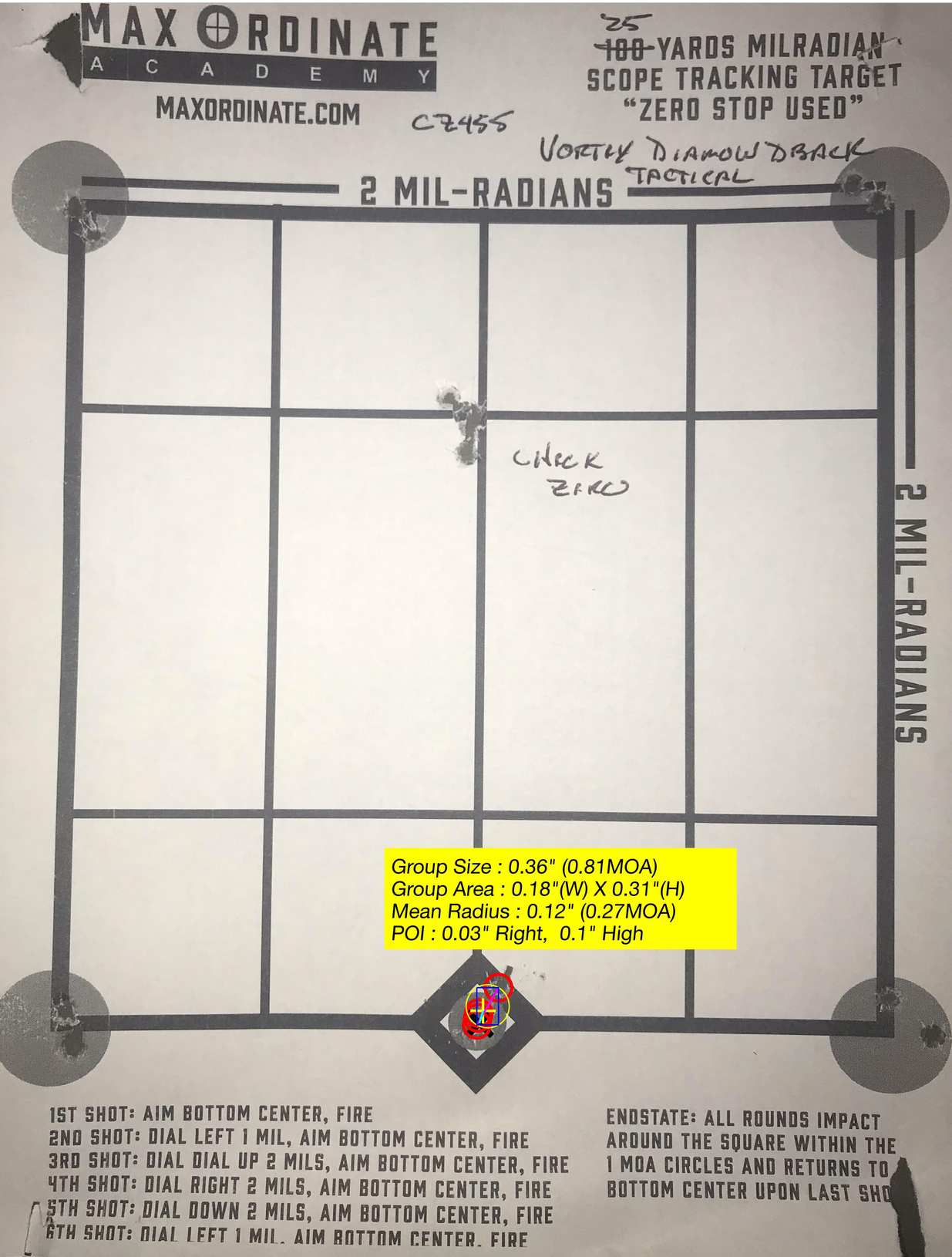
Measure the distances between each group. They should form a perfect square with sides measuring 10.47 inches at 100 yards (10 MOA = 10.47 inches at 100 yards). More importantly, check that your final group lands on or very close to your starting point. If you end up significantly off your original zero, you've got backlash or systematic tracking errors.
The box test also reveals canted reticles. If your "vertical" adjustments move the impact diagonally, your scope's internal mechanism isn't aligned with the reticle. This shows up as groups that don't form a true square; instead, you get a diamond or parallelogram shape.
I've seen expensive scopes fail this test badly. One particular Mark 5 I tested had perfect elevation tracking but the windage was off by 8%. The "box" looked more like a rectangle. Another scope had 3 degrees of cant in the internal mechanism; every elevation adjustment also moved the impact slightly left.
Indoor tracking verification
You can check basic tracking without firing a shot, though it won't tell you about bore alignment or mechanical precision under recoil. This method works great for initial scope evaluation or troubleshooting a scope that's acting up.
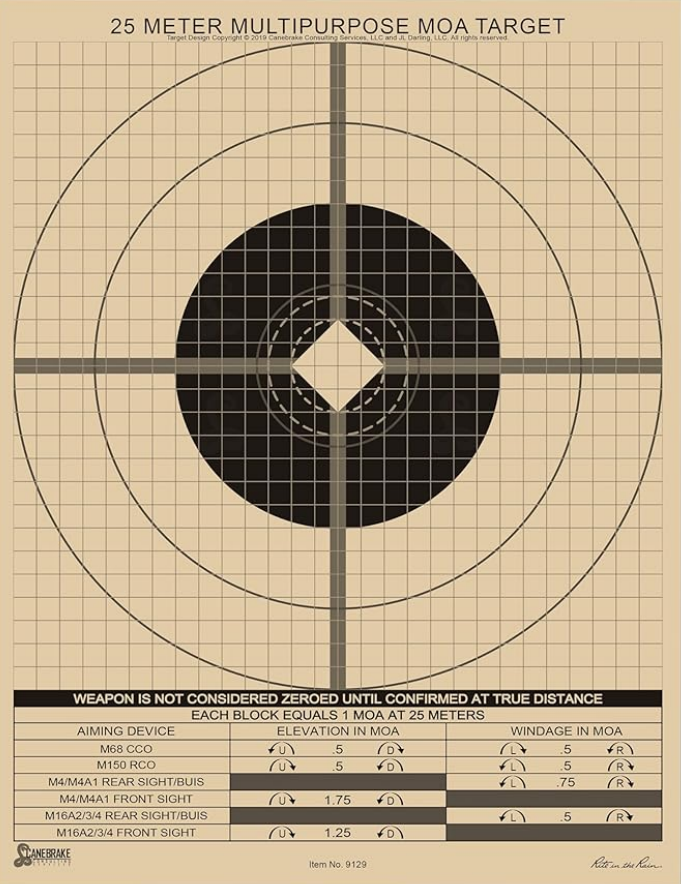
Set up a target with fine grid lines at exactly 25 yards. A large sheet of graph paper works, or you can print a precision grid. Mount your rifle solidly; a good benchrest or heavy sandbags; and level both the rifle and the scope carefully.
Center your reticle on a specific grid intersection, then dial in a known amount of adjustment. At 25 yards, 4 MOA of adjustment should move your reticle exactly 1.047 inches. Count the grid squares and measure with a ruler to verify the movement matches your dial input.
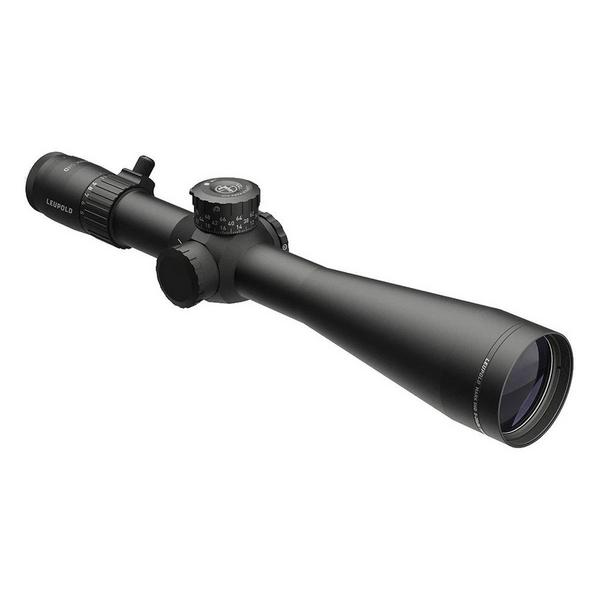
Leupold Mark 5 Deals
Prices may change. May contain affiliate links.
This test reveals several problems that don't show up until you're shooting for score. Turrets that bind or stick will show inconsistent movement between clicks. Scopes with backlash will track differently depending on which direction you turn the turret. Internal cant shows up as diagonal movement when you're dialing pure elevation or windage.
The limitation is that this test doesn't account for how the scope behaves under recoil or how well the adjustments hold zero over time. But it's perfect for catching major tracking problems before you waste ammunition.
Common tracking problems and what causes them
Systematic under-tracking is the most common issue. The scope consistently moves less than the marked adjustment value; you dial 20 MOA and get 18.5 MOA of actual movement. This usually stems from manufacturing tolerances in the erector tube mechanism or cam surfaces that aren't cut to exact specifications.
Backlash creates different tracking depending on direction. You might get accurate tracking when dialing up from zero but lose 0.5 MOA when dialing back down. This happens when there's play in the turret mechanism; gears or cams that don't mesh tightly. It's particularly problematic for hunters who dial up for a shot then return to zero.
Non-linear tracking means the scope tracks accurately in some parts of its range but not others. Many scopes track well in the middle 50% of their adjustment range but fall off toward the extremes. This is usually a design limitation; the erector tube geometry works best in the center position.
Canted internals cause your adjustments to move diagonally instead of straight up or sideways. A scope with 2 degrees of internal cant will move your impact slightly left every time you dial up. This is a manufacturing defect that can't be fixed by rotating the scope in the rings.
Click inconsistency shows up as irregular movement between individual clicks. Most clicks move the reticle the correct amount, but some are dead or double. This usually indicates worn or damaged detent mechanisms inside the turret.
The frustrating part is that some of these problems only appear under specific conditions. A scope might track perfectly at moderate temperatures but develop backlash when it gets cold. Another might track fine with light recoiling cartridges but show problems with magnums.
Testing different scope categories
Budget scopes ($200-500) often have systematic tracking errors in the 3-8% range. The Arken EP5 series tracks surprisingly well for the price point, usually within 2-3% of marked values. Primary Arms GLx scopes are hit-or-miss; I've tested some that tracked perfectly and others that were off by 6%.
Mid-range tactical scopes ($800-1500) should track within 2% if they're worth buying. The Vortex Razor HD Gen II line generally tracks well, though I've seen individual units with backlash issues. Leupold Mark 5 scopes have excellent tracking accuracy but some units develop problems after heavy use.
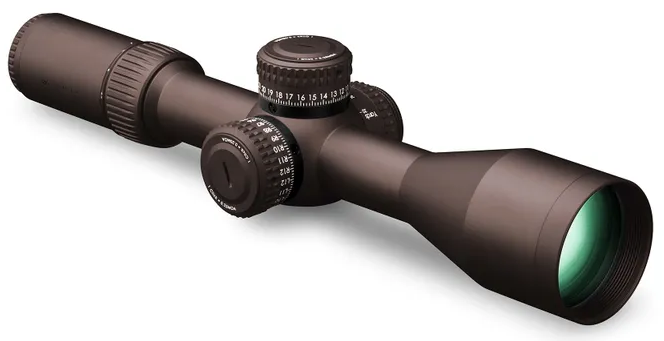
High-end tactical scopes ($2000+) better track within 1% or they're going back to the manufacturer. Nightforce scopes consistently show excellent tracking; I've never tested one that was off by more than 1.5%. Schmidt & Bender and Kahles scopes also track extremely well, though individual units can still have issues.
Competition scopes are usually the most accurate trackers because precision shooters demand it. Scopes designed for F-Class or benchrest typically track within 0.5% of marked values. The trade-off is often durability; these scopes are built for accuracy, not for getting bounced around in a patrol car.
The price doesn't guarantee perfect tracking, but it does correlate with consistency. Expensive scopes might still have tracking errors, but they're more likely to have the same error consistently rather than random variations.
Match notes: when tracking errors cost points
I learned about tracking problems the hard way during a PRS match in Wyoming. My Leupold Mark 5 had been shooting great in practice, consistent groups and seemingly solid tracking. But during the match, I kept missing low on the longer stages.
The problem became obvious on a 900-yard stage where I needed 22 MOA of elevation. My DOPE said 22 MOA, my turret said 22 MOA, but I was hitting 8 inches low consistently. After the match, I ran a tall target test and discovered the scope was under-tracking by 4%. My "22 MOA" was actually 21.1 MOA; enough to cost me several targets.
That scope had been fine for hunting where I rarely dialed more than 10-12 MOA. But in competition, where you're regularly using 20+ MOA of adjustment, that 4% error became significant. I switched to a Nightforce ATACR and haven't had tracking issues since.
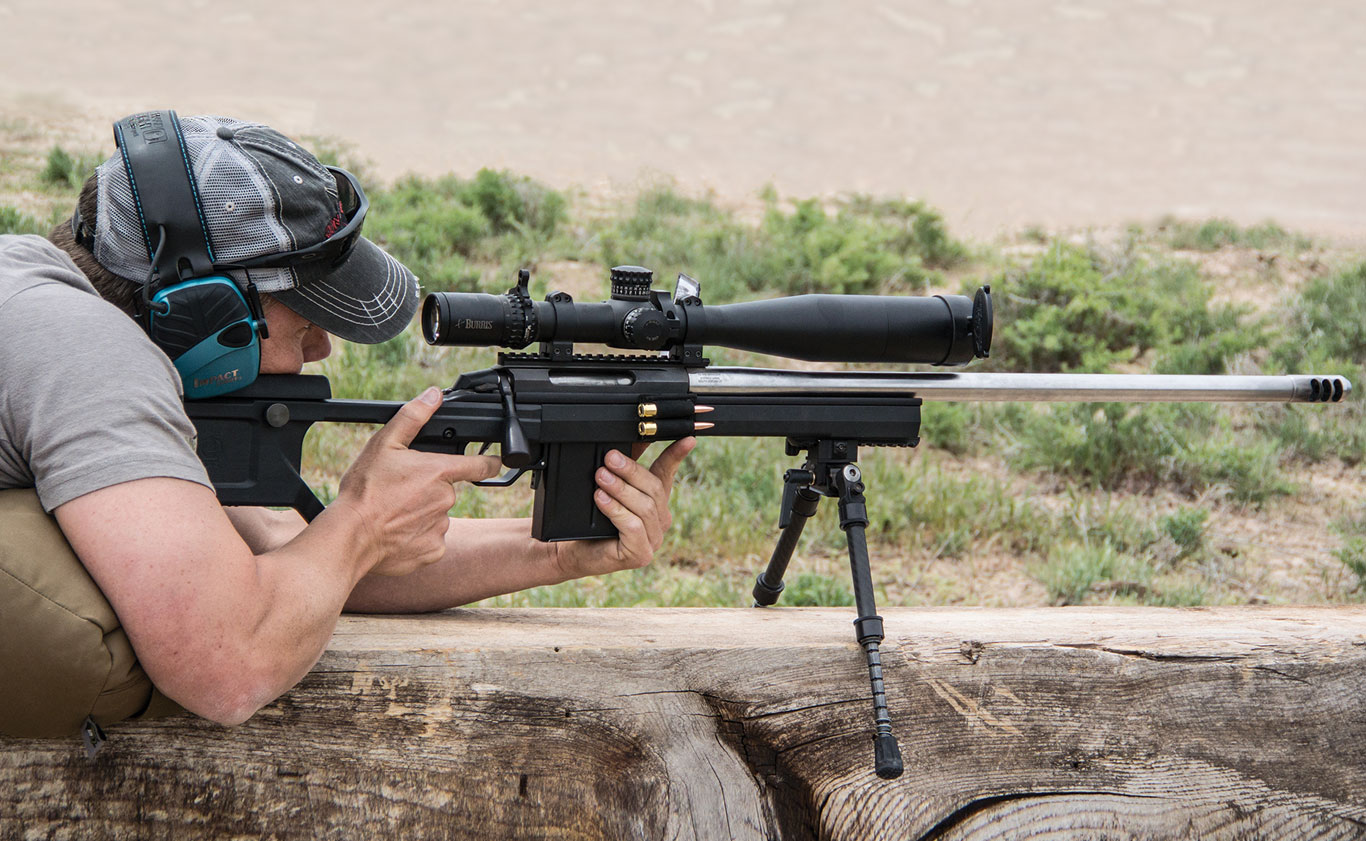
The lesson is that tracking errors are often load-dependent and distance-dependent. A scope that works fine for moderate adjustments might fall apart when you push it to the extremes. If you're planning to shoot long range regularly, test your scope at the adjustment ranges you'll actually use.
Fixing tracking problems
Most tracking problems can't be fixed by the end user. Systematic under-tracking, backlash, and canted internals require factory service or replacement. But there are a few things you can try before sending the scope back.
Turret cap issues sometimes cause apparent tracking problems. If your turret cap is loose or the zero stop isn't set correctly, you might think you're dialing 20 MOA when you're actually dialing 18 MOA. Remove the turret cap and count clicks directly on the turret body to eliminate this variable.
Mounting problems can create apparent tracking issues. A scope that's not properly leveled will show canted tracking even if the internal mechanism is perfect. Rings that are out of alignment can bind the scope tube and cause irregular tracking. Always check your mounting before assuming the scope is defective.
Temperature effects can cause temporary tracking problems. Some scopes develop backlash in extreme cold or lose tracking accuracy when they get very hot. If you're seeing inconsistent tracking, try testing at different temperatures to see if there's a pattern.
Break-in period is real for some scopes. New scopes sometimes need 50-100 rounds of adjustment cycling before the internal mechanisms settle in. If you're seeing tracking problems with a brand-new scope, try cycling the turrets through their full range several times before testing again.
But honestly, if your scope has significant tracking errors after proper mounting and break-in, send it back. Life's too short to work around defective equipment, and most manufacturers will fix or replace scopes with tracking problems under warranty.
Building your tracking data
Once you've verified that your scope tracks accurately, build a data sheet that documents exactly how much adjustment you get per click. Even scopes that track well might not track exactly to the marked values. A scope marked as 1/4 MOA per click might actually move 0.26 MOA per click; close enough for most purposes but worth knowing for precision work.
Record your tracking data at different adjustment ranges. Test at 10 MOA, 20 MOA, and 30 MOA of adjustment to see if the tracking stays consistent throughout the range. Some scopes track perfectly in the middle but show errors at the extremes.
Document any backlash or directional differences. If your scope tracks differently when dialing up versus dialing down, note the difference and account for it in your shooting. Some competitive shooters always approach their final adjustment from the same direction to eliminate backlash errors.
Keep temperature notes if you shoot in varying conditions. A scope that tracks perfectly at 70 degrees might show different behavior at 20 degrees or 100 degrees. This is particularly important for hunters who might zero in moderate weather but hunt in temperature extremes.
Update your tracking data periodically. Scopes can develop tracking problems over time, especially if they see hard use. I retest my primary competition scopes every 500 rounds or so to make sure they're still tracking consistently.
The goal is to know your equipment well enough that you can trust it completely. When you dial 18.5 MOA for an 850-yard shot, you want to know exactly where that bullet is going to hit. Tracking data gives you that confidence.
Your scope's turrets are the interface between your ballistic solution and your point of impact. If they're not telling you the truth, everything else falls apart. Test your tracking, document the results, and shoot with confidence knowing your adjustments are taking you exactly where you think they are.