
Your rifle sling keeps coming loose at the worst possible moment
You're belly-crawling through thick brush, rifle slung tight across your back, when the attachment point decides to quit. Now you're dragging 8 pounds of rifle through thorns by the barrel. Or maybe you're transitioning from prone to standing and the sling catches on your gear because the swivel rotated 90 degrees when you weren't looking.
The problem isn't your sling. It's how you're attaching it to the rifle. Most guys slap on whatever came with their sling and call it good. Then they wonder why their setup fights them when they need it most.
Here's what actually matters: QD swivels and traditional attachment methods each solve different problems. QD gives you speed and convenience. Traditional gives you bombproof reliability and precise positioning. The choice depends on whether you prioritize quick changes or absolute dependability in the field.
How attachment points actually work
Your sling attachment is doing two jobs at once. It's holding the sling to the rifle under dynamic loads, and it's controlling how the sling moves relative to the rifle. That second part is what most people miss.
When you shoulder the rifle, the sling needs to clear your support hand and not bind against the receiver. When you let it hang, it should position the rifle where you can grab it without fighting fabric. When you're moving fast, it shouldn't rotate or shift in ways that change how the rifle hangs.
Traditional attachment points, think standard sling swivels, HK hooks, or direct-loop connections, lock the sling in one position relative to the rifle. The sling can slide through the attachment point, but the attachment itself stays put. QD swivels rotate freely, which changes how forces transfer through the system.
That rotation sounds like a feature until you're trying to get consistent cheek weld from a supported position. The sling wants to twist one way, your body position demands another, and the swivel spins until something binds up.
QD swivels: fast and finicky
QD swivels solve the attachment speed problem completely. Push button, pull sling, done. No threading, no clipping, no fumbling with hardware. For hunters who swap slings between rifles or tactical guys who need to ditch a sling fast, that's worth the tradeoffs.
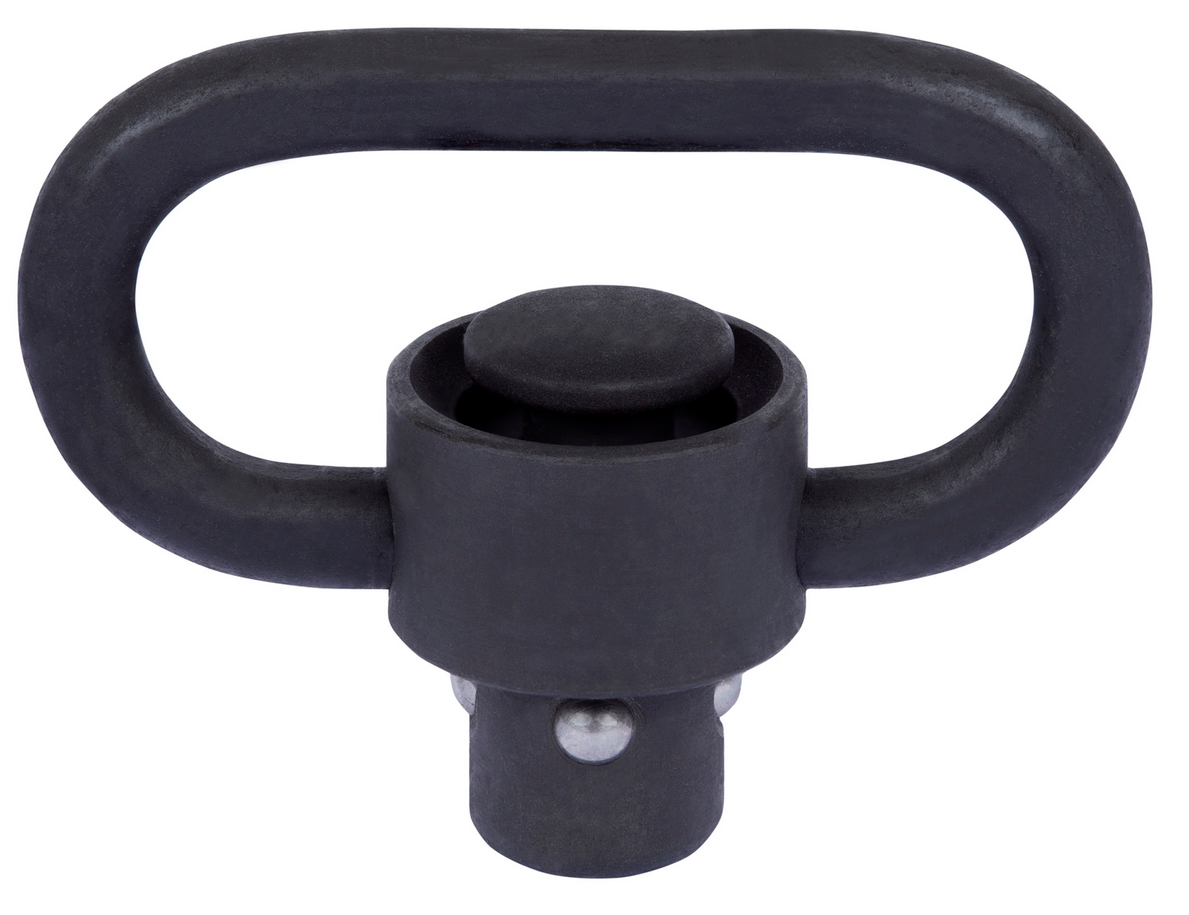
The mechanism is simple: a spring-loaded ball bearing locks into a groove in the QD socket. Push the button, the bearing retracts, the swivel pulls free. Good QD swivels use hardened steel bearings and precise machining to handle the side loads that come from dynamic sling use.
But that rotating connection creates problems traditional mounts don't have. The swivel body is round, so it can spin freely in the socket. Under load, it'll rotate to whatever position relieves stress on the sling material. That's usually not the position you want for consistent rifle presentation.
Range notes: I've watched guys struggle with QD setups where the rifle would hang at different angles depending on how they moved. The swivel would rotate during transitions, changing how the sling laid across their body. By the end of a long day, they'd be fighting their own gear instead of focusing on shooting.
Some QD swivels have anti-rotation features, flats or tabs that engage slots in the socket. These work, but they limit which sockets you can use and add complexity to what should be a simple system.
The durability question is real. QD swivels have more moving parts than traditional attachments. The spring, bearing, and release mechanism all have to work perfectly under dirt, moisture, and impact loads. Quality matters more with QD than with simpler systems.
Traditional attachments: boring and bulletproof
Standard sling swivels thread into the rifle and don't move once they're tight. The sling attaches to a fixed loop, so the only rotation happens where the sling material passes through the swivel. This gives you consistent rifle positioning and eliminates the mechanical complexity of QD systems.
HK-style hooks are even simpler. The hook clips directly to a loop or slot on the rifle. No threads, no springs, no precision machining required. The connection is positive; either it's hooked or it's not. There's no partial engagement or gradual failure mode.
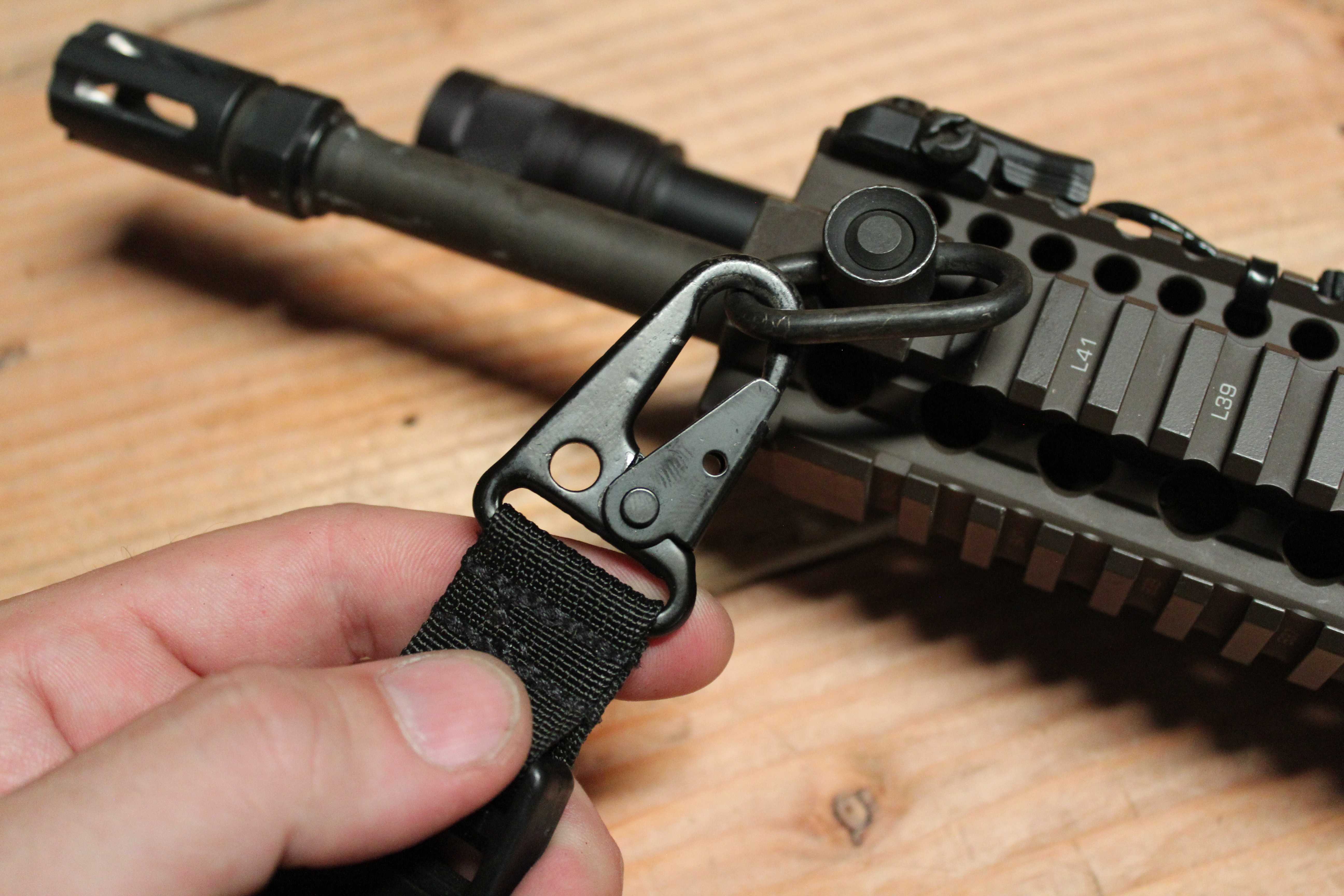
Direct loop connections eliminate hardware entirely. The sling passes through a slot or around a fixed point on the rifle. This is how military slings have worked for decades because it's the most reliable option available.
The downside is speed. Threading a swivel or clipping an HK hook takes longer than pushing a QD button. If you're constantly swapping slings between rifles, that time adds up. But for most field use, you attach the sling once and leave it there.
Traditional attachments also limit your socket options. You need the right thread pitch for swivels or the right slot geometry for hooks. QD sockets are more standardized, so you have more mounting options on modern rifles.
Mounting positions that actually matter
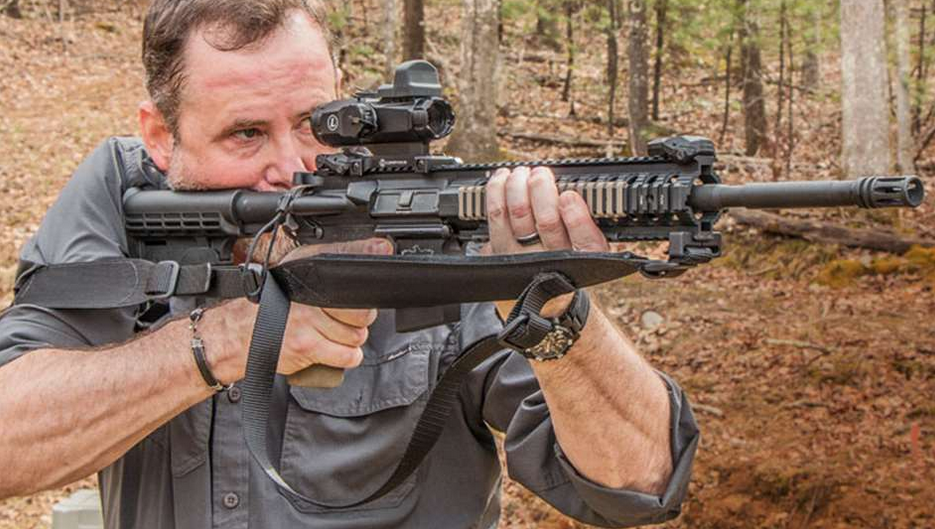
Front attachment point placement changes how the rifle hangs and how the sling interferes with your support hand. Too far forward and the sling pulls the muzzle down when you let the rifle hang. Too far back and it can bind against your hand during rapid fire.
On ARs, the ideal front position is usually at the 10 or 2 o'clock position on the handguard, about 2-3 inches back from the end. This keeps the sling clear of accessories and gives good balance when the rifle hangs. Some guys prefer 9 and 3 o'clock, but that puts the sling right where your support hand wants to be.
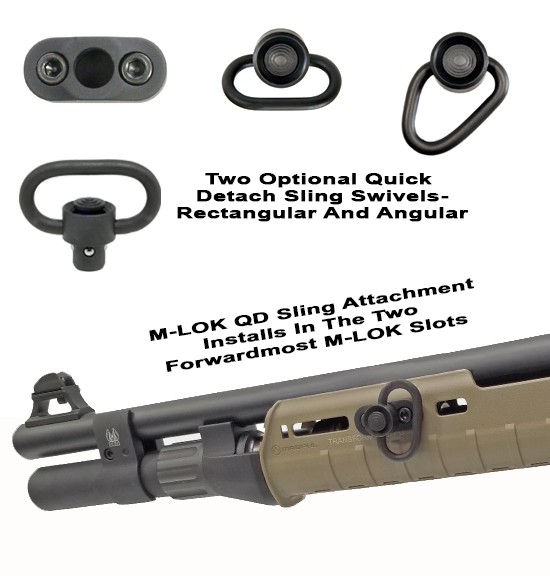
Rear attachment depends on your stock type. Fixed stocks work best with the attachment on the left side of the receiver extension, just behind the buffer tube. Adjustable stocks usually have built-in sling points that work fine. Side-folding stocks need the attachment on the receiver itself, not the stock, or the sling becomes useless when folded.
The height relationship between front and rear points matters too. If the rear point is significantly higher than the front, the rifle will hang muzzle-down. Too much height difference the other way and it hangs muzzle-up. Either extreme makes the rifle harder to bring into action quickly.
Fit & feel: Mount your sling and let the rifle hang naturally. The muzzle should point slightly down, maybe 15-20 degrees below horizontal. The rifle should hang close to your body without the sling cutting into your neck or shoulder. If it doesn't feel right, adjust the attachment points before you adjust the sling itself.
Load distribution and stress points
Sling attachments see surprising loads during normal use. A 10-pound rifle creates 10 pounds of static load when hanging vertically. But dynamic loads from running, jumping, or quick movements can multiply that several times over.
The attachment hardware has to handle these loads without deforming or loosening. Thread-in swivels depend on the threads in the rifle staying tight. If the receiver material is soft or the threads are cut shallow, repeated loading can cause the swivel to work loose.
QD sockets spread the load over a larger area than threaded swivels, but they concentrate stress on the spring-loaded mechanism. A hard impact can damage the ball bearing or spring, making the swivel either stick closed or fail to lock properly.
The sling material itself creates stress concentrations where it bends around attachment points. Sharp edges or rough surfaces will cut through webbing over time. This is why quality sling hardware has rounded edges and smooth finishes.
Some attachment methods handle side loads better than others. HK hooks can handle pulls from any direction because the hook geometry distributes loads evenly. QD swivels are weaker against side loads because all the force goes through the small ball bearing.
Field reliability comparison
Traditional attachments win on reliability because they have fewer failure modes. A threaded swivel can work loose, but that's gradual and obvious. An HK hook can wear out, but it takes thousands of attachment cycles. Direct loops don't fail unless the sling material fails.
QD swivels can fail suddenly and without warning. The spring can break, the ball bearing can jam, or the release mechanism can stick. When a QD swivel fails, it usually fails completely; the sling either won't attach or won't release.
Environmental factors affect QD swivels more than traditional attachments. Sand, mud, or ice can jam the release mechanism. Corrosion can freeze the moving parts. Traditional attachments are less sensitive to contamination because they don't depend on precise mechanical tolerances.
But QD swivels have one reliability advantage: they're less likely to be attached incorrectly. With traditional swivels, you can cross-thread them or leave them finger-tight. QD swivels either lock or they don't; there's no partial engagement that might fail under load.
The maintenance requirements are different too. QD swivels need periodic cleaning and lubrication to keep the mechanism working smoothly. Traditional attachments just need to stay tight.
Common setup mistakes
The biggest mistake is mixing QD and traditional attachments on the same rifle. The different rotation characteristics create binding and uneven wear. Pick one system and stick with it.
Over-tightening threaded swivels is another common problem. The threads in aluminum receivers can strip if you reef on them with a wrench. Hand-tight plus a quarter turn is usually enough. Use thread locker if they keep coming loose.
Wrong socket placement kills QD setups. Sockets mounted too close together don't give the sling enough room to work properly. Too far apart and the sling geometry gets weird. The front and rear sockets should be roughly the same distance apart as your shoulder width.
Using cheap QD swivels is asking for trouble. The tolerances on budget swivels are loose enough that they can pop free under moderate loads. Quality swivels from companies like Blue Force Gear or Magpul cost more but actually work when you need them.
Not testing the setup under load is the mistake that gets people hurt. Attach your sling and put some real weight on it. Hang from it if you have to. Better to find problems at home than in the field.
Product comparison: what actually works
Magpul QD swivels are the standard for good reason. The mechanism is robust, the anti-rotation feature works with most sockets, and they've proven reliable in hard use. They're not the cheapest option, but they work consistently.
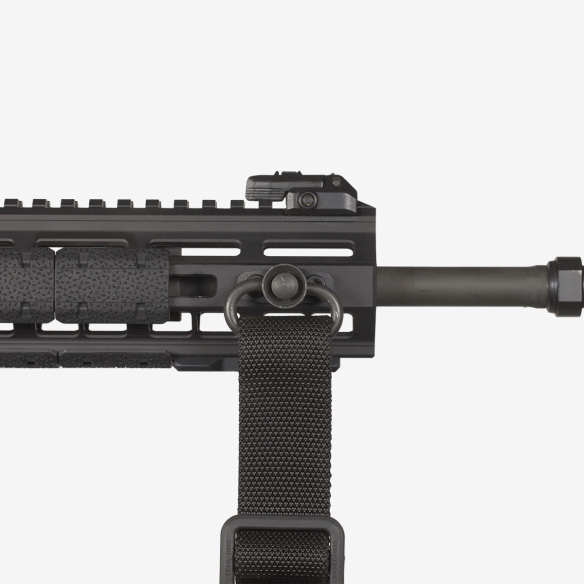
Blue Force Gear ULoop eliminates QD complexity while keeping some of the convenience. It's basically a reinforced loop that clips into QD sockets but doesn't rotate. You get the socket compatibility without the mechanical complexity.
Standard mil-spec swivels are boring and effective. They thread into standard sling swivel studs and don't move once they're tight. No features, no complexity, no problems. If your rifle has swivel studs, these work fine.
HK-style hooks from companies like Blue Force Gear or Magpul offer the best balance of speed and reliability for traditional attachment points. They clip on fast but lock positively. The hook geometry spreads loads well and they're nearly indestructible.
Direct loop connections through slots or around fixed points are the most reliable option available. Companies like Edgar Sherman Design build this into their sling designs. No hardware to break, nothing to come loose.
Testing your setup
Start with static loads. Attach your sling and hang the rifle from a secure point. Add weight gradually; start with the rifle's normal weight, then add magazines, accessories, whatever you'd normally carry. The attachment points should show no movement or deformation.
Dynamic testing means moving with the rifle slung. Walk, run, climb, crawl; whatever you do in the field. Pay attention to how the rifle hangs and whether the sling binds or shifts position. The rifle should stay in the same relative position regardless of how you move.
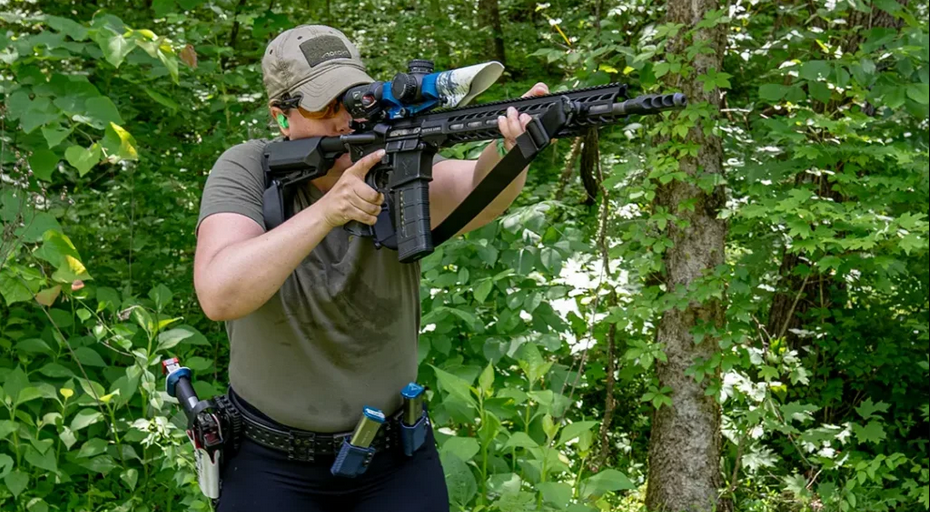
Test the release mechanism if you're using QD swivels. The button should depress easily but not accidentally. The swivel should release cleanly under load, not just when the sling is slack. Practice releasing under stress until it's automatic.
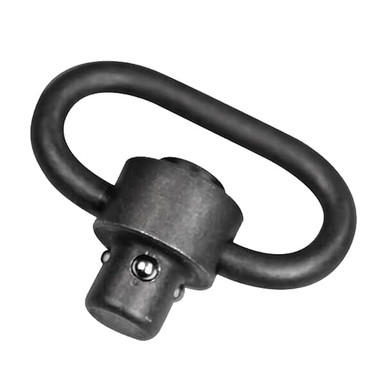
Magpul QD swivels Deals
Prices may change. May contain affiliate links.
Check for wear points after extended use. Look for fraying where the sling contacts attachment hardware, loosening of threaded connections, or wear on QD mechanisms. Catch problems early before they become failures.
Environmental testing matters if you hunt or shoot in harsh conditions. Mud, sand, ice, and salt water all affect attachment systems differently. Know how your setup handles the conditions you'll actually face.
Making the choice
QD swivels make sense if you regularly swap slings between rifles or need to ditch a sling quickly for tactical reasons. The speed advantage is real, and modern QD systems are reliable enough for most uses. Just accept that you're trading some mechanical simplicity for convenience.
Traditional attachments are the better choice for dedicated hunting rifles, precision rifles, or any application where absolute reliability matters more than speed. They're simpler, more durable, and less sensitive to environmental conditions.
For most shooters, the decision comes down to how often you actually need to remove the sling. If it stays on the rifle for months at a time, traditional attachments make more sense. If you're constantly reconfiguring your setup, QD is worth the complexity.
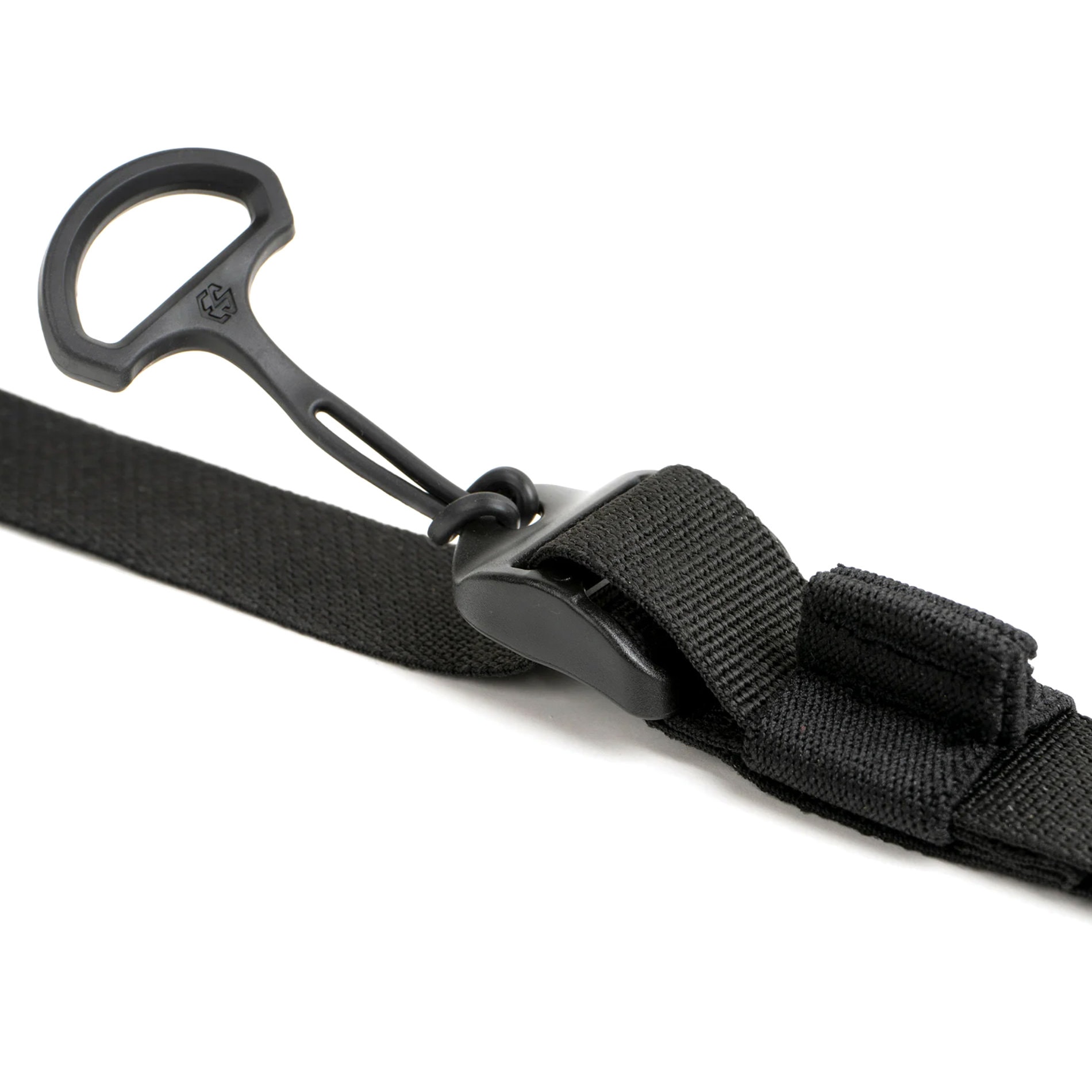
Rma armament Edgar Sherman Design direct loop slings Deals
Prices may change. May contain affiliate links.
Don't overthink it. Both systems work when properly installed and maintained. The rifle doesn't care which attachment method you choose; it cares whether the attachment stays attached when you need it most. Pick the system that matches your actual use patterns and stick with it.