You're sitting in a ground blind at the edge of a mesquite thicket, watching a sendero that's maybe 80 yards long before it disappears into cover. A doe steps out, then another, and you're reaching for your rifle when a decent buck pushes through behind them. He's quartering away at 60 yards, but he's not stopping. You've got maybe three seconds before he's gone.
This is brush country hunting. Short sight lines, thick cover, and deer that don't pose for pictures. Your bolt gun might be perfect for open country, but here you need something that comes up fast, cycles quick, and puts bullets where you're looking without a lot of fuss.
Here's the thing: lever guns were made for exactly this kind of hunting. They're fast to the shoulder, quick on follow-ups, and they handle the moderate ranges where most brush country deer get killed. The question isn't whether you should consider a lever gun for thick cover hunting; it's which one makes the most sense for how you hunt.
Why lever guns work in thick cover
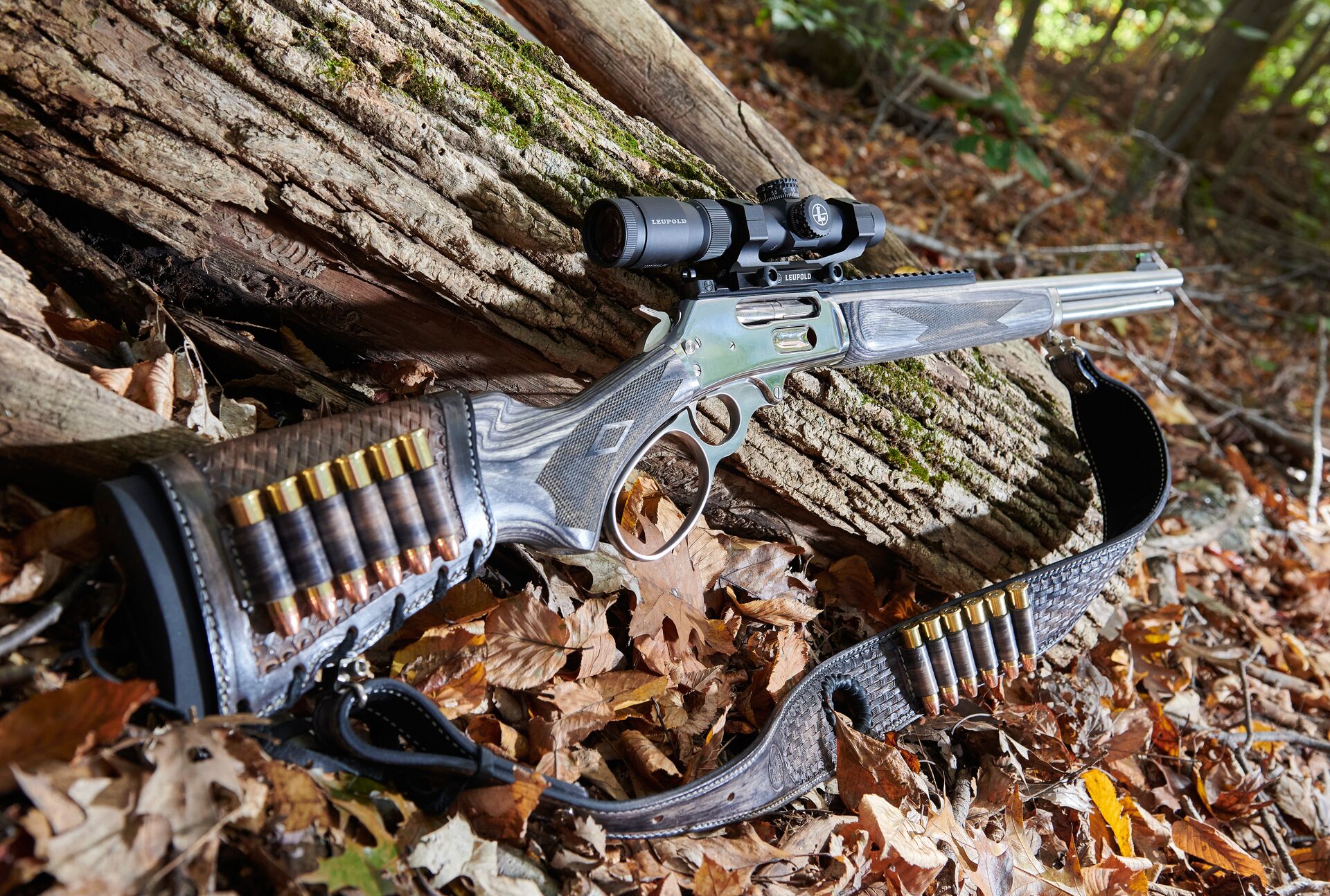
I've spent enough time in South Texas brush and Arkansas creek bottoms to know that most whitetail hunting happens inside 150 yards. Often a lot closer. When you're dealing with shooting lanes that might be 40 yards long and deer that show up for seconds, not minutes, you need a rifle that handles like a shotgun but hits like a rifle.
Lever guns excel here because they're built around speed. The action cycles without taking your eyes off the target. The typical 18- to 20-inch barrel makes them nimble in tight quarters but still gives you enough velocity for clean kills at brush country ranges. Most importantly, they come up to your shoulder naturally, no wrestling with a 26-inch barrel in a ground blind or trying to thread a long rifle through thick cover.
The other advantage is follow-up shots. Miss a running deer in thick cover with a bolt gun, and you're probably watching him disappear while you cycle the action. With a lever gun, you can get back on target and send another round before he's out of sight. I'm not advocating for spray-and-pray shooting, but in brush country, deer often give you a second chance if you're quick enough to take it.
Cartridge choices that make sense
.30-30 Winchester: The brush country standard
The .30-30 has been killing deer in thick cover for over 125 years, and there's a reason it's still the most popular lever gun cartridge. It's perfectly matched to lever gun ranges and terminal performance. A 150-grain bullet at 2400 fps will drop any whitetail you're likely to encounter, and it does it without the excessive recoil or muzzle blast that makes quick follow-ups harder.
What I like about the .30-30 is that it's honest about what it is. It's not trying to be a long-range cartridge, so you won't be tempted to take shots you shouldn't. Inside 150 yards, it hits hard enough to put deer down quickly, and the moderate recoil means you can spot your shots and get back on target fast.
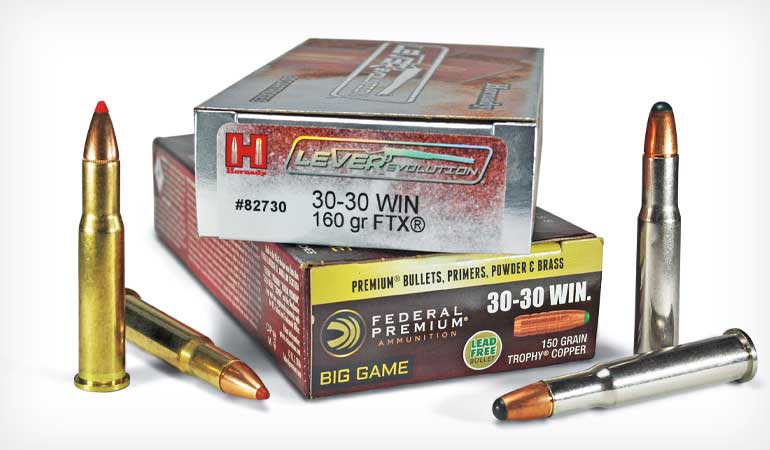
The ammunition selection is excellent, from basic 150-grain soft points that work fine for most hunting to premium loads like Federal Fusion or Hornady LEVERevolution that extend your effective range slightly. You can find .30-30 ammo anywhere, and it's still relatively affordable compared to more exotic cartridges.
.45-70 Government: Maximum authority
If you hunt where the deer are bigger or the cover is so thick that you might get very close shots, the .45-70 brings serious stopping power. Modern loads push 300- to 400-grain bullets at respectable velocities, creating massive wound channels that drop deer immediately.
The .45-70 shines when you need to punch through brush or when you might encounter larger game. In places where you hunt whitetail but might see a feral hog or black bear, the .45-70 handles everything with the same load. The big, heavy bullets also tend to track straighter through light brush than lighter, faster bullets.
The downside is recoil. Even in an 8-pound rifle, the .45-70 hits hard enough that quick follow-ups require practice. But honestly, if you place your shot correctly, you probably won't need a follow-up. The .45-70 tends to anchor deer where they stand.
Hornady LEVERevolution .30-30 Deals
Prices may change. May contain affiliate links.
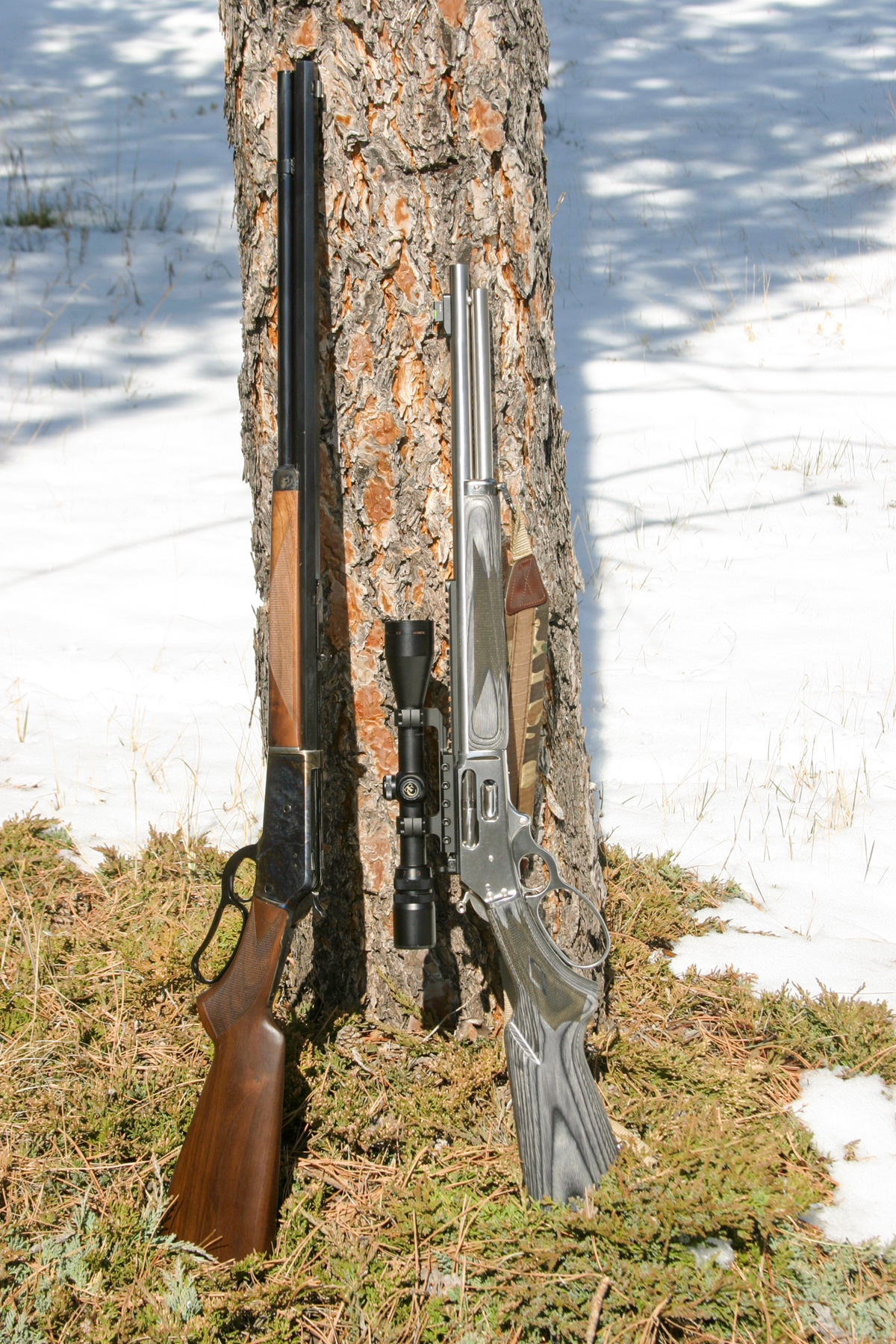
.357 Magnum and .44 Magnum: The handgun cartridge option
Don't overlook the handgun cartridges in lever guns. A .357 Magnum from an 18-inch barrel pushes a 158-grain bullet at around 1800 fps, plenty for deer at moderate ranges. The .44 Magnum is even more potent, especially with 240-grain bullets.
These cartridges offer several advantages for brush hunting. The recoil is very manageable, making quick follow-ups easy. The ammunition is versatile, you can practice with cheaper .38 Special or .44 Special loads, then hunt with full-power magnum loads. And if you carry a handgun for backup, you can use the same ammunition in both guns.
The limitation is range. Both cartridges are really 100-yard propositions for deer, maybe 125 yards with good shot placement. But in thick brush country, that covers most of your shooting opportunities.
Barrel length and handling considerations
For brush country hunting, barrel length matters more than you might think. A 16- to 20-inch barrel gives you the best balance of handling and ballistic performance. Anything longer starts to feel unwieldy in tight quarters, while anything shorter gives up too much velocity.
I've found that 18 inches hits the sweet spot for most hunters. You get enough barrel length to burn the powder efficiently, but the rifle still handles quickly. The shorter sight radius doesn't matter much if you're using a scope or red dot, and the slight velocity loss compared to a 22-inch barrel is negligible at brush country ranges.
Weight distribution is just as important as overall weight. A well-balanced 7-pound lever gun will feel lighter and handle better than a poorly balanced 6-pound rifle. Look for rifles where the weight is centered between your hands, not hanging out front or back.
Top lever gun choices for brush hunting
Marlin 336 Dark Series
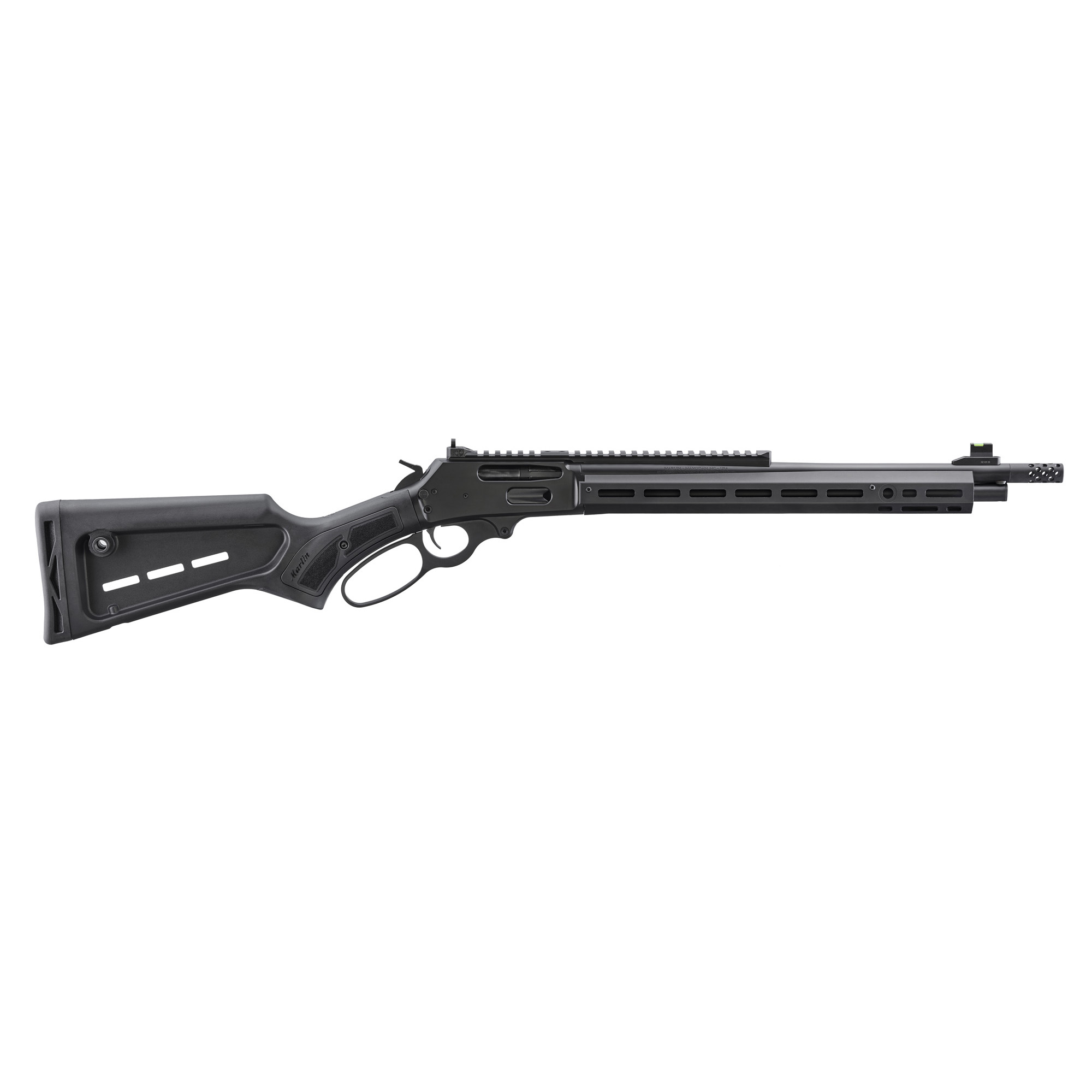
The Marlin 336 has been the gold standard for brush country lever guns for decades, and the new Dark Series models from Ruger-owned Marlin continue that tradition with some modern updates. The 16.25-inch barrel keeps the rifle compact while still providing good ballistics, and the threaded muzzle lets you add a suppressor or muzzle brake if desired.
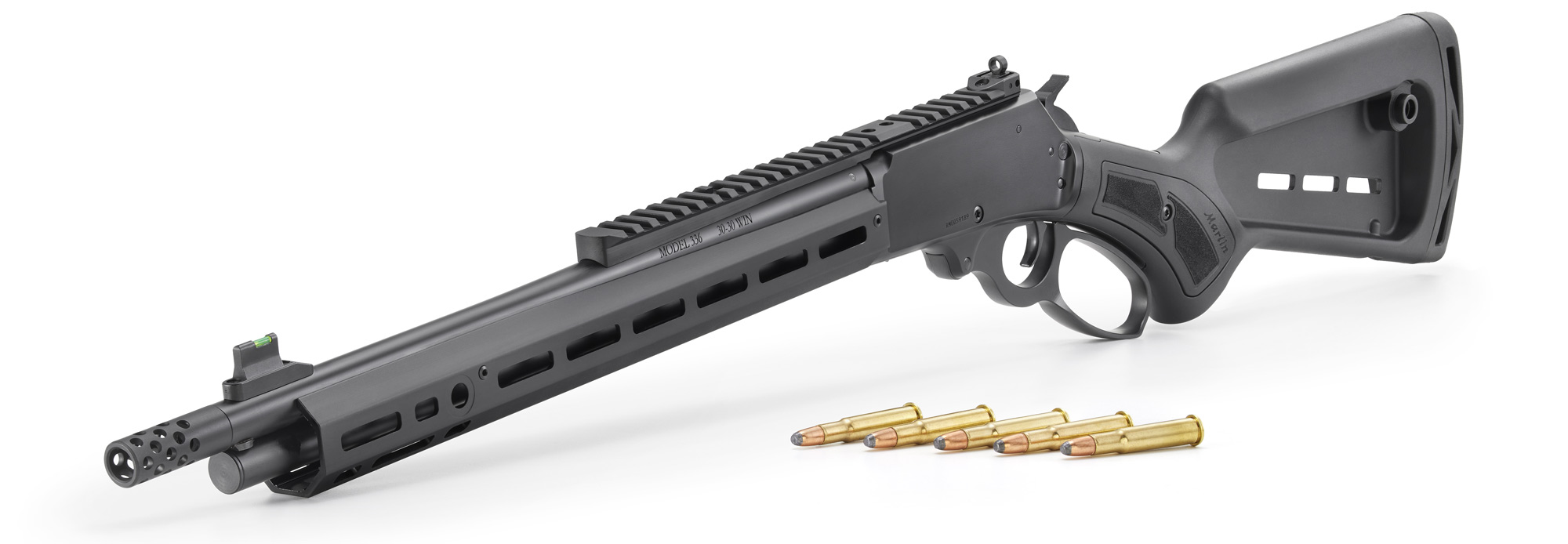
What sets the Dark Series apart is the attention to modern hunting needs. The receiver is drilled and tapped for scope mounts, the stock has a straight grip that works well with optics, and the overall finish is designed to resist corrosion in humid conditions. The action is smooth out of the box, and the trigger is crisp enough for accurate shooting.
I've used the .30-30 version extensively, and it's proven reliable in all conditions. The 16.25-inch barrel gives you 2350 fps with 150-grain bullets, plenty for any deer at reasonable ranges. The rifle balances well, comes up quickly, and cycles smoothly even when you're shooting fast.
Henry Big Boy X
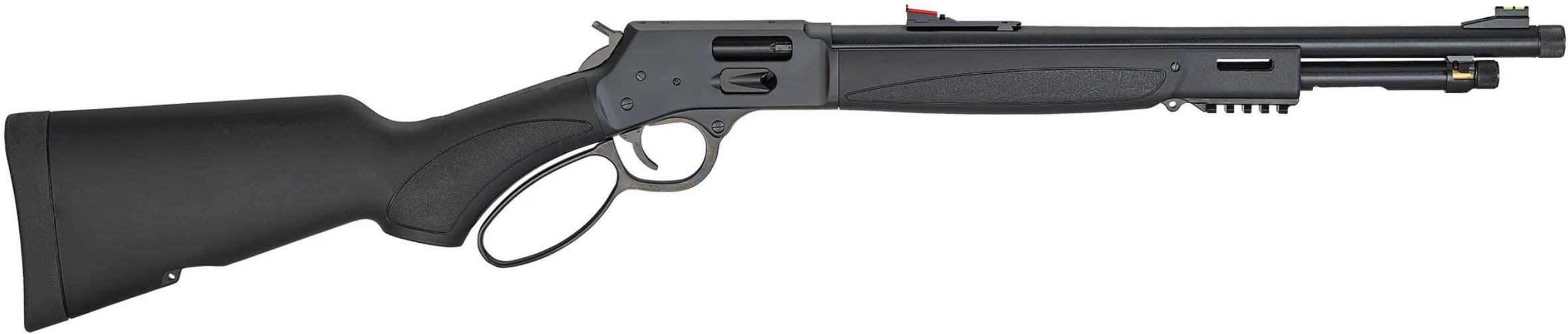
Henry's Big Boy X series brings some tactical-style features to the traditional lever gun platform. Available in .357 Magnum, .44 Magnum, and .45 Colt, these rifles feature synthetic stocks, fiber optic sights, and rails for mounting optics.
The Big Boy X handles differently than a traditional lever gun because of the synthetic stock and slightly different weight distribution. Some hunters love the modern feel, while others prefer wood and steel. What's not debatable is the reliability, Henry lever guns run, and they run smoothly.
The .357 Magnum version is particularly appealing for brush hunting. The 17.4-inch barrel gives you good velocity with magnum loads, the recoil is mild, and the 7-round capacity means you're not constantly reloading. The rifle weighs just over 7 pounds, making it easy to carry all day.
Winchester Model 94
The Winchester 94 is the classic American lever gun, and while production has been sporadic over the years, good used examples are still available. The top-eject action means you can't easily mount a scope, but for brush hunting with iron sights, the 94 is hard to beat.
What makes the 94 special is how it handles. The rifle comes up naturally, the lever throw is short and smooth, and the balance is perfect for quick shooting. The 20-inch barrel gives you good velocity while keeping the overall length manageable.
Look for models with the angle-eject modification if you want to mount a scope, or stick with iron sights and enjoy one of the best-handling lever guns ever made. The .30-30 chambering is still the most practical choice for most hunting situations.
Mossberg 464 SPX
Mossberg's 464 SPX takes the lever gun in a tactical direction with features like a picatinny rail, adjustable stock, and muzzle brake. It's not traditional, but it works well for hunters who want modern features on a lever gun platform.
The 464 SPX is available in .30-30 and .22 LR, with the .30-30 being the obvious choice for deer hunting. The 18-inch barrel provides good ballistics, and the overall package is designed for hunters who want to mount modern optics and accessories.
The rifle has proven reliable in field use, though it doesn't have the refined feel of a Marlin or Winchester. What it offers is modern features at a reasonable price point, making it a good choice for hunters who want a practical brush gun without spending premium money.
Henry Long Ranger
If you want lever gun handling but need more range than traditional cartridges provide, Henry's Long Ranger series chambers modern cartridges like 6.5 Creedmoor and .308 Winchester. The side-loading gate and box magazine make it more like a modern rifle that happens to have a lever action.
For brush hunting, the Long Ranger might be overkill, you're paying for long-range capability you probably won't use. But if you hunt varied terrain and want one rifle that can handle both brush country and open fields, the Long Ranger makes sense.
The 20-inch barrel provides excellent velocity with modern cartridges, and the rifle is surprisingly accurate. The action is smooth, though not quite as fast as a traditional tube-fed lever gun. Think of it as a modern rifle with lever gun ergonomics rather than a traditional lever gun with modern cartridges.
Optics and sighting systems
Iron sights: Keep it simple
For pure brush hunting, iron sights have advantages that are hard to ignore. They're fast, they don't fog up, and they give you a wide field of view that's perfect for tracking moving deer through thick cover. The traditional buckhorn rear sight works fine, but a ghost ring aperture sight is faster and more precise.
Modern fiber optic sights are excellent for low-light conditions common in thick cover. The bright sight picture helps you pick up the front sight quickly, and the wide notch rear sight allows for fast target acquisition. Companies like Skinner Sights make excellent aperture sights specifically for lever guns.
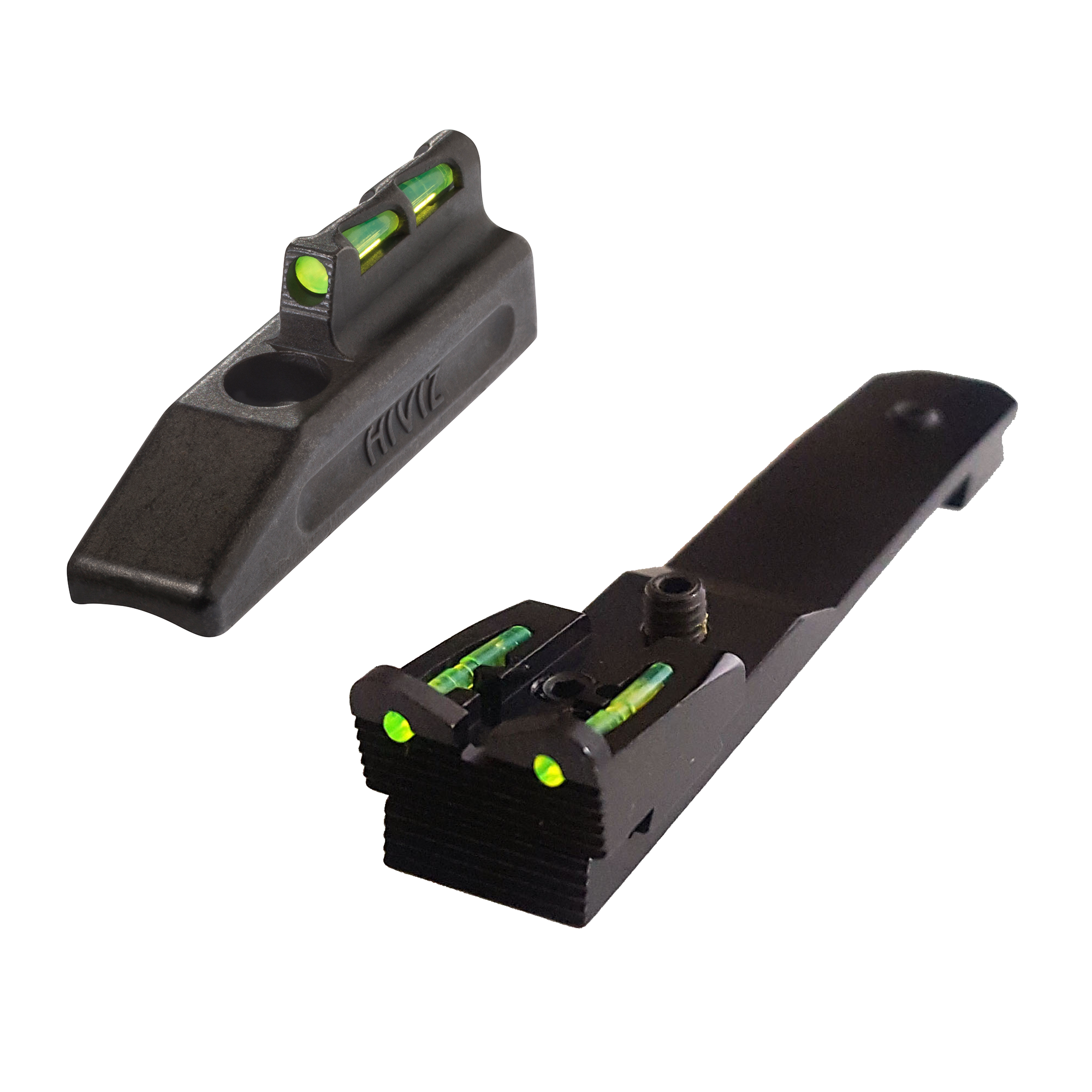
The limitation with iron sights is precision at longer ranges and performance in very low light. If your hunting area has longer shots or you hunt late into shooting light, optics might be worth the trade-offs.
Red dots: Speed and simplicity
A quality red dot sight gives you the speed of iron sights with better precision and low-light performance. The single focal plane makes target acquisition very fast, and you can shoot with both eyes open for better situational awareness.
For brush hunting, look for a red dot with a 2-4 MOA dot size. Smaller dots are more precise but harder to pick up quickly, while larger dots are fast but cover too much of the target at longer ranges. Battery life is crucial, you don't want your sight dying in the middle of a hunt.
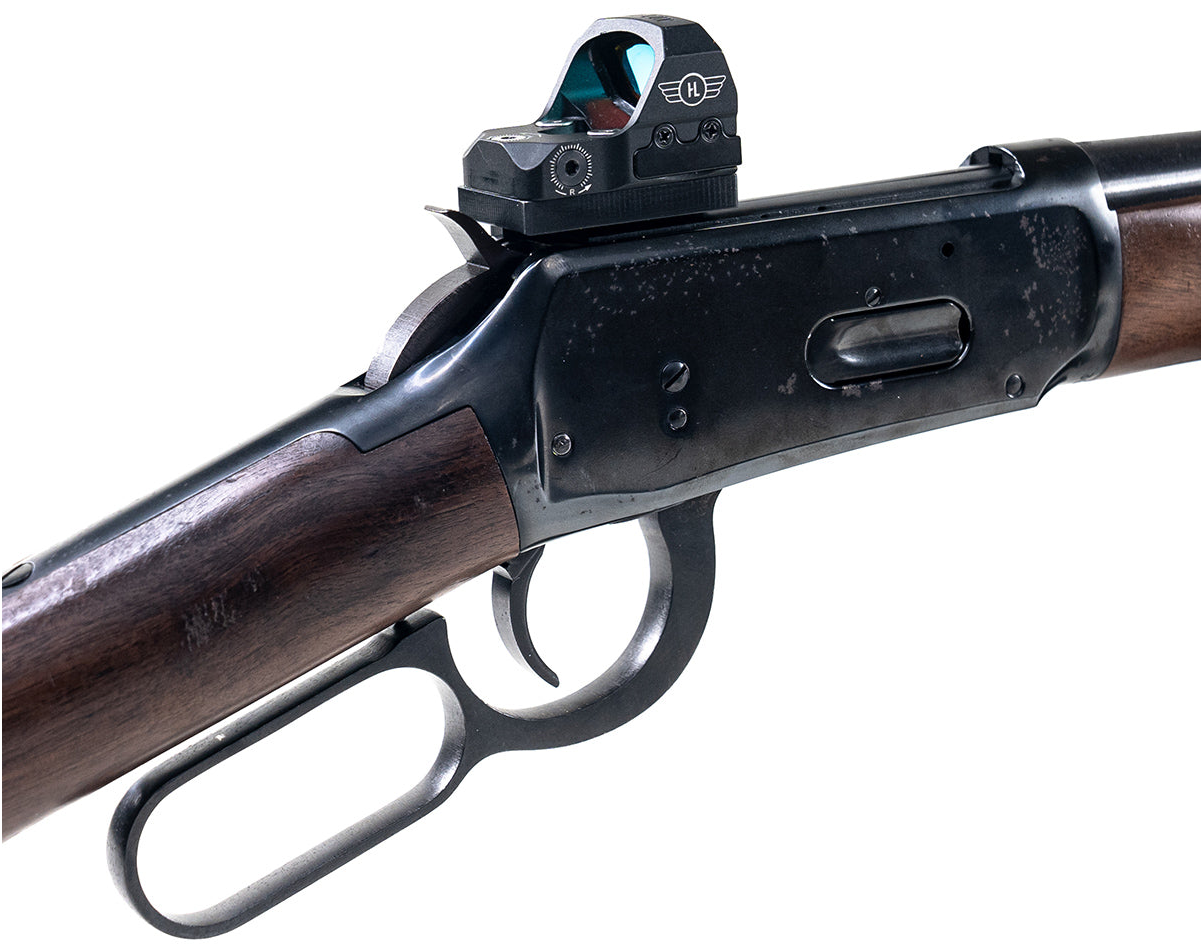
Mount the red dot as low as possible to maintain the natural handling characteristics of the lever gun. High mounts change the feel of the rifle and slow down target acquisition.
Low-power scopes: The compromise option
A 1-4x or 2-7x scope gives you magnification for longer shots while still being fast enough for close work. Set on the lowest power, a variable scope works almost like a red dot for quick shooting, but you can dial up the magnification when you need it.
The key is choosing a scope with a wide field of view and good low-light performance. European-style scopes with illuminated reticles work well, as do traditional American scopes with simple reticles and good glass.
Keep in mind that adding a scope changes how the rifle handles. The higher sight line requires a different cheek weld, and the added weight affects balance. Some hunters love the versatility, while others prefer the simplicity of iron sights.
Field notes: What I've learned carrying lever guns
After several seasons hunting with different lever guns in various types of thick cover, a few things have become clear. First, practice cycling the action until it becomes automatic. You should be able to work the lever smoothly without thinking about it, even when you're focused on a deer.
Second, learn to load the rifle properly. Most lever guns hold one round in the chamber plus several in the magazine, but the loading sequence matters. Practice loading and unloading until you can do it by feel, especially if you hunt in areas where you need to unload frequently for safety.
Third, understand your rifle's limitations. Most lever guns are minute-of-deer accurate, not precision instruments. Know what kind of groups your rifle shoots at various ranges, and don't take shots beyond your effective range just because you have a scope.
The reliability factor is huge in brush hunting. You might be crawling through thick cover, dealing with rain or snow, and generally subjecting your rifle to conditions that would challenge any firearm. Lever guns are generally robust, but they need proper maintenance to stay reliable.
Common mistakes with brush country lever guns
Overthinking the cartridge choice. The difference between .30-30, .35 Remington, and similar cartridges is minimal at brush hunting ranges. Pick one with good ammunition availability and practice with it rather than constantly second-guessing your choice.
Mounting scopes too high. Many lever gun scope mounts place the scope too high above the bore, changing the rifle's handling characteristics. Look for low-profile mounts that keep the scope as close to the barrel as possible.
Neglecting to practice with the action. Lever guns require different manipulation than bolt guns. Practice cycling the action smoothly and quickly, both from the shoulder and from other positions you might need to shoot from.
Assuming all lever guns are the same. Different manufacturers have different action designs, safety locations, and loading procedures. Don't assume that experience with one lever gun translates directly to another without familiarizing yourself with the specific rifle.
Ignoring the ammunition choice. Not all .30-30 loads perform the same, and some rifles prefer certain bullet weights or designs. Test different loads to find what your rifle shoots best, then stick with that load for hunting.
Ammunition selection for brush hunting
The ammunition you choose matters more in a lever gun than in many other rifle types. Traditional lever guns with tubular magazines require flat-nose or round-nose bullets to prevent primer detonation in the magazine. This limits your bullet choices but doesn't significantly impact terminal performance at brush hunting ranges.
For .30-30 rifles, 150-grain bullets are the most versatile choice. They provide good penetration and expansion at moderate velocities, and they're available from every major manufacturer. Federal Fusion, Remington Core-Lokt, and Winchester Super-X all work well for deer hunting.
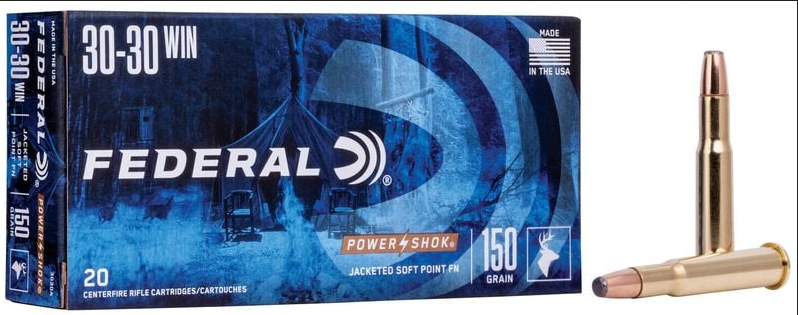
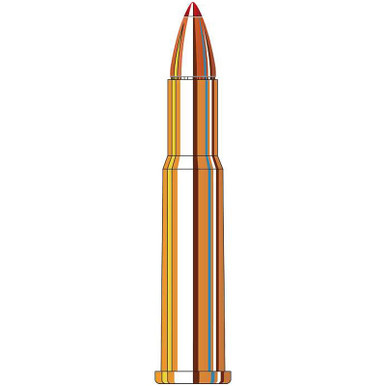
If you want to extend your effective range slightly, Hornady LEVERevolution loads use polymer-tipped bullets that are safe in tubular magazines but provide better ballistic coefficients than traditional flat-nose bullets. The performance improvement is modest but noticeable at longer ranges.
For .45-70 rifles, bullet weight becomes more important. Lighter 300-grain bullets provide flatter trajectories for longer shots, while heavier 400-grain bullets hit harder up close. For most deer hunting, 300- to 350-grain bullets offer the best balance of trajectory and terminal performance.
Handgun cartridges like .357 and .44 Magnum benefit from rifle-specific loads that take advantage of the longer barrel. Buffalo Bore, Underwood, and other specialty manufacturers offer hot loads designed for lever gun velocities.
Practical shooting positions and techniques
Brush hunting often requires shooting from unconventional positions. You might be sitting in a ground blind, kneeling behind cover, or shooting from a rest that's not quite the right height. Lever guns adapt well to these situations because of their compact size and good balance.
Practice shooting from sitting and kneeling positions with your lever gun. The shorter length of pull on many lever guns works well for these positions, and the straight grip stock design is comfortable when shooting with heavy clothing.
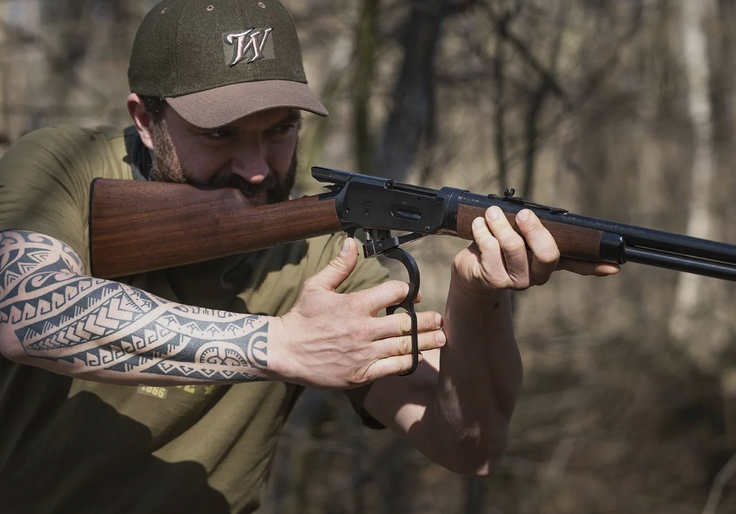
Learn to use natural rests effectively. A tree branch, fence post, or shooting stick can steady your rifle significantly, but you need to practice using these supports without changing your natural point of aim.
The key to accurate shooting with a lever gun is consistent cheek weld and sight alignment. Because the sights are relatively close together compared to a bolt gun, small changes in head position can affect point of impact significantly.
Maintenance and reliability considerations
Lever guns are generally reliable, but they require different maintenance than bolt guns. The action has more moving parts, and debris can interfere with smooth operation. Regular cleaning and lubrication are essential, especially if you hunt in dusty or wet conditions.
Pay attention to the lever mechanism and action bars. These parts need to move freely for reliable cycling, but they shouldn't be over-lubricated to the point where they attract dirt and debris. A light coating of quality gun oil is usually sufficient.
The magazine spring and follower need occasional attention, especially in rifles that see heavy use. A weak magazine spring can cause feeding problems, while a damaged follower can jam the action. These parts are usually easy to replace but require some disassembly.
Keep the bore clean, but don't obsess over it. Most lever guns are accurate enough for hunting even when the bore isn't perfectly clean, but excessive fouling can affect accuracy and reliability.
Before the season: Getting ready
Zero your rifle at 100 yards with the ammunition you plan to hunt with. Most brush country shots will be closer, but a 100-yard zero gives you a good trajectory for shots from 50 to 150 yards without holdover.
Practice cycling the action until it becomes automatic. Start slowly and focus on smooth operation, then gradually increase speed. Practice loading and unloading the rifle until you can do it without looking.
Test your rifle's reliability with the ammunition you plan to hunt with. Cycle at least 50 rounds through the action to make sure everything works smoothly. Pay attention to any feeding or ejection problems and address them before hunting season.
If you're using a scope or red dot, verify that it holds zero after being subjected to normal handling. Lever guns can be hard on optics because of the cycling action, so make sure your sight system is robust enough for field use.
Set up your shooting positions and practice from them. Whether you're hunting from a ground blind, tree stand, or spot-and-stalk, practice shooting from the positions you'll actually use in the field.