You're carrying a spare mag, but you've never actually timed yourself getting to it under stress. Most guys obsess over their holster choice and treat the mag pouch as an afterthought. That's backwards thinking.
Your reload is only as fast as your slowest component. If your mag pouch dumps your spare while you're getting out of your car, or if you fumble around for three seconds trying to get a grip on it during a reload, your expensive holster doesn't matter much. The trade-off between retention and access speed isn't just theoretical; it's the difference between a smooth reload and standing there looking stupid with an empty gun.
Here's what actually matters: how the pouch grips your magazine, how your body position affects access, and whether the retention method matches how you move through your day. We'll break down open-top, tension-screw, and flap designs so you know exactly what you're getting into.
How magazine retention actually works
The physics are simple. Your magazine sits in a pouch that holds it through friction, mechanical retention, or both. Friction comes from the pouch walls squeezing the magazine body. Mechanical retention uses a physical barrier, a flap, a thumb break, or an adjustable screw that creates a detent.
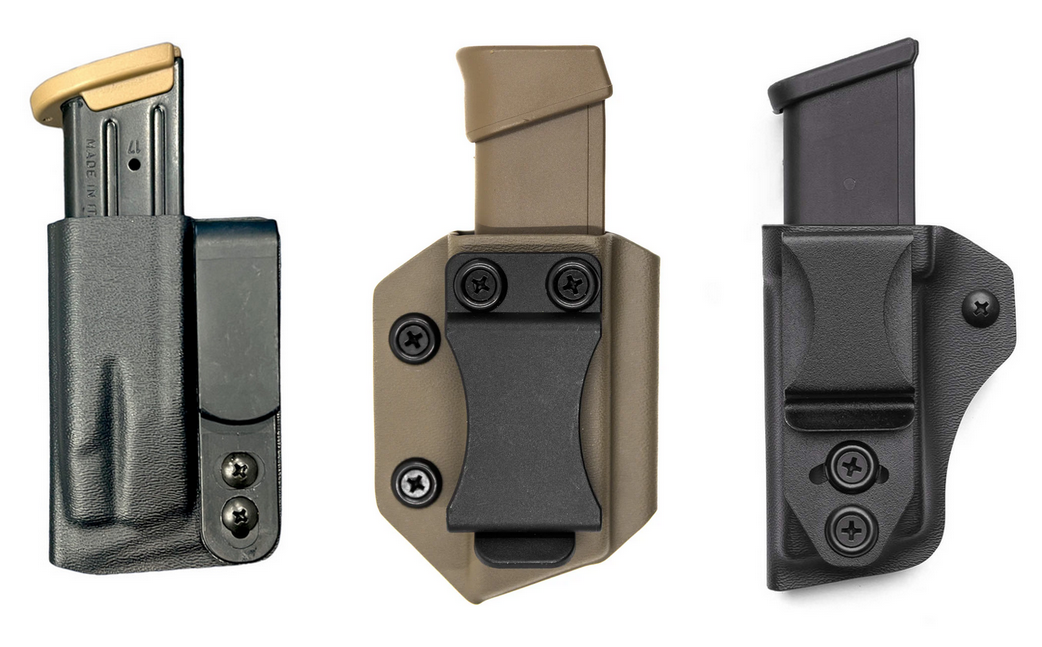
Most concealed carry pouches rely primarily on friction because it's fast and doesn't require fine motor skills under stress. The pouch material, usually Kydex or reinforced nylon, forms a channel that grips the magazine. Tension is either fixed during manufacturing or adjustable via screws that compress the walls.
The problem with pure friction is that it's inconsistent. Temperature changes affect material flexibility. Sweat makes things slippery. Your magazine might sit perfectly at the range but work loose during a long day of movement. That's why most serious pouches combine friction with some form of mechanical retention.
Fit & feel
A properly tensioned pouch should hold your magazine with about the same force as a firm handshake. You should be able to draw the mag with a straight pull using your support hand, but it shouldn't fall out if you turn the pouch upside down and shake it. The magazine should seat with a subtle click or resistance that tells you it's fully inserted.
Test this by loading the pouch and doing jumping jacks, then checking if the magazine has shifted. If it rides up even slightly, your retention is too loose for daily carry. If you have to use both hands to seat or draw the magazine, it's too tight for defensive use.
Open-top pouches: speed at a cost
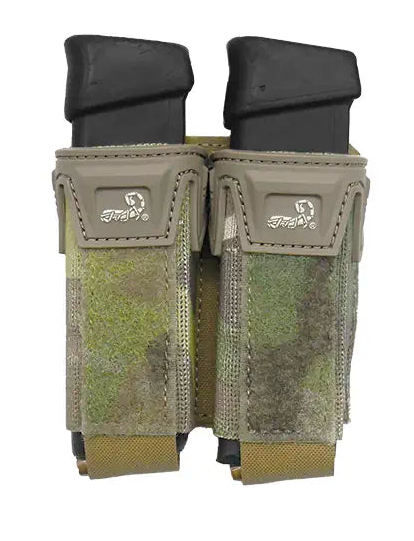
Open-top designs prioritize access speed above everything else. The magazine sits in a formed channel with the baseplate exposed for a full firing grip. Draw is a simple straight pull with no mechanical releases to fumble.
Competition shooters love open-tops because they shave tenths of a second off reload times. The magazine presents consistently, your support hand finds the same grip every time, and there's nothing to snag or bind. For USPSA or IDPA, where you're moving fast and reloading often, the speed advantage is real.
The downside is retention. Open-tops rely entirely on friction and maybe a small detent ball or spring. They'll hold a magazine during normal movement, but they're not designed for serious physical activity. I've seen guys lose mags getting out of cars, climbing stairs, or just bending over to tie shoes.
Environmental factors hit open-tops harder than enclosed designs. Lint, dirt, and moisture can affect the friction surfaces. The exposed magazine is vulnerable to impact damage if you bump into something. And if you're carrying in an urban environment where you might need to run, jump, or crawl, an open-top pouch is asking for trouble.
Popular open-top options include the Safariland 074 series and various Blade-Tech designs. The Safariland uses a spring-loaded detent that provides decent retention without slowing the draw. Blade-Tech goes with pure friction but allows tension adjustment. Both work fine for range use or competition, but think twice about daily carry.
Tension-screw systems: adjustable compromise
Tension-screw pouches let you dial in exactly how much retention you want. Screws on the sides compress the pouch walls against the magazine, and you can adjust them independently for different grip zones. This gives you more control than fixed-friction designs.
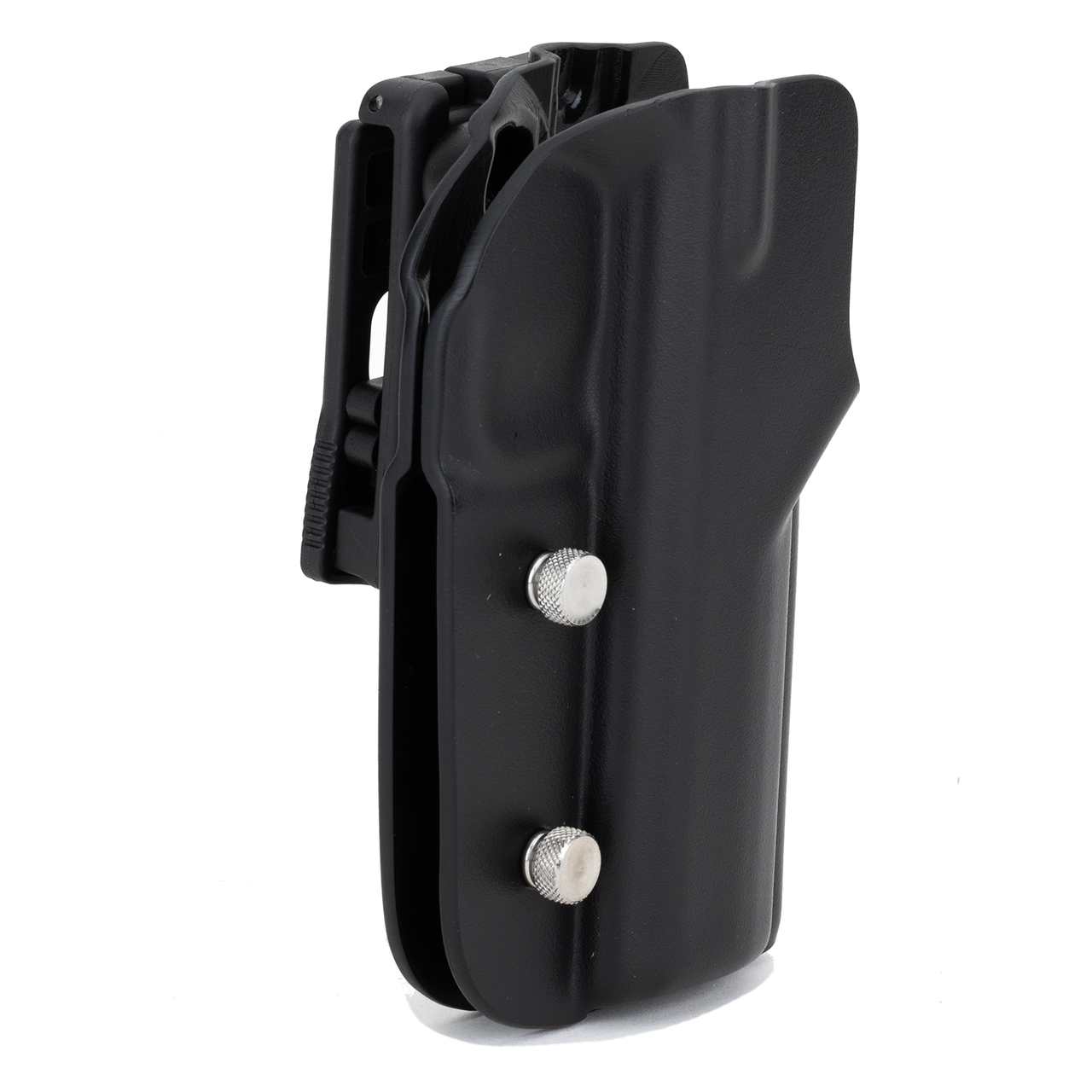
The advantage is customization. You can set light tension for competition, medium for range practice, and heavy for daily carry. If your magazine dimensions change, different brands, extended baseplates, aftermarket followers, you can adjust accordingly. Most quality tension-screw pouches also include some mechanical retention like a detent or thumb break as backup.
Setup takes time and experimentation. You'll need to find the sweet spot where the magazine draws cleanly but won't fall out under stress. Too loose and you lose retention. Too tight and you'll short-stroke the draw under pressure, leaving the magazine stuck halfway out of the pouch.
The screws themselves can be a weak point. They work loose over time, especially with daily carry movement. Loctite helps, but you'll still need to check tension periodically. And if a screw backs out completely during carry, you might not notice until you need the magazine.
G-Code makes solid tension-screw pouches that see heavy use in military and law enforcement. Their RTI system lets you swap between different belt attachments without tools. The pouches hold up to abuse, but they're bulky compared to minimalist designs.
Flap and snap retention: maximum security
Flapped pouches use a physical cover that snaps, velcros, or buckles over the magazine. This provides the most secure retention possible, your magazine isn't coming out unless you deliberately open the flap. Military and law enforcement often mandate flapped pouches for duty carry.
The security comes with a speed penalty. You need two distinct motions: open the flap, then draw the magazine. Under stress, fine motor skills degrade, and fumbling with snaps or velcro can turn a two-second reload into a five-second disaster. The flap itself can get in the way during the draw, especially if it doesn't stay open reliably.
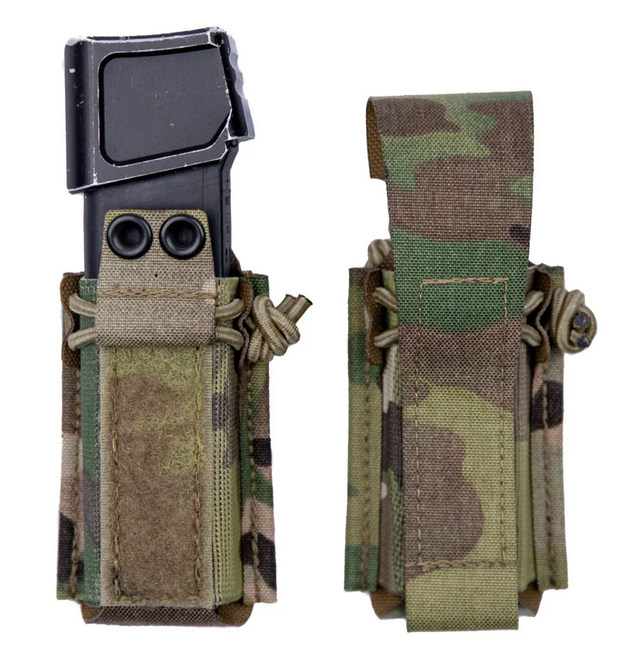
Modern flap designs try to minimize the speed penalty. Some use magnetic closures that open with light pressure but hold securely otherwise. Others position the flap so it naturally falls away during the draw motion. A few high-end designs use elastic retention that lets you push the magazine through the flap for emergency access.
Range notes
I tested flapped pouches during a carbine class that involved a lot of movement and prone shooting. The retention was perfect, no magazines shifted or fell out despite crawling, rolling, and sprinting. But reload times suffered. Even with practice, I was consistently slower than guys using open-tops or tension-screw designs.
The key is training. If you carry a flapped pouch, you need to practice the two-step draw until it's automatic. Start slow, focus on the motion sequence, then build speed. Don't assume you can just figure it out under pressure.
Concealment considerations
Magazine pouches affect your concealment profile differently than holsters. The magazine is typically longer and thinner than your gun, creating a different bulge pattern. Where you position the pouch and how it's oriented can make or break your concealment.
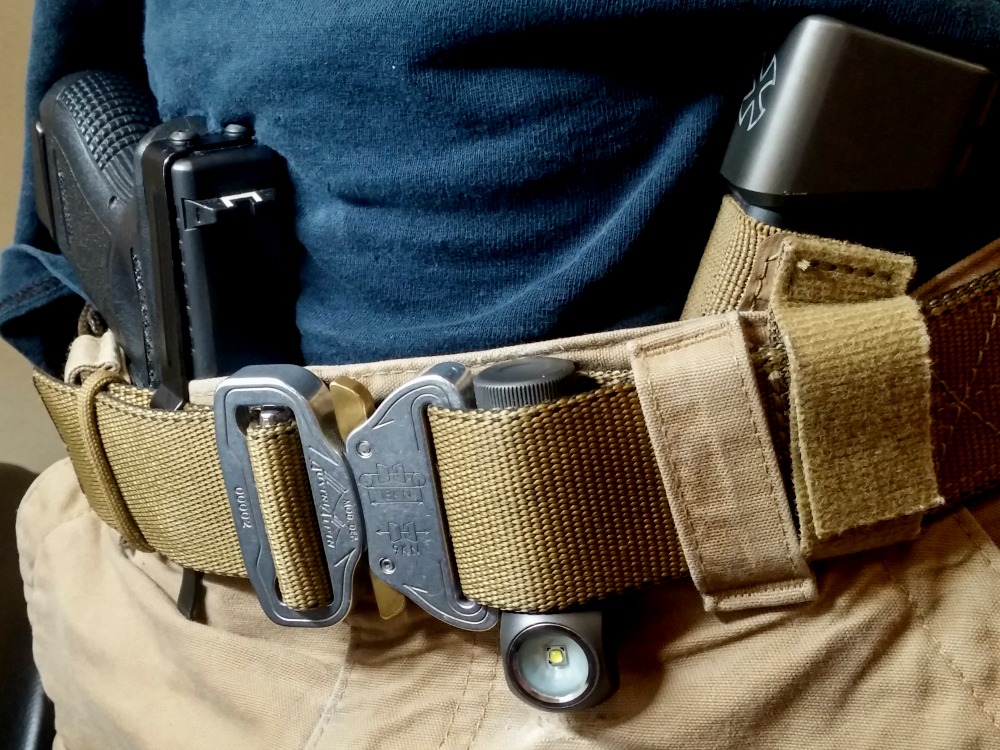
Strong-side carry behind the holster is traditional but creates a wide profile. The magazine rides parallel to your belt, adding width to your silhouette. This works fine under loose clothing but prints badly with fitted shirts. The pouch also sits in your natural arm swing path, which can cause printing when you walk.
Appendix carry is gaining popularity for good reason. The magazine sits in front of your hip bone, creating a more compact profile. Your arm doesn't swing past it during normal movement, reducing printing. And the draw motion is more natural, your support hand travels to the same general area whether you're drawing the gun or reloading.
Cross-draw positioning puts the magazine on your support side, usually around the 10 o'clock position. This can work well for seated carry, driving, desk work, or other situations where strong-side access is blocked. The downside is that the draw motion crosses your body, which can be slower and more visible.
Pocket carry is possible with small single-stack magazines, but it's generally not practical. Most defensive magazines are too long for comfortable pocket carry, and the loose retention of pocket pouches makes them unsuitable for anything but backup roles.
Material and construction differences
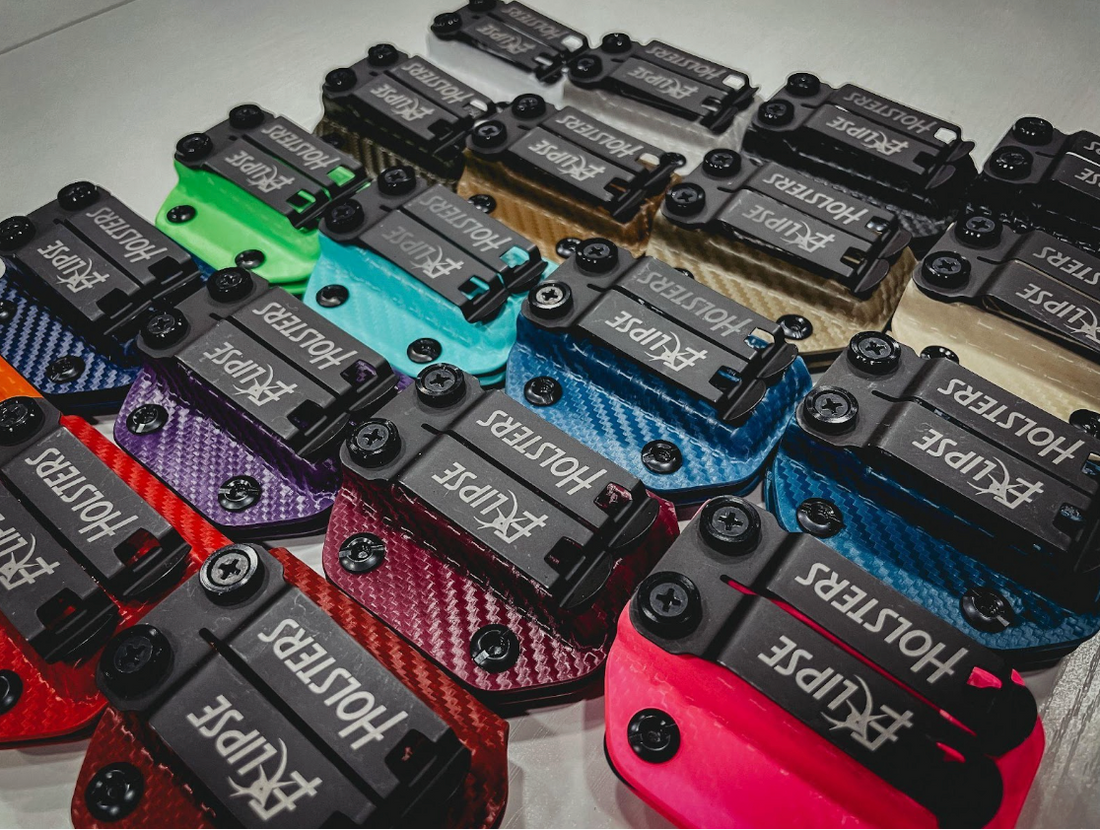
Kydex dominates the modern magazine pouch market for good reasons. It's rigid, waterproof, and maintains consistent retention over time. The smooth interior won't snag on magazine textures, and the material doesn't compress or stretch with use. Kydex pouches can be molded to exact magazine dimensions, providing precise fit and retention.
The downside of Kydex is comfort. The rigid material can dig into your side during extended wear, especially if the pouch edges aren't properly finished. Kydex also conducts temperature, so a cold magazine becomes a cold spot against your body. And while Kydex is tough, it can crack under extreme impact.
Nylon pouches offer better comfort and flexibility. Quality ballistic nylon is nearly as durable as Kydex but conforms to your body better. Nylon pouches are typically lighter and less expensive than Kydex alternatives. They're also quieter, no plastic-on-metal clicking when you seat or draw the magazine.
Retention consistency is where nylon struggles. The material can stretch over time, especially if you regularly carry heavy extended magazines. Nylon is also more susceptible to environmental factors like moisture and temperature changes. A nylon pouch that works perfectly in dry conditions might become unreliable in humid weather.
Leather pouches are mostly a thing of the past, but a few companies still make them. Quality leather provides excellent comfort and a classic appearance. But leather requires more maintenance than synthetic materials, and it's vulnerable to moisture damage. Retention tends to loosen over time as the leather stretches.
Hybrid designs combine materials to get the best of both worlds. A common approach uses a Kydex retention shell inside a nylon or leather outer covering. This provides consistent retention with better comfort and appearance. The downside is increased bulk and complexity.
Common mistakes and troubleshooting
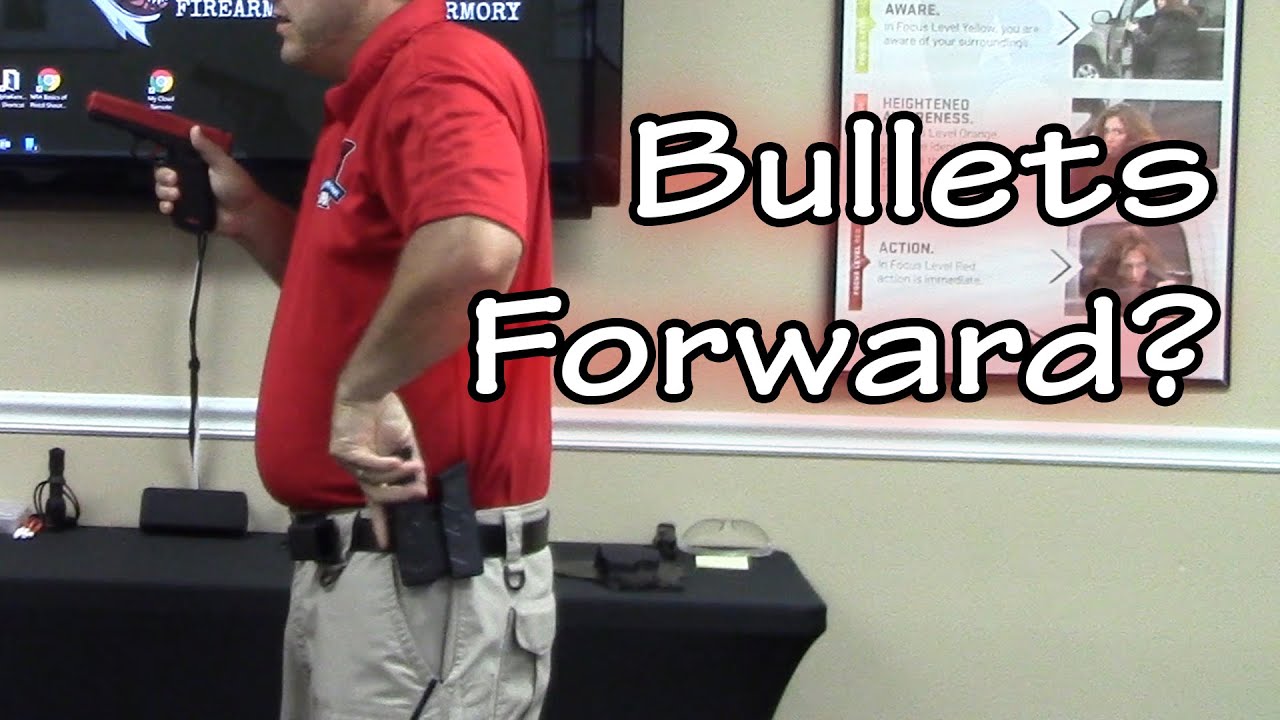
Wrong magazine orientation. Most people carry their spare magazine with bullets facing forward, matching the orientation in the gun. This feels natural but creates problems during reloads. Your support hand has to rotate the magazine 180 degrees before inserting it. Carrying bullets-back lets you grab and insert in one smooth motion.
Inadequate retention testing. You tested your pouch by drawing the magazine a few times at the range. That's not enough. Real retention testing means wearing the loaded pouch through a full day of normal activity. Sit in your car, bend over, climb stairs, and check if the magazine shifts. If it moves even slightly, your retention is too loose.
Ignoring draw consistency. Your magazine should present the same way every time you draw it. If the angle varies or you sometimes get a partial grip, the pouch position or retention is wrong. Practice drawing with your eyes closed, your hand should find the magazine in exactly the same position every time.
Overtightening adjustable pouches. More retention isn't always better. If you have to fight to draw the magazine, you'll short-stroke under stress. The magazine should come out with firm, steady pressure, not a violent yank. If you're using two hands to draw or if the magazine sticks halfway out, back off the tension.
Poor belt integration. Your magazine pouch is only as stable as your belt. A flimsy dress belt won't support the weight and movement of magazine draws. You need a proper gun belt, thick, reinforced leather or synthetic material that doesn't sag or twist. The pouch attachment should distribute weight across several inches of belt, not concentrate it on a single point.
Neglecting environmental factors. Temperature and humidity affect pouch materials differently. A Kydex pouch that works perfectly in air conditioning might be too tight after sitting in a hot car. Nylon pouches can become loose in high humidity. Test your setup in the conditions where you'll actually carry.
Product comparison: what's actually available
Safariland Model 074 Open Top. The standard for open-top designs. Uses a spring-loaded detent for retention without slowing the draw. Available for most popular magazine types. The detent provides just enough retention for normal carry but won't hold up to serious physical activity. Good for competition or casual carry where speed matters more than security.
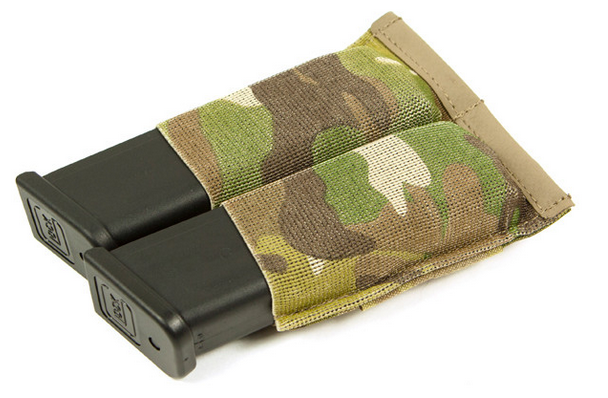
G-Code Scorpion Pistol Mag Pouch. Tension-screw design with their RTI mounting system. You can adjust retention precisely and swap between different belt attachments. Built like a tank and popular with military users. The downside is bulk, it's noticeably larger than minimalist designs. Works well for duty carry or range use.
Blue Force Gear Ten-Speed Pouch. Elastic design that works with multiple magazine types. The elastic provides retention while conforming to different magazine shapes. Lightweight and low-profile. The trade-off is durability, the elastic will eventually lose tension with heavy use. Good for backup or occasional carry.
Blackhawk CQC Serpa Mag Pouch. Uses the same active retention system as their holsters. A button release secures the magazine until you press it during the draw. Provides excellent retention with reasonable speed. The mechanical system can jam if debris gets in the mechanism. Popular with law enforcement but requires training to use effectively.
Esstac Kywi Pouch. Modern take on the open-top design using their proprietary polymer material. Provides better retention than traditional open-tops while maintaining fast access. The material is more flexible than Kydex but more durable than nylon. Available in single and double configurations. Good compromise between speed and retention.
Setup and testing protocol
Start with basic fit testing. Load your magazine and insert it into the empty pouch. It should seat with light pressure and a subtle click or resistance. The magazine should sit at the same depth every time, if the seating depth varies, the pouch dimensions are wrong for your magazine.
Test retention by inverting the loaded pouch and shaking it vigorously. The magazine shouldn't fall out or shift position. If it does, increase tension or consider a different pouch design. This is your minimum retention threshold, real-world stresses will be higher.
Practice the draw motion slowly and deliberately. Your support hand should find the magazine in the same position every time. The draw should be a smooth, straight pull without binding or catching. If you have to adjust your grip or angle during the draw, the pouch position or magazine orientation needs work.
Time your draws with a shot timer. Establish a baseline with an unloaded gun and empty magazine. A good concealed carry setup should allow sub-three-second reloads from the ready position. Competition setups can be much faster, but defensive reloads need to be reliable first, fast second.
Test under stress by doing jumping jacks, push-ups, or other physical activity while wearing the loaded pouch. Check the magazine position after each exercise. If it shifts at all, your retention is inadequate for daily carry. This is where many open-top designs fail.
Environmental testing means wearing the setup in different conditions. Hot cars, air-conditioned buildings, humid weather, and temperature changes all affect pouch materials. What works in your climate-controlled range might fail in real-world conditions.
What you'll notice
The first thing you'll notice with a properly set up magazine pouch is how little you notice it. Good retention means you're not constantly checking to make sure your spare magazine is still there. The pouch should disappear into your daily routine until you actually need it.
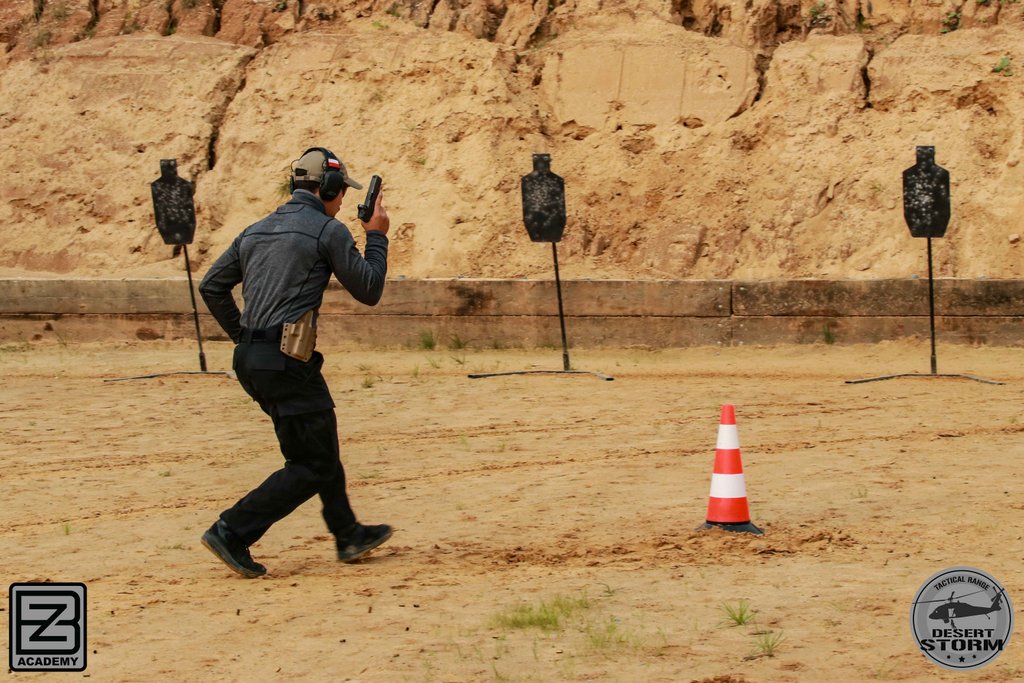
Draw consistency becomes obvious with practice. A well-positioned pouch lets you find the magazine without looking or thinking about it. Your hand travels to the same spot, finds the same grip, and executes the same motion every time. Inconsistent setups force you to hunt for the magazine or adjust your grip mid-draw.
Training considerations
Magazine pouch training gets neglected because it's not as exciting as holster work. But your reload is a system, gun, magazine, and pouch all have to work together. Practice the complete reload sequence, not just the gun handling portion.
Start with slow, deliberate movements. Focus on the support hand path from ready position to magazine, then from pouch to gun. The motion should be economical, no wasted movement or hand position changes. Build the muscle memory slowly before adding speed.
Dry practice is essential but limited. You can practice the draw motion and hand positioning, but you can't replicate the weight and balance of a loaded magazine. Live fire practice is necessary to validate your setup under realistic conditions.
Stress testing means practicing reloads when you're already breathing hard and your fine motor skills are degraded. Run a few sprints, then attempt your reload. If your pouch setup falls apart under mild stress, it won't work when it matters.
Consider malfunction scenarios. What happens if your magazine gets stuck halfway out of the pouch? Can you clear it with one hand while keeping the gun up? What if the pouch retention fails and you lose your spare magazine? These aren't common problems, but they're worth thinking through.
Making the call
The right magazine pouch depends on your specific carry situation and priorities. If you're carrying for personal protection and prioritize reliability over speed, lean toward retention-focused designs. If you compete regularly and need maximum speed, open-top pouches make sense despite their limitations.
Consider your daily routine. Office workers who sit most of the day have different needs than people who do physical work. Your clothing style, body type, and carry position all affect which pouch designs will work. There's no universal best choice.
Test before you commit. Most quality pouches cost enough that you want to get it right the first time. If possible, try different designs at the range or borrow from friends before making a purchase. What works for someone else might not work for you.
Your magazine pouch is part of a system that includes your gun, holster, belt, and training. Don't optimize one component at the expense of the others. A slightly slower pouch that you can actually access under stress is better than a speed-focused design that fails when you need it most.
The goal isn't to have the fastest reload at the range. It's to have a reliable spare magazine available when your primary ammunition runs out. Choose accordingly.