You're running night vision and need an optic that won't wash out your tubes or leave you blind when you flip them up. Here's what actually works when you're shooting under NODs; and what doesn't, no matter what the marketing says.
Most red dots claim night vision compatibility. Half of them lie. The other half work, but only on specific settings that nobody tells you about upfront. After mounting a number of optics behind PVS-14s and dual tubes, I can tell you exactly which ones hold up and which ones will leave you fumbling in the dark.
The problem isn't just brightness settings. It's bloom, it's reticle design, and it's how the optic handles infrared spillover that your eyes can't see but your tubes definitely can. Get this wrong and you'll either wash out your image intensifier tubes or lose your dot entirely when ambient light drops.
Why most "NV compatible" optics fail
Look, slapping "night vision compatible" on the box doesn't make it true. Real NV compatibility means the optic works across the entire light spectrum your tubes see, visible and near-infrared. Most manufacturers test with Gen 2 tubes under ideal conditions and call it good.
Here's what actually happens: You zero during the day, flip down your NODs at dusk, and suddenly your red dot looks like a supernova. Turn it down and it disappears entirely. Turn it back up and you've got a bloom that blocks half your field of view. The sweet spot exists for about thirty seconds during civil twilight, then you're screwed.
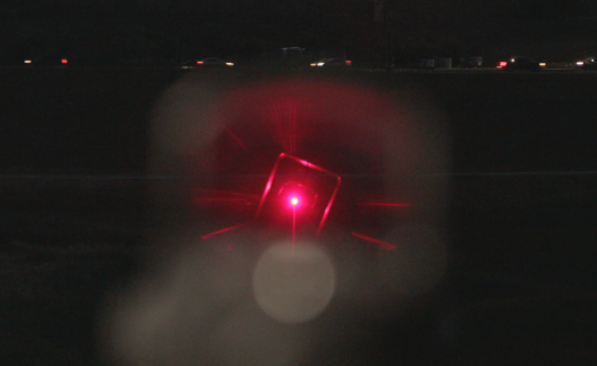
The issue is infrared spillover. Red dots emit light across a broader spectrum than what your naked eye sees. Your night vision tubes pick up this IR signature and amplify it along with everything else. What looks like a crisp 2 MOA dot to your eye becomes a 15 MOA blob through tubes.
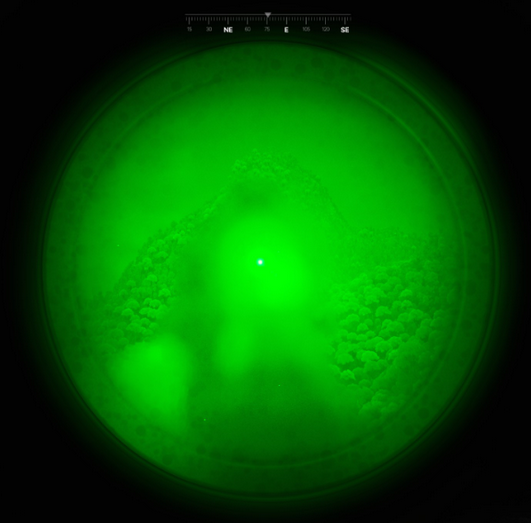
Glass notes: Even premium optics struggle with this. I've seen $800 red dots that work perfectly during daylight turn into unusable light pollution under NODs. The problem isn't quality control; it's physics.
Reticle design matters more than you'd think. Simple dots work better than complex reticles because there's less emissive surface area. Chevrons and circles add more light sources that bloom independently. Each element creates its own halo effect that compounds the problem.
What works: Proven NV-compatible red dots
The Aimpoint T2 remains the gold standard for night vision work. Not because it's the newest or fanciest, but because it actually dims low enough to use with tubes while maintaining a visible dot. Settings 1 and 2 work consistently across different tube generations without washing out your image.
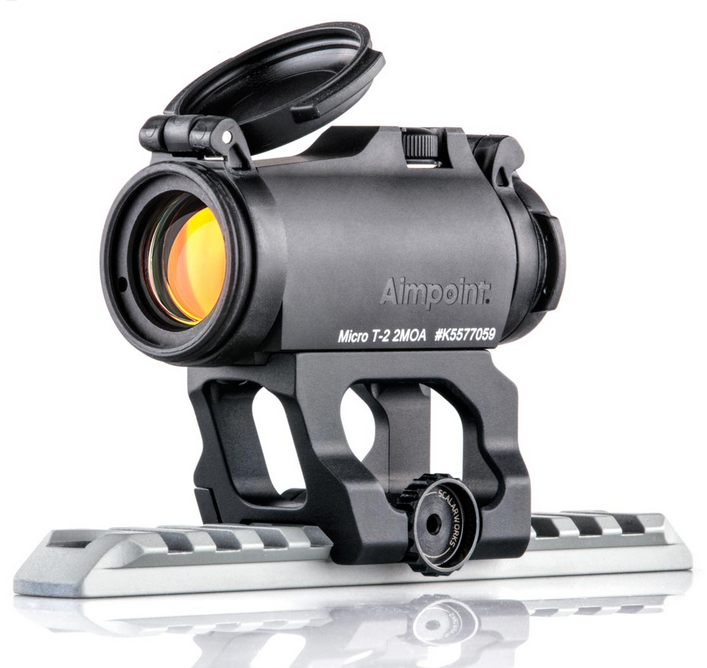
I've run T2s behind everything from PVS-14s to GPNVG-18s. The dot stays crisp down to setting 1, which is invisible to the naked eye but perfectly visible through tubes. No bloom, no halo, just a clean aiming point. The H2 offers the same performance with a larger 4 MOA dot if you prefer more visible reference.
Aimpoint T2 Deals
Prices may change. May contain affiliate links.
Trijicon's RMR Type 2 works, but you need the right model. The 3.25 MOA dot (RM06) handles night vision better than the 6.5 MOA version. Smaller dots concentrate the light signature into a tighter package that's less likely to bloom. Settings 1-3 are usable under NODs, though setting 1 can disappear in bright ambient conditions.
Range notes: The RMR's auto-brightness feature fights you under night vision. It constantly adjusts based on ambient light, not what your tubes are seeing. Manual brightness control is essential for consistent performance.
Holosun's 507C and 508T series offer legitimate night vision compatibility, but only specific models. Look for the "V2" designation; these have updated emitters that produce less IR spillover. The 507C X2 works well on settings 1-2, though the circle-dot reticle can bloom if you're not careful with brightness.
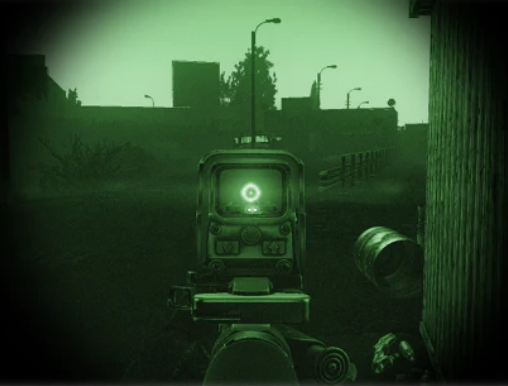
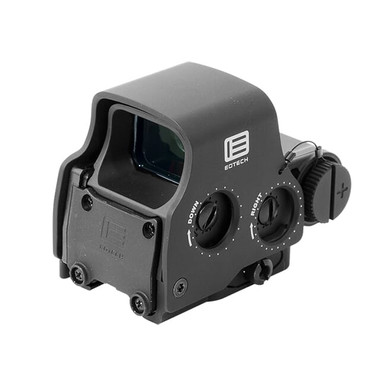
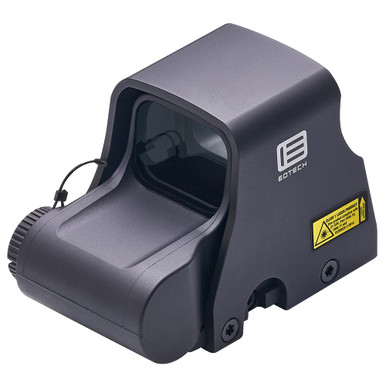
The EOTech EXPS3 and XPS3 series handle night vision differently than red dots. The holographic reticle appears sharper through tubes because it's a true hologram, not an LED projection. The 1 MOA center dot stays crisp while the 68 MOA ring provides fast target acquisition. Settings 1-4 work under most night vision setups.
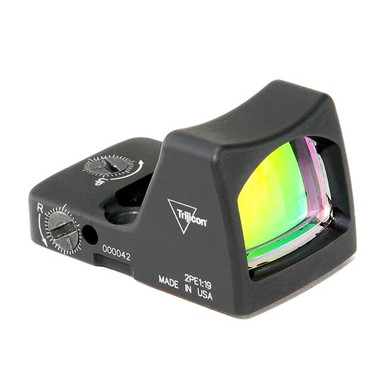
Trijicon RMR Type 2 Deals
Prices may change. May contain affiliate links.
Common mistakes that kill NV performance
Setting brightness too high is the obvious one, but there's more to it. You need different settings for different ambient conditions. What works in total darkness won't work with ambient moonlight or urban light pollution. Most shooters find one setting and stick with it, then wonder why their optic stops working when conditions change.
Using the wrong mount height creates parallax issues that get worse under night vision. Your head position changes when you're wearing NODs. Standard lower-third mounts often put the optic too low relative to your new sight line. A 1.93" mount usually works better for NV shooting, though this varies based on your specific setup and helmet configuration.
Forgetting about IR illumination is a big one. If you're running an IR laser or illuminator, it can wash out your red dot even on the lowest settings. The tubes see all that infrared light, and it creates a bright background that makes your aiming point disappear. You need to balance your IR output with your optic brightness.
What you'll actually notice: Your zero shifts slightly when transitioning from day to night shooting. It's not the optic; it's your head position and sight alignment changing with the added weight and bulk of night vision. Re-zero with your NODs on if you're doing serious night work.
Magnified optics create different problems. LPVOs that work fine during the day often have unusable eye boxes under night vision. The added bulk of NODs changes your head position, and suddenly you're fighting scope shadow and limited eye relief. Most 1-6x scopes become 3-6x scopes when you add night vision to the equation.
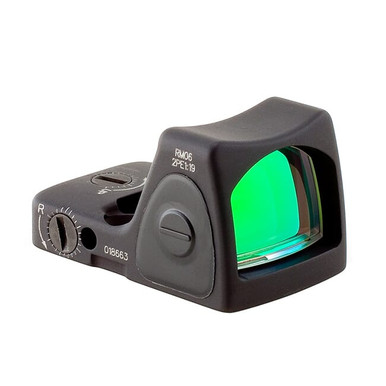
Trijicon RMR Type 2 RM06 3.25 MOA Deals
Prices may change. May contain affiliate links.
Magnified optics that actually work
The Trijicon ACOG 4x32 with LED illumination handles night vision better than most LPVOs. The fixed 4x magnification means no moving parts to create light leaks. The LED-illuminated reticle dims to setting 1 for night vision use, and the fiber optic backup keeps working even if the battery dies.
Here's the thing about ACOGs under NODs: the eye relief is generous enough that you can still get a full sight picture with night vision mounted. The chevron reticle stays sharp because it's etched glass, not a projected image. The LED illumination is specifically designed to work across the spectrum that night vision tubes see.
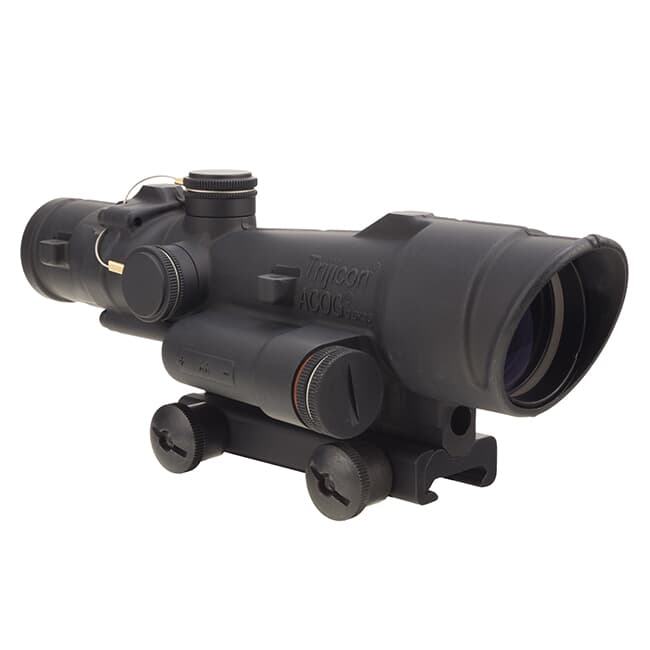
I've mounted ACOG 4x32s behind PVS-14s for years. The combination works because both optics are designed for military use where night vision compatibility isn't optional. Zero the ACOG during daylight, verify zero under NODs, and you're set. The fixed magnification means no variables to screw up your setup.
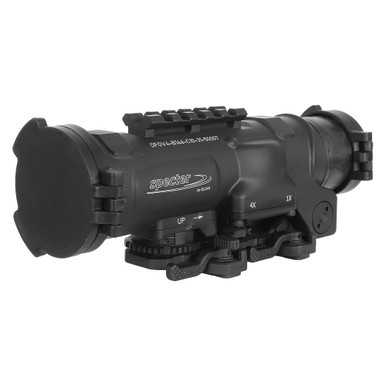
The Elcan SpecterDR offers true dual-role capability with 1x and 4x settings. The 1x mode works like a red dot for close work, while 4x provides precision capability. Both magnifications maintain usable eye boxes under night vision, though you'll need to adjust your cheek weld slightly.
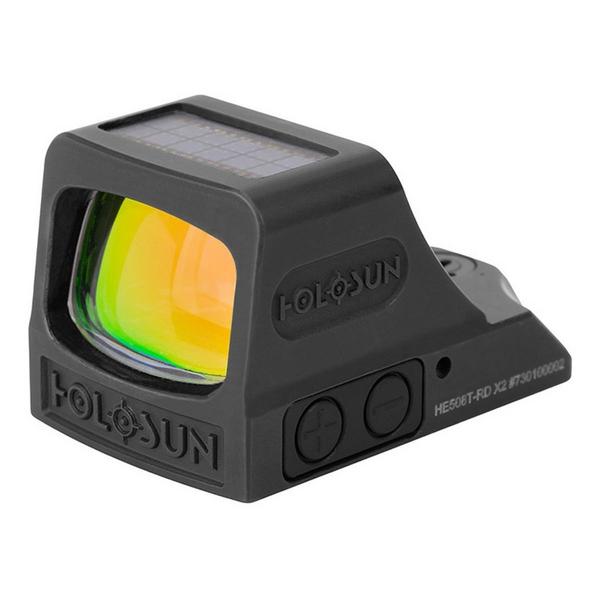
Holosun 508T Deals
Prices may change. May contain affiliate links.
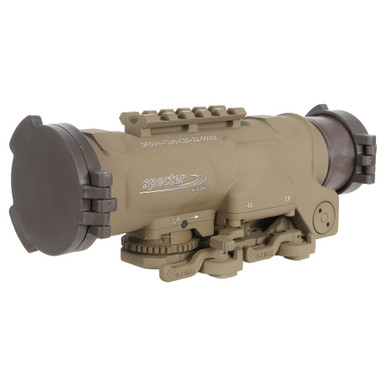
Glass notes: The SpecterDR's illuminated reticle works down to very low settings that are compatible with most night vision systems. The 7.62 version with the CX5395 reticle is optimized for night shooting with larger, more visible reticle elements.
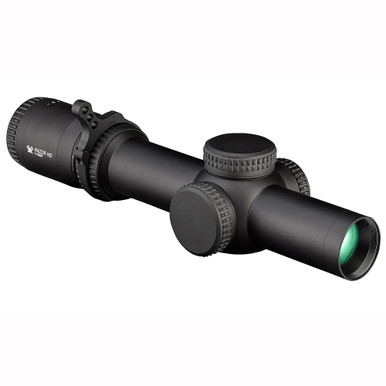
Most 1-6x LPVOs struggle under night vision because the eye box shrinks dramatically when you add NODs. What feels like generous eye relief during daylight becomes a tiny sweet spot that's impossible to find consistently when you're wearing bulky headgear. The few that work well include the Razor HD Gen III 1-10x, but only on 1x with specific mount heights.
Mounting considerations for NV use
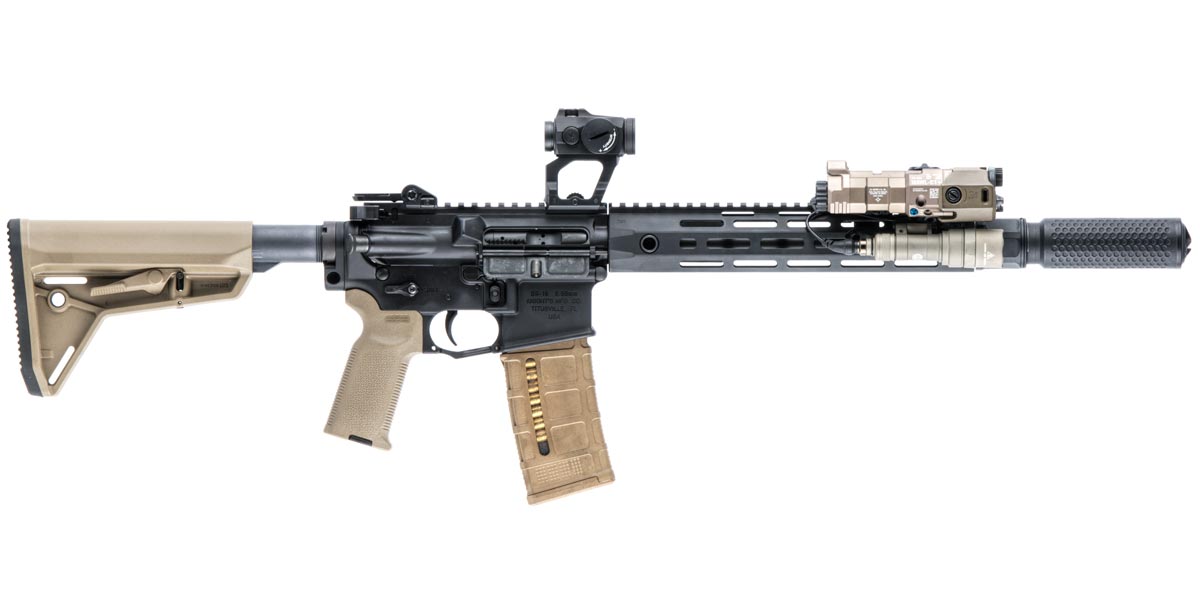
Mount height becomes critical when you add night vision to your setup. Standard AR-height mounts put most optics too low relative to your new sight line when wearing NODs. Your head position changes; you're sitting higher and more upright to accommodate the bulk and weight of the night vision system.
A 1.93" mount height works for most red dots under night vision. This puts the optic at the right height to maintain proper sight alignment without excessive neck strain. Companies like Scalarworks and Geissele make quality mounts at this height that maintain zero under recoil.
The Aimpoint T2 on a 1.93" mount is probably the most proven combination for night vision shooting. The mount puts the dot at the right height, and the T2's NV settings actually work. I've seen this setup on everything from SOCOM rifles to competitive night shoots, and it just works.
EOTech EXPS3 Deals
Prices may change. May contain affiliate links.
Range notes: Quick-detach mounts can shift slightly under the added stress of night vision weight and movement. If you're doing serious night work, consider a non-QD mount for maximum stability. The slight convenience loss is worth the zero retention.
Offset mounts create problems under night vision that don't exist during daylight shooting. The added bulk of NODs makes it harder to cant the rifle for offset optic use. What feels natural during the day becomes awkward and slow when you're wearing several pounds of night vision equipment on your head.
Troubleshooting NV optic problems
Your dot disappears completely when you flip down NODs. This usually means your brightness setting is too low for the specific tubes you're using. Different generations and manufacturers have different sensitivity levels. Start at setting 2 and work up until you can see the dot clearly through your tubes.
The dot blooms into a huge halo that washes out your sight picture. You're running too bright for night vision use. Turn down to setting 1 and work up gradually. If setting 1 is still too bright, your optic probably isn't truly NV compatible despite what the marketing claims.
EOTech XPS3 Deals
Prices may change. May contain affiliate links.
Your zero shifts when transitioning from day to night shooting. This is normal and expected. The added weight and bulk of night vision changes your head position and sight alignment slightly. Re-zero with your NODs on if you're doing dedicated night work, or learn the offset and hold accordingly.
The reticle flickers or changes intensity randomly. Your auto-brightness sensor is fighting with the light signature from your night vision system. Switch to manual brightness control and find a setting that works consistently across different ambient conditions.
What actually matters: Consistency trumps perfection. Find settings that work reliably across the conditions you'll actually encounter, then stick with them. Don't chase the perfect setup that works in one specific scenario but fails everywhere else.
Specific product recommendations
For dedicated night vision work, the Aimpoint T2 on a 1.93" mount remains the most reliable combination. It's been proven across thousands of military and law enforcement deployments. The NV settings actually work, the battery life is measured in years, and it holds zero under abuse.
Trijicon ACOG 4x32 LED Deals
Prices may change. May contain affiliate links.
The Trijicon RMR Type 2 (RM06) offers a more compact alternative with similar night vision performance. The 3.25 MOA dot is large enough to acquire quickly but small enough to avoid excessive bloom. Mount it on a quality base like the Scalarworks LEAP/04 for best results.
If you need magnification, the ACOG 4x32 with LED illumination is the proven choice. It's heavy and expensive, but it works consistently under night vision. The fixed magnification eliminates variables, and the generous eye relief accommodates NODs without fighting for sight picture.
For budget-conscious shooters, the Holosun 507C X2 offers legitimate night vision compatibility at half the price of premium alternatives. The emitter improvements in the X2 version make a real difference under NODs. Just avoid the circle-dot reticle if you're primarily shooting under night vision.
The EOTech EXPS3 provides a different approach with holographic technology. The reticle appears sharper through tubes than LED-based red dots, and the large window makes target acquisition faster. Battery life is shorter than Aimpoint alternatives, but performance under NODs is excellent.
Setting up your NV optic system
Start with a proven combination rather than trying to reinvent the wheel. The Aimpoint T2 on a 1.93" mount works because thousands of people have already worked out the bugs. You can always experiment later, but start with something that's guaranteed to function.
Elcan SpecterDR Deals
Prices may change. May contain affiliate links.
Zero your optic during daylight using standard procedures. Get a solid 25-yard zero with whatever ammunition you'll be using for night work. Don't worry about the night vision compatibility yet; just get the basic zero established with your naked eye.
Once you have a daylight zero, verify it under night vision. Mount your NODs and check the zero at the same distance. You'll probably see a slight shift; this is normal due to the changed head position and sight alignment. Note the difference and decide whether to re-zero for night use or learn the offset.
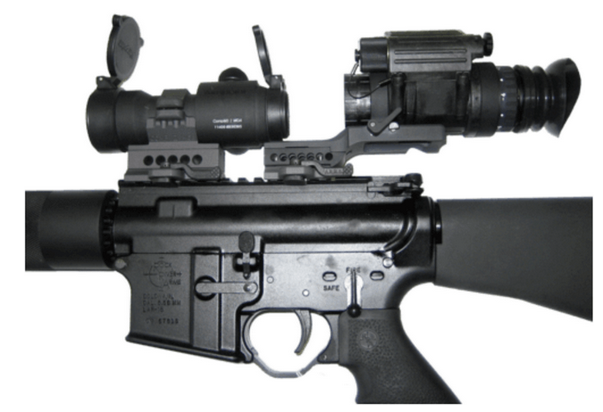
Range notes: Most shooters see a 1-2 MOA shift when transitioning from day to night shooting. The direction depends on your specific setup and how the night vision changes your head position. Document the shift so you can compensate consistently.
Practice transitioning between brightness settings for different ambient conditions. What works in total darkness won't work with moonlight or urban light pollution. Develop muscle memory for quickly adjusting brightness based on conditions without taking your eyes off the target.
Elcan SpecterDR 7.62 CX5395 Deals
Prices may change. May contain affiliate links.
Real-world performance expectations
Honestly, no optic works as well under night vision as it does during daylight. You're adding complexity, weight, and optical compromises that affect performance. The goal is finding something that works well enough to be effective, not achieving daylight-level precision.
Your effective range decreases under night vision, regardless of optic choice. What's a comfortable 300-yard shot during daylight becomes a 150-yard shot under NODs. The optic isn't the limiting factor; it's the resolution and clarity of the night vision system itself.
Battery life becomes more critical for night work. Cold weather, extended operations, and the stress of tactical use all drain batteries faster than range shooting. Carry spares and know how to change them in the dark without losing your zero or night adaptation.
What you'll actually notice: The transition from day to night shooting is jarring at first. Everything takes longer, target acquisition is slower, and precision suffers. This is normal and expected. The optic is just one part of a complex system that requires practice to use effectively.
Your backup iron sights become more important under night vision. If your optic fails or the battery dies, you need a way to keep shooting. Make sure your irons are properly zeroed and that you can access them quickly with night vision mounted.
Vortex Razor HD Gen III 1-10x Deals
Prices may change. May contain affiliate links.
The bottom line: stick with proven combinations that have been tested extensively under actual night vision use. The Aimpoint T2, Trijicon RMR, and ACOG 4x32 work because they've been refined through years of military and law enforcement feedback. Start there, learn the system, then experiment if you need something different.